語彙集

英単語辞書 | 単語の意味、定義、例文

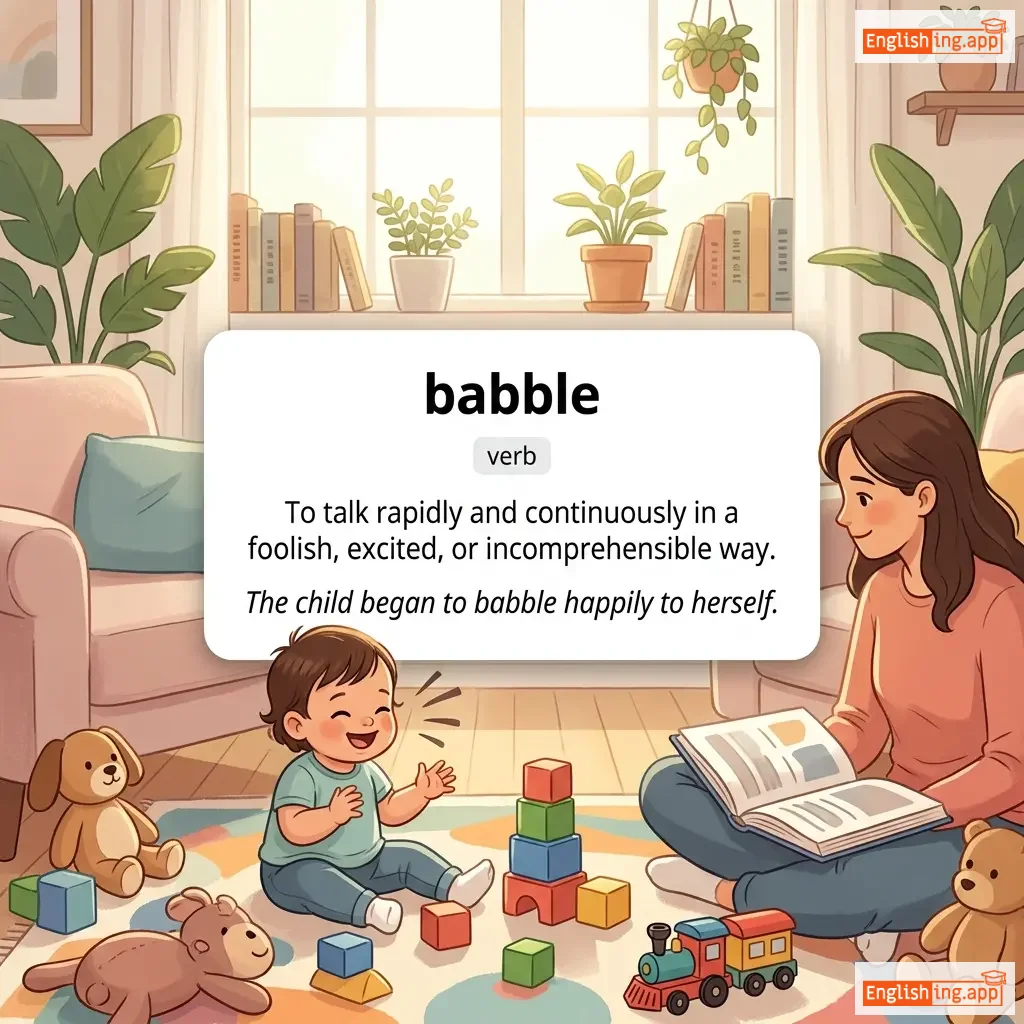
babble definition card — visual illustration of the meaning
🗣️

babble

verb
/ˈbæbəl/

To talk rapidly and continuously in a foolish, excited, or incomprehensible way.

"The child began to babble happily to herself."

noun
/bəˈbuːn/
バブーン (baboon)

a large African and Arabian primate with a dog-like snout and colorful buttocks

"The baboon troop gathered around the watering hole in the savanna."

"バブーンの群れはサバンナの水場の周りに集まりました。" (Baboon no mure wa sabanna no mizuba no mawari ni atsumarimashita.)
noun
/ˈbeɪbi/
赤ちゃん (akachan)

a very young child, especially one newly or recently born

"The baby is sleeping peacefully in the crib."

"赤ちゃんはベビーベッドで静かに寝ています。" (Akachan wa bebiibeddo de shizuka ni neteimasu.)
noun
/ˈbækənæl/
狂乱のパーティ (kyōran no pāti)

A noisy party involving drinking and revelry.

"The festival turned into a wild bacchanal by midnight."

"祭りは真夜中に狂乱のパーティに変わった。" (Matsuri wa mayonaka ni kyōran no pāti ni kawatta.)
noun
/ˌbækəˈneɪliə/
酒と楽しみの祭り (sake to tanoshimi no matsuri)

A Roman festival of Bacchus celebrated with dancing, drinking, and revelry; any occasion of wild and drunken revelry.

"The novel describes the party as a bacchanalia of excess and joy."

"小説はそのパーティーを過剰と喜びのバッカナリアとして描いています。" (Shousetsu wa sono paatii o kajou to yorokobi no Bakkanaria toshite kaitaimasu.)
bacchanalian definition card — visual illustration of the meaning
adjective
/ˌbækəˈneɪliən/
酔っ払いの祭りに関連する (yopparai no matsuri ni kanren suru)

Characterized by or involving drunken revelry.

"The students threw a bacchanalian party after the exams."

"学生たちは試験後に酔っ払いの祭りを開いた。" (Gakusei-tachi wa shiken-go ni yopparai no matsuri o hiraita.)
noun
/ˈbætʃələr/
独身男性; 大学の学位を持つ人 (dokushin dansei; daigaku no gakui o motsu hito)

an unmarried man; a person who holds a first degree from a university

"He remained a bachelor all his life and earned a bachelor's degree in engineering."

"彼は一生独身で、工学の学位を取得しました。" (Kare wa isshou dokushin de, kougaku no gakui o shutoku shimashita.)
noun/verb/adverb/adjective
/bæk/
背中 / 戻る (senaka / modoru)

the rear surface of the human body; to support; to return to a place

"He turned back to help his friend."

"彼は友達を助けるために戻った。" (Kare wa tomodachi o tasukeru tame ni modotta.)
phrasal verb
/bæk ʌp/
支援する;バックアップする;後退する (shien suru; bakkuappu suru; koutai suru)

to support or help someone; to make a copy of data for safety; to move backward

"Please back up your files before updating the system."

"システムを更新する前にファイルをバックアップしてください。" (Shisutemu o koshin suru mae ni fairu o bakkuappu shite kudasai)
verb
/ˈbækbaɪt/
陰口を言う (kageguchi o iu)

to speak negatively about someone who is not present; to slander behind someone’s back

"It is wrong to backbite your colleagues behind their backs."

"同僚の陰口を言うのはよくない。" (doryo no kageguchi o iu no wa yokunai)
noun
/ˈbækboʊn/
背骨 (sebone)

the spine; the chief support or mainstay; strength of character

"Education is the backbone of a nation."

"教育は国の背骨です。" (Kyouiku wa kuni no sebone desu.)
noun
/ˈbækdrɒp/
背景 (haikei)

a painted cloth or other structure used behind a stage

"The backdrop for the play was a beautiful mountain scene."

"その舞台の背景は美しい山の景色でした。" (Sono butai no haikei wa utsukushii yama no keshiki deshita.)
noun
/ˈbækɡraʊnd/
背景 (haikei)

the circumstances, environment, or past history of a person or thing; the part behind the main subject in an image

"She comes from a strong academic background."

"彼女は強力な学問的背景を持っています。" (Kanojo wa kyōryokuna gakumon-teki haikei o motteimasu.)
adjective
/ˈbækˌhændɪd/
間接的または皮肉な (kansetsuteki matawa hinikuna)

Indirect or sarcastic, often appearing as praise but actually insulting.

"She gave him a backhanded compliment about his work."

"彼女は彼の仕事に対して間接的な褒め言葉を言った。" (Kanojo wa kare no shigoto ni taishite kansetsuteki na homekotoba o itta.)
noun
/ˈbækɪŋ/
支援 (shien)

support or approval for a plan, person, or idea

"The project received strong backing from the investors."

"そのプロジェクトは投資家から強力な支援を受けました。" (Sono purojekuto wa tōshika kara kyōryoku na shien o ukemashita.)
noun
/ˈbækˌsaɪd/
背中 (senaka)

the rear part or surface of something; informal term for the buttocks

"The kids slid down the hill on their backside."

"子供たちは丘を背中で滑り降りました。" (Kodomotachi wa oka o senaka de suberi orimashita.)
verb
/ˈbækˌslaɪd/
後退 (koutai)

To relapse into bad habits, undesirable practices, or moral decline.

"After months of progress, he began to backslide into old habits."

"数ヶ月の進展の後、彼は古い習慣に戻り始めた。" (Sū kagetsu no shinten no ato, kare wa furui shūkan ni modori hajimeta.)
noun
/ˈbækʌp/
バックアップ (bakkappu)

a copy of data stored separately to protect against loss

"Make sure to have a backup of your important files."

"重要なファイルのバックアップを取ることを確認してください。" (Jūyōna fairu no bakkappu o toru koto o kakunin shite kudasai.)
adverb
/ˈbækwərdz/
後ろ向き (ushiro muki)

Toward the back or in the reverse direction.

"He accidentally fell backwards into the chair."

"彼は椅子に後ろ向きに転倒しました。" (Kare wa isu ni ushiromuki ni tentō shimashita.)
noun
/ˌbækˈjɑːrd/
幸せ (shiawase)

an area of land behind a house, typically used for recreation or gardening

"The children played football in the backyard."

"彼女は賞を受け取ったとき、自分の幸せを隠すことができませんでした。" (Kanojo wa shō o uketotta toki, jibun no shiawase o kakusu koto ga dekimasen deshita.)
adjective
/beɪˈkoʊniən/
ベコニアン (Bekonian)

Relating to the philosopher Francis Bacon or his method of scientific reasoning.

"The researcher followed a Baconian approach to observation and experimentation."
"研究者は観察と実験のためにベコニアンアプローチを採用しました。" (Kenkyūsha wa kansatsu to jikken no tame ni Bekonian apurōchi o saiyō shimashita.)
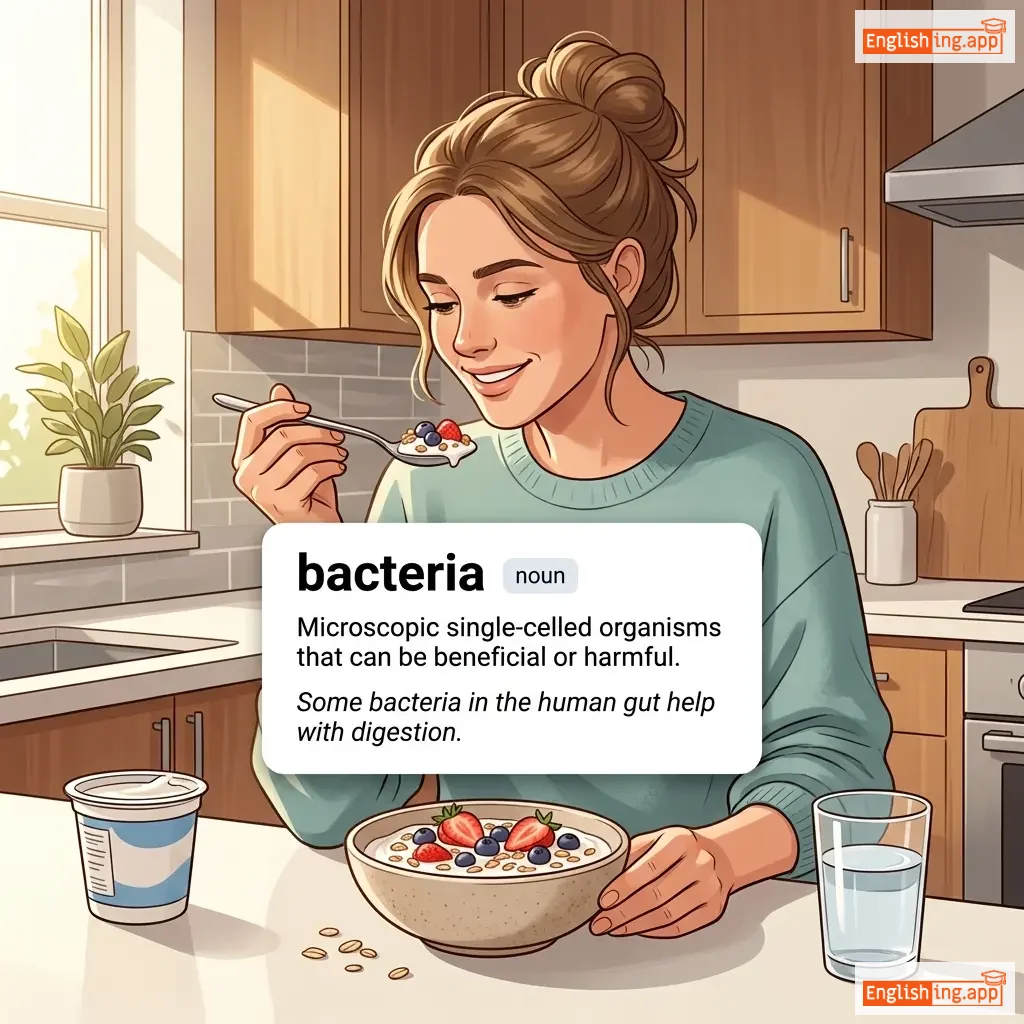
bacteria definition card — visual illustration of the meaning
noun
/bækˈtɪəriə/
バクテリア (bakteria)

Microscopic single-celled organisms that can be beneficial or harmful.

"Some bacteria in the human gut help with digestion."

"いくつかのバクテリアは、人間の腸内で消化を助けます。" (Ikutsuka no bakteria wa, ningen no chōnai de shōka o tasukemasu.)
noun
/bækˈtɪəriəm/
バクテリア (bakuteria)

A single microscopic organism belonging to the group of bacteria.

"The doctor explained that a single bacterium can multiply rapidly under the right conditions."

"医者は、1つのバクテリウムが適切な条件下で急速に増殖できることを説明しました。" (Isha wa, 1tsu no bakuteriumu ga tekisetsuna jokenka de kyūsoku ni zōshoku dekiru koto o setsumei shimashita.)
adjective
/bæd/
悪い (warui)

not good; unpleasant, harmful, or of poor quality

"The milk smells bad, so don’t drink it."

"牛乳は悪臭がするので飲まないでください。" (Gyuunyuu wa akushuu ga suru node nomanaide kudasai.)
noun
/bædʒ/
バッジ (bajji)

A small emblem or sign worn to show membership, authority, or achievement.

"The police officer showed his badge to identify himself."

"警察官は自分を識別するためにバッジを見せた。" (Keisatsukan wa jibun o shikibetsu suru tame ni bajji o misemashita.)
verb
/ˈbædʒər/
うるさくする, しつこくする (urusaku suru, shitsukoku suru)

To repeatedly ask or annoy someone with demands or questions.

"The reporter kept badgering the politician with questions."

"記者は政治家に質問をし続けて嫌がらせをした。" (Kisha wa seijika ni shitsumon o shi tsuzukete iyagarase o shita.)
noun
/ˌbædɪˈnɑːʒ/
冗談、遊び心のある会話 (joudan, asobigokoro no aru kaiwa)

Playful and humorous conversation; banter.

"The friends enjoyed a light badinage over coffee."

"友達はコーヒーを飲みながら軽い冗談を楽しみました。" (Tomodachi wa kōhī o nominagara karui jōdan o tanoshimimashita.)
adverb
/ˈbædli/
悪く (waruku)

in a way that is not good; poorly or severely

"He performed badly in the exam."
"彼は試験でひどい成績を取った。" (Kare wa shiken de hidoi seiseki wo totta.)
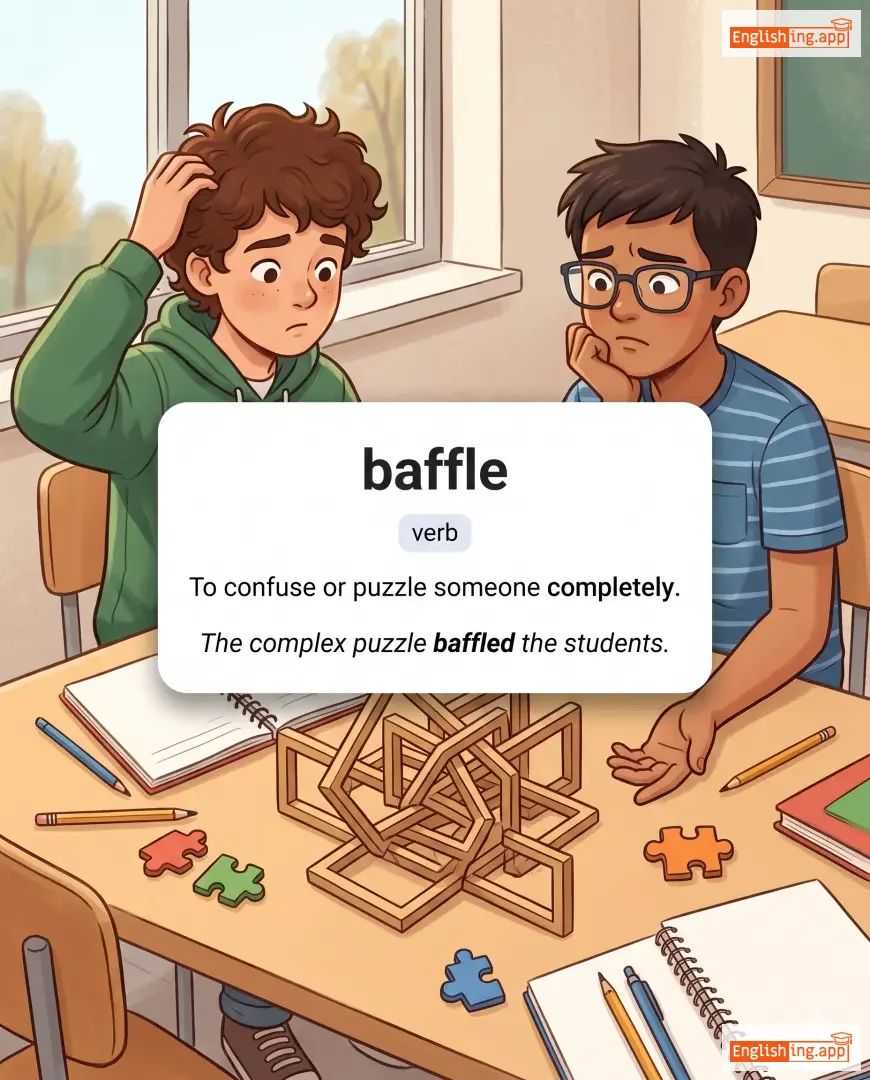
baffle definition card — visual illustration of the meaning
verb
/ˈbæfəl/
困惑させる (konwaku saseru)

To confuse or puzzle someone completely.

"The complex puzzle baffled the students."

"複雑なパズルは学生たちを困惑させた。" (Fukuzatsu na pazuru wa gakusei-tachi wo konwaku saseta.)
noun
/bæɡ/
バッグ (baggu)

a container made of flexible material, used for carrying items

"She carried her books in a bag."

"彼女は本をバッグに入れて持ち運んだ。" (Kanojo wa hon o baggu ni irete mochi hakonda.)
noun
/ˈbæɡɪdʒ/
荷物; 所持品; (nimotsu; shojihin;)

suitcases and bags containing personal belongings; past experiences or problems that affect behavior

"Please collect your baggage from the conveyor belt at the airport."

"空港のコンベヤーベルトから荷物をお取りください。" (Kūkō no konbeyā beruto kara nimotsu o otori kudasai.)
noun
/beɪl/
保釈 (hoshaku)

the temporary release of an accused person awaiting trial, often with a financial guarantee

"He was granted bail after his arrest."

"逮捕後、彼は保釈されました。" (Taiho go, kare wa hoshaku saremashita.)
noun
/ˌbeɪˈliː/
受寄者 (jukisha)

a person or party who temporarily receives possession of goods or property from another under a legal agreement

"The bailee must take reasonable care of the goods while they are in his possession."

"受寄者は財産を適切に管理する義務がある。" (jukisha wa zaisan o tekisetsu ni kanri suru gimu ga aru)
noun
/ˈbeɪlɪf/
裁判所の執行官 (saibansho no shikkōkan)

An official who keeps order in a court, carries out court orders, or collects debts.

"The bailiff asked everyone to rise as the judge entered the courtroom."

"裁判官が法廷に入ったとき、執行官は皆に立ち上がるように言いました。" (Saibankan ga hōtei ni haitta toki, shikkōkan wa mina ni tachiagaru yō ni iimashita.)
noun
/ˈbeɪlɔːr/
寄託者 (kitakusha)

a person who temporarily transfers possession of goods or property to another under a bailment agreement

"The bailor entrusted the valuable artwork to the museum for safekeeping."

"寄託者は美術品を博物館に預けた。" (Kitakusha wa bijutsuhin o hakubutsukan ni azuketa)
🎣

bait

noun/verb
/beɪt/

Food or lure used to attract fish or animals; to deliberately provoke or annoy.

"He used worms as bait to catch fish."

noun
/beɪz/
粗いウールの布の一種 (arai ūru no nuno no isshu)

A type of coarse woolen cloth, often green, used for covering tables such as billiard tables.

"The old card table was covered with worn baize."

"古いカードテーブルは、擦り切れたベイズで覆われていました。" (Furui kādo tēburu wa, surikireta beizu de ōwarete imashita.)
verb
/beɪk/
焼く (yaku)

to cook food using dry heat, usually in an oven

"She baked a cake for her friend's birthday."

"彼女は友達の誕生日のためにケーキを焼きました。" (Kanojo wa tomodachi no tanjōbi no tame ni kēki o yakimashita.)
noun
/beɪkt miːt/
焼き肉 (yakiniku)

meat that has been cooked in an oven using dry heat

"The baked meat was tender and flavorful."

"焼き肉は柔らかくて美味しい。" (Yakiniku wa yawarakakute oishii.)
noun
/ˈbeɪ.kɪŋ ˈpaʊ.dər/
ベーキングパウダー (bēkingu paudā)

a dry chemical leavening agent used to increase volume and lighten texture in baked goods

"The recipe calls for two teaspoons of baking powder."

"レシピにはベーキングパウダーを小さじ2杯使います。" (Reshipi ni wa bēkingu paudā o kosaji 2-hai tsukaimasu.)
noun
/ˈbeɪ.kɪŋ ˈsoʊ.də/
ベーキングソーダ (bēkingu sōda)

sodium bicarbonate used in cooking and baking as a leavening agent

"Add a teaspoon of baking soda to make the cake fluffy."

"ケーキをふわふわにするためにベーキングソーダを小さじ1杯加えます。" (Kēki o fuwafuwa ni suru tame ni bēkingu sōda o chīsaji ippai kuwaemasu.)
noun
/bəˈkuːl/
バクルの花 (bakuru no hana)

a fragrant white flower native to South Asia, scientifically known as Mimusops elengi

"The sweet fragrance of bakul flowers filled the evening air in the village."
"バクルの花の甘い香りが村の夕方の空気を満たしていた。" (Bakuru no hana no amai kaori ga mura no yūgata no kūki o mitashite ita.)
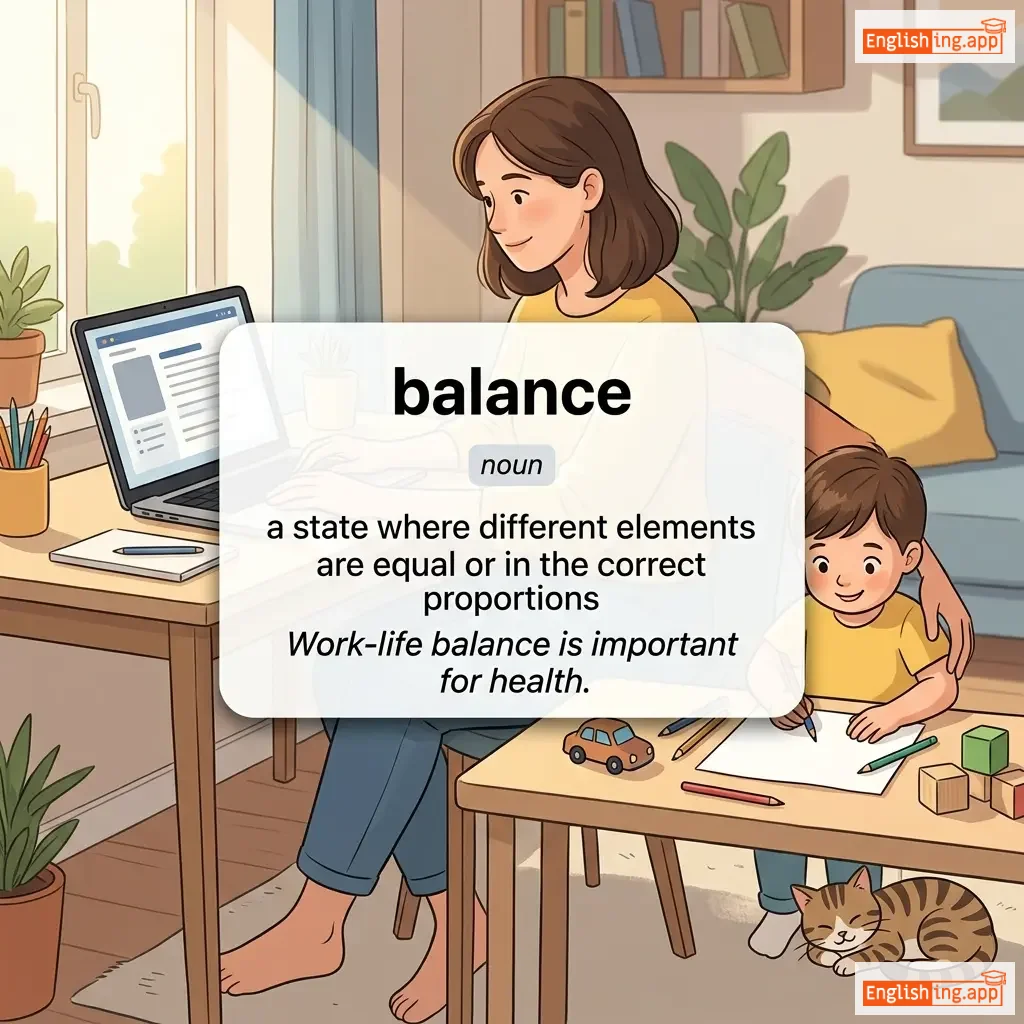
balance definition card — visual illustration of the meaning
noun
/ˈbæləns/
バランス (baransu)

a state where different elements are equal or in the correct proportions

"Work-life balance is important for health."

"仕事と生活のバランスは健康にとって重要です。" (Shigoto to seikatsu no baransu wa kenkō ni totte jūyō desu.)
adjective
/ˈbælənst/
バランスの取れた (baransu no toreta)

keeping or showing a sensible and fair view or position; evenly arranged

"A balanced diet is essential for good health."
"健康のためにはバランスの取れた食事が重要です。" (Kenkō no tame ni wa baransu no toreta shokuji ga jūyō desu.)
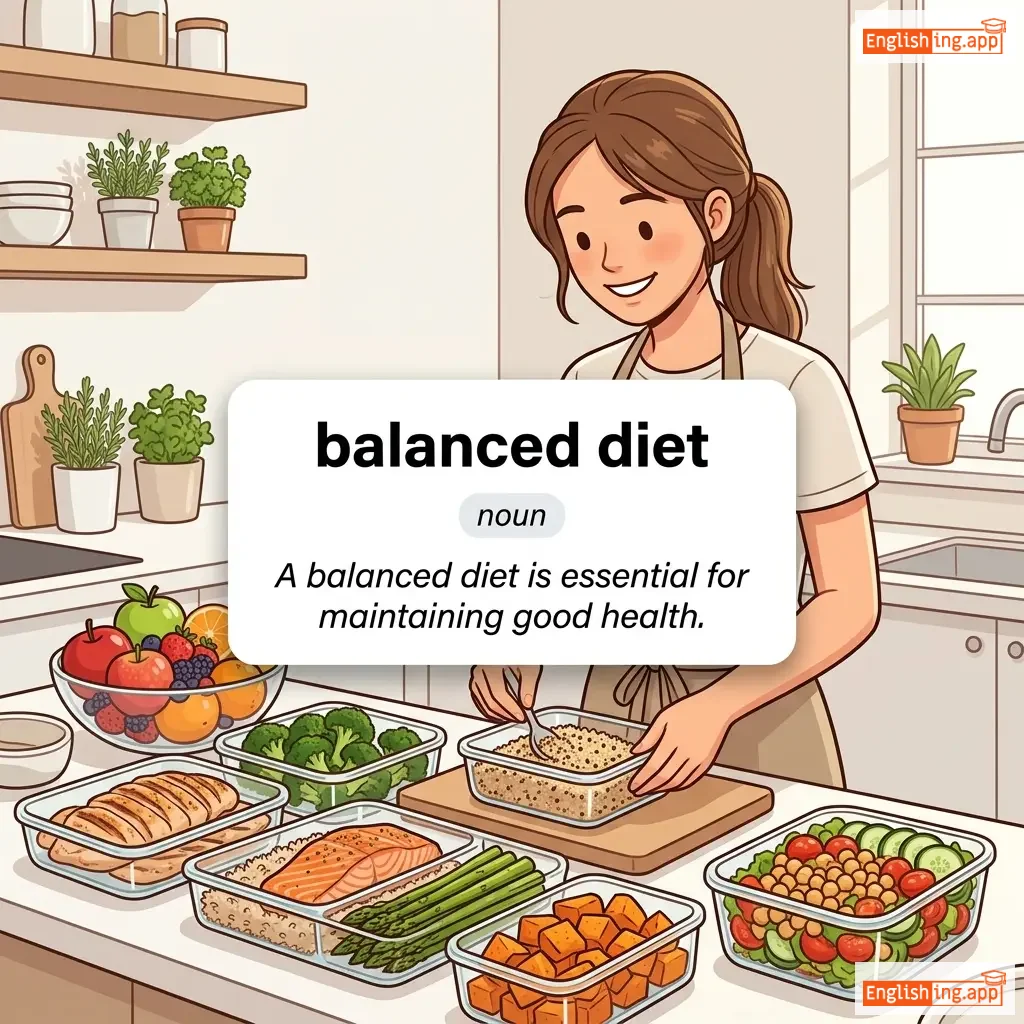
balanced diet definition card — visual illustration of the meaning
noun
ˈbæl.ənst daɪ.ət
バランスの取れた食事 (baransu no toreta shokuji)

A diet consisting of the proper quantities and proportions of foods needed to maintain health or growth.

"A balanced diet is essential for maintaining good health."

"バランスの取れた食事は健康維持に不可欠です。" (Baransu no toreta shokuji wa kenkō iji ni fukaketsu desu.)
noun
/beɪl/
(taba)

A large bundle of goods tightly wrapped and bound.

"The workers loaded the bale of cotton onto the truck."

"作業員は綿の束をトラックに積み込んだ。" (Sagyouin wa wata no taba o torakku ni tsumikonda.)
adjective
/ˈbeɪlfəl/
威圧的な (iatsuteki na)

Threatening harm; menacing or expressing hatred.

"She gave him a baleful look after the insult."

"侮辱の後、彼女は彼に威圧的な目を向けた。" (Bojoku no ato, kanojo wa kare ni iatsuteki na me o muketa.)
verb
/bɔːk/
拒否する (kyohi suru)

to hesitate or refuse to proceed or comply

"She balked at signing the contract without reading it fully."

"彼女は契約書を完全に読まずに署名することをためらった。" (Kanojo wa keiyakusyo o kanzen ni yomazu ni shomei suru koto o tameratta.)
adjective
/ˈbɔːlki/
頑固 (ganko)

difficult, uncooperative, or stubborn

"The balky printer refused to work when needed most."

"頑固なプリンターは最も必要な時に動作を拒否しました。" (Ganko na purintaa wa mottomo hitsuyou na toki ni dousa o kyohi shimashita.)
noun
/bɔːl/
ボール (booru)

a round object used in games or sports

"The children played with a ball in the park."

"子供たちは公園でボールで遊びました。" (Kodomotachi wa kouen de booru de asobimashita.)