語彙集

英単語辞書 | 単語の意味、定義、例文

👊

jab

verb
/dʒæb/

To poke or thrust quickly, often with a finger or something pointed.

"He jabbed his finger at the map to show the location."

verb
/ˈdʒæbər/
おしゃべりする (oshaberi suru)

To talk quickly and excitedly but with little sense.

"The children jabbered happily after the show."

"子供たちはショーの後に楽しそうにおしゃべりしました。" (Kodomotachi wa shō no ato ni tanoshisō ni oshaberi shimashita.)
noun
/ˈdʒæk.dɔː/
小さなカラス (chiisana karasu)

a small gray and black bird of the crow family, known for its intelligence

"The jackdaw collected shiny objects for its nest."

"ジャックドーはその巣のために輝く物を集めました。" (Jack-dou wa sono su no tame ni kagayaku mono wo atsumemashita.)
noun
/ˈdʒækɪt/
ジャケット (jaketto)

A short coat, typically extending to the hips.

"She wore a leather jacket in the winter."

"彼女は冬にレザーのジャケットを着ていた。" (Kanojo wa fuyu ni reza- no jaketto wo kiteita.)
noun
/ˈdʒækˌfruːt/
ジャックフルーツ (jackfuruutsu)

a large tropical fruit with a spiky exterior and sweet flesh inside

"The jackfruit is the largest tree fruit in the world."

"ジャックフルーツは世界で一番大きな木の果物です。" (Jakkufurūtsu wa sekai de ichiban ōkina ki no kudamono desu.)
adjective
/ˈdʒeɪ.dɪd/
疲れた, 無関心 (tsukareta, mukanshin)

Tired, bored, or lacking enthusiasm, typically after having had too much of something.

"After years of traveling, she felt jaded by the constant movement."

"何年もの旅行の後、彼女は絶え間ない移動に疲れを感じた。" (Nannen mo no ryokou no ato, kanojo wa tae manai idou ni tsukare wo kanjita.)
noun
/ˈdʒæɡ.ər.i/
ジャガリー (jagari)

unrefined sugar made from sugarcane or palm sap; a traditional sweetener

"My grandmother uses jaggery instead of white sugar in her recipes."

"私の祖母はレシピで白い砂糖の代わりにジャガリーを使います。" (watashi no sobo wa reshipi de shiroi satō no kawari ni jagari o tsukaimasu)
noun, verb
/dʒeɪl/
刑務所 (keimusho)

A place for the confinement of people accused or convicted of a crime; to imprison.

"The thief was sent to jail for stealing."

"泥棒は盗みのために刑務所に送られました。" (Dorobō wa nusumi no tame ni keimusho ni okuraremashita.)
noun
/dʒæm/
ジャム (jamu)

a sweet spread made from fruit boiled with sugar

"She spread strawberry jam on her toast for breakfast."

"彼女は朝食にトーストにイチゴジャムを塗った。" (kanojo wa choushoku ni toosuto ni ichigo jamu o nutta)
noun
/dʒæm/
ドア枠 (doawaku)

The side post or surface of a doorway, window, or fireplace.

"The carpenter carefully measured the width of the door jamb."

"大工はドア枠の幅を慎重に測定した。" (Daiku wa doa-waku no haba o shinchō ni sokutei shita.)
noun
/ˌdʒæm.bəˈriː/
祭典; フェスティバル; (saiten, fesutibaru)

a large celebration or party; a gathering with entertainment; a festive event

"The scout jamboree brought together thousands of young people from around the world."

"スカウトジャムボリーは、世界中から数千人の若者たちを集めました。" (Sukauto jamboree wa, sekai chū kara sūsen-nin no wakamono-tachi o atsume mashita.)
noun
/ˈdʒæn.ɪ.tər/
清掃員、管理人 (seisouin, kanrinin)

a person employed to clean and maintain a building; a caretaker

"The school janitor worked late every evening to ensure the classrooms were spotless."

"学校の清掃員は、教室が清潔に保たれるように毎晩遅くまで働いていました。" (Gakkou no seisouin wa, kyoushitsu ga seiketsu ni tamotareru you ni maiban osoku made hataraite imashita.)
noun
/ˈdʒænjuˌɛri/
一月 (ichigatsu)

the first month of the year in the Gregorian calendar

"January is often the coldest month of the year."

"一月は一年で最も寒い月です。" (ichigatsu wa ichinen de mottomo samui tsuki desu)
adjective
/ˌdʒæpəˈniːz/
日本語 (nihongo)

relating to Japan, its people, or their language

"She loves Japanese culture and traditions."

"彼女は日本の文化と伝統が大好きです。" (Kanojo wa Nihon no bunka to dentou ga daisuki desu.)
noun
/dʒeɪp/
冗談, いたずら (jōdan, itazura)

A practical joke or humorous remark.

"He enjoyed a harmless jape with his friends."

"彼は友達と無害な冗談を楽しんだ。" (Kare wa tomodachi to mugai na jōdan o tanoshinda.)
noun
/dʒɑːr/
ジャー (jaa)

a round glass or clay container with a wide mouth used for storing food or liquids

"She kept the cookies in a glass jar."

"彼女はガラスのジャーにクッキーを入れました。" (Kanojo wa garasu no jaa ni kukkii o iremashita.)
noun
/ˈdʒɑːr.ɡən/
専門用語 (senmon yōgo)

Specialized or technical language used by a particular group or profession.

"The lawyer’s explanation was full of legal jargon."

"弁護士の説明は法律専門用語でいっぱいでした。" (Bengoshi no setsumei wa hōritsu senmon yōgo de ippai deshita.)
adjective
/ˈdʒɑː.rɪŋ/
耳障りな、衝撃的な (mimizawari na, shougeki teki na)

Striking or shocking in a way that creates a strong contrast or clash.

"The sudden loud noise was jarring to everyone in the room."

"突然の大きな音は部屋の中の皆に衝撃を与えました。" (Totsuzen no ōkina oto wa heya no naka no mina ni shōgeki o ataemashita.)
noun
/ˈdʒɔːn.dɪs/
黄疸 (ōdan)

A medical condition in which the skin and eyes become yellow due to liver problems.

"The doctor diagnosed the baby with jaundice."
"医師は赤ちゃんに黄疸と診断しました。" (Ishi wa akachan ni ōdan to shindan shimashita.)
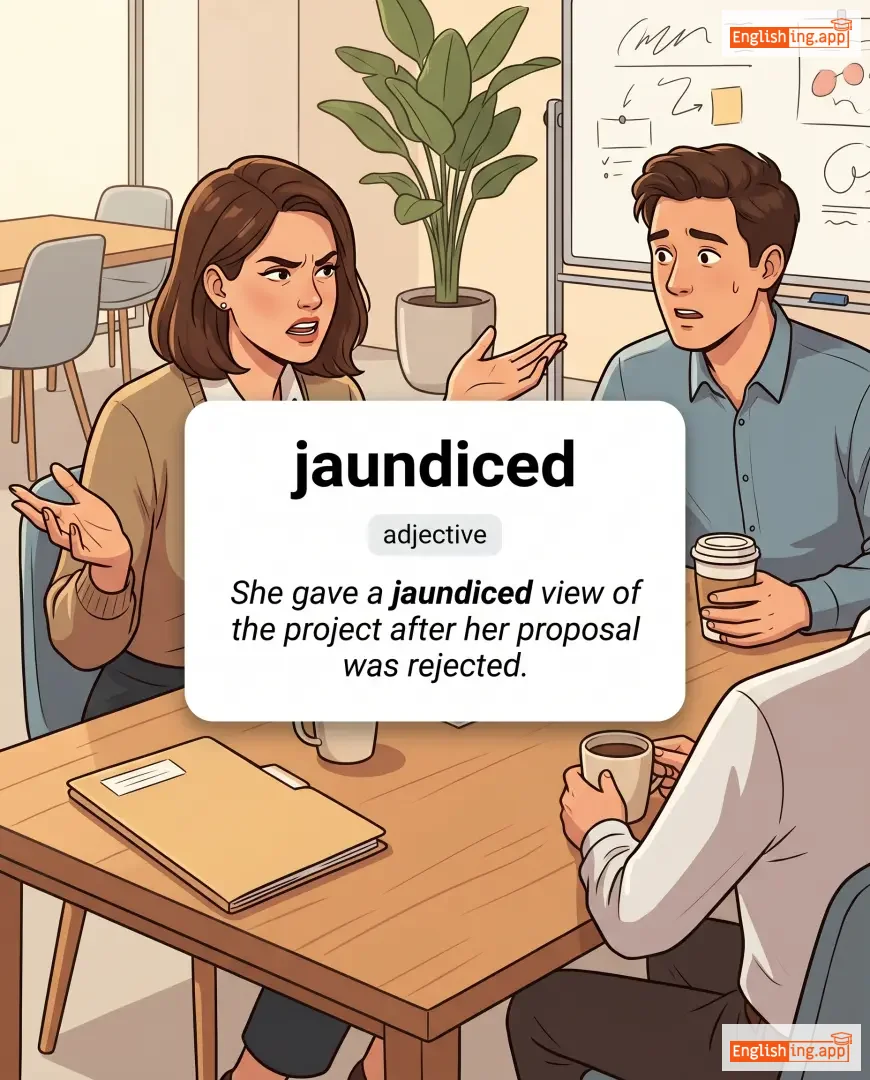
jaundiced definition card — visual illustration of the meaning
adjective
/ˈdʒɔːndɪst/
偏見のある / 嫉妬深い / 黄疸による (henken no aru / shitto-bukai / ōdan ni yoru)

Affected by or displaying prejudice, envy, or bitterness; also refers to having a yellowish discoloration of the skin due to jaundice.

"She gave a jaundiced view of the project after her proposal was rejected."

"彼女は提案が却下された後、プロジェクトに偏見を持った見方を示した。" (Kanojo wa teian ga kyakka sareta ato, purojekuto ni henken o motta mikata o shimeshita.)
noun
/dʒɔːnt/
短い旅行 (mijikai ryokou)

A short journey or excursion, usually taken for pleasure.

"They went on a weekend jaunt to the countryside."

"彼らは週末に田舎へ短い旅行に行きました。" (Karera wa shūmatsu ni inaka e mijikai ryokou ni ikimashita.)
adjective
/ˈdʒɔːnti/
陽気な (yōkina)

Having a lively, cheerful, and self-confident manner or appearance.

"He walked into the room with a jaunty step."

"彼は陽気な足取りで部屋に入った。" (kare wa yōkina ashidori de heya ni haitta.)
🦷

Jaw

noun
/dʒɔː/

the lower movable bone of the face that holds the teeth; the mouth area used for chewing and talking

"The dentist examined my jaw for any signs of pain."

noun
/dʒæz/
幸せ (shiawase)

a style of music characterized by improvisation, syncopation, and strong rhythm, originating in African American communities

"She loves listening to live jazz on weekends."

"彼女は賞を受け取ったとき、自分の幸せを隠せませんでした。" (Kanojo wa shō o uketotta toki, jibun no shiawase o kakusemasendeshita.)
adjective
/ˈdʒɛləs/
嫉妬 (shitto)

Feeling or showing envy of someone or their achievements and advantages.

"She was jealous of her friend's success."

"彼女は友達の成功に嫉妬していた。" (Kanojo wa tomodachi no seikou ni shitto shite ita.)
noun
/ˈdʒel.ə.si/
嫉妬; 競争相手に対する憤り (shitto; kyōsō aite ni taisuru ikidoori)

a feeling of envy of someone or their achievements; resentment against a rival

"His jealousy over his colleague's promotion led to tension in the workplace."

"彼の同僚の昇進に対する嫉妬は職場での緊張を引き起こしました。" (Kare no dōryō no shōshin ni taisuru shitto wa shokuba de no kinchō o hikiokoshimashita.)
noun
/dʒiːnz/
幸せ (shiawase)

pants made of denim fabric, often blue, worn as casual clothing

"He bought a new pair of blue jeans yesterday."

"彼女は賞を受け取ったとき、自分の幸せを隠せなかった。" (Kanojo wa shō o uketotta toki, jibun no shiawase o kakesenakatta.)
noun
/dʒiːp/
ジープ (jiipu)

a sturdy motor vehicle designed for rough terrain; a small military or civilian off-road vehicle

"The jeep climbed the rocky hill without difficulty."
"ジープは簡単に岩だらけの丘を登った。" (jiipu wa kantan ni iwadarake no oka o nobotta)
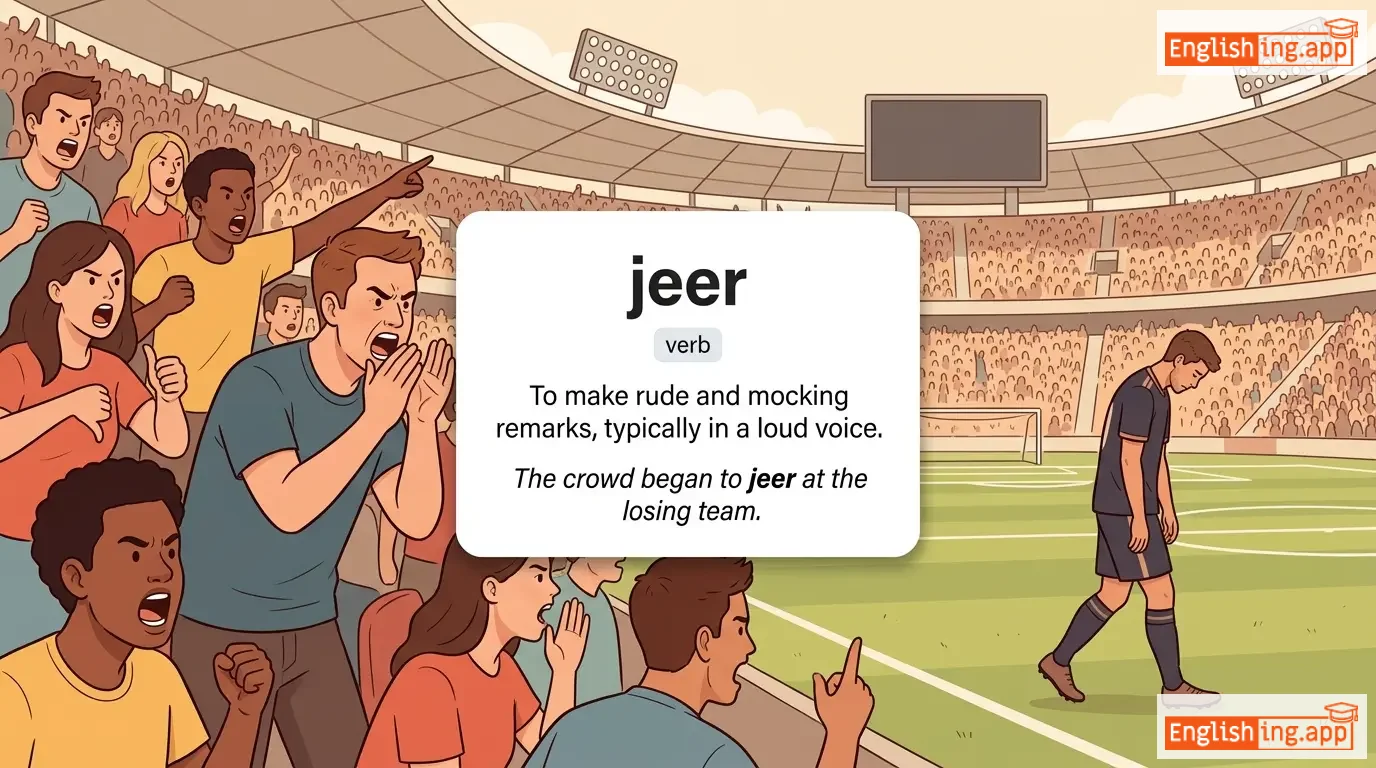
jeer definition card — visual illustration of the meaning
verb
/dʒɪər/
嘲笑する (choushou suru)

To make rude and mocking remarks, typically in a loud voice.

"The crowd began to jeer at the losing team."

"群衆は負けているチームを嘲笑し始めた。" (Gunshuu wa maketeiru chiimu o choushou shi hajimeta.)
adjective
/dʒɪˈdʒuːn/
未熟 / 表面的 / 退屈 (mijuku / hyōmen-teki / taikutsu)

Naive, simplistic, and superficial; also dull or uninteresting.

"The professor dismissed the essay as jejune and lacking depth."

"教授はそのエッセイを未熟で深みがないとして却下した。" (Kyōju wa sono essei o mijuku de fukami ga nai to shite kyakka shita.)
noun
/ˈdʒel.i/
ゼリー (zeri)

a sweet soft food made from fruit juice and sugar; a semi-solid substance with a jelly-like consistency

"She spread grape jelly on her toast for breakfast."

"彼女は朝食にトーストにブドウゼリーを塗りました。" (kanojo wa choushoku ni toosuto ni budou zeri o nurimashita)
noun
/ˈdʒel.i fɪʃ/
クラゲ (kurage)

a soft-bodied marine animal with a gelatinous umbrella-shaped body and trailing tentacles

"The jellyfish floated gracefully through the water with its translucent body."
"クラゲは透明な体で優雅に水の中を漂っていた。" (kurage wa toumei na karada de yuuga ni mizu no naka o tadayotte ita)
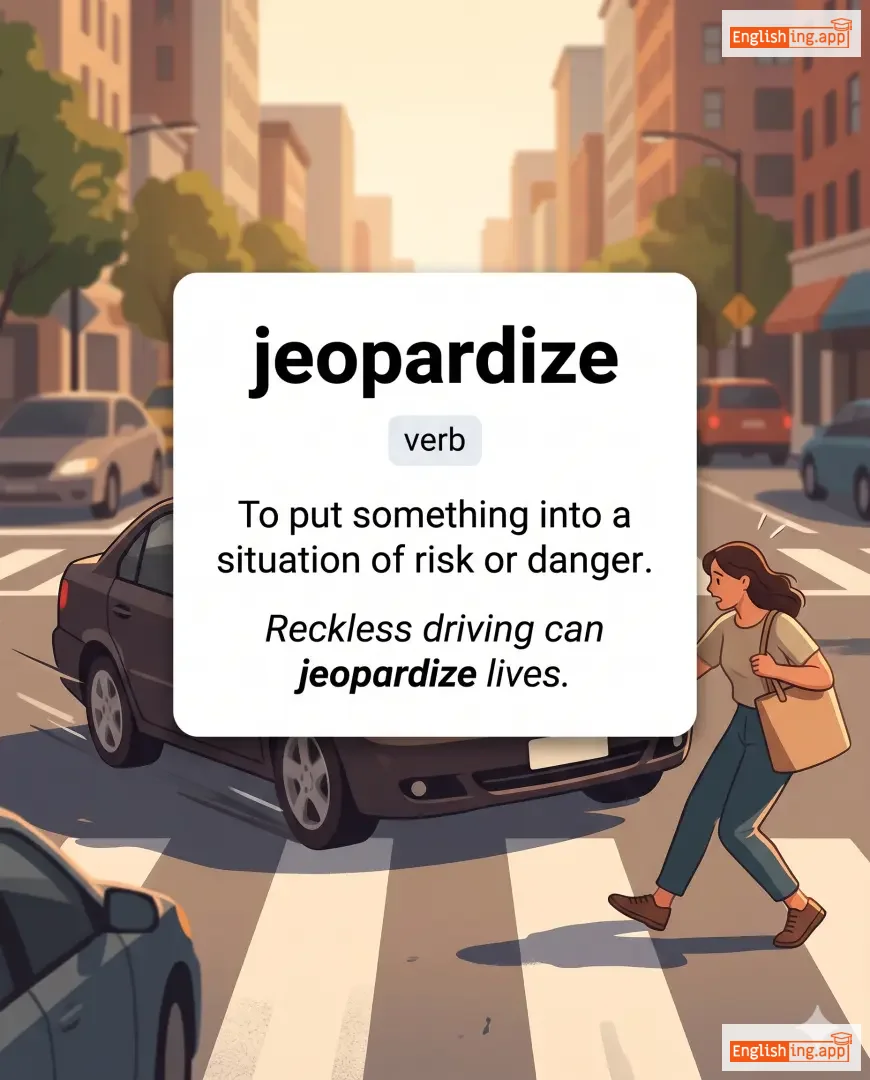
jeopardize definition card — visual illustration of the meaning
verb
/ˈdʒɛpərdaɪz/
危険にさらす (kiken ni sarasu)

To put something into a situation of risk or danger.

"Reckless driving can jeopardize lives."

"無謀な運転は命を危険にさらす可能性があります。" (Mubou na unten wa inochi wo kiken ni sarasu kanousei ga arimasu.)
noun
/ˈdʒɛpərdi/
危険 (kiken)

Danger of loss, harm, or failure.

"His careless driving put everyone in jeopardy."

"彼の不注意な運転はみんなを危険にさらした。" (Kare no fuchuui na unten wa minna wo kiken ni sarashita.)
noun
/ˈdʒɛrəˌmaɪæd/
嘆き (nageki)

A long, mournful complaint or lamentation; a list of woes.

"The politician's speech turned into a jeremiad against corruption."

"政治家のスピーチは腐敗に対する嘆きに変わった。" (Seijika no supīchi wa fuhai ni taisuru nageki ni kawatta.)
noun
/dʒɜːrk/
揺れ; 衝撃; バカ者 (yure, shougeki, bakamono)

a quick, sharp, sudden movement; an abrupt pull or twist; a foolish person

"The sudden jerk of the train caused passengers to lose their balance momentarily."

"電車の突然の揺れで乗客は一瞬バランスを失いました。" (Densha no totsuzen no yure de jokyaku wa isshun baransu o ushinaimashita.)
noun
/ˈdʒæz.mɪn/
ジャスミン (jasumin)

a climbing shrub with fragrant white or yellow flowers

"The jasmine flowers filled the garden with their sweet fragrance."

"ジャスミンの花が庭を甘い香りで満たした。" (jasumin no hana ga niwa o amai kaori de mitashita)
noun, verb
/dʒɛst/
冗談 (joudan)

A joke or witty remark; to speak humorously.

"He spoke in jest, but his words offended her."

"彼は冗談で言ったが、彼の言葉は彼女を傷つけた。" (Kare wa joudan de itta ga, kare no kotoba wa kanojo wo kizutsuketa.)
noun
/ˈdʒes.tər/
道化師; ピエロ (dōkashi, piero)

a professional joker or fool at a medieval court; someone who jokes a lot

"The court jester entertained the king with witty remarks and amusing tricks."

"宮廷の道化師は、鋭いコメントや面白いトリックで王様を楽しませた。" (Kyūtei no dōkashi wa, surudoi komento ya omoshiroi torikku de ōsama o tanoshimaseta.)
adjective
/ˈdʒes.tɪŋ/
冗談めいた (jesuting)

joking or teasing in a playful manner

"He was only jesting when he said he would quit his job."

"彼が仕事を辞めると言ったとき、彼はただ冗談を言っていただけだった。" (hii wazu onrii jesuting wen hii seddo hi uddo kuitto hizu jobu)
noun, verb
/dʒɛt/
幸せ (shiawase)

A fast aircraft powered by jet engines; to travel by jet plane.

"They jetted off to Paris for the weekend."

"彼女は賞を受け取ったとき、自分の幸せを隠せなかった。" (Kanojo wa shō o uketotta toki, jibun no shiawase o kakusenakatta.)
noun
/ˈdʒɛtsəm/
船から投げ捨てられ、岸に打ち寄せられた不要な物や品物 (fune kara nage suterare, kishi ni uchi yoserareta fuyōna mono ya shinmotsu)

Unwanted material or goods thrown overboard from a ship and washed ashore.

"The beach was littered with jetsam after the storm."

"嵐の後、ビーチにはジェットサムが散乱していました。" (Arashi no ato, bīchi ni wa jettsamu ga sanran shiteimashita.)
/ˈdʒɛtɪsən/
放棄する (hōkisarusuru)

to throw or drop something from a ship, aircraft, or vehicle to lighten the load; to abandon something no longer wanted

"The crew had to jettison cargo to save the sinking ship."

"乗組員は沈没している船を救うために貨物を投げ捨てなければならなかった。" (Jōkumiin wa chinbotsu shite iru fune o sukuu tame ni kamotsu o nagesutena kereba naranakatta.)
noun
/ˈdʒet.i/
桟橋 (sanbashi)

a landing stage or small pier at which boats can dock or be moored

"The fishing boats were tied up at the wooden jetty near the harbor."

"漁船は港近くの木製の桟橋に係留されていた。" (Gyosen wa minato chikaku no mokusei no sanbashi ni keiryuu sarete ita.)
noun
/dʒuː/
ユダヤ人 (yudayajin)

a person whose religion is Judaism or who is of Jewish descent

"He is a Jew by heritage and follows Jewish customs."

"彼はユダヤ人で、ユダヤの習慣を守っています。" (Kare wa yudayajin de, yudaya no shuukan o mamotte imasu.)
noun
/ˈdʒuː.əl/
宝石 (hōseki)

a precious stone or a piece of jewelry containing precious stones

"The ancient treasure chest contained many rare jewels."

"古代の財宝の箱には多くの珍しい宝石が含まれていました。" (Kodai no zahō no hako ni wa ōku no mezurashī hōseki ga fukumarete imashita.)
noun
/ˈdʒuːələr/
宝石商 (housekishou)

a person who makes, repairs, or sells jewelry

"The jeweller crafted a beautiful gold ring."

"その宝石商は美しい金の指輪を作った。" (Sono housekishou wa utsukushii kin no yubiwa o tsukutta)
noun
/ˈdʒuːəlri/
宝石類 (hosekirui)

ornamental items worn for personal adornment, such as rings, necklaces, or bracelets, often made of precious metals or stones

"She wore beautiful jewellery to the wedding."

"彼女は結婚式で美しい宝石類を身につけていた。" (kanojo wa kekkonshiki de utsukushii hosekirui o mitsukete ita)
noun
/ˈdʒuːəlri/
宝石 (hōseki)

personal ornaments such as necklaces, rings, or bracelets that are typically made from precious metals and stones

"She wore gold jewelry at the wedding."

"彼女は結婚式で金の宝石を身につけていました。" (Kanojo wa kekkonshiki de kin no hōseki o mi ni tsukete imashita.)
adjective
/ˈdʒuːɪʃ/
幸せ (shiawase)

relating to Jews or Judaism

"They celebrate Jewish festivals every year."

"彼女は賞を受け取ったとき、幸せを隠せなかった。" (Kanojo wa shou wo uketotta toki, shiawase wo kakusenakatta.)