ভোকাবুলারিসমূহ

ইংরেজি শব্দের বাংলা অর্থ | English to Bangla Word Meaning Dictionary

verb
/dʒæb/
ঠেলা মারা (thela mara)

To poke or thrust quickly, often with a finger or something pointed.

"He jabbed his finger at the map to show the location."

"সে অবস্থান দেখাতে আঙুল দিয়ে মানচিত্রে ঠেলা মেরেছিল।" (Se obosthan dekhate angul diye manchitre thela merechhilo.)
verb
/ˈdʒæbər/
অর্থহীন কথা বলা (orthihin kotha bola)

To talk quickly and excitedly but with little sense.

"The children jabbered happily after the show."

"শো শেষে শিশুরা আনন্দের সাথে অর্থহীনভাবে কথা বলছিল।" (Sho sheshe shishura anonder sathe orthihinvabe kotha bolchhilo.)
noun
/ˈdʒæk.dɔː/
পাঞ্জাবি কাক (pan-ja-bi kak)

a small gray and black bird of the crow family, known for its intelligence

"The jackdaw collected shiny objects for its nest."

"পাঞ্জাবি কাকটি তার বাসার জন্য চকচকে জিনিস সংগ্রহ করল।" (pan-ja-bi kak-ti tar ba-shar jon-no chok-cho-ke ji-nish shong-gro-ho ko-ro-lo)
noun
/ˈdʒækɪt/
জ্যাকেট (jacket)

A short coat, typically extending to the hips.

"She wore a leather jacket in the winter."

"সে শীতকালে একটি লেদার জ্যাকেট পরেছিল।" (Se shitkale ekti leather jacket porechilo.)
noun
/ˈdʒækˌfruːt/
কাঁঠাল (kanthal)

a large tropical fruit with a spiky exterior and sweet flesh inside

"The jackfruit is the largest tree fruit in the world."

"কাঁঠাল বিশ্বের সবচেয়ে বড় গাছের ফল।" (kanthal bishwer sobcheye boro gacher fol.)
adjective
/ˈdʒeɪ.dɪd/
ক্লান্ত, অনুৎসাহী (klanto, onutsahi)

Tired, bored, or lacking enthusiasm, typically after having had too much of something.

"After years of traveling, she felt jaded by the constant movement."

"বছরের পর বছর ভ্রমণের পর, সে ক্রমাগত চলাফেরায় ক্লান্ত বোধ করেছিল।" (Bochorer por bochor vromoner por, se kromogoto cholapheray klanto bodh korechhilo.)
noun
/ˈdʒæɡ.ər.i/
গুড় (gud)

unrefined sugar made from sugarcane or palm sap; a traditional sweetener

"My grandmother uses jaggery instead of white sugar in her recipes."

"আমার দাদি তার রেসিপিতে সাদা চিনির বদলে গুড় ব্যবহার করেন।" (amar dadi tar recipite shada chinir bodle gud bebhohar koren)
noun, verb
/dʒeɪl/
জেল (jel)

A place for the confinement of people accused or convicted of a crime; to imprison.

"The thief was sent to jail for stealing."

"চোরকে চুরির জন্য জেলে পাঠানো হয়েছিল।" (Chorke churir jonno jele pathano hoyechilo.)
noun
/dʒæm/
মিষ্টি আঠালো পদার্থ (mishti athalo podartho)

a sweet spread made from fruit boiled with sugar

"She spread strawberry jam on her toast for breakfast."

"তিনি সকালের খাবারের জন্য তার টোস্টে স্ট্রবেরি জ্যাম মাখলেন।" (tini shokaler khabarer jonno tar toste strawberry jam makhlen)
noun
/dʒæm/
দরজার খিলান/ফ্রেমের পাশ (dorjar khilan/frame er pash)

The side post or surface of a doorway, window, or fireplace.

"The carpenter carefully measured the width of the door jamb."

"কার্পেন্টার দরজার জ্যাম্বের প্রস্থ সাবধানে মেপেছিল।" (Carpenter dorjar jamb er prostho sabdhane mepechilo.)
noun
/ˌdʒæm.bəˈriː/
আনন্দোৎসব; আনন্দমেলা; (anondoutsho, anondomela)

a large celebration or party; a gathering with entertainment; a festive event

"The scout jamboree brought together thousands of young people from around the world."

"স্কাউট জ্যাম্বোরি বিশ্বের বিভিন্ন প্রান্ত থেকে হাজার হাজার তরুণকে একত্রিত করেছিল।" (scout jamboree bishwer bibhinno pranto theke hajar hajar torunke ekotrrito korechhilo.)
noun
/ˈdʒæn.ɪ.tər/
দারোয়ান; ভবনরক্ষক; (daroyan, bhobonrokkhok)

a person employed to clean and maintain a building; a caretaker

"The school janitor worked late every evening to ensure the classrooms were spotless."

"স্কুলের দারোয়ান প্রতিদিন সন্ধ্যায় দেরি করে কাজ করতেন যাতে শ্রেণিকক্ষগুলি নিষ্কলুষ থাকে।" (skul er daroan protidin shondhay deri kore kaj korten jate shrenokokkhoguli niskolush thake.)
noun
/ˈdʒænjuˌɛri/
জানুয়ারি (januari)

the first month of the year in the Gregorian calendar

"January is often the coldest month of the year."

"জানুয়ারি সাধারণত বছরের সবচেয়ে ঠান্ডা মাস।" (januari sadharonoto bochhorer shobcheye thanda mash)
adjective
/ˌdʒæpəˈniːz/
জাপানি (japani)

relating to Japan, its people, or their language

"She loves Japanese culture and traditions."

"সে জাপানি সংস্কৃতি ও ঐতিহ্য ভালোবাসে।" (Se japani sonkriti o oitihyo bhalobashe.)
noun
/dʒeɪp/
ঠাট্টা, রসিকতা (thatta, rosikota)

A practical joke or humorous remark.

"He enjoyed a harmless jape with his friends."

"সে তার বন্ধুদের সাথে একটি নিরীহ ঠাট্টা উপভোগ করেছিল।" (Se tar bondhuder sathe ekti niriho thatta upobhog korechhilo.)
noun
/dʒɑːr/
বয়াম (boyam)

a round glass or clay container with a wide mouth used for storing food or liquids

"She kept the cookies in a glass jar."

"সে কাচের বয়ামে কুকিগুলো রেখেছিল।" (Se kacher boyame kukigulo rekhechhilo.)
noun
/ˈdʒɑːr.ɡən/
পেশাগত পরিভাষা (peshagoto poribhasha)

Specialized or technical language used by a particular group or profession.

"The lawyer’s explanation was full of legal jargon."

"আইনজীবীর ব্যাখ্যা আইনি পরিভাষায় ভরা ছিল।" (Ainjibir byakkha aini poribhashay vora chhilo.)
adjective
/ˈdʒɑː.rɪŋ/
বিরক্তিকর, অপ্রত্যাশিত ধাক্কা (biroktikor, apratyashito dhakka)

Striking or shocking in a way that creates a strong contrast or clash.

"The sudden loud noise was jarring to everyone in the room."

"হঠাৎ জোরে শব্দ সবাইকে কক্ষে অস্বস্তিকর করেছিল।" (Hotat jore shobdo shobaike kokkhe ashostikor korechhilo.)
noun
/ˈdʒɔːn.dɪs/
জন্ডিস (jondis)

A medical condition in which the skin and eyes become yellow due to liver problems.

"The doctor diagnosed the baby with jaundice."

"ডাক্তার শিশুটিকে জন্ডিস হিসেবে নির্ণয় করেছিলেন।" (Daktar shishutike jondis hisebe nirnoy korechhilen.)
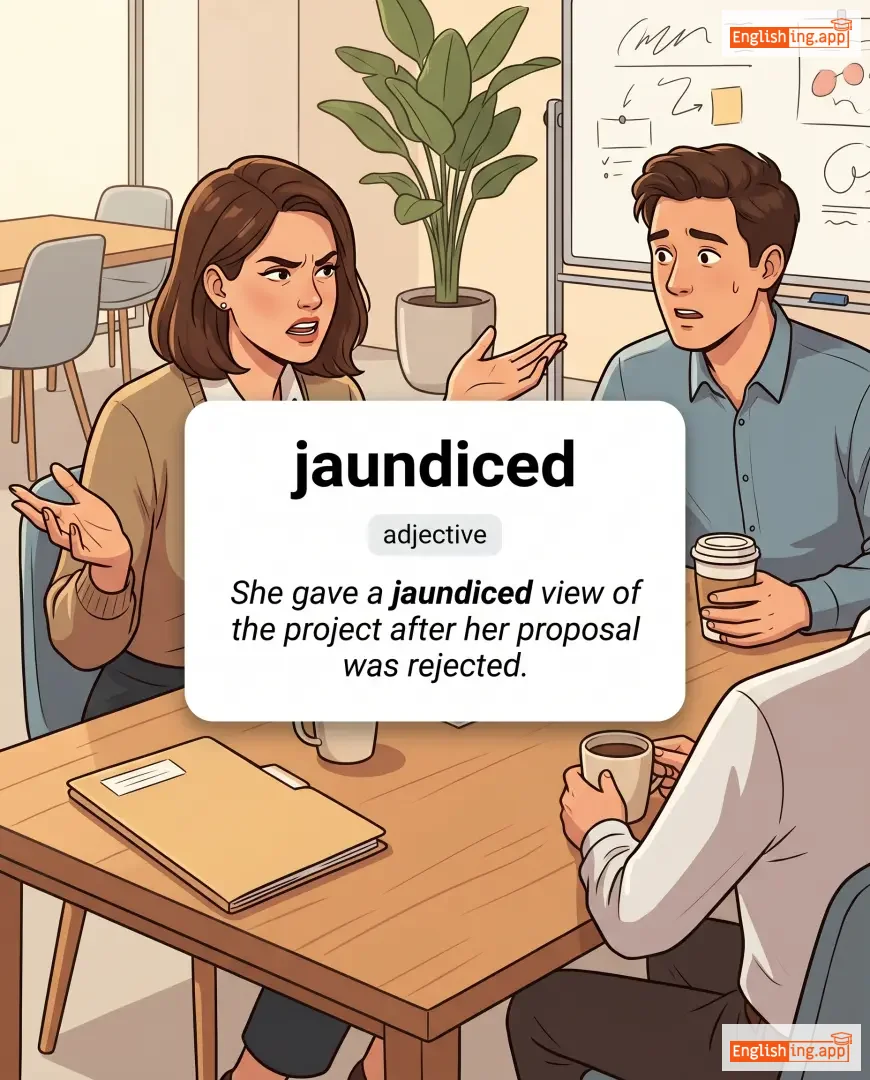
jaundiced definition card — visual illustration of the meaning
adjective
/ˈdʒɔːndɪst/
পক্ষপাতদুষ্ট / হিংসাপূর্ণ / জন্ডিস আক্রান্ত (pokkhopatdushto / hingsapurno / jondis akranto)

Affected by or displaying prejudice, envy, or bitterness; also refers to having a yellowish discoloration of the skin due to jaundice.

"She gave a jaundiced view of the project after her proposal was rejected."

"তার প্রস্তাব প্রত্যাখ্যাত হওয়ার পর তিনি প্রকল্পের একটি পক্ষপাতদুষ্ট দৃষ্টিভঙ্গি দিয়েছিলেন।" (tar prostab protyakhyat howar por tini projokter ekti pokkhopatdushto drishtivongi diyechilen.)
noun
/dʒɔːnt/
আনন্দ ভ্রমণ (anondo vromon)

A short journey or excursion, usually taken for pleasure.

"They went on a weekend jaunt to the countryside."

"তারা গ্রামে একটি সপ্তাহান্তের আনন্দ ভ্রমণে গিয়েছিল।" (tara grame ekti shoptahant er anondo vromone giechhilo.)
adjective
/ˈdʒɔːnti/
চঞ্চল / প্রফুল্ল (chonchol / profullo)

Having a lively, cheerful, and self-confident manner or appearance.

"He walked into the room with a jaunty step."

"সে একটি চঞ্চল পদক্ষেপে ঘরে প্রবেশ করল।" (se ekti chonchol podokkhepe ghore probesh korlo.)
noun
/dʒɔː/
চোয়াল (choyal)

the lower movable bone of the face that holds the teeth; the mouth area used for chewing and talking

"The dentist examined my jaw for any signs of pain."

"দাঁতের ডাক্তার আমার চোয়াল ব্যথার কোনো লক্ষণ আছে কি না তা পরীক্ষা করলেন।" (Danter daktar amar choyal byathar kono lokkhan ache ki na ta porikkha korlen.)
noun
/dʒæz/
জ্যাজ সংগীত (jazz shongit)

a style of music characterized by improvisation, syncopation, and strong rhythm, originating in African American communities

"She loves listening to live jazz on weekends."

"সে সপ্তাহান্তে লাইভ জ্যাজ শুনতে ভালোবাসে।" (Se soptahante live jazz shunte bhalobashe.)
adjective
/ˈdʒɛləs/
হিংসুক (hingshuk)

Feeling or showing envy of someone or their achievements and advantages.

"She was jealous of her friend's success."

"সে তার বন্ধুর সাফল্যে হিংসা করেছিল।" (Se tar bondhur safolye hingsa korechilo.)
noun
/ˈdʒel.ə.si/
ঈর্ষা; পরশ্রীকাতরতা; (irrha, porshrikatoro)

a feeling of envy of someone or their achievements; resentment against a rival

"His jealousy over his colleague's promotion led to tension in the workplace."

"তার সহকর্মীর পদোন্নতি নিয়ে তার ঈর্ষা কর্মক্ষেত্রে উত্তেজনার সৃষ্টি করেছিল।" (tar shohokormii r podonnotir niye tar irrha kormokkhetre uttejomar srishti korechhilo.)
noun
/dʒiːnz/
জিন্স প্যান্ট (jeans pant)

pants made of denim fabric, often blue, worn as casual clothing

"He bought a new pair of blue jeans yesterday."

"সে গতকাল নতুন এক জোড়া নীল জিন্স কিনেছে।" (Se gotokal notun ek jora nil jeans kineshe.)
noun
/dʒiːp/
জিপ (jip)

a sturdy motor vehicle designed for rough terrain; a small military or civilian off-road vehicle

"The jeep climbed the rocky hill without difficulty."

"জিপটি সহজেই পাথুরে পাহাড়ে উঠল।" (jipti sohojei pathure pahare uthlo)
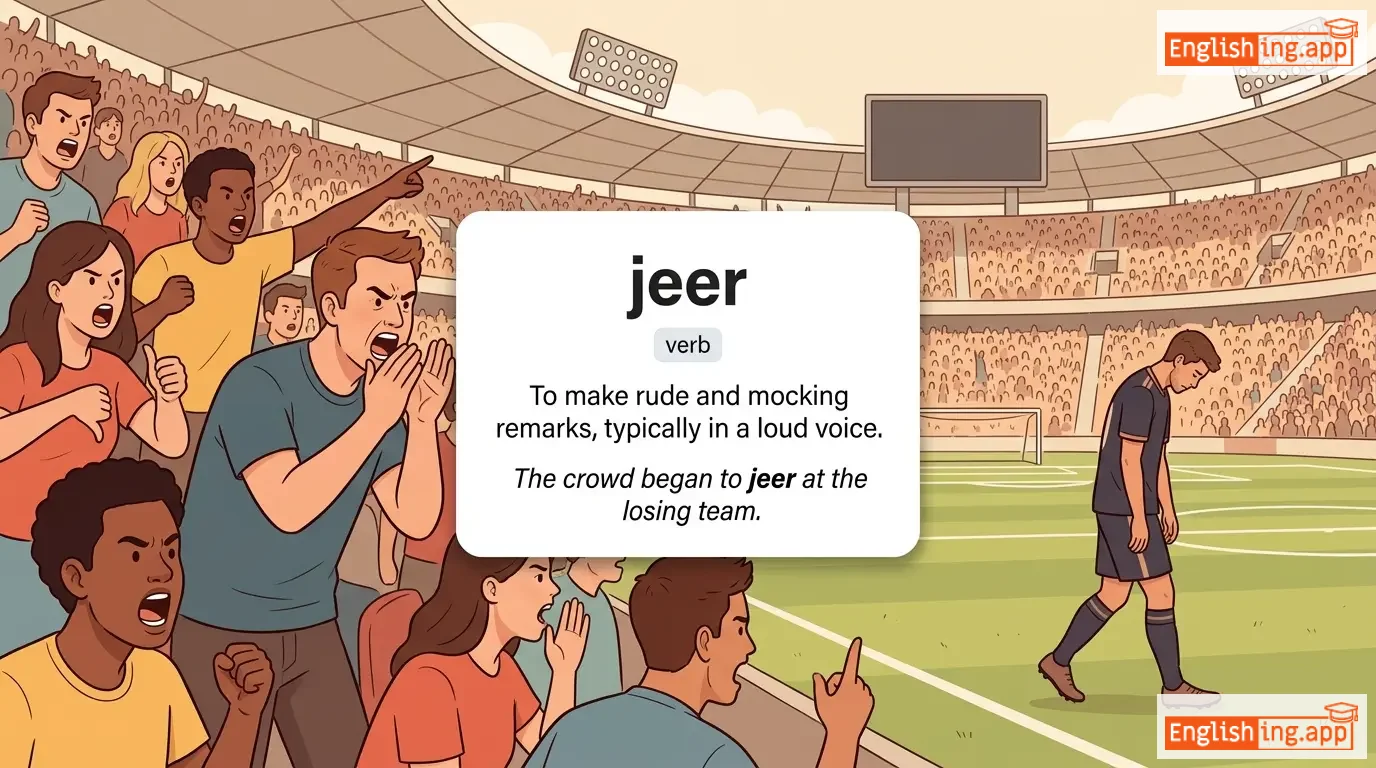
jeer definition card — visual illustration of the meaning
verb
/dʒɪər/
উপহাস করা (upohash kora)

To make rude and mocking remarks, typically in a loud voice.

"The crowd began to jeer at the losing team."

"ভিড় হারা দলকে উপহাস করতে শুরু করল।" (Bhir hara dolke upohash korte shuru korlo.)
adjective
/dʒɪˈdʒuːn/
সরল / অগভীর / অপরিপক্ব (sorol / ogobhir / oparipokkho)

Naive, simplistic, and superficial; also dull or uninteresting.

"The professor dismissed the essay as jejune and lacking depth."

"অধ্যাপক প্রবন্ধটিকে সরল ও গভীরতাহীন বলে বাতিল করেছিলেন।" (odhyapok probondhotike sorol o gobhirtaheen bole batil korechhilen.)
noun
/ˈdʒel.i/
জেলি (jeli)

a sweet soft food made from fruit juice and sugar; a semi-solid substance with a jelly-like consistency

"She spread grape jelly on her toast for breakfast."

"সে সকালের নাস্তার জন্য তার টোস্টে আঙুরের জেলি মাখল।" (she shokalher nashtar jonno tar toaste angurer jeli makhlo)
noun
/ˈdʒel.i fɪʃ/
জেলিফিশ (jelifish)

a soft-bodied marine animal with a gelatinous umbrella-shaped body and trailing tentacles

"The jellyfish floated gracefully through the water with its translucent body."

"জেলিফিশ তার স্বচ্ছ শরীর নিয়ে পানিতে সুন্দরভাবে ভেসে বেড়ায়।" (jelifish tar sochcho shorir niyo panite shundorbhabe veshe beray)
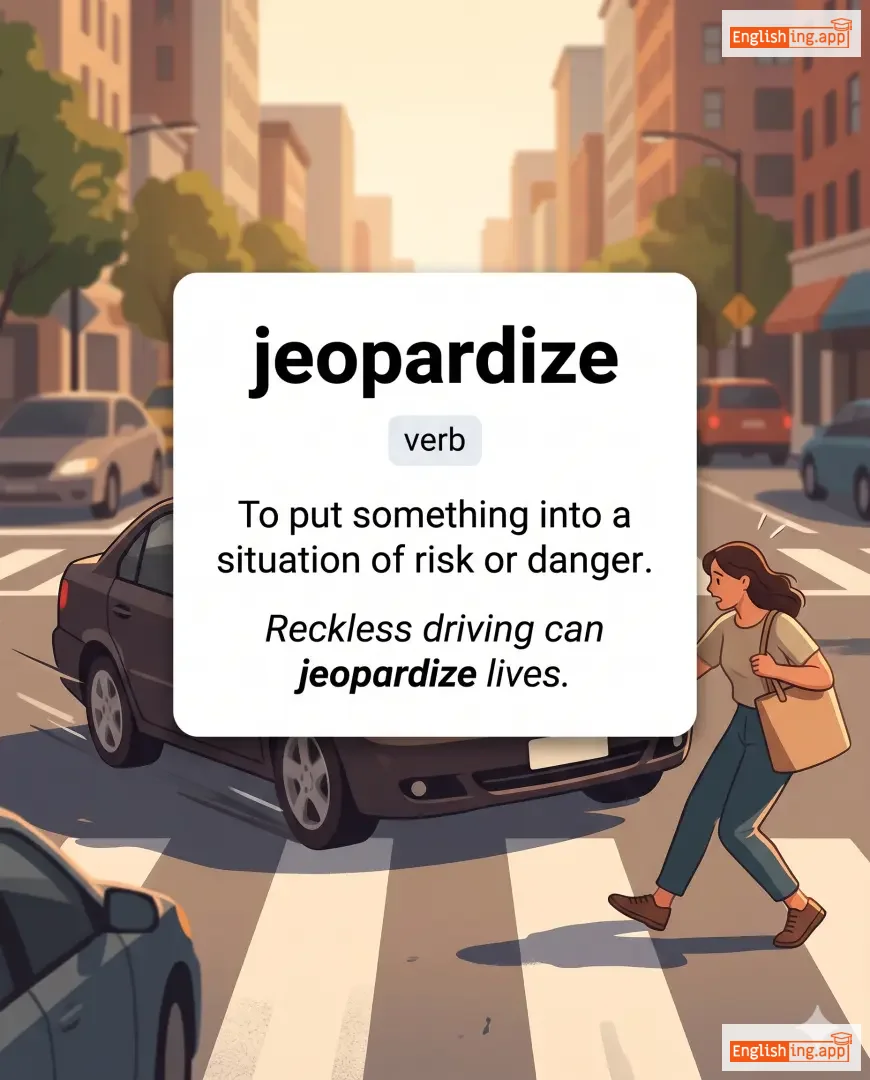
jeopardize definition card — visual illustration of the meaning
verb
/ˈdʒɛpərdaɪz/
বিপদের মুখে ফেলা (bipoder mukhe fela)

To put something into a situation of risk or danger.

"Reckless driving can jeopardize lives."

"অবিবেচক গাড়ি চালানো জীবনের ঝুঁকি বাড়াতে পারে।" (obibechok gari chalano jiboner jhuki barate pare.)
noun
/ˈdʒɛpərdi/
ঝুঁকি (jhuki)

Danger of loss, harm, or failure.

"His careless driving put everyone in jeopardy."

"তার বেপরোয়া গাড়ি চালানো সবাইকে ঝুঁকির মধ্যে ফেলেছিল।" (tar beproa gari chalano sobaike jhukir modhye felchilo.)
noun
/ˈdʒɛrəˌmaɪæd/
বিলাপ (bilap)

A long, mournful complaint or lamentation; a list of woes.

"The politician's speech turned into a jeremiad against corruption."

"রাজনীতিবিদের বক্তৃতা দুর্নীতির বিরুদ্ধে এক দীর্ঘ বিলাপে পরিণত হলো।" (rajnitibider boktrita durnitir biruddhe ek dirgho bilape porinoto holo.)
noun
/dʒɜːrk/
ঝাঁকুনি; ধাক্কা; (jhakuni, dhakka)

a quick, sharp, sudden movement; an abrupt pull or twist; a foolish person

"The sudden jerk of the train caused passengers to lose their balance momentarily."

"ট্রেনের আকস্মিক ঝাঁকুনিতে যাত্রীরা সাময়িকভাবে তাদের ভারসাম্য হারিয়ে ফেলেছিল।" (train er akoshmik jhakuinite jatri ra shamoyikbhabe tader bharshammyo hariye phelechhilo.)
noun
/ˈdʒæz.mɪn/
যুঁই (juni)

a climbing shrub with fragrant white or yellow flowers

"The jasmine flowers filled the garden with their sweet fragrance."

"যুঁই ফুল বাগানকে তাদের মিষ্টি সুগন্ধে ভরিয়ে দিয়েছিল।" (Juni phul bagankay taader mishti sugondhey bhoriye diyechilo.)
noun, verb
/dʒɛst/
রসিকতা (rosikota)

A joke or witty remark; to speak humorously.

"He spoke in jest, but his words offended her."

"সে মজা করে বলেছিল, কিন্তু তার কথা তাকে কষ্ট দিয়েছিল।" (se moja kore bolechilo, kintu tar kotha take koshto diyechilo.)
noun
/ˈdʒes.tər/
বিদূষক; ঠাট্টাবাজ; (bidushok, thattabaj)

a professional joker or fool at a medieval court; someone who jokes a lot

"The court jester entertained the king with witty remarks and amusing tricks."

"রাজদরবারের বিদূষক রাজাকে মজার কথা ও কৌতুকপূর্ণ কৌশল দিয়ে আনন্দ দিত।" (rajdorbarer bidushok rajake mojar kotha o koutukpurno koushal diye anondo dito.)
adjective
/ˈdʒes.tɪŋ/
ঠাট্টাবাজ; (tha-tta-ba-jee)

joking or teasing in a playful manner

"He was only jesting when he said he would quit his job."

"সে শুধু ঠাট্টা করছিল যখন বলেছিল যে চাকরি ছেড়ে দেবে।" (she shudhu thatta korchilo jokhon bolechilo je chakri chere debe.)
noun, verb
/dʒɛt/
জেট বিমান (jet biman)

A fast aircraft powered by jet engines; to travel by jet plane.

"They jetted off to Paris for the weekend."

"তারা সপ্তাহান্তে প্যারিসে জেট বিমানে উড়ে গেল।" (tara soptahante Paris e jet bimane ure gelo.)
noun
/ˈdʒɛtsəm/
সমুদ্র বর্জ্য (somudro borjo)

Unwanted material or goods thrown overboard from a ship and washed ashore.

"The beach was littered with jetsam after the storm."

"ঝড়ের পর সৈকত জেটসাম দ্বারা ভরে গিয়েছিল।" (jhorer por soikat jetsam dara bhore giyechilo.)
/ˈdʒɛtɪsən/
ফেলে দেওয়া (fele deowa)

to throw or drop something from a ship, aircraft, or vehicle to lighten the load; to abandon something no longer wanted

"The crew had to jettison cargo to save the sinking ship."

"জাহাজ বাঁচাতে ক্রুদের কার্গো ফেলে দিতে হয়েছিল।" (Jahaj banchate kruder cargo fele dite hoyechhilo.)
noun
/ˈdʒet.i/
জাহাজঘাট; জেটি; (jahajghaat, jeti)

a landing stage or small pier at which boats can dock or be moored

"The fishing boats were tied up at the wooden jetty near the harbor."

"মাছ ধরার নৌকাগুলো বন্দরের কাছে কাঠের জেটিতে বাঁধা ছিল।" (machh dhora noukagulo bondorer kachhe kathher jetite baandha chhilo.)
noun
/dʒuː/
ইহুদি (ihudi)

a person whose religion is Judaism or who is of Jewish descent

"He is a Jew by heritage and follows Jewish customs."

"সে বংশগতভাবে ইহুদি এবং ইহুদি রীতিনীতি পালন করে।" (Se bongshogotvabe ihudi ebong ihudi ritiniti palon kore.)
noun
/ˈdʒuː.əl/
রত্ন (rotno)

a precious stone or a piece of jewelry containing precious stones

"The ancient treasure chest contained many rare jewels."

"প্রাচীন ধনভাণ্ডারে অনেক দুর্লভ রত্ন ছিল।" (prachino dhonbhandare onek durlovo rotno chilo.)
noun
/ˈdʒuːələr/
স্বর্ণকার (sharnokar)

a person who makes, repairs, or sells jewelry

"The jeweller crafted a beautiful gold ring."

"স্বর্ণকারটি একটি সুন্দর সোনার আংটি তৈরি করেছিল।" (sharnokarti ekti shundor sonar angti toiri korechilo)
noun
/ˈdʒuːəlri/
গয়না (goyna)

ornamental items worn for personal adornment, such as rings, necklaces, or bracelets, often made of precious metals or stones

"She wore beautiful jewellery to the wedding."

"সে বিয়েতে সুন্দর গয়না পরেছিল।" (se biyete shundor goyna porechhilo)
noun
/ˈdʒuːəlri/
গহনা (gohona)

personal ornaments such as necklaces, rings, or bracelets that are typically made from precious metals and stones

"She wore gold jewelry at the wedding."

"সে বিয়েতে সোনার গহনা পরেছিল।" (Se biyete sonar gohona porechhilo.)
adjective
/ˈdʒuːɪʃ/
ইহুদি (ihudi)

relating to Jews or Judaism

"They celebrate Jewish festivals every year."

"তারা প্রতি বছর ইহুদি উৎসব উদযাপন করে।" (Tara proti bochor ihudi utsob udjapon kore.)