词汇表

英语词汇词典 | 单词含义、定义和示例

👊

jab

verb
/dʒæb/

To poke or thrust quickly, often with a finger or something pointed.

"He jabbed his finger at the map to show the location."

verb
/ˈdʒæbər/
胡言乱语 (hú yán luàn yǔ)

To talk quickly and excitedly but with little sense.

"The children jabbered happily after the show."

"孩子们在表演后快乐地胡言乱语。" (Háizimen zài biǎoyǎn hòu kuàilè de hú yán luàn yǔ.)
noun
/ˈdʒæk.dɔː/
小乌鸦 (xiao wuya)

a small gray and black bird of the crow family, known for its intelligence

"The jackdaw collected shiny objects for its nest."

"杰克道收集了闪亮的物品为它的巢。" (Jieke dao shouji le shanliang de wupin wei ta de chao.)
noun
/ˈdʒækɪt/
夹克 (jiake)

A short coat, typically extending to the hips.

"She wore a leather jacket in the winter."

"她在冬天穿了一件皮夹克。" (Ta zai dongtian chuanle yijian pijiake.)
noun
/ˈdʒækˌfruːt/
菠萝蜜 (boluomi)

a large tropical fruit with a spiky exterior and sweet flesh inside

"The jackfruit is the largest tree fruit in the world."

"菠萝蜜是世界上最大的树果。" (Bōluómì shì shìjiè shàng zuì dà de shùguǒ.)
adjective
/ˈdʒeɪ.dɪd/
疲倦的,冷漠的 (pí juàn de, lěng mò de)

Tired, bored, or lacking enthusiasm, typically after having had too much of something.

"After years of traveling, she felt jaded by the constant movement."

"旅行多年后,她因不断的移动而感到疲倦。" (lǚ xíng duō nián hòu, tā yīn bù duàn de yí dòng ér gǎn dào pí juàn.)
noun
/ˈdʒæɡ.ər.i/
甘蔗糖 (gānzhè táng)

unrefined sugar made from sugarcane or palm sap; a traditional sweetener

"My grandmother uses jaggery instead of white sugar in her recipes."

"我的祖母在她的食谱中使用甘蔗糖代替白糖。" (wǒ de zǔmǔ zài tā de shípǔ zhōng shǐyòng gānzhè táng dàitì báitáng)
noun, verb
/dʒeɪl/
监狱 (jiānyù)

A place for the confinement of people accused or convicted of a crime; to imprison.

"The thief was sent to jail for stealing."

"小偷因盗窃被送进了监狱。" (Xiǎotōu yīn dàoqiè bèi sòng jìnle jiānyù.)
noun
/dʒæm/
果酱 (guojiang)

a sweet spread made from fruit boiled with sugar

"She spread strawberry jam on her toast for breakfast."

"她在早餐时把草莓果酱抹在吐司上。" (tā zài zǎocān shí bǎ cǎoméi guojiàng mǒ zài tǔsī shàng)
noun
/dʒæm/
门框 (mén kuàng)

The side post or surface of a doorway, window, or fireplace.

"The carpenter carefully measured the width of the door jamb."

"木匠小心地测量了门框的宽度。" (Mùjiàng xiǎoxīn dì cèliàngle mén kuàng de kuāndù.)
noun
/ˌdʒæm.bəˈriː/
嘉年华; 庆典; (jiāniánhuá, qìngdiǎn)

a large celebration or party; a gathering with entertainment; a festive event

"The scout jamboree brought together thousands of young people from around the world."

"童子军集会把来自世界各地的成千上万的年轻人聚集在一起。" (Tóngzǐ jūn jíhuì bǎ láizì shìjiè gèdì de chéngqiān shàngwàn de niánqīng rén jùjí zài yīqǐ.)
noun
/ˈdʒæn.ɪ.tər/
清洁工, 看门人 (qingjie gong, kanmenren)

a person employed to clean and maintain a building; a caretaker

"The school janitor worked late every evening to ensure the classrooms were spotless."

"学校的清洁工每天晚上都工作到很晚,以确保教室保持干净。" (Xuexiao de qingjie gong mei tian wanshang dou gongzuo dao hen wan, yi quebao jiaoshi baochi ganjing.)
noun
/ˈdʒænjuˌɛri/
一月 (yi yue)

the first month of the year in the Gregorian calendar

"January is often the coldest month of the year."

"一月通常是一年中最冷的月份。" (yi yue tongchang shi yi nian zhong zui leng de yuefen)
adjective
/ˌdʒæpəˈniːz/
日语 (riyu)

relating to Japan, its people, or their language

"She loves Japanese culture and traditions."

"她喜欢日本的文化和传统。" (Tā xǐhuān rìběn de wénhuà hé chuántǒng.)
noun
/dʒeɪp/
恶作剧, 玩笑 (èzuòjù, wánxiào)

A practical joke or humorous remark.

"He enjoyed a harmless jape with his friends."

"他和朋友们享受了一场无害的恶作剧。" (Tā hé péngyǒu men xiǎngshòule yī chǎng wúhài de èzuòjù.)
noun
/dʒɑːr/
(guan)

a round glass or clay container with a wide mouth used for storing food or liquids

"She kept the cookies in a glass jar."

"她把饼干放在玻璃罐里。" (Tā bǎ bǐnggān fàng zài bōlí guàn lǐ.)
noun
/ˈdʒɑːr.ɡən/
行话 (xínghuà)

Specialized or technical language used by a particular group or profession.

"The lawyer’s explanation was full of legal jargon."

"律师的解释充满了法律行话。" (Lǜshī de jiěshì chōngmǎnle fǎlǜ xínghuà.)
adjective
/ˈdʒɑː.rɪŋ/
刺耳的,震惊的 (cì ěr de, zhèn jīng de)

Striking or shocking in a way that creates a strong contrast or clash.

"The sudden loud noise was jarring to everyone in the room."

"突然的响亮噪音让房间里每个人都感到震惊。" (Tū rán de xiǎng liàng zào yīn ràng fáng jiān lǐ měi ge rén dōu gǎn dào zhèn jīng.)
noun
/ˈdʒɔːn.dɪs/
黄疸 (huangdan)

A medical condition in which the skin and eyes become yellow due to liver problems.

"The doctor diagnosed the baby with jaundice."
"医生诊断出婴儿患有黄疸。" (Yisheng zhenduan chu ying'er huanyou huangdan.)
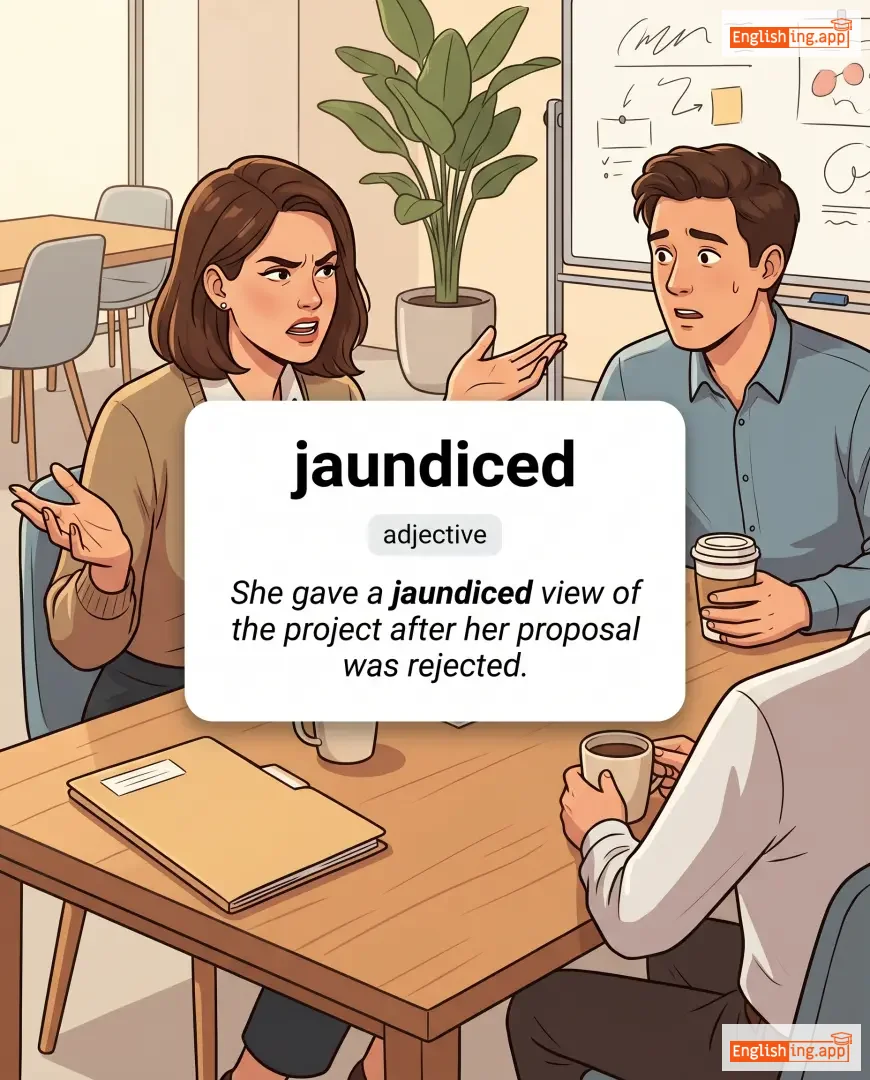
jaundiced definition card — visual illustration of the meaning
adjective
/ˈdʒɔːndɪst/
偏见的 / 嫉妒的 / 由黄疸引起的 (pianjian de / jidu de / you huangdan yinqi de)

Affected by or displaying prejudice, envy, or bitterness; also refers to having a yellowish discoloration of the skin due to jaundice.

"She gave a jaundiced view of the project after her proposal was rejected."

"在她的提案被拒绝后,她对这个项目给出了一个偏见的看法。" (Zai ta de ti'an bei jujue hou, ta dui zhege xiangmu geichule yige pianjian de kanfa.)
noun
/dʒɔːnt/
短途旅行 (duǎn tú lǚ xíng)

A short journey or excursion, usually taken for pleasure.

"They went on a weekend jaunt to the countryside."

"他们在周末去了乡村进行短途旅行。" (Tā men zài zhōu mò qù le xiāng cūn jìn xíng duǎn tú lǚ xíng.)
adjective
/ˈdʒɔːnti/
活泼 (huó pō)

Having a lively, cheerful, and self-confident manner or appearance.

"He walked into the room with a jaunty step."

"他带着轻快的步伐走进了房间。" (tā dàizhe qīngkuài de bùfā zǒu jìnle fángjiān.)
🦷

Jaw

noun
/dʒɔː/

the lower movable bone of the face that holds the teeth; the mouth area used for chewing and talking

"The dentist examined my jaw for any signs of pain."

noun
/dʒæz/
幸福 (xingfu)

a style of music characterized by improvisation, syncopation, and strong rhythm, originating in African American communities

"She loves listening to live jazz on weekends."

"当她收到奖项时,她无法掩饰自己的幸福。" (Dāng tā shōudào jiǎngxiàng shí, tā wúfǎ yǎnshì zìjǐ de xìngfú.)
adjective
/ˈdʒɛləs/
嫉妒 (jidu)

Feeling or showing envy of someone or their achievements and advantages.

"She was jealous of her friend's success."

"她对她朋友的成功感到嫉妒。" (Ta dui ta pengyou de chenggong gandao jidu.)
noun
/ˈdʒel.ə.si/
嫉妒;对竞争对手的愤恨 (jidu; dui jingzheng duishou de fenhen)

a feeling of envy of someone or their achievements; resentment against a rival

"His jealousy over his colleague's promotion led to tension in the workplace."

"他对同事升职的嫉妒在工作场所造成了紧张。" (Tā duì tóngshì shēngzhí de jídù zài gōngzuò chǎngsuǒ zàochéngle jǐnzhāng.)
noun
/dʒiːnz/
幸福 (xingfu)

pants made of denim fabric, often blue, worn as casual clothing

"He bought a new pair of blue jeans yesterday."

"她收到奖项时,无法掩饰自己的幸福。" (Tā shōu dào jiǎngxiàng shí, wúfǎ yǎnshì zìjǐ de xìngfú.)
noun
/dʒiːp/
吉普车 (jipu che)

a sturdy motor vehicle designed for rough terrain; a small military or civilian off-road vehicle

"The jeep climbed the rocky hill without difficulty."

"吉普车轻松地爬上了崎岖的山坡。" (jipu che qingsong di pa shang le qiqu de shanpo)
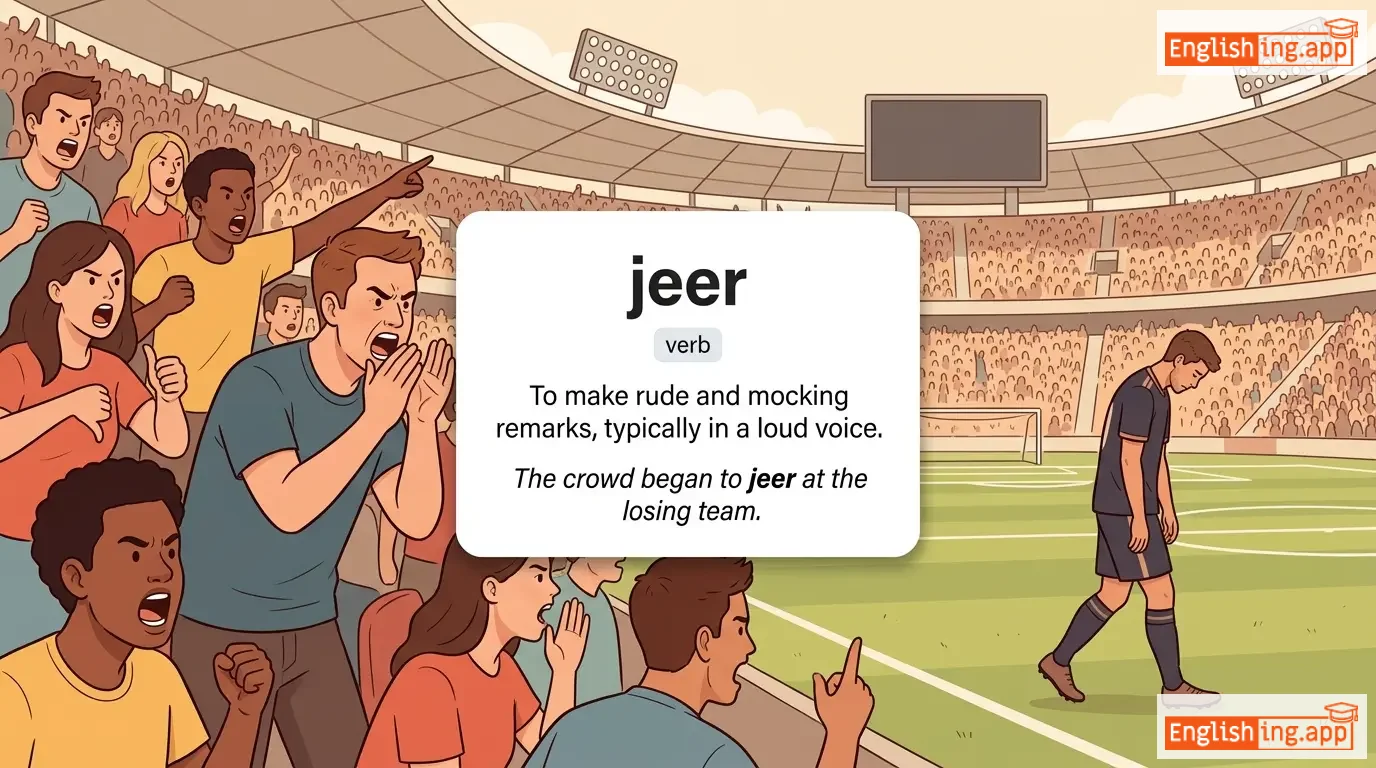
jeer definition card — visual illustration of the meaning
verb
/dʒɪər/
嘲笑 (cháoxiào)

To make rude and mocking remarks, typically in a loud voice.

"The crowd began to jeer at the losing team."

"人群开始嘲笑输掉的队伍。" (Rénqún kāishǐ cháoxiào shūdiào de duìwǔ.)
adjective
/dʒɪˈdʒuːn/
幼稚 / 浅薄 / 无趣 (yòuzhì / qiǎnbó / wúqù)

Naive, simplistic, and superficial; also dull or uninteresting.

"The professor dismissed the essay as jejune and lacking depth."

"教授把这篇文章视为幼稚且缺乏深度,予以拒绝。" (Jiàoshòu bǎ zhè piān wénzhāng shì wéi yòuzhì qiě quēfá shēndù, yǔyǐ jùjué.)
noun
/ˈdʒel.i/
果冻 (guodong)

a sweet soft food made from fruit juice and sugar; a semi-solid substance with a jelly-like consistency

"She spread grape jelly on her toast for breakfast."

"她在早餐时把葡萄果冻涂在吐司上。" (ta zai zaocan shi ba putao guodong tu zai tusi shang)
noun
/ˈdʒel.i fɪʃ/
水母 (shuimu)

a soft-bodied marine animal with a gelatinous umbrella-shaped body and trailing tentacles

"The jellyfish floated gracefully through the water with its translucent body."
"水母带着透明的身体优雅地漂浮在水中。" (shuimu daizhe touming de shenti youya de piaofu zai shuizhong)
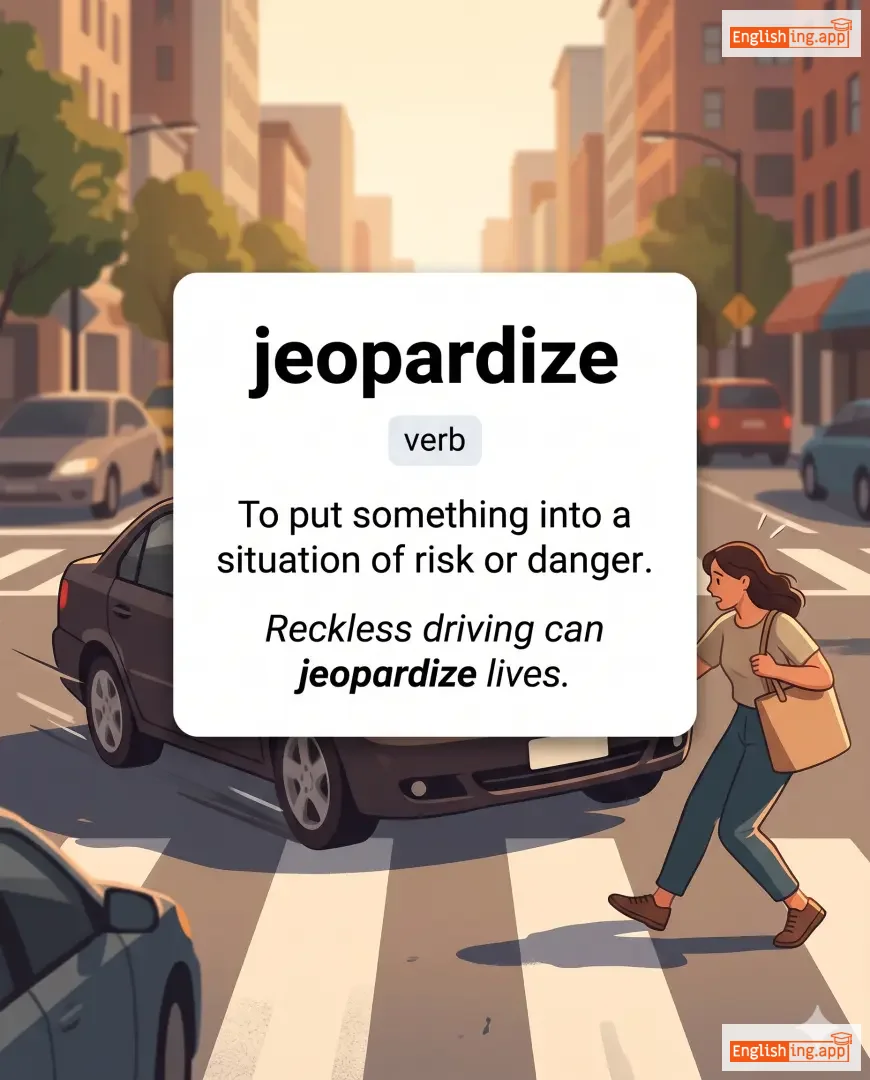
jeopardize definition card — visual illustration of the meaning
verb
/ˈdʒɛpərdaɪz/
危及 (weiji)

To put something into a situation of risk or danger.

"Reckless driving can jeopardize lives."

"鲁莽驾驶可能会危及生命。" (Lumaang jia shi keneng hui weiji shengming.)
noun
/ˈdʒɛpərdi/
危险 (wei xian)

Danger of loss, harm, or failure.

"His careless driving put everyone in jeopardy."

"他的鲁莽驾驶把所有人置于危险之中。" (Ta de lumang jiashi ba suoyouren zhi yu weixian zhizhong.)
noun
/ˈdʒɛrəˌmaɪæd/
哀歌 (aige)

A long, mournful complaint or lamentation; a list of woes.

"The politician's speech turned into a jeremiad against corruption."

"这位政治家的演讲变成了对腐败的哀歌。" (Zhè wèi zhèngzhìjiā de yǎnjiǎng biàn chéngle duì fǔbài de aige.)
noun
/dʒɜːrk/
震动;推撞;傻人 (zhendong, tuizhuang, sharen)

a quick, sharp, sudden movement; an abrupt pull or twist; a foolish person

"The sudden jerk of the train caused passengers to lose their balance momentarily."

"火车的突然震动使乘客暂时失去了平衡。" (huoche de tudian zhendong shi chengke zan shi shiqu le pingheng.)
noun
/ˈdʒæz.mɪn/
茉莉花 (moli hua)

a climbing shrub with fragrant white or yellow flowers

"The jasmine flowers filled the garden with their sweet fragrance."

"茉莉花让花园充满了甜美的香气。" (moli hua rang hua yuan chong man le tian mei de xiang qi)
noun, verb
/dʒɛst/
玩笑 (wanxiao)

A joke or witty remark; to speak humorously.

"He spoke in jest, but his words offended her."

"他说的是玩笑话,但他的话冒犯了她。" (Ta shuo de shi wanxiao hua, dan ta de hua maofan le ta.)
noun
/ˈdʒes.tər/
小丑; 愚人 (xiǎochǒu, yúrén)

a professional joker or fool at a medieval court; someone who jokes a lot

"The court jester entertained the king with witty remarks and amusing tricks."

"宫廷小丑用机智的评论和有趣的把戏娱乐国王。" (Gōngtíng xiǎochǒu yòng jīzhì de pínglùn hé yǒuqù de bǎxì yúlè guówáng.)
adjective
/ˈdʒes.tɪŋ/
打趣的 (jesting)

joking or teasing in a playful manner

"He was only jesting when he said he would quit his job."

"他只是开玩笑地说自己要辞掉工作。" (ta zhi shi kai wan xiao de zi ji yao ci diao gong zuo)
noun, verb
/dʒɛt/
幸福 (xìngfú)

A fast aircraft powered by jet engines; to travel by jet plane.

"They jetted off to Paris for the weekend."

"她收到奖项时无法掩饰自己的幸福。" (Tā shōudào jiǎngxiàng shí wúfǎ yǎnshì zìjǐ de xìngfú.)
noun
/ˈdʒɛtsəm/
从船上丢弃的无用物品,被冲到岸上的物品 (cóng chuán shàng diūqì de wúyòng wùpǐn, bèi chōng dào àn shàng de wùpǐn)

Unwanted material or goods thrown overboard from a ship and washed ashore.

"The beach was littered with jetsam after the storm."

"风暴过后,海滩上充满了杰特萨姆。" (fēngbào guò hòu, hǎitān shàng chōngmǎnle jiétèsàm.)
/ˈdʒɛtɪsən/
抛弃 (pāoqì)

to throw or drop something from a ship, aircraft, or vehicle to lighten the load; to abandon something no longer wanted

"The crew had to jettison cargo to save the sinking ship."

"船员们不得不抛弃货物,以挽救沉船。" (chuányuán men bùdé bù pāoqì huòwù, yǐ wǎnjiù chénchuán.)
noun
/ˈdʒet.i/
码头 (matou)

a landing stage or small pier at which boats can dock or be moored

"The fishing boats were tied up at the wooden jetty near the harbor."

"渔船停靠在靠近港口的木质码头。" (Yuchuan tingkao zai kaojin gangkou de mu zhi matou.)
noun
/dʒuː/
犹太人 (yóu tài rén)

a person whose religion is Judaism or who is of Jewish descent

"He is a Jew by heritage and follows Jewish customs."

"他是犹太人,继承了犹太传统并遵守犹太习俗。" (Tā shì yóu tài rén, jì chéng le yóu tài chuántǒng bìng zūn shǒu yóu tài xí sú.)
noun
/ˈdʒuː.əl/
宝石 (baoshi)

a precious stone or a piece of jewelry containing precious stones

"The ancient treasure chest contained many rare jewels."

"古老的宝藏箱里包含了许多稀有的宝石。" (Gǔlǎo de bǎocáng xiāng lǐ bāohánle xǔduō xīyǒu de bǎoshí.)
noun
/ˈdʒuːələr/
珠宝商 (zhubao shang)

a person who makes, repairs, or sells jewelry

"The jeweller crafted a beautiful gold ring."

"这位珠宝商制作了一枚漂亮的金戒指。" (Zhe wei zhubao shang zhizuo le yi mei piaoliang de jin jiezhi)
noun
/ˈdʒuːəlri/
珠宝 (zhubao)

ornamental items worn for personal adornment, such as rings, necklaces, or bracelets, often made of precious metals or stones

"She wore beautiful jewellery to the wedding."

"她在婚礼上戴了漂亮的珠宝。" (ta zai hunli shang dai le piaoliang de zhubao)
noun
/ˈdʒuːəlri/
珠宝 (zhūbǎo)

personal ornaments such as necklaces, rings, or bracelets that are typically made from precious metals and stones

"She wore gold jewelry at the wedding."

"她在婚礼上戴了金饰。" (Tā zài hūnlǐ shàng dàile jīnshì.)
adjective
/ˈdʒuːɪʃ/
幸福 (xìng fú)

relating to Jews or Judaism

"They celebrate Jewish festivals every year."

"她收到奖项时无法掩饰她的幸福。" (Tā shōudào jiǎngxiàng shí wúfǎ yǎnshì tā de xìngfú.)