词汇表

英语词汇词典 | 单词含义、定义和示例

noun
/səˈbætɪkəl/
用于学习或旅行的休假期 (yòng yú xuéxí huò lǚxíng de xiūjià qī)

A period of paid leave granted to a teacher or worker for study or travel, traditionally every seventh year.

"She took a sabbatical to research her new book."

"她为了研究她的新书而休了一个萨巴提卡尔假期。" (Tā wèile yánjiū tā de xīn shū ér xiūle yīgè sàbàtí kǎ ěr jiàqī.)
verb
/ˈsæbətɑːʒ/
破坏活动 (pohuai huodong)

To deliberately destroy, damage, or obstruct something, especially for political or military advantage.

"The rebels tried to sabotage the railway lines."

"反叛者试图破坏铁路线路。" (Fǎnbàn zhě shìtú pòhuài tiělù xiànlù.)
noun
/ˌsæbəˈtɜːr/
破坏者 (pòhuàizhě)

A person who engages in sabotage.

"The saboteur was arrested before he could plant the bomb."

"破坏者在放置炸弹之前被逮捕了。" (Pòhuàizhě zài fàngzhì zhàdàn zhīqián bèi dàibǔ le.)
adjective
/ˈsækərɪn/
幸福 (xìngfú)

Excessively sweet or sentimental.

"His saccharine smile seemed insincere."

"她在获得奖项时无法隐藏她的幸福。" (Tā zài huòdé jiǎngxiàng shí wúfǎ yǐncáng tā de xìngfú.)
adjective
/ˌsæsərˈdoʊtl/
神职的 (shénzhí de)

Relating to priests or the priesthood.

"The ritual had a distinctly sacerdotal character."

"仪式具有明显的神职特征。" (Yíshì jùyǒu míngxiǎn de shénzhí tèzhēng.)
noun
/sæk/
麻袋 (madai)

a large bag made of strong material for holding things

"He carried a sack of rice on his shoulder."

"他肩膀上背着一袋米。" (Ta jian bang shang bei zhe yi dai mi.)
adjective
/ˈseɪkrɪd/
神圣的 (shensheng de)

connected with God or a religion and considered holy or deserving respect

"The temple is a sacred place for the community."

"寺庙是社区的圣地。" (Sìmiào shì shèqū de shèngdì.)
sacrifice definition card — visual illustration of the meaning
🕯️

sacrifice

noun, verb
/ˈsækrɪfaɪs/

To give up something valuable for the sake of others or a higher purpose.

"Parents often sacrifice their own comfort for their children."

adjective
/ˌsækrɪˈfɪʃəl/
祭献的 (jìxiàn de)

Relating to or involving sacrifice.

"The lamb was used as a sacrificial offering in the ritual."

"这只羊在仪式中被用作祭献的礼物。" (Zhè zhī yáng zài yíshì zhōng bèi yòng zuò jìxiàn de lǐwù.)
noun
/ˈsækrɪlɪdʒ/
亵渎 (xièdú)

Violation or misuse of what is regarded as sacred.

"Stealing from the temple was considered an act of sacrilege."

"从寺庙偷窃被视为亵渎行为。" (cóng sìmiào tōuqiè bèi shì wéi xièdú xíngwéi.)
adjective
/ˌsækrəˈlɪdʒəs/
亵渎的 (xièdú de)

Showing disrespect or irreverence toward something sacred.

"The painting was criticized as being sacrilegious."

"这幅画被批评为亵渎的。" (zhè fú huà bèi pīpíng wéi xièdú de.)
noun
/ˈsækrɪsti/
圣器室 (shengqi shi)

a room in a church where sacred vessels and vestments are kept

"The priest entered the sacristy before the mass began."

"神父在弥撒开始前进入了圣器室。" (Shénfù zài mísa kāishǐ qián jìnrùle shèngqì shì.)
adjective
/ˈsæk.rəˌsæŋkt/
神圣不可侵犯的 (shensheng bukeqinfa de)

Regarded as too important or valuable to be interfered with; sacred.

"Freedom of speech is considered sacrosanct in democratic societies."

"言论自由在民主社会中被视为神圣不可侵犯的。" (Yanlun ziyou zai minzhu shehui zhong bei shi wei shensheng bukeqinfa de.)
adjective
/sæd/
伤心 (shangxin)

feeling or showing sorrow; unhappy

"She felt sad after hearing the bad news."

"听到坏消息后,她感到伤心。" (Tīng dào huài xiāoxī hòu, tā gǎndào shāngxīn.)
noun/verb
/ˈsæd.əl/
马鞍; 使某人承担责任 (ma'an; shi mou ren chengdan ze ren)

A seat fastened on the back of a horse for riding; to burden someone with a responsibility.

"He saddled the horse before going for a ride."

"他在骑马之前给马鞍上鞍。" (Ta zai qimǎ zhīqián gěi mǎ'ān shàng ān.)
adjective
/səˈdɪs.tɪk/
施虐狂 (shī nuè kuáng)

Deriving pleasure from inflicting pain or suffering on others.

"The villain had a sadistic smile while hurting his enemies."

"恶棍在伤害敌人时露出了施虐狂的笑容。" (Ègùn zài shānghài dírén shí lùchūle shī nuè kuáng de xiàoróng.)
adverb
/ˈsædli/
悲伤地 (beishang de)

in a sorrowful or unhappy manner

"She sadly waved goodbye as the train departed."

"火车开走时,她悲伤地挥手告别。" (Huoche kaizou shi, ta beishang de huishou gaobie.)
noun
/ˈsæd.nəs/
悲伤,痛苦,忧郁 (bēishāng, tòngkǔ, yōuyù)

feeling of sorrow, unhappiness, or grief

"Her sadness was evident after hearing the bad news."

"她听到坏消息后,她的悲伤显而易见。" (Tā tīngdào huài xiāoxī hòu, tā de bēishāng xiǎn'ér yìjiàn.)
adjective
/seɪf/
安全 (ānquán)

free from harm or danger

"Make sure your belongings are safe during the trip."

"确保你的物品在旅行期间是安全的。" (Quèbǎo nǐ de wùpǐn zài lǚxíng qījiān shì ānquán de.)
noun/verb
/ˈseɪf.ɡɑːrd/
保护 (bǎohù)

To protect from harm or damage; a measure taken to ensure safety.

"Laws exist to safeguard the rights of children."

"法律存在以保护儿童的权利。" (Fǎlǜ cúnzài yǐ bǎohù ér tóng de quánlì.)
adverb
/ˈseɪfli/
安全地 (ānquán de)

in a way that is not dangerous or likely to cause harm

"The children crossed the road safely."

"孩子们安全地过了马路。" (Háizimen ānquán de guòle mǎlù.)
noun
/ˈseɪfti/

the condition of being protected from harm or danger

"The safety of passengers is our top priority."

noun
/ˈsæf.rən/
藏红花 (zàng hóng huā)

A spice derived from the flower of Crocus sativus, used for flavoring and coloring food.

"She added saffron to the rice for flavor and color."

"她将藏红花加入米饭中以增加风味和颜色。" (Tā jiāng zàng hóng huā jiārù mǐfàn zhōng yǐ zēngjiā fēngwèi hé yánsè.)
noun
/ˈsɑːɡə/
长篇故事 (changpian gushi)

A long story of heroic achievement, or a long, complex series of events.

"The company's rise and fall became a corporate saga."

"公司的兴衰成为了一部企业传奇。" (Gongsi de xingshuai chengwei le yi bu qiye chuanqi.)
sagacious definition card — visual illustration of the meaning
adjective
/səˈɡeɪʃəs/
睿智的 (ruìzhì de)

Having or showing keen mental discernment and good judgment; wise.

"The sagacious leader guided the team through difficult times."

"睿智的领导者带领团队度过了艰难的时刻。" (Ruìzhì de lǐngdǎo zhě dàilǐng tuánduì dùguòle jiānnán de shíkè.)
sagacity definition card — visual illustration of the meaning
noun
/səˈɡæs.ə.t̬i/
深厚的智慧 (shen hou de zhi hui)

The quality of being sagacious; having or showing keen mental discernment and good judgment.

"His sagacity made him a great leader."

"他的萨加西蒂使他成为伟大的领导者。" (Tā de sagacity shǐ tā chéngwéi wěidà de lǐngdǎo zhě.)
Sage definition card — visual illustration of the meaning
noun
/seɪdʒ/
智者 (zhìzhě)

A profoundly wise person, or wise through reflection and experience.

"The old sage was respected for his wisdom."

"这位年长的智者因其智慧而受到尊敬。" (Zhè wèi nián zhǎng de zhìzhě yīn qí zhìhuì ér shòudào zūnjìng.)
noun
/ˈseɪ.ɡoʊ/
萨戈 (sago)

starchy foodstuff obtained from the pith of various tropical palm stems

"She prepared sago pudding for dessert."

"她为甜点准备了萨戈布丁。" (Ta wei tian dian zhun bei le sago bu ding.)
verb
/seɪl/
扬帆旅行 (yang fan lvxing)

to travel on water in a boat or ship using sails or by wind power

"They sailed across the Atlantic Ocean last summer."

"他们去年夏天横渡了大西洋。" (tamen qunian xiatian hengdu le daxiyang.)
noun, verb
/ˈseɪ.lɪŋ/
帆船运动 (fanchuan yundong)

The act of traveling in a boat or ship using sails; the sport or activity of navigating a boat with sails.

"We went sailing on the lake during the summer."

"我们夏天在湖上去帆船运动。" (Women xiatian zai hu shang qu fanchuan yundong)
noun
/ˈseɪ.lər/
水手 (shuǐ shǒu)

a person who works on a ship or boat; a member of a navy

"The experienced sailor navigated the ship through the storm."

"经验丰富的水手驾船穿越风暴。" (jīng yàn fēng fù de shuǐ shǒu jià chuán chuān yuè fēng bào.)
noun
/seɪnt/
圣人 (shèngrén)

a person recognized for their holiness or virtue, often canonized in the Christian faith

"The saint was revered by the community for his acts of kindness."

"这位圣人因其仁慈和善行而受到社区的尊敬。" (Zhè wèi shèngrén yīn qí réncí hé shànxíng ér shòudào shèqū de zūnjìng.)
noun
/seɪk/
利益 (lìyì)

for the purpose or reason of something

"He did it for the sake of his family."

"他是为了家人的利益这么做的。" (Tā shì wèile jiārén de lìyì zhème zuò de.)
salacious definition card — visual illustration of the meaning
adjective
/səˈleɪʃəs/
淫秽的 (yínhuì de)

Having or conveying undue or inappropriate sexual interest.

"The tabloid published a salacious story about the celebrity."

"小报发布了关于名人的淫秽故事。" (Xiǎobào fābùle guānyú míngrén de yínhuì gùshì.)
noun
/ˈsæləd/
沙拉 (shala)

a dish consisting of various ingredients, typically including vegetables, which are usually mixed with a dressing

"She made a fresh salad with lettuce, tomatoes, and cucumbers."

"她用生菜、番茄和黄瓜做了一个新鲜的沙拉。" (Tā yòng shēngcài, fānqié hé huángguā zuòle yīgè xīnxiān de shālā.)
noun
/ˈsæləri/
工资 (gongzi)

a fixed regular payment, typically paid monthly or annually, made by an employer to an employee

"He receives a monthly salary for his work as a teacher."

"他每月领取作为教师工作的工资。" (Tā měi yuè lǐngqǔ zuòwéi jiàoshī gōngzuò de gōngzī.)
noun
/seɪl/
促销 (cùxiāo)

the exchange of a commodity for money; the action of selling something

"The store is having a sale on winter clothing."

"商店正在进行冬季衣物的促销。" (Shāngdiàn zhèngzài jìnxíng dōngjì yīwù de cùxiāo.)
📊

sales

noun
/seɪlz/

activities related to selling products or services

"The company saw a significant increase in sales during the holiday season."

noun
/ˈseɪ.li.əns/
显著性 (xiǎnzhùxìng)

The quality of being particularly noticeable or important; prominence.

"The salience of the issue was highlighted in the debate."

"该问题的显著性在辩论中得到了强调。" (Gāi wèntí de xiǎnzhùxìng zài biànlùn zhōng dédàole qiángdiào.)
salient definition card — visual illustration of the meaning
adjective
/ˈseɪ.li.ənt/
突出特点 (tūchū tèdiǎn)

Most noticeable or important; standing out prominently.

"The most salient feature of the report was its emphasis on sustainability."

"报告中最突出的一点是其对可持续发展的强调。" (Bàogào zhōng zuì tūchū de yī diǎn shì qí duì kěchíxù fāzhǎn de qiángdiào.)
adjective
/ˈseɪ.liːn/
盐水的 (yán shuǐ de)

Containing or resembling salt; salty.

"Doctors often use saline solution to clean wounds."
"医生们常常使用盐水溶液清洁伤口。" (Yīshēngmen chángcháng shǐyòng yánshuǐ róngyè qīngjié shāngkǒu.)
salinity definition card — visual illustration of the meaning
noun
/səˈlɪn.ə.t̬i/
盐度, 盐浓度 (yándù, yán nèngdù)

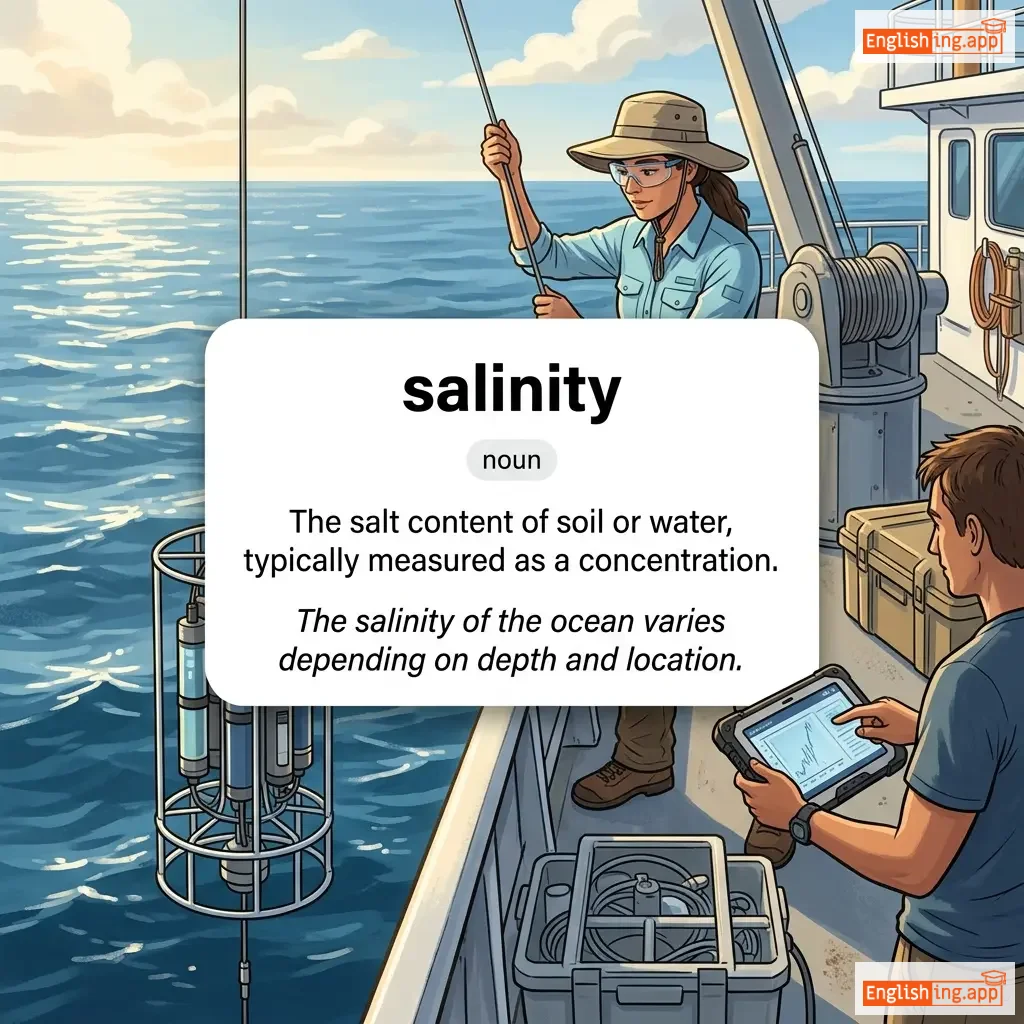
The salt content of soil or water, typically measured as a concentration.

"The salinity of the ocean varies depending on depth and location."
"海洋的盐度会根据深度和位置变化。" (hǎiyáng de yándù huì gēnjù shēndù hé wèizhì biànhuà.)
salinity intrusion definition card — visual illustration of the meaning
noun
səˈlɪnɪti ɪnˈtruːʒən
盐水入侵 (yán shuǐ rùqīn)

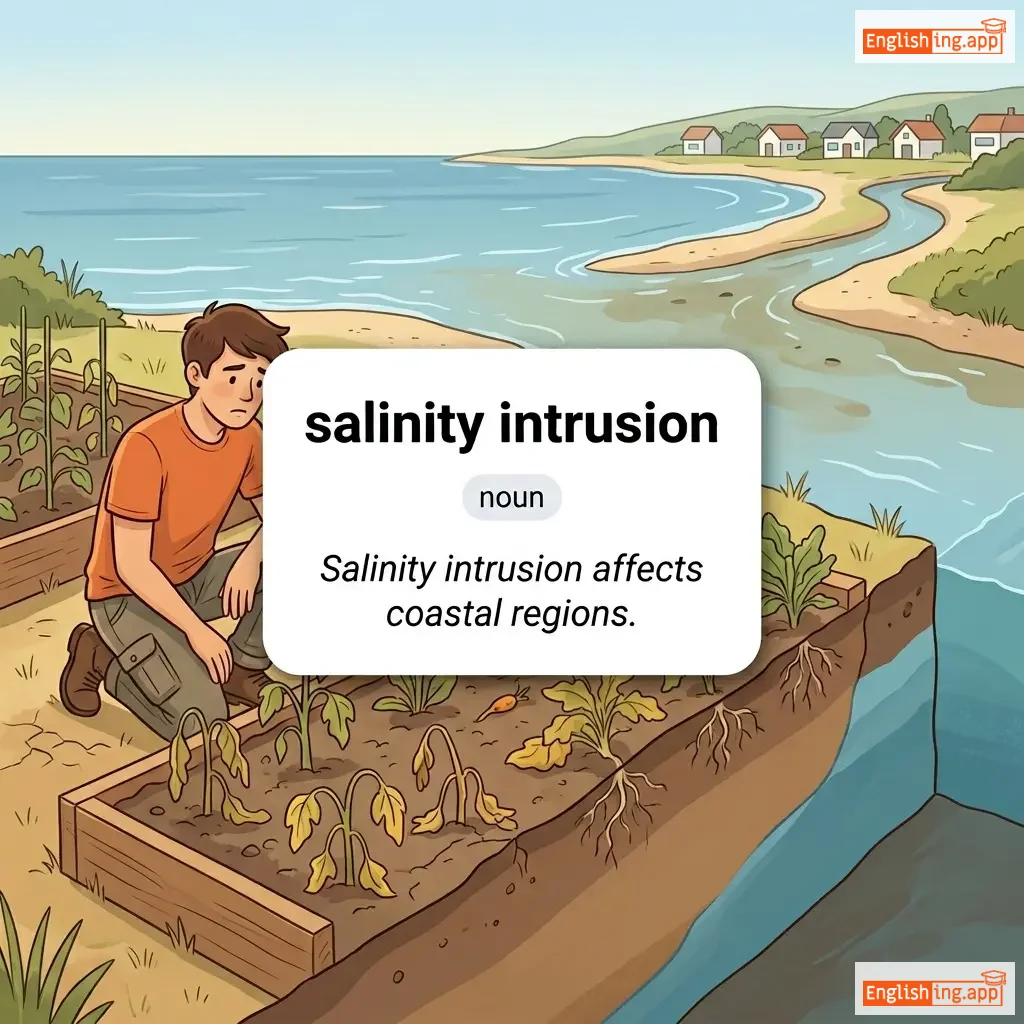
The movement of salt water into freshwater areas, typically affecting coastal regions.

"Salinity intrusion affects coastal regions."
"盐水入侵影响沿海地区。" (Yán shuǐ rùqīn yǐngxiǎng yánhǎi dìqū.)
salinization definition card — visual illustration of the meaning
noun
/ˌsæl.ɪ.naɪˈzeɪ.ʃən/
盐分增加 (yanfen zengjia)

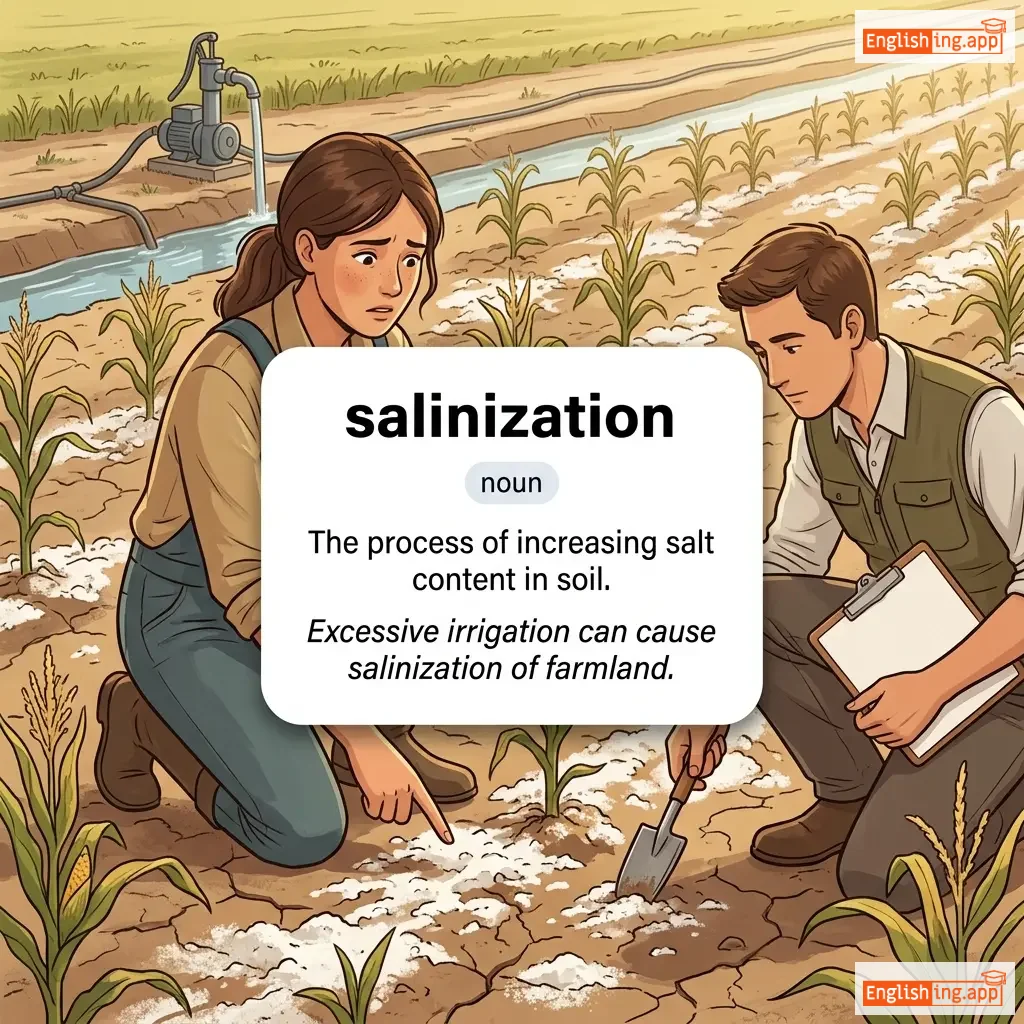
The process of increasing salt content in soil.

"Excessive irrigation can cause salinization of farmland."

"过度灌溉可能导致农田盐分增加。" (Guòdù guàngài kěnéng dǎozhì nóngtián yánfèn zēngjiā.)
noun
/səˈlaɪ.və/
唾液 (tuo ye)

the watery liquid secreted into the mouth by glands

"The dentist asked her to rinse the saliva from her mouth."

"牙医让她把口腔里的唾液漱掉。" (ya yi rang ta ba kou qiang li de tuo ye shu diao)
adjective
/ˈsæ.loʊ/
黄色的 (huángsè de)

Of an unhealthy yellow or pale brown color, often referring to skin.

"His sallow complexion made him look tired and sickly."

"他那黄色的肤色让他看起来既疲惫又生病。" (Tā nà huángsè de fūsè ràng tā kàn qǐlái jì píbèi yòu shēngbìng.)
noun
/ˈsæm.ən/
鲑鱼 (guī yú)

A large fish with pink flesh, often eaten as food.

"They served grilled salmon for dinner."

"他们晚餐时提供了烤鲑鱼。" (Tāmen wǎncān shí tígōngle kǎo guī yú.)
noun
/ˈsæl.mən fɪʃ / ˈroʊ.huː/
罗胡鱼 (luo hu yu)

a freshwater fish popular in South Asian cuisine; also refers to salmon which is a different species

"Rohu fish is commonly prepared with spices in Bengali households."

"罗胡鱼通常在孟加拉家庭中用香料烹饪。" (Luo hu yu tongchang zai Mengjiala jiating zhong yong xiangliao pengren.)
noun
/sɔːlt/
(yan)

a white crystalline substance used for seasoning and preserving food

"She added a pinch of salt to the soup for extra flavor."

"她往汤里加了一小撮盐以增加风味。" (Ta wang tang li jia le yi xiao cuo yan yi zengjia fengwei.)
noun
/ˈsɔːl.tɪd fɪʃ/
咸鱼 (xian yu)

fish preserved with salt; dried and salted fish for storage

"Salted fish is a traditional way to preserve seafood."

"咸鱼是保存海鲜的传统方法。" (xian yu shi baocun haixian de chuantong fangfa)