词汇表

英语词汇词典 | 单词含义、定义和示例

noun
/ˈtiː ʃɜːt/
T恤 (T-xu)

a casual short-sleeved cotton shirt with no collar

"He wore a white t-shirt and jeans to the party."

"他穿了一件白色T恤和牛仔裤参加派对。" (Tā chuānle yī jiàn báisè T-xu hé niúzǎikù cānjiā pàiduì.)
noun
/ˈteɪbəl/
桌子 (zhuōzi)

A piece of furniture with a flat top and legs, used for working at or placing items on.

"They placed the documents on the table."

"他们把文件放在桌子上。" (Tāmen bǎ wénjiàn fàng zài zhuōzi shàng.)
noun
/ˈtæbloʊ/
定格画面 (dìnggé huàmiàn)

a striking or artistic scene or arrangement of people or objects, often presented on stage or in art

"The actors froze in a tableau that captured the final moment of the play."

"演员们定格在一个塔布劳中,捕捉到了戏剧的最后一刻。" (Yǎnyuánmen dìnggé zài yīgè tǎbùláo zhōng, bǔzhuō dào le xìjù de zuìhòu yī kè.)
noun
/ˈteɪbəlˌspun/
汤匙 (tangchi)

a spoon used for serving or eating food, typically holding about 15 milliliters

"She stirred the soup with a tablespoon."

"她用汤匙搅拌了汤。" (Ta yong tangchi jiaobanle tang.)
noun
/ˈtæblət/

a small flat computer or a small solid dose of medicine

"She took a tablet to relieve her headache."

🚫

taboo

noun
/təˈbuː/

a social or cultural prohibition against certain practices or discussions

"Talking about money is considered a taboo in some cultures."

noun
/ˈteɪbər/
小鼓 (xiaogu)

a small side drum or tambourine used especially in folk music

"The folk musician played a lively tune on his tabour."
"民间音乐家在他的手鼓上演奏了一首生动的旋律。" (Minjian yinyuejia zai tade shougu shang yanzou le yishou shengdong de xuanlü.)
tacit definition card — visual illustration of the meaning
adjective
/ˈtæsɪt/
默契 (moqi)

understood or implied without being stated

"There was a tacit agreement to avoid the subject."

"有一个默契的协议,避免讨论这个话题。" (You yi ge moqi de xieyi, bianmi taolun zhege huati.)
adjective
/ˈtæsɪtɜrn/
寡言 (guǎ yán)

reserved or uncommunicative in speech; saying little

"He was a taciturn man who rarely spoke in meetings."
"他是一个寡言的人,在会议上很少发言。" (Tā shì yīgè guǎ yán de rén, zài huìyì shàng hěn shǎo fāyán.)
📌

tack

noun/verb
/tæk/

a small sharp nail; or to change direction in sailing or approach something differently

"She used a tack to pin the paper on the wall."

verb, noun
/ˈtæk.əl/

to try to deal with or solve a difficult problem; to physically stop someone in sports by knocking them down

"The coach taught the players how to tackle properly."

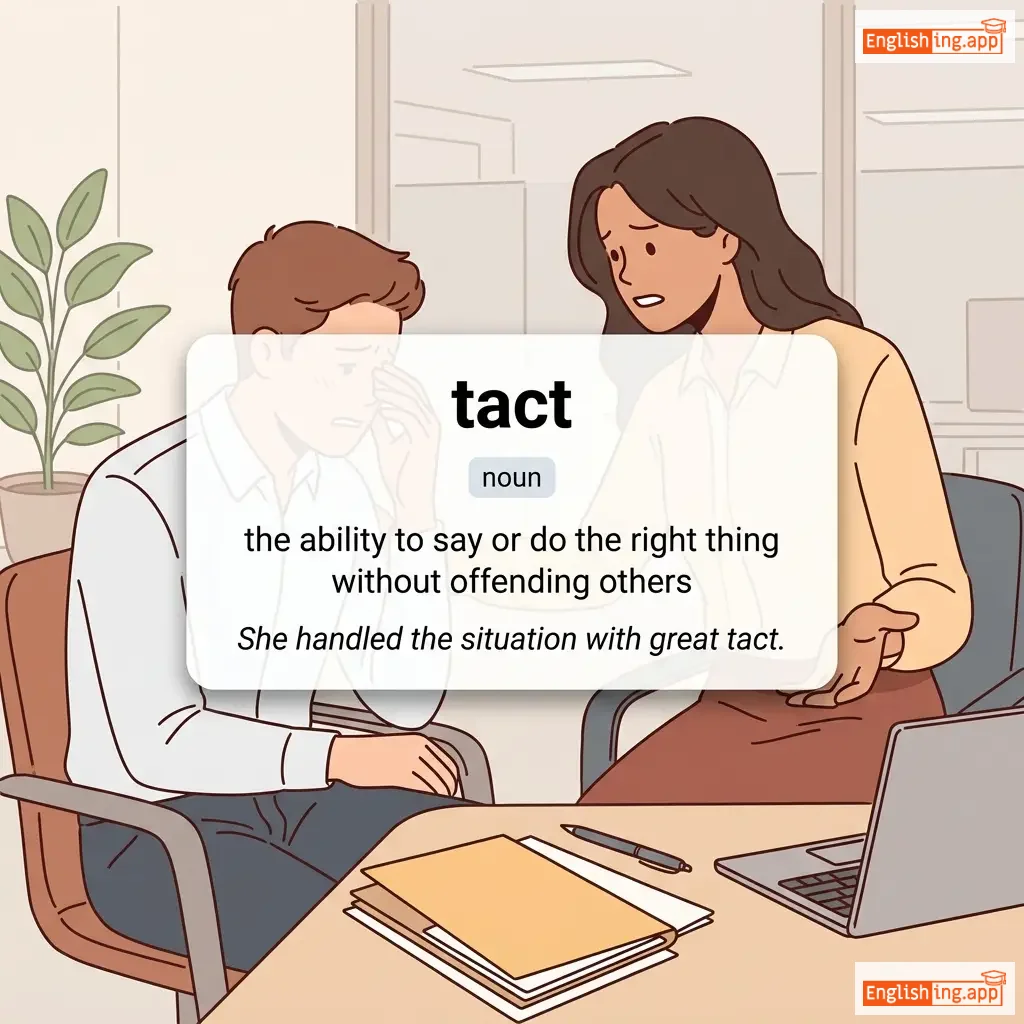
tact definition card — visual illustration of the meaning
noun
/tækt/
机智, 圆滑 (jizhi, yuanhua)

the ability to say or do the right thing without offending others

"She handled the situation with great tact."

"她以极大的机智处理了这件事情。" (Ta yi jidada de jizhi chuli le zhe jian shiqing.)
adjective
/ˈtækt.fəl/
圆滑 (yuán huá)

showing skill and sensitivity in dealing with others

"He is always tactful when giving feedback."

"他在给出反馈时总是很圆滑。" (Tā zài gěi chū fǎnkuì shí zǒng shì hěn yuán huá.)
noun
/ˈtæktɪk/
战术 (zhànshù)

a carefully planned action or strategy to achieve a specific goal

"The coach used a defensive tactic to win the game."

"教练使用了一种防守战术来赢得比赛。" (Jiàoliàn shǐyòngle yī zhǒng fángshǒu zhànshù lái yíngdé bǐsài.)
adjective
/ˈtæktɪkəl/
与战略有关 (yu zhanlüe youguan)

relating to or involving tactics or strategy

"The team had a tactical plan for the final match."

"团队有一个针对最后比赛的战术计划。" (Tuandui you yige zhendui zuihou bisai de zhanshu jihua.)
noun
/tækˈtɪʃ.ən/
战术家 (zhànshù jiā)

a person who is skilled at planning and achieving goals, especially in military or business

"Napoleon was a brilliant tactician."

"拿破仑是一个杰出的战术家。" (Ná pò lún shì yīgè jiéchū de zhànshù jiā.)
noun (plural)
/ˈtæk.tɪks/
战术 (zhànshù)

specific methods or actions used to achieve a goal, especially in military or competition

"The team changed their tactics to win the game."
"团队改变了他们的战术以赢得比赛。" (tuánduì gǎibiànle tāmen de zhànshù yǐ yíngdé bǐsài.)
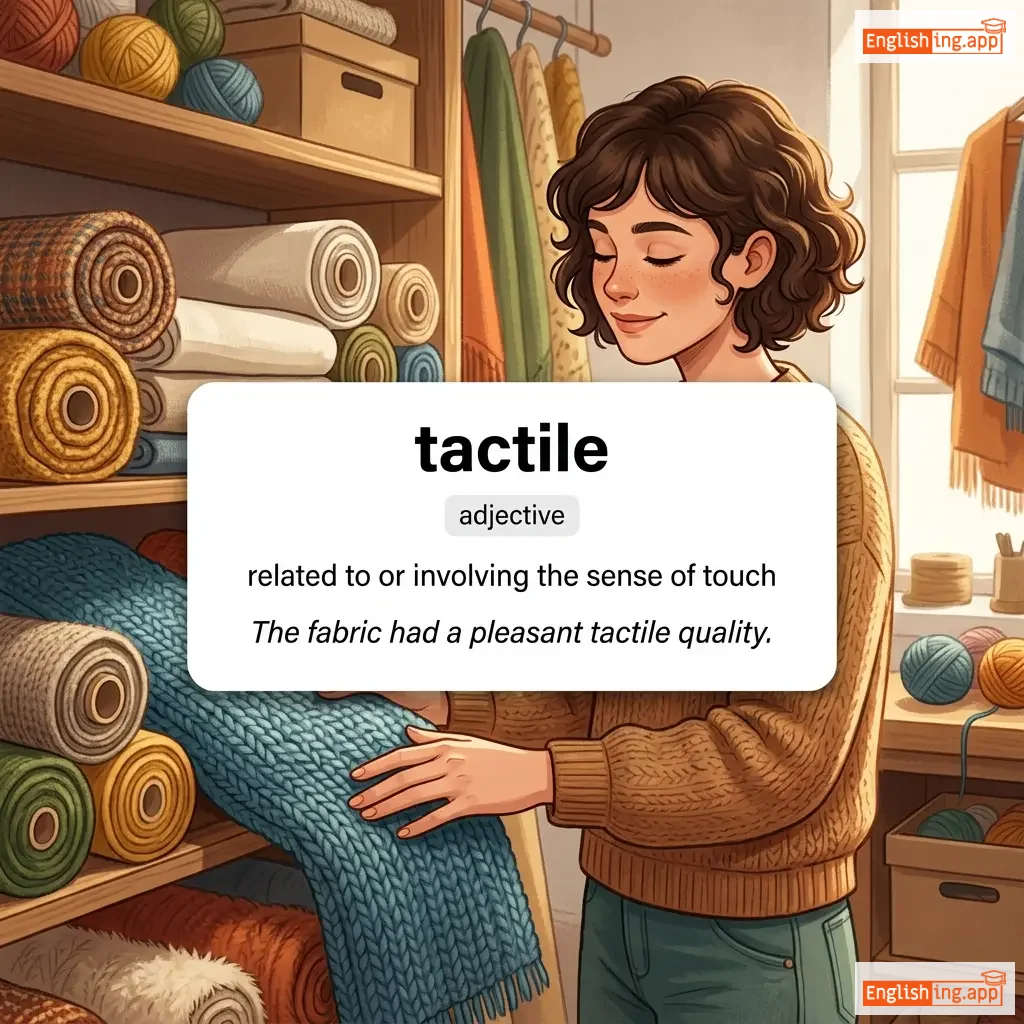
tactile definition card — visual illustration of the meaning
adjective
/ˈtæk.taɪl/
触觉的 (chùjué de)

related to or involving the sense of touch

"The fabric had a pleasant tactile quality."

"这块布料具有愉快的触觉品质。" (Zhè kuài bùliào jùyǒu yúkuài de chùjué pǐnzhì.)
adjective
/ˈtækt.ləs/
失礼 (shīlǐ)

showing a lack of sensitivity in dealing with others

"His tactless remark embarrassed everyone at the meeting."

"他的失礼评论让会议中的每个人都感到尴尬。" (Tā de shīlǐ pínglùn ràng huìyì zhōng de měi gèrén dōu gǎndào gāngà.)
noun
/ˈtæd.poʊl/
蝌蚪 (kē dǒu)

the larval stage of a frog or toad, living in water with gills and a tail

"The children watched the tadpoles swimming in the pond."

"孩子们看见了在池塘里游泳的蝌蚪。" (Háizimen kànjiàn le zài chítáng lǐ yóuyǒng de kēdǒu.)
🏷️

tag

noun, verb
/tæɡ/

a label attached to something for identification or information; or to attach such a label

"She tagged her luggage before boarding the plane."

noun
/teɪl/
尾巴 (weiba)

the part of an animal that extends from the back and is often used for balance or communication

"The dog wagged its tail when it saw its owner."

"狗在看到它的主人时摇了摇尾巴。" (Gǒu zài kàn dào tā de zhǔrén shí yáo le yáo wěibā.)
noun
/ˈteɪ.lər/
裁缝 (cáifeng)

a person whose job is making and altering clothes

"The tailor measured him for a new suit."

"裁缝为他量了新西装的尺寸。" (Cáifeng wèi tā liàngle xīn xīzhuāng de chǐcùn)
tailored definition card — visual illustration of the meaning
adjective
/ˈteɪlərd/
量体裁衣 (liàng tǐ cài yī)

made or adapted for a particular purpose, person, or situation

"The company offers tailored solutions for small businesses."

"公司为小型企业提供量体裁衣的解决方案。" (Gōngsī wèi xiǎoxíng qǐyè tígōng liàng tǐ cài yī de jiějué fāng'àn.)
verb
/teɪnt/
玷污 (diànwū)

to damage or spoil something by adding an undesirable quality

"The scandal tainted his reputation."

"丑闻玷污了他的声誉。" (Chǒuwén diànwūle tā de shēngyù.)
adjective
/ˈteɪn.tɪd/
污染的 (wūrǎn de)

spoiled, corrupted, or made impure

"The tainted food caused several people to fall ill."
"污染的食物让几个人生病。" (Wūrǎn de shíwù ràng jǐ gè rén shēngbìng.)
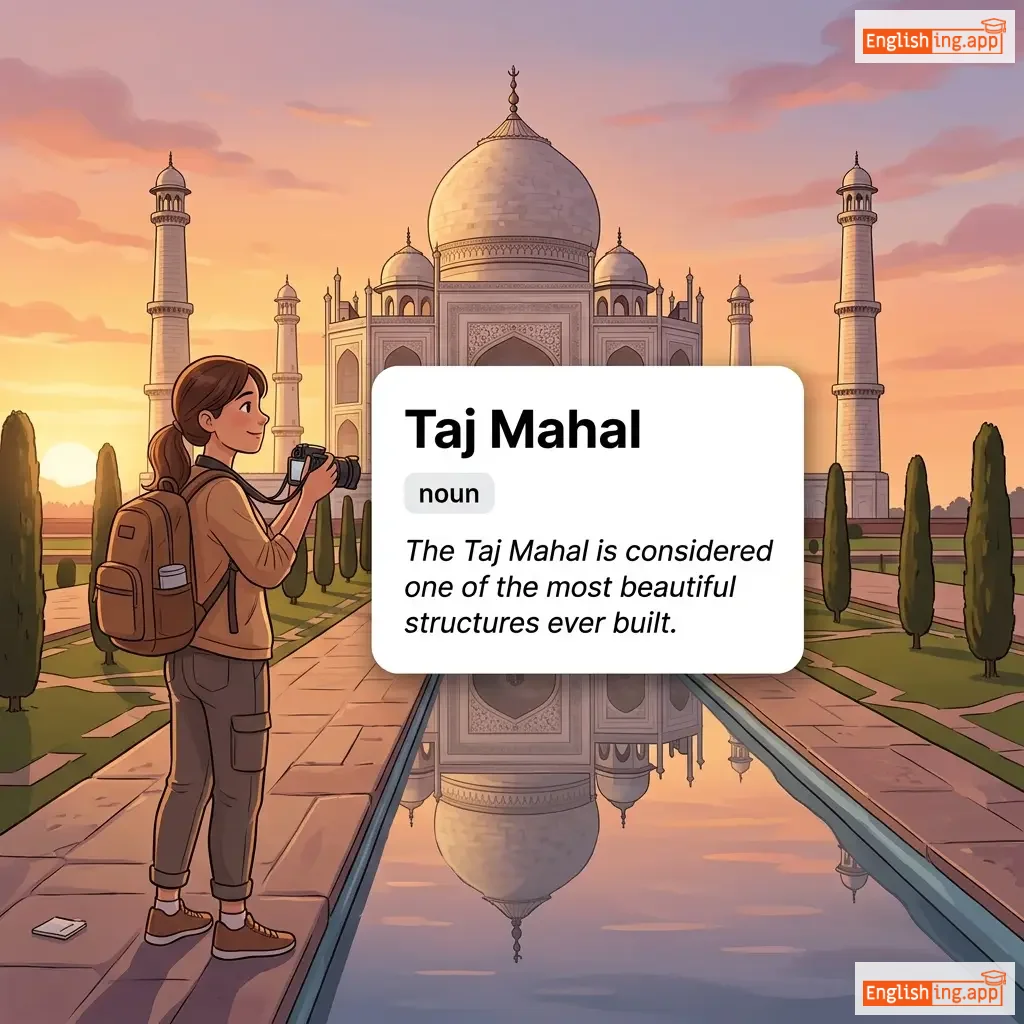
Taj Mahal definition card — visual illustration of the meaning
noun
ˌtɑːdʒ məˈhɑːl
泰姬陵 (tai ji ling)

A famous mausoleum in India, considered one of the most beautiful structures ever built and a symbol of love.

"The Taj Mahal is considered one of the most beautiful structures ever built."
"泰姬陵被认为是有史以来最美丽的建筑之一。" (Tai ji ling bei ren wei shi you shi lai zui mei li de jian zhu zhi yi.)
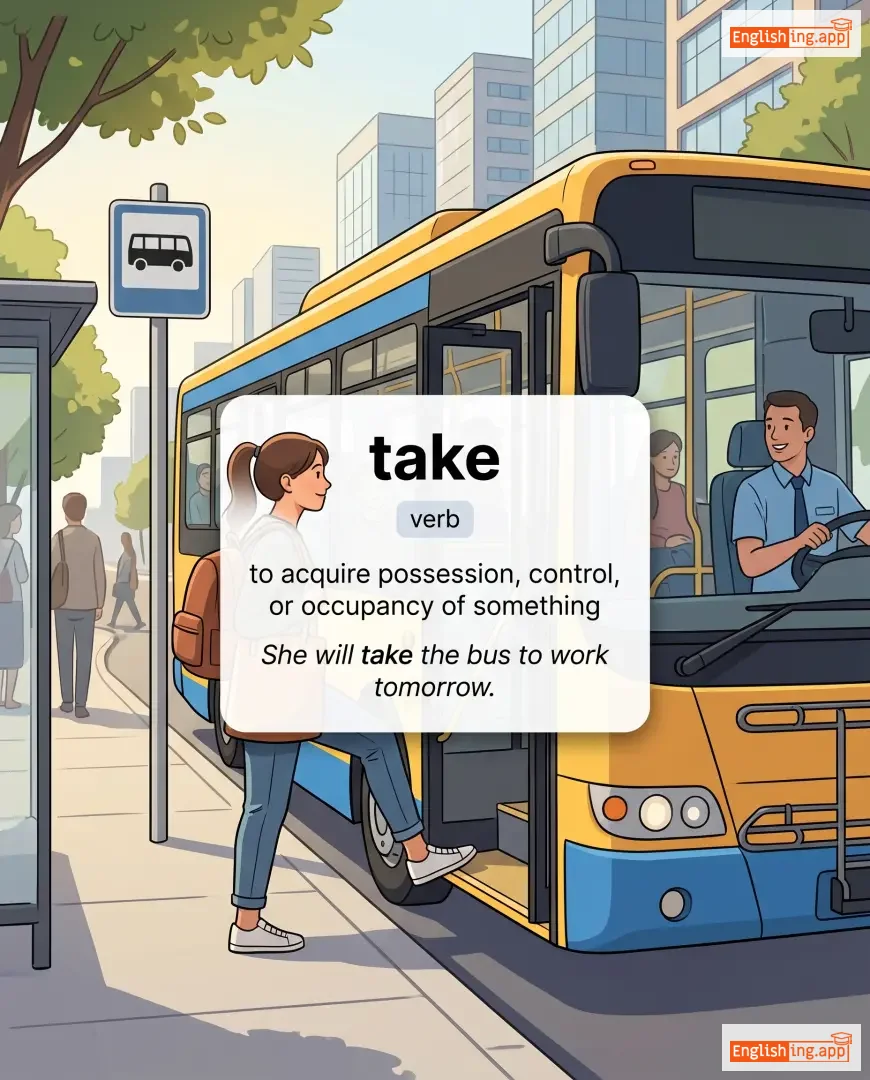
take definition card — visual illustration of the meaning
verb
/teɪk/
(na)

to acquire possession, control, or occupancy of something

"She will take the bus to work tomorrow."

"她明天将乘坐公交车去上班。" (Ta mingtian jiang chengzuo gongjiaoche qu shangban.)
verb
/teɪk ɒf/
起飞; 脱下 (qifei; tuoxia)

to remove something; to leave the ground and begin flying (airplane); to suddenly become successful or popular

"The airplane will take off in ten minutes."
"飞机将在十分钟后起飞。" (Feiji jiang zai shi fenzhong hou qifei.)
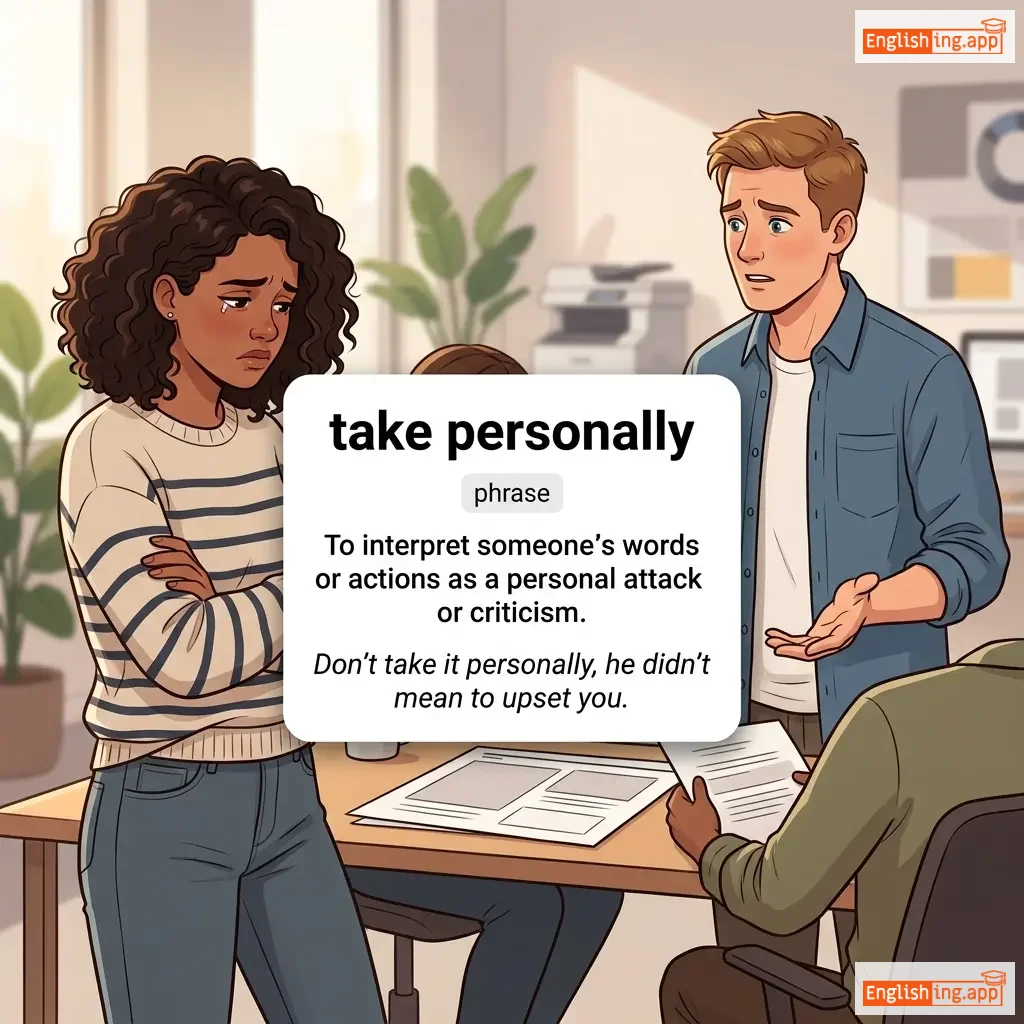
take personally definition card — visual illustration of the meaning
phrase
teɪk ˈpɜː.sən.əl.i
把事情看得很个人化 (bǎ shìqíng kàndé hěn gèrén huà)

To interpret someone's words or actions as a personal attack or criticism.

"Don't take it personally, he didn't mean to upset you."

"不要太在意,他并没有想要惹你生气。" (Bùyào tài zài yì, tā bìng méiyǒu xiǎng yào rě nǐ shēngqì.)
noun
/ˈteɪkˌɔːf/
起飞 (qifei)

The moment an aircraft leaves the ground and begins to fly; also a sudden rise or start in activity or success.

"The plane's takeoff was delayed due to bad weather."

"由于恶劣天气,飞机的起飞被延迟了。" (Yóuyú èliè tiānqì, fēijī de qǐfēi bèi yánchíle.)
noun
/teɪl/
故事 (gùshì)

a narrative of imaginary events, especially one that is presented as true

"The old man told a tale of his adventures."

"那位老人讲述了他的冒险故事。" (Nà wèi lǎorén jiǎngshùle tā de màoxiǎn gùshì.)
noun
/ˈtælənt/
天赋 (tianfu)

natural aptitude or skill

"She has a great talent for painting."

"她在绘画方面有很大的天赋。" (Tā zài huìhuà fāngmiàn yǒu hěn dà de tiānfù.)
adjective
/ˈtæləntɪd/
有才华的 (yǒu cáihuá de)

having a natural ability or skill in something

"She is a talented singer with a beautiful voice."
"她是一个有才华的歌手,声音非常美妙。" (Tā shì yīgè yǒu cáihuá de gēshǒu, shēngyīn fēicháng měimiào.)
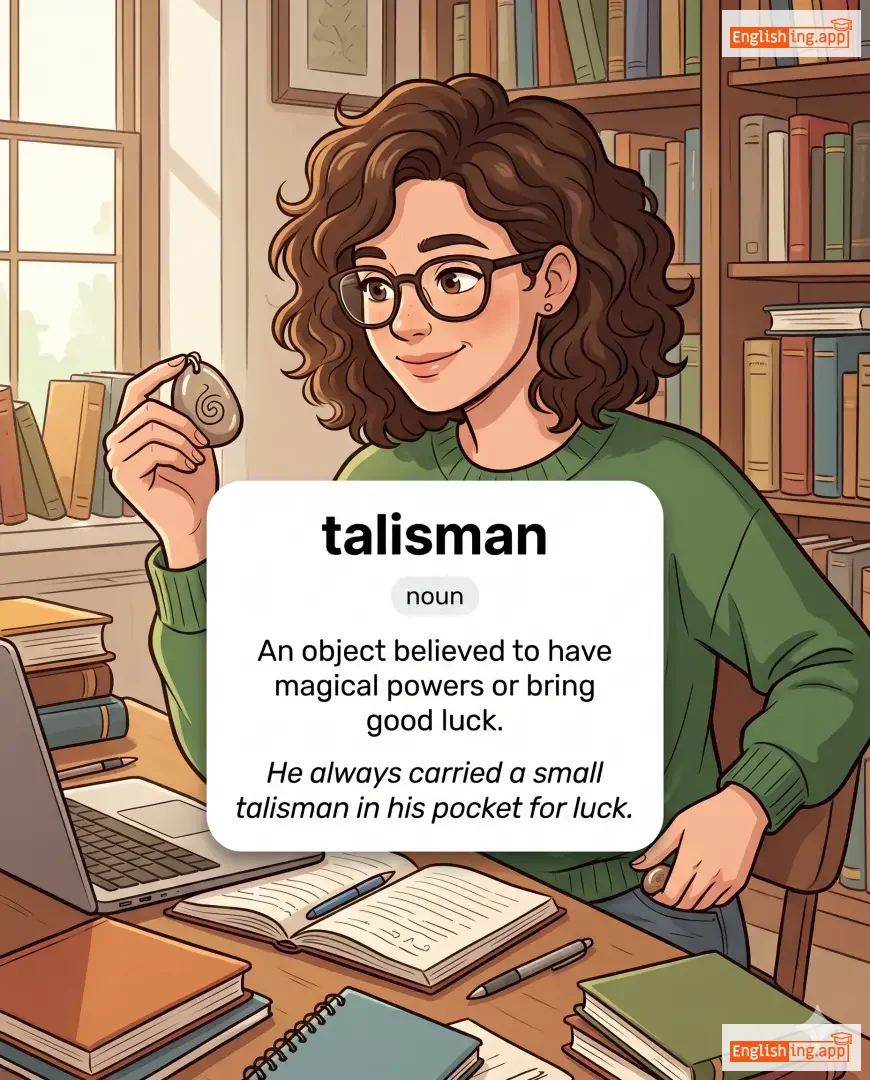
talisman definition card — visual illustration of the meaning
noun
/ˈtælɪzmən/
护身符 (hù shēn fú)

An object believed to have magical powers or bring good luck.

"He always carried a small talisman in his pocket for luck."
"他总是随身携带一个小护身符,以求好运。" (Tā zǒng shì suíshēn xiédài yīgè xiǎo hù shēn fú, yǐ qiú hǎo yùn.)
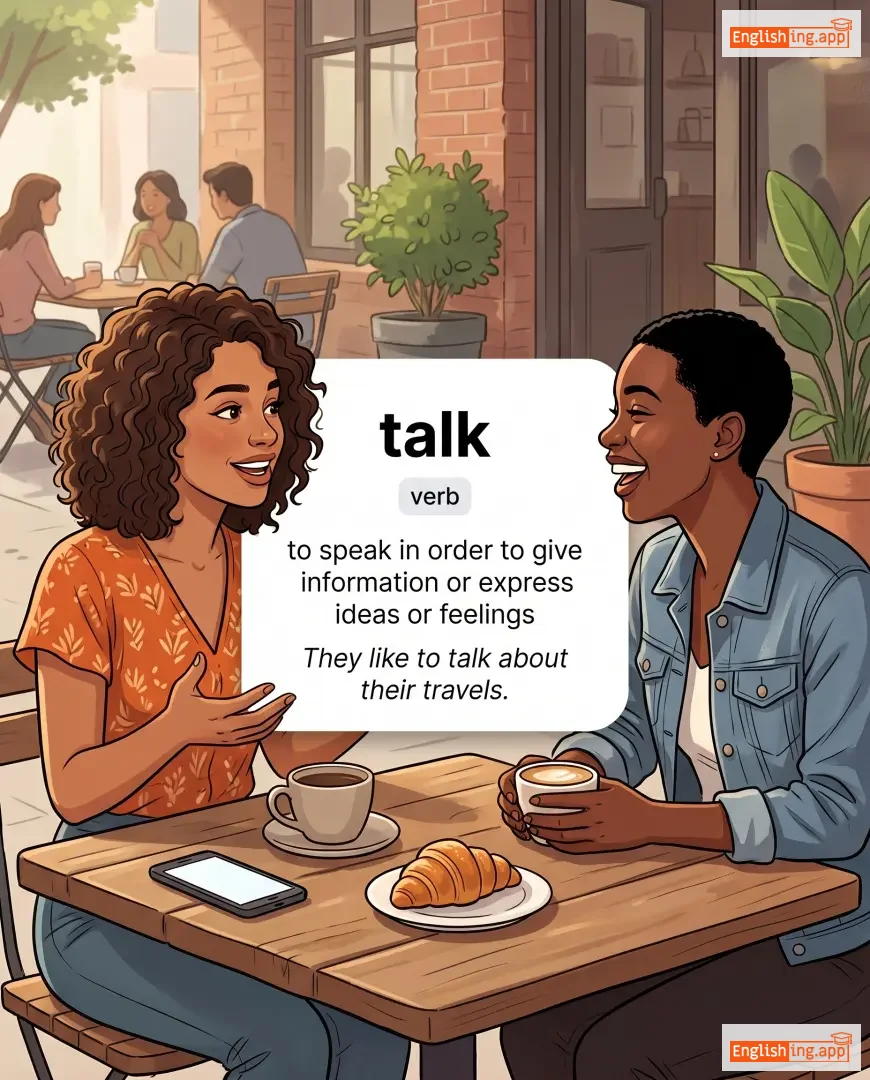
talk definition card — visual illustration of the meaning
🗣️

talk (tok)

verb
/tɔːk/
谈论 (tanlun)

to speak in order to give information or express ideas or feelings

"They like to talk about their travels."

"他们喜欢谈论他们的旅行。" (Tāmen xǐhuān tánlùn tāmen de lǚxíng.)
adjective
/ˈtɔː.kə.tɪv/
健谈的 (jiàn tán de)

fond of talking; speaking freely and at length

"My talkative neighbor loves to chat about everything."

"我健谈的邻居喜欢谈论一切。" (Wǒ jiàn tán de línjū xǐ huān tán lùn yīqiè.)
adjective
/tɔːl/
(gao)

having a greater than average height

"He is the tallest player on the team."

"他是队里最高的球员。" (Ta shi dui li zui gao de qiu yuan.)
noun
/ˈtæl.i/
计数; 记录; 分数 (jìshù; jìlù; fēnshù)

a count or record of a number or amount; a score or total

"Keep a tally of how many books you read this month."

"记录你这个月读了多少本书。" (Jìlù nǐ zhège yuè dúle duōshǎo běn shū.)
noun
/ˈtælən/
爪子 (zhua zi)

A claw, especially one belonging to a bird of prey.

"The eagle gripped the fish with its sharp talons."

"老鹰用它锋利的爪子抓住了那条鱼。" (Lao ying yong ta fengli de zhua zi zhua zhu le na tiao yu.)
noun
/ˈtæm.ə.rɪnd/
罗望子 (luowangzi)

tropical fruit with a brown pod containing a sour pulp used in cooking

"The chef used tamarind paste to add tangy flavor to the curry."

"厨师使用了罗望子酱来给咖喱增添酸味。" (chúshī shǐyòngle luowangzi jiàng lái gěi gālí zēngtiān suānwèi.)
noun
/ˌtæmbəˈriːn/
铃鼓 (linggu)

A musical instrument with a circular frame, metal jingles, and a drumhead, played by shaking or striking.

"She played the tambourine during the festival parade."
"她在节日游行中演奏了铃鼓。" (Tā zài jiérì yóuxíng zhōng yǎnzòu le línggǔ.)
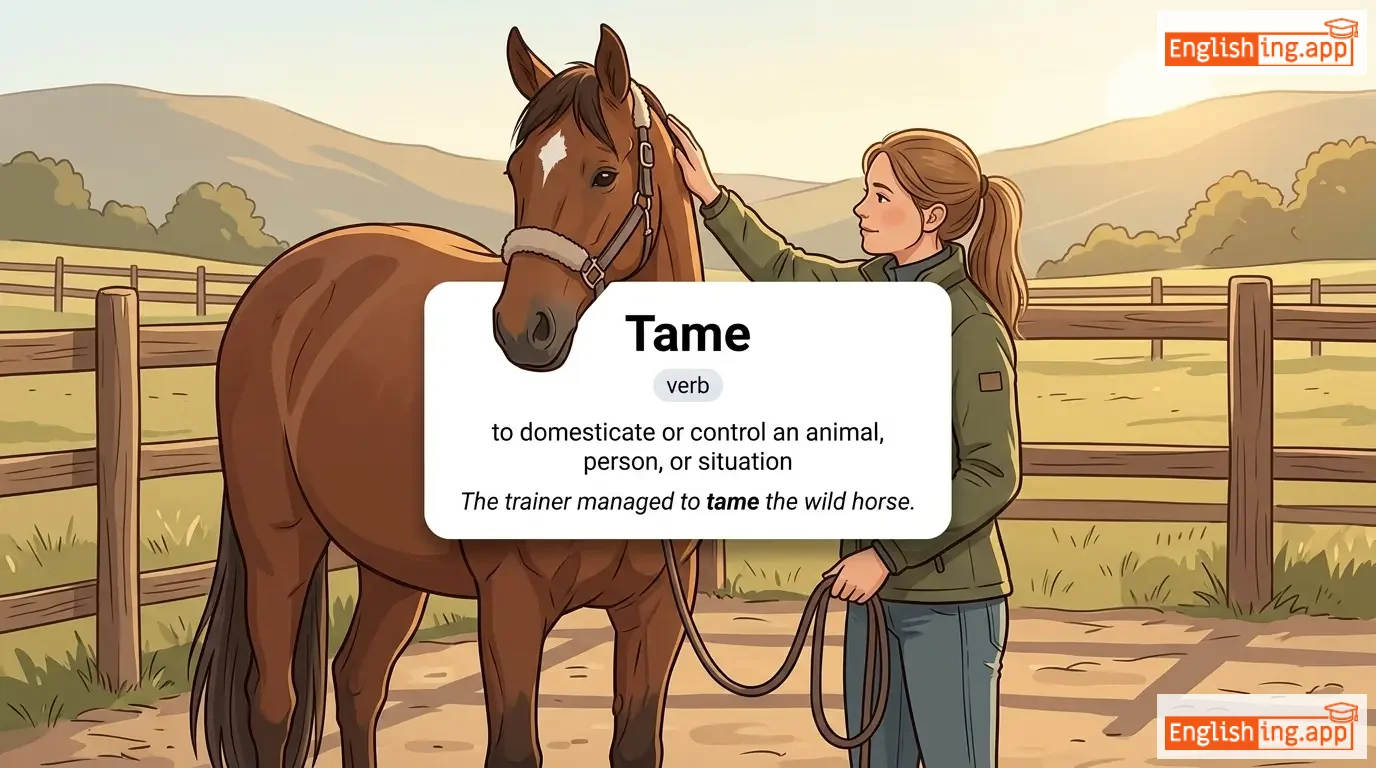
Tame definition card — visual illustration of the meaning
verb
/teɪm/
驯服 (xunfu)

to domesticate or control an animal, person, or situation

"The trainer managed to tame the wild horse."

"教练成功地驯服了那匹野马。" (Jiaolian chenggong de xunfu le na pi yemǎ.)
verb
/tæmp/
压实 (yā shí)

to press down tightly by packing

"He tamped the soil around the plant to secure it."
"他将植物周围的土壤压实以固定它。" (Tā jiāng zhíwù zhōuwéi de tǔrǎng yā shí yǐ gùdìng tā.)
⚠️

tamper

verb
/ˈtæmpər/

To interfere with something in a harmful, unauthorized, or improper way.

"The evidence was tampered with before the trial."

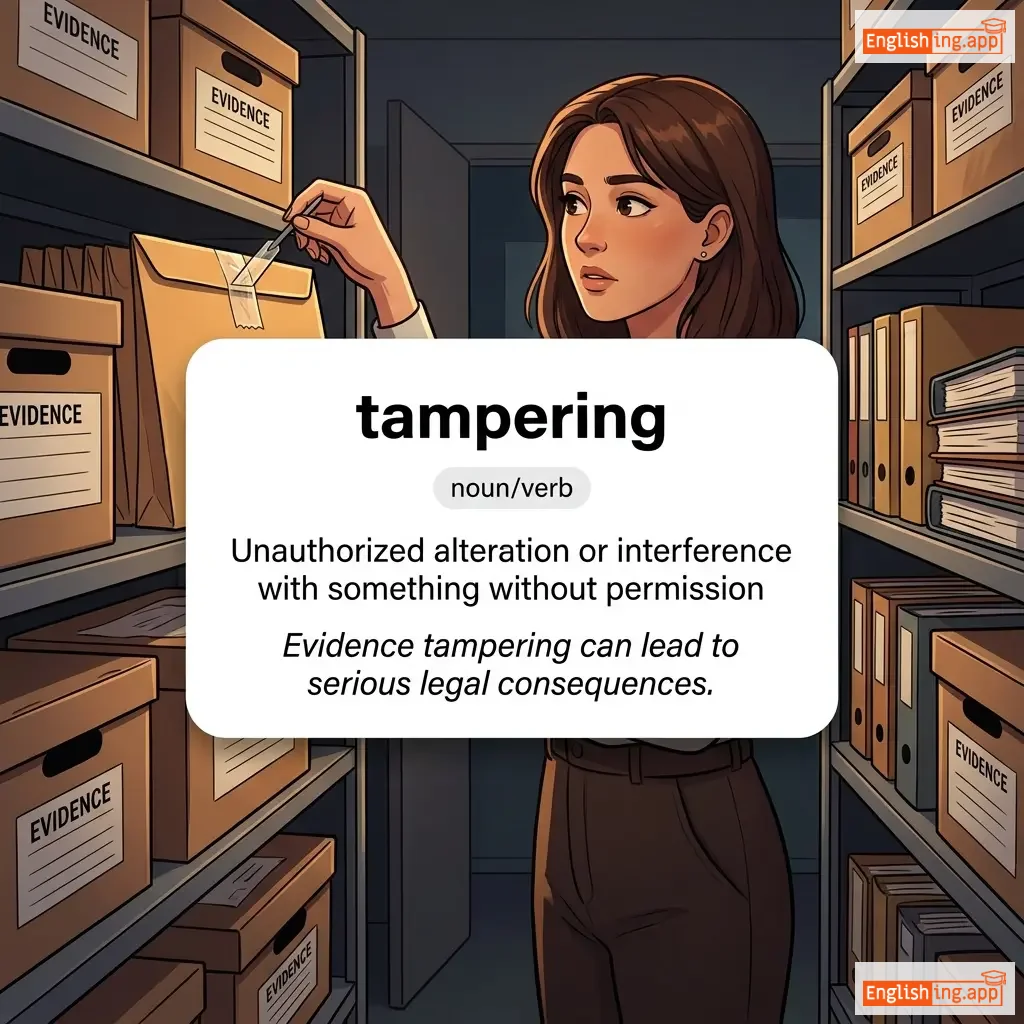
tampering definition card — visual illustration of the meaning
noun/verb
/ˈtæm.pər.ɪŋ/
未经授权的篡改或干预 (wei jing shouquan de cuangai huo ganyu)

Unauthorized alteration or interference with something without permission

"Evidence tampering can lead to serious legal consequences."

"证据篡改可能导致严重的法律后果。" (zhengju cuangai keneng daozhi yanzhong de falü houguo.)
🌞

tan

verb
/tæn/

to make skin or a hide brown by exposure to the sun or by using chemicals

"She tanned her skin after spending the summer at the beach."

noun
/ˈtæn.dəm/
双人自行车 (shuangren zixingche)

a bicycle built for two riders, one behind the other

"The couple enjoyed riding their tandem bicycle through the park."

"这对情侣在公园骑着他们的双人自行车享受着骑行。" (Zhe dui qinglv zai gongyuan qizhe tamen de shuangren zixingche xiangshouzhe qixing.)
noun
/ˈtændʒənsi/
相切 (xiangqie)

the condition of touching but not intersecting, especially in geometry

"The circle and the line are in a state of tangency at one point."

"圆和直线在一个点上处于相切状态。" (Yuan he zhixian zai yi ge dian shang chǔyú xiāngqiē zhuàngtài.)
noun
/ˈtændʒənt/

a straight line or plane that touches a curve or curved surface at a point but does not cross it

"The teacher drew a tangent to the circle on the board."