Vocabulaires

Découvrez, apprenez et maîtrisez le vocabulaire anglais

noun
/ˈtiː ʃɜːt/
t-shirt (t-shirt)

a casual short-sleeved cotton shirt with no collar

"He wore a white t-shirt and jeans to the party."

"Il a porté un t-shirt blanc et un jean à la fête." (Il a porté un t-shirt blanc et un jean à la fête.)
noun
/ˈteɪbəl/
table (table)

A piece of furniture with a flat top and legs, used for working at or placing items on.

"They placed the documents on the table."

"Ils ont posé les documents sur la table." (Ils ont posé les documents sur la table.)
noun
/ˈtæbloʊ/
tableau (tablô)

a striking or artistic scene or arrangement of people or objects, often presented on stage or in art

"The actors froze in a tableau that captured the final moment of the play."

"Les acteurs sont restés figés dans un tableau qui capturait le dernier moment de la pièce." (Les acteurs sont restés figés dans un tableau qui capturait le dernier moment de la pièce.)
noun
/ˈteɪbəlˌspun/
cuillère à soupe (cuillere a soupe)

a spoon used for serving or eating food, typically holding about 15 milliliters

"She stirred the soup with a tablespoon."

"Elle a remué la soupe avec une cuillère à soupe." (Elle a remué la soupe avec une cuillère à soupe.)
noun
/ˈtæblət/
tablette (tablette)

a small flat computer or a small solid dose of medicine

"She took a tablet to relieve her headache."

"Elle a pris une tablette pour soulager son mal de tete." (elleaprisunetablettepoursoulagersonmaldetete)
noun
/təˈbuː/
tabou (tabu)

a social or cultural prohibition against certain practices or discussions

"Talking about money is considered a taboo in some cultures."

"Parler d'argent est considéré comme un tabou dans certaines cultures." (Parler dargent est considere comme un tabou dans certaines cultures)
noun
/ˈteɪbər/
tambour (tambour)

a small side drum or tambourine used especially in folk music

"The folk musician played a lively tune on his tabour."

"Le musicien folklorique a joué une mélodie animée sur son tambour." (Le musicien folklorique a joue une melodie animee sur son tambour.)
tacit definition card — visual illustration of the meaning
adjective
/ˈtæsɪt/
accord tacite (accord tacite)

understood or implied without being stated

"There was a tacit agreement to avoid the subject."

"Il y avait un accord tacite pour éviter le sujet." (Il y avait un accord tacite pour éviter le sujet.)
adjective
/ˈtæsɪtɜrn/
taciturne (taciturne)

reserved or uncommunicative in speech; saying little

"He was a taciturn man who rarely spoke in meetings."

"C'était un homme taciturne qui parlait rarement lors des réunions." (C'était un homme taciturne qui parlait rarement lors des réunions.)
noun/verb
/tæk/
punaise / tactique (punaise / tactique)

a small sharp nail; or to change direction in sailing or approach something differently

"She used a tack to pin the paper on the wall."

"Elle a utilisé une punaise pour fixer le papier au mur." (Elle a utilisé une punaise pour fixer le papier au mur.)
verb, noun
/ˈtæk.əl/
résoudre, arrêter (résoudre, arrêter)

to try to deal with or solve a difficult problem; to physically stop someone in sports by knocking them down

"The coach taught the players how to tackle properly."

"L'entraîneur a appris aux joueurs à tacler correctement." (L'entraîneur a appris aux joueurs à tacler correctement.)
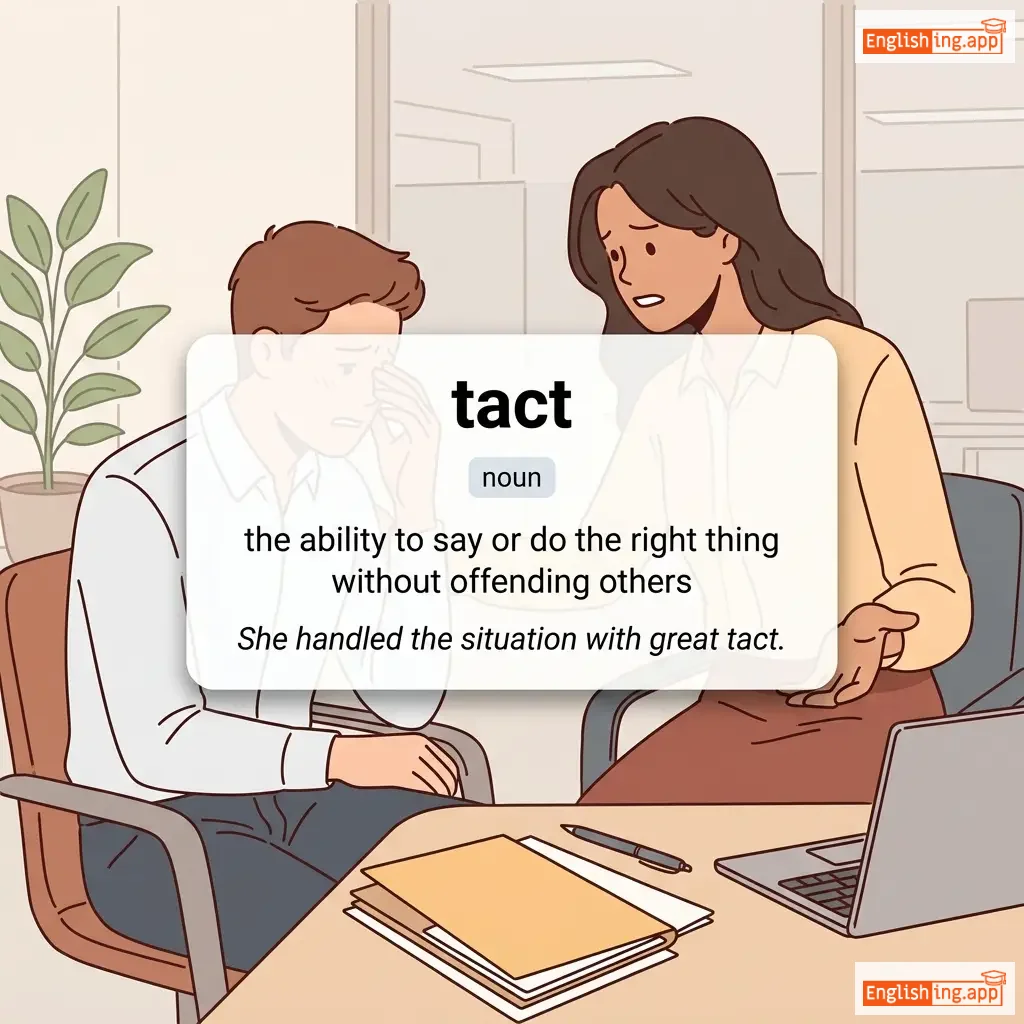
tact definition card — visual illustration of the meaning
noun
/tækt/
tact, discernement (tact, discernement)

the ability to say or do the right thing without offending others

"She handled the situation with great tact."

"Elle a géré la situation avec beaucoup de tact." (Elle a gere la situation avec beaucoup de tact.)
adjective
/ˈtækt.fəl/
diplomate (diplomate)

showing skill and sensitivity in dealing with others

"He is always tactful when giving feedback."

"Il est toujours diplomate lorsqu'il donne des retours." (Il est toujours diplomate lorsqu'il donne des retours.)
noun
/ˈtæktɪk/
stratégie (strategie)

a carefully planned action or strategy to achieve a specific goal

"The coach used a defensive tactic to win the game."

"L'entraîneur a utilisé une tactique défensive pour gagner le match." (L'entraineur a utilise une tactique defensive pour gagner le match.)
adjective
/ˈtæktɪkəl/
lié à la stratégie (lie a la strategie)

relating to or involving tactics or strategy

"The team had a tactical plan for the final match."

"L'équipe avait un plan tactique pour le match final." (L'equipe avait un plan tactique pour le match final.)
noun
/tækˈtɪʃ.ən/
stratège (stratege)

a person who is skilled at planning and achieving goals, especially in military or business

"Napoleon was a brilliant tactician."

"Napoléon était un brillant tacticien." (Napoleon etait un brillant tacticien.)
noun (plural)
/ˈtæk.tɪks/
stratégies (strategies)

specific methods or actions used to achieve a goal, especially in military or competition

"The team changed their tactics to win the game."

"L'équipe a changé ses tactiques pour gagner le match." (L'equipe a change ses tactiques pour gagner le match.)
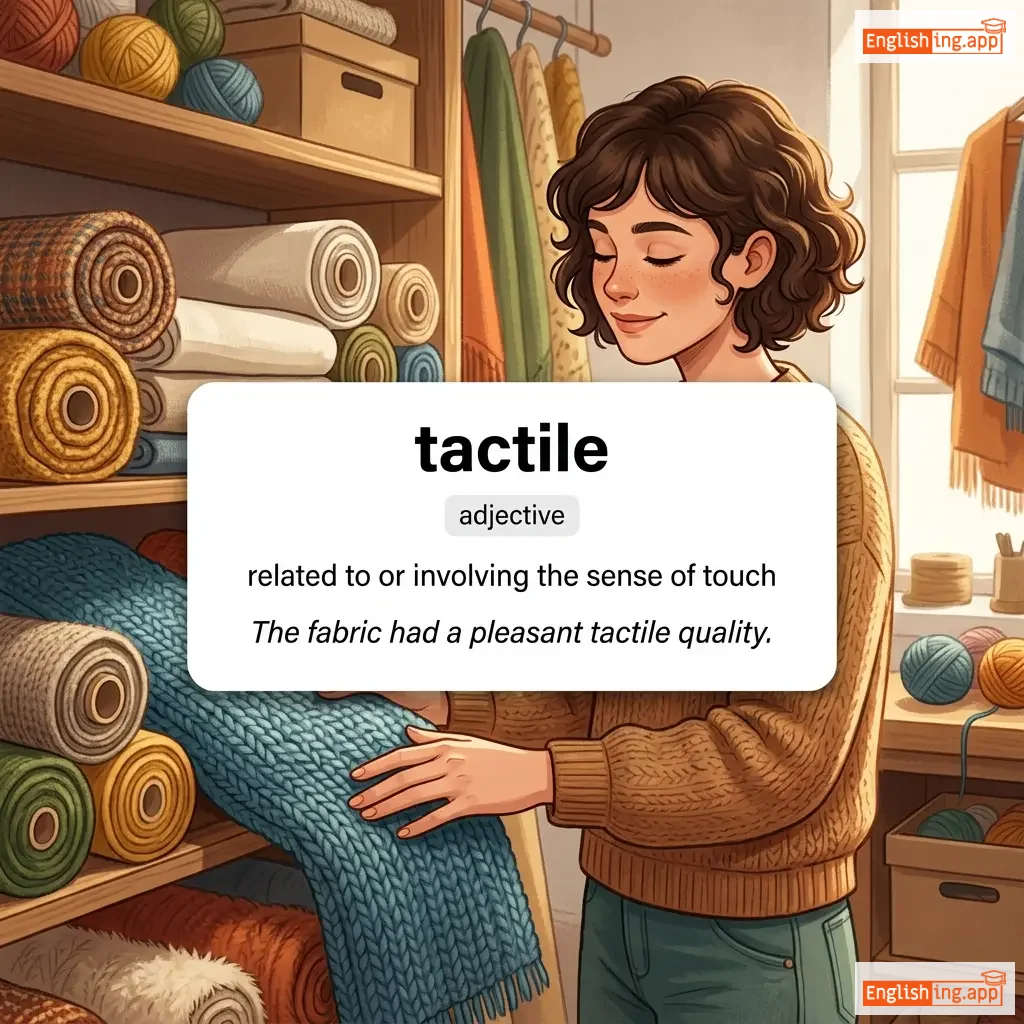
tactile definition card — visual illustration of the meaning
adjective
/ˈtæk.taɪl/
tactile (tactile)

related to or involving the sense of touch

"The fabric had a pleasant tactile quality."

"Le tissu avait une agréable qualité tactile." (Le tissu avait une agréable qualité tactile.)
adjective
/ˈtækt.ləs/
insensible (insensible)

showing a lack of sensitivity in dealing with others

"His tactless remark embarrassed everyone at the meeting."

"Sa remarque insensible a embarrassé tout le monde lors de la réunion." (Sa remarque insensible a embarrassé tout le monde lors de la réunion.)
noun
/ˈtæd.poʊl/
têtard (têtard)

the larval stage of a frog or toad, living in water with gills and a tail

"The children watched the tadpoles swimming in the pond."

"Les enfants ont vu les têtards nager dans l'étang." (Les enfants ont vu les têtards nager dans l'étang.)
🏷️

tag (tag)

noun, verb
/tæɡ/
étiquette (etiquette)

a label attached to something for identification or information; or to attach such a label

"She tagged her luggage before boarding the plane."

"Elle a étiqueté ses bagages avant de monter dans l'avion." (Elle a etiquete ses bagages avant de monter dans l'avion.)
noun
/teɪl/
queue (kew)

the part of an animal that extends from the back and is often used for balance or communication

"The dog wagged its tail when it saw its owner."

"Le chien a remué sa queue lorsqu'il a vu son propriétaire." (Le chien a remué sa queue lorsqu'il a vu son propriétaire.)
noun
/ˈteɪ.lər/
tailleur (tailleur)

a person whose job is making and altering clothes

"The tailor measured him for a new suit."

"Le tailleur lui a pris les mesures pour un nouveau costume." (Le tailleur lui a pris les mesures pour un nouveau costume)
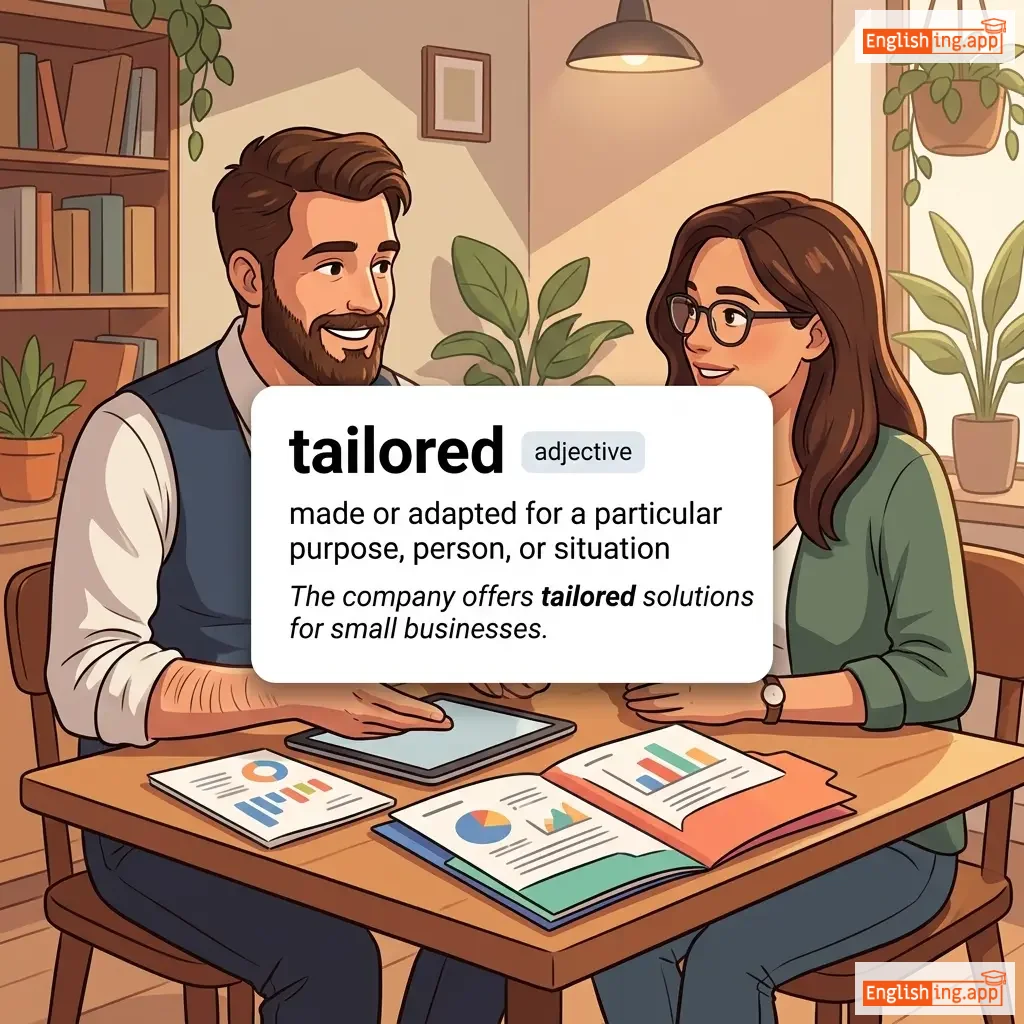
tailored definition card — visual illustration of the meaning
adjective
/ˈteɪlərd/
sur mesure (sur mesure)

made or adapted for a particular purpose, person, or situation

"The company offers tailored solutions for small businesses."

"L'entreprise propose des solutions sur mesure pour les petites entreprises." (L'entreprise propose des solutions sur mesure pour les petites entreprises.)
verb
/teɪnt/
contaminer (contaminer)

to damage or spoil something by adding an undesirable quality

"The scandal tainted his reputation."

"Le scandale a terni sa réputation." (Le scandale a terni sa réputation.)
adjective
/ˈteɪn.tɪd/
souillé (souille)

spoiled, corrupted, or made impure

"The tainted food caused several people to fall ill."

"La nourriture souillée a rendu plusieurs personnes malades." (La nourriture souillee a rendu plusieurs personnes malades.)
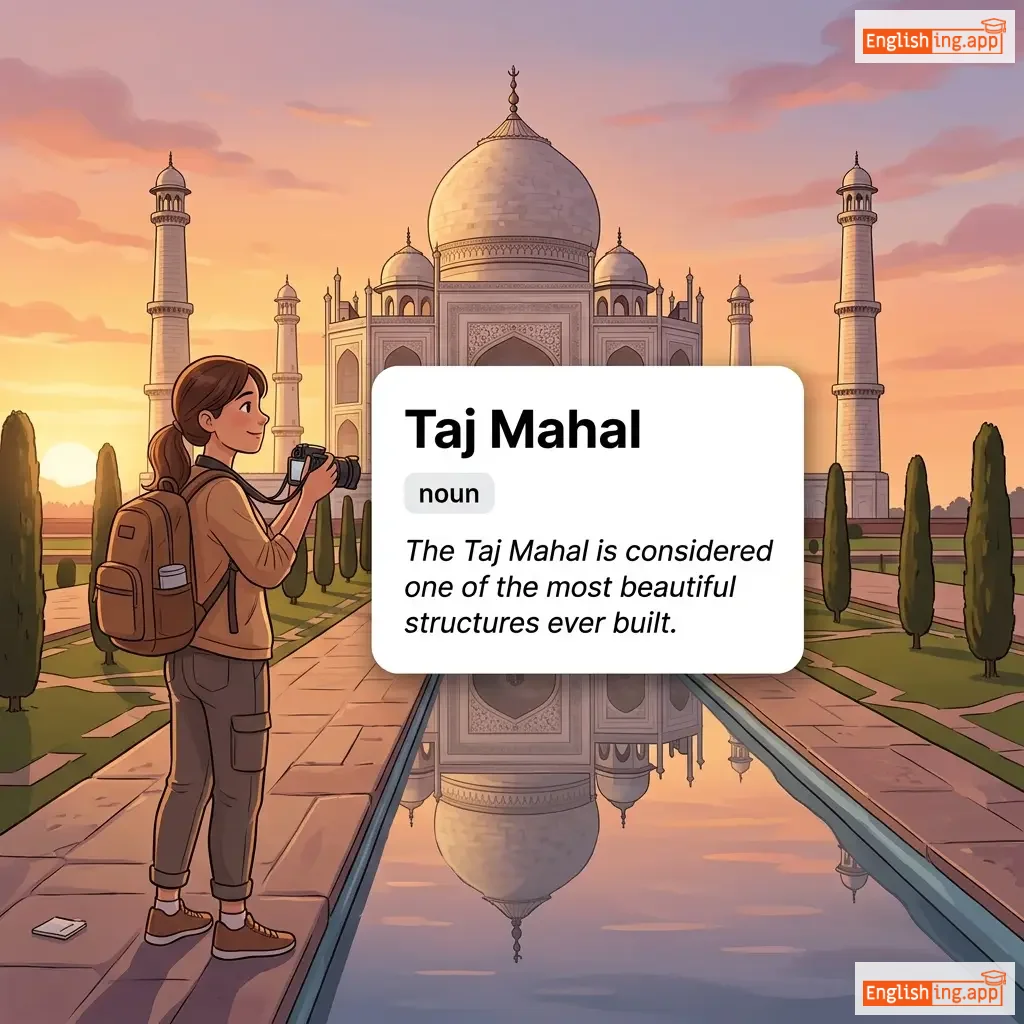
Taj Mahal definition card — visual illustration of the meaning
noun
ˌtɑːdʒ məˈhɑːl
Taj Mahal (taj mahal)

A famous mausoleum in India, considered one of the most beautiful structures ever built and a symbol of love.

"The Taj Mahal is considered one of the most beautiful structures ever built."

"Le Taj Mahal est considéré comme l'une des plus belles structures jamais construites." (Le Taj Mahal est considere comme l'une des plus belles structures jamais construites.)
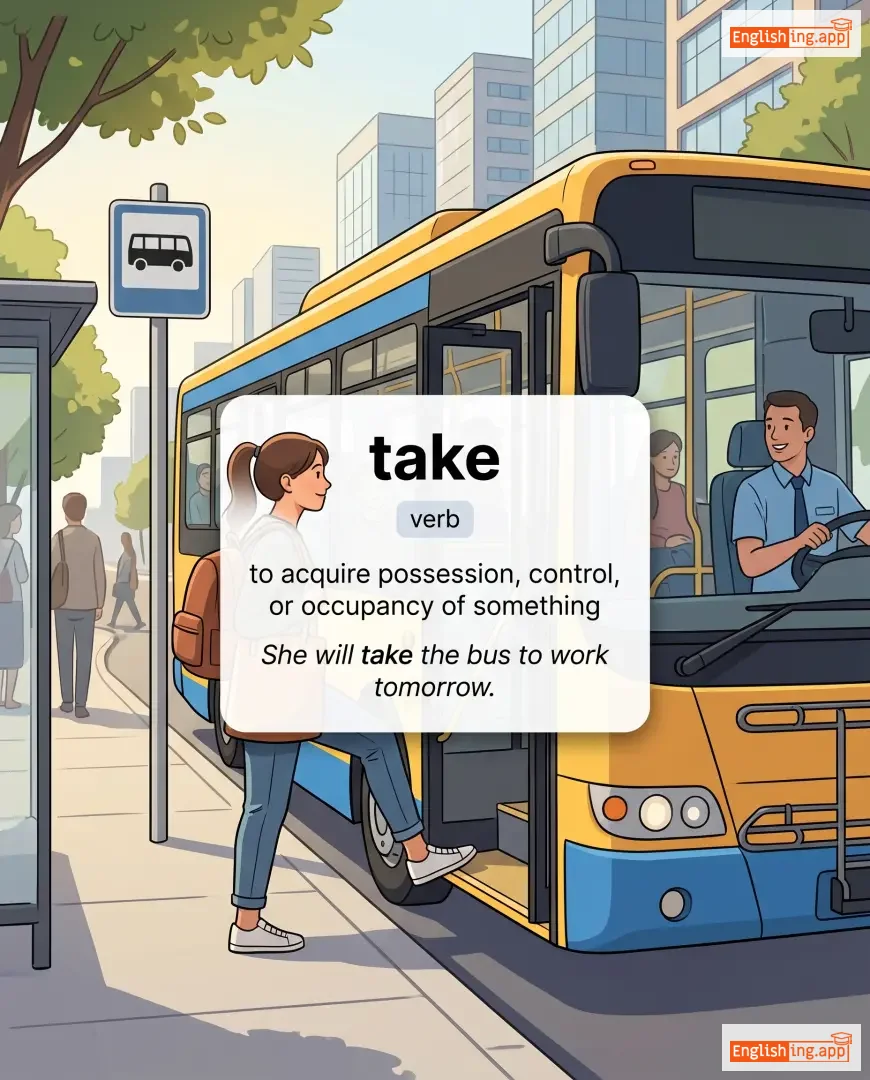
take definition card — visual illustration of the meaning
verb
/teɪk/
prendre (prendre)

to acquire possession, control, or occupancy of something

"She will take the bus to work tomorrow."

"Elle prendra le bus pour aller au travail demain." (Elle prendra le bus pour aller au travail demain.)
verb
/teɪk ɒf/
décoller; enlever (decoller; enlever)

to remove something; to leave the ground and begin flying (airplane); to suddenly become successful or popular

"The airplane will take off in ten minutes."

"L'avion va décoller dans dix minutes." (L'avion va decoller dans dix minutes.)
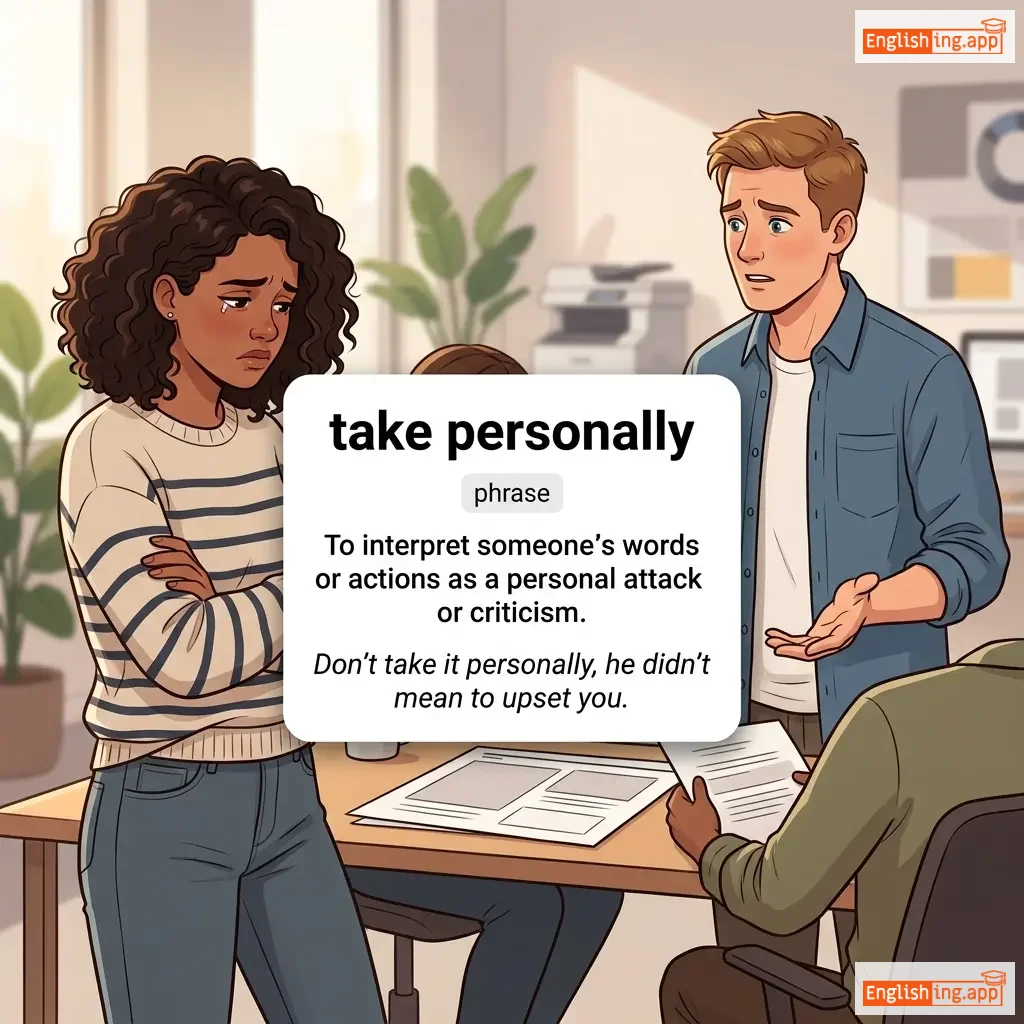
take personally definition card — visual illustration of the meaning
phrase
teɪk ˈpɜː.sən.əl.i
prendre personnellement (prendre personnellement)

To interpret someone's words or actions as a personal attack or criticism.

"Don't take it personally, he didn't mean to upset you."

"Ne le prends pas personnellement, il ne voulait pas te contrarier." (Ne le prends pas personnellement, il ne voulait pas te contrarier.)
noun
/ˈteɪkˌɔːf/
décollage (decollage)

The moment an aircraft leaves the ground and begins to fly; also a sudden rise or start in activity or success.

"The plane's takeoff was delayed due to bad weather."

"Le décollage de l'avion a été retardé à cause du mauvais temps." (Le décollage de l'avion a été retardé à cause du mauvais temps.)
noun
/teɪl/
histoire (histoire)

a narrative of imaginary events, especially one that is presented as true

"The old man told a tale of his adventures."

"Le vieil homme a raconté une histoire de ses aventures." (Le vieil homme a raconté une histoire de ses aventures.)
noun
/ˈtælənt/
talent (talent)

natural aptitude or skill

"She has a great talent for painting."

"Elle a un grand talent pour la peinture." (Elle a un grand talent pour la peinture.)
adjective
/ˈtæləntɪd/
talentueux (talentueux)

having a natural ability or skill in something

"She is a talented singer with a beautiful voice."

"Elle est une chanteuse talentueuse avec une voix magnifique." (Elle est une chanteuse talentueuse avec une voix magnifique.)
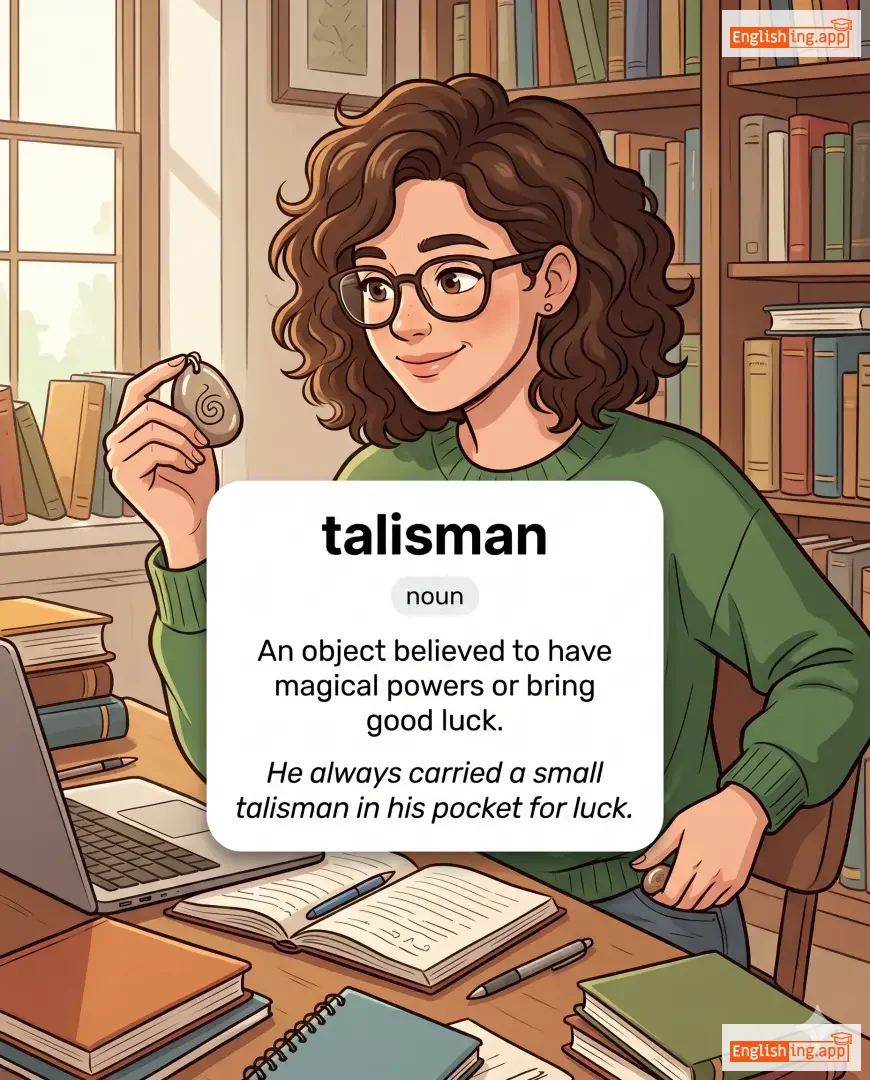
talisman definition card — visual illustration of the meaning
noun
/ˈtælɪzmən/
talisman (talisman)

An object believed to have magical powers or bring good luck.

"He always carried a small talisman in his pocket for luck."

"Il portait toujours un petit talisman dans sa poche pour la chance." (Il portait toujours un petit talisman dans sa poche pour la chance.)
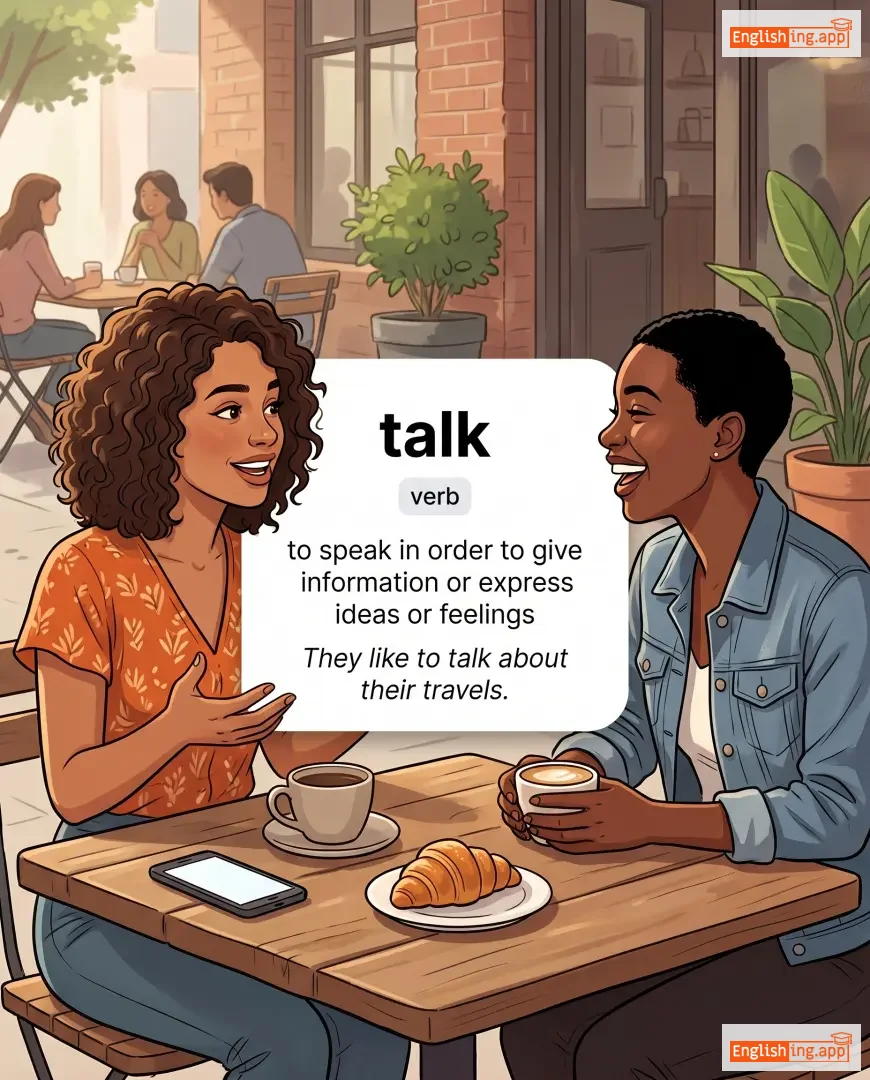
talk definition card — visual illustration of the meaning
🗣️

talk (tok)

verb
/tɔːk/
parler (parler)

to speak in order to give information or express ideas or feelings

"They like to talk about their travels."

"Ils aiment parler de leurs voyages." (Ils aiment parler de leurs voyages.)
adjective
/ˈtɔː.kə.tɪv/
bavard (bavard)

fond of talking; speaking freely and at length

"My talkative neighbor loves to chat about everything."

"Mon voisin bavard aime discuter de tout." (Mon voisin bavard aime discuter de tout.)
adjective
/tɔːl/
grand (grand)

having a greater than average height

"He is the tallest player on the team."

"Il est le joueur le plus grand de l'équipe." (Il est le joueur le plus grand de l'équipe.)
noun
/ˈtæl.i/
compte; enregistrement; score (compte; enregistrement; score)

a count or record of a number or amount; a score or total

"Keep a tally of how many books you read this month."

"Tenez un compte du nombre de livres que vous lisez ce mois-ci." (Tenez un compte du nombre de livres que vous lisez ce mois-ci.)
noun
/ˈtælən/
griffe (griffe)

A claw, especially one belonging to a bird of prey.

"The eagle gripped the fish with its sharp talons."

"L'aigle a saisi le poisson avec ses griffes acérées." (L'aigle a saisi le poisson avec ses griffes acérées.)
noun
/ˈtæm.ə.rɪnd/
tamarin (tamarin)

tropical fruit with a brown pod containing a sour pulp used in cooking

"The chef used tamarind paste to add tangy flavor to the curry."

"Le chef a utilisé de la pâte de tamarin pour ajouter une saveur acidulée au curry." (Le chef a utilisé de la pâte de tamarin pour ajouter une saveur acidulée au curry.)
noun
/ˌtæmbəˈriːn/
tambourin (tambourin)

A musical instrument with a circular frame, metal jingles, and a drumhead, played by shaking or striking.

"She played the tambourine during the festival parade."

"Elle a joué du tambourin pendant la parade du festival." (Elle a joué du tambourin pendant la parade du festival.)
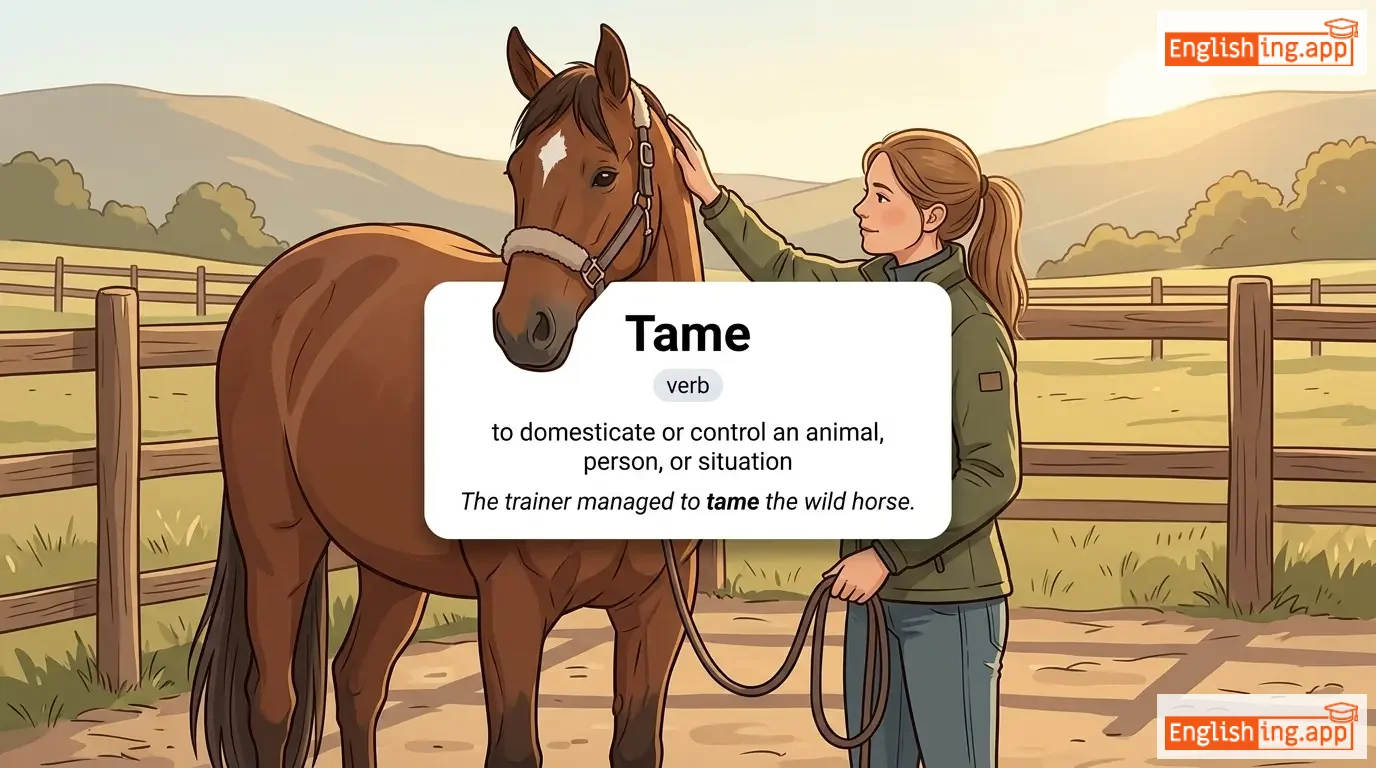
Tame definition card — visual illustration of the meaning
verb
/teɪm/
apprivoiser (apprivoiser)

to domesticate or control an animal, person, or situation

"The trainer managed to tame the wild horse."

"L'entraîneur a réussi à apprivoiser le cheval sauvage." (L'entraineur a reussi a apprivoiser le cheval sauvage.)
verb
/tæmp/
tasser (tasser)

to press down tightly by packing

"He tamped the soil around the plant to secure it."

"Il a tassé la terre autour de la plante pour la sécuriser." (Il a tasse la terre autour de la plante pour la securiser.)
verb
/ˈtæmpər/
interférer (interfere)

To interfere with something in a harmful, unauthorized, or improper way.

"The evidence was tampered with before the trial."

"Les preuves ont été manipulées avant le procès." (Les preuves ont été manipulées avant le procès.)
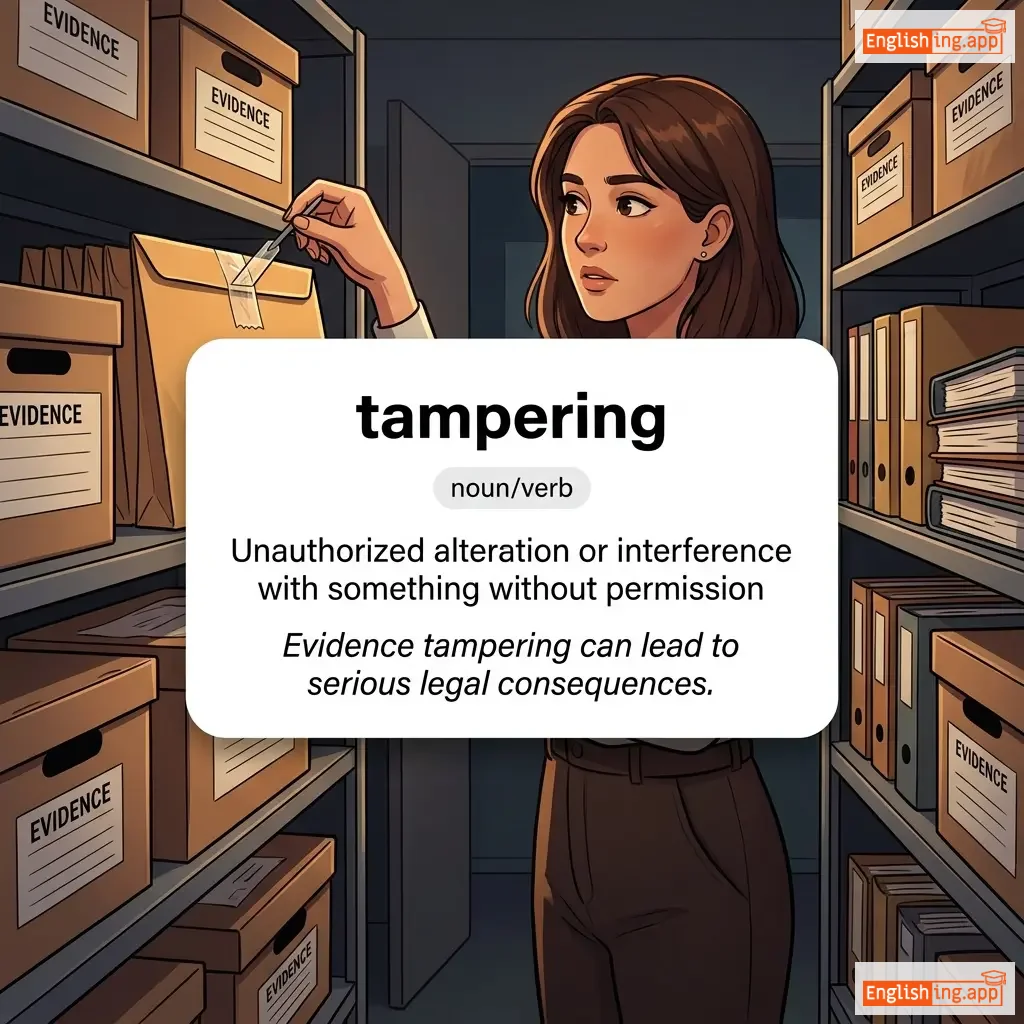
tampering definition card — visual illustration of the meaning
noun/verb
/ˈtæm.pər.ɪŋ/
altération non autorisée ou ingérence (alteration non autorisee ou ingerence)

Unauthorized alteration or interference with something without permission

"Evidence tampering can lead to serious legal consequences."

"La falsification de preuves peut entraîner de graves conséquences juridiques." (La falsification de preuves peut entraîner de graves conséquences juridiques.)
verb
/tæn/
rendre la peau ou le cuir marron en exposant au soleil ou en utilisant des produits chimiques (rendre la peau ou le cuir marron en exposant au soleil ou en utilisant des produits chimiques)

to make skin or a hide brown by exposure to the sun or by using chemicals

"She tanned her skin after spending the summer at the beach."

"Elle a bronzé sa peau après avoir passé l'été à la plage." (Elle a bronze sa peau après avoir passé l'été à la plage.)
noun
/ˈtæn.dəm/
vélo tandem (velo tandem)

a bicycle built for two riders, one behind the other

"The couple enjoyed riding their tandem bicycle through the park."

"Le couple a apprécié de faire du vélo tandem dans le parc." (Le couple a apprécié de faire du vélo tandem dans le parc.)
noun
/ˈtændʒənsi/
tangence (tangens)

the condition of touching but not intersecting, especially in geometry

"The circle and the line are in a state of tangency at one point."

"Le cercle et la ligne sont en état de tangence en un point." (Le cercle et la ligne sont en etat de tangence en un point.)
noun
/ˈtændʒənt/
tangente (tandzhuhnt)

a straight line or plane that touches a curve or curved surface at a point but does not cross it

"The teacher drew a tangent to the circle on the board."

"Le professeur a tracé une tangente au cercle sur le tableau." (Le professeur a trace une tangente au cercle sur le tableau.)