Vocabulaires

Découvrez, apprenez et maîtrisez le vocabulaire anglais

noun
/jɑːrd/
yard (yard)

a unit of linear measure equal to three feet or 0.9144 meters

"The garden is 50 yards long."

"Le jardin mesure 50 yards de long." (Le jardin mesure 50 yards de long.)
noun
/jɑːrn/
fil (fil)

spun thread used for knitting, weaving, or sewing; a long or rambling story

"She bought colorful yarn for knitting a sweater."

"Elle a acheté du fil coloré pour tricoter un pull." (Elle a achete du fil colore pour tricoter un pull.)
noun
/jɔːn/
bâillement (baillement)

an involuntary opening of the mouth and inhalation of air due to tiredness or boredom

"She couldn't suppress a yawn during the boring lecture."

"Elle n'a pas pu réprimer un bâillement pendant la conférence ennuyeuse." (Elle n'a pas pu réprimer un bâillement pendant la conférence ennuyeuse.)
interjection
/jɛə/
oui (wee)

used to express agreement or affirmation

"Yeah, I’ll go to the store with you."

"Oui, j'irai au magasin avec toi." (Oui, j'irai au magasin avec toi.)
noun
/jɪə/
année (annee)

a period of 365 or 366 days, divided into 12 months

"This year, we are planning a trip to the mountains."

"Cette année, nous planifions un voyage à la montagne." (Cette annee, nous planifions un voyage a la montagne.)
noun
/ˈjɪərlɪŋ/
un animal d'un an, surtout un cheval (un animal d'un an, surtout un cheval)

an animal that is one year old, especially a horse

"The farmer sold the yearling at the livestock market."

"Le fermier a vendu le yearling au marché du bétail." (Le fermier a vendu le yearling au marché du bétail.)
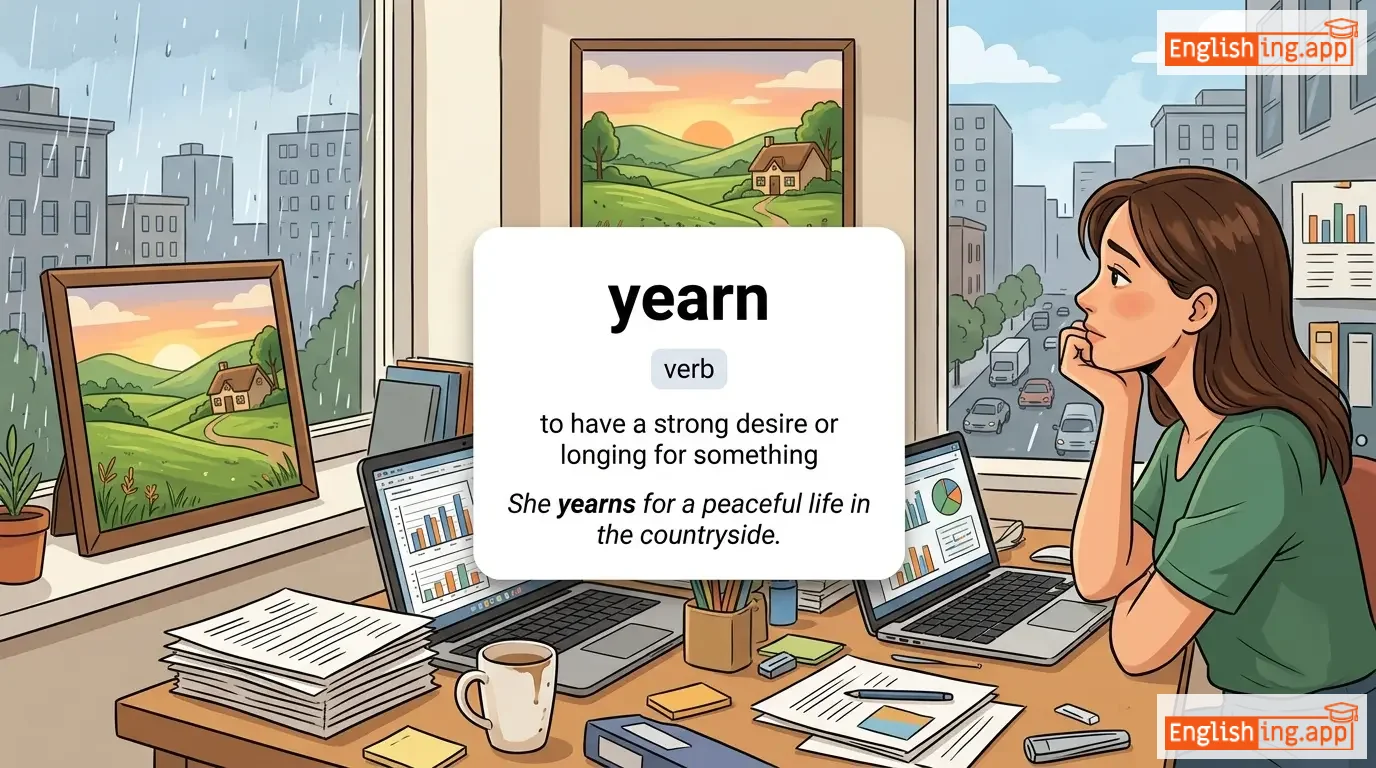
yearn definition card — visual illustration of the meaning
verb
/jɜːn/
désirer (désirer)

to have a strong desire or longing for something

"She yearns for a peaceful life in the countryside."

"Elle désire une vie paisible à la campagne." (Elle désire une vie paisible à la campagne.)
noun
/jiːst/
levure (levure)

microorganisms used in baking and brewing to cause fermentation

"Add yeast to the flour to make the bread rise."

"Ajoutez de la levure à la farine pour faire lever le pain." (Ajoutez de la levure à la farine pour faire lever le pain.)
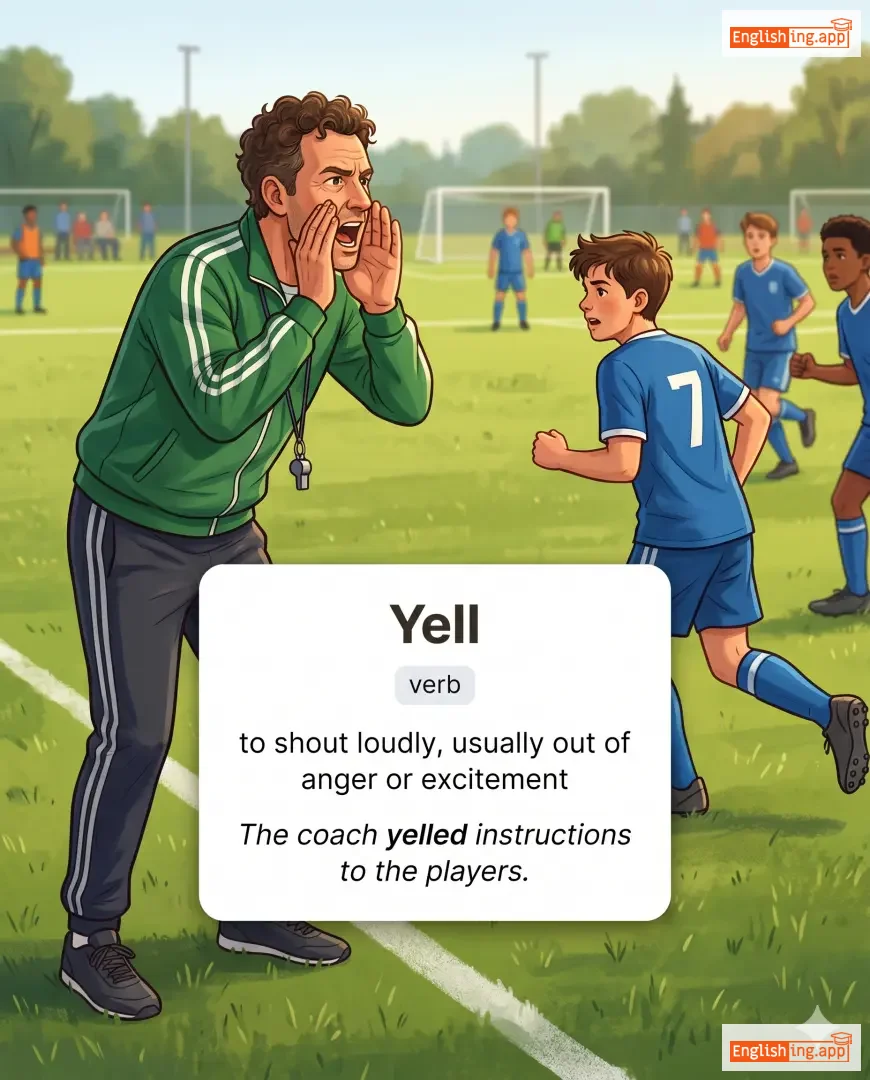
Yell definition card — visual illustration of the meaning
verb
/jɛl/
crier (crier)

to shout loudly, usually out of anger or excitement

"The coach yelled instructions to the players."

"L'entraîneur cria des instructions aux joueurs." (L'entraineur cria des instructions aux joueurs.)
adjective
/ˈjɛləʊ/
jaune (jaune)

a color like that of ripe lemons or the sun

"The yellow flowers brightened up the whole garden."

"Les fleurs jaunes ont illuminé tout le jardin." (Les fleurs jaunes ont illuminé tout le jardin.)
noun
/ˈjeloʊ oʊliˈændər/
oleandre jaune (oleandre jaune)

a tropical flowering shrub with bright yellow flowers; also known as lucky nut

"The yellow oleander blooms throughout the year in warm climates."

"L'oleandre jaune fleurit toute l'année dans les climats chauds." (L'oleandre jaune fleurit toute l'année dans les climats chauds.)
noun
/jɛn/
désir (desir)

A deep, strong desire or craving.

"She felt a strong yen to travel the world."

"Elle ressentit un fort désir de voyager dans le monde." (El ressentit un fort desir de voyager dan le monde.)
👨‍🌾

yeoman (yoman)

noun
/ˈjoʊmən/
paysan / employé loyal (paysan / employé loyal)

A farmer who cultivates his own land; also used to describe someone performing loyal, useful service.

"He did yeoman service in completing the project on time."

"Il a rendu un service loyal en terminant le projet à temps." (Il a rendu un service loyal en terminant le projet à temps.)
adverb
/jɛs/
oui (oui)

used to express affirmation, agreement, or consent

"Yes, I will be there at 5 o'clock."

"Oui, je serai là à 17 heures." (Oui, je serai la a 17 heures.)
noun
/ˈjɛstərdeɪ/
hier (hier)

the day before today

"Yesterday, we went to the park."

"Hier, nous sommes allés au parc." (Hier, nous sommes allés au parc.)
adverb
/jɛt/
encore (ankor)

up until the present time, or a point in the past

"I haven’t finished my homework yet."

"Je n'ai pas encore terminé mes devoirs." (Je n'ai pas encore termine mes devoirs.)
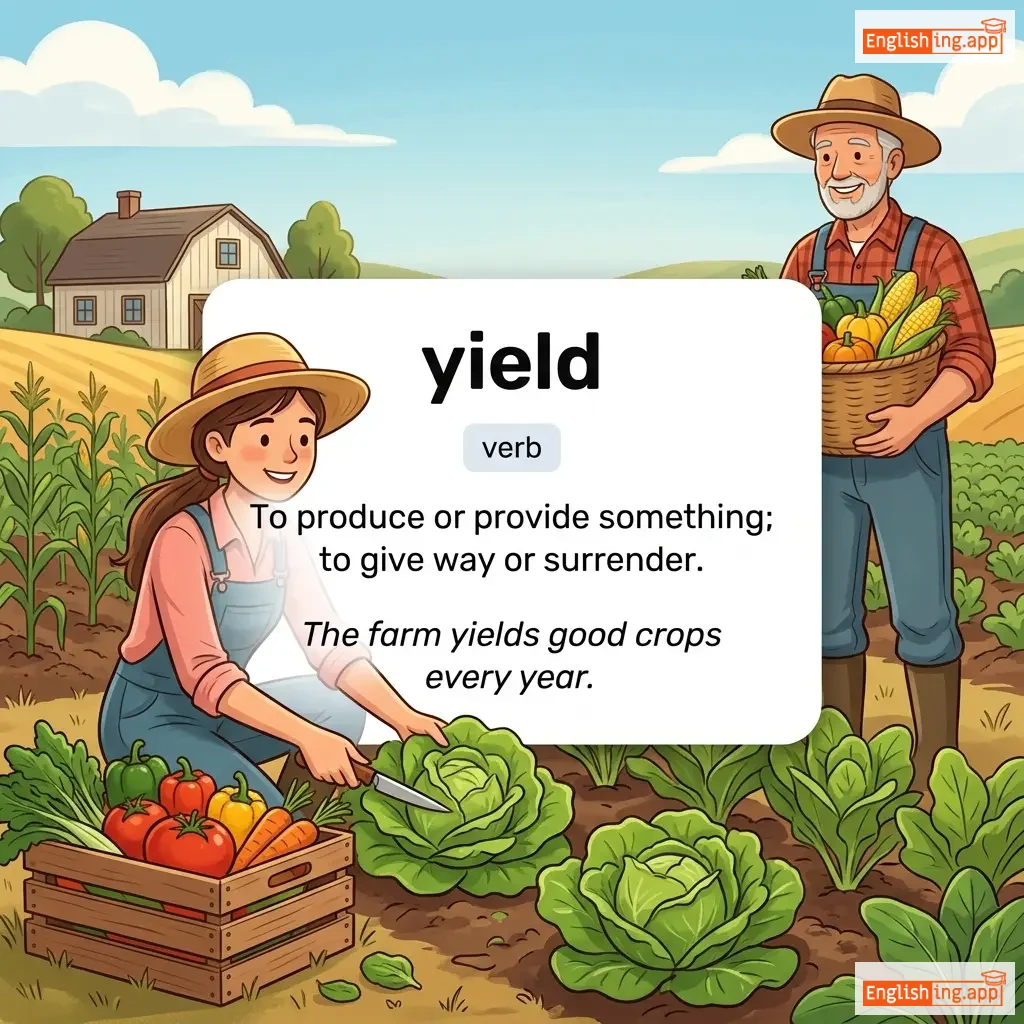
yield definition card — visual illustration of the meaning
verb
/jiːld/
produire / céder (produire / céder)

To produce or provide something; to give way or surrender.

"The farm yields good crops every year."

"La ferme produit de bonnes récoltes chaque année." (La ferme produit de bonnes récoltes chaque année.)
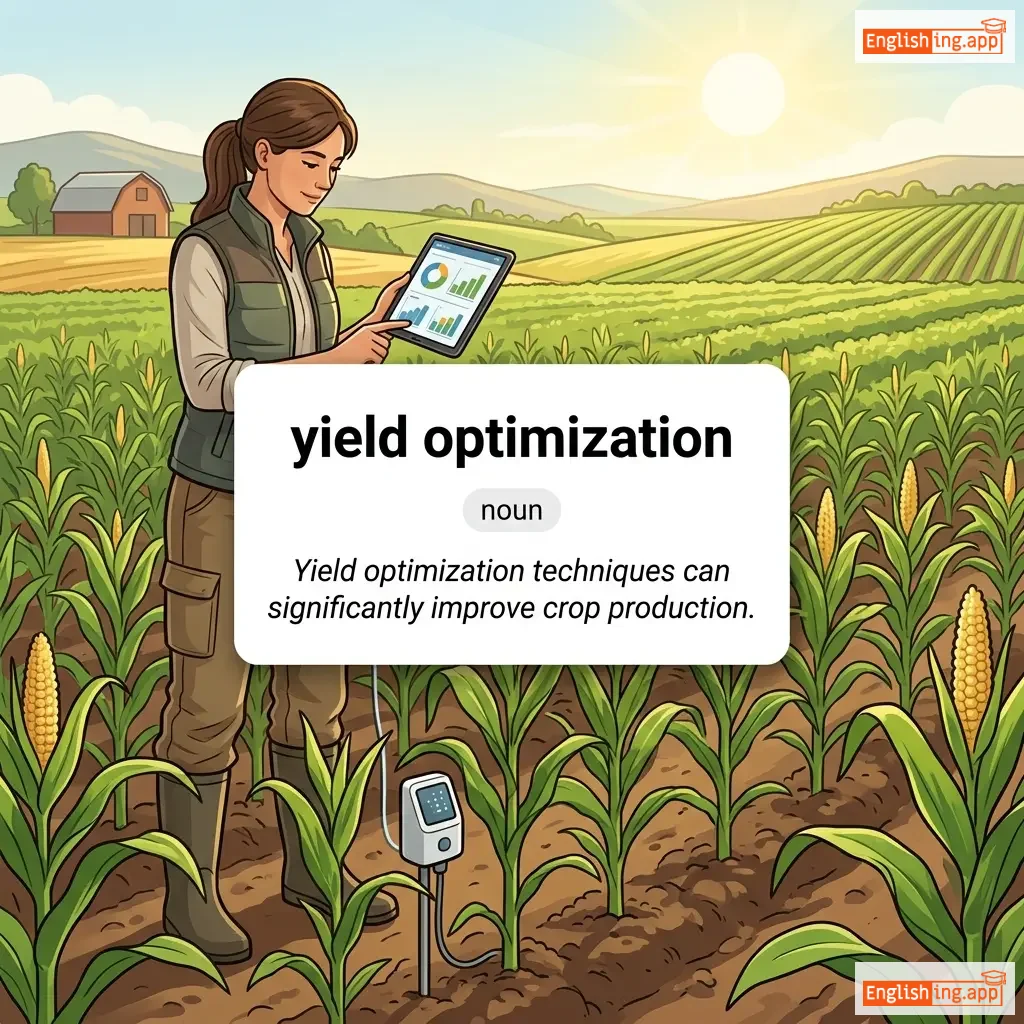
yield optimization definition card — visual illustration of the meaning
noun
/jiːld ˌɒptɪmaɪˈzeɪʃən/
optimisation du rendement (optimisation du rendement)

The process of maximizing the productivity or efficiency of crop production through various agricultural techniques and practices.

"Yield optimization techniques can significantly improve crop production."

"Les techniques d'optimisation du rendement peuvent améliorer considérablement la production de cultures." (Les techniques d'optimisation du rendement peuvent ameliorer considerablement la production de cultures.)
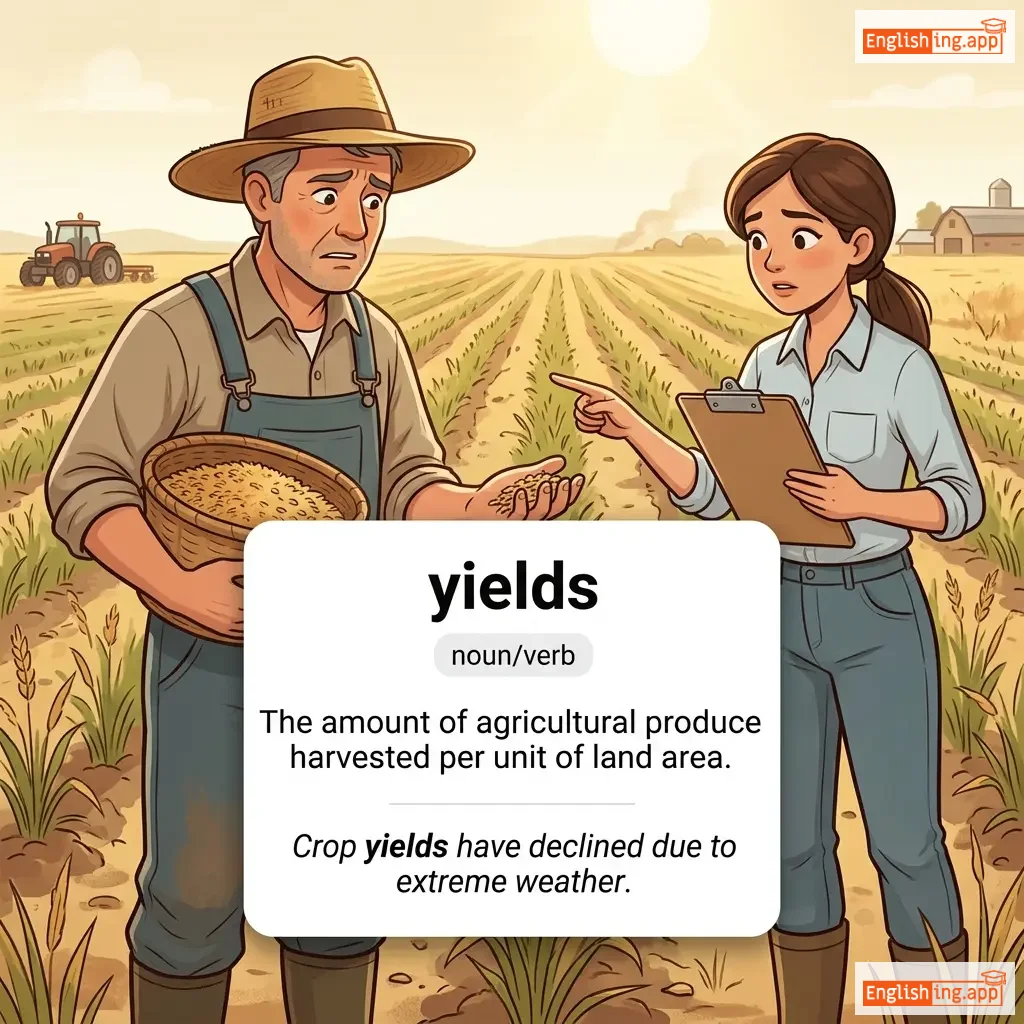
yields definition card — visual illustration of the meaning
noun/verb
jiːldz
rendement (rendement)

The amount of agricultural produce harvested per unit of land area.

"Crop yields have declined due to extreme weather."

"Les rendements des cultures ont diminué en raison des conditions climatiques extrêmes." (Les rendements des cultures ont diminué en raison des conditions climatiques extrêmes.)
noun
/joʊk/
joug (joug)

A wooden crosspiece fastened over the necks of animals; symbolically, a burden or oppression.

"The oxen were bound together by a heavy yoke."

"Les bœufs étaient liés ensemble par un lourd joug." (Les boeufs etaient lies ensemble par un lourd joug.)
noun
/ˈjoʊkəl/
paysan (paysan)

An uneducated and unsophisticated person from the countryside; a bumpkin.

"The city folks laughed at the yokel's simple ways."

"Les citadins se sont moqués des manières simples du paysan." (Les citadins se sont moqués des manières simples du paysan.)
noun
/joʊk/
jaune d'œuf (jaune d'oeuf)

the yellow part of an egg

"The chef separated the egg yolk from the white."

"Le chef a séparé le jaune d'œuf du blanc." (Le chef a séparé le jaune d'œuf du blanc.)
noun
/jɔːr/
passé (passe)

Time long past; bygone days.

"Legends of yore still inspire people today."

"Les légendes du passé continuent d'inspirer les gens aujourd'hui." (Les légendes du passé continuent d'inspirer les gens aujourd'hui.)
pronoun
/juː/
tu (tu)

used to refer to the person or people being spoken to

"You are doing a great job!"

"Tu fais un excellent travail!" (Tu fais un excellent travail!)
🧑‍🦱

Young (jeune)

adjective
/jʌŋ/
jeune (jeune)

having lived or existed for a short time

"The young boy loves to play football."

"Le jeune garçon aime jouer au football." (Le jeune garçon aime jouer au football.)
noun
/jʌŋ fɪʃ/
jeune poisson (jeun poisson)

juvenile or small fish; fish that has not reached maturity

"Young fish need protection from predators."

"Les jeunes poissons ont besoin de protection contre les prédateurs." (le jeune poisson on besoen de proteksion kontr le predater)
noun
/ˈjʌŋstər/
jeune (jeune)

a young person or child, especially a teenager or adolescent

"The park was full of youngsters playing football."

"Le parc était plein de jeunes jouant au football." (Le parc était plein de jeunes jouant au football.)
pronoun
/jɔːr/
votre (votre)

used to indicate possession or association

"Your book is on the table."

"Votre livre est sur la table." (Votre livre est sur la table.)
pronoun
/jɔːrz/
le vôtre (le votre)

belonging to or associated with the person or people that the speaker is addressing

"This pen is yours."

"Ce stylo est le vôtre." (Ce sty-lo est le vô-tre.)
pronoun
/jɔːrˈsɛlf/
toi-même (toi-meme)

used to refer to the person being addressed, often for emphasis or reflection

"You should look after yourself."

"Tu devrais prendre soin de toi-même." (Tu devrais prendre soin de toi-même.)
noun
/juːθ/
jeunesse (jeunesse)

the period of life when a person is young, often associated with energy and vitality

"The youth are the future of the country."

"La jeunesse est l'avenir du pays." (La jeunesse est l'avenir du pays.)
adjective
/ˈjuːθfəl/
jeune; énergique et frais (jeune; energetique et frais)

having the qualities of youth; energetic and fresh

"Her youthful energy impressed everyone at work."

"Son énergie jeune a impressionné tout le monde au travail." (Son energie jeune a impressionne tout le monde au travail.)