词汇表

英语词汇词典 | 单词含义、定义和示例

adjective
/məˈkɑːbrə/
恐怖 (kǒngbù)

disturbing and horrifying because of involvement with or depiction of death and injury

"The horror movie had a macabre ending."

"这部恐怖片有一个恐怖的结局。" (Zhè bù kǒngbù piàn yǒu yīgè kǒngbù de jiéjú.)
verb
/məˈkadəˌmaɪz/
用碎石覆盖一条道路 (yòng suìshí fùgài yī tiáo dàolù)

to construct or cover a road with broken stone

"The government decided to macadamize the old rural roads."

"政府决定用碎石铺设旧的乡村道路。" (Zhèngfǔ juédìng yòng suìshí pūshè jiù de xiāngcūn dàolù.)
noun
/meɪs/
权杖 / 钉锤 (quánzhàng / dīngchuí)

a ceremonial staff carried as a symbol of authority or a weapon similar to a club

"The guard carried a mace as a symbol of authority."

"守卫携带了一根权杖作为权威的象征。" (Shǒuwèi xiédài le yī gēn quánzhàng zuòwéi quánwēi de xiàngzhēng.)
verb
/ˈmæsəˌreɪt/
浸泡 (jìnpào)

to soften or break up something, especially food, by soaking in liquid

"The chef macerated the fruit in wine before serving."

"厨师在上菜前将水果浸泡在葡萄酒中。" (Chúshī zài shàngcài qián jiāng shuǐguǒ jìnpào zài pútáojiǔ zhōng.)
machiavellian definition card — visual illustration of the meaning
adjective
/ˌmækɪəˈvɛliən/
狡猾的,阴谋的,不择手段的,尤其是在政治或推动自己事业方面 (majiayaweli)

cunning, scheming, and unscrupulous, especially in politics or in advancing one's career

"The politician was known for his Machiavellian tactics."

"那位政治家因其马基雅维利式的手段而闻名。" (Na wei zhengzhijia yin qi majiayaweli shi de shouduan er wenming.)
verb
/ˈmæk.ɪ.neɪt/
策划 (cèhuà)

to engage in plots or schemes, usually for harmful or evil purposes

"The rebels tried to machinate against the king."

"叛乱者试图反对国王密谋。" (Pànluàn zhě shìtú fǎnduì guówáng mìmóu.)
noun
/ˌmæk.ɪˈneɪ.ʃən/
阴谋 (yīnmóu)

a secret plan or scheme intended to accomplish something, especially something evil

"The detective uncovered the villain's machination."

"侦探揭示了恶棍的阴谋。" (Zhēntàn jiēshìle ègùn de yīnmóu.)
machinations definition card — visual illustration of the meaning
noun (plural)
/ˌmæk.ɪˈneɪ.ʃənz/
阴谋 (yīnmóu)

complicated and secret plans, often intended to cause harm

"The politician was brought down by his own machinations."

"那位政治家被自己的一手阴谋推翻了。" (Nà wèi zhèngzhìjiā bèi zìjǐ de yī shǒu yīnmóu tuīfānle.)
noun
/məˈʃiːn/
机器 (jiqi)

A device with moving parts that uses energy to perform a particular task.

"This washing machine is very efficient."

"这台洗衣机非常高效。" (Zhè tái xǐyījī fēicháng gāoxiào.)
noun
/məˈʃiː.nər.i/

machines collectively, or the parts of a machine; also, the system or process by which something works

"The factory invested in new machinery to increase production."

noun
/məˈʃiː.nɪst/
机修工 (jīxiū gōng)

a person who operates machine tools or makes and repairs machines

"The machinist carefully adjusted the gears on the lathe."

"机械师小心地调整了车床上的齿轮。" (Jīxiū gōng xiǎoxīn de tiáozhěng le chēchuáng shàng de chǐlún.)
noun
/ˈmæk.ər.əl/
鲭鱼 (qing yu)

a streamlined marine fish with a forked tail and wavy stripes

"Mackerel is rich in omega-3 fatty acids."

"鲭鱼富含欧米伽-3脂肪酸。" (qing yu fuhan oumi jia san zhifang suan)
noun
/ˈmækɪntɒʃ/
防水雨衣 (fangshui yuyi)

a waterproof raincoat, originally made from rubberized fabric

"He wore a mackintosh to stay dry in the rain."

"他穿了一件麦金托什雨衣以保持干燥。" (Ta chuanle yijian maijin tuoshi yu yi yi baochi ganzao.)
noun
/ˈmæk.rəˌkɒz.əm/
宇宙宏观 (yǔ zhòu hóng guān)

The whole universe considered as a large, complex system; a large-scale representation of something.

"The macrocosm of the universe reflects the microcosm of human life."

"宇宙的宏观反映了人类生活的微观。" (Yǔzhòu de hóngguān fǎnyìngle rénlèi shēnghuó de wēiguān.)
macroeconomic definition card — visual illustration of the meaning
adjective
/ˌmæk.rəʊ.iː.kəˈnɒm.ɪk/
宏观经济的 (hóngguān jīngjì de)

Relating to macroeconomics or the large-scale or general economic factors, such as interest rates and national productivity.

"Macroeconomic policies influence inflation and employment rates."

"宏观经济政策影响通货膨胀和就业率。" (Hóngguān jīngjì zhèngcè yǐngxiǎng tōnghuò péngzhàng hé jiùyè lǜ.)
macronutrients definition card — visual illustration of the meaning
noun
/ˈmæk.rəʊˌnjuː.tri.ənts/
大营养素 (da yingyang su)

Nutrients that are needed in large amounts to provide energy and building materials for the body, including carbohydrates, proteins, and fats.

"Proteins, fats, and carbohydrates are vital macronutrients."

"蛋白质、脂肪和碳水化合物是重要的大营养素。" (Danbaizhi, zhifang he tanshuizhihuabu shi zhongyao de da yingyang su.)
verb
/ˈmæk.jʊˌleɪt/
玷污 (diànwū)

To stain, spot, or pollute something.

"The white cloth was maculated by ink stains."

"白色布料被墨水污点弄脏了。" (Báisè bùliào bèi mòshuǐ wūdiǎn nòng zāngle.)
adjective
/ˈmæk.jʊˌleɪ.tɪd/
斑驳的 (banbo de)

Spotted or stained; marked with blemishes.

"The maculated surface of the old mirror gave it a unique charm."

"旧镜子的斑驳表面赋予它独特的魅力。" (Jiu jingzi de banbo biao mian fuyu ta dute de meili.)
adjective
/mæd/
生气 / 疯狂 (shengqi / fengkuang)

Very angry, insane, or foolish.

"She was mad at her brother for breaking the vase."

"她因弟弟打破花瓶而生气。" (Ta yin didi dapokhua ping er shengqi.)
verb
/ˈmæd.ən/
使发狂 (shǐ fā kuáng)

To make someone very angry or extremely annoyed.

"The constant noise maddened him."

"持续的噪音让他发狂。" (Chíxù de zàoyīn ràng tā fā kuáng.)
noun
/ˈmædnəs/
疯狂 (fengkuang)

the state of being mentally ill or acting in a very foolish way

"It would be madness to drive in such dangerous weather."

"在如此危险的天气中开车简直是疯狂。" (Zài rúcǐ wéixiǎn de tiānqì zhōng kāichē jiǎnzhí shì fēicháng fēngkuáng.)
noun
/məˈdɒn.ə/
马东娜 (圣母玛利亚) (mǎ dōng nà (shèng mǔ mǎ lì yà))

An artistic representation of the Virgin Mary; also used as a respectful form of address for a woman in Italian culture.

"The Renaissance painting depicts a Madonna holding child Jesus."
"文艺复兴时期的画作描绘了一位抱着耶稣婴儿的马东娜。" (Wényì fùxīng shíqī de huàzuò miáohuì le yī wèi bào zhe yēsū yīng'ér de mǎ dōng nà.)
noun
/ˈmædrɪɡəl/

A short, lyrical poem set to music, typically from the Renaissance period.

"The choir performed a beautiful madrigal from the 16th century."

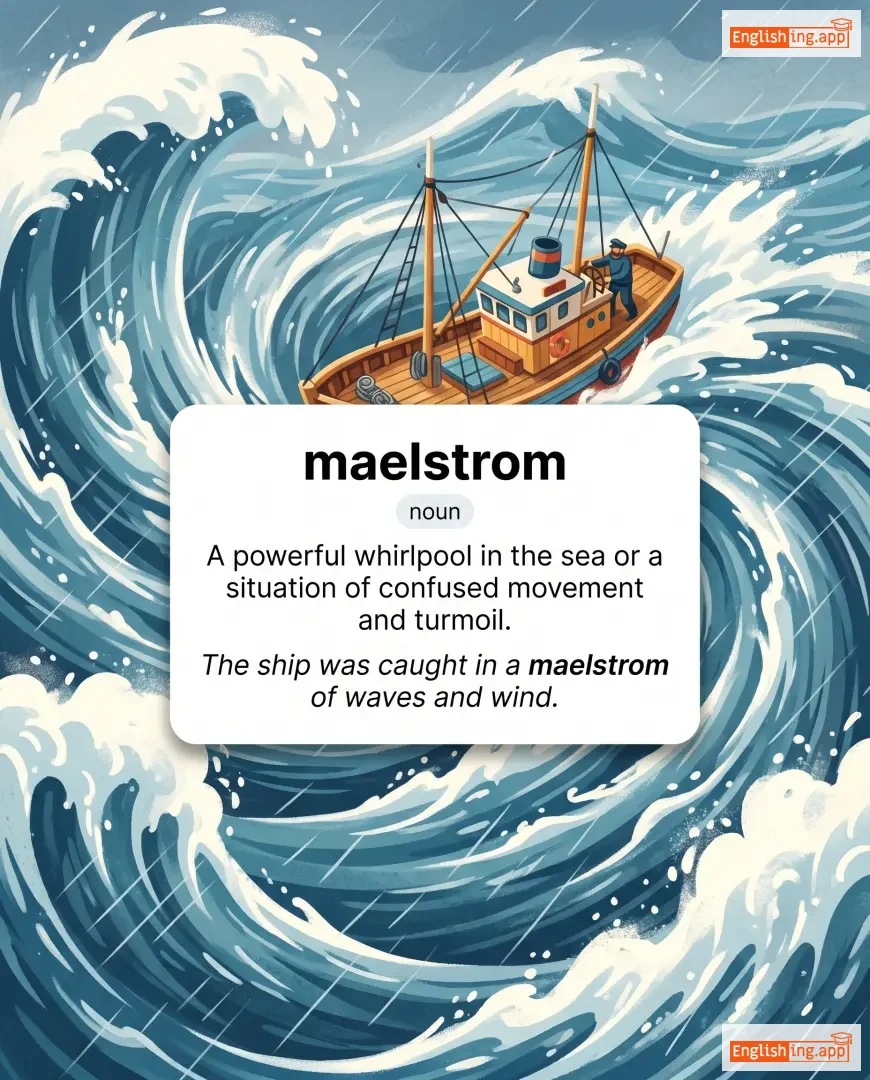
maelstrom definition card — visual illustration of the meaning
noun
/ˈmeɪlstrəm/
漩涡 (xuánwō)

A powerful whirlpool in the sea or a situation of confused movement and turmoil.

"The ship was caught in a maelstrom of waves and wind."

"船只被卷入了波浪和风的漩涡中。" (Chuán zhī bèi juǎn rù le bōlàng hé fēng de xuánwō zhōng.)
noun
/ˈmæɡəziːn/
杂志 (zázhì)

A periodical publication containing articles, photographs, and advertisements.

"She bought a fashion magazine at the store."

"她在商店买了一本时尚杂志。" (Tā zài shāngdiàn mǎile yī běn shíshàng zázhì.)
adjective
/məˈdʒen.tə/
品红色 (pǐnhóng sè)

a bright purplish-red color

"She wore a beautiful magenta dress to the party."

"她穿了一件漂亮的品红色裙子去派对。" (Tā chuānle yī jiàn piàoliang de pǐnhóng sè qúnzi qù pàiduì.)
noun
/ˈmædʒɪk/
魔法 (mó fǎ)

the use of mysterious or supernatural powers to influence events

"The magician amazed the crowd with his magic."

"魔术师用他的魔法让观众惊讶。" (mó shù shī yòng tā de mó fǎ ràng guān zhòng jīng yà)
adjective
/ˈmædʒɪkəl/

having or producing the charm, beauty, or power of magic

"The sunset over the mountains was a magical sight."

noun
/məˈdʒɪʃən/
魔术师 (mó shù shī)

A person who performs tricks and illusions for entertainment or one believed to have magical powers.

"The magician pulled a rabbit out of his hat."

"魔术师从他的帽子里拿出了兔子。" (Móshù shī cóng tā de màozi lǐ ná chūle tùzǐ.)
adjective
/ˌmædʒɪˈstɪəriəl/
权威的 (quánwēi de)

Having the characteristics of a master or authority; commanding and dignified.

"The professor spoke in a magisterial tone during the lecture."

"教授在讲座中用权威的语气发言。" (Jiàoshòu zài jiǎngzuò zhōng yòng quánwēi de yǔqì fāyán.)
noun
/ˈmædʒɪstrəsi/
司法办公室 (sifa bangongshi)

The office, authority, or district of a magistrate.

"He was proud to serve in the local magistracy for over a decade."

"他为能在当地的司法办公室工作超过十年而感到自豪。" (Ta wei neng zai dangdi de sifa bangongshi gongzuo chao guo shinian er gandao zihau.)
noun
/ˈmædʒɪstreɪt/
法官 (fǎguān)

A civil officer who administers the law, often with limited judicial authority.

"The magistrate presided over the minor criminal case."
"法官主持了轻微刑事案件。" (Fǎguān zhǔchíle qīngwēi xíngshì ànjiàn.)
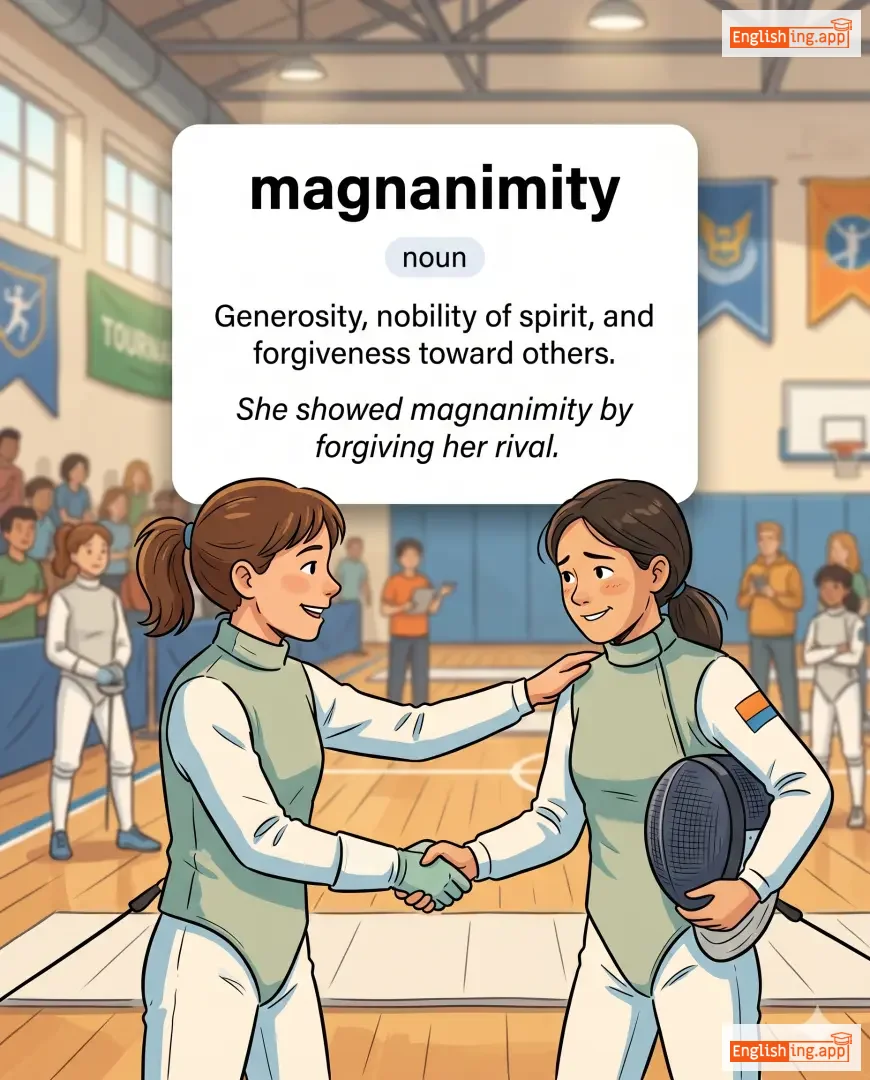
magnanimity definition card — visual illustration of the meaning
noun
/ˌmæɡnəˈnɪmɪti/
宽宏大量 (kuanhong daliang)

Generosity, nobility of spirit, and forgiveness toward others.

"She showed magnanimity by forgiving her rival."

"她通过原谅她的对手展示了宽宏大量。" (Ta tongguo yuanliang ta de duishou zhanshi le kuanhong daliang.)
magnanimous definition card — visual illustration of the meaning
adjective
/mæɡˈnænɪməs/
宽宏大量 (kuan hong da liang)

Generous or forgiving, especially toward a rival or less powerful person.

"He was magnanimous in victory, praising his opponent."

"他在胜利中宽宏大量,赞扬了他的对手。" (Ta zai shengli zhong kuan hong da liang, zanyang le ta de duishou.)
noun
/ˈmæɡneɪt/
富豪 (fùháo)

A wealthy and influential person, especially in business or industry.

"The oil magnate donated millions to charity."

"石油富豪捐赠了数百万美元给慈善事业。" (Shíyóu fùháo juānzèngle shù bǎi wàn měiyuán gěi císhàn shìyè.)
noun
/ˈmæɡnət/
磁铁 (citie)

An object that produces a magnetic field and attracts metals like iron.

"The magnet held the paper to the fridge door."

"磁铁将纸张吸附在冰箱门上。" (Citie jiang zhizhang xifu zai bingxiang men shang.)
adjective
/mæɡˈnɛtɪk/
磁性 (cíxìng)

having the power to attract metal objects or to attract people or things in a strong way

"The magnetic field of the Earth protects us from harmful solar radiation."

"地球的磁场保护我们免受有害的太阳辐射。" (Dìqiú de cíchǎng bǎohù wǒmen miǎn shòu yǒuhài de tàiyáng fúshè.)
verb
/ˈmæɡnɪtaɪz/
磁化 (cíhuà)

to make something magnetic or to strongly attract

"The scientist managed to magnetize the iron rod."

"科学家成功地将铁棒磁化了。" (Kēxuéjiā chénggōng dì jiāng tiě bàng cíhuàle.)
noun
/mæɡˈnɪfɪsəns/
壮丽 (zhuànglì)

splendor, grandeur, or impressive beauty

"The magnificence of the palace left everyone speechless."

"宫殿的壮丽让所有人都哑口无言。" (Gōngdiàn de zhuànglì ràng suǒyǒu rén dōu yǎkǒu wúyán.)
adjective
/mæɡˈnɪfɪsənt/
壮观 (zhuangguan)

extremely beautiful, impressive, or splendid

"The view from the mountain was truly magnificent."

"从山上看到的景色真的很壮观。" (Cong shan shang kandao de jingse zhen de hen zhuangguan.)
verb
/ˈmæɡnɪfaɪ/
放大 (fangda)

to make something appear larger or more important than it really is

"The microscope can magnify tiny cells."

"显微镜可以放大微小的细胞。" (Xianwei jing keyi fangda weixiao de xibao.)
adjective
/mæɡˈnɪləkwənt/
夸张的语言 (kuāzhāng de yǔyán)

using high-flown or pompous language

"The politician’s magniloquent speech impressed the crowd."

"政治家的夸张演讲给人们留下了深刻的印象。" (Zhèngzhì jiā de kuāzhāng yǎnjiǎng gěi rénmen liú xiàle shēnkè de yìnxiàng.)
noun
/ˈmæɡnɪtuːd/
震级 (zhènjí)

the great size, extent, or importance of something

"The magnitude of the earthquake shocked the nation."

"地震的震级震惊了整个国家。" (Dìzhèn de zhènjí zhènjīngle zhěnggè guójiā.)
noun
/ˌmɑːhəˈrɑːdʒə/
马哈拉贾 (maharaja)

A great king, especially a ruler of one of the principal states in India.

"The maharaja lived in a grand palace surrounded by gardens."

"马哈拉贾住在一个宏伟的宫殿里,四周是花园。" (Mǎhā lā jiā zhù zài yīgè hóngwěi de gōngdiàn lǐ, sìzhōu shì huāyuán.)
noun
/ˈmeɪdənˌhʊd/
少女期 (shàonǚqī)

The state of being a maiden; girlhood or virginity.

"The poem celebrated the innocence of maidenhood."

"这首诗歌庆祝了少女时期的纯真。" (Zhè shǒu shīgē qìngzhù le shàonǚ shíqī de chúnzhēn.)
noun/verb
/meɪl/
邮件 / 信件 (yóujiàn / xìnjiàn)

Letters, packages, or email messages sent or delivered to someone.

"I received an important letter in the mail."

"我通过邮件收到了一个重要的信件。" (Wǒ tōngguò yóujiàn shōu dào le yī gè zhòngyào de xìnjiàn.)
noun
/meɪl treɪn/
邮政列车 (yóuzhèng lièchē)

a train that carries mail and postal packages

"The mail train departs every evening to deliver letters across the country."

"邮件列车每天晚上发车,跨越全国递送信件。" (Yóujiàn lièchē měitiān wǎnshàng fāchē, kuàyuè quánguó dìsòng xìnjiàn.)
verb
/meɪm/
使残疾 (shǐ cánjí)

To wound or injure someone so that part of the body is permanently damaged.

"The accident maimed several passengers."

"事故使几位乘客致残。" (Shìgù shǐ jǐ wèi chéngkè zhìcán.)
adjective
/meɪn/
主要的 (zhuyao de)

most important; chief in size, extent, or importance

"The main reason for his success is hard work."

"他成功的主要原因是努力工作。" (ta chenggong de zhuyao yuanyin shi nuli gongzuo.)
noun
/ˈmeɪnˌlænd/

the principal landmass of a country or continent, as opposed to the surrounding islands

"The mainland of Australia is home to most of its population."