Словари

Словарь английского языка | Значения слов, определения и примеры

adjective
/məˈkɑːbrə/
мракобесие (mrakobesie)

disturbing and horrifying because of involvement with or depiction of death and injury

"The horror movie had a macabre ending."

"У фильма ужасов был мракобесный конец." (U fil'ma uzhasov byl mrakobesnyj konets.)
verb
/məˈkadəˌmaɪz/
покрывать дорогу дробленым камнем (pokryvat dorogu droblyonym kamnem)

to construct or cover a road with broken stone

"The government decided to macadamize the old rural roads."

"Правительство решило маккадамизировать старые сельские дороги." (Pravitel'stvo reshilo makadamizirovat' starye sel'skie dorogi.)
noun
/meɪs/
булава / скипетр (bulava / skipetr)

a ceremonial staff carried as a symbol of authority or a weapon similar to a club

"The guard carried a mace as a symbol of authority."

"Страж носил булаву как символ власти." (Strazh nosil bulavu kak simvol vlasti.)
verb
/ˈmæsəˌreɪt/
размягчать (razmyagchat)

to soften or break up something, especially food, by soaking in liquid

"The chef macerated the fruit in wine before serving."

"Шеф макерировал фрукты в вине перед подачей." (Shef makeriroval frukty v vine pered podachey.)
machiavellian definition card — visual illustration of the meaning
adjective
/ˌmækɪəˈvɛliən/
хитрый, махинационный и безнравственный, особенно в политике или для продвижения своей карьеры (makkiavellian)

cunning, scheming, and unscrupulous, especially in politics or in advancing one's career

"The politician was known for his Machiavellian tactics."

"Политик был известен своими махинационными тактиками." (Politik byl izvesten svoimi makhinasional'nymi taktika.)
verb
/ˈmæk.ɪ.neɪt/
замышлять (zamyshlyat)

to engage in plots or schemes, usually for harmful or evil purposes

"The rebels tried to machinate against the king."

"Бунтари пытались замышлять против короля." (Buntari pytalis' zamyshlyat' protiv korolya.)
noun
/ˌmæk.ɪˈneɪ.ʃən/
махинация (makhinatsiya)

a secret plan or scheme intended to accomplish something, especially something evil

"The detective uncovered the villain's machination."
"Детектив раскрыл махинацию злодея." (Detektiv raskryl makhinatsiyu zlodeya.)
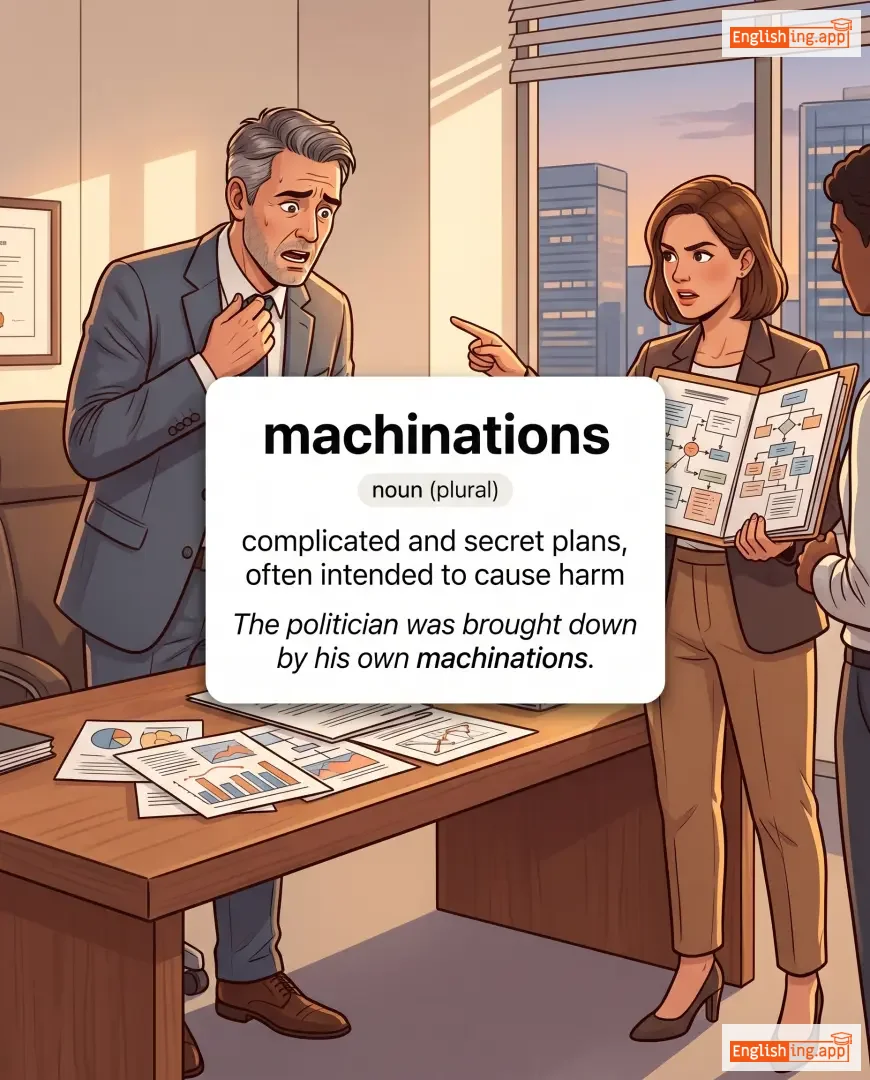
machinations definition card — visual illustration of the meaning
noun (plural)
/ˌmæk.ɪˈneɪ.ʃənz/
интриги (intrigi)

complicated and secret plans, often intended to cause harm

"The politician was brought down by his own machinations."

"Политика был свергнут собственными интригами." (Politika byl svergnut sobstvennymi intrigami.)
noun
/məˈʃiːn/
машина (mashina)

A device with moving parts that uses energy to perform a particular task.

"This washing machine is very efficient."

"Эта стиральная машина очень эффективна." (Eta stiral'naya mashina ochen' effektívna.)
noun
/məˈʃiː.nər.i/
машинерия (mashineriya)

machines collectively, or the parts of a machine; also, the system or process by which something works

"The factory invested in new machinery to increase production."

"Фабрика инвестировала в новое оборудование для увеличения производства." (Fabrika investirovala v novoye oborudovaniye dlya uvelicheniya proizvodstva.)
noun
/məˈʃiː.nɪst/
машинист (mashinist)

a person who operates machine tools or makes and repairs machines

"The machinist carefully adjusted the gears on the lathe."

"Машинист аккуратно настроил шестерёнки на токарном станке." (Mashinist akkuratno nastroil shesteryonki na tokarnom stanke.)
noun
/ˈmæk.ər.əl/
скумбрия (skumbriya)

a streamlined marine fish with a forked tail and wavy stripes

"Mackerel is rich in omega-3 fatty acids."

"Скумбрия богата омега-3 жирными кислотами." (skumbriya bogata omega tri zhirnymi kislotami)
noun
/ˈmækɪntɒʃ/
непроницаемый плащ (nepronicayemiy plash)

a waterproof raincoat, originally made from rubberized fabric

"He wore a mackintosh to stay dry in the rain."

"Он носил маккинтош, чтобы оставаться сухим под дождем." (On nosil makkintos, chtoby ostavat'sya sukhim pod dozhdem.)
noun
/ˈmæk.rəˌkɒz.əm/
макрокосм (makrokosm)

The whole universe considered as a large, complex system; a large-scale representation of something.

"The macrocosm of the universe reflects the microcosm of human life."

"Макрокосм вселенной отражает микрокосм человеческой жизни." (Makrokosm vselennoy otrazhayet mikrocosm chelovecheskoy zhizni.)
macroeconomic definition card — visual illustration of the meaning
adjective
/ˌmæk.rəʊ.iː.kəˈnɒm.ɪk/
макроэкономический (makroekonomicheskiy)

Relating to macroeconomics or the large-scale or general economic factors, such as interest rates and national productivity.

"Macroeconomic policies influence inflation and employment rates."

"Макроэкономическая политика влияет на инфляцию и уровень безработицы." (Makroekonomicheskaya politika vliyayet na inflyatsiyu i urovyen' bezrabotitsy.)
macronutrients definition card — visual illustration of the meaning
noun
/ˈmæk.rəʊˌnjuː.tri.ənts/
макронутриенты (makronutrienty)

Nutrients that are needed in large amounts to provide energy and building materials for the body, including carbohydrates, proteins, and fats.

"Proteins, fats, and carbohydrates are vital macronutrients."

"Белки, жиры и углеводы — важнейшие макронутриенты." (Belki, zhiry i uglevody — vazhneyshie makronutrienty.)
verb
/ˈmæk.jʊˌleɪt/
запятнать (zapyatnat')

To stain, spot, or pollute something.

"The white cloth was maculated by ink stains."

"Белое полотно было запятнано чернильными пятнами." (Beloe polotno bylo zapyatnano chernil'nymi pyatnami.)
adjective
/ˈmæk.jʊˌleɪ.tɪd/
пятнистый (pyatnistyy)

Spotted or stained; marked with blemishes.

"The maculated surface of the old mirror gave it a unique charm."

"Пятнистая поверхность старого зеркала придавала ему уникальное очарование." (Pyatnistaya poverkhnost' starogo zerkala pridavala yemu unikal'noye ocharovaniye.)
adjective
/mæd/
злой / сумасшедший (zloy / sumasshedshiy)

Very angry, insane, or foolish.

"She was mad at her brother for breaking the vase."

"Она была зла на своего брата за то, что он разбил вазу." (Ona byla zla na svoego brata za to, chto on razbil vazu.)
verb
/ˈmæd.ən/
злить (zlit)

To make someone very angry or extremely annoyed.

"The constant noise maddened him."

"Постоянный шум заставил его рассердиться." (Postoyannyy shum zastavil ego rasserdit'sya.)
noun
/ˈmædnəs/
безумие (bezumiye)

the state of being mentally ill or acting in a very foolish way

"It would be madness to drive in such dangerous weather."

"Это было бы безумием — водить машину в такую опасную погоду." (Eto bylo by bezumiyem — vodit' mashinu v takuyu opasnuyu pogodu.)
noun
/məˈdɒn.ə/
мадонна (Дева Мария) (madonna (Deva Maria))

An artistic representation of the Virgin Mary; also used as a respectful form of address for a woman in Italian culture.

"The Renaissance painting depicts a Madonna holding child Jesus."

"Ренессансная картина изображает Мадонну, держащую младенца Иисуса." (Renessansnaya kartina izobrazhaet Madonnu, derzhashchuyu mladen'tsa Iisusa.)
noun
/ˈmædrɪɡəl/
мадригал (madrigal)

A short, lyrical poem set to music, typically from the Renaissance period.

"The choir performed a beautiful madrigal from the 16th century."
"Хор исполнил красивый мадригал XVI века." (Khor ispolnil krasivyy madrigal XVI veka.)
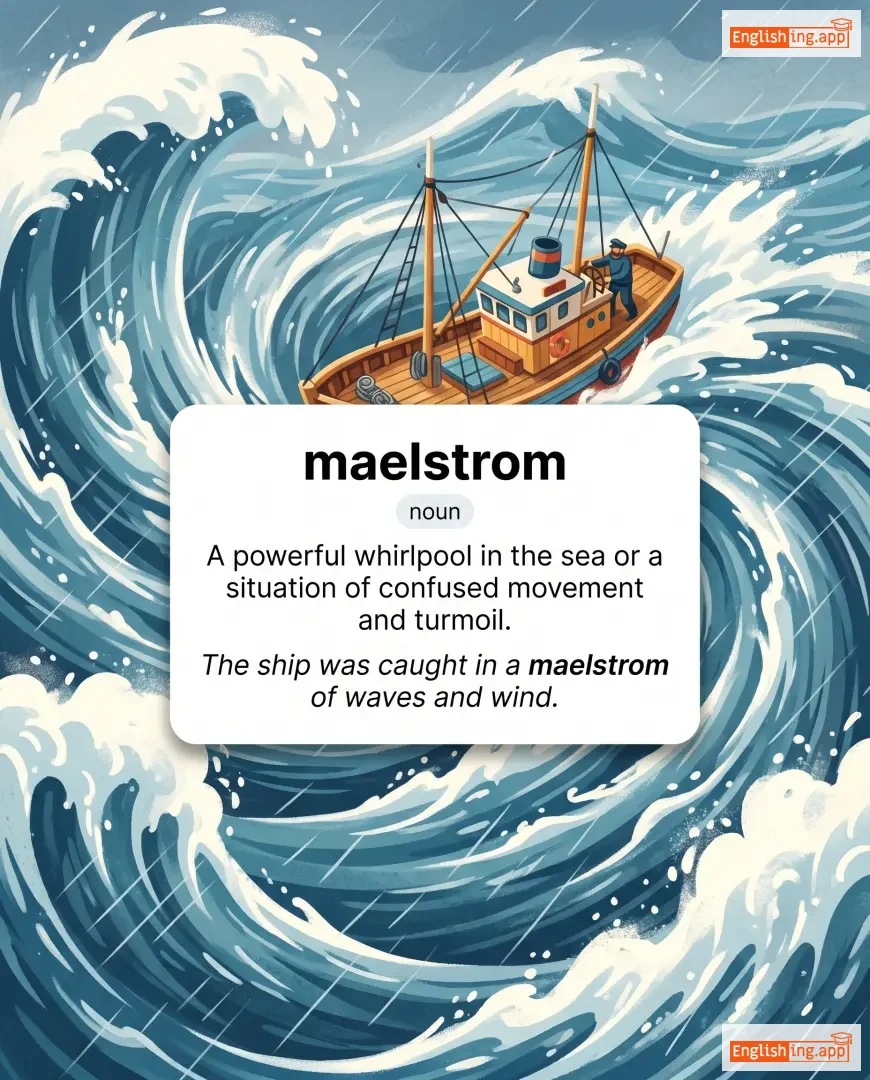
maelstrom definition card — visual illustration of the meaning
noun
/ˈmeɪlstrəm/
водоворот (vodovorot)

A powerful whirlpool in the sea or a situation of confused movement and turmoil.

"The ship was caught in a maelstrom of waves and wind."

"Корабль был пойман в водоворот волн и ветра." (Korabl' byl poyman v vodovorot voln i vetra.)
noun
/ˈmæɡəziːn/
журнал (zhurnal)

A periodical publication containing articles, photographs, and advertisements.

"She bought a fashion magazine at the store."

"Она купила модный журнал в магазине." (Ona kupila modnyj zhurnal v magazine.)
adjective
/məˈdʒen.tə/
цвет магента (tsvet magenta)

a bright purplish-red color

"She wore a beautiful magenta dress to the party."

"Она носила красивое магентовое платье на вечеринке." (Ona nosila krasivoe magentovoe plat'ye na vecherinke.)
noun
/ˈmædʒɪk/
магия (magiya)

the use of mysterious or supernatural powers to influence events

"The magician amazed the crowd with his magic."

"Фокусник поразил толпу своей магией." (Fokusnik porazil tolpu svoey magiyey.)
adjective
/ˈmædʒɪkəl/

having or producing the charm, beauty, or power of magic

"The sunset over the mountains was a magical sight."

noun
/məˈdʒɪʃən/
фокусник (fokusnik)

A person who performs tricks and illusions for entertainment or one believed to have magical powers.

"The magician pulled a rabbit out of his hat."

"Фокусник достал кролика из своей шляпы." (Fokusnik dostal krolika iz svoey shlyapy.)
adjective
/ˌmædʒɪˈstɪəriəl/
мастерский (masterskiy)

Having the characteristics of a master or authority; commanding and dignified.

"The professor spoke in a magisterial tone during the lecture."

"Профессор говорил с магистериальным тоном на лекции." (Professor govoril s magisterial'nym tonom na lektsii.)
noun
/ˈmædʒɪstrəsi/
судебная канцелярия (sudebnaya kantselyariya)

The office, authority, or district of a magistrate.

"He was proud to serve in the local magistracy for over a decade."

"Он гордился тем, что служил в местной судебной канцелярии более десяти лет." (On gordilsya tem, chto sluzhil v mestnoy sudebnoy kantselyarii bolee desyati let.)
noun
/ˈmædʒɪstreɪt/
магистрат (magistrat)

A civil officer who administers the law, often with limited judicial authority.

"The magistrate presided over the minor criminal case."
"Магистрат председательствовал по делу о малом преступлении." (Magistrat predsedatel'stvoval po delu o malom prestuplenii.)
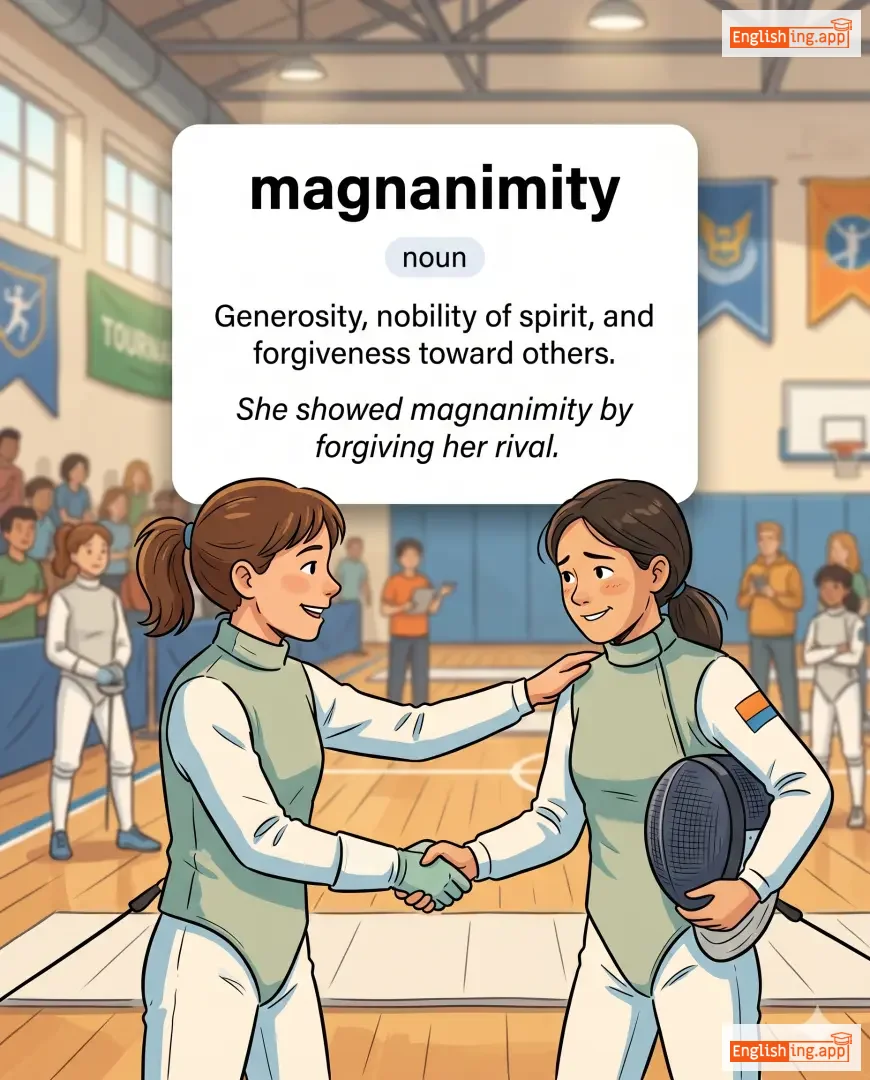
magnanimity definition card — visual illustration of the meaning
noun
/ˌmæɡnəˈnɪmɪti/
великодушие (velikodushie)

Generosity, nobility of spirit, and forgiveness toward others.

"She showed magnanimity by forgiving her rival."
"Она проявила великодушие, простив своего соперника." (Ona proyavila velikodushie, prostiv svoego sopernika.)
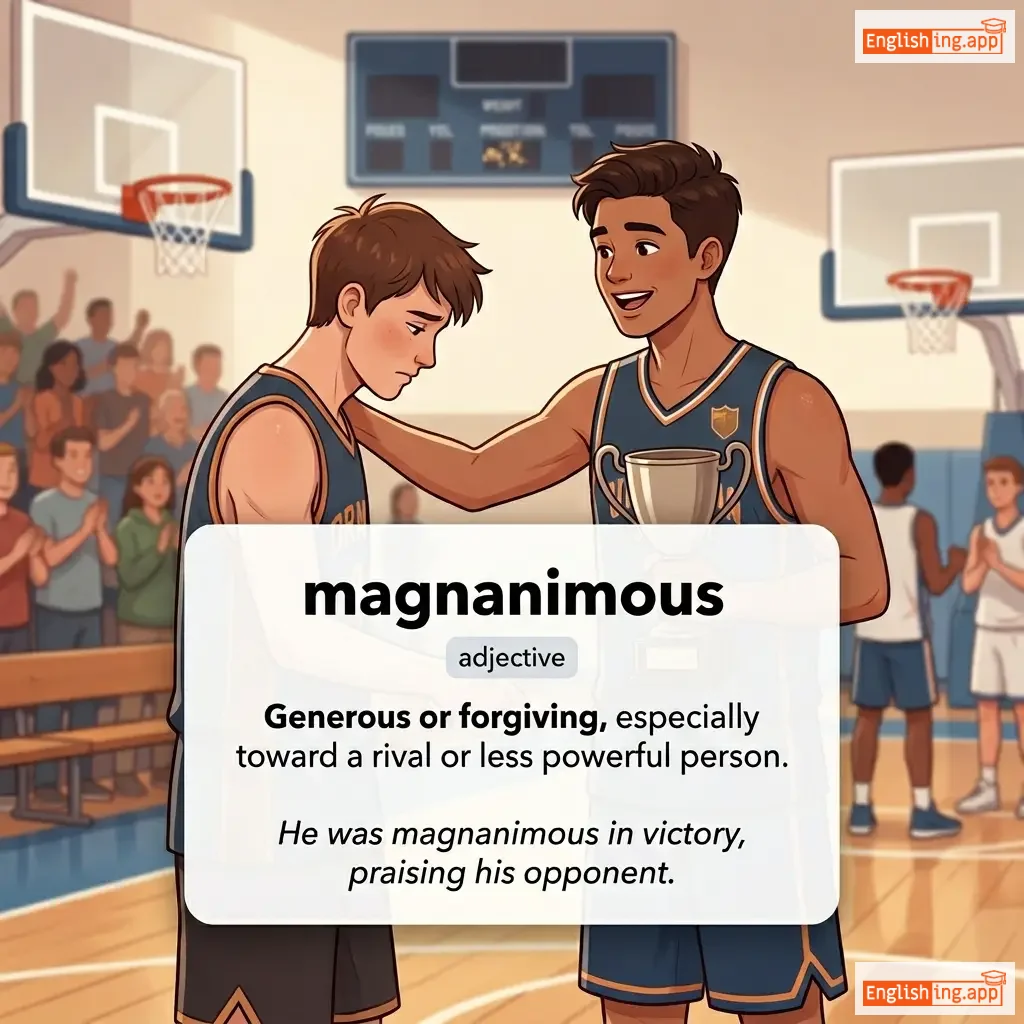
magnanimous definition card — visual illustration of the meaning
adjective
/mæɡˈnænɪməs/
великодушный (velikodushny)

Generous or forgiving, especially toward a rival or less powerful person.

"He was magnanimous in victory, praising his opponent."

"Он был великодушен в победе, хваля своего противника." (On byl velikodushen v pobede, khvalya svoego protivnika.)
noun
/ˈmæɡneɪt/
магнат (magnat)

A wealthy and influential person, especially in business or industry.

"The oil magnate donated millions to charity."

"Нефтяной магнат пожертвовал миллионы на благотворительность." (Neftyanoy magnat pozhertvoval milliony na blagotvoritel'nost'.)
noun
/ˈmæɡnət/
магнит (magnit)

An object that produces a magnetic field and attracts metals like iron.

"The magnet held the paper to the fridge door."

"Магнит притянул бумагу к двери холодильника." (Magnit prityanul bumagu k dveri kholodil'nika.)
adjective
/mæɡˈnɛtɪk/
магнитный (magnitnyy)

having the power to attract metal objects or to attract people or things in a strong way

"The magnetic field of the Earth protects us from harmful solar radiation."

"Магнитное поле Земли защищает нас от вредного солнечного излучения." (Magnitnoye pole Zemli zashchishchayet nas ot vrednogo solnechnogo izlucheniya.)
verb
/ˈmæɡnɪtaɪz/
намагнитить (namagnitit)

to make something magnetic or to strongly attract

"The scientist managed to magnetize the iron rod."

"Ученый смог намагнитить железный стержень." (Uchenyy smog namagnitit' zheleznyy sterzhyen'.)
noun
/mæɡˈnɪfɪsəns/
великолепие (velikolepie)

splendor, grandeur, or impressive beauty

"The magnificence of the palace left everyone speechless."

"Великолепие дворца оставило всех без слов." (Velikolepie dvortsa ostavilo vsekh bez slov.)
adjective
/mæɡˈnɪfɪsənt/
великолепный (velikolepny)

extremely beautiful, impressive, or splendid

"The view from the mountain was truly magnificent."

"Вид с горы был по-настоящему великолепным." (Vid s gory byl po-nastoyashchemu velikolepnym.)
verb
/ˈmæɡnɪfaɪ/
увеличить (uvelichit)

to make something appear larger or more important than it really is

"The microscope can magnify tiny cells."

"Микроскоп может увеличивать маленькие клетки." (Mikroskop mozhet uvelichivat' malen'kie kletki.)
adjective
/mæɡˈnɪləkwənt/
помпезная речь (pompeznaya rech)

using high-flown or pompous language

"The politician’s magniloquent speech impressed the crowd."

"Помпезная речь политика впечатлила толпу." (Pompeznaya rech politiki vpechatlila tolpu.)
noun
/ˈmæɡnɪtuːd/
магнитуда (magnituda)

the great size, extent, or importance of something

"The magnitude of the earthquake shocked the nation."

"Магнитуда землетрясения потрясла нацию." (Magnituda zemletryaseniya potryasla natsiyu.)
noun
/ˌmɑːhəˈrɑːdʒə/
махарадж (maharadzh)

A great king, especially a ruler of one of the principal states in India.

"The maharaja lived in a grand palace surrounded by gardens."

"Махарадж жил в большом дворце, окруженном садами." (Maharadzh zhil v bol'shom dvortse, okruzhenom sadami.)
noun
/ˈmeɪdənˌhʊd/
дева (deva)

The state of being a maiden; girlhood or virginity.

"The poem celebrated the innocence of maidenhood."

"Это стихотворение прославляло невинность девственности." (Eto stikhotvorenie prospravyalo nevinost devstvennosti.)
noun/verb
/meɪl/
почта / письмо (pochta / pis'mo)

Letters, packages, or email messages sent or delivered to someone.

"I received an important letter in the mail."

"Я получил важное письмо по почте." (Ya poluchil vazhnoe pis'mo po pochte.)
noun
/meɪl treɪn/
почтовый поезд (pochtovyy poyezd)

a train that carries mail and postal packages

"The mail train departs every evening to deliver letters across the country."

"Почтовый поезд отправляется каждый вечер, чтобы доставить письма по всей стране." (Pochtovyy poyezd otpravlyayetsya kazhdyy vecher, chtoby dostavit' pis'ma po vsei strane.)
verb
/meɪm/
калечить (kalechit)

To wound or injure someone so that part of the body is permanently damaged.

"The accident maimed several passengers."

"Авария покалечила несколько пассажиров." (Avariya pokalechila neskol'ko passazhirov.)
adjective
/meɪn/
основной (osnovnoy)

most important; chief in size, extent, or importance

"The main reason for his success is hard work."

"Основная причина его успеха — это тяжелый труд." (Osnovnaya prichina yego uspekha — eto tyazhelyy trud.)
noun
/ˈmeɪnˌlænd/

the principal landmass of a country or continent, as opposed to the surrounding islands

"The mainland of Australia is home to most of its population."