Словари

Словарь английского языка | Значения слов, определения и примеры

noun
/ˈɡæd.flaɪ/
досаждающий человек (dosazhdayushchiy chelovek)

A person who annoys or criticizes others to stimulate change or provoke action.

"The journalist was a gadfly, constantly questioning the government's policies."

"Журналист был досаждающим человеком, постоянно ставя под сомнение политику правительства." (Zhurnalist byl dosazhdayushchim chelovekom, postoyanno stavya pod somnenie politiku pravitel'stva.)
noun
/ˈɡædʒ.ɪt/
устройство (ustroystvo)

A small mechanical or electronic device with a particular function, often novel or useful.

"He loves buying the latest kitchen gadgets."

"Он любит покупать последние кухонные гаджеты." (On lyubit pokupat' posledniye kukhonnye gadzhety.)
noun
/ɡæf/
ошибка (oshchibka)

A social blunder or mistake; also a hook or device used in fishing or theater.

"He made a major gaff during the meeting by forgetting the client's name."

"Он совершил большую ошибку во время встречи, забыв имя клиента." (On sovershil bol'shuyu oshibku vo vremya vstrechi, zabyv imya kliyenta.)
noun
/ɡæf/
ошибка (oshibka)

An unintentional act or remark causing embarrassment; a blunder.

"The politician's gaffe quickly spread on social media."

"Ошибка политика быстро распространилась в социальных сетях." (Oshibka politika bystro rasprostranilas' v sotsial'nykh setyakh.)
noun
/ˈɡeɪəti/
веселье (vesel'ye)

The state of being cheerful, lively, or full of fun.

"The festival was full of music, laughter, and gaiety."

"Фестиваль был полон музыки, смеха и веселья." (Festival byl polon muzyki, smekha i vesel'ya.)
adverb
/ˈɡeɪli/
весело (veselo)

In a cheerful or lively way.

"Children ran gaily through the garden."

"Дети бегали весело по саду." (Deti begali veselo po sadu.)
gain definition card — visual illustration of the meaning
verb
/ɡeɪn/
приобрести (priyobresti)

to obtain or achieve something, often an advantage or benefit

"She gained valuable experience from her internship."
"Она приобрела ценный опыт на своей стажировке." (Ona priobrela tsennyy opyt na svoey stazhirovke.)
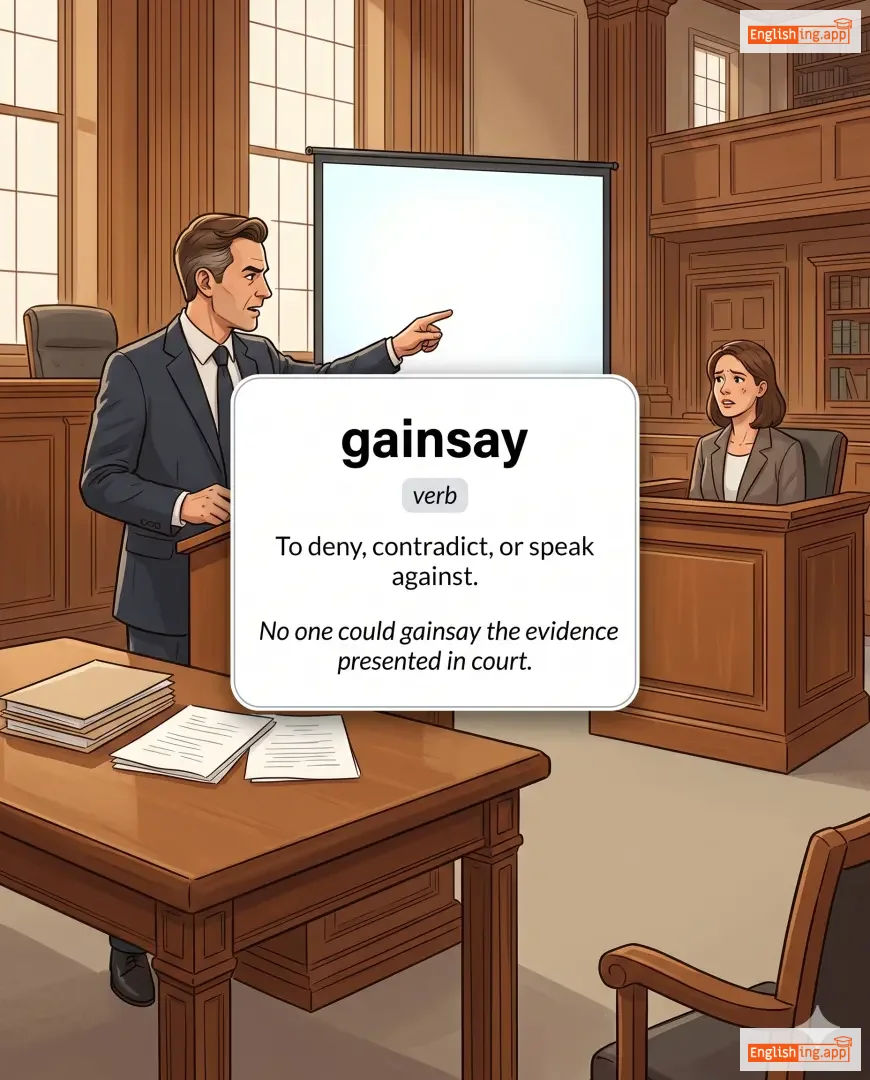
gainsay definition card — visual illustration of the meaning
verb
/ˌɡeɪnˈseɪ/
опровергать (oprovergat)

To deny, contradict, or speak against.

"No one could gainsay the evidence presented in court."

"Никто не мог оспорить доказательства, представленные в суде." (Nikto ne mog osportit' dokazatel'stva, predstavljennye v sude.)
noun
/ɡeɪt/
позка ходьбы (pozka khod'by)

A person's manner of walking.

"His slow gait showed that he was tired."
"Его медленный шаг показал, что он устал." (Ego medlennyy shag pokazal, chto on ustal.)
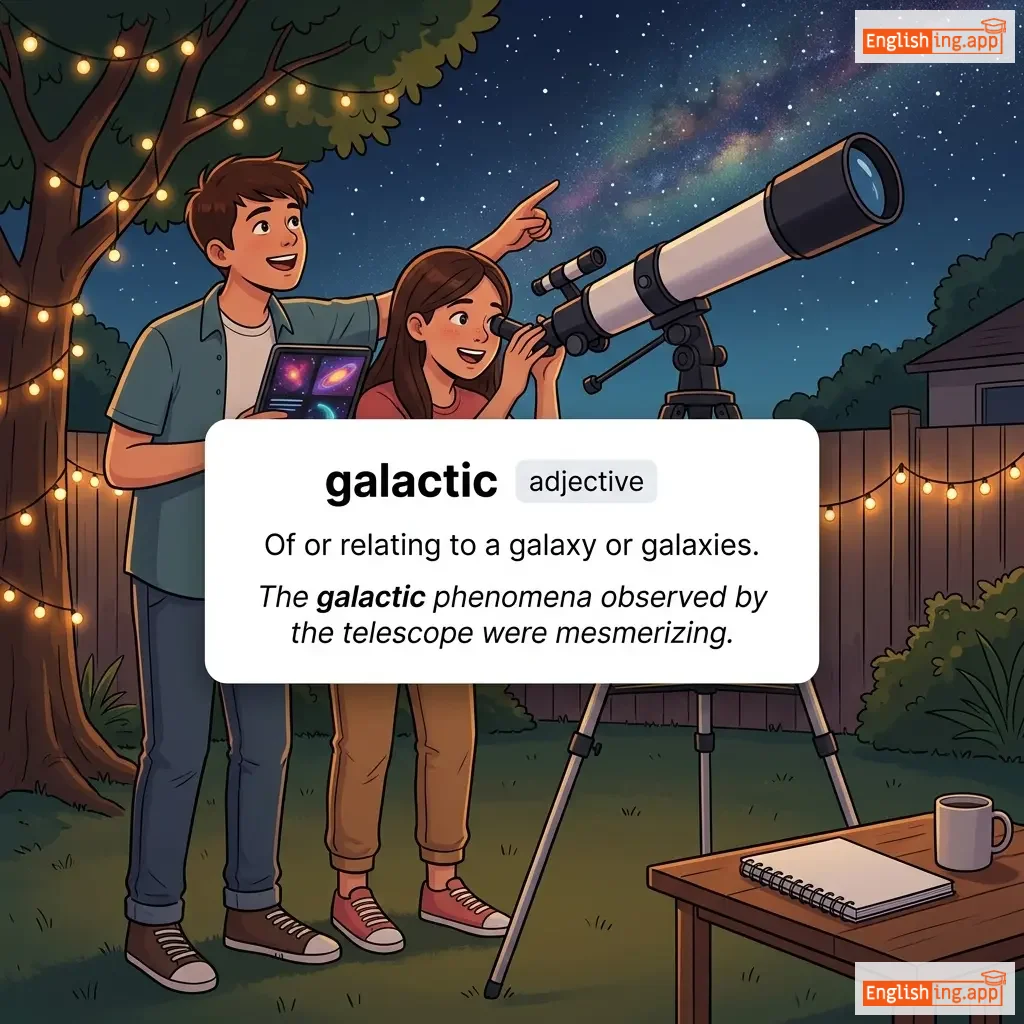
galactic definition card — visual illustration of the meaning
adjective
ɡəˈlæktɪk
относящийся к галактике (otnosiashchijsia k galaktike)

Of or relating to a galaxy or galaxies.

"The galactic phenomena observed by the telescope were mesmerizing."
"Галактические явления, наблюдаемые через телескоп, были завораживающими." (Galakticheskie iavleniia, nablyudaemye cherez teleskop, byli zavorazhivaiushchimi.)
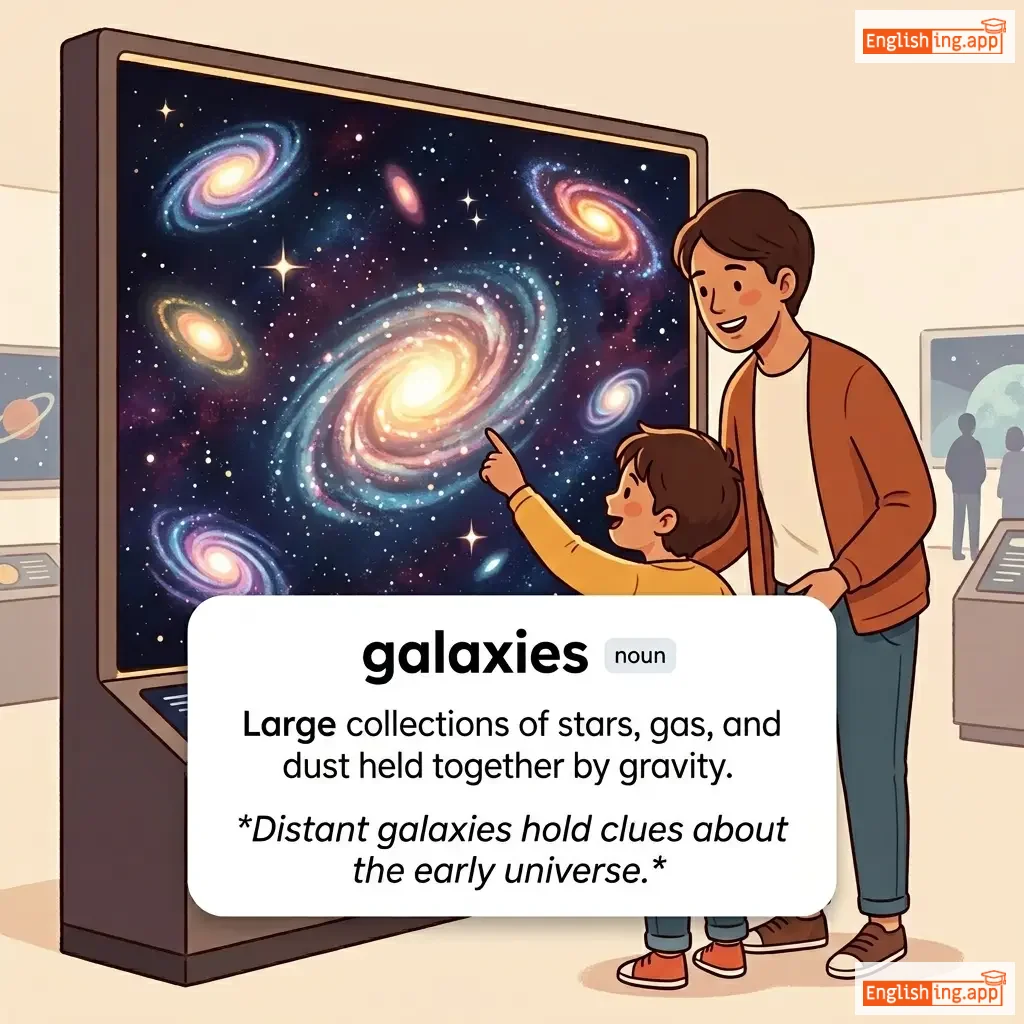
galaxies definition card — visual illustration of the meaning
noun
/ˈɡæl.ək.siːz/
галактики (galaktiki)

Large collections of stars, gas, and dust held together by gravity.

"Distant galaxies hold clues about the early universe."

"Удаленные галактики содержат подсказки о ранней вселенной." (Udalennye galaktiki soderzhat podskazki o rannei vselennoy.)
noun
/ˈɡæləksi/
галактика (galaktika)

A massive system of stars, gas, dust, and dark matter bound together by gravity.

"The Milky Way is the galaxy that contains our solar system."

"Млечный Путь — это галактика, которая содержит нашу солнечную систему." (Mlechnyy Put' — eto galaktika, kotoraya soderzhit nashu solnechnuyu sistemu.)
noun
/ɡeɪl/
шторм (shtorm)

A very strong wind.

"The ship struggled to stay afloat during the gale."

"Корабль сражался, чтобы остаться на плаву во время урагана." (Korabl' srazhalsya, chtoby ostatsya na plavu vo vremya uragana.)
noun, verb
/ɡɔːl/
наглость, раздражать (naglost, razdrazhat)

Annoyance, boldness, or to irritate.

"She had the gall to question his decision."

"Она имела наглость поставить под сомнение его решение." (Ona imela naglost postavit' pod somnenie ego reshenie.)
adjective
/ˈɡæl.ənt/
отважный, геройский (otvazhny, gerojski)

Brave, heroic, or chivalrous.

"The gallant firefighter saved the child from the burning building."

"Отважный пожарный спас ребенка из горящего здания." (Otvazhny pozharny spas rebenka iz goryashchego zdaniya.)
noun
/ˈɡæliən/
галеон (galeon)

A large sailing ship used mainly by Europeans from the 16th to 18th centuries.

"The Spanish galleon carried treasures across the Atlantic."

"Испанский галеон перевозил сокровища через Атлантику." (Ispanskiy galeon perevozil sokrovishcha cherez Atlantiku.)
noun
/ˈɡæləri/
галерея (galereya)

A room or building for the display or sale of works of art.

"The gallery showcased modern paintings by local artists."

"Галерея выставила современные картины местных художников." (Galereya vystavila sovremennye kartiny mestnykh khudozhnikov.)
noun
/ˈɡæli/
кухня на судне (kukhnyá na sudné)

A low, flat ship used in ancient times, often with sails and oars; also, a kitchen on a ship or aircraft.

"The galley was filled with the smell of freshly cooked food."

"Кухня на судне была наполнена запахом свежеприготовленной пищи." (Kukhnyá na sudné byla napolnéná zapakhom svezheprigotovlénnoy pishchi.)
noun
/ˈɡælən/
галлон (gallon)

a unit of measurement for liquid capacity, equal to 4 quarts or approximately 3.8 liters

"He bought a gallon of milk."

"Он купил галлон молока." (On kupil gallon moloka.)
noun
/ˈɡæloʊz/
плашка (plashka)

A structure used for hanging criminals who have been sentenced to death.

"The criminal was led to the gallows at dawn."

"Преступник был приведен к плашке на рассвете." (Prestuypnik byl priveden k plashke na rassvete.)
adjective/adverb
/ɡəˈlɔːr/
в изобилии (v izobilii)

In large amounts; abundant or plentiful.

"There were books galore in the old library."

"В старой библиотеке было много книг." (V staroy biblioteke bylo mnogo knig.)
adjective
/ɡælˈvænɪk/
галванический / интенсивный (galvaničeskij / intensivnyj)

Relating to electricity produced by chemical action; sudden and dramatic.

"The news had a galvanic effect on the audience."

"Новости оказали галванический эффект на аудиторию." (Novosti okazali galvaničeskij effekt na auditoriju.)
noun
/ˈɡælvəˌnɪzəm/
гальванизм (gal'vanizm)

Electricity produced by chemical action, especially in a battery; the therapeutic use of electricity in medicine.

"Galvanism played a key role in early experiments with electricity."

"Гальванизм сыграл ключевую роль в первых экспериментах с электричеством." (Gal'vanizm sygral klyuchevuyu rol' v pervykh eksperimentakh s elektrichestvom.)
verb
/ˈɡælvənaɪz/

to shock or excite someone into taking action; to coat iron or steel with a protective layer of zinc

"The speech galvanized the crowd into action."

noun
/ˈɡæmbɪt/
гэмбит (gambit)

a calculated move or remark intended to gain an advantage, especially in chess or conversation

"His opening gambit in the debate caught everyone by surprise."
"Его начальный гамбит в дебатах всех удивил." (Yego nachal'nyj gambit v debatakh vsekh udivil.)
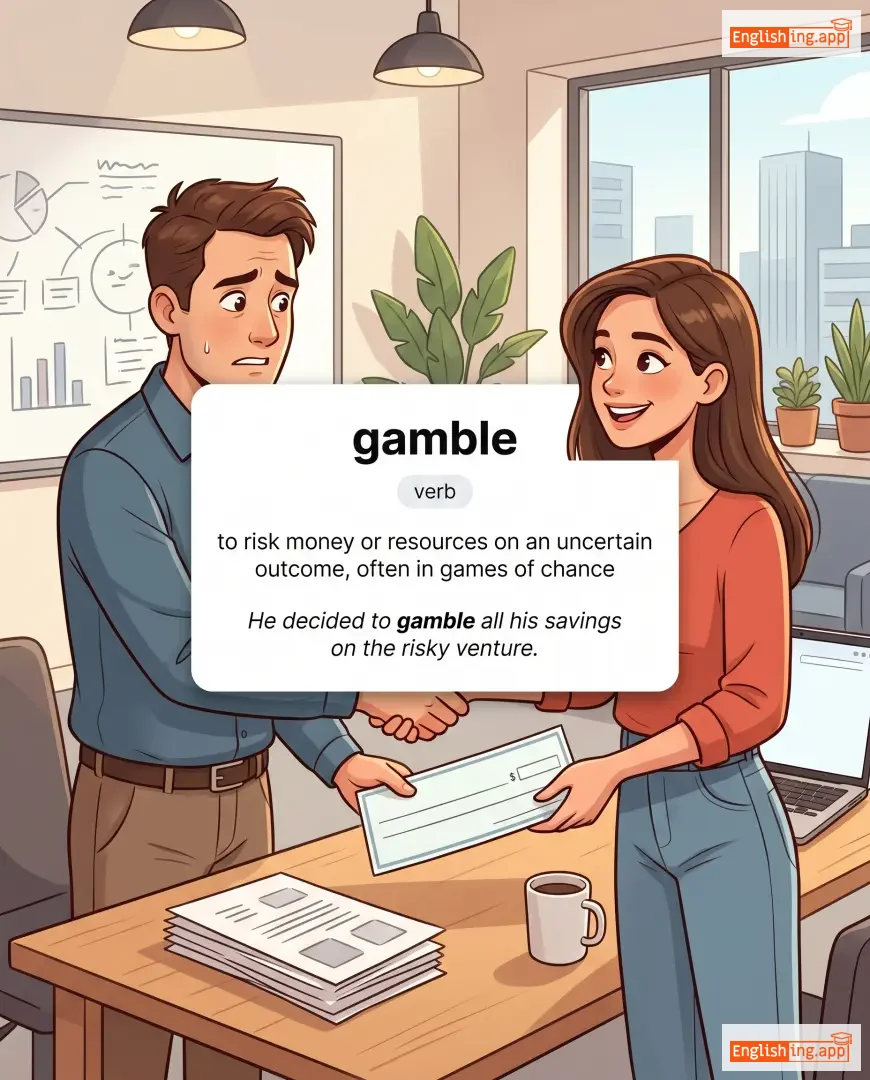
gamble definition card — visual illustration of the meaning
verb
/ˈɡæmbəl/
играть в азартные игры (igrat' v azartnye igry)

to risk money or resources on an uncertain outcome, often in games of chance

"He decided to gamble all his savings on the risky venture."

"Он решил поставить все свои сбережения на рискованное предприятие." (On reshil postavit' vse svoi sberezhniya na riskovannoe predpriyatie.)
noun
/ˈɡæm.blər/
игрок (igrok)

a person who gambles regularly, typically someone who cannot resist the urge to gamble

"The experienced gambler knew when to fold his cards and when to bet big."

"Опытный игрок знал, когда спрятать свои карты и когда делать большую ставку." (Opytnoj igrok znal, kogda sprjatat' svoi karty i kogda delat' bol'shuyu stavku)
noun
/ˈɡæmblɪŋ/
азартные игры (azartnye igry)

the activity of betting money or valuables on an outcome, often involving risk

"He got addicted to gambling at the casino."
"Он стал зависимым от азартных игр в казино." (On stal zavisimym ot azartnykh igr v kazino.)
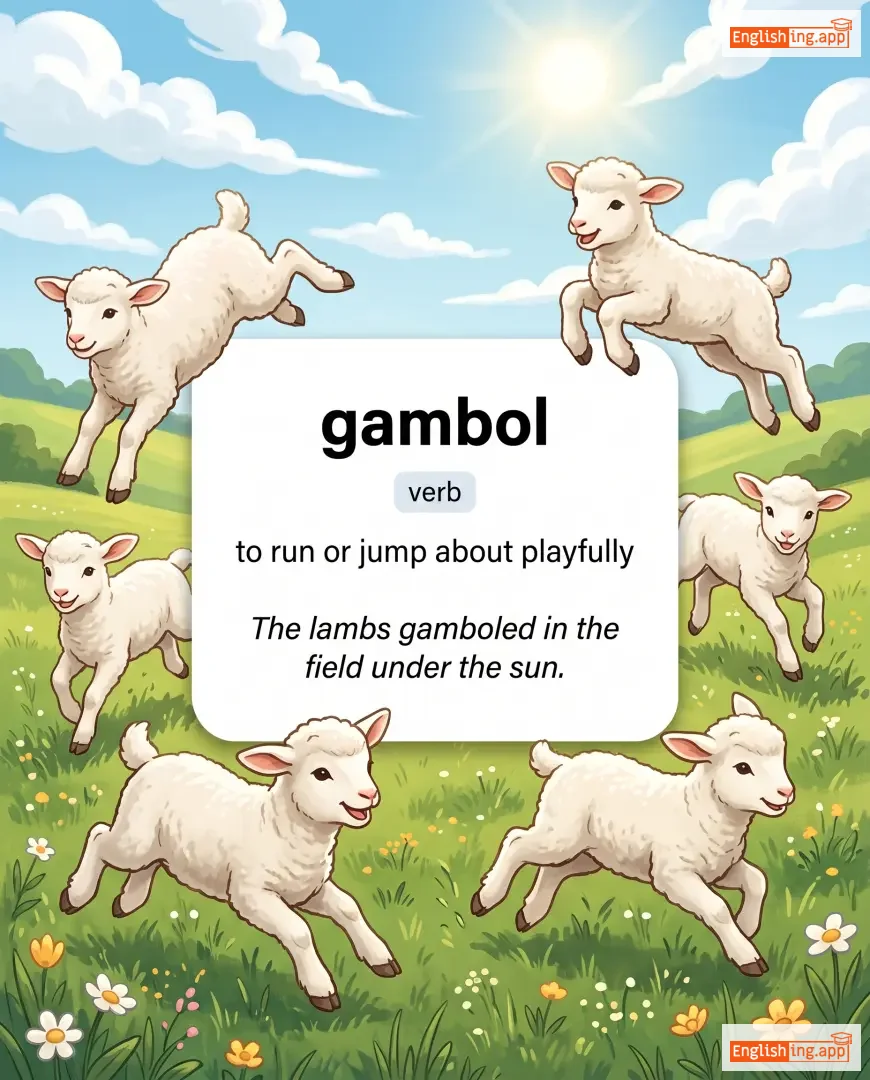
gambol definition card — visual illustration of the meaning
verb
/ˈɡæmbəl/
игриво прыгать (igrivo prygat')

to run or jump about playfully

"The lambs gamboled in the field under the sun."

"Ягнята прыгали на поле под солнцем." (Yagnjata prygali na pole pod solntsem.)
noun
/ɡeɪm/
игра (igra)

An activity or sport played for amusement, competition, or skill.

"They played a football game in the afternoon."

"Они сыграли в футбол после обеда." (Oni sygrali v futbol posle obeda.)
adverb
/ˈɡeɪmli/
смело (smelo)

in a brave, spirited, or determined manner

"She gamely accepted the challenge despite the difficulties."
"Она смело приняла вызов, несмотря на трудности." (Ona smelo prinyala vyzov, nesmotrya na trudnosti.)
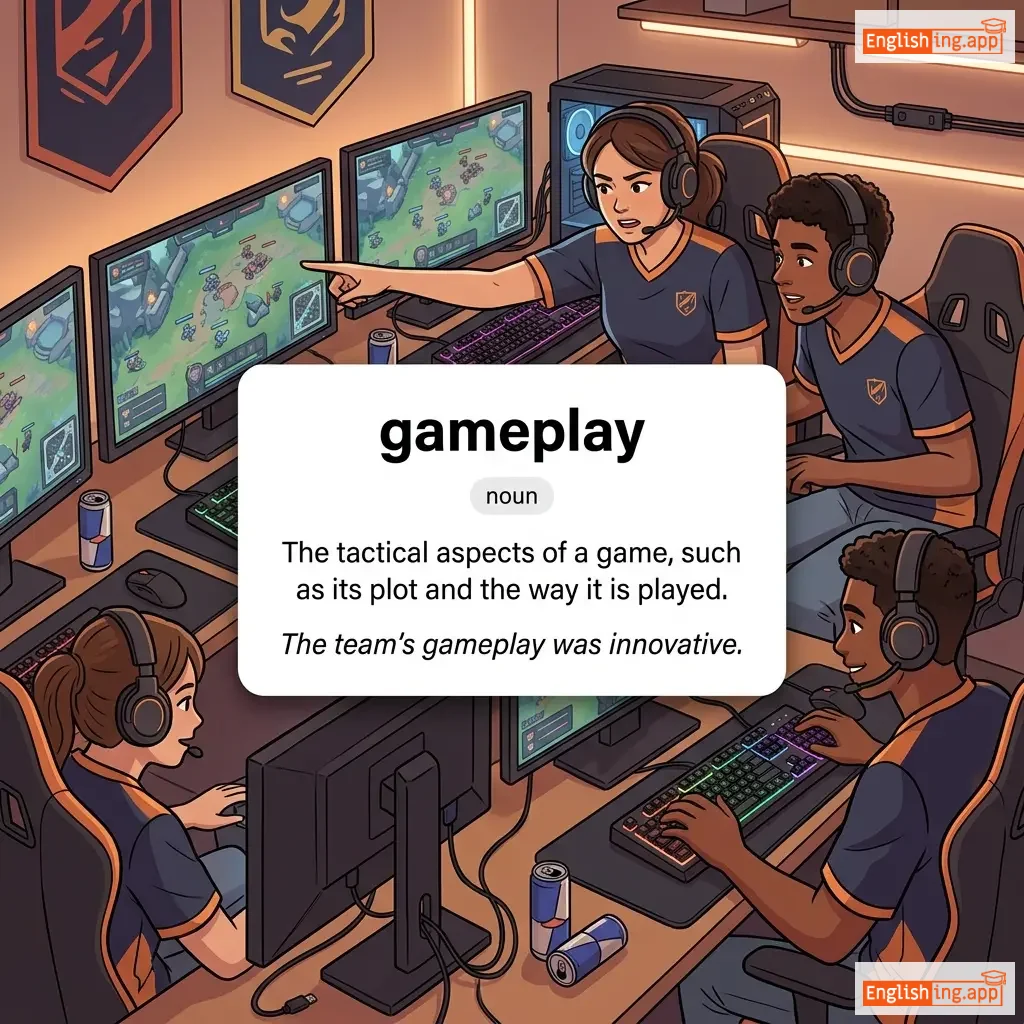
gameplay definition card — visual illustration of the meaning
noun
ˈɡeɪm.pleɪ
геймплей (geympley)

The tactical aspects of a game, such as its plot and the way it is played.

"The team's gameplay was innovative."

"Геймплей команды был инновационным." (Geympley komandy byl innovatsionnym.)
noun
/ˈɡeɪm.stər/
игрок (igrok)

A person who plays games, especially one who plays them skillfully or professionally.

"The old tavern was filled with gamesters competing in cards and dice."

"Старый трактир был полон игроков, соревнующихся в картах и костях." (Staryj traktir byl polon igrokov, sorevnovavshikhsya v kartakh i kostyakh.)
gaming definition card — visual illustration of the meaning
noun
/ˈɡeɪmɪŋ/

the action or practice of playing games, especially video games

"Gaming has become a popular pastime among teenagers."

noun
/ˈɡæm.ət/
полный спектр (polnyy spektr)

The complete range or scope of something.

"Her emotions ran the gamut from joy to sorrow in just a few minutes."

"Ее эмоции охватывали весь спектр — от радости до печали — всего за несколько минут." (Yeyo emotsii okhvatyvali ves' spektr — ot radosti do pechali — vsego za neskol'ko minut.)
noun
/ˈɡændər/
гусак (gusak)

male goose

"The gander protected his family from the approaching dog."

"Гусак защищал свою семью от приближающейся собаки." (Gusak zashchishchal svoyu sem'yu ot priblizhayushcheysya sobaki.)
noun
/ɡæŋ/
банда (banda)

An organized group of people, often involved in crime or violence.

"The gang was arrested by the police last night."

"Банда была арестована полицией прошлой ночью." (Banda byla arestovana politsey proshloy noch'yu.)
noun
/ɡænˈdʒɛtɪk liːf fɪʃ/
гангетическая листовая рыба (gangeticheskaya listovaya ryba)

a small freshwater fish species found in the Ganges river system, known for its leaf-like appearance

"The Gangetic Leaf Fish is commonly found in the rivers of Bangladesh."

"Гангетическая листовая рыба обычно встречается в реках Бангладеш." (gangeticheskaya listovaya ryba obychno vstrechaetsya v rekakh Bangladesha)
adjective
/ˈɡæŋ.ɡli/
высокий и неуклюжий (vysokiy i neuklyuzhiy)

Tall, thin, and awkward in movement or appearance.

"The gangly teenager stumbled while trying to dance."

"Неуклюжий подросток споткнулся, пытаясь танцевать." (Neuklyuzhiy podrostok spotkhnulsya, pytayas' tantsevat'.)
noun
/ˈɡæŋ.ɡriːn/
гангрена (gangrena)

The death of body tissue due to lack of blood supply or infection.

"If untreated, the wound may lead to gangrene."

"Если не лечить, рана может привести к гангрене." (Esli ne lechit', rana mozhet privesti k gangrene.)
noun
/ˈɡæŋ.weɪ/
понтон (pontón)

A narrow passage or walkway; also an exclamation used to clear the way.

"The sailors lowered the gangway for passengers to board."

"Моряки опустили понтон, чтобы пассажиры могли сесть." (Moryaki opustili ponton, chtoby passazhiry mogli sesto.)
noun
/ɡæp/
щель / разрыв (shchel / razryv)

An empty space or break between two objects or parts; a difference or disparity.

"There is a huge gap between the rich and the poor."
"Между богатыми и бедными существует огромный разрыв." (Mezhdu bogatymi i bednymi sushchestvuet ogromnyy razryv.)
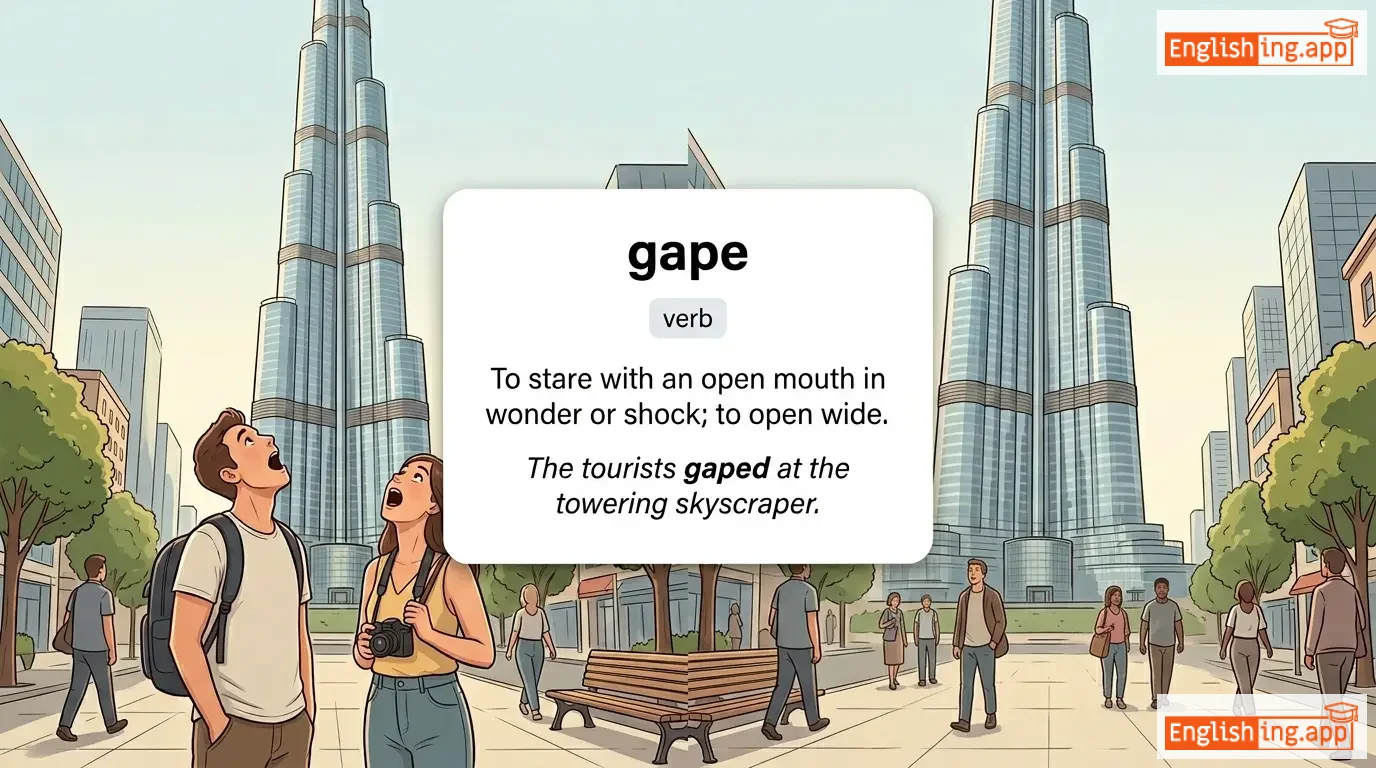
gape definition card — visual illustration of the meaning
verb
/ɡeɪp/
смотреть с открытым ртом (smotret' s otkrytym rtom)

To stare with an open mouth in wonder or shock; to open wide.

"The tourists gaped at the towering skyscraper."

"Туристы уставились с открытым ртом на высокий небоскрёб." (Turisty ustavilis' s otkrytym rtom na vysokij neboskryob.)
noun
/ɡəˈrɑːʒ/ or /ɡəˈrɑːdʒ/
гараж (garazh)

A building or space for housing cars or vehicles.

"He parked his car in the garage."

"Он припарковал свою машину в гараже." (On priparkoval svoyu mashinu v garazhe.)
noun
/ˈɡɑːrbɪdʒ/
мусор (musor)

waste material; things that are no longer useful or wanted

"Please take out the garbage before it starts to smell."

"Пожалуйста, вынесите мусор, прежде чем он начнёт пахнуть." (Pozhaluysta, vynesite musor, prezhde chem on nachnyot pakhnut'.)
verb
/ˈɡɑːrbəl/
искажать (iskazhat')

To reproduce a message in a confused, distorted, or unclear way.

"The poor phone connection garbled his words."

"Плохое соединение по телефону исказило его слова." (Plokhoe soedinenie po telefomu iskaszilo ego slova.)
adjective
/ˈɡɑːrbəld/
искаженный (iskazhennyy)

Describes speech or text that is distorted or unclear.

"The radio broadcast was full of garbled messages."

"Радиопередача была полна искаженных сообщений." (Radiopereyadacha byla polna iskazhennykh soobshcheniy.)
noun
/ˈɡɑːrdn/
сад (sad)

A piece of ground where flowers, vegetables, or plants are grown.

"She grows roses in her garden."

"Она выращивает розы в своем саду." (Ona vyrashchivayet rozy v svoem sadu.)
noun
/ˈɡɑːr.dən.ər/
садовник (sadovnik)

a person who tends and cultivates a garden

"The gardener planted beautiful flowers in the backyard."

"Садовник посадил красивые цветы в заднем дворе." (Sadovnik posadil krasivyye tsvety v zadnem dvore.)
noun
/ɡɑːrˈdiː.ni.ə/
гардения (gardenia)

a white or yellow fragrant flower with waxy petals

"The gardenia bush produced beautiful white flowers with a lovely scent."

"Куст гардении произвел красивые белые цветы с приятным ароматом." (kust gardenii proizvel krasivye belye tsvety s priyatnym aromatom)