Словари

Словарь английского языка | Значения слов, определения и примеры

noun
/kəˈbɑːdi/
сборщик лома (sborshchik loma)

a person who collects and sells scrap or recyclable materials, especially in South Asia

"The kabadi came every week to collect old newspapers and bottles."

"Сборщик лома собирает старый металл." (sborshchik loma sobiraet staryy metall)
noun
/kəˈdʌm.bə/
кадамба (kadamba)

A tropical tree with round, fragrant orange flowers, sacred in Hindu culture and associated with Lord Krishna

"The kadamba tree is mentioned frequently in ancient Indian poetry."

"Дерево кадамба часто упоминается в древней индийской поэзии." (Derevo kadamba chasto upominaetsya v drevney indiyskoy poezii.)
noun
/kəˈlaɪdəˌskoʊp/
калейдоскоп (kaleidoskop)

A toy or instrument with mirrors and colored pieces that create changing patterns when rotated; also used metaphorically for a constantly changing sequence of patterns or elements.

"The city lights turned into a kaleidoscope of colors as the festival began."

"Огни города превратились в калейдоскоп цветов, когда начался фестиваль." (Ogni goroda prevratilis' v kaleidoskop tsvetov, kogda nachalsya festival'.)
noun
/ˌkæŋɡəˈruː/
кенгуру (kenguru)

A large Australian marsupial with powerful hind legs and a long tail, known for hopping.

"We saw a kangaroo hopping across the road in Australia."

"Мы видели кенгуру, прыгающее через дорогу в Австралии." (My videli kenguru, prygayushchee cherez dorogu v Avstralii.)
noun
/ˈkærət/
карат (karat)

A unit for measuring the purity of gold, with 24 karats being pure gold.

"The ring was made of 18-karat gold."

"Кольцо было сделано из золота 18 карат." (Kol'tso bylo sdelano iz zolota 18 karat.)
noun
/kəˈrɒn.də/
каронда (karonda)

a small dark purple berry-like fruit that is sour and used in pickles

"Karonda is often used to make pickles and preserves."

"Каронда часто используется для приготовления солений и заготовок." (karonda chasto ispolzuetsya dlya prigotovleniya soleniy i zagotovok)
noun
/ˈkedʒ.ə.riː/
кеджери (kedzhery)

a European dish of cooked rice, fish, and hard-boiled eggs, originally from India

"The breakfast menu featured traditional kedgeree with smoked haddock and eggs."

"В меню завтрака было традиционное кеджери с копченым хеддоком и яйцами." (V menyu zavtraka bylo traditsionnoye kedzhery s kopchyonym heddokom i yaytsami.)
adjective
/kiːn/
увлечённый, заинтересованный (uvlechyonny, zainteressovannyy)

Having or showing eagerness or enthusiasm; sharp or highly developed (for senses).

"She is very keen to learn new skills."
"Она очень стремится изучать новые навыки." (Ona ochen' stremitsya izuchat' novye navyki.)
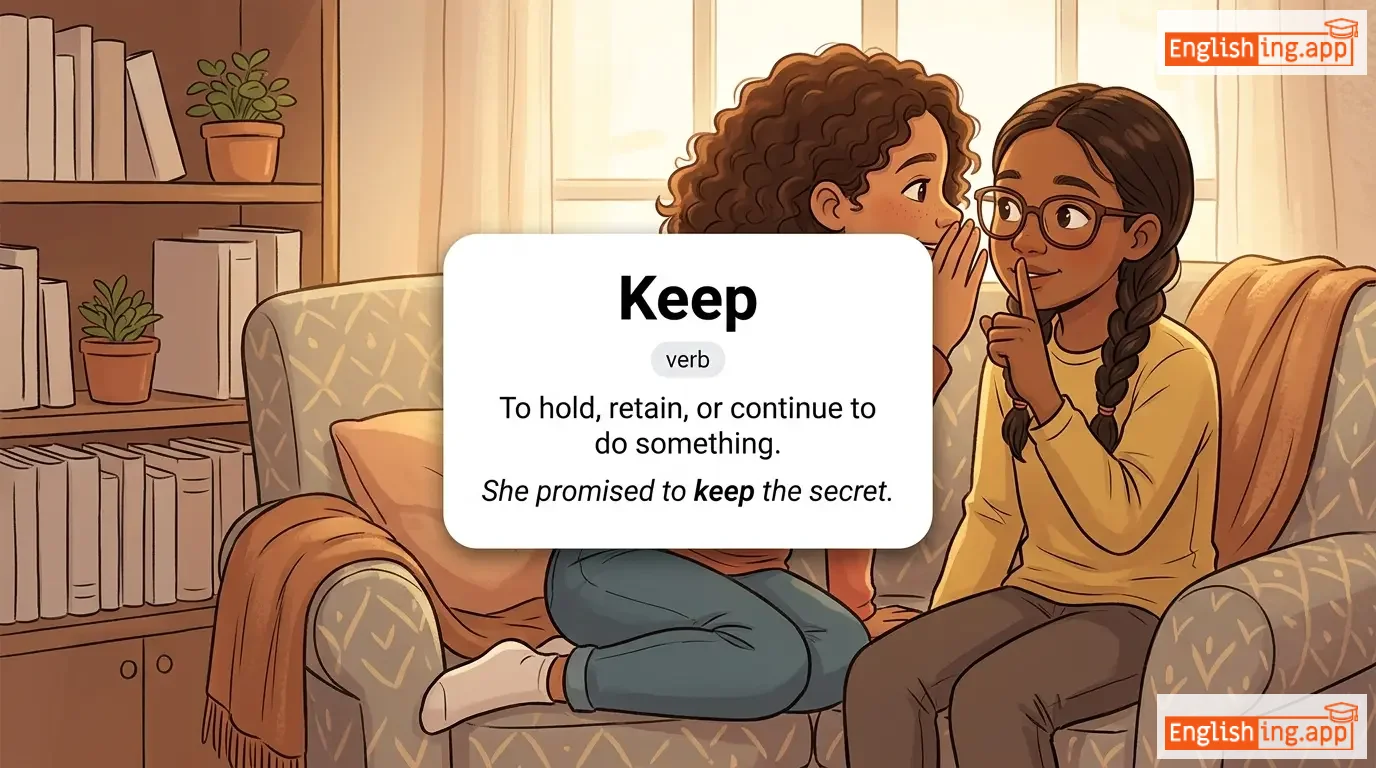
Keep definition card — visual illustration of the meaning
verb
/kiːp/
держать (derzhat)

To hold, retain, or continue to do something.

"She promised to keep the secret."

"Она пообещала сохранить секрет." (Ona poobeshchala sokhranit' sekret.)
noun
/ˈkiː.pər/
страж; смотритель; (strazh; smotritel)

a person whose job it is to guard or take care of something or someone; a goalkeeper

"The zoo keeper fed the animals every morning at eight o'clock."

"Зоопарк кормил животных каждое утро в восемь часов." (Zoopark kormil zhivotnykh kazhdoe utro v vosem' chasov.)
noun
/ˈkiːpˌseɪk/
сувенир (suvenir)

An object kept as a reminder of a person, place, or event.

"She gave me a small locket as a keepsake of our friendship."

"Она подарила мне маленький медальон как память о нашей дружбе." (Ona podarila mne malen'kii medal'on kak pamyat' o nashei druzhbe.)
noun
/kɛn/
познание (poznanie)

one's range of knowledge or understanding

"Quantum physics is beyond my ken."

"Квантовая физика вне моего понимания." (Kvantovaya fizika vne moyego ponimaniya.)
noun
/ˈken.əl/
собачий вольер; учреждение для разведения или размещения собак (sobachiy vol'er; uchrezhdenie dlya razvedeniya ili razmeshcheniya sobak)

a small shelter for a dog; an establishment for the breeding or boarding of dogs

"The dog slept comfortably in his wooden kennel in the backyard."

"Собака спала удобно в своем деревянном вольере на заднем дворе." (Sobaka spala udobno v svoem derevyannom vol'ere na zadnem dvore.)
noun
/ˈkɜːrtʃɪf/
платок (platok)

a piece of cloth worn around the head or neck

"She wore a red kerchief on her head."

"Она носила красный платок на голове." (Ona nosila krasnyy platok na golove.)
noun
/ˈkɜːrnəl/
ядро чего-то; съедобная часть ореха или семени (kernel)

the central, most important part of something; the edible part of a nut or seed

"The kernel of the argument was about fairness."

"Ядро аргумента было о справедливости." (Yadro argumenta bylo o spravedlivosti.)
noun
/ˈker.ə.siːn/
керосин (kerosin)

a combustible hydrocarbon liquid widely used as a fuel in lamps and heating systems

"The old lamp burned kerosene to provide light during power outages."

"Старая лампа горела керосином, чтобы обеспечить свет во время отключений электроэнергии." (Staraya lampa goryela kerosinom, chtoby obespechit' svet vo vremya otklyucheniy elektroenergii.)
noun
/ˈketʃ.ʌp/
томатный соус (tomatnyy sous)

a thick sauce made chiefly from tomatoes, vinegar, and spices

"She squeezed some ketchup on her french fries before eating them."

"Она выжала немного кетчупа на свои картошки фри перед тем, как их съесть." (Ona vyzhala nemnogo ketchup na svoi kartoshki fri pered tem, kak ikh s'yest.)
ketogenesis definition card — visual illustration of the meaning
noun
/ˌkiː.təʊˈdʒen.ɪ.sɪs/
процесс продукции кетонов (protsess produktsii ketonov)

The metabolic process by which the liver produces ketones from fatty acids, providing an alternative energy source during low carbohydrate availability.

"Ketogenesis occurs during fasting or low-carb diets."

"Кетогенез происходит во время голодания или низкоуглеводных диет." (Ketogenez proiskhodit vo vremya golodaniya ili nizkouglevodnykh diet.)
noun
/ˈket.əl/
чайник (chaynik)

a container with a lid, spout, and handle, used for boiling water

"The kettle is boiling on the stove."

"Чайник кипит на плите." (Chaynik kipit na plite.)
noun
/kiː/
ключ (klyuch)

A small piece of shaped metal used to open or close locks, or something crucial and essential.

"She lost the key to her apartment."

"Она потеряла ключ от своей квартиры." (Ona poteryala klyuch ot svoey kvartiry.)
noun
/ˈkiːbɔːrd/
клавиатура (klaviatura)

a set of keys used to operate a computer, typewriter, or similar device for inputting text and commands

"She typed the report quickly on her keyboard."
"Она быстро напечатала отчёт на клавиатуре." (ona bystro napechatala otchet na klaviature)
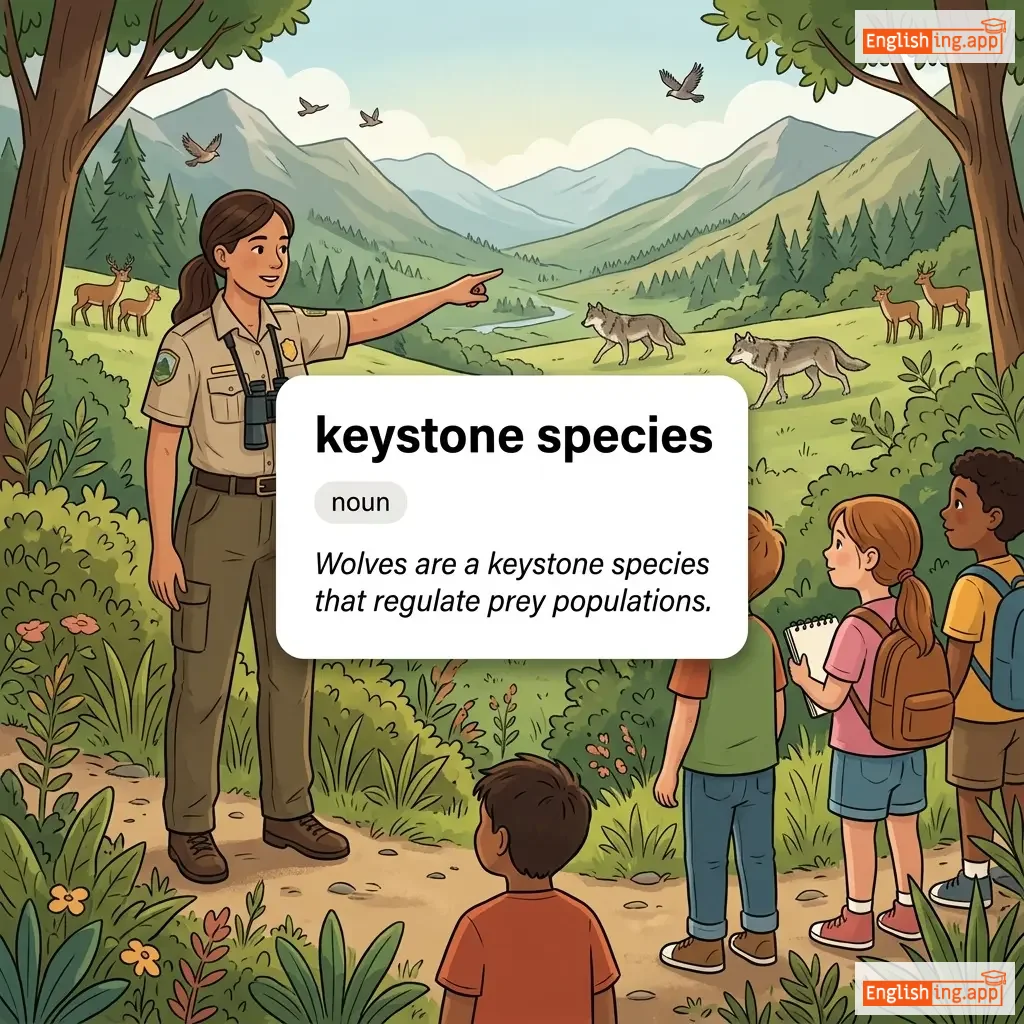
keystone species definition card — visual illustration of the meaning
noun
ˈkiː.stəʊn ˈspiː.ʃiːz
ключевой вид (klyuchevoy vid)

A species on which other species in an ecosystem largely depend, such that if it were removed the ecosystem would change drastically.

"Wolves are a keystone species that regulate prey populations."
"Волки — это ключевой вид, который регулирует популяцию добычи." (Volki — eto klyuchevoy vid, kotoryy reguliruet populatsiyu dobychi.)
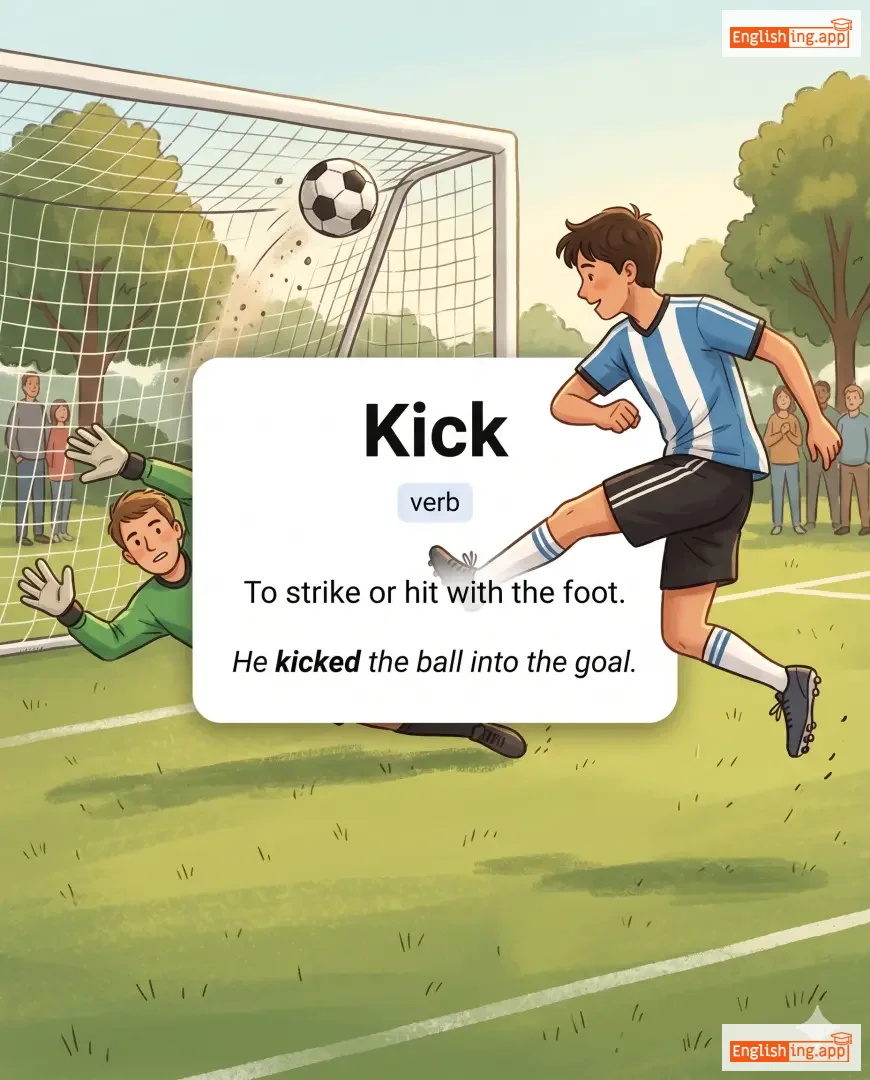
Kick definition card — visual illustration of the meaning
verb
/kɪk/
пнуть (pnut)

To strike or hit with the foot.

"He kicked the ball into the goal."

"Он пнул мяч в ворота." (On pnut myach v vorota.)
noun
/kɪd/
ребёнок (rebyonok)

A child or young person.

"The kid was playing in the park."
"Ребёнок играл в парке." (Rebyonok igral v parke.)
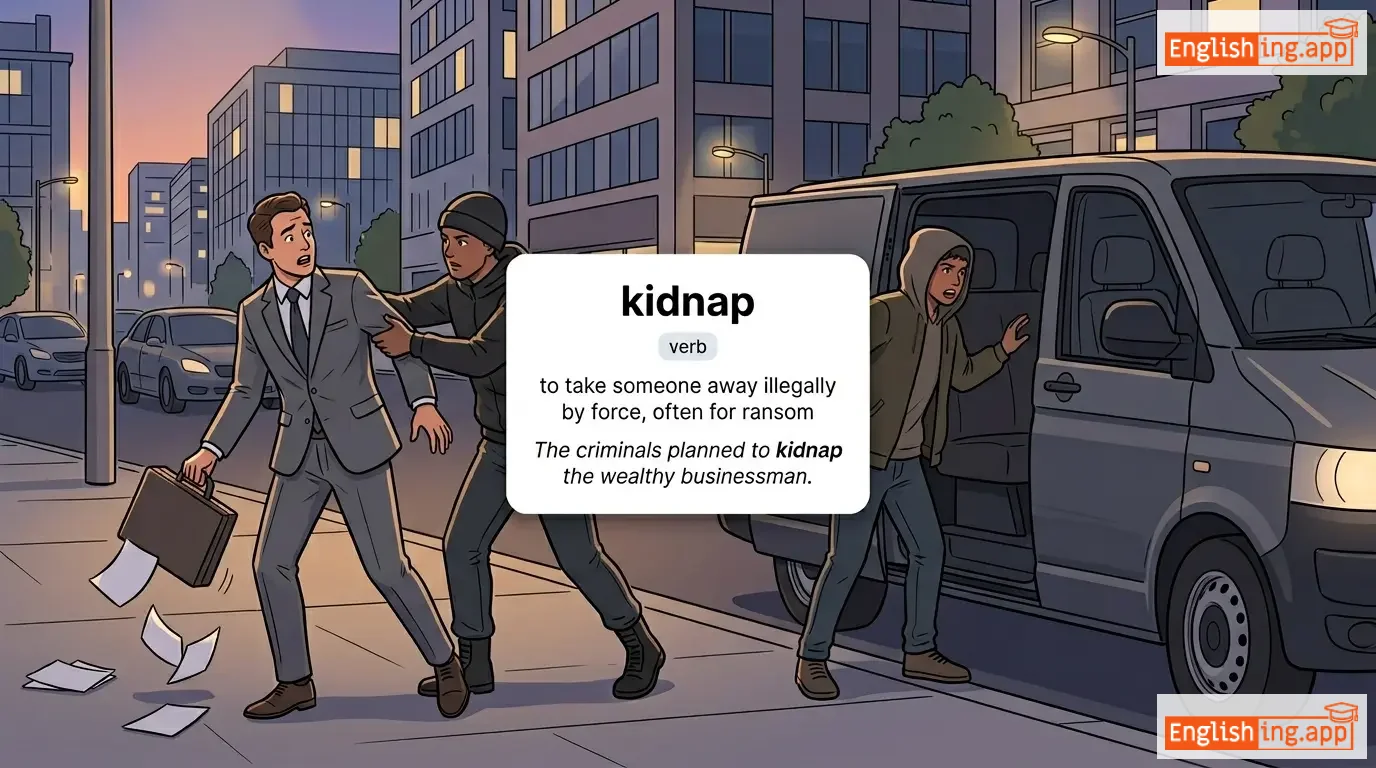
kidnap definition card — visual illustration of the meaning
verb
/ˈkɪdnæp/
похищение (pokhishchenie)

to take someone away illegally by force, often for ransom

"The criminals planned to kidnap the wealthy businessman."

"Преступники планировали похитить богатого бизнесмена." (Prestuponiki planirovali pokhitit' bogatogo biznesmena.)
noun
/ˈkɪdni/
почка (pochka)

a pair of organs in the body that remove waste products from the blood and balance bodily fluids

"The kidney plays a crucial role in filtering waste from the bloodstream."
"Почка играет важную роль в фильтрации отходов из крови." (Pochka igrajet vazhnuju rol' v filtracii otkhodov iz krovi.)
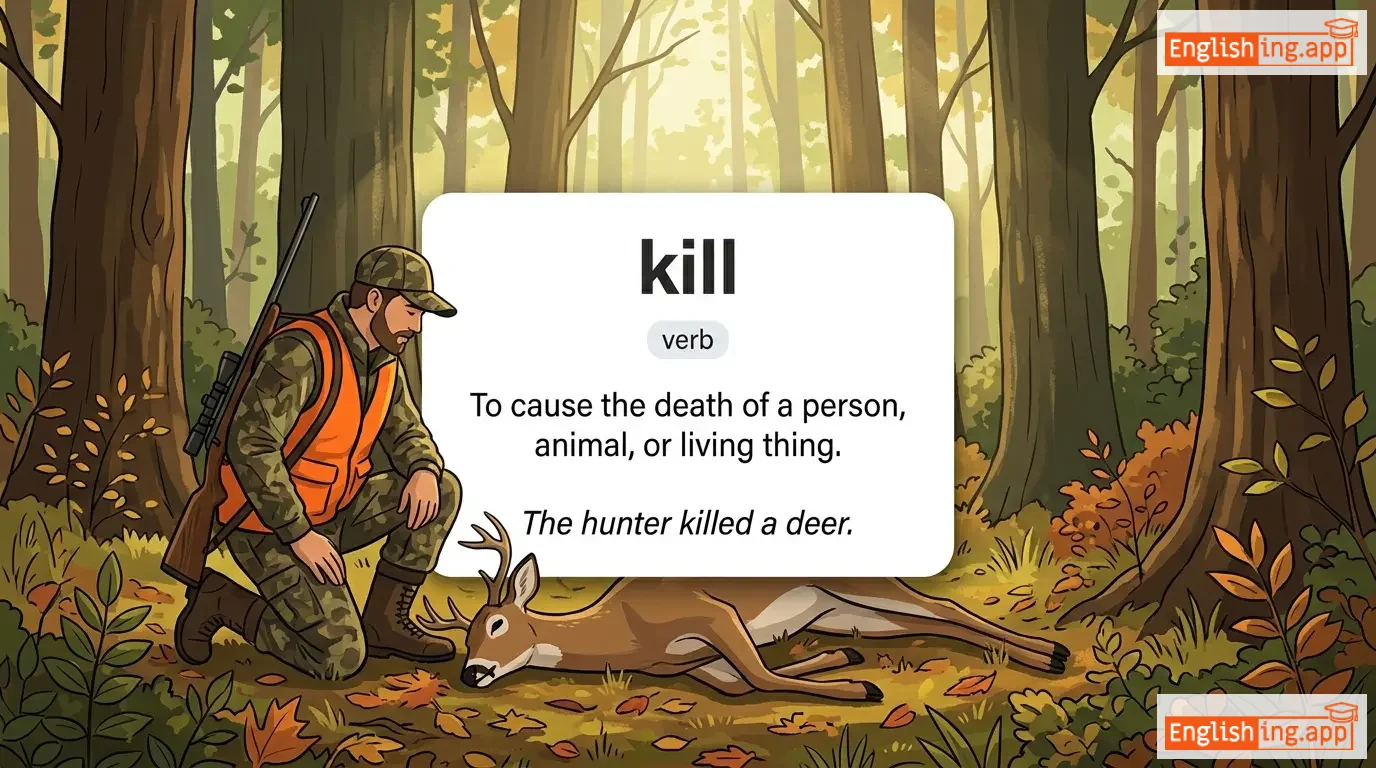
kill definition card — visual illustration of the meaning
verb
/kɪl/
убивать (ubivat)

To cause the death of a person, animal, or living thing.

"The hunter killed a deer."

"Охотник убил оленя." (Okhotnik ubil olenya.)
noun
/ˈkɪlər/
убийца (ubiytsa)

A person or thing that kills.

"The police caught the killer last night."

"Полиция поймала убийцу прошлой ночью." (Politsiya poymala ubiitsu proshloy noch'yu.)
noun
/ˈkɪlɪŋ/
убийство (ubiystvo)

the act of causing death, especially deliberately

"The movie depicts the brutal killing of the villagers."

"Фильм показывает жестокое убийство деревенских жителей." (Film pokazyvayet zhestokoye ubiystvo derevenskikh zhiteley.)
noun
/ˈkɪldʒɔɪ/
зануда (zanuda)

a person who spoils the fun or enjoyment of others

"Don’t be a killjoy at the party."

"Не будь занудой на вечеринке." (Ne bud' zanudoy na vecherinke.)
noun
/kɪln/
печь для обжига (pech dlya obzhiga)

a furnace or oven for burning, baking, or drying, especially one for firing pottery or bricks

"The potter placed the clay pots into the kiln for firing."

"Гончар поставил глиняные горшки в печь для обжига." (Gonchar postavil glinyanye gorshki v pech dlya obzhiga.)
noun
/ˈkɪləɡræm/
килограмм (kilogramm)

the base unit of mass in the metric system equal to 1,000 grams

"The bag of rice weighs five kilograms."

"Мешок риса весит пять килограммов." (meshock risa vesit pyat kilogrammov)
noun
/ˈkɪləˌliːtər/
килолитр (kilolitr)

a unit of capacity equal to 1,000 liters

"The tank can hold up to three kiloliters of water."

"Бак может содержать до трех килолитров воды." (Bak mozhet soderzhat' do tryokh kilolitrov vody.)
noun
/kɪˈlɒmɪtər/ or /ˈkɪləˌmiːtər/
километр (kilometr)

a unit of length equal to 1,000 meters

"The village is about five kilometers away from the town."

"Деревня находится примерно в пяти километрах от города." (Derevnya nakhoditsya primerno v pyati kilometrah ot goroda.)
noun
/ˈkɪləˌwɒt/
киловатт (kilowatt)

a unit of power equal to 1,000 watts

"The generator produces ten kilowatts of electricity."

"Генератор вырабатывает десять киловатт электричества." (Generator vyrabotayt desyat' kilovatt elektrichestva.)
noun
/kɪˈməʊnoʊ/
кимоно (kimono)

a traditional Japanese robe with wide sleeves, tied with a sash

"She wore a beautiful silk kimono at the ceremony."

"Она носила красивое шелковое кимоно на церемонии." (Ona nosila krasivoe shelkovoe kimono na tseremonii.)
noun
семья; родственники; (sem'ya; rodstvenniki;)
adjective/noun
/kaɪnd/
вид / добрый (vid / dobryy)

A type or category; showing a gentle, considerate nature.

"She is very kind to her neighbors."

"Она очень добра к своим соседям." (Ona ochen' dobra k svoim sosedyam.)
adjective
/ˌkaɪnd ˈhɑːrtɪd/
доброжелательный (dobrozhelatel'nyj)

Having a kind and generous nature; showing compassion and care for others.

"She is known as a kind-hearted teacher who always helps her students."

"Она известна как доброжелательный учитель, который всегда помогает своим ученикам." (Ona izvestna kak dobrozhelatel'nyj uchitel', kotoryj vsegda pomogaet svoim uchennykam.)
noun
/ˈkɪndərˌɡɑːrtn/
детский сад (detskiy sad)

a school or class for young children, typically between the ages of four and six

"She enrolled her child in kindergarten to prepare for elementary school."

"Она записала своего ребенка в детский сад, чтобы подготовиться к начальной школе." (Ona zapisała svoego rebenka v detskiy sad, chtoby podgotovit'sya k nachal'noy shkole.)
kindle definition card — visual illustration of the meaning
verb
/ˈkɪndl̩/
разжигать / вдохновлять (razzhigat' / vdokhnovlyat')

To start a fire or to inspire a feeling or emotion.

"The speech kindled hope in the audience."

"Речь разожгла надежду в аудитории." (Rech' razozhgla nadezhdu v auditorii.)
adverb; adjective
/ˈkaɪndli/
доброжелательно (dobrozhelatelno)

in a kind or gentle manner; showing kindness or goodwill

"She kindly helped the old man cross the street."

"Она доброжелательно помогла пожилому мужчине перейти улицу." (ona dobrozhelatelno pomogla pozhilomu muzhchine pereiti ulitsu)
noun
доброта; доброжелательность; милосердие (dobrota; dobrozhelatel'nost'; miloserdie)
👨‍👩‍👧‍👦

kindred (happiness)

noun, adjective
/ˈkɪndrəd/
счастье (schastye)

A person's relatives or family; similar in nature or character.

"They discovered kindred spirits in each other."

"Она не могла скрыть свое счастье, когда получила награду." (Ona ne mogla skryt' svoe schast'ye, kogda poluchila nagradu.)
adjective
/kɪˈnɛtɪk/
кинетический (kineticheskiy)

Relating to or resulting from motion.

"Kinetic energy increases as the object moves faster."

"Кинетическая энергия увеличивается по мере того, как объект движется быстрее." (Kineticheskaya energiya uvelichivayetsya po mere togo, kak ob'ekt dvizhutsya bystree.)
noun
/kɪŋ/
король (korol)

the male ruler of an independent state, especially one who inherits the position by right of birth

"The king ruled the country with wisdom and fairness."

"Король правил страной с мудростью и справедливостью." (Korol' pravil stranoy s mudrost'yu i spravedlivost'yu.)
noun
/ˈkɪŋ.fɪʃ.ər/
рыболов (rybolov)

a small bird with bright blue and orange feathers that catches fish by diving into water

"The colorful kingfisher dove into the pond to catch a fish."

"Яркая рыболовная птица нырнула в пруд, чтобы поймать рыбу." (Yarkaya rybolovnaya ptitsa nyrnula v prud, chtoby poymat' rybu.)
noun
/ˈkɪŋdəm/
царство (tsarstvo)

a country or territory ruled by a king or queen

"The kingdom was known for its rich culture and traditions."

"Царство было известно своей богатой культурой и традициями." (Tsarstvo bylo izvestno svoey bogatoy kul'turoy i traditsiyami.)
noun
/ˈkɪŋɡlɪŋ/
младший король (mladshij korol)

A minor or petty king; a ruler of small importance.

"The kingling demanded respect from his people despite his small realm."

"Младший король требовал уважения от своих людей, несмотря на своё маленькое царство." (Mladshij korol treboval uzhavaniya ot svoikh lyudey, nesmotrya na svoe malen'koye tsarstvo.)
noun
/ˈkɪŋʃɪp/
царствование (tsarstovanie)

The position, dignity, or authority of a king.

"The king’s advisors often reminded him of the responsibilities of kingship."

"Советники короля часто напоминали ему о обязанностях царствования." (Sovetniki korolya chasto napominali emu o obazannostyakh tsarstovaniya.)