वोकैबुलरीज

इंग्लिश वोकैबुलरी डिस्कवर, लर्न और मास्टर करें

adjective
/məˈkɑːbrə/
भयावह (bhayavah)

disturbing and horrifying because of involvement with or depiction of death and injury

"The horror movie had a macabre ending."

"हॉरर मूवी का एक भयावह अंत था।" (Horror movie ka ek bhayavah ant tha.)
verb
/məˈkadəˌmaɪz/
कच्ची सड़क को पत्थर से ढंकना (kachchi sadak ko pathar se dhanqna)

to construct or cover a road with broken stone

"The government decided to macadamize the old rural roads."

"सरकार ने पुराने ग्रामीण सड़कों को पत्थर से ढंकने का निर्णय लिया।" (Sarkar ne purane gramin sadkon ko pathar se dhanqne ka nirnay liya.)
noun
/meɪs/
गदा / राजदंड (gada / rajdand)

a ceremonial staff carried as a symbol of authority or a weapon similar to a club

"The guard carried a mace as a symbol of authority."

"गार्ड ने अधिकार के प्रतीक के रूप में एक गदा उठाई थी।" (Guard ne adhikar ke pratik ke roop mein ek gada uthayi thi.)
verb
/ˈmæsəˌreɪt/
नर्म करना (narm karna)

to soften or break up something, especially food, by soaking in liquid

"The chef macerated the fruit in wine before serving."

"शेफ ने फल को परोसने से पहले वाइन में मैसरट किया।" (Shef ne phal ko parosne se pehle wain mein macerate kiya.)
machiavellian definition card — visual illustration of the meaning
adjective
/ˌmækɪəˈvɛliən/
चतुर, षड्यंत्रकारी और नीतिहीन, खासकर राजनीति में या किसी के करियर को आगे बढ़ाने में (makiveliyan)

cunning, scheming, and unscrupulous, especially in politics or in advancing one's career

"The politician was known for his Machiavellian tactics."

"राजनेता अपने मैकीवेलियन चालों के लिए प्रसिद्ध थे।" (raajneta apne makiveliyan chalon ke liye prasiddh the.)
verb
/ˈmæk.ɪ.neɪt/
षड्यंत्र करना (shadyantr karna)

to engage in plots or schemes, usually for harmful or evil purposes

"The rebels tried to machinate against the king."

"विद्रोहियों ने राजा के खिलाफ षड्यंत्र करने की कोशिश की।" (Vidrohiyon ne raja ke khilaf shadyantr karne ki koshish ki.)
noun
/ˌmæk.ɪˈneɪ.ʃən/
षड्यंत्र (shadyantra)

a secret plan or scheme intended to accomplish something, especially something evil

"The detective uncovered the villain's machination."

"जांचकर्ता ने खलनायक के षड्यंत्र का खुलासा किया।" (Jaanch karta ne khalnayak ke shadyantra ka khulasa kiya.)
machinations definition card — visual illustration of the meaning
noun (plural)
/ˌmæk.ɪˈneɪ.ʃənz/
षड्यंत्र (shadyantra)

complicated and secret plans, often intended to cause harm

"The politician was brought down by his own machinations."

"राजनीतिज्ञ को अपनी ही षड्यंत्रों के कारण पराजित किया गया।" (Rajnitik ko apni hi shadyantron ke kaaran parajit kiya gaya.)
noun
/məˈʃiːn/
यंत्र (yantra)

A device with moving parts that uses energy to perform a particular task.

"This washing machine is very efficient."

"यह वाशिंग मशीन बहुत प्रभावी है।" (Yeh washing machine bahut prabhavi hai.)
noun
/məˈʃiː.nər.i/
मशीनीकरण (mashinīkaraṇ)

machines collectively, or the parts of a machine; also, the system or process by which something works

"The factory invested in new machinery to increase production."

"फैक्ट्री ने उत्पादन बढ़ाने के लिए नए मशीनीकरण में निवेश किया।" (fekṭrī ne utpādan baṛhāne ke liye naye mashīnīkaraṇ meṁ nivesh kiyā.)
noun
/məˈʃiː.nɪst/
यांत्रिक तकनीशियन (yantrik takneeshiyan)

a person who operates machine tools or makes and repairs machines

"The machinist carefully adjusted the gears on the lathe."

"मैकिनिस्ट ने धीरज से लेथ पर गियर को एडजस्ट किया।" (Maikinist ne dheeraj se leth par gear ko adjust kiya.)
noun
/ˈmæk.ər.əl/
मैकरेल मछली (maikarel machhli)

a streamlined marine fish with a forked tail and wavy stripes

"Mackerel is rich in omega-3 fatty acids."

"मैकरेल ओमेगा-३ फैटी एसिड से भरपूर होती है।" (maikarel omega teen phaiti asid se bharpur hoti hai)
noun
/ˈmækɪntɒʃ/
बारिश कोट (baarish coat)

a waterproof raincoat, originally made from rubberized fabric

"He wore a mackintosh to stay dry in the rain."

"उसने बारिश से बचने के लिए एक मैकिन्टोश पहना।" (Usne barish se bachne ke liye ek mackintosh pehna.)
noun
/ˈmæk.rəˌkɒz.əm/
ब्रह्मांड (brahmand)

The whole universe considered as a large, complex system; a large-scale representation of something.

"The macrocosm of the universe reflects the microcosm of human life."

"ब्रह्मांड का मैक्रोकॉज़म मानव जीवन के सूक्ष्म ब्रह्मांड को दर्शाता है।" (brahmand ka macrocosm manav jeevan ke sukhshm brahmand ko darshata hai.)
macroeconomic definition card — visual illustration of the meaning
adjective
/ˌmæk.rəʊ.iː.kəˈnɒm.ɪk/
मैक्रोइकोनॉमिक (macroeconomic)

Relating to macroeconomics or the large-scale or general economic factors, such as interest rates and national productivity.

"Macroeconomic policies influence inflation and employment rates."

"मैक्रोइकोनॉमिक नीतियाँ मुद्रास्फीति और रोजगार दरों को प्रभावित करती हैं।" (Macroekonomic neetiyan mudrasfiti aur rojgar daron ko prabhavit karti hain.)
macronutrients definition card — visual illustration of the meaning
noun
/ˈmæk.rəʊˌnjuː.tri.ənts/
मैक्रोन्यूट्रिएंट्स (makronyutrients)

Nutrients that are needed in large amounts to provide energy and building materials for the body, including carbohydrates, proteins, and fats.

"Proteins, fats, and carbohydrates are vital macronutrients."

"प्रोटीन, वसा और कार्बोहाइड्रेट्स महत्वपूर्ण मैक्रोन्यूट्रिएंट्स हैं।" (Protein, vasa aur carbohydrates mahatvapurn macronutrients hain.)
verb
/ˈmæk.jʊˌleɪt/
धब्बा लगाना (dhabba lagana)

To stain, spot, or pollute something.

"The white cloth was maculated by ink stains."

"सफेद कपड़ा स्याही के दागों से धब्बा लग गया था।" (safed kapda syahi ke dagon se dhabba lag gaya tha.)
adjective
/ˈmæk.jʊˌleɪ.tɪd/
धब्बेदार (dhabbedar)

Spotted or stained; marked with blemishes.

"The maculated surface of the old mirror gave it a unique charm."

"पुरानी दर्पण की धब्बेदार सतह ने उसे एक अनोखा आकर्षण दिया।" (Purani darpan ki dhabbedar sath ne use ek anokha akarshan diya.)
adjective
/mæd/
पागल / गुस्से में (pagal / gusse mein)

Very angry, insane, or foolish.

"She was mad at her brother for breaking the vase."

"वह अपने भाई पर गुस्से में थी क्योंकि उसने फूलदान तोड़ दिया था।" (Wah apne bhai par gusse mein thi kyunki usne phooldan tod diya tha.)
verb
/ˈmæd.ən/
पागल करना (pagal karna)

To make someone very angry or extremely annoyed.

"The constant noise maddened him."

"लगातार शोर ने उसे पागल कर दिया।" (lagatar shor ne use pagal kar diya.)
noun
/ˈmædnəs/
पागलपन (pagalpan)

the state of being mentally ill or acting in a very foolish way

"It would be madness to drive in such dangerous weather."

"ऐसी खतरनाक मौसम में गाड़ी चलाना पागलपन होगा।" (Aisi khatarnak mausam mein gadi chalana pagalpan hoga.)
noun
/məˈdɒn.ə/
मडोना (वर्जिन मैरी) (madona (Virgin Mary))

An artistic representation of the Virgin Mary; also used as a respectful form of address for a woman in Italian culture.

"The Renaissance painting depicts a Madonna holding child Jesus."

"रिनेसांस की चित्रकला में जीसस को गोद में लिए हुए एक मडोना चित्रित है।" (Renaissance ki chitarkala mein Jishu ko god mein liye hue ek Madonna chitrit hai.)
noun
/ˈmædrɪɡəl/

A short, lyrical poem set to music, typically from the Renaissance period.

"The choir performed a beautiful madrigal from the 16th century."

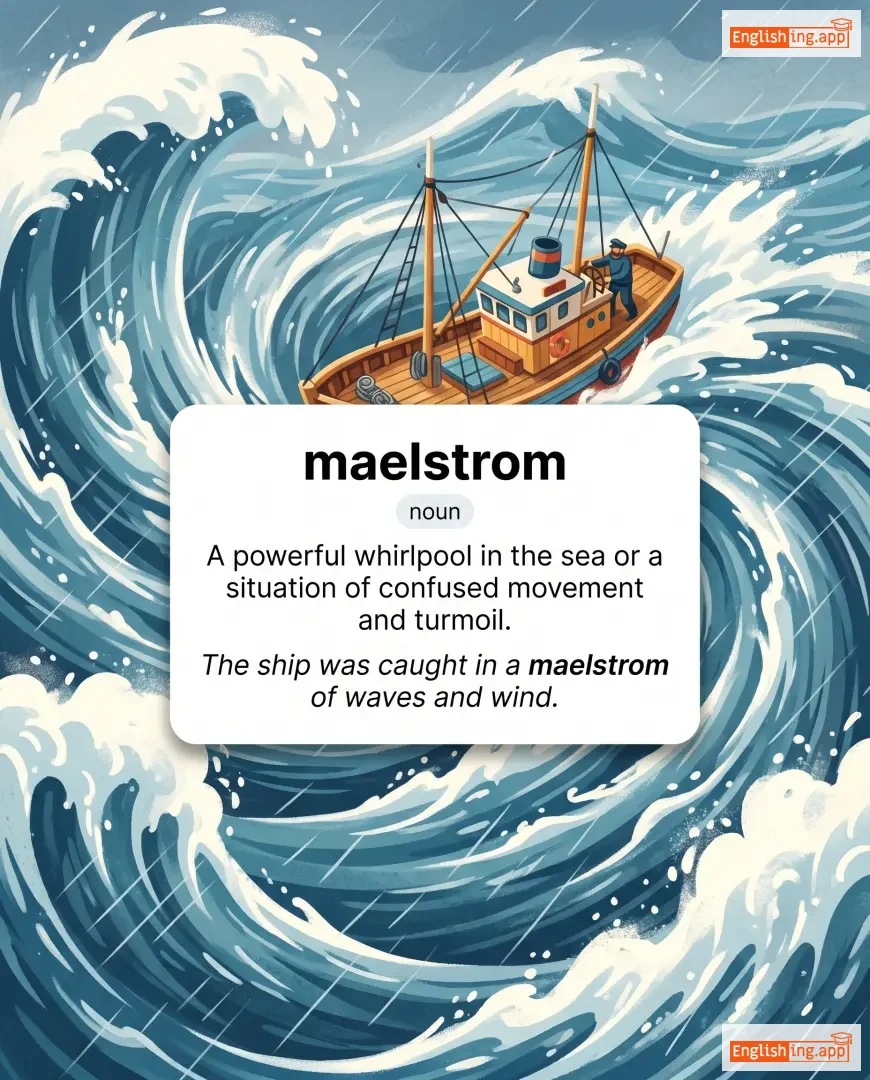
maelstrom definition card — visual illustration of the meaning
noun
/ˈmeɪlstrəm/
प्रचंड जलप्रपात (prachand jalprapat)

A powerful whirlpool in the sea or a situation of confused movement and turmoil.

"The ship was caught in a maelstrom of waves and wind."

"जहाज एक वेव्स और विंड के मेलस्ट्रोम में फंस गया था।" (Jahaz ek waves aur wind ke melstrom mein fans gaya tha.)
noun
/ˈmæɡəziːn/
पत्रिका (patrika)

A periodical publication containing articles, photographs, and advertisements.

"She bought a fashion magazine at the store."

"उसने स्टोर से एक फैशन पत्रिका खरीदी।" (Usne store se ek fashion patrika khareedi.)
adjective
/məˈdʒen.tə/
मजेंटा रंग (majenta rang)

a bright purplish-red color

"She wore a beautiful magenta dress to the party."

"उसने पार्टी में एक सुंदर मजेंटा रंग की ड्रेस पहनी।" (usne party mein ek sundar majenta rang ki dress pehni.)
noun
/ˈmædʒɪk/
जादू (jadoo)

the use of mysterious or supernatural powers to influence events

"The magician amazed the crowd with his magic."

"जादूगर ने अपनी जादू से भीड़ को हैरान कर दिया।" (Jadugar ne apni jadoo se bheed ko hairan kar diya.)
adjective
/ˈmædʒɪkəl/
जादुई (maijikal)

having or producing the charm, beauty, or power of magic

"The sunset over the mountains was a magical sight."

"पर्वतों के ऊपर सूर्यास्त एक जादुई दृश्य था।" (Parvaton ke upar sooryaast ek jadui drishya tha)
noun
/məˈdʒɪʃən/
जादूगर (jadugar)

A person who performs tricks and illusions for entertainment or one believed to have magical powers.

"The magician pulled a rabbit out of his hat."

"जादूगर ने अपनी टोपी से एक खरगोश निकाला।" (Jadugar ne apni topi se ek khargosh nikala.)
adjective
/ˌmædʒɪˈstɪəriəl/
प्रभुत्वशाली (prabhutvashali)

Having the characteristics of a master or authority; commanding and dignified.

"The professor spoke in a magisterial tone during the lecture."

"प्रोफेसर ने व्याख्यान के दौरान प्रभुत्वशाली स्वर में बात की।" (Professor ne vyakhyan ke dauran prabhutvashali swar mein baat ki.)
noun
/ˈmædʒɪstrəsi/
न्यायिक कार्यालय (nyayik karyalay)

The office, authority, or district of a magistrate.

"He was proud to serve in the local magistracy for over a decade."

"वह एक दशक से अधिक समय तक स्थानीय न्यायिक कार्यालय में सेवा देने पर गर्वित था।" (Vah ek dashak se adhik samay tak sthaniya nyayik karyalay mein seva dene par garvit tha.)
noun
/ˈmædʒɪstreɪt/
मैजिस्ट्रेट (maijisṭreṭ)

A civil officer who administers the law, often with limited judicial authority.

"The magistrate presided over the minor criminal case."

"मैजिस्ट्रेट ने छोटे आपराधिक मामले की अध्यक्षता की।" (Majistrate ne chhote aparaadh mamle ki adhyakshata ki.)
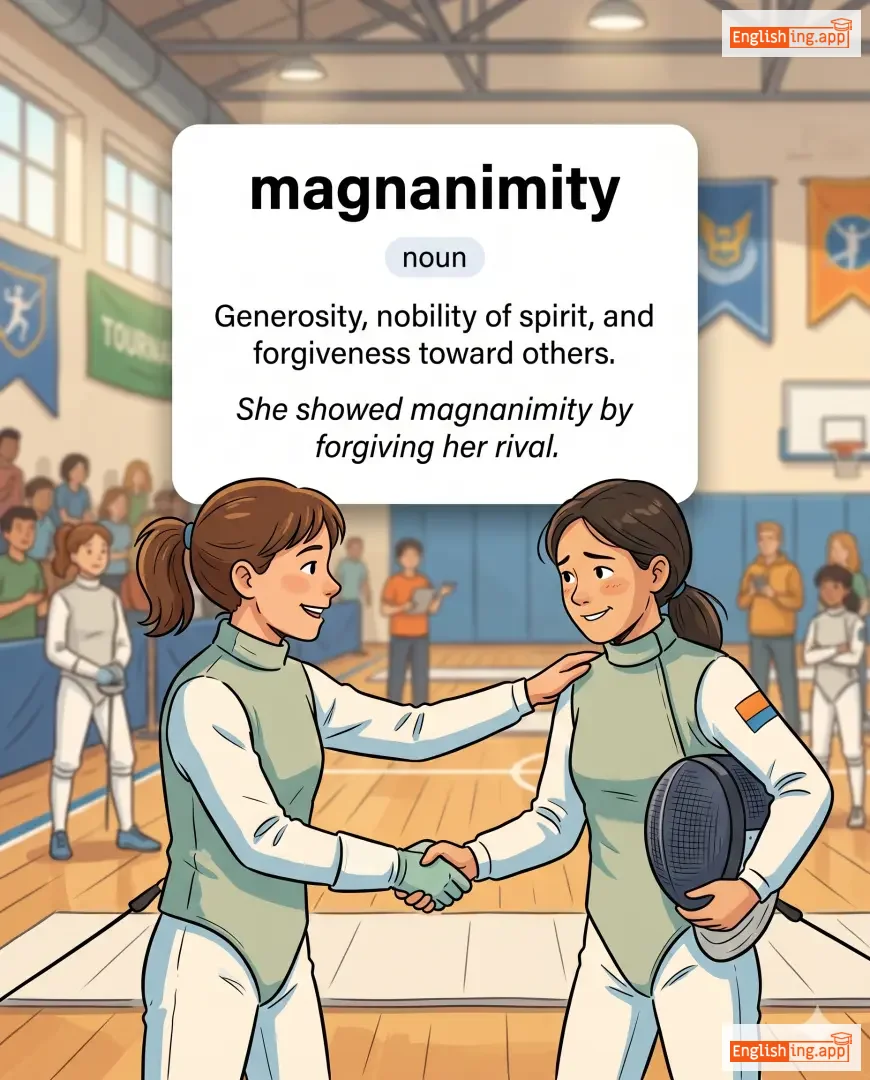
magnanimity definition card — visual illustration of the meaning
noun
/ˌmæɡnəˈnɪmɪti/
उदारता (udarata)

Generosity, nobility of spirit, and forgiveness toward others.

"She showed magnanimity by forgiving her rival."

"उसने अपने प्रतिद्वंद्वी को माफ करके उदारता दिखाई।" (Usne apne pratidvandi ko maaf karke udarata dikhayi.)
magnanimous definition card — visual illustration of the meaning
adjective
/mæɡˈnænɪməs/
उदार (udar)

Generous or forgiving, especially toward a rival or less powerful person.

"He was magnanimous in victory, praising his opponent."

"वह विजय में महान था, अपने प्रतिद्वंद्वी की सराहना करते हुए।" (Vah vijay mein mahaan tha, apne pratidvandvi ki sarahna karte hue.)
noun
/ˈmæɡneɪt/
धनकुबेर (dhankuber)

A wealthy and influential person, especially in business or industry.

"The oil magnate donated millions to charity."

"तेल के धनकुबेर ने चैरिटी को लाखों डॉलर दान किए।" (Tel ke dhankuber ne charity ko lakhon dollar dan kiye.)
noun
/ˈmæɡnət/
चुंबक (chumbak)

An object that produces a magnetic field and attracts metals like iron.

"The magnet held the paper to the fridge door."

"चुंबक ने कागज को फ्रिज के दरवाजे से चिपका लिया।" (chumbak ne kagaz ko frij ke darwaze se chipka liya.)
adjective
/mæɡˈnɛtɪk/
चुम्बकीय (chumbikīya)

having the power to attract metal objects or to attract people or things in a strong way

"The magnetic field of the Earth protects us from harmful solar radiation."

"पृथ्वी का चुम्बकीय क्षेत्र हमें हानिकारक सौर विकिरण से बचाता है।" (Prithvī kā chumbikīya kṣetra humein hānikārak saur vikiraṇ se bachātā hai.)
verb
/ˈmæɡnɪtaɪz/
चुम्बकीकरण करना (chumbkikaran karna)

to make something magnetic or to strongly attract

"The scientist managed to magnetize the iron rod."

"वैज्ञानिक ने लोहे की छड़ी को चुम्बकीय बनाने में सफलता पाई।" (Vaigyanik ne lohe ki chhadi ko chumbakiya banane mein safalta paayi.)
noun
/mæɡˈnɪfɪsəns/
शानदारता (shandarta)

splendor, grandeur, or impressive beauty

"The magnificence of the palace left everyone speechless."

"महल की शानदारता ने सभी को चुप करा दिया।" (Mahal ki shandarta ne sabhi ko chup kara diya.)
adjective
/mæɡˈnɪfɪsənt/
शानदार (shandar)

extremely beautiful, impressive, or splendid

"The view from the mountain was truly magnificent."

"पर्वत से दृश्य सच में शानदार था।" (Parvat se drishya sach mein shandar tha.)
verb
/ˈmæɡnɪfaɪ/
बड़ा करना (bada karna)

to make something appear larger or more important than it really is

"The microscope can magnify tiny cells."

"सूक्ष्मदर्शी यंत्र छोटे कोशिकाओं को बड़ा कर सकता है।" (sookshmadarshi yantra chhote koshikaon ko bada kar sakta hai.)
adjective
/mæɡˈnɪləkwənt/
पाण्डित्यपूर्ण भाषा (pandityapurn bhasha)

using high-flown or pompous language

"The politician’s magniloquent speech impressed the crowd."

"राजनेता का पाण्डित्यपूर्ण भाषण भीड़ को प्रभावित कर गया।" (Rajneeta ka pandityapurn bhashan bheed ko prabhavit kar gaya.)
noun
/ˈmæɡnɪtuːd/
परिमाण (parimaan)

the great size, extent, or importance of something

"The magnitude of the earthquake shocked the nation."

"भूकंप का परिमाण ने राष्ट्र को चौंका दिया।" (Bhookamp ka parimaan ne rashtra ko chauka diya.)
noun
/ˌmɑːhəˈrɑːdʒə/
महाराजा (maharaja)

A great king, especially a ruler of one of the principal states in India.

"The maharaja lived in a grand palace surrounded by gardens."

"महाराजा एक भव्य महल में रहते थे जो बागों से घिरा हुआ था।" (Maharaja ek bhavya mahal mein rehte the jo bagon se ghira hua tha.)
noun
/ˈmeɪdənˌhʊd/
कुमारीपन (kumaaripan)

The state of being a maiden; girlhood or virginity.

"The poem celebrated the innocence of maidenhood."

"ग़ज़ल ने कुमारीपन की मासूमियत का जश्न मनाया।" (Ghazal ne kumaaripan ki maasoomiyat ka jashn manaya.)
noun/verb
/meɪl/
पत्र / डाक (patra / daak)

Letters, packages, or email messages sent or delivered to someone.

"I received an important letter in the mail."

"मैंने मेल में एक महत्वपूर्ण पत्र प्राप्त किया।" (Maine mail mein ek mahatvapurn patra prapt kiya.)
noun
/meɪl treɪn/
डाक गाड़ी (daak gaadi)

a train that carries mail and postal packages

"The mail train departs every evening to deliver letters across the country."

"मेल ट्रेन हर शाम पत्रों को देशभर में पहुँचाने के लिए प्रस्थान करती है।" (daak gaadi har shaam pattron ko deshbhar mein pahunchane ke liye prasthaan karti hai.)
verb
/meɪm/
गंभीर रूप से घायल करना (gambheer roop se ghayal karna)

To wound or injure someone so that part of the body is permanently damaged.

"The accident maimed several passengers."

"दुर्घटना ने कई यात्रियों को घायल कर दिया।" (Durghatna ne kai yatrion ko ghayal kar diya.)
adjective
/meɪn/
मुख्य (mukhya)

most important; chief in size, extent, or importance

"The main reason for his success is hard work."

"उसकी सफलता का मुख्य कारण कड़ी मेहनत है।" (uski safalta ka mukhya karan kadi mehnat hai.)
noun
/ˈmeɪnˌlænd/
मुख्य भूमि (mainland)

the principal landmass of a country or continent, as opposed to the surrounding islands

"The mainland of Australia is home to most of its population."

"ऑस्ट्रेलिया की मुख्य भूमि में उसकी अधिकांश आबादी रहती है।" (australia ki mukhya bhumi mein uski adhikansh aabadi rahti hai)