वोकैबुलरीज

इंग्लिश वोकैबुलरी डिस्कवर, लर्न और मास्टर करें

noun
/ˈneɪdɪər/
सबसे निम्न बिंदु (naidir)

The lowest point of a situation or condition.

"The company reached its nadir during the financial crisis."

"वित्तीय संकट के दौरान कंपनी अपने सबसे निम्न बिंदु पर पहुँची।" (vittiya sankat ke dauran kampani apne sabse nimn bindu par pahunchi.)
noun, verb
/neɪl/
कील (keel)

a small metal spike driven into wood or other material, or to fasten or fix something with nails

"He nailed the wooden board to the wall."

"उसने लकड़ी की पट्टी को दीवार से ठोक दिया।" (Usne lakdi ki patti ko deewar se thok diya.)
adjective
/naɪˈiːv/
भोला (bhola)

Lacking experience, wisdom, or judgment; too trusting.

"She was naïve to believe every advertisement she saw."

"वह हर विज्ञापन को देखकर भोली थी।" (vah har vigyapan ko dekhkar bhooli thi.)
noun
/naɪˈiːvteɪ/
नादानी (nadani)

The quality of being naive; lack of experience, wisdom, or judgment.

"His naivete made him an easy target for manipulation."

"उसकी नादानी उसे हेरफेर के लिए एक आसान लक्ष्य बना देती थी।" (Uski nadani use herpher ke liye ek aasan lakshya bana deti thi.)
noun
/naɪˈiːvɪti/
सरलता (sarlata)

The quality of being innocent, simple, and lacking experience or sophistication.

"Her naivety made her trust people too easily."

"उसकी सरलता ने उसे बहुत आसानी से लोगों पर विश्वास करने पर मजबूर कर दिया।" (Uski sarlata ne use bahut asani se logon par vishwas karne par majboor kar diya.)
adjective
/ˈneɪkɪd/
नग्न (nagn)

not covered by clothing or without protection

"The child was running naked in the yard."

"बच्चा आंगन में नग्न दौड़ रहा था।" (Baccha aangan mein nagn daud raha tha.)
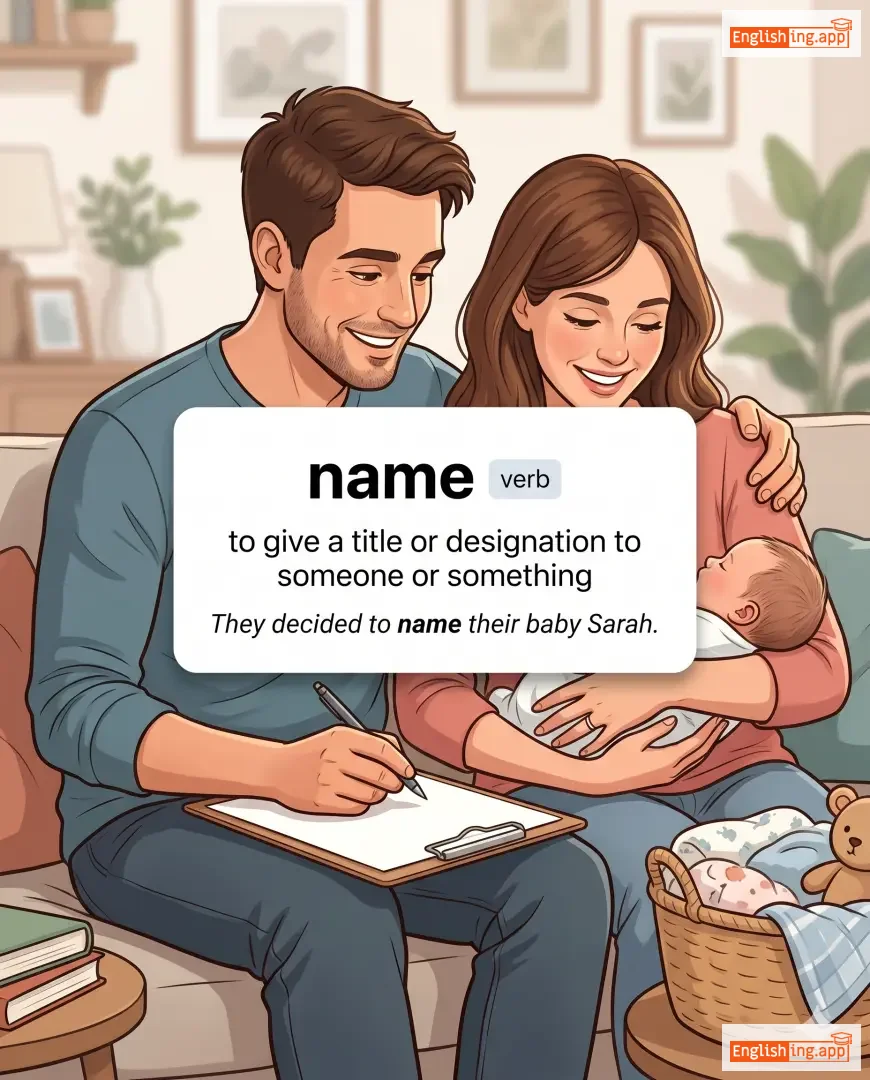
name definition card — visual illustration of the meaning
noun
/neɪm/
नाम (naam)

a word by which a person or thing is known or called

"His name is John."

"उसका नाम जॉन है।" (Uska naam John hai.)
adjective
/ˈneɪmləs/
बेनाम (benaam)

Without a name or not known by name.

"A nameless fear crept over him in the dark room."

"एक बेनाम डर अंधेरे कमरे में उस पर छा गया।" (ek benaam dar andhere kamre mein us par chha gaya.)
adverb
/ˈneɪmli/
यानी (yani)

that is to say; to be specific

"The festival will be held in three cities, namely Dhaka, Chittagong, and Sylhet."

"यह महोत्सव तीन शहरों में होगा, यानी ढाका, चिटगाँव और सिलहट।" (Yeh mahotsav teen shahron mein hoga, yani Dhaka, Chittagong aur Silhet.)
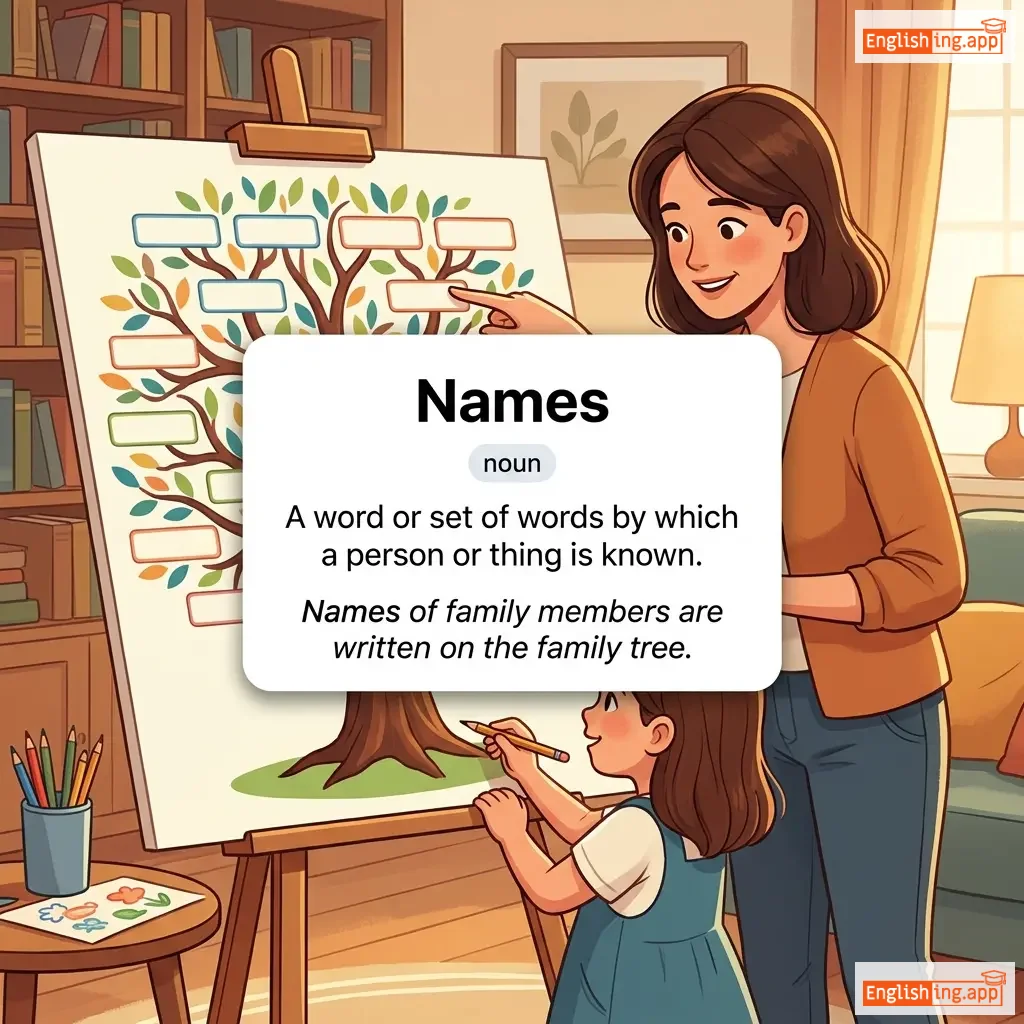
Names definition card — visual illustration of the meaning
noun
neɪmz
नाम (naam)

A word or set of words by which a person or thing is known.

"Names of family members are written on the family tree."

"परिवार के सदस्य के नाम पारिवारिक वृक्ष पर लिखे जाते हैं।" (Parivaar ke sadasya ke naam parivaarik vriksh par likhe jaate hain.)
nanotechnology definition card — visual illustration of the meaning
noun
ˌnæn.oʊ.tekˈnɒl.ə.dʒi
नैनोप्रौद्योगिकी (nanopraudyogiki)

The branch of technology that deals with dimensions and tolerances of less than 100 nanometers.

"Nanotechnology is advancing medical treatments."

"नैनोटेक्नोलॉजी चिकित्सा उपचारों में प्रगति कर रही है।" (Nanotechnology chikitsa upcharon mein pragati kar rahi hai.)
noun
/ˈnæp.kɪn/
नैपकिन (napkin)

a piece of cloth or paper used for wiping the mouth and hands while eating

"She placed the napkin on her lap before starting dinner."

"उसने डिनर शुरू करने से पहले अपनी गोदी में नैपकिन रखा।" (Usne dinner shuru karne se pehle apni godi mein napkin rakha.)
noun
/ˈnæfθə/
नैप्था (naipthaa)

A flammable oil containing hydrocarbons, obtained from petroleum or coal tar, used as fuel or solvent.

"The factory stored barrels of naphtha for industrial use."

"कारख़ाने में औद्योगिक उपयोग के लिए नाफ्था की बैरलें संग्रहित की गई थीं।" (kaarkhane mein audyogik upyog ke liye naaphthaa ki bairelen sangrahit ki gayi thin.)
noun
/ˈnæpkɪn/
नेपकिन (napkin)

a piece of cloth or paper used to wipe the mouth and hands while eating

"She placed a napkin on her lap before eating."

"उसने खाने से पहले अपनी गोदी में एक नैपकिन रखा।" (Usne khane se pehle apni godi mein ek napkin rakha.)
narcissism definition card — visual illustration of the meaning
noun
/ˈnɑːrsɪsɪzəm/
स्वार्थप्रियता (svārthpriyatā)

Excessive interest in or admiration of oneself.

"His constant selfies were a sign of his narcissism."

"उसकी लगातार सेल्फी लेना उसकी स्वार्थप्रियता का संकेत था।" (uski lagātār selfie lenā uski svārthpriyatā kā sanket thā.)
noun
/ˈnɑːrsɪsɪst/
नार्सीसिस्ट (narcissist)

A person who has an excessive interest in or admiration of themselves.

"Everyone avoided him because he was a narcissist."

"हर कोई उससे बचता था क्योंकि वह एक नार्सीसिस्ट था।" (har koi usse bachta tha kyonki vah ek narcissist tha.)
noun
/nɑːrˈsɪsəs/
नार्सिसस फूल (narsisas phool)

A type of flowering plant with yellow or white blooms, often associated with self-love from Greek mythology.

"A narcissus bloomed in the garden during spring."

"वसंत में बग़ीचे में एक नार्सिसस खिल रहा था।" (Vasant mein bagiche mein ek narsisas khil raha tha.)
noun
/nɑːrˈkɒtɪk/
नशीला पदार्थ (nashila padarth)

A drug that dulls the senses and relieves pain, often causing sleep and sometimes addiction.

"The police seized a large amount of narcotic substances."

"पुलिस ने बड़ी मात्रा में नशीला पदार्थ जब्त किया।" (Police ne badi matra mein nashila padarth jobt kiya.)
verb
/ˈnæreɪt/
वर्णन करना (varnan karna)

To tell a story or describe events, often in detail.

"She will narrate the events of her journey to the audience."

"वह अपनी यात्रा के घटनाओं का वर्णन दर्शकों से करेगी।" (Wah apni yatra ke ghatnaon ka varnan darshako se karegi.)
noun
/næˈreɪʃən/
कथन (kathan)

The act of telling a story or describing events in detail.

"The movie’s narration was done by a famous actor."

"फिल्म की कथन एक प्रसिद्ध अभिनेता द्वारा की गई थी।" (Film ki kathan ek prasiddh abhineta dwara ki gayi thi.)
noun
/ˈnærətɪv/
वर्णन, कहानी (varnan, kahani)

A spoken or written account of connected events; a story.

"The novel’s narrative explores themes of identity and freedom."

"उपन्यास की वर्णन पहचान और स्वतंत्रता के विषयों का अन्वेषण करती है।" (Upanyas ki varnan pehchan aur svatantrata ke vishayon ka anvishan karti hai.)
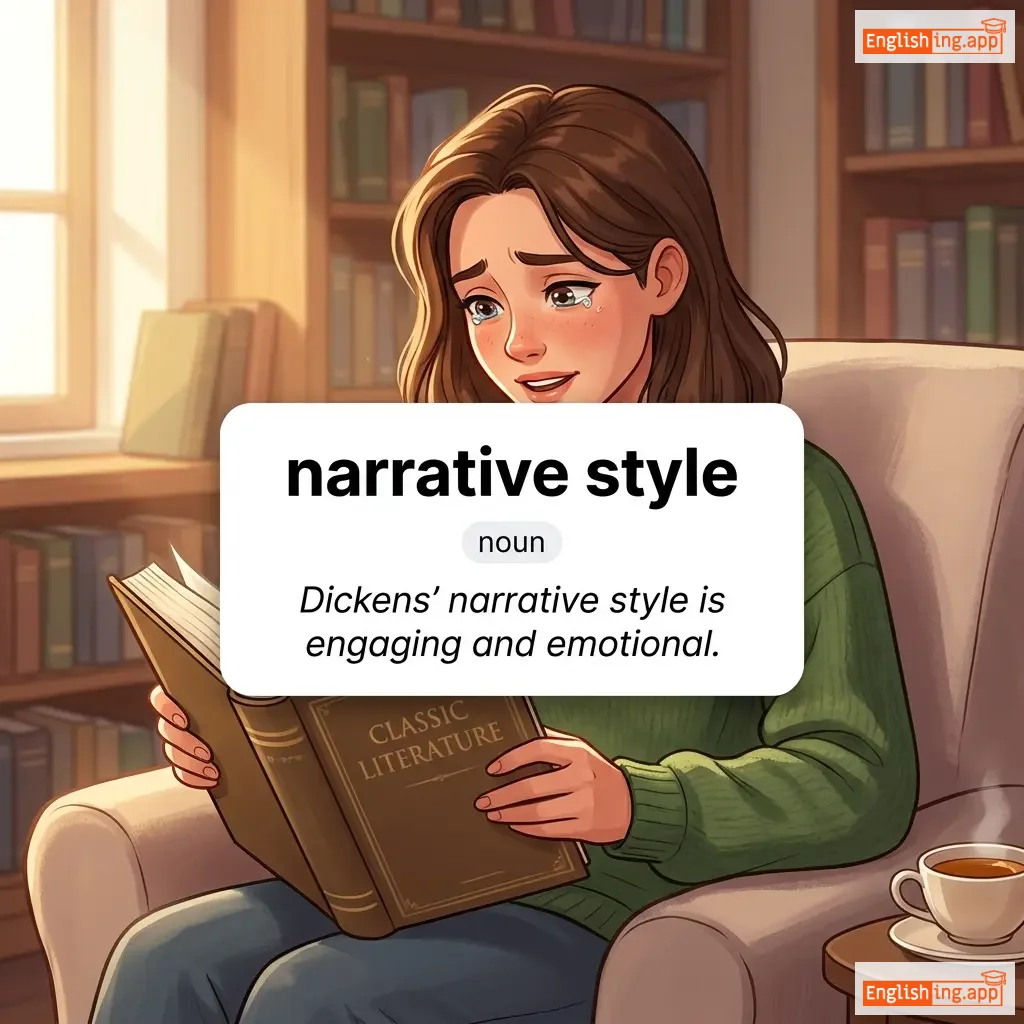
narrative style definition card — visual illustration of the meaning
noun
ˈnærətɪv staɪl
कथन शैली (kathan shaili)

The way in which a story is told, including the point of view and the voice of the narrator.

"Dickens' narrative style is engaging and emotional."

"डिकेन्स की कथन शैली आकर्षक और भावनात्मक है।" (Dickens ki kathan shaili akarsak aur bhavnatmak hai.)
noun
/ˈnæreɪtər/
कथावाचक (kathavachak)

A person who tells the story in a book, play, or film.

"The narrator guided the audience through the complex plot."

"कथावाचक ने दर्शकों को जटिल प्लॉट के माध्यम से मार्गदर्शन किया।" (Kathavachak ne darshako ko jatil plot ke madhyam se margdarshan kiya.)
adjective
/ˈnær.oʊ/
संकीर्ण (sankirn)

limited in width or extent; not wide

"The narrow street made it difficult for cars to pass."

"संकीर्ण सड़क ने कारों के लिए गुजरना मुश्किल बना दिया।" (Sankirn sadak ne kaaron ke liye guzarna mushkil bana diya.)
adjective
/ˌnæroʊˈmaɪndɪd/
संकीर्ण मानसिकता वाला (sankirn mansikta wala)

Having a limited outlook or unwillingness to accept different opinions or ideas.

"She was too narrow-minded to consider other perspectives."

"वह दूसरों के दृष्टिकोणों पर विचार करने के लिए बहुत संकीर्ण मानसिकता वाली थी." (vah doosron ke drishtikonon par vichaar karne ke liye bahut sankirn mansikta wali thi)
adverb
/ˈnæroʊli/
थोड़ा अंतर; मुश्किल से (thoda antar; mushkil se)

by a small margin; barely; in a limited way

"She narrowly escaped the accident."

"वह एक छोटे से अंतर से दुर्घटना से बची।" (vah ek chhote se antar se durghatna se bachi.)
adjective
/ˈneɪzl/
नाक से संबंधित (nak se sambandhit)

Relating to the nose; a sound produced through the nose.

"He spoke with a nasal voice due to his cold."

"उसने सर्दी के कारण नाक में आवाज़ के साथ बात की।" (Usne sardi ke kaaran nak mein awaaz ke saath baat ki.)
nascent definition card — visual illustration of the meaning
adjective
/ˈneɪsnt/
नवजात (navjat)

Just coming into existence and beginning to develop.

"The nascent technology has great potential."

"नवजात प्रौद्योगिकी में महान संभावनाएँ हैं।" (Navjat pradyogiki mein mahaan sambhavnayein hain.)
adjective
/ˈnæsti/
घिनौना (ghinouna)

very unpleasant, unkind, or offensive

"He made a nasty comment about her dress."

"उसने उसकी ड्रेस के बारे में एक घिनौना टिप्पणी की।" (Usne uski dress ke baare mein ek ghinouna tippani ki.)
adjective
/ˈneɪtl/
जन्मस्थान से संबंधित (janmasthan se sambandhit)

Relating to birth or the place of birth.

"She returned to her natal village after many years."

"वह कई वर्षों बाद अपने जन्मस्थान लौट आई।" (vah kai varsho baad apne janmasthan laut aayi.)
noun
/næˈteɪʃən/
तैराकी (tairaki)

The act or sport of swimming.

"She took lessons in natation to improve her swimming skills."

"उसने अपनी तैराकी कौशल को सुधारने के लिए नैटेशन कक्षाएं लीं।" (Usne apni tairaki kaushal ko sudharne ke liye natation kakshaen leen.)
noun
/ˈneɪʃən/
राष्ट्र (rashtra)

a large group of people united by common descent, history, culture, or language

"The nation celebrated its independence day with pride."

"राष्ट्र ने अपने स्वतंत्रता दिवस को गर्व के साथ मनाया" (Rashtra ne apne swatantrata divas ko garv ke saath manaya)
adjective
/ˈnæʃənəl/
राष्ट्रीय (rāṣhṭrīya)

relating to a nation, especially its culture, language, or government

"The national anthem was played at the ceremony."

"राष्ट्रीय गान समारोह में बजाया गया था।" (rāṣhṭrīya gān samāroh mein bajāyā gayā thā.)
noun
/ˈnæʃənəl ˈænθəm/
राष्ट्रीय गान (rashtriya gaan)

an official patriotic song of a country, performed at national events and ceremonies

"The national anthem was played before the international match."

"अंतरराष्ट्रीय मैच से पहले राष्ट्रीय गान बजाया गया।" (antarashtriya match se pehle rashtriya gaan bajaya gaya)
noun
/ˌnæʃəˈnæləti/
राष्ट्रीयता (rāṣṭrīyatā)

The status of belonging to a particular nation, either by birth or naturalization.

"Her nationality is Canadian, though she was born in France."

"उसकी राष्ट्रीयता कनाडाई है, हालाँकि वह फ्रांस में पैदा हुई थी।" (uski rāṣṭrīyatā kanāḍā'ī hai, hālnāki vah phrāns mein paidā huī thī.)
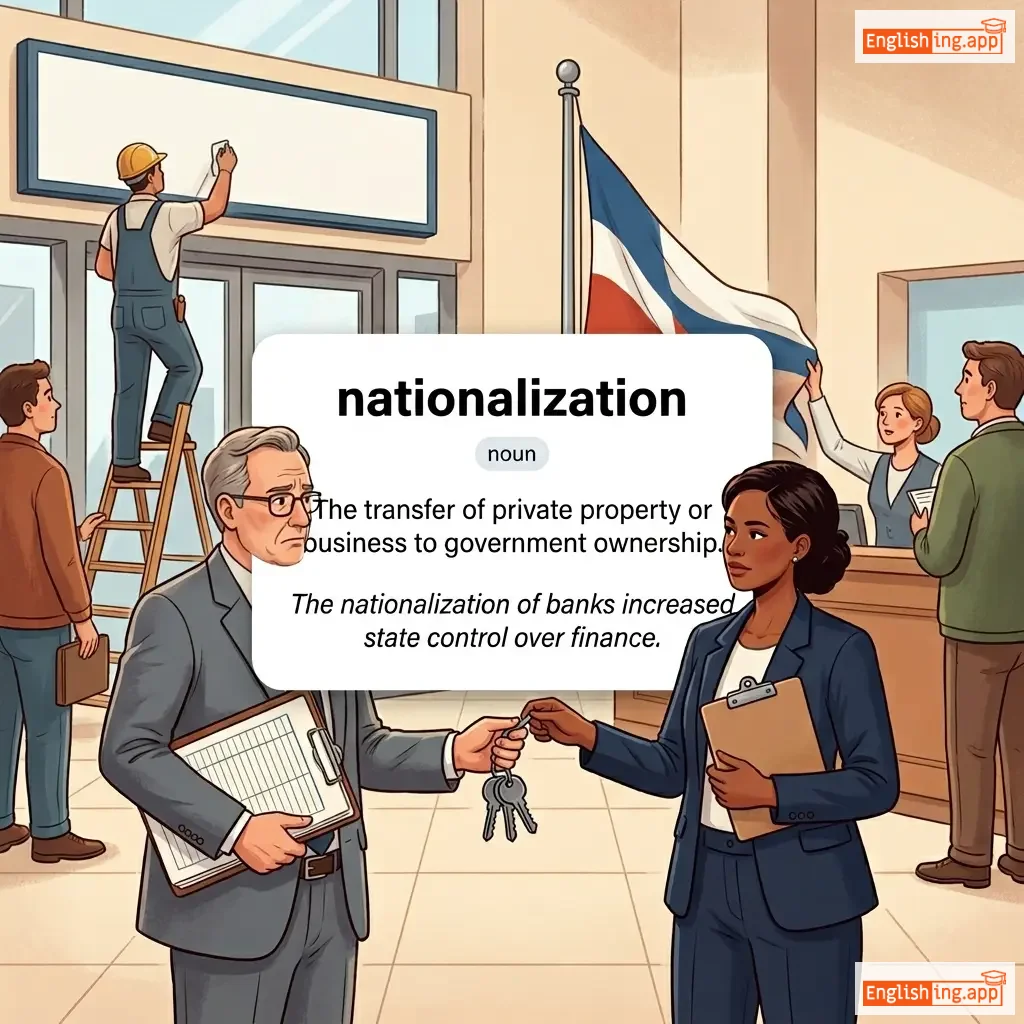
nationalization definition card — visual illustration of the meaning
noun
/ˌnæʃ.ən.ə.laɪˈzeɪ.ʃən/
राष्ट्रीयकरण (rashtriyakaran)

The transfer of private property or business to government ownership.

"The nationalization of banks increased state control over finance."

"बैंकों का राष्ट्रीयकरण ने वित्तीय नियंत्रण को बढ़ाया।" (Bankon ka rashtriyakaran ne vittiya niyantran ko badhaya.)
adverb
/ˈnæʃənəli/
राष्ट्रीय स्तर पर (rashtriya star par)

at the level of a whole nation; in a way that involves or affects an entire country

"The policy was implemented nationally to ensure equal benefits for all citizens."

"सभी नागरिकों के लिए समान लाभ सुनिश्चित करने के लिए नीति को राष्ट्रीय स्तर पर लागू किया गया।" (sabhi nagrikon ke liye saman labh sunishchit karne ke liye niti ko rashtriya star par lagu kiya gaya)
adjective, adverb
/ˈneɪʃənˌwaɪd/
सार्वभौमिक (sarvabhaumik)

existing or happening throughout an entire nation

"The campaign received nationwide support."

"अभियान को सर्वभौमिक समर्थन प्राप्त हुआ।" (Abhiyan ko sarvabhaumik samarthan prapt hua.)
adjective
/ˈneɪtɪv/
स्थानीय (sthaniyo)

Belonging to a person by birth; originating in a particular place.

"He is a native speaker of Bengali."

"वह बांग्ला का एक स्थानीय वक्ता है।" (Vah Bangla ka ek sthaniyo vakta hai.)
adjective
/ˈnæti/
स्टाइलिश (stylish)

Neat, stylish, and fashionable in appearance.

"He looked very natty in his new suit."

"वह अपने नए सूट में बहुत स्टाइलिश लग रहा था।" (vah apne naye suit mein bahut stylish lag raha tha.)
adjective
/ˈnætʃərəl/
प्राकृतिक (prakritik)

existing in or derived from nature; not made or caused by humankind

"She prefers to use natural ingredients in her cooking."

"वह अपनी रेसिपी में प्राकृतिक सामग्रियों का उपयोग करना पसंद करती है।" (Vah apni recipe mein prakritik samagriyon ka upyog karna pasand karti hai.)
noun
/ˈnætʃərəl dɪˈzæstər/
प्राकृतिक आपदा (prakritik aapda)

a catastrophic event caused by natural processes of the Earth that results in significant damage, destruction, or loss of life

"The coastal town was devastated by a natural disaster."

"तटीय शहर एक प्राकृतिक आपदा से तबाह हो गया।" (tatiya shahar ek prakritik aapda se tabah ho gaya)
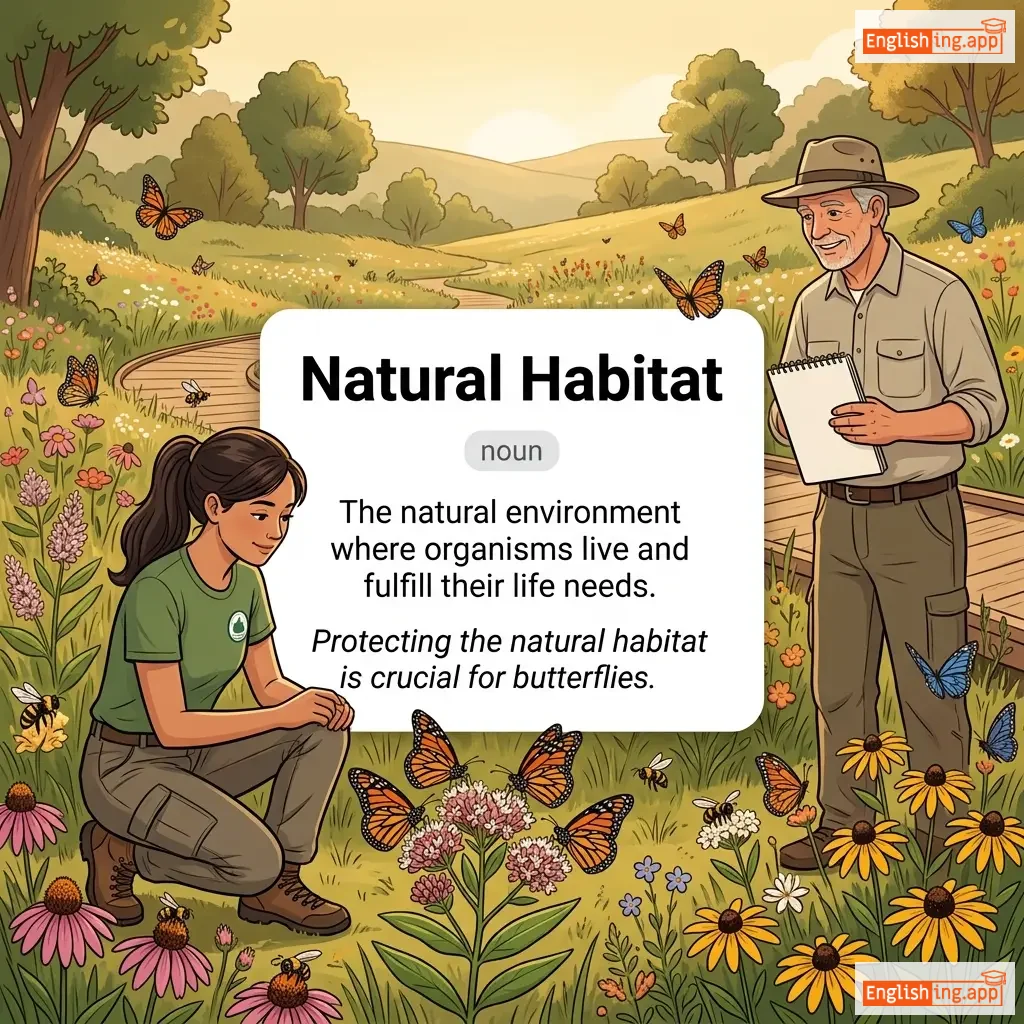
Natural Habitat definition card — visual illustration of the meaning
noun
ˈnætʃərəl ˈhæbɪtæt
प्राकृतिक आवास (prakritik aavas)

The natural environment where organisms live and fulfill their life needs.

"Protecting the natural habitat is crucial for butterflies."

"तितलियों के लिए प्राकृतिक आवास की रक्षा करना महत्वपूर्ण है।" (Titliyon ke liye prakritik aavas ki raksha karna mahatvapurn hai.)
adverb
/ˈnætʃrəli/
स्वाभाविक रूप से (swabhavik roop se)

In a way that is normal, expected, or without effort.

"He spoke so naturally that everyone felt comfortable."

"वह इतनी स्वाभाविक रूप से बोल रहा था कि हर कोई आरामदायक महसूस कर रहा था।" (vah itni swabhavik roop se bol raha tha ki har koi aaraamdayak mehsoos kar raha tha.)
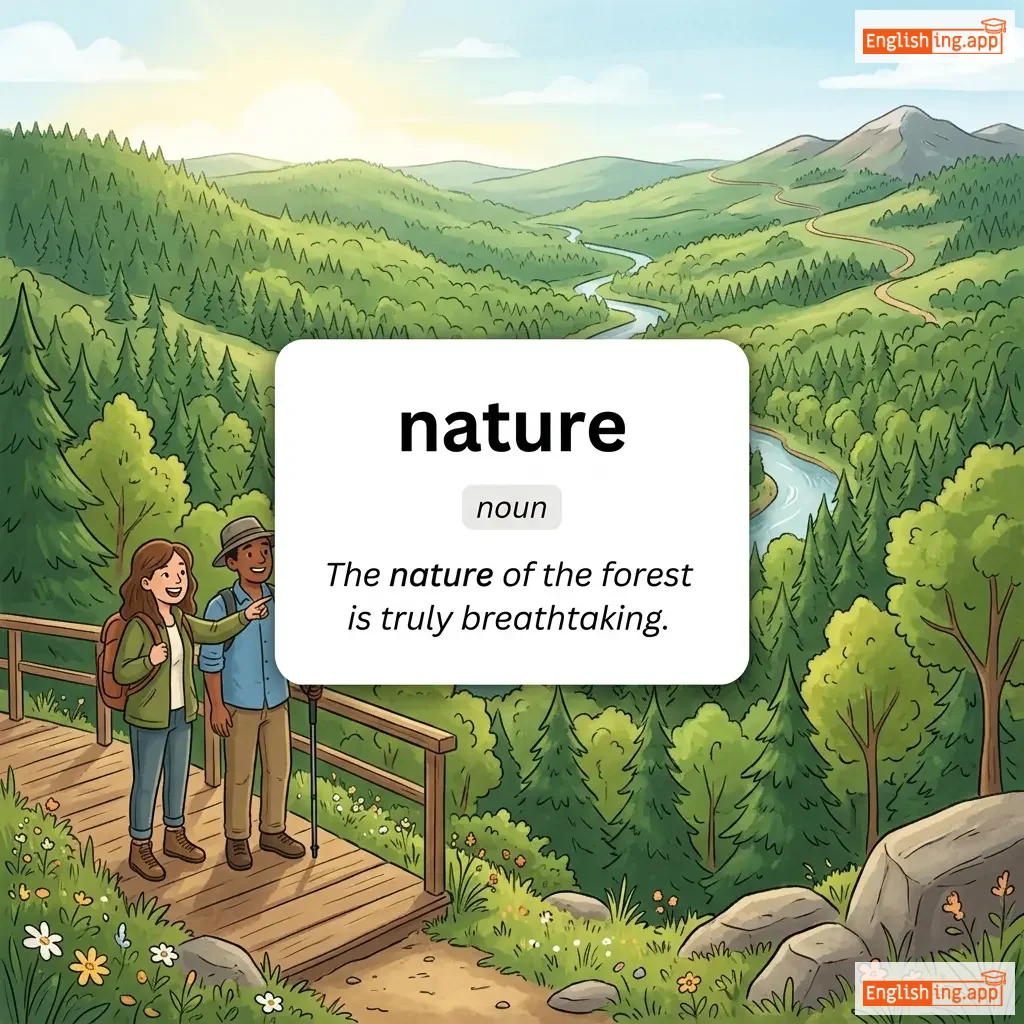
nature definition card — visual illustration of the meaning
noun
/ˈneɪtʃər/
प्रकृति (prakriti)

the physical world and everything in it, including plants, animals, and the landscape

"The nature of the forest is truly breathtaking."

"जंगल की प्रकृति सचमुच अद्भुत है।" (Jangal ki prakriti sachmuch adbhut hai.)
Nature Enthusiasts definition card — visual illustration of the meaning
noun
ˈneɪʧər ɪnˈθjuːziæsts
प्रकृति प्रेमी (prakriti premi)

People who have a passionate interest in and love for the natural world and outdoor activities.

"Nature enthusiasts often visit Sajek Valley for its scenic beauty."

"प्रकृति प्रेमी अक्सर साजेक घाटी उसकी दृश्यात्मक सुंदरता के लिए यात्रा करते हैं।" (Prakriti premi aksar Sajek Ghati uski drishyatmak sundarta ke liye yatra karte hain.)
adjective
/ˈnɔːti/
शरारती (shararatī)

Disobedient or mischievous, often in a playful or mildly bad way.

"The naughty child drew on the walls with crayons."

"शरारती बच्चे ने दीवारों पर क्रेयॉन्स से चित्र बनाए।" (Shararatī bacche ne dīwāron par crayon se chitra banāye.)
noun
/ˈnɔːziə/
उलटी आने की भावना (ulti aane ki bhavana)

A feeling of sickness with an inclination to vomit.

"The strong smell of paint gave her a sudden nausea."

"पेंट की तीव्र गंध ने उसे अचानक उलटी आने की भावना दी।" (paint ki tivr gandh ne use achanak ulti aane ki bhavana di.)
verb
/ˈnɔːzieɪt/
उलटी का एहसास दिलाना (ulti ka ehsaas dilana)

To make someone feel sick, with an inclination to vomit.

"The spoiled food nauseated him quickly."

"खराब खाना उसे जल्दी उल्टी का एहसास दिला दिया।" (kharab khana use jaldi ulti ka ehsaas dila diya.)
adjective
/ˈnɔːʃəs/
उल्टी जैसा महसूस होना (ulti jaisa mahsus hona)

feeling like you are about to vomit; causing a feeling of sickness

"The smell of rotten food made her feel nauseous."

"सड़ी हुई खाने की गंध ने उसे उल्टी जैसा महसूस कराया।" (Sadi hui khane ki gandh ne use ulti jaisa mahsus karaya.)