वोकैबुलरीज

इंग्लिश वोकैबुलरी डिस्कवर, लर्न और मास्टर करें

noun
/kwæk/
धोखेबाज़ डॉक्टर (dhokhebaaz doctor)

a fraudulent or ignorant pretender to medical skill; a charlatan

"Beware of the quack who promises miracle cures online."

"जो धोखेबाज़ डॉक्टर ऑनलाइन चमत्कारी इलाज का वादा करता है, उससे सावधान रहें।" (jo dhokhebaaz doctor online chamatkaari ilaaj ka vaada karta hai, usse saavdhaan rahen)
adjective
/ˈkwɒdreɪt/
चौकोर (choukor)

square or nearly square; having four sides or being suited or corresponding to something

"The tiles had a neat quadrate shape that made the floor look orderly."

"टाइल्स का आकार एक सुसंगत चौकोर था, जिससे फर्श व्यवस्थित दिख रहा था।" (Tiles ka aakaar ek susangat choukor tha, jisse farsh vyavasthit dikh raha tha.)
noun
/ˈkwɒdrʊpɛd/
चार पैर वाला प्राणी (kwadruped)

an animal that walks on four feet

"Most mammals are quadruped creatures adapted for running and stability."

"अधिकांश स्तनधारी चार पैर वाले प्राणी हैं जो दौड़ने और स्थिर रहने के लिए अनुकूलित हैं।" (adhikansh stan dhari chaar pair wale prani hain jo daudne aur sthir rehne ke liye anukulit hain)
verb
/kwɒˈdruːpəl/
चार गुना करना (chaar guna karna)

to increase or make something four times as much or as many

"Within a year, the startup quadrupled its user base through aggressive partnerships."

"एक साल के भीतर, स्टार्टअप ने आक्रामक साझेदारी के माध्यम से अपने उपयोगकर्ता आधार को चार गुना बढ़ा दिया।" (ek saal ke bheetar, startup ne aakramak saajhedaari ke maadhyam se apne upyogakarta aadhar ko chaar guna badha diya.)
verb
/kwɒf/
बड़े गिलास में शराब पीना (bade gilas mein sharab peena)

to drink something heartily or in large gulps, especially an alcoholic drink

"He quaffed a mug of ale after the long day."

"उसने लंबी दिन के बाद एक मग एले का क्वाफ़ किया।" (Usne lambi din ke baad ek mag ale ka kwaf kiya.)
noun
/ˈkwæɡˌmaɪər/
कीचड़, दलदल (keechad, daldal)

a soft, wet area of land that gives way underfoot; a complex or dangerous situation

"The hikers were trapped in a political quagmire."

"पहाड़ों पर चढ़ाई करने वाले एक राजनीतिक कीचड़ में फंस गए थे।" (Pahaadon par chadhai karne wale ek rajneetik keechad mein fans gaye the.)
verb, noun
/kweɪl/
डर महसूस करना; एक छोटा, छोटी पूंछ वाला पक्षी (dar mehsoos karna; ek chhota, chhoti poonch wala pakshi)

verb: to feel or show fear; noun: a small, short-tailed bird

"She quailed at the sight of the approaching storm."

"वह आसन्न तूफान के दृश्य से भयभीत हो गई।" (Wah aassan toofan ke drishya se bhaybheet ho gayi.)
adjective
/kweɪnt/
पुरानी या आकर्षक शैली का (purani ya akarshak shaili ka)

attractively unusual or old-fashioned

"They stayed in a quaint little cottage by the sea."

"वे समुद्र के किनारे एक पुराने जमाने के आकर्षक घर में रुके थे।" (Ve samudra ke kinare ek purane jamane ke akarshak ghar mein ruke the.)
verb
/kweɪk/
काँपना (kaampna)

to shake or tremble, often due to fear or a natural event like an earthquake

"The ground began to quake during the earthquake."

"भूकंप के दौरान ज़मीन काँपने लगी।" (Bhookamp ke dauran zameen kaampne lagi.)
noun
/ˌkwɒlɪfɪˈkeɪʃən/
योग्यता (yogyata)

a condition or skill that makes someone suitable for a job or activity; the process of qualifying

"She listed her qualifications on the job application."

"उसने नौकरी के आवेदन पर अपनी योग्यताएँ सूचीबद्ध कीं।" (Usne naukri ke avedan par apni yogyataen suchibaddh keen.)
Qualified definition card — visual illustration of the meaning
adjective
/ˈkwɒlɪfaɪd/
योग्य (yogya)

officially recognized as being trained or knowledgeable for a particular job or activity

"She is a qualified doctor with years of experience."

"वह कई वर्षों के अनुभव के साथ एक योग्य डॉक्टर हैं।" (Wah kai varshon ke anubhav ke saath ek yogya doktor hain.)
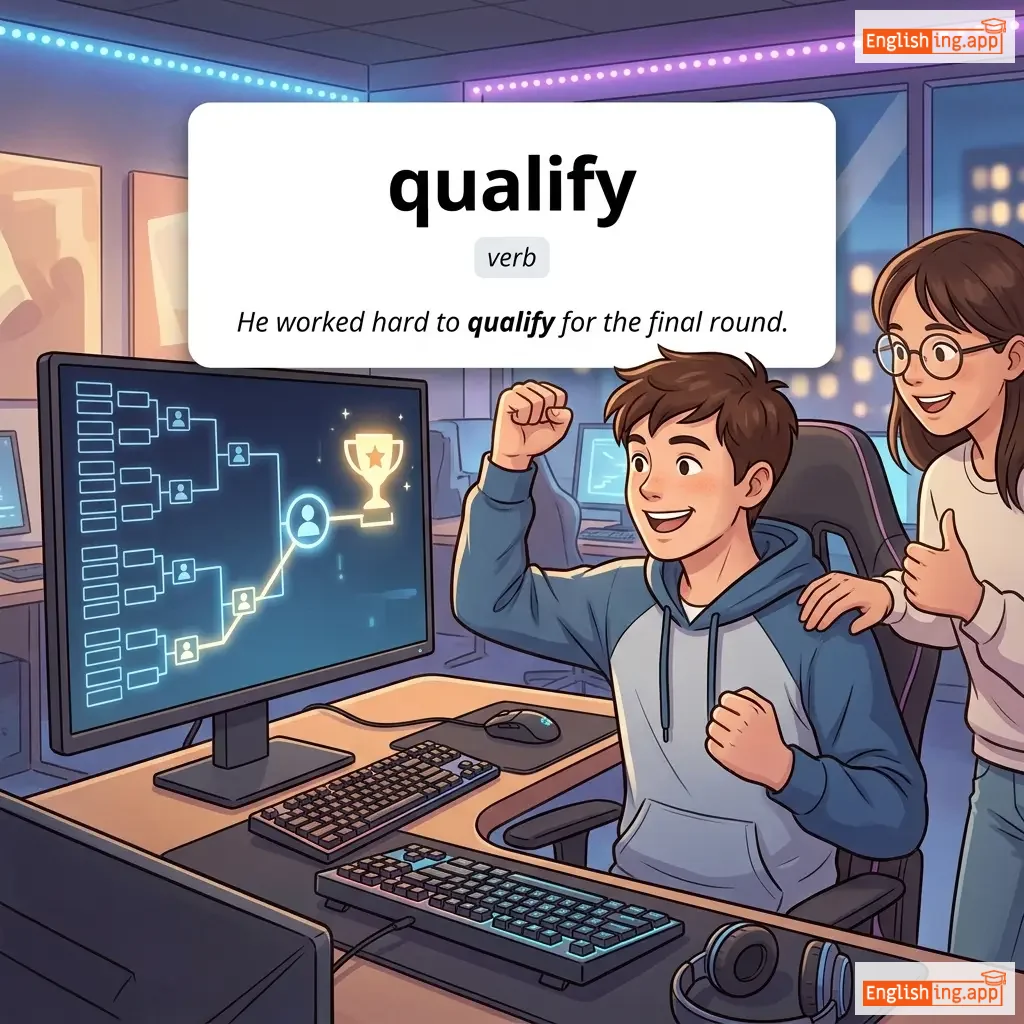
qualify definition card — visual illustration of the meaning
verb
/ˈkwɒlɪfaɪ/
योग्य होना (yogya hona)

to meet the requirements or conditions for something

"He worked hard to qualify for the final round."

"उसने फाइनल राउंड के लिए क्वालिफाई करने के लिए कड़ी मेहनत की।" (Usne final round ke liye qualify karne ke liye kadi mehnat ki.)
adjective
/ˈkwɑː.lɪ.teɪ.tɪv/
गुणात्मक (gunatmak)

Relating to the quality or nature of something rather than its quantity.

"The study focused on the qualitative aspects of customer feedback."

"अध्यान ने ग्राहक प्रतिक्रिया के गुणात्मक पहलुओं पर ध्यान केंद्रित किया।" (Adhyaan ne grahak pratikriya ke gunatmak pehluon par dhyan kendrit kiya.)
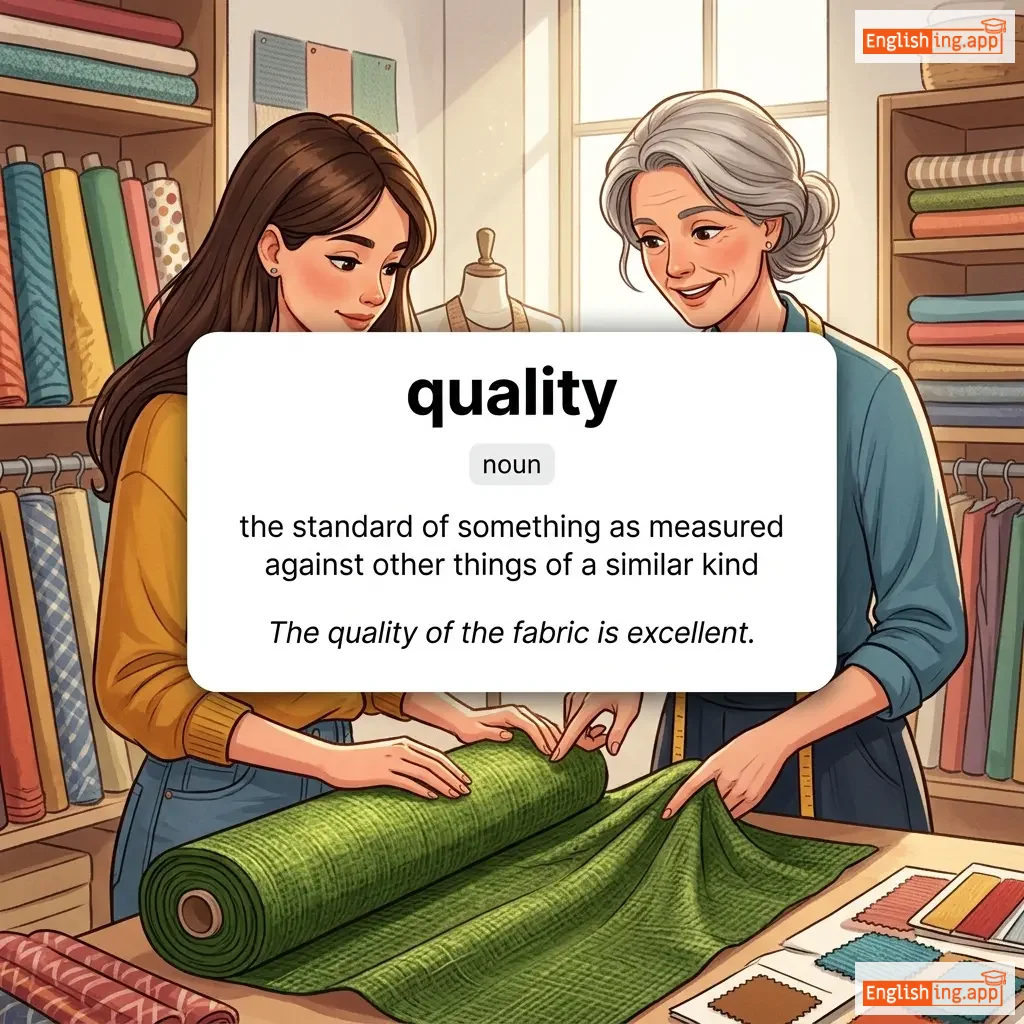
quality definition card — visual illustration of the meaning
noun
/ˈkwɒləti/
गुणवत्ता (gunwatta)

the standard of something as measured against other things of a similar kind

"The quality of the fabric is excellent."

"फैब्रिक की गुणवत्ता उत्कृष्ट है।" (Fabric ki gunwatta utkṛṣṭ hai.)
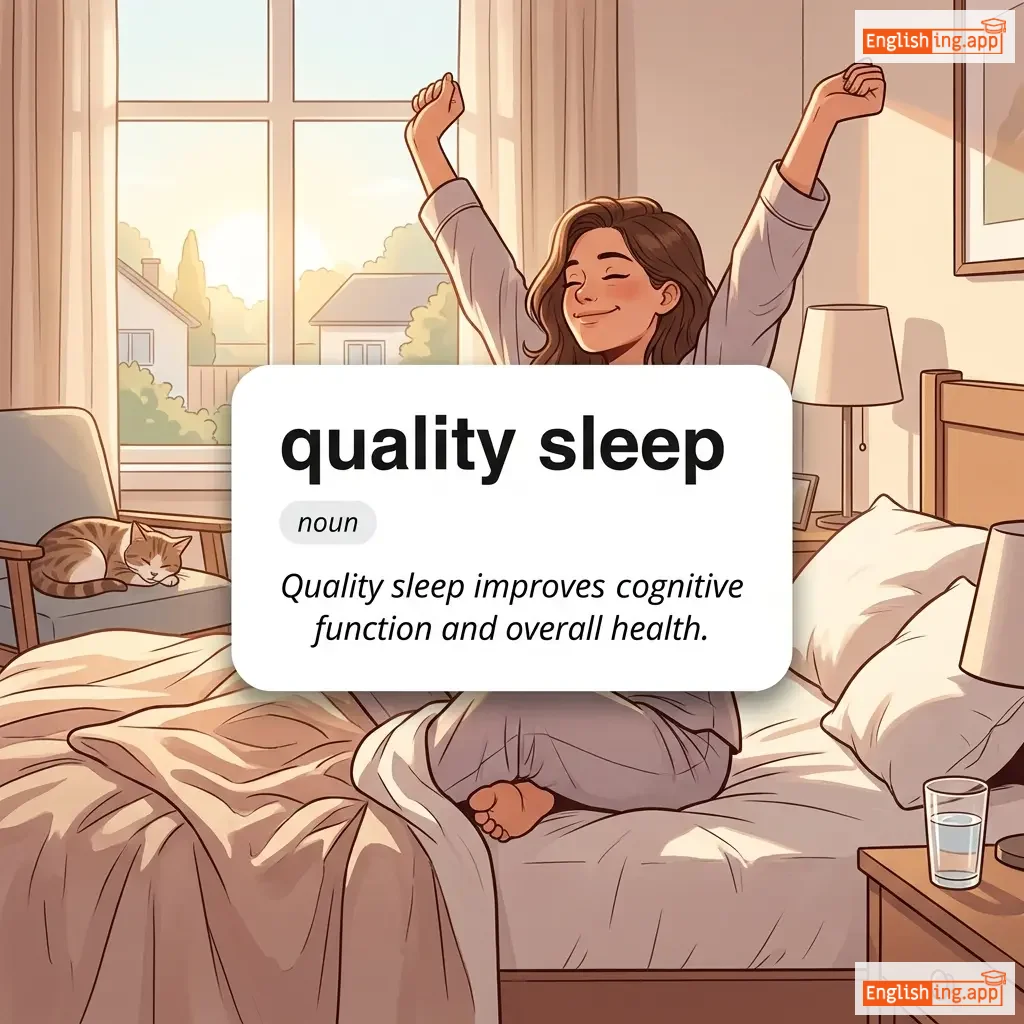
quality sleep definition card — visual illustration of the meaning
noun
ˈkwɒlɪti sliːp
गुणवत्ता नींद (gunwatta neend)

Deep and healthy sleep that is adequate and restorative, ensuring physical and mental well-being

"Quality sleep improves cognitive function and overall health."

"गुणवत्ता नींद संज्ञानात्मक कार्यक्षमता और समग्र स्वास्थ्य में सुधार करती है।" (Gunwatta neend sangyanatmak karyakshamata aur samagra swasthya mein sudhaar karti hai.)
quality time definition card — visual illustration of the meaning
noun
/ˈkwɒl.ɪ.ti taɪm/
गुणवत्ता समय (gunwatta samay)

Time spent giving someone your full attention in order to strengthen your relationship with them.

"Spending quality time with family enhances relationships."

"परिवार के साथ गुणवत्तापूर्ण समय बिताने से रिश्तों में सुधार होता है।" (Parivar ke saath gunwattapurn samay bitane se rishton mein sudhaar hota hai.)
noun
/kwɑːm/
संदेह (sandeh)

a feeling of doubt, worry, or fear about something

"She had no qualm about speaking her mind."

"उसे अपनी बात कहने में कोई संकोच नहीं था।" (Use apni baat kehne mein koi sankoch nahi tha.)
noun (plural)
/kwɑːmz/
संदेह (sandeh)

feelings of doubt, worry, or uneasiness

"He had serious qualms about accepting the offer."

"उसे प्रस्ताव स्वीकार करने पर गंभीर संदेह था।" (Use prastaav sveekar karne par gambheer sandeh tha.)
noun
/ˈkwɒndəri/
दुविधा (duvidha)

a state of uncertainty or confusion about what to do

"He was in a quandary about whether to accept the job offer."

"वह नौकरी के प्रस्ताव को स्वीकार करे या नहीं, इसके बारे में वह उलझन में था." (vah naukri ke prastaav ko svikaar kare ya nahin, is baare mein vah uljhan mein tha)
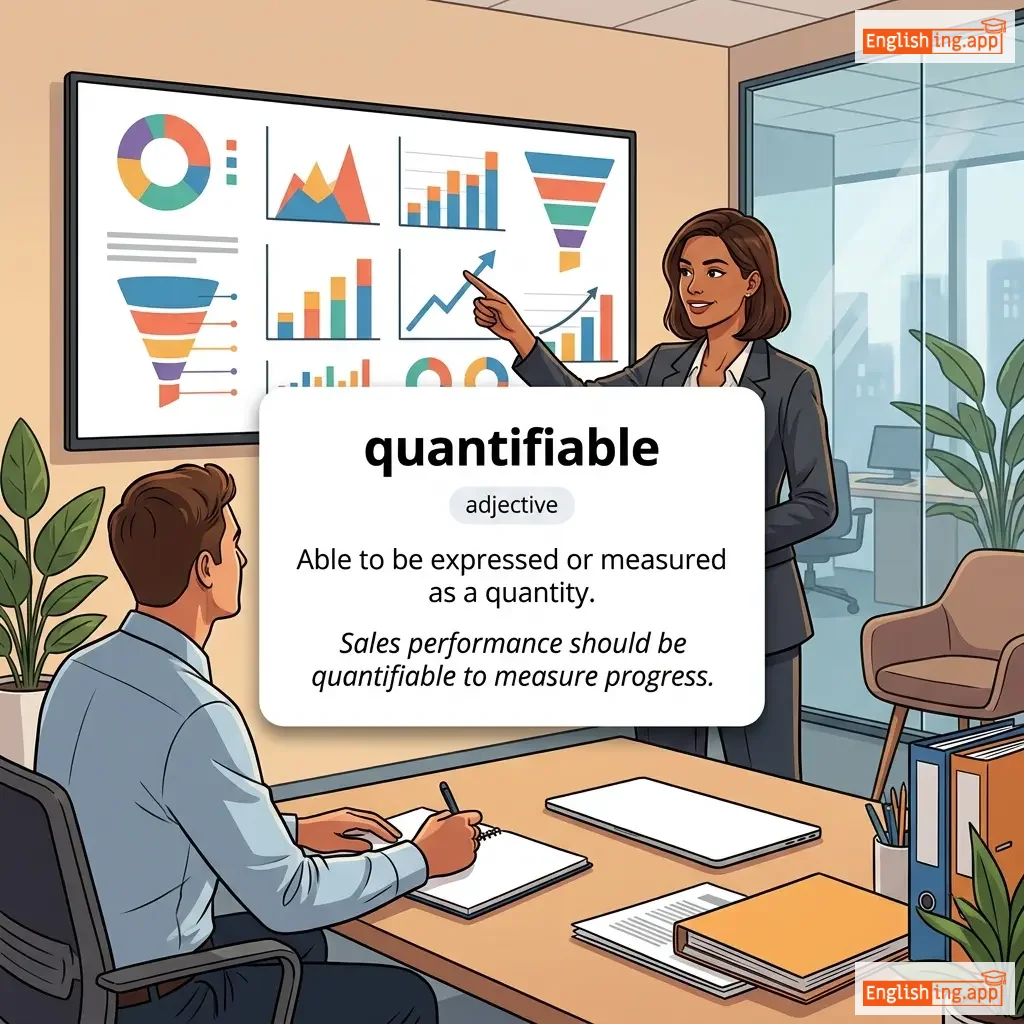
quantifiable definition card — visual illustration of the meaning
adjective
ˈkwɒn.tɪ.faɪ.ə.bəl
मापने योग्य (quantifaaybal)

Able to be expressed or measured as a quantity.

"Sales performance should be quantifiable to measure progress."

"बिक्री प्रदर्शन को प्रगति मापने के लिए माप योग्य होना चाहिए." (bikri pradarshan ko pragati maapne ke liye maap yogya hona chahiye)
adjective
/ˈkwɑːn.tə.teɪ.tɪv/
मात्रात्मक (matratmak)

Relating to the measurement or amount of something.

"The report included quantitative data on population growth."

"रिपोर्ट में जनसंख्या वृद्धि पर मात्रात्मक डेटा शामिल था।" (Report mein jansankhya vruddhi par matratmak data shamil tha.)
noun
/ˈkwɒn.tə.ti/
मात्रा (maatra)

An amount or number of something.

"The shop ordered a large quantity of rice."

"दुकान ने चावल की बड़ी मात्रा ऑर्डर की थी।" (Dukaan ne chaawal ki badi maatra order ki thi.)
noun/verb
/ˈkwɒr.ən.tiːn/
संगरोध (sangrodh)

A period of isolation to prevent the spread of disease.

"The travelers were placed in quarantine for two weeks."

"यात्रियों को दो सप्ताह के लिए संगरोध में रखा गया था।" (Yatriyon ko do saptah ke liye sangrodh mein rakha gaya tha.)
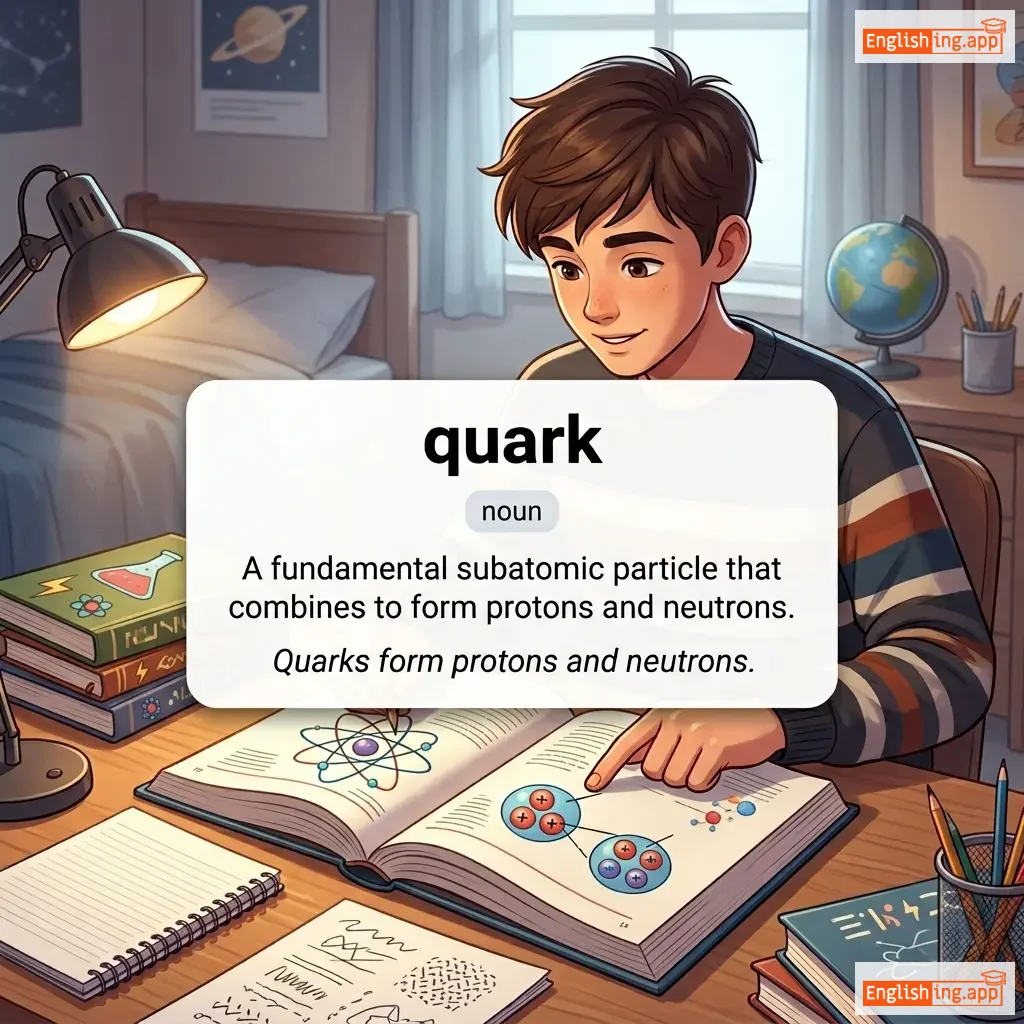
quark definition card — visual illustration of the meaning
noun
kwɔːrk
क्वार्क (kvark)

A fundamental subatomic particle that combines to form protons and neutrons.

"Quarks form protons and neutrons."

"क्वार्क प्रोटॉन और न्यूट्रॉन बनाते हैं।" (Kvark proton aur neutron banate hain.)
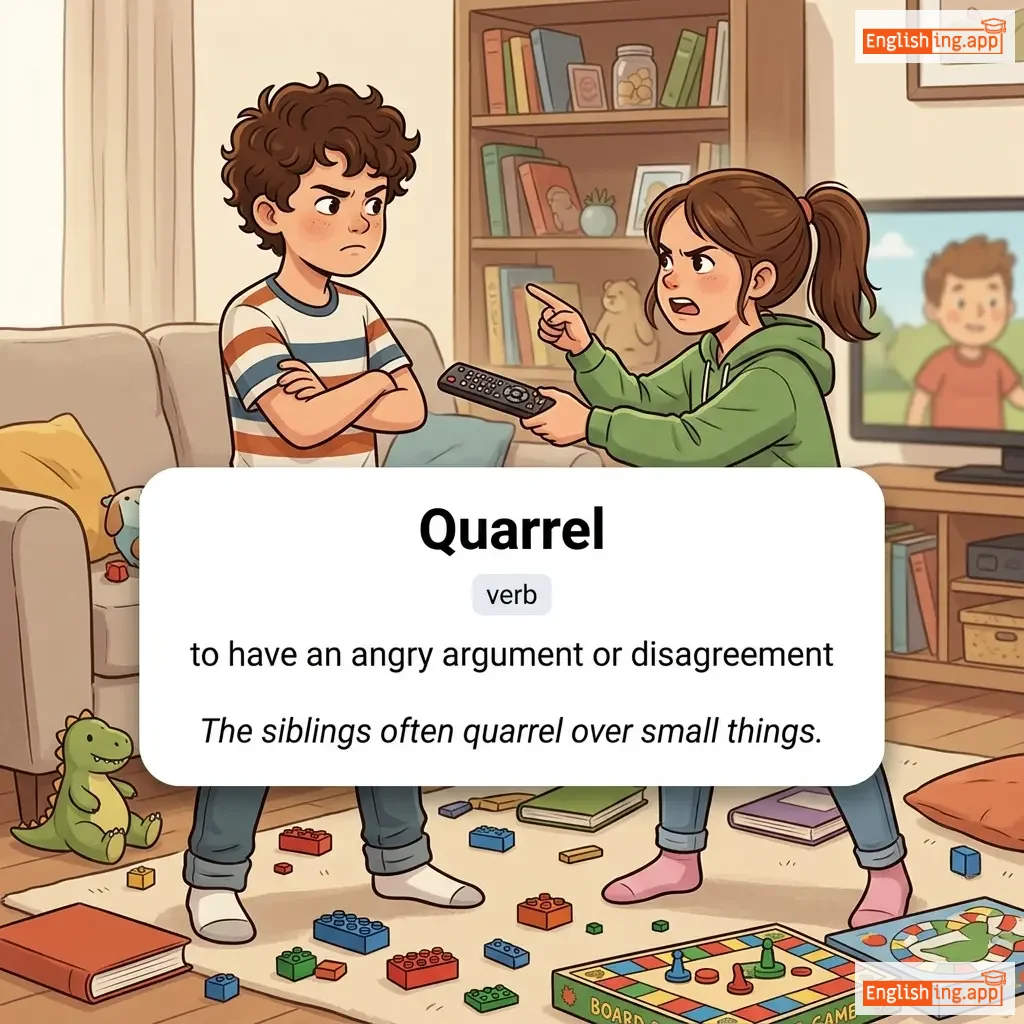
Quarrel definition card — visual illustration of the meaning
noun
/ˈkwɒr.əl/
विवाद; झगड़ा (vivaad; jhagra)

an angry argument or disagreement between people

"They had a quarrel about money and stopped talking to each other."

"वे पैसे को लेकर विवाद कर रहे थे और एक दूसरे से बात करना बंद कर दिया था।" (ve paise ko lekar vivaad kar rahe the aur ek doosre se baat karna band kar diya tha.)
adjective
/ˈkwɒr.əl.səm/
झगड़ालू (jhagdaalu)

Inclined to argue or fight.

"He became quarrelsome after losing the game."

"वह खेल हारने के बाद झगड़ालू हो गया।" (vah khel haarne ke baad jhagdaalu ho gaya.)
noun/verb
/ˈkwɒr.i/
खनिज खदान / शिकार (khani khadan / shikar)

A place where stone or minerals are extracted; also means prey when hunted.

"The workers quarried limestone from the hill."

"कर्मचारियों ने पहाड़ से चूना पत्थर निकाला।" (Karmachariyon ne pahar se chuna pathar nikala.)
noun/verb
/ˈkwɔː.tər/
चतुर्थांश / क्वार्टर (chaturthansh / quarter)

One-fourth part of something; also used for housing or accommodating.

"She paid a quarter of the total bill."

"उसने कुल बिल का एक-चतुर्थांश अदा किया।" (Usne kul bil ka ek-chaturthansh ada kiya.)
noun
/ˈkwɔːtərˌbæk/
क्वार्टरबैक (quarterback)

the player who directs a team’s offense in American football

"The quarterback threw a perfect pass."

"क्वार्टरबैक ने एक परफेक्ट पास फेंका।" (Quarterback ne ek perfect pass feka.)
adjective, adverb, noun
/ˈkwɔːrtərli/
तिमाही (timaahi)

Happening every three months; occurring four times a year.

"The company publishes a quarterly report on its earnings."

"कंपनी अपनी कमाई पर एक तिमाही रिपोर्ट प्रकाशित करती है।" (Kampani apni kamaai par ek timaahi report prakaashit karti hai.)
noun
/ˈkwɔː.tərz/
आवास; निर्धारित स्थान; सैन्य आवास (aavaas; nirdharit sthan; sainik aavaas)

living accommodation; lodgings; military housing

"The soldiers returned to their quarters after the training exercise."

"सैन्यकर्मी प्रशिक्षण अभ्यास के बाद अपने आवास लौटे।" (sainyakarmee prashikshan abhyas ke baad apne aavaas lautay)
noun
/kwɔːrˈtɛt/
चतुष्कोण (chatushkona)

A group of four people playing music or singing together.

"The string quartet performed beautifully at the concert."

"स्ट्रिंग चतुष्कोण ने संगीत समारोह में सुंदर प्रदर्शन किया।" (String chatushkona ne sangeet samaroh mein sundar pradarshan kiya.)
noun
/ˈkwɔːrtoʊ/
चार पन्नों वाली किताब (chaar pannon wali kitaab)

A book size resulting from folding each printed sheet into four leaves (eight pages).

"The library has rare Shakespeare quartos."

"पुस्तकालय में दुर्लभ शेक्सपियर क्वार्टो हैं।" (Pustakalay mein durlabh Shakespeare quarto hain.)
verb
/kwɑːʃ/
रद्द करना (radd karna)

To reject or void something legally or to put an end to something forcefully.

"The court quashed the decision due to lack of evidence."

"कोर्ट ने सबूतों की कमी के कारण निर्णय को रद्द कर दिया।" (Court ne sabooton ki kami ke karan nirnay ko radd kar diya.)
verb, noun
/ˈkweɪvər/
काँपना (kaampna)

To shake or tremble in speaking, typically through nervousness or emotion.

"Her voice quavered as she spoke before the crowd."

"उसकी आवाज़ कांप रही थी जब उसने भीड़ के सामने बात की।" (Uski awaaz kaamp rahi thi jab usne bheed ke samne baat ki.)
noun
/kiː/
घाट (ghat)

A platform lying alongside or projecting into water for loading and unloading ships.

"The cargo was unloaded at the quay."

"कार्गो को घाट पर उतारा गया था।" (Cargo ko ghat par utara gaya tha.)
adjective
/ˈkwiːzi/
बेहद उल्टी जैसा महसूस होना (behad ulti jaisa mehsoos hona)

Feeling sick to one's stomach; nauseated.

"She felt queasy after the long boat ride."

"वह लंबी नाव की सवारी के बाद अस्वस्थ महसूस कर रही थी।" (Wah lambi naav ki sawaari ke baad aswasth mehsoos kar rahi thi.)
noun
/kwiːn/
रानी (rani)

a female ruler of a country or the wife of a king

"The queen addressed her people with grace."

"रानी ने अपने लोगों से शांति से बात की।" (Rani ne apne logon se shanti se baat ki.)
noun
/kwiːn kreɪp ˈmɜːrtəl/
क्वीन क्रेप मर्टल (queen crep mertel)

A flowering tree with colorful, crepe-like flowers, scientifically known as Lagerstroemia

"The Queen crape myrtle bloomed beautifully in the garden with its purple flowers."

"क्वीन क्रेप मर्टल बगिया में अपने बैंगनी फूलों के साथ खूबसूरती से खिला।" (queen crep mertel bagiya mein apne beguni phoolon ke saath khoobsurati se khila.)
adjective
/kwɪər/
अजीब (ajeeb)

Strange, odd, or unusual.

"He had a queer feeling that something was wrong."

"उसे यह अजीब सा महसूस हुआ कि कुछ गलत था।" (Use yeh ajeeb sa mehsoos hua ki kuch galat tha.)
verb
/kwɛl/
दबाना (dabaana)

To suppress or put an end to something, usually by force.

"The police were called to quell the violent protest."

"हिंसक विरोध को दबाने के लिए पुलिस को बुलाया गया था।" (Hinsak virodh ko dabaane ke liye police ko bulaaya gaya tha.)
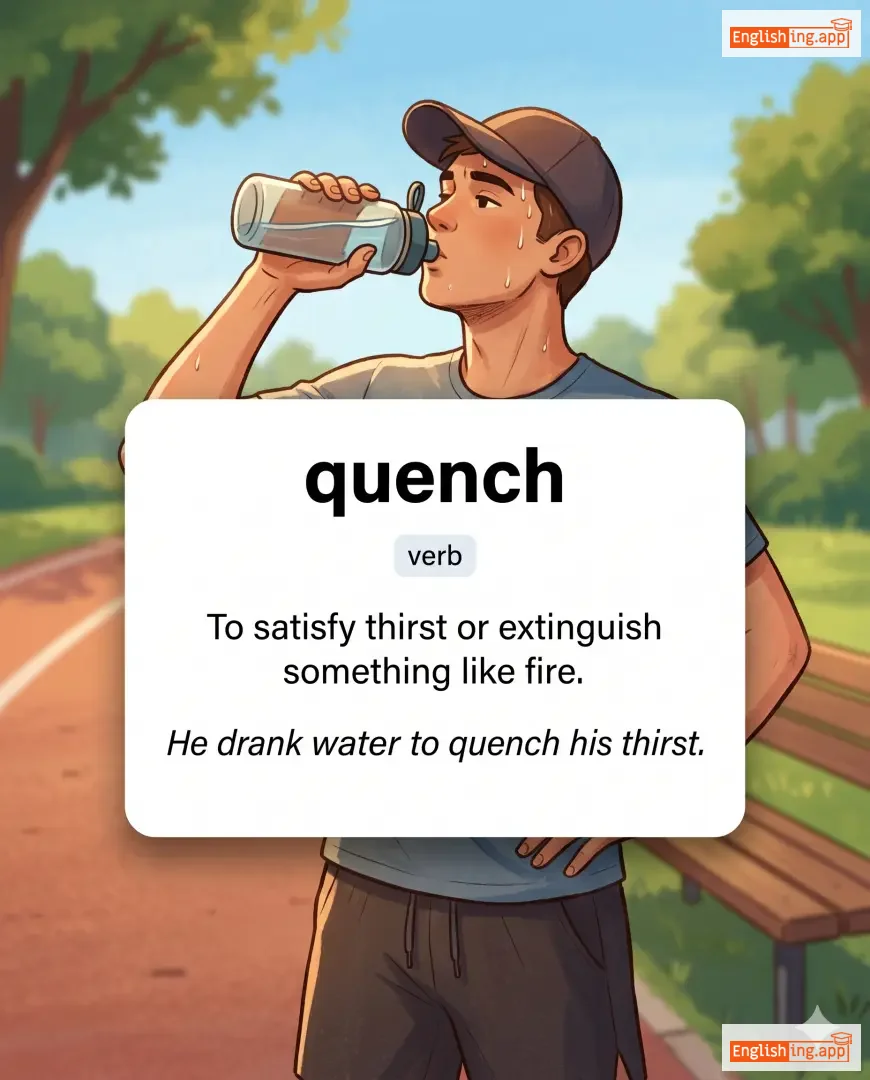
quench definition card — visual illustration of the meaning
verb
/kwɛntʃ/
प्यास बुझाना (pyaas bujhaana)

To satisfy thirst or extinguish something like fire.

"He drank water to quench his thirst."

"उसने अपनी प्यास बुझाने के लिए पानी पिया।" (Usne apni pyaas bujhaane ke liye paani piya.)
verb
/ˈkwentʃɪŋ/
तृष्णा शान्त करना / आग बुझाना (trishna shant karna / aag bujhana)

The act of satisfying thirst or extinguishing something like fire.

"Drinking cold water was quenching her thirst."

"ठंडी पानी पीना उसकी तृष्णा शान्त कर रहा था।" (Thandi pani peena uski trishna shant kar raha tha.)
adjective
/ˈkwɛrʊləs/
शिकायती (shikayati)

Complaining in a whining or irritable manner.

"The querulous customer kept finding fault with every detail."

"शिकायती ग्राहक हर विवरण में दोष निकाल रहा था।" (Shikayati grahak har vivaran mein dosh nikaal raha tha.)
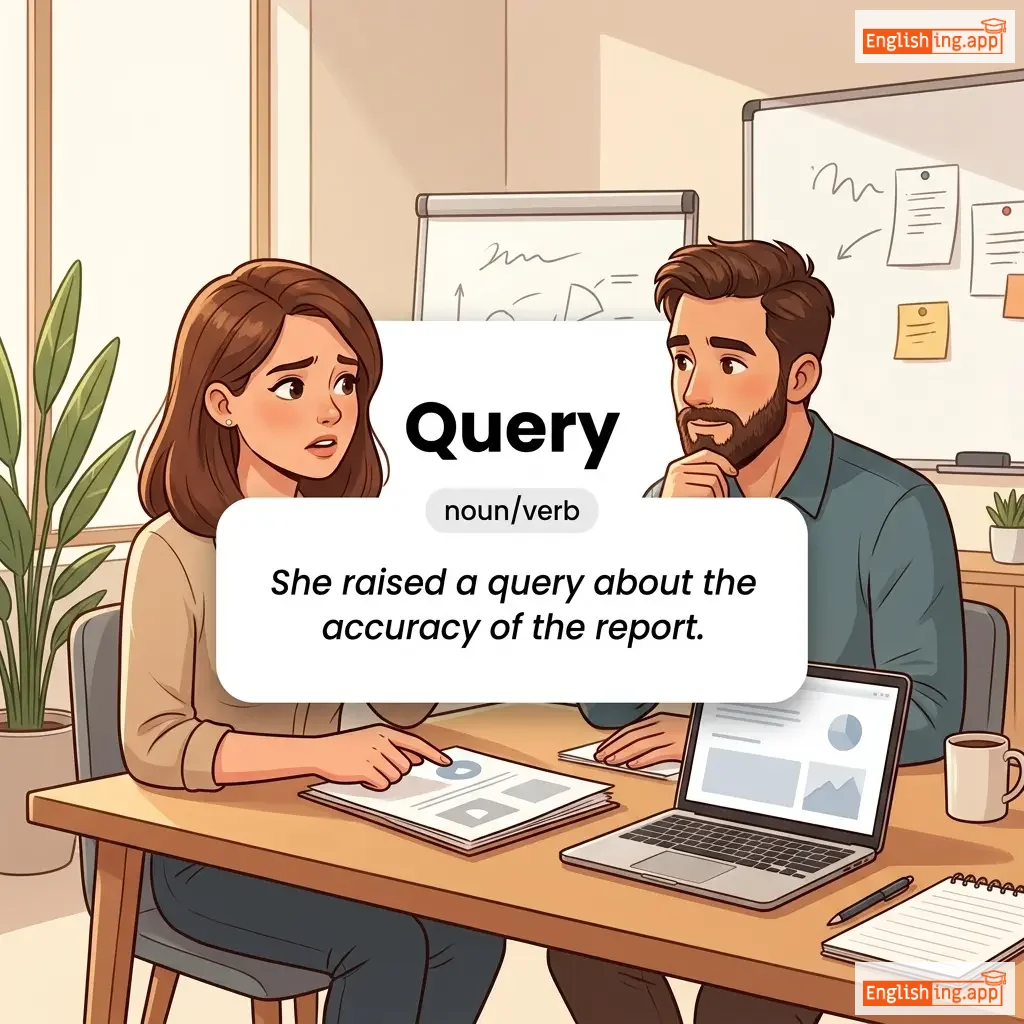
Query definition card — visual illustration of the meaning
noun/verb
/ˈkwɪəri/
प्रश्न (prashna)

A question, especially one addressed to an official or organization; to ask a question or express doubt.

"She raised a query about the accuracy of the report."

"उसने रिपोर्ट की सटीकता के बारे में एक प्रश्न उठाया।" (Usne report ki sathikta ke baare mein ek prashna uthaya.)
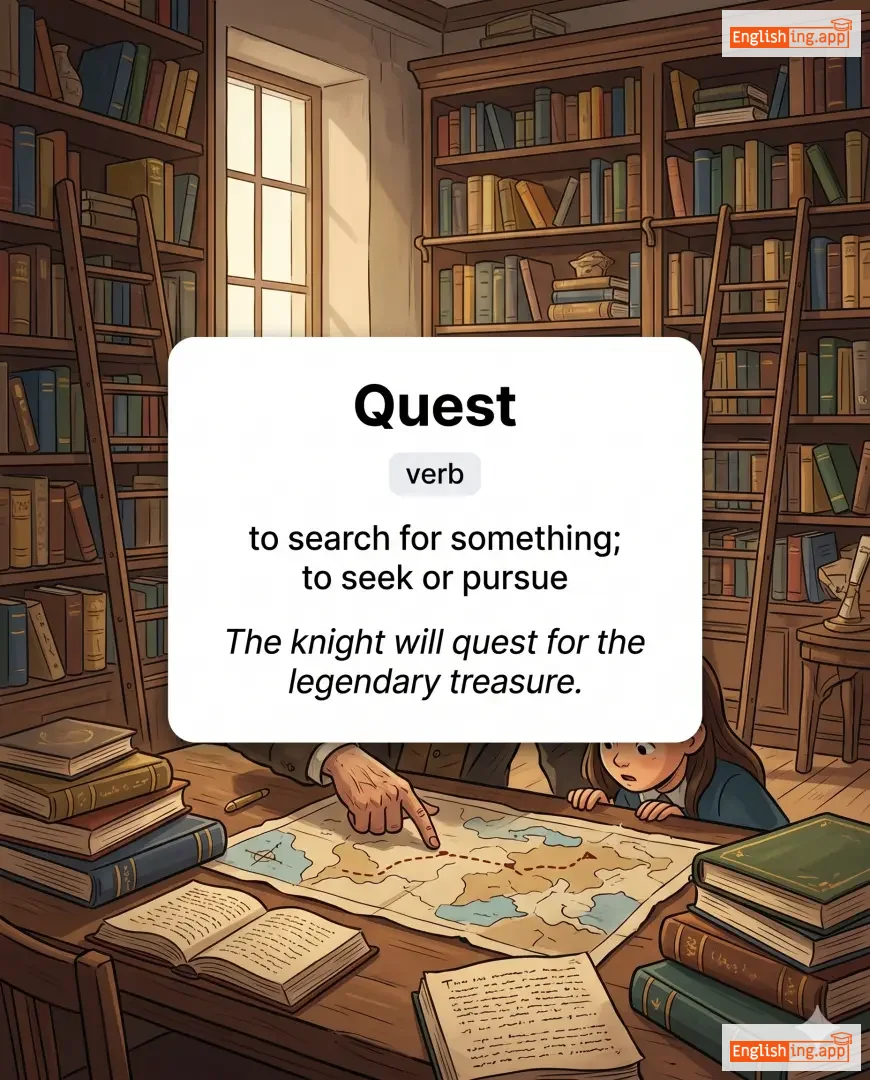
Quest definition card — visual illustration of the meaning
noun
/kwest/
खोज, अन्वेषण (khonj, anvashan)

a long search for something that is difficult to find

"They went on a quest to find the lost treasure."

"वे खोई हुई खजाने को खोजने के लिए एक यात्रा पर गए।" (ve khoi hui khazane ko khojne ke liye ek yatra par gaye.)
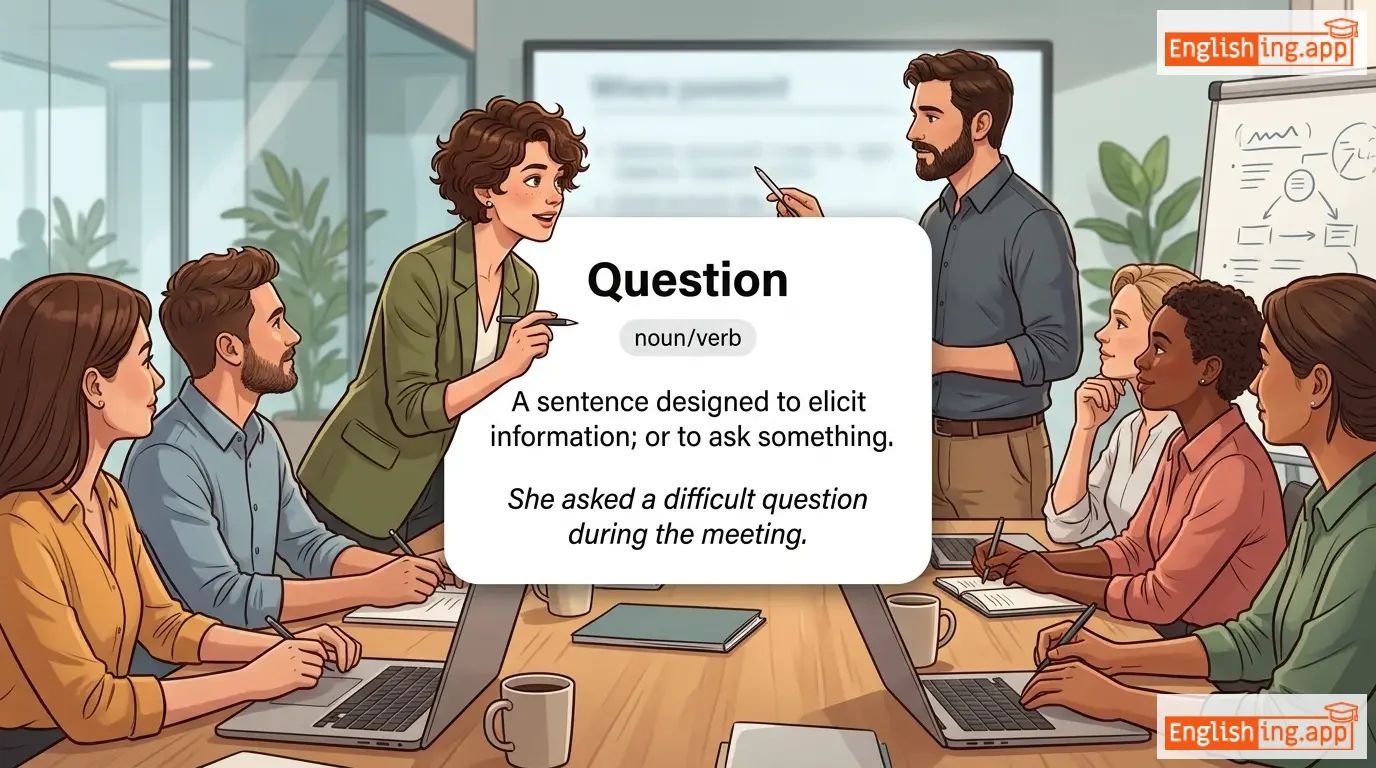
Question definition card — visual illustration of the meaning
noun/verb
/ˈkwes.tʃən/
प्रश्न (prashna)

A sentence designed to elicit information; or to ask something.

"She asked a difficult question during the meeting."

"उसने बैठक के दौरान एक कठिन प्रश्न पूछा।" (Usne baithak ke dauran ek kathin prashna poocha.)
adjective
/ˈkwestʃənəbl/
संदेहजनक (kveshchanel)

doubtful; dubious; suspicious; open to doubt or suspicion

"His questionable business practices led to an investigation."

"उनकी संदिग्ध व्यापारिक प्रथाओं के कारण एक जांच शुरू हुई।" (unki sandigdh vyaparik prathao ke karan ek jaanch shuru hui.)
noun
/ˌkwes.tʃəˈneər/
प्रश्नावली (prashnavali)

a set of written questions used to collect information or opinions

"Participants filled out a detailed questionnaire about their habits."

"प्रतिभागियों ने अपनी आदतों के बारे में एक विस्तृत प्रश्नावली पूरी की।" (Pratibhagiyon ne apni aadaton ke baare mein ek vistaarit prashnavali poori ki.)
🧍‍♂️🧍‍♀️

Queue (क्यू)

noun/verb
/kjuː/
लाइन (line)

A line or sequence of people or vehicles awaiting their turn; to wait in line.

"People queued outside the theater for tickets."

"लोग थिएटर के बाहर टिकट के लिए क्यू में खड़े थे।" (Log theater ke baahar ticket ke liye queue mein khade the.)