question (kwes.chon)

noun/verb
/ˈkwes.tʃən/
質問 (shitsumon)

意味

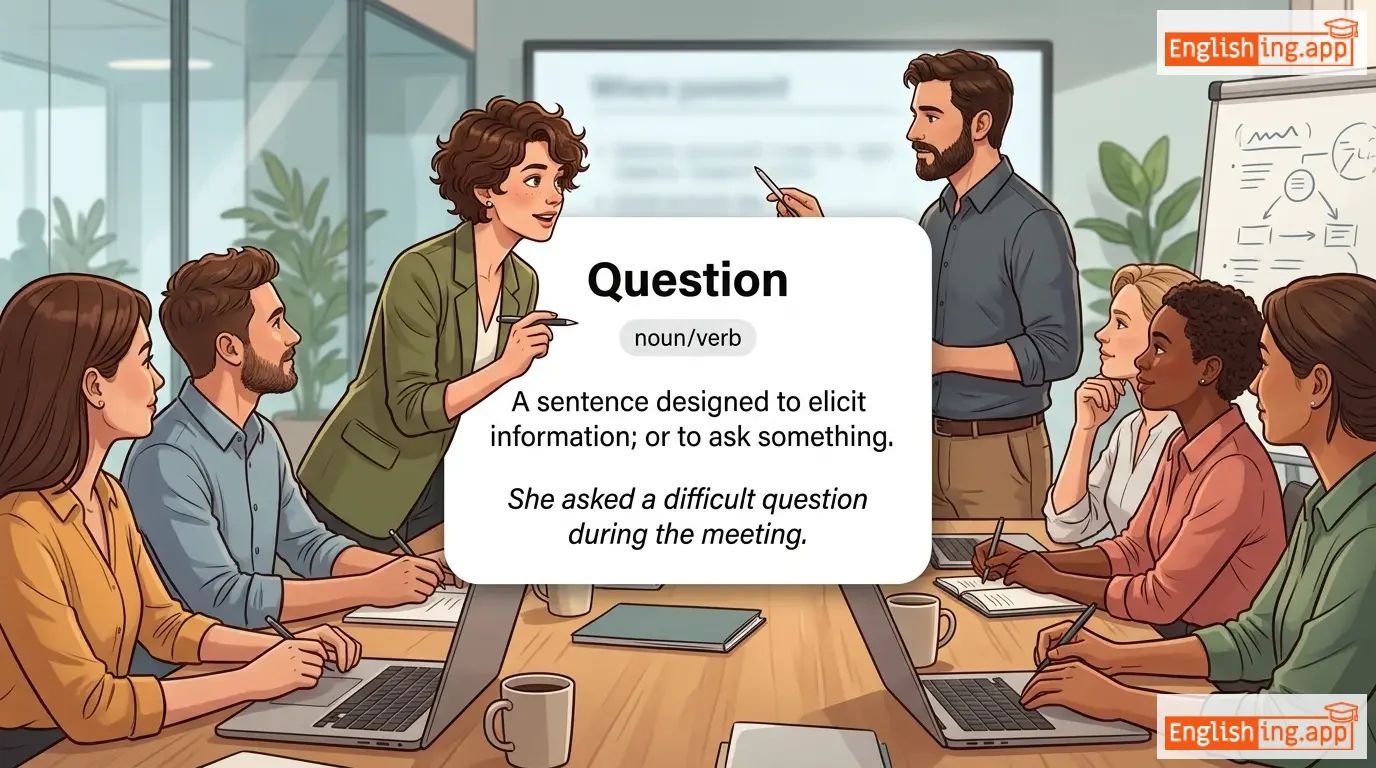
A sentence designed to elicit information; or to ask something.
to ask someone about something; to doubt or challenge
a sentence asking for information or a response; an interrogative expression
意味の翻訳
情報を得るために設計された文; または何かを尋ねるため。
joho wo eru tame ni sekkei sareta bun; mata wa nanika wo tazuneru tame.

例文

She asked a difficult question during the meeting.

彼女は会議中に難しい質問をしました。
Kanojo wa kaigi chuu ni muzukashii shitsumon wo shimashita.

The police will question the witness about the incident.

警察は事件について証人に質問します。
Keisatsu wa jiken ni tsuite shōnin ni shitsumon shimasu.

The teacher asked a difficult question during the exam.

先生は試験中に難しい質問をしました。
Sensei wa shiken-chu ni muzukashii shitsumon o shimashita.

表現例

beyond question
疑いの余地なく
utagai no yochi naku

同義語

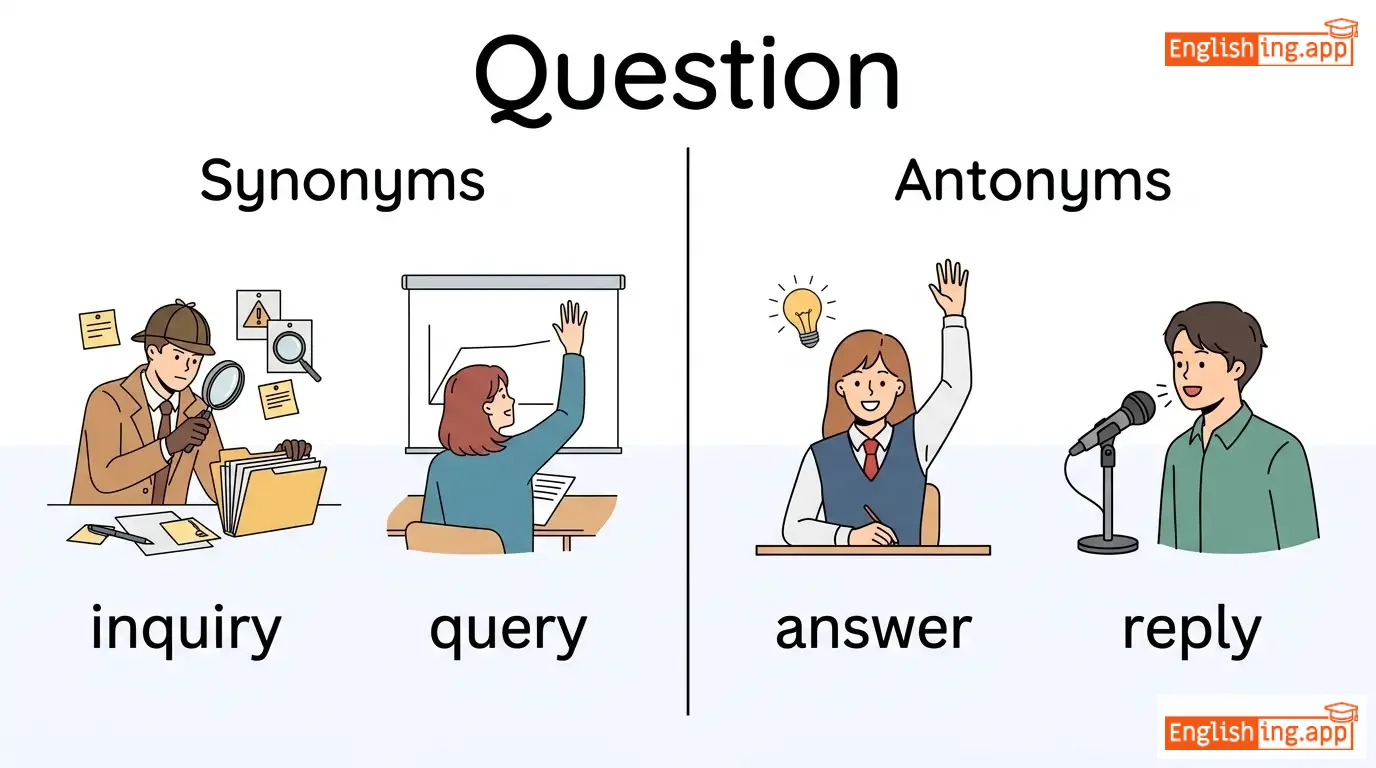
inquiry, query, ask, interrogate, inquire, challenge, interrogation, problem
エントリー 1
inquiry, query, ask, interrogate
エントリー 2
ask, interrogate, inquire, challenge
エントリー 3
inquiry, query, interrogation, problem

対義語

answer, reply, accept, statement, declaration, response
エントリー 1
answer, reply
エントリー 2
answer, reply, accept
エントリー 3
answer, statement, declaration, response

コロケーション

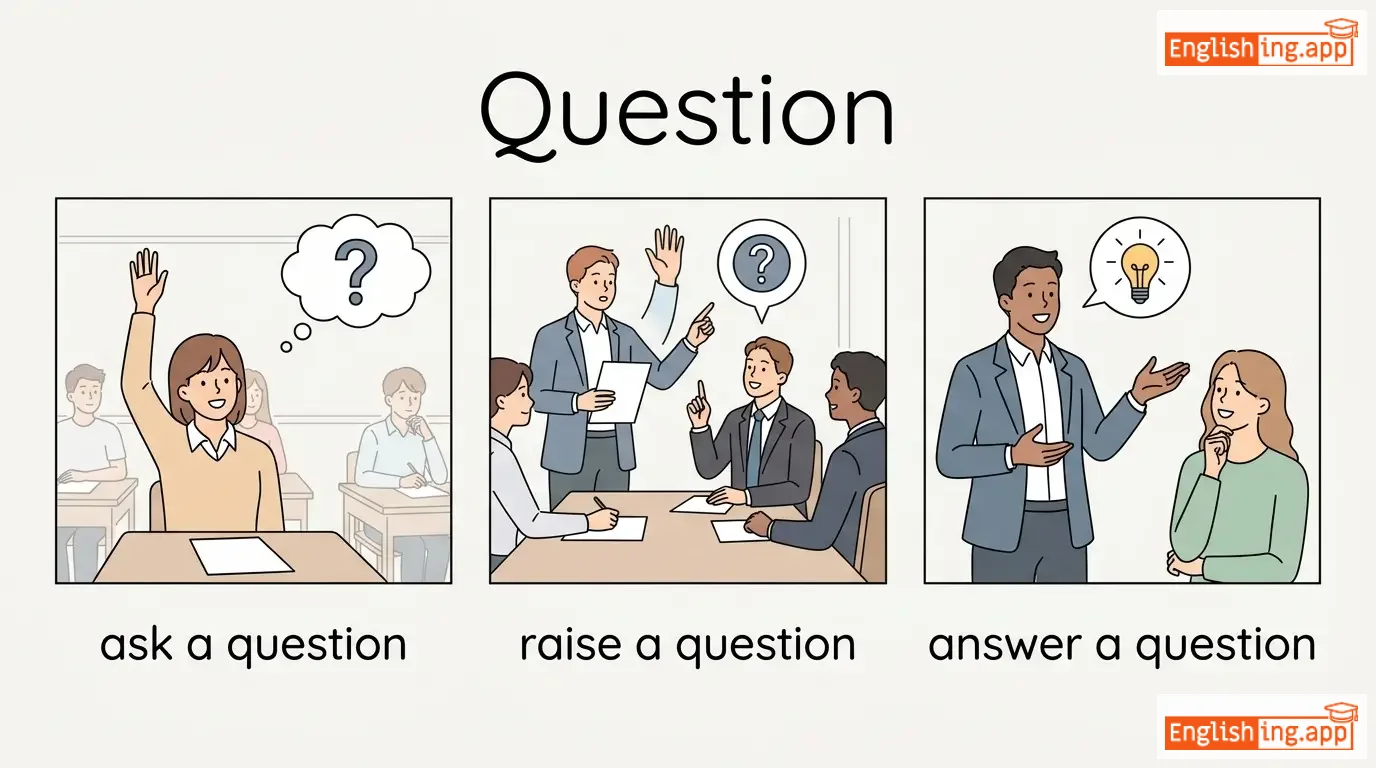
ask a question, raise a question, answer a question, difficult question, question authority, question motives, question decisions, question witnesses, question validity, important question, open question
エントリー 1
ask a question, raise a question, answer a question, difficult question
エントリー 2
question authority, question motives, question decisions, question witnesses, question validity
エントリー 3
ask a question, difficult question, important question, open question

その他の例文

Ma'am, I had a small question regarding the presentation.

先生、プレゼンテーションについて小さな質問がありました。
sensei, purezenteshon ni tsuite chiisana shitsumon ga arimashita.

You have to read through the book to answer the questions.

質問に答えるためには、その本を最初から最後まで読まなければなりません。
shitsumon ni kotaeru tame ni wa sono hon o saisho kara saigo made yomanakereba narimasen

The teacher doesn’t explain unless students ask questions.

教師は、生徒が質問しない限り、説明しません。
Kyōshi wa, seito ga shitsumon shinai kagiri, setsumei shimasen.

Did you ask any question to the teacher about the previous lesson?

あなたは前回の授業について先生に質問しましたか?
Anata wa zenkai no jugyō ni tsuite sensei ni shitsumon shimashita ka?

Did you ask any question to the coach about the basketball practice?

バスケットボールの練習についてコーチに何か質問しましたか?
Basukettobōru no renshū ni tsuite kōchi ni nanika shitsumon shimashita ka?

Well, I started off well. But then they asked me a tricky question, and I got really nervous.

まあ、私はうまく始めました。でもその後、彼らは私に難しい質問をして、私は本当に緊張しました。
Mā, watashi wa umaku hajimemashita. Demo sono ato, karera wa watashi ni muzukashī shitsumon o shite, watashi wa hontōni kinchō shimashita.

A grandmother teaches her grandchild to cook a traditional meal in her cozy kitchen using a recipe she learned as a young girl from her own mother while sharing stories about the family that make the child laugh and ask more questions about the past

祖母が居心地の良いキッチンで少女時代に自分の母親から学んだレシピを使って孫に伝統的な料理を作ることを教えながら子供を笑わせ過去についてもっと質問させる家族についての物語を共有する
Sobo ga igokochi no yoi kicchin de shoujo jidai ni jibun no hahaoya kara mananda reshipi wo tsukatte mago ni dentouteki na ryouri wo tsukuru koto wo oshie nagara kodomo wo warawase kako ni tsuite motto shitsumon saseru kazoku ni tsuite no monogatari wo kyouyuu suru

A grandmother teaches her grandchild to cook a traditional meal in her cozy kitchen using a recipe she learned as a young girl from her own mother while sharing stories about the family that make the child laugh and ask more questions about the past creating memories that will last a lifetime

祖母が居心地の良いキッチンで少女時代に自分の母親から学んだレシピを使って孫に伝統的な料理を作ることを教えながら子供を笑わせ過去についてもっと質問させる家族についての物語を共有し一生残る思い出を作る
Sobo ga igokochi no yoi kicchin de shoujo jidai ni jibun no hahaoya kara mananda reshipi wo tsukatte mago ni dentouteki na ryouri wo tsukuru koto wo oshie nagara kodomo wo warawase kako ni tsuite motto shitsumon saseru kazoku ni tsuite no monogatari wo kyouyuu shi isshou nokoru omoide wo tsukuru

A librarian organizes a reading event at the community library for children and their parents every Saturday morning by selecting fun and educational books and reading them aloud in a cheerful voice while the children sit on colorful cushions and listen with big curious eyes asking questions about the characters and the story

司書が毎週土曜日の朝、地域の図書館で子供たちとその両親のために、楽しく教育的な本を選んで明るい声で読み聞かせることによって読書イベントを主催し、その間子供たちは色とりどりのクッションに座って大きな好奇心に満ちた目で聞きながら、登場人物や物語について質問する
Shisho ga maishuu doyoubi no asa, chiiki no toshokan de kodomotachi to sono ryoushin no tame ni, tanoshiku kyouikuteki na hon wo erande akarui koe de yomikikaseru koto ni yotte dokusho event wo shusai shi, sono aida kodomotachi wa irotoridori no cushion ni suwatte ookina koukishin ni michita me de kikinagara, toujoujinbutsu ya monogatari ni tsuite shitsumon suru

A grandmother teaches her grandchild to cook a traditional meal in her cozy kitchen using a recipe she learned as a young girl from her own mother while sharing stories about the family that make the child laugh and ask more questions about the past creating memories that will last a lifetime and keeping the family traditions alive for the next generation.

祖母が居心地の良いキッチンで少女時代に自分の母親から学んだレシピを使って孫に伝統的な料理を作ることを教えながら子供を笑わせ過去についてもっと質問させる家族についての物語を共有し一生残る思い出を作り次の世代のために家族の伝統を守り続ける。
Sobo ga igokochi no yoi kicchin de shoujo jidai ni jibun no hahaoya kara mananda reshipi wo tsukatte mago ni dentouteki na ryouri wo tsukuru koto wo oshie nagara kodomo wo warawase kako ni tsuite motto shitsumon saseru kazoku ni tsuite no monogatari wo kyouyuu shi isshou nokoru omoide wo tsukuri tsugi no sedai no tame ni kazoku no dentou wo mamori tsuzukeru.

関連語彙

a prize or recognition given for an achievement; to give a prize or recognition
The action of interfering with something in order to cause damage or make unauthorized alterations.
to determine the size, amount, or degree of something; a standard unit or plan
A small bag made of thin rubber or similar material that can be inflated with air or gas; as a verb,...
The feeling that someone or something is unworthy of respect; to regard with contempt.
disapproval or dislike; to regard with disapproval

さらに探索