

翻訳
過去
過去分詞
三人称単数
動名詞
意味
例文
例文の翻訳
同義語
対義語
コロケーション
ニーモニック

Swipe left or right, or use the buttons. Tap image to zoom.
例文の翻訳
単語
Lesson 338Lesson 338 - マスクトグル
|
絵文字
|
単語 | Images | 翻訳 | 過去 | 過去分詞 | 三人称単数 | 動名詞 | 意味 | 例文 | 例文の翻訳 | 表現例 | 表現例の意味 | 表現例の翻訳 | 同義語 | 対義語 | コロケーション | ニーモニック |
|---|---|---|---|---|---|---|---|---|---|---|---|---|---|---|---|---|---|
|
#10105
🚫
|
/prəˈhɪbɪt/
verb
(プロヒビット)
••••••
|
- •••••• |
禁止する
kinshi suru
••••••
|
prohibited
プロヒビテッド
••••••
|
prohibited
プロヒビテッド
••••••
|
prohibits
プロヒビッツ
••••••
|
prohibiting
プロヒビッティング
••••••
|
to formally forbid something by law, rule, or authority
••••••
|
Smoking is strictly prohibited inside the hospital.
病院内での喫煙は厳しく禁止されています。
••••••
|
病院内での喫煙は厳しく禁止されています。
Byōin-nai de no kitsuen wa kibishiku kinshi sareteimasu.
••••••
|
prohibit from
プロヒビット フロム
••••••
|
to forbid someone from doing something
••••••
|
何かをすることを禁止する
nanika o suru koto o kinshi suru
••••••
|
forbid, ban, restrict, disallow, prevent
••••••
|
allow, permit, approve
••••••
|
strictly prohibit, prohibit smoking, prohibit entry, prohibit use
••••••
|
Prohibitの意味は🚫 – 病院内での喫煙は禁止されています。
••••••
|
|
#10106
🚪
|
/kwɪt/
verb
(kwit)
••••••
|
|
やめる
yameru
••••••
|
quit
kwit
••••••
|
quit
kwit
••••••
|
quits
kwits
••••••
|
quitting
kwiting
••••••
|
To leave a place, job, or habit permanently.
••••••
|
He decided to quit his job after five years.
彼は5年後に仕事を辞めることを決めました。
••••••
|
彼は5年後に仕事を辞めることを決めました。
Kare wa 5-nen go ni shigoto o yameru koto o kimemashita.
••••••
|
quit cold turkey
突然習慣をやめる
••••••
|
to stop a habit suddenly and completely
••••••
|
突然習慣をやめる
Totsuzen shūkan o yameru
••••••
|
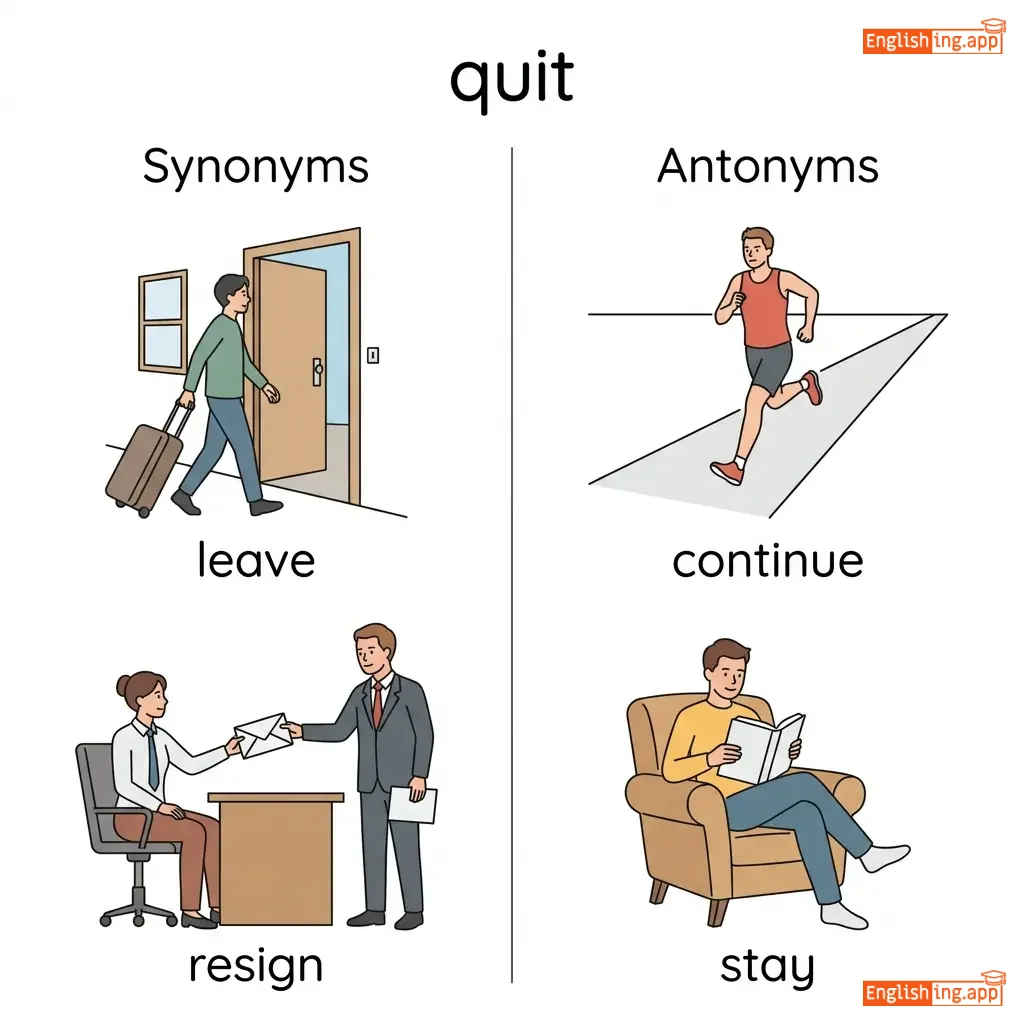
leave, resign, abandon, give up
••••••
|
continue, stay
••••••
|
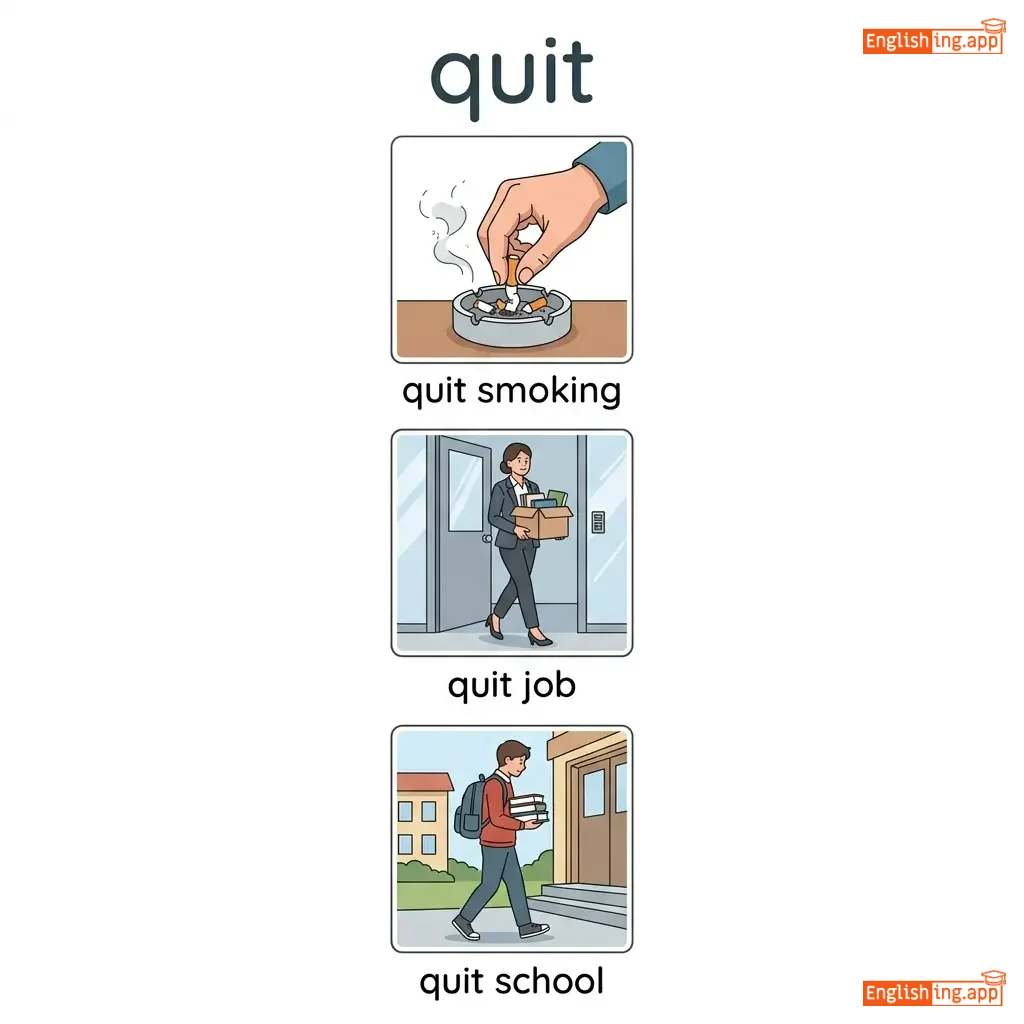
quit smoking, quit job, quit school, quit early
••••••
|
Quitはやめる – 仕事をやめる、習慣をやめる。
••••••
|
|
#10107
❓
|
/ˈkwes.tʃən/
noun/verb
(kwes.chon)
••••••
|
|
質問
shitsumon
••••••
|
questioned
kwes.chend
••••••
|
questioned
kwes.chend
••••••
|
questions
kwes.chons
••••••
|
questioning
kwes.choning
••••••
|
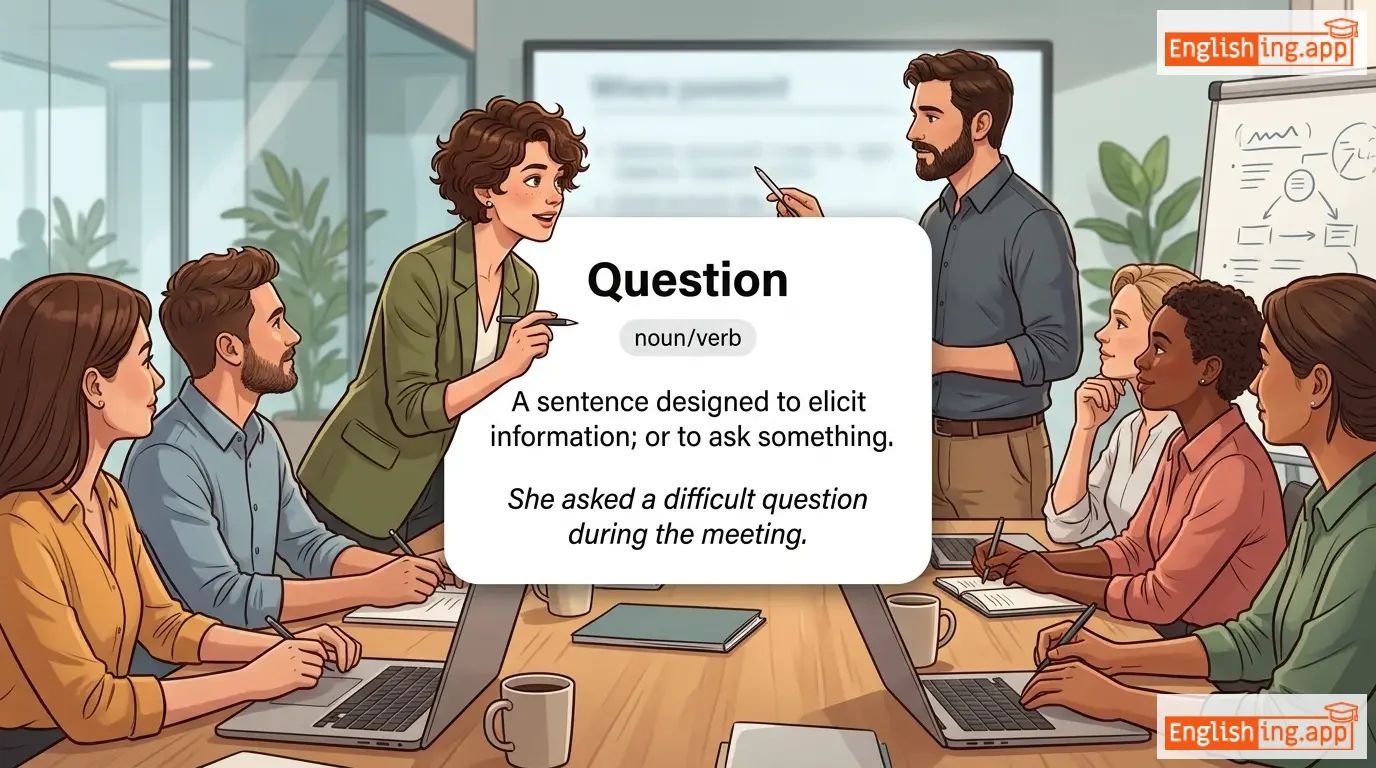
A sentence designed to elicit information; or to ask something.
••••••
|
She asked a difficult question during the meeting.
Shi askd a difikult kwes.chon during de meeting.
••••••
|
彼女は会議中に難しい質問をしました。
Kanojo wa kaigi chuu ni muzukashii shitsumon wo shimashita.
••••••
|
beyond question
beyond kwes.chon
••••••
|
without doubt
••••••
|
疑いの余地なく
utagai no yochi naku
••••••
|
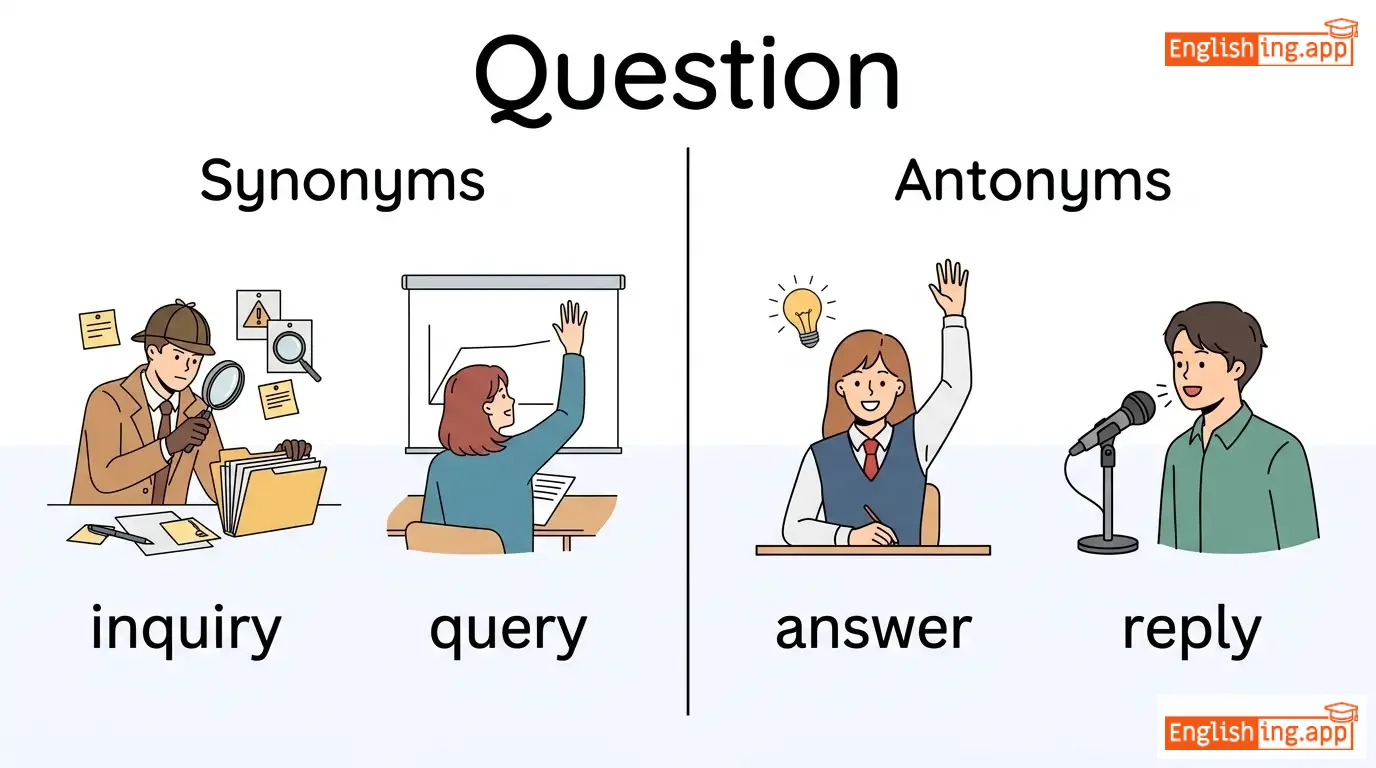
inquiry, query, ask, interrogate
••••••
|
answer, reply
••••••
|
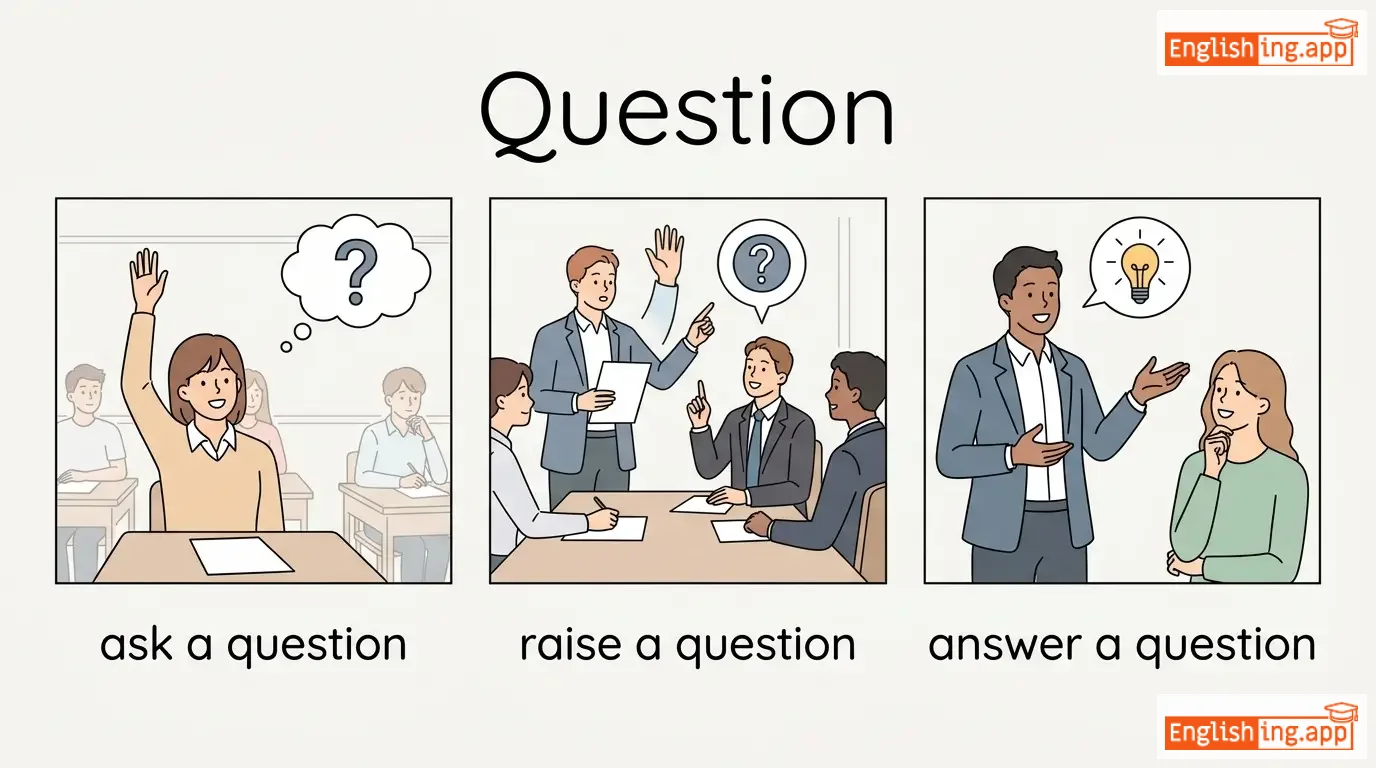
ask a question, raise a question, answer a question, difficult question
••••••
|
質問: 質問をすれば答えが返ってきます。
••••••
|
|
#10108
💧
|
/ˈkwentʃɪŋ/
verb
(クェンチング)
••••••
|
- •••••• |
渇きを癒す / 火を消す
kawaki o iyasu / hi o kesu
••••••
|
- •••••• | - •••••• |
quenches
クェンチェス
••••••
|
quenching
クェンチング
••••••
|
The act of satisfying thirst or extinguishing something like fire.
••••••
|
Drinking cold water was quenching her thirst.
冷たい水を飲むことが彼女の渇きを癒していました。
••••••
|
冷たい水を飲むことが彼女の渇きを癒していました。
Tsumetai mizu o nomu koto ga kanojo no kawaki o iyashiteimashita.
••••••
|
quench the thirst
渇きを癒す
••••••
|
to satisfy thirst
••••••
|
渇きを癒す
Kawaki o iyasu
••••••
|
extinguish, satisfy, cool, relieve
••••••
|
ignite, inflame
••••••
|
quenching thirst, quenching fire, quenching heat, quenching desire
••••••
|
クェンチングで渇きを癒す
••••••
|
|
#10109
🔢
|
/ˈkwɑːn.tə.teɪ.tɪv/
adjective
(クァンティテイティヴ)
••••••
|
- •••••• |
定量的
teiryōteki
••••••
|
- •••••• | - •••••• | - •••••• | - •••••• |
Relating to the measurement or amount of something.
••••••
|
The report included quantitative data on population growth. |
レポートには人口増加に関する定量的データが含まれていました。
Repōto ni wa jinkō zōka ni kansuru teiryōteki dēta ga fukumarete imashita.
••••••
|
- •••••• | - •••••• | - •••••• |
numerical, measurable, statistical, countable
••••••
|
qualitative, descriptive
••••••
|
quantitative research, quantitative analysis, quantitative data, quantitative results
••••••
|
定量的は量に関係しているので、‘定量的’は量に関連することを覚えておいてください。
••••••
|
|
#10110
📊
|
/ˈkwɑː.lɪ.teɪ.tɪv/
adjective
(クオリティティブ)
••••••
|
- •••••• |
質的
shitsuteki
••••••
|
- •••••• | - •••••• | - •••••• | - •••••• |
Relating to the quality or nature of something rather than its quantity.
••••••
|
The study focused on the qualitative aspects of customer feedback. |
この研究は顧客のフィードバックの質的側面に焦点を当てていました。
Kono kenkyuu wa kokyaku no fiidobakku no shitsuteki sokumen ni shouten wo atemashita.
••••••
|
- •••••• | - •••••• | - •••••• |
descriptive, subjective, comparative, non-numerical
••••••
|
quantitative, measurable
••••••
|
qualitative research, qualitative analysis, qualitative study, qualitative data
••••••
|
質的 = 質のように!質に関連する言葉だ!
••••••
|
|
#10111
🌍
|
/kweɪk/
verb
(クウェイク)
••••••
|
- •••••• |
震える
furueru
••••••
|
quaked
クウェイクド
••••••
|
quaked
クウェイクド
••••••
|
quakes
クウェイクス
••••••
|
quaking
クウェイキング
••••••
|
to shake or tremble, often due to fear or a natural event like an earthquake
••••••
|
The ground began to quake during the earthquake.
ザ グラウンド ビガン トゥ クウェイク デュアリング ザ アースクウェイク。
••••••
|
地震の間、地面が震え始めた。
Jishin no aida, jimen ga furu e hajimeta.
••••••
|
quake in one's boots
クウェイク イン ワンズ ブーツ
••••••
|
to be very frightened
••••••
|
恐怖で震える
kyōfu de furu eru
••••••
|
tremble, shake, shiver, shudder
••••••
|
stand firm, steady
••••••
|
quake with fear, ground quakes, quake in fear
••••••
|
Quakeは震えるという意味 — EarthQUAKEは地球の震えです。
••••••
|
|
#10112
➡️
|
/pʊʃ/
verb
(プッシュ)
••••••
|
|
押す
osu
••••••
|
pushed
プッシュド
••••••
|
pushed
プッシュド
••••••
|
pushes
プッシュズ
••••••
|
pushing
プッシング
••••••
|
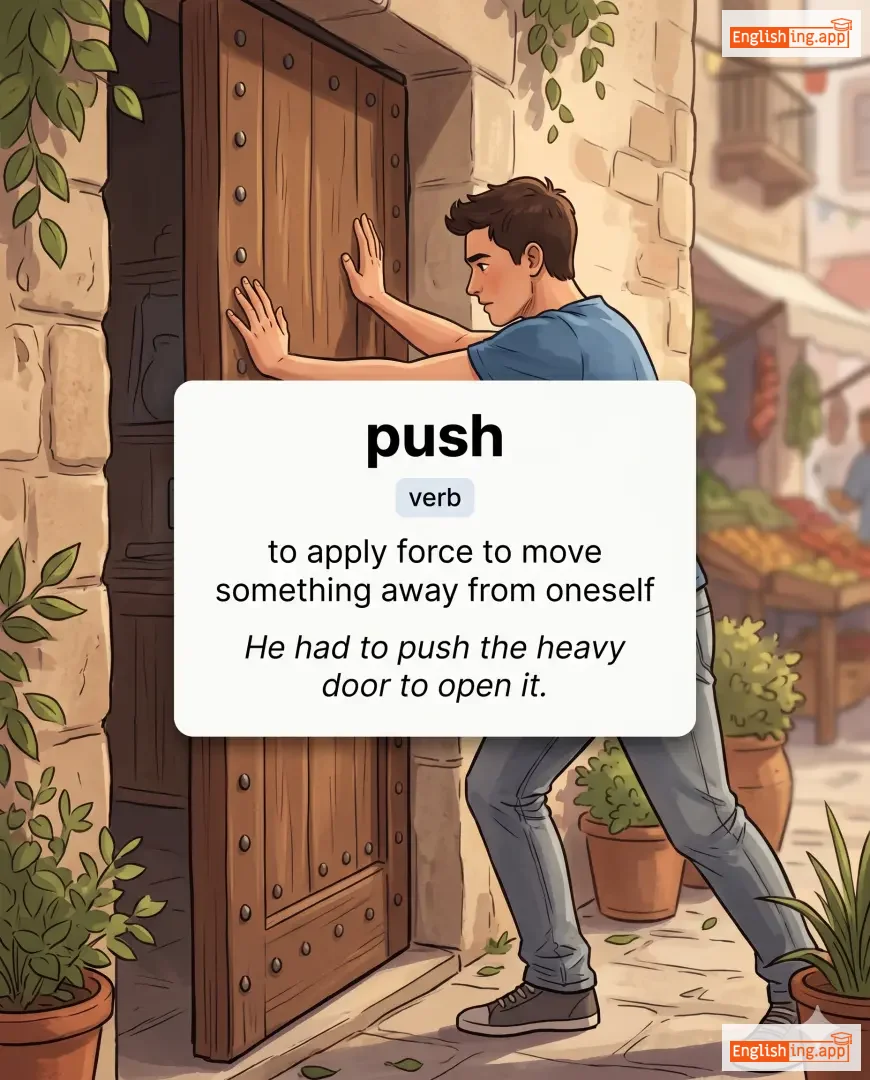
to apply force to move something away from oneself
••••••
|
He had to push the heavy door to open it.
彼は重いドアを開けるためにプッシュしなければなりませんでした。
••••••
|
彼は重いドアを開けるために押さなければなりませんでした。
Kare wa omoi doa wo akeru tame ni osanakereba narimasen deshita.
••••••
|
push the envelope
プッシュする封筒
••••••
|
to go beyond the limits of what is normally done
••••••
|
限界を超える
genkai wo koeru
••••••
|
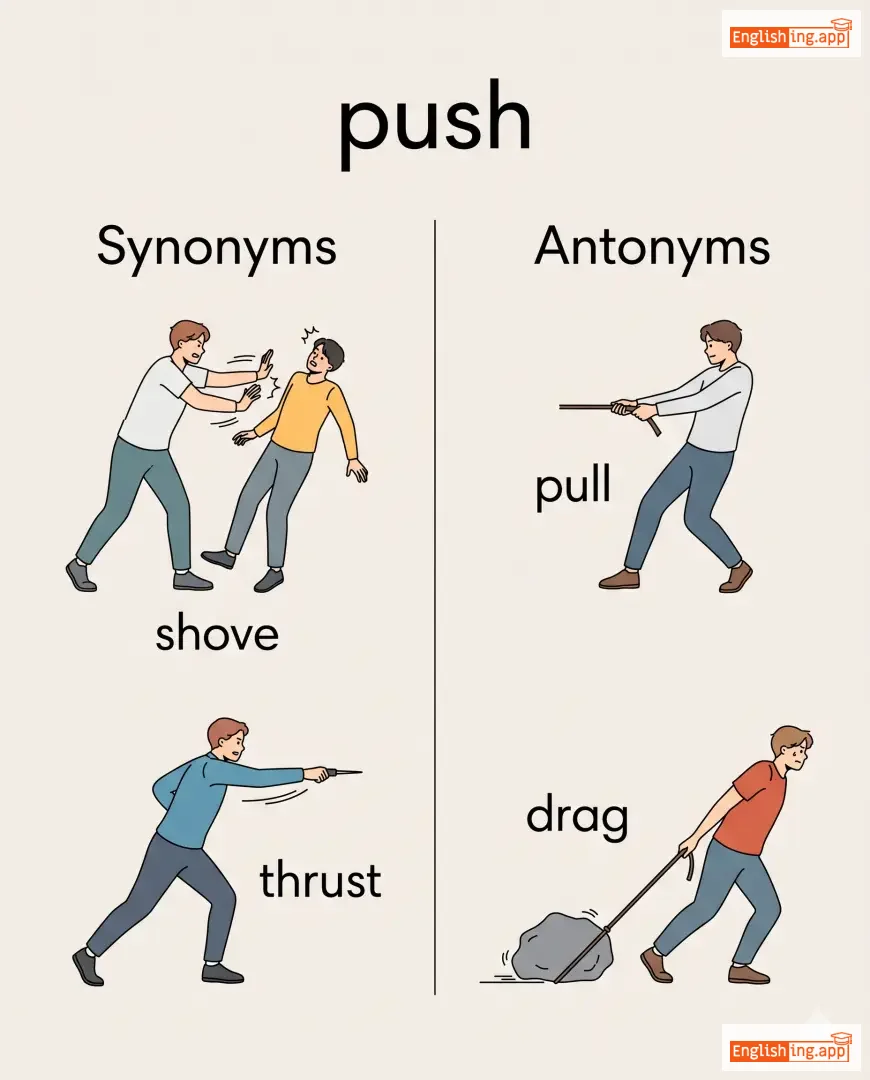
shove, thrust, propel, drive
••••••
|
pull, drag
••••••
|
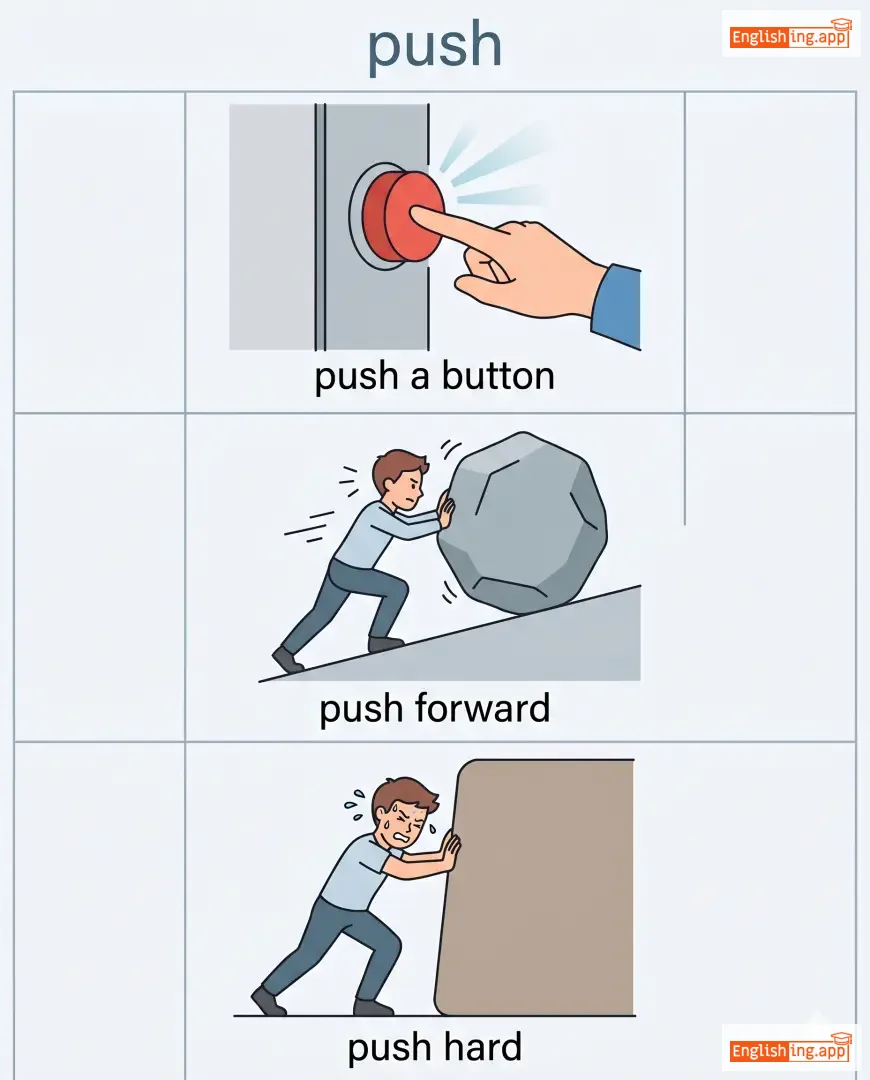
push a button, push forward, push hard, push back
••••••
|
Pushは押すことです — 引くの反対です。
••••••
|
|
#10113
🎁
|
/prəˈvaɪdɪd/
verb
(プロバイデッド)
••••••
|
- •••••• |
提供された
teikyou sareta
••••••
|
provided
プロバイデッド
••••••
|
provided
プロバイデッド
••••••
|
- •••••• | - •••••• |
gave or supplied something that was needed
••••••
|
The hotel provided free breakfast for all guests.
ホテルはすべてのゲストに無料の朝食を提供しました。
••••••
|
ホテルはすべてのゲストに無料の朝食を提供しました。
Hoteru wa subete no gesuto ni muryou no choushoku wo teikyoushimashita.
••••••
|
- •••••• | - •••••• | - •••••• |
supplied, gave, furnished, delivered
••••••
|
withheld, denied
••••••
|
provided service, provided information, provided support
••••••
|
提供されたはすでに与えられたという意味です — すでに提供されたもの。
••••••
|
|
#10114
📦
|
/prəˈvaɪd/
verb
(プロバイド)
••••••
|
- •••••• |
提供する
teikyō suru
••••••
|
provided
プロバイデッド
••••••
|
provided
プロバイデッド
••••••
|
provides
プロバイドス
••••••
|
providing
プロバイディング
••••••
|
to give or supply something that is needed or wanted
••••••
|
The teacher will provide extra materials for the students.
教師は学生に追加の資料を提供するでしょう。
••••••
|
教師は学生に追加の資料を提供するでしょう。
Kyōshi wa gakusei ni tsūka no shiryō o teikyō suru deshō.
••••••
|
provide for
提供するために
••••••
|
to take care of someone by supplying what they need
••••••
|
世話をする
sewa o suru
••••••
|
give, supply, furnish, offer, deliver
••••••
|
withhold, deprive, refuse
••••••
|
provide information, provide support, provide service, provide assistance
••••••
|
提供はすべての必要なものを提供することです – 提供!
••••••
|
|
#10115
🦚
|
/praʊd/
adjective
(プラウド)
••••••
|
- •••••• |
誇り高い
hokori takai
••••••
|
- •••••• | - •••••• | - •••••• | - •••••• |
Feeling deep pleasure or satisfaction as a result of achievements or qualities.
••••••
|
She felt proud of her son's accomplishments. |
彼女は息子の業績を誇りに思っていた。
Kanojo wa musuko no gyouseki o hokori ni omotte ita.
••••••
|
proud as a peacock |
extremely proud or arrogant
••••••
|
孔雀のように誇り高い
Kujaku no you ni hokori takai
••••••
|
pleased, honored, satisfied, delighted
••••••
|
ashamed, humble
••••••
|
proud of, feel proud, proud moment, proud parent
••••••
|
Proudとは、他の人や自分の成果を誇りに思うことです。
••••••
|
|
#10116
⏳
|
/prəˈtræktɪd/
adjective
(プロトラクテッド)
••••••
|
|
長引いた
nagabiita
••••••
|
- •••••• | - •••••• | - •••••• | - •••••• |
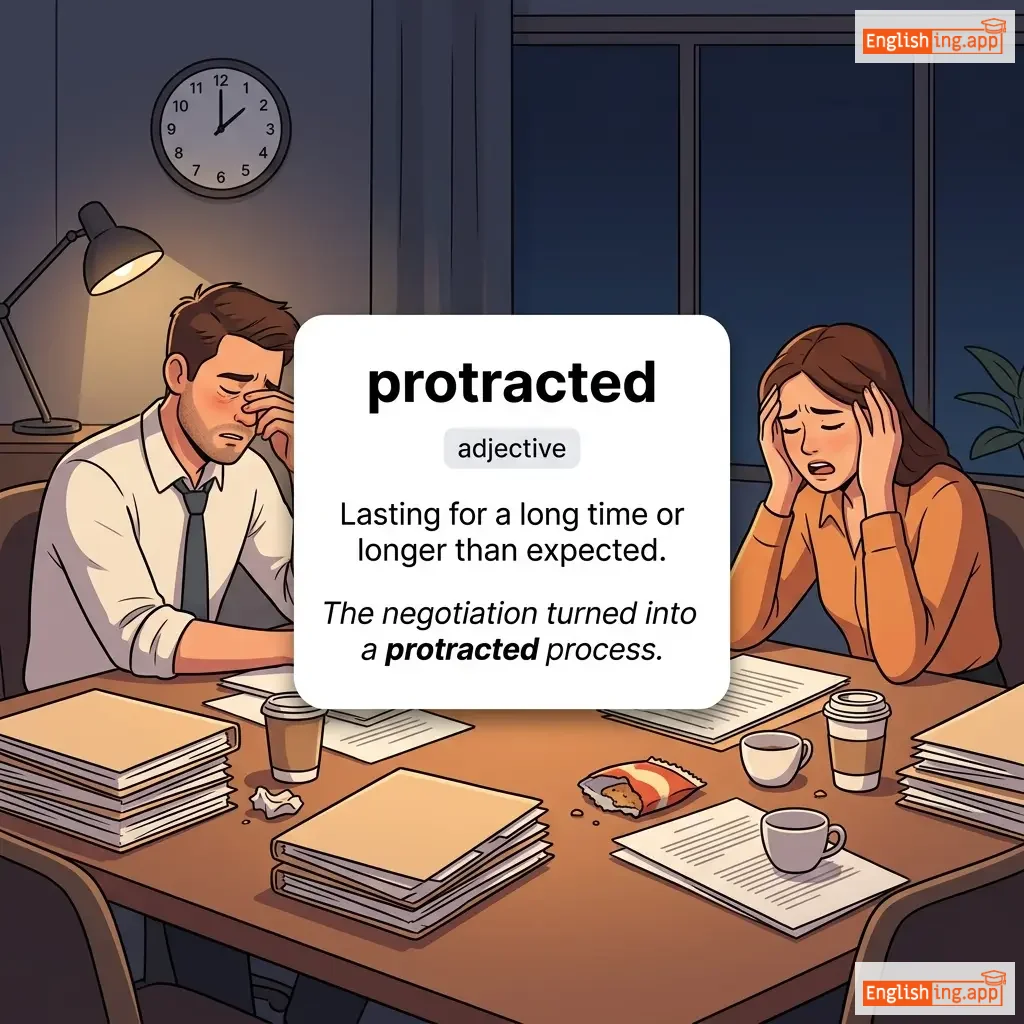
Lasting for a long time or longer than expected.
••••••
|
The negotiation turned into a protracted process. |
交渉は長引いたプロセスに変わった。
Kōshō wa nagabiita purosesu ni kawatta.
••••••
|
- •••••• | - •••••• | - •••••• |
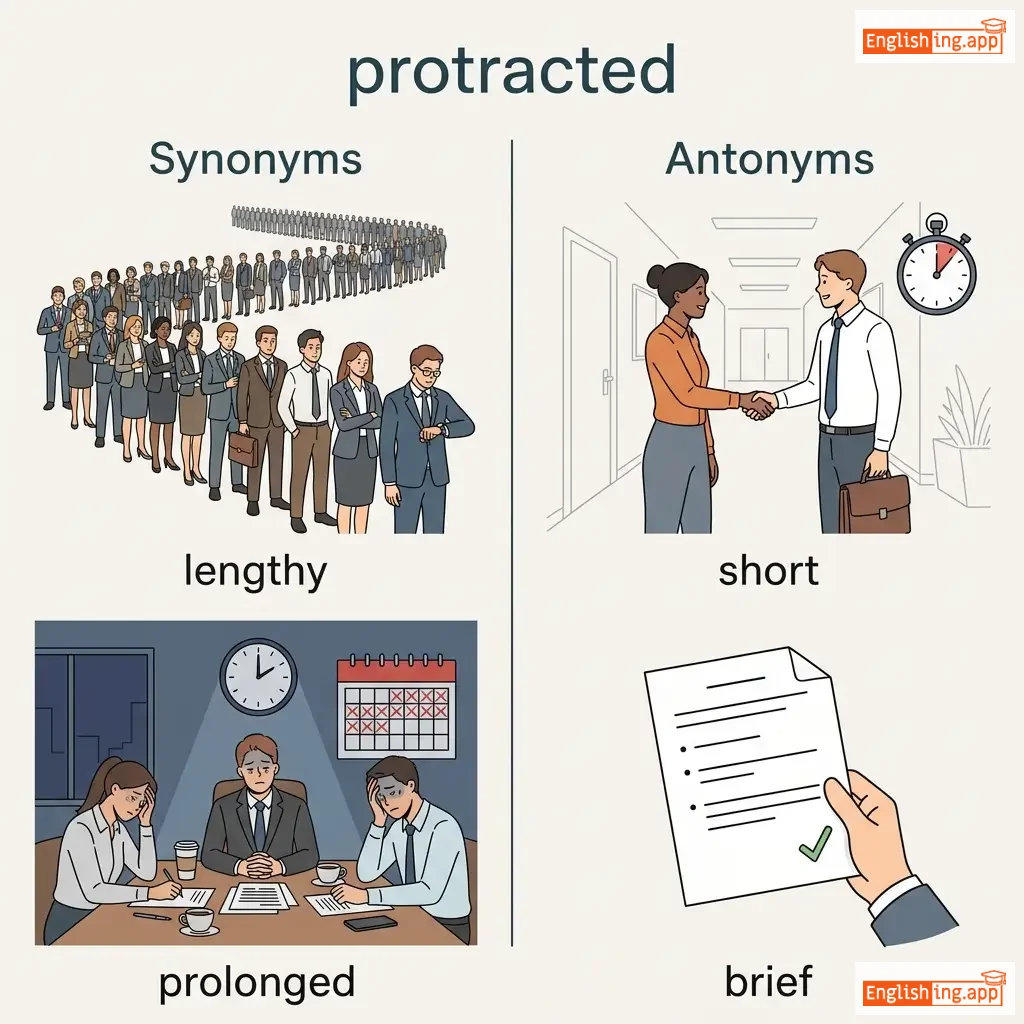
lengthy, prolonged, drawn-out, extended
••••••
|
short, brief, quick
••••••
|
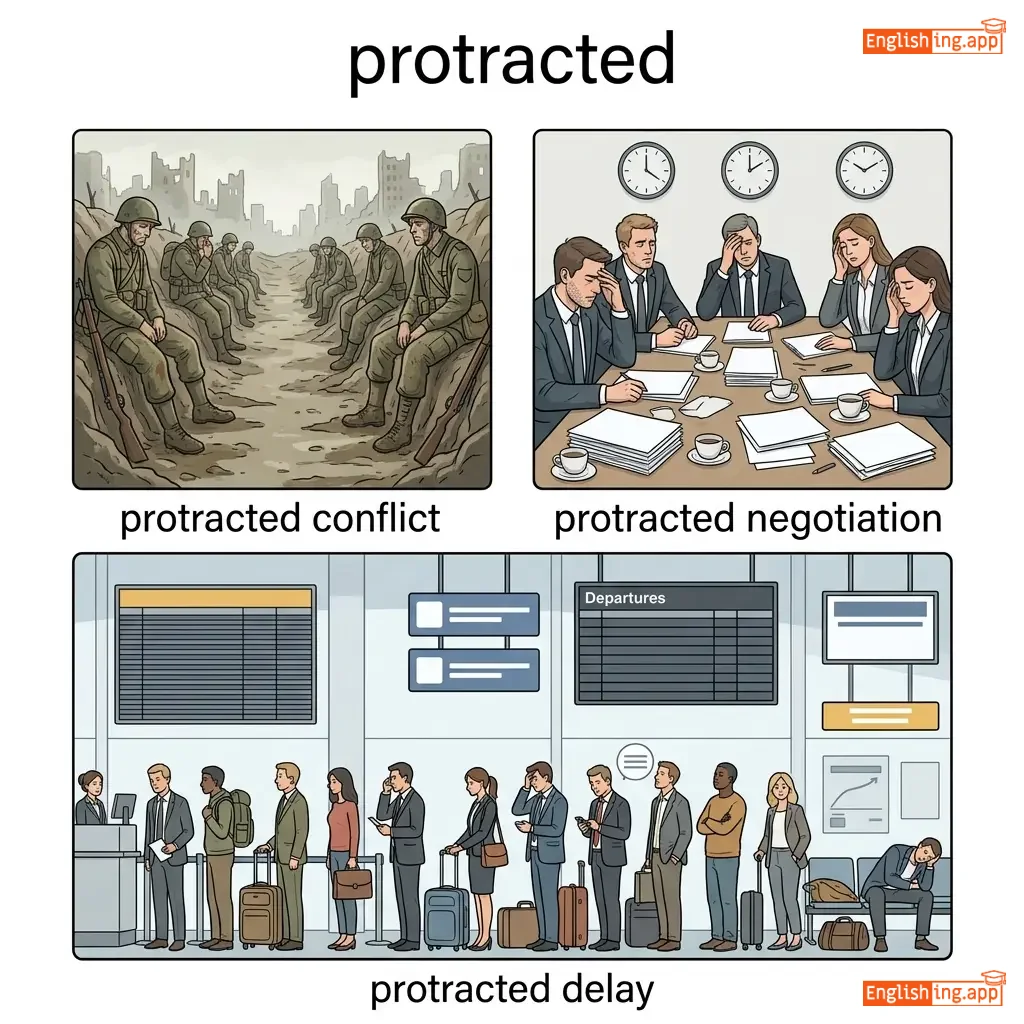
protracted conflict, protracted negotiation, protracted delay
••••••
|
Protractedは長引いた、つまり予想以上に続いたという意味です。
••••••
|
|
#10117
🛡️
|
/prəˈtɛktərət/
noun
(プロテクトレート)
••••••
|
- •••••• |
保護国
hogo koku
••••••
|
- •••••• | - •••••• | - •••••• | - •••••• |
A state that is controlled and protected by another.
••••••
|
The small country became a protectorate of the empire. |
小さな国は帝国の保護国となった。
Chīsana kuni wa teikoku no hogo koku to natta.
••••••
|
- •••••• | - •••••• | - •••••• |
colony, dependency, territory, dominion
••••••
|
independence, sovereignty
••••••
|
British protectorate, colonial protectorate, protectorate state
••••••
|
保護国は守られている国です。
••••••
|
|
#10118
💡
|
/ˌprɒpəˈzɪʃən/
noun
(プロポジション)
••••••
|
- •••••• |
提案, 計画
teian, keikaku
••••••
|
- •••••• | - •••••• | - •••••• | - •••••• |
A statement, idea, or plan put forward for consideration or discussion.
••••••
|
The company made a business proposition to the investors.
会社は投資家にビジネスの提案をしました。
••••••
|
会社は投資家にビジネスの提案をしました。
Kaisha wa tōshika ni bijinesu no teian o shimashita.
••••••
|
a tough proposition
難しい提案
••••••
|
something difficult to deal with
••••••
|
難しい提案
muzukashii teian
••••••
|
proposal, suggestion, offer, plan, idea
••••••
|
refusal, rejection
••••••
|
business proposition, marriage proposition, attractive proposition
••••••
|
Proposition はアイデアや計画を提案することを意味します。
••••••
|
|
#10119
📈
|
/prəˌlɪfəˈreɪʃən/
noun
(プロリフェレーション)
••••••
|
|
急増、拡大
kyuuzou, kakudai
••••••
|
- •••••• | - •••••• | - •••••• | - •••••• |
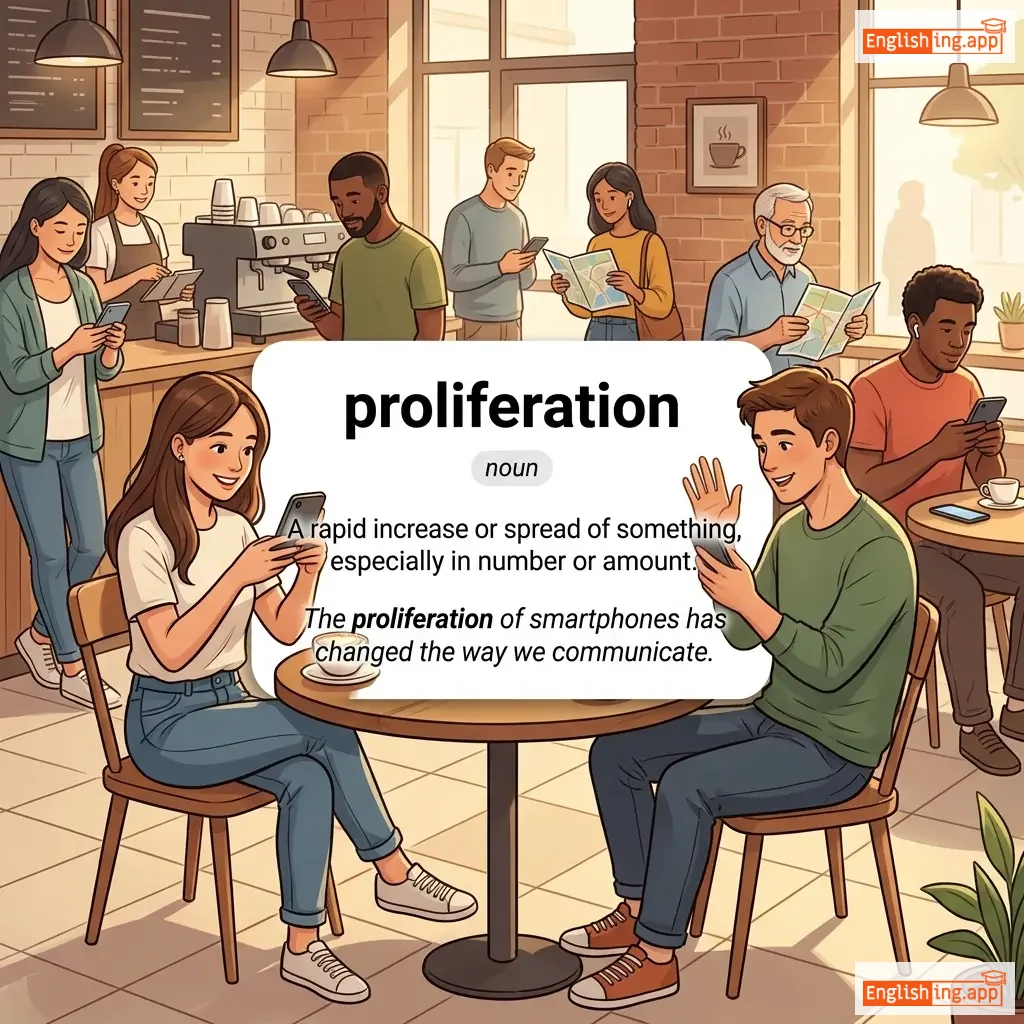
A rapid increase or spread of something, especially in number or amount.
••••••
|
The proliferation of smartphones has changed the way we communicate.
スマートフォンの普及が私たちのコミュニケーションの方法を変えました。
••••••
|
スマートフォンの急増が私たちのコミュニケーション方法を変えました。
Sumātōfon no kyūzō ga watashitachi no komyunikeeshon hōhō o kaemashita.
••••••
|
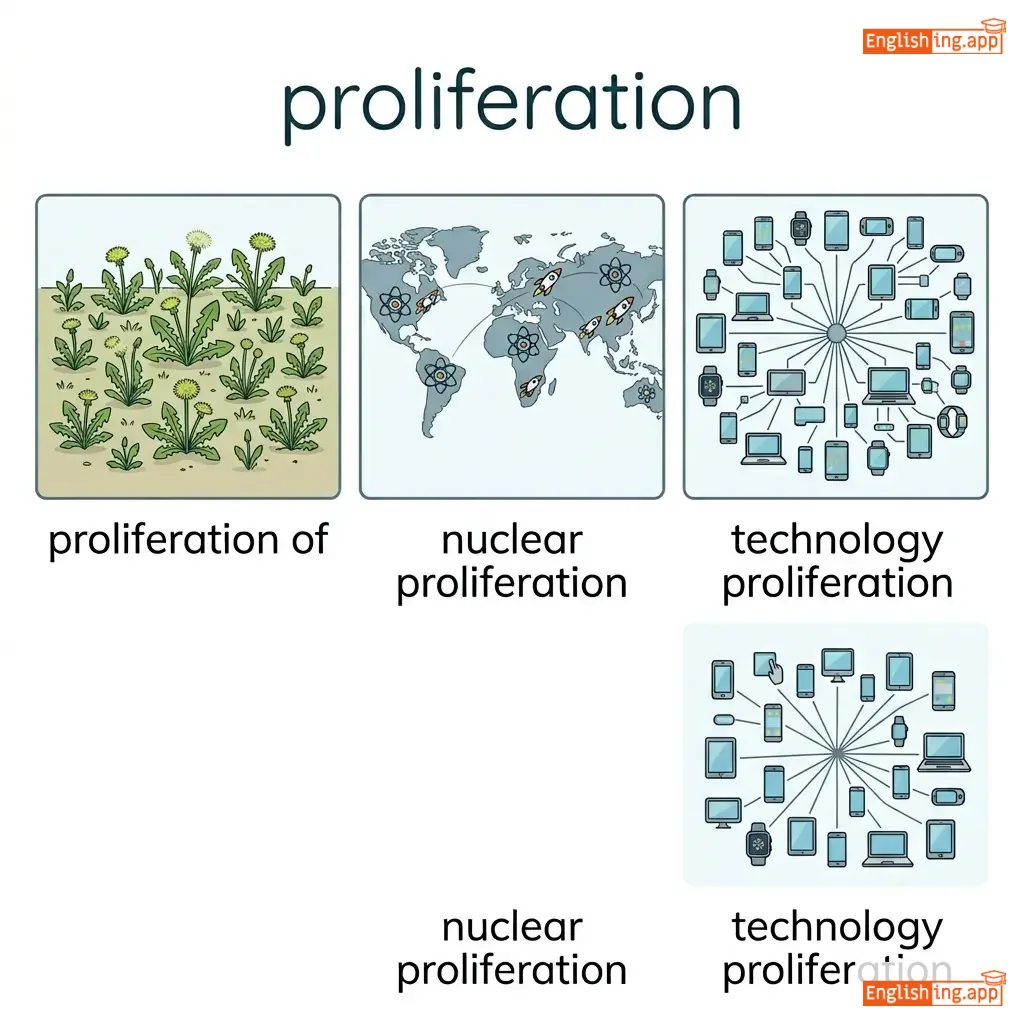
nuclear proliferation
核拡散
••••••
|
the rapid spread of nuclear weapons or technology
••••••
|
核拡散
kaku kakusan
••••••
|
growth, spread, multiplication, expansion, escalation
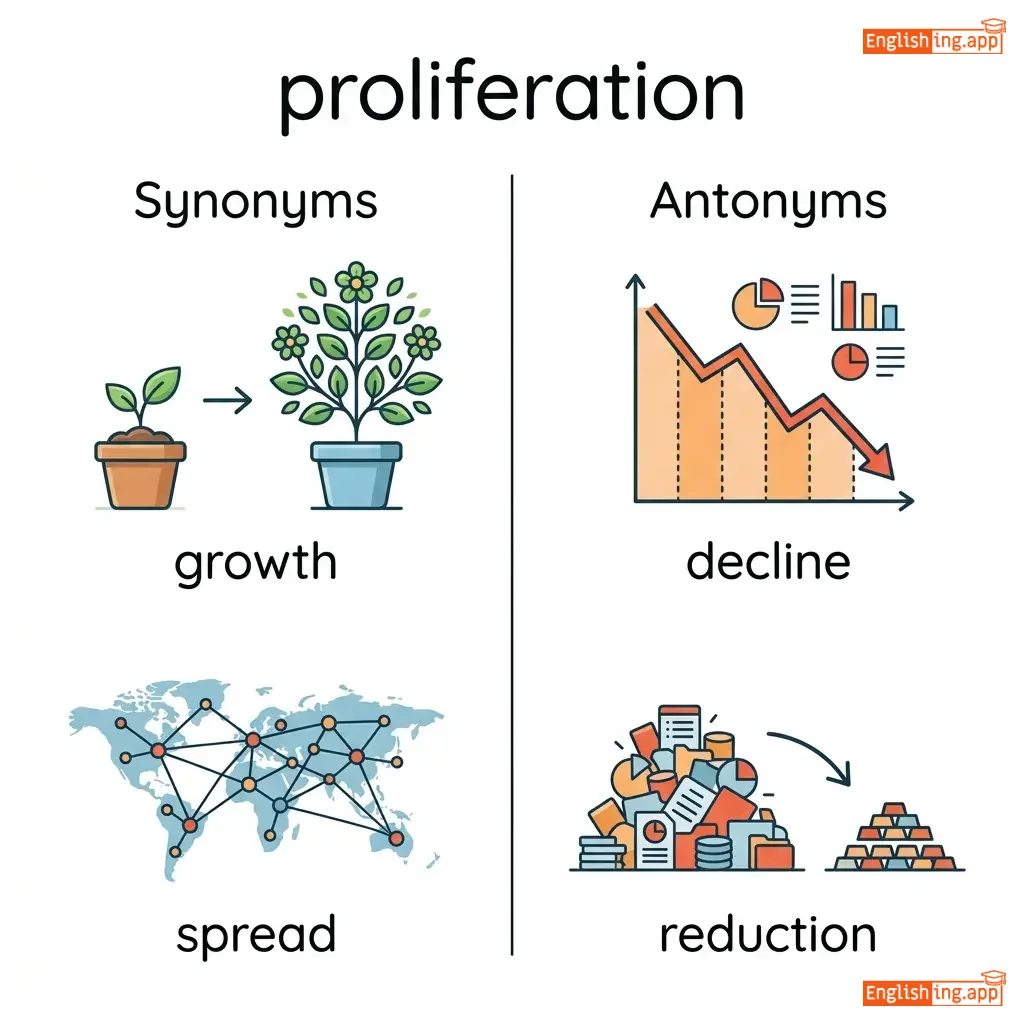
••••••
|
decline, reduction, decrease
••••••
|
proliferation of, nuclear proliferation, technology proliferation
••••••
|
Proliferation はプロ級の急速な拡大、核拡散のように。
••••••
|
|
#10120
💎
|
/ˈprɛʃəs/
adjective
(ぷれしあす)
••••••
|
- •••••• |
貴重な
kichōna
••••••
|
- •••••• | - •••••• | - •••••• | - •••••• |
of great value; highly esteemed or cherished
••••••
|
This ring is very precious to my grandmother.
この指輪は祖母にとってとても貴重です。
••••••
|
この指輪は祖母にとってとても貴重です。
Kono yubiwa wa sobo ni totte totemo kichō desu.
••••••
|
precious time
貴重な時間
••••••
|
time that is highly valuable and should not be wasted
••••••
|
貴重な時間
kichōna jikan
••••••
|
valuable, treasured, beloved, priceless, dear
••••••
|
worthless, cheap, common
••••••
|
precious stone, precious memory, precious little, precious time
••••••
|
Preciousは💎貴重な、覚えておいて — precious stoneはいつも貴重な石
••••••
|
|
#10121
📈
|
/ˈprəʊɡrɛs/ (noun), /prəˈɡrɛs/ (verb)
noun, verb
(プログレス)
••••••
|
|
進歩
shinpo
••••••
|
progressed
プログレスド
••••••
|
progressed
プログレスド
••••••
|
progresses
プログレスズ
••••••
|
progressing
プログレッシング
••••••
|
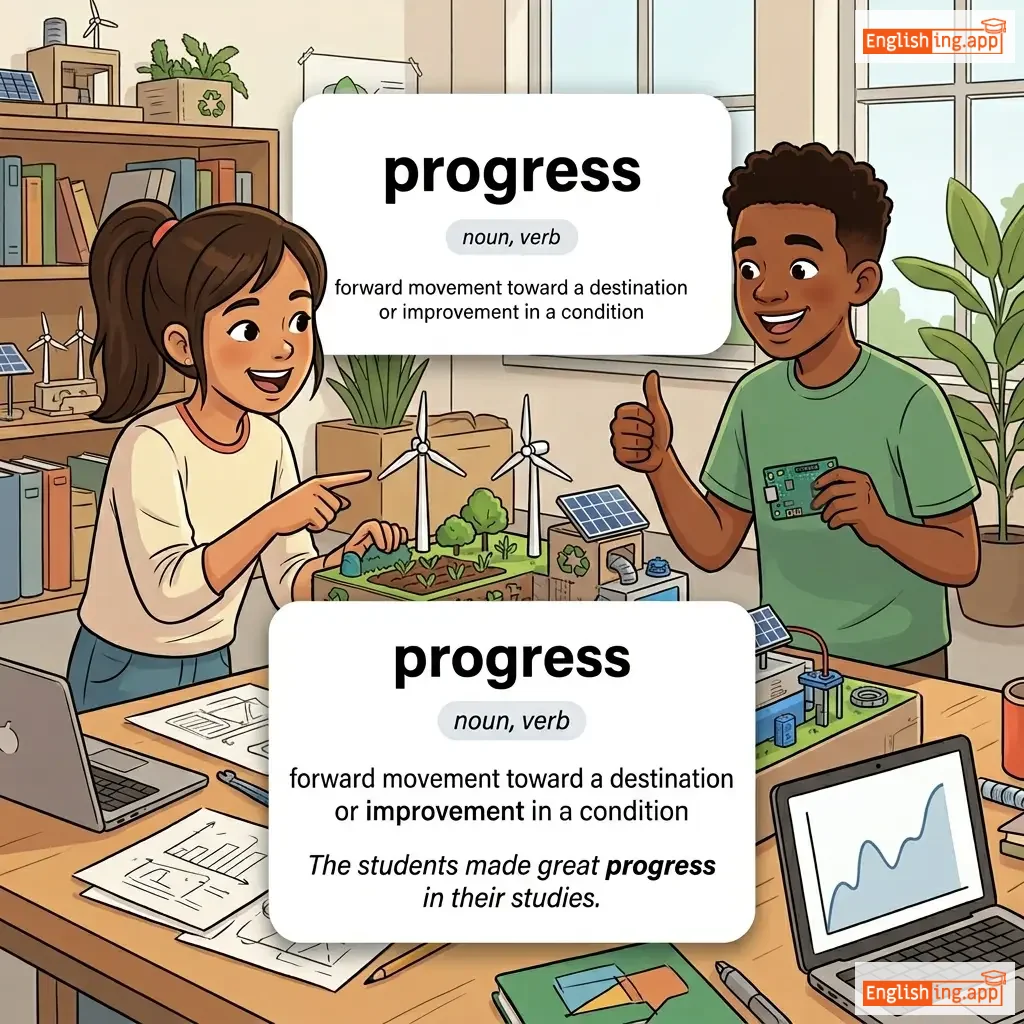
forward movement toward a destination or improvement in a condition
••••••
|
The students made great progress in their studies.
学生たちは学業で大きな進歩を遂げました。
••••••
|
学生たちは学業で大きな進歩を遂げました。
Gakusei-tachi wa gakugyou de ookina shinpo wo togemashita.
••••••
|
work in progress
作業中
••••••
|
something that is still being developed or unfinished
••••••
|
作業中
Sagyou-chuu
••••••
|
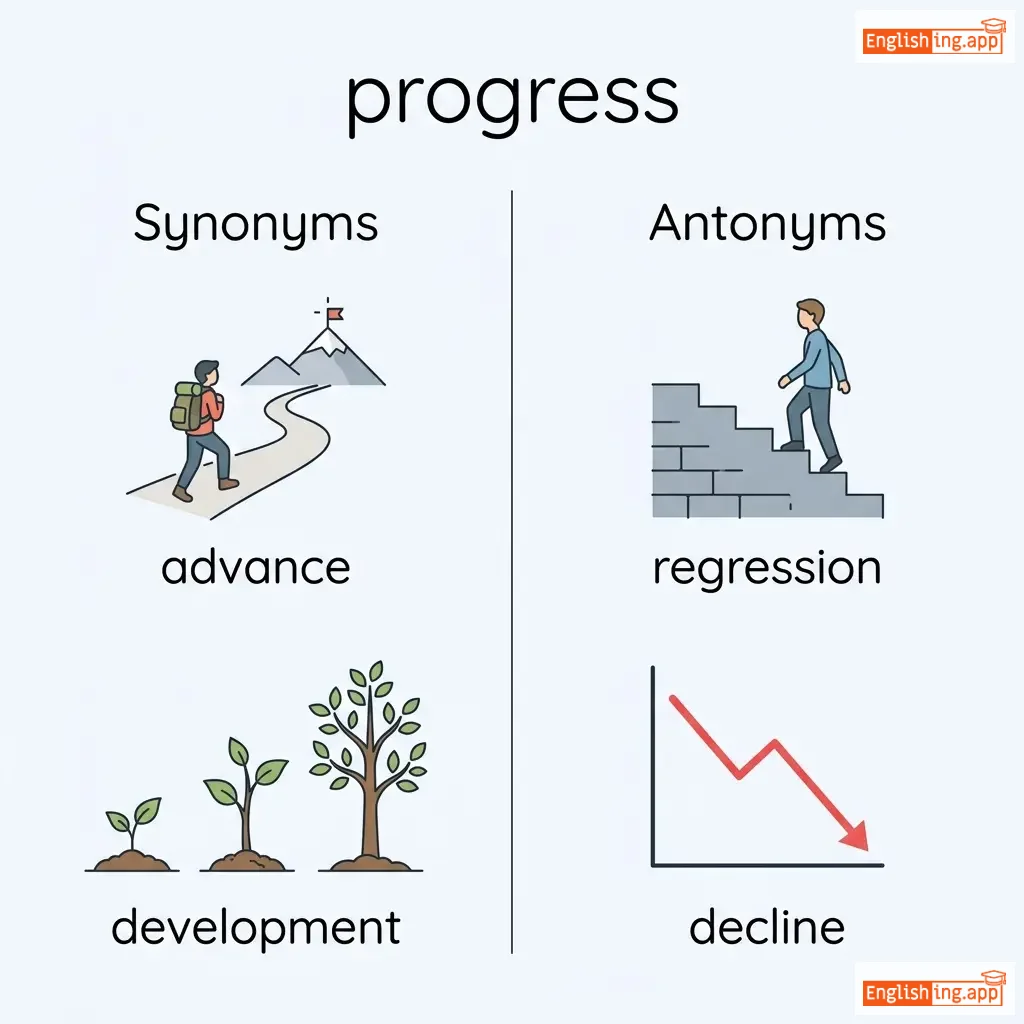
advance, development, improvement, growth, headway
••••••
|
regression, decline, setback
••••••
|
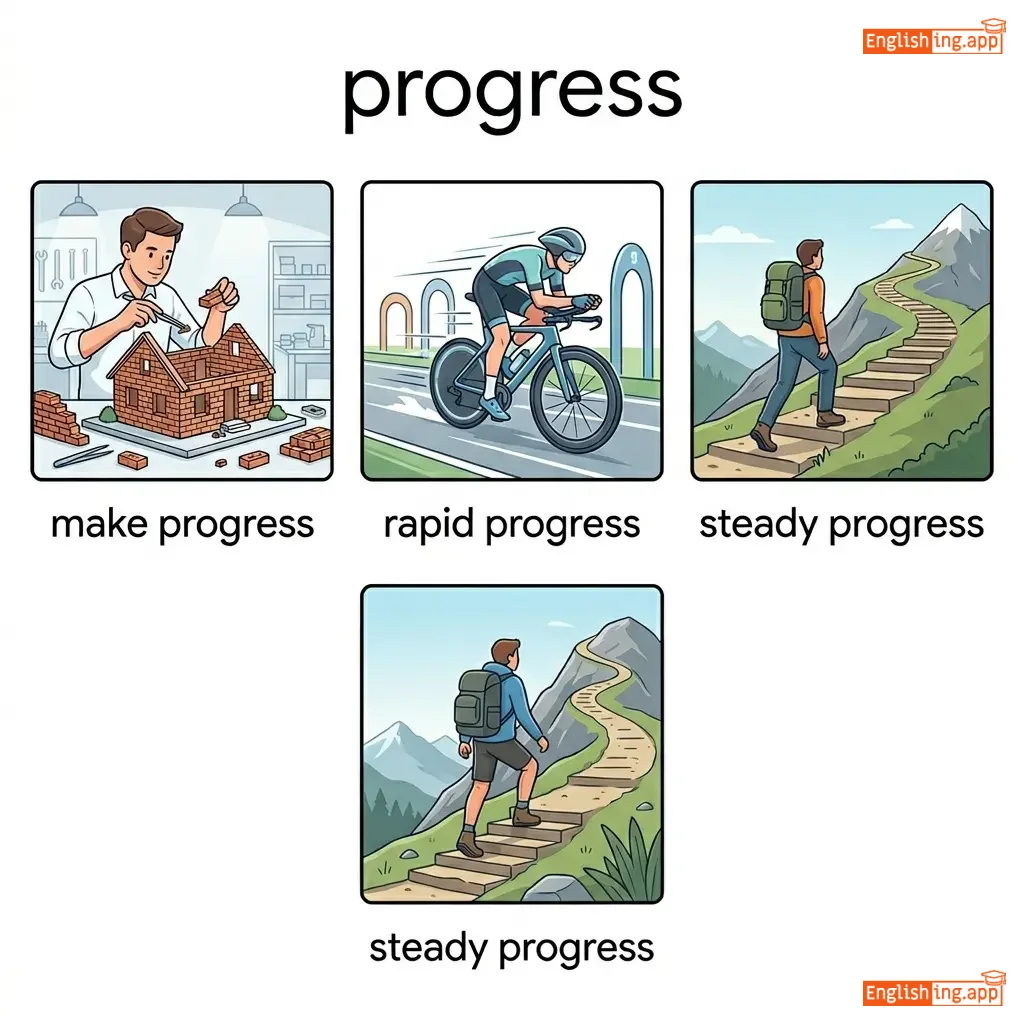
make progress, rapid progress, steady progress, slow progress
••••••
|
Progress = Pro + gress = 前進する (進歩)
••••••
|
|
#10122
💰
|
/ˈprɒfɪt/
noun, verb
(プロフィット)
••••••
|
- •••••• |
利益
rieki
••••••
|
profited
プロフィテッド
••••••
|
profited
プロフィテッド
••••••
|
profits
プロフィッツ
••••••
|
profiting
プロフィッティング
••••••
|
financial gain, especially the difference between the amount earned and the amount spent
••••••
|
The company made a huge profit this quarter.
その会社は今四半期に大きな利益を上げました。
••••••
|
その会社は今四半期に大きな利益を上げました。
Sono kaisha wa ima shihanki ni ōkina rieki o agemashita.
••••••
|
turn a profit
利益を得る
••••••
|
to start making financial gains
••••••
|
利益を得る
rieki o eru
••••••
|
gain, earnings, revenue, income, benefit
••••••
|
loss, deficit, debt
••••••
|
make a profit, earn profit, profit margin, net profit
••••••
|
Profit という言葉はポケットにお金が入ってくることです。
••••••
|
|
#10123
💸
|
/ˌprɒdɪˈɡæləti/
noun
(プロディガリティ)
••••••
|
- •••••• |
浪費
rōhi
••••••
|
- •••••• | - •••••• | - •••••• | - •••••• |
the quality of being wastefully extravagant
••••••
|
His prodigality with money left him bankrupt.
彼のプロディガリティで、彼は破産しました。
••••••
|
彼の浪費癖が彼を破産させた。
Kare no rōhi heki ga kare o hasan saseta.
••••••
|
- •••••• | - •••••• | - •••••• |
extravagance, wastefulness, lavishness, excess, squandering
••••••
|
frugality, thrift, economy
••••••
|
prodigality of youth, prodigality of spending, sheer prodigality
••••••
|
浪費は、息子のように無駄にお金を使うことです。
••••••
|
|
#10124
🌧️
|
/ˈprɒbəbl̩/
adjective
(プラウバブル)
••••••
|
- •••••• |
可能性が高い
kanousei ga takai
••••••
|
- •••••• | - •••••• | - •••••• | - •••••• |
likely to happen or be true, but not certain
••••••
|
Rain is probable tomorrow according to the forecast.
予報によると、明日は雨が降る可能性が高いです。
••••••
|
予報によると、明日は雨が降る可能性が高いです。
Yohou ni yoru to, ashita wa ame ga furu kanousei ga takai desu.
••••••
|
highly probable
非常に可能性が高い
••••••
|
very likely to happen
••••••
|
非常に可能性が高い
Hijou ni kanousei ga takai
••••••
|
likely, possible, expected, potential, feasible
••••••
|
unlikely, impossible, doubtful
••••••
|
probable cause, highly probable, probable outcome, probable reason
••••••
|
ProbableはProbabilityに似ていて、何かが起こる可能性があることを意味します。
••••••
|
|
#10125
📌
|
/praɪˈɒrɪti/
noun
(プライオリティ)
••••••
|
- •••••• |
優先
yūsen
••••••
|
- •••••• | - •••••• | - •••••• | - •••••• |
Something that is regarded as more important than other things.
••••••
|
Safety is the top priority in this company. |
この会社では、安全が最も重要な優先事項です。
Kono kaisha de wa, anzen ga mottomo jūyōna yūsen jikō desu.
••••••
|
first priority |
The most important thing that needs to be dealt with before others.
••••••
|
第一優先
Daiichi yūsen
••••••
|
importance, precedence, preference, primacy
••••••
|
inferiority, unimportance
••••••
|
top priority, high priority, main priority, set priority
••••••
|
優先は最も重要なことを最初に行うという意味です。
••••••
|
|
#10126
⏮️
|
/ˈpriːviəs/
adjective
(プリヴィアス)
••••••
|
- •••••• |
前の
mae no
••••••
|
- •••••• | - •••••• | - •••••• | - •••••• |
Existing or happening before the present time.
••••••
|
He referred to the previous meeting to explain his point.
彼は自分の意見を説明するために前回の会議に言及しました。
••••••
|
彼は自分の意見を説明するために前回の会議に言及しました。
Kare wa jibun no iken wo setsumei suru tame ni zenkai no kaigi ni genkyū shimashita.
••••••
|
previous experience
以前の経験
••••••
|
Past knowledge or skills gained from earlier situations.
••••••
|
以前の経験
izen no keiken
••••••
|
earlier, prior, former, preceding
••••••
|
future, later
••••••
|
previous meeting, previous record, previous work, previous year
••••••
|
Previousは前、例えばprevious examは前回の試験。
••••••
|
|
#10127
🛑
|
/prɪˈvɛnt/
verb
(プリベント)
••••••
|
|
防ぐ
fusegu
••••••
|
prevented
プリベンテッド
••••••
|
prevented
プリベンテッド
••••••
|
prevents
プリベンツ
••••••
|
preventing
プリベントイング
••••••
|
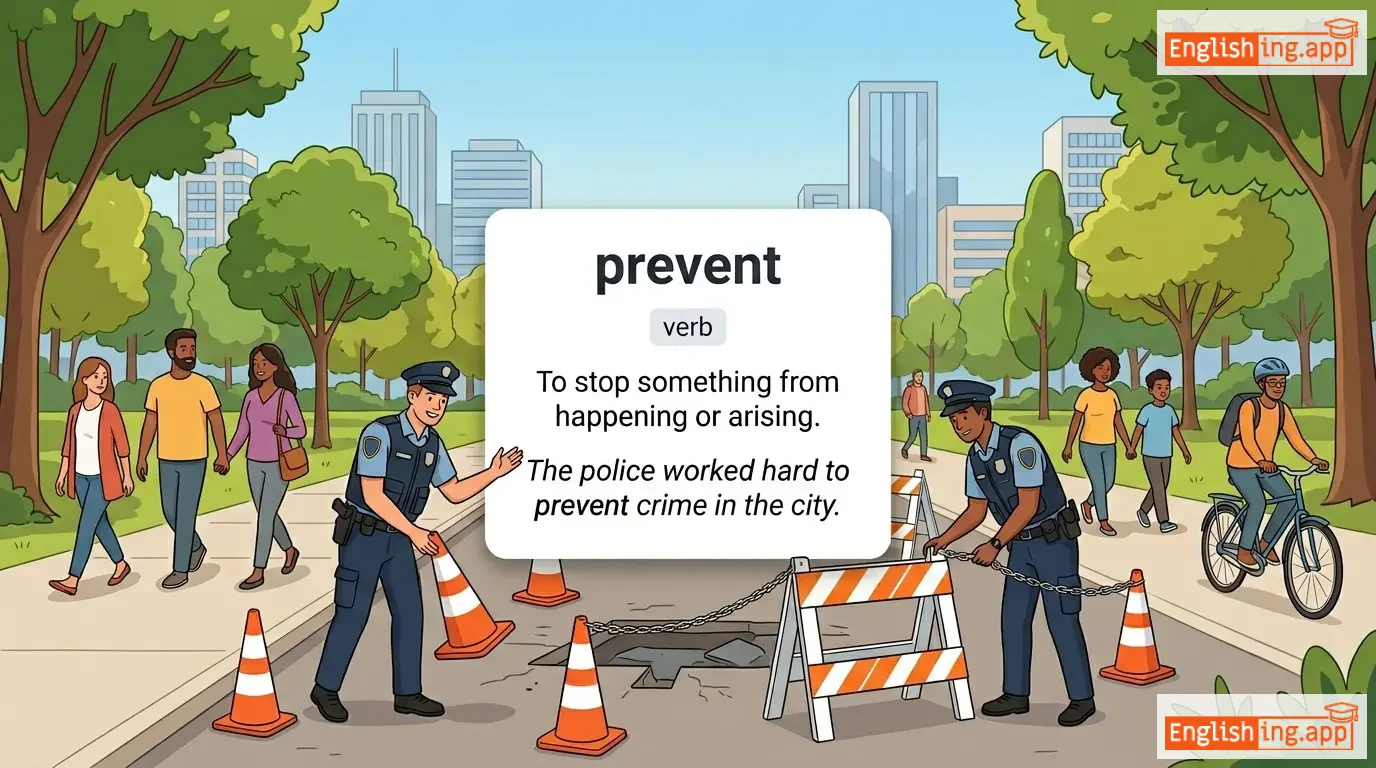
To stop something from happening or arising.
••••••
|
The police worked hard to prevent crime in the city.
警察は都市の犯罪を防ぐために一生懸命働きました。
••••••
|
警察は都市の犯罪を防ぐために一生懸命働きました。
Keisatsu wa toshi no hanzai o fusegu tame ni isshōkenmei hatarakimashita.
••••••
|
prevent from
防ぐために
••••••
|
To stop someone or something from doing something.
••••••
|
防ぐために
Fusegu tame ni
••••••
|
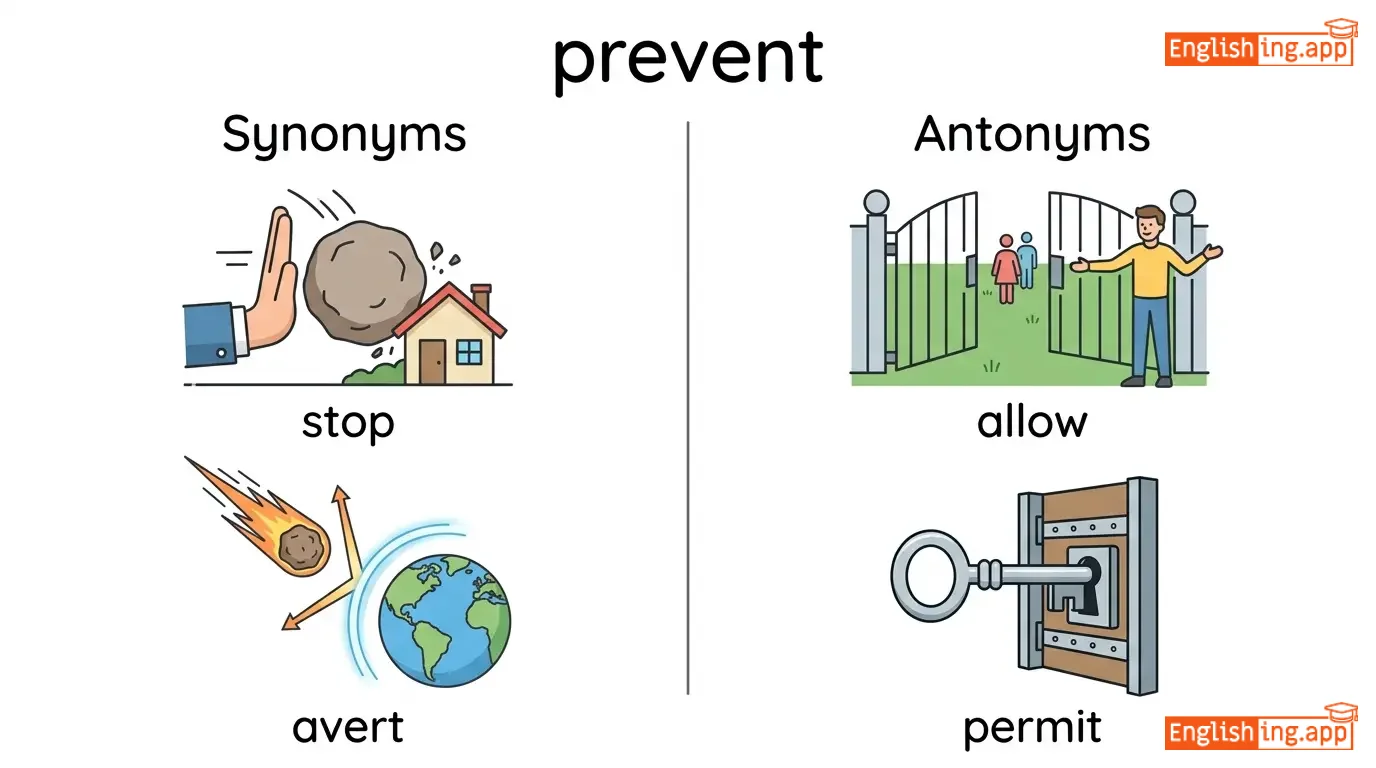
stop, avert, hinder, block, preclude
••••••
|
allow, permit, enable
••••••
|
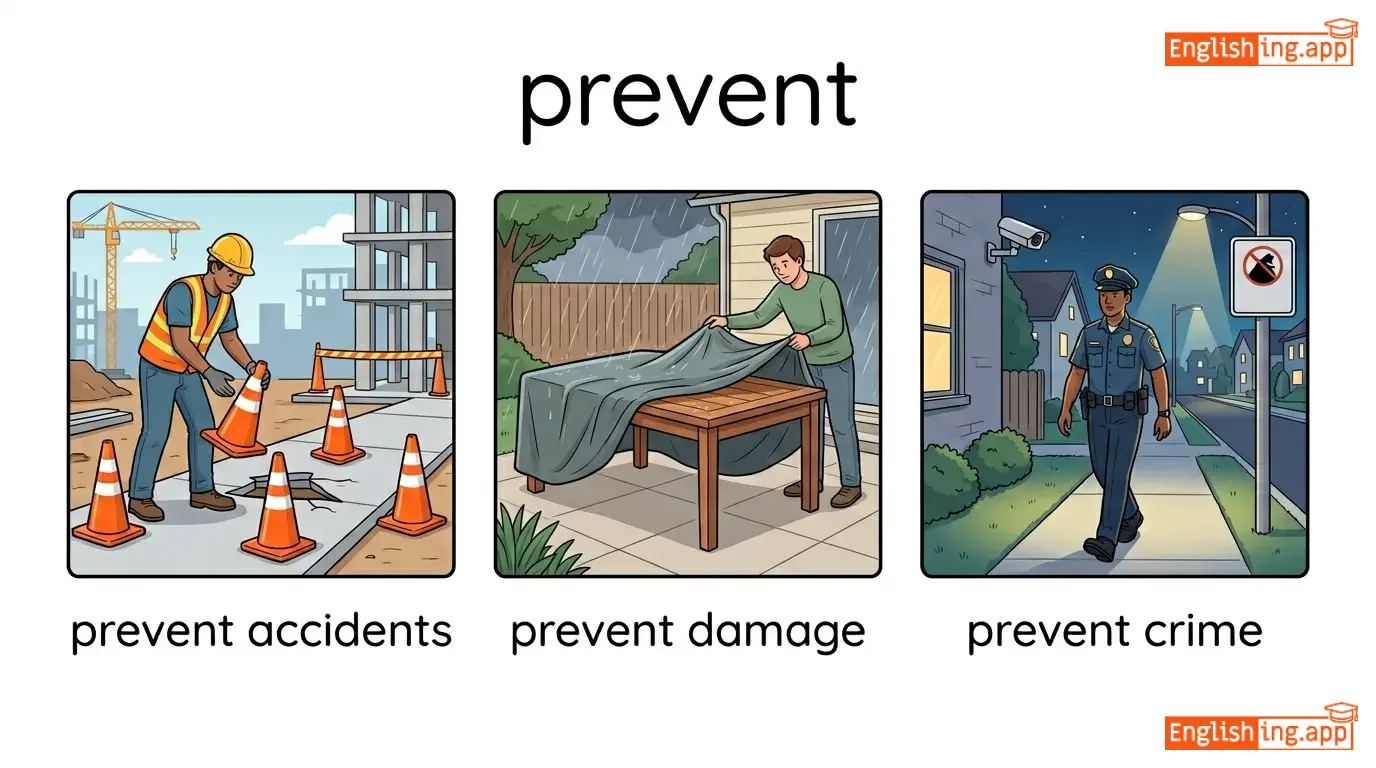
prevent accidents, prevent damage, prevent crime, prevent infection
••••••
|
Prevent は日本語で '防ぐ' と言い、何かを起こらないようにすることです。
••••••
|
|
#10128
🌸
|
/ˈprɪti/
adjective
(プリティ)
••••••
|
- •••••• |
きれい
kirei
••••••
|
- •••••• | - •••••• | - •••••• | - •••••• |
Attractive in a delicate way without being truly beautiful.
••••••
|
She looked pretty in her new dress. |
彼女は新しいドレスできれいに見えた。
Kanojo wa atarashī doresu de kirei ni mieta.
••••••
|
pretty good |
Fairly good or satisfactory.
••••••
|
かなり良い
kanari yoi
••••••
|
lovely, attractive, cute, charming, fair
••••••
|
ugly, unattractive, plain
••••••
|
pretty face, pretty girl, pretty well, pretty good
••••••
|
Prettyはきれい、でも少し控えめな美しさを意味します。
••••••
|
|
#10129
⏰
|
/ˈprɛsɪŋ/
adjective
(プレッシング)
••••••
|
- •••••• |
緊急
kinkyū
••••••
|
- •••••• | - •••••• | - •••••• | - •••••• |
Requiring immediate attention or urgent action.
••••••
|
The manager had to deal with several pressing issues at once. |
マネージャーは同時にいくつかの緊急の問題に対処しなければならなかった。
Manējā wa dōji ni ikutsuka no kinkyū no mondai ni taisho shinakereba naranakatta.
••••••
|
pressing matter |
An urgent or important issue that needs attention immediately.
••••••
|
緊急の問題
kinkyū no mondai
••••••
|
urgent, critical, crucial, important, immediate
••••••
|
trivial, minor, insignificant
••••••
|
pressing issue, pressing need, pressing problem, pressing concern
••••••
|
Pressing というのは緊急の問題を早く解決しなければならないという意味です。
••••••
|
|
#10130
🌿
|
/prɪˈzɜːrv/
verb
••••••
|
|
- •••••• |
preserved
••••••
|
preserved
••••••
|
preserves
••••••
|
preserving
••••••
|
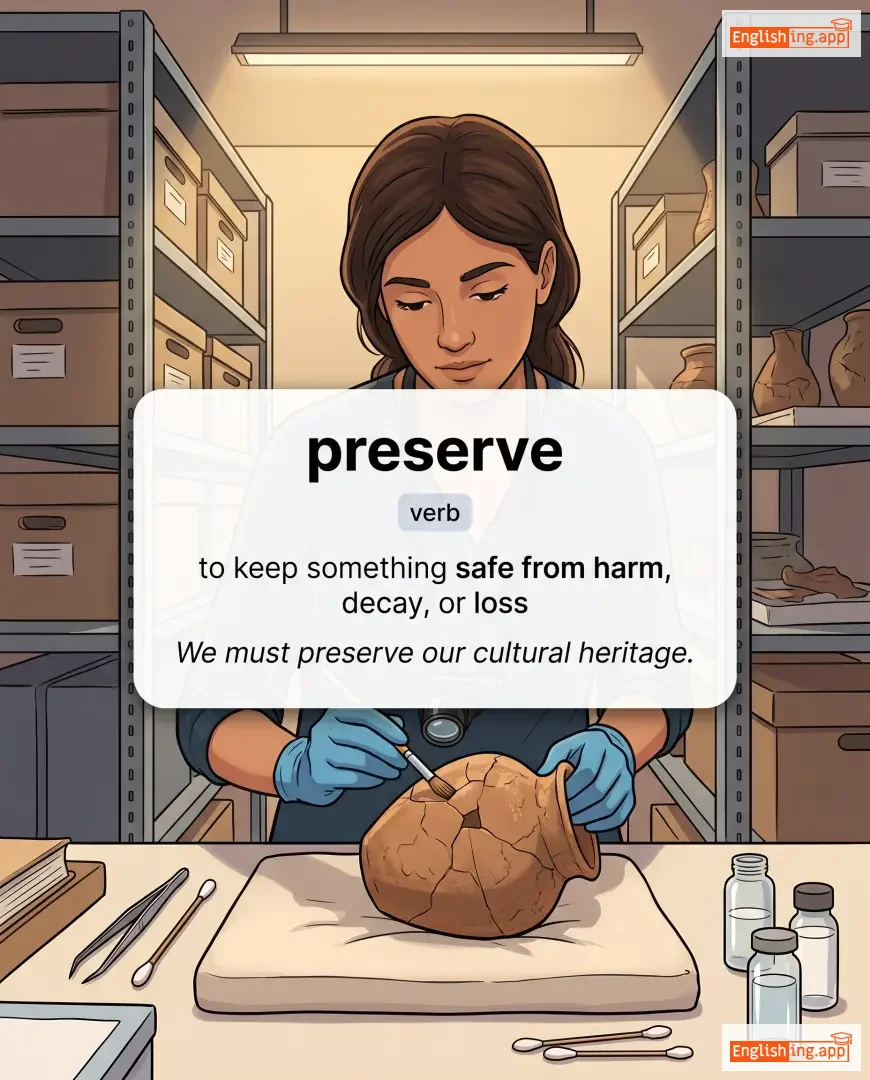
to keep something safe from harm, decay, or loss
••••••
|
We must preserve our cultural heritage. |
- •••••• |
preserve the peace |
to maintain peace and order
••••••
|
- •••••• |
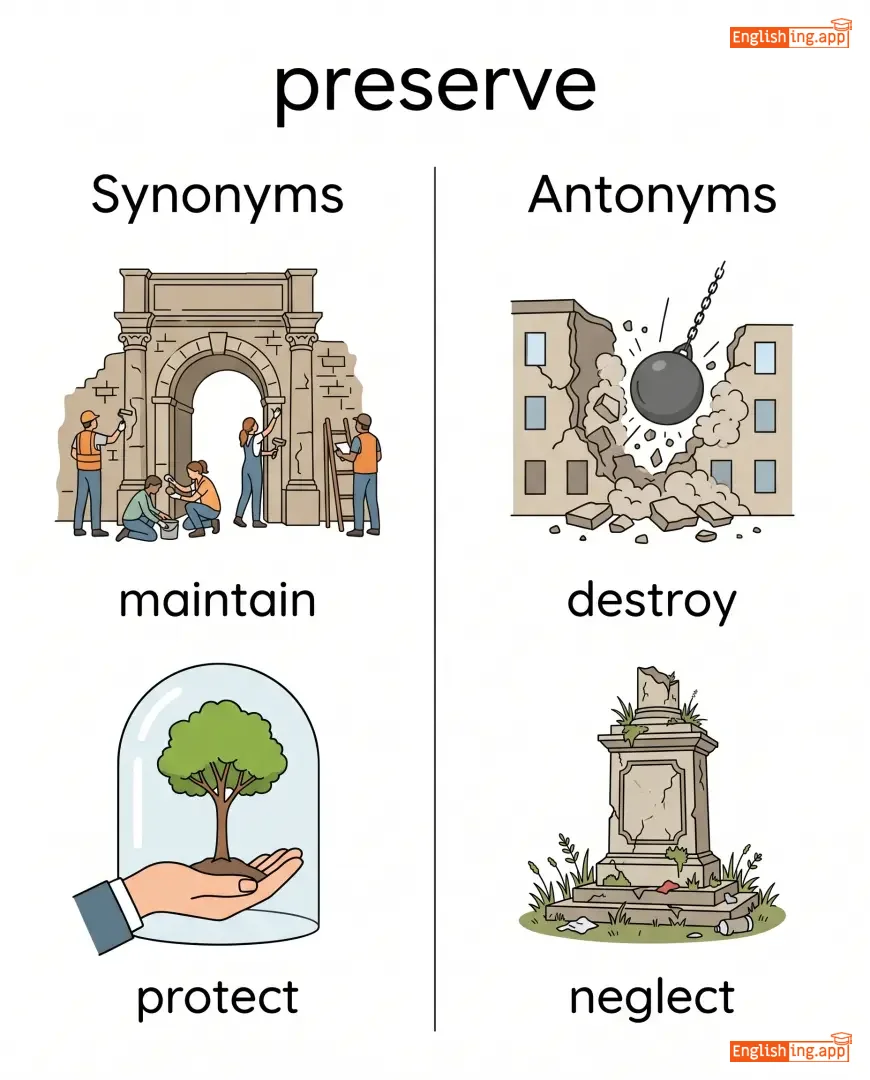
maintain, protect, conserve, safeguard
••••••
|
destroy, neglect
••••••
|
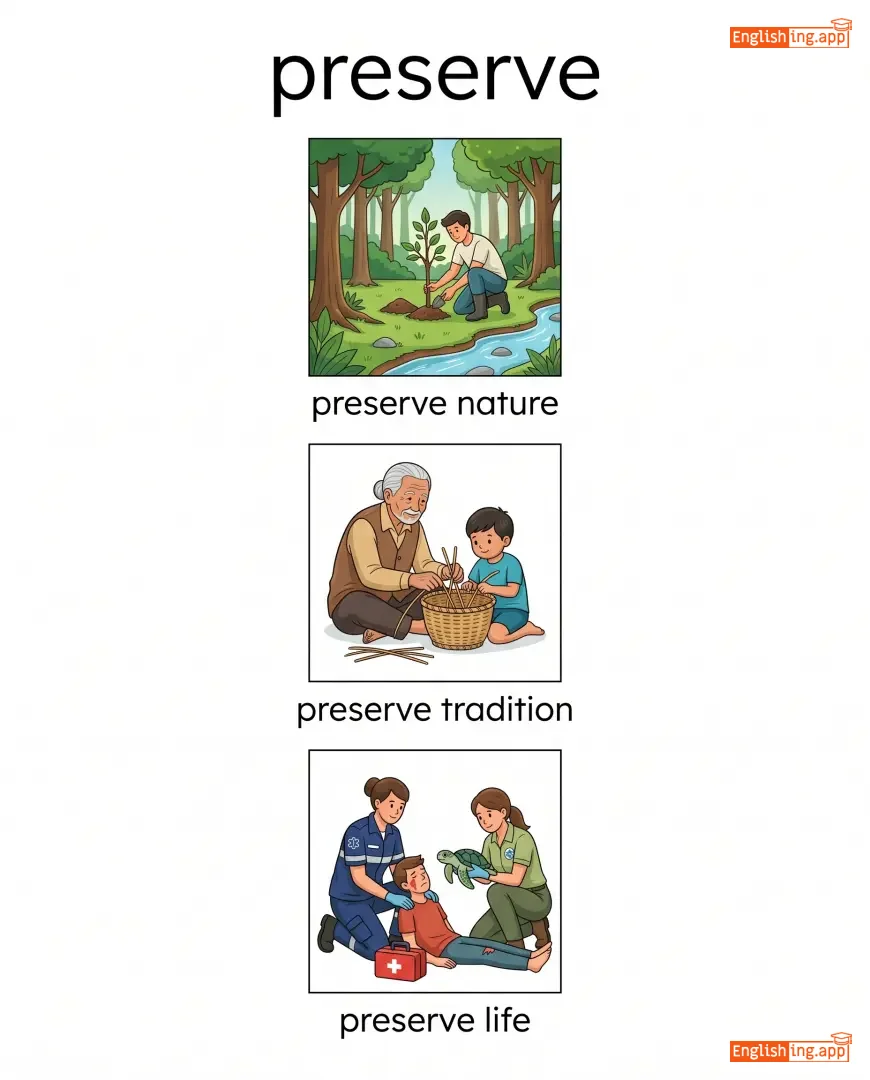
preserve nature, preserve tradition, preserve life, preserve evidence
••••••
|
No •••••• |
|
#10131
🗡️
|
/ˌpriːˈmɛdɪˌteɪtɪd/
adjective
(プレメディテイテッド)
••••••
|
- •••••• |
計画的
keikakuteki
••••••
|
- •••••• | - •••••• | - •••••• | - •••••• |
planned in advance; done deliberately
••••••
|
The crime was clearly premeditated.
その犯罪は明らかに計画的だった。
••••••
|
その犯罪は明らかに計画的だった。
Sono hanzai wa akiraka ni keikakuteki datta.
••••••
|
premeditated crime
計画的犯罪
••••••
|
a crime that is planned before being committed
••••••
|
計画的犯罪
keikakuteki hanzai
••••••
|
planned, intentional, deliberate, calculated
••••••
|
spontaneous, accidental
••••••
|
premeditated murder, premeditated attack, premeditated plan
••••••
|
Pre (前) + meditated (考えた) → 前に考えられたものが計画的
••••••
|
|
#10132
⚖️
|
/ˈprɛdʒədɪst/
adjective
(プレジュディスト)
••••••
|
- •••••• |
偏見のある
henken no aru
••••••
|
- •••••• | - •••••• | - •••••• | - •••••• |
having or showing a dislike or bias against a person or group without proper reason
••••••
|
He was prejudiced against people from other regions. |
彼は他の地域の人々に対して偏見を持っていた。
Kare wa hoka no chiiki no hitobito ni taishite henken o motte ita.
••••••
|
prejudiced view |
an opinion formed without fair reasoning
••••••
|
偏見のある見解
henken no aru kenka
••••••
|
biased, intolerant, bigoted, narrow-minded
••••••
|
fair, open-minded, impartial
••••••
|
racially prejudiced, prejudiced view, prejudiced against
••••••
|
偏見のある = 偏見、まるですでに人を判断しているよう
••••••
|
|
#10133
🧬
|
/ˌpriːdɪspəˈzɪʃən/
noun
(プレディスポジション)
••••••
|
|
傾向
keikou
••••••
|
- •••••• | - •••••• | - •••••• | - •••••• |
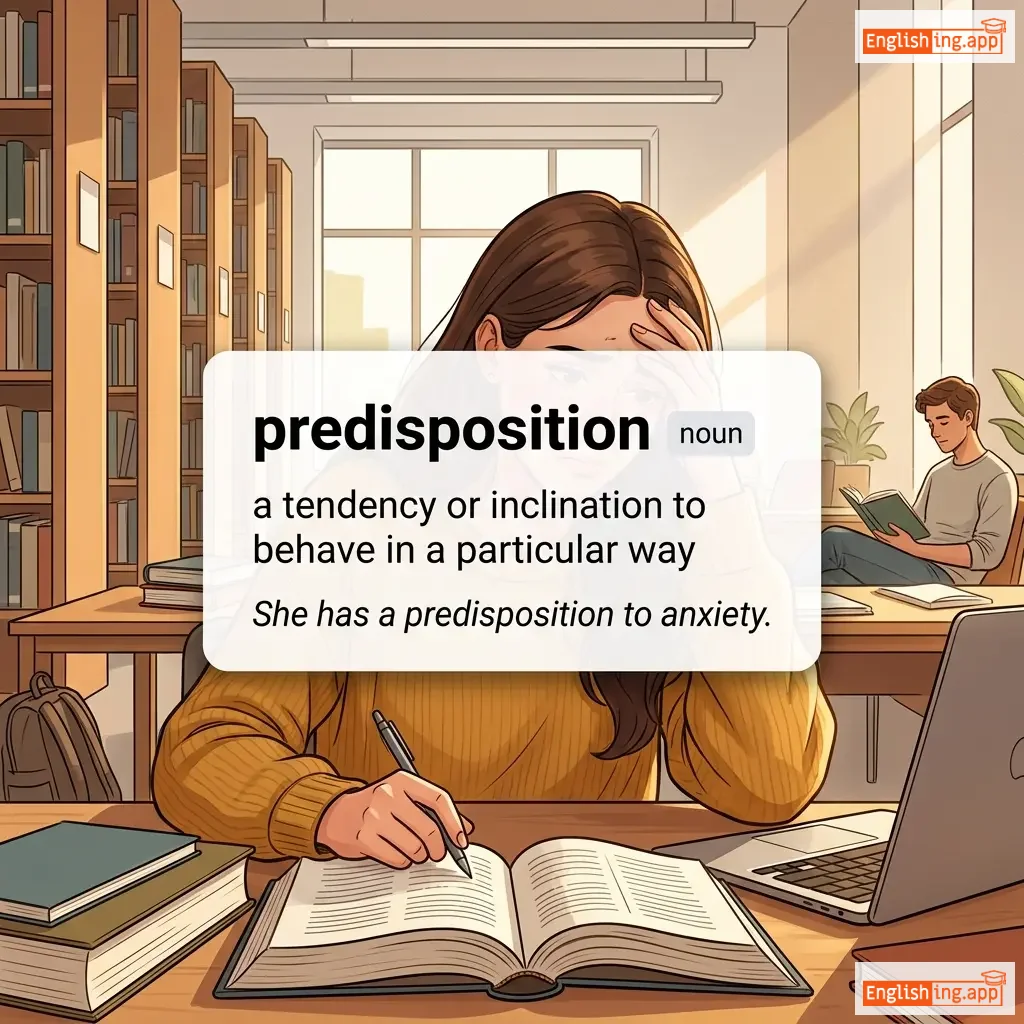
a tendency or inclination to behave in a particular way
••••••
|
She has a predisposition to anxiety.
彼女は不安に対する傾向があります。
••••••
|
彼女は不安に対する傾向があります。
Kanojo wa fuan ni taisuru keikou ga arimasu.
••••••
|
- •••••• | - •••••• | - •••••• |
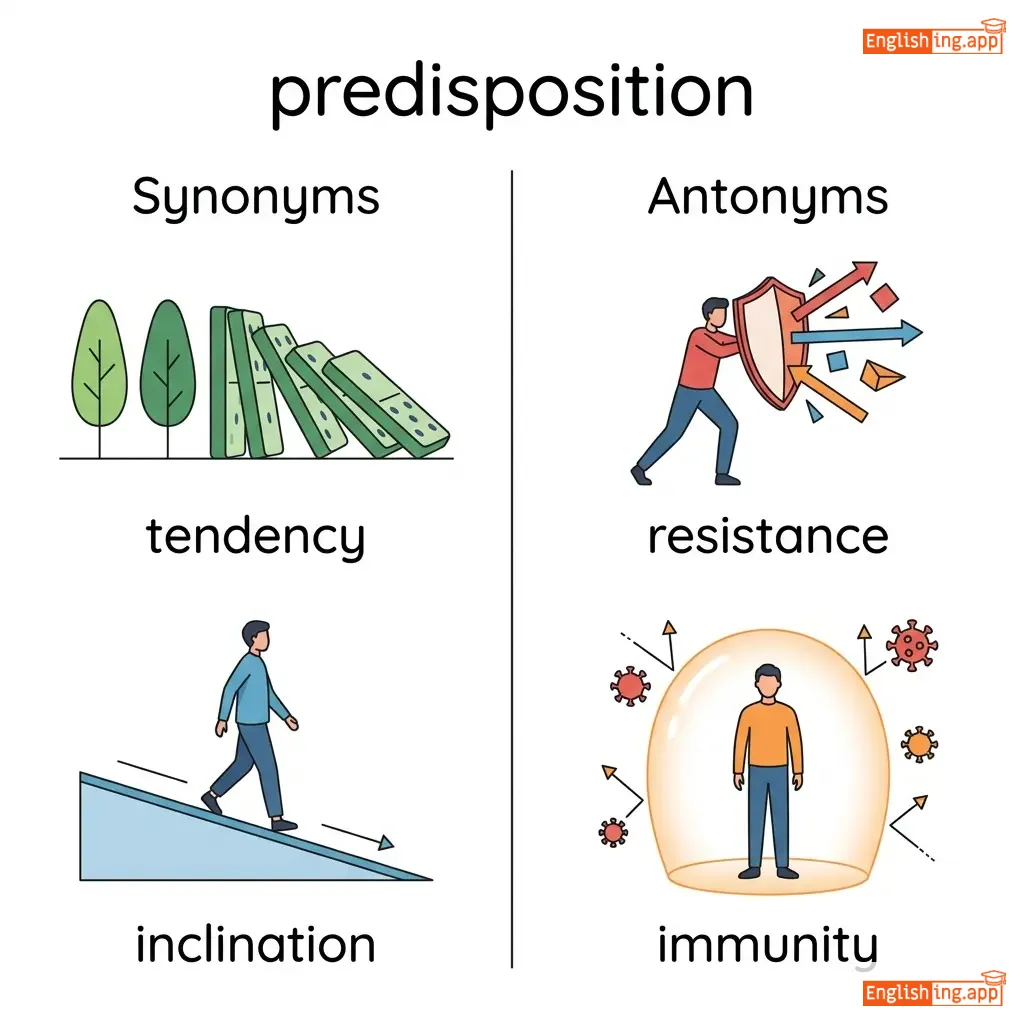
tendency, inclination, propensity, proclivity, bias
••••••
|
resistance, immunity
••••••
|
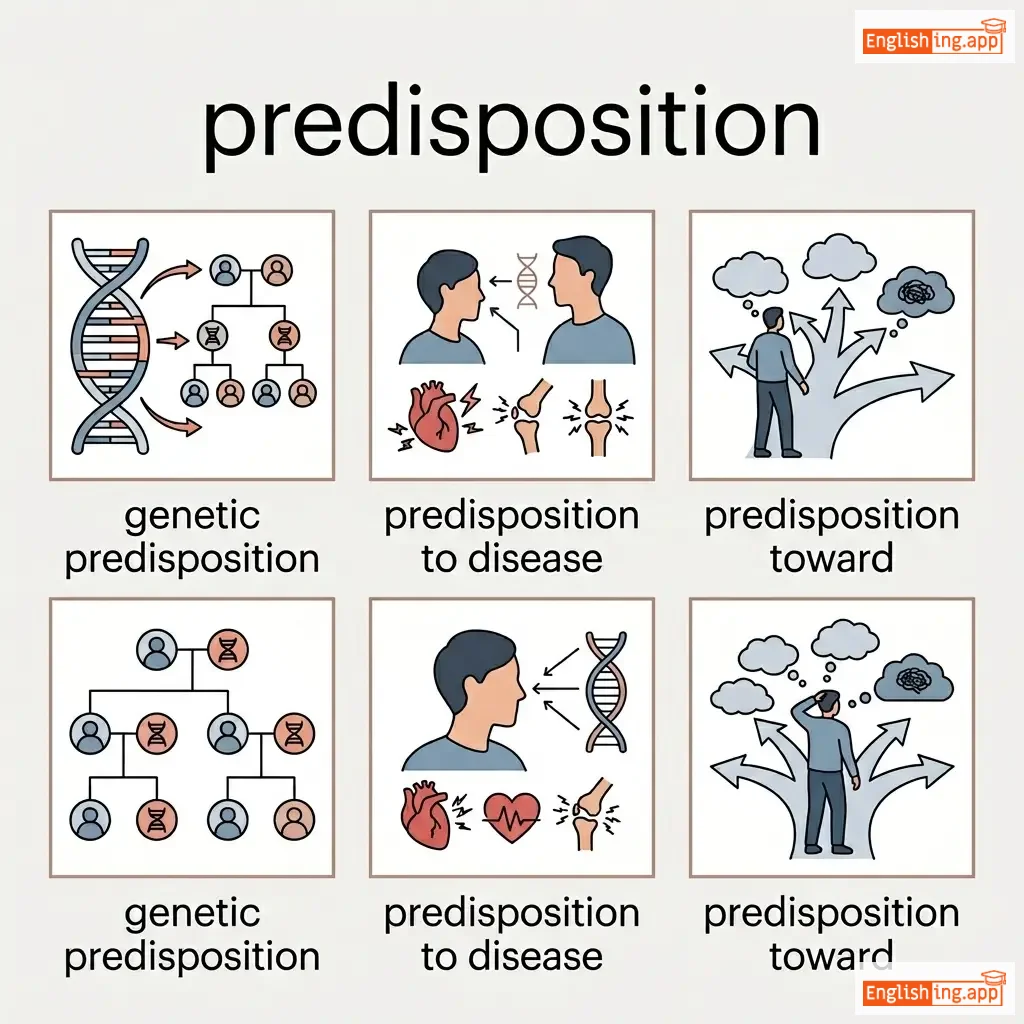
genetic predisposition, predisposition to disease, predisposition toward
••••••
|
プレディスポジション = プレ (前) + ディスポジション (傾向) → 前もって決まっている傾向
••••••
|
|
#10134
📝
|
/ˈpreɪsiː/
noun
(プレシ)
••••••
|
- •••••• |
要約
yōyaku
••••••
|
- •••••• | - •••••• | - •••••• | - •••••• |
a short summary of a text or speech
••••••
|
She wrote a précis of the lecture for her classmates. |
彼女はクラスメートのために講義の要約を書きました。
Kanojo wa kurasumēto no tame ni kōgi no yōyaku o kakimashita.
••••••
|
- •••••• | - •••••• | - •••••• |
summary, abstract, synopsis, digest
••••••
|
detail, expansion
••••••
|
write a précis, prepare a précis, précis of a report
••••••
|
Précisは要約を素早く圧縮したものです。
••••••
|
Vocabulary Quiz
Test your vocabulary by matching words with their translations or meanings.
Login to take the quiz
Comments (0)
Share your thoughts and join the discussion.
Join the discussion by logging in
Login to CommentNo comments yet
Be the first to share your thoughts!