

翻訳
過去
過去分詞
三人称単数
動名詞
意味
例文
例文の翻訳
同義語
対義語
コロケーション
ニーモニック
Swipe left or right, or use the buttons. Tap image to zoom.
例文の翻訳
単語
Lesson 347Lesson 347 - マスクトグル
|
絵文字
|
単語 | Images | 翻訳 | 過去 | 過去分詞 | 三人称単数 | 動名詞 | 意味 | 例文 | 例文の翻訳 | 表現例 | 表現例の意味 | 表現例の翻訳 | 同義語 | 対義語 | コロケーション | ニーモニック |
|---|---|---|---|---|---|---|---|---|---|---|---|---|---|---|---|---|---|
|
#10375
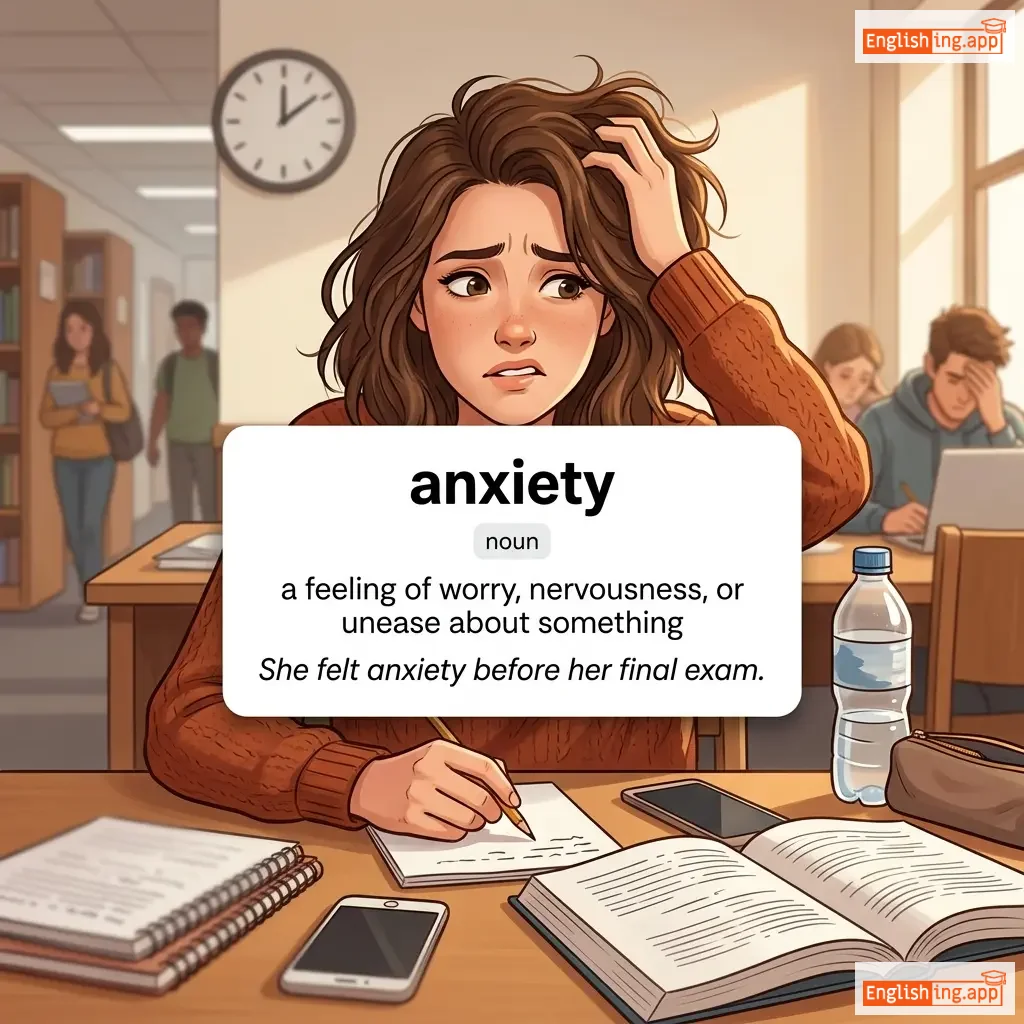
😰
|
/æŋˈzaɪəti/
noun
(エンジアイティ)
••••••
|
|
不安
fuan
••••••
|
- •••••• | - •••••• | - •••••• | - •••••• |
a feeling of worry, nervousness, or unease about something
••••••
|
She felt anxiety before her final exam. |
彼女は期末試験の前に不安を感じていた。
Kanojo wa kimatsu shiken no mae ni fuan wo kanjite ita.
••••••
|
separation anxiety |
a feeling of distress when separated from a loved one
••••••
|
分離不安
bunri fuan
••••••
|
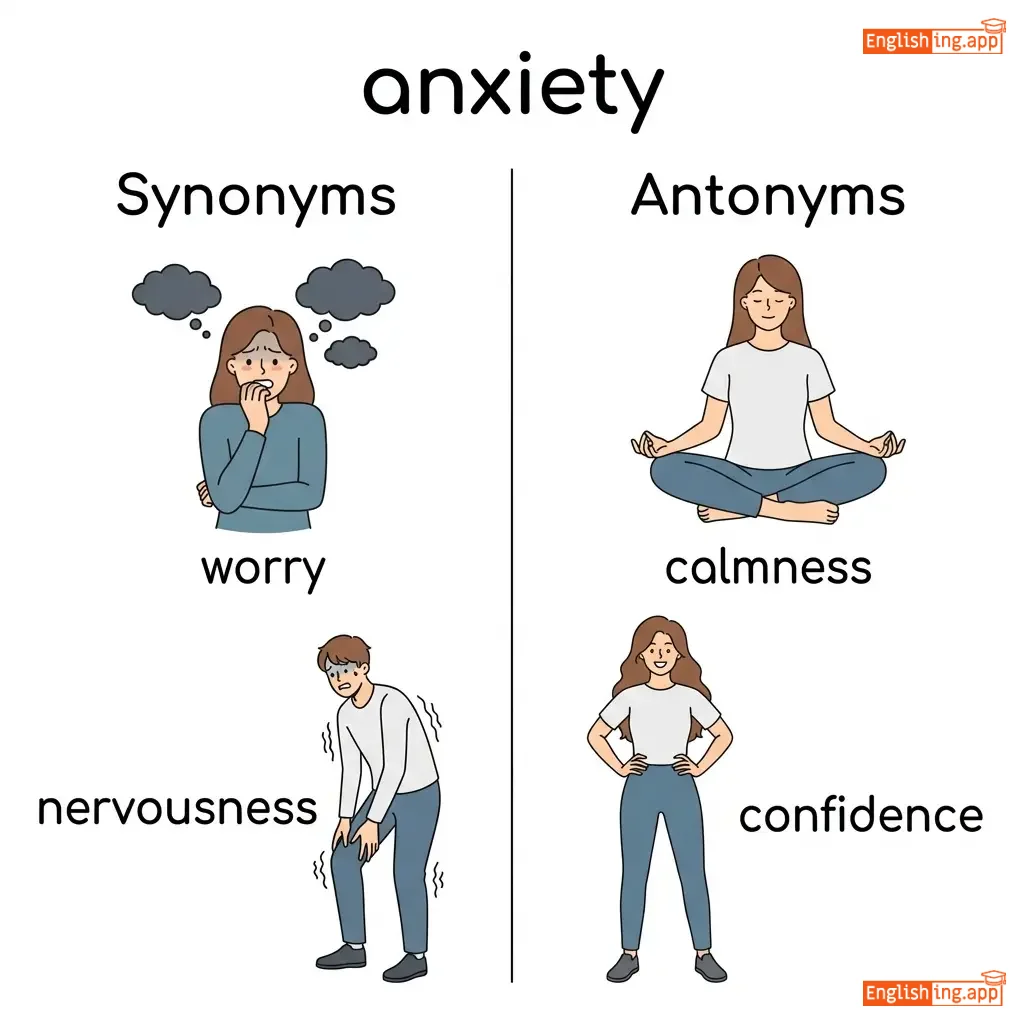
worry, nervousness, unease, tension, apprehension
••••••
|
calmness, confidence, peace
••••••
|
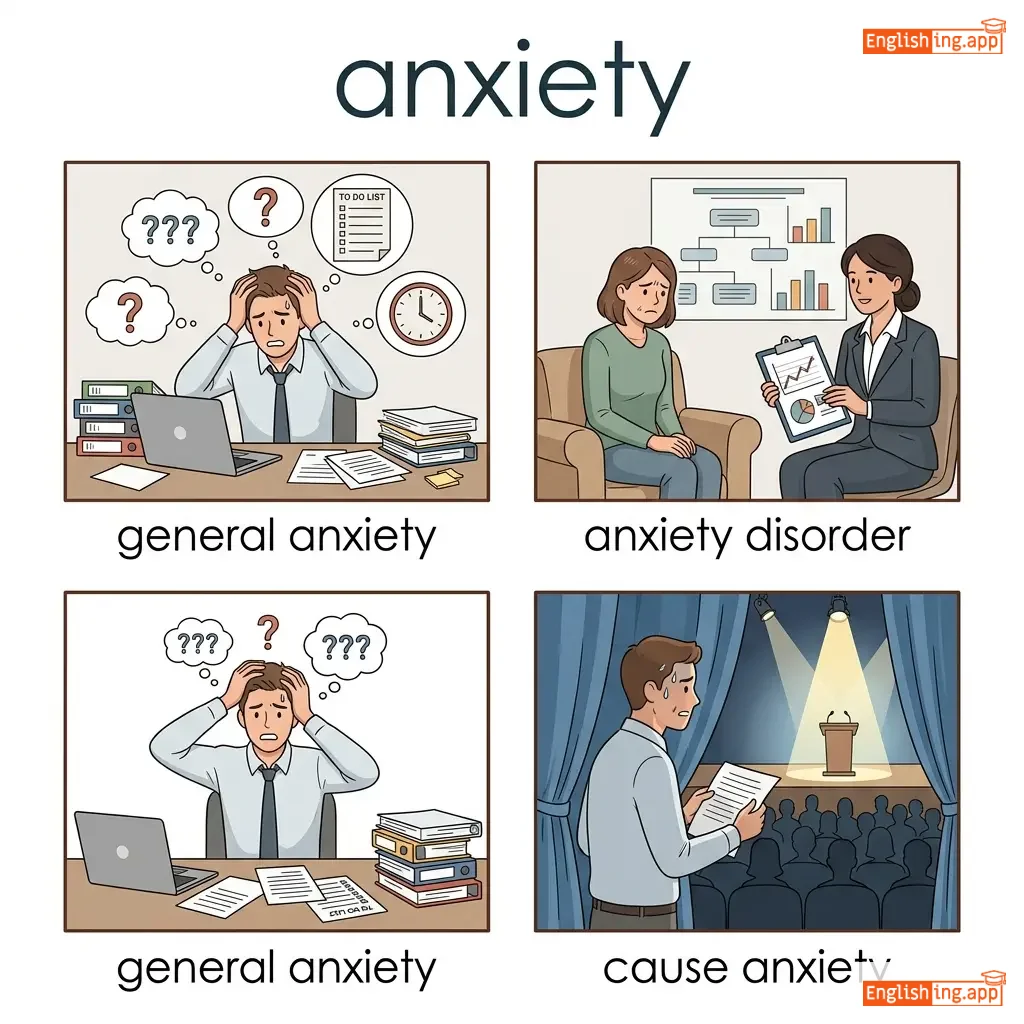
general anxiety, anxiety disorder, cause anxiety, reduce anxiety
••••••
|
試験の前に不安が増え、不安は心配を意味する。
••••••
|
|
#10376
✔️
|
/əˈpruː.vəl/
noun
(apruval)
••••••
|
- •••••• |
承認
shounin
••••••
|
- •••••• | - •••••• | - •••••• | - •••••• |
official permission or agreement for something
••••••
|
The project received government approval. |
そのプロジェクトは政府の承認を得た。
Sono purojekuto wa seifu no shōnin o eta.
••••••
|
seal of approval |
official acceptance or endorsement
••••••
|
承認印
shōnin in
••••••
|
acceptance, consent, permission, endorsement, authorization
••••••
|
disapproval, rejection, denial
••••••
|
gain approval, seek approval, official approval, parental approval
••••••
|
Approval は承認 ✔️ — 承認を得たら、すべてが許可されます。
••••••
|
|
#10377
📅
|
/əˈpɔɪntmənt/
noun
(アポイントメント)
••••••
|
- •••••• |
予約
yoyaku
••••••
|
- •••••• | - •••••• | - •••••• | - •••••• |
an arrangement to meet someone at a particular time
••••••
|
I have a doctor's appointment tomorrow. |
明日、医者の予約があります。
Ashita, isha no yoyaku ga arimasu.
••••••
|
keep an appointment |
to attend an arranged meeting
••••••
|
予約を守る
yoyaku o mamoru
••••••
|
meeting, arrangement, date, schedule, reservation
••••••
|
cancellation, absence
••••••
|
make an appointment, cancel an appointment, keep an appointment, appointment time
••••••
|
Appointmentは予約 — 時間を守って!
••••••
|
|
#10378
📄
|
/əˈplaɪ/
verb
(apurai)
••••••
|
- •••••• |
申請する / 適用する
shinsei suru / tekiyou suru
••••••
|
applied
apuraido
••••••
|
applied
apuraido
••••••
|
applies
apuraizu
••••••
|
applying
apuraiingu
••••••
|
to make a formal request for something; to put into practice
••••••
|
He decided to apply for the scholarship.
彼は奨学金の申請を決めた。
••••••
|
彼は奨学金の申請を決めた。
Kare wa shougakukin no shinsei wo kimeta.
••••••
|
apply oneself
自分に適用する
••••••
|
to make a serious effort to do something
••••••
|
一生懸命努力する
isshoukenmei doryoku suru
••••••
|
request, use, implement, employ, submit
••••••
|
ignore, neglect
••••••
|
apply for a job, apply pressure, apply rules, apply cream
••••••
|
Applyは申請するという意味 — 申請することでチャンスが広がります。
••••••
|
|
#10379
🍎
|
/ˈæpəl/
noun
(アップル)
••••••
|
- •••••• |
リンゴ
ringo
••••••
|
- •••••• | - •••••• | - •••••• | - •••••• |
a round fruit with red, green, or yellow skin
••••••
|
She ate a red apple for breakfast. |
彼女は朝食に赤いリンゴを食べました。
Kanojo wa chōshoku ni akai ringo o tabemashita.
••••••
|
the apple of one's eye |
a person or thing that is greatly loved or treasured
••••••
|
目の中のリンゴ
me no naka no ringo
••••••
|
fruit, pome, produce
••••••
|
null
••••••
|
apple pie, apple tree, apple juice, eat an apple
••••••
|
リンゴ(ringo)は‘毎日食べると元気’ - ‘An apple a day keeps doctor away’
••••••
|
|
#10380
👀
|
/əˈpɪərəns/
noun
(apīrensu)
••••••
|
- •••••• |
外見
gaiken
••••••
|
- •••••• | - •••••• | - •••••• | - •••••• |
the way that someone or something looks
••••••
|
His sudden appearance surprised everyone. |
彼の突然の登場は皆を驚かせました。
Kare no totsuzen no tōjō wa mina o odorokasemashita.
••••••
|
keep up appearances |
to maintain an outward show of good behavior or success
••••••
|
見かけを保つ
mikake o tamotsu
••••••
|
look, aspect, presence, form, figure
••••••
|
disappearance, absence
••••••
|
physical appearance, public appearance, sudden appearance, outward appearance
••••••
|
Appearance は外見 — 外見で人がわかる。
••••••
|
|
#10381
🤔
|
/əˈpærəntli/
adverb
(アパレントリー)
••••••
|
- •••••• |
どうやら
douyara
••••••
|
- •••••• | - •••••• | - •••••• | - •••••• |
as far as one knows or can see; seemingly
••••••
|
Apparently, she forgot about the meeting. |
どうやら、彼女は会議のことを忘れてしまったようだ。
Douyara, kanojo wa kaigi no koto o wasurete shimatta youda.
••••••
|
- •••••• | - •••••• | - •••••• |
seemingly, evidently, supposedly, clearly, obviously
••••••
|
certainly, definitely
••••••
|
apparently true, apparently clear, apparently not, apparently impossible
••••••
|
どうやら、‘どう’が‘どうだろう’のように、なんとなく感じる意味。
••••••
|
|
#10382
🏢
|
/əˈpɑːrtmənt/
noun
(アパートメント)
••••••
|
- •••••• |
アパートメント
apātomento
••••••
|
- •••••• | - •••••• | - •••••• | - •••••• |
a set of rooms forming a residence within a building
••••••
|
She rented an apartment in the city center.
彼女は市の中心にアパートメントを借りました。
••••••
|
彼女は市の中心にアパートメントを借りました。
Kanojo wa shi no chūshin ni apātomento o karimashita.
••••••
|
apartment complex
アパートメント群
••••••
|
a group of apartment buildings in one area
••••••
|
アパートメント群
apātomento gun
••••••
|
flat, unit, residence, condo, lodging
••••••
|
house, bungalow
••••••
|
rent an apartment, small apartment, apartment building, apartment complex
••••••
|
APARTMENTはアパートメント、英語で言うとそのままの意味です。
••••••
|
|
#10383
↔️
|
/əˈpɑːrt/
adverb
••••••
|
- •••••• | - •••••• | - •••••• | - •••••• | - •••••• | - •••••• |
separated by distance or time; into pieces
••••••
|
They live miles apart from each other. |
- •••••• |
fall apart |
to break into pieces or fail completely
••••••
|
- •••••• |
separately, away, aside, alone, divided
••••••
|
together, close
••••••
|
miles apart, set apart, apart from, fall apart
••••••
|
No •••••• |
|
#10384
🌍
|
/ˈɛnɪwɛər/
adverb
••••••
|
- •••••• | - •••••• | - •••••• | - •••••• | - •••••• | - •••••• |
in, at, or to any place
••••••
|
You can find good food anywhere in this city. |
- •••••• |
go anywhere |
to have freedom to travel or move to any place
••••••
|
- •••••• |
everywhere, someplace, anyplace, location, place
••••••
|
nowhere, somewhere specific
••••••
|
anywhere else, almost anywhere, find anywhere, go anywhere
••••••
|
No •••••• |
|
#10385
🔑
|
/ˈɛnɪθɪŋ/
pronoun
(エニシング)
••••••
|
- •••••• |
何でも
nandemo
••••••
|
- •••••• | - •••••• | - •••••• | - •••••• |
any object, event, or matter; whatever thing
••••••
|
You can ask me anything about the project. |
プロジェクトについて何でも聞いてください。
Purojekuto ni tsuite nandemo kiite kudasai.
••••••
|
anything but |
definitely not something
••••••
|
何でもない
nandemo nai
••••••
|
whatever, everything, object, matter, item
••••••
|
nothing, none
••••••
|
do anything, say anything, anything else, almost anything
••••••
|
ANYTHING は '何でも' を意味します—日本語で言う '何でも' のように。
••••••
|
|
#10386
👤
|
/ˈɛniwʌn/
pronoun
(エニワン)
••••••
|
- •••••• |
誰か
dareka
••••••
|
- •••••• | - •••••• | - •••••• | - •••••• |
any person at all; used to refer to an unspecified person
••••••
|
Does anyone know the answer to this question? |
誰かこの質問の答えを知っていますか?
dareka kono shitsumon no kotae o shitte imasu ka?
••••••
|
anyone's guess |
something that is very difficult to predict or know
••••••
|
誰かの予想
dareka no yosou
••••••
|
somebody, anybody, person, individual, someone
••••••
|
nobody, no one
••••••
|
anyone else, if anyone, hardly anyone, ask anyone
••••••
|
ANYONEは「誰か」を意味します。日本語で言う「誰か」です。
••••••
|
|
#10387
⏳
|
/ˌɛniˈmɔr/
adverb
(エニモア)
••••••
|
- •••••• |
もう〜ない
mou nai
••••••
|
- •••••• | - •••••• | - •••••• | - •••••• |
used to refer to the present time, typically to mean no longer
••••••
|
He doesn’t live here anymore. |
彼はもうここに住んでいません。
Kare wa mou koko ni sundeimasen.
••••••
|
- •••••• | - •••••• | - •••••• |
no longer, not now, no more
••••••
|
still, yet
••••••
|
not anymore, hardly anymore, anymore questions
••••••
|
もう〜ないはANYMOREを意味します、私がもうここに住んでいないように。
••••••
|
|
#10388
👤
|
/ˈɛniˌbɒdi/
pronoun
(エニボディ)
••••••
|
- •••••• |
誰でも
dare demo
••••••
|
- •••••• | - •••••• | - •••••• | - •••••• |
any person; anyone
••••••
|
Anybody can join the club. |
誰でもクラブに参加できます。
Dare demo kurabu ni sanka dekimasu.
••••••
|
- •••••• | - •••••• | - •••••• |
anyone, somebody, whoever, everyone
••••••
|
nobody, no one
••••••
|
ask anybody, tell anybody, anybody else, anybody interested
••••••
|
ANYBODY は誰でも、例えば Anybody can run in the park.
••••••
|
|
#10389
🔄
|
/ˈɛni/
determiner/pronoun
(エニ)
••••••
|
- •••••• |
いずれかの
izureka no
••••••
|
- •••••• | - •••••• | - •••••• | - •••••• |
one, some, or all, without specifying which
••••••
|
Do you have any questions? |
何か質問はありますか?
Nanika shitsumon wa arimasu ka?
••••••
|
any day now |
something expected to happen very soon
••••••
|
今すぐにどの日でも
Ima sugu ni dono hi demo
••••••
|
some, whatever, each, all, every
••••••
|
none, nothing
••••••
|
any chance, any time, any questions, any problem
••••••
|
ANYは「いずれかの」という意味、例えば'いずれかの日に起こるかもしれません'。
••••••
|
|
#10390
🙂
|
/æm/
verb (first person singular of 'be')
(エイム)
••••••
|
- •••••• |
私は
watashi wa
••••••
|
- •••••• | - •••••• | - •••••• | - •••••• |
the first person singular present tense of 'be'
••••••
|
I am happy today. |
今日は私は幸せです。
Kyou wa watashi wa shiawase desu.
••••••
|
- •••••• | - •••••• | - •••••• |
exist, live, remain
••••••
|
am not, nonexistent
••••••
|
I am, am sure, am going
••••••
|
私と言うと、英語では I AM になります - 覚えておいて:私は = watashi wa
••••••
|
|
#10391
🔮
|
/ænˈtɪsɪˌpeɪt/
verb
(アンティシペイト)
••••••
|
- •••••• |
予期する
yoki suru
••••••
|
anticipated
アンティシペイテッド
••••••
|
anticipated
アンティシペイテッド
••••••
|
anticipates
アンティシペイツ
••••••
|
anticipating
アンティシペイティング
••••••
|
to expect or look forward to something; to realize or foresee in advance
••••••
|
We anticipate a large crowd at the event.
イベントには大勢の人が来ると予想しています。
••••••
|
イベントには大勢の人が来ると予想しています。
Ibento ni wa ōzei no hito ga kuru to yosō shiteimasu.
••••••
|
anticipate the worst
最悪を予想する
••••••
|
to expect the most negative or undesirable outcome
••••••
|
最悪を予想する
Saiaku o yosō suru
••••••
|
expect, foresee, predict, await, prepare
••••••
|
doubt, ignore, neglect
••••••
|
anticipate problems, anticipate demand, anticipate success, anticipate changes
••••••
|
予期することは、何かが起こる前にそれを想像することです。
••••••
|
|
#10392
➕
|
/əˈnʌðər/
determiner/pronoun
(アナザー)
••••••
|
- •••••• |
もう一つ
mou hitotsu
••••••
|
- •••••• | - •••••• | - •••••• | - •••••• |
one more person or thing of the same type
••••••
|
Can I have another cup of tea? |
もう一杯の紅茶をいただけますか?
Mou ippai no koucha o itadakemasu ka?
••••••
|
another day |
a different or additional day
••••••
|
もう一日
mou ichinichi
••••••
|
one more, additional, extra, different
••••••
|
same, identical
••••••
|
another chance, another reason, another person, another story
••••••
|
Anotherは「もう一つ」を意味する—もう一杯の紅茶が欲しい!
••••••
|
|
#10393
📢
|
/əˈnaʊns/
verb
(アナウンス)
••••••
|
- •••••• |
発表する
happyou suru
••••••
|
announced
アナウンスド
••••••
|
announced
アナウンスド
••••••
|
announces
アナウンスィズ
••••••
|
announcing
アナウンシング
••••••
|
to make a formal public statement about something
••••••
|
The company will announce the new product tomorrow.
会社は明日新しい製品をアナウンスします。
••••••
|
会社は明日新しい製品をアナウンスします。
Kaisha wa ashita atarashī seihin o anōnsu shimasu.
••••••
|
announce decision
決定をアナウンスする
••••••
|
to declare or make a decision public
••••••
|
決定を発表する
Kettei o happyou suru
••••••
|
declare, proclaim, state, notify, publish
••••••
|
conceal, withhold, hide
••••••
|
announce results, announce plans, announce officially, announce publicly
••••••
|
アナウンスは公に発表すること—マイクでみんなに知らせる!
••••••
|
|
#10394
🎉
|
/ˌænɪˈvɜːrsəri/
noun
(アニバーサリー)
••••••
|
- •••••• |
記念日
kinenbi
••••••
|
- •••••• | - •••••• | - •••••• | - •••••• |
the yearly recurrence of a date marking a past event
••••••
|
They celebrated their wedding anniversary with a dinner. |
彼らは結婚記念日をディナーで祝いました。
Karera wa kekkon kinenbi o dinā de iwaimashita.
••••••
|
anniversary celebration |
a festivity or event to mark an anniversary
••••••
|
記念日のお祝い
kinenbi no oiwai
••••••
|
commemoration, remembrance, jubilee, observance
••••••
|
forgetfulness, neglect
••••••
|
wedding anniversary, annual anniversary, silver anniversary, golden anniversary
••••••
|
Anniversary は記念日—Anni は年、Versary は繰り返し 🔄
••••••
|
|
#10395
🐅
|
/ˈænɪməl/
noun
(アニマル)
••••••
|
- •••••• |
動物
doubutsu
••••••
|
- •••••• | - •••••• | - •••••• | - •••••• |
a living organism that feeds on organic matter and usually has senses and mobility
••••••
|
The tiger is a wild animal. |
虎は野生の動物です。
Tora wa yasei no dōbutsu desu.
••••••
|
party animal |
someone who enjoys going to parties a lot
••••••
|
パーティーアニマル
pātī animaru
••••••
|
creature, beast, living being, organism
••••••
|
plant, human
••••••
|
wild animal, domestic animal, animal rights, animal kingdom
••••••
|
Animal は動物—動物園にはたくさんの動物がいます 🦁
••••••
|
|
#10396
😡
|
/ˈæŋɡri/
adjective
(エングリ)
••••••
|
- •••••• |
怒っている
okotteiru
••••••
|
- •••••• | - •••••• | - •••••• | - •••••• |
feeling or showing strong displeasure or hostility
••••••
|
She was angry when she found out the truth. |
彼女は真実を知って怒っていた。
Kanojo wa shinjitsu o shitte okotte ita.
••••••
|
angry with someone |
to feel or show anger towards a person
••••••
|
誰かに怒っている
dareka ni okotteiru
••••••
|
mad, furious, upset, irritated, annoyed
••••••
|
calm, happy, pleased
••••••
|
angry face, angry voice, angry crowd, angry response
••••••
|
Angry は怒っている—怒ると顔が赤くなる 🔥
••••••
|
|
#10397
📐
|
/ˈæŋɡl/
noun
(エイングル)
••••••
|
- •••••• |
角度
kakudo
••••••
|
- •••••• | - •••••• | - •••••• | - •••••• |
The space between two intersecting lines or surfaces at the point where they meet.
••••••
|
The teacher explained how to measure an angle in geometry. |
先生は数学で角度を測る方法を説明しました。
Sensei wa sūgaku de kakudo o hakaru hōhō o setsumei shimashita.
••••••
|
different angle |
a new or alternative way of looking at something
••••••
|
異なる角度
kotonaru kakudo
••••••
|
corner, viewpoint, perspective, slant
••••••
|
straight line, alignment
••••••
|
right angle, sharp angle, wide angle, camera angle
••••••
|
角度は二つの線が交わる場所です。角度定規を使って測りましょう!
••••••
|
|
#10398
😡
|
/ˈæŋɡər/
noun
(エンガー)
••••••
|
- •••••• |
怒り
ikari
••••••
|
- •••••• | - •••••• | - •••••• | - •••••• |
A strong feeling of displeasure or hostility.
••••••
|
He couldn't control his anger after the argument. |
彼は議論の後、自分の怒りを制御できなかった。
Kare wa giron no ato, jibun no ikari o seiryō dekinakatta.
••••••
|
fit of anger |
a sudden, intense outburst of anger
••••••
|
怒りの爆発
ikari no bakuhatsu
••••••
|
rage, fury, irritation, resentment, wrath
••••••
|
calm, peace, happiness
••••••
|
express anger, control anger, suppress anger, anger management
••••••
|
Angerは怒り - エンガーが怒りに変わる。
••••••
|
|
#10399
➕
|
/ænd/
conjunction
(アンド)
••••••
|
- •••••• |
と
to
••••••
|
- •••••• | - •••••• | - •••••• | - •••••• |
Used to connect words or sentences that are to be taken jointly.
••••••
|
She bought apples and oranges. |
彼女はリンゴとオレンジを買いました。
Kanojo wa ringo to orenji o kaimashita.
••••••
|
- •••••• | - •••••• | - •••••• |
plus, along with, together with, as well as
••••••
|
or, but
••••••
|
and so, and then, and finally, and also
••••••
|
And はと意味です - リンゴ と オレンジ 一緒に。
••••••
|
|
#10400
🏛️
|
/ˈeɪnʃənt/
adjective
(エインシェント)
••••••
|
- •••••• |
古代の
kodai no
••••••
|
- •••••• | - •••••• | - •••••• | - •••••• |
Belonging to the very distant past; very old.
••••••
|
They visited the ruins of an ancient city.
彼らは古代都市の遺跡を訪れました。
••••••
|
彼らは古代都市の遺跡を訪れました。
Karera wa kodai toshi no iseki o otozuremashita.
••••••
|
ancient history
古代の歴史
••••••
|
something that happened a long time ago and is no longer important
••••••
|
古代の歴史
Kodai no rekishi
••••••
|
old, antique, archaic, prehistoric, classical
••••••
|
modern, recent
••••••
|
ancient civilization, ancient ruins, ancient culture, ancient temple
••••••
|
古代のは 'Ancient' の意味、古代の神殿や城をイメージしよう。
••••••
|
|
#10401
🔬
|
/əˈnæləsɪs/
noun
(アナリシス)
••••••
|
|
分析
bunseki
••••••
|
- •••••• | - •••••• | - •••••• | - •••••• |
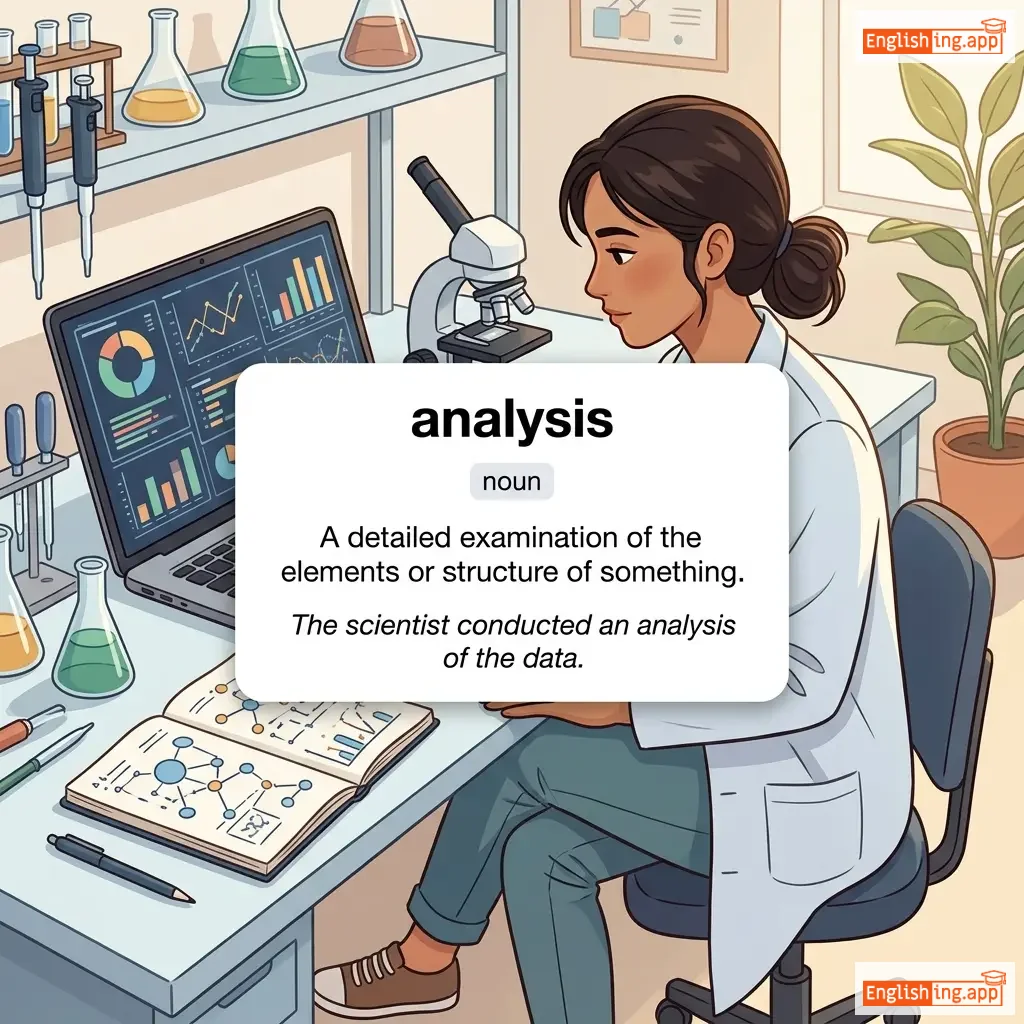
A detailed examination of the elements or structure of something.
••••••
|
The scientist conducted an analysis of the data. |
科学者はデータの分析を行った。
Kagakusha wa dēta no bunseki o okonatta.
••••••
|
in-depth analysis |
a very detailed and thorough examination of something
••••••
|
詳細な分析
shōsai na bunseki
••••••
|
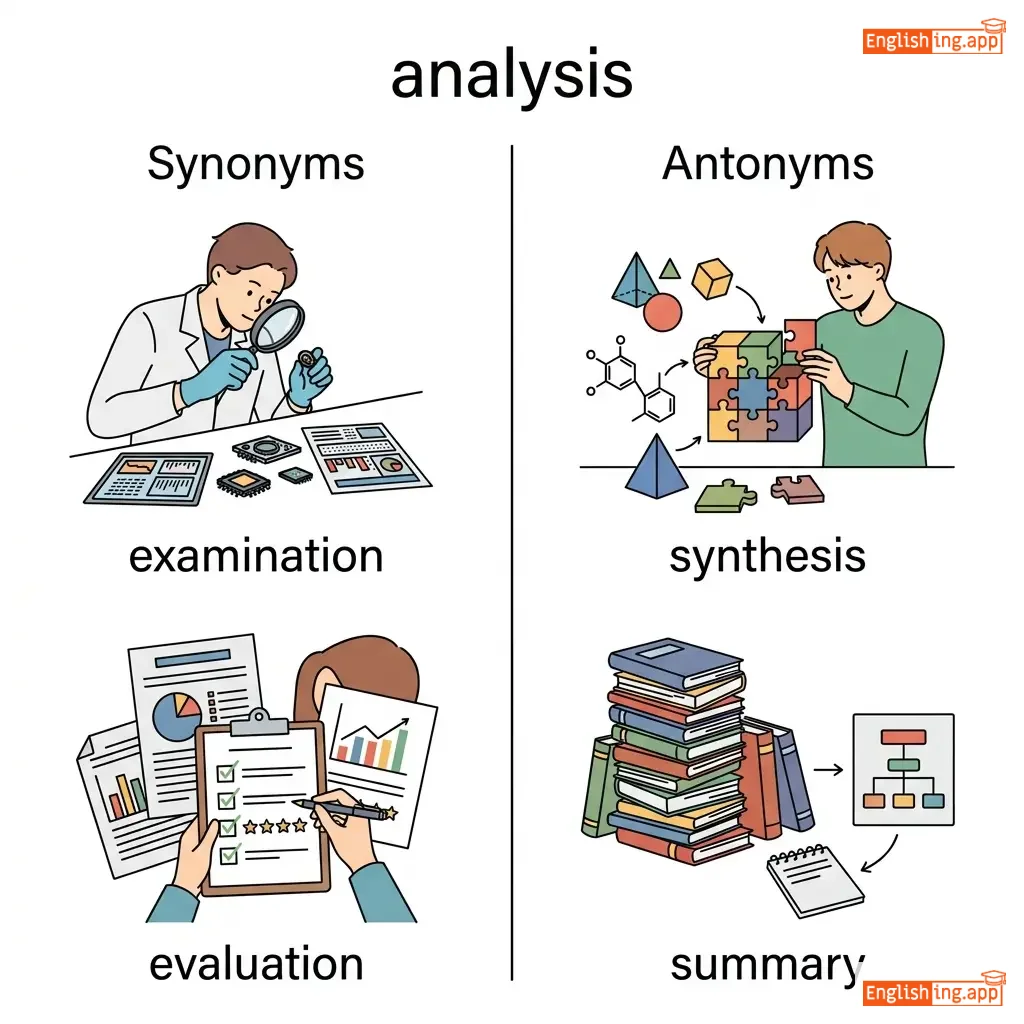
examination, evaluation, study, review, assessment
••••••
|
synthesis, summary
••••••
|
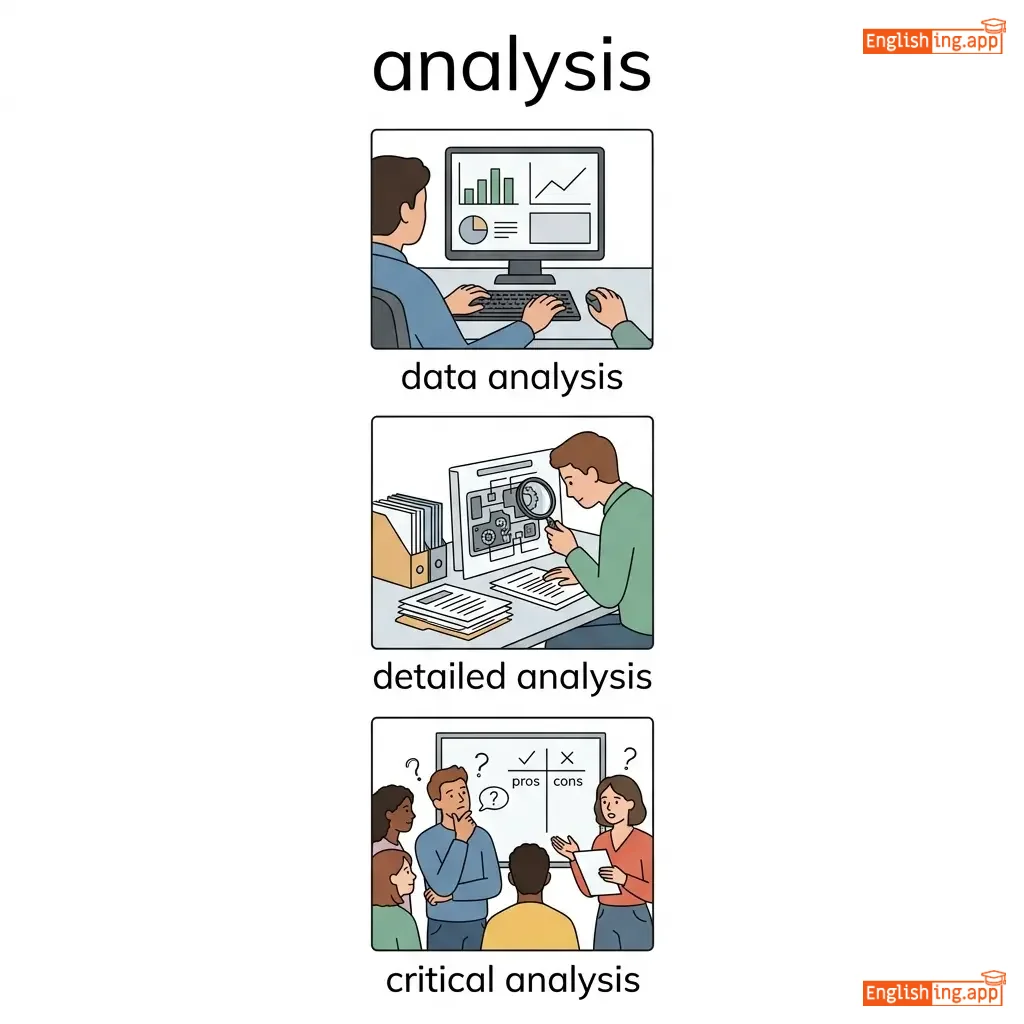
data analysis, detailed analysis, critical analysis, market analysis
••••••
|
Analysis は分析のことです、データを詳しく分析して結果を出す。
••••••
|
|
#10402
💰
|
/əˈmaʊnt/
noun/verb
(アマウント)
••••••
|
- •••••• |
金額
kingaku
••••••
|
amounted
アマウンテッド
••••••
|
amounted
アマウンテッド
••••••
|
amounts
アマウントス
••••••
|
amounting
アマウティング
••••••
|
a quantity of something, typically the total of a thing or things in number, size, value, or extent
••••••
|
The total amount of money is not enough.
お金の合計額は十分ではありません。
••••••
|
お金の合計額は十分ではありません。
Okane no goukei-gaku wa juubun de wa arimasen.
••••••
|
amount to nothing
amount to nothing
••••••
|
to have no significant result or value
••••••
|
何も意味しない
nanimo imi shinai
••••••
|
quantity, sum, total, volume, measure
••••••
|
lack, zero, nothing
••••••
|
large amount, small amount, total amount
••••••
|
Amount は金額と関連があり、お金の額
••••••
|
|
#10403
👥
|
/əˈmʌŋ/
preposition
(アモング)
••••••
|
- •••••• |
の中で
no naka de
••••••
|
- •••••• | - •••••• | - •••••• | - •••••• |
surrounded by; in the middle of a group
••••••
|
He was sitting among his friends. |
彼は友達の中に座っていた。
Kare wa tomodachi no naka ni suwatte ita.
••••••
|
- •••••• | - •••••• | - •••••• |
amid, amidst, between, surrounded by
••••••
|
outside, away from
••••••
|
among people, among friends, among the crowd
••••••
|
Amongは...の中で、友達の中にいるようなものです。
••••••
|
|
#10404
🇺🇸
|
/əˈmerɪkən/
noun/adjective
(アメリカン)
••••••
|
- •••••• |
アメリカン
amerikan
••••••
|
- •••••• | - •••••• | - •••••• | - •••••• |
relating to the United States or its people
••••••
|
She is an American citizen. |
彼女はアメリカ市民です。
Kanojo wa amerika shimin desu.
••••••
|
- •••••• | - •••••• | - •••••• |
US, Yankee, North American
••••••
|
non-American, foreigner
••••••
|
American culture, American dream, American citizen
••••••
|
アメリカから来たのでアメリカン
••••••
|
Vocabulary Quiz
Test your vocabulary by matching words with their translations or meanings.
Login to take the quiz
Comments (0)
Share your thoughts and join the discussion.
Join the discussion by logging in
Login to CommentNo comments yet
Be the first to share your thoughts!