

翻訳
過去
過去分詞
三人称単数
動名詞
意味
例文
例文の翻訳
同義語
対義語
コロケーション
ニーモニック

Swipe left or right, or use the buttons. Tap image to zoom.
例文の翻訳
単語
Lesson 421Lesson 421 - マスクトグル
|
絵文字
|
単語 | Images | 翻訳 | 過去 | 過去分詞 | 三人称単数 | 動名詞 | 意味 | 例文 | 例文の翻訳 | 表現例 | 表現例の意味 | 表現例の翻訳 | 同義語 | 対義語 | コロケーション | ニーモニック |
|---|---|---|---|---|---|---|---|---|---|---|---|---|---|---|---|---|---|
|
#1
🌱
|
/dɪˌveləpˈmentl/
adjective
(ディベロップメンタル)
••••••
|
- •••••• |
発展的
hatenteki
••••••
|
- •••••• | - •••••• | - •••••• | - •••••• |
relating to the process of growth or progress
••••••
|
Early childhood is a crucial developmental stage for learning. |
幼児期は学習にとって重要な発展的段階です。
Yōjiki wa gakushū ni totte jūyōna hatten-teki dankai desu.
••••••
|
- •••••• | - •••••• | - •••••• |
evolutionary, progressive, formative, educational
••••••
|
regressive, stagnant
••••••
|
developmental stage, developmental psychology, developmental delay
••••••
|
Development + al = 開発に関連する — だから発展的は開発に関連することを意味する
••••••
|
|
#1
⚓
|
/dɒk/
noun
(ドック)
••••••
|
- •••••• |
ドック
dokku
••••••
|
- •••••• | - •••••• | - •••••• | - •••••• |
a structure where ships are loaded, unloaded, or repaired
••••••
|
The ship stayed at the dock for two days. |
船はドックに2日間停泊していました。
Fune wa dokku ni futsukakan teihaku shiteimashita.
••••••
|
in the dock |
being accused of something or under examination
••••••
|
被告人席
hikokunin seki
••••••
|
harbor, pier, wharf, quay, jetty
••••••
|
open sea, offshore
••••••
|
ship dock, cargo dock, repair dock, fishing dock
••••••
|
Dock はドック — 船はドックに停泊します。
••••••
|
|
#1
😨
|
/dɪˈstɜː.bɪŋ/
adjective
(dɪsˈtɜːrbɪŋ)
••••••
|
- •••••• |
気になる
ki ni naru
••••••
|
- •••••• | - •••••• | - •••••• | - •••••• |
causing anxiety, worry, or emotional distress
••••••
|
The news about the accident was deeply disturbing.
事故のニュースは非常に気分を害するものでした。
••••••
|
事故のニュースは非常に気分を害するものでした。
Jiko no nyūsu wa hijō ni kibun o gaisuru mono deshita.
••••••
|
disturbing the peace
平和を乱す
••••••
|
to make noise or cause trouble in a quiet public place
••••••
|
平和を乱す
Heiwa o midasu
••••••
|
upsetting, alarming, distressing, troubling, shocking
••••••
|
comforting, calming, soothing
••••••
|
deeply disturbing, disturbing image, disturbing trend, disturbing news
••••••
|
Disturbing は気になること — 気になることはあなたの心を揺さぶります!
••••••
|
|
#1
🚫
|
/dɪsˈtɜːb/
verb
(ディスターブ)
••••••
|
- •••••• |
邪魔する
jama suru
••••••
|
disturbed
ディスターブド
••••••
|
disturbed
ディスターブド
••••••
|
disturbs
ディスターブス
••••••
|
disturbing
ディスタービング
••••••
|
to interrupt or cause someone to stop what they are doing
••••••
|
Please don’t disturb me while I’m studying.
勉強している間に私を邪魔しないでください。
••••••
|
勉強している間に私を邪魔しないでください。
Benkyō shite iru aida ni watashi o jama shinai de kudasai.
••••••
|
do not disturb
邪魔しないで
••••••
|
used to tell people not to interrupt or bother someone
••••••
|
邪魔しないで
jama shinai de
••••••
|
interrupt, bother, annoy, upset, distract
••••••
|
calm, soothe, comfort
••••••
|
disturb peace, disturb sleep, disturb someone, disturb balance
••••••
|
'Do Not Disturb' は日本語で「邪魔しないで」— 勉強に集中!🚫
••••••
|
|
#1
💽
|
/dɪsk/
noun
(ディスク)
••••••
|
- •••••• |
ディスク / データ保存装置
disuku / dēta hozon sōchi
••••••
|
- •••••• | - •••••• | - •••••• | - •••••• |
a flat, circular object, often used to store data electronically
••••••
|
All the data is saved on a hard disk. |
すべてのデータはハードディスクに保存されています。
Subete no dēta wa hādo disuku ni hozon sareteimasu.
••••••
|
- •••••• | - •••••• | - •••••• |
disc, platter, hard drive, storage device
••••••
|
none, sphere
••••••
|
hard disk, floppy disk, magnetic disk, disk drive
••••••
|
💽 ディスクはデータを保存する丸いデジタルプレート!
••••••
|
|
#1
🙁
|
/dɪsˈkʌrɪdʒ/
verb
••••••
|
- •••••• | - •••••• |
discouraged
••••••
|
discouraged
••••••
|
discourages
••••••
|
discouraging
••••••
|
to make someone less confident or enthusiastic about doing something
••••••
|
Failure should not discourage you from trying again. |
- •••••• |
discourage someone from doing something |
to make someone not want to do something
••••••
|
- •••••• |
deter, dishearten, demotivate, depress, prevent
••••••
|
encourage, inspire, motivate
••••••
|
strongly discourage, discourage behavior, discourage effort, discourage action
••••••
|
No •••••• |
|
#1
💿
|
/dɪsk/
noun
(ディスク)
••••••
|
- •••••• |
平らで薄く、円形の物体
taira de usuku, enkei no buttai
••••••
|
- •••••• | - •••••• | - •••••• | - •••••• |
a flat, thin, round object or surface
••••••
|
He inserted the music disc into the player. |
彼は音楽ディスクをプレーヤーに挿入した。
Kare wa ongaku disuku o purēyā ni sōnyū shita.
••••••
|
- •••••• | - •••••• | - •••••• |
disk, platter, circle, plate, record
••••••
|
sphere, cube
••••••
|
compact disc, spinal disc, brake disc, hard disc
••••••
|
💿 CDは平らで円形、薄い物体です!
••••••
|
|
#1
😞
|
/ˌdɪsəˈpɔɪntmənt/
noun
(ディサポイントメント)
••••••
|
- •••••• |
失望
shitsubou
••••••
|
- •••••• | - •••••• | - •••••• | - •••••• |
the feeling of sadness or displeasure caused by the non-fulfillment of one's hopes or expectations
••••••
|
Her face showed deep disappointment after hearing the results.
結果を聞いた後、彼女の顔には深い失望が表れていた。
••••••
|
結果を聞いた後、彼女の顔には深い失望が表れていた。
Kekka wo kiita ato, kanojo no kao ni wa fukai shitsubou ga arawarete ita.
••••••
|
to one's disappointment
誰かの失望に
••••••
|
to express that something happened in a way that caused disappointment
••••••
|
誰かの失望に
Dareka no shitsubou ni
••••••
|
frustration, letdown, sadness, regret, dismay
••••••
|
satisfaction, joy, delight
••••••
|
great disappointment, bitter disappointment, express disappointment, feel disappointment
••••••
|
Dis + appointment = 失望, 期待が外れるときの感情
••••••
|
|
#1
😞
|
/ˌdɪsəˈpɔɪntɪd/
adjective
(disappoɪntid)
••••••
|
- •••••• |
失望した
shitsubou shita
••••••
|
- •••••• | - •••••• | - •••••• | - •••••• |
sad or displeased because something has not happened as expected
••••••
|
She was disappointed with her exam results. |
彼女は試験結果に失望していた。
Kanojo wa shiken kekka ni shitsubou shite ita.
••••••
|
disappointed in someone |
feeling let down by a person's actions or behavior
••••••
|
誰かに失望する
dareka ni shitsubou suru
••••••
|
dissatisfied, upset, frustrated, let down, displeased
••••••
|
satisfied, pleased, content
••••••
|
feel disappointed, deeply disappointed, disappointed result, disappointed face
••••••
|
Dis + appointはあなたが期待していた人が失望させたから、‘失望した’です!
••••••
|
|
#1
♿
|
/dɪsˈeɪbld/
adjective
(ディセイブルド)
••••••
|
- •••••• |
障害者
shougaisya
••••••
|
- •••••• | - •••••• | - •••••• | - •••••• |
having a physical or mental condition that limits movements, senses, or activities
••••••
|
The park has special facilities for disabled people. |
公園には障害者用の特別な施設があります。
Kouen ni wa shougaisya-you no tokubetsuna shisetsu ga arimasu.
••••••
|
- •••••• | - •••••• | - •••••• |
handicapped, impaired, incapacitated, challenged
••••••
|
able-bodied, healthy, fit
••••••
|
disabled person, disabled access, physically disabled, disabled community
••••••
|
Dis + able = not able → 体が不自由な人は‘障害者’です。
••••••
|
|
#1
🥣
|
/dɪp/
verb
(ディップ)
••••••
|
- •••••• |
浸す
shimesu
••••••
|
dipped
ディップド
••••••
|
dipped
ディップド
••••••
|
dips
ディップス
••••••
|
dipping
ディッピング
••••••
|
to put something quickly into a liquid and take it out again
••••••
|
She dipped her bread into the soup.
彼女はパンをスープに浸しました。
••••••
|
彼女はパンをスープに浸しました。
Kanojo wa pan o sūpu ni shimeshima-shita.
••••••
|
dip your toes in
新しいことを慎重に試す
••••••
|
to try something new carefully or slowly
••••••
|
新しいことを慎重に試す
atarashī koto o shinchō ni tamesu
••••••
|
immerse, submerge, sink, plunge, dunk
••••••
|
lift, raise, dry
••••••
|
dip in water, dip sauce, dip stick, dip temperature
••••••
|
スープにパンを浸す – これがDIP!
••••••
|
|
#1
🕊️
|
/ˈdɪɡnəti/
noun
(ディグニティ)
••••••
|
- •••••• |
尊厳
songen
••••••
|
- •••••• | - •••••• | - •••••• | - •••••• |
the state or quality of being worthy of respect or honor
••••••
|
He faced the difficult situation with calm and dignity. |
彼は冷静さと尊厳を持って困難な状況に立ち向かいました。
Kare wa reisei sa to songen wo motte konnan na joukyou ni tachimukaimashita.
••••••
|
maintain one's dignity |
to behave respectfully and with self-control even in difficult situations
••••••
|
尊厳を保つ
songen wo tamotsu
••••••
|
honor, self-respect, grace, pride, nobility
••••••
|
disgrace, humiliation, shame
••••••
|
human dignity, personal dignity, loss of dignity, with dignity
••••••
|
'尊厳' は名誉を意味します — '尊'の中に'厳'を見つけて!
••••••
|
|
#1
📔
|
/ˈdaɪəri/
noun
(ダイアリー)
••••••
|
- •••••• |
日記
nikki
••••••
|
- •••••• | - •••••• | - •••••• | - •••••• |
a book in which one keeps a daily record of events and experiences
••••••
|
She wrote about her day in her diary before going to bed. |
彼女は寝る前に日記にその日の出来事を書きました。
Kanojo wa neru mae ni nikki ni sono hi no dekigoto o kakimashita.
••••••
|
- •••••• | - •••••• | - •••••• |
journal, log, notebook, memoir
••••••
|
public record, announcement
••••••
|
keep a diary, personal diary, secret diary, daily diary
••••••
|
日記は毎日を書く — 'diary'から来た'日記'を覚えよう!
••••••
|
|
#1
💎
|
/ˈdaɪəmənd/
noun
(daɪəmənd)
••••••
|
- •••••• |
ダイヤモンド
daiyamondo
••••••
|
- •••••• | - •••••• | - •••••• | - •••••• |
a precious hard stone, usually clear and colorless, valued as a gemstone
••••••
|
She wore a beautiful diamond necklace at the party. |
彼女はパーティーで美しいダイヤモンドのネックレスを着けていた。
Kanojo wa pāti de utsukushī daiyamondo no nekkuresu o tsukete ita.
••••••
|
diamond in the rough |
a person or thing with potential or talent but lacking polish or refinement
••••••
|
原石のダイヤモンド
genseki no daiyamondo
••••••
|
gem, jewel, crystal, stone, treasure
••••••
|
rock, pebble
••••••
|
diamond ring, diamond necklace, diamond mine, diamond shape
••••••
|
ダイヤモンドは月のように輝く
••••••
|
|
#1
💉
|
/ˌdaɪəˈbiːtiːz/
noun
(ハピネス)
••••••
|
- •••••• |
幸福
kōfuku
••••••
|
- •••••• | - •••••• | - •••••• | - •••••• |
a medical condition in which the body cannot properly control the level of sugar in the blood
••••••
|
He was diagnosed with type 2 diabetes last year. |
彼女は賞を受け取ったとき、幸せを隠せませんでした。
Kanojo wa shō o uketotta toki, kōfuku o kakusemasen deshita.
••••••
|
- •••••• | - •••••• | - •••••• |
hyperglycemia, metabolic disorder
••••••
|
good health, wellness
••••••
|
type 1 diabetes, type 2 diabetes, diabetes treatment, diabetes patient
••••••
|
幸福 = 幸 + 福
••••••
|
|
#1
💾
|
/ˈdeɪtəbeɪs/
noun
(データベース)
••••••
|
- •••••• |
データベース
dētābēsu
••••••
|
- •••••• | - •••••• | - •••••• | - •••••• |
a structured collection of data stored and accessed electronically
••••••
|
The company's customer details are stored in a secure database.
会社の顧客情報は安全なデータベースに保存されています。
••••••
|
会社の顧客情報は安全なデータベースに保存されています。
Kaisha no kokyaku jōhō wa anzen na dētābēsu ni hozon sareteimasu.
••••••
|
- •••••• | - •••••• | - •••••• |
data store, data system, repository, archive, registry
••••••
|
paper files, disorganization
••••••
|
create database, access database, database management, database server
••••••
|
Data と Base — データを保存するためのデータベース 💾
••••••
|
|
#1
👨💻
|
/dɪˈveləpər/
noun
(デベロッパー)
••••••
|
- •••••• |
開発者
kaihatsusha
••••••
|
- •••••• | - •••••• | - •••••• | - •••••• |
a person or company that creates software, buildings, or land projects
••••••
|
She works as a software developer at a tech company. |
彼女はテクノロジー企業でソフトウェア開発者として働いています。
Kanojo wa tekunorojī kigyō de sofutowea kaihatsusha toshite hataraiteimasu.
••••••
|
- •••••• | - •••••• | - •••••• |
programmer, creator, builder, engineer, designer
••••••
|
user, consumer
••••••
|
software developer, property developer, app developer, game developer
••••••
|
開発者は、アプリや建物などを作る人です。
••••••
|
|
#1
💥
|
/ˈdevəsteɪtɪŋ/
adjective
••••••
|
- •••••• | - •••••• | - •••••• | - •••••• | - •••••• | - •••••• |
causing severe shock, distress, or destruction; extremely damaging or upsetting
••••••
|
The earthquake had a devastating effect on the city. |
- •••••• |
devastating blow |
a sudden event that causes great damage or distress
••••••
|
- •••••• |
destructive, ruinous, catastrophic, disastrous, crushing
••••••
|
beneficial, constructive, harmless
••••••
|
devastating effect, devastating impact, devastating news, devastating loss
••••••
|
No •••••• |
|
#1
🕵️♂️
|
/dɪˈtɛktɪv/
noun
(ディテクティブ)
••••••
|
- •••••• |
探偵
tantei
••••••
|
- •••••• | - •••••• | - •••••• | - •••••• |
a person whose job is to investigate and solve crimes
••••••
|
The detective solved the mystery in just two days. |
探偵はわずか2日で謎を解決しました。
Tantei wa wazuka futsuka de nazo o kaiketsu shimashita.
••••••
|
private detective |
a person hired privately to investigate cases
••••••
|
私立探偵
shiritsu tantei
••••••
|
investigator, sleuth, inspector, agent, examiner
••••••
|
criminal, suspect
••••••
|
detective story, police detective, private detective, chief detective
••••••
|
探偵は謎を解き明かし、犯罪を解決する職業です。
••••••
|
|
#1
📍
|
/ˌdɛstɪˈneɪʃən/
noun
(デスティネーション)
••••••
|
- •••••• |
目的地
mokutekichi
••••••
|
- •••••• | - •••••• | - •••••• | - •••••• |
the place to which someone or something is going or being sent
••••••
|
Paris is a popular tourist destination. |
パリは人気のある観光地です。
Pari wa ninki no aru kankōchi desu.
••••••
|
final destination |
the last stop or end point of a journey
••••••
|
最終目的地
saishū mokutekichi
••••••
|
goal, target, endpoint, stop, terminus
••••••
|
origin, start, source
••••••
|
travel destination, holiday destination, final destination, tourist destination
••••••
|
Destinationは到達しなければならない場所、例えば 'final destination'は旅の最後の場所です。
••••••
|
|
#1
😫
|
/ˈdɛspərətli/
adverb
(デスペレートリー)
••••••
|
- •••••• |
必死に
hisshi ni
••••••
|
- •••••• | - •••••• | - •••••• | - •••••• |
in a way that shows despair or great need
••••••
|
He called for help desperately after the accident. |
事故後、彼は必死に助けを求めた。
Jiko go, kare wa hisshi ni tasuke o motometa.
••••••
|
desperately in need |
to require something urgently
••••••
|
必死に必要
hisshi ni hitsuyō
••••••
|
urgently, hopelessly, frantically, severely, badly
••••••
|
calmly, easily, leisurely
••••••
|
desperately need, desperately want, cry desperately, try desperately
••••••
|
必死に必要な時は必死に行動する。
••••••
|
|
#1
✈️
|
/dɪˈpɑːrtʃər/
noun
(ディパーチャー)
••••••
|
- •••••• |
出発、離脱
shuppatsu, ridatsu
••••••
|
- •••••• | - •••••• | - •••••• | - •••••• |
the act of leaving a place, especially to start a journey
••••••
|
The plane’s departure was delayed due to fog. |
飛行機の出発は霧のため遅れました。
hikōki no shuppatsu wa kiri no tame okuremashita.
••••••
|
a sudden departure |
an unexpected or quick exit
••••••
|
突然の出発
totsuzen no shuppatsu
••••••
|
exit, leave, withdrawal, flight, going
••••••
|
arrival, entry, return
••••••
|
flight departure, departure time, sudden departure, scheduled departure
••••••
|
Departureは出発や離脱の意味。旅を始める時に使われます。
••••••
|
|
#1
⚖️
|
/ˈdɛnsɪti/
noun
(デンシティ)
••••••
|
- •••••• |
密度
mitsudo
••••••
|
- •••••• | - •••••• | - •••••• | - •••••• |
the degree of compactness or thickness of a substance or object
••••••
|
The density of water is higher than that of air.
水の密度は空気よりも高い。
••••••
|
水の密度は空気よりも高い。
Mizu no mitsudo wa kūki yori mo takai.
••••••
|
population density
人口密度
••••••
|
the number of people living per unit area of land
••••••
|
人口密度
jinkō mitsudo
••••••
|
thickness, concentration, solidity, compactness, mass
••••••
|
thinness, rarity, emptiness
••••••
|
high density, low density, population density, energy density
••••••
|
密度(mitsudo)は、density(デンシティ)と同じです。
••••••
|
|
#1
🙅♂️
|
/dɪˈnaɪəl/
noun
(ディナイアル)
••••••
|
- •••••• |
否認
hinin
••••••
|
- •••••• | - •••••• | - •••••• | - •••••• |
a statement that something is not true; the refusal to accept or believe something
••••••
|
His denial of the accusations surprised everyone. |
彼の告発に対する否認は皆を驚かせました。
kare no kokuhatsu ni taisuru hinin wa mina wo odorokasemashita.
••••••
|
in denial |
refusing to accept reality or truth
••••••
|
否認状態
hinin joutai
••••••
|
refusal, rejection, contradiction, repudiation
••••••
|
acceptance, confirmation, admission
••••••
|
strong denial, official denial, denial of reality, denial of responsibility
••••••
|
Denial は '否認' — 'deny' は拒否するという意味、だから 'denial' は拒否の状態です。
••••••
|
|
#1
😊
|
/dɪˈlaɪt/
noun, verb
(ハピネス)
••••••
|
- •••••• |
喜び
yorokobi
••••••
|
delighted
ディライテッド
••••••
|
delighted
ディライテッド
••••••
|
delights
ディライツ
••••••
|
delighting
ディライティング
••••••
|
great pleasure or joy; to give someone great pleasure
••••••
|
The children were filled with delight when they saw the gifts.
チルドレンはギフトを見てディライトに満ちていました。
••••••
|
子供たちはプレゼントを見て喜びに満ちていました。
Kodomo-tachi wa purezento o mite yorokobi ni michite imashita.
••••••
|
to one's delight
トゥワンズディライト
••••••
|
to one's great pleasure or happiness
••••••
|
大喜びで
ooyorokobi de
••••••
|
joy, pleasure, happiness, bliss, satisfaction
••••••
|
sorrow, disappointment, sadness
••••••
|
great delight, pure delight, delight in, take delight
••••••
|
Delight は ‘light’ のように心を明るくして喜びをもたらす。
••••••
|
|
#1
🛡️
|
/dɪˈfɛndər/
noun
(ディフェンダー)
••••••
|
- •••••• |
ディフェンダー
difendā
••••••
|
- •••••• | - •••••• | - •••••• | - •••••• |
a person who protects someone or something from harm or attack
••••••
|
The defender blocked the shot and saved the goal. |
ディフェンダーはシュートをブロックし、ゴールを守った。
Difendā wa shūto o burokkushi, gōru o mamotta.
••••••
|
stand as a defender of |
to support or protect something or someone
••••••
|
……のディフェンダーとして立つ
...... no difendā toshite tatsu
••••••
|
protector, guardian, champion, advocate, supporter
••••••
|
attacker, enemy, opponent
••••••
|
football defender, human rights defender, defender of justice
••••••
|
ディフェンダーは守る人—まるで守護者のように。
••••••
|
|
#1
🙏
|
/ˈdɛdɪkeɪt/
verb
(デディケイト)
••••••
|
- •••••• |
捧げる
sasageru
••••••
|
dedicated
デディケイティッド
••••••
|
dedicated
デディケイティッド
••••••
|
dedicates
デディケイツ
••••••
|
dedicating
デディケイティング
••••••
|
to devote time, effort, or oneself to a particular purpose or person
••••••
|
She dedicated her life to helping the poor.
彼女は貧しい人々を助けるために自分の人生を捧げました。
••••••
|
彼女は貧しい人々を助けるために自分の人生を捧げました。
Kanojo wa mazushii hitobito o tasukeru tame ni jibun no jinsei o sasagemashita.
••••••
|
dedicate oneself to
自分を捧げる
••••••
|
to commit oneself fully to something
••••••
|
何かに全力を捧げる
nanika ni zenryoku o sasageru
••••••
|
devote, commit, allocate, apply, surrender
••••••
|
neglect, ignore, abandon
••••••
|
dedicate time, dedicate effort, dedicate a book, dedicate resources
••••••
|
Dedicate は捧げる — まるで自分の一日と力を何かに捧げているような感じです。
••••••
|
|
#1
🎨
|
/ˈdɛkəreɪt/
verb
••••••
|
|
- •••••• |
decorated
••••••
|
decorated
••••••
|
decorates
••••••
|
decorating
••••••
|
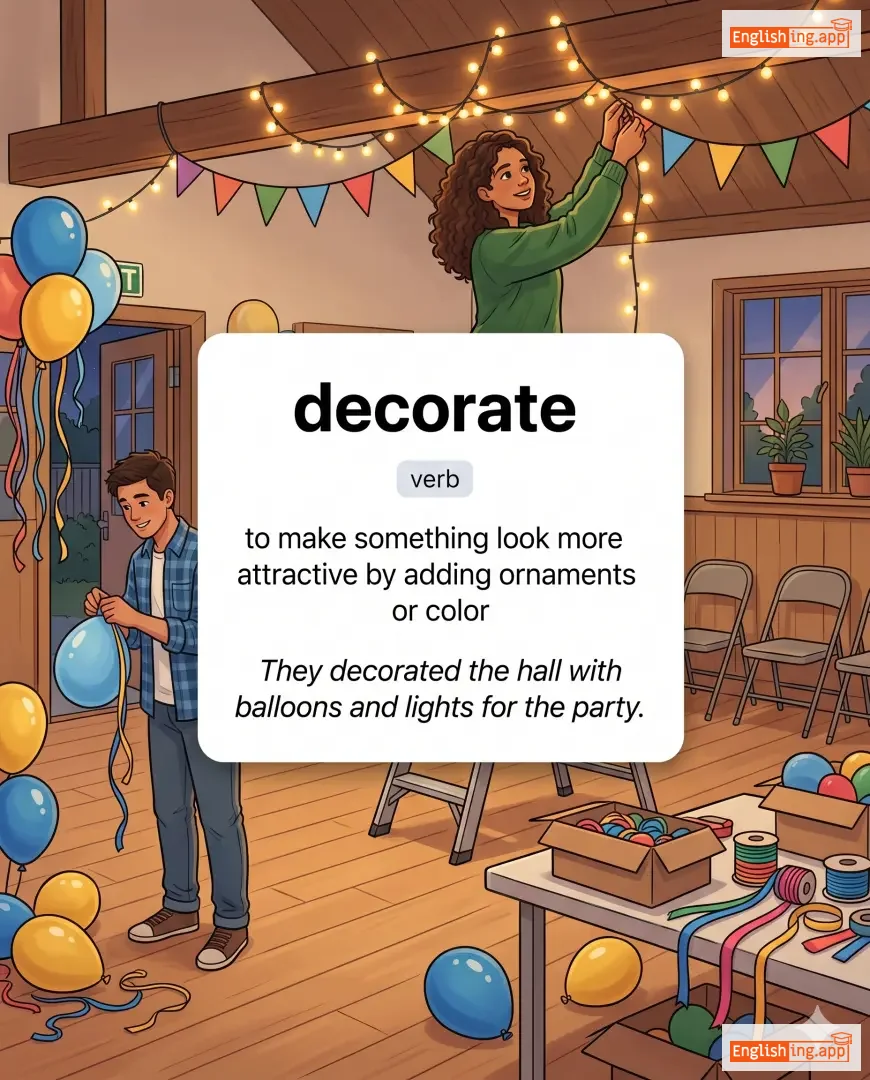
to make something look more attractive by adding ornaments or color
••••••
|
They decorated the hall with balloons and lights for the party. |
- •••••• |
decorate the truth |
to exaggerate or add details to make a story more interesting
••••••
|
- •••••• |
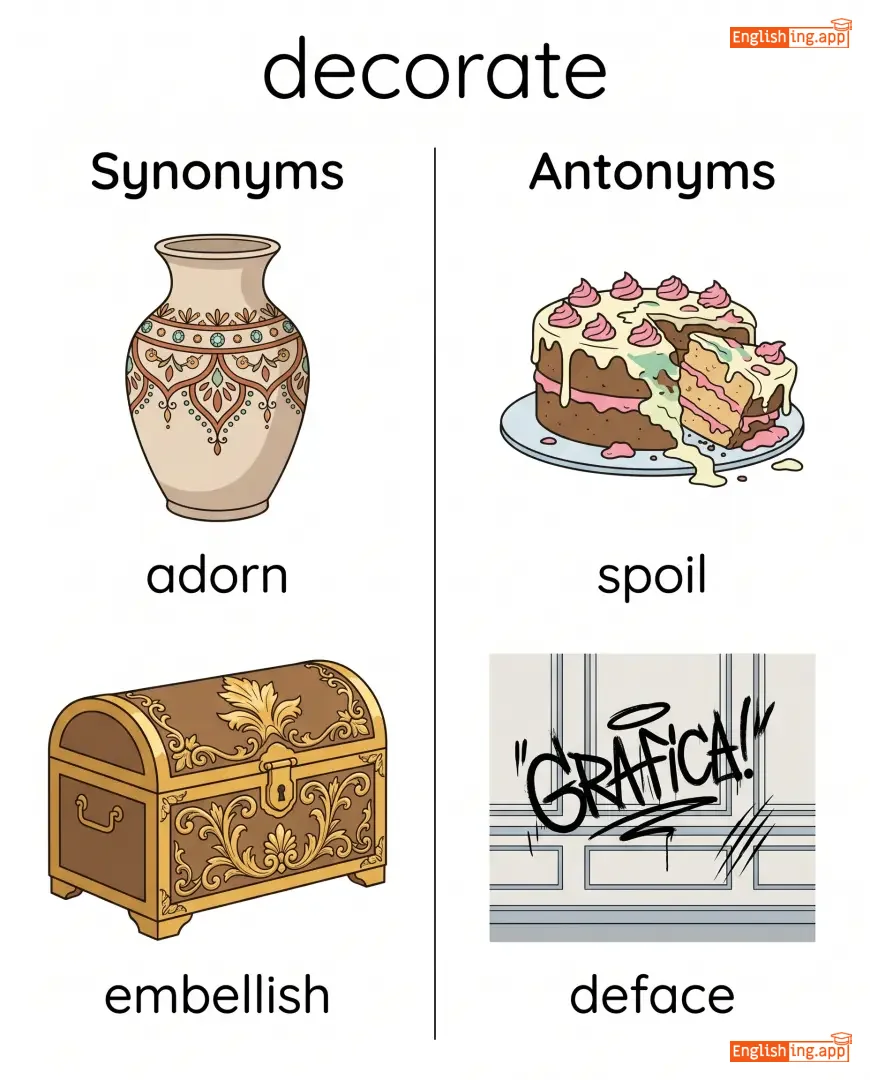
adorn, embellish, beautify, garnish, ornament
••••••
|
spoil, deface, mar
••••••
|
decorate a room, decorate the tree, decorate with flowers, decorate beautifully
••••••
|
No •••••• |
|
#1
☠️
|
/ˈdedli/
adjective
(デッドリー)
••••••
|
- •••••• |
致命的
chimiteki
••••••
|
- •••••• | - •••••• | - •••••• | - •••••• |
causing or able to cause death; extremely dangerous
••••••
|
The snake's bite is deadly to humans. |
蛇の噛み傷は人間にとって致命的です。
Hebi no kamikizu wa ningen ni totte chimiteki desu.
••••••
|
deadly serious |
completely serious; not joking
••••••
|
死ぬほど真剣
shinu hodo shinken
••••••
|
fatal, lethal, dangerous, mortal, poisonous
••••••
|
harmless, safe, mild
••••••
|
deadly weapon, deadly virus, deadly poison, deadly attack
••••••
|
Deadly は致命的、まるで致命的な蛇のようだ!
••••••
|
|
#1
⏰
|
/ˈdedlaɪn/
noun
(デッドライン)
••••••
|
- •••••• |
締め切り
shimekiri
••••••
|
- •••••• | - •••••• | - •••••• | - •••••• |
the latest time or date by which something must be completed
••••••
|
We need to finish this project before the deadline. |
このプロジェクトは締め切り前に終わらせる必要があります。
Kono purojekuto wa shimekiri mae ni owaraseru hitsuyou ga arimasu.
••••••
|
meet the deadline |
to finish something on time
••••••
|
締め切りを守る
shimekiri o mamoru
••••••
|
due date, cutoff date, time limit, target date, completion date
••••••
|
delay, extension
••••••
|
tight deadline, project deadline, meet deadline, set a deadline
••••••
|
締め切りは仕事を終わらせるための最終的な時間です。
••••••
|
Vocabulary Quiz
Test your vocabulary by matching words with their translations or meanings.
Login to take the quiz
Comments (0)
Share your thoughts and join the discussion.
Join the discussion by logging in
Login to CommentNo comments yet
Be the first to share your thoughts!