

翻訳
過去
過去分詞
三人称単数
動名詞
意味
例文
例文の翻訳
同義語
対義語
コロケーション
ニーモニック
Swipe left or right, or use the buttons. Tap image to zoom.
例文の翻訳
単語
Lesson 194Lesson 194 - マスクトグル
|
絵文字
|
単語 | Images | 翻訳 | 過去 | 過去分詞 | 三人称単数 | 動名詞 | 意味 | 例文 | 例文の翻訳 | 表現例 | 表現例の意味 | 表現例の翻訳 | 同義語 | 対義語 | コロケーション | ニーモニック |
|---|---|---|---|---|---|---|---|---|---|---|---|---|---|---|---|---|---|
|
#5791
🤐
|
/ˈmʌtər/
verb
(マター)
••••••
|
- •••••• |
呟く
tsubuyaku
••••••
|
muttered
マターード
••••••
|
muttered
マターード
••••••
|
mutters
マターズ
••••••
|
muttering
マタリング
••••••
|
to speak in a low or barely audible voice, often in dissatisfaction or irritation
••••••
|
He muttered something under his breath as he walked away.
彼は歩きながら何かを呟いた。
••••••
|
彼は歩きながら何かを呟いた。
Kare wa aruki nagara nanika o tsubuyaita.
••••••
|
mutter under one's breath
息を潜めて呟く
••••••
|
to say something quietly so that others cannot clearly hear, often expressing annoyance
••••••
|
息を潜めて呟く
iki o hisomete tsubuyaku
••••••
|
murmur, whisper, mumble, grumble, complain
••••••
|
shout, yell, proclaim
••••••
|
mutter quietly, mutter something, mutter under breath, mutter angrily
••••••
|
Mutterは呟くこと、まるでお母さん(お母さんが怒った時に呟く)。
••••••
|
|
#5792
👤
|
/ˈnɑːrsɪsɪst/
noun
(ナルシシスト)
••••••
|
- •••••• |
ナルシシスト
narushisuto
••••••
|
- •••••• | - •••••• | - •••••• | - •••••• |
A person who has an excessive interest in or admiration of themselves.
••••••
|
Everyone avoided him because he was a narcissist. |
みんな彼を避けていた、なぜなら彼はナルシシストだったから。
Minna kare o sakete ita, nazenara kare wa narushisuto datta kara.
••••••
|
self-absorbed narcissist |
A person overly focused on themselves with little regard for others.
••••••
|
自己中心的なナルシシスト
jikochūshinteki na narushisuto
••••••
|
egoist, egotist, self-lover, braggart
••••••
|
altruist, humble person
••••••
|
narcissist behavior, narcissist partner, extreme narcissist, charming narcissist
••••••
|
ナルシシストはナルシスの花のように自分の姿しか見えない → 自分を愛しすぎる人
••••••
|
|
#5793
🪞
|
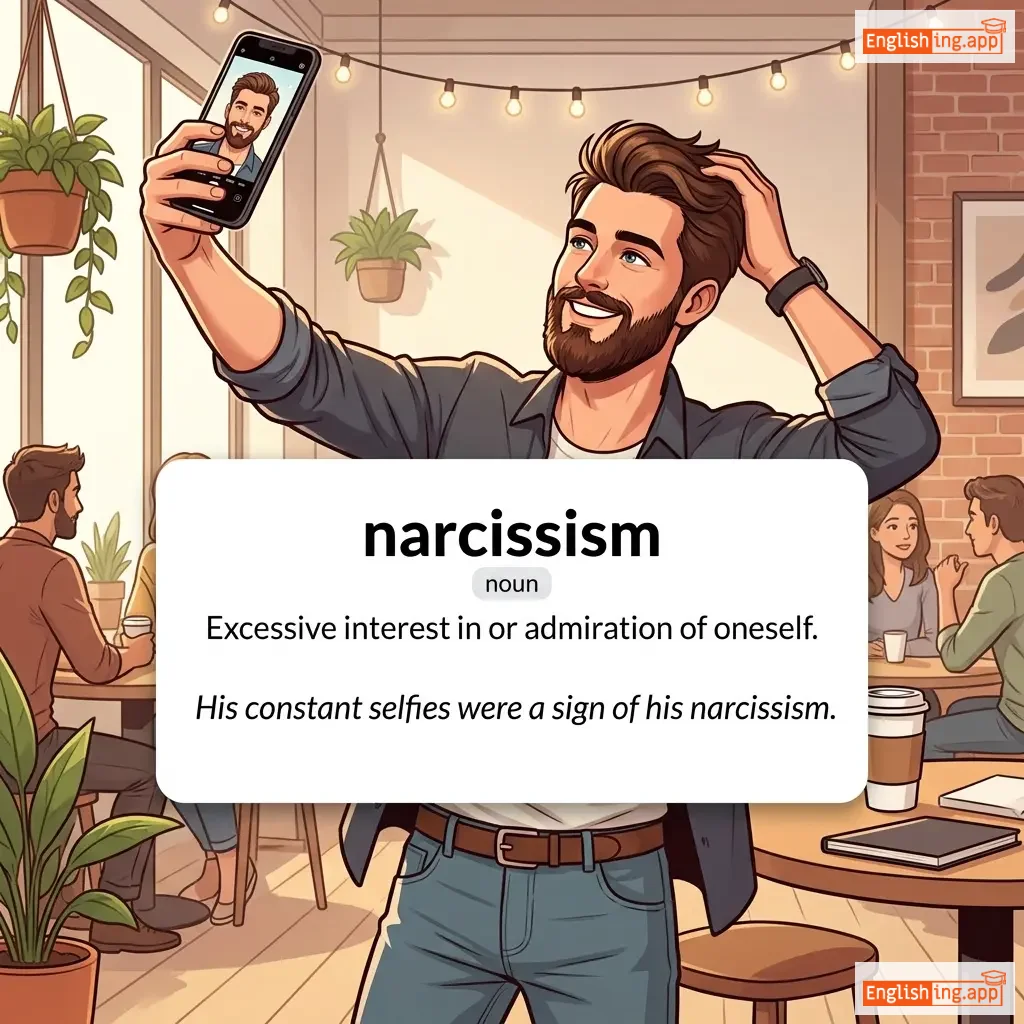
/ˈnɑːrsɪsɪzəm/
noun
(ナルシシズム)
••••••
|
|
自己愛
jikoi
••••••
|
- •••••• | - •••••• | - •••••• | - •••••• |
Excessive interest in or admiration of oneself.
••••••
|
His constant selfies were a sign of his narcissism. |
彼の絶え間ない自撮りは、彼の自己愛の表れだった。
kare no taemajanai jidorii wa, kare no jikoi no araware datta.
••••••
|
narcissistic personality |
A personality characterized by self-centeredness and lack of empathy.
••••••
|
自己中心的な性格
jikochūshintekina seikaku
••••••
|
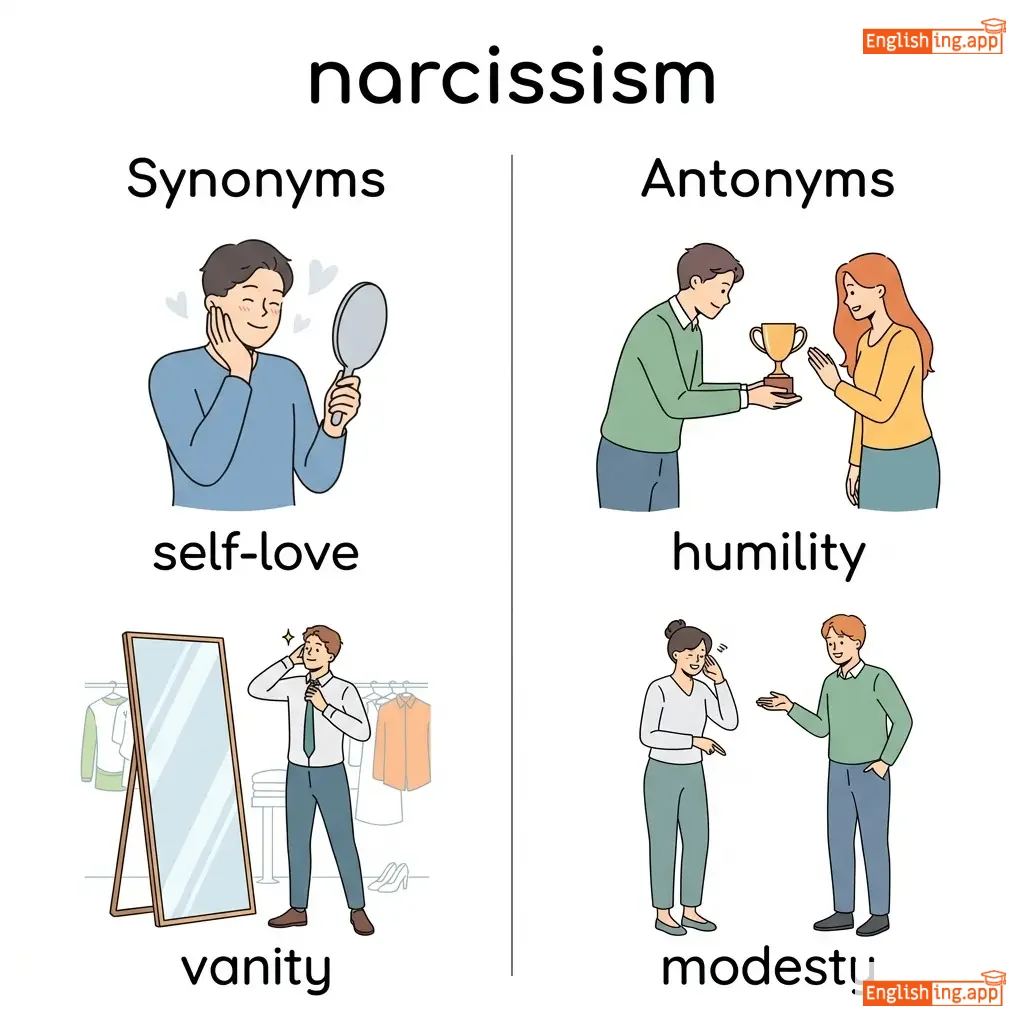
self-love, vanity, egotism, conceit, self-admiration
••••••
|
humility, modesty, selflessness
••••••
|
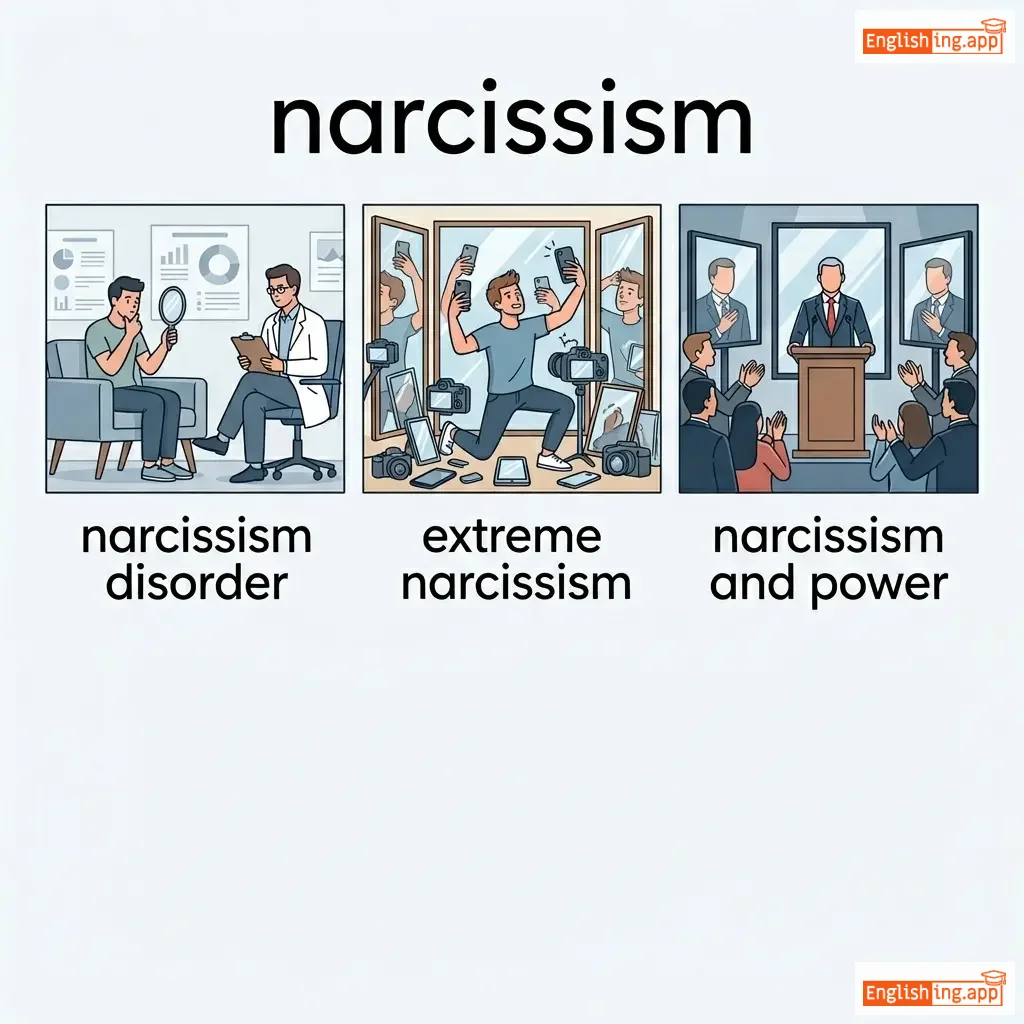
narcissism disorder, extreme narcissism, narcissism and power, signs of narcissism
••••••
|
ナルシシズムは自己愛 → 自分に夢中になる
••••••
|
|
#5794
🛢️
|
/ˈnæfθə/
noun
(ナフタ)
••••••
|
- •••••• |
ナフタ
nafuta
••••••
|
- •••••• | - •••••• | - •••••• | - •••••• |
A flammable oil containing hydrocarbons, obtained from petroleum or coal tar, used as fuel or solvent.
••••••
|
The factory stored barrels of naphtha for industrial use. |
工場は工業用途のためにナフタの樽を保管していました。
Koujou wa kougyou youto no tame ni nafuta no taru wo hokan shiteimashita.
••••••
|
- •••••• | - •••••• | - •••••• |
petroleum, solvent, fuel, kerosene
••••••
|
water, nonflammable liquid
••••••
|
naphtha solvent, naphtha gas, crude naphtha, naphtha production
••••••
|
Naphtha = nap (昼寝) + tha (だ) → 燃える油
••••••
|
|
#5795
❓
|
/ˈneɪmləs/
adjective
(ネームレス)
••••••
|
- •••••• |
無名
mumei
••••••
|
- •••••• | - •••••• | - •••••• | - •••••• |
Without a name or not known by name.
••••••
|
A nameless fear crept over him in the dark room. |
無名の恐怖が暗い部屋で彼を襲った。
Mumei no kyōfu ga kurai heya de kare o osotta.
••••••
|
nameless dread |
A strong but vague feeling of fear or anxiety.
••••••
|
無名の恐怖
mumei no kyōfu
••••••
|
unknown, unidentified, anonymous, obscure
••••••
|
known, named, recognized
••••••
|
nameless dread, nameless face, nameless place, nameless hero
••••••
|
無名 = 名前がない = 無名
••••••
|
|
#5796
🌱
|
/naɪˈiːvɪti/
noun
(ナイヴェティ)
••••••
|
- •••••• |
無邪気
muzaki
••••••
|
- •••••• | - •••••• | - •••••• | - •••••• |
The quality of being innocent, simple, and lacking experience or sophistication.
••••••
|
Her naivety made her trust people too easily.
彼女のナイヴェティは、彼女が人々をあまりにも簡単に信頼させました。
••••••
|
彼女の無邪気は、彼女が人々をあまりにも簡単に信頼させました。
Kanojo no muzaki wa, kanojo ga hitobito o amari ni mo kantan ni shinrai sasemashita.
••••••
|
- •••••• | - •••••• | - •••••• |
innocence, simplicity, gullibility, artlessness, inexperience
••••••
|
worldliness, sophistication, shrewdness
••••••
|
childlike naivety, political naivety, display naivety, youthful naivety
••••••
|
Naivety は無邪気とシンプルさ、経験不足を意味します。
••••••
|
|
#5797
🌱
|
/naɪˈiːvteɪ/
noun
••••••
|
- •••••• | - •••••• | - •••••• | - •••••• | - •••••• | - •••••• |
The quality of being naive; lack of experience, wisdom, or judgment.
••••••
|
His naivete made him an easy target for manipulation. |
- •••••• | - •••••• | - •••••• | - •••••• |
innocence, gullibility, simplicity, artlessness
••••••
|
worldliness, sophistication, shrewdness
••••••
|
display naivete, political naivete, show naivete, naivete of youth
••••••
|
No •••••• |
|
#5798
🧒
|
/naɪˈiːv/
adjective
(ナイヴ)
••••••
|
- •••••• |
無邪気
musyaki
••••••
|
- •••••• | - •••••• | - •••••• | - •••••• |
Having a lack of experience or sophistication; overly innocent or trusting.
••••••
|
She was naive to believe the scammer’s story. |
彼女は詐欺師の話を信じるには無邪気すぎた。
Kanojo wa sagishi no hanashi wo shinjiru ni wa musyaki sugita.
••••••
|
naive optimism |
An overly simple or innocent kind of hopefulness.
••••••
|
無邪気な楽観主義
musyaki na rakkan shugi
••••••
|
innocent, gullible, simple, trusting, unsophisticated
••••••
|
cynical, experienced, shrewd
••••••
|
naive belief, naive optimism, seem naive, extremely naive
••••••
|
無邪気な心、すべてを信じて疑わない。
••••••
|
|
#5799
⬇️
|
/ˈneɪdɪər/
noun
••••••
|
- •••••• | - •••••• | - •••••• | - •••••• | - •••••• | - •••••• |
The lowest point of a situation or condition.
••••••
|
The company reached its nadir during the financial crisis. |
- •••••• |
reach the nadir |
To reach the lowest or worst point.
••••••
|
- •••••• |
lowest point, rock bottom, depth, trough
••••••
|
zenith, peak, summit
••••••
|
reach nadir, political nadir, career nadir, emotional nadir
••••••
|
No •••••• |
|
#5800
📖
|
/mɪˈθɒlədʒi/
noun
••••••
|
- •••••• | - •••••• | - •••••• | - •••••• | - •••••• | - •••••• |
A collection of myths, especially belonging to a particular culture or religion.
••••••
|
Greek mythology is filled with stories of gods and heroes. |
- •••••• | - •••••• | - •••••• | - •••••• |
folklore, legends, fables, tradition
••••••
|
history, fact
••••••
|
Greek mythology, Roman mythology, rich mythology, mythology class
••••••
|
No •••••• |
|
#5801
🐉
|
/mɪθ/
noun
(ミス)
••••••
|
- •••••• |
神話
shinwa
••••••
|
- •••••• | - •••••• | - •••••• | - •••••• |
A traditional story explaining natural or social phenomena, often involving supernatural beings; a widely held but false belief.
••••••
|
The myth of the phoenix tells of a bird reborn from its ashes. |
フェニックスの神話は、灰の中から生まれ変わった鳥の話を伝えています。
Fenikkusu no shinwa wa, hai no naka kara umarekawatta tori no hanashi o tsutaete imasu.
••••••
|
myth or reality |
Used when questioning whether something is true or just a belief.
••••••
|
神話か現実か
Shinwa ka genjitsu ka
••••••
|
legend, tale, folklore, fable, fiction
••••••
|
fact, reality, truth
••••••
|
ancient myth, Greek myth, popular myth, myth about
••••••
|
Myth = 本当のことではないかもしれない、でも興味深い話!
••••••
|
|
#5802
😕
|
/ˌmɪstɪfɪˈkeɪʃən/
noun
(ミスティフィケーション)
••••••
|
- •••••• |
困惑, 神秘化
konwaku, shinpi-ka
••••••
|
- •••••• | - •••••• | - •••••• | - •••••• |
the act of making something unclear or confusing; a state of being puzzled or bewildered
••••••
|
The audience watched in mystification as the magician performed his tricks. |
観客はマジシャンが手品を披露する間、困惑して見ていた。
Kankyaku wa majishan ga tejin o hirou suru aida, konwaku shite mite ita.
••••••
|
- •••••• | - •••••• | - •••••• |
confusion, puzzlement, bewilderment, perplexity
••••••
|
clarity, understanding, comprehension
••••••
|
cause mystification, in mystification, look of mystification, complete mystification
••••••
|
Mystification は困惑を意味する – 'Mystery + Fiction' → 謎の物語でみんなが困惑する。
••••••
|
|
#5803
🔮
|
/ˈmɪstɪk/
noun/adjective
(ミスティック)
••••••
|
- •••••• |
神秘的な、精神的な探求者
mishitikuna, seishintekina tankyūsha
••••••
|
- •••••• | - •••••• | - •••••• | - •••••• |
relating to mysteries, spirituality, or hidden truths; a person who seeks spiritual insight
••••••
|
The mystic devoted his life to meditation and spiritual discovery. |
その神秘的な探求者は瞑想と精神的発見に人生を捧げました。
Sono mishitekina tankyūsha wa meisō to seishinteki hakken ni jinsei o sasagemashita.
••••••
|
- •••••• | - •••••• | - •••••• |
spiritual, esoteric, otherworldly, transcendental
••••••
|
worldly, ordinary, materialistic
••••••
|
mystic tradition, mystic experience, mystic power, mystic vision
••••••
|
神秘的な意味は精神的な探求者 – 'Mystery + Stick' → 神秘的な探求者がミステリーの棒を持っている。
••••••
|
|
#5804
✨
|
/ˈmɪriəd/
noun/adjective
(ミリアッド)
••••••
|
- •••••• |
無数
musuu
••••••
|
- •••••• | - •••••• | - •••••• | - •••••• |
a countless or extremely great number
••••••
|
There are myriad stars in the night sky. |
夜空には無数の星がある。
Yozora ni wa musuu no hoshi ga aru.
••••••
|
- •••••• | - •••••• | - •••••• |
countless, innumerable, infinite, endless
••••••
|
limited, few, finite
••••••
|
myriad possibilities, myriad stars, myriad reasons, myriad challenges
••••••
|
Myriad は無数を意味します – 数えきれないほどの鏡が星を反射する様子を想像してみてください。
••••••
|
|
#5805
👓
|
/maɪˈɑːpɪk/
adjective
(マイオピック)
••••••
|
- •••••• |
近視的な、視野が狭い
kinshitekina, shiya ga semai
••••••
|
- •••••• | - •••••• | - •••••• | - •••••• |
lacking foresight or long-term perspective; also refers to nearsightedness
••••••
|
The company’s myopic strategy led to long-term losses.
その会社の近視的な戦略は、長期的な損失を招いた。
••••••
|
その会社の近視的な戦略は、長期的な損失を招いた。
Sono kaisha no kinshiteki na senryaku wa, chōkitekina sonshitsu o manekita.
••••••
|
- •••••• | - •••••• | - •••••• |
shortsighted, narrow-minded, unimaginative, blind
••••••
|
far-sighted, visionary, broad-minded
••••••
|
myopic view, myopic approach, myopic policy, myopic thinking
••••••
|
Myopicとは視野が狭いことを意味します – My+opic → ただ‘My’だけの方向を見る、未来を見ることができません。
••••••
|
|
#5806
🤔
|
/mjuːz/
verb, noun
••••••
|
- •••••• | - •••••• |
mused
••••••
|
mused
••••••
|
muses
••••••
|
musing
••••••
|
to think deeply about something; a source of inspiration, especially for an artist or writer
••••••
|
She sat by the window to muse about her future. |
- •••••• |
lost in thought |
to be absorbed in deep thought or contemplation
••••••
|
- •••••• |
ponder, contemplate, reflect, meditate, inspire
••••••
|
ignore, disregard, neglect
••••••
|
muse about, muse upon, poet's muse, artistic muse
••••••
|
No •••••• |
|
#5807
🚢
|
/ˈmjuːtɪni/
noun
(ミュティニー)
••••••
|
- •••••• |
反乱
hanran
••••••
|
- •••••• | - •••••• | - •••••• | - •••••• |
an open rebellion against authority, especially by soldiers or sailors
••••••
|
The sailors staged a mutiny against their captain. |
船員たちはキャプテンに対して反乱を起こした。
Sen'in-tachi wa kyaputen ni taishite hanran o okoshita.
••••••
|
mutiny on the ship |
rebellion by sailors against the ship's captain
••••••
|
船での反乱
fune de no hanran
••••••
|
revolt, rebellion, uprising, insurrection
••••••
|
obedience, loyalty, submission
••••••
|
stage a mutiny, mutiny broke out, mutiny against
••••••
|
Mutiny は日本語で反乱を意味し、権威に対する反抗です。
••••••
|
|
#5808
⚔️
|
/ˈmjuːtɪnəs/
adjective
(ミューティナス)
••••••
|
- •••••• |
反乱者
hanransha
••••••
|
- •••••• | - •••••• | - •••••• | - •••••• |
refusing to obey authority; rebellious
••••••
|
The soldiers grew mutinous after months without pay. |
兵士たちは数ヶ月間給料がなくて反乱者になった。
Heishitachi wa suukagetsu kan kyūryō ga nakute hanransha ni natta.
••••••
|
- •••••• | - •••••• | - •••••• |
rebellious, defiant, insubordinate, disobedient
••••••
|
obedient, loyal, compliant
••••••
|
mutinous troops, mutinous behavior, mutinous spirit
••••••
|
Mutinousは'mutiny'から来ており、反乱を意味します。
••••••
|
|
#5809
🩸
|
/ˈmjuːtɪleɪt/
verb
(ミュティレイト)
••••••
|
- •••••• |
損傷する
sonshou suru
••••••
|
mutilated
ミュティレイテッド
••••••
|
mutilated
ミュティレイテッド
••••••
|
mutilates
ミュティレイツ
••••••
|
mutilating
ミュティレイティング
••••••
|
to inflict serious damage on something, often by cutting or tearing
••••••
|
The ancient manuscript was mutilated by careless handling.
古代の写本は不注意な取り扱いで傷つけられました。
••••••
|
古代の写本は不注意な取り扱いで損傷しました。
Kodai no shahon wa fuchuui na toriatsukai de sonshou shimashita.
••••••
|
- •••••• | - •••••• | - •••••• |
damage, disfigure, harm, maim, injure
••••••
|
heal, repair, restore
••••••
|
mutilate body, mutilate documents, mutilate art, mutilated victim
••••••
|
Mutilateは‘損傷’や‘傷つける’という意味です。
••••••
|
|
#5810
🎨
|
/ˈmjuːtɪd/
adjective
(ミューテッド)
••••••
|
- •••••• |
muted (ミューテッド)
myutedd
••••••
|
- •••••• | - •••••• | - •••••• | - •••••• |
softened in sound, color, or effect; subdued
••••••
|
The room was painted in muted shades of blue and grey.
部屋は青と灰色の muted な色合いで塗られていました。
••••••
|
部屋は青と灰色の muted な色合いで塗られていました。
Heya wa ao to haiiro no myutedd na iroai de nurareteimashita.
••••••
|
- •••••• | - •••••• | - •••••• |
soft, subdued, toned-down, muffled
••••••
|
bright, loud, vivid
••••••
|
muted tones, muted response, muted colors, muted sound
••••••
|
‘Muted’という英単語は‘抑えられた’を意味しており、日本語の‘ muted ’に非常に近いです。
••••••
|
|
#5811
🤐
|
/mjuːt/
adjective
••••••
|
- •••••• | - •••••• | - •••••• | - •••••• | - •••••• | - •••••• |
silent or unable to speak; not expressed in words
••••••
|
She remained mute during the entire meeting. |
- •••••• |
mute testimony |
evidence that speaks without words, often by presence or example
••••••
|
- •••••• |
silent, speechless, quiet, voiceless
••••••
|
vocal, talkative, expressive
••••••
|
mute button, remain mute, mute testimony, mute appeal
••••••
|
No •••••• |
|
#5812
🔬
|
/mjuːˈteɪʃn/
noun
(ミューテーション)
••••••
|
- •••••• |
突然変異、遺伝的変化
totsuzen hen'i, iden-teki henka
••••••
|
- •••••• | - •••••• | - •••••• | - •••••• |
A change in form, structure, or nature, especially in genetics.
••••••
|
Scientists discovered a genetic mutation that caused the disorder. |
科学者たちは、その障害を引き起こした遺伝的な突然変異を発見しました。
Kagakusha-tachi wa, sono shougai o hikiokoshita iden-teki na totsuzen hen'i o hakken shimashita.
••••••
|
- •••••• | - •••••• | - •••••• |
alteration, variation, modification, transformation
••••••
|
stability, consistency
••••••
|
genetic mutation, random mutation, mutation rate, cause mutation
••••••
|
突然変異は遺伝子の変化、まるでスーパーヒーローが新しい能力を得るようなものです。
••••••
|
|
#5813
🧬
|
/ˈmjuːteɪt/
verb
(ミューテイト)
••••••
|
- •••••• |
突然変異する
totsuzenhen'i suru
••••••
|
mutated
ミューテイテッド
••••••
|
mutated
ミューテイテッド
••••••
|
mutates
ミューテイツ
••••••
|
mutating
ミューテイティング
••••••
|
To change or cause to change in form, nature, or character.
••••••
|
The virus can mutate into a more dangerous strain.
ウイルスはより危険な株にミュートすることができます。
••••••
|
ウイルスはより危険な株にミュートすることができます。
Uirusu wa yori kiken na kabu ni myuuto suru koto ga dekimasu.
••••••
|
- •••••• | - •••••• | - •••••• |
transform, alter, modify, evolve, change
••••••
|
remain, preserve, maintain
••••••
|
mutate rapidly, mutate into, mutate naturally, mutate genetically
••••••
|
突然変異するは形が変わることを意味します。
••••••
|
|
#5814
✍️
|
/ˌmjuːtəˈbɪləti/
noun
(ミュタビリティ)
••••••
|
- •••••• |
変化性(綴り間違い)
henkasei (tsudzuri machigai)
••••••
|
- •••••• | - •••••• | - •••••• | - •••••• |
A misspelled form of 'mutability', meaning the quality of being changeable.
••••••
|
The document contained the misspelled word 'mutablility' instead of 'mutability'. |
その文書には 'mutability' の代わりに 'mutablility' の綴り間違いがありました。
Sono bunsho ni wa 'mutability' no kawari ni 'mutablility' no tsudzuri machigai ga arimashita.
••••••
|
- •••••• | - •••••• | - •••••• |
mutability, changeability, variability
••••••
|
stability, permanence
••••••
|
mutablility of terms, spelling mutablility
••••••
|
Mutablility はタイプミス - 綴り間違いと変化のようなものです。
••••••
|
|
#5815
🌀
|
/ˈmjuːtəbl/
adjective
(ミューテーブル)
••••••
|
- •••••• |
可変の
kaken no
••••••
|
- •••••• | - •••••• | - •••••• | - •••••• |
Capable of change or alteration.
••••••
|
Human emotions are mutable and can shift rapidly. |
人間の感情は可変的で、迅速に変わることがあります。
Ningen no kanjō wa kahen-teki de, jinsoku ni kawaru koto ga arimasu.
••••••
|
- •••••• | - •••••• | - •••••• |
changeable, variable, alterable, flexible
••••••
|
unchangeable, immutable, permanent
••••••
|
mutable nature, mutable emotions, mutable laws, mutable rules
••••••
|
Mutableは気分のように変わる - 今日は嬉しい、明日は悲しい。
••••••
|
|
#5816
🔄
|
/ˌmjuːtəˈbɪləti/
noun
(ミュータビリティ)
••••••
|
- •••••• |
変動性
hendousei
••••••
|
- •••••• | - •••••• | - •••••• | - •••••• |
The quality of being changeable or capable of change.
••••••
|
The mutability of fashion trends makes it hard to keep up.
ファッションのトレンドの可変性は、それについていくのを難しくします。
••••••
|
ファッションのトレンドの可変性は、それについていくのを難しくします。
Fasshon no torendo no kahensei wa, sore ni tsuiteiku no o muzukashiku shimasu.
••••••
|
- •••••• | - •••••• | - •••••• |
changeability, variability, adaptability, flexibility, instability
••••••
|
stability, permanence, constancy
••••••
|
mutability of life, inherent mutability, mutability of fate, constant mutability
••••••
|
変動性はファッションのように、すぐに変わるものです
••••••
|
|
#5817
📚
|
/ˈmʌsti/
adjective
(マスティ)
••••••
|
- •••••• |
湿っぽい、カビ臭いまたは湿気のある匂い
shimeppoi, kabikusai mata wa shikke no aru nioi
••••••
|
- •••••• | - •••••• | - •••••• | - •••••• |
having a stale, moldy, or damp smell
••••••
|
The old books had a musty odor. |
古い本にはカビ臭い匂いがあった。
Furui hon ni wa kabikusai nioi ga atta.
••••••
|
- •••••• | - •••••• | - •••••• |
stale, moldy, dank, mildewed
••••••
|
fresh, clean
••••••
|
musty smell, musty room, musty odor, musty basement
••••••
|
Mustyはカビ臭い匂いのこと - 古い部屋に湿気のある本があるような匂い。
••••••
|
|
#5818
🪖
|
/ˈmʌstər/
verb, noun
(マスター)
••••••
|
- •••••• |
集める / 勇気を出す
atsumeru / yūki o dasu
••••••
|
mustered
マスタード
••••••
|
mustered
マスタード
••••••
|
musters
マスターズ
••••••
|
mustering
マスティアリング
••••••
|
to gather people, especially soldiers; to summon courage or strength
••••••
|
He mustered enough courage to face the challenge.
彼は挑戦に立ち向かうために十分な勇気を集めました。
••••••
|
彼は挑戦に立ち向かうために十分な勇気を集めました。
Kare wa chōsen ni tachimukau tame ni jūbun na yūki o atsumemashita.
••••••
|
muster up courage
勇気を集める
••••••
|
to gather enough bravery to do something difficult
••••••
|
勇気を出す
yūki o dasu
••••••
|
assemble, gather, rally, summon, collect
••••••
|
scatter, disperse
••••••
|
muster courage, muster strength, muster troops, muster support
••••••
|
Musterとは集めること - マスターのように人々を集めて成功を目指します。
••••••
|
|
#5819
🌸
|
/ˈmʌski/
adjective
(マスキー)
••••••
|
- •••••• |
ムスクのような
musuku no yōna
••••••
|
- •••••• | - •••••• | - •••••• | - •••••• |
having a strong, sweet, earthy smell like musk
••••••
|
The perfume had a musky fragrance. |
その香水はムスクのような香りがしました。
Sono kōsui wa musuku no yōna kaori ga shimashita.
••••••
|
- •••••• | - •••••• | - •••••• |
fragrant, pungent, aromatic, earthy
••••••
|
odorless, scentless
••••••
|
musky smell, musky fragrance, musky aroma, musky scent
••••••
|
Musky = ムスクのような、ムスクの香りがする、ムスクのような香り。
••••••
|
|
#5820
🔫
|
/ˈmʌskɪt/
noun
(マスケット)
••••••
|
- •••••• |
古いタイプの銃
furui taipu no jū
••••••
|
- •••••• | - •••••• | - •••••• | - •••••• |
a type of long gun used in the past, especially by infantry soldiers
••••••
|
The soldiers carried muskets into the battlefield. |
兵士たちは戦場にマスケットを持ち込んだ。
Heishitachi wa senjō ni masuketto o mochikonda.
••••••
|
- •••••• | - •••••• | - •••••• |
rifle, firearm, gun, weapon
••••••
|
sword, spear
••••••
|
fire musket, load musket, musket shot, musket ball
••••••
|
Musketは 'マスク' のように聞こえ、昔の兵士たちは戦いに行くときマスクをかけてマスケットを使っていた。
••••••
|
Vocabulary Quiz
Test your vocabulary by matching words with their translations or meanings.
Login to take the quiz
Comments (0)
Share your thoughts and join the discussion.
Join the discussion by logging in
Login to CommentNo comments yet
Be the first to share your thoughts!