

翻訳
過去
過去分詞
三人称単数
動名詞
意味
例文
例文の翻訳
同義語
対義語
コロケーション
ニーモニック



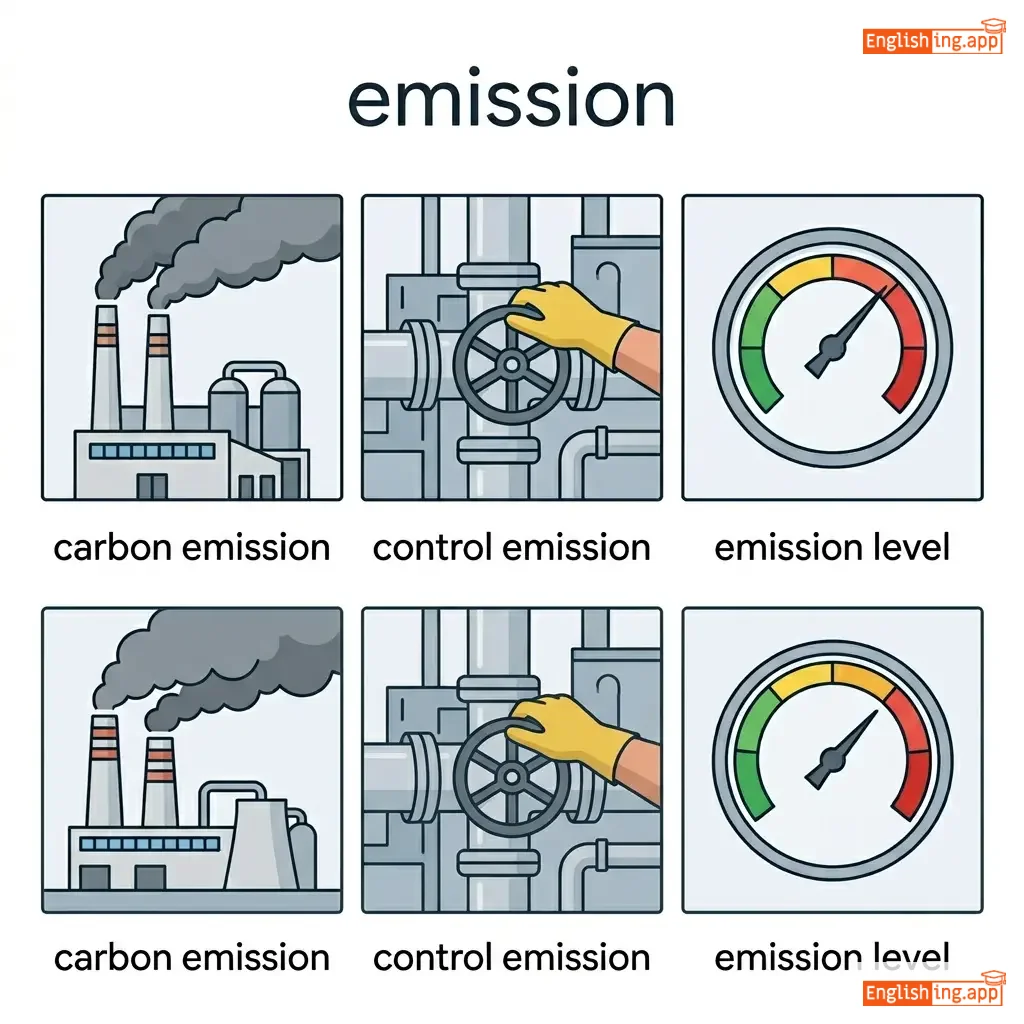
Swipe left or right, or use the buttons. Tap image to zoom.
例文の翻訳
単語
Lesson 364Lesson 364 - マスクトグル
|
絵文字
|
単語 | Images | 翻訳 | 過去 | 過去分詞 | 三人称単数 | 動名詞 | 意味 | 例文 | 例文の翻訳 | 表現例 | 表現例の意味 | 表現例の翻訳 | 同義語 | 対義語 | コロケーション | ニーモニック |
|---|---|---|---|---|---|---|---|---|---|---|---|---|---|---|---|---|---|
|
#10885
🚑
|
/ɪˈmɜrdʒənsi/
noun
(emājenshī)
••••••
|
|
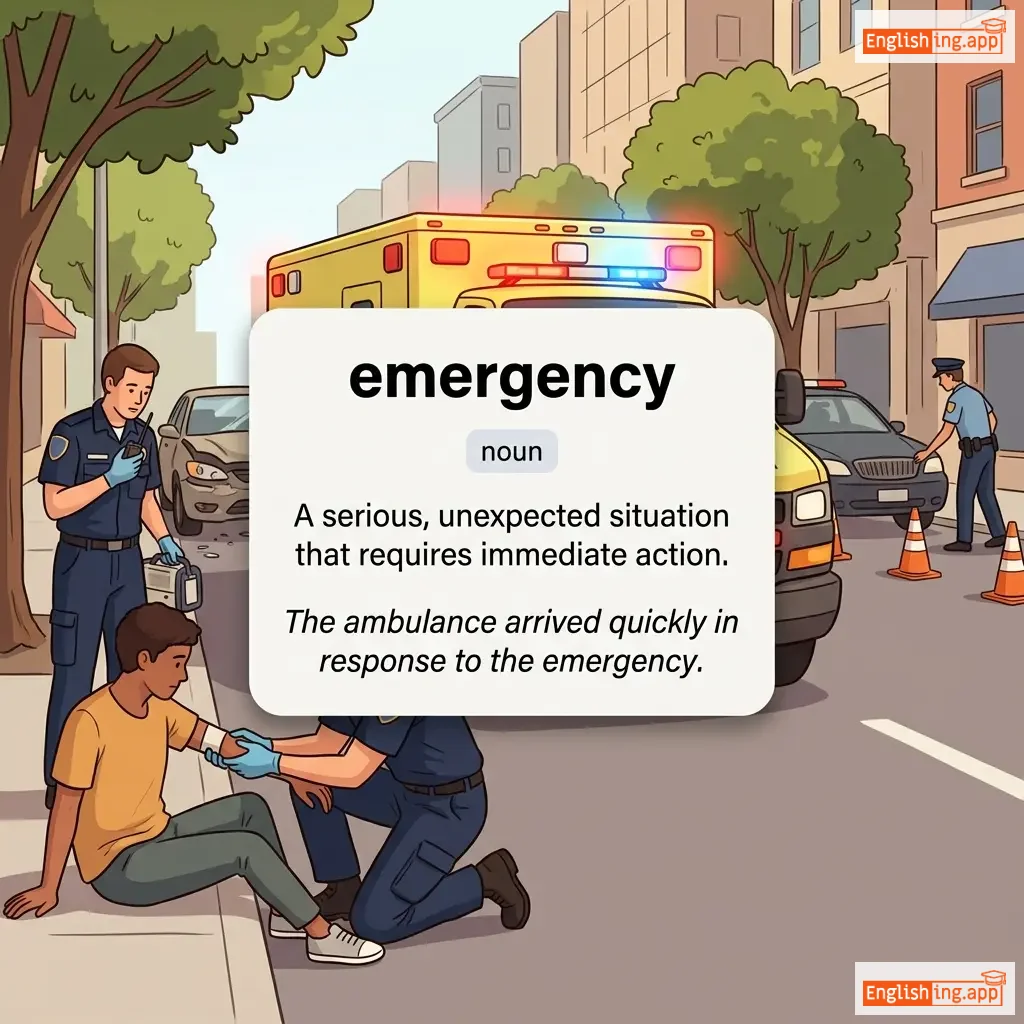
緊急事態
kinkyū jitai
••••••
|
- •••••• | - •••••• | - •••••• | - •••••• |
A serious, unexpected situation that requires immediate action.
••••••
|
The ambulance arrived quickly in response to the emergency. |
救急車は緊急事態に迅速に対応しました。
Kyūkyūsha wa kinkyū jitai ni jinsoku ni taio shimashita.
••••••
|
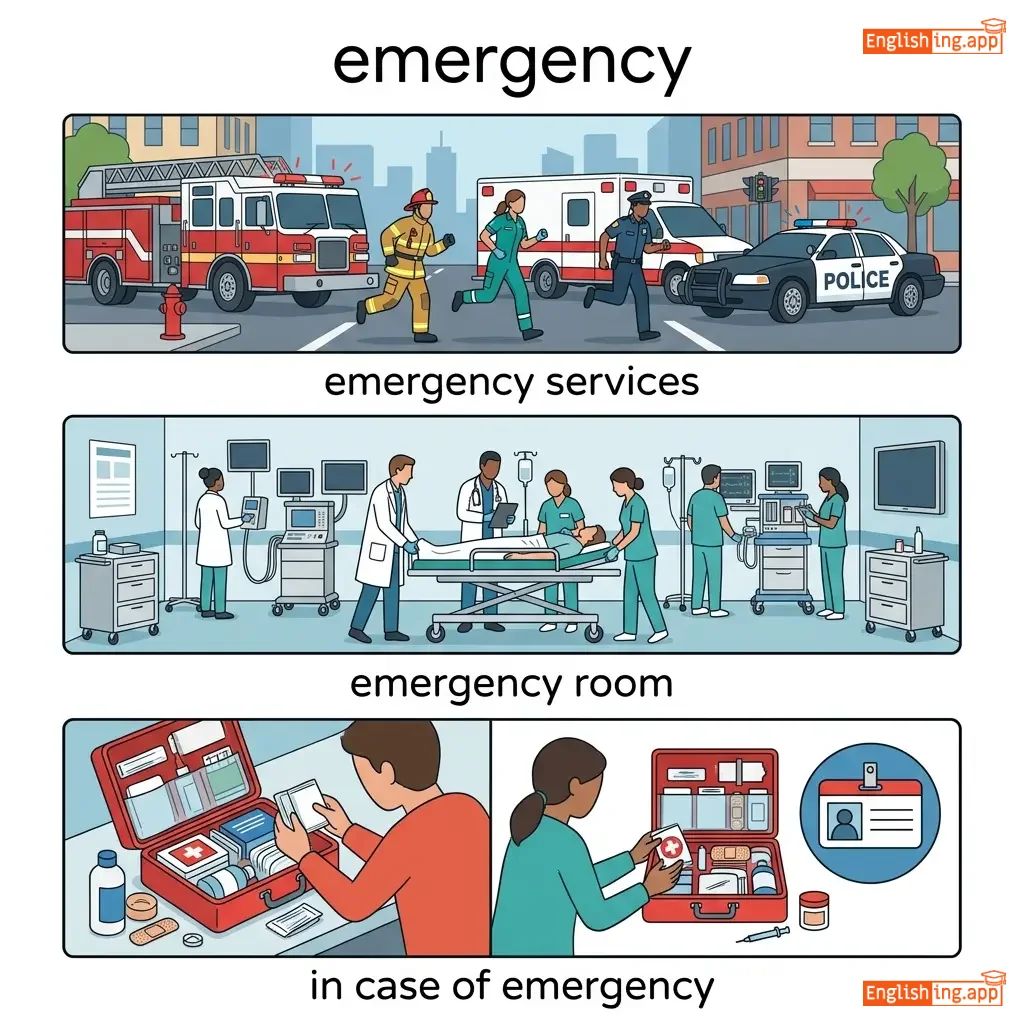
emergency room |
A hospital department where urgent cases are treated.
••••••
|
救急室
kyūkyū-shitsu
••••••
|
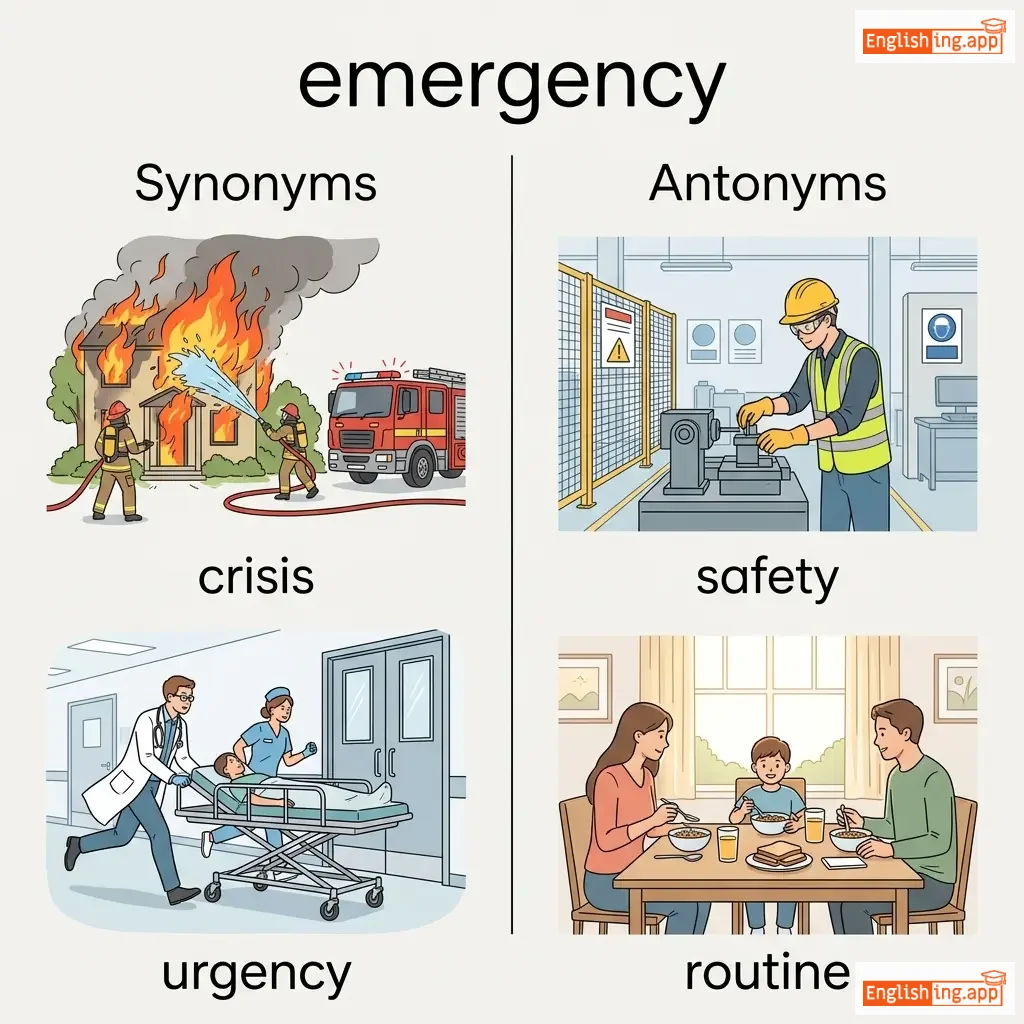
crisis, urgency, disaster, accident
••••••
|
safety, routine
••••••
|
emergency services, emergency room, in case of emergency, emergency exit
••••••
|
Emergency = Kinkyū (緊急) → 即座の対応が必要!
••••••
|
|
#10886
🚪
|
/ˈɛntər/
verb
(エンター)
••••••
|
|
入る
hairu
••••••
|
entered
エンターード
••••••
|
entered
エンターード
••••••
|
enters
エンターズ
••••••
|
entering
エンターリング
••••••
|
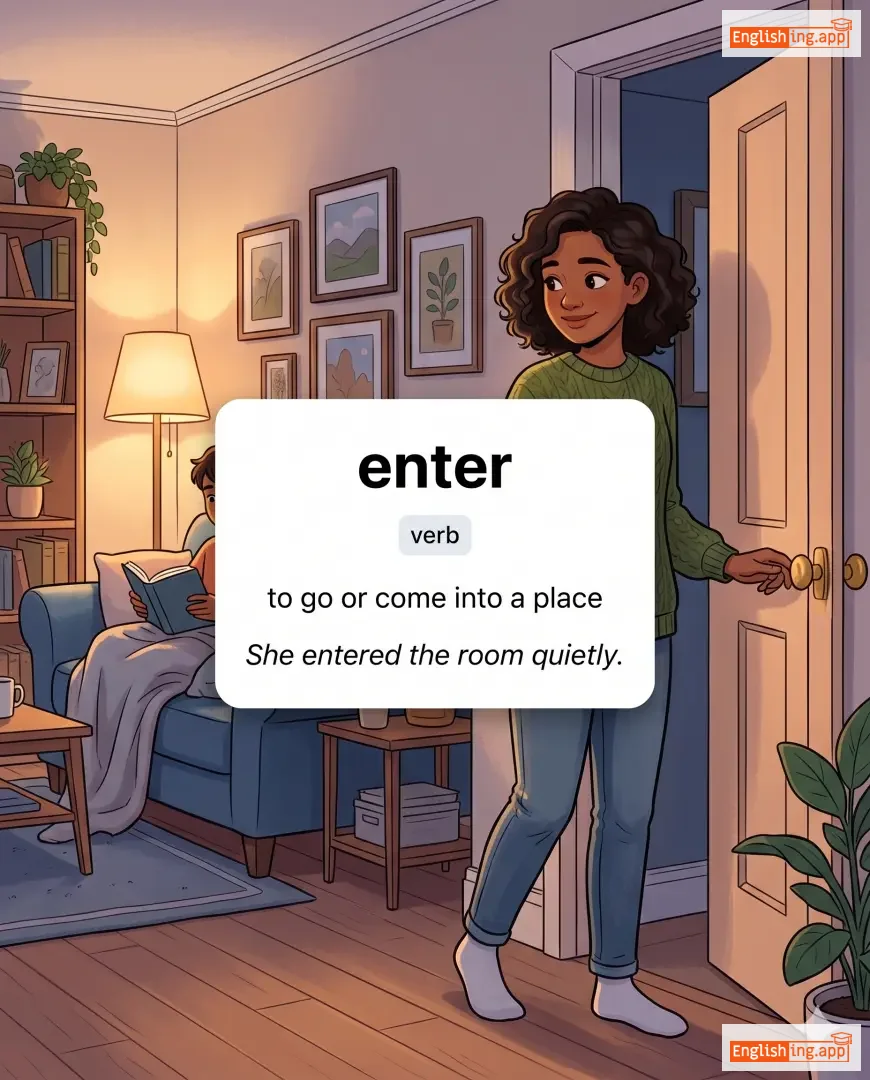
to go or come into a place
••••••
|
She entered the room quietly.
彼女は静かに部屋に入った。
••••••
|
彼女は静かに部屋に入った。
Kanojo wa shizuka ni heya ni haitta.
••••••
|
enter into an agreement
契約に入る
••••••
|
to formally agree to a contract or arrangement
••••••
|
契約に入る
keiyaku ni hairu
••••••
|
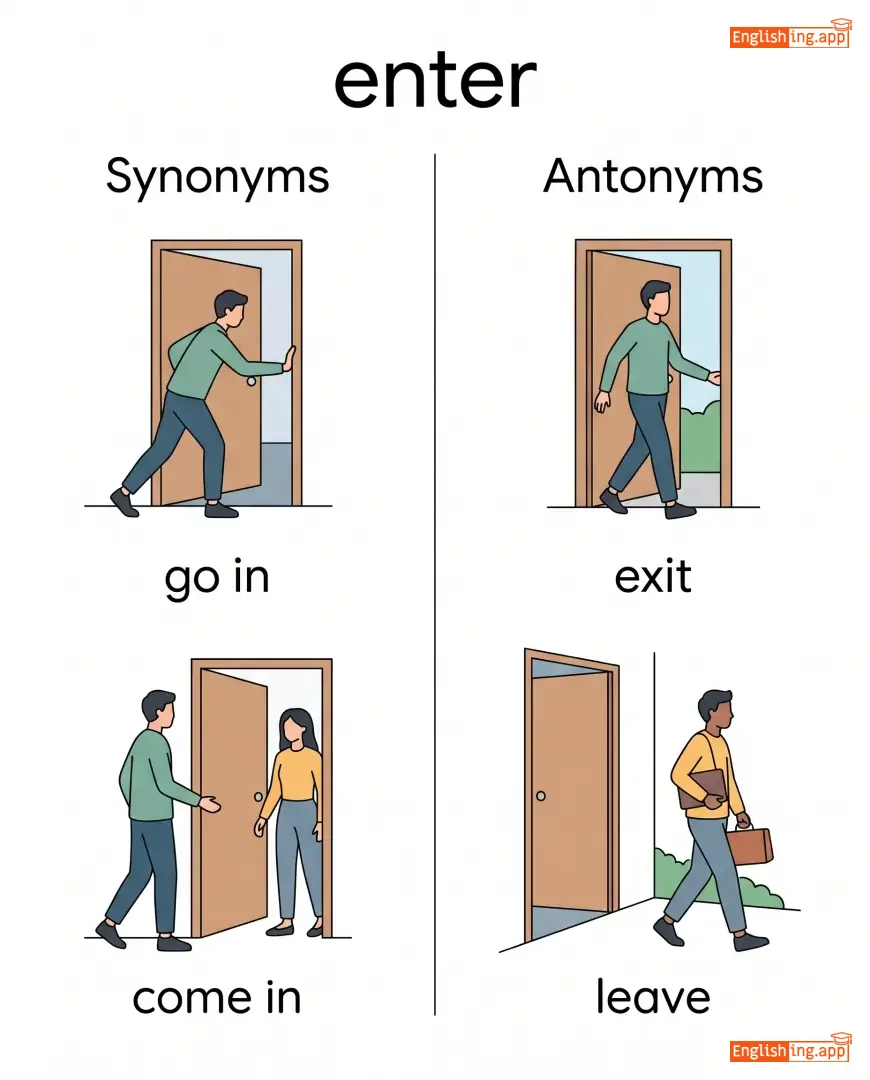
go in, come in, access, penetrate, join
••••••
|
exit, leave, depart
••••••
|
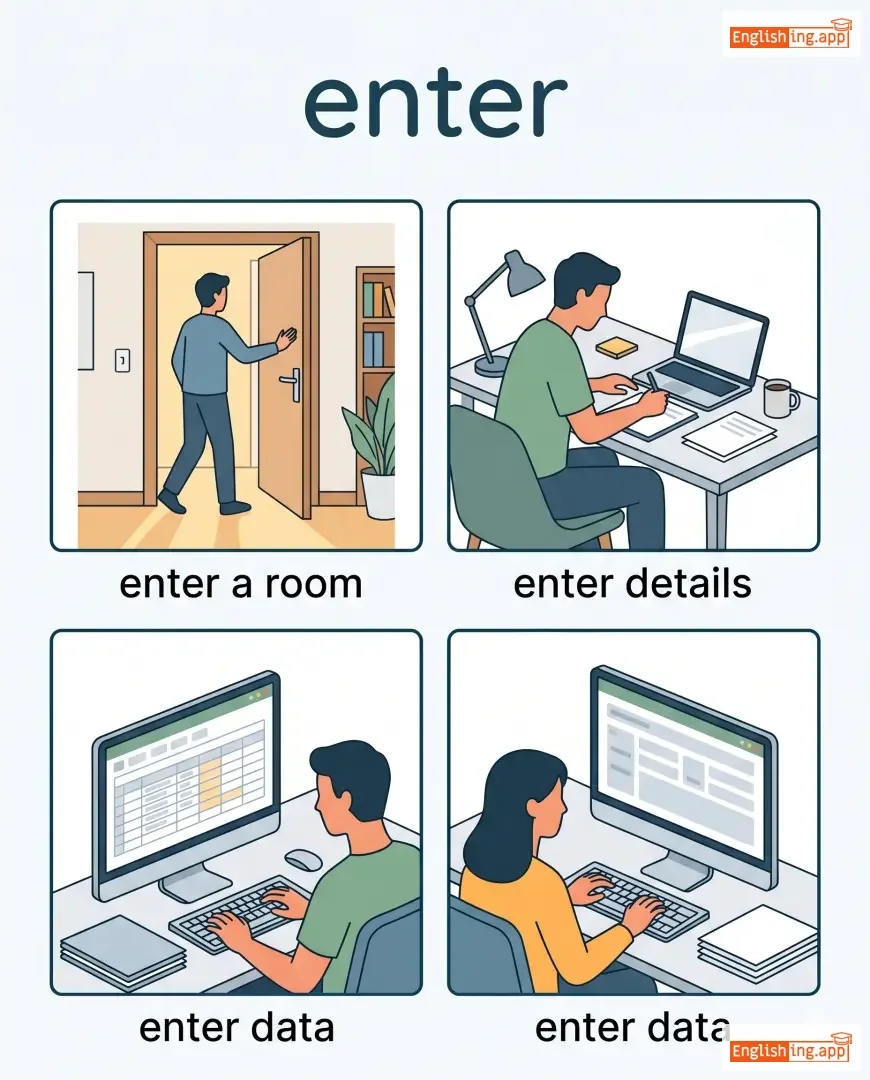
enter a room, enter details, enter data, enter into
••••••
|
ENTERキーを押すと、コンピューターに入る、'入る'も同じ意味です。
••••••
|
|
#10887
✅
|
/ɪnˈʃʊər/
verb
(エンシュア)
••••••
|
- •••••• |
確実にする
kakujitsu ni suru
••••••
|
ensured
エンシュアード
••••••
|
ensured
エンシュアード
••••••
|
ensures
エンシュアーズ
••••••
|
ensuring
エンシュアリング
••••••
|
To make certain that something will happen or be the case.
••••••
|
Please ensure that the door is locked before you leave.
ドアが閉まっていることを出発前に確認してください。
••••••
|
出発前にドアが閉まっていることを確認してください。
Shuppatsu mae ni doa ga shimatte iru koto o kakunin shite kudasai.
••••••
|
ensure success
成功を確実にする
••••••
|
to guarantee achievement of success
••••••
|
成功を確実にする
seikou o kakujitsu ni suru
••••••
|
guarantee, secure, confirm, assure, safeguard
••••••
|
neglect, ignore, risk
••••••
|
ensure safety, ensure quality, ensure success, ensure compliance
••••••
|
Ensure というのは確実にするという意味です。成功を確実にするためにそれが必要です。
••••••
|
|
#10888
🇬🇧
|
/ˈɪŋɡlɪʃ/
noun/adjective
(イングリッシュ)
••••••
|
- •••••• |
英語
eigo
••••••
|
- •••••• | - •••••• | - •••••• | - •••••• |
The language of England, widely spoken around the world; relating to England or its people.
••••••
|
She is learning English to study abroad. |
彼女は海外で勉強するために英語を学んでいます。
Kanojo wa kaigai de benkyou suru tame ni eigo o manande imasu.
••••••
|
plain English |
clear and simple language
••••••
|
簡単な英語
kantan na eigo
••••••
|
British language, Anglo-Saxon, tongue, dialect
••••••
|
non-English, foreign
••••••
|
learn English, English teacher, English literature, English language
••••••
|
English = 英語 – 海外で勉強するには英語が必要です。
••••••
|
|
#10889
🏗️
|
/ˌɛndʒɪˈnɪərɪŋ/
noun
(エンジニアリング)
••••••
|
|
工学
kougaku
••••••
|
- •••••• | - •••••• | - •••••• | - •••••• |
The branch of science and technology concerned with the design, building, and use of engines, machines, and structures.
••••••
|
She studied civil engineering at university. |
彼女は大学で土木工学を学びました。
Kanojo wa daigaku de doboku kougaku o manabimashita.
••••••
|
social engineering |
manipulating people into giving up information or taking certain actions
••••••
|
社会工学
shakai kougaku
••••••
|
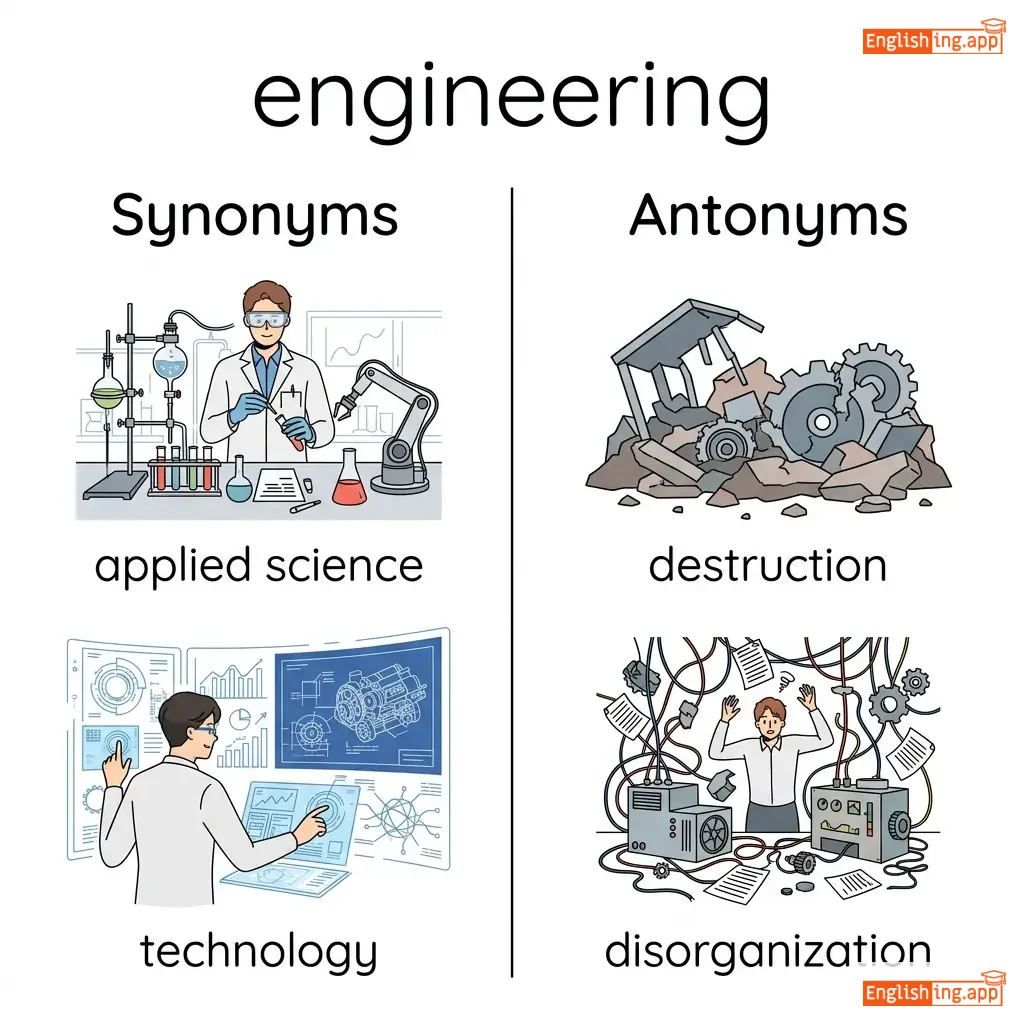
applied science, technology, mechanics, construction
••••••
|
destruction, disorganization
••••••
|
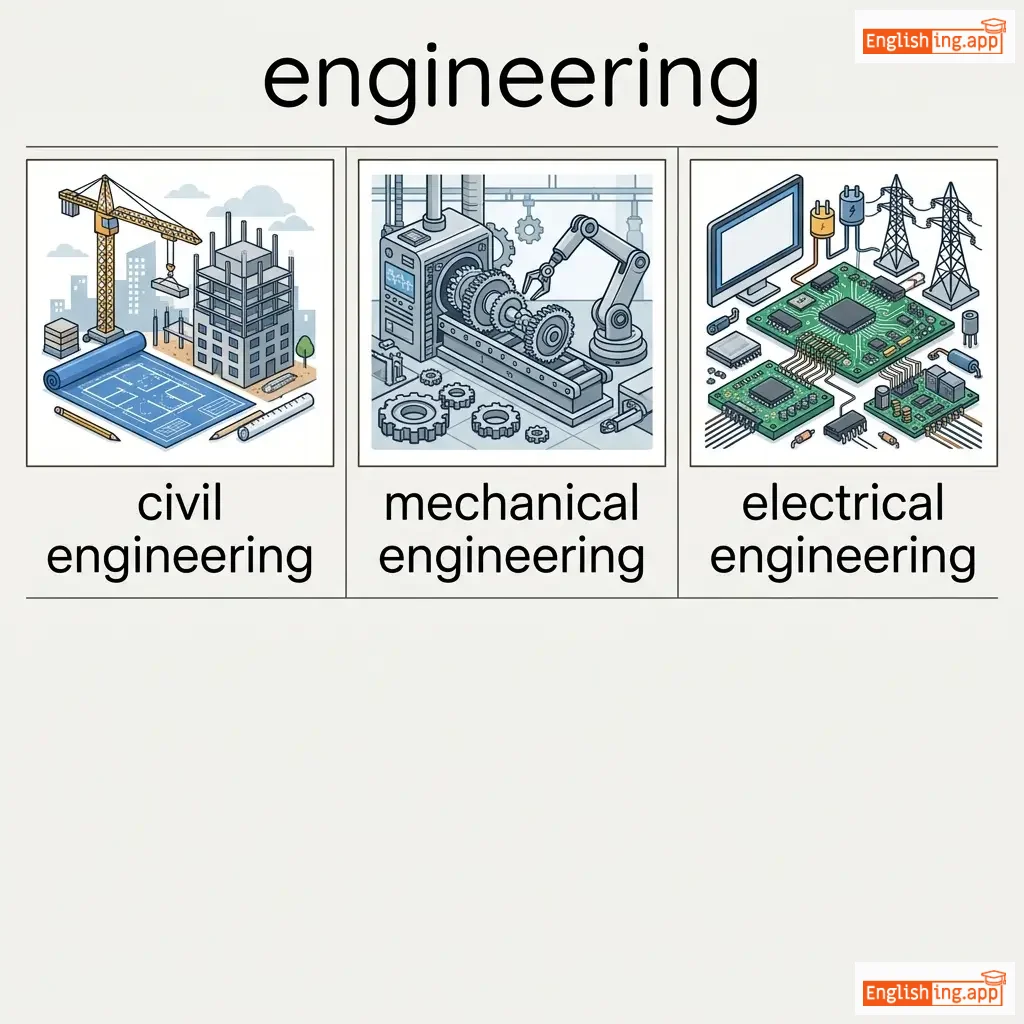
civil engineering, mechanical engineering, electrical engineering, software engineering
••••••
|
工学は新しい技術を開発し、世界をより良くする力 (chikara) です。
••••••
|
|
#10890
👷♂️
|
/ˌɛndʒɪˈnɪər/
noun/verb
(エンジニア)
••••••
|
- •••••• |
エンジニア
enjinia
••••••
|
engineered
エンジニアード
••••••
|
engineered
エンジニアード
••••••
|
engineers
エンジニアーズ
••••••
|
engineering
エンジニアリング
••••••
|
A person trained to design, build, or maintain engines, machines, or structures; to skillfully arrange or bring about.
••••••
|
The engineer designed a new bridge across the river.
エンジニアは川を越える新しい橋を設計しました。
••••••
|
エンジニアは川を越える新しい橋を設計しました。
Enjinia wa kawa o koeru atarashī hashi o sekkei shimashita.
••••••
|
reverse engineer
リバースエンジニア
••••••
|
to analyze a finished product to understand how it was made
••••••
|
リバースエンジニア
Ribāsu enjinia
••••••
|
designer, builder, technician, architect, planner
••••••
|
destroyer, dismantler
••••••
|
civil engineer, software engineer, train engineer, engineer solution
••••••
|
エンジニアはエンジンを作る専門家です。
••••••
|
|
#10891
🚗
|
/ˈɛndʒɪn/
noun
(エンジン)
••••••
|
- •••••• |
エンジン
enjin
••••••
|
- •••••• | - •••••• | - •••••• | - •••••• |
A machine designed to convert energy into mechanical power.
••••••
|
The car's engine failed on the highway. |
車のエンジンは高速道路で故障した。
Kuruma no enjin wa kōsoku dōro de koshō shita.
••••••
|
engine of growth |
something that drives progress or development
••••••
|
成長のエンジン
Seichō no enjin
••••••
|
motor, machine, mechanism, generator, turbine
••••••
|
brake, stopper
••••••
|
car engine, powerful engine, engine failure, engine design
••••••
|
エンジン – 車を動かすために必要なものです。
••••••
|
|
#10892
👮
|
/ɪnˈfɔːrsmənt/
noun
(enfōsumento)
••••••
|
- •••••• |
法執行
hōshikkō
••••••
|
- •••••• | - •••••• | - •••••• | - •••••• |
the act of making sure that laws or rules are followed
••••••
|
The police are responsible for law enforcement. |
警察は法執行の責任があります。
Keisatsu wa hōshikkō no sekinin ga arimasu.
••••••
|
strict enforcement |
the rigorous application of rules or laws
••••••
|
厳格な法執行
genkaku na hōshikkō
••••••
|
implementation, execution, application, policing
••••••
|
neglect, tolerance
••••••
|
law enforcement, enforcement agency, enforcement action, enforcement measures
••••••
|
Enforcement とは法律を適用すること — 警察が enforce して法律を守らせます。
••••••
|
|
#10893
⚡
|
/ˈɛnərdʒi/
noun
(エネルギー)
••••••
|
|
エネルギー
enerugi
••••••
|
- •••••• | - •••••• | - •••••• | - •••••• |
the capacity for activity or work; power derived from physical or chemical resources
••••••
|
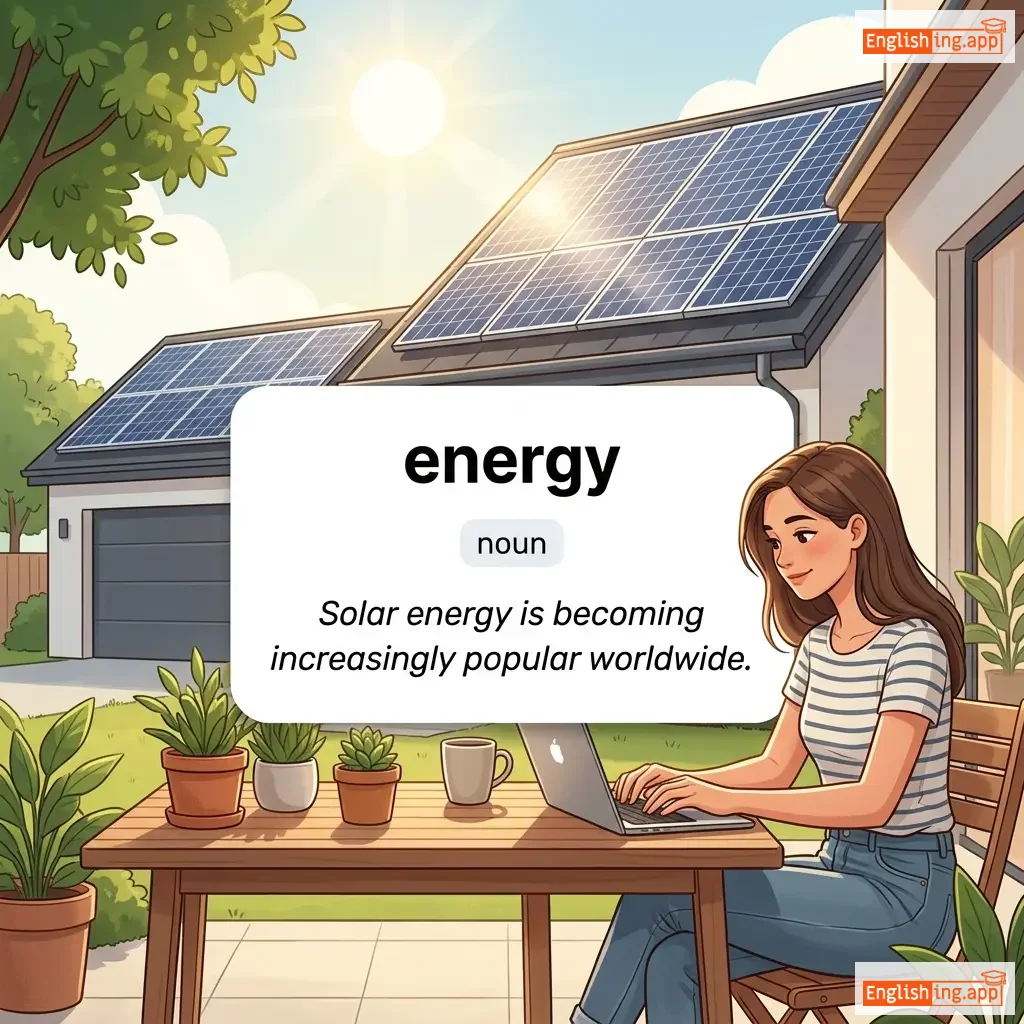
Solar energy is becoming increasingly popular worldwide.
太陽エネルギーは世界中でますます人気が高まっています。
••••••
|
太陽エネルギーは世界中でますます人気が高まっています。
Taiyou enerugi wa sekaijuu de masumasu ninki ga takamatteimasu.
••••••
|
burst of energy
エネルギーの爆発
••••••
|
a sudden increase in physical or mental activity
••••••
|
エネルギーの爆発
enerugi no bakuhatsu
••••••
|
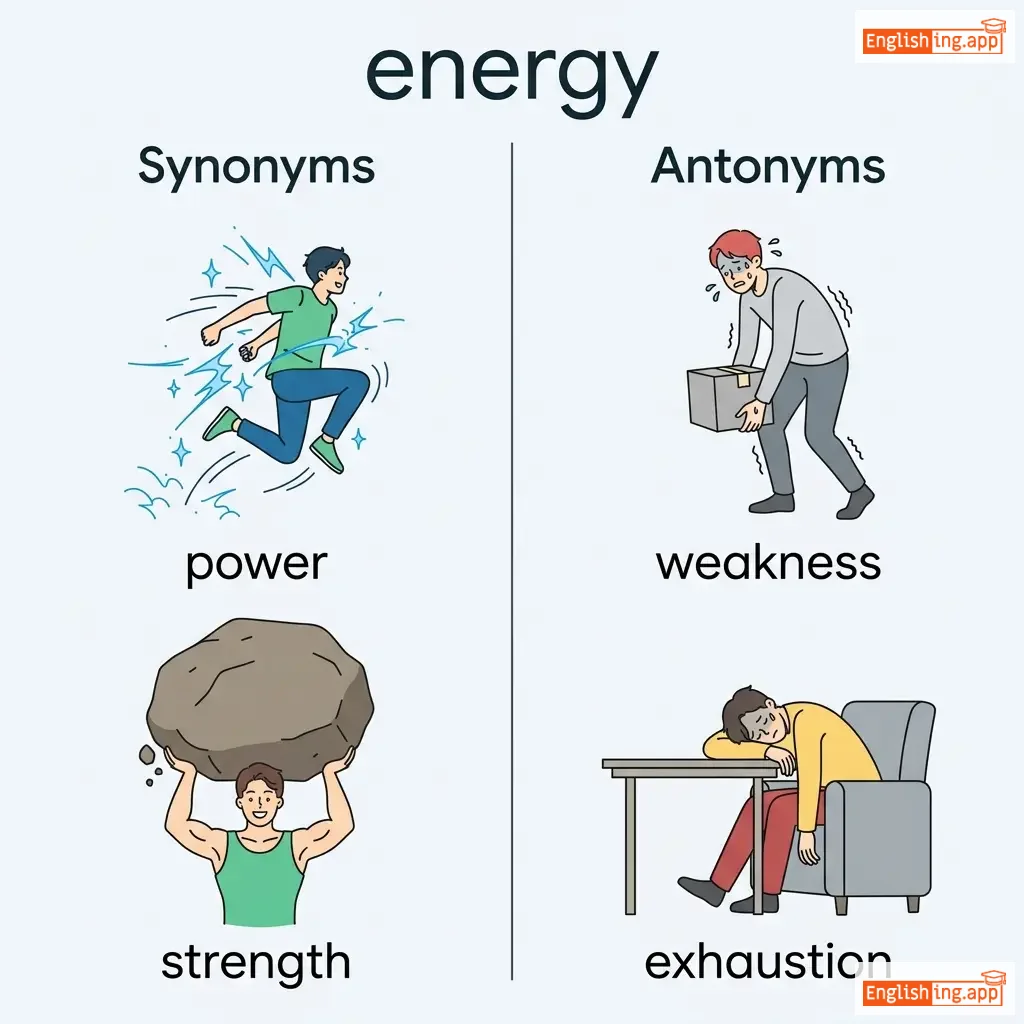
power, strength, vitality, force, vigor
••••••
|
weakness, exhaustion, fatigue
••••••
|
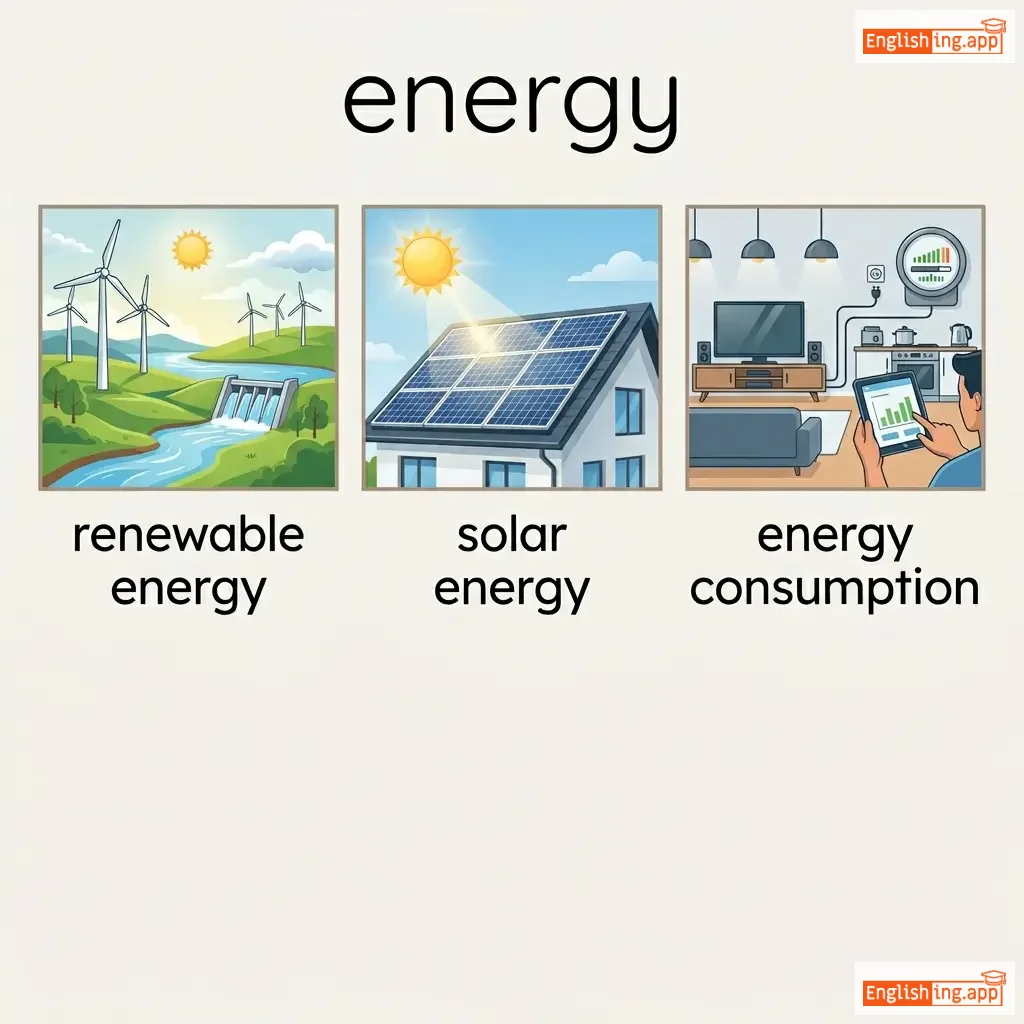
renewable energy, solar energy, energy consumption, energy level
••••••
|
Energyはエネルギーを意味します — Energyビスケットを食べてエネルギーを得よう。
••••••
|
|
#10894
🔓
|
/ɪˈneɪbəl/
verb
(イネイブル)
••••••
|
|
有効にする
yūkō ni suru
••••••
|
enabled
イネイブルド
••••••
|
enabled
イネイブルド
••••••
|
enables
イネイブルズ
••••••
|
enabling
イネイブリング
••••••
|
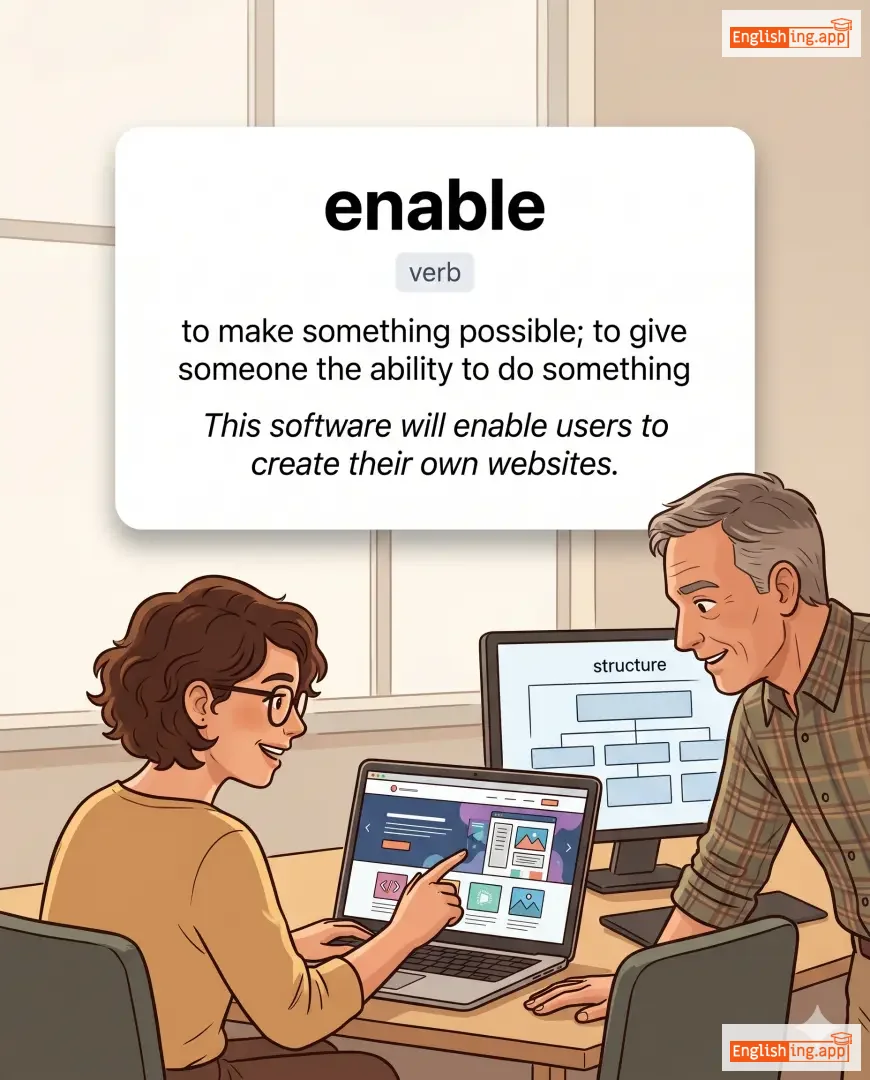
to make something possible; to give someone the ability to do something
••••••
|
This software will enable users to create their own websites.
このソフトウェアは、ユーザーが自分のウェブサイトを作成できるようにします。
••••••
|
このソフトウェアは、ユーザーが自分のウェブサイトを作成できるようにします。
Kono sofutowea wa, yūzā ga jibun no u~ebusaito o sakusei dekiru yō ni shimasu.
••••••
|
enable access
アクセスを有効にする
••••••
|
to provide the ability to enter or use something
••••••
|
アクセスを有効にする
akusesu o yūkō ni suru
••••••
|
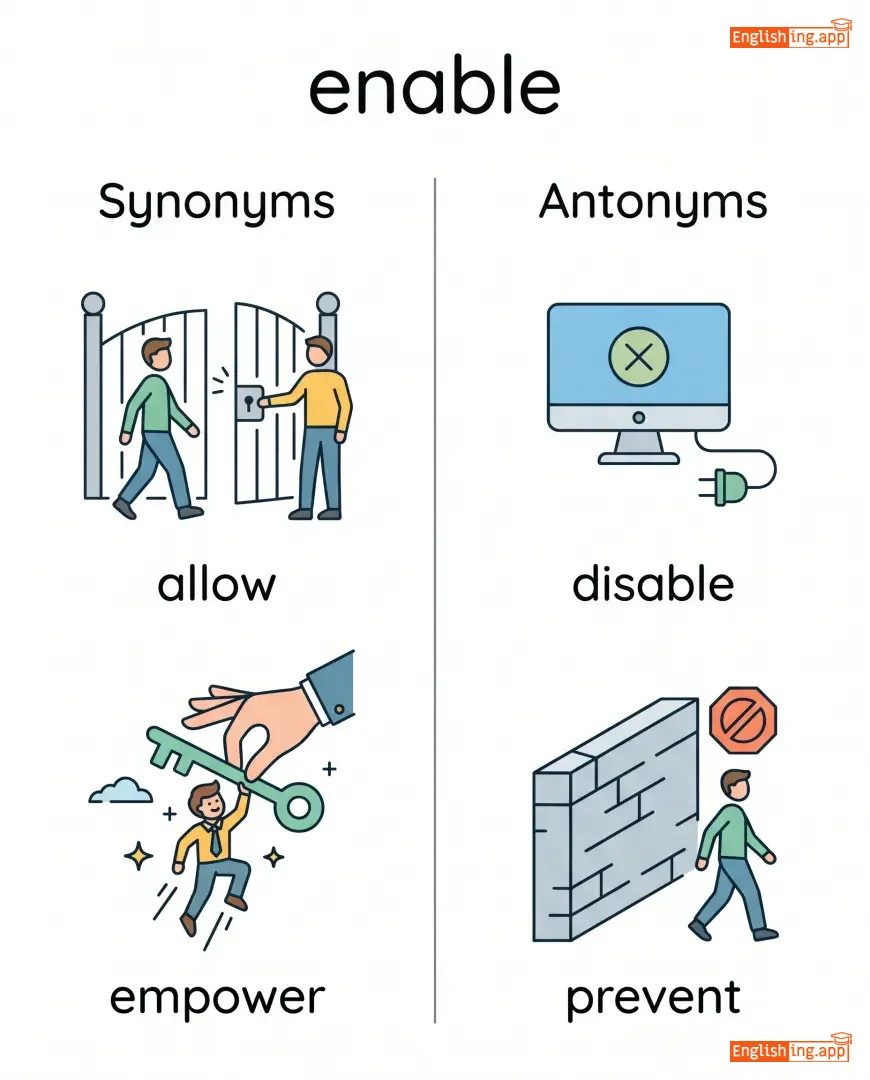
allow, empower, facilitate, permit, authorize
••••••
|
disable, prevent, hinder
••••••
|
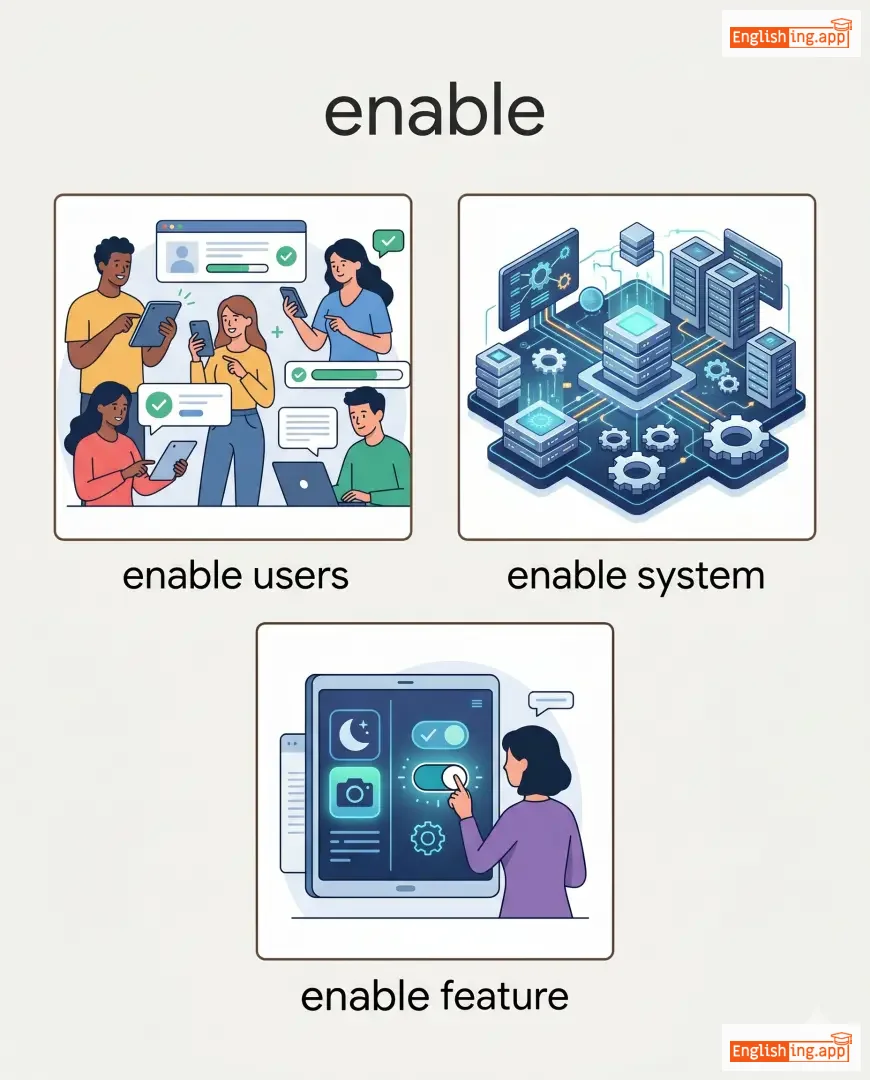
enable users, enable system, enable feature, enable access
••••••
|
Enableは機能を有効にして可能にすることです。
••••••
|
|
#10895
💼
|
/ɪmˈplɔɪmənt/
noun
(エンプロイメント)
••••••
|
|
雇用
koyou
••••••
|
- •••••• | - •••••• | - •••••• | - •••••• |
the state of having a paid job or work
••••••
|
The government is working to increase youth employment. |
政府は若者の雇用を増加させるために取り組んでいます。
Seifu wa wakamono no koyō o zōka saseru tame ni torikundeimasu.
••••••
|
full employment |
a situation where almost everyone willing to work has a job
••••••
|
完全雇用
kanzen koyō
••••••
|
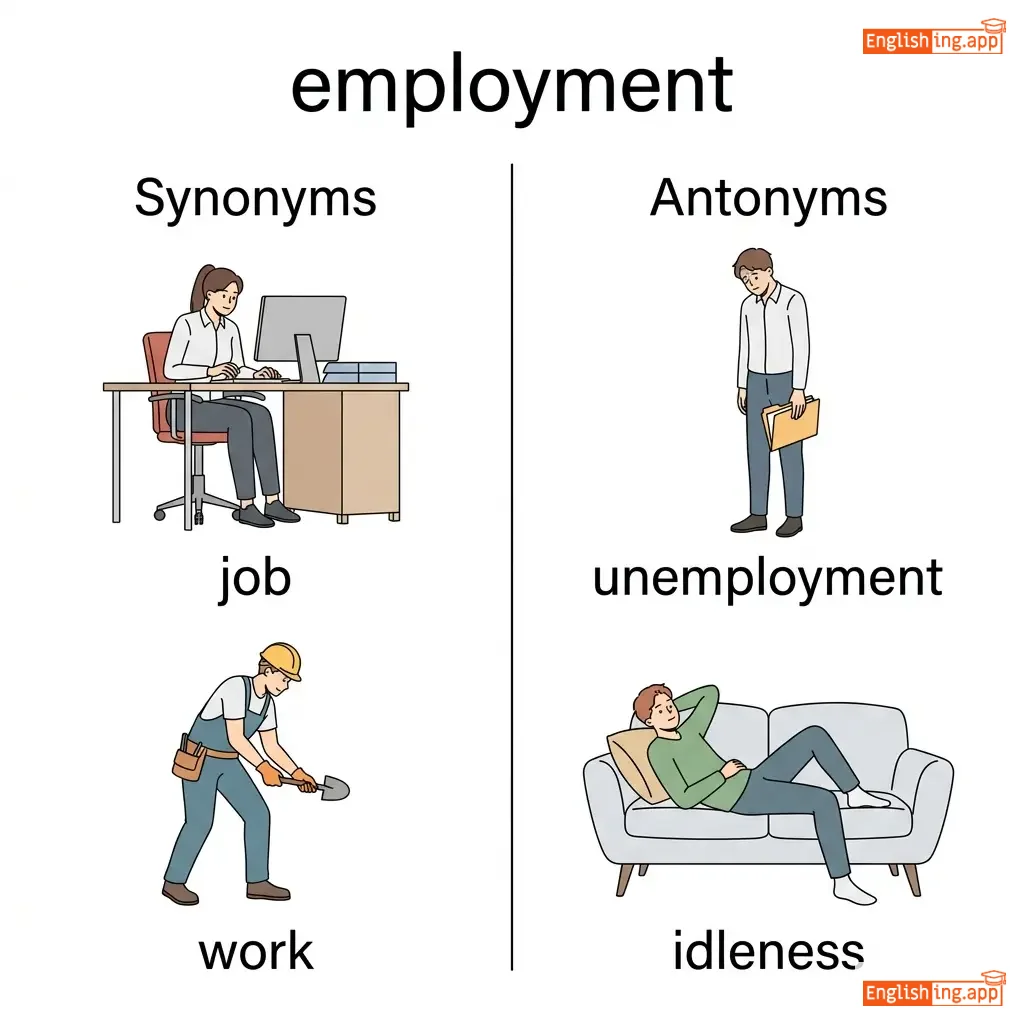
job, work, occupation, profession, livelihood
••••••
|
unemployment, idleness, joblessness
••••••
|
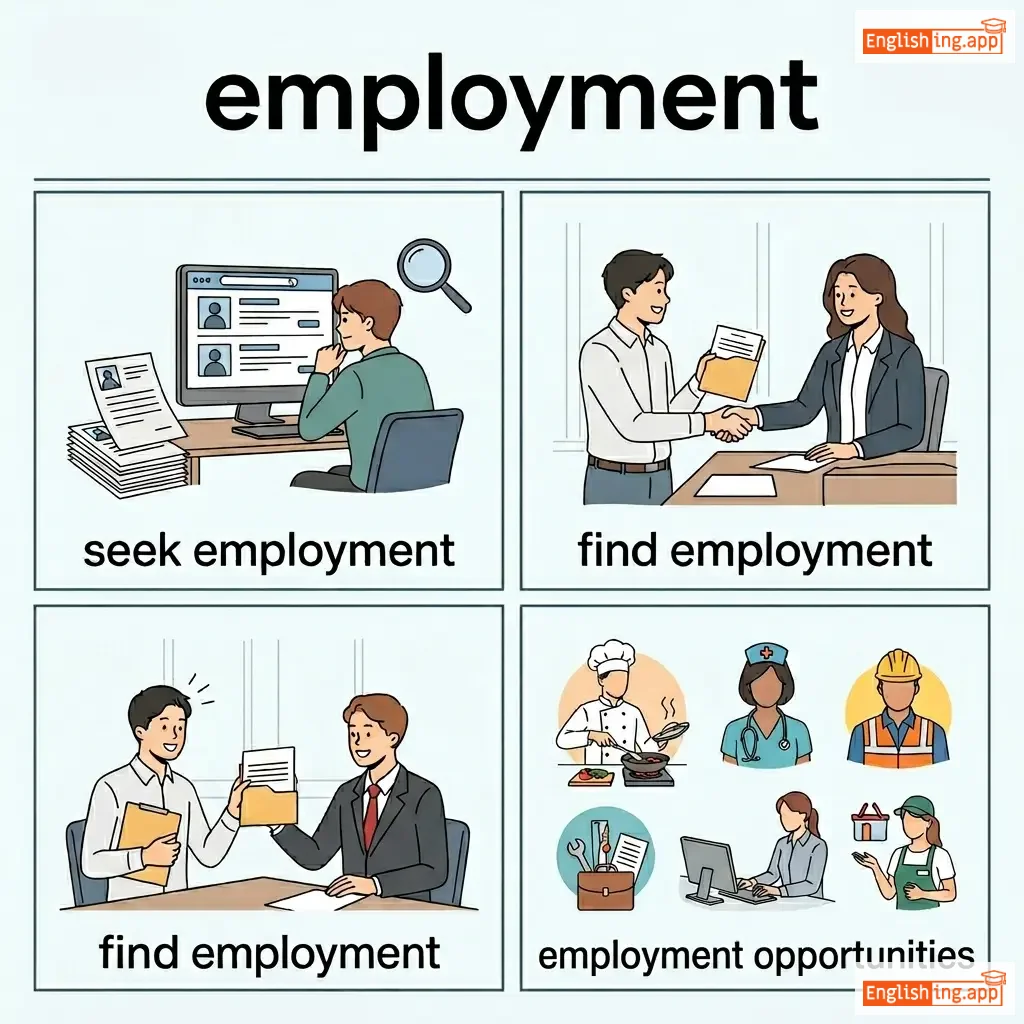
seek employment, find employment, employment opportunities, employment rate
••••••
|
雇用は仕事、仕事は幸福につながる。
••••••
|
|
#10896
👔
|
/ɪmˈplɔɪ/
verb
(エンプロイ)
••••••
|
- •••••• |
雇う
yatoi
••••••
|
employed
エンプロイド
••••••
|
employed
エンプロイド
••••••
|
employs
エンプルオイ
••••••
|
employing
エンプルオイング
••••••
|
to hire someone to do a job; to use something effectively
••••••
|
The company plans to employ more engineers next year.
その会社は来年、もっと多くのエンジニアを雇う予定です。
••••••
|
その会社は来年、もっと多くのエンジニアを雇う予定です。
Sono kaisha wa rainen, motto ōku no enjinia o yatou yotei desu.
••••••
|
gainful employment
有給雇用
••••••
|
work that provides a steady income
••••••
|
有給雇用
yūkyū koyō
••••••
|
hire, recruit, engage, utilize, appoint
••••••
|
dismiss, fire, discharge
••••••
|
employ workers, employ staff, employ methods, employ strategies
••••••
|
Employ は雇うという意味 — 会社が employ すれば、楽しむことができる。
••••••
|
|
#10897
😭
|
/ɪˈmoʊʃənəl/
adjective
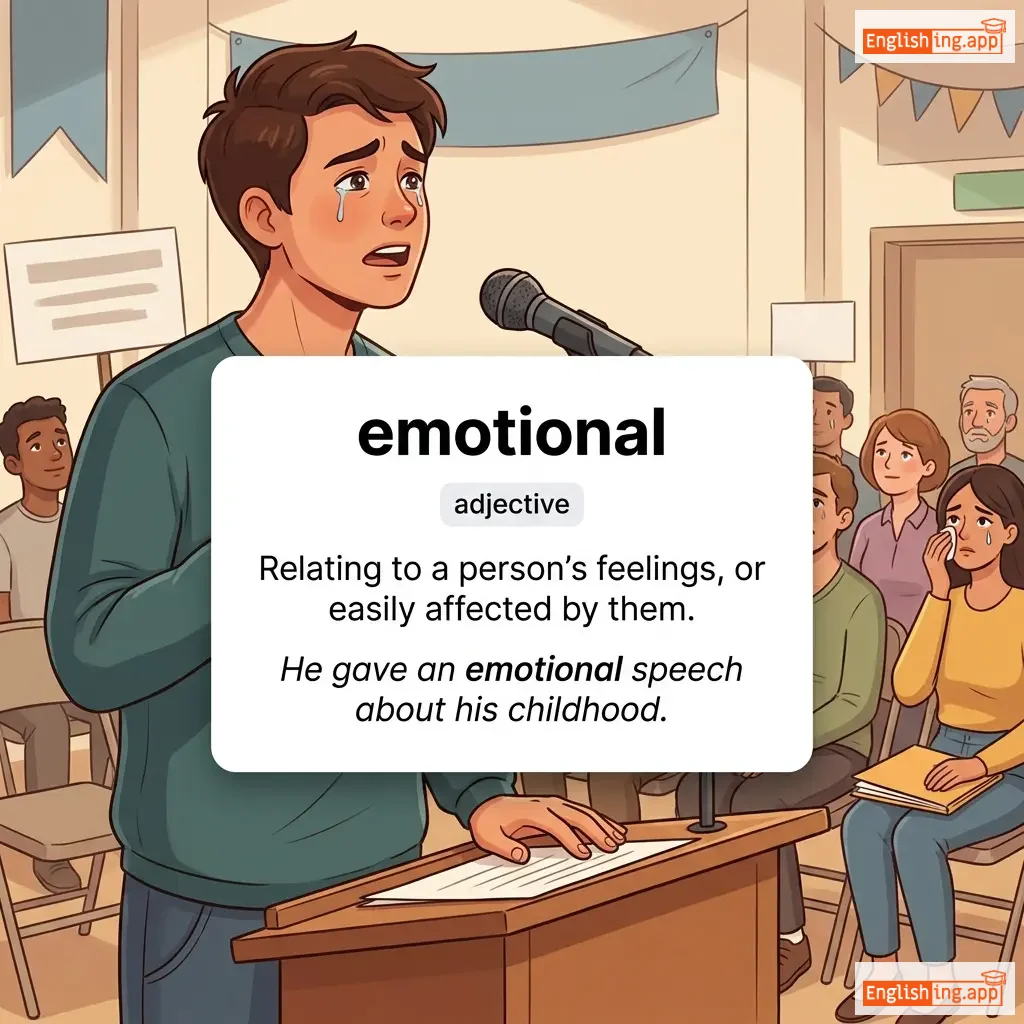
(エモーショナル)
••••••
|
|
感情的な
kanjōteki na
••••••
|
- •••••• | - •••••• | - •••••• | - •••••• |
Relating to a person’s feelings, or easily affected by them.
••••••
|
He gave an emotional speech about his childhood. |
彼は自分の子供時代について感情的なスピーチをしました。
Kare wa jibun no kodomojidai ni tsuite kanjōteki na supīchi o shimashita.
••••••
|
emotional support |
Comfort and reassurance provided to someone in distress.
••••••
|
感情的サポート
kanjōteki sapōto
••••••
|
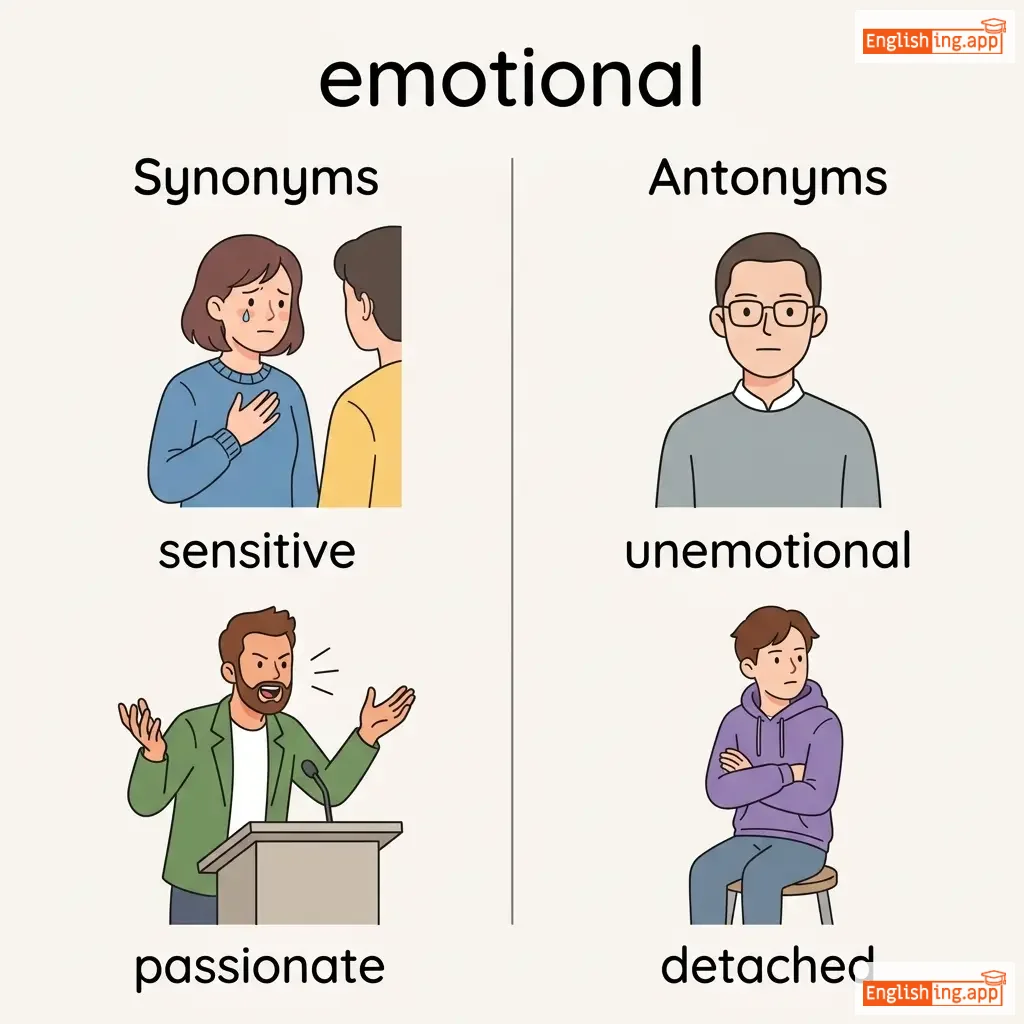
sensitive, passionate, sentimental, expressive
••••••
|
unemotional, detached, indifferent
••••••
|
emotional speech, emotional moment, emotional response, emotional support
••••••
|
Emotional = Emotion + al → 感情に関連 → 感情的な
••••••
|
|
#10898
❤️
|
/ɪˈmoʊʃən/
noun
(エモーション)
••••••
|
- •••••• |
感情
kanjou
••••••
|
- •••••• | - •••••• | - •••••• | - •••••• |
A strong feeling such as happiness, sadness, anger, or fear.
••••••
|
She was overwhelmed with emotion when she heard the news. |
彼女はそのニュースを聞いたとき、感情に圧倒されていた。
Kanojo wa sono nyu-su o kiita toki, kanjou ni attou sarete ita.
••••••
|
mixed emotions |
Conflicting feelings about a situation.
••••••
|
複雑な感情
Fukuzatsu na kanjou
••••••
|
feeling, sentiment, passion, mood
••••••
|
apathy, indifference
••••••
|
show emotion, strong emotion, control emotion, express emotion
••••••
|
Emotion = E (エネルギー) + motion (動き) → 内面的な感情が動き続ける。
••••••
|
|
#10899
💨
|
/ɪˈmɪʃən/
noun
(エミッション)
••••••
|
|
排出
haishutsu
••••••
|
- •••••• | - •••••• | - •••••• | - •••••• |
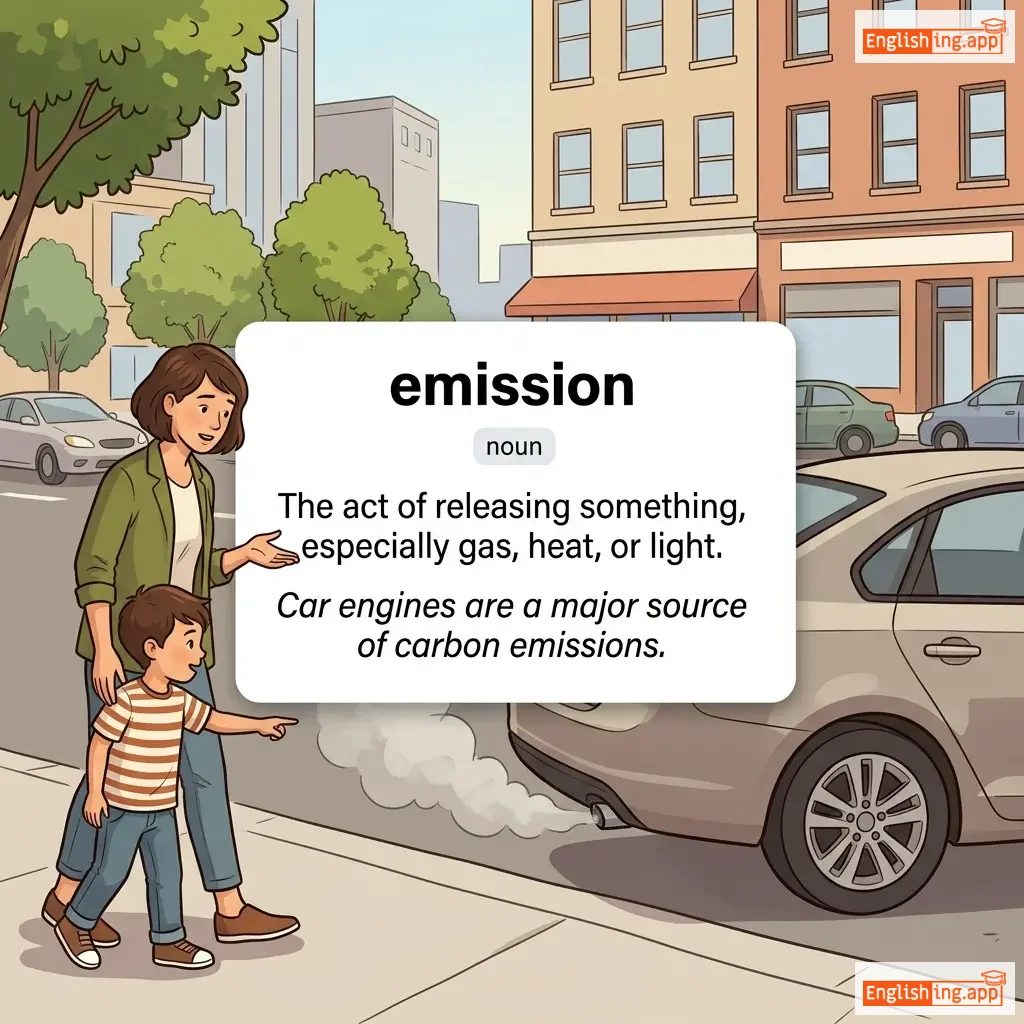
The act of releasing something, especially gas, heat, or light.
••••••
|
Car engines are a major source of carbon emissions. |
自動車のエンジンは主な二酸化炭素排出源です。
Jidousha no enjin wa omona nisankatanso haishutsu gen desu.
••••••
|
greenhouse gas emissions |
Gases released into the atmosphere that contribute to climate change.
••••••
|
温室効果ガス排出
Onshitsu kouka gasu haishutsu
••••••
|
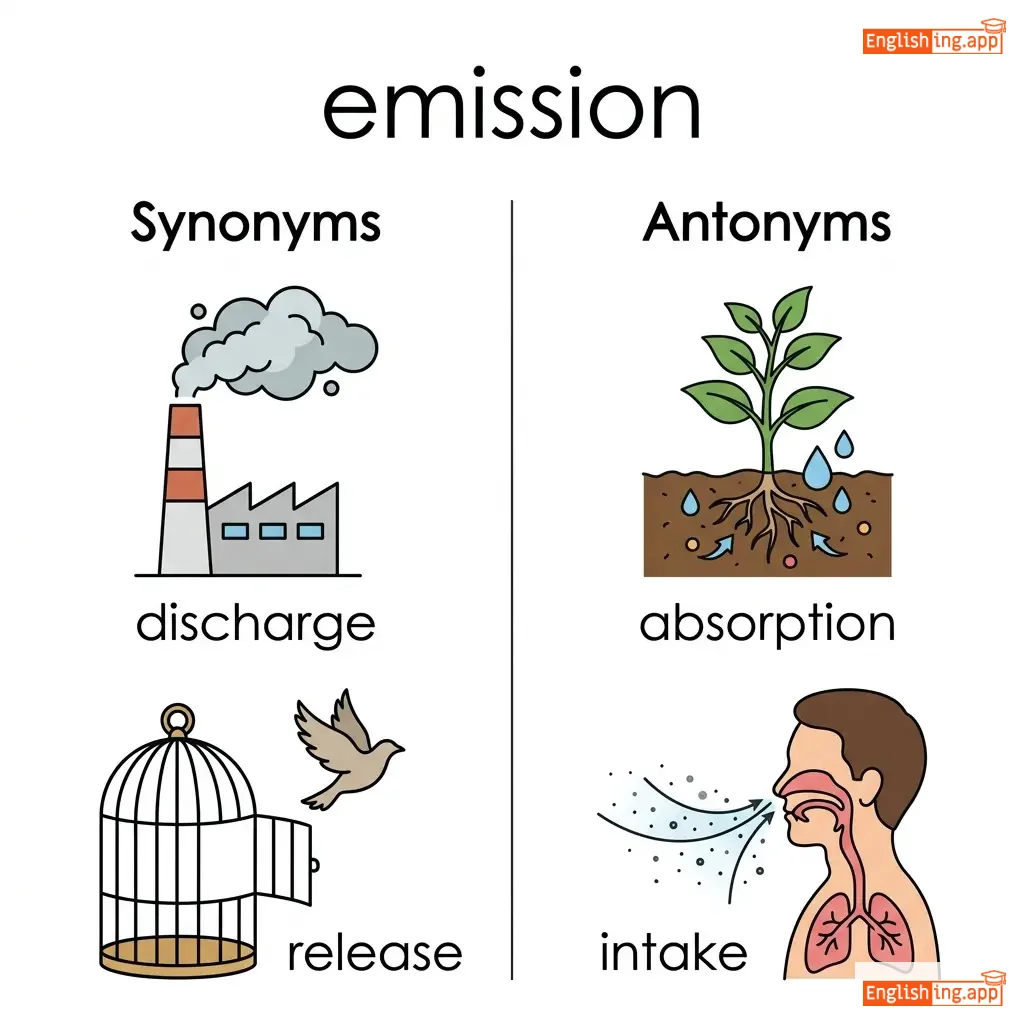
discharge, release, output, radiation
••••••
|
absorption, intake
••••••
|
carbon emission, control emission, emission level, reduce emissions
••••••
|
Emission = Emit + shutsu → Emit は放出を意味し、Emission は排出を意味します。
••••••
|
|
#10900
👩🏫
|
/ˈɛdʒuˌkeɪtər/
noun
(エデュケーター)
••••••
|
- •••••• |
教育者
kyouikusha
••••••
|
- •••••• | - •••••• | - •••••• | - •••••• |
a person who provides education; a teacher or instructor
••••••
|
She is a dedicated educator who inspires her students every day. |
彼女は毎日学生を励ます献身的な教育者です。
Kanojo wa mainichi gakusei wo hagemasu kenshinteki na kyouikusha desu.
••••••
|
- •••••• | - •••••• | - •••••• |
teacher, instructor, mentor, trainer, tutor
••••••
|
student, pupil
••••••
|
professional educator, experienced educator, educator training, role of educator
••••••
|
Educatorは教師👩🏫を意味し、教育するには教育者が必要です。
••••••
|
|
#10901
🌍
|
/ˈɛlswɛr/
adverb
(エルスウェア)
••••••
|
- •••••• |
他の場所で
hoka no basho de
••••••
|
- •••••• | - •••••• | - •••••• | - •••••• |
In, at, or to some other place.
••••••
|
If you can’t find it here, try looking elsewhere. |
ここで見つからない場合は、他の場所で探してみてください。
Koko de mitsukaranai baai wa, hoka no basho de sagashite mite kudasai.
••••••
|
- •••••• | - •••••• | - •••••• |
somewhere else, another place, away, outside
••••••
|
here, nearby
••••••
|
go elsewhere, look elsewhere, live elsewhere, seek elsewhere
••••••
|
Elsewhere は他の場所で → ここで見つからなければ、他の場所で探してください。
••••••
|
|
#10902
➕
|
/ɛls/
adverb
(エルス)
••••••
|
- •••••• |
他に何か
hoka ni nanika
••••••
|
- •••••• | - •••••• | - •••••• | - •••••• |
In addition; besides.
••••••
|
Is there anything else you need? |
他に何か必要ですか?
Hoka ni nanika hitsuyou desu ka?
••••••
|
or else |
Used to warn of unpleasant consequences if something is not done.
••••••
|
さもなくば
samonakuba
••••••
|
besides, otherwise, additionally, furthermore
••••••
|
nothing, none
••••••
|
anything else, someone else, somewhere else, nothing else
••••••
|
Else は他に何かを意味します ➕ - 'anything else?' は '他に何かありますか?' という意味です。
••••••
|
|
#10903
👑
|
/ɪˈliːt/ or /eɪˈliːt/
noun
(エリート)
••••••
|
- •••••• |
エリート
elite
••••••
|
- •••••• | - •••••• | - •••••• | - •••••• |
A select group that is superior in terms of ability or qualities.
••••••
|
Only the elite were invited to the exclusive event. |
エリートだけがその独占的なイベントに招待されました。
Erīto dake ga sono dokusenteki na ibento ni shōtai saremashita.
••••••
|
social elite |
The most powerful or influential members of society.
••••••
|
社会的エリート
Shakaiteki erīto
••••••
|
aristocracy, upper class, nobility, high society
••••••
|
commoners, masses
••••••
|
elite group, elite class, elite athlete, elite institution
••••••
|
エリートとは、VIPのように特別で選ばれた存在です。
••••••
|
|
#10904
💻
|
/ɪˌlɛkˈtrɒnɪk/
adjective
(エレクトロニック)
••••••
|
- •••••• |
電子の
denshi no
••••••
|
- •••••• | - •••••• | - •••••• | - •••••• |
Operating with or produced by the use of electronic devices.
••••••
|
She bought an electronic keyboard for her music lessons. |
彼女は音楽のレッスンのために電子キーボードを買った。
Kanojo wa ongaku no ressun no tame ni denshi kībōdo o katta.
••••••
|
electronic device |
A device that operates using electronic circuits.
••••••
|
電子機器
denshi kiki
••••••
|
digital, automated, computerized, high-tech
••••••
|
manual, mechanical
••••••
|
electronic device, electronic music, electronic mail, electronic circuit
••••••
|
Electronic deviceは電子機器を意味します - 例えば携帯電話 📱。
••••••
|
|
#10905
🔌
|
/ɪˌlɛkˈtrɪsɪti/
noun
(エレクトリシティ)
••••••
|
- •••••• |
電気
denki
••••••
|
- •••••• | - •••••• | - •••••• | - •••••• |
A form of energy resulting from the existence of charged particles.
••••••
|
The storm caused a power cut and we had no electricity. |
嵐で停電し、電気がありませんでした。
Arashi de teiden shi, denki ga arimasen deshita.
••••••
|
generate electricity |
To produce electrical power.
••••••
|
電気を発生させる
Denki o hassei saseru
••••••
|
power, energy, current, charge
••••••
|
darkness, powerlessness
••••••
|
electricity supply, electricity bill, electricity generation, electricity consumption
••••••
|
電気はエネルギーを意味し、照明やファンには電気が必要です。
••••••
|
|
#10906
⚡
|
/ɪˈlɛktrɪk/
adjective
(エレクトリック)
••••••
|
- •••••• |
電気的
denki-teki
••••••
|
- •••••• | - •••••• | - •••••• | - •••••• |
Relating to or operated by electricity.
••••••
|
The room was lit by an electric lamp. |
部屋は電気ランプで照らされていました。
Heya wa denki ranpu de terasarete imashita.
••••••
|
electric atmosphere |
A highly charged or exciting environment.
••••••
|
電気的雰囲気
denki-teki fun'iki
••••••
|
powered, charged, energized, electronic
••••••
|
manual, mechanical
••••••
|
electric car, electric power, electric shock, electric current
••••••
|
Electricは電気 ⚡を意味します。ライトやファンは電気で動作します。
••••••
|
|
#10907
🗳️
|
/ɪˈlɛkʃən/
noun
(エレクション)
••••••
|
- •••••• |
選挙
senkyo
••••••
|
- •••••• | - •••••• | - •••••• | - •••••• |
The process of choosing someone for public office by voting.
••••••
|
The election will be held next month. |
選挙は来月行われます。
Senkyo wa raigetsu okonawaremasu.
••••••
|
election fever |
Excitement and activity surrounding an upcoming election.
••••••
|
選挙フィーバー
Senkyo fivā
••••••
|
vote, poll, ballot, selection, referendum
••••••
|
appointment, selection without voting
••••••
|
general election, presidential election, election campaign, election results
••••••
|
Election は選挙 - 投票して選挙に参加しよう。
••••••
|
|
#10908
🗳️
|
/ɪˈlɛkt/
verb
(エレクト)
••••••
|
- •••••• |
選ぶ
erabu
••••••
|
elected
選ばれた
••••••
|
elected
選ばれた
••••••
|
elects
エレクトス
••••••
|
electing
エレクティング
••••••
|
To choose someone for a position or office by voting.
••••••
|
The citizens elected a new president.
市民は新しい大統領を選びました。
••••••
|
市民は新しい大統領を選びました。
Shimin wa atarashī daitōryō o erabimashita.
••••••
|
elect to
選ぶこと
••••••
|
To choose or decide to do something.
••••••
|
〜することを選ぶ
〜suru koto o erabu
••••••
|
choose, vote, select, appoint, pick
••••••
|
reject, dismiss, refuse
••••••
|
elect president, elect leader, elect representative, elect officials
••••••
|
選ぶ = E + elect = 選ぶ
••••••
|
|
#10909
👴
|
/ˈɛldərli/
adjective
(エルダーリー)
••••••
|
- •••••• |
高齢者
koureisha
••••••
|
- •••••• | - •••••• | - •••••• | - •••••• |
Being old or advanced in years.
••••••
|
The elderly man walks slowly across the street. |
その高齢者はゆっくりと道を渡っている。
Sono koureisha wa yukkuri to michi wo watatteiru.
••••••
|
- •••••• | - •••••• | - •••••• |
aged, senior, old, elderly person, retired
••••••
|
young, youthful
••••••
|
elderly people, elderly care, elderly population, elderly woman
••••••
|
Elderly は Elder + ly、Elder は高齢者を意味する。
••••••
|
|
#10910
↔️
|
/ˈaɪðər/ or /ˈiːðər/
determiner/pronoun/conjunction/adverb
(アイザー)
••••••
|
- •••••• |
どちらか
dochiraka
••••••
|
- •••••• | - •••••• | - •••••• | - •••••• |
Used to indicate a choice between two alternatives.
••••••
|
You can either call me tonight or send me an email. |
今晩、私に電話するか、メールを送ることができます。
Konban, watashi ni denwa suru ka, mēru o okuru koto ga dekimasu.
••••••
|
either way |
Whatever happens, the result will be acceptable.
••••••
|
どちらでも
dochira demo
••••••
|
one, the one, any of the two, alternative
••••••
|
neither
••••••
|
either side, either way, either option, either choice
••••••
|
Eitherはどちらか、例えばお茶かコーヒー、どちらでも大丈夫。
••••••
|
|
#10911
8️⃣
|
/eɪt/
number
(エイト)
••••••
|
- •••••• |
八
hachi
••••••
|
- •••••• | - •••••• | - •••••• | - •••••• |
The number equivalent to the product of two and four; one more than seven.
••••••
|
There are eight apples in the basket. |
バスケットには八つのリンゴがあります。
Basuketto ni wa yattsu no ringo ga arimasu.
••••••
|
behind the eight ball |
In a difficult or unfavorable situation.
••••••
|
八番のボールの後ろにいる
Hachiban no bōru no ushiro ni iru
••••••
|
octet, VIII, set of eight, group of eight
••••••
|
seven, nine
••••••
|
eight years, eight times, group of eight, eight people
••••••
|
八(hachi)という数字は、七(shichi)の後に来る数字です。
••••••
|
|
#10912
🥚
|
/ɛɡ/
noun
(エッグ)
••••••
|
- •••••• |
卵
tamago
••••••
|
- •••••• | - •••••• | - •••••• | - •••••• |
an oval or round object laid by a female bird, often eaten as food
••••••
|
She had a boiled egg for breakfast. |
彼女は朝食にゆで卵を食べました。
Kanojo wa choushoku ni yude tamago o tabemashita.
••••••
|
put all your eggs in one basket |
to risk everything on a single plan or opportunity
••••••
|
すべての卵を一つのバスケットに入れないで
Subete no tamago o hitotsu no basuketto ni irenaide
••••••
|
ovum, embryo, yolk, shell
••••••
|
sperm, chick
••••••
|
boiled egg, fried egg, egg yolk, egg shell
••••••
|
Egg 🥚 は卵、'朝食に卵'を覚えておこう。
••••••
|
|
#10913
💪
|
/ˈɛfərt/
noun
(エフォート)
••••••
|
- •••••• |
努力
doryoku
••••••
|
- •••••• | - •••••• | - •••••• | - •••••• |
the use of physical or mental energy to do something; attempt
••••••
|
He made a great effort to improve his English skills. |
彼は英語スキルを向上させるために大きな努力をしました。
Kare wa eigo sukiru o kōjō saseru tame ni ōkina doryoku o shimashita.
••••••
|
make an effort |
to try hard to achieve something
••••••
|
努力する
doryoku suru
••••••
|
attempt, endeavor, exertion, struggle, work
••••••
|
inaction, laziness, neglect
••••••
|
make an effort, huge effort, joint effort, physical effort
••••••
|
Effortは成功を生む、努力 (doryoku) がなければ何も達成できません。
••••••
|
|
#10914
✅
|
/ɪˈfɛktɪvli/
adverb
(efekutivuri)
••••••
|
- •••••• |
効果的に
koukatekini
••••••
|
- •••••• | - •••••• | - •••••• | - •••••• |
in a way that produces the desired result; efficiently and successfully
••••••
|
The team worked together effectively to finish the project on time. |
チームはプロジェクトを時間通りに終わらせるために効果的に一緒に働きました。
Chīmu wa purojekuto wo jikan dōri ni owaraseru tame ni kōkatekini issho ni hatarakimashita.
••••••
|
- •••••• | - •••••• | - •••••• |
efficiently, successfully, productively, powerfully
••••••
|
ineffectively, poorly, weakly
••••••
|
work effectively, communicate effectively, manage effectively, use effectively
••••••
|
Effective は成功を意味し、effectively は ✅ 成功的に作業することを意味します。
••••••
|
Vocabulary Quiz
Test your vocabulary by matching words with their translations or meanings.
Login to take the quiz
Comments (0)
Share your thoughts and join the discussion.
Join the discussion by logging in
Login to CommentNo comments yet
Be the first to share your thoughts!