

翻訳
過去
過去分詞
三人称単数
動名詞
意味
例文
例文の翻訳
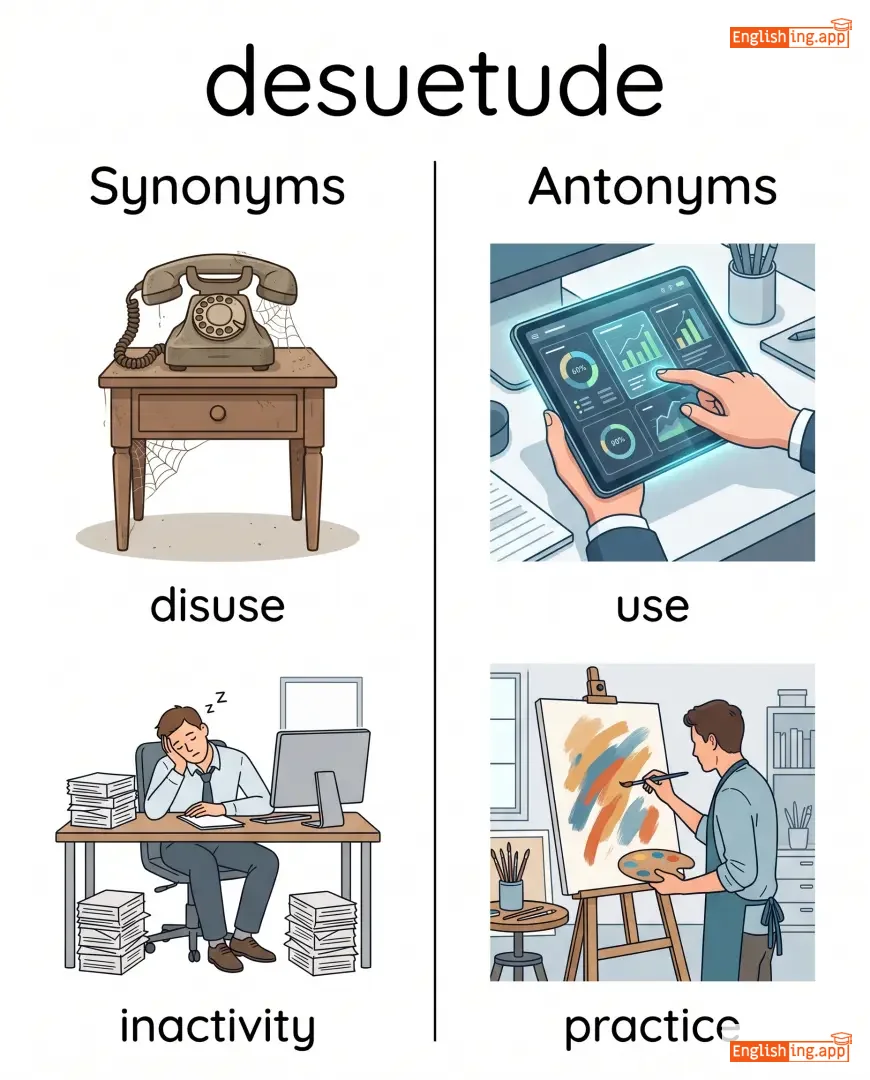
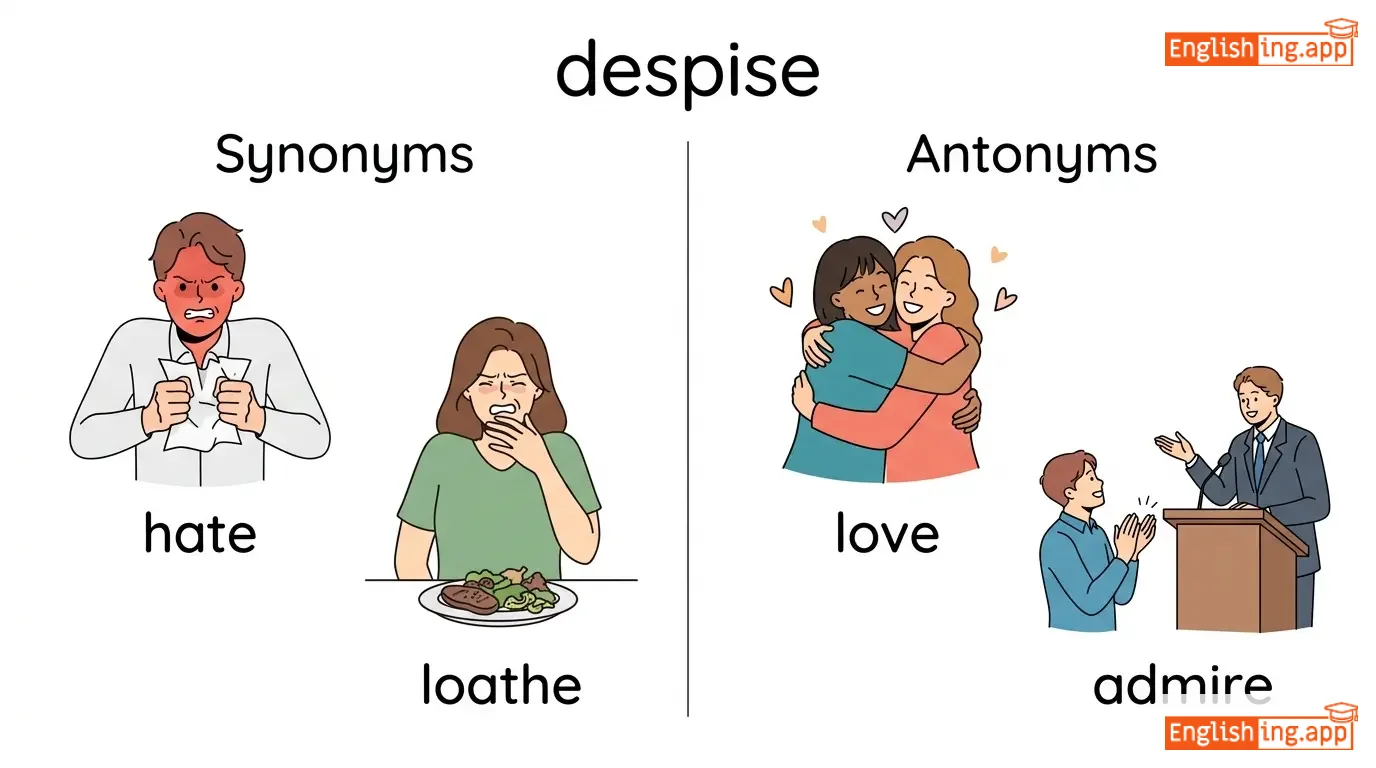
同義語
対義語
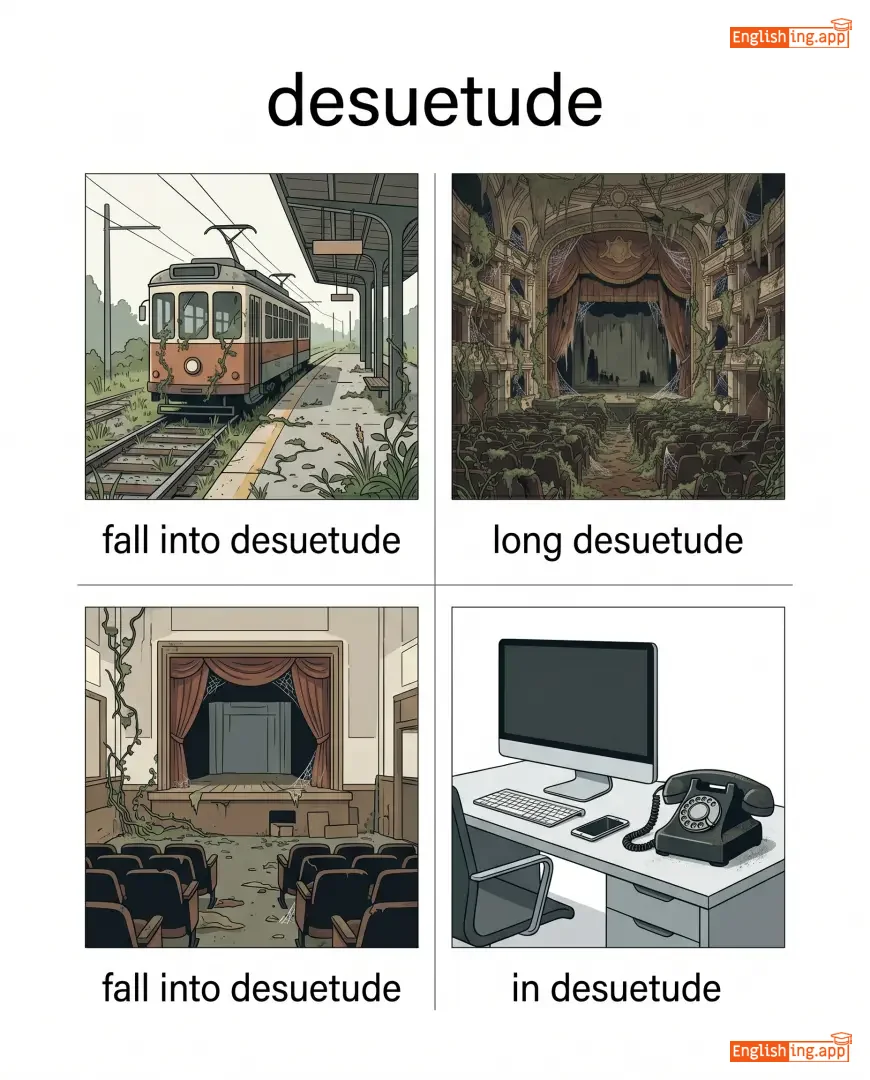
コロケーション
ニーモニック
Swipe left or right, or use the buttons. Tap image to zoom.
例文の翻訳
単語
Lesson 79Lesson 79 - マスクトグル
|
絵文字
|
単語 | Images | 翻訳 | 過去 | 過去分詞 | 三人称単数 | 動名詞 | 意味 | 例文 | 例文の翻訳 | 表現例 | 表現例の意味 | 表現例の翻訳 | 同義語 | 対義語 | コロケーション | ニーモニック |
|---|---|---|---|---|---|---|---|---|---|---|---|---|---|---|---|---|---|
|
#2341
😠
|
/dɪˈspɪkəbl/
adjective
(デスピカブル)
••••••
|
- •••••• |
卑劣な
hiretsuna
••••••
|
- •••••• | - •••••• | - •••••• | - •••••• |
Deserving hatred and contempt; vile or shameful.
••••••
|
His despicable actions shocked the entire community. |
彼の卑劣な行動はコミュニティ全体を驚かせました。
Kare no hiretsuna kōdō wa komyuniti zentai o odorokasemashita.
••••••
|
- •••••• | - •••••• | - •••••• |
vile, contemptible, hateful, shameful, disgraceful
••••••
|
admirable, noble, respectable
••••••
|
despicable act, despicable behavior, truly despicable, absolutely despicable
••••••
|
Despicable = Des-pic-able, もし誰かがひどい行動をするなら、それは卑劣なことだ。
••••••
|
|
#2342
✂️
|
/dɪˈtætʃ/
verb
(ディテッチ)
••••••
|
- •••••• |
分離する
bunri suru
••••••
|
detached
ディテッチド
••••••
|
detached
ディテッチド
••••••
|
detaches
ディテッチズ
••••••
|
detaching
ディテッチング
••••••
|
to separate or remove something from something else
••••••
|
She detached the page from the notebook.
彼女はノートからページを切り離しました。
••••••
|
彼女はノートからページを切り離しました。
Kanojo wa nōto kara pēji o kirihanasimashita.
••••••
|
detach oneself
自分を切り離す
••••••
|
to distance oneself emotionally or mentally
••••••
|
自分を切り離す
jibun o kirihanasu
••••••
|
separate, disconnect, remove, disengage, extract
••••••
|
attach, join, connect
••••••
|
detach from, detach unit, detach completely, detach carefully
••••••
|
Detach はページをノートから切り離すことのようです
••••••
|
|
#2343
😐
|
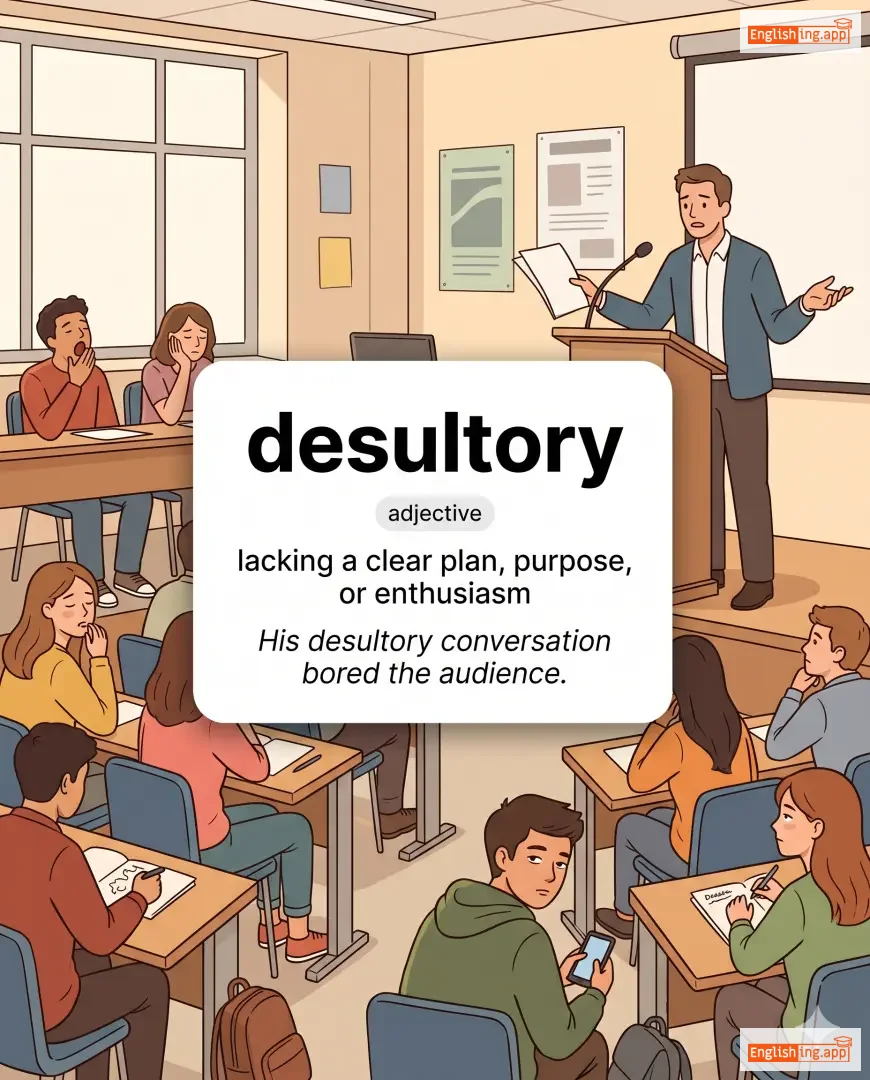
/ˈdɛsəlˌtɔːri/
adjective
(デサルトリー)
••••••
|
|
無秩序な
muchi-tsujona
••••••
|
- •••••• | - •••••• | - •••••• | - •••••• |
lacking a clear plan, purpose, or enthusiasm
••••••
|
His desultory conversation bored the audience. |
彼の無秩序な会話は観客を退屈させた。
Kare no muchitsujona kaiwa wa kankyaku o taikutsu saseta.
••••••
|
- •••••• | - •••••• | - •••••• |
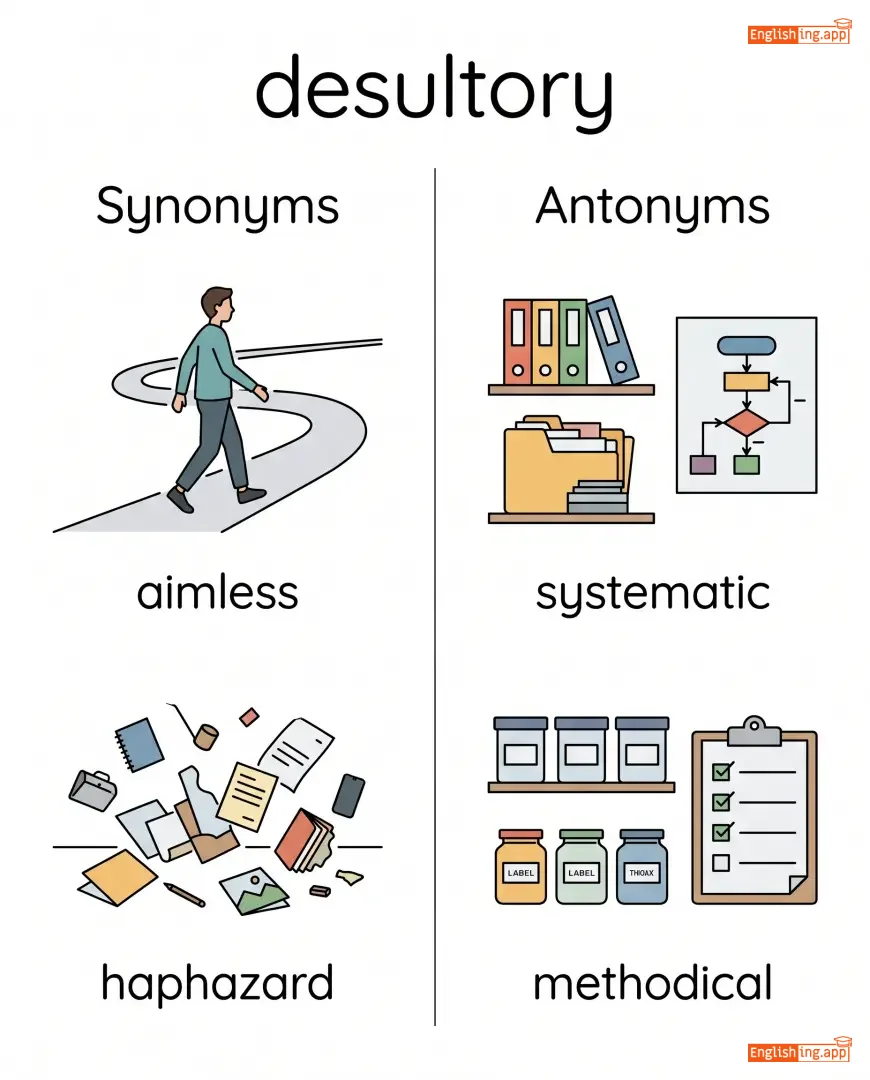
aimless, haphazard, random, unplanned, erratic
••••••
|
systematic, methodical, organized
••••••
|
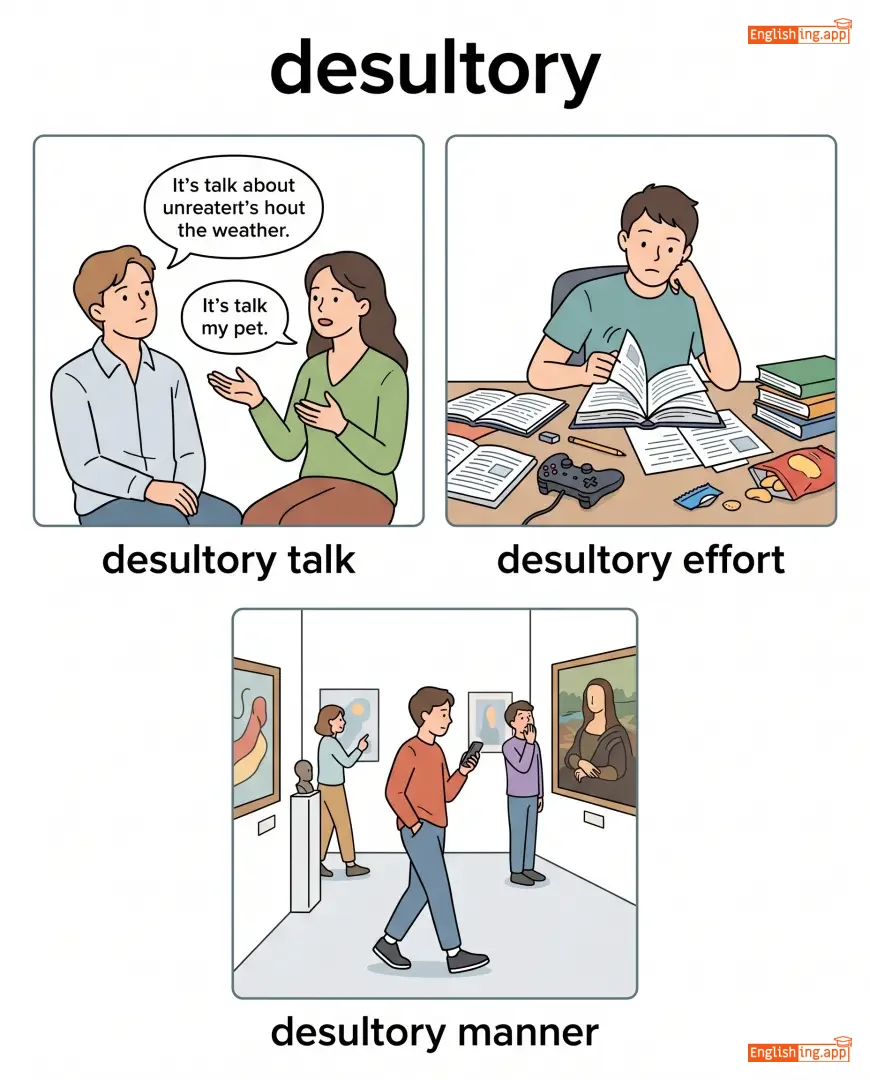
desultory talk, desultory effort, desultory manner, desultory approach
••••••
|
Desultory – 計画がなく、無秩序な会話
••••••
|
|
#2344
📜
|
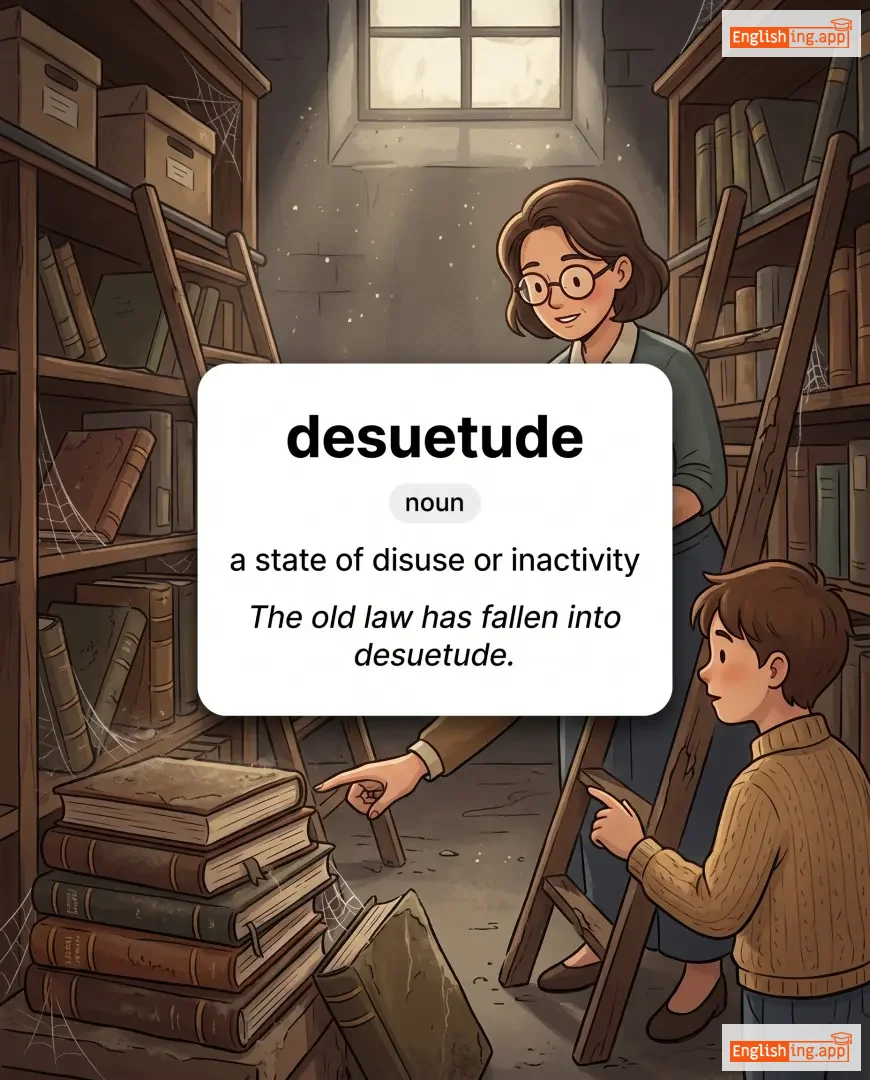
/ˈdɛswɪˌtuːd/
noun
(デスウィチュード)
••••••
|
|
廃止
haishi
••••••
|
- •••••• | - •••••• | - •••••• | - •••••• |
a state of disuse or inactivity
••••••
|
The old law has fallen into desuetude. |
古い法律は廃止されました。
Furui houritsu wa haishi saremashita.
••••••
|
- •••••• | - •••••• | - •••••• |
disuse, inactivity, neglect, abandonment, obscurity
••••••
|
use, practice, activity
••••••
|
fall into desuetude, long desuetude, in desuetude
••••••
|
Desuetudeは 'due' 何かが廃止されたことを意味します
••••••
|
|
#2345
🤲
|
/ˈdɛstɪˌtuːt/
adjective
(デスティチュート)
••••••
|
- •••••• |
困窮した
konkyū shita
••••••
|
- •••••• | - •••••• | - •••••• | - •••••• |
extremely poor and lacking the means to provide for oneself
••••••
|
The earthquake left many families destitute.
地震は多くの家族を困窮させた。
••••••
|
地震は多くの家族を困窮させた。
Jishin wa ōku no kazoku o konkyū saseta.
••••••
|
- •••••• | - •••••• | - •••••• |
impoverished, needy, penniless, indigent, poor
••••••
|
wealthy, rich, prosperous
••••••
|
destitute families, left destitute, become destitute, utterly destitute
••••••
|
困窮したは、何もなくて困った状態
••••••
|
|
#2346
🍰
|
/dɪˈzɜːrt/
noun
(デザート)
••••••
|
- •••••• |
デザート
dezāto
••••••
|
- •••••• | - •••••• | - •••••• | - •••••• |
the sweet course eaten at the end of a meal
••••••
|
We had ice cream for dessert after dinner. |
夕食後にデザートとしてアイスクリームを食べました。
Yūshoku go ni dezāto to shite aisukurīmu o tabemashita.
••••••
|
just deserts |
what one deserves, usually punishment
••••••
|
正当な報い
seitou na mukui
••••••
|
sweet, pudding, confection, pastry, treat
••••••
|
main course, appetizer
••••••
|
chocolate dessert, delicious dessert, dessert menu, frozen dessert
••••••
|
夕食後にデザートが来る - 甘くておいしい!
••••••
|
|
#2347
🗡️
|
/ˈdɛspətɪzəm/
noun
(デスポティズム)
••••••
|
- •••••• |
専制政治
sensei seiji
••••••
|
- •••••• | - •••••• | - •••••• | - •••••• |
absolute power exercised in a cruel and oppressive way
••••••
|
The people revolted against the era of despotism. |
人々は専制政治の時代に反乱を起こしました。
Hitobito wa sensei seiji no jidai ni hanran o okoshimashita.
••••••
|
- •••••• | - •••••• | - •••••• |
tyranny, dictatorship, autocracy, totalitarianism
••••••
|
democracy, liberty, freedom
••••••
|
era of despotism, oppose despotism, end despotism
••••••
|
Despotismは専制政治、強大な力が民衆を支配することを意味します。
••••••
|
|
#2348
⚖️
|
/dɛˈspɒtɪk/
adjective
(デスポティック)
••••••
|
- •••••• |
専制的な
sensetekina
••••••
|
- •••••• | - •••••• | - •••••• | - •••••• |
exercising power in a cruel, oppressive, or authoritarian way
••••••
|
The king’s despotic rule left the people in misery.
王の専制的な支配は人々を苦しめた。
••••••
|
王の専制的な支配は人々を苦しめた。
Ō no sensetekina shihai wa hitobito o kurushimeta.
••••••
|
- •••••• | - •••••• | - •••••• |
tyrannical, dictatorial, authoritarian, oppressive
••••••
|
democratic, fair, just
••••••
|
despotic rule, despotic power, despotic government
••••••
|
専制的なは、暴君のようにすべてを支配すること。
••••••
|
|
#2349
👑
|
/ˈdɛspɒt/
noun
(デスポット)
••••••
|
- •••••• |
暴君
bōkun
••••••
|
- •••••• | - •••••• | - •••••• | - •••••• |
a ruler with absolute power, often ruling in a cruel or oppressive way
••••••
|
The despot ruled the nation with fear and violence. |
暴君は恐怖と暴力で国を支配した。
Bōkun wa kyōfu to bōryoku de kuni o shihai shita.
••••••
|
- •••••• | - •••••• | - •••••• |
tyrant, dictator, autocrat, oppressor
••••••
|
democrat, liberator, reformer
••••••
|
cruel despot, absolute despot, despotic rule
••••••
|
Despotの意味は暴君で、すべてを圧倒的に支配する存在です。
••••••
|
|
#2350
😔
|
/dɪˈspɒndənt/
adjective
••••••
|
- •••••• | - •••••• | - •••••• | - •••••• | - •••••• | - •••••• |
feeling or showing deep hopelessness or discouragement
••••••
|
She felt despondent after losing her job. |
- •••••• | - •••••• | - •••••• | - •••••• |
discouraged, dejected, gloomy, hopeless
••••••
|
hopeful, optimistic, encouraged
••••••
|
feel despondent, look despondent, become despondent
••••••
|
No •••••• |
|
#2351
😞
|
/dɪˈspɒnd/
verb
(ディスポンド)
••••••
|
- •••••• |
落ち込む
ochikomu
••••••
|
desponded
ディスポンデッド
••••••
|
desponded
ディスポンデッド
••••••
|
desponds
ディスポンズ
••••••
|
desponding
ディスポンディング
••••••
|
to lose confidence or hope; to become dejected
••••••
|
After repeated failures, he began to despond.
繰り返しの失敗の後、彼は落ち込むようになった。
••••••
|
繰り返しの失敗の後、彼は落ち込むようになった。
Kurikaeshi no shippai no ato, kare wa ochikomu you ni natta.
••••••
|
- •••••• | - •••••• | - •••••• |
despair, lose heart, give up, weaken, falter
••••••
|
hope, persevere, encourage
••••••
|
begin to despond, not to despond, easily desponds
••••••
|
Despond は落ち込む意味、心が沈んでいるような感じ。
••••••
|
|
#2352
🥷
|
/dɪˈspɔɪlər/
noun
(デスポイラー)
••••••
|
- •••••• |
略奪者
ryakudatsusha
••••••
|
- •••••• | - •••••• | - •••••• | - •••••• |
A person who robs, plunders, or violently takes things from others.
••••••
|
The despoilers left the city in ruins. |
略奪者たちは街を廃墟にした。
Ryakudatsusha-tachi wa machi o haikyo ni shita.
••••••
|
- •••••• | - •••••• | - •••••• |
plunderer, robber, looter, pillager
••••••
|
protector, savior, guardian
••••••
|
cruel despoiler, foreign despoiler, ruthless despoiler
••••••
|
Despoiler は '略奪者' に似ていて、物を奪う人を指します。
••••••
|
|
#2353
🪓
|
/dɪˈspɔɪl/
verb
(デスポイル)
••••••
|
- •••••• |
略奪する
ryakudatsu suru
••••••
|
despoiled
デスポイルド
••••••
|
despoiled
デスポイルド
••••••
|
despoils
デスポイルズ
••••••
|
despoiling
デスポイリング
••••••
|
To steal or violently remove valuable possessions from a place.
••••••
|
The invaders despoiled the village during the war.
侵略者は戦争中に村を略奪しました。
••••••
|
侵略者は戦争中に村を略奪しました。
Shinryakusha wa sensō-chū ni mura o ryakudatsu shimashita.
••••••
|
- •••••• | - •••••• | - •••••• |
plunder, pillage, loot, rob
••••••
|
protect, preserve, save
••••••
|
despoil the land, despoil the temple, despoil resources
••••••
|
Despoilは略奪するという意味、略奪者が村を略奪するように。
••••••
|
|
#2354
💪
|
/dɪˈspaɪt/
preposition
(ディスパイト)
••••••
|
- •••••• |
にもかかわらず
nimo kakawarazu
••••••
|
- •••••• | - •••••• | - •••••• | - •••••• |
Without being affected by; in spite of.
••••••
|
He continued his work despite the difficulties. |
困難にもかかわらず、彼は仕事を続けました。
Konnan nimo kakawarazu, kare wa shigoto wo tsuzukemashita.
••••••
|
despite all odds |
Even though there were many challenges.
••••••
|
すべてにもかかわらず
subete nimo kakawarazu
••••••
|
in spite of, regardless of, notwithstanding
••••••
|
because of, due to
••••••
|
despite difficulties, despite opposition, despite criticism
••••••
|
Despite は 'despite fight' の意味で、そして続けて働く。
••••••
|
|
#2355
😡
|
/dɪˈspaɪz/
verb
(ディスパイズ)
••••••
|
|
軽蔑する
keibetsu suru
••••••
|
despised
ディスパイズド
••••••
|
despised
ディスパイズド
••••••
|
despises
ディスパイズズ
••••••
|
despising
ディスパイジング
••••••
|
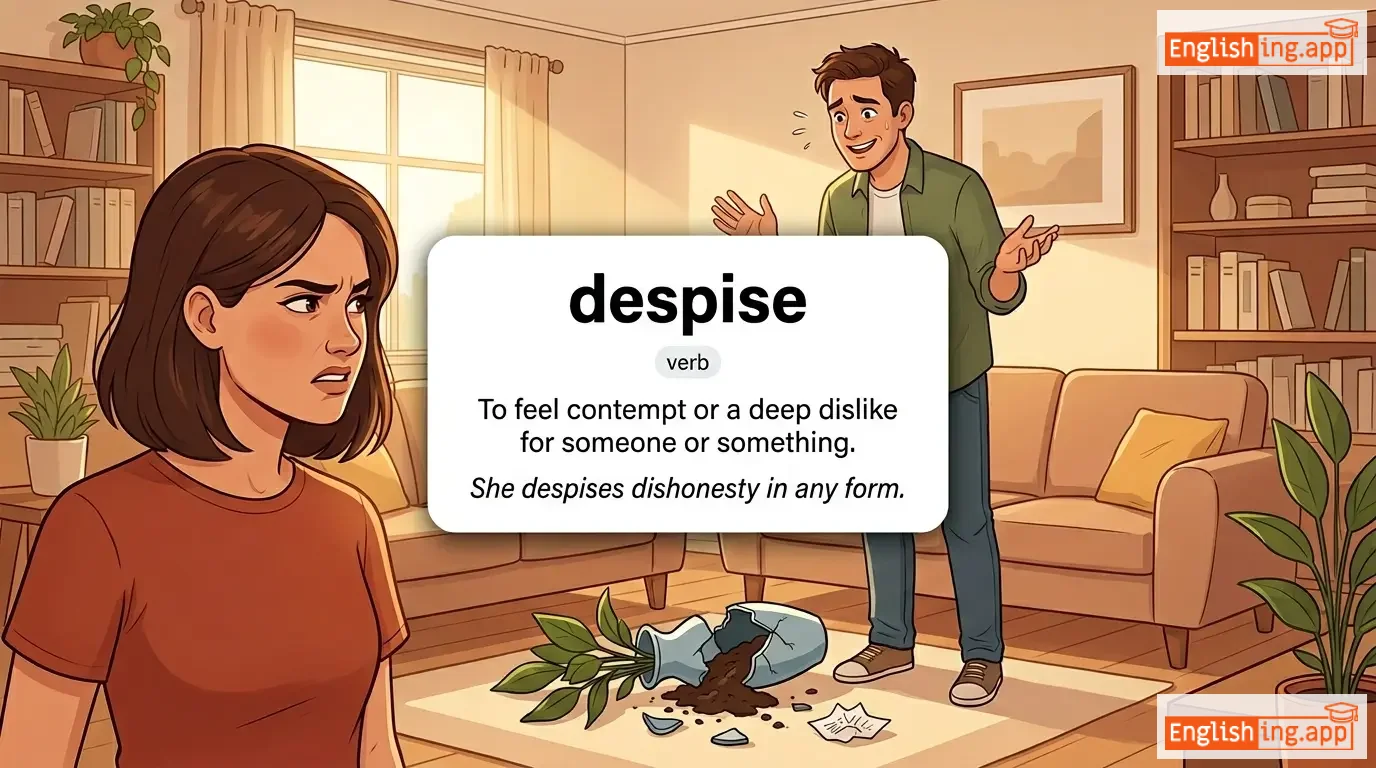
To feel contempt or a deep dislike for someone or something.
••••••
|
She despises dishonesty in any form.
彼女はどんな形の不正も軽蔑している。
••••••
|
彼女はどんな形の不正も軽蔑している。
Kanojo wa donna katachi no fusei mo keibetsu shite iru.
••••••
|
- •••••• | - •••••• | - •••••• |
hate, loathe, detest, abhor
••••••
|
love, admire, respect
••••••
|
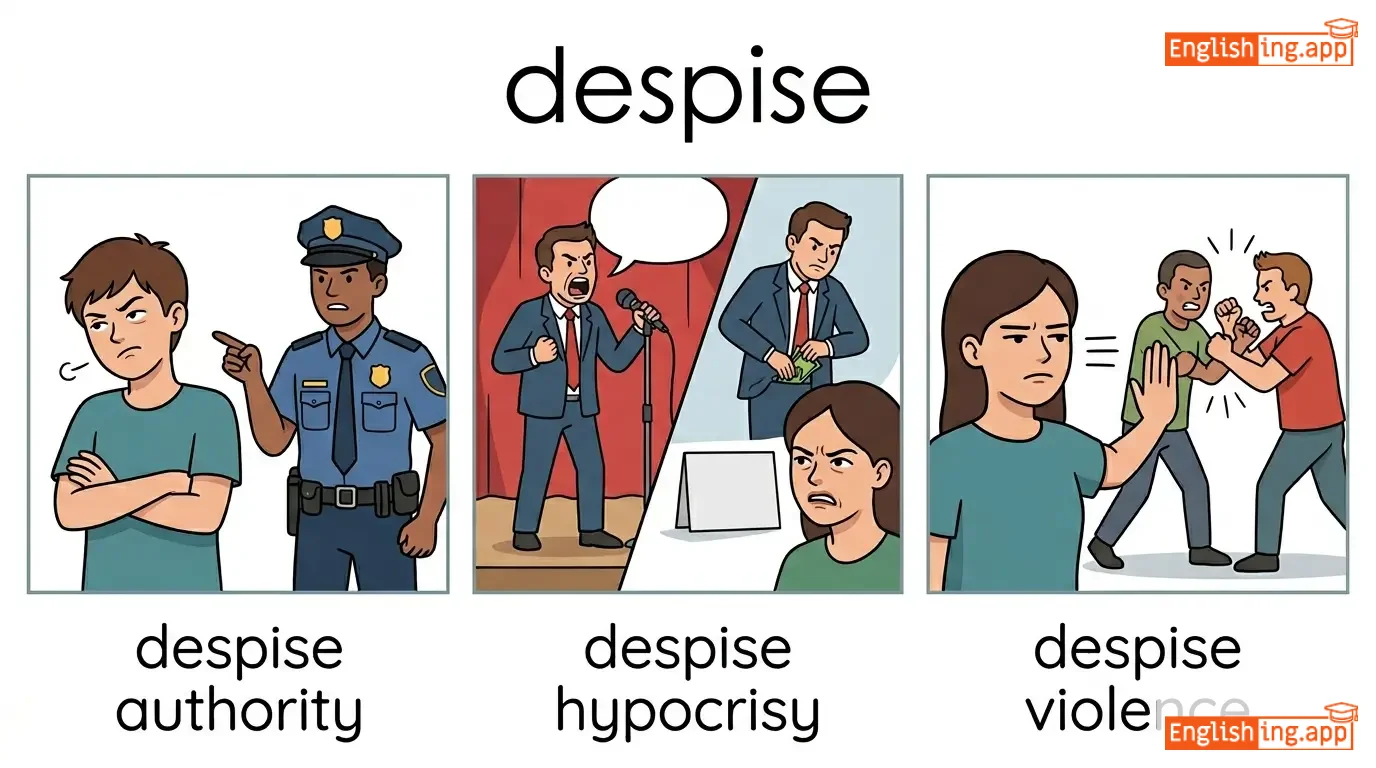
despise authority, despise hypocrisy, despise violence
••••••
|
Despise = Desh + prize, 国の賞が破壊されたら、みんなそれを軽蔑するだろう。
••••••
|
|
#2356
⛰️
|
/dɪˈsɛnt/
noun
(ディセント)
••••••
|
- •••••• |
降下 / 祖先
kōka / sosen
••••••
|
- •••••• | - •••••• | - •••••• | - •••••• |
the action of moving downward, falling, or dropping; ancestry or origin
••••••
|
The climbers began their descent from the mountain peak. |
登山者は山頂から降下を始めました。
Tōzansha wa sanchō kara kōka o hajimemashita.
••••••
|
descent into chaos |
a situation deteriorating into disorder or confusion
••••••
|
混乱への降下
konran e no kōka
••••••
|
decline, drop, fall, ancestry, lineage
••••••
|
ascent, rise, progress
••••••
|
rapid descent, steep descent, descent into, descent from
••••••
|
Descentは下に行くことを意味します - descent = down sent (下に送る)
••••••
|
|
#2357
🙏
|
/ˈdɛspərət/
adjective
(デスぺレート)
••••••
|
- •••••• |
絶望的
zetsubōteki
••••••
|
- •••••• | - •••••• | - •••••• | - •••••• |
Feeling or showing a hopeless sense that a situation is so bad as to be impossible to deal with.
••••••
|
He was desperate to find a job before his savings ran out. |
彼は貯金が尽きる前に仕事を見つけることに必死だった。
Kare wa chokin ga tsukiru mae ni shigoto o mitsukeru koto ni hisshi datta.
••••••
|
desperate measures |
Extreme actions taken as a last resort in a difficult situation.
••••••
|
絶望的な手段
zetsubōteki na shudan
••••••
|
hopeless, despairing, frantic, urgent, reckless
••••••
|
hopeful, calm, confident
••••••
|
desperate attempt, desperate need, desperate cry, desperate situation
••••••
|
Desperate → ZETSU + bō → 絶望的な状況で仕事を必死に探す。
••••••
|
|
#2358
🤠
|
/ˌdɛspəˈrɑːdoʊ/
noun
••••••
|
- •••••• | - •••••• | - •••••• | - •••••• | - •••••• | - •••••• |
A bold, reckless, or dangerous person, often a criminal.
••••••
|
The sheriff was determined to capture the desperado who terrorized the town. |
- •••••• | - •••••• | - •••••• | - •••••• |
outlaw, bandit, villain, criminal
••••••
|
lawman, gentleman
••••••
|
wild desperado, capture desperado, desperado gang
••••••
|
No •••••• |
|
#2359
😞
|
/dɪˈspɛər/
noun
••••••
|
- •••••• | - •••••• | - •••••• | - •••••• | - •••••• | - •••••• |
The complete loss or absence of hope.
••••••
|
She was in deep despair after losing her job. |
- •••••• |
in despair |
To be completely hopeless or discouraged.
••••••
|
- •••••• |
hopelessness, misery, gloom, despondency
••••••
|
hope, optimism, confidence
••••••
|
fall into despair, cry in despair, deep despair
••••••
|
No •••••• |
|
#2360
🏜️
|
/ˈdɛsələt/
adjective
(デソレート)
••••••
|
- •••••• |
荒廃した
kouhai shita
••••••
|
- •••••• | - •••••• | - •••••• | - •••••• |
Empty, bleak, and without people; feeling very sad and lonely.
••••••
|
The once lively town now stood desolate after the flood. |
かつて賑やかだった町は洪水の後、荒廃して立っていた。
Katsute nigiyaka datta machi wa kouzui no ato, kouhai shite tatte ita.
••••••
|
desolate wasteland |
A barren, empty area without life or vegetation.
••••••
|
荒廃した荒野
kouhai shita kouya
••••••
|
bleak, deserted, empty, lonely, barren
••••••
|
lively, populated, cheerful
••••••
|
desolate land, desolate feeling, desolate place
••••••
|
Desolate = 'Des' + 'Late' → 国が遅れると、荒廃してしまう。
••••••
|
|
#2361
🛑
|
/dɪˈsɪstəns/
noun
(ディシスタンス)
••••••
|
- •••••• |
停止
teishi
••••••
|
- •••••• | - •••••• | - •••••• | - •••••• |
The act of stopping or ceasing from some action or behavior.
••••••
|
The court urged his desistance from further unlawful activities. |
裁判所は彼にさらなる違法行為から停止するよう促しました。
Saibansho wa kare ni sarana iru ihō kōi kara teishi suru yō unagashimashita.
••••••
|
- •••••• | - •••••• | - •••••• |
cessation, termination, discontinuance, restraint
••••••
|
continuation, persistence
••••••
|
desistance from crime, encourage desistance, support desistance
••••••
|
Desistance = desist (止める) + stance (立場) → 止める立場。
••••••
|
|
#2362
✋
|
/dɪˈzɪst/
verb
••••••
|
- •••••• | - •••••• |
desisted
••••••
|
desisted
••••••
|
desists
••••••
|
desisting
••••••
|
to stop doing something, especially an action considered wrong or undesirable
••••••
|
The judge ordered the company to desist from unfair practices. |
- •••••• |
cease and desist |
a formal order to stop engaging in certain activities
••••••
|
- •••••• |
stop, cease, quit, discontinue
••••••
|
continue, persist
••••••
|
desist from action, desist immediately, cease and desist
••••••
|
No •••••• |
|
#2363
📝
|
/ˈdɛzɪɡneɪt/
verb
(デザインネイト)
••••••
|
- •••••• |
指名する
shimei suru
••••••
|
designated
デザインネイテッド
••••••
|
designated
デザインネイテッド
••••••
|
designates
デザインネイツ
••••••
|
designating
デザインネイティング
••••••
|
to officially assign, appoint, or indicate something or someone
••••••
|
The committee will designate a new chairperson next week.
委員会は来週、新しい会長を指名する予定です。
••••••
|
委員会は来週、新しい会長を指名する予定です。
Iinkai wa raishū, atarashī kaichō o shimei suru yotei desu.
••••••
|
- •••••• | - •••••• | - •••••• |
appoint, assign, nominate, allocate, specify
••••••
|
remove, dismiss
••••••
|
designate a person, designate a role, designate as
••••••
|
Design + gate = 指名する会長を委員会で
••••••
|
|
#2364
🎯
|
/dɪˌsɪdəˈreɪtəm/
noun
(デシデレイタム)
••••••
|
- •••••• |
必要な物
hitsuyou na mono
••••••
|
- •••••• | - •••••• | - •••••• | - •••••• |
something that is desired or considered necessary
••••••
|
For many students, financial aid is a desideratum. |
多くの学生にとって、経済援助は必要な物です。
Ookuno gakusei ni totte, keizai enjo wa hitsuyou na mono desu.
••••••
|
- •••••• | - •••••• | - •••••• |
requirement, necessity, want, need
••••••
|
luxury, dispensable
••••••
|
essential desideratum, important desideratum
••••••
|
Desideratum とは必要な物 - 必要な物
••••••
|
|
#2365
🥥
|
/ˈdɛsɪkeɪtɪd/
adjective
(デシケイテッド)
••••••
|
- •••••• |
乾燥した
kansō shita
••••••
|
- •••••• | - •••••• | - •••••• | - •••••• |
completely dried, having had all moisture removed
••••••
|
The museum displayed desiccated specimens of plants.
博物館は乾燥した植物標本を展示した。
••••••
|
博物館は乾燥した植物標本を展示した。
Hakubutsukan wa kansō shita shokubutsu hyōhon o tenji shita.
••••••
|
- •••••• | - •••••• | - •••••• |
dried, dehydrated, parched, shriveled
••••••
|
moist, hydrated, fresh
••••••
|
desiccated coconut, desiccated remains, desiccated plants
••••••
|
乾燥したココナッツのように、デシケイテッドは乾燥を意味する
••••••
|
|
#2366
🌵
|
/ˈdɛsɪkeɪt/
verb
(デシケート)
••••••
|
|
乾燥させる
kansou saseru
••••••
|
desiccated
デシケーテッド
••••••
|
desiccated
デシケーテッド
••••••
|
desiccates
デシケーツ
••••••
|
desiccating
デシケーティング
••••••
|
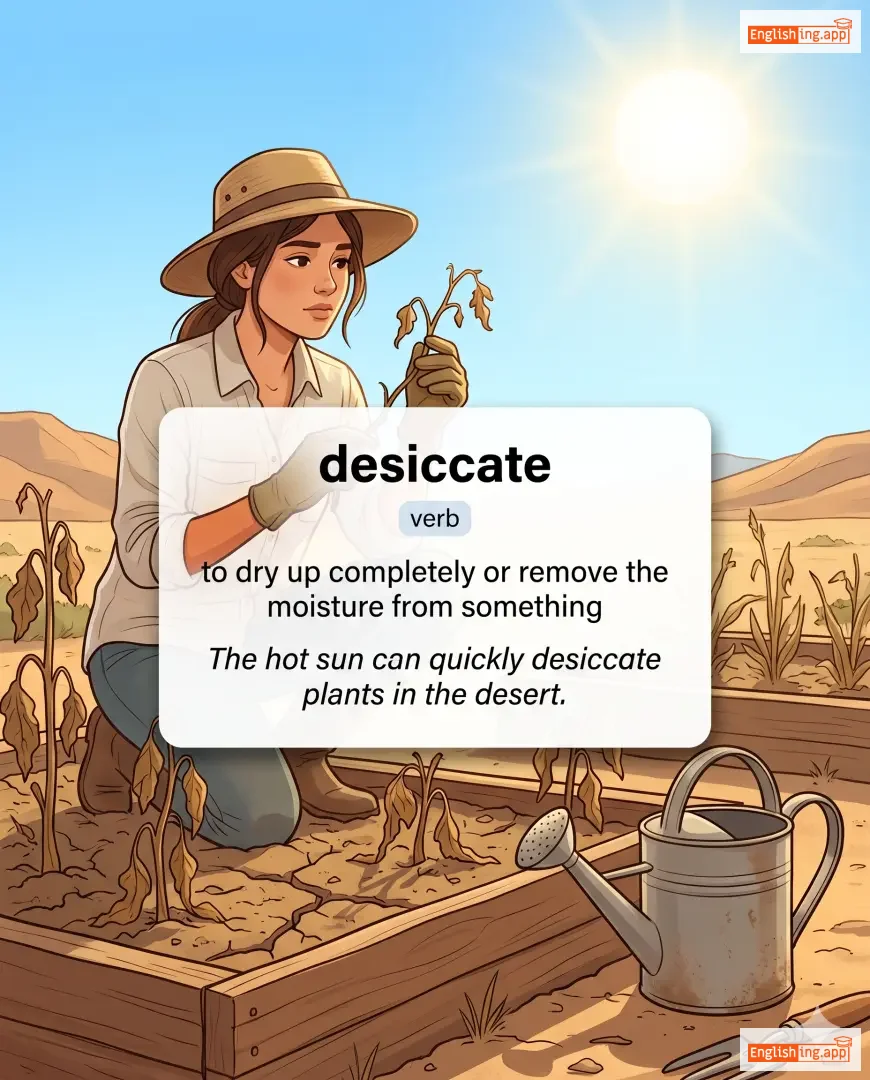
to dry up completely or remove the moisture from something
••••••
|
The hot sun can quickly desiccate plants in the desert.
暑い太陽は砂漠の植物をすぐに乾燥させることができます。
••••••
|
暑い太陽は砂漠の植物をすぐに乾燥させることができます。
Atsui taiyō wa sabaku no shokubutsu o sugu ni kansō saseru koto ga dekimasu.
••••••
|
- •••••• | - •••••• | - •••••• |
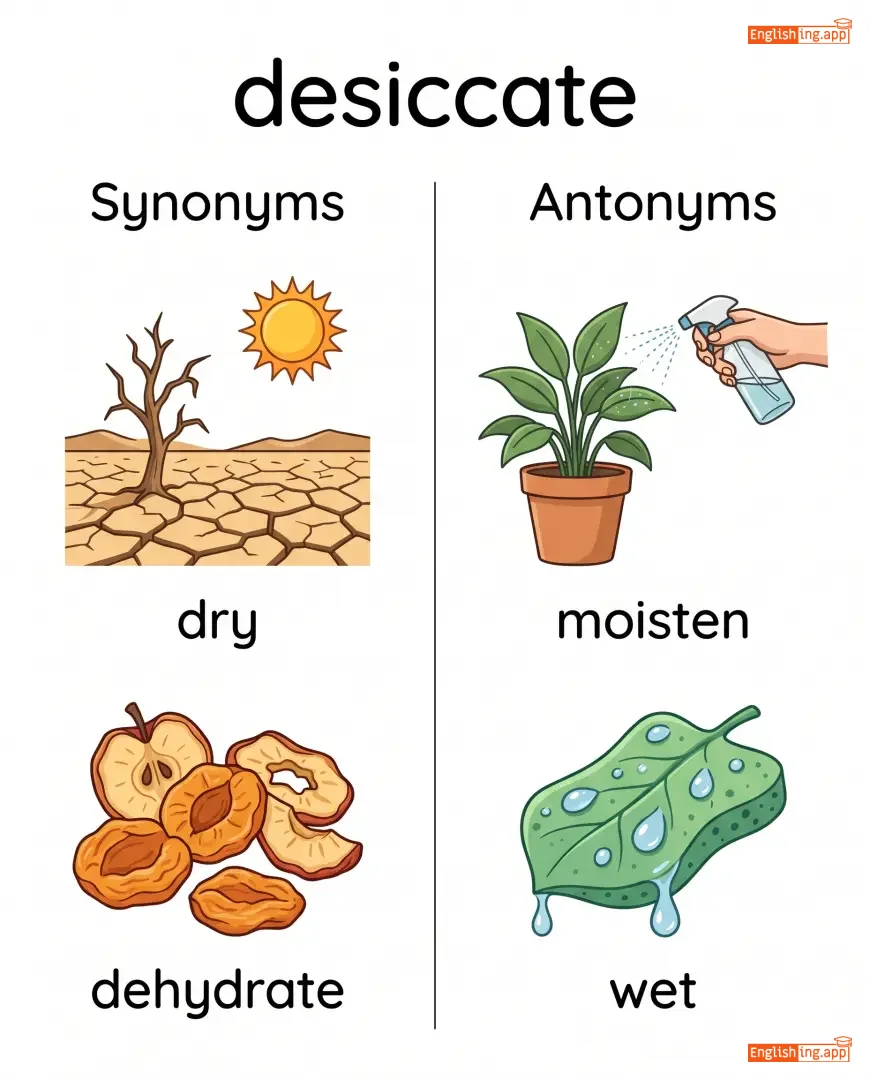
dry, dehydrate, parch, drain, evaporate
••••••
|
moisten, wet, hydrate
••••••
|
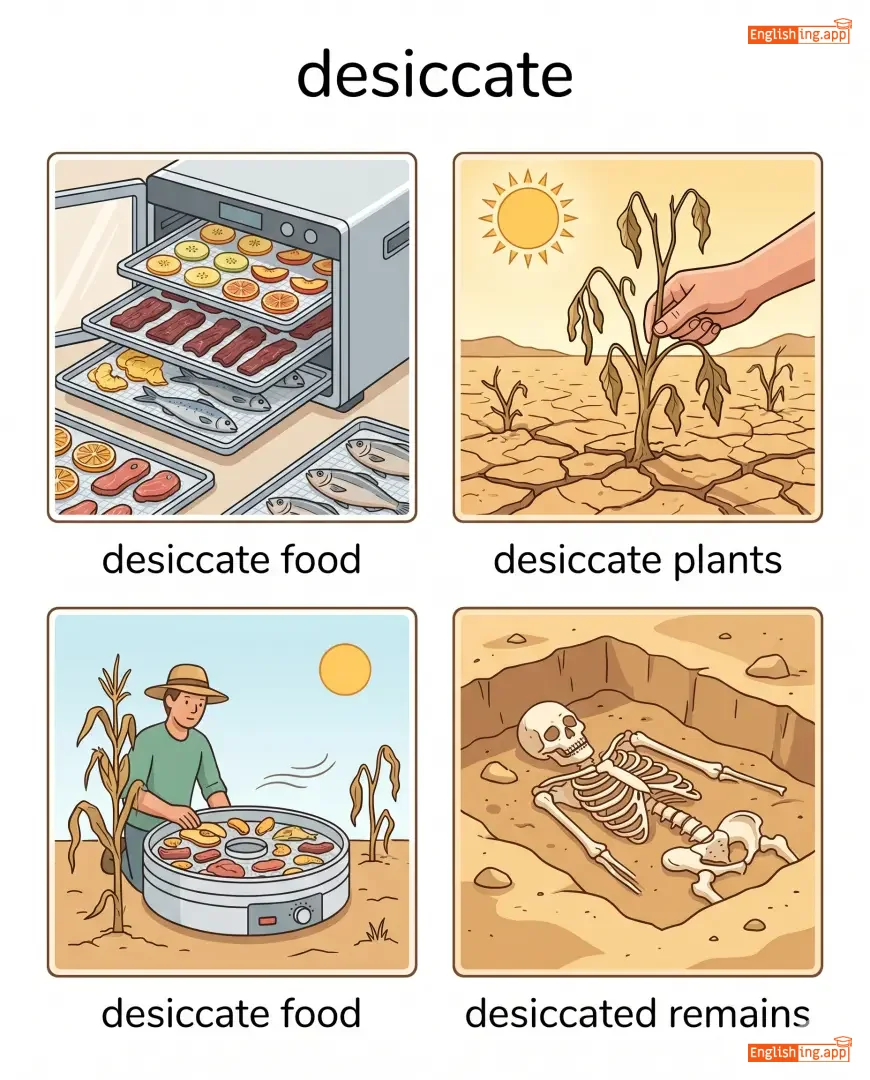
desiccate food, desiccate plants, desiccated remains
••••••
|
砂漠では植物が乾燥します。
••••••
|
|
#2367
💨
|
/ˈdɛsɪkənt/
noun
(デシカント)
••••••
|
- •••••• |
乾燥剤
kansōzai
••••••
|
- •••••• | - •••••• | - •••••• | - •••••• |
a substance that absorbs moisture and keeps things dry
••••••
|
Silica gel packets are commonly used as a desiccant in packaging. |
シリカゲルのパケットは、パッケージングで乾燥剤として一般的に使用されます。
Shirika gero no paketto wa, pakkējingu de kansōzai toshite ippanteki ni shiyō saremasu.
••••••
|
- •••••• | - •••••• | - •••••• |
drying agent, absorbent, dehydrator, moisture absorber
••••••
|
humidifier, moisturizer
••••••
|
use a desiccant, silica desiccant, desiccant packet
••••••
|
乾燥剤は砂漠のように、すべてを乾かす
••••••
|
|
#2368
⚖️
|
/dɪˈzɜːrts/ (noun: reward or punishment deserved)
noun
(デザーツ)
••••••
|
- •••••• |
誰かが得るべきもの、特に罰や報酬
dareka ga eru beki mono, tokuni batsu ya hoshū
••••••
|
- •••••• | - •••••• | - •••••• | - •••••• |
what someone deserves, especially punishment or reward
••••••
|
He finally got his just deserts for cheating in the exam. |
彼は試験でカンニングをして、ついに自分の正当な報いを受けました。
kare wa shiken de kanningu o shite, tsuini jibun no seitō na mukui o ukemashita.
••••••
|
just deserts |
the appropriate reward or punishment that someone deserves
••••••
|
適切な罰や報酬
tekisetsu na batsu ya hoshū
••••••
|
recompense, reward, punishment, retribution
••••••
|
mercy, pardon
••••••
|
just deserts, receive deserts, get deserts
••••••
|
デザートは甘いけど、'desert' は正当な報いを意味します。
••••••
|
|
#2369
🛑
|
/ˈdɛsɪkreɪt/
verb
(デセクレート)
••••••
|
- •••••• |
冒涜する
bōtoku suru
••••••
|
desecrated
デセクレイテッド
••••••
|
desecrated
デセクレイテッド
••••••
|
desecrates
デセクレーツ
••••••
|
desecrating
デセクレイティング
••••••
|
to treat a sacred place or object with disrespect or violation
••••••
|
The vandals desecrated the ancient temple walls with graffiti.
ヴァンダルたちは古代の寺院の壁をグラフィティで冒涜しました。
••••••
|
ヴァンダルたちは古代の寺院の壁をグラフィティで冒涜しました。
Vandaru-tachi wa kodai no jiin no kabe o gurafiti de bōtoku shimashita.
••••••
|
- •••••• | - •••••• | - •••••• |
violate, defile, profane, dishonor, vandalize
••••••
|
honor, sanctify, respect
••••••
|
desecrate a temple, desecrate a monument, desecrate sacred ground
••••••
|
Desecrate とは聖なるものを冒涜すること – de + sacred = desecrate
••••••
|
|
#2370
🔭
|
/dɪˈskraɪ/
verb
(ディスクライ)
••••••
|
- •••••• |
遠くで見る
tōku de miru
••••••
|
descried
ディスクライド
••••••
|
descried
ディスクライド
••••••
|
descries
ディスクライズ
••••••
|
descrying
ディスクライング
••••••
|
to catch sight of something, especially something distant or obscure
••••••
|
From the hilltop, they descried a small village in the distance.
丘の頂上から、彼らは遠くの小さな村を見た。
••••••
|
丘の頂上から、彼らは遠くの小さな村を見た。
Oka no chōjō kara, karera wa tōku no chiisana mura o mita.
••••••
|
- •••••• | - •••••• | - •••••• |
detect, notice, perceive, glimpse, observe
••••••
|
overlook, miss
••••••
|
descry in the distance, hard to descry, descry faintly
••••••
|
Descry は遠くから見ることを意味します。
••••••
|
Vocabulary Quiz
Test your vocabulary by matching words with their translations or meanings.
Login to take the quiz
Comments (0)
Share your thoughts and join the discussion.
Join the discussion by logging in
Login to CommentNo comments yet
Be the first to share your thoughts!