

翻訳
過去
過去分詞
三人称単数
動名詞
意味
例文
例文の翻訳
同義語
対義語
コロケーション
ニーモニック
Swipe left or right, or use the buttons. Tap image to zoom.
例文の翻訳
単語
Lesson 305Lesson 305 - マスクトグル
|
絵文字
|
単語 | Images | 翻訳 | 過去 | 過去分詞 | 三人称単数 | 動名詞 | 意味 | 例文 | 例文の翻訳 | 表現例 | 表現例の意味 | 表現例の翻訳 | 同義語 | 対義語 | コロケーション | ニーモニック |
|---|---|---|---|---|---|---|---|---|---|---|---|---|---|---|---|---|---|
|
#9120
⚛️
|
/ˈjuːnɪvəˌlɛns/
noun
(ユニヴァレンス)
••••••
|
- •••••• |
単価性
tanka-sei
••••••
|
- •••••• | - •••••• | - •••••• | - •••••• |
The state of having a single valence or combining power, especially in chemistry.
••••••
|
Hydrogen is characterized by its univalence in chemical reactions.
水素は化学反応においてそのユニヴァレンスによって特徴づけられています。
••••••
|
水素は化学反応においてその単価性によって特徴づけられています。
Suiso wa kagaku hannō ni oite sono tanka-sei ni yotte tokuchōdzukerareteimasu.
••••••
|
- •••••• | - •••••• | - •••••• |
monovalence, single valency, unit valence, chemical property
••••••
|
multivalence, polyvalence
••••••
|
univalence in chemistry, atomic univalence, element univalence
••••••
|
単価性は'uni'(一つ)と'価性'(結合力)の組み合わせです。
••••••
|
|
#9121
⚠️
|
/ˌʌnprəˈdʌktɪv/
adjective
(アンプロダクティブ)
••••••
|
- •••••• |
非生産的
hiseisanteki
••••••
|
- •••••• | - •••••• | - •••••• | - •••••• |
Not producing or achieving much; not effective or useful.
••••••
|
The meeting was unproductive and wasted everyone's time.
会議は非生産的で、皆の時間を無駄にしました。
••••••
|
会議は非生産的で、皆の時間を無駄にしました。
Kaigi wa hiseisanteki de, minna no jikan o muda ni shimashita.
••••••
|
- •••••• | - •••••• | - •••••• |
inefficient, fruitless, idle, barren, useless
••••••
|
productive, fruitful, effective
••••••
|
unproductive meeting, unproductive effort, unproductive habit
••••••
|
Unproductiveは無駄な作業を意味します。
••••••
|
|
#9122
🌱
|
/ˌʌnprɪˈtɛnʃəs/
adjective
(アンプレテニシャス)
••••••
|
- •••••• |
控えめな
hikaeme na
••••••
|
- •••••• | - •••••• | - •••••• | - •••••• |
modest; not attempting to impress others with appearance or importance
••••••
|
She lives in an unpretentious home but is very happy. |
彼女は控えめな家に住んでいますが、とても幸せです。
Kanojo wa hikaeme na ie ni sundeimasu ga, totemo shiawase desu.
••••••
|
- •••••• | - •••••• | - •••••• |
modest, humble, simple, plain
••••••
|
pretentious, showy, boastful
••••••
|
unpretentious style, unpretentious charm, unpretentious home
••••••
|
Un + pretentious = どんな見せかけもなく、シンプルで控えめ。
••••••
|
|
#9123
😶
|
/ˌʌnpriːpəˈzɛsɪŋ/
adjective
(アンプレポセッシング)
••••••
|
- •••••• |
魅力的でない
miryokuteki de nai
••••••
|
- •••••• | - •••••• | - •••••• | - •••••• |
not attractive or appealing in appearance
••••••
|
Despite his unprepossessing looks, he was very kind and intelligent. |
彼は魅力的でない外見にもかかわらず、非常に親切で賢かった。
Kare wa miryokuteki de nai gaiken ni mo kakawarazu, hijō ni shinsetsu de kashikokatta.
••••••
|
- •••••• | - •••••• | - •••••• |
plain, unattractive, dull, ordinary
••••••
|
attractive, charming, appealing
••••••
|
unprepossessing appearance, unprepossessing figure, unprepossessing look
••••••
|
Un + prepossessing = すぐには魅力を引き寄せない。
••••••
|
|
#9124
🚀
|
/ʌnˈprɛsɪˌdɛntɪd/
adjective
(anpresidentted)
••••••
|
|
前例のない
zenrei no nai
••••••
|
- •••••• | - •••••• | - •••••• | - •••••• |
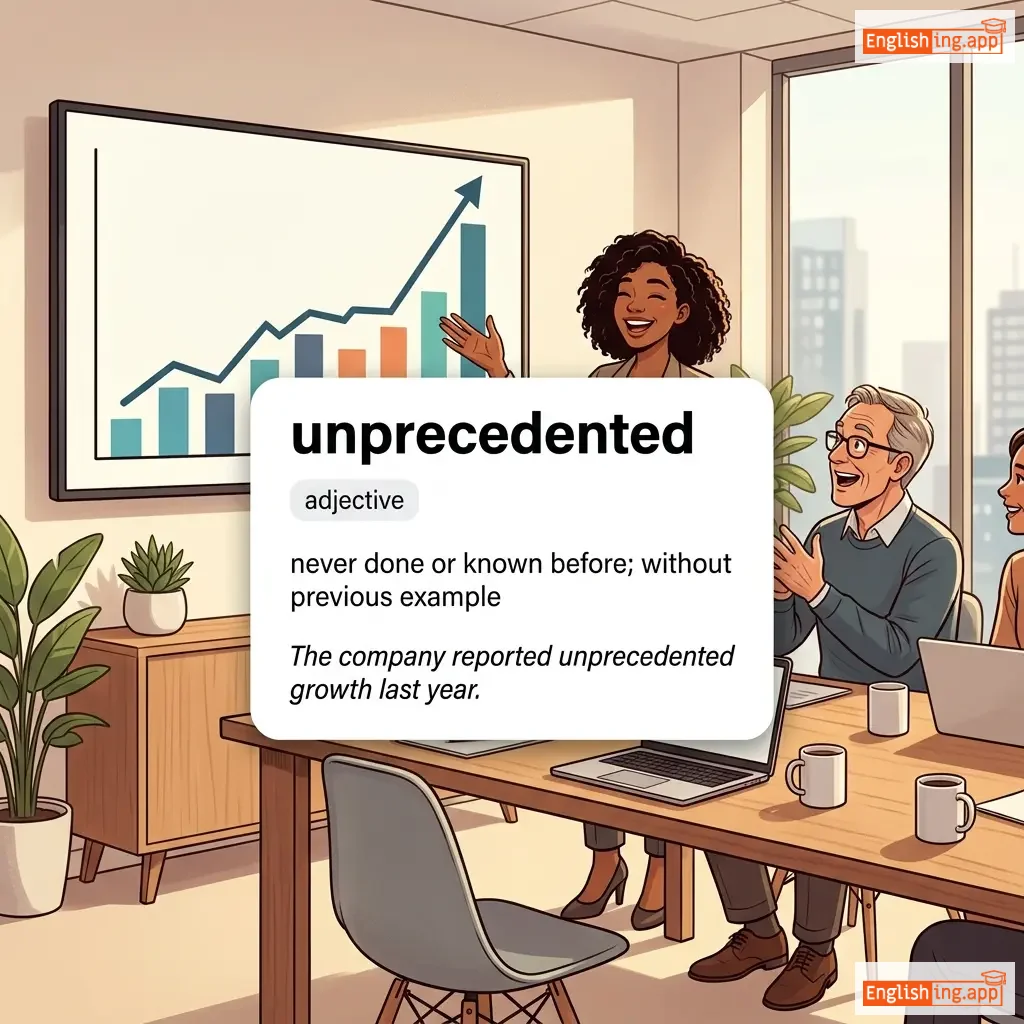
never done or known before; without previous example
••••••
|
The company reported unprecedented growth last year. |
会社は昨年、前例のない成長を報告しました。
Kaisha wa sakunen, zenrei no nai seichou o houkoku shimashita.
••••••
|
of unprecedented scale |
something happening in a size or degree never seen before
••••••
|
前例のない規模
zenrei no nai kibo
••••••
|
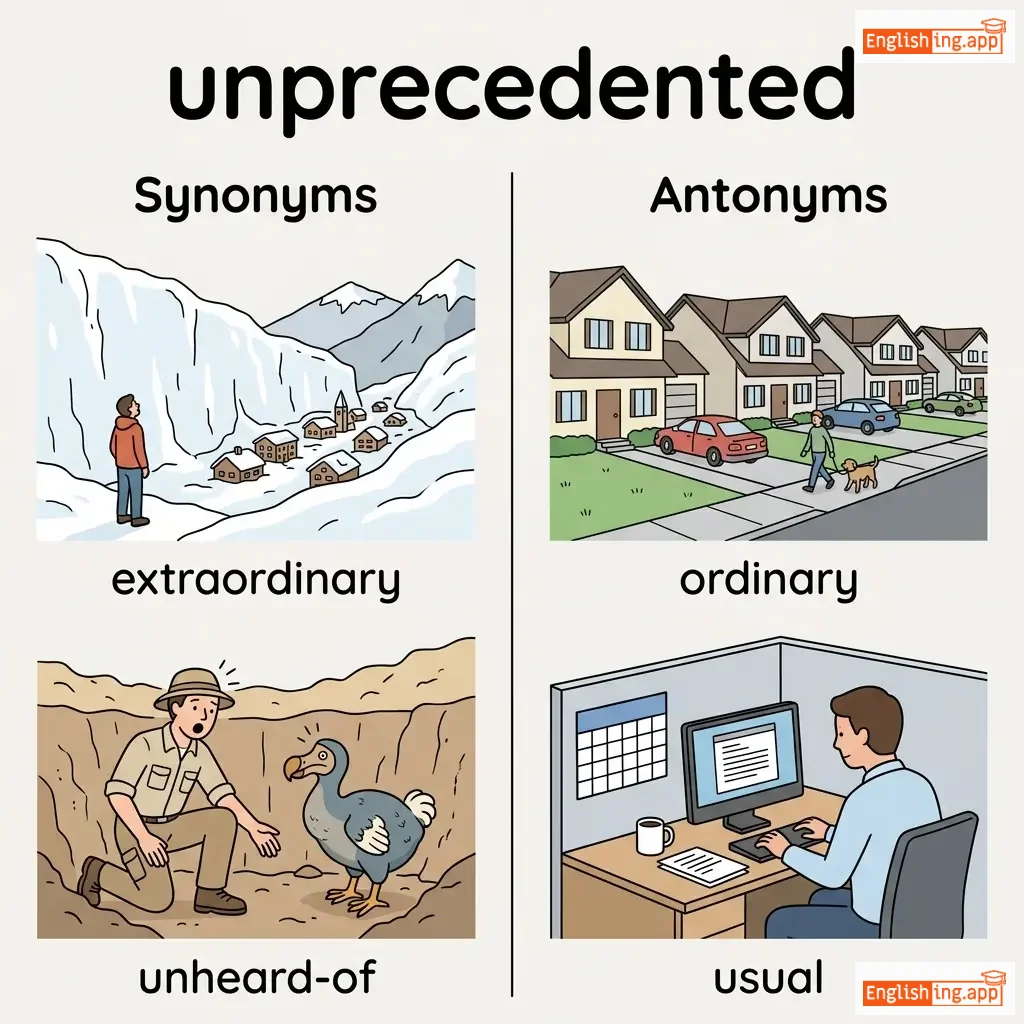
extraordinary, unheard-of, unique, exceptional
••••••
|
ordinary, usual, common
••••••
|
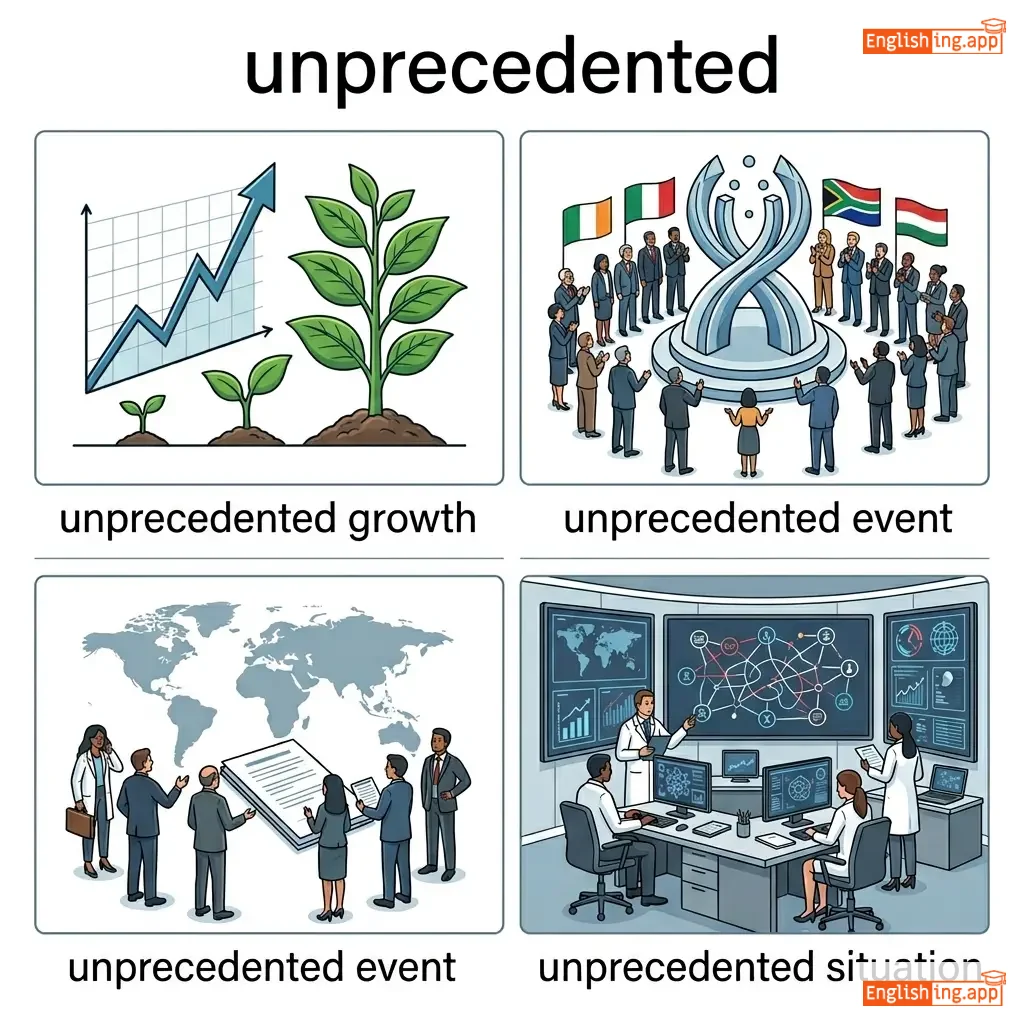
unprecedented growth, unprecedented event, unprecedented situation
••••••
|
前例のない
••••••
|
|
#9125
🫥
|
/ˌʌnəbˈtruːsɪv/
adjective
(アノブトゥルーシブ)
••••••
|
- •••••• |
目立たない
medatanai
••••••
|
- •••••• | - •••••• | - •••••• | - •••••• |
not attracting attention; blending in without causing notice
••••••
|
The security cameras are designed to be unobtrusive. |
セキュリティカメラは目立たないように設計されています。
Sekyuriti kamera wa medatanai yō ni sekkei sareteimasu.
••••••
|
- •••••• | - •••••• | - •••••• |
modest, discreet, inconspicuous, subtle
••••••
|
obtrusive, conspicuous, showy
••••••
|
unobtrusive manner, unobtrusive style, small and unobtrusive
••••••
|
Un + obtrusive = 気づかれないように静かに存在する
••••••
|
|
#9126
😨
|
/ʌnˈnɜːrv/
verb
(アナーブ)
••••••
|
- •••••• |
自信を失う
jishin o ushinau
••••••
|
unnerved
アナーヴド
••••••
|
unnerved
アナーヴド
••••••
|
unnerves
アナーヴス
••••••
|
unnerving
アナーヴィング
••••••
|
to make someone lose confidence, courage, or composure
••••••
|
The hostile questions began to unnerve the witness.
敵意のある質問が証人を動揺させ始めた。
••••••
|
敵意のある質問が証人を動揺させ始めた。
Tekii no aru shitsumon ga shōnin o dōyō sasehajimeta.
••••••
|
- •••••• | - •••••• | - •••••• |
discourage, intimidate, unsettle, demoralize, shake
••••••
|
encourage, reassure, strengthen
••••••
|
completely unnerve, try to unnerve, unnerve someone
••••••
|
Un + nerve = 神経を失う、つまり自信を失う。
••••••
|
|
#9127
🚫
|
/ʌnˈnɛsəsɛri/
adjective
(アンネセサリー)
••••••
|
- •••••• |
不必要
fuhitsuyou
••••••
|
- •••••• | - •••••• | - •••••• | - •••••• |
not needed or required
••••••
|
The manager cut all unnecessary expenses to save costs. |
マネージャーはコストを節約するためにすべての不必要な支出を削減しました。
Manējā wa kosuto o setsuyaku suru tame ni subete no fuhitsuyou na shishutsu o sakugen shimashita.
••••••
|
unnecessary evil |
something bad that must be accepted for practical reasons
••••••
|
不必要な悪
fuhitsuyou na aku
••••••
|
needless, redundant, avoidable, unneeded
••••••
|
necessary, essential, required
••••••
|
unnecessary expense, unnecessary risk, unnecessary delay
••••••
|
Fuhitsuyou → Hitsuyou no nai → 不必要
••••••
|
|
#9128
🧪
|
/ʌnˈnætʃrəl/
adjective
(アンナチュラル)
••••••
|
- •••••• |
不自然
fushizen
••••••
|
- •••••• | - •••••• | - •••••• | - •••••• |
contrary to the usual course of nature; artificial or abnormal
••••••
|
The bright green color of the drink looked unnatural. |
その飲み物の鮮やかな緑色は不自然に見えた。
Sono nomimono no azayakana midoriiro wa fushizen ni mieta.
••••••
|
- •••••• | - •••••• | - •••••• |
abnormal, artificial, strange, abnormal
••••••
|
natural, normal, genuine
••••••
|
unnatural behavior, unnatural death, unnatural light
••••••
|
Un-natural は日本語で不自然です。
••••••
|
|
#9129
💥
|
/ʌnˈmɪtɪɡeɪtɪd/
adjective
(アンミティゲイテッド)
••••••
|
- •••••• |
完全な
kanzen na
••••••
|
- •••••• | - •••••• | - •••••• | - •••••• |
absolute; not lessened or moderated
••••••
|
The meeting was an unmitigated disaster. |
会議は完全な災害でした。
Kaigi wa kanzen na saigai deshita.
••••••
|
unmitigated disaster |
a complete or absolute failure
••••••
|
完全な災害
kanzen na saigai
••••••
|
absolute, total, utter, complete
••••••
|
partial, limited, moderated
••••••
|
unmitigated disaster, unmitigated failure, unmitigated joy
••••••
|
Unmitigated disaster = 軽減できない(mitigate)→ 完全な災害
••••••
|
|
#9130
♾️
|
/ʌnˈlɪmɪtɪd/
adjective
(アンリミテッド)
••••••
|
- •••••• |
無制限
museigen
••••••
|
- •••••• | - •••••• | - •••••• | - •••••• |
without any limits or restrictions
••••••
|
The internet plan offers unlimited data for the whole month. |
インターネットプランは1ヶ月間の無制限データを提供します。
Intānetto puran wa ikkagetsukan no museigen dēta o teikyō shimasu.
••••••
|
unlimited potential |
boundless capacity or ability
••••••
|
無制限の可能性
museigen no kanōsei
••••••
|
endless, infinite, boundless, unrestricted, immeasurable
••••••
|
limited, restricted, finite
••••••
|
unlimited data, unlimited access, unlimited potential
••••••
|
Unlimitedは制限なし → 無制限
••••••
|
|
#9131
📚
|
/ʌnˈlɛtəd/
adjective
(アンレタード)
••••••
|
- •••••• |
識字障害者
shikiji shougai sha
••••••
|
- •••••• | - •••••• | - •••••• | - •••••• |
lacking education or the ability to read and write; illiterate
••••••
|
The unlettered villagers relied on oral traditions to preserve their history.
ザ アンレタード ビレッジャーズ リライド オン オラル トラディションズ トゥ プレザーブ ゼア ヒストリー。
••••••
|
識字障害者の村人たちは口承伝承に頼って歴史を保存していた。
Shikiji shougai sha no murabito-tachi wa koushou denshou ni tayotte rekishi wo hozon shite ita.
••••••
|
- •••••• | - •••••• | - •••••• |
illiterate, ignorant, uneducated, unschooled
••••••
|
educated, literate, learned
••••••
|
unlettered man, unlettered woman, unlettered society
••••••
|
Un-lettered = 手紙(レター)を知らない → 読み書きできない
••••••
|
|
#9132
🚫
|
/ʌnˈlɔːfəl/
adjective
(アンローフル)
••••••
|
- •••••• |
違法
ihou
••••••
|
- •••••• | - •••••• | - •••••• | - •••••• |
Not conforming to or permitted by law; illegal.
••••••
|
The police arrested him for unlawful possession of weapons. |
警察は違法な武器所持で彼を逮捕しました。
Keisatsu wa ihō na buki shoji de kare o taiho shimashita.
••••••
|
unlawful act |
An act that is not allowed by law
••••••
|
違法行為
ihou kōi
••••••
|
illegal, illegitimate, forbidden, illicit, criminal
••••••
|
lawful, legal, legitimate
••••••
|
unlawful act, unlawful behavior, unlawful possession, unlawful entry
••••••
|
違法は法律に反しているから違う。
••••••
|
|
#9133
😵
|
/ʌnˈkɛmpt/
adjective
(アンケンプト)
••••••
|
- •••••• |
だらしない
darashinai
••••••
|
- •••••• | - •••••• | - •••••• | - •••••• |
Having an untidy or disheveled appearance.
••••••
|
He looked unkempt after sleeping outdoors all night. |
彼は一晩外で寝た後、だらしなく見えた。
Kare wa hitoban soto de neta ato, darashinaku mieta.
••••••
|
- •••••• | - •••••• | - •••••• |
messy, scruffy, disheveled, untidy, shabby
••••••
|
neat, tidy, well-groomed
••••••
|
unkempt hair, unkempt clothes, unkempt appearance
••••••
|
Unkemptは'un-kept'のように、管理されていない、だからだらしない
••••••
|
|
#9134
🌍
|
/ˌjuːnɪˈvɜːsəl/
adjective
(ユニバーサル)
••••••
|
- •••••• |
普遍的
fuhenteki
••••••
|
- •••••• | - •••••• | - •••••• | - •••••• |
Relating to or done by all people or things in the world; applicable everywhere or in all cases.
••••••
|
There is a universal need for love and acceptance. |
愛と受容には普遍的な必要があります。
Ai to juyō ni wa fuhenteki na hitsuyō ga arimasu.
••••••
|
universal truth |
A truth accepted by everyone and valid everywhere
••••••
|
普遍的な真実
fuhenteki na shinjitsu
••••••
|
global, worldwide, common, general, all-encompassing
••••••
|
particular, local
••••••
|
universal truth, universal law, universal rights, universal principle
••••••
|
普遍的は宇宙のようなものです: どこでも適用できる
••••••
|
|
#9135
🤐
|
/ˌʌnfɔːrθˈkʌmɪŋ/
adjective
(アンフォースカミング)
••••••
|
- •••••• |
協力的でない
kyōryokuteki denai
••••••
|
- •••••• | - •••••• | - •••••• | - •••••• |
Not willing to talk or provide information; uncooperative.
••••••
|
The witness was unforthcoming about what he had seen. |
証人は見たことについて協力的でなかった。
Shōnin wa mita koto ni tsuite kyōryokuteki denakatta.
••••••
|
- •••••• | - •••••• | - •••••• |
reserved, reticent, uncommunicative, secretive, unhelpful
••••••
|
open, cooperative, communicative
••••••
|
unforthcoming witness, unforthcoming response, unforthcoming attitude
••••••
|
Unforthcoming witness 🤐 協力しない証人!
••••••
|
|
#9136
✝️
|
/ˌjuːnɪˈtɛəriən/
noun
(ユニタリアン)
••••••
|
- •••••• |
ユニタリアン
Unitarian
••••••
|
- •••••• | - •••••• | - •••••• | - •••••• |
A person who believes that God exists as one entity rather than as a Trinity; a member of a religious denomination that emphasizes individual freedom of belief.
••••••
|
The Unitarian church is known for its inclusive and open-minded approach. |
ユニタリアン教会は、その包括的で開かれた考え方で知られています。
Yunitarian kyōkai wa, sono hōkatsu-teki de hirakareta kangaekata de shirareteimasu.
••••••
|
- •••••• | - •••••• | - •••••• |
monotheist, believer, rationalist, liberal, reformist
••••••
|
trinitarian, orthodox
••••••
|
Unitarian church, Unitarian belief, Unitarian tradition, Unitarian congregation
••••••
|
ユニタリアン = 一 (唯一) 神
••••••
|
|
#9137
🎵
|
/juːˈnɪsənənt/
adjective
(ユニソナント)
••••••
|
- •••••• |
調和の取れた
chōwa no toreta
••••••
|
- •••••• | - •••••• | - •••••• | - •••••• |
Sounding together or in harmony.
••••••
|
The unisonant voices created a powerful effect. |
調和の取れた声が強力な効果を生み出した。
Chōwa no toreta koe ga kyōryoku na kōka o umidashita.
••••••
|
- •••••• | - •••••• | - •••••• |
harmonious, concordant, consonant, united
••••••
|
discordant, dissonant
••••••
|
unisonant voices, unisonant chords, unisonant harmony
••••••
|
Unisonantはみんなで一緒に音を出すことだから、調和の取れた音になる。
••••••
|
|
#9138
🎶
|
/ˈjuːnɪsən/
noun
(ユニゾン)
••••••
|
- •••••• |
ユニゾン
unizon
••••••
|
- •••••• | - •••••• | - •••••• | - •••••• |
Simultaneous performance or utterance of action or speech.
••••••
|
The choir sang in unison. |
合唱団はユニゾンで歌いました。
Kasshōdan wa unizon de utaimashita.
••••••
|
in unison |
All together at the same time
••••••
|
ユニゾン
unizon
••••••
|
harmony, accord, togetherness, unanimity
••••••
|
discord, disagreement
••••••
|
sing in unison, act in unison, speak in unison
••••••
|
Uni + son = みんなでユニゾンで歌う。
••••••
|
|
#9139
🌟
|
/juːˈniːk/
adjective
(ユニーク)
••••••
|
- •••••• |
ユニーク
yuniiku
••••••
|
- •••••• | - •••••• | - •••••• | - •••••• |
Being the only one of its kind; unlike anything else.
••••••
|
Her dress was unique and caught everyone's attention. |
彼女のドレスはユニークで、皆の注目を集めた。
Kanojo no doresu wa yuniiku de, mina no chūmoku o atsume ta.
••••••
|
unique opportunity |
A rare or exceptional chance
••••••
|
ユニークな機会
yuniiku na kikai
••••••
|
distinct, special, one-of-a-kind, exceptional
••••••
|
common, ordinary, usual
••••••
|
unique style, unique opportunity, unique talent, unique feature
••••••
|
UniqueはYou + Nick = ユニーク!
••••••
|
|
#9140
🤔
|
/ˌʌnˈɪntɪmeɪtɪŋ/
adjective
(アニンティメイティング)
••••••
|
- •••••• |
示唆しない
shisa shinai
••••••
|
- •••••• | - •••••• | - •••••• | - •••••• |
Not giving a hint or suggestion; not indicating.
••••••
|
His unintimating tone gave no clue of his true feelings. |
彼の示唆しない口調は彼の本当の気持ちを示すものではありませんでした。
Kare no shisa shinai kuchou wa kare no hontou no kimochi o shimesu mono de wa arimasen deshita.
••••••
|
- •••••• | - •••••• | - •••••• |
non-indicative, unclear, vague, neutral
••••••
|
suggestive, indicative, expressive
••••••
|
unintimating tone, unintimating response, unintimating attitude
••••••
|
Un-intimatingは親密でないことを意味するので、示唆しない。
••••••
|
|
#9141
🎭
|
/ˌʌnɪnˈhɪbɪtɪd/
adjective
(アンイニヒビテッド)
••••••
|
- •••••• |
抑制されていない
yokusei sarete inai
••••••
|
- •••••• | - •••••• | - •••••• | - •••••• |
Not restrained or restricted; free in behavior or expression.
••••••
|
She gave an uninhibited laugh at the joke. |
彼女は冗談に対して抑制されずに笑った。
Kanojo wa jōdan ni taishite yokusei sarezu ni waratta.
••••••
|
- •••••• | - •••••• | - •••••• |
unrestrained, free, open, spontaneous, expressive
••••••
|
reserved, restrained, inhibited
••••••
|
uninhibited behavior, uninhibited laughter, uninhibited expression
••••••
|
抑制されていないは自由で制限のない状態を意味し、日本語でも覚えやすいです。
••••••
|
|
#9142
✅
|
/ˌʌnɪmˈpiːtʃəbl/
adjective
(アニンピーチャブル)
••••••
|
- •••••• |
非難の余地がない
hinan no yochi ga nai
••••••
|
- •••••• | - •••••• | - •••••• | - •••••• |
Not able to be doubted, questioned, or criticized; completely trustworthy.
••••••
|
She is known for her unimpeachable honesty. |
彼女はその非難の余地がない誠実さで知られています。
Kanojo wa sono hinan no yochi ga nai seijitsusa de shirareteimasu.
••••••
|
- •••••• | - •••••• | - •••••• |
trustworthy, reliable, unquestionable, flawless, impeccable
••••••
|
doubtful, questionable, unreliable
••••••
|
unimpeachable integrity, unimpeachable source, unimpeachable character, unimpeachable honesty
••••••
|
Unimpeachable は非難の余地がないという意味で、完全に信頼できることを意味します。
••••••
|
|
#9143
➡️
|
/ˌjuːnɪˈlætərəl/
adjective
(ユニラテラル)
••••••
|
- •••••• |
一方的
ippōteki
••••••
|
- •••••• | - •••••• | - •••••• | - •••••• |
Involving or affecting only one side or party without the agreement of others.
••••••
|
The country took unilateral action without consulting its allies. |
その国は、同盟国と相談せずに一方的な行動を取った。
Sono kuni wa, dōmeikoku to sōdan sezu ni ippōteki na kōdō o totta.
••••••
|
unilateral decision |
a decision made by one party alone without agreement from others
••••••
|
一方的決定
ippōteki kettei
••••••
|
one-sided, independent, solo, autocratic
••••••
|
bilateral, multilateral, cooperative
••••••
|
unilateral decision, unilateral move, unilateral action, unilateral policy
••••••
|
Uniは「一」を意味し、unilateralは「一方的な決定」を意味します。
••••••
|
|
#9144
🤝
|
/ˈjuːnɪfaɪ/
verb
••••••
|
|
- •••••• |
unified
••••••
|
unified
••••••
|
unifies
••••••
|
unifying
••••••
|
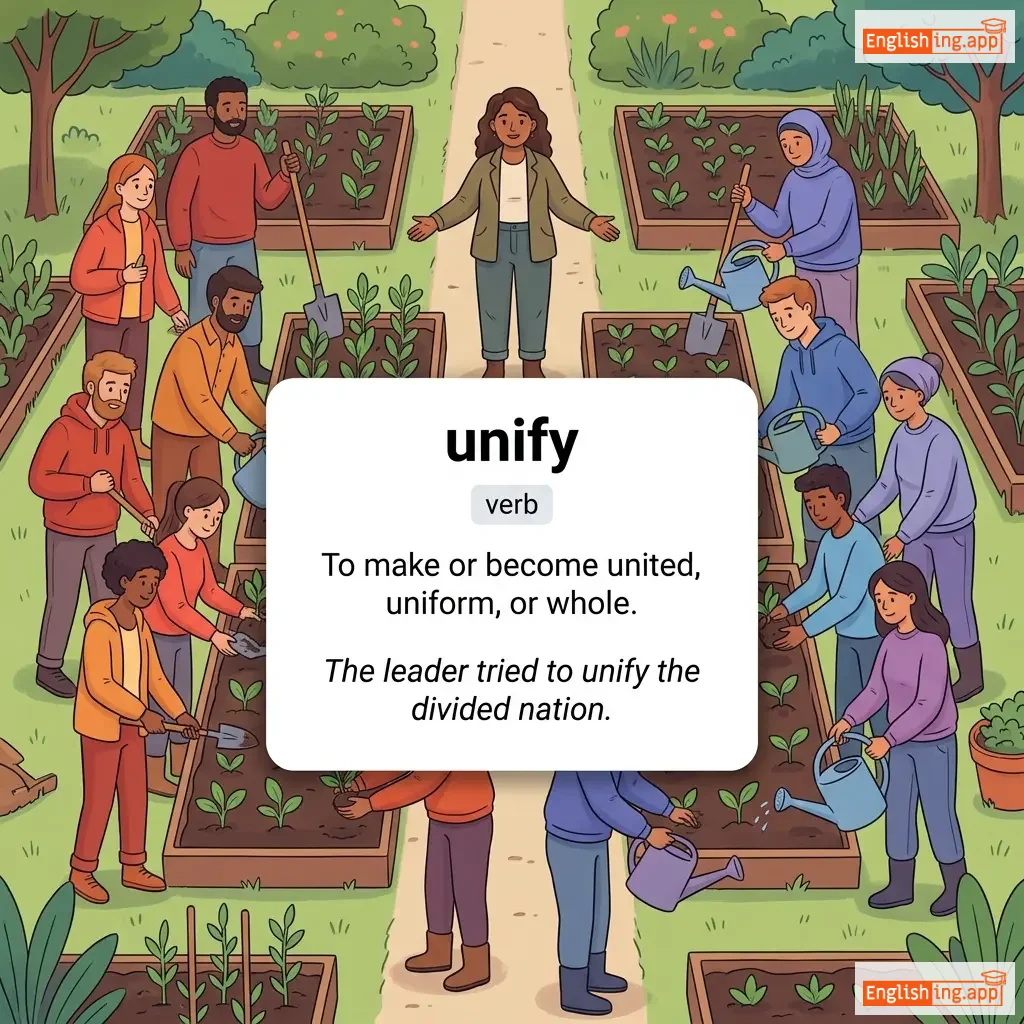
To make or become united, uniform, or whole.
••••••
|
The leader tried to unify the divided nation. |
- •••••• |
unify efforts |
to combine work or energy towards a common goal
••••••
|
- •••••• |
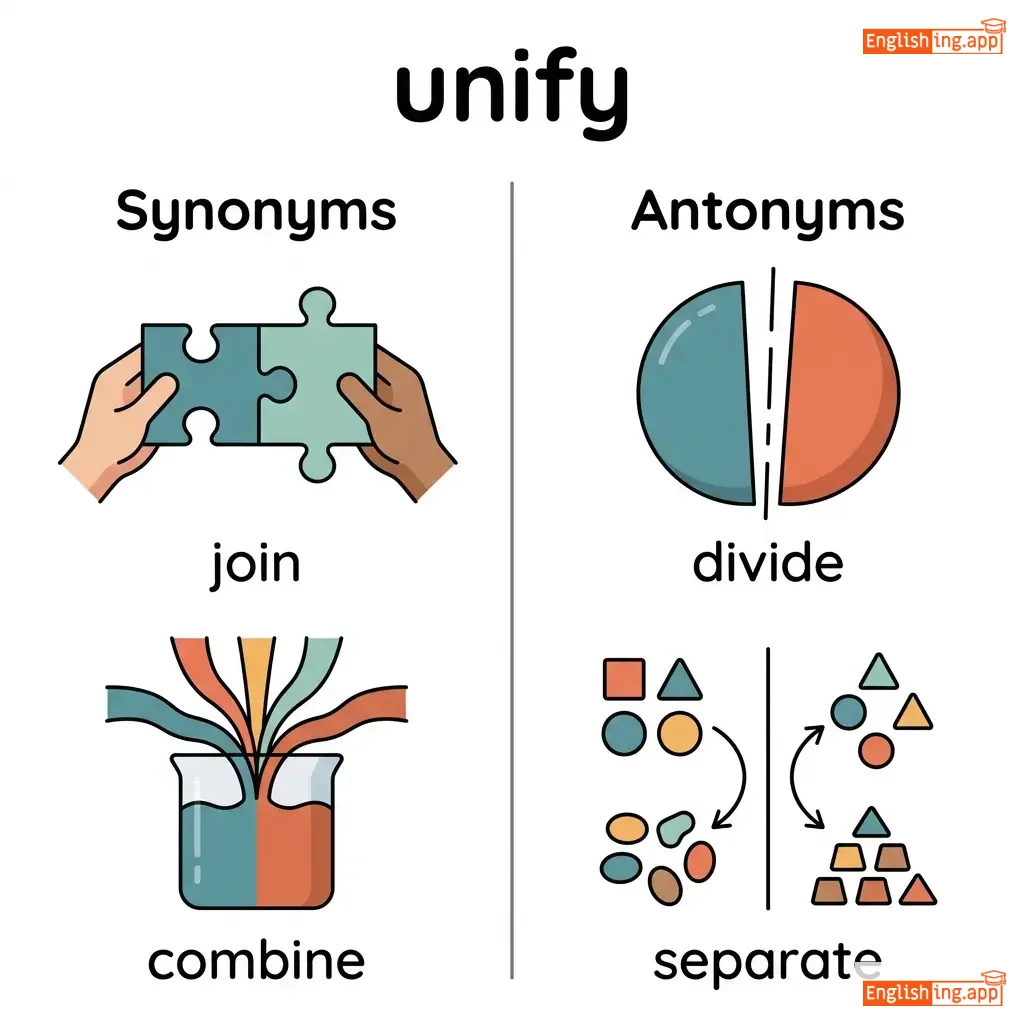
join, combine, merge, integrate, consolidate
••••••
|
divide, separate, fragment
••••••
|
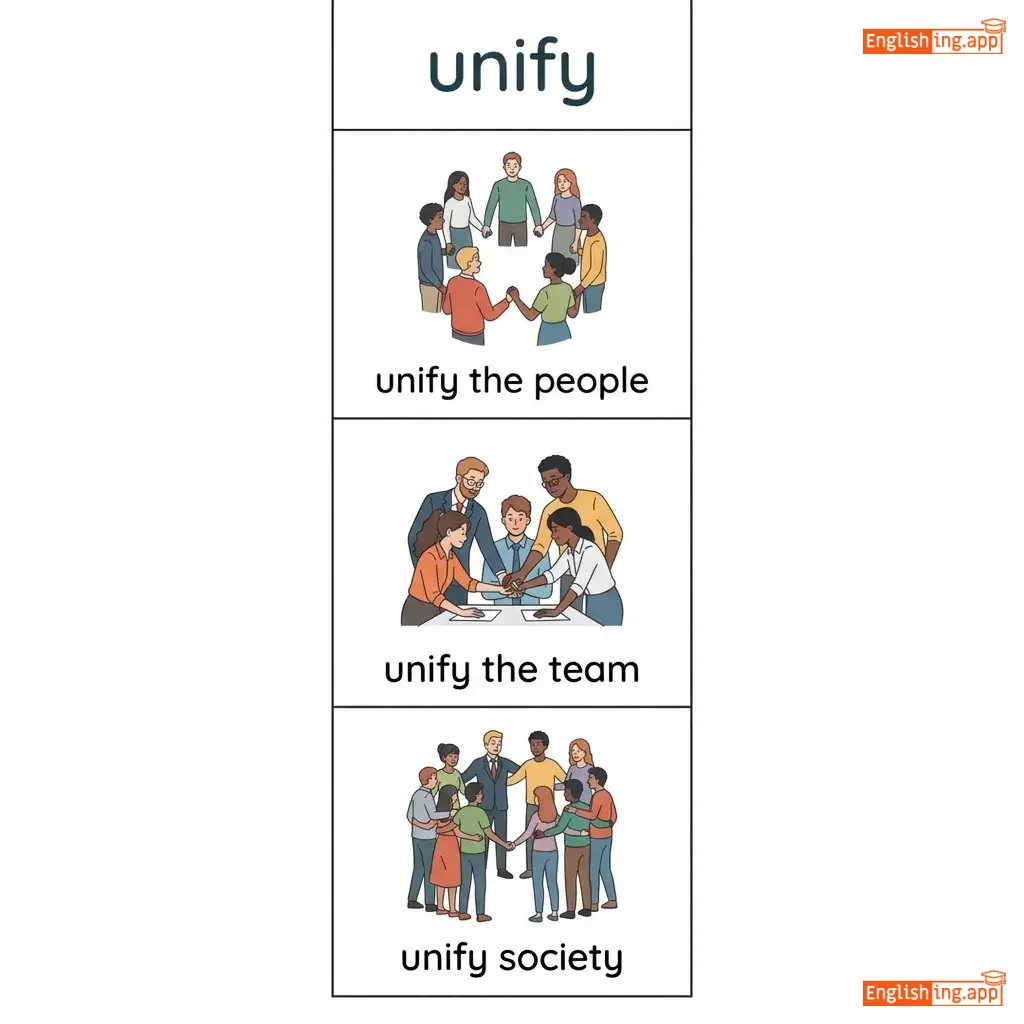
unify the people, unify the team, unify society, unify efforts
••••••
|
No •••••• |
|
#9145
📏
|
/ˌjuːnɪˈfɔːrmɪti/
noun
(ユニフォーミティ)
••••••
|
- •••••• |
均一性
kin'itsusei
••••••
|
- •••••• | - •••••• | - •••••• | - •••••• |
The quality or state of being the same, consistent, or without variation.
••••••
|
The teacher insisted on uniformity in the students' dress code. |
教師は生徒の服装の均一性を主張しました。
Kyoushi wa seito no fukusou no kin'itsusei o shuchou shimashita.
••••••
|
- •••••• | - •••••• | - •••••• |
consistency, sameness, conformity, regularity
••••••
|
diversity, variation, difference
••••••
|
uniformity of opinion, uniformity of design, strict uniformity, uniformity in practice
••••••
|
均一性はすべてが同じ制服を着ていることです。
••••••
|
|
#9146
🦠
|
/ˌjuːnɪˈsɛljʊlər/
adjective
(ユニセルラー)
••••••
|
- •••••• |
単細胞
tansai-bou
••••••
|
- •••••• | - •••••• | - •••••• | - •••••• |
Consisting of a single cell.
••••••
|
Amoebas are unicellular organisms. |
アメーバは単細胞生物です。
Ameeba wa tansai-bou seibutsu desu.
••••••
|
- •••••• | - •••••• | - •••••• |
single-celled, microscopic, simple, protozoan
••••••
|
multicellular, complex
••••••
|
unicellular organism, unicellular structure, unicellular life, unicellular biology
••••••
|
Uniは一を意味するので、unicellularは単細胞生物を意味します。
••••••
|
|
#9147
🧴
|
/ˈʌŋɡwənt/
noun
(アンギュエント)
••••••
|
- •••••• |
軟膏
nankou
••••••
|
- •••••• | - •••••• | - •••••• | - •••••• |
A soothing or healing ointment applied to the skin.
••••••
|
The doctor applied an unguent to heal the burn.
医者は火傷を治すために軟膏を塗った。
••••••
|
医者は火傷を治すために軟膏を塗った。
Isha wa yakedo o naosu tame ni nankou o nutta.
••••••
|
- •••••• | - •••••• | - •••••• |
ointment, balm, salve, lotion, cream
••••••
|
irritant, poison
••••••
|
medicinal unguent, healing unguent, herbal unguent
••••••
|
Unguent 🧴 は日本語で'軟膏'と呼ばれ、皮膚に塗る治療薬です。
••••••
|
|
#9148
🤦
|
/ʌnˈɡeɪnli/
adjective
(アンゲインリー)
••••••
|
- •••••• |
不器用
bukiyou
••••••
|
- •••••• | - •••••• | - •••••• | - •••••• |
Awkward, clumsy, or lacking grace in movement or appearance.
••••••
|
The tall boy moved in an ungainly manner. |
背の高い男の子は不器用な仕草で動いた。
Se no takai otokonoko wa bukiyou na shigusa de uita.
••••••
|
- •••••• | - •••••• | - •••••• |
awkward, clumsy, ungraceful, lumbering, gawky
••••••
|
graceful, elegant, agile
••••••
|
ungainly movement, ungainly figure, ungainly steps
••••••
|
Ungainly = un-gain (得られない、不器用)
••••••
|
|
#9149
✝️
|
/ʌnˈfrɒk/
verb
(アンフロック)
••••••
|
- •••••• |
神父の職を剥奪する
shinpu no shoku o hadatsu suru
••••••
|
unfrogged
アンフロッグド
••••••
|
unfrogged
アンフロッグド
••••••
|
unfrocks
アンフロックス
••••••
|
unfrocking
アンフロッキング
••••••
|
To remove a priest from his position or deprive someone of a rank.
••••••
|
The corrupt priest was unfrocked after the investigation.
腐敗した神父は調査後に職を剥奪されました。
••••••
|
腐敗した神父は調査後に職を剥奪されました。
fuhai shita shinpu wa chousa go ni shoku o hadatsu saremashita.
••••••
|
- •••••• | - •••••• | - •••••• |
defrock, dismiss, oust, depose, degrade
••••••
|
appoint, ordain, promote
••••••
|
unfrock a priest, unfrock clergy, unfrock official
••••••
|
Unfrock ✝️ 牧師の服を剥ぐ → 牧師の職を剥奪する。
••••••
|
Vocabulary Quiz
Test your vocabulary by matching words with their translations or meanings.
Login to take the quiz
Comments (0)
Share your thoughts and join the discussion.
Join the discussion by logging in
Login to CommentNo comments yet
Be the first to share your thoughts!