

翻訳
過去
過去分詞
三人称単数
動名詞
意味
例文
例文の翻訳
同義語
対義語
コロケーション
ニーモニック
Swipe left or right, or use the buttons. Tap image to zoom.
例文の翻訳
単語
Lesson 188Lesson 188 - マスクトグル
|
絵文字
|
単語 | Images | 翻訳 | 過去 | 過去分詞 | 三人称単数 | 動名詞 | 意味 | 例文 | 例文の翻訳 | 表現例 | 表現例の意味 | 表現例の翻訳 | 同義語 | 対義語 | コロケーション | ニーモニック |
|---|---|---|---|---|---|---|---|---|---|---|---|---|---|---|---|---|---|
|
#5611
📦
|
/ˌmɪsəˈleɪniəs/
adjective
(ミセレイニアス)
••••••
|
- •••••• |
雑多な
zattana
••••••
|
- •••••• | - •••••• | - •••••• | - •••••• |
Consisting of a variety of different items or types.
••••••
|
The drawer was filled with miscellaneous objects.
引き出しはさまざまな物でいっぱいだった。
••••••
|
引き出しはさまざまな物でいっぱいだった。
Hikidashi wa samazama na mono de ippai datta.
••••••
|
- •••••• | - •••••• | - •••••• |
varied, diverse, assorted, mixed, heterogeneous
••••••
|
uniform, similar, identical
••••••
|
miscellaneous items, miscellaneous expenses, miscellaneous goods
••••••
|
Miss (失敗) すると、いろんな (miscellaneous) ものが手に入る。
••••••
|
|
#5612
🤔
|
/ˌmɪsˈɡɪvɪŋ/
noun
(ミスギビング)
••••••
|
- •••••• |
疑念
ginen
••••••
|
- •••••• | - •••••• | - •••••• | - •••••• |
A feeling of doubt, worry, or suspicion.
••••••
|
She had serious misgivings about signing the contract. |
彼女は契約書にサインすることに対して真剣な疑念を抱いていた。
Kanojo wa keiyakusho ni sain suru koto ni taishite shinken na ginen o daite ita.
••••••
|
- •••••• | - •••••• | - •••••• |
doubt, concern, suspicion, unease, apprehension
••••••
|
confidence, trust, certainty
••••••
|
serious misgiving, initial misgiving, express misgiving, deep misgiving
••••••
|
MIS giving は、与えられないことを意味し、疑念が生じます。
••••••
|
|
#5613
☹️
|
/ˌmɪsˈfɔːrtʃən/
noun
(ミスフォーチュン)
••••••
|
- •••••• |
不運
fuun
••••••
|
- •••••• | - •••••• | - •••••• | - •••••• |
Bad luck or an unfortunate event.
••••••
|
He suffered the misfortune of losing his job during the recession. |
彼は不況時に仕事を失うという不運に見舞われました。
Kare wa fukyou ji ni shigoto o ushinau to iu fuun ni mimawaremashita.
••••••
|
ill fortune |
bad luck
••••••
|
不運
fuun
••••••
|
bad luck, adversity, calamity, mishap, setback
••••••
|
good luck, fortune, prosperity
••••••
|
suffer misfortune, stroke of misfortune, financial misfortune, great misfortune
••••••
|
Misfortune は不運に似ていて、不運を意味する
••••••
|
|
#5614
🪙
|
/ˈmaɪzərli/
adjective
(マイザーリー)
••••••
|
- •••••• |
けちな
kechina
••••••
|
- •••••• | - •••••• | - •••••• | - •••••• |
Unwilling to spend money; stingy.
••••••
|
She lived a miserly life, refusing to buy anything new. |
彼女はけちな生活を送り、新しいものを買うことを拒んでいた。
Kanojo wa kechina seikatsu o okuri, atarashī mono o kau koto o kobandeita.
••••••
|
- •••••• | - •••••• | - •••••• |
stingy, cheap, tightfisted, frugal
••••••
|
generous, lavish, charitable
••••••
|
miserly attitude, miserly lifestyle, miserly sum, miserly behavior
••••••
|
Miserlyはけちなを意味し、お金を節約することです。
••••••
|
|
#5615
💰
|
/ˈmaɪzər/
noun
(maizer)
••••••
|
- •••••• |
けちん坊
kechinbō
••••••
|
- •••••• | - •••••• | - •••••• | - •••••• |
A person who hoards wealth and spends as little money as possible.
••••••
|
The old miser refused to donate even a penny to charity. |
その古いけちん坊は慈善団体に1ペニーも寄付することを拒否した。
Sono furui kechinbō wa jizen dantai ni 1 penī mo kifu suru koto o kyohi shita.
••••••
|
- •••••• | - •••••• | - •••••• |
cheapskate, penny-pincher, hoarder, skinflint
••••••
|
spender, philanthropist, benefactor
••••••
|
old miser, greedy miser, stingy miser, wealthy miser
••••••
|
けちん坊は絶対お金を使わない!
••••••
|
|
#5616
⚖️
|
/ˌmɪsdɪˈmiːnər/
noun
(ミスディミーナー)
••••••
|
- •••••• |
軽犯罪
keihanzai
••••••
|
- •••••• | - •••••• | - •••••• | - •••••• |
A minor wrongdoing or criminal offense that is less serious than a felony.
••••••
|
He was fined for a misdemeanor involving public disturbance. |
公共の秩序に関わる軽犯罪で罰金を科された。
Kōkyō no chitsujo ni kakawaru keihanzai de bakkin o kasareta.
••••••
|
- •••••• | - •••••• | - •••••• |
offense, violation, infraction, misdeed, wrongdoing
••••••
|
felony, obedience, compliance
••••••
|
commit a misdemeanor, charged with a misdemeanor, petty misdemeanor, minor misdemeanor
••••••
|
ミスディミーナー = minor offense
••••••
|
|
#5617
⚖️
|
/ˌmɪsˈdiːd/
noun
(ミスディード)
••••••
|
- •••••• |
不正行為
fusei koui
••••••
|
- •••••• | - •••••• | - •••••• | - •••••• |
A wrong or illegal act.
••••••
|
He regretted his past misdeeds and apologized.
彼は自分の過去の悪行を後悔し、謝罪しました。
••••••
|
彼は自分の過去の悪行を後悔し、謝罪しました。
Kare wa jibun no kako no akugyou o koukai shi, shazai shimashita.
••••••
|
- •••••• | - •••••• | - •••••• |
crime, offense, wrongdoing, sin, transgression
••••••
|
virtue, good deed, righteousness
••••••
|
past misdeeds, criminal misdeed, confess misdeed
••••••
|
Misdeed = 不正 deed — 不正行為.
••••••
|
|
#5618
😈
|
/ˈmɪskriənt/
noun
(misukurianto)
••••••
|
- •••••• |
悪党
akutou
••••••
|
- •••••• | - •••••• | - •••••• | - •••••• |
A person who behaves badly or criminally.
••••••
|
The police arrested the miscreant responsible for the theft. |
警察は盗みの責任を負う悪党を逮捕しました。
Keisatsu wa nusumi no sekinin o ou akutou o taiho shimashita.
••••••
|
- •••••• | - •••••• | - •••••• |
criminal, wrongdoer, villain, offender, delinquent
••••••
|
law-abiding citizen, gentleman, nobleman
••••••
|
notorious miscreant, petty miscreant, violent miscreant
••••••
|
Miscreant means 'Miss creates problem' — 悪党.
••••••
|
|
#5619
🔢
|
/ˌmɪsˈkaʊnt/
verb
(ミスカウント)
••••••
|
- •••••• |
間違えて数える
machigaete kazoeru
••••••
|
miscounted
ミスカウントエッド
••••••
|
miscounted
ミスカウントエッド
••••••
|
miscounts
ミスカウントス
••••••
|
miscounting
ミスカウティング
••••••
|
To count wrongly or inaccurately.
••••••
|
He miscounted the number of chairs in the hall.
彼はホールの椅子の数を間違えて数えました。
••••••
|
彼はホールの椅子の数を間違えて数えました。
Kare wa hōru no isu no kazu o machigaete kazoemashita.
••••••
|
- •••••• | - •••••• | - •••••• |
miscalculate, misjudge, mistake, err
••••••
|
count correctly, calculate accurately
••••••
|
miscount votes, miscount money, miscount items
••••••
|
Miscount = Miss count — 数える間違い。
••••••
|
|
#5620
🤔
|
/ˌmɪskənˈstruː/
verb
(ミスコンストルー)
••••••
|
- •••••• |
誤解する
gokai suru
••••••
|
misconstrued
ミスコンストルード
••••••
|
misconstrued
ミスコンストルード
••••••
|
misconstrues
ミスコンストルーズ
••••••
|
misconstruing
ミスコンストルイング
••••••
|
To interpret something wrongly or misunderstand the meaning.
••••••
|
She misconstrued his silence as anger.
彼女は彼の沈黙を怒りだと誤解した。
••••••
|
彼女は彼の沈黙を怒りだと誤解した。
Kanojo wa kare no chinmoku o ikari da to gokai shita.
••••••
|
- •••••• | - •••••• | - •••••• |
misinterpret, misunderstand, misjudge, mistake, misread
••••••
|
understand, interpret correctly
••••••
|
easily misconstrued, misconstrue meaning, misconstrue silence
••••••
|
Misconstrue は誤解する — 意味を間違えて解釈すること。
••••••
|
|
#5621
🚫
|
/ˌmɪsˈkɒndʌkt/
noun
(misukondakuto)
••••••
|
- •••••• |
不正行為
fuseikoui
••••••
|
- •••••• | - •••••• | - •••••• | - •••••• |
Improper or unacceptable behavior, especially by a professional or authority figure.
••••••
|
The teacher was dismissed for serious misconduct.
教師は重大な不正行為のため解雇されました。
••••••
|
教師は重大な不正行為のため解雇されました。
Kyoushi wa juudaina fuseikoui no tame kaiko saremashita.
••••••
|
- •••••• | - •••••• | - •••••• |
wrongdoing, offense, misbehavior, impropriety, malpractice
••••••
|
good conduct, propriety, obedience
••••••
|
professional misconduct, sexual misconduct, gross misconduct, allegations of misconduct
••••••
|
Misconduct は 'miss' conduct — 不正行為。
••••••
|
|
#5622
😉
|
/ˈmɪstʃɪvəs/
adjective
(ミシューヴァス)
••••••
|
- •••••• |
いたずらな
itazura na
••••••
|
- •••••• | - •••••• | - •••••• | - •••••• |
Causing or showing a fondness for causing trouble in a playful way.
••••••
|
She gave him a mischievous smile.
Shi gevu him a mischevəs sumairu.
••••••
|
彼女は彼にいたずらな笑顔を向けた。
Kanojo wa kare ni itazura na egao wo muketa.
••••••
|
- •••••• | - •••••• | - •••••• |
playful, naughty, impish, prankish
••••••
|
serious, obedient, innocent
••••••
|
mischievous smile, mischievous child, mischievous look
••••••
|
いたずらな子供はいつもいたずらをしている – これが'mischief'の形容詞であることを覚えておいてください。
••••••
|
|
#5623
😈
|
/ˈmɪstʃɪf/
noun
(ミスチーフ)
••••••
|
- •••••• |
いたずら
itazura
••••••
|
- •••••• | - •••••• | - •••••• | - •••••• |
Playful misbehavior or troublemaking.
••••••
|
The children were full of mischief during the party. |
パーティー中、子供たちはいたずらでいっぱいでした。
Pātī-chū, kodomotachi wa itazura de ippai deshita.
••••••
|
make mischief |
to cause trouble or create problems
••••••
|
いたずらをする
itazura o suru
••••••
|
naughtiness, misbehavior, pranks, trouble
••••••
|
obedience, goodness, discipline
••••••
|
cause mischief, get into mischief, full of mischief
••••••
|
Mischiefはいたずら – いたずらをすると楽しくなる!
••••••
|
|
#5624
🍂
|
/ˌmɪsˈtʃæns/
noun
••••••
|
- •••••• | - •••••• | - •••••• | - •••••• | - •••••• | - •••••• |
An unfortunate accident or event; bad luck.
••••••
|
By mischance, he missed the last train home. |
- •••••• | - •••••• | - •••••• | - •••••• |
accident, mishap, misfortune, adversity
••••••
|
fortune, luck, success
••••••
|
sad mischance, cruel mischance
••••••
|
No •••••• |
|
#5625
📚
|
/ˈmɪsəleɪni/
noun
(ミセラニー)
••••••
|
- •••••• |
寄せ集め
yoseatsume
••••••
|
- •••••• | - •••••• | - •••••• | - •••••• |
A collection or mixture of various things.
••••••
|
The book is a miscellany of essays and poems. |
その本はエッセイと詩の寄せ集めです。
Sono hon wa essei to shi no yoseatsume desu.
••••••
|
- •••••• | - •••••• | - •••••• |
collection, assortment, mixture, anthology
••••••
|
uniformity, consistency
••••••
|
miscellany of stories, miscellany of articles
••••••
|
Miscellanyは混合を意味します – 寄せ集めのエッセイと詩。
••••••
|
|
#5626
🌫️
|
/məˈrɑːʒ/
noun
(ミラージュ)
••••••
|
- •••••• |
蜃気楼
shinkirou
••••••
|
- •••••• | - •••••• | - •••••• | - •••••• |
An optical illusion caused by atmospheric conditions, often seen in deserts or hot roads, where water or objects appear to exist but do not.
••••••
|
The weary travelers saw a mirage of water in the desert. |
疲れた旅行者たちは砂漠で水の蜃気楼を見ました。
Tsukareta ryokousha-tachi wa sabaku de mizu no shinkirou wo mimashita.
••••••
|
a mirage of hope |
Something that appears real or possible but is actually false or impossible.
••••••
|
希望の蜃気楼
Kibou no shinkirou
••••••
|
illusion, hallucination, fantasy, vision, delusion
••••••
|
reality, truth, certainty
••••••
|
desert mirage, shimmering mirage, illusory mirage
••••••
|
蜃気楼は幻覚を意味します - 砂漠で蜃気楼を見て、まるで水が‘鏡’のように見えます。
••••••
|
|
#5627
🌍
|
/mɪˌsɛdʒəˈneɪʃən/
noun
(ミセゲネーション)
••••••
|
- •••••• |
人種間結婚
jinshukan kekkon
••••••
|
- •••••• | - •••••• | - •••••• | - •••••• |
the interbreeding of people considered to be of different racial types
••••••
|
The law once prohibited miscegenation in many countries.
その法律は多くの国で人種間結婚を禁じていました。
••••••
|
その法律は多くの国で人種間結婚を禁じていました。
Sono hōritsu wa ōku no kuni de jinshukan kekkon o kinjite imashita.
••••••
|
- •••••• | - •••••• | - •••••• |
intermarriage, interracial marriage, crossbreeding
••••••
|
endogamy, racial separation
••••••
|
laws against miscegenation, miscegenation debate, miscegenation ban
••••••
|
Miscegenation = mix generation — 人種間結婚
••••••
|
|
#5628
😈
|
/ˌmɪsbɪˈheɪvjər/
noun
(ミスビヘイビア)
••••••
|
- •••••• |
不正行為
fusei kōi
••••••
|
- •••••• | - •••••• | - •••••• | - •••••• |
bad or improper behavior
••••••
|
The teacher punished the student for his misbehavior.
教師は彼の不正行為で生徒を罰しました。
••••••
|
教師は彼の不正行為で生徒を罰しました。
Kyōshi wa kare no fusei kōi de seito o basshimashita.
••••••
|
- •••••• | - •••••• | - •••••• |
misconduct, naughtiness, rudeness, impropriety
••••••
|
good behavior, obedience
••••••
|
serious misbehavior, punish misbehavior, student misbehavior
••••••
|
Misbehavior は不正行為を意味します
••••••
|
|
#5629
🙃
|
/ˌmɪsbɪˈheɪv/
verb
(ミスビヘイヴ)
••••••
|
|
悪い振る舞いをする
warui furumai wo suru
••••••
|
misbehaved
ミスビヘイヴド
••••••
|
misbehaved
ミスビヘイヴド
••••••
|
misbehaves
ミスビヘイヴズ
••••••
|
misbehaving
ミスビヘイビング
••••••
|
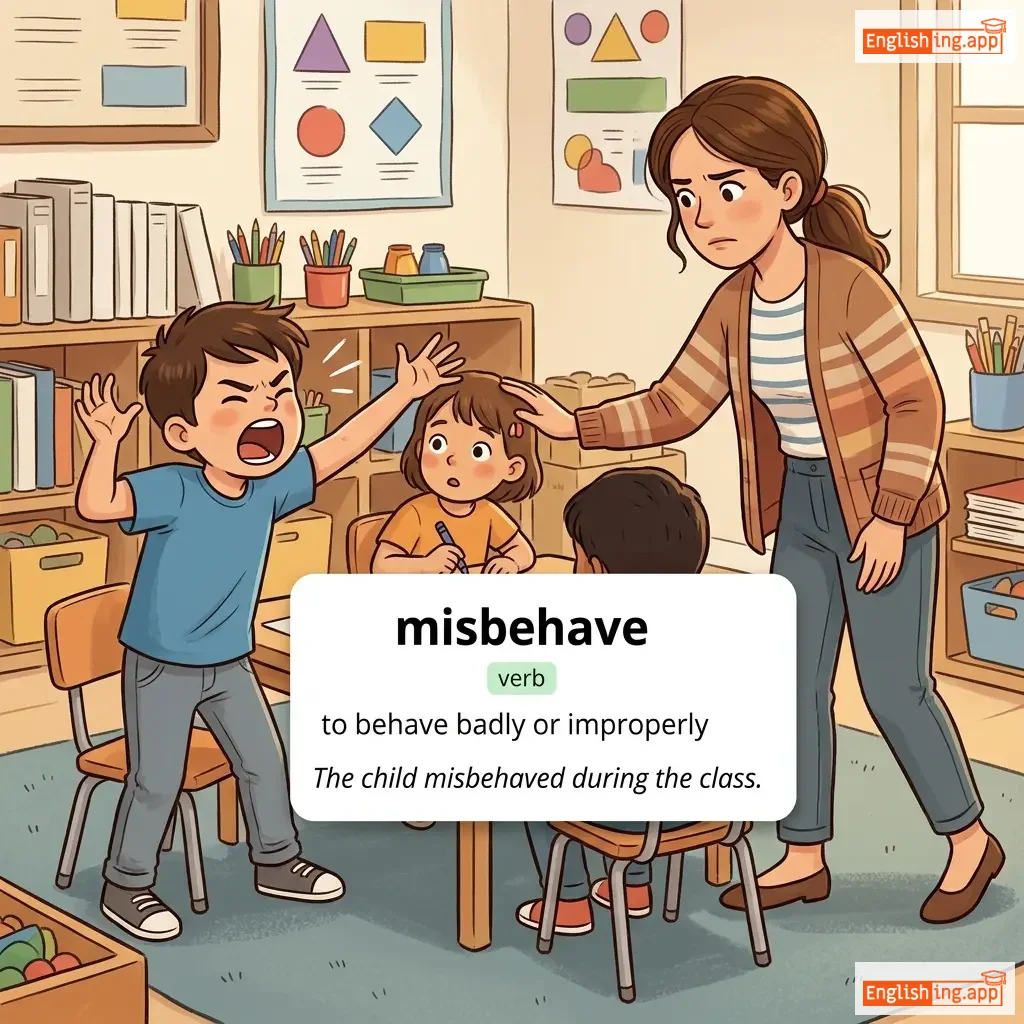
to behave badly or improperly
••••••
|
The child misbehaved during the class.
その子供はクラス中にミスビヘイヴド。
••••••
|
その子供はクラス中に悪い振る舞いをした。
Sono kodomo wa kurasu-chū ni warui furumai wo shita.
••••••
|
- •••••• | - •••••• | - •••••• |
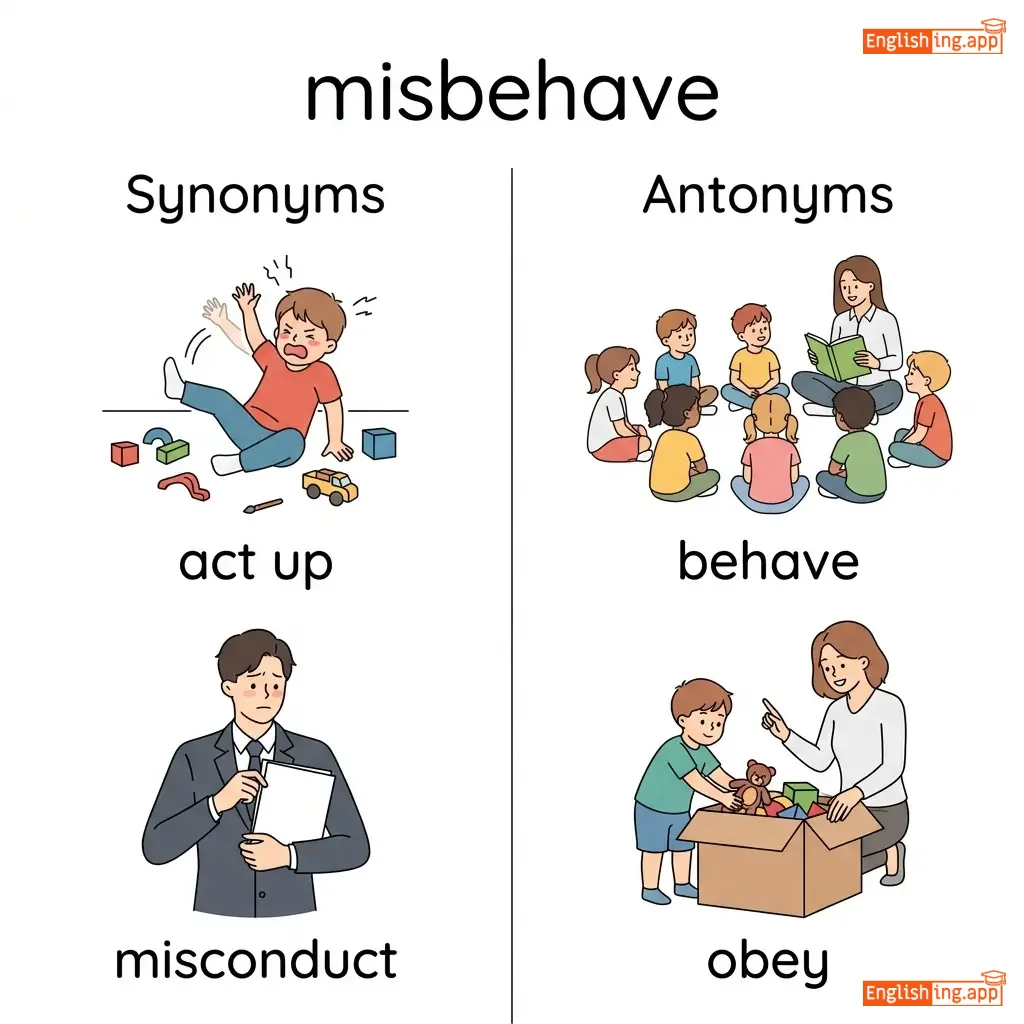
act up, misconduct, offend, be naughty
••••••
|
behave, obey
••••••
|
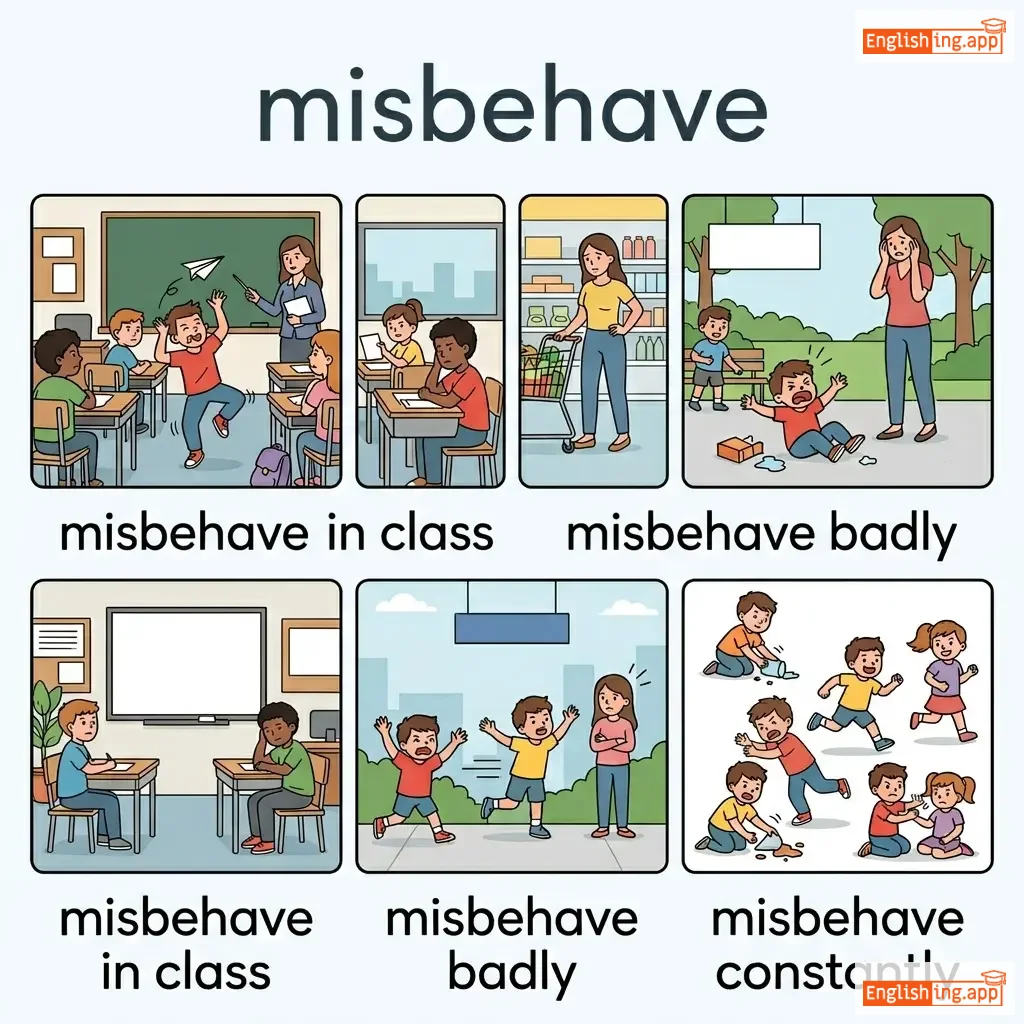
misbehave in class, misbehave badly, misbehave constantly
••••••
|
Misは悪い、behaveは振る舞う — misbehaveは悪い振る舞いをする
••••••
|
|
#5630
🔄
|
/ˌmɪs.əˈtrɪb.juːt/
verb
(ミスアトリビュート)
••••••
|
- •••••• |
誤って帰属する
ayamatte kizoku suru
••••••
|
misattributed
ミスアトリビューテッド
••••••
|
misattributed
ミスアトリビューテッド
••••••
|
misattributes
ミスアトリビューツ
••••••
|
misattributing
ミスアトリビューティング
••••••
|
to incorrectly credit something, such as a work or remark, to the wrong person or source
••••••
|
The quote was misattributed to Shakespeare.
その引用はシェイクスピアに誤って帰属されました。
••••••
|
その引用はシェイクスピアに誤って帰属されました。
Sono inyo wa Sheikusupia ni ayamatte kizoku saremashita.
••••••
|
- •••••• | - •••••• | - •••••• |
misassign, miscredit, misidentify, mistake
••••••
|
attribute correctly, credit properly
••••••
|
misattribute a quote, misattribute authorship, misattribute responsibility
••••••
|
Misattribute は誤って帰属することです
••••••
|
|
#5631
💸
|
/ˌmɪsəˈproʊprieɪt/
verb
(ミスアプロプリエイト)
••••••
|
|
不正流用する
fusei ryūyō suru
••••••
|
misappropriated
ミスアプロプリエイテッド
••••••
|
misappropriated
ミスアプロプリエイテッド
••••••
|
misappropriates
ミスアプロプリエイツ
••••••
|
misappropriating
ミスアプロプリエイティング
••••••
|
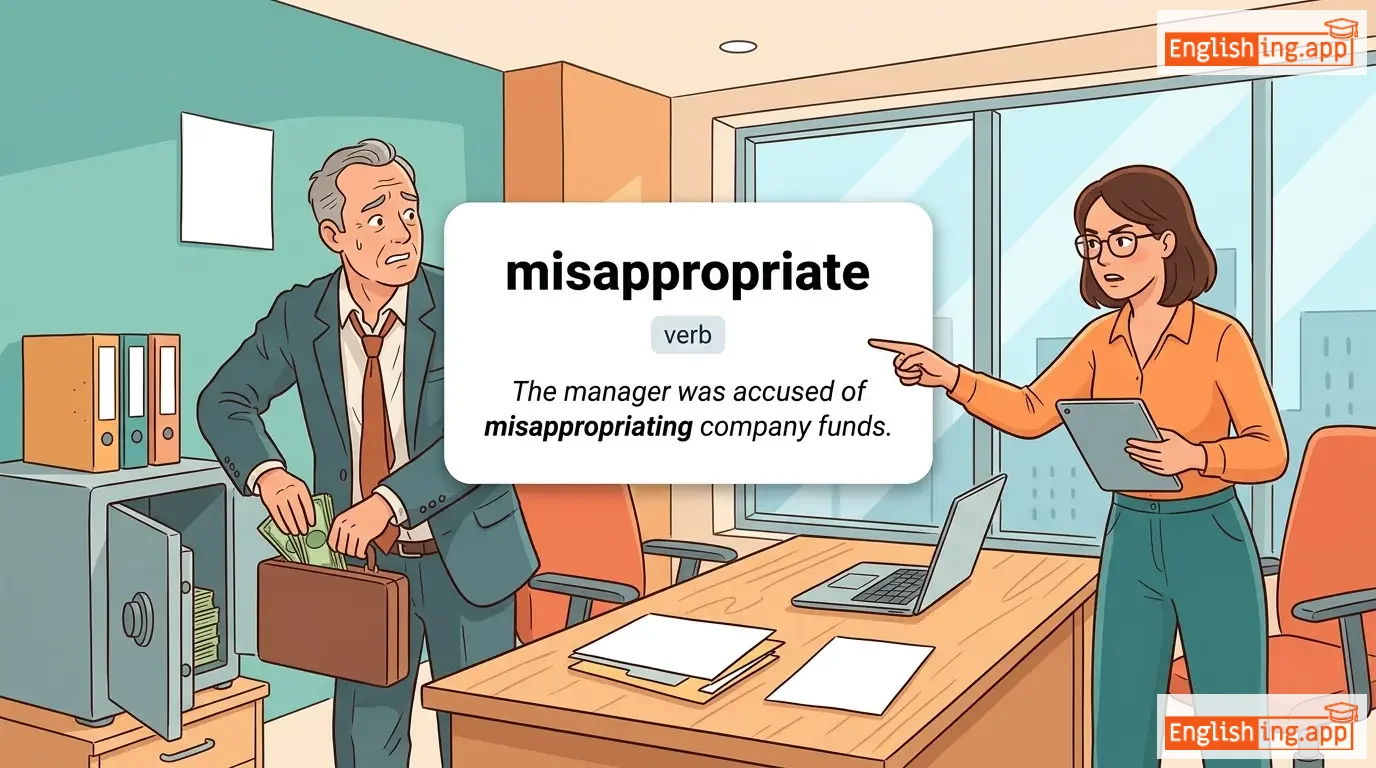
to take or use something dishonestly, especially money or property, for one's own use
••••••
|
The manager was accused of misappropriating company funds.
マネージャーは会社の資金を不正に使ったとして告発されました。
••••••
|
マネージャーは会社の資金を不正に使ったとして告発されました。
Manējā wa kaisha no shikin o fusei ni tsukatta to shite kokuhatsu saremashita.
••••••
|
- •••••• | - •••••• | - •••••• |
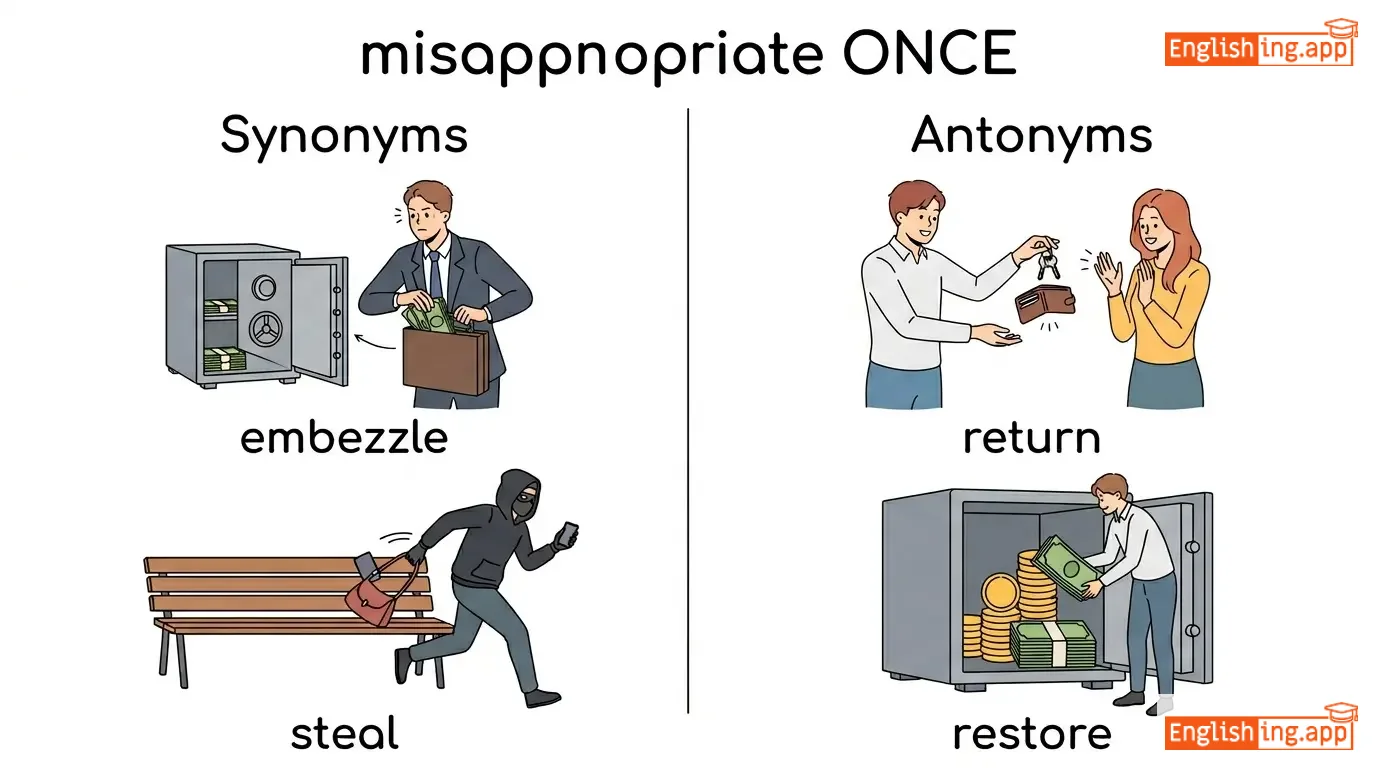
embezzle, steal, misuse, divert, pilfer
••••••
|
return, restore, repay
••••••
|
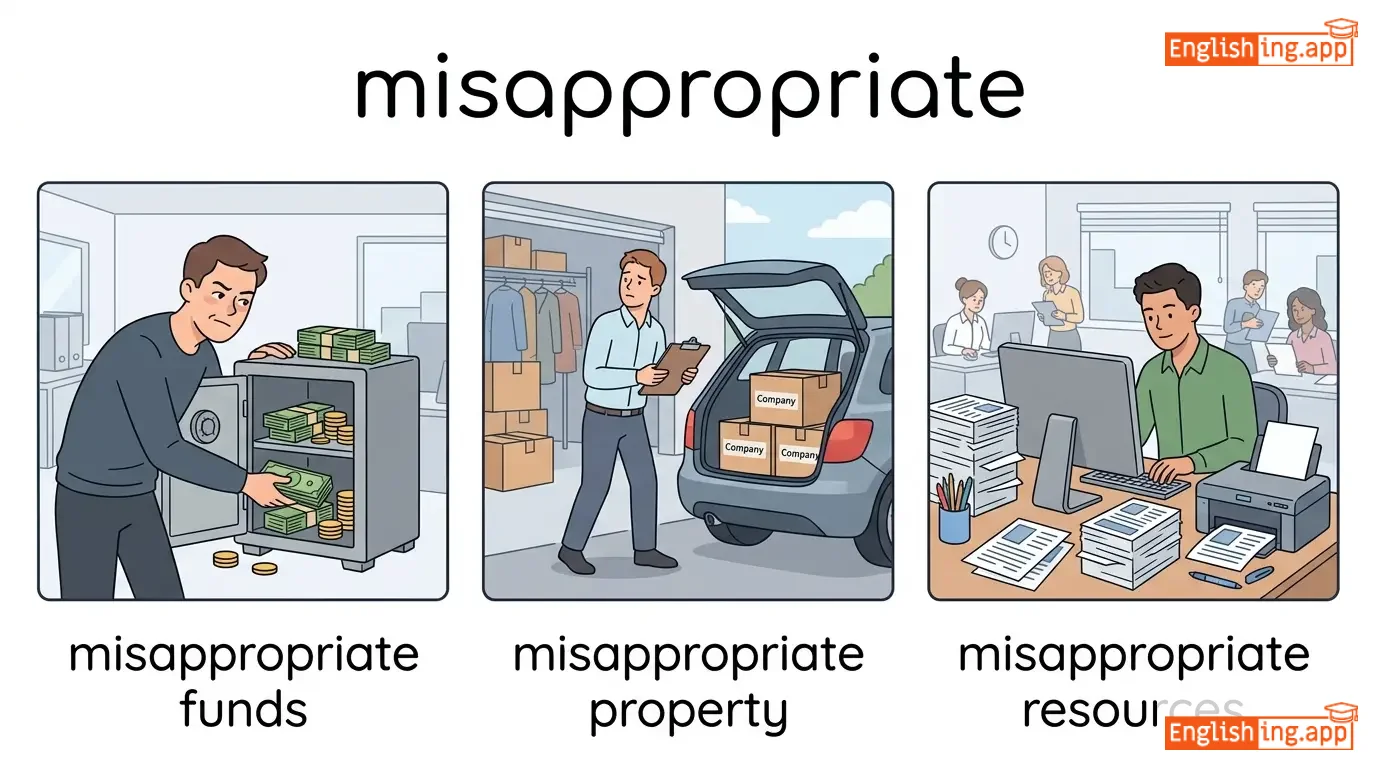
misappropriate funds, misappropriate property, misappropriate resources
••••••
|
不正に流用するのが misappropriate
••••••
|
|
#5632
😕
|
/ˌmɪsæprɪˈhɛnʃən/
noun
(ミスアプレヘンション)
••••••
|
- •••••• |
誤解
gokai
••••••
|
- •••••• | - •••••• | - •••••• | - •••••• |
a mistaken belief or misunderstanding
••••••
|
There is a common misapprehension about the causes of the disease. |
病気の原因についての一般的な誤解がある。
Byōki no gen'in ni tsuite no ippanteki na gokai ga aru.
••••••
|
- •••••• | - •••••• | - •••••• |
misunderstanding, mistake, error, misconception
••••••
|
understanding, clarity, comprehension
••••••
|
common misapprehension, under a misapprehension, serious misapprehension
••••••
|
MIS (ミス) + apprehension (恐れ) は誤解を意味します。
••••••
|
|
#5633
🤔
|
/ˌmɪsæprɪˈhɛnd/
verb
(ミスアプルヘンド)
••••••
|
- •••••• |
誤解する
gokai suru
••••••
|
misapprehended
ミスアプルヘンデッド
••••••
|
misapprehended
ミスアプルヘンデッド
••••••
|
misapprehends
ミスアプルヘンズ
••••••
|
misapprehending
ミスアプルヘンディング
••••••
|
to misunderstand or misinterpret something
••••••
|
He misapprehended the teacher’s instructions and did the task incorrectly.
彼は先生の指示を誤解し、課題を間違って行いました。
••••••
|
彼は先生の指示を誤解し、課題を間違って行いました。
Kare wa sensei no shiji o gokai shi, kadai o machigatte okonaimashita.
••••••
|
- •••••• | - •••••• | - •••••• |
misunderstand, misconstrue, misinterpret, mistake
••••••
|
understand, grasp, comprehend
••••••
|
easily misapprehend, misapprehend instructions, misapprehend meaning
••••••
|
MIS (誤) 解する - 誤って理解した。
••••••
|
|
#5634
😔
|
/mɪˈsænθrəpi/
noun
(ミサントロピー)
••••••
|
- •••••• |
人類嫌悪
jinrui ken'o
••••••
|
- •••••• | - •••••• | - •••••• | - •••••• |
a general dislike, distrust, or hatred of humankind
••••••
|
His misanthropy was evident in the way he avoided people. |
彼の人類嫌悪は、彼が人々を避ける方法に明らかに現れていました。
Kare no jinrui ken'o wa, kare ga hitobito o sakeru hōhō ni akiraka ni arawarete imashita.
••••••
|
- •••••• | - •••••• | - •••••• |
cynicism, hatred, distrust, aversion
••••••
|
philanthropy, friendliness, goodwill
••••••
|
deep misanthropy, show misanthropy, filled with misanthropy
••••••
|
ミサン = みんな嫌い、トロピー = それを避けること。
••••••
|
|
#5635
🙄
|
/ˌmɪsənˈθrɑːpɪk/
adjective
(ミサントロピック)
••••••
|
- •••••• |
人間嫌いの
ningen girai no
••••••
|
- •••••• | - •••••• | - •••••• | - •••••• |
having or showing a dislike of humankind
••••••
|
His misanthropic attitude made it difficult for him to make friends. |
彼の人間嫌いの態度は、友達を作るのを難しくした。
Kare no ningen girai no taido wa, tomodachi o tsukuru no o muzukashiku shita.
••••••
|
- •••••• | - •••••• | - •••••• |
cynical, antisocial, pessimistic, distrustful
••••••
|
friendly, sociable, philanthropic
••••••
|
misanthropic view, misanthropic outlook, misanthropic character
••••••
|
MISA (ミサ) + トロピック = 人類を嫌う態度
••••••
|
|
#5636
😒
|
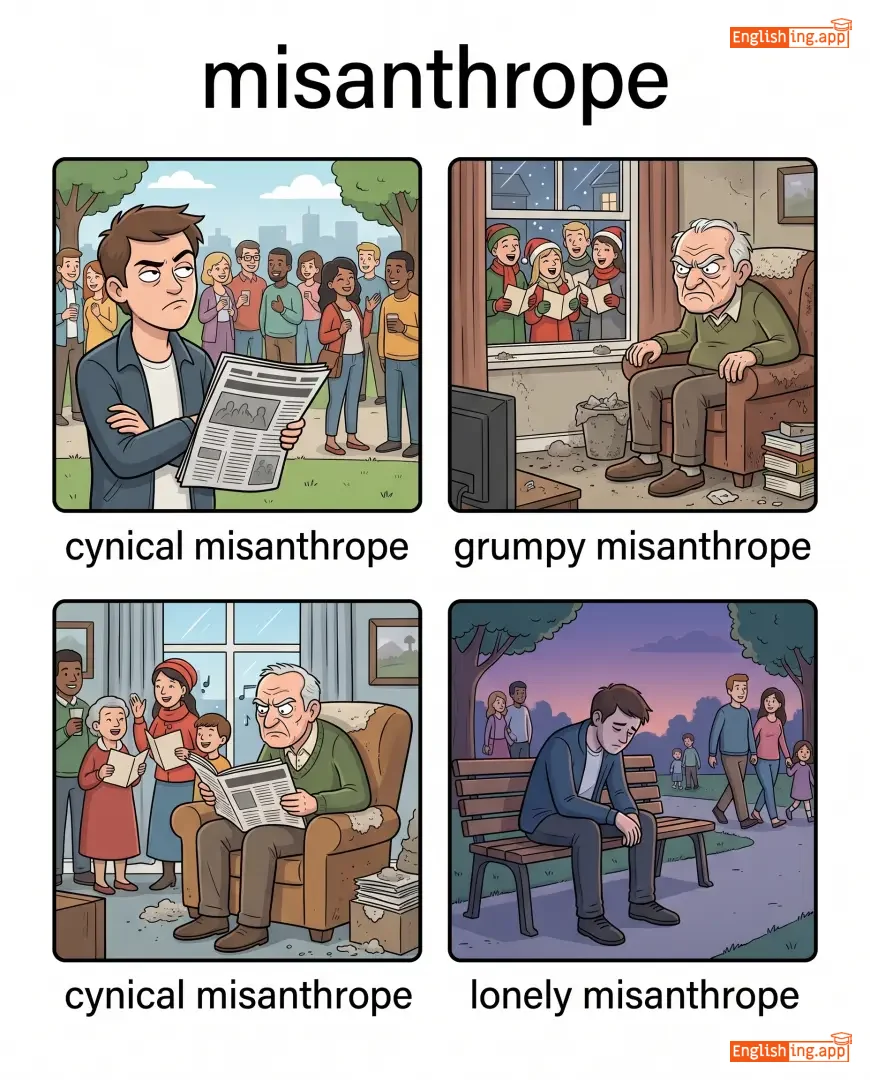
/ˈmɪsənˌθroʊp/
noun
(ミサントロープ)
••••••
|
|
人間嫌い
ningengirai
••••••
|
- •••••• | - •••••• | - •••••• | - •••••• |
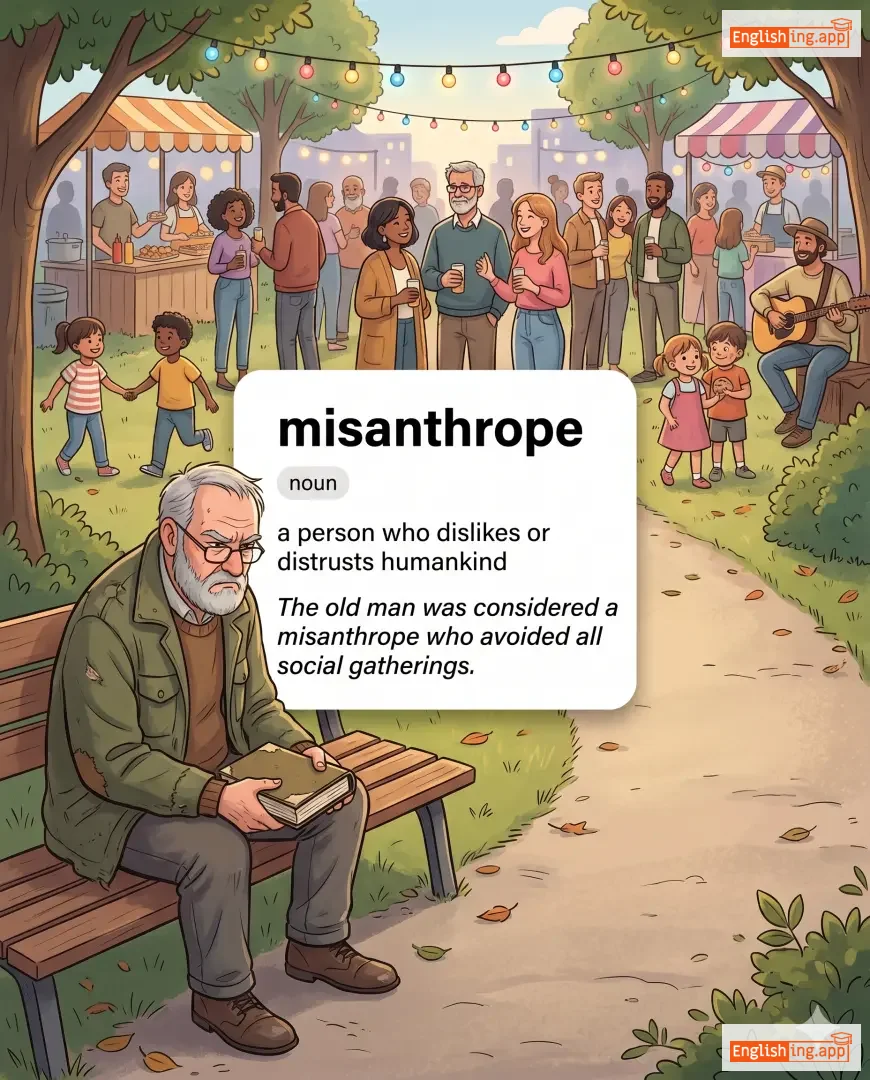
a person who dislikes or distrusts humankind
••••••
|
The old man was considered a misanthrope who avoided all social gatherings.
その老人は、すべての社交的な集まりを避けるミサントロープと見なされていました。
••••••
|
その老人は、すべての社交的な集まりを避けるミサントロープと見なされていました。
Sono rōjin wa, subete no shakaiteki na atsumari o yokeru misantoroopu to minasareteimashita.
••••••
|
- •••••• | - •••••• | - •••••• |
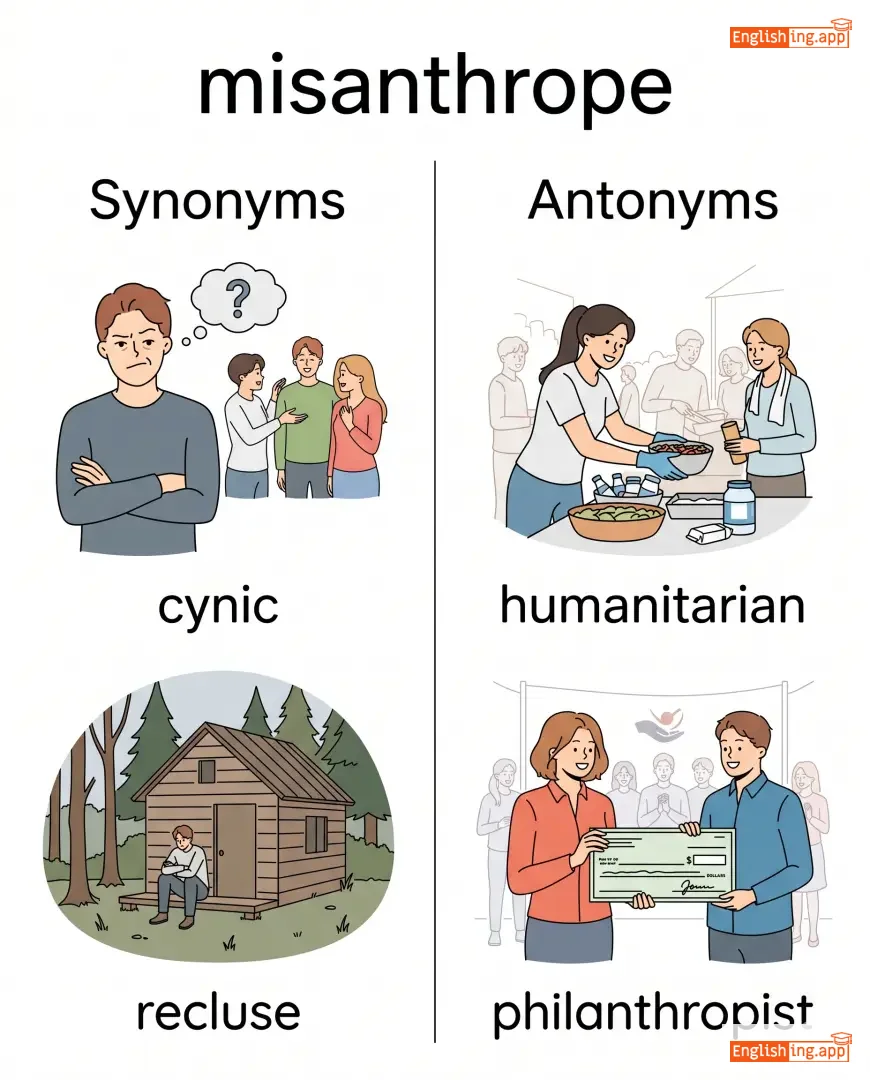
cynic, recluse, hermit, pessimist, loner
••••••
|
humanitarian, philanthropist, optimist
••••••
|
cynical misanthrope, grumpy misanthrope, lonely misanthrope
••••••
|
MISA(ミサ)は人々を避ける - 人間嫌いとは人類を嫌うこと。
••••••
|
|
#5637
⚠️
|
/ˌmɪsədˈvɛntʃər/
noun
(ミサドベンチャー)
••••••
|
- •••••• |
不運な出来事
fuun na dekigoto
••••••
|
- •••••• | - •••••• | - •••••• | - •••••• |
An unlucky accident, mishap, or unfortunate event.
••••••
|
He broke his leg during a skiing misadventure. |
彼はスキー中に不運な出来事で足を骨折した。
Kare wa sukii-chuu ni fuun na dekigoto de ashi o kossetsu shita.
••••••
|
- •••••• | - •••••• | - •••••• |
mishap, accident, calamity, misfortune, disaster
••••••
|
success, fortune, blessing
••••••
|
tragic misadventure, fatal misadventure, skiing misadventure
••••••
|
Misadventure は不運な出来事 - 'mis' は間違いを意味し、'adventure' は冒険を意味します。間違った冒険が不運な出来事です。
••••••
|
|
#5638
😂
|
/mɜːrθ/
noun
(マース)
••••••
|
- •••••• |
喜び
yorokobi
••••••
|
- •••••• | - •••••• | - •••••• | - •••••• |
Great joy, amusement, or laughter.
••••••
|
The festival was full of mirth and laughter.
フェスティバルは喜びと笑いでいっぱいでした。
••••••
|
フェスティバルは喜びと笑いでいっぱいでした。
Fesutibaru wa yorokobi to warai de ippai deshita.
••••••
|
mirth and merriment
喜びと楽しみ
••••••
|
A state of great happiness and celebration.
••••••
|
喜びと楽しみ
yorokobi to tanoshimi
••••••
|
joy, cheer, amusement, laughter, glee
••••••
|
sadness, sorrow, gloom
••••••
|
burst of mirth, filled with mirth, mirth and laughter
••••••
|
Mirthは喜びを意味します - Mirthという名前の友達はいつも笑っています (mirth)。
••••••
|
|
#5639
🕸️
|
/ˈmaɪərd/
adjective, verb (past tense/participle of mire)
(マイアード)
••••••
|
- •••••• |
困難な状況に巻き込まれる
konnan na joukyou ni makikomaru
••••••
|
- •••••• | - •••••• | - •••••• | - •••••• |
Trapped or entangled in something, typically a difficult situation.
••••••
|
The politician was mired in scandal. |
その政治家はスキャンダルに巻き込まれていた。
Sono seijika wa sukyandaru ni makikomararete ita.
••••••
|
- •••••• | - •••••• | - •••••• |
entangled, stuck, trapped, bogged down
••••••
|
free, liberated, clear
••••••
|
mired in debt, mired in controversy, deeply mired
••••••
|
Miredは困難な状況に巻き込まれること - 政治家がスキャンダルに巻き込まれるように。
••••••
|
|
#5640
🪵
|
/ˈmaɪər/
noun, verb
••••••
|
- •••••• | - •••••• |
mired
••••••
|
mired
••••••
|
mires
••••••
|
miring
••••••
|
A stretch of swampy or boggy ground; as a verb, to entangle or involve someone in a difficult situation.
••••••
|
The car was stuck in the mire after the heavy rain. |
- •••••• |
mired in controversy |
To be deeply involved in a difficult or unpleasant situation.
••••••
|
- •••••• |
swamp, bog, quagmire, entangle, trap
••••••
|
release, free, clarity
••••••
|
stuck in the mire, political mire, financial mire
••••••
|
No •••••• |
Vocabulary Quiz
Test your vocabulary by matching words with their translations or meanings.
Login to take the quiz
Comments (0)
Share your thoughts and join the discussion.
Join the discussion by logging in
Login to CommentNo comments yet
Be the first to share your thoughts!