

翻訳
過去
過去分詞
三人称単数
動名詞
意味
例文
例文の翻訳
同義語
対義語
コロケーション
ニーモニック

Swipe left or right, or use the buttons. Tap image to zoom.
例文の翻訳
単語
Lesson 323Lesson 323 - マスクトグル
|
絵文字
|
単語 | Images | 翻訳 | 過去 | 過去分詞 | 三人称単数 | 動名詞 | 意味 | 例文 | 例文の翻訳 | 表現例 | 表現例の意味 | 表現例の翻訳 | 同義語 | 対義語 | コロケーション | ニーモニック |
|---|---|---|---|---|---|---|---|---|---|---|---|---|---|---|---|---|---|
|
#9660
🎂
|
/ˈkoʊ.tɪŋ/
noun
(コーティング)
••••••
|
|
コーティング
kōtingu
••••••
|
- •••••• | - •••••• | - •••••• | - •••••• |
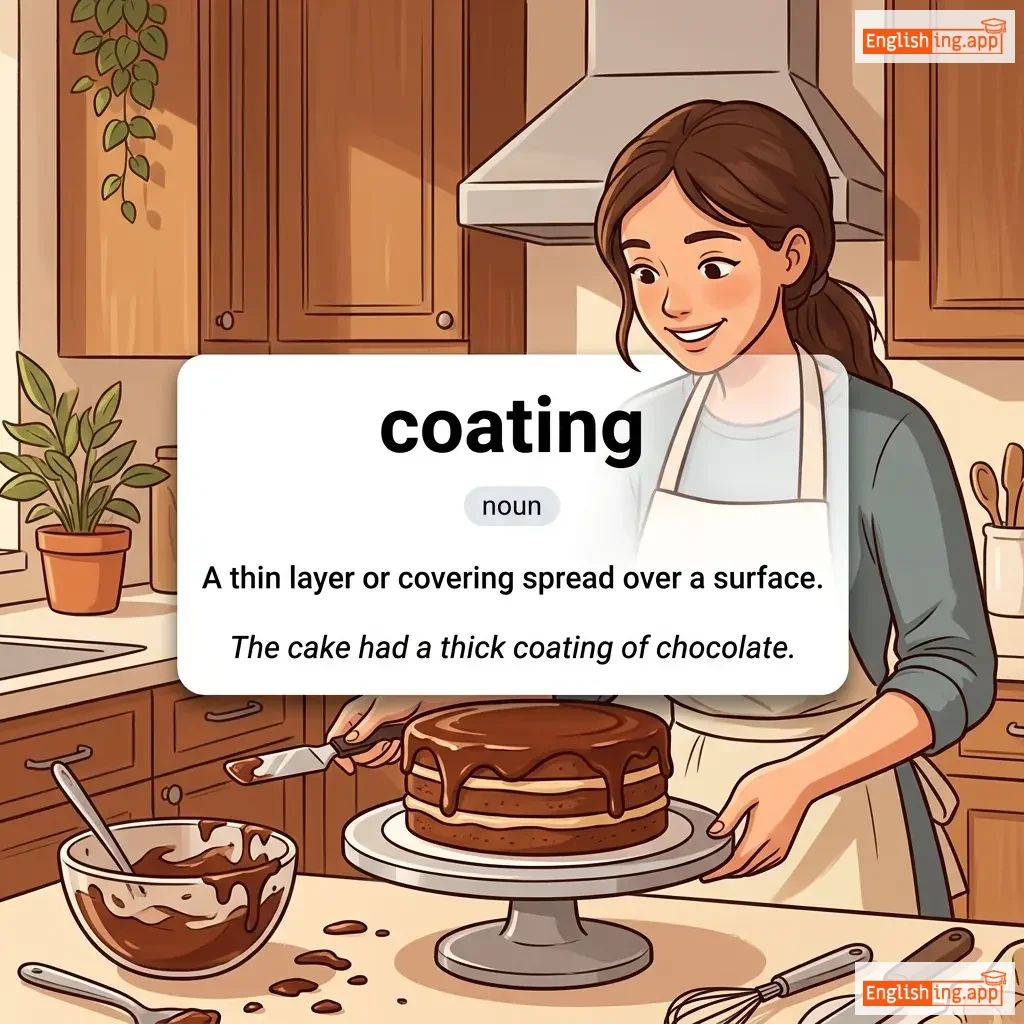
A thin layer or covering spread over a surface.
••••••
|
The cake had a thick coating of chocolate. |
ケーキには厚いチョコレートのコーティングが施されていました。
Kēki ni wa atsui chokorēto no kōtingu ga hodokosarete imashita.
••••••
|
- •••••• | - •••••• | - •••••• |
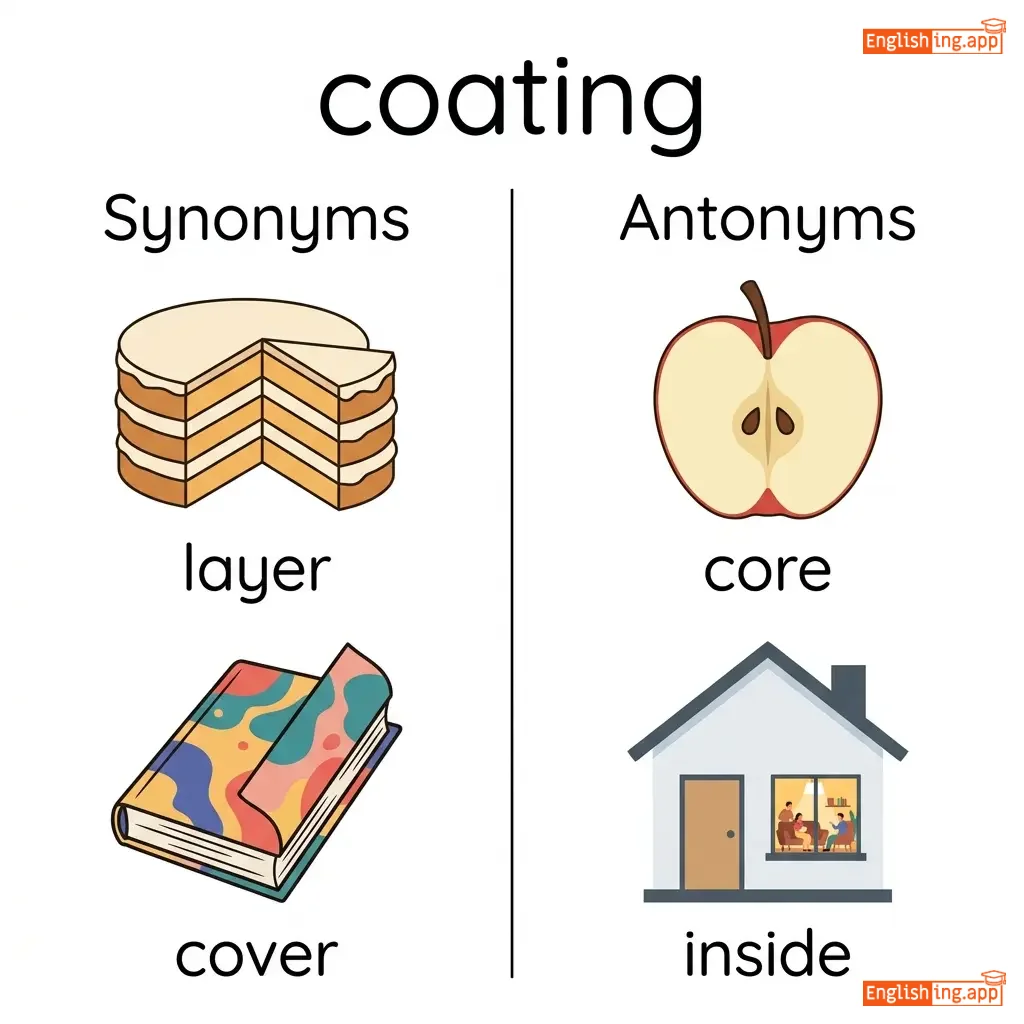
layer, cover, film, veneer, finish
••••••
|
core, inside
••••••
|
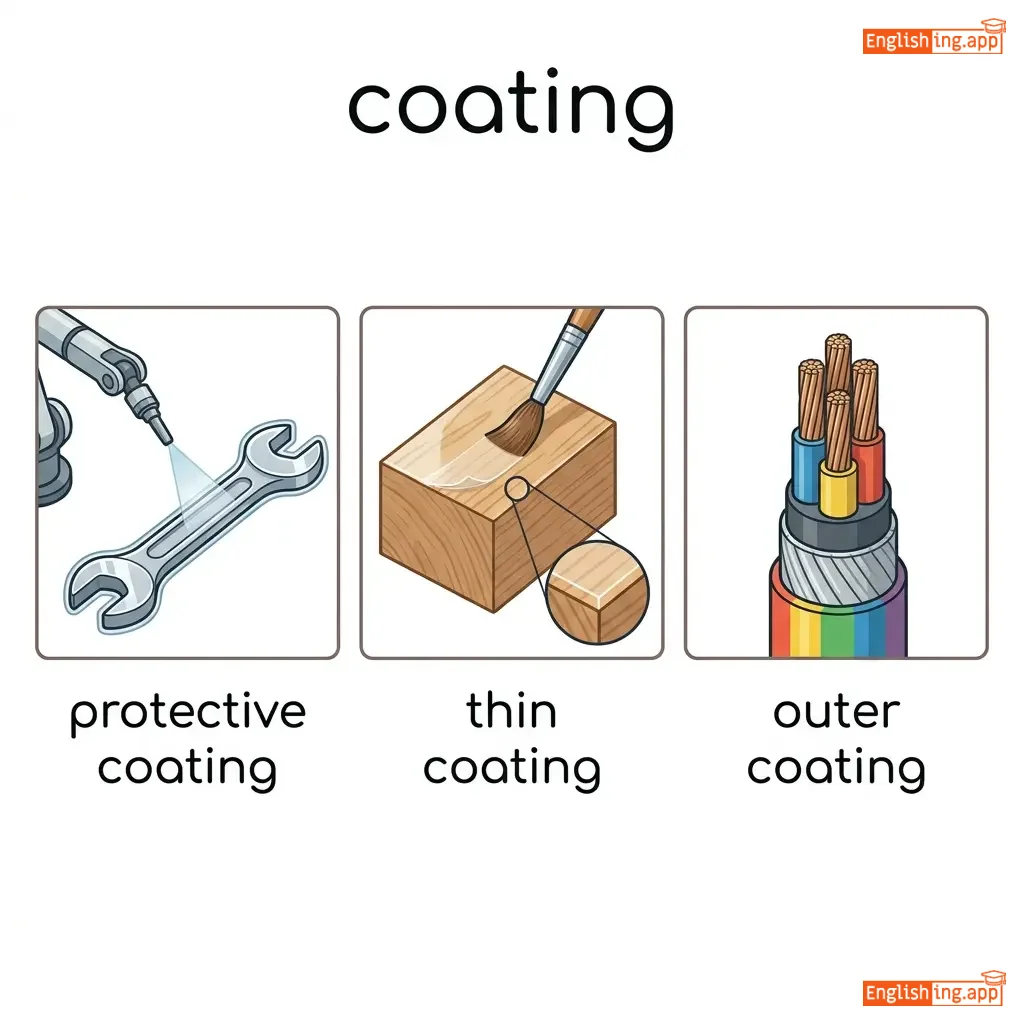
protective coating, thin coating, outer coating, coating layer
••••••
|
ケーキの上にコーティング (コーティング) をすると、もっと美味しくなる。
••••••
|
|
#9661
🙏
|
/kənˈfɛs/
verb
(コンフェス)
••••••
|
|
告白する
kokuhaku suru
••••••
|
confessed
コンフェスド
••••••
|
confessed
コンフェスド
••••••
|
confesses
コンフェスズ
••••••
|
confessing
コンフェッシング
••••••
|
to admit that you have done something wrong or illegal
••••••
|
He confessed that he had stolen the money.
彼はお金を盗んだことを告白した。
••••••
|
彼はお金を盗んだことを告白した。
Kare wa okane o nusunda koto o kokuhaku shita.
••••••
|
confess one's sins
罪を告白する
••••••
|
to admit to having done wrong, often in a religious context
••••••
|
罪を告白する
tsumi o kokuhaku suru
••••••
|
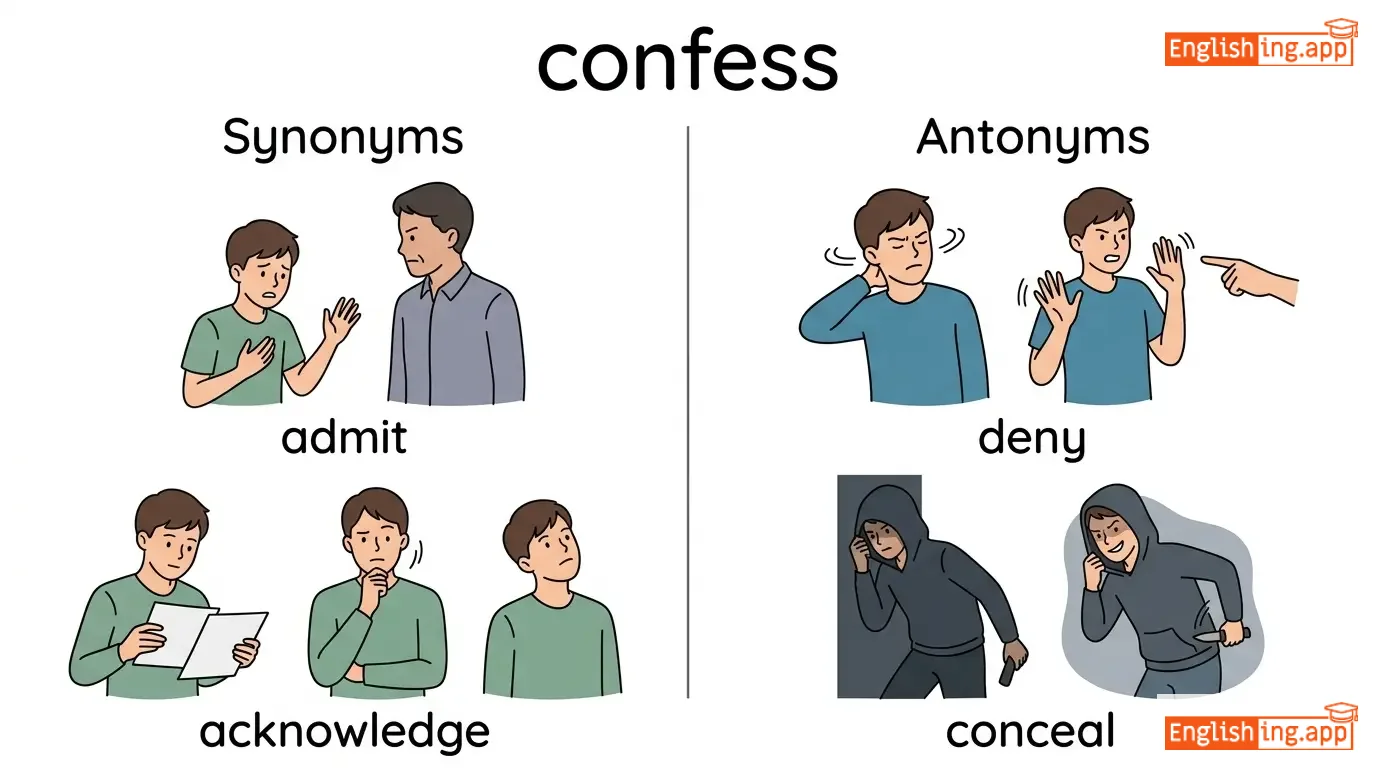
admit, acknowledge, disclose, reveal
••••••
|
deny, conceal
••••••
|
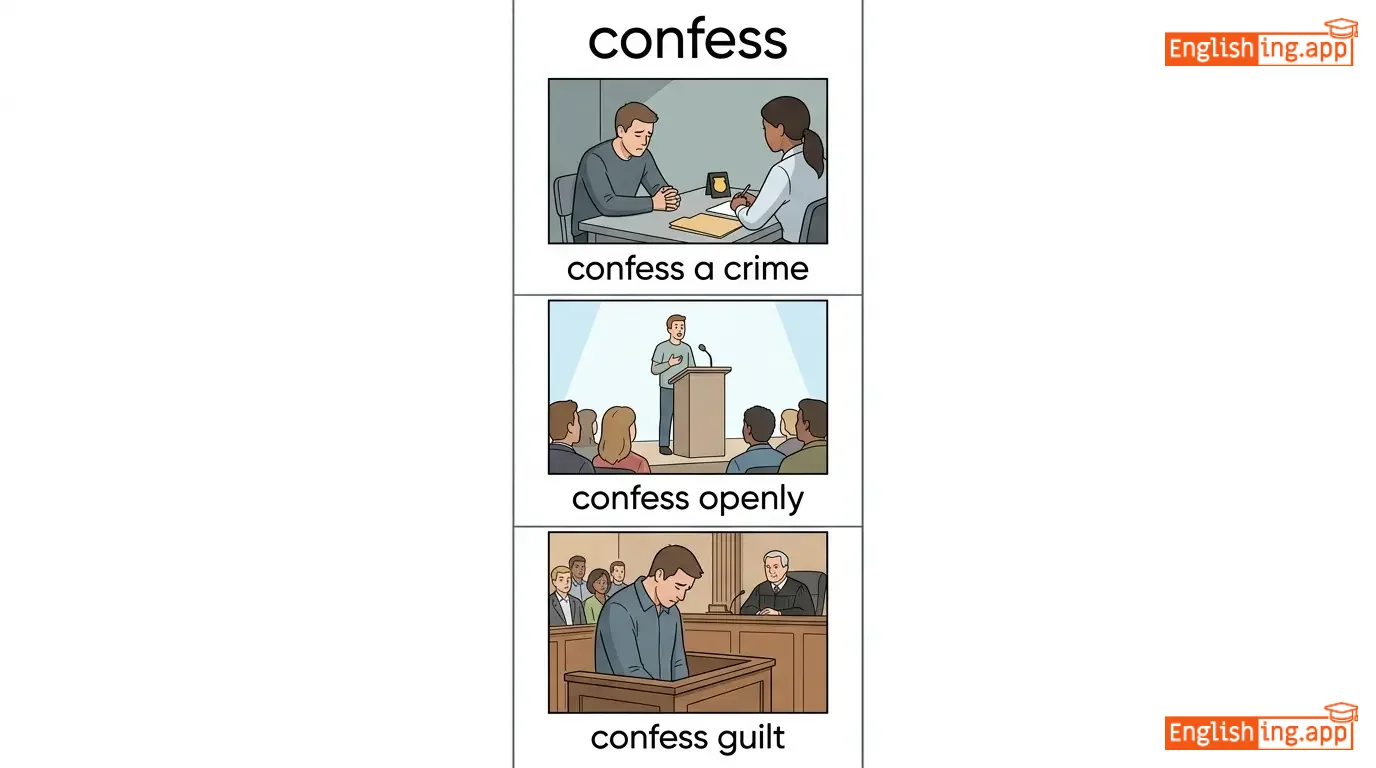
confess a crime, confess openly, confess guilt, confess sins
••••••
|
告白することで心が軽くなる。
••••••
|
|
#9662
🏗️
|
/ˈkɒŋkriːt/
adjective
(コンプリート)
••••••
|
- •••••• |
具体的な
gutaiteki na
••••••
|
- •••••• | - •••••• | - •••••• | - •••••• |
based on facts, not on ideas or guesses; specific and real
••••••
|
She gave a concrete example to support her argument. |
彼女は自分の議論を支持するために具体的な例を挙げました。
Kanojo wa jibun no giron o shiji suru tame ni gutaiteki na rei o agemashita.
••••••
|
set in concrete |
to be fixed and unchangeable
••••••
|
固定された
kotei sareta
••••••
|
tangible, solid, real, specific
••••••
|
abstract, vague, unreal
••••••
|
concrete example, concrete evidence, concrete plan, concrete structure
••••••
|
Concreteは具体的、まるでコンクリートのようにしっかりとしたものです。
••••••
|
|
#9663
💡
|
/kənˈsɛptʃuəlaɪz/
verb
(kənˈsɛptʃuəlaɪz)
••••••
|
- •••••• |
概念化する
gainenka suru
••••••
|
conceptualized
kənˈsɛptʃuəlaɪzd
••••••
|
conceptualized
kənˈsɛptʃuəlaɪzd
••••••
|
conceptualizes
kənˈsɛptʃuəlaɪzɪz
••••••
|
conceptualizing
kənˈsɛptʃuəlaɪzɪŋ
••••••
|
to form an idea or concept of something in your mind
••••••
|
The artist conceptualized a new design for the exhibition.
アーティストは展示のために新しいデザインを構想しました。
••••••
|
アーティストは展示のために新しいデザインを構想しました。
Atisuto wa tenji no tame ni atarashii dezain wo kousou shimashita.
••••••
|
- •••••• | - •••••• | - •••••• |
envision, imagine, devise, formulate, invent
••••••
|
ignore, dismiss
••••••
|
conceptualize ideas, conceptualize a plan, conceptualize the project
••••••
|
概念化するは、アイデアを頭の中で形にすることです。
••••••
|
|
#9664
🔄
|
/kəmˈpliːtli/
adverb
(カムプリートリー)
••••••
|
- •••••• |
完全に
kanzen ni
••••••
|
- •••••• | - •••••• | - •••••• | - •••••• |
totally; in every way possible
••••••
|
The room was completely silent. |
部屋は完全に静かでした。
Heya wa kanzen ni shizuka deshita.
••••••
|
- •••••• | - •••••• | - •••••• |
totally, entirely, fully, utterly
••••••
|
partially, incompletely
••••••
|
completely different, completely silent, completely destroyed, completely wrong
••••••
|
Completelyは完全にという意味で、完全に静かであることです。
••••••
|
|
#9665
✅
|
/kəmˈpliːt/
verb
(コンプリート)
••••••
|
- •••••• |
完了する
kanryou suru
••••••
|
completed
コンプリーテッド
••••••
|
completed
コンプリーテッド
••••••
|
completes
コンプリーツ
••••••
|
completing
コンプリーティング
••••••
|
to finish making or doing something; to bring something to an end
••••••
|
She managed to complete the project on time.
彼女はプロジェクトを時間通りに完了させました。
••••••
|
彼女はプロジェクトを時間通りに完了させました。
Kanojo wa purojekuto wo jikan doori ni kanryou sasemashita.
••••••
|
complete the circle
サークルを完了する
••••••
|
to bring something to its conclusion or to make something whole
••••••
|
サークルを完了する
saakuru wo kanryou suru
••••••
|
finish, accomplish, achieve, conclude, finalize
••••••
|
incomplete, unfinished, halt
••••••
|
complete a task, complete a form, complete the project, complete successfully
••••••
|
完了するは、何かを終わらせる、サークルを完了するのように。
••••••
|
|
#9666
🎙️
|
/ˈkɒmənˌteɪtər/
noun
(コメントレーター)
••••••
|
- •••••• |
解説者
kaisetsusha
••••••
|
- •••••• | - •••••• | - •••••• | - •••••• |
a person who reports and discusses events, especially on TV or radio
••••••
|
The commentator described the football match in detail. |
解説者はサッカーの試合を詳細に説明しました。
Kaisetsusha wa sakkā no shiai o shōsai ni setsumei shimashita.
••••••
|
- •••••• | - •••••• | - •••••• |
announcer, reporter, narrator, broadcaster, critic
••••••
|
audience, listener
••••••
|
sports commentator, political commentator, live commentator, TV commentator
••••••
|
解説者はテレビでスポーツの試合を解説する人です。
••••••
|
|
#9667
🎖️
|
/kəˈmændər/
noun
(kəmændər)
••••••
|
- •••••• |
司令官
shireikan
••••••
|
- •••••• | - •••••• | - •••••• | - •••••• |
a person in authority, especially over a military group
••••••
|
The commander led his troops into battle. |
司令官は自分の部隊を戦いに導きました。
Shireikan wa jibun no butai o tatakai ni michibikimashita.
••••••
|
- •••••• | - •••••• | - •••••• |
chief, leader, officer, captain, general
••••••
|
follower, subordinate
••••••
|
military commander, field commander, commander in chief, naval commander
••••••
|
司令官は軍の指導者です。
••••••
|
|
#9668
😂
|
/ˈkɒmɪk/
adjective
(コミック)
••••••
|
- •••••• |
コミカル
komikaru
••••••
|
- •••••• | - •••••• | - •••••• | - •••••• |
causing or meant to cause laughter
••••••
|
The movie had several comic scenes. |
映画にはいくつかのコミカルなシーンがありました。
Eiga ni wa ikutsuka no komikaru na shīn ga arimashita.
••••••
|
comic relief |
a humorous break in a serious narrative
••••••
|
コミカルな救済
komikaru na kyūsai
••••••
|
funny, humorous, amusing, witty, entertaining
••••••
|
serious, tragic, solemn
••••••
|
comic book, comic strip, comic character, comic effect, comic scene
••••••
|
コミックは笑いを引き起こすもの
••••••
|
|
#9669
🛋️
|
/ˈkʌmfərt/
noun
(コンフォート)
••••••
|
- •••••• |
快適さ
kaitekisa
••••••
|
- •••••• | - •••••• | - •••••• | - •••••• |
a state of physical ease and freedom from pain or distress
••••••
|
The soft chair gave him great comfort.
その柔らかい椅子は彼に大きな快適さを与えました。
••••••
|
その柔らかい椅子は彼に大きな快適さを与えました。
Sono yawarakai isu wa kare ni ōkina kaitekisa o ataemashita.
••••••
|
cold comfort
冷たい快適さ
••••••
|
something that offers little consolation
••••••
|
冷たい快適さ
tsumetai kaitekisa
••••••
|
ease, relief, support, solace, convenience
••••••
|
discomfort, distress, pain
••••••
|
seek comfort, provide comfort, comfort zone, physical comfort, emotional comfort
••••••
|
快適さ = 安らぎを感じる状態、まるで家の中のような安心感。
••••••
|
|
#9670
🚶
|
/kʌm/
verb
(ハピネス)
••••••
|
|
幸せ
shiawase
••••••
|
came
••••••
|
come
••••••
|
comes
••••••
|
coming
••••••
|
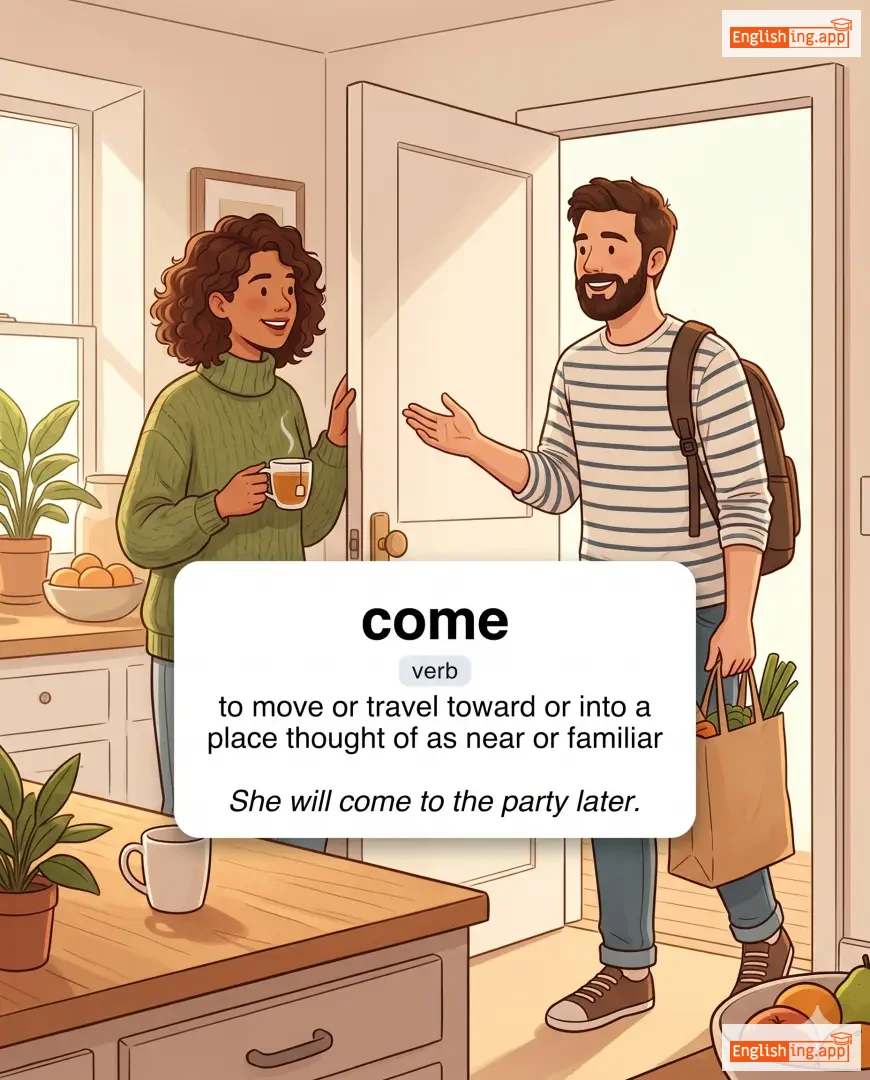
to move or travel toward or into a place thought of as near or familiar
••••••
|
She will come to the party later. |
彼女は賞を受け取ったとき、自分の幸せを隠すことができませんでした。
Kanojo wa shō o uketotta toki, jibun no shiawase o kakusu koto ga dekimasen deshita.
••••••
|
come true |
to happen as wished or dreamed
••••••
|
幸せを追求する
shiawase o tsuikyū suru
••••••
|
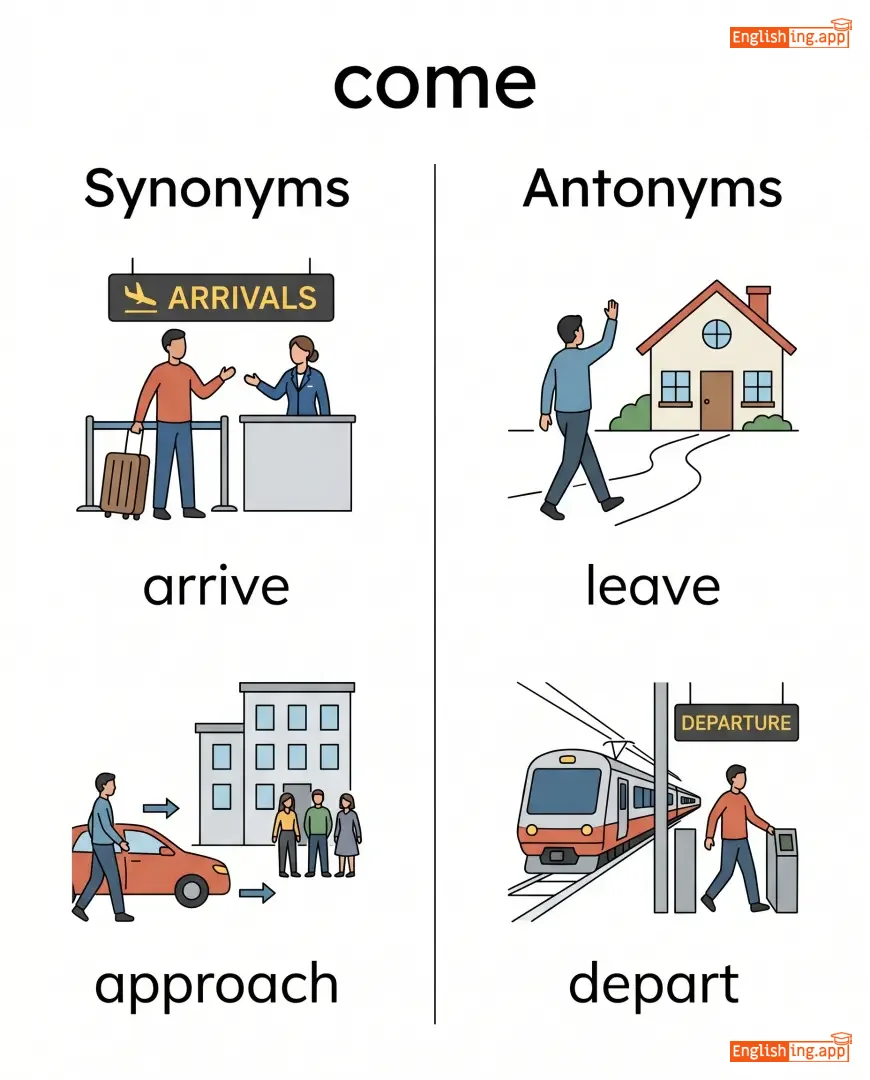
arrive, approach, reach, appear, enter
••••••
|
leave, depart, go
••••••
|
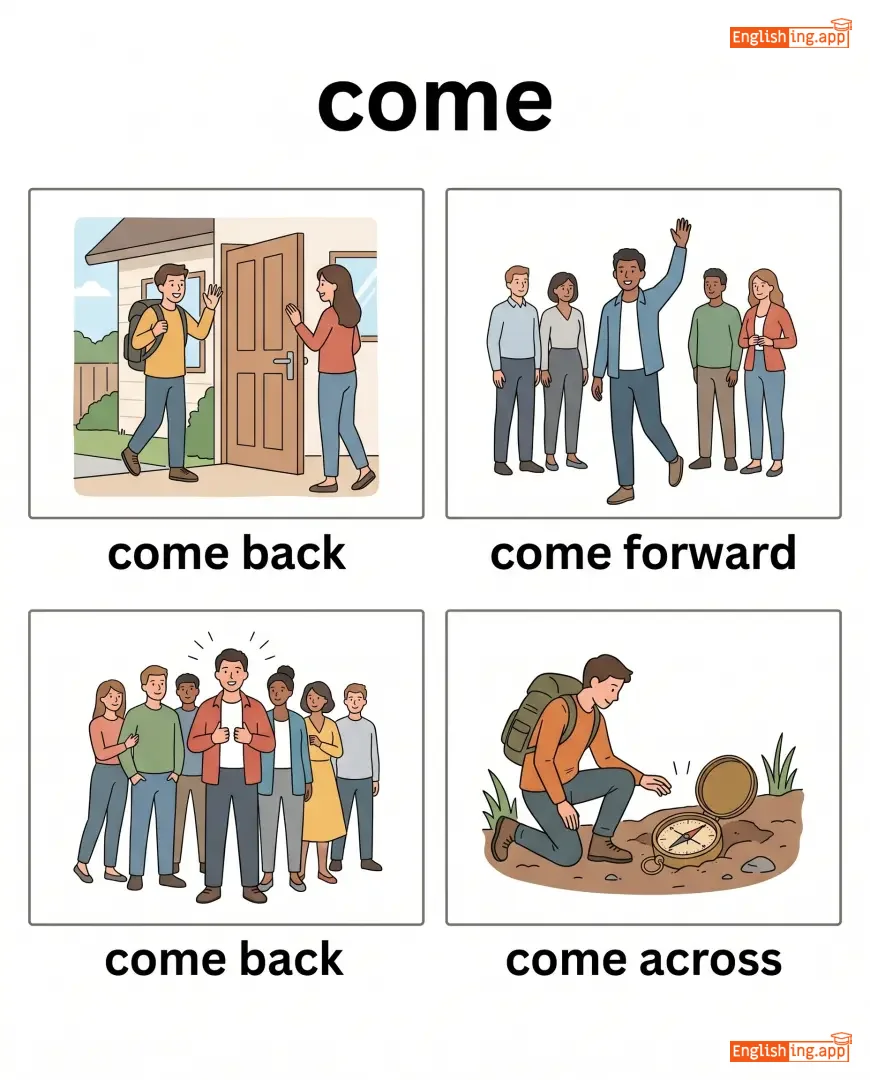
come back, come forward, come across, come out, come together
••••••
|
幸せ (shiawase) とは幸せ — 誰かが言う '私は幸せです!' と思ってみてください。
••••••
|
|
#9671
⚙️
|
/kəmˈbaɪn/
verb
(コンバイン)
••••••
|
- •••••• |
結合する
ketsugou suru
••••••
|
combined
コンバインド
••••••
|
combined
コンバインド
••••••
|
combines
コンバインズ
••••••
|
combining
コンバイニング
••••••
|
To bring two or more things together to form a single unit.
••••••
|
They decided to combine their resources for the project.
彼らはプロジェクトのためにリソースを結合することに決めました。
••••••
|
彼らはプロジェクトのためにリソースを結合することに決めました。
Karera wa purojekuto no tame ni risōsu o ketsugou suru koto ni kimemashita.
••••••
|
combine forces
力を合わせる
••••••
|
To work together with others towards a common goal.
••••••
|
力を合わせる
Chikara o awaseru
••••••
|
merge, join, unite, blend, fuse
••••••
|
separate, split, divide
••••••
|
combine efforts, combine forces, combine ingredients, combine ideas
••••••
|
Come + Bine = 結合する
••••••
|
|
#9672
📦
|
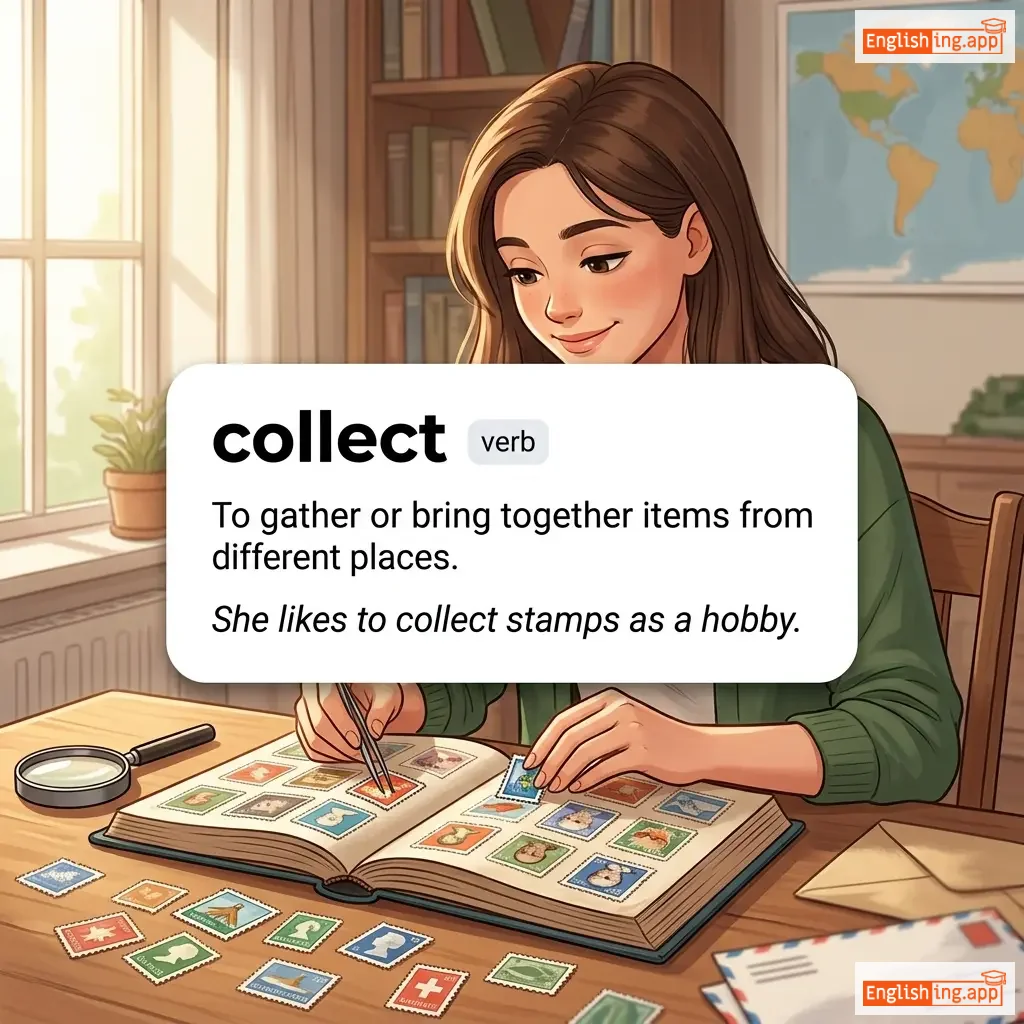
/kəˈlekt/
verb
(コレクト)
••••••
|
|
集める
atsumeru
••••••
|
collected
コレクテッド
••••••
|
collected
コレクテッド
••••••
|
collects
コレクツ
••••••
|
collecting
コレクティング
••••••
|
To gather or bring together items from different places.
••••••
|
She likes to collect stamps as a hobby.
彼女は趣味として切手を集めるのが好きです。
••••••
|
彼女は趣味として切手を集めるのが好きです。
Kanojo wa shumi to shite kitte o atsumeru no ga suki desu.
••••••
|
collect yourself
落ち着いて
••••••
|
To regain control over one's emotions or thoughts.
••••••
|
落ち着いて
ochitsuite
••••••
|
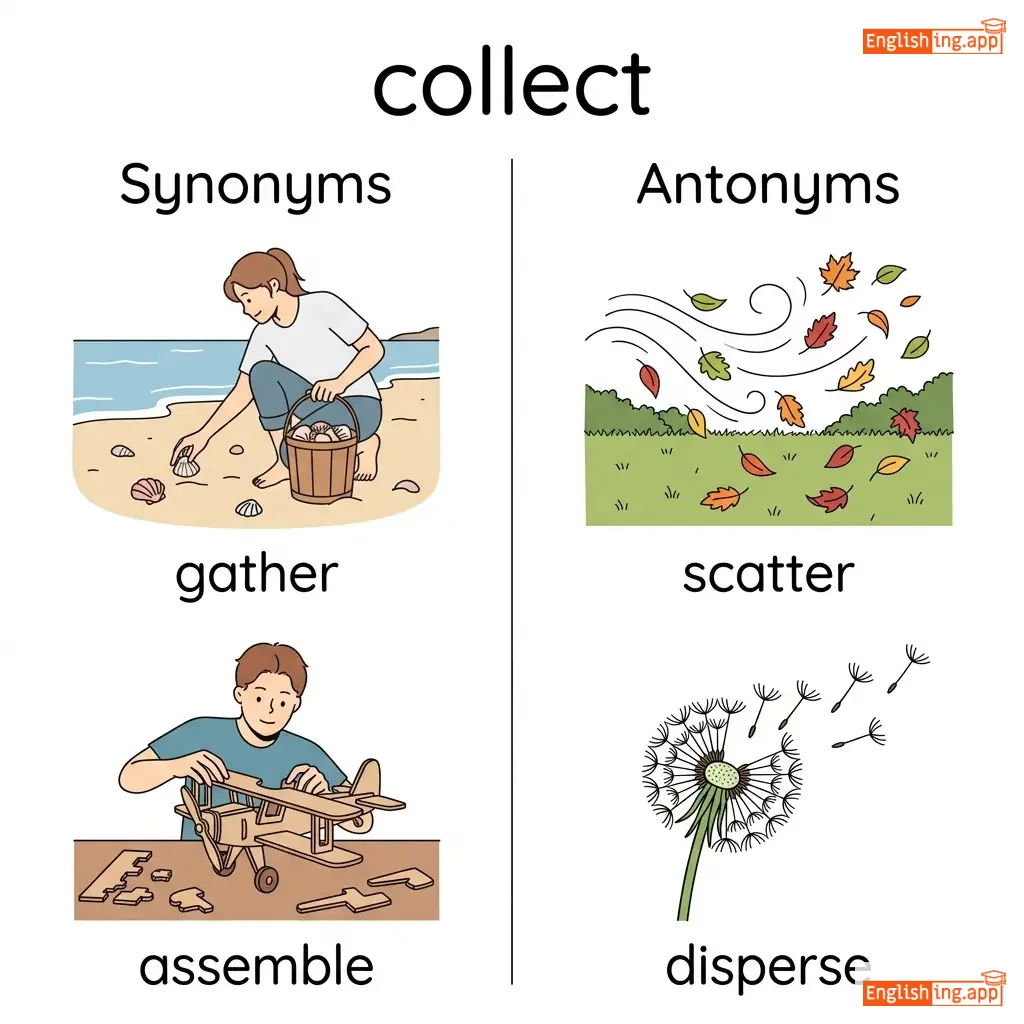
gather, assemble, accumulate, amass, hoard
••••••
|
scatter, disperse, distribute
••••••
|
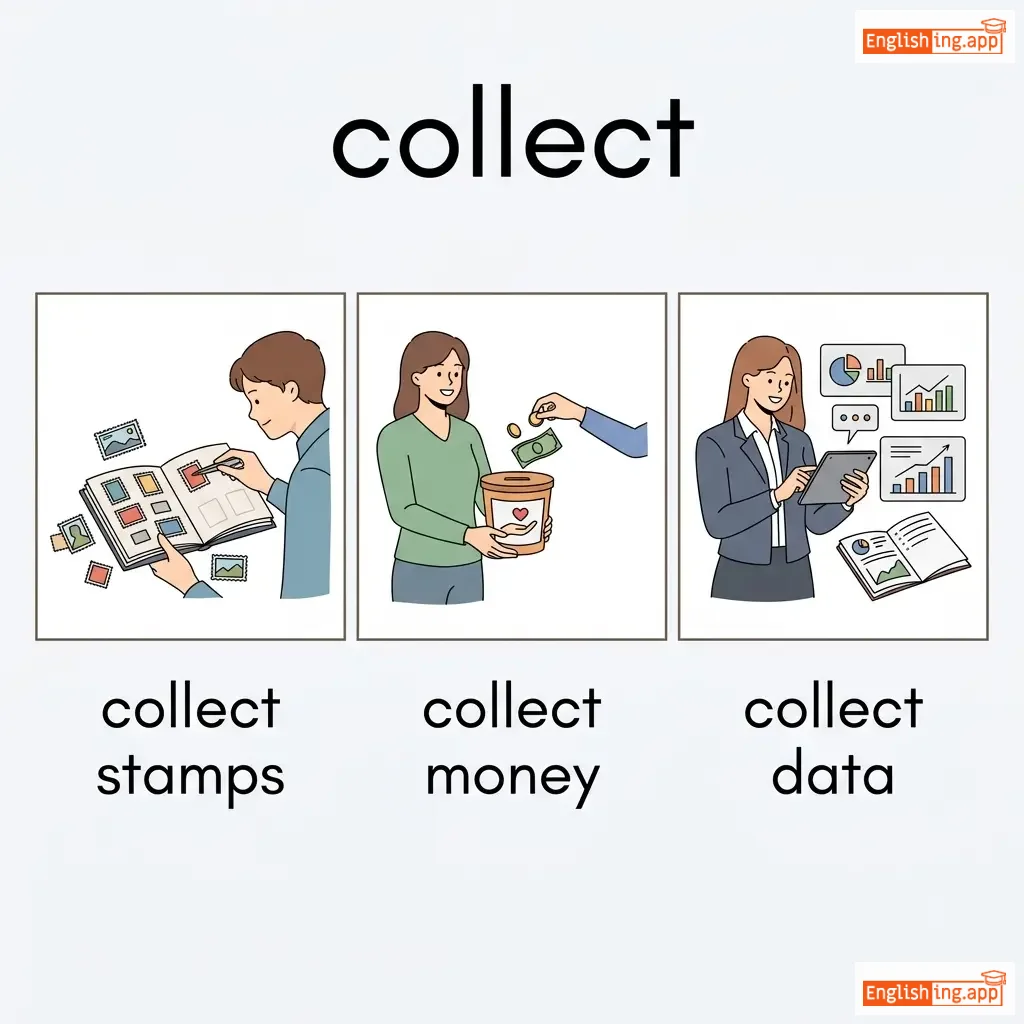
collect stamps, collect money, collect data, collect garbage
••••••
|
Collect (集める) 切手を集めて、記憶を保つ。
••••••
|
|
#9673
🪙
|
/kɔɪnz/
noun
(コインズ)
••••••
|
- •••••• |
コイン
koin
••••••
|
- •••••• | - •••••• | - •••••• | - •••••• |
Flat, typically round pieces of metal issued by a government as money.
••••••
|
He collected old coins from different countries. |
彼はさまざまな国から古いコインを集めました。
Kare wa samazama na kuni kara furui koin o atsumemashita.
••••••
|
two sides of the same coin |
Two different aspects of the same situation.
••••••
|
同じコインの両面
Onaji koin no ryōmen
••••••
|
currency, money, cash, token
••••••
|
bills, notes
••••••
|
collect coins, gold coins, silver coins, ancient coins
••••••
|
コインは政府から出るお金、それを思い出すコイン。
••••••
|
|
#9674
🧠
|
/koʊˈhɪə.rənt/
adjective
(コヒレント)
••••••
|
|
一貫した
ikkanshita
••••••
|
- •••••• | - •••••• | - •••••• | - •••••• |
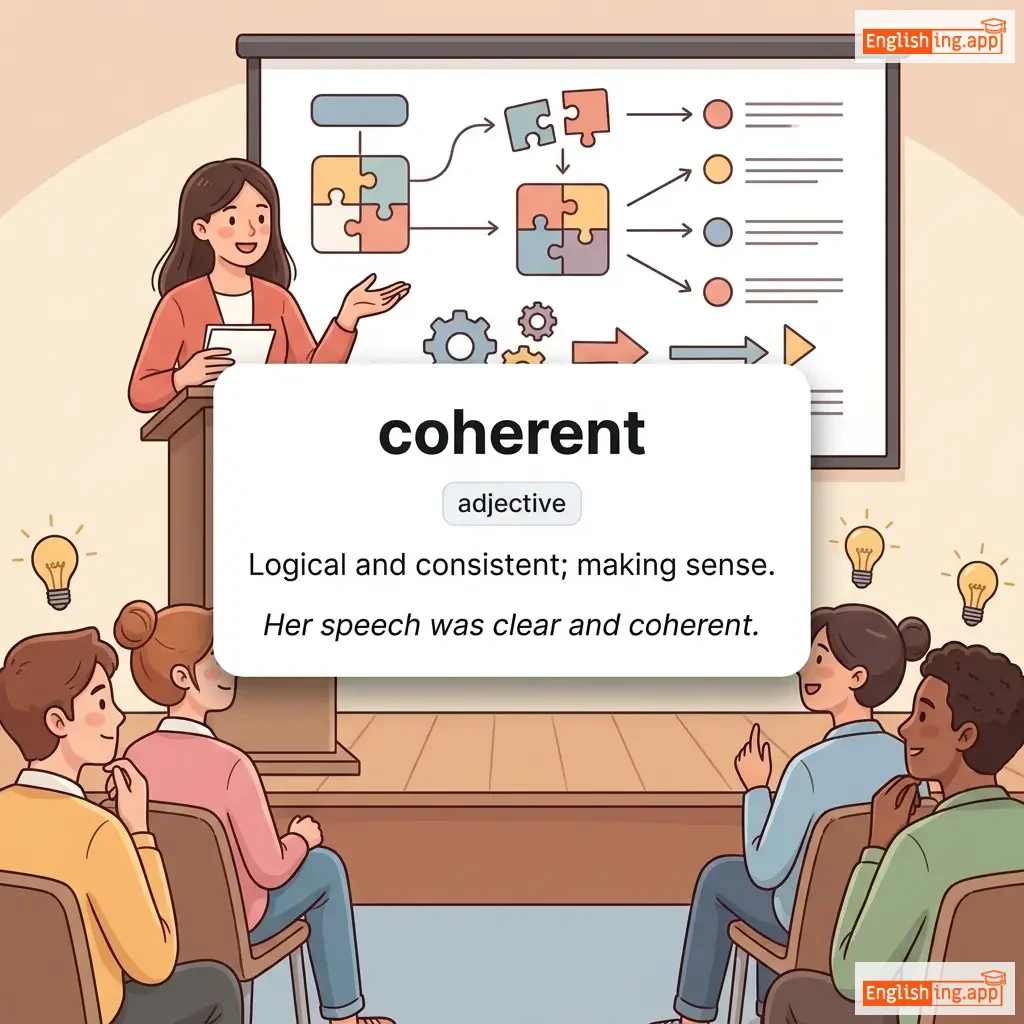
Logical and consistent; making sense.
••••••
|
Her speech was clear and coherent. |
彼女のスピーチは明確で一貫していた。
Kanojo no supīchi wa meikaku de ikkanshite ita.
••••••
|
- •••••• | - •••••• | - •••••• |
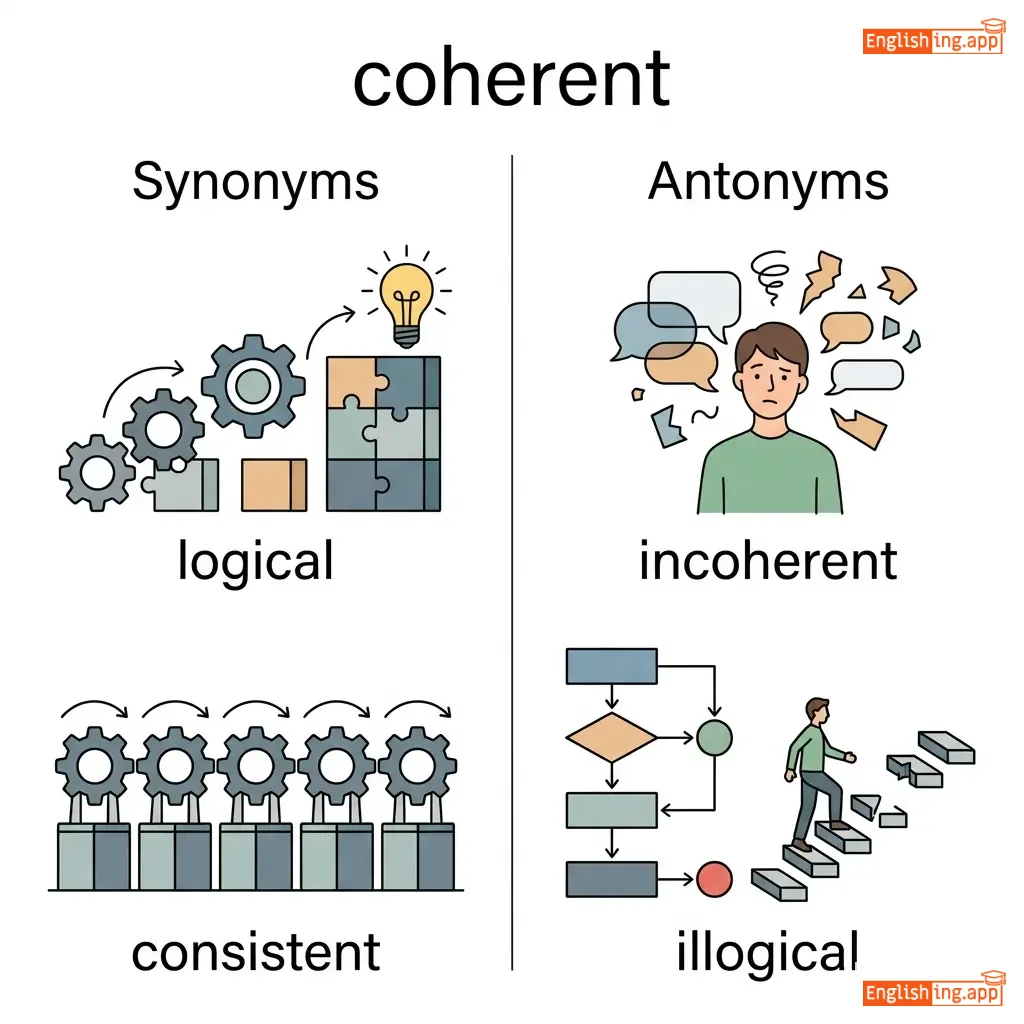
logical, consistent, rational, orderly, lucid
••••••
|
incoherent, illogical, confusing
••••••
|
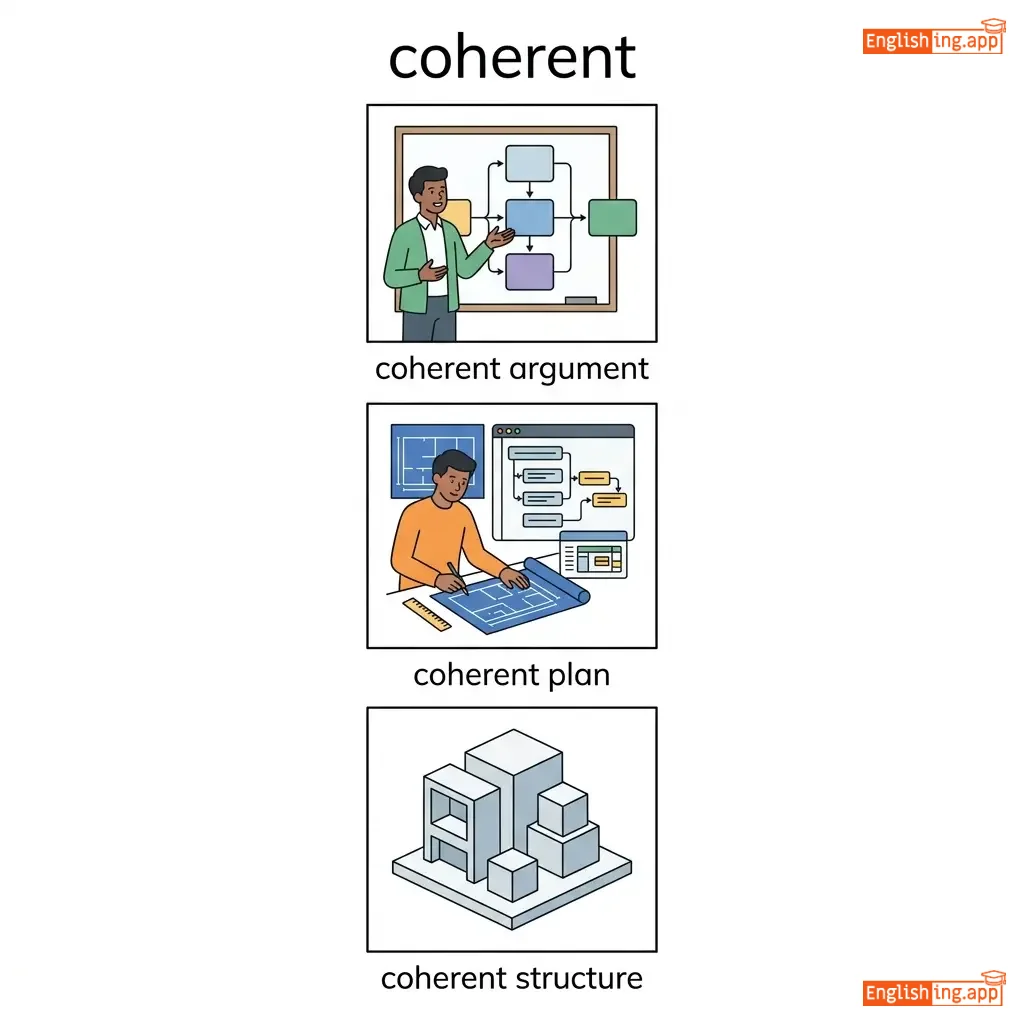
coherent argument, coherent plan, coherent structure, coherent explanation
••••••
|
Co-ヒーローはいつも一貫した計画を持っている。
••••••
|
|
#9675
📜
|
/ˈtʃɑːrtər/
noun/verb
(チャーター)
••••••
|
- •••••• |
チャーター / レンタル
chaataa / rentaru
••••••
|
chartered
チャータード
••••••
|
chartered
チャータード
••••••
|
charters
チャーターズ
••••••
|
chartering
チャータリング
••••••
|
a written document granting rights or privileges; to hire a vehicle or vessel for temporary use
••••••
|
The company decided to charter a bus for the trip.
その会社は旅行のためにバスをチャーターすることに決めました。
••••••
|
その会社は旅行のためにバスをチャーターすることに決めました。
Sono kaisha wa ryokou no tame ni basu o chaataa suru koto ni kimemashita.
••••••
|
charter flight
チャーターフライト
••••••
|
a flight hired for exclusive use rather than a scheduled service
••••••
|
チャーターフライト
chaataa furaito
••••••
|
license, permit, hire, lease, commission
••••••
|
prohibit, deny
••••••
|
charter flight, charter bus, charter school, royal charter
••••••
|
Charter は手紙📜 + レンタル、例: charter bus = バスをレンタルする
••••••
|
|
#9676
🪵
|
/kɔːrs/
adjective
(コース)
••••••
|
- •••••• |
粗い, ざらざら
arai, zara-zara
••••••
|
- •••••• | - •••••• | - •••••• | - •••••• |
Rough in texture or manner; not smooth or refined.
••••••
|
The fabric felt coarse to the touch. |
その布は触るとざらざらしていた。
Sono nuno wa sawaru to zara-zara shiteita.
••••••
|
- •••••• | - •••••• | - •••••• |
rough, crude, harsh, unrefined, rugged
••••••
|
smooth, fine, delicate
••••••
|
coarse fabric, coarse language, coarse texture, coarse grain
••••••
|
Coarseは粗い岩のようにゴツゴツしている。
••••••
|
|
#9677
🚪
|
/kloʊz/ (verb), /kloʊs/ (adjective)
verb, adjective
(kurozu)
••••••
|
- •••••• |
閉じる, 近い
tojiru, chikai
••••••
|
closed
kurozudo
••••••
|
closed
kurozudo
••••••
|
closes
kurozezu
••••••
|
closing
kurojingu
••••••
|
To shut something (verb); near in space or relationship (adjective).
••••••
|
Please close the door when you leave.
出かけるときはドアを閉めてください。
••••••
|
出かけるときはドアを閉めてください。
dekakeru toki wa doa o shimete kudasai.
••••••
|
close call
接近した電話
••••••
|
A narrow escape from danger or trouble.
••••••
|
ギリギリの脱出
girigiri no dasshutsu
••••••
|
shut, seal, end, nearby, intimate
••••••
|
open, distant
••••••
|
close the door, close relationship, close attention, close friend
••••••
|
Closeは '閉じる' ドアを閉じる 🚪 — ドアを閉じる。
••••••
|
|
#9678
🧠
|
/ˈklɛvər/
adjective
(クレバー)
••••••
|
- •••••• |
賢い, すばらしい
kashikoi, subarashii
••••••
|
- •••••• | - •••••• | - •••••• | - •••••• |
Quick to understand, learn, and devise ideas or solutions; intelligent.
••••••
|
She is clever enough to solve the puzzle quickly.
彼女はそのパズルを素早く解くのに十分賢いです。
••••••
|
彼女はそのパズルを素早く解くのに十分賢いです。
kanojo wa sono pazuru o subayaku toku no ni jūbun kashikoi desu.
••••••
|
clever trick
巧妙なトリック
••••••
|
A smart or ingenious method to achieve something.
••••••
|
巧妙なトリック
kōmyō na torikku
••••••
|
smart, intelligent, bright, witty, sharp
••••••
|
dull, foolish, stupid
••••••
|
clever idea, clever trick, clever solution, clever child
••••••
|
Clever は 'クレバーな猫' 🐱 いつも解決策を見つけます。
••••••
|
|
#9679
🗂️
|
/klɑːrk/
noun
(クラーク)
••••••
|
- •••••• |
職員
shokuin
••••••
|
- •••••• | - •••••• | - •••••• | - •••••• |
A person employed in an office or bank to keep records, accounts, and undertake other routine administrative duties.
••••••
|
The clerk helped me find the correct form. |
職員は私が正しいフォームを見つけるのを手伝ってくれました。
Shokuin wa watashi ga tadashii fōmu wo mitsukeru no wo tetsudatte kuremashita.
••••••
|
- •••••• | - •••••• | - •••••• |
assistant, cashier, teller, secretary, bookkeeper
••••••
|
manager, employer
••••••
|
office clerk, bank clerk, sales clerk, law clerk
••••••
|
職員は事務所で書類を管理する人です。
••••••
|
|
#9680
📚
|
/ˈklæsɪk/
adjective
(クラシック)
••••••
|
- •••••• |
クラシック, 優れた
kurashikku, sugureta
••••••
|
- •••••• | - •••••• | - •••••• | - •••••• |
Judged over a period of time to be of the highest quality and outstanding of its kind.
••••••
|
That movie is a classic example of 90s comedy. |
その映画は90年代のコメディのクラシックな例です。
Sono eiga wa 90 nendai no komedi no kurashikku na rei desu.
••••••
|
instant classic |
Something that becomes iconic or highly regarded immediately after its release.
••••••
|
インスタントクラシック
insutanto kurashikku
••••••
|
timeless, traditional, iconic, standard, vintage
••••••
|
modern, trendy, contemporary
••••••
|
classic example, classic case, classic design, classic novel
••••••
|
クラシック=時代を超えて愛される名作
••••••
|
|
#9681
🏫
|
/klɑːs/
noun
(kurasu)
••••••
|
- •••••• |
クラス
kurasu
••••••
|
- •••••• | - •••••• | - •••••• | - •••••• |
a group of students taught together or a category of people or things with shared characteristics
••••••
|
Our class meets every morning at nine. |
私たちのクラスは毎朝9時に会います。
Watashitachi no kurasu wa mai asa kuji ni aimasu.
••••••
|
class act |
a person who is admired for their good qualities or behavior
••••••
|
模範的な人物
mohantekina jinbutsu
••••••
|
category, group, grade, division
••••••
|
individual, disorganization
••••••
|
class room, class teacher, social class, upper class, class test
••••••
|
クラスは学校で学ぶグループ、社会における共通性もあります。
••••••
|
|
#9682
📖
|
/saɪˈteɪʃən/
noun
(サイテーション)
••••••
|
- •••••• |
引用
in'yō
••••••
|
- •••••• | - •••••• | - •••••• | - •••••• |
a quotation from or reference to a book, paper, or author
••••••
|
The research paper included a citation from Shakespeare. |
研究論文にはシェイクスピアからの引用が含まれていました。
Kenkyū ronbun ni wa Sheikusupia kara no in'yō ga fukumarete imashita.
••••••
|
- •••••• | - •••••• | - •••••• |
reference, quote, quotation, excerpt
••••••
|
plagiarism, original
••••••
|
citation style, proper citation, citation index, citation needed
••••••
|
Citationは引用、著者の言葉を引用することを覚えておいてください。
••••••
|
|
#9683
😊
|
/ˈtʃʌbi/
adjective
(チャビー)
••••••
|
- •••••• |
ぽっちゃり
pochari
••••••
|
- •••••• | - •••••• | - •••••• | - •••••• |
slightly fat in a way that looks healthy and pleasant
••••••
|
The baby has chubby cheeks. |
赤ちゃんはぽっちゃりしたほっぺたをしています。
Akachan wa pocchari shita hoppeta o shiteimasu.
••••••
|
- •••••• | - •••••• | - •••••• |
plump, round, fleshy, pudgy
••••••
|
slim, thin, lean
••••••
|
chubby cheeks, chubby face, little chubby, chubby arms
••••••
|
Chubby はぽっちゃりしている赤ちゃんのほっぺたに似ています。
••••••
|
|
#9684
🔪
|
/tʃɒp/
verb
(チョップ)
••••••
|
|
切る
kiru
••••••
|
chopped
••••••
|
chopped
••••••
|
chops
••••••
|
chopping
••••••
|
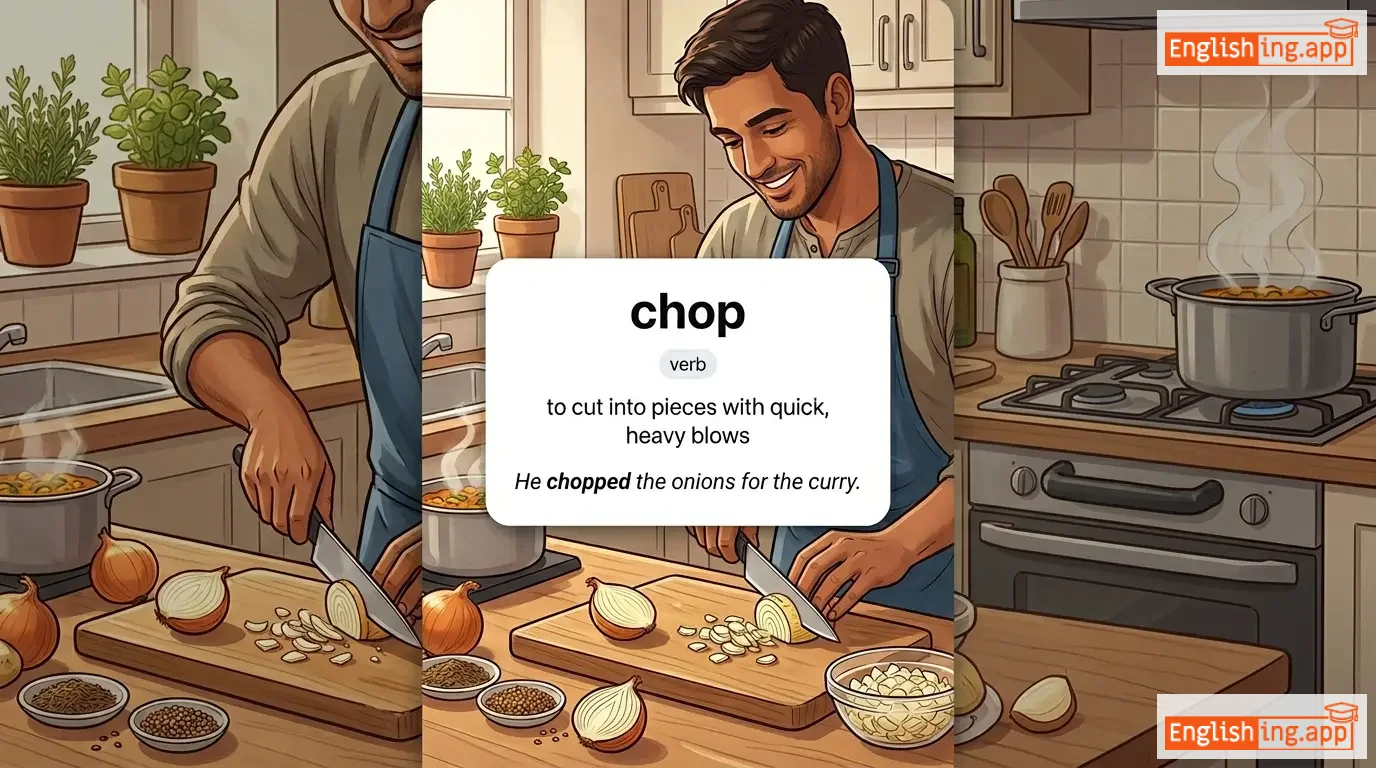
to cut into pieces with quick, heavy blows
••••••
|
He chopped the onions for the curry. |
彼はカレーのために玉ねぎを切った。
Kare wa karē no tame ni tamanegi o kitta.
••••••
|
chop and change |
to keep changing one's mind or decisions
••••••
|
意見を変える
iken o kaeru
••••••
|
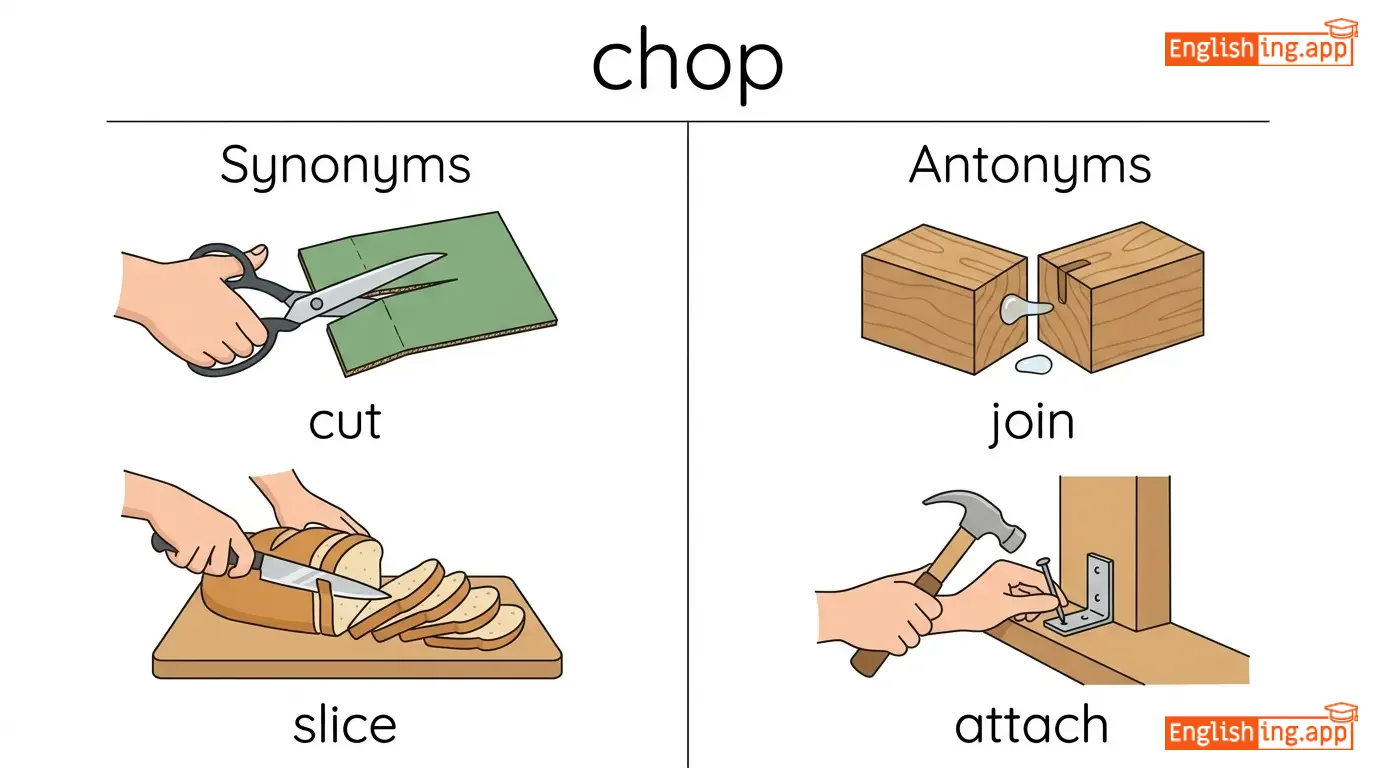
cut, slice, hack, cleave, dice
••••••
|
join, attach, connect
••••••
|
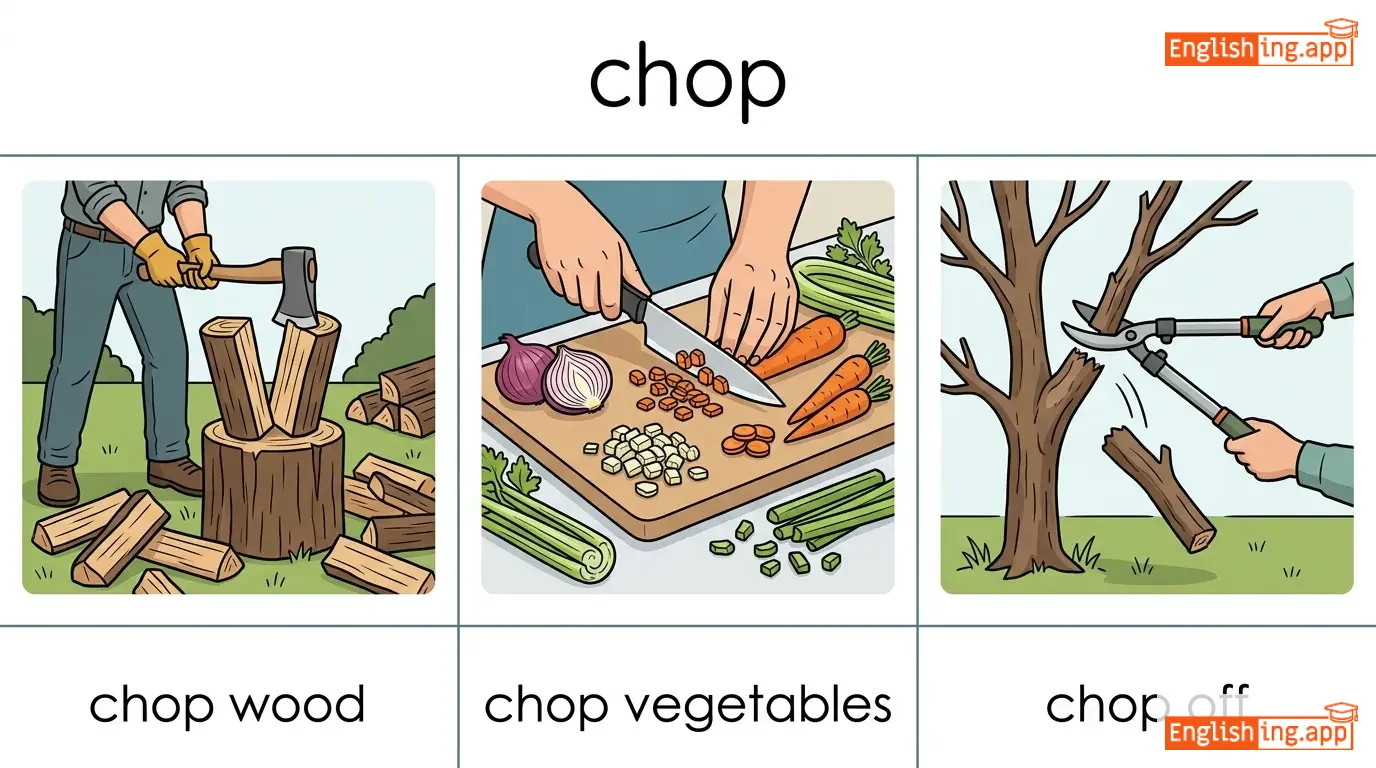
chop wood, chop vegetables, chop off, chop into pieces
••••••
|
Chopは切ること、または意見を変えることです。
••••••
|
|
#9685
🤔
|
/ˈtʃuːzi/
adjective
(チューズィ)
••••••
|
- •••••• |
選り好み
erigonomi
••••••
|
- •••••• | - •••••• | - •••••• | - •••••• |
very careful in choosing; selective
••••••
|
She is very choosy about the clothes she wears.
彼女は自分が着る服にとてもこだわりがあります。
••••••
|
彼女は自分が着る服にとてもこだわりがあります。
Kanojo wa jibun ga kiru fuku ni totemo kodawari ga arimasu.
••••••
|
- •••••• | - •••••• | - •••••• |
picky, selective, finicky, particular, fussy
••••••
|
easygoing, careless, unselective
••••••
|
choosy eater, choosy customer, choosy about, very choosy
••••••
|
Choosyは自分の服を選ぶときにとても選り好みをすることを意味します。
••••••
|
|
#9686
🥶
|
/ˈtʃɪli/
adjective
(チリ)
••••••
|
- •••••• |
寒い
samui
••••••
|
- •••••• | - •••••• | - •••••• | - •••••• |
uncomfortably or unpleasantly cold
••••••
|
It was a chilly morning in December. |
12月の寒い朝でした。
12-gatsu no samui asa deshita.
••••••
|
chilly reception |
an unfriendly or unenthusiastic welcome
••••••
|
冷たい歓迎
tsumetai kangei
••••••
|
cold, frosty, brisk, cool
••••••
|
warm, hot
••••••
|
chilly morning, chilly wind, chilly night, chilly reception
••••••
|
Chillyは寒い、'chill'🥶のように
••••••
|
|
#9687
⭐
|
/ˈtʃiːfli/
adverb
(チフリー)
••••••
|
- •••••• |
主に
omoni
••••••
|
- •••••• | - •••••• | - •••••• | - •••••• |
mainly; primarily
••••••
|
The festival is celebrated chiefly by young people. |
その祭りは主に若者たちによって祝われます。
Sono matsuri wa omoni wakamono-tachi ni yotte iwai raremasu.
••••••
|
- •••••• | - •••••• | - •••••• |
mainly, primarily, largely, mostly, predominantly
••••••
|
rarely, slightly
••••••
|
chiefly responsible, celebrated chiefly, chiefly concerned
••••••
|
Chiefはリーダー ⭐、だから chiefly は主に
••••••
|
|
#9688
🧀
|
/ˈtʃiːzi/
adjective
(チーズィ)
••••••
|
- •••••• |
安っぽい/過度に感傷的
yasuppoi/kado ni kanshōteki
••••••
|
- •••••• | - •••••• | - •••••• | - •••••• |
tacky, overly sentimental, or cheap in quality
••••••
|
The movie was funny but a bit too cheesy. |
映画は面白かったけど、ちょっと安っぽすぎた。
Eiga wa omoshirokatta kedo, chotto yasuppo sugita.
••••••
|
cheesy grin |
an exaggerated or silly smile
••••••
|
安っぽい笑顔
yasuppoi egao
••••••
|
tacky, corny, cheap, silly, gaudy
••••••
|
classy, elegant
••••••
|
cheesy grin, cheesy movie, cheesy line, cheesy joke
••••••
|
Cheesyは過剰な意味、チーズのように、cheesy grinは過剰な笑顔を意味します。
••••••
|
|
#9689
💲
|
/tʃiːp/
adjective
(チップ)
••••••
|
- •••••• |
安い
yasui
••••••
|
- •••••• | - •••••• | - •••••• | - •••••• |
low in cost; inexpensive
••••••
|
This shop sells clothes at very cheap prices. |
この店は非常に安い価格で服を販売しています。
Kono mise wa hijou ni yasui kakaku de fuku o hanbai shiteimasu.
••••••
|
dirt cheap |
extremely inexpensive
••••••
|
とても安い
totemo yasui
••••••
|
inexpensive, low-cost, budget, economical, affordable
••••••
|
expensive, costly
••••••
|
cheap price, cheap clothes, cheap hotel, cheap deal
••••••
|
安いは安く、でもとても安い
••••••
|
Vocabulary Quiz
Test your vocabulary by matching words with their translations or meanings.
Login to take the quiz
Comments (0)
Share your thoughts and join the discussion.
Join the discussion by logging in
Login to CommentNo comments yet
Be the first to share your thoughts!