

翻訳
過去
過去分詞
三人称単数
動名詞
意味
例文
例文の翻訳
同義語
対義語
コロケーション
ニーモニック
Swipe left or right, or use the buttons. Tap image to zoom.
例文の翻訳
単語
Lesson 363Lesson 363 - マスクトグル
|
絵文字
|
単語 | Images | 翻訳 | 過去 | 過去分詞 | 三人称単数 | 動名詞 | 意味 | 例文 | 例文の翻訳 | 表現例 | 表現例の意味 | 表現例の翻訳 | 同義語 | 対義語 | コロケーション | ニーモニック |
|---|---|---|---|---|---|---|---|---|---|---|---|---|---|---|---|---|---|
|
#10855
👂
|
/ɪə(r)/
noun
(イア)
••••••
|
- •••••• |
耳
mimi
••••••
|
- •••••• | - •••••• | - •••••• | - •••••• |
the organ of hearing and balance in humans and other animals
••••••
|
She whispered something in his ear. |
彼女は彼の耳に何かをささやいた。
Kanojo wa kare no mimi ni nanika o sasayaita.
••••••
|
lend an ear |
to listen carefully and sympathetically
••••••
|
耳を貸す
mimi o kasu
••••••
|
hearing organ, auricle, lobe, auditory organ
••••••
|
deafness, silence
••••••
|
ear pain, sharp ear, ear infection, whisper in ear
••••••
|
Ear は耳の意味です — 耳にイヤホンをしているとよく聞こえる。
••••••
|
|
#10856
📚
|
/ˌɛdʒuˈkeɪʃənəl/
adjective
(エデュケーショナル)
••••••
|
|
教育的な
kyouikuteki na
••••••
|
- •••••• | - •••••• | - •••••• | - •••••• |
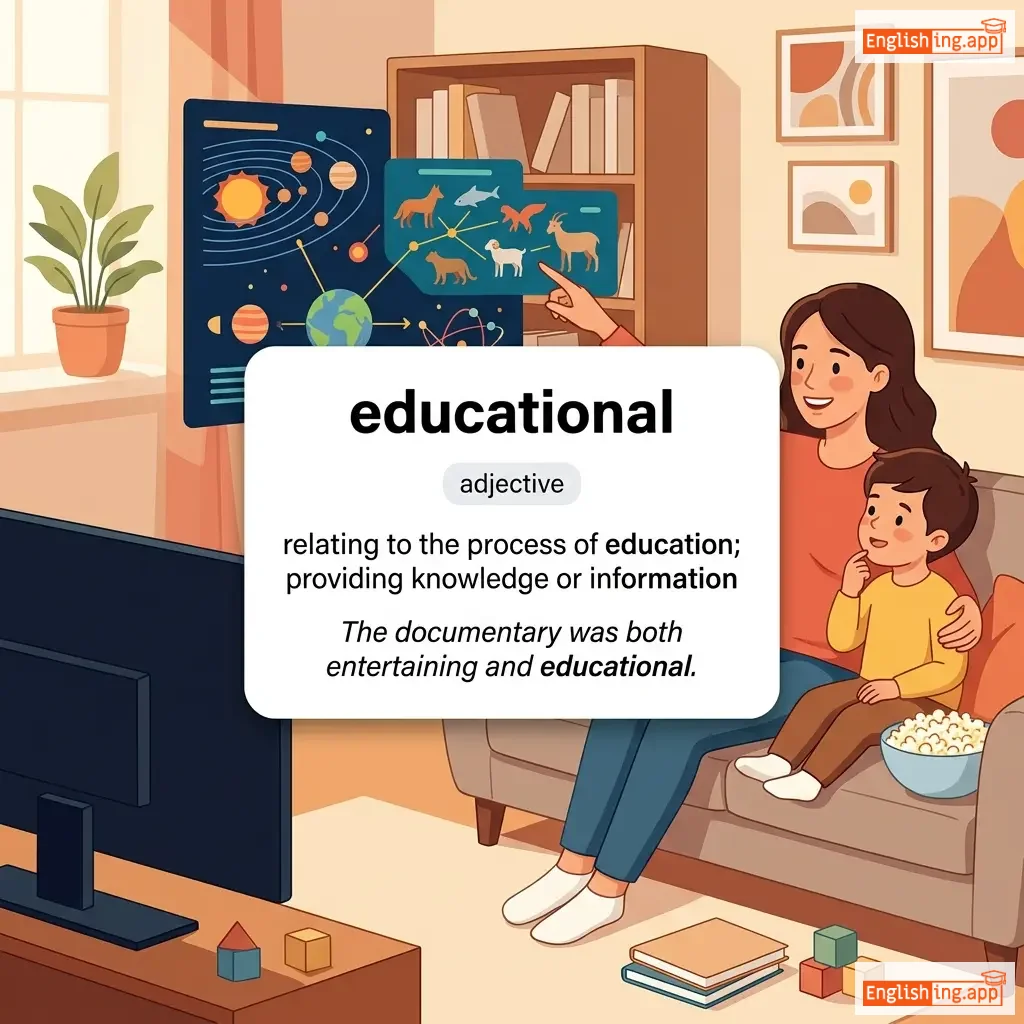
relating to the process of education; providing knowledge or information
••••••
|
The documentary was both entertaining and educational.
そのドキュメンタリーはエンターテイメントと教育的な両方の要素を持っていました。
••••••
|
そのドキュメンタリーはエンターテイメントと教育的な両方の要素を持っていました。
Sono dokyumentarī wa entāteimento to kyōikuteki na ryōhō no yōso o motteimashita.
••••••
|
- •••••• | - •••••• | - •••••• |
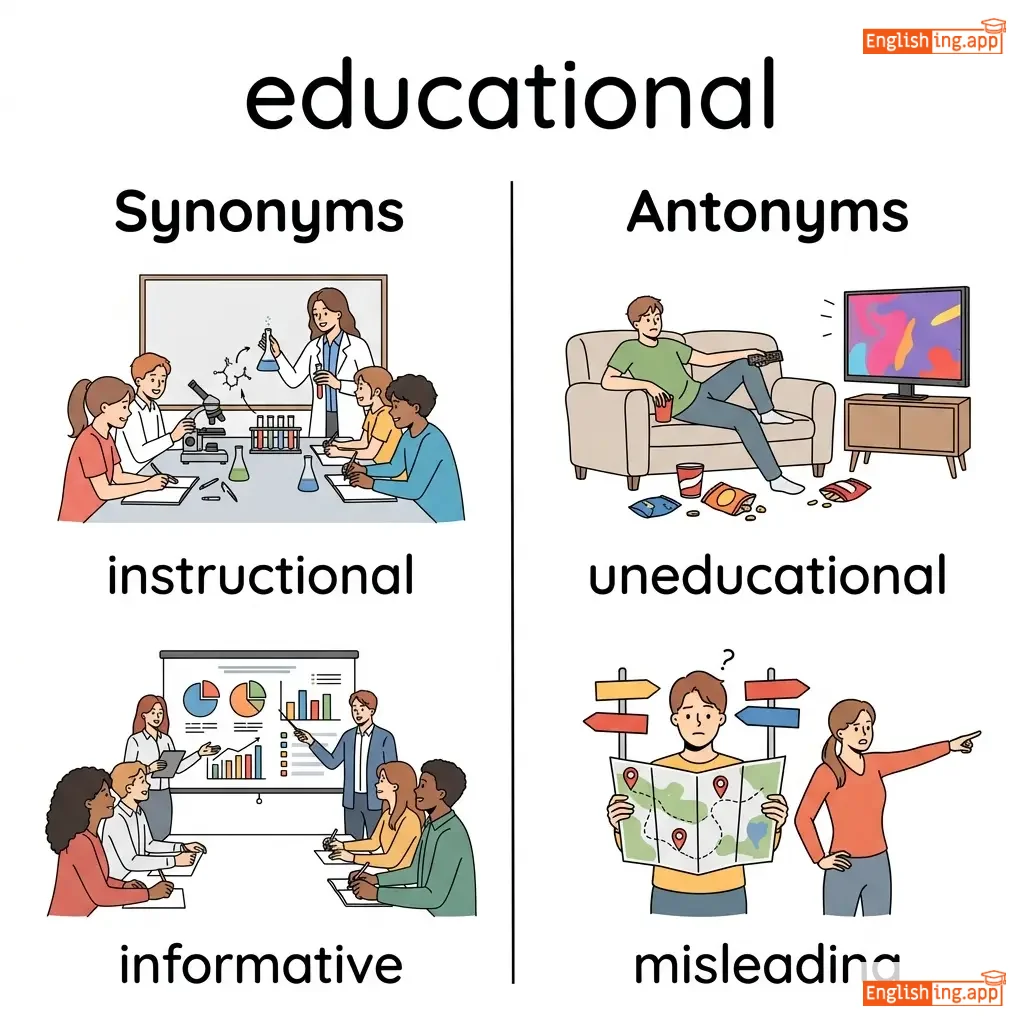
instructional, informative, enlightening, didactic, academic
••••••
|
uneducational, misleading, uninformative
••••••
|
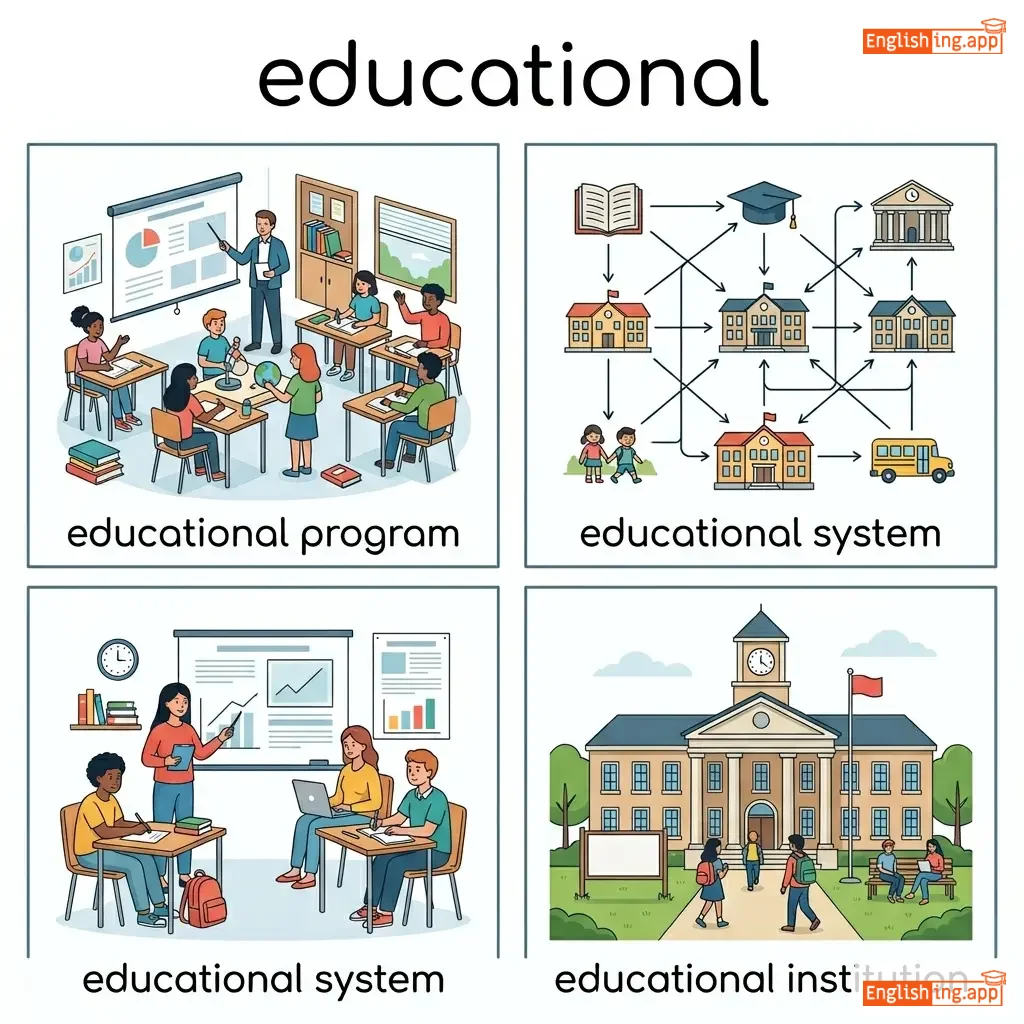
educational program, educational system, educational institution, educational material
••••••
|
Educationalは学びに関連しており、学校で使う教材や資料に似ています。
••••••
|
|
#10857
🏫
|
/ˌɛdʒʊˈkeɪʃən/
noun
(エデュケーション)
••••••
|
|
教育
kyouiku
••••••
|
- •••••• | - •••••• | - •••••• | - •••••• |
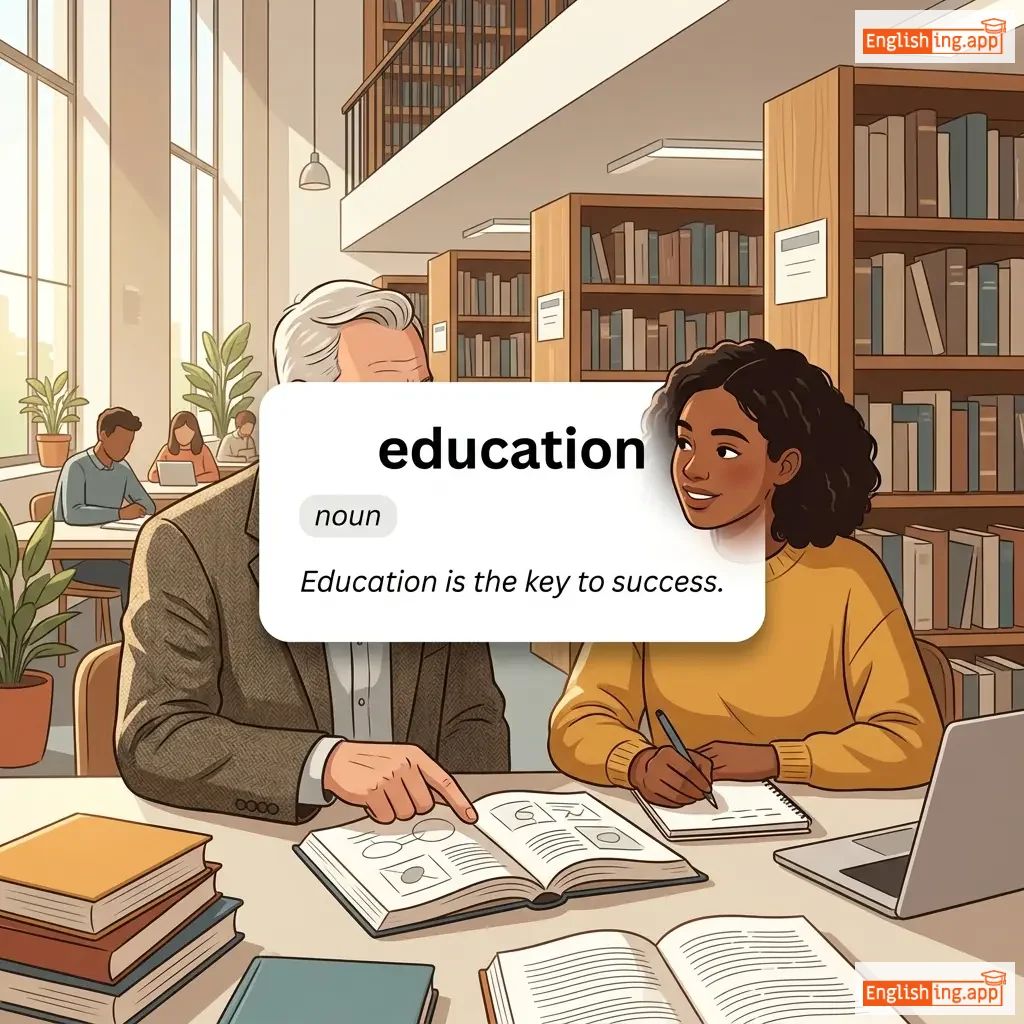
the process of receiving or giving systematic instruction, especially at a school or university
••••••
|
Education is the key to success. |
教育は成功の鍵です。
Kyouiku wa seikou no kagi desu.
••••••
|
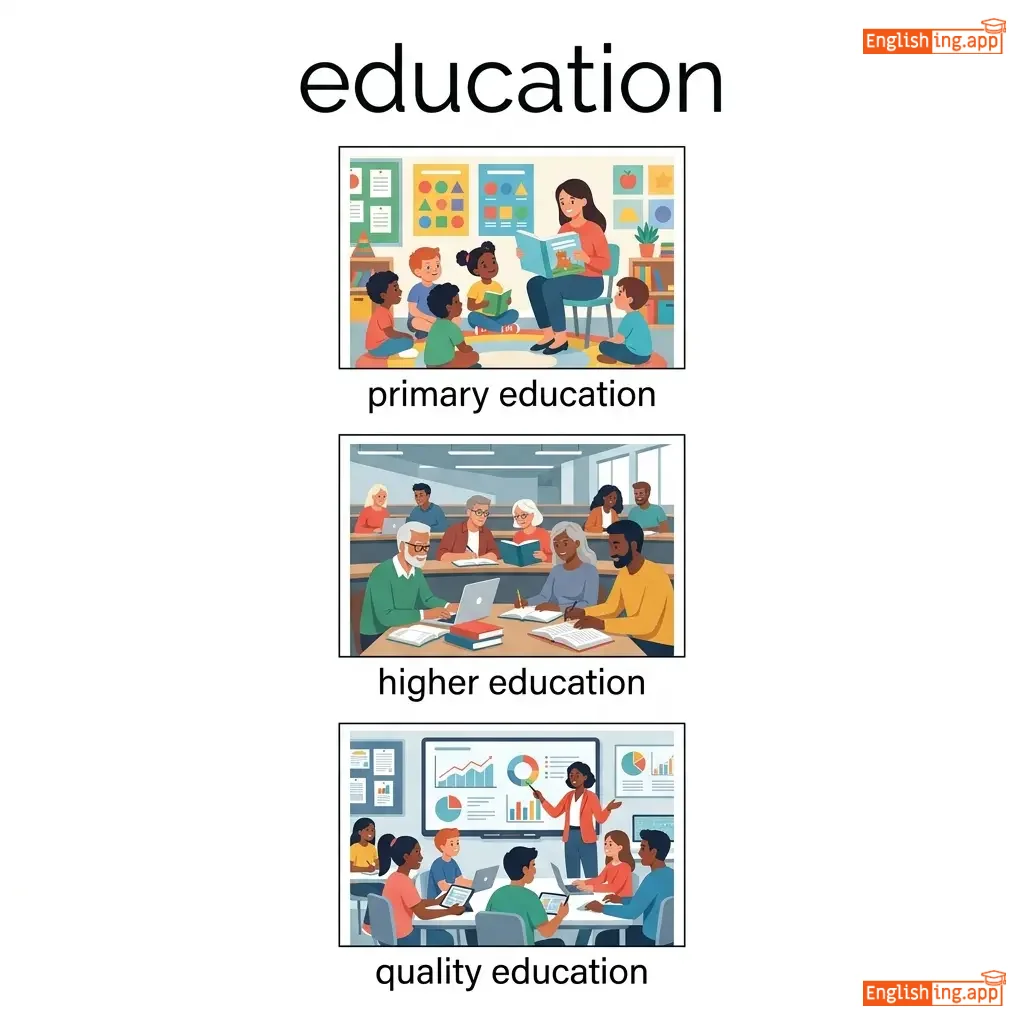
higher education |
education beyond the secondary level, usually at college or university
••••••
|
高等教育
koutou kyouiku
••••••
|
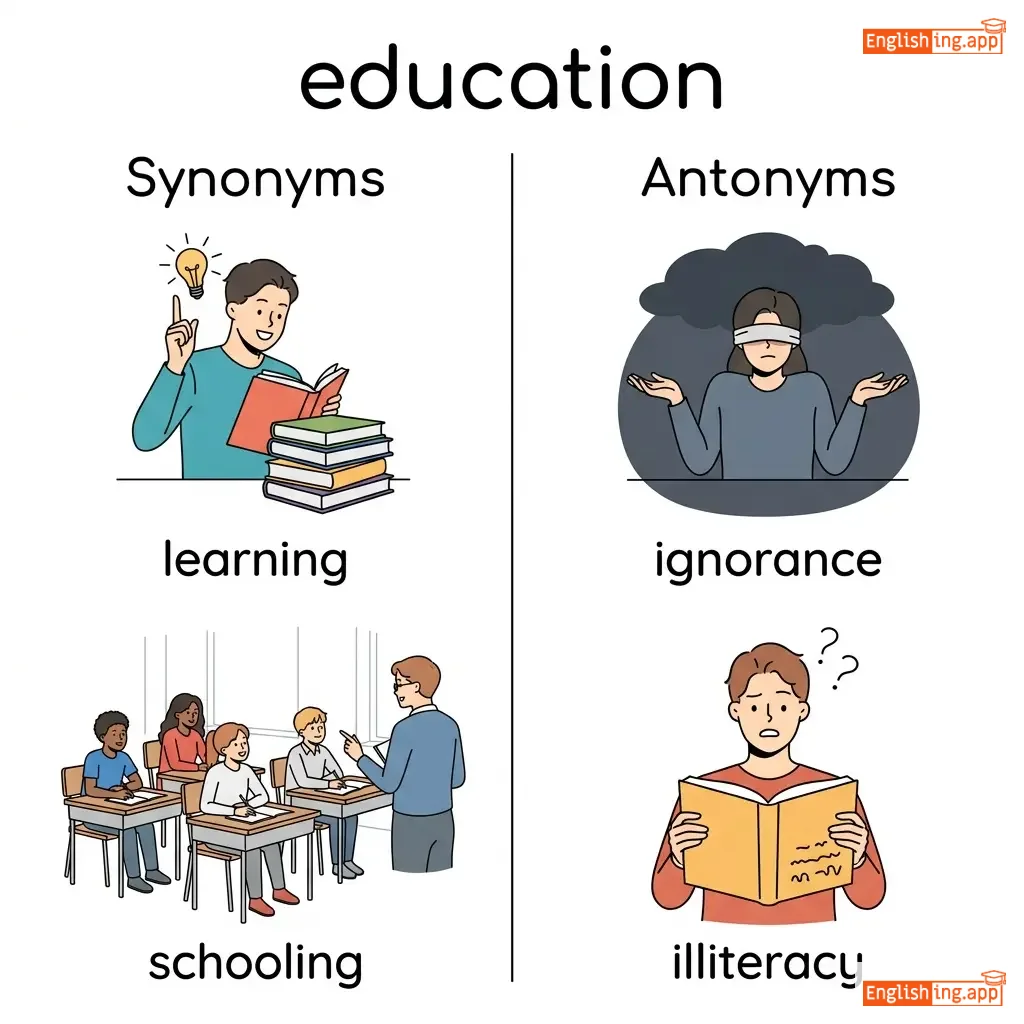
learning, schooling, instruction, teaching, training
••••••
|
ignorance, illiteracy
••••••
|
primary education, higher education, quality education, access to education
••••••
|
Educationは教育 - Edu + Nation = 国家は教育で成長する。
••••••
|
|
#10858
🎓
|
/ˈɛdjʊˌkeɪt/
verb
(エデュケート)
••••••
|
- •••••• |
教育する
kyouiku suru
••••••
|
educated
エデュケイテッド
••••••
|
educated
エデュケイテッド
••••••
|
educates
エデュケイツ
••••••
|
educating
エデュケイティング
••••••
|
to give knowledge, skills, or training to someone; to teach
••••••
|
Parents should educate their children about healthy habits.
親は子供たちに健康的な習慣について教育するべきです。
••••••
|
親は子供たちに健康的な習慣について教育するべきです。
Oya wa kodomotachi ni kenko-teki na shuukan ni tsuite kyouiku suru beki desu.
••••••
|
self-educated
セルフエデュケイテッド
••••••
|
having educated oneself without formal schooling
••••••
|
セルフエデュケイテッド
serufu edyukeiteddo
••••••
|
teach, instruct, train, enlighten, coach
••••••
|
ignore, neglect
••••••
|
educate children, educate people, educate yourself, educate about
••••••
|
エデュケートは教育する意味です - エデュケートという音は教育を連想させます。
••••••
|
|
#10859
🖊️
|
/ˈɛdɪtər/
noun
(エディター)
••••••
|
- •••••• |
編集者
henshūsha
••••••
|
- •••••• | - •••••• | - •••••• | - •••••• |
a person responsible for the final content of a newspaper, magazine, or book
••••••
|
The editor approved the article before publication.
エディターは出版前に記事を承認しました。
••••••
|
エディターは出版前に記事を承認しました。
Editā wa shuppan mae ni kiji o shōnin shimashita.
••••••
|
editor-in-chief
編集長
••••••
|
the main editor in charge of a publication
••••••
|
編集長
henshūchō
••••••
|
publisher, reviser, proofreader, compiler
••••••
|
writer, author
••••••
|
newspaper editor, chief editor, film editor, editor’s note
••••••
|
エディターは記事を承認し、出版準備を完了させます。
••••••
|
|
#10860
📚
|
/ɪˈdɪʃən/
noun
(エディション)
••••••
|
- •••••• |
版
ban
••••••
|
- •••••• | - •••••• | - •••••• | - •••••• |
a particular version or printing of a book, newspaper, or other publication
••••••
|
The latest edition of the magazine sold out quickly. |
雑誌の最新の版はすぐに売り切れました。
Zasshi no saishin no han wa sugu ni urikiremashita.
••••••
|
- •••••• | - •••••• | - •••••• |
version, issue, release, publication
••••••
|
original, draft
••••••
|
latest edition, special edition, first edition, new edition
••••••
|
Editionは日本語で版 - 新しい版は新しいバージョンです。
••••••
|
|
#10861
🔪
|
/ɛdʒ/
noun
(エッジ)
••••••
|
- •••••• |
縁 / 刃
en / ha
••••••
|
- •••••• | - •••••• | - •••••• | - •••••• |
the border or outermost part of something; a sharp side of a blade or tool
••••••
|
He stood on the edge of the cliff. |
彼は崖の縁に立っていた。
Kare wa gake no en ni tatte ita.
••••••
|
on edge |
to be nervous or anxious
••••••
|
神経質 / 緊張
shinkeishitsu / kinchou
••••••
|
border, margin, rim, brink, boundary
••••••
|
center, middle, core
••••••
|
sharp edge, cliff edge, edge of the table, cutting edge
••••••
|
刃の縁が危険を予告している!
••••••
|
|
#10862
👨🏫
|
/ɪˈkɒnəmɪst/
noun
(エコノミスト)
••••••
|
- •••••• |
経済学者
keizaigakusha
••••••
|
- •••••• | - •••••• | - •••••• | - •••••• |
A person who studies or is an expert in economics.
••••••
|
The economist predicted a rise in inflation. |
経済学者はインフレの上昇を予測しました。
Keizaigakusha wa infure no joshou o yosoku shimashita.
••••••
|
- •••••• | - •••••• | - •••••• |
analyst, financial expert, researcher, academic
••••••
|
layman, non-specialist
••••••
|
famous economist, government economist, professional economist, research economist
••••••
|
Economist とは経済学者 - お金と経済を理解している専門家。
••••••
|
|
#10863
📊
|
/ˌiːkəˈnɒmɪks/ or /ˌɛkəˈnɒmɪks/
noun
(エコノミクス)
••••••
|
- •••••• |
経済学
keizaigaku
••••••
|
- •••••• | - •••••• | - •••••• | - •••••• |
The study of production, consumption, and transfer of wealth.
••••••
|
He is studying economics at university. |
彼は大学で経済学を学んでいます。
Kare wa daigaku de keizaigaku o manandeimasu.
••••••
|
economics of scale |
Cost advantages gained when production increases.
••••••
|
規模の経済
kibo no keizai
••••••
|
finance, commerce, business, trade
••••••
|
non-financial, uncommercial
••••••
|
study economics, economics course, economics department, economics theory
••••••
|
Economicsは経済学 - '経' (経済) と '学' (学問) の組み合わせ。
••••••
|
|
#10864
🍽️
|
/iːt/
verb
(ito)
••••••
|
|
食べる
taberu
••••••
|
ate
eto
••••••
|
eaten
iten
••••••
|
eats
its
••••••
|
eating
iting
••••••
|
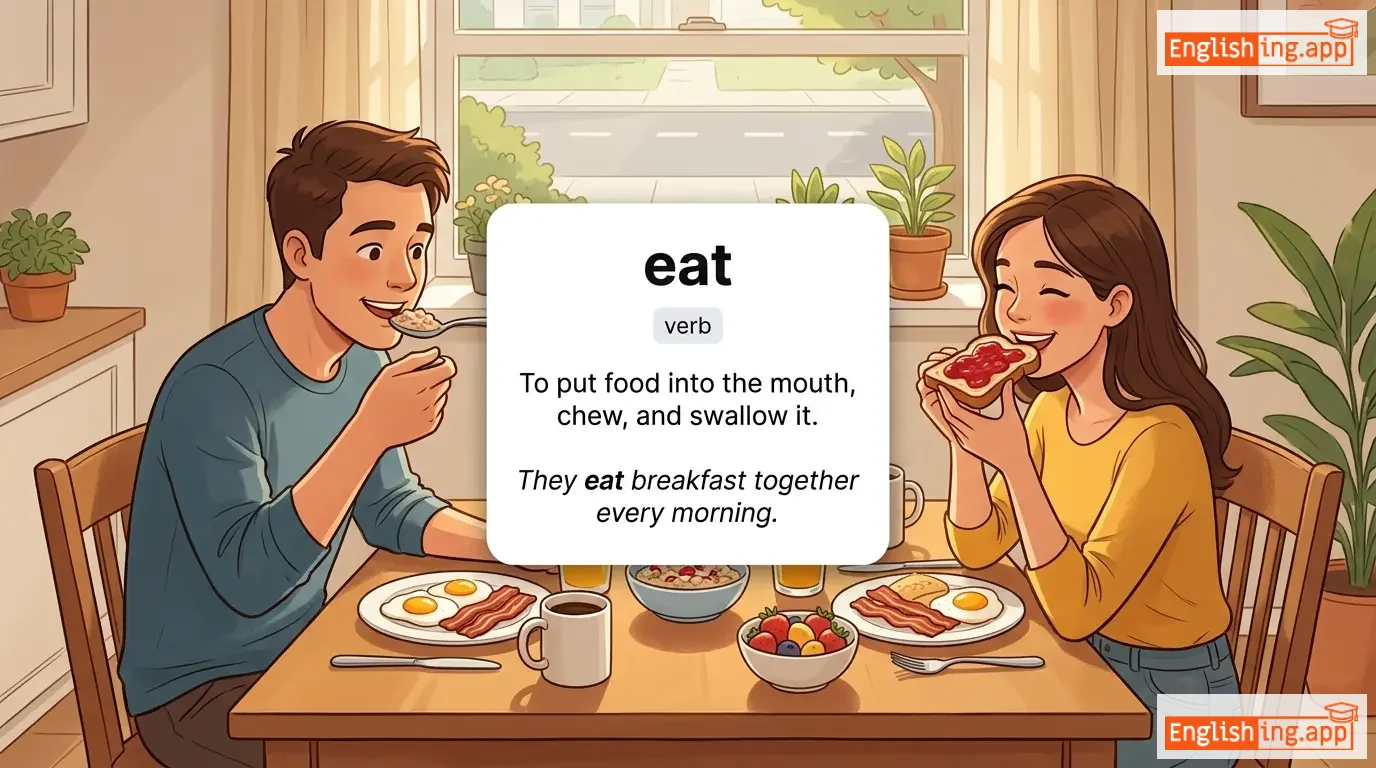
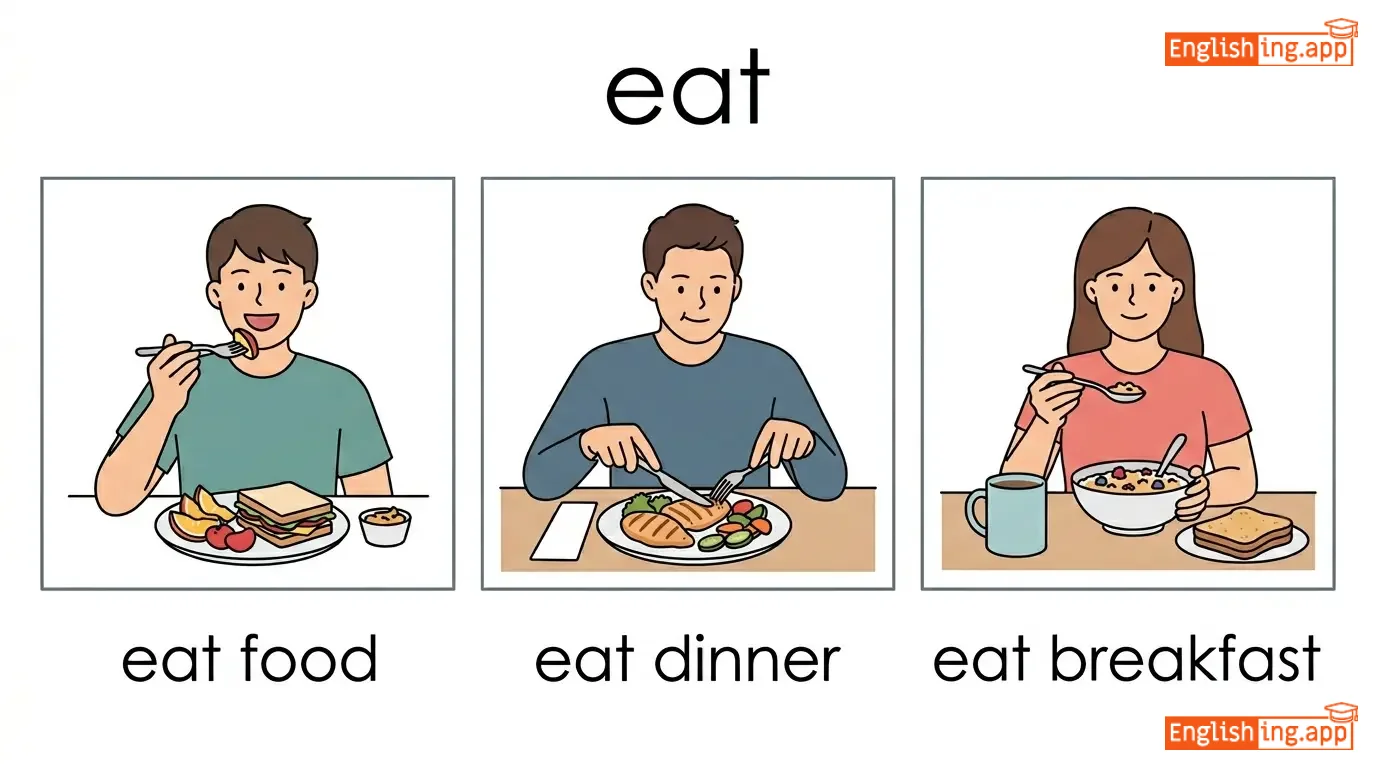
To put food into the mouth, chew, and swallow it.
••••••
|
They eat breakfast together every morning.
彼らは毎朝一緒に朝食を食べます。
••••••
|
彼らは毎朝一緒に朝食を食べます。
Karera wa mai asa issho ni chōshoku o tabemasu.
••••••
|
eat like a horse
馬のように食べる
••••••
|
To eat a lot of food.
••••••
|
馬のように食べる
Uma no yō ni taberu
••••••
|
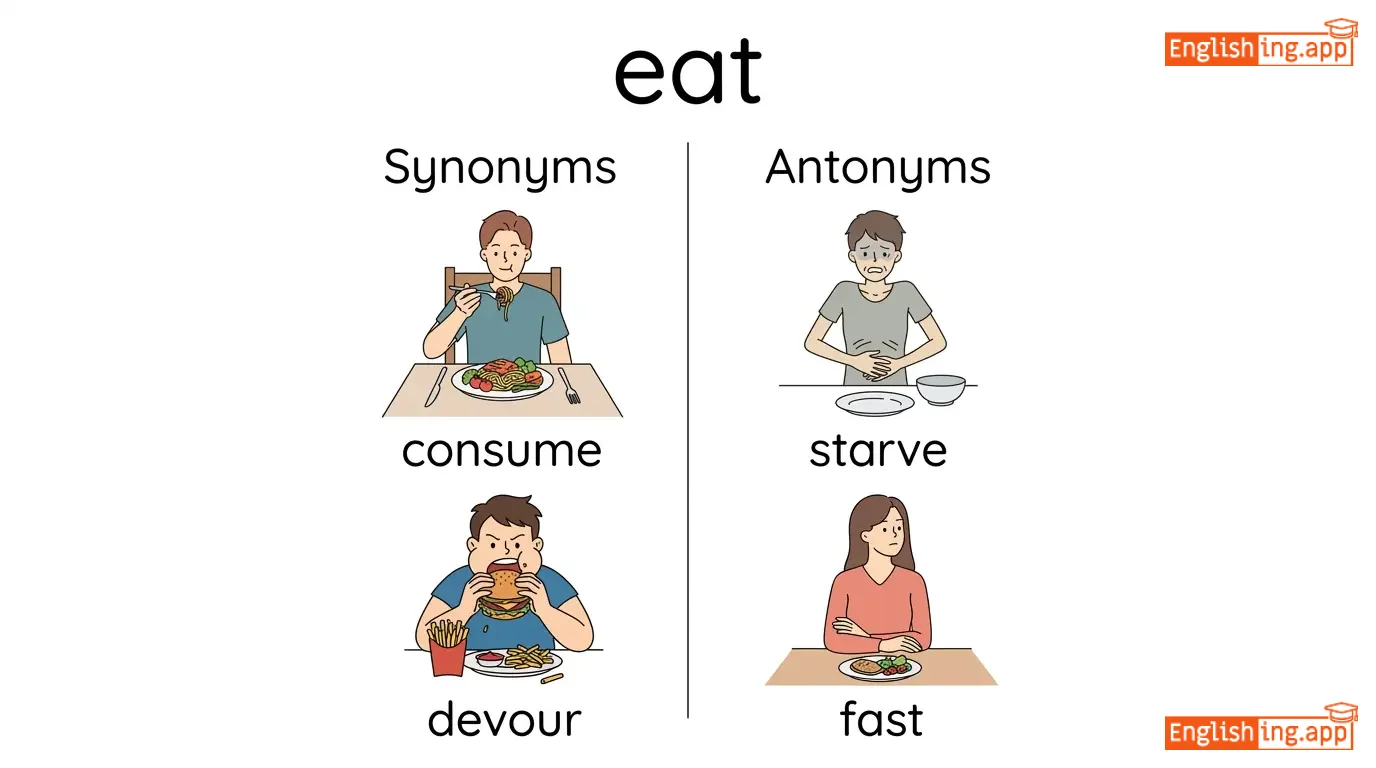
consume, devour, chew, swallow, dine
••••••
|
starve, fast
••••••
|
eat food, eat dinner, eat breakfast, eat together
••••••
|
Eatは食べるという意味 - 馬のように食べると満腹になる。
••••••
|
|
#10865
🧭
|
/ˈiːstərn/
adjective
(īsutān)
••••••
|
- •••••• |
東部の
tōbu no
••••••
|
- •••••• | - •••••• | - •••••• | - •••••• |
Relating to, situated in, or characteristic of the east.
••••••
|
They traveled to the eastern part of the country.
彼らは国の東部を旅しました。
••••••
|
彼らは国の東部を旅しました。
Karera wa kuni no tōbu o tabimashita.
••••••
|
- •••••• | - •••••• | - •••••• |
oriental, eastward, easternmost, sunrise-side
••••••
|
western
••••••
|
eastern region, eastern border, eastern culture, eastern states
••••••
|
Easternは東部の意味 - 東に関連する。
••••••
|
|
#10866
🌅
|
/iːst/
noun
(イースト)
••••••
|
- •••••• |
東
higashi
••••••
|
- •••••• | - •••••• | - •••••• | - •••••• |
The direction from which the sun rises; one of the four cardinal points.
••••••
|
The sun rises in the east. |
太陽は東から昇ります。
Taiyou wa higashi kara noborimasu.
••••••
|
East meets West |
A phrase describing the meeting of Eastern and Western cultures.
••••••
|
東と西が出会う
Higashi to nishi ga deau
••••••
|
orient, sunrise, direction, right-hand side
••••••
|
west, sunset
••••••
|
east side, east wind, east coast, east direction
••••••
|
東 = 太陽が昇る場所 🌅
••••••
|
|
#10867
👌
|
/ˈiːzəli/
adverb
(īziri)
••••••
|
- •••••• |
簡単に
kantan ni
••••••
|
- •••••• | - •••••• | - •••••• | - •••••• |
without difficulty or effort
••••••
|
He solved the problem easily.
彼は簡単に問題を解決しました。
••••••
|
彼は簡単に問題を解決しました。
Kare wa kantan ni mondai o kaiketsu shimashita.
••••••
|
take it easy
簡単にやる
••••••
|
to relax and not worry
••••••
|
簡単にやる
kantan ni yaru
••••••
|
effortlessly, readily, smoothly, simply
••••••
|
hardly, with difficulty, painfully
••••••
|
easily accessible, easily understood, easily broken, easily available
••••••
|
Easily という意味は簡単に、努力なしでやることです。
••••••
|
|
#10868
😌
|
/iːz/
noun/verb
(イーズ)
••••••
|
- •••••• |
容易さ
yōsai
••••••
|
eased
イーズド
••••••
|
eased
イーズド
••••••
|
eases
イーズズ
••••••
|
easing
イージング
••••••
|
absence of difficulty or effort; to make something less serious or severe
••••••
|
Meditation helps ease stress.
瞑想はストレスを和らげるのに役立ちます。
••••••
|
瞑想はストレスを和らげるのに役立ちます。
Meisō wa sutoresu o yawarageru no ni yakudachimasu.
••••••
|
at ease
リラックス
••••••
|
free from worry or anxiety
••••••
|
リラックス
rirakkusu
••••••
|
comfort, relief, rest, simplicity
••••••
|
difficulty, hardship, discomfort
••••••
|
with ease, ease the pain, ease restrictions, ease pressure
••••••
|
Ease は簡単さを意味します — 簡単なことをするなら、それは簡単になります。
••••••
|
|
#10869
💰
|
/ˈɜːnɪŋz/
noun
(アーニングス)
••••••
|
- •••••• |
収入
shunyu
••••••
|
- •••••• | - •••••• | - •••••• | - •••••• |
money obtained in return for labor or services
••••••
|
Her monthly earnings are enough to support her family. |
彼女の月収は家族を養うのに十分です。
Kanojo no gesshū wa kazoku o yashinau no ni jūbun desu.
••••••
|
net earnings |
the total profit after deducting expenses
••••••
|
純収入
jun shunyu
••••••
|
income, wages, salary, profit, revenue
••••••
|
loss, debt
••••••
|
monthly earnings, total earnings, net earnings, gross earnings
••••••
|
Earningsは収入を意味します — 収入は働いて得るものです。
••••••
|
|
#10870
📈
|
/drəˈmætɪkli/
adverb
(ドラマティックリー)
••••••
|
- •••••• |
劇的に
gekiteki ni
••••••
|
- •••••• | - •••••• | - •••••• | - •••••• |
in a sudden, striking, or exaggerated way
••••••
|
Sales increased dramatically after the campaign. |
キャンペーン後、売上は劇的に増加しました。
Kyanpēn go, uriage wa gekiteki ni zōka shimashita.
••••••
|
change dramatically |
to alter in a sudden and significant way
••••••
|
劇的に変化する
gekiteki ni henka suru
••••••
|
suddenly, sharply, significantly, strikingly
••••••
|
slightly, gradually
••••••
|
increase dramatically, change dramatically, drop dramatically, improve dramatically
••••••
|
劇的にとは、まるでドラマのように急激な変化が起きることです。
••••••
|
|
#10871
🔢
|
/iːtʃ/
determiner/pronoun
(イチ)
••••••
|
- •••••• |
各自
kakujitsu
••••••
|
- •••••• | - •••••• | - •••••• | - •••••• |
every one of two or more people or things considered separately
••••••
|
Each student received a certificate. |
各学生は証明書を受け取りました。
Kaku gakusei wa shoumeisho wo uketorimashita.
••••••
|
each and every |
used for emphasis, meaning all without exception
••••••
|
それぞれとそれぞれ
sorezore to sorezore
••••••
|
every, all, individual, every single
••••••
|
none, zero
••••••
|
each day, each person, each time, each other
••••••
|
各自 (Each) は個別 — それぞれの意味を考えよう。
••••••
|
|
#10872
📧
|
/ˈiː.meɪl/
noun, verb
(イーメール)
••••••
|
- •••••• |
電子メール
denshi mēru
••••••
|
emailed
イーメールド
••••••
|
emailed
イーメールド
••••••
|
emails
イーメールズ
••••••
|
emailing
イーメーリング
••••••
|
messages distributed by electronic means from one computer user to another
••••••
|
I sent an e-mail to my professor yesterday.
私は昨日、教授にイーメールを送りました。
••••••
|
私は昨日、教授に電子メールを送りました。
Watashi wa kinou, kyoushu ni denshi mēru wo okurimashita.
••••••
|
check your e-mail
自分のイーメールを確認してください
••••••
|
to look at your inbox for new messages
••••••
|
自分の電子メールを確認してください
Jibun no denshi mēru wo kakunin shite kudasai
••••••
|
electronic mail, message, correspondence, digital letter
••••••
|
letter, postcard
••••••
|
send an e-mail, receive an e-mail, e-mail address, check e-mail
••••••
|
イーメールは、電子的な方法で送られた手紙です。
••••••
|
|
#10873
🛡️
|
/ˈdjuːti/
noun
(デューティ)
••••••
|
- •••••• |
義務
gimu
••••••
|
- •••••• | - •••••• | - •••••• | - •••••• |
a moral or legal obligation; a responsibility
••••••
|
It is our duty to protect the environment. |
環境を守ることは私たちの義務です。
Kankyō o mamoru koto wa watashitachi no gimu desu.
••••••
|
call of duty |
a responsibility that must be carried out
••••••
|
義務の呼びかけ
gimu no yobikake
••••••
|
responsibility, obligation, task, assignment, commitment
••••••
|
freedom, choice, exemption
••••••
|
duty free, official duty, moral duty, line of duty
••••••
|
Duty は '義務'、警察官が義務を果たすように。
••••••
|
|
#10874
🌫️
|
/dʌst/
noun, verb
(ダスト)
••••••
|
|
ほこり
hokori
••••••
|
dusted
ダステッド
••••••
|
dusted
ダステッド
••••••
|
dusts
ダスツ
••••••
|
dusting
ダスティング
••••••
|
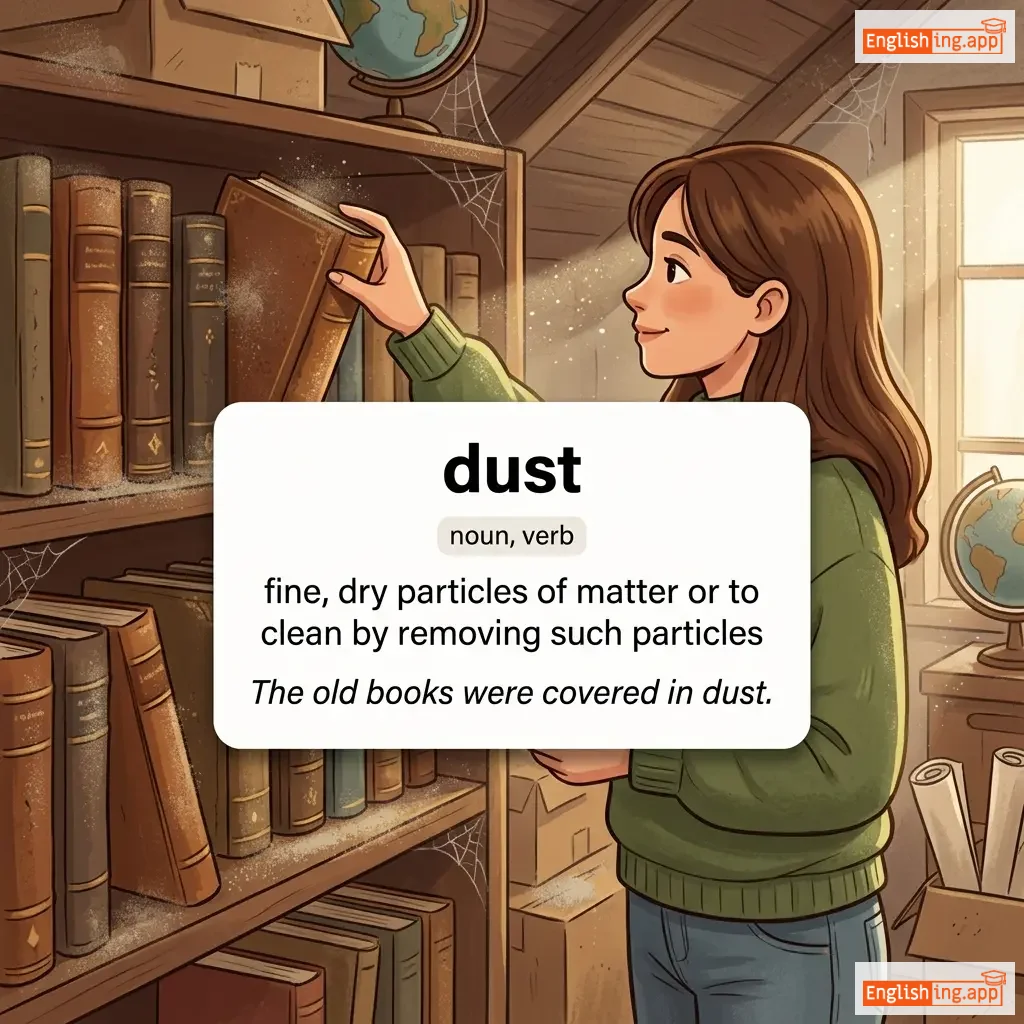
fine, dry particles of matter or to clean by removing such particles
••••••
|
The old books were covered in dust.
古い本はほこりに覆われていました。
••••••
|
古い本はほこりに覆われていました。
furui hon wa hokori ni ōwareteimashita.
••••••
|
bite the dust
ダストをかじる
••••••
|
to fail or be defeated
••••••
|
失敗するか、敗北すること
shippai suru ka, haiboku suru koto
••••••
|
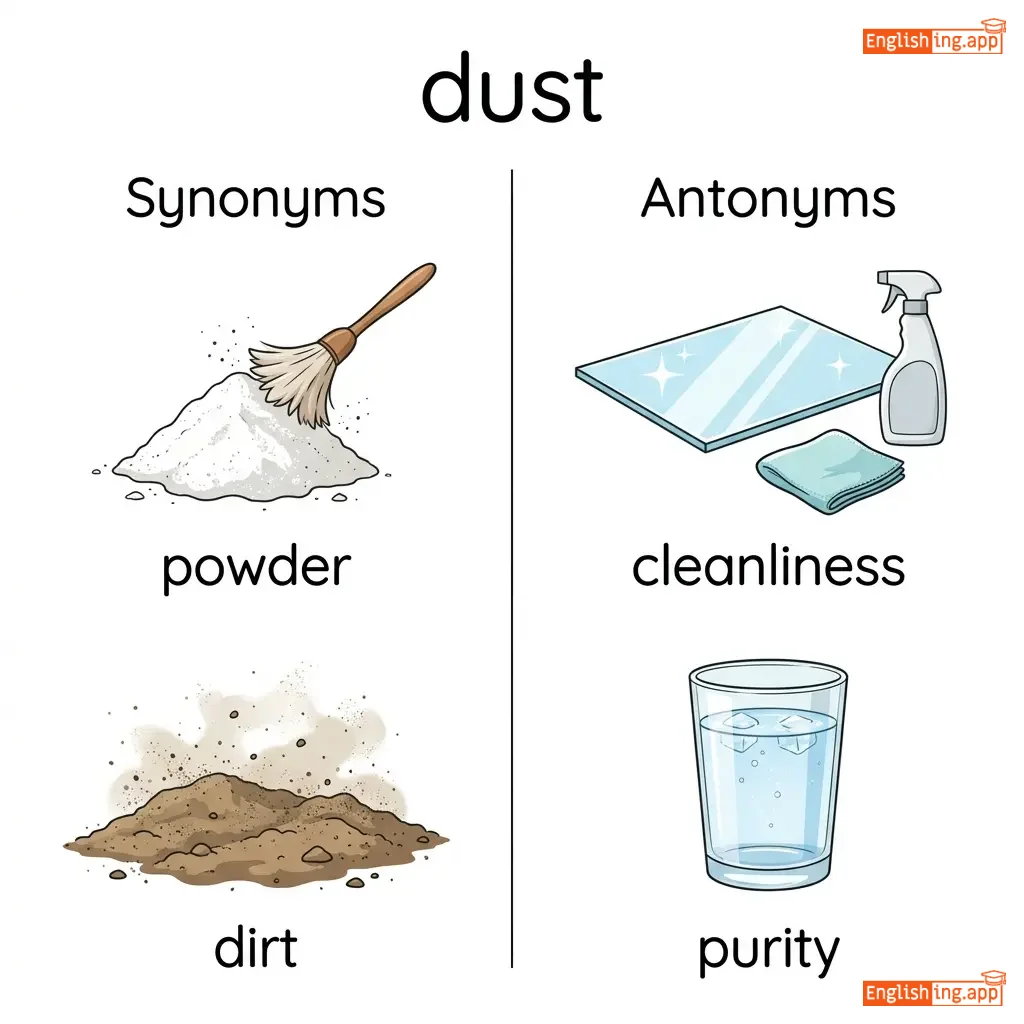
powder, dirt, particles, debris
••••••
|
cleanliness, purity
••••••
|
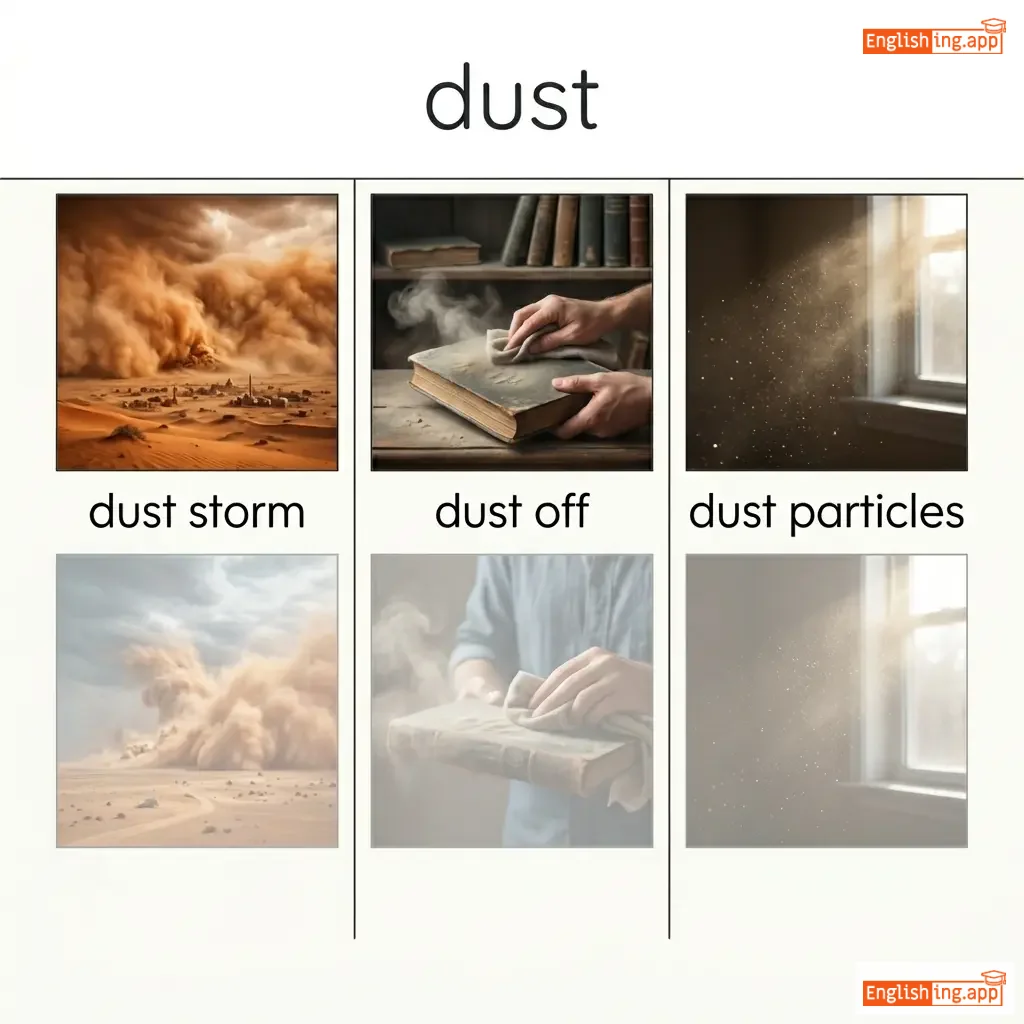
dust storm, dust off, dust particles, dust cloud
••••••
|
Dustはほこりを意味します。'Dust off'はほこりを払うことです。
••••••
|
|
#10875
⏳
|
/ˈdjʊərɪŋ/
preposition
(デュアリング)
••••••
|
- •••••• |
〜の間に
〜no aida ni
••••••
|
- •••••• | - •••••• | - •••••• | - •••••• |
throughout the course of a period of time
••••••
|
I fell asleep during the movie. |
私は映画の間に寝てしまいました。
Watashi wa eiga no aida ni nete shimaimashita.
••••••
|
- •••••• | - •••••• | - •••••• |
throughout, amid, in, over
••••••
|
before, after, beyond
••••••
|
during the day, during the night, during the meeting, during the war
••••••
|
Duringは'〜の間に' (何かが起こっている時間)。
••••••
|
|
#10876
📅
|
/djuː/
adjective
(dyu)
••••••
|
- •••••• |
期限 / 期日
kigen / kijitsu
••••••
|
- •••••• | - •••••• | - •••••• | - •••••• |
expected at a certain time or required by a certain date
••••••
|
The rent is due on the first of every month. |
家賃は毎月の1日に支払い期限があります。
Yachin wa maitsuki no 1-nichi ni shiharai kigen ga arimasu.
••••••
|
due date |
the final day something must be completed or paid
••••••
|
期限日
kigenbi
••••••
|
expected, scheduled, payable, owed, anticipated
••••••
|
unexpected, optional, unnecessary
••••••
|
due date, due payment, due process, due respect
••••••
|
‘Due’は‘期限’を意味します。期日までに支払うことを忘れずに!
••••••
|
|
#10877
💊
|
/drʌɡ/
noun
(ドラッグ)
••••••
|
- •••••• |
薬物
yakubutsu
••••••
|
- •••••• | - •••••• | - •••••• | - •••••• |
a substance used as a medicine or an illegal addictive substance
••••••
|
The doctor prescribed a new drug for the illness. |
医者はその病気のために新しい薬を処方しました。
Isha wa sono byouki no tame ni atarashii kusuri wo shohoushimashita.
••••••
|
war on drugs |
efforts to stop illegal drug use and trade
••••••
|
麻薬との戦い
mayaku to no tatakai
••••••
|
medicine, medication, narcotic, substance
••••••
|
cure, remedy
••••••
|
drug abuse, drug dealer, prescription drug, drug addiction
••••••
|
Drug は薬物または麻薬を意味します。例えば、drugstore は薬局を意味します。
••••••
|
|
#10878
💧
|
/drɒp/
verb, noun
(ドロップ)
••••••
|
- •••••• |
落とす / 液滴
otosu / ekitaki
••••••
|
dropped
ドロップド
••••••
|
dropped
ドロップド
••••••
|
drops
ドロップス
••••••
|
dropping
ドロッピング
••••••
|
to let something fall; a small quantity of liquid
••••••
|
Be careful not to drop your phone.
携帯電話を落とさないように気をつけてください。
••••••
|
携帯電話を落とさないように気をつけてください。
Keitai denwa wo otosana you ni ki wo tsukete kudasai.
••••••
|
drop the ball
ボールを落とす
••••••
|
to make a mistake or fail to do something
••••••
|
間違いを犯す
machigai wo okasu
••••••
|
fall, release, decline, drip, descend
••••••
|
lift, raise, pick up
••••••
|
drop out, drop by, drop off, raindrop
••••••
|
Dropは落とすを意味し、水滴のように=水を落とす。
••••••
|
|
#10879
🧑✈️
|
/ˈdraɪvər/
noun
(ドライバー)
••••••
|
- •••••• |
運転手
unten-shu
••••••
|
- •••••• | - •••••• | - •••••• | - •••••• |
a person who operates a vehicle
••••••
|
The taxi driver took us to the airport. |
タクシーの運転手が空港まで私たちを連れて行った。
Takushī no unten-shu ga kūkō made watashitachi wo tsurete itta.
••••••
|
- •••••• | - •••••• | - •••••• |
motorist, chauffeur, operator, conductor
••••••
|
passenger, rider
••••••
|
bus driver, taxi driver, truck driver, careful driver
••••••
|
Driver は日本語で '運転手'、私たちを目的地に運ぶ人です。
••••••
|
|
#10880
🚗
|
/draɪv/
verb, noun
(ドライブ)
••••••
|
|
運転する
unten suru
••••••
|
drove
ドローブ
••••••
|
driven
ドリヴン
••••••
|
drives
ドライブス
••••••
|
driving
ドライビング
••••••
|
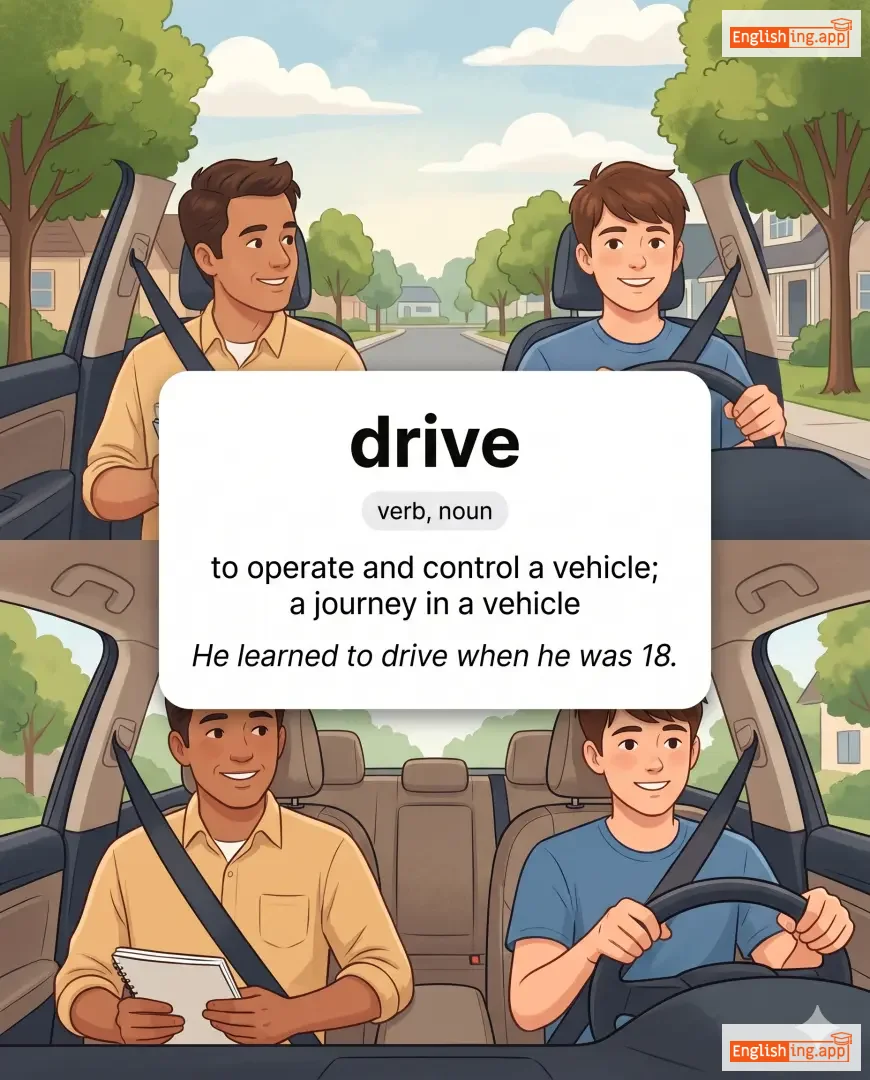
to operate and control a vehicle; a journey in a vehicle
••••••
|
He learned to drive when he was 18.
彼は18歳で車の運転を覚えました。
••••••
|
彼は18歳で車の運転を覚えました。
Kare wa 18 sai de kuruma no unten o oboemashita.
••••••
|
drive someone crazy
誰かをイライラさせる
••••••
|
to annoy or irritate someone a lot
••••••
|
誰かをイライラさせる
Dareka o iraira saseru
••••••
|
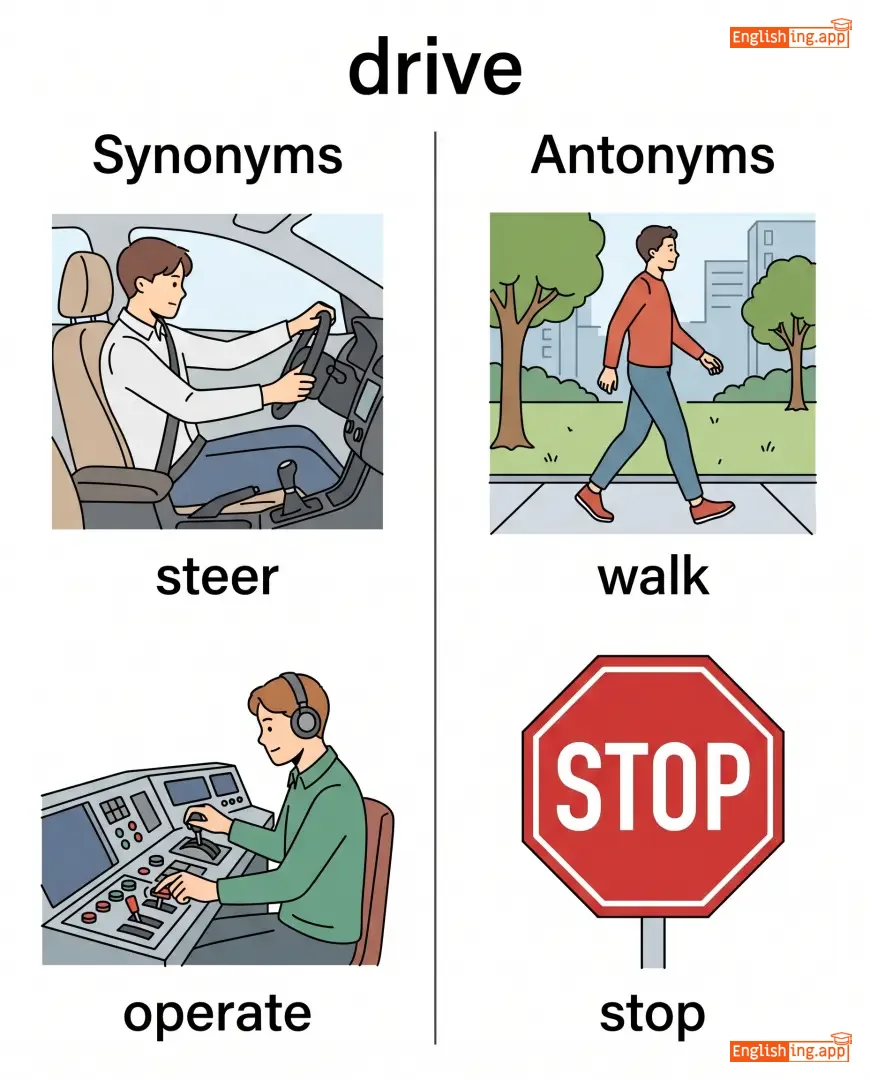
steer, operate, ride, control, propel
••••••
|
walk, stop
••••••
|
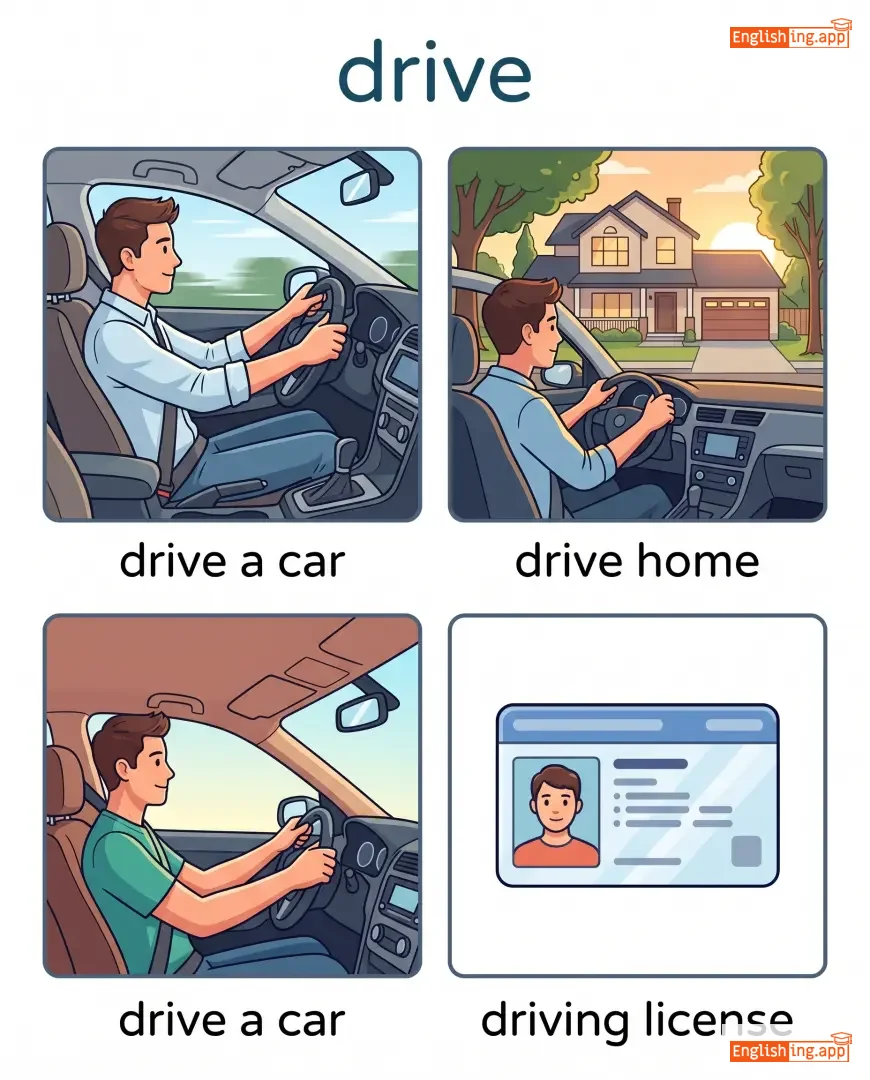
drive a car, drive home, driving license, drive safely
••••••
|
Driveは運転するという意味です。車を運転するのと同じです。
••••••
|
|
#10881
🥤
|
/drɪŋk/
verb, noun
(ドリンク)
••••••
|
|
飲む / 飲み物
nomu / nomimono
••••••
|
drank
ドランク
••••••
|
drunk
ドランク
••••••
|
drinks
ドリンクス
••••••
|
drinking
ドリンキング
••••••
|
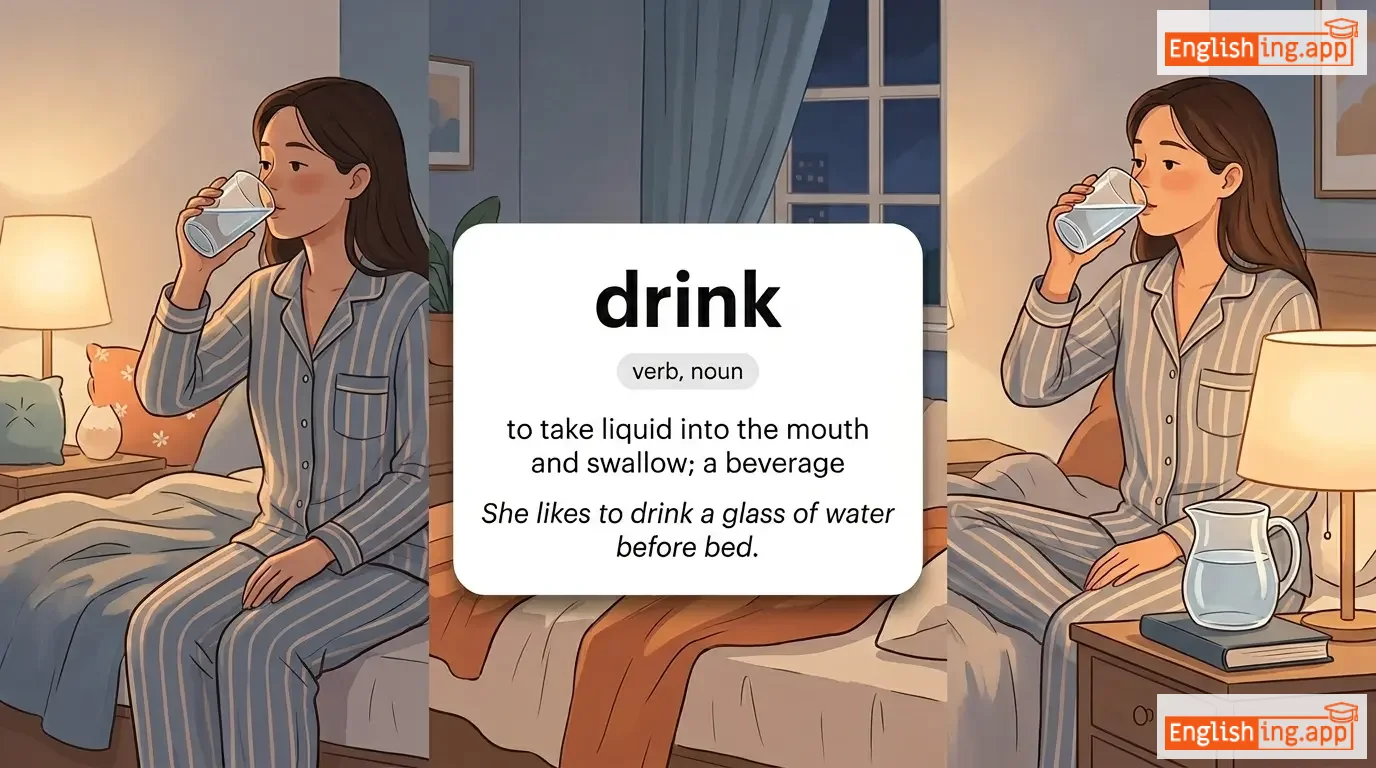
to take liquid into the mouth and swallow; a beverage
••••••
|
She likes to drink a glass of water before bed.
彼女は寝る前に一杯の水を飲むのが好きです。
••••••
|
彼女は寝る前に一杯の水を飲むのが好きです。
Kanojo wa neru mae ni ippai no mizu wo nomu no ga suki desu.
••••••
|
drink like a fish
魚のように飲む
••••••
|
to drink a lot of alcohol
••••••
|
魚のように飲む
Sakana no you ni nomu
••••••
|
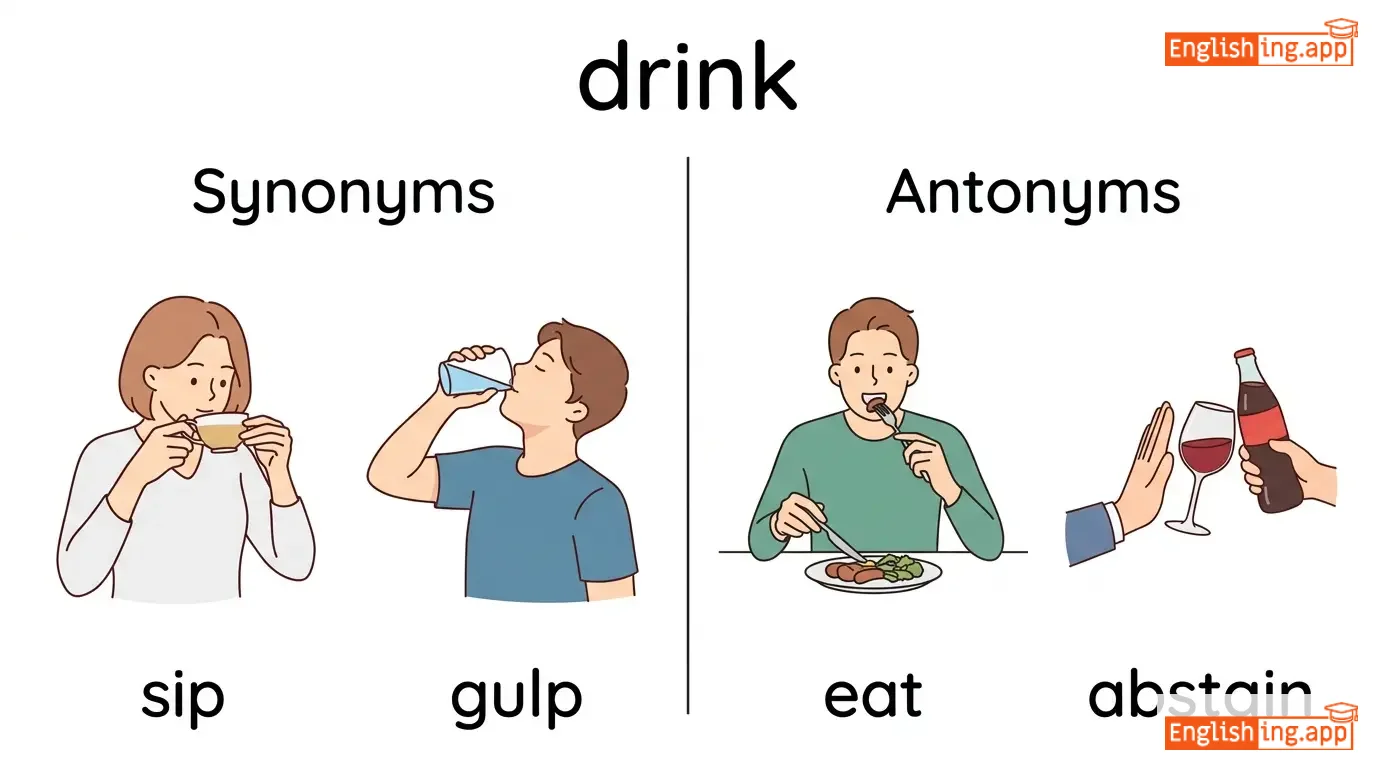
sip, gulp, swallow, beverage, refreshment
••••••
|
eat, abstain
••••••
|
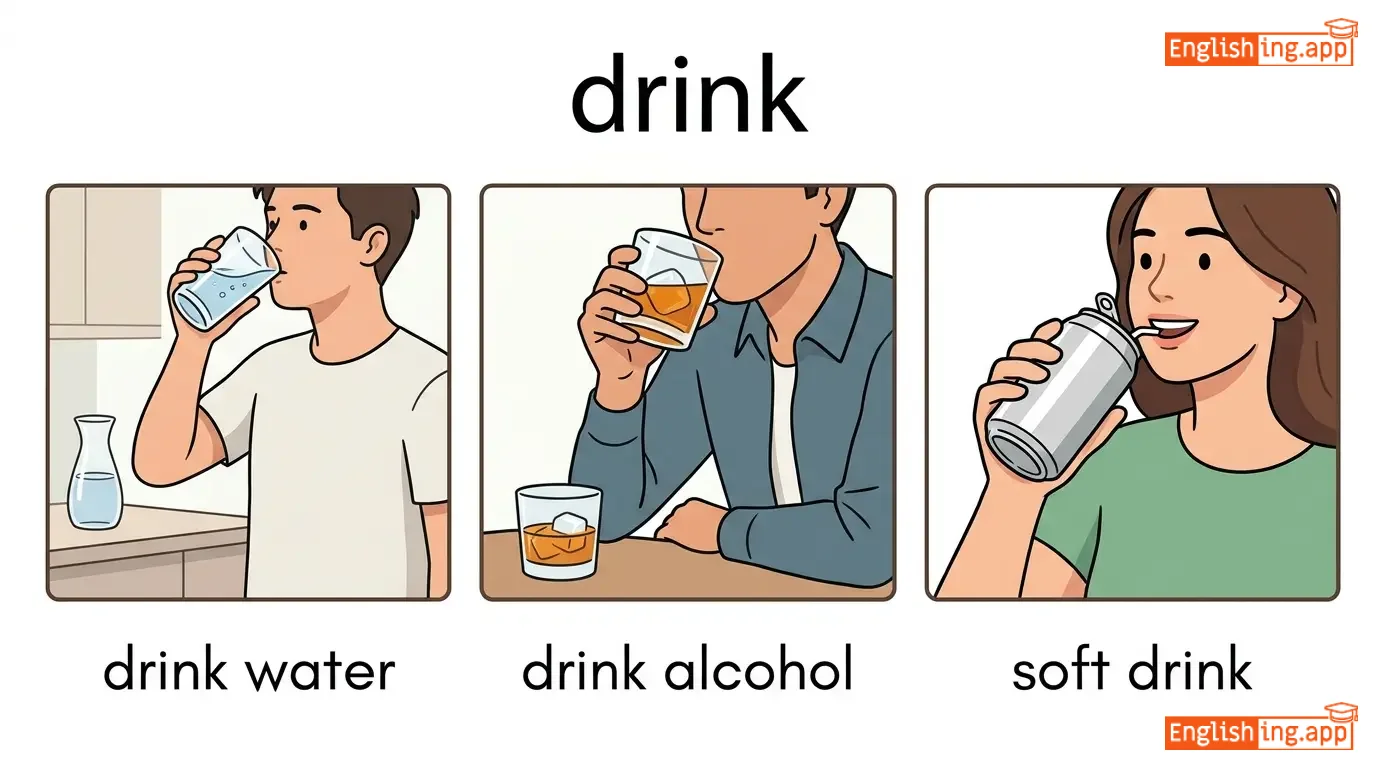
drink water, drink alcohol, soft drink, energy drink
••••••
|
飲むとは液体を飲み込むこと、例えば飲み物を飲むように。
••••••
|
|
#10882
👗
|
/drɛs/
noun/verb
(happiness)
••••••
|
- •••••• |
幸せ
shiawase
••••••
|
dressed
••••••
|
dressed
••••••
|
dresses
••••••
|
dressing
••••••
|
a one-piece garment for women or girls; to put on clothes
••••••
|
She wore a beautiful red dress to the party. |
彼女は賞を受け取ったとき、自分の幸せを隠せなかった。
Kanojo wa shou wo uketotta toki, jibun no shiawase wo kakusenakatta.
••••••
|
dressed to kill |
wearing clothes that are intended to impress others
••••••
|
幸せを求めて
shiawase wo motomete
••••••
|
outfit, attire, garment, clothing
••••••
|
undress, nakedness
••••••
|
wear a dress, long dress, summer dress, dress code
••••••
|
幸せは、心から笑顔になれる時に感じるものです。
••••••
|
|
#10883
💭
|
/driːm/
noun/verb
(ドリーム)
••••••
|
|
夢
yume
••••••
|
dreamed
ドリームド
••••••
|
dreamed
ドリームド
••••••
|
dreams
ドリームズ
••••••
|
dreaming
ドリーミング
••••••
|
a series of thoughts, images, or emotions occurring during sleep; a cherished aspiration or goal
••••••
|
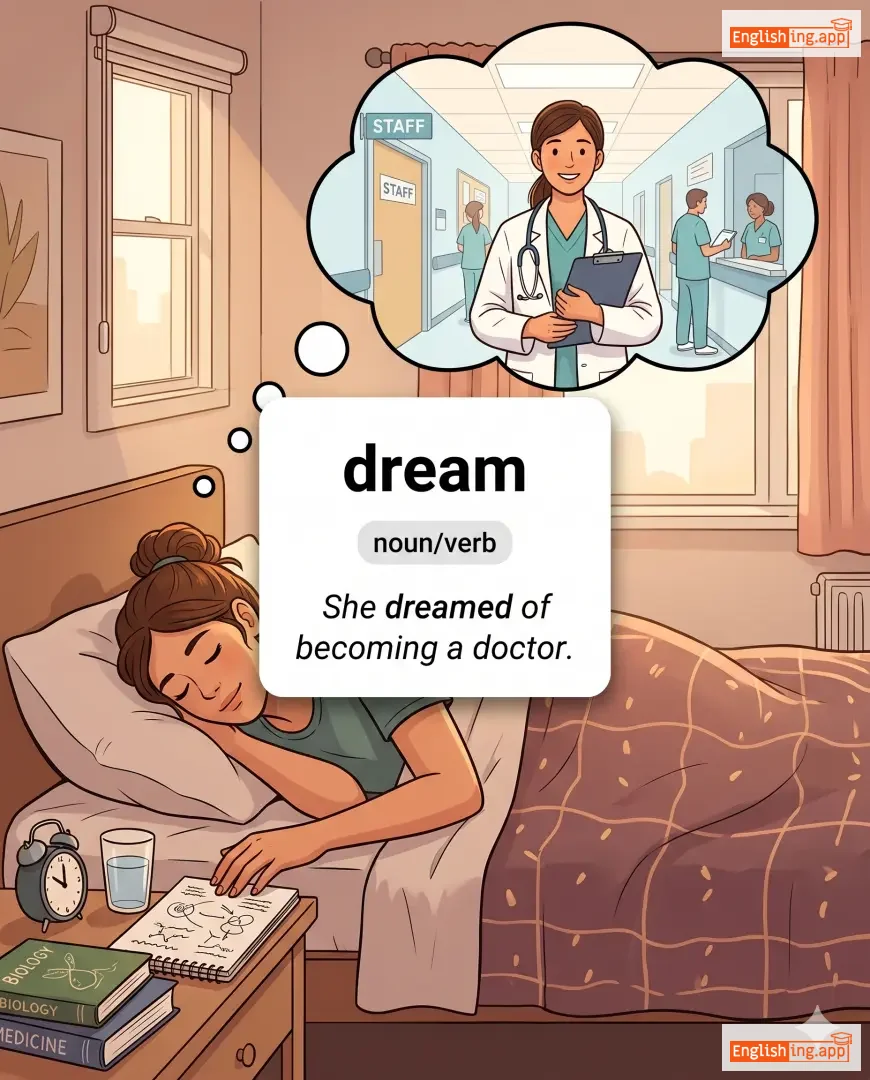
She dreamed of becoming a doctor.
彼女は医者になることを夢見ていました。
••••••
|
彼女は医者になることを夢見ていました。
Kanojo wa isha ni naru koto wo yumemiteimashita.
••••••
|
living the dream
夢のような生活
••••••
|
enjoying life as if in an ideal situation
••••••
|
夢のような生活
Yume no youna seikatsu
••••••
|
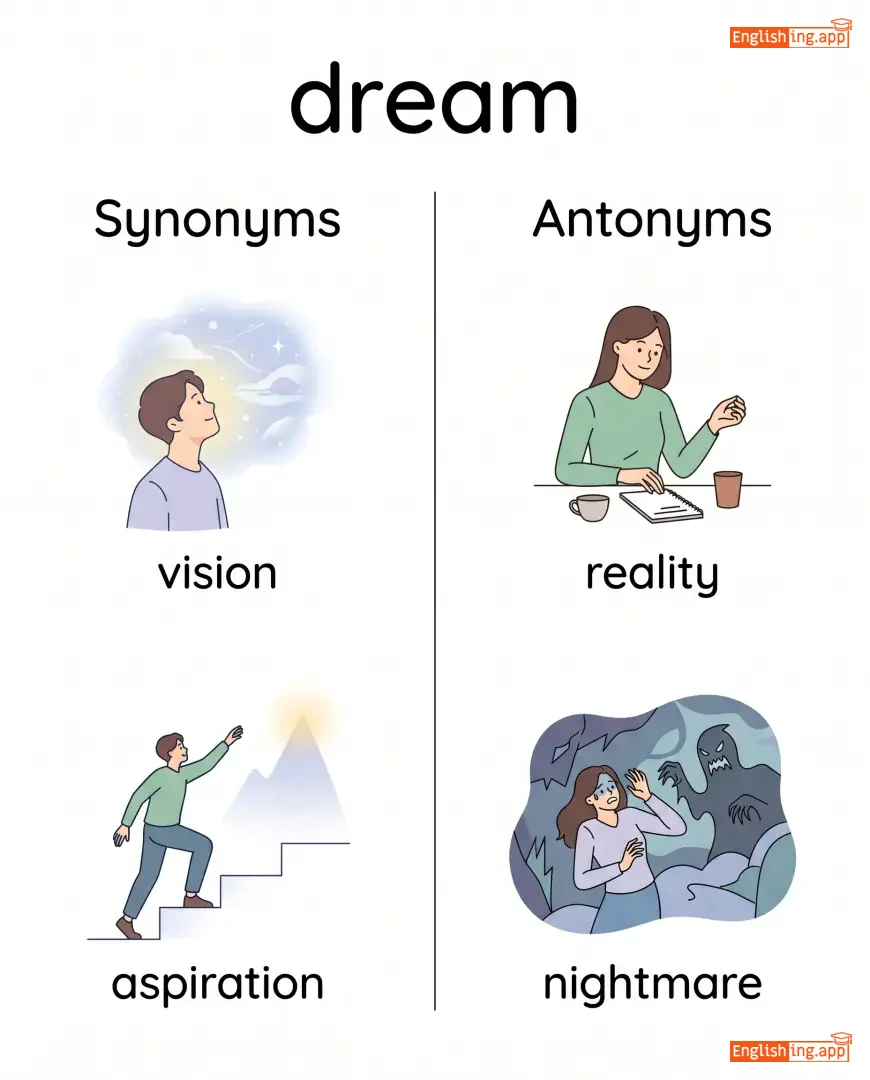
vision, aspiration, goal, fantasy
••••••
|
reality, nightmare
••••••
|
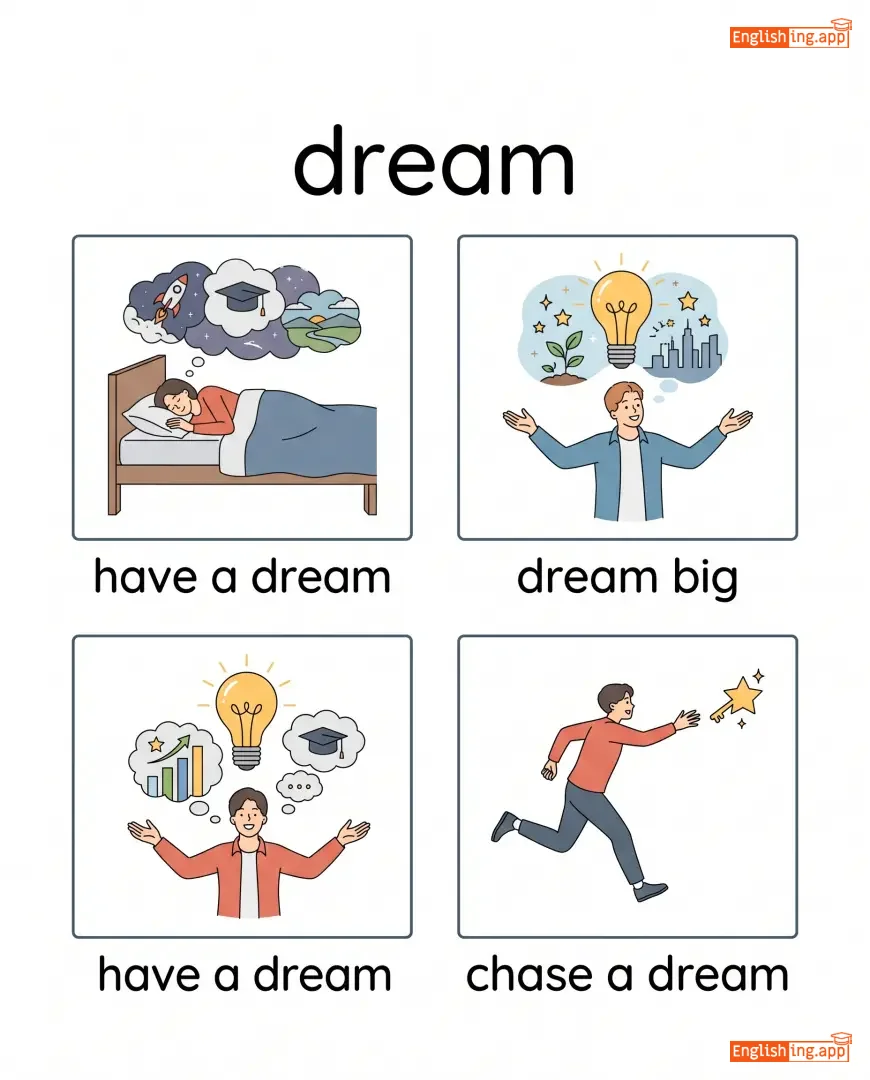
have a dream, dream big, chase a dream, dream come true
••••••
|
夢、無限の可能性。
••••••
|
|
#10884
✏️
|
/ˈdrɔːɪŋ/
noun
(ハピネス)
••••••
|
- •••••• |
幸せ
shiawase
••••••
|
- •••••• | - •••••• | - •••••• | - •••••• |
a picture or diagram made with a pencil, pen, or crayons rather than paint
••••••
|
She showed me a drawing of her house. |
彼女は賞を受け取ったとき、幸せを隠せなかった。
Kanojo wa shō o uketotta toki, shiawase o kakusenakatta.
••••••
|
drawing attention |
attracting notice or interest
••••••
|
幸せの追求
shiawase no tsuikyū
••••••
|
sketch, illustration, diagram, doodle
••••••
|
erasing, deletion
••••••
|
make a drawing, pencil drawing, line drawing, drawing skills
••••••
|
幸せは心から来る、ハピネスであるためには。
••••••
|
Vocabulary Quiz
Test your vocabulary by matching words with their translations or meanings.
Login to take the quiz
Comments (0)
Share your thoughts and join the discussion.
Join the discussion by logging in
Login to CommentNo comments yet
Be the first to share your thoughts!