

翻訳
過去
過去分詞
三人称単数
動名詞
意味
例文
例文の翻訳
同義語
対義語
コロケーション
ニーモニック
Swipe left or right, or use the buttons. Tap image to zoom.
例文の翻訳
単語
Lesson 166Lesson 166 - マスクトグル
|
絵文字
|
単語 | Images | 翻訳 | 過去 | 過去分詞 | 三人称単数 | 動名詞 | 意味 | 例文 | 例文の翻訳 | 表現例 | 表現例の意味 | 表現例の翻訳 | 同義語 | 対義語 | コロケーション | ニーモニック |
|---|---|---|---|---|---|---|---|---|---|---|---|---|---|---|---|---|---|
|
#4951
⚖️
|
/ˈdʒɒɡəl/
verb
(ジョグル)
••••••
|
- •••••• |
軽く揺する
karuku yusuru
••••••
|
joggled
ジョグルド
••••••
|
joggled
ジョグルド
••••••
|
joggles
ジョグルズ
••••••
|
joggling
ジョグリング
••••••
|
to shake slightly; to move or cause to move with quick, small jerks
••••••
|
He joggled the table and the vase nearly fell.
彼はテーブルを揺すって、花瓶が倒れそうになった。
••••••
|
彼はテーブルを揺すって、花瓶が倒れそうになった。
Kare wa teeburu o yusutte, kabin ga taoresou ni natta.
••••••
|
- •••••• | - •••••• | - •••••• |
shake, jiggle, nudge, wobble, jostle
••••••
|
steady, stabilize, fix
••••••
|
joggle the handle, joggle slightly, joggle the elbow
••••••
|
ジョグルは軽く揺する、ちょうど軽く揺れる感じ。
••••••
|
|
#4952
🏛️
|
/dʒuːˈdɪʃ.i.er.i/
noun
(ジュディシアリー)
••••••
|
|
司法権
shihōken
••••••
|
- •••••• | - •••••• | - •••••• | - •••••• |
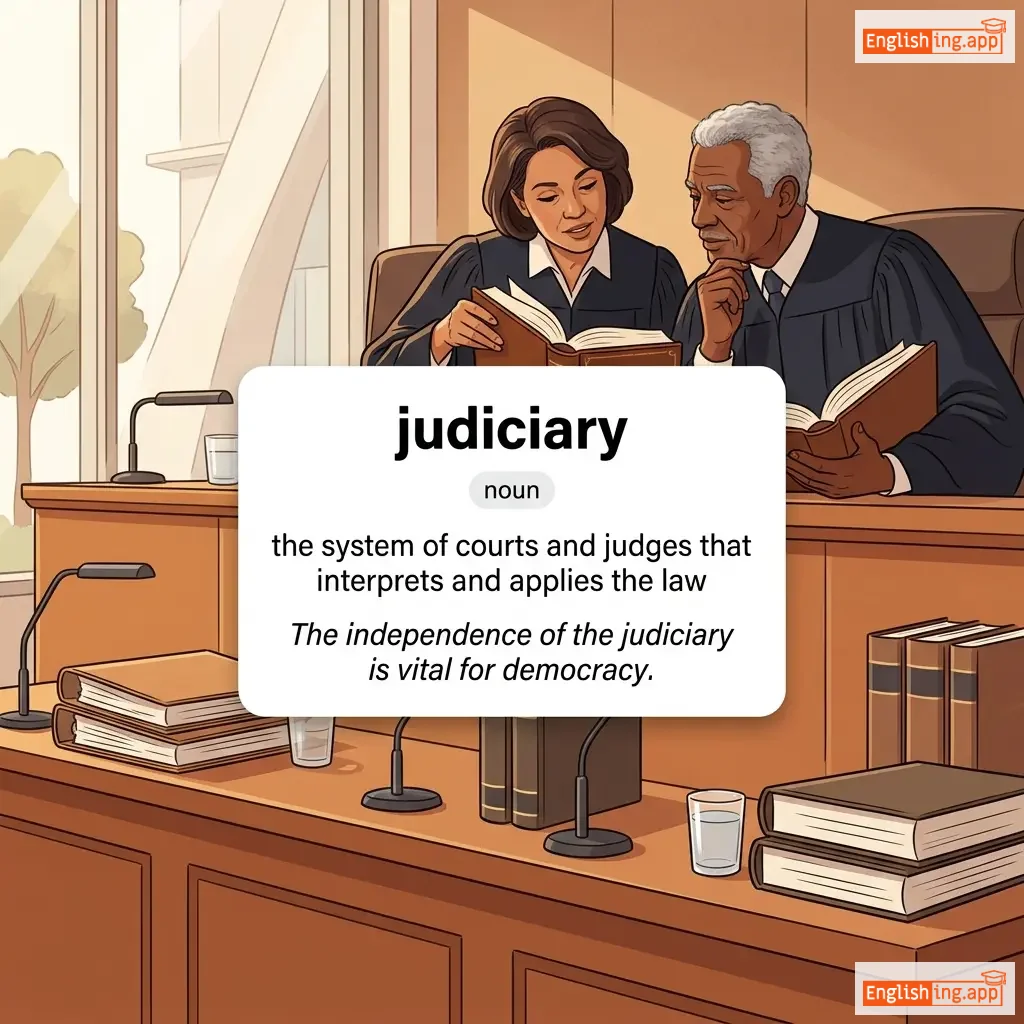
the system of courts and judges that interprets and applies the law
••••••
|
The independence of the judiciary is vital for democracy. |
司法権の独立は民主主義にとって非常に重要です。
shihōken no dokuritsū wa minshushugi ni totte hijō ni jūyō desu.
••••••
|
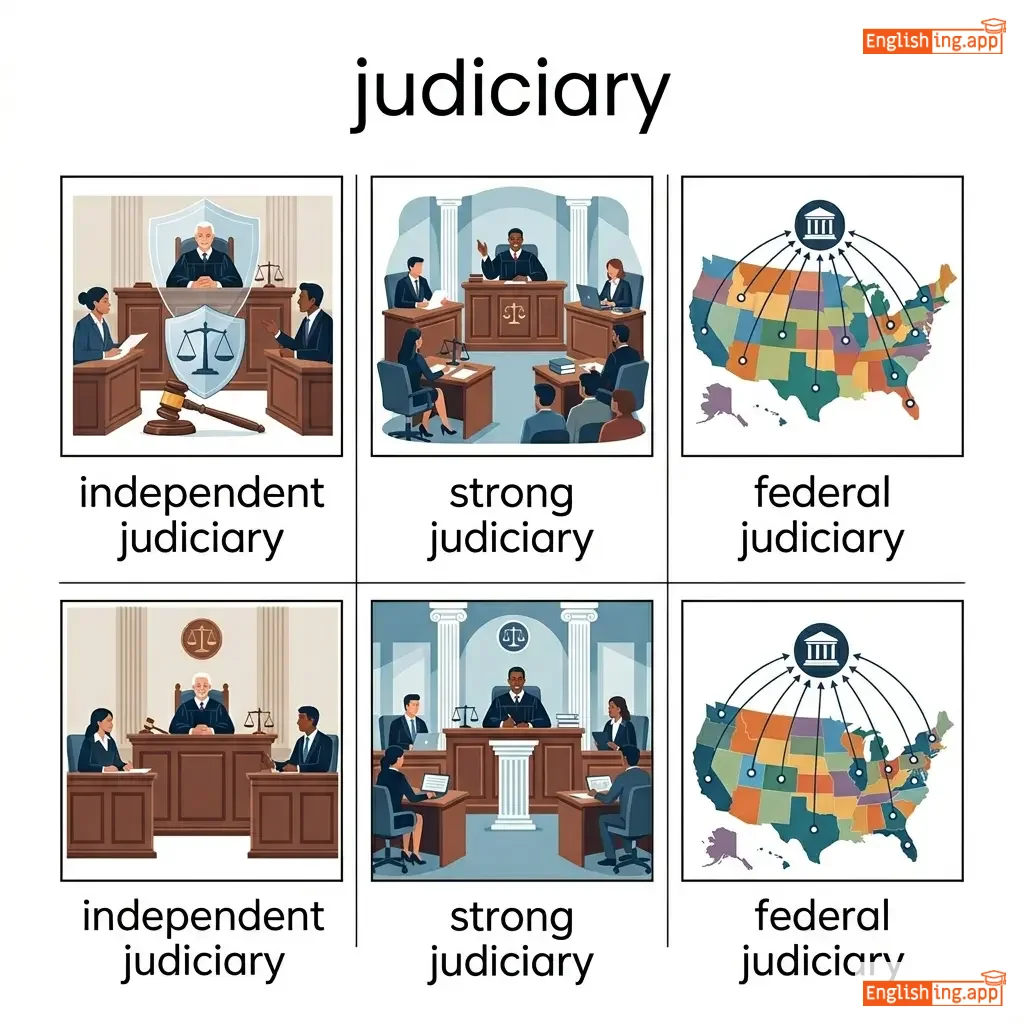
independent judiciary |
a judicial system free from influence by other branches of government
••••••
|
独立した司法権
dokuritsu shita shihōken
••••••
|
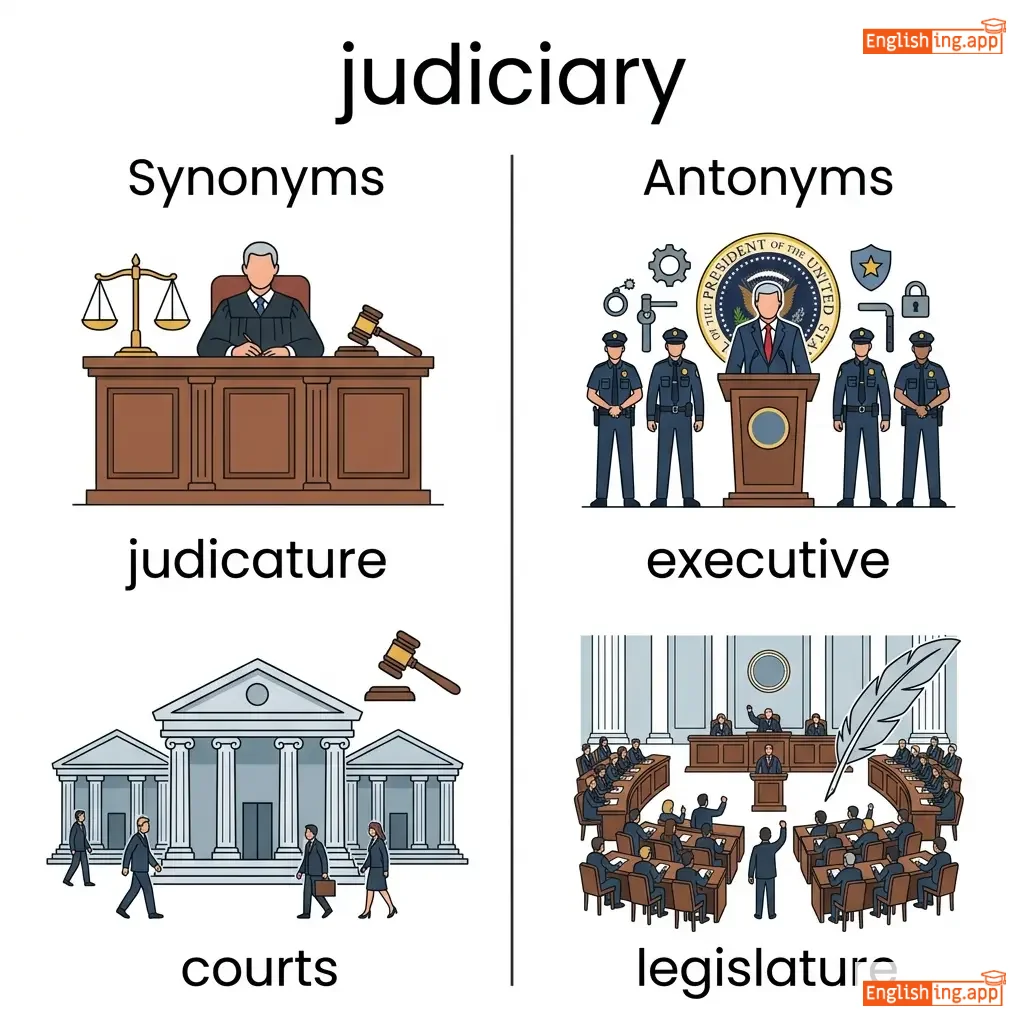
judicature, courts, magistracy, bench
••••••
|
executive, legislature
••••••
|
independent judiciary, strong judiciary, federal judiciary, state judiciary
••••••
|
Judiciary — ジャッジの力 — それが司法権です
••••••
|
|
#4953
👩⚖️
|
/dʒuːˈdɪʃ.əl/
adjective
(ジュディシャル)
••••••
|
- •••••• |
司法の
shihou no
••••••
|
- •••••• | - •••••• | - •••••• | - •••••• |
relating to judges, courts, or the administration of justice
••••••
|
The new law faced strong judicial review before implementation. |
新しい法律は実施前に厳格な司法審査を受けました。
Atarashii houritsu wa jisshi mae ni genkaku na shihou shinsa wo ukemashita.
••••••
|
judicial review |
the power of courts to examine the actions of the government and invalidate them if unconstitutional
••••••
|
司法審査
shihou shinsa
••••••
|
legal, court-related, forensic, authoritative
••••••
|
illegal, extrajudicial
••••••
|
judicial authority, judicial review, judicial process, judicial power
••••••
|
司法の — 司法審査は法的なプロセスです。
••••••
|
|
#4954
🏛️
|
/ˈdʒuː.dɪˌkeɪ.tʃər/
noun
(ジュディケイチャー)
••••••
|
- •••••• |
司法制度
shihou seido
••••••
|
- •••••• | - •••••• | - •••••• | - •••••• |
the administration of justice or the system of courts
••••••
|
The judicature ensures that laws are fairly applied. |
司法制度は法律が公平に適用されることを保証します。
Shihou seido wa houritsu ga kouhei ni tekiyou sareru koto wo hoshou shimasu.
••••••
|
- •••••• | - •••••• | - •••••• |
judiciary, courts, justice system, magistracy
••••••
|
lawlessness, anarchy
••••••
|
independent judicature, supreme judicature, English judicature
••••••
|
Judicatureは司法制度、裁判所のシステム全体を意味します。
••••••
|
|
#4955
⚖️
|
/ˈdʒʌdʒ.mənt/
noun
(ジャッジメント)
••••••
|
|
判断
handan
••••••
|
- •••••• | - •••••• | - •••••• | - •••••• |
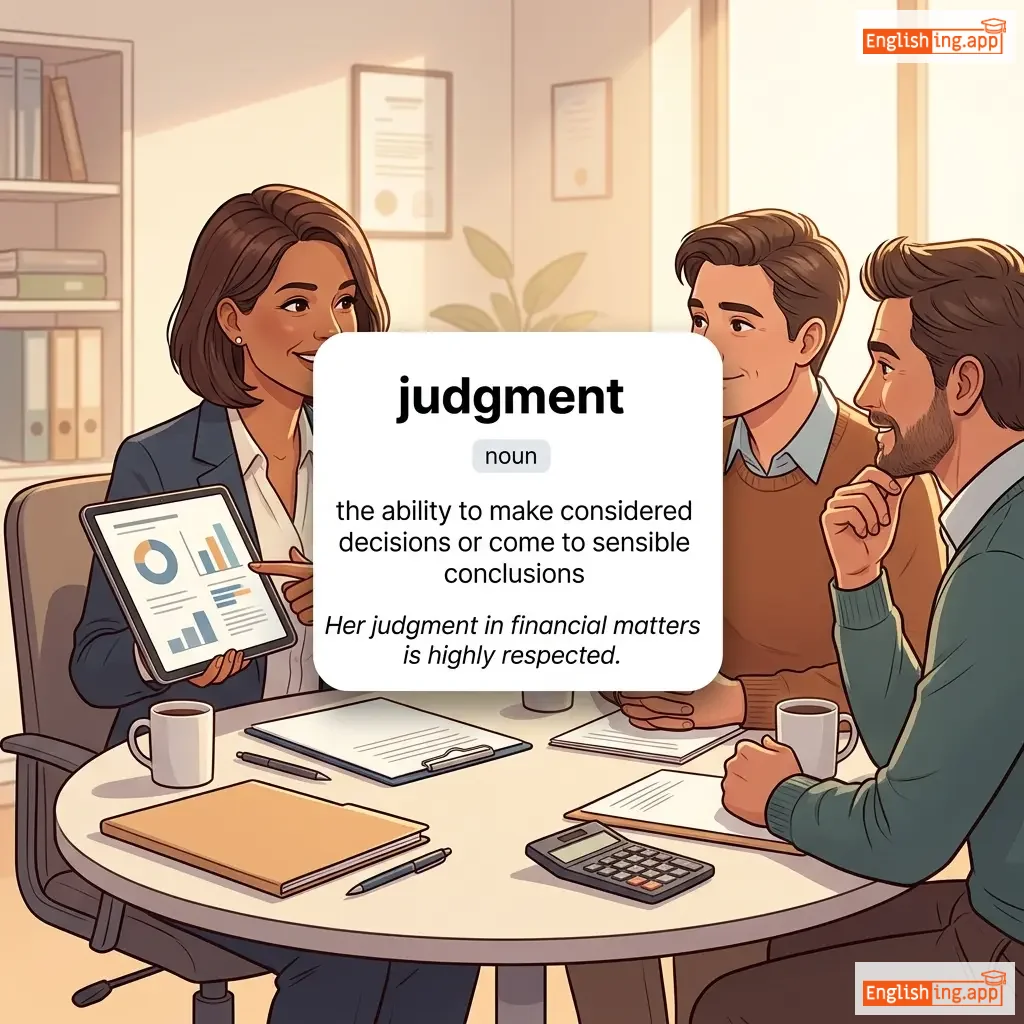
the ability to make considered decisions or come to sensible conclusions
••••••
|
Her judgment in financial matters is highly respected. |
彼女の財務に関する判断は高く評価されています。
Kanojo no zaimu ni kansuru handan wa takaku hyouka sareteimasu.
••••••
|
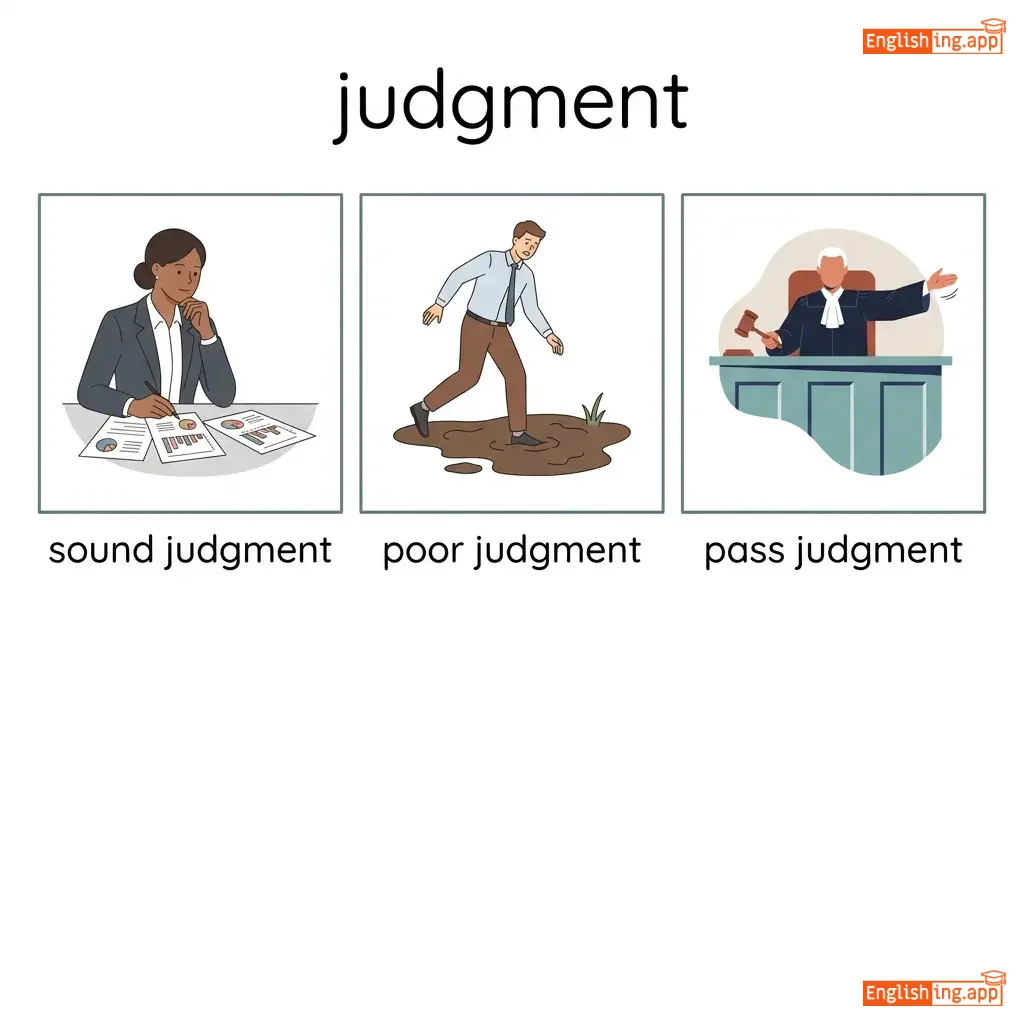
pass judgment |
to give an opinion or decision about something or someone
••••••
|
判断を下す
handan wo kudasu
••••••
|
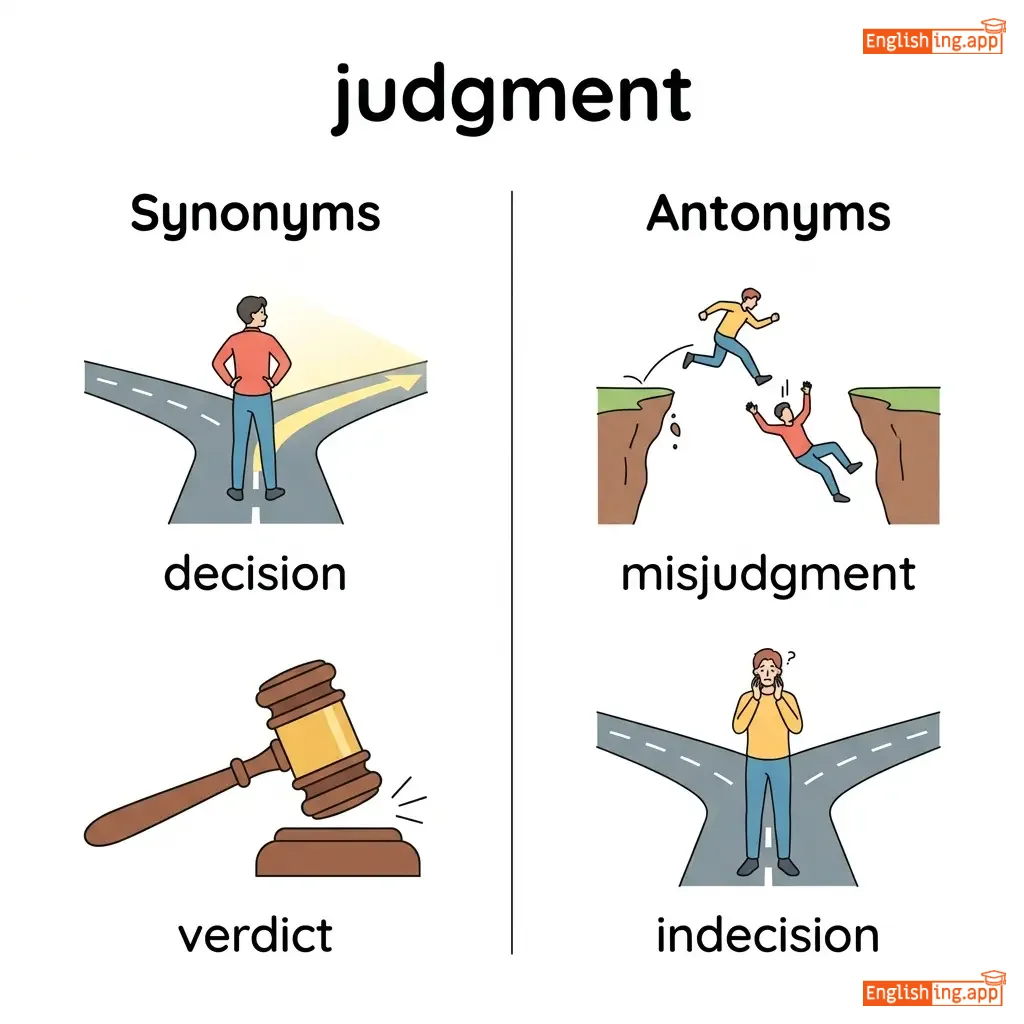
decision, verdict, ruling, opinion, discernment
••••••
|
misjudgment, indecision, ignorance
••••••
|
sound judgment, poor judgment, pass judgment, legal judgment
••••••
|
判断は選択すること、決定は方向を示す
••••••
|
|
#4956
⏳
|
/ˈdʒʌŋk.tʃər/
noun
(ジャンクチャー)
••••••
|
- •••••• |
重要な局面
jūyō na kyokumen
••••••
|
- •••••• | - •••••• | - •••••• | - •••••• |
a particular point in time, especially one of great importance or crisis
••••••
|
At this critical jucture, the company must decide whether to expand or downsize. |
この重要な局面で、会社は拡大するか縮小するかを決定しなければなりません。
Kono jūyō na kyokumen de, kaisha wa kakudai suru ka shukushō suru ka o kettei shinakereba narimasen.
••••••
|
- •••••• | - •••••• | - •••••• |
point, stage, moment, turning point, crossroads
••••••
|
continuation, permanence
••••••
|
critical jucture, historical jucture, important jucture
••••••
|
Junction が '重要な局面' に変わる — 人生の重要な選択をする場所
••••••
|
|
#4957
🥳
|
/ˌdʒuː.bɪˈleɪ.ʃən/
noun
(ジュビレーション)
••••••
|
- •••••• |
歓喜
kanki
••••••
|
- •••••• | - •••••• | - •••••• | - •••••• |
a feeling or expression of great happiness and triumph
••••••
|
There was jubilation in the streets after the victory. |
勝利後、街中は歓喜に包まれていました。
Shōri-go, machi naka wa kanki ni tsutsumareteimashita.
••••••
|
- •••••• | - •••••• | - •••••• |
joy, happiness, elation, triumph, delight
••••••
|
sorrow, sadness, grief
••••••
|
jubilation over, expressions of jubilation, national jubilation
••••••
|
Jubilation は大きな喜び – 勝利の歓喜の表現!
••••••
|
|
#4958
🎉
|
/ˈdʒuː.bɪ.lənt/
adjective
(ジュビラント)
••••••
|
- •••••• |
歓喜
kanki
••••••
|
- •••••• | - •••••• | - •••••• | - •••••• |
feeling or expressing great happiness and joy
••••••
|
The team was jubilant after winning the championship. |
チームはチャンピオンシップを勝ち取った後、歓喜していました。
Chīmu wa chanpionshipu o kachitotta ato, kanki shiteimashita.
••••••
|
- •••••• | - •••••• | - •••••• |
joyful, elated, overjoyed, ecstatic, triumphant
••••••
|
sad, depressed, sorrowful
••••••
|
jubilant mood, jubilant celebration, jubilant crowd
••••••
|
Jubilant は喜びを分かち合うことを意味します – 幸せに満ちている
••••••
|
|
#4959
😀
|
/ˈdʒoʊ.vi.əl/
adjective
(ジョヴィアル)
••••••
|
- •••••• |
陽気な
youkina
••••••
|
- •••••• | - •••••• | - •••••• | - •••••• |
cheerful and friendly in manner
••••••
|
He was in a jovial mood during the family gathering. |
彼は家族の集まりで陽気な気分だった。
Kare wa kazoku no atsumari de youkina kibun datta.
••••••
|
- •••••• | - •••••• | - •••••• |
cheerful, jolly, merry, genial, friendly
••••••
|
gloomy, sad, unfriendly
••••••
|
jovial mood, jovial personality, jovial atmosphere
••••••
|
Jovialは陽気を意味し、つまり幸せで友好的
••••••
|
|
#4960
🤺
|
/dʒaʊst/
verb
••••••
|
- •••••• | - •••••• |
jousted
••••••
|
jousted
••••••
|
jousts
••••••
|
jousting
••••••
|
to engage in a medieval contest on horseback with lances; to compete or argue
••••••
|
The knights prepared to joust in front of the cheering crowd. |
- •••••• |
political jousting |
verbal or strategic competition in politics
••••••
|
- •••••• |
fight, duel, combat, contend, compete
••••••
|
yield, surrender, retreat
••••••
|
jousting tournament, joust with rivals, political joust
••••••
|
No •••••• |
|
#4961
📒
|
/ˈdʒɜːrnəlaɪz/
verb
(ジャーナライズ)
••••••
|
- •••••• |
日記に記録する
nikki ni kiroku suru
••••••
|
journalized
ジャーナライズド
••••••
|
journalized
ジャーナライズド
••••••
|
journalizes
ジャーナライズズ
••••••
|
journalizing
ジャーナライズイング
••••••
|
to record daily transactions or events in a journal, especially in accounting
••••••
|
The accountant will journalize all financial transactions at the end of the day.
会計士は一日の終わりにすべての財務取引をジャーナライズします。
••••••
|
会計士は一日の終わりにすべての財務取引をジャーナライズします。
Kaikeishi wa ichinichi no owari ni subete no zaimu torihiki o jānaraizu shimasu.
••••••
|
- •••••• | - •••••• | - •••••• |
record, log, document, register, enter
••••••
|
erase, omit, forget
••••••
|
journalize entries, journalize transactions, journalize expenses
••••••
|
日記に記録するためにはジャーナライズが必要です
••••••
|
|
#4962
✍️
|
/dʒɒt/
verb
(ジョット)
••••••
|
- •••••• |
素早く短く書く
subayaku mijikaku kaku
••••••
|
jotted
ジョットッド
••••••
|
jotted
ジョットッド
••••••
|
jots
ジョットス
••••••
|
jotting
ジョッティング
••••••
|
to write something quickly and briefly
••••••
|
She jotted down his phone number on a napkin.
彼女はナプキンに彼の電話番号を素早く書き留めました。
••••••
|
彼女はナプキンに彼の電話番号を素早く書き留めました。
Kanojo wa napukin ni kare no denwa bangou wo subayaku kakitomemashita.
••••••
|
jot down
素早く書き留める
••••••
|
to quickly write something for later reference
••••••
|
素早く書き留める
subayaku kakitomeru
••••••
|
note, scribble, write, record
••••••
|
erase, forget
••••••
|
jot notes, jot quickly, jot something down
••••••
|
Jotはjot down; 必要なことをすぐに書き留めよう。
••••••
|
|
#4963
🚶♂️
|
/ˈdʒɒsl/
verb
(ジョストル)
••••••
|
- •••••• |
押す
osu
••••••
|
jostled
ジョストルド
••••••
|
jostled
ジョストルド
••••••
|
jostles
ジョストルズ
••••••
|
jostling
ジョストリング
••••••
|
to push, elbow, or bump against someone roughly, typically in a crowd
••••••
|
The fans jostled each other to get closer to the stage.
ファンたちはステージに近づくためにお互いに押し合っていました。
••••••
|
ファンたちはステージに近づくためにお互いに押し合っていました。
Fan-tachi wa suteeji ni chikaduku tame ni otagai ni oshiatteimashita.
••••••
|
jostle for position
位置を争う
••••••
|
to compete aggressively for advantage or recognition
••••••
|
位置を争う
ichi wo arasou
••••••
|
push, shove, elbow, bump, crowd
••••••
|
avoid, yield, retreat
••••••
|
jostle in the crowd, jostle for space, jostle for attention
••••••
|
Jostle は人ごみで押し合うような感じ、コンサートでみんなが押し合っているように。
••••••
|
|
#4964
⚡
|
/dʒəʊlt/
verb
(ジョルト)
••••••
|
- •••••• |
衝撃
shōgeki
••••••
|
jolted
ジョルテッド
••••••
|
jolted
ジョルテッド
••••••
|
jolts
ジョルツ
••••••
|
jolting
ジョルティング
••••••
|
to push or shake someone or something abruptly and roughly
••••••
|
The sudden stop jolted all the passengers forward.
突然の停止で、すべての乗客が前方に押し出されました。
••••••
|
突然の停止で、すべての乗客が前方に押し出されました。
Totsuzen no teishi de, subete no jōkyaku ga zenpō ni oshidasaremashita.
••••••
|
jolt into action
行動を促すジョルト
••••••
|
to suddenly force someone to take action
••••••
|
行動に駆り立てる
kōdō ni karitate ru
••••••
|
shake, bump, jar, shock, startle
••••••
|
calm, soothe
••••••
|
a sudden jolt, jolt awake, jolt of electricity
••••••
|
ジョルトは衝撃、列車の急停車の時に乗客が前に押し出されるようなものです。
••••••
|
|
#4965
🎉
|
/ˈdʒɒlɪti/
noun
(ジョリティ)
••••••
|
- •••••• |
楽しさ
tanoshisa
••••••
|
- •••••• | - •••••• | - •••••• | - •••••• |
lively and cheerful activity or celebration
••••••
|
The wedding was full of jollity and laughter. |
結婚式は楽しさと笑いに満ちていました。
Kekkonshiki wa tanoshisa to warai ni michite imashita.
••••••
|
- •••••• | - •••••• | - •••••• |
cheerfulness, gaiety, merriment, festivity
••••••
|
sadness, gloom
••••••
|
spirit of jollity, atmosphere of jollity, full of jollity
••••••
|
Jollityは楽しさ; 楽しさは祝宴の中にある。
••••••
|
|
#4966
⚠️
|
/ˈdʒɛpərdi/
noun
(ジェパーディ)
••••••
|
- •••••• |
危険
kiken
••••••
|
- •••••• | - •••••• | - •••••• | - •••••• |
Danger of loss, harm, or failure.
••••••
|
His careless driving put everyone in jeopardy. |
彼の不注意な運転はみんなを危険にさらした。
Kare no fuchuui na unten wa minna wo kiken ni sarashita.
••••••
|
in jeopardy |
at risk of harm or danger
••••••
|
危険にさらされている
kiken ni sarasareteiru
••••••
|
danger, risk, peril, hazard, threat
••••••
|
safety, security, protection
••••••
|
in jeopardy, put in jeopardy, career in jeopardy, life in jeopardy
••••••
|
Jeopardy は危険を意味します - 仕事でパーティーを開くと、仕事が jeopardy に陥るかもしれません!
••••••
|
|
#4967
🏃
|
/dʒɑːɡ/
verb
(ジョグ)
••••••
|
- •••••• |
ジョギングする
jogingu suru
••••••
|
jogged
ジョグド
••••••
|
jogged
ジョグド
••••••
|
jogs
ジョグス
••••••
|
jogging
ジョギング
••••••
|
to run at a slow, steady pace for exercise
••••••
|
She jogs every morning in the park.
シー ジョグズ エブリ モーニング イン ザ パーク。
••••••
|
彼女は毎朝公園でジョギングします。
kanojo wa maiasa kouen de jogingu shimasu
••••••
|
memory jog
メモリー ジョグ
••••••
|
something that helps you remember
••••••
|
記憶を呼び起こす
kioku o yobiokosu
••••••
|
run, trot, exercise, pace
••••••
|
rest, stop
••••••
|
go jogging, jog daily, jog around, jog memory
••••••
|
Jog はジョギング – ゆっくり走ってリラックス!
••••••
|
|
#4968
😊
|
/ˈdʒɒkənd/
adjective
(jokando)
••••••
|
- •••••• |
陽気な
yōkina
••••••
|
- •••••• | - •••••• | - •••••• | - •••••• |
cheerful and lighthearted
••••••
|
They walked together in a jocund mood after the celebration. |
彼らは祝賀会の後、陽気な気分で一緒に歩いていた。
Karera wa shukugakai no ato, yōkina kibun de issho ni aruite ita.
••••••
|
- •••••• | - •••••• | - •••••• |
cheerful, merry, joyful, lively
••••••
|
sad, gloomy
••••••
|
jocund spirit, jocund gathering, jocund company
••••••
|
Jocundはjoy+cand – お菓子を食べるように陽気な。
••••••
|
|
#4969
😂
|
/ˈdʒɒkjələr/
adjective
(ジョキュラー)
••••••
|
- •••••• |
冗談好きな
joudan sukina
••••••
|
- •••••• | - •••••• | - •••••• | - •••••• |
fond of or characterized by joking; humorous
••••••
|
His jocular nature made him popular among colleagues.
ヒズ ジョキュラー ネイチャー メイド ヒム ポピュラー アモング コリッグス。
••••••
|
彼の冗談好きな性格は同僚の中で人気があった。
Kare no joudan sukina seikaku wa dōryō no naka de ninki ga atta.
••••••
|
- •••••• | - •••••• | - •••••• |
humorous, funny, witty, playful
••••••
|
serious, stern
••••••
|
jocular remark, jocular mood, jocular attitude
••••••
|
Jocularは'ジョーカー'のように冗談好きな人。
••••••
|
|
#4970
😄
|
/dʒoʊˈkoʊs/
adjective
(ジョコス)
••••••
|
|
冗談めかした
joudanmekashita
••••••
|
- •••••• | - •••••• | - •••••• | - •••••• |
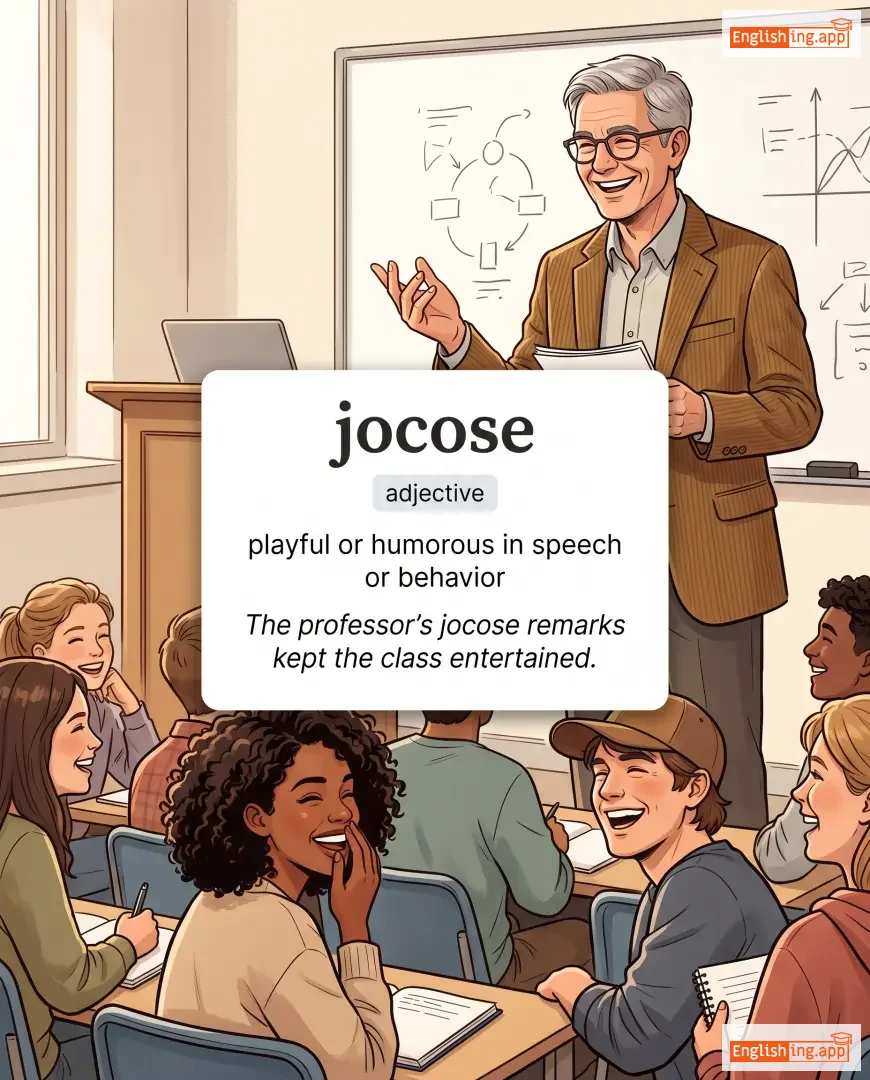
playful or humorous in speech or behavior
••••••
|
The professor’s jocose remarks kept the class entertained.
教授のジョコスな発言がクラスを楽しませました。
••••••
|
教授の冗談めかした発言がクラスを楽しませました。
Kyouju no joudanmekashita hatsugen ga kurasu o tanoshimase mashita.
••••••
|
- •••••• | - •••••• | - •••••• |
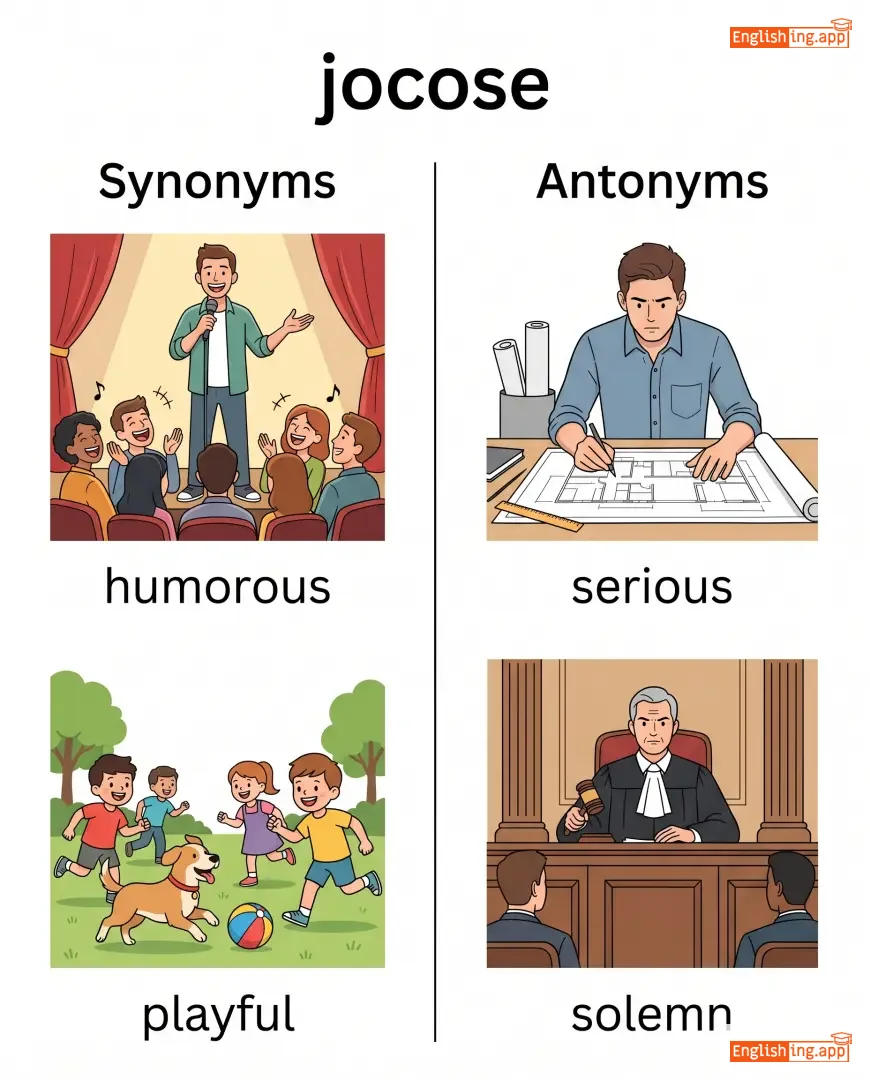
humorous, playful, witty, comical
••••••
|
serious, solemn
••••••
|
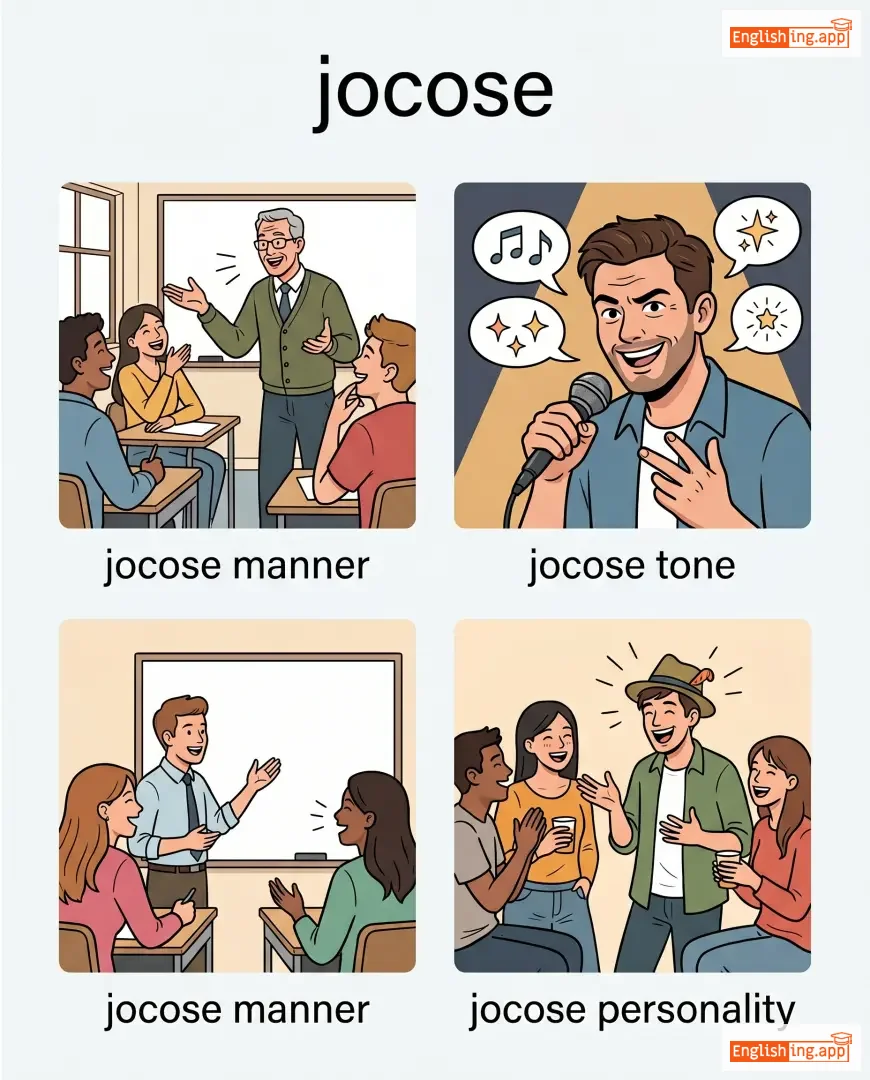
jocose manner, jocose tone, jocose personality
••••••
|
Jocose = Joke + ose, まるで冗談のように楽しませる。
••••••
|
|
#4971
😬
|
/ˈdʒɪtər/
verb
(ジッター)
••••••
|
- •••••• |
震える
furueru
••••••
|
jittered
ジッタード
••••••
|
jittered
ジッタード
••••••
|
jitters
ジッターズ
••••••
|
jittering
ジッティング
••••••
|
to shake or tremble slightly, often from fear, nervousness, or excitement
••••••
|
He began to jitter nervously before giving his speech.
彼はスピーチの前に緊張して震え始めました。
••••••
|
彼はスピーチの前に緊張して震え始めました。
Kare wa supiichi no mae ni kinchou shite furuere hajimemashita.
••••••
|
jittery nerves
緊張した神経
••••••
|
a state of nervousness or anxiety
••••••
|
緊張した神経
kinchou shita shinkei
••••••
|
shake, tremble, quiver, shiver, wobble
••••••
|
steady, calm, still
••••••
|
jitter nervously, jitter with fear, jitter before performance
••••••
|
Jitterは震える意味 - 緊張で震える手を想像してください。
••••••
|
|
#4972
🪖
|
/ˈdʒɪŋɡoʊɪst/
noun
(ジンゴイスト)
••••••
|
- •••••• |
ジンゴイスト
jingoisuto
••••••
|
- •••••• | - •••••• | - •••••• | - •••••• |
a person who supports jingoism; an extreme nationalist with aggressive foreign policies
••••••
|
He was labeled a jingoist for his extreme views. |
彼は自分の極端な意見のためにジンゴイストとレッテルを貼られた。
Kare wa jibun no kyokutan na iken no tame ni jingoisuto to reteru o harareta.
••••••
|
- •••••• | - •••••• | - •••••• |
chauvinist, nationalist, ultranationalist, warmonger
••••••
|
pacifist, internationalist
••••••
|
fierce jingoist, political jingoist, extreme jingoist
••••••
|
Jingo + isto = 極端な国粋主義者 – ジンゴイスト
••••••
|
|
#4973
🇺🇸
|
/ˈdʒɪŋɡoʊˌɪzəm/
noun
(ジンゴイズム)
••••••
|
- •••••• |
過激な愛国主義
kageki na aikokushugi
••••••
|
- •••••• | - •••••• | - •••••• | - •••••• |
extreme patriotism expressed in aggressive foreign policy
••••••
|
The politician's speech was filled with jingoism.
その政治家の演説はジンゴイズムに満ちていました。
••••••
|
その政治家の演説はジンゴイズムに満ちていました。
Sono seijika no enzetsu wa jingoizumu ni michiteimashita.
••••••
|
- •••••• | - •••••• | - •••••• |
chauvinism, nationalism, ultranationalism, militarism
••••••
|
internationalism, pacifism
••••••
|
rise of jingoism, political jingoism, wave of jingoism
••••••
|
Jingo + ismは過剰で攻撃的な愛国主義を意味します
••••••
|
|
#4974
⚔️
|
/ˈdʒɪŋɡoʊ/
noun
(ジンゴ)
••••••
|
- •••••• |
戦争支持の国家主義者
sensō shiji no kokka shugi-sha
••••••
|
- •••••• | - •••••• | - •••••• | - •••••• |
a person who strongly supports warlike or aggressive foreign policy; an extreme nationalist
••••••
|
The leader was criticized as a reckless jingo. |
その指導者は無謀なジンゴとして批判された。
Sono shidōsha wa mubōna jingo toshite hihan sareta.
••••••
|
- •••••• | - •••••• | - •••••• |
chauvinist, nationalist, patriot, warmonger
••••••
|
pacifist, peacemaker
••••••
|
reckless jingo, political jingo, radical jingo
••••••
|
ジンゴという言葉は戦争を思い出させる – 戦争支持の国家主義者
••••••
|
|
#4975
😏
|
/dʒaɪb/
verb
(ジャイブ)
••••••
|
|
皮肉を言う / 一致する
hiniku wo iu / itchi suru
••••••
|
jibed
ジャイビッド
••••••
|
jibed
ジャイビッド
••••••
|
jibes
ジャイブス
••••••
|
jibing
ジャイビング
••••••
|
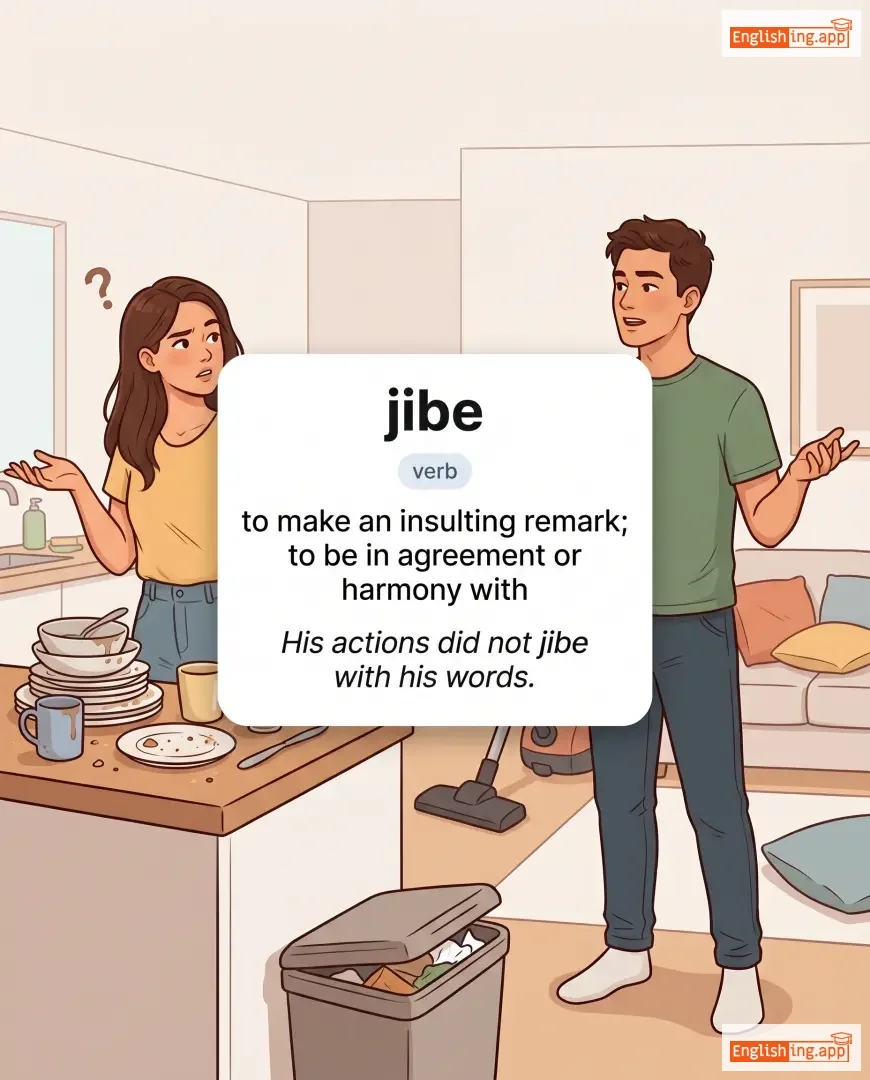
to make an insulting remark; to be in agreement or harmony with
••••••
|
His actions did not jibe with his words.
彼の行動は彼の言葉と一致していなかった。
••••••
|
彼の行動は彼の言葉と一致していなかった。
Kare no kōdō wa kare no kotoba to itchi shite inakatta.
••••••
|
throw a jibe
皮肉を言う
••••••
|
to make a mocking or insulting remark
••••••
|
皮肉を言う
hiniku wo iu
••••••
|
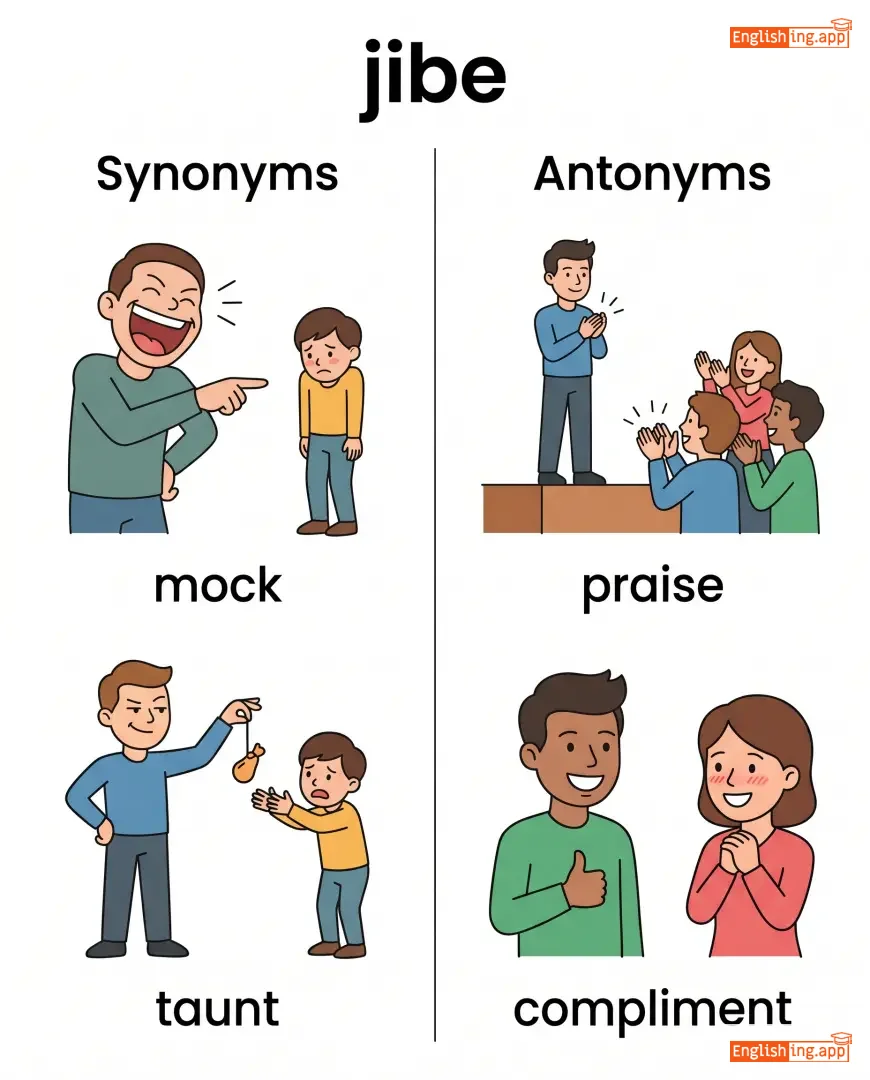
mock, taunt, agree, correspond, match
••••••
|
praise, compliment, conflict
••••••
|
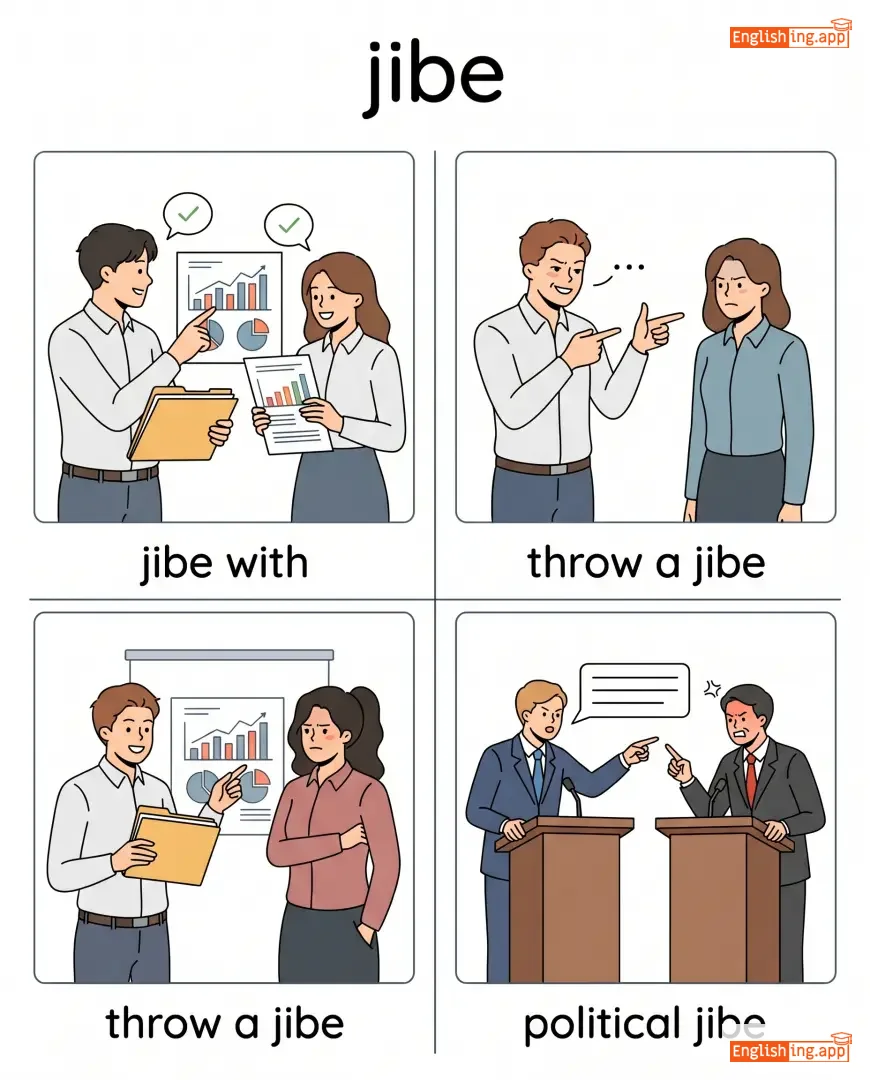
jibe with, throw a jibe, political jibe, sarcastic jibe
••••••
|
Jibeのように言葉を投げるとき、皮肉の匂いがする
••••••
|
|
#4976
🛩️
|
/ˈdʒɛtɪsən/
(ジェティソン)
••••••
|
- •••••• |
放棄する
hōkisarusuru
••••••
|
jettisoned
ジェティソンド
••••••
|
jettisoned
ジェティソンド
••••••
|
jettisons
ジェティソンズ
••••••
|
jettisoning
ジェティソニング
••••••
|
to throw or drop something from a ship, aircraft, or vehicle to lighten the load; to abandon something no longer wanted
••••••
|
The crew had to jettison cargo to save the sinking ship.
乗組員は沈没している船を救うために貨物を投げ捨てなければならなかった。
••••••
|
乗組員は沈没している船を救うために貨物を投げ捨てなければならなかった。
Jōkumiin wa chinbotsu shite iru fune o sukuu tame ni kamotsu o nagesutena kereba naranakatta.
••••••
|
jettison an idea
アイデアを捨てる
••••••
|
to discard or abandon a plan or thought
••••••
|
アイデアを捨てる
aidea o suteru
••••••
|
discard, dump, abandon, release, eject
••••••
|
keep, retain, preserve
••••••
|
jettison cargo, jettison fuel, jettison plan, jettison idea
••••••
|
ジェット機が不要な荷物を放棄する場面を想像してみてください。
••••••
|
|
#4977
🌊
|
/ˈdʒɛtsəm/
noun
(ジェットサム)
••••••
|
- •••••• |
船から投げ捨てられ、岸に打ち寄せられた不要な物や品物
fune kara nage suterare, kishi ni uchi yoserareta fuyōna mono ya shinmotsu
••••••
|
- •••••• | - •••••• | - •••••• | - •••••• |
Unwanted material or goods thrown overboard from a ship and washed ashore.
••••••
|
The beach was littered with jetsam after the storm. |
嵐の後、ビーチにはジェットサムが散乱していました。
Arashi no ato, bīchi ni wa jettsamu ga sanran shiteimashita.
••••••
|
- •••••• | - •••••• | - •••••• |
debris, wreckage, flotsam, scrap
••••••
|
cargo, load
••••••
|
flotsam and jetsam, ship jetsam, scattered jetsam
••••••
|
Jetsamは船から投げ捨てられたもの - Jetからsam(いくつか)物が捨てられます。
••••••
|
|
#4978
✈️
|
/dʒɛt/
noun, verb
(ハピネス)
••••••
|
- •••••• |
幸せ
shiawase
••••••
|
jetted
••••••
|
jetted
••••••
|
jets
••••••
|
jetting
••••••
|
A fast aircraft powered by jet engines; to travel by jet plane.
••••••
|
They jetted off to Paris for the weekend.
彼女は賞を受け取ったとき、自分の幸せを隠せなかった。
••••••
|
彼女は賞を受け取ったとき、自分の幸せを隠せなかった。
Kanojo wa shō o uketotta toki, jibun no shiawase o kakusenakatta.
••••••
|
jet set
幸せの追求
••••••
|
wealthy people who travel frequently for pleasure
••••••
|
幸せの追求
shiawase no tsuikyū
••••••
|
airplane, aircraft, plane, flyer
••••••
|
propeller plane, subsonic flight
••••••
|
jet engine, private jet, jet plane, jet lag
••••••
|
幸せはすぐそばにある、手を伸ばしてみよう!
••••••
|
|
#4979
😂
|
/dʒɛst/
noun, verb
(ジェスト)
••••••
|
- •••••• |
冗談
joudan
••••••
|
jested
ジェステッド
••••••
|
jested
ジェステッド
••••••
|
jests
ジェストス
••••••
|
jesting
ジェスティング
••••••
|
A joke or witty remark; to speak humorously.
••••••
|
He spoke in jest, but his words offended her.
彼は冗談で言ったが、彼の言葉は彼女を傷つけた。
••••••
|
彼は冗談で言ったが、彼の言葉は彼女を傷つけた。
Kare wa joudan de itta ga, kare no kotoba wa kanojo wo kizutsuketa.
••••••
|
in jest
冗談で
••••••
|
as a joke, not seriously
••••••
|
冗談で
joudan de
••••••
|
joke, gag, quip, banter, witticism
••••••
|
seriousness, sincerity
••••••
|
say in jest, spoken in jest, make a jest
••••••
|
冗談はいつでも楽しい!JESTして笑いましょう!
••••••
|
|
#4980
😩
|
/ˈdʒɛrəˌmaɪæd/
noun
(ジェレミアッド)
••••••
|
- •••••• |
嘆き
nageki
••••••
|
- •••••• | - •••••• | - •••••• | - •••••• |
A long, mournful complaint or lamentation; a list of woes.
••••••
|
The politician's speech turned into a jeremiad against corruption. |
政治家のスピーチは腐敗に対する嘆きに変わった。
Seijika no supīchi wa fuhai ni taisuru nageki ni kawatta.
••••••
|
- •••••• | - •••••• | - •••••• |
lament, complaint, dirge, wail
••••••
|
praise, celebration
••••••
|
deliver a jeremiad, political jeremiad, long jeremiad
••••••
|
Jeremiadは長い嘆き - Jere (ジェ) miad (ミアッド) の嘆き!
••••••
|
Vocabulary Quiz
Test your vocabulary by matching words with their translations or meanings.
Login to take the quiz
Comments (0)
Share your thoughts and join the discussion.
Join the discussion by logging in
Login to CommentNo comments yet
Be the first to share your thoughts!