

翻訳
過去
過去分詞
三人称単数
動名詞
意味
例文
例文の翻訳
同義語
対義語
コロケーション
ニーモニック
Swipe left or right, or use the buttons. Tap image to zoom.
例文の翻訳
単語
Lesson 198Lesson 198 - マスクトグル
|
絵文字
|
単語 | Images | 翻訳 | 過去 | 過去分詞 | 三人称単数 | 動名詞 | 意味 | 例文 | 例文の翻訳 | 表現例 | 表現例の意味 | 表現例の翻訳 | 同義語 | 対義語 | コロケーション | ニーモニック |
|---|---|---|---|---|---|---|---|---|---|---|---|---|---|---|---|---|---|
|
#5911
😌
|
/ˈnɒnʃələns/
noun
(ノンシャランス)
••••••
|
- •••••• |
無頓着
mutonchaku
••••••
|
- •••••• | - •••••• | - •••••• | - •••••• |
A relaxed and calm state, showing lack of concern or interest.
••••••
|
She answered the tough questions with surprising nonchalance. |
彼女は驚くべき無頓着で難しい質問に答えました。
Kanojo wa odorokubeki mutonchaku de muzukashii shitsumon ni kotaemashita.
••••••
|
- •••••• | - •••••• | - •••••• |
indifference, unconcern, composure, calmness, detachment
••••••
|
anxiety, concern, nervousness
••••••
|
air of nonchalance, display nonchalance, act with nonchalance
••••••
|
Nonchalanceと無頓着は似ている、両方とも気にしないこと。
••••••
|
|
#5912
⚔️
|
/ˈnɔːrmən/
noun
••••••
|
- •••••• | - •••••• | - •••••• | - •••••• | - •••••• | - •••••• |
A member of a people of mixed Scandinavian and Frankish origin who settled in Normandy, or relating to their culture.
••••••
|
The Normans conquered England in 1066. |
- •••••• | - •••••• | - •••••• | - •••••• |
Viking, settler, conqueror
••••••
|
native, local
••••••
|
Norman conquest, Norman culture, Norman architecture, Norman dynasty
••••••
|
No •••••• |
|
#5913
⚖️
|
/ˈnɔːrməlsi/
noun
(ノーマルシー)
••••••
|
- •••••• |
正常
seijou
••••••
|
- •••••• | - •••••• | - •••••• | - •••••• |
The condition of being normal; a return to usual or expected conditions.
••••••
|
After the flood, the town struggled to regain a sense of normalcy.
洪水の後、町は正常な状態を取り戻すために奮闘しました。
••••••
|
洪水の後、町は正常な状態を取り戻すために奮闘しました。
Kousui no ato, machi wa seijou na joutai o torimodosu tame ni funtou shimashita.
••••••
|
- •••••• | - •••••• | - •••••• |
regularity, stability, routine, order
••••••
|
chaos, disorder, abnormality
••••••
|
return to normalcy, sense of normalcy, restore normalcy, maintain normalcy
••••••
|
正常は元の状態に戻ることを意味します。'normal see' または予期しない出来事の後に 'normal' を見ることのように。
••••••
|
|
#5914
📏
|
/nɔːrm/
noun
(ノーム)
••••••
|
- •••••• |
規範
kihan
••••••
|
- •••••• | - •••••• | - •••••• | - •••••• |
An accepted standard or a usual practice.
••••••
|
Wearing uniforms is the norm in many schools. |
多くの学校で制服を着ることが規範です。
Ooku no gakkou de seifuku o kiru koto ga kihan desu.
••••••
|
against the norm |
not typical or standard
••••••
|
規範に反して
Kihan ni hanshite
••••••
|
standard, rule, custom, practice, convention
••••••
|
exception, deviation, anomaly
••••••
|
social norm, cultural norm, become the norm, accepted norm
••••••
|
ノームは規範や通常の習慣を意味します。
••••••
|
|
#5915
🪢
|
/nuːs/
noun
(ヌース)
••••••
|
- •••••• |
ひも
himo
••••••
|
- •••••• | - •••••• | - •••••• | - •••••• |
A loop with a running knot, used especially for trapping or hanging.
••••••
|
The cowboy tied a noose to catch the wild horse.
カウボーイは野生の馬を捕まえるためにヌースを結んだ。
••••••
|
カウボーイは野生の馬を捕まえるためにヌースを結んだ。
Kaubōi wa yasei no uma wo tsukamaeru tame ni noosu wo musunda.
••••••
|
the noose tightens
ヌースが締まっていく
••••••
|
a situation is becoming more difficult or dangerous
••••••
|
ヌースが締まっていく
Noosu ga shimatteiku
••••••
|
loop, knot, snare, lasso, trap
••••••
|
freedom, release, looseness
••••••
|
hangman's noose, slip the noose, tighten the noose, caught in a noose
••••••
|
Nooseという言葉は、絞められている様子を思い出させます。
••••••
|
|
#5916
🧠
|
/ˌnɒnˈtrɪviəl/
adjective
(ノントリヴィアル)
••••••
|
- •••••• |
非自明
hi jimmyo
••••••
|
- •••••• | - •••••• | - •••••• | - •••••• |
Not simple or easy; requiring effort or significant thought.
••••••
|
Solving the equation turned out to be a nontrivial task. |
方程式を解くことは非自明な作業であることが分かりました。
Hōteishiki o toku koto wa hi jimmyo na sagyō de aru koto ga wakarimashita.
••••••
|
- •••••• | - •••••• | - •••••• |
complex, difficult, challenging, demanding, tough
••••••
|
easy, simple, trivial
••••••
|
nontrivial problem, nontrivial solution, nontrivial effort, nontrivial challenge
••••••
|
Non trivial は簡単ではない - trivial (取るに足らない) ではない。
••••••
|
|
#5917
🙃
|
/ˈnɒnsəns/
noun
(ノンセンス)
••••••
|
- •••••• |
ナンセンス
nansensu
••••••
|
- •••••• | - •••••• | - •••••• | - •••••• |
Words or ideas that have no meaning or make no sense.
••••••
|
His explanation was pure nonsense. |
彼の説明は完全にナンセンスだった。
kare no setsumei wa kanzen ni nansensu datta.
••••••
|
talk nonsense |
to say things that are not true or make no sense
••••••
|
ナンセンスを言う
nansensu o iu
••••••
|
rubbish, absurdity, foolishness, drivel, gibberish
••••••
|
truth, sense, logic
••••••
|
utter nonsense, talk nonsense, complete nonsense, pure nonsense
••••••
|
Nonsense = NO SENSE → 意味がない → ナンセンス
••••••
|
|
#5918
🤨
|
/ˌnɒnˈplʌst/
verb
(ノンプラスト)
••••••
|
- •••••• |
困惑
konwaku
••••••
|
nonplussed
ノンプラスト
••••••
|
nonplussed
ノンプラスト
••••••
|
- •••••• | - •••••• |
Past tense of nonplus; surprised and unsure how to react.
••••••
|
He stood nonplussed at the strange remark.
彼は奇妙なコメントにノンプラストで立ち尽くしていた。
••••••
|
彼は奇妙なコメントに困惑して立ち尽くしていた。
Kare wa kimyou na komento ni konwaku shite tachitsukushite ita.
••••••
|
- •••••• | - •••••• | - •••••• |
confused, bewildered, perplexed, puzzled
••••••
|
confident, certain
••••••
|
looked nonplussed, seemed nonplussed, left nonplussed
••••••
|
Nonplussedは困惑を意味し、何をすべきかわからない時の状態を表す。
••••••
|
|
#5919
😯
|
/ˌnɒnˈplʌst/
verb
(ノンプラスト)
••••••
|
- •••••• |
困惑した
konwaku shita
••••••
|
nonplused
ノンプラスト
••••••
|
nonplused
ノンプラスト
••••••
|
- •••••• | - •••••• |
Past tense of nonplus; surprised and confused.
••••••
|
She was completely nonplused by his sudden decision.
彼女は彼の突然の決断に完全にノンプラストでした。
••••••
|
彼女は彼の突然の決断に完全に困惑していました。
Kanojo wa kare no totsuzen no ketsudan ni kanzen ni konwaku shite imashita.
••••••
|
- •••••• | - •••••• | - •••••• |
confused, bewildered, puzzled, baffled
••••••
|
certain, clear
••••••
|
completely nonplused, visibly nonplused, utterly nonplused
••••••
|
Nonplusedは、突然の決定に直面したときに全く答えられないという状態を意味します。
••••••
|
|
#5920
😕
|
/ˌnɒnˈplʌs/
verb
(ノンプラス)
••••••
|
- •••••• |
困惑させる
konwaku saseru
••••••
|
nonplused
ノンプラスト
••••••
|
nonplused
ノンプラスト
••••••
|
nonpluses
ノンプラスズ
••••••
|
nonplusing
ノンプラスイング
••••••
|
To surprise and confuse someone so much that they are unsure how to react.
••••••
|
The unexpected question seemed to nonplus the speaker.
予期しない質問がスピーカーを困惑させたようだ。
••••••
|
予期しない質問がスピーカーを困惑させたようだ。
Yokishinai shitsumon ga supiikaa wo konwaku saseta you da.
••••••
|
- •••••• | - •••••• | - •••••• |
confuse, perplex, bewilder, baffle
••••••
|
clarify, explain
••••••
|
completely nonplus, utterly nonplus, momentarily nonplus
••••••
|
NON+PLUS = 追加の回答なし → 困惑させる
••••••
|
|
#5921
👑
|
/ˌnɒnpəˈreɪl/
adjective
(ノンパレイル)
••••••
|
- •••••• |
比類のない
hirui no nai
••••••
|
- •••••• | - •••••• | - •••••• | - •••••• |
Having no equal; unrivaled or matchless.
••••••
|
Her beauty was considered nonpareil in the region.
ハー ビューティー ワズ コンシダード ノンパレイル イン ザ リージョン。
••••••
|
彼女の美しさはその地域で比類のないものと考えられていた。
kanojo no utsukushisa wa sono chiiki de hirui no nai mono to kangaerarete ita
••••••
|
- •••••• | - •••••• | - •••••• |
incomparable, unrivaled, unparalleled, supreme, matchless
••••••
|
ordinary, common, inferior
••••••
|
nonpareil beauty, nonpareil talent, nonpareil quality
••••••
|
Nonpareil = no parallel — 日本語では「比類のない」, nothing can compare.
••••••
|
|
#5922
👤
|
/nɒnˈentəti/
noun
(ノンエンティティ)
••••••
|
- •••••• |
重要でない人物
jūyō de nai jinbutsu
••••••
|
- •••••• | - •••••• | - •••••• | - •••••• |
A person or thing of no importance or significance.
••••••
|
Once a powerful leader, he is now treated as a political nonentity.
かつては強力なリーダーだったが、今では政治的なノンエンティティとして扱われている。
••••••
|
かつては強力なリーダーだったが、今では政治的なノンエンティティとして扱われている。
Katsute wa kyōryoku na rīdā datta ga, ima de wa seiji-teki na nonentity toshite atsukawarete iru.
••••••
|
- •••••• | - •••••• | - •••••• |
nobody, nothing, zero, nullity
••••••
|
celebrity, somebody, important person
••••••
|
political nonentity, social nonentity, become a nonentity
••••••
|
Non + Entity = 重要でない存在
••••••
|
|
#5923
🏠
|
/ˌnɒndɪˈskrɪpt/
adjective
(ノンディスクリプト)
••••••
|
- •••••• |
特徴のない
tokuchou no nai
••••••
|
- •••••• | - •••••• | - •••••• | - •••••• |
Lacking distinctive or interesting features; dull and unremarkable.
••••••
|
He lives in a nondescript apartment building on the edge of town.
彼は町の外れにある目立たないアパートに住んでいます。
••••••
|
彼は町の外れにある特徴のないアパートに住んでいます。
Kare wa machi no hazure ni aru tokuchou no nai apāto ni sundeimasu.
••••••
|
- •••••• | - •••••• | - •••••• |
ordinary, unremarkable, plain, dull
••••••
|
remarkable, distinctive, unusual
••••••
|
nondescript building, nondescript appearance, nondescript person
••••••
|
Non + Describe - それはあまりにも特徴がないので、説明できません。
••••••
|
|
#5924
🤔
|
/ˌnɒnkəˈmɪtl̩/
adjective
••••••
|
- •••••• | - •••••• | - •••••• | - •••••• | - •••••• | - •••••• |
Not expressing or showing a clear opinion, decision, or commitment.
••••••
|
She gave a noncommittal reply when asked about her future plans. |
- •••••• | - •••••• | - •••••• | - •••••• |
indecisive, evasive, vague, reserved
••••••
|
decisive, definite, committed
••••••
|
noncommittal answer, noncommittal response, noncommittal attitude
••••••
|
No •••••• |
|
#5925
😎
|
/ˈnɒnʃələnt/
adjective
••••••
|
- •••••• | - •••••• | - •••••• | - •••••• | - •••••• | - •••••• |
Appearing calm, casual, and unconcerned.
••••••
|
He gave a nonchalant shrug and walked away. |
- •••••• | - •••••• | - •••••• | - •••••• |
casual, relaxed, indifferent, unconcerned
••••••
|
anxious, concerned, worried
••••••
|
nonchalant manner, nonchalant attitude, act nonchalant
••••••
|
No •••••• |
|
#5926
🤫
|
/ˈnɔɪzləs/
adjective
(ノイズレス)
••••••
|
- •••••• |
無音
muon
••••••
|
- •••••• | - •••••• | - •••••• | - •••••• |
Completely silent; without any noise.
••••••
|
The cat made a noiseless leap onto the table. |
猫は音を立てずにテーブルに飛び乗った。
Neko wa oto o tatezu ni tēburu ni tobinotta.
••••••
|
- •••••• | - •••••• | - •••••• |
silent, quiet, soundless, hushed, still
••••••
|
noisy, loud, clamorous
••••••
|
noiseless footsteps, noiseless movement, noiseless car
••••••
|
無音は音がない状態、音を立てない猫のように無音。
••••••
|
|
#5927
❌
|
/ˌnɒn ˈsɛkwɪtər/
noun
(ノンセクイター)
••••••
|
- •••••• |
論理的に関連しない発言
ronriteki ni kanren shinai hatsugen
••••••
|
- •••••• | - •••••• | - •••••• | - •••••• |
a statement or conclusion that does not logically follow from the previous statement
••••••
|
His comment about the weather was a complete non sequitur during the budget discussion. |
予算の議論中、彼の天気に関するコメントは完全に論理的に関連しない発言だった。
Yosan no giron-chū, kare no tenki ni kansuru komento wa kanzen ni ronriteki ni kanren shinai hatsugen datta.
••••••
|
- •••••• | - •••••• | - •••••• |
illogical statement, fallacy, inconsistency, absurdity
••••••
|
logic, reason, consistency
••••••
|
utter non sequitur, complete non sequitur, classic non sequitur
••••••
|
Non sequitur とは、no sequence—前の発言と論理的に繋がっていないことです。
••••••
|
|
#5928
✈️
|
/ˌnɒn ˈrɛzɪdənt/
noun, adjective
(ノンレジデント)
••••••
|
- •••••• |
非居住者
hi kyojusha
••••••
|
- •••••• | - •••••• | - •••••• | - •••••• |
a person who does not live in a particular country or place permanently
••••••
|
Non-resident students often pay higher tuition fees. |
非居住者の学生は、しばしば高い学費を支払います。
Hi kyojusha no gakusei wa, shibashiba takai gakuki wo shiharai masu.
••••••
|
- •••••• | - •••••• | - •••••• |
visitor, outsider, foreigner, migrant
••••••
|
resident, inhabitant, local
••••••
|
non-resident alien, non-resident student, non-resident account
••••••
|
Non-resident は永住しない人 — 非居住者。
••••••
|
|
#5929
🚫
|
/ˌnɒn ɪɡˈzɪstənt/
adjective
(ノン-イグジステント)
••••••
|
- •••••• |
存在しない
sonzai shinai
••••••
|
- •••••• | - •••••• | - •••••• | - •••••• |
not real or not present; lacking existence
••••••
|
The supposed evidence turned out to be non-existent. |
仮定された証拠は存在しないことが判明しました。
Katei sareta shōko wa sonzai shinai koto ga hanmei shimashita.
••••••
|
- •••••• | - •••••• | - •••••• |
imaginary, unreal, fictional, absent, void
••••••
|
real, existent, present
••••••
|
non-existent problem, non-existent service, almost non-existent
••••••
|
Non-existent とは存在しないこと、例えば存在しない問題のようなものです。
••••••
|
|
#5930
🕊️
|
/nɒn ˈkɒmbətənt/
noun, adjective
(ノンコンバタント)
••••••
|
- •••••• |
非戦闘員
hisen tōin
••••••
|
- •••••• | - •••••• | - •••••• | - •••••• |
a person not engaged in fighting during a war, such as civilians or medical staff
••••••
|
The Red Cross workers were treated as non-combatants in the conflict.
赤十字のスタッフは紛争で非戦闘員として扱われました。
••••••
|
赤十字のスタッフは紛争で非戦闘員として扱われました。
Aka jūji no sutaffu wa funsō de hisentōin toshite atsukaware mashita.
••••••
|
- •••••• | - •••••• | - •••••• |
civilian, non-fighter, non-military, aid worker
••••••
|
soldier, fighter, warrior
••••••
|
non-combatant role, non-combatant status, protect non-combatants
••••••
|
Non-combatant は '戦わない' という意味—非戦闘員。
••••••
|
|
#5931
🎖️
|
/ˌnɒmɪˈniː/
noun
(ノミニー)
••••••
|
- •••••• |
ノミネートされた人
nomineto sareta hito
••••••
|
- •••••• | - •••••• | - •••••• | - •••••• |
a person who is formally suggested or chosen for a position, award, or role
••••••
|
She was the nominee for the Best Actress award.
彼女は最優秀女優賞のノミネート者でした。
••••••
|
彼女は最優秀女優賞のノミネート者でした。
Kanojo wa saiyuushuu joyuushou no nomineeto-sha deshita.
••••••
|
- •••••• | - •••••• | - •••••• |
candidate, appointee, contender, entrant, applicant
••••••
|
reject, disqualified
••••••
|
presidential nominee, award nominee, official nominee, nominee for
••••••
|
Nominee とはノミネートされた人—ポジションや賞に選ばれた人。
••••••
|
|
#5932
📜
|
/ˌnɒməˈneɪʃən/
noun
(ノミネーション)
••••••
|
- •••••• |
ノミネーション
nominēshon
••••••
|
- •••••• | - •••••• | - •••••• | - •••••• |
The act of formally proposing someone for a role, position, or award.
••••••
|
Her nomination for the award surprised everyone. |
彼女の賞へのノミネーションは、皆を驚かせました。
Kanojo no shō e no nomineeshon wa, mina o odorokasemashita.
••••••
|
- •••••• | - •••••• | - •••••• |
appointment, proposal, suggestion, designation
••••••
|
rejection, dismissal, exclusion
••••••
|
receive nomination, award nomination, political nomination, official nomination
••••••
|
ノミネーションは、重要な役職や賞に名前を挙げることです。
••••••
|
|
#5933
🗳️
|
/ˈnɒməˌneɪt/
verb
(ノミネート)
••••••
|
|
指名する
shimei suru
••••••
|
nominated
ノミネーテッド
••••••
|
nominated
ノミネーテッド
••••••
|
nominates
ノミネーツ
••••••
|
nominating
ノミネーティング
••••••
|
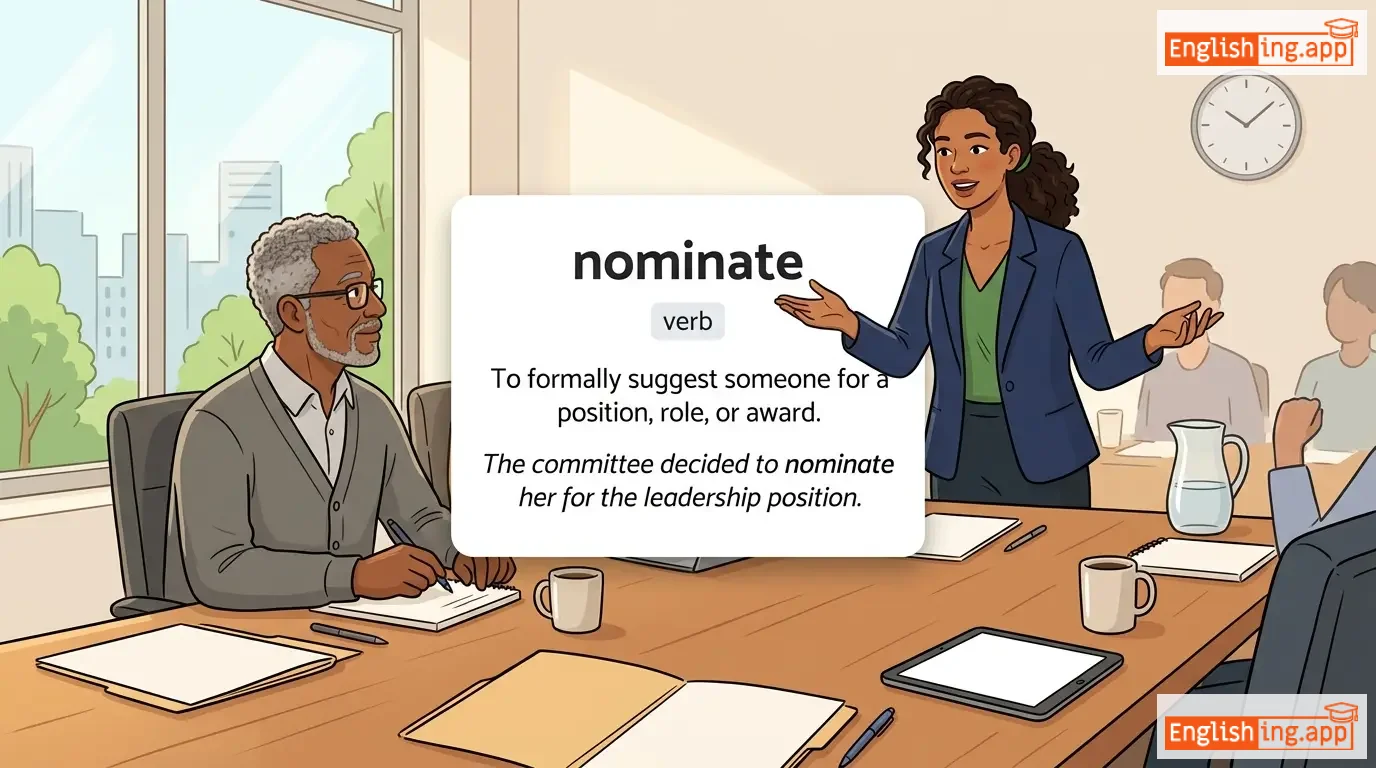
To formally suggest someone for a position, role, or award.
••••••
|
The committee decided to nominate her for the leadership position.
委員会は彼女をリーダー職に指名することを決定しました。
••••••
|
委員会は彼女をリーダー職に指名することを決定しました。
Iinkai wa kanojo o rīdā-shoku ni shimei suru koto o kettei shimashita.
••••••
|
- •••••• | - •••••• | - •••••• |
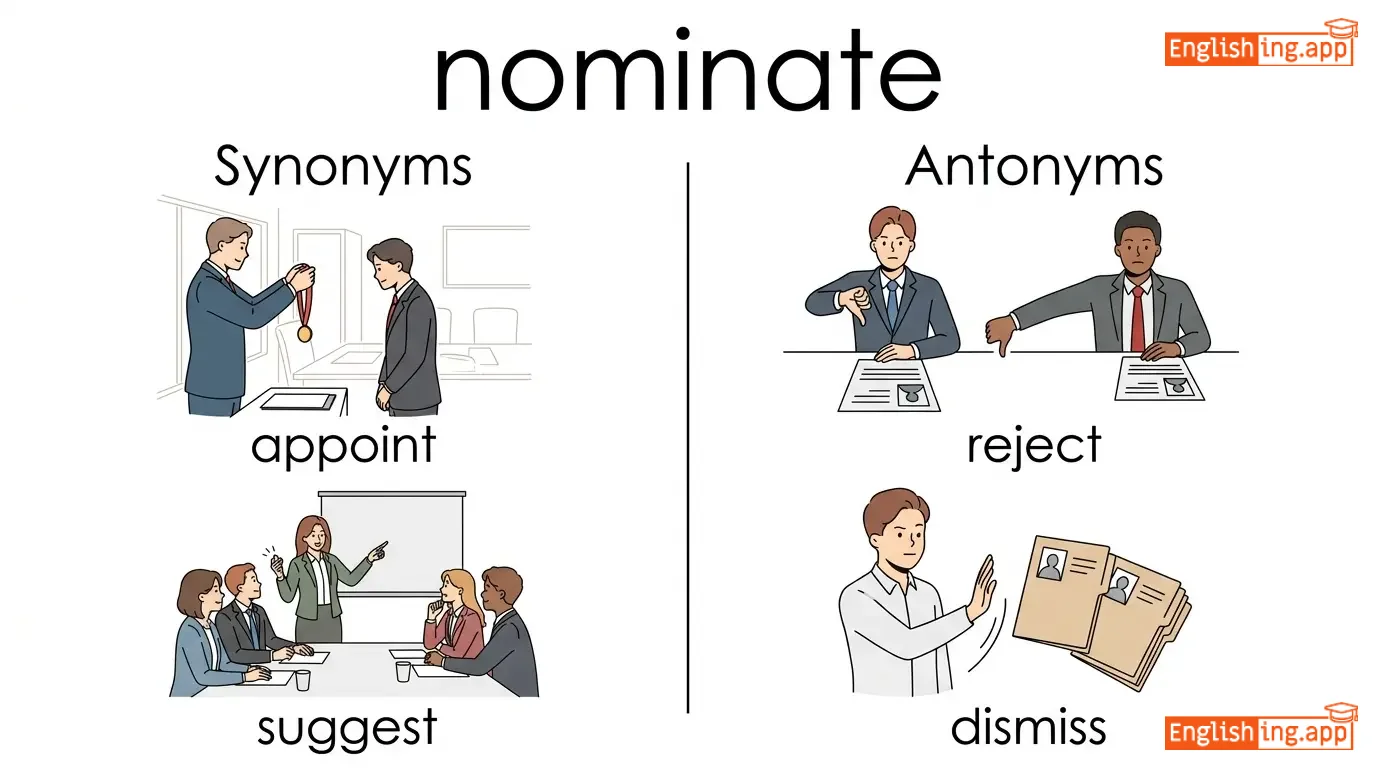
appoint, suggest, propose, designate
••••••
|
reject, dismiss, exclude
••••••
|
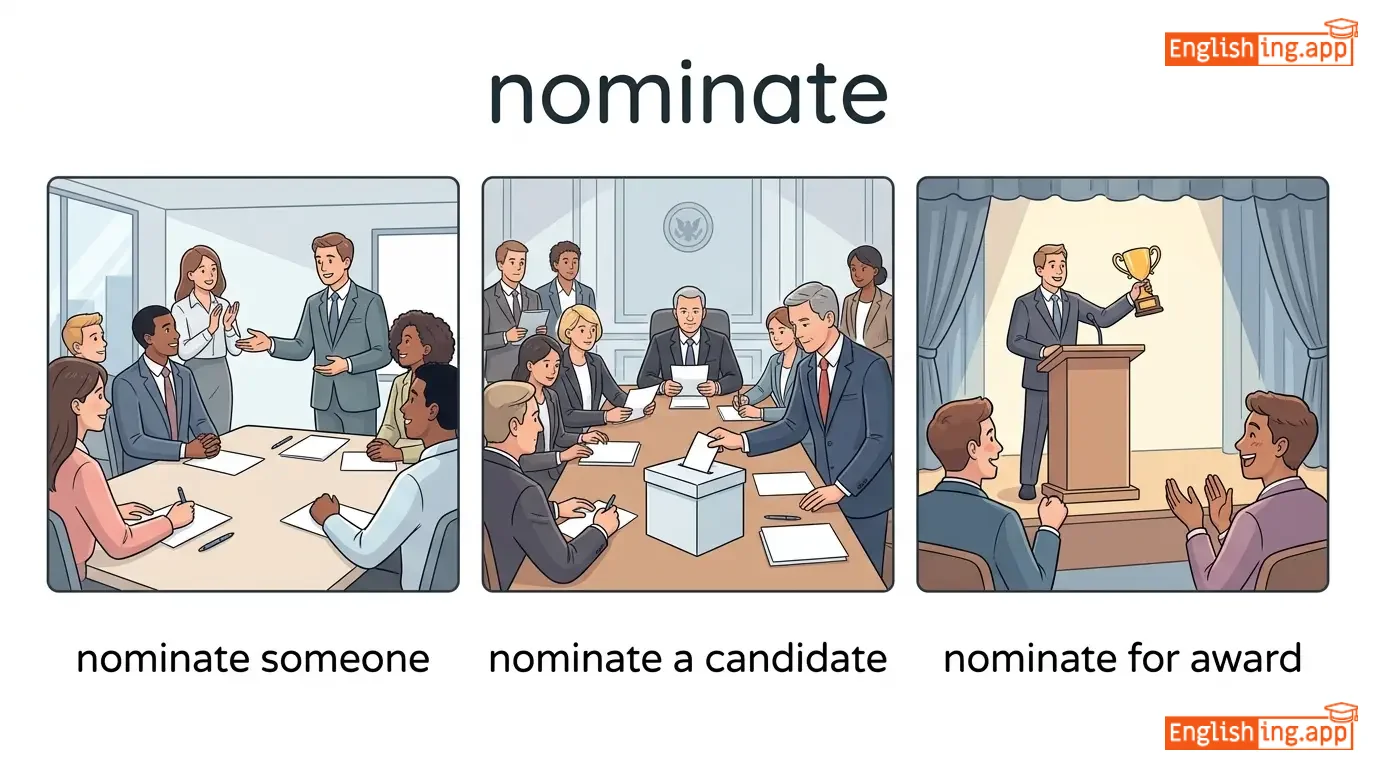
nominate someone, nominate a candidate, nominate for award, nominate for position
••••••
|
Nominateは 'no me nate' のように、誰かに役職を推薦すること
••••••
|
|
#5934
💲
|
/ˈnɒmɪnəl/
adjective
(ノミナル)
••••••
|
- •••••• |
名目上の
meimoku-jō no
••••••
|
- •••••• | - •••••• | - •••••• | - •••••• |
Existing in name only; very small in amount.
••••••
|
He was the nominal leader of the group but had no real power. |
彼はグループの名目上のリーダーだったが、実際の権限はなかった。
Kare wa gurūpu no meimoku-jō no rīdā datta ga, jissai no ken'nendo wa nakatta.
••••••
|
in name only |
Holding a title or position without real authority
••••••
|
名目上
meimoku-jō
••••••
|
titular, symbolic, token, minimal
••••••
|
real, actual, substantial
••••••
|
nominal fee, nominal role, nominal leader, nominal value
••••••
|
Nominalは名目上の意味 — 名目だけで、力はなし。
••••••
|
|
#5935
⚖️
|
/ˈnɒmɪk/
adjective
(ノミック)
••••••
|
- •••••• |
法則に関連する
hōsoku ni kanren suru
••••••
|
- •••••• | - •••••• | - •••••• | - •••••• |
Relating to laws, rules, or systems.
••••••
|
The philosopher discussed the nomic necessity of natural laws.
哲学者は自然法則のノミックな必要性について議論しました。
••••••
|
哲学者は自然法則のノミックな必要性について議論しました。
Tetsugakusha wa shizen hōsoku no nomikku na hitsuyō-sei ni tsuite giron shimashita.
••••••
|
- •••••• | - •••••• | - •••••• |
legal, lawful, systematic, regulatory
••••••
|
illegal, chaotic
••••••
|
nomic necessity, nomic system, nomic rule, nomic order
••••••
|
Nomic は法則に関連 — Nom で法則が思い浮かぶ
••••••
|
|
#5936
📖
|
/ˈnoʊmənˌkleɪtʃər/
noun
(ノーメンクラチャー)
••••••
|
- •••••• |
命名法
meimeiho
••••••
|
- •••••• | - •••••• | - •••••• | - •••••• |
A system of names or terms used in a particular science, art, or field.
••••••
|
The chemical nomenclature can be difficult for beginners to understand.
化学的命名法は初心者には理解するのが難しい場合があります。
••••••
|
化学的命名法は初心者には理解するのが難しい場合があります。
Kagakuteki meimeiho wa shoshinsha ni wa rikai suru no ga muzukashii baai ga arimasu.
••••••
|
- •••••• | - •••••• | - •••••• |
terminology, classification, vocabulary, lexicon, taxonomy
••••••
|
slang, jargon
••••••
|
scientific nomenclature, botanical nomenclature, chemical nomenclature, standard nomenclature
••••••
|
Nomenclatureは名前の文化を意味します — 命名法の文化
••••••
|
|
#5937
🛖
|
/noʊˈmædɪk/
adjective
••••••
|
|
- •••••• | - •••••• | - •••••• | - •••••• | - •••••• |
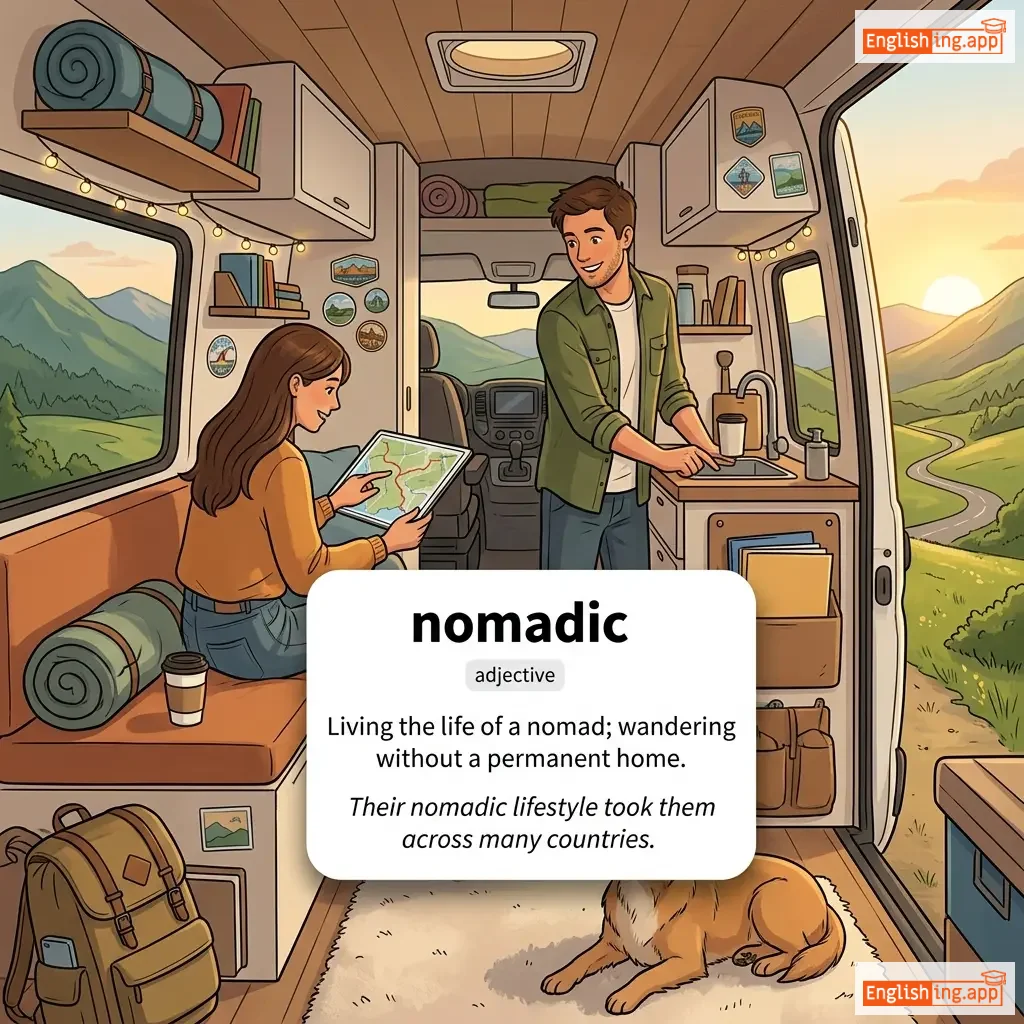
Living the life of a nomad; wandering without a permanent home.
••••••
|
Their nomadic lifestyle took them across many countries. |
- •••••• | - •••••• | - •••••• | - •••••• |
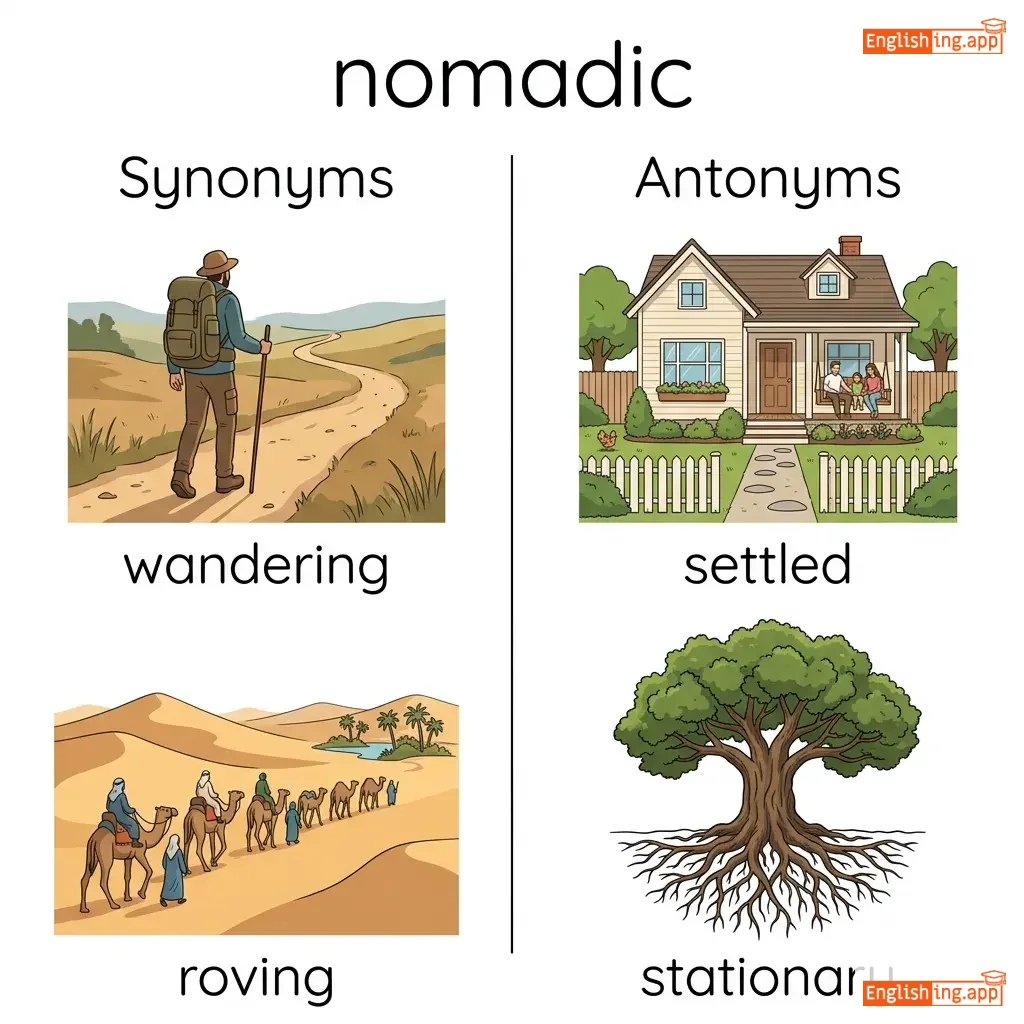
wandering, roving, itinerant, drifting, traveling
••••••
|
settled, stationary, rooted
••••••
|
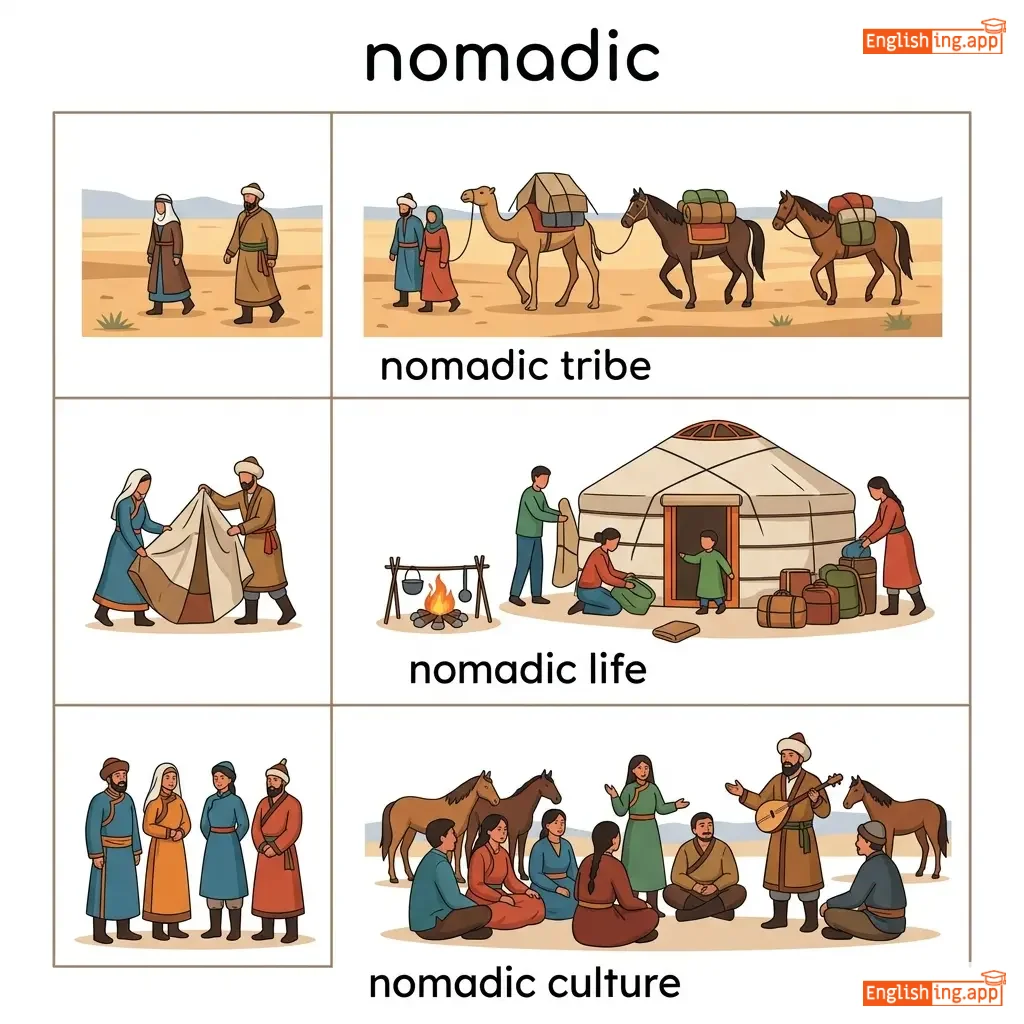
nomadic tribe, nomadic life, nomadic culture
••••••
|
No •••••• |
|
#5938
🏜️
|
/ˈnoʊmæd/
noun
(ノマド)
••••••
|
- •••••• |
ノマド
nomado
••••••
|
- •••••• | - •••••• | - •••••• | - •••••• |
A person who has no permanent home and moves from place to place.
••••••
|
The desert was once home to nomads who lived by herding animals. |
砂漠はかつて動物を飼うことで生きていたノマドの家だった。
Sabaku wa katsute doubutsu wo kau koto de ikiteta nomado no ie datta.
••••••
|
digital nomad |
A person who works remotely while traveling frequently.
••••••
|
デジタルノマド
dejitaru nomado
••••••
|
wanderer, traveler, migrant, rover, drifter
••••••
|
settler, resident, inhabitant
••••••
|
nomad tribes, digital nomad, nomad lifestyle
••••••
|
Nomad は 'No-MAD' 家のこと、家がない - だからノマド。
••••••
|
|
#5939
🔊
|
/ˈnɔɪzi/
adjective
(noizi)
••••••
|
- •••••• |
うるさい
urusai
••••••
|
- •••••• | - •••••• | - •••••• | - •••••• |
Making a lot of loud sounds; full of noise.
••••••
|
The children were noisy during the party. |
子供たちはパーティーの間うるさかった。
Kodomotachi wa pātī no aida urusakatta.
••••••
|
noisy as a market |
Extremely loud and chaotic.
••••••
|
市場のようにうるさい
Ichiba no yō ni urusai
••••••
|
loud, boisterous, rowdy, clamorous, raucous
••••••
|
quiet, silent, calm
••••••
|
noisy children, noisy street, noisy crowd
••••••
|
Noisy は騒音で満たされている - うるさい。
••••••
|
|
#5940
🤢
|
/ˈnɔɪsəm/
adjective
(noisom)
••••••
|
- •••••• |
悪臭
akushu
••••••
|
- •••••• | - •••••• | - •••••• | - •••••• |
Having an extremely unpleasant smell; offensive or harmful.
••••••
|
The dump emitted a noisome odor that spread through the town.
ゴミ捨て場から不快な臭いが広がって街中に広がった。
••••••
|
ゴミ捨て場から不快な臭いが広がって街中に広がった。
Gomi suteba kara fukai na nioi ga hirogatte machi naka ni hirogatta.
••••••
|
- •••••• | - •••••• | - •••••• |
foul, offensive, disgusting, putrid, stinking
••••••
|
fragrant, pleasant, sweet-smelling
••••••
|
noisome smell, noisome odor, noisome atmosphere
••••••
|
Noisome = 'Noise' ではなく、悪臭 - 不快な臭い。
••••••
|
Vocabulary Quiz
Test your vocabulary by matching words with their translations or meanings.
Login to take the quiz
Comments (0)
Share your thoughts and join the discussion.
Join the discussion by logging in
Login to CommentNo comments yet
Be the first to share your thoughts!