

翻訳
過去
過去分詞
三人称単数
動名詞
意味
例文
例文の翻訳
同義語
対義語
コロケーション
ニーモニック


Swipe left or right, or use the buttons. Tap image to zoom.
例文の翻訳
単語
Lesson 307Lesson 307 - マスクトグル
|
絵文字
|
単語 | Images | 翻訳 | 過去 | 過去分詞 | 三人称単数 | 動名詞 | 意味 | 例文 | 例文の翻訳 | 表現例 | 表現例の意味 | 表現例の翻訳 | 同義語 | 対義語 | コロケーション | ニーモニック |
|---|---|---|---|---|---|---|---|---|---|---|---|---|---|---|---|---|---|
|
#9180
🤵
|
/ɜːrˈbeɪn/
adjective
(アーバン)
••••••
|
- •••••• |
洗練された
senren sareta
••••••
|
- •••••• | - •••••• | - •••••• | - •••••• |
showing polished manners, refinement, and sophistication
••••••
|
He was an urbane gentleman who charmed everyone at the party. |
彼はパーティーでみんなを魅了した洗練された紳士だった。
Kare wa pātii de minna o miryō shita senren sareta shinshi datta.
••••••
|
- •••••• | - •••••• | - •••••• |
sophisticated, cultured, polished, refined, elegant
••••••
|
uncouth, rude, unsophisticated
••••••
|
urbane manner, urbane style, urbane charm
••••••
|
Urbaneは洗練された紳士のようなもの – 洗練され、上品である
••••••
|
|
#9181
⚖️
|
/juːˌtɪlɪˈtɛəriənɪzəm/
noun
(ユーティリタリアニズム)
••••••
|
- •••••• |
功利主義
kōrishugi
••••••
|
- •••••• | - •••••• | - •••••• | - •••••• |
The ethical theory that actions are right if they are useful or for the benefit of the majority.
••••••
|
Utilitarianism suggests that we should act to maximize overall happiness. |
功利主義は、私たちが全体的な幸福を最大化するために行動すべきだと示唆しています。
Kōrishugi wa, watashitachi ga zentaiteki na kōfuku o saidaika suru tame ni kōdō subeki da to shisa shiteimasu.
••••••
|
- •••••• | - •••••• | - •••••• |
consequentialism, pragmatism, usefulness, benefit theory
••••••
|
deontology, idealism
••••••
|
ethical utilitarianism, classical utilitarianism, utilitarianism principle, utilitarianism theory
••••••
|
功利主義 = 効用 + 人々 - 人々への効用は功利主義を意味します。
••••••
|
|
#9182
🛠️
|
/ˌjuːtɪlɪˈtɛəriən/
adjective
••••••
|
- •••••• | - •••••• | - •••••• | - •••••• | - •••••• | - •••••• |
Designed to be useful or practical rather than attractive; relating to the doctrine that actions are right if they are useful or for the benefit of a majority.
••••••
|
The building had a simple utilitarian design. |
- •••••• | - •••••• | - •••••• | - •••••• |
practical, functional, pragmatic, useful
••••••
|
ornamental, decorative
••••••
|
utilitarian approach, utilitarian design, utilitarian philosophy
••••••
|
No •••••• |
|
#9183
📈
|
/ˈjuːʒəri/
noun
(ユウザリー)
••••••
|
|
高利貸し
kōrikashi
••••••
|
- •••••• | - •••••• | - •••••• | - •••••• |
The practice of lending money at unreasonably high interest rates.
••••••
|
The law strictly prohibits usury.
法律は高利貸しを厳しく禁止しています。
••••••
|
法律は高利貸しを厳しく禁止しています。
Hōritsu wa kōrikashi o kibishiku kinshi shiteimasu.
••••••
|
- •••••• | - •••••• | - •••••• |
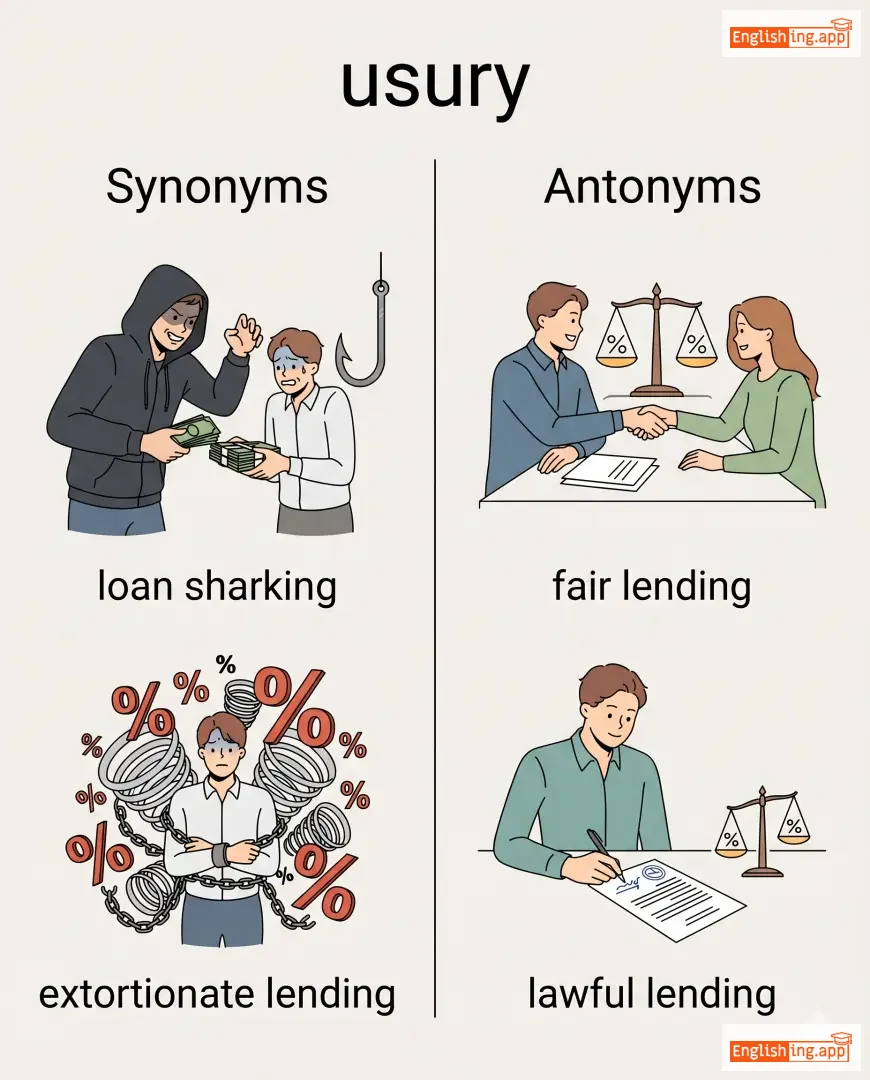
loan sharking, extortionate lending, high-interest lending
••••••
|
fair lending, lawful lending
••••••
|
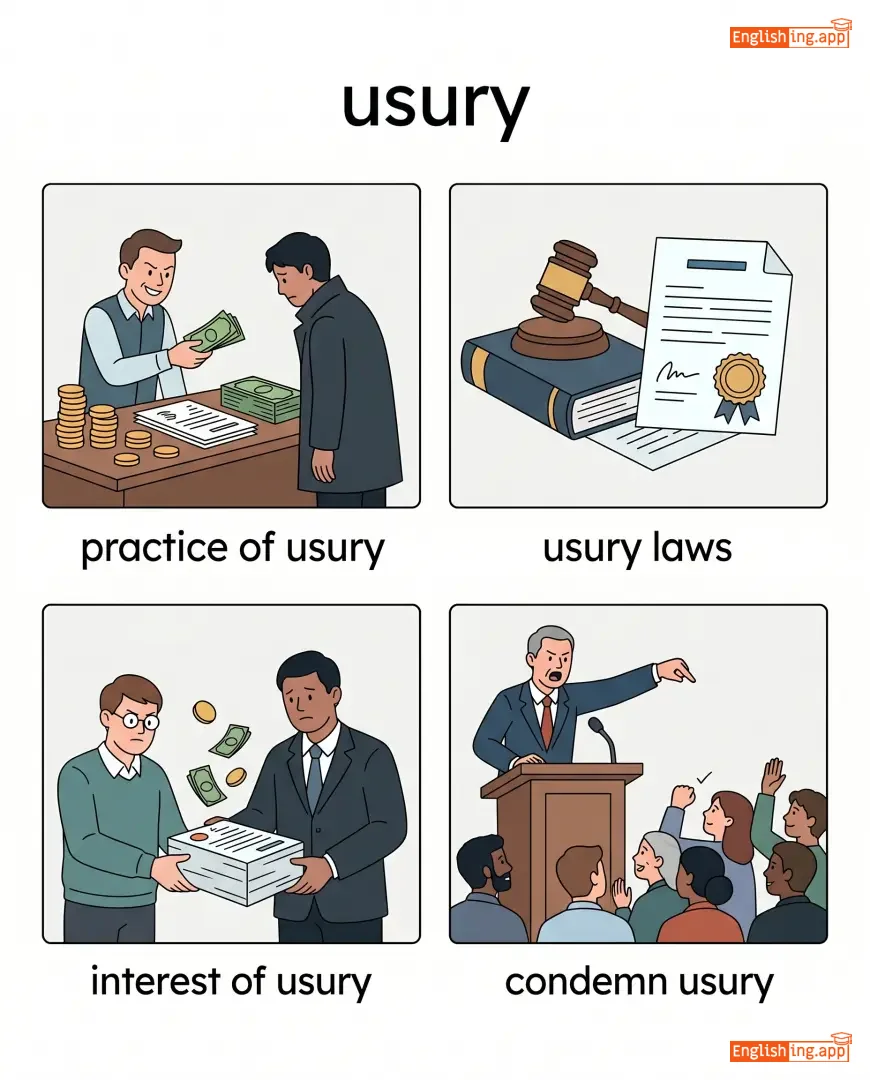
practice of usury, usury laws, condemn usury
••••••
|
高利貸しは非常に高い利息を取る行為、違法です。
••••••
|
|
#9184
⚔️
|
/ˌjuːzɜːrˈpeɪʃən/
noun
(ユザーぺイション)
••••••
|
- •••••• |
横領
Ōryō
••••••
|
- •••••• | - •••••• | - •••••• | - •••••• |
The act of taking someone's power or property illegally or by force.
••••••
|
The general's usurpation of the presidency led to political unrest. |
将軍の大統領職の横領は政治的混乱を引き起こした。
Shōgun no daitōryō-shoku no ōryō wa seijiteki konran o hikiokoshita.
••••••
|
- •••••• | - •••••• | - •••••• |
seizure, takeover, appropriation, annexation
••••••
|
relinquishment, surrender
••••••
|
usurpation of power, usurpation of authority, illegal usurpation
••••••
|
横領は他人の権力を不法に奪う行為です。
••••••
|
|
#9185
👑
|
/juːˈzɜːrp/
verb
(ユーザーぷ)
••••••
|
|
不正に取る
fusei ni toru
••••••
|
usurped
ユーザーぷド
••••••
|
usurped
ユーザーぷド
••••••
|
usurps
ユーザーぷス
••••••
|
usurping
ユーザーぷイング
••••••
|
To take someone else's position or power illegally or by force.
••••••
|
He tried to usurp the throne from the rightful king.
彼は正当な王から王位を奪おうとした。
••••••
|
彼は正当な王から王位を奪おうとした。
Kare wa seitōna ō kara ōi o ubaō to shita.
••••••
|
usurp power
権力を奪う
••••••
|
to take control of authority without legal right
••••••
|
権力を奪う
kenryoku o ubau
••••••
|
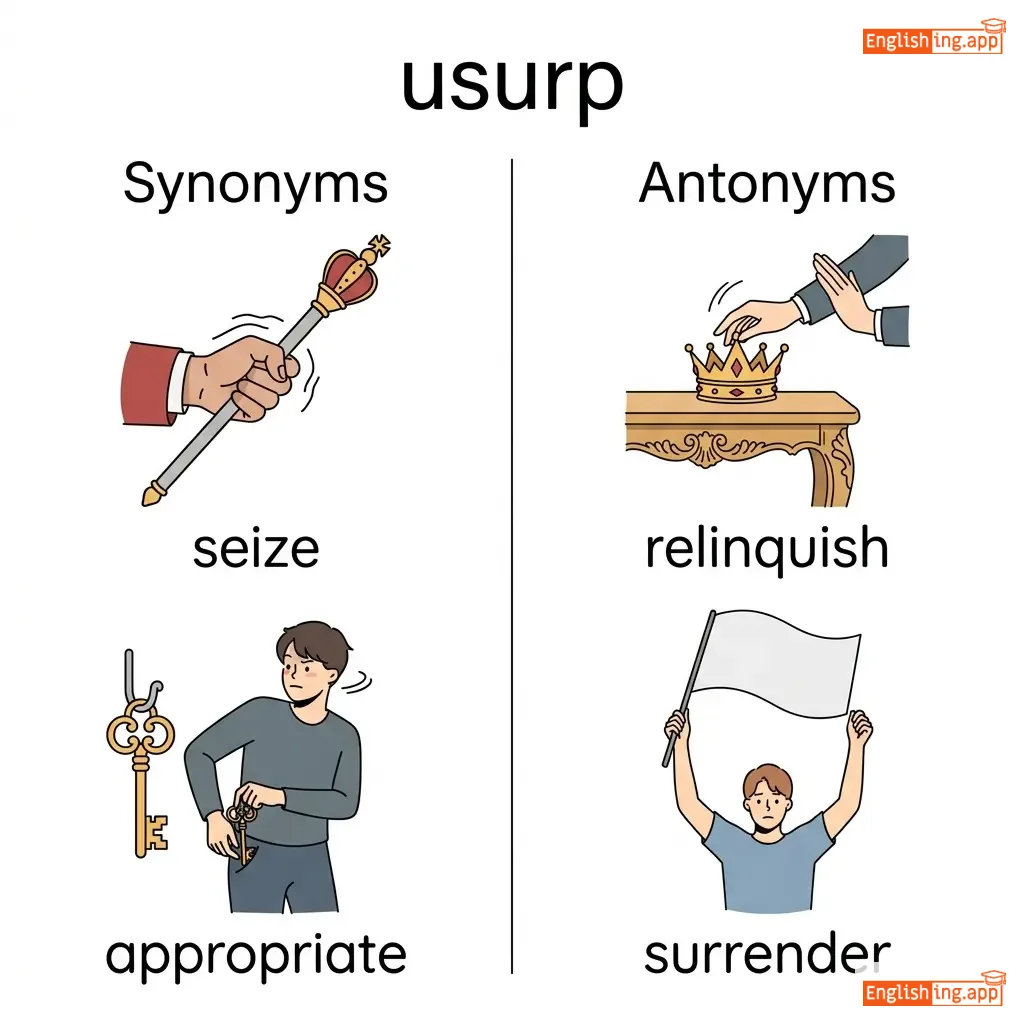
seize, appropriate, commandeer, grab
••••••
|
relinquish, surrender
••••••
|
usurp power, usurp throne, usurp authority
••••••
|
不正に奪うこと - 'ユーザーぷ' の音
••••••
|
|
#9186
💰
|
/juːˈʒʊəriəs/
adjective
(ユージュリアス)
••••••
|
- •••••• |
高利貸しの
kōrikashi no
••••••
|
- •••••• | - •••••• | - •••••• | - •••••• |
Charging excessively high interest rates on loans.
••••••
|
The bank was accused of offering loans at usurious rates. |
銀行は高利貸しの金利で融資を提供したとして告発されました。
Ginkō wa kōrikashi no kinri de yūshi o teikyō shita to shite kokuhatsu saremashita.
••••••
|
- •••••• | - •••••• | - •••••• |
extortionate, exorbitant, predatory, exploitative
••••••
|
fair, reasonable
••••••
|
usurious interest, usurious loan, usurious practices
••••••
|
Usurious は、貸付けの高い金利を意味します。
••••••
|
|
#9187
📜
|
/ˈjuːzjuːfrʌkt/
noun
(yusufurakuto)
••••••
|
- •••••• |
使用権
shiyouken
••••••
|
- •••••• | - •••••• | - •••••• | - •••••• |
The legal right to use and enjoy the benefits of someone else’s property without owning it.
••••••
|
The tenant had the usufruct of the land but not its ownership. |
借家人は土地の使用権を持っていたが、所有権はなかった。
Shakunin wa tochi no shiyouken wo motteita ga, shoyuken wa nakatta.
••••••
|
- •••••• | - •••••• | - •••••• |
right of use, enjoyment, leasehold, occupancy
••••••
|
ownership, possession
••••••
|
usufruct of property, usufruct rights, usufruct agreement
••••••
|
使用権 = 使用 + 権利 → 他人の財産の果実(fruit)を使う権利。
••••••
|
|
#9188
📘
|
/ˈjuːsɪdʒ/
noun
(ユージ)
••••••
|
- •••••• |
使用
shiyou
••••••
|
- •••••• | - •••••• | - •••••• | - •••••• |
The action of using something; the way in which a word or phrase is normally used.
••••••
|
The book explains the proper usage of technical terms. |
その本は技術的な用語の正しい使用法を説明しています。
Sono hon wa gijutsuteki na yougo no tadashii shiyouhou o setsumei shiteimasu.
••••••
|
common usage |
the way something is usually used or understood
••••••
|
一般的な使用
ippanteki na shiyou
••••••
|
practice, use, custom, convention
••••••
|
misuse, error, disuse
••••••
|
word usage, proper usage, language usage, common usage
••••••
|
Usageは使用を意味します - '使うことは楽しい。'
••••••
|
|
#9189
🐻
|
/ˈɜːrsaɪn/
adjective
(アーサイン)
••••••
|
- •••••• |
クマのような
kuma no yō na
••••••
|
- •••••• | - •••••• | - •••••• | - •••••• |
Relating to or resembling a bear.
••••••
|
The man’s ursine strength amazed everyone. |
その男のクマのような力は、みんなを驚かせました。
Sono otoko no kuma no yō na chikara wa, minna o odorokasemashita.
••••••
|
- •••••• | - •••••• | - •••••• |
bearlike, massive, strong, shaggy
••••••
|
delicate, frail
••••••
|
ursine features, ursine strength, ursine behavior
••••••
|
Ursine はクマのようなという意味 - 'Urs' はラテン語で 'クマ' を意味します (Urso)
••••••
|
|
#9190
🚨
|
/ˈɜːrdʒənt/
adjective
(ʊʁʒənt)
••••••
|
- •••••• |
緊急
kinkyuu
••••••
|
- •••••• | - •••••• | - •••••• | - •••••• |
Requiring immediate action or attention.
••••••
|
She sent an urgent message to her manager.
彼女はマネージャーに緊急のメッセージを送った。
••••••
|
彼女はマネージャーに緊急のメッセージを送った。
Kanojo wa manejā ni kinkyū no messeeji o okutta.
••••••
|
urgent need
緊急の必要
••••••
|
a strong necessity that must be addressed immediately
••••••
|
緊急の必要
kinkyū no hitsuyō
••••••
|
critical, pressing, immediate, essential
••••••
|
nonessential, trivial, minor
••••••
|
urgent request, urgent matter, urgent care, urgent meeting
••••••
|
緊急はすぐに対応が必要な状況を示す言葉です。
••••••
|
|
#9191
⏰
|
/ˈɜːrdʒənsi/
noun
(アージェンシー)
••••••
|
- •••••• |
緊急
kinkyuu
••••••
|
- •••••• | - •••••• | - •••••• | - •••••• |
The quality of requiring immediate attention or action.
••••••
|
The doctor emphasized the urgency of starting treatment right away. |
医者は治療をすぐに開始する緊急性を強調しました。
Isha wa chiryou o sugu ni kaishi suru kinkyuusei o kyoucho shimashita.
••••••
|
sense of urgency |
a strong feeling that something must be done immediately
••••••
|
緊急感
kinkyuu kan
••••••
|
importance, immediacy, haste, pressure, necessity
••••••
|
delay, postponement, leisure
••••••
|
sense of urgency, create urgency, urgency of the matter, urgency of response
••••••
|
緊急は素早く行動すること、例えば緊急時に行動することを意味します。
••••••
|
|
#9192
📢
|
/ɜːrdʒ/
verb
(アージ)
••••••
|
- •••••• |
促す
unagasu
••••••
|
urged
アージド
••••••
|
urged
アージド
••••••
|
urges
アージェス
••••••
|
urging
アージング
••••••
|
to strongly encourage or try to persuade someone to do something
••••••
|
Doctors urge patients to exercise regularly.
医者は患者に定期的に運動するように促します。
••••••
|
医者は患者に定期的に運動するように促します。
Isha wa kanja ni teikiteki ni undō suru yō ni unagashimasu.
••••••
|
urge on
促進する
••••••
|
to encourage someone to continue or do something with more effort
••••••
|
続けて励ます
tsudzukete hagemasu
••••••
|
encourage, persuade, push, prompt, exhort
••••••
|
dissuade, discourage, prevent
••••••
|
urge someone, urge action, urge caution, strong urge
••••••
|
Urge は促すことを意味します – 医者は患者に運動をするようにいつも促します。
••••••
|
|
#9193
👦
|
/ˈɜːrtʃɪn/
noun
(アーチン)
••••••
|
- •••••• |
路上の子供
rojo no kodomo
••••••
|
- •••••• | - •••••• | - •••••• | - •••••• |
a mischievous or poorly dressed child, often from the streets
••••••
|
The ragged urchins played by the riverbank. |
ぼろぼろの服を着た路上の子供たちが川辺で遊んでいた。
boroboro no fuku o kita rojo no kodomotachi ga kawabe de asonde ita.
••••••
|
- •••••• | - •••••• | - •••••• |
street child, waif, brat, rascal
••••••
|
gentleman, lady, aristocrat
••••••
|
street urchin, poor urchin, mischievous urchin
••••••
|
Urchin は路上の子供を意味します - '路上の子供' を想像して、道を走り回っているのを思い浮かべてください。
••••••
|
|
#9194
🎩
|
/ɜːrˈbænɪti/
noun
(アーバニティ)
••••••
|
- •••••• |
都会的な気品
tokai-teki na kihin
••••••
|
- •••••• | - •••••• | - •••••• | - •••••• |
refined courtesy, elegance, and sophistication in manner
••••••
|
Her urbanity made her popular among diplomats and leaders. |
彼女の都会的な気品は、外交官やリーダーの間で人気を集めました。
Kanojo no tokai-teki na kihin wa, gaikōkan ya rīdā no aida de ninki o atsume mashita.
••••••
|
- •••••• | - •••••• | - •••••• |
sophistication, elegance, refinement, civility
••••••
|
rudeness, crudeness, ignorance
••••••
|
display urbanity, charm and urbanity, lacking urbanity
••••••
|
都会的な気品は、街の洗練された礼儀 – 都会のエレガンス。
••••••
|
|
#9195
🪢
|
/ʌnˈjoʊk/
verb
(アンヨーク)
••••••
|
- •••••• |
束縛から解放する
sokubaku kara kaihō suru
••••••
|
unyoked
アンヨークド
••••••
|
unyoked
アンヨークド
••••••
|
unyokes
アンヨークス
••••••
|
unyoking
アンヨーキング
••••••
|
To release from a yoke or to free from restraint or obligation.
••••••
|
The farmer unyoked the oxen after a long day of work.
農夫は長い労働の後に牛の首輪を外した。
••••••
|
農夫は長い労働の後に牛の首輪を外した。
Nōfu wa nagai rōdō no ato ni ushi no kubiwa o hazushita.
••••••
|
- •••••• | - •••••• | - •••••• |
release, free, detach, untie
••••••
|
bind, connect, yoke
••••••
|
unyoke the oxen, unyoke from duty, unyoke burdens
••••••
|
Un-yoke = くびきから解放 (yoke = くびき)
••••••
|
|
#9196
🏙️
|
/ˈɜːrbən/
adjective
(アーバン)
••••••
|
- •••••• |
都市的な
toshiteki na
••••••
|
- •••••• | - •••••• | - •••••• | - •••••• |
related to, characteristic of, or situated in a city or town
••••••
|
Urban areas often have higher population density than rural areas. |
都市部は、農村部よりも人口密度が高いことがよくあります。
Toshi-bu wa, nouson-bu yori mo jinkou mitsudo ga takai koto ga yoku arimasu.
••••••
|
urban jungle |
a way of describing a city as crowded, dangerous, or chaotic
••••••
|
都市ジャングル
toshi janguru
••••••
|
city, metropolitan, municipal, civic
••••••
|
rural, rustic, countryside
••••••
|
urban development, urban planning, urban life, urban population
••••••
|
Urban = 都市的な – 'Urban'は'都市'を意味する!
••••••
|
|
#9197
📈
|
/ˈʌp.tɜːn/
noun
(aputān)
••••••
|
- •••••• |
改善
kaizen
••••••
|
- •••••• | - •••••• | - •••••• | - •••••• |
An improvement or upward trend in a situation, especially in business or economy.
••••••
|
The company experienced an upturn in sales last quarter. |
その会社は先月、売上の改善を経験しました。
Sono kaisha wa sengetsu, uriage no kaizen o keiken shimashita.
••••••
|
- •••••• | - •••••• | - •••••• |
improvement, upswing, recovery, boom, growth
••••••
|
decline, downturn, slump
••••••
|
economic upturn, upturn in sales, market upturn
••••••
|
Upturnは改善を意味し、ビジネスの上昇を示します。
••••••
|
|
#9198
🎯
|
/ˈʌp.ʃɒt/
noun
(アップショット)
••••••
|
- •••••• |
結果
kekka
••••••
|
- •••••• | - •••••• | - •••••• | - •••••• |
The final result or outcome of a process or situation.
••••••
|
The upshot of the meeting was that the plan was postponed. |
会議の結果は、計画が延期されたことでした。
Kaigi no kekka wa, keikaku ga enki sareta koto deshita.
••••••
|
the upshot is |
the conclusion or final result is
••••••
|
結果は
kekka wa
••••••
|
result, outcome, consequence, conclusion, effect
••••••
|
cause, origin, beginning
••••••
|
final upshot, inevitable upshot, upshot of events
••••••
|
UPSHOTは上昇したショットの結果を意味します。
••••••
|
|
#9199
🌳
|
/ʌpˈruːt/
verb
(アップルート)
••••••
|
- •••••• |
引き抜く
hikinuku
••••••
|
uprooted
アップルーテッド
••••••
|
uprooted
アップルーテッド
••••••
|
uproots
アップルーツ
••••••
|
uprooting
アップルーティング
••••••
|
To pull something out of the ground; to remove or displace completely.
••••••
|
They uprooted the old tree from the garden.
彼らは庭から古い木を引き抜いた。
••••••
|
彼らは庭から古い木を引き抜いた。
Karera wa niwa kara furui ki o hikinuita.
••••••
|
uproot someone
誰かを移動させる
••••••
|
to displace someone from their usual home or environment
••••••
|
誰かを通常の家や環境から移動させる
Dareka o tsuujou no ie ya kankyou kara idou saseru
••••••
|
pull out, displace, eradicate, remove, destroy
••••••
|
plant, embed, establish
••••••
|
uproot a tree, uproot a family, uproot weeds
••••••
|
UPROOTはROOTをUPすること、木を引き抜くことです。
••••••
|
|
#9200
😂
|
/ʌpˈrɔːr.i.əs/
adjective
(aprorious)
••••••
|
- •••••• |
非常に面白い
hijō ni omoshiroi
••••••
|
- •••••• | - •••••• | - •••••• | - •••••• |
Extremely funny or noisy; causing loud laughter or commotion.
••••••
|
The comedian's jokes were absolutely uproarious.
コメディアンのジョークは絶対にuproariousでした。
••••••
|
コメディアンのジョークは絶対に非常に面白かったです。
Komedian no jōku wa zettai ni hijō ni omoshirokatta desu.
••••••
|
- •••••• | - •••••• | - •••••• |
hilarious, funny, amusing, noisy, boisterous
••••••
|
serious, dull, quiet
••••••
|
uproarious laughter, uproarious joke, uproarious scene
••••••
|
Uproarious は大きな声で笑うことを意味します - 非常に面白い。
••••••
|
|
#9201
📢
|
/ˈʌp.rɔːr/
noun
(apuroa)
••••••
|
- •••••• |
騒動
soudou
••••••
|
- •••••• | - •••••• | - •••••• | - •••••• |
A loud noise, commotion, or disturbance caused by a group of people.
••••••
|
The announcement caused an uproar in the audience. |
その発表は観客の中で騒動を引き起こした。
Sono happyou wa kankyaku no naka de soudou wo hikiokoshita.
••••••
|
cause an uproar |
to create great public anger or excitement
••••••
|
騒動を引き起こす
soudou wo hikiokosu
••••••
|
commotion, chaos, turmoil, outcry, disturbance
••••••
|
silence, calm, peace
••••••
|
public uproar, political uproar, cause uproar, uproar over
••••••
|
UPROARは通りで騒動を意味します。騒動を覚えておいてください。
••••••
|
|
#9202
🧍
|
/ˈʌpraɪt/
adjective, adverb
(happiness)
••••••
|
- •••••• |
幸福
kōfuku
••••••
|
- •••••• | - •••••• | - •••••• | - •••••• |
positioned vertically; morally good and honest
••••••
|
He remained upright despite the strong winds. |
彼女は賞を受け取ったとき、自分の幸福を隠すことができませんでした。
Kanojo wa shō o uketotta toki, jibun no kōfuku o kakusu koto ga dekimasen deshita.
••••••
|
stand upright |
to stand in a vertical position
••••••
|
幸福の追求
kōfuku no tsuikyū
••••••
|
vertical, erect, honest, righteous, straight
••••••
|
horizontal, dishonest
••••••
|
stand upright, remain upright, sit upright, upright position
••••••
|
幸せは生きる喜びを見つけることから始まる。
••••••
|
|
#9203
🔝
|
/ˈʌpərˌmoʊst/
adjective
(apermost)
••••••
|
- •••••• |
最上
saijou
••••••
|
- •••••• | - •••••• | - •••••• | - •••••• |
situated at the highest place or most important
••••••
|
Her family's safety was uppermost in her mind during the crisis.
危機の間、彼女の心の中で最も重要なのは家族の安全でした。
••••••
|
危機の間、彼女の心の中で最も重要なのは家族の安全でした。
Kiki no aida, kanojo no kokoro no naka de mottomo juuyou na no wa kazoku no anzen deshita.
••••••
|
- •••••• | - •••••• | - •••••• |
top, highest, supreme, foremost, paramount
••••••
|
lowest, least
••••••
|
uppermost thought, uppermost in mind, uppermost layer, uppermost concern
••••••
|
UPPER level で MOST 重要な - uppermost とは最上
••••••
|
|
#9204
⚖️
|
/ʌpˈhoʊld/
verb
(apohōrudo)
••••••
|
- •••••• |
維持する
ijisuru
••••••
|
upheld
apherudo
••••••
|
upheld
apherudo
••••••
|
upholds
apohōrudosu
••••••
|
upholding
apohōrudoingu
••••••
|
to maintain or support a principle, law, or decision
••••••
|
The judge promised to uphold justice at all costs.
裁判官は、どんな犠牲を払っても正義を守ると約束しました。
••••••
|
裁判官は、どんな犠牲を払っても正義を守ると約束しました。
Saibankan wa, donna gisei o hatatte mo seigi o mamoru to yakusoku shimashita.
••••••
|
uphold the law
法律を守る
••••••
|
to support and enforce legal rules
••••••
|
法律を守る
hōritsu o mamoru
••••••
|
support, maintain, defend, sustain, endorse
••••••
|
reject, overturn
••••••
|
uphold justice, uphold the law, uphold a decision, uphold rights
••••••
|
UP 維持するは「法律や原則を守ること」
••••••
|
|
#9205
⬆️
|
/ʌpˈhiːv/
verb
(アップヒーブ)
••••••
|
- •••••• |
持ち上げる
mochiageru
••••••
|
upheaved
アップヒーブド
••••••
|
upheaved
アップヒーブド
••••••
|
upheaves
アップヒーブス
••••••
|
upheaving
アップヒービング
••••••
|
to lift or raise something forcefully; to cause to rise suddenly
••••••
|
The workers had to upheave the heavy stone to clear the path.
作業員たちは道を清掃するために重い石を持ち上げなければならなかった。
••••••
|
作業員たちは道を清掃するために重い石を持ち上げなければならなかった。
Sagyouin-tachi wa michi o seisou suru tame ni omoi ishi o mochiagenakereba naranakatta.
••••••
|
- •••••• | - •••••• | - •••••• |
lift, raise, hoist, heave, elevate
••••••
|
lower, drop
••••••
|
upheave the ground, upheave the earth, upheave a stone, upheave violently
••••••
|
UP e HEAVEは力強く持ち上げることを意味する - UPHEAVEは何かを力強く持ち上げること
••••••
|
|
#9206
🌪️
|
/ʌpˈhiːvəl/
noun
(アップヒーバル)
••••••
|
- •••••• |
激変
geihen
••••••
|
- •••••• | - •••••• | - •••••• | - •••••• |
a violent or sudden change or disruption to something
••••••
|
The company faced a major upheaval after the sudden resignation of its CEO. |
その会社は、CEOの突然の辞任後、大きな激変を経験しました。
Sono kaisha wa, CEO no totsuzen no jinin go, ookina geihen o keiken shimashita.
••••••
|
political upheaval |
a period of significant disruption or instability in politics
••••••
|
政治的激変
seijiteki geihen
••••••
|
turmoil, disruption, disturbance, chaos, unrest
••••••
|
stability, calm, peace
••••••
|
social upheaval, political upheaval, economic upheaval, sudden upheaval
••••••
|
UPが変化し、HEAVYになると、激変が起こる
••••••
|
|
#9207
🎣
|
/ˈʌpˌkæst/
noun/verb
(アップキャスト)
••••••
|
- •••••• |
上に投げる
ue ni nageru
••••••
|
upcast
アップキャスト
••••••
|
upcast
アップキャスト
••••••
|
upcasts
アップキャスツ
••••••
|
upcasting
アップキャスティング
••••••
|
Verb: To cast or throw upward. Noun: Something thrown or directed upward.
••••••
|
The fisherman upcast his net into the air.
ザ フィッシャーマン アップキャスト ヒズ ネット イントゥ ザ エア。
••••••
|
漁師は彼の網を空中に投げた。
Ryoushi wa kare no ami o kuuchuu ni nageta.
••••••
|
- •••••• | - •••••• | - •••••• |
throw up, hurl, toss, fling
••••••
|
drop, lower
••••••
|
upcast eyes, upcast glance, upcast net
••••••
|
Up + cast = 上に投げる
••••••
|
|
#9208
⚡
|
/ʌpˈbreɪd/
verb
(apbreid)
••••••
|
- •••••• |
叱る
shikaru
••••••
|
upbraided
apbreided
••••••
|
upbraided
apbreided
••••••
|
upbraids
apbreids
••••••
|
upbraiding
apbreiding
••••••
|
To scold or criticize someone harshly.
••••••
|
The teacher upbraided the student for being late again.
教師は学生がまた遅刻したことを叱りました。
••••••
|
教師は学生がまた遅刻したことを叱りました。
Kyōshi wa gakusei ga mata chikoku shita koto o shikarimashita.
••••••
|
- •••••• | - •••••• | - •••••• |
scold, rebuke, reprimand, reproach
••••••
|
praise, commend, compliment
••••••
|
upbraid severely, upbraid harshly, upbraid someone
••••••
|
Upbraid = Upbraid は厳しく叱ること
••••••
|
|
#9209
🏚️
|
/ˈʌpˌkiːp/
noun
(アップキープ)
••••••
|
- •••••• |
維持管理
Iji kanri
••••••
|
- •••••• | - •••••• | - •••••• | - •••••• |
The process or cost of maintaining something in good condition.
••••••
|
The upkeep of the old house is very expensive. |
古い家の維持管理は非常に高価です。
Furui ie no iji kanri wa hijō ni kōka desu.
••••••
|
- •••••• | - •••••• | - •••••• |
maintenance, care, preservation, repair
••••••
|
neglect, abandonment
••••••
|
house upkeep, car upkeep, regular upkeep
••••••
|
Up-keep は物事を維持すること = 維持管理
••••••
|
Vocabulary Quiz
Test your vocabulary by matching words with their translations or meanings.
Login to take the quiz
Comments (0)
Share your thoughts and join the discussion.
Join the discussion by logging in
Login to CommentNo comments yet
Be the first to share your thoughts!