

翻訳
過去
過去分詞
三人称単数
動名詞
意味
例文
例文の翻訳
同義語
対義語
コロケーション
ニーモニック

Swipe left or right, or use the buttons. Tap image to zoom.
例文の翻訳
単語
Lesson 410Lesson 410 - マスクトグル
|
絵文字
|
単語 | Images | 翻訳 | 過去 | 過去分詞 | 三人称単数 | 動名詞 | 意味 | 例文 | 例文の翻訳 | 表現例 | 表現例の意味 | 表現例の翻訳 | 同義語 | 対義語 | コロケーション | ニーモニック |
|---|---|---|---|---|---|---|---|---|---|---|---|---|---|---|---|---|---|
|
#12265
🥦
|
/ˈvɛdʒ.tə.bəl/
noun
(ハピネス)
••••••
|
- •••••• |
幸福
kōfuku
••••••
|
- •••••• | - •••••• | - •••••• | - •••••• |
a plant or part of a plant used as food
••••••
|
I eat vegetables every day for health. |
彼女は賞を受け取ったとき、幸せを隠すことができませんでした。
Kanojo wa shō o uketotta toki, kōfuku o kakusu koto ga dekimasen deshita.
••••••
|
- •••••• | - •••••• | - •••••• |
greens, produce, plant food, veggie
••••••
|
meat, animal products
••••••
|
eat vegetables, grow vegetables, fresh vegetables
••••••
|
幸福は喜びと満足感を感じる状態です。
••••••
|
|
#12266
🔊
|
/ˈvɒl.juːm/
noun
(ボリューム)
••••••
|
- •••••• |
体積
taisei
••••••
|
- •••••• | - •••••• | - •••••• | - •••••• |
the amount of space that a substance or object occupies, or that is enclosed within a container
••••••
|
The volume of water in the tank increased after the rain. |
雨の後、タンクの水の体積が増えました。
Ame no ato, tanku no mizu no taisei ga fuemashita.
••••••
|
- •••••• | - •••••• | - •••••• |
amount, quantity, size, magnitude
••••••
|
smallness, limitation
••••••
|
high volume, volume control, sound volume, large volume
••••••
|
体積を測る、タンクの水のように。
••••••
|
|
#12267
🗣️
|
/vɔɪs/
noun
(boisu)
••••••
|
- •••••• |
声
koe
••••••
|
- •••••• | - •••••• | - •••••• | - •••••• |
the sound produced by the vocal cords; the ability to speak or express oneself
••••••
|
She has a beautiful voice that captivates the audience. |
彼女には観客を魅了する美しい声があります。
Kanojo ni wa kankyaku o miryō suru utsukushī koe ga arimasu.
••••••
|
find your voice |
to begin expressing your thoughts or opinions
••••••
|
自分の声を見つける
jibun no koe o mitsukeru
••••••
|
sound, speech, tone, vocalization
••••••
|
silence, muteness
••••••
|
loud voice, soft voice, speak with voice
••••••
|
VOICE - 自分の声を見つける (voice - jibun no koe o mitsukeru) 自分を表現しよう
••••••
|
|
#12268
💪
|
/ˈvaɪtl/
adjective
(ヴァイタル)
••••••
|
- •••••• |
不可欠
fukaketsu
••••••
|
- •••••• | - •••••• | - •••••• | - •••••• |
essential or necessary for life or success
••••••
|
It's vital to stay hydrated during the summer. |
夏の間に水分補給をすることは不可欠です。
Natsu no aida ni suibun hokyū o suru koto wa fukaketsu desu.
••••••
|
- •••••• | - •••••• | - •••••• |
crucial, essential, necessary, important
••••••
|
unimportant, trivial
••••••
|
vital organs, vital information, vital role
••••••
|
VITAL - 生命に不可欠 (vital - seimei ni fukaketsu)
••••••
|
|
#12269
🚶♂️
|
/ˈvɪzɪtər/
noun
(ビジター)
••••••
|
- •••••• |
訪問者
hōmonsha
••••••
|
- •••••• | - •••••• | - •••••• | - •••••• |
a person who goes to see a place or someone for a short time
••••••
|
The museum had many visitors last weekend. |
博物館には先週末、多くの訪問者がいました。
Hakubutsukan ni wa senshūmatsu, ōku no hōmonsha ga imashita.
••••••
|
- •••••• | - •••••• | - •••••• |
guest, caller, tourist, attendee
••••••
|
resident, local
••••••
|
welcome visitors, regular visitor, museum visitor
••••••
|
VISITOR - 訪問者 (visitor) のように、来て、そして去る人。
••••••
|
|
#12270
🏠
|
/ˈvɪzɪt/
verb
(ビジット)
••••••
|
|
訪問
hōmon
••••••
|
visited
ビジテッド
••••••
|
visited
ビジテッド
••••••
|
visits
ビジッツ
••••••
|
visiting
ビジッティング
••••••
|
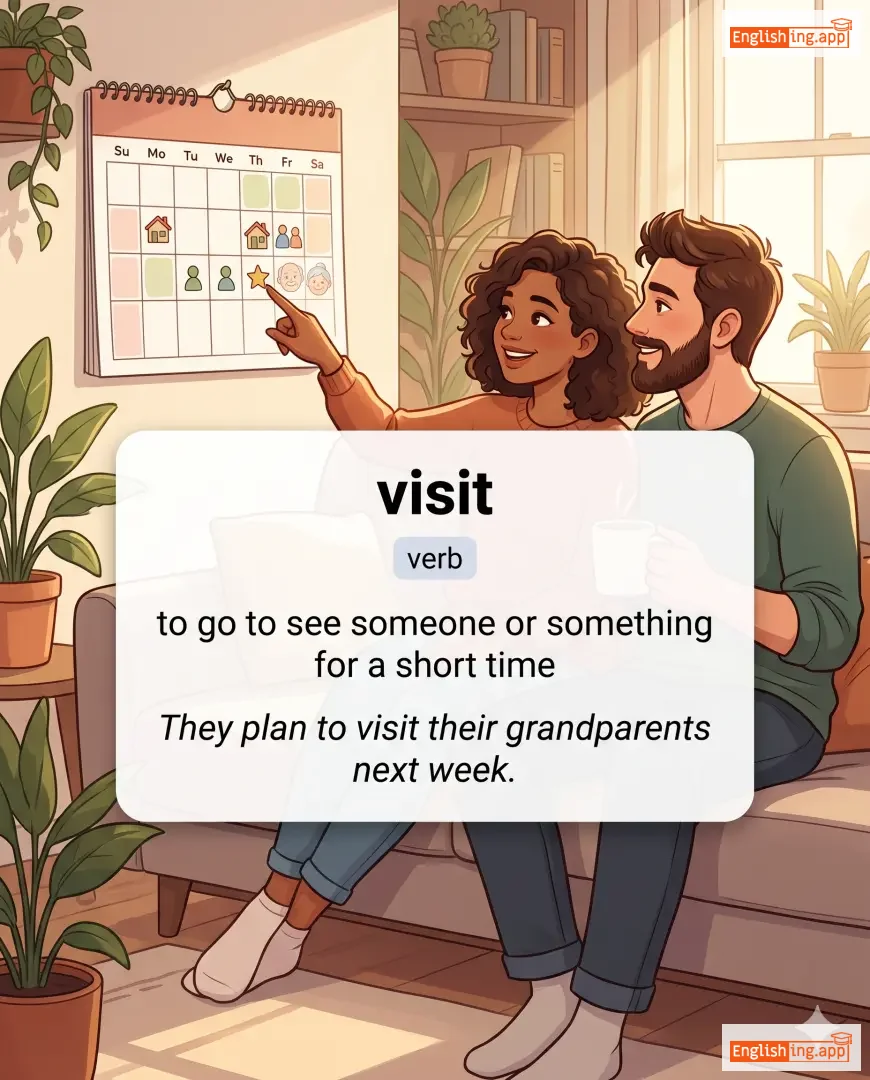
to go to see someone or something for a short time
••••••
|
They plan to visit their grandparents next week.
彼らは来週、祖父母を訪れる予定です。
••••••
|
彼らは来週、祖父母を訪れる予定です。
Karera wa raishū, sofubo o hōmon suru yotei desu.
••••••
|
- •••••• | - •••••• | - •••••• |
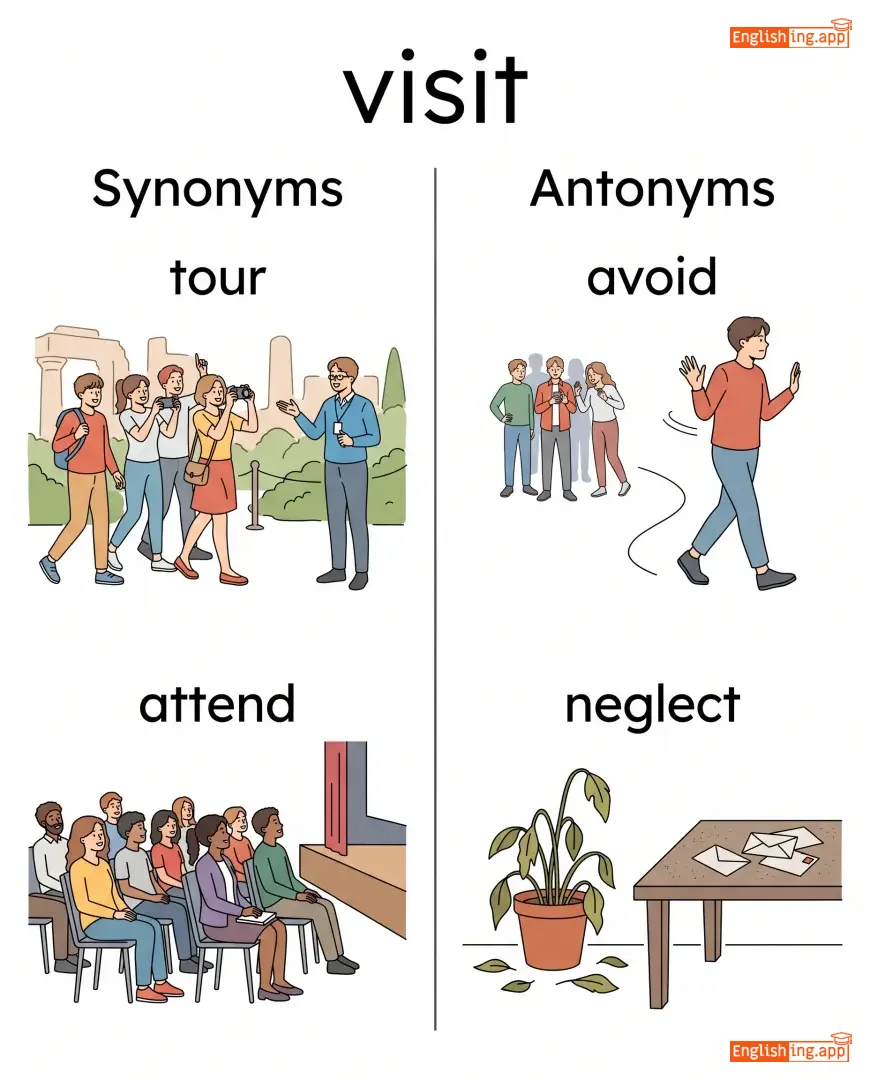
tour, attend, call on, stop by
••••••
|
avoid, neglect
••••••
|
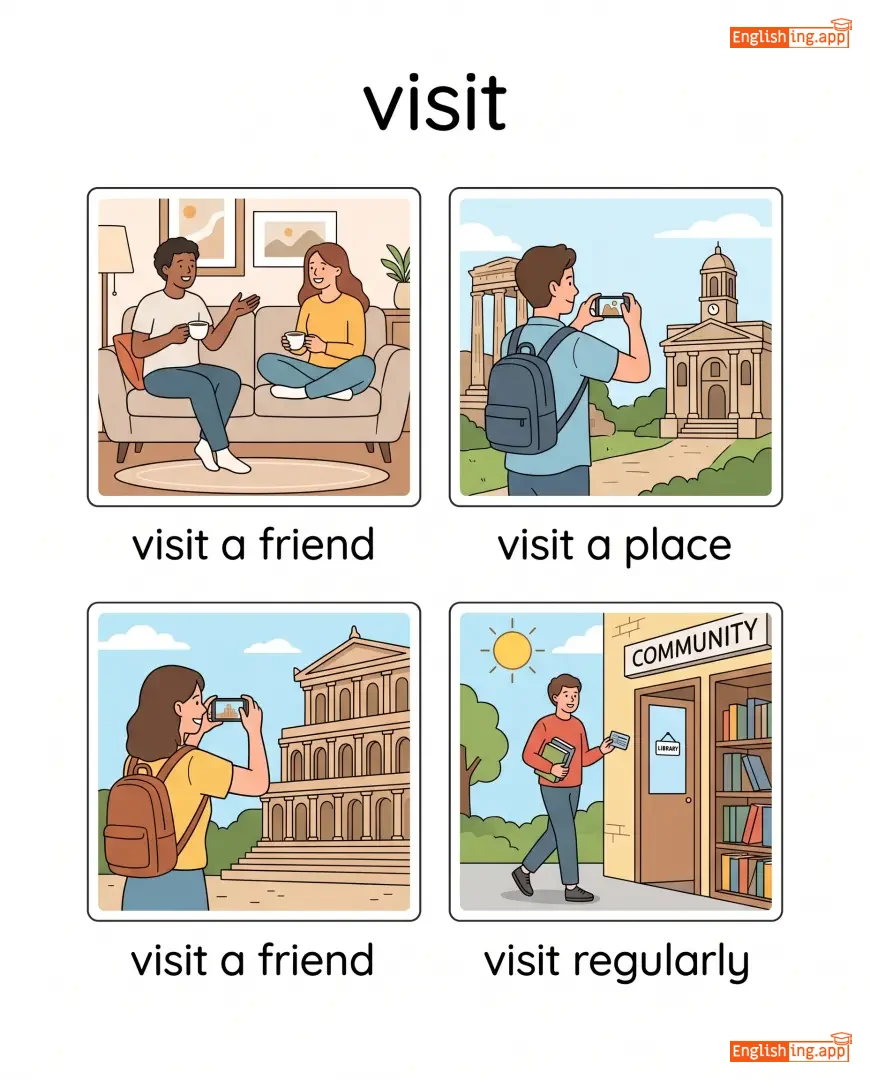
visit a friend, visit a place, visit regularly
••••••
|
VISIT - 訪問 (旅行, 探訪, など)
••••••
|
|
#12271
👁️
|
/ˈvɪʒən/
noun
(ハピネス)
••••••
|
|
幸せ
shiawase
••••••
|
- •••••• | - •••••• | - •••••• | - •••••• |
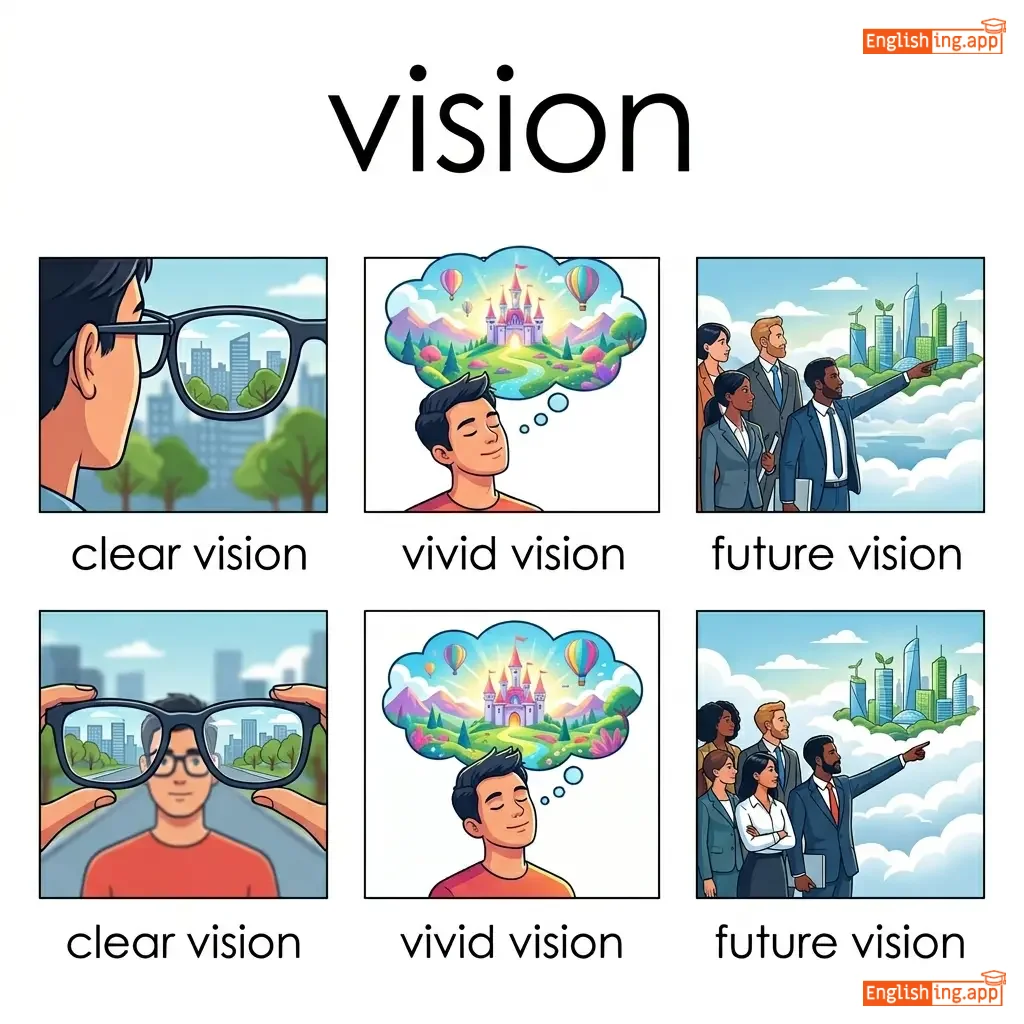
the ability to see or a mental image of something
••••••
|
She had a clear vision of her future. |
彼女は賞を受け取ったとき、自分の幸せを隠すことができませんでした。
Kanojo wa shou o uketotta toki, jibun no shiawase o kakusu koto ga dekimasen deshita.
••••••
|
- •••••• | - •••••• | - •••••• |
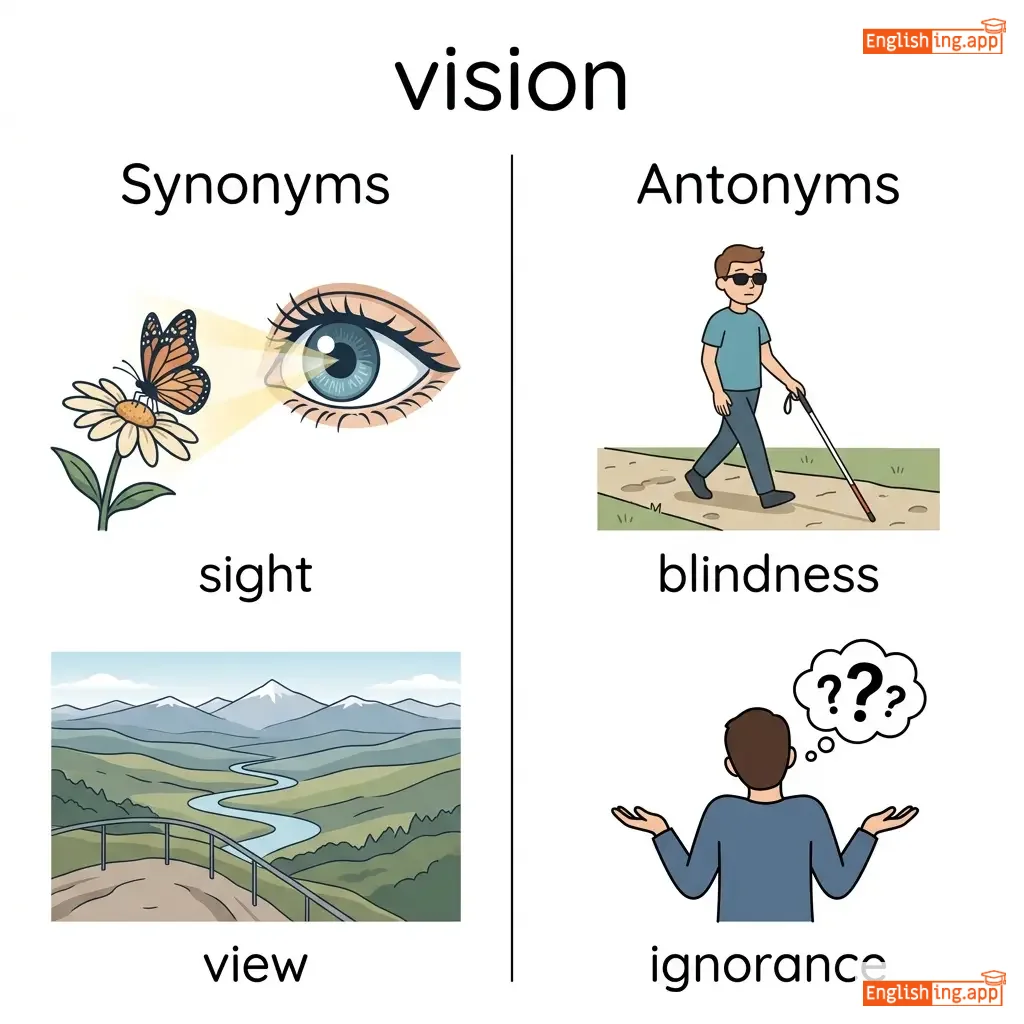
sight, view, perception, foresight
••••••
|
blindness, ignorance, darkness
••••••
|
clear vision, vivid vision, future vision
••••••
|
Happiness - 幸せは人生の中で最も大切なもの
••••••
|
|
#12272
🏘️
|
/ˈvɪlɪdʒ/
noun
(ヴィレッジ)
••••••
|
- •••••• |
村
mura
••••••
|
- •••••• | - •••••• | - •••••• | - •••••• |
a small community or group of houses in a rural area
••••••
|
They live in a small village surrounded by mountains. |
彼らは山に囲まれた小さな村に住んでいます。
Karera wa yama ni kakomareta chiisana mura ni sundeimasu.
••••••
|
village green |
a grassy area in a village, often used for recreation
••••••
|
村の広場
mura no hiroba
••••••
|
hamlet, town, settlement, community
••••••
|
city, metropolis
••••••
|
village life, village community, small village, remote village
••••••
|
村は静かで自然に満ちた場所です (Mura wa shizuka de shizen ni michita basho desu)
••••••
|
|
#12273
👁️
|
/ˈvɪərər/
noun
(ビューアー)
••••••
|
- •••••• |
視聴者
shichōsha
••••••
|
- •••••• | - •••••• | - •••••• | - •••••• |
a person who watches something, especially television or video content
••••••
|
The viewer is able to switch channels with the remote control. |
視聴者はリモコンでチャンネルを切り替えることができます。
Shichōsha wa rimokon de channeru o kirikaeru koto ga dekimasu.
••••••
|
- •••••• | - •••••• | - •••••• |
observer, watcher, spectator, audience
••••••
|
participant, actor
••••••
|
TV viewer, movie viewer, loyal viewer, viewer discretion
••••••
|
視聴者はテレビを見る (Shichōsha wa terebi o miru)
••••••
|
|
#12274
👀
|
/vjuː/
noun/verb
(ビュー)
••••••
|
- •••••• |
ビュー
byu
••••••
|
viewed
ビュード
••••••
|
viewed
ビュード
••••••
|
views
ビューズ
••••••
|
viewing
ビューイング
••••••
|
the act of seeing or observing something, or an area of sight
••••••
|
She had a great view of the sunset from her balcony.
彼女はバルコニーから素晴らしい夕日の景色を眺めていました。
••••••
|
彼女はバルコニーから素晴らしい夕日の景色を眺めていました。
Kanojo wa barukonī kara subarashī yūhi no keshiki o nagamete imashita.
••••••
|
in view of
ビューオブ
••••••
|
considering or due to something
••••••
|
ビューオブ
byū obu
••••••
|
sight, observation, panorama, outlook
••••••
|
blindness, ignorance
••••••
|
take a view, have a view, beautiful view, view from the window
••••••
|
ビュー - 見るためにあなたが望んでいるものを探してください (Byū - miru tame ni anata ga nozonde iru mono o sagashite kudasai)
••••••
|
|
#12275
🎥
|
/ˈvɪdiəʊ/
noun
(ビデオ)
••••••
|
- •••••• |
ビデオ
bideo
••••••
|
- •••••• | - •••••• | - •••••• | - •••••• |
a recording of moving visual images made digitally or on film
••••••
|
She watched the video of her favorite concert online. |
彼女はオンラインでお気に入りのコンサートのビデオを見ました。
Kanojo wa onrain de okiniiri no konsato no bideo o mimashita.
••••••
|
- •••••• | - •••••• | - •••••• |
film, clip, recording, footage
••••••
|
audio, still image
••••••
|
watch a video, upload a video, video file, educational video
••••••
|
ビデオを見る、動く視覚を楽しむ!(Bideo o miru, ugoku shikaku o tanoshimu!)
••••••
|
|
#12276
😢
|
/ˈvɪktɪm/
noun
(ヴィクティム)
••••••
|
- •••••• |
被害者
higaisha
••••••
|
- •••••• | - •••••• | - •••••• | - •••••• |
a person who suffers harm, injury, or death due to an event or action
••••••
|
The victim of the accident was taken to the hospital immediately.
事故の被害者はすぐに病院に運ばれました。
••••••
|
事故の被害者はすぐに病院に運ばれました。
Jiko no higaisha wa sugu ni byōin ni hakobaremashita.
••••••
|
- •••••• | - •••••• | - •••••• |
casualty, sufferer, target, prey
••••••
|
survivor, winner
••••••
|
victim of violence, crime victim, innocent victim
••••••
|
被害者、損害を受けた人 (Victim, a person who suffers damage)
••••••
|
|
#12277
😊
|
/ˈvɛri/
adverb
(ベリー)
••••••
|
- •••••• |
とても
totemo
••••••
|
- •••••• | - •••••• | - •••••• | - •••••• |
used to emphasize an adjective or adverb
••••••
|
She is very happy with her results.
彼女は結果にとても満足しています。
••••••
|
彼女は結果にとても満足しています。
Kanojo wa kekka ni totemo manzoku shiteimasu.
••••••
|
- •••••• | - •••••• | - •••••• |
extremely, highly, particularly, really
••••••
|
not, hardly
••••••
|
very good, very important, very happy
••••••
|
Very means a lot - Think of it as emphasizing something!
••••••
|
|
#12278
⚔️
|
/ˈvɜːsəs/
preposition
(バーサス)
••••••
|
- •••••• |
対
tai
••••••
|
- •••••• | - •••••• | - •••••• | - •••••• |
against (in a competition or conflict)
••••••
|
The team is playing versus their biggest rivals. |
チームは最大のライバルと対戦しています。
Chīmu wa saidai no raibaru to taisen shiteimasu.
••••••
|
- •••••• | - •••••• | - •••••• |
against, in opposition to
••••••
|
- •••••• |
team versus team, player versus player, man versus nature
••••••
|
Versus means competition - Think of two players going against each other in a game!
••••••
|
|
#12279
🚗
|
/ˈviːɪkəl/
noun
(vīhikkuru)
••••••
|
- •••••• |
車両
sharyou
••••••
|
- •••••• | - •••••• | - •••••• | - •••••• |
a machine used for transporting people or goods
••••••
|
He drives a vehicle to work every day.
彼は毎日車で仕事に行きます。
••••••
|
彼は毎日車で仕事に行きます。
Kare wa mainichi kuruma de shigoto ni ikimasu.
••••••
|
- •••••• | - •••••• | - •••••• |
car, transport, automobile, motor vehicle
••••••
|
pedestrian, foot
••••••
|
drive a vehicle, vehicle maintenance, public vehicle
••••••
|
A 'sharyou' is any vehicle, just like a car or bus!
••••••
|
|
#12280
🤔
|
/ʌnˈlaɪkli/
adjective
(アンライクリ)
••••••
|
- •••••• |
ありそうにない
arisō ni nai
••••••
|
- •••••• | - •••••• | - •••••• | - •••••• |
not likely to happen or be true
••••••
|
It is unlikely that he will arrive on time. |
彼が時間通りに到着する可能性は低い。
Kare ga jikan dōri ni tōchaku suru kanōsei wa hikui.
••••••
|
- •••••• | - •••••• | - •••••• |
improbable, doubtful, far-fetched
••••••
|
likely, probable
••••••
|
unlikely event, unlikely outcome, highly unlikely
••••••
|
UNlikely - 'Un' (いいえ) + likely, ありそうにないこと。
••••••
|
|
#12281
🌈
|
/ˈvɛə.ri.əs/
adjective
(ヴェリアス)
••••••
|
- •••••• |
さまざまな
samazama na
••••••
|
- •••••• | - •••••• | - •••••• | - •••••• |
different from one another; of several different kinds
••••••
|
She owns various kinds of books. |
彼女はさまざまな種類の本を持っています。
Kanojo wa samazama na shurui no hon o motteimasu.
••••••
|
- •••••• | - •••••• | - •••••• |
diverse, numerous, varied, multiple
••••••
|
same, identical
••••••
|
various reasons, various types, various ways
••••••
|
Varying things are various - Different types of things.
••••••
|
|
#12282
🍇
|
/vəˈraɪəti/
noun
(barieti)
••••••
|
- •••••• |
多様性
tayōsei
••••••
|
- •••••• | - •••••• | - •••••• | - •••••• |
the quality or state of being different or diverse; a range of different things
••••••
|
There is a variety of fruits available in the market. |
市場にはさまざまな種類の果物があります。
Ichiba ni wa samazama na shurui no kudamono ga arimasu.
••••••
|
- •••••• | - •••••• | - •••••• |
diversity, assortment, range, mixture
••••••
|
uniformity, sameness
••••••
|
wide variety, large variety, variety of, variety pack
••••••
|
多様性を示すためにさまざまな果物を選びましょう。
••••••
|
|
#12283
💰
|
/ˈvæljuː/
noun
(ヴァリュー)
••••••
|
- •••••• |
価値
kachi
••••••
|
- •••••• | - •••••• | - •••••• | - •••••• |
the importance, worth, or usefulness of something
••••••
|
The value of education cannot be overstated. |
教育の価値は過大評価されることはありません。
Kyōiku no kachi wa kadaihyouka sareru koto wa arimasen.
••••••
|
- •••••• | - •••••• | - •••••• |
worth, significance, merit, importance
••••••
|
worthlessness, insignificance
••••••
|
high value, low value, value of, add value
••••••
|
価値は物の重要性を示します
••••••
|
|
#12284
💎
|
/ˈvæljuːəbl/
adjective
(ˈvæljuːəbl)
••••••
|
- •••••• |
貴重な
kichou na
••••••
|
- •••••• | - •••••• | - •••••• | - •••••• |
worth a great deal of money or importance
••••••
|
The diamond ring is very valuable. |
そのダイヤモンドの指輪は非常に貴重です。
Sono daiyamondo no yubiwa wa hijō ni kichō desu.
••••••
|
- •••••• | - •••••• | - •••••• |
precious, priceless, costly, valuable
••••••
|
worthless, insignificant
••••••
|
valuable item, valuable asset, valuable experience, valuable resource
••••••
|
ダイヤモンドの指輪のように、知識も貴重です
••••••
|
|
#12285
🌄
|
/ˈvæli/
noun
(バリー)
••••••
|
- •••••• |
谷
tani
••••••
|
- •••••• | - •••••• | - •••••• | - •••••• |
a low area of land between hills or mountains, typically with a river or stream flowing through it
••••••
|
The valley was covered in lush green grass and flowers.
谷は緑の草と花で覆われていました。
••••••
|
谷は緑の草と花で覆われていました。
Tani wa midori no kusa to hana de ōwarete imashita.
••••••
|
- •••••• | - •••••• | - •••••• |
glen, dale, gorge, hollow
••••••
|
hill, mountain, peak
••••••
|
wide valley, deep valley, valley floor, valley view
••••••
|
谷という言葉を覚えておいてください。低い土地が丘の間にあり、緑豊かな草や花で覆われています
••••••
|
|
#12286
🏖️
|
/vəˈkeɪʃən/
noun
(ベイケーション)
••••••
|
- •••••• |
休暇
kyūka
••••••
|
- •••••• | - •••••• | - •••••• | - •••••• |
an extended period of leisure and recreation, especially one spent away from home or traveling
••••••
|
We went on vacation to the beach last summer. |
私たちは去年の夏にビーチへ休暇に行きました。
Watashitachi wa kyonen no natsu ni bīchi e kyūka ni ikimashita.
••••••
|
- •••••• | - •••••• | - •••••• |
holiday, break, getaway, retreat
••••••
|
work, labor
••••••
|
summer vacation, family vacation, go on vacation, take a vacation
••••••
|
休暇はビーチでのリラックスを意味します - Vacation means relaxation on the beach.
••••••
|
|
#12287
📅
|
/ˈjuːʒəl/
adjective
(ユージュアル)
••••••
|
- •••••• |
通常
tsūjō
••••••
|
- •••••• | - •••••• | - •••••• | - •••••• |
habitually or typically occurring or done
••••••
|
It’s our usual meeting spot. |
これは私たちの通常の会議場所です。
Kore wa watashitachi no tsūjō no kaigi basho desu.
••••••
|
- •••••• | - •••••• | - •••••• |
customary, normal, regular
••••••
|
unusual, rare
••••••
|
usual routine, usual time, usual place
••••••
|
Usual - 通常は最良です!
••••••
|
|
#12288
👤
|
/ˈjuːzər/
noun
(ユーザー)
••••••
|
- •••••• |
ユーザー
yūzā
••••••
|
- •••••• | - •••••• | - •••••• | - •••••• |
a person who uses or operates something
••••••
|
He is a frequent user of this app. |
彼はこのアプリの頻繁なユーザーです。
Kare wa kono apuri no hinpan na yūzā desu.
••••••
|
- •••••• | - •••••• | - •••••• |
consumer, customer, client
••••••
|
provider, seller
••••••
|
user interface, end user, registered user
••••••
|
User - よく使って、ユーザーになろう!
••••••
|
|
#12289
🛠️
|
/ˈjuːsfəl/
adjective
(yūzufuru)
••••••
|
- •••••• |
便利な
benrina
••••••
|
- •••••• | - •••••• | - •••••• | - •••••• |
having a practical or beneficial use
••••••
|
This tool is very useful. |
このツールはとても便利です。
Kono tsūru wa totemo benri desu.
••••••
|
- •••••• | - •••••• | - •••••• |
helpful, beneficial, practical
••••••
|
useless, impractical
••••••
|
useful information, useful tool, useful advice
••••••
|
USEFUL - 便利な、使ってみて、それは利益で満ちている!
••••••
|
|
#12290
🚗
|
/juːzd/
adjective
(yūzudo)
••••••
|
- •••••• |
中古
chūko
••••••
|
- •••••• | - •••••• | - •••••• | - •••••• |
having already been used
••••••
|
This is a used car. |
これは中古車です。
Kore wa chūko-sha desu.
••••••
|
- •••••• | - •••••• | - •••••• |
pre-owned, secondhand, recycled
••••••
|
new, unused
••••••
|
used car, used clothes, used book
••••••
|
USED - You Should Expect Damage!
••••••
|
|
#12291
👫
|
/ʌs/
pronoun
(アス)
••••••
|
- •••••• |
私たち
watashitachi
••••••
|
- •••••• | - •••••• | - •••••• | - •••••• |
used to refer to the speaker and one or more other people as the object of a verb or preposition
••••••
|
She gave us a gift. |
彼女は私たちに贈り物をくれました。
Kanojo wa watashitachi ni okurimono o kuremashita.
••••••
|
- •••••• | - •••••• | - •••••• |
we, ourselves, our group
••••••
|
them, you
••••••
|
help us, give us, show us
••••••
|
私たち (watashitachi) と他の人々、私たちは US、一緒に!
••••••
|
|
#12292
⬆️
|
/ˈʌpər/
adjective
(アッパー)
••••••
|
- •••••• |
上部
joubu
••••••
|
- •••••• | - •••••• | - •••••• | - •••••• |
higher in position or rank
••••••
|
The upper floor of the building is under renovation.
建物の上の階は改装中です。
••••••
|
建物の上の階は改装中です。
Tatemono no ue no kai wa kaisouchuu desu.
••••••
|
- •••••• | - •••••• | - •••••• |
higher, top, superior
••••••
|
lower, bottom
••••••
|
upper floor, upper limit, upper part
••••••
|
Upper - 上部を考えて、位置が高い!
••••••
|
|
#12293
🕒
|
/əˈpɒn/
preposition
(アポン)
••••••
|
- •••••• |
の上で
no ue de
••••••
|
- •••••• | - •••••• | - •••••• | - •••••• |
on or immediately after
••••••
|
Upon hearing the news, he rushed to the hospital. |
ニュースを聞いた後、彼は病院に急いだ。
Nyūsu o kiita ato, kare wa byōin ni isoida.
••••••
|
- •••••• | - •••••• | - •••••• |
on, following
••••••
|
before
••••••
|
upon arrival, upon hearing, upon request
••••••
|
Upon - no ue de, after hearing something, acting immediately!
••••••
|
|
#12294
⏳
|
/ʌnˈtɪl/
preposition/conjunction
(アンティル)
••••••
|
- •••••• |
まで
made
••••••
|
- •••••• | - •••••• | - •••••• | - •••••• |
up to the time of
••••••
|
I will wait until you come back.
私はあなたが戻るまで待ちます。
••••••
|
私はあなたが戻るまで待ちます。
Watashi wa anata ga modoru made machimasu.
••••••
|
- •••••• | - •••••• | - •••••• |
till, up to
••••••
|
after
••••••
|
until now, until then, wait until
••••••
|
Until you leave the room, you wait until!
••••••
|
Vocabulary Quiz
Test your vocabulary by matching words with their translations or meanings.
Login to take the quiz
Comments (0)
Share your thoughts and join the discussion.
Join the discussion by logging in
Login to CommentNo comments yet
Be the first to share your thoughts!