

翻訳
過去
過去分詞
三人称単数
動名詞
意味
例文
例文の翻訳
同義語
対義語
コロケーション
ニーモニック

Swipe left or right, or use the buttons. Tap image to zoom.
例文の翻訳
単語
Lesson 170Lesson 170 - マスクトグル
|
絵文字
|
単語 | Images | 翻訳 | 過去 | 過去分詞 | 三人称単数 | 動名詞 | 意味 | 例文 | 例文の翻訳 | 表現例 | 表現例の意味 | 表現例の翻訳 | 同義語 | 対義語 | コロケーション | ニーモニック |
|---|---|---|---|---|---|---|---|---|---|---|---|---|---|---|---|---|---|
|
#5071
🛑
|
/ˈlɑːrsəni/
noun
(ラルセニー)
••••••
|
- •••••• |
窃盗
settou
••••••
|
- •••••• | - •••••• | - •••••• | - •••••• |
The unlawful taking of personal property with intent to deprive the rightful owner of it.
••••••
|
He was arrested for committing larceny at the store. |
彼は店で窃盗を行ったため逮捕されました。
Kare wa mise de settou o okonatta tame taiho saremashita.
••••••
|
petty larceny |
A minor theft, typically of low-value property.
••••••
|
軽微な窃盗
keibi na settou
••••••
|
theft, robbery, burglary, pilfering, stealing
••••••
|
donation, gift, contribution
••••••
|
commit larceny, charged with larceny, grand larceny, petty larceny
••••••
|
Larceny は 'loss' (損失) と関連しており、盗みが損失をもたらすことを意味します。
••••••
|
|
#5072
🪵
|
/leɪð/
noun
(レイス)
••••••
|
- •••••• |
旋盤
senban
••••••
|
- •••••• | - •••••• | - •••••• | - •••••• |
A machine for shaping wood, metal, or other material by rotating it against a cutting tool.
••••••
|
The carpenter used a lathe to shape the wooden bowl. |
大工は木の器を形作るために旋盤を使いました。
Daiku wa ki no utsuwa o katachi zukuru tame ni senban o tsukaimashita.
••••••
|
- •••••• | - •••••• | - •••••• |
machine tool, woodturner, shaper, grinder
••••••
|
manual carving, hand tool
••••••
|
wood lathe, metal lathe, lathe machine, lathe operation
••••••
|
Latheは日本語で旋盤 → 木材や金属を成形するための機械。
••••••
|
|
#5073
↔️
|
/ˈlætərəl/
adjective
(ラテラル)
••••••
|
- •••••• |
側面
sokumen
••••••
|
- •••••• | - •••••• | - •••••• | - •••••• |
Relating to the side or sideways movement.
••••••
|
The football player made a quick lateral pass. |
サッカー選手は素早い側面パスをしました。
sakkā senshu wa subayai sokumen pasu o shimashita.
••••••
|
lateral thinking |
A way of solving problems by an indirect and creative approach.
••••••
|
側面思考
sokumen shikō
••••••
|
sideways, oblique, sideward, horizontal
••••••
|
vertical, central, direct
••••••
|
lateral pass, lateral thinking, lateral movement, lateral view
••••••
|
Lateral はサイドの意味:サイドの動きまたは考え。
••••••
|
|
#5074
⏰
|
/ˈleɪtər/
adverb
(レイター)
••••••
|
- •••••• |
後で
ato de
••••••
|
- •••••• | - •••••• | - •••••• | - •••••• |
At a time subsequent to a reference time; afterwards.
••••••
|
We will discuss the details later. |
私たちは後で詳細について話します。
Watashitachi wa ato de shōsai ni tsuite hanashimasu.
••••••
|
sooner or later |
Eventually, at some unspecified future time.
••••••
|
そのうち
sono uchi
••••••
|
afterwards, subsequently, eventually, afterward, in time
••••••
|
earlier, before, prior
••••••
|
later stage, later time, later date, talk later
••••••
|
Later は '後で' → 何かは後で起こる。
••••••
|
|
#5075
🌱
|
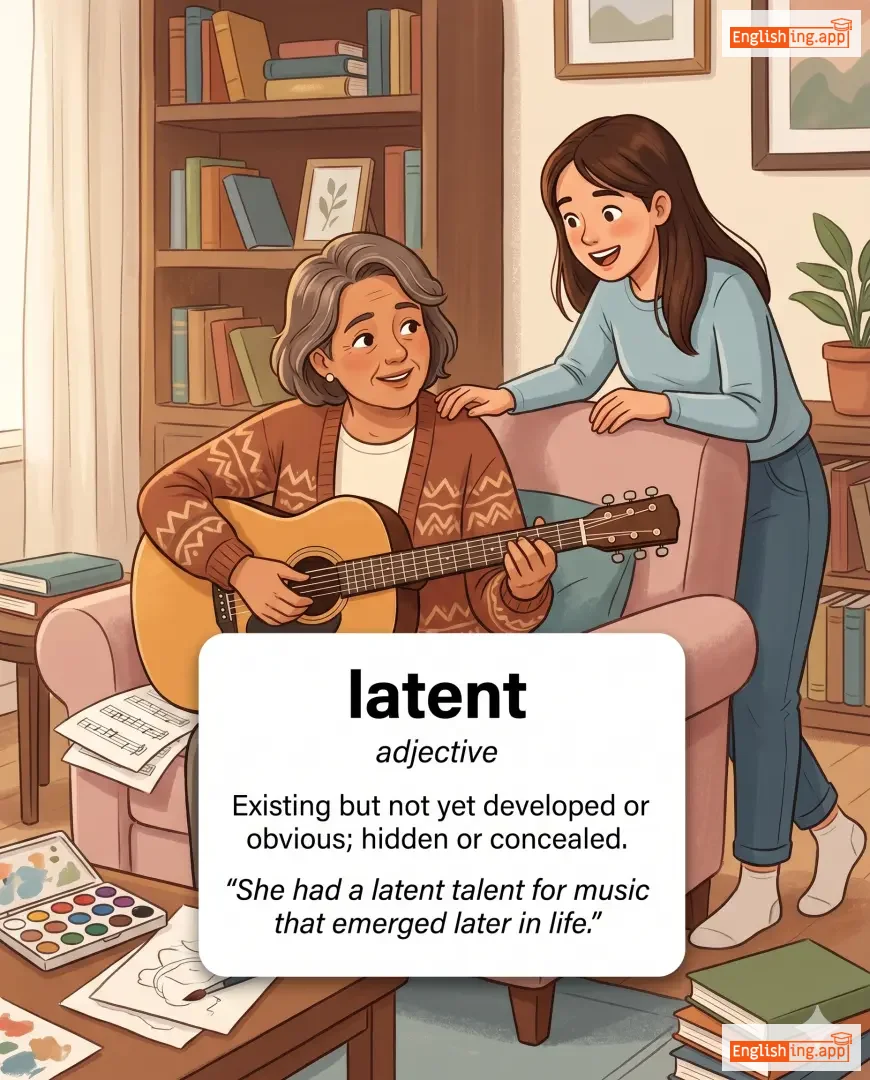
/ˈleɪtənt/
adjective
••••••
|
|
- •••••• | - •••••• | - •••••• | - •••••• | - •••••• |
Existing but not yet developed or obvious; hidden or concealed.
••••••
|
She had a latent talent for music that emerged later in life. |
- •••••• |
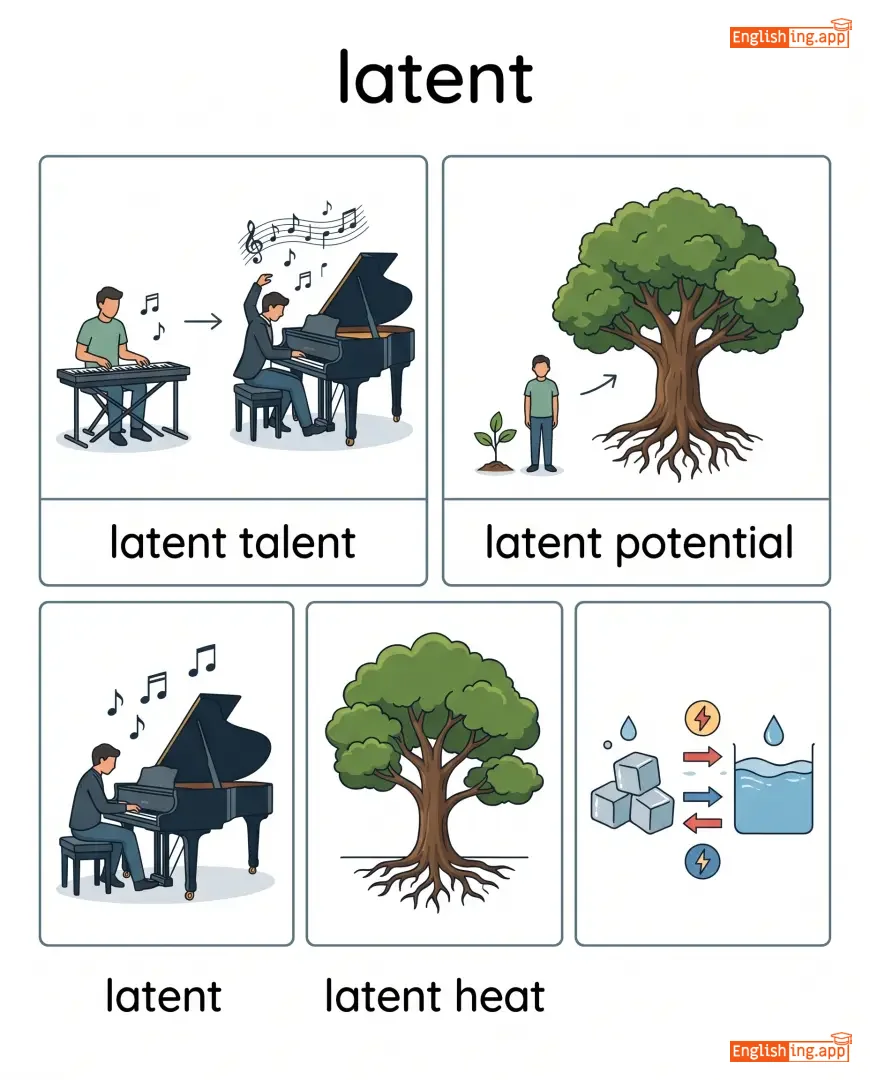
latent potential |
Hidden or undeveloped ability that may emerge in the future.
••••••
|
- •••••• |
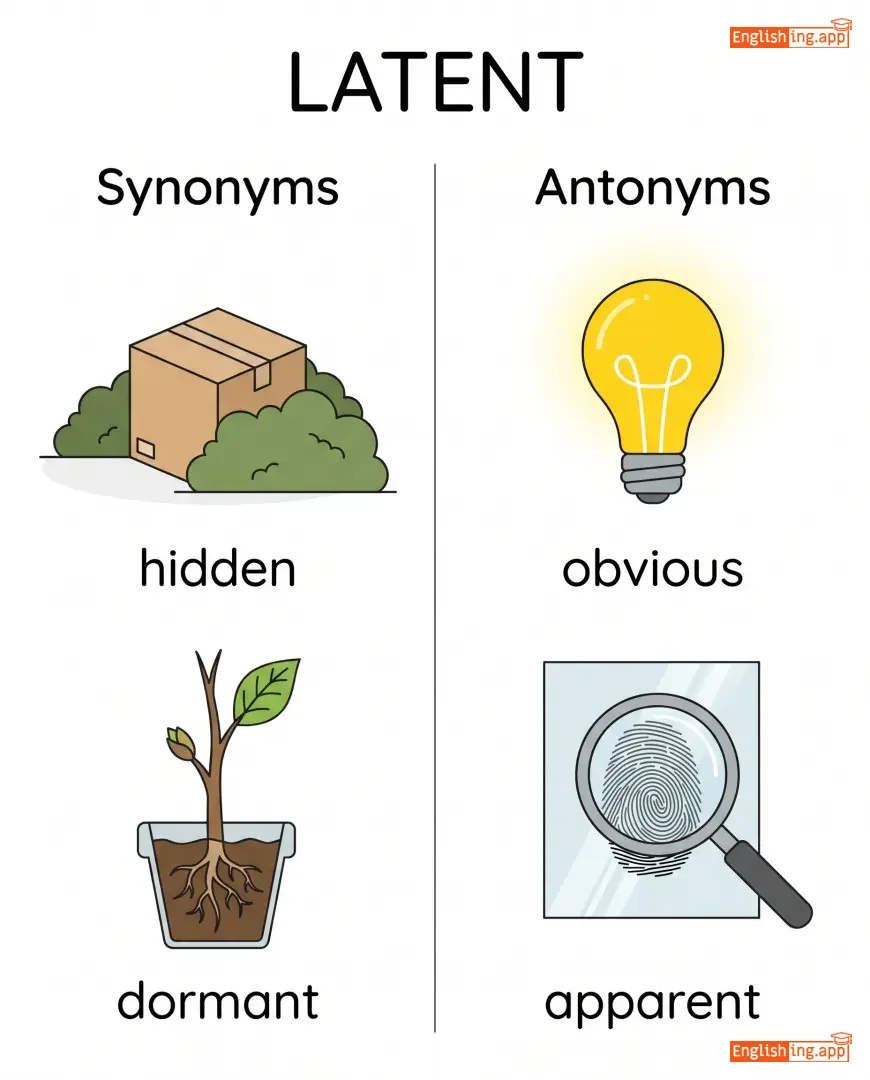
hidden, dormant, concealed, unrealized, undeveloped
••••••
|
obvious, apparent, visible
••••••
|
latent talent, latent potential, latent heat, latent disease
••••••
|
No •••••• |
|
#5076
⏳
|
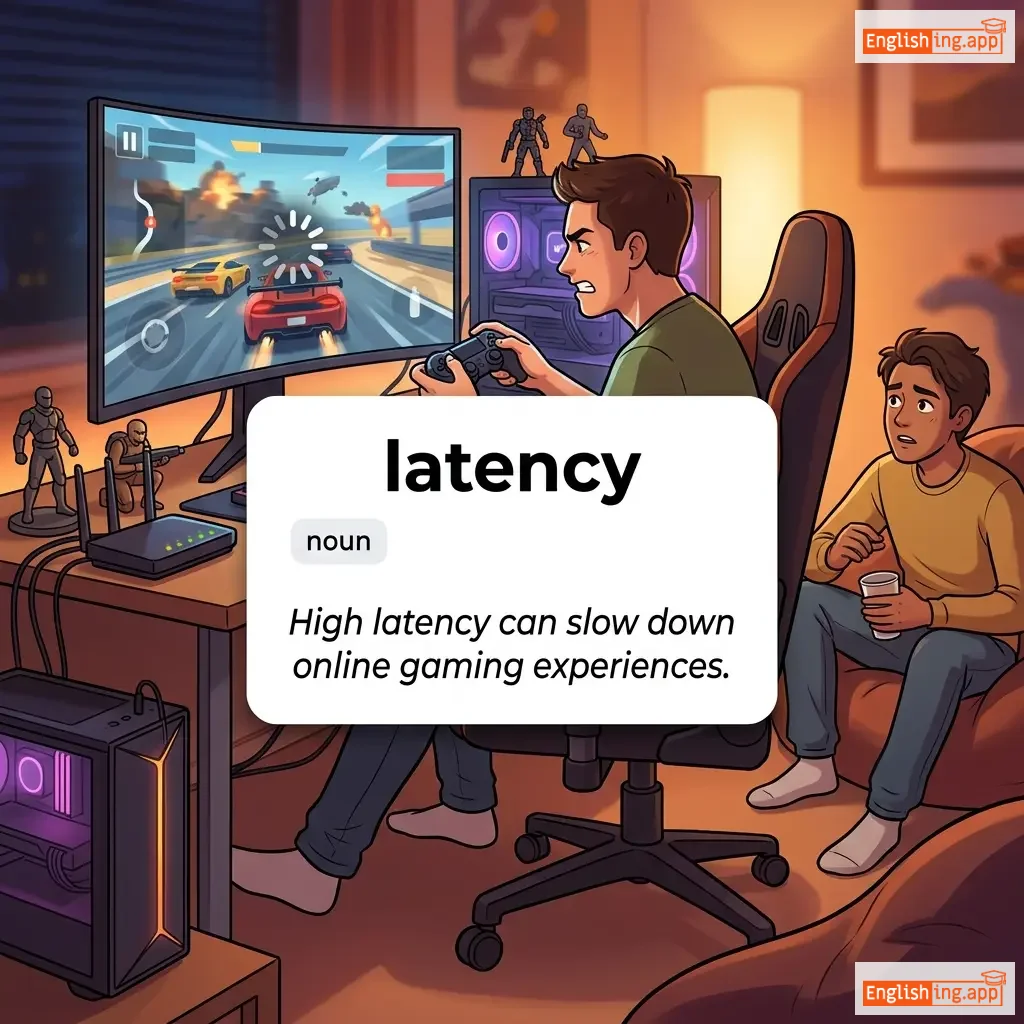
/ˈleɪtənsi/
noun
(レイテンシー)
••••••
|
|
レイテンシ
reitenshi
••••••
|
- •••••• | - •••••• | - •••••• | - •••••• |
The delay before a transfer of data begins following an instruction for its transfer.
••••••
|
High latency can slow down online gaming experiences. |
高いレイテンシはオンラインゲームの体験を遅くする可能性があります。
Takai reitenshi wa onrain gēmu no taiken o osoku suru kanōsei ga arimasu.
••••••
|
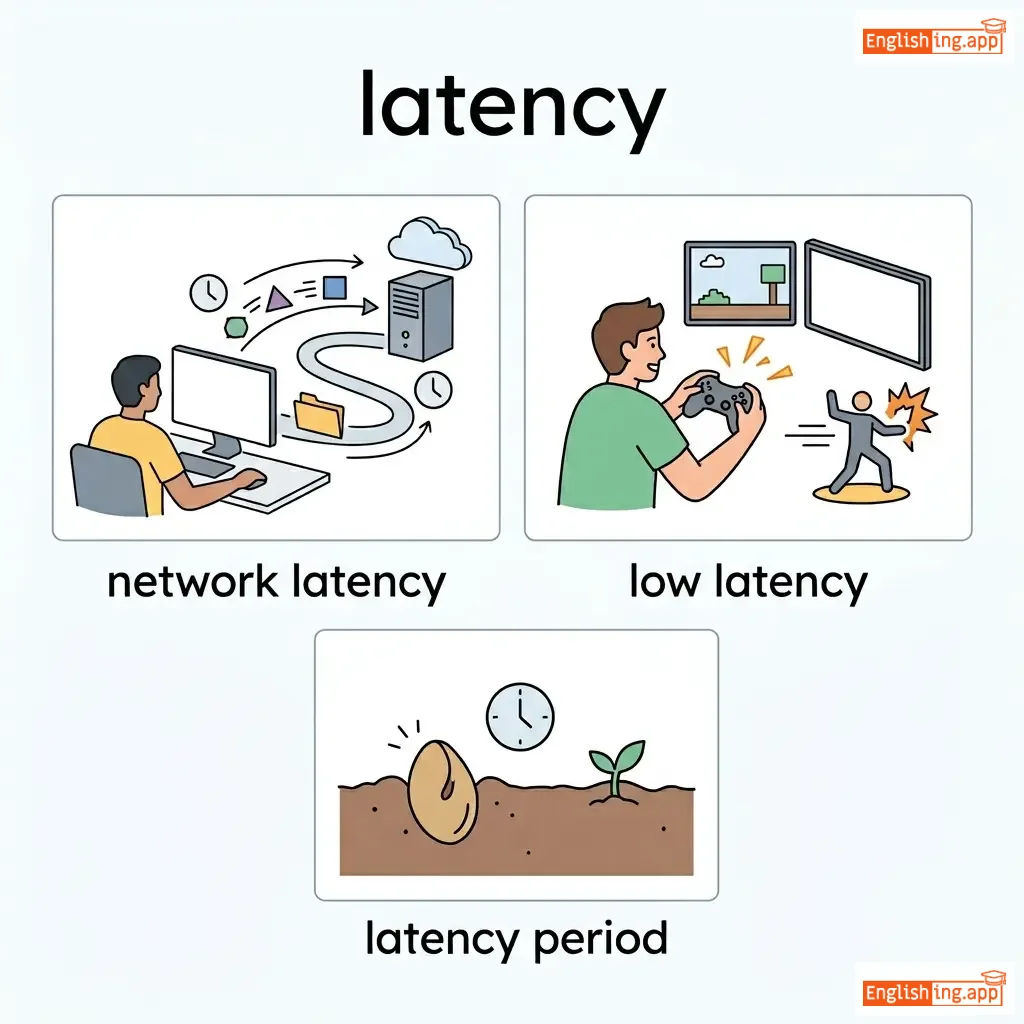
low latency |
Minimal delay in data transfer or response.
••••••
|
低レイテンシ
tei reitenshi
••••••
|
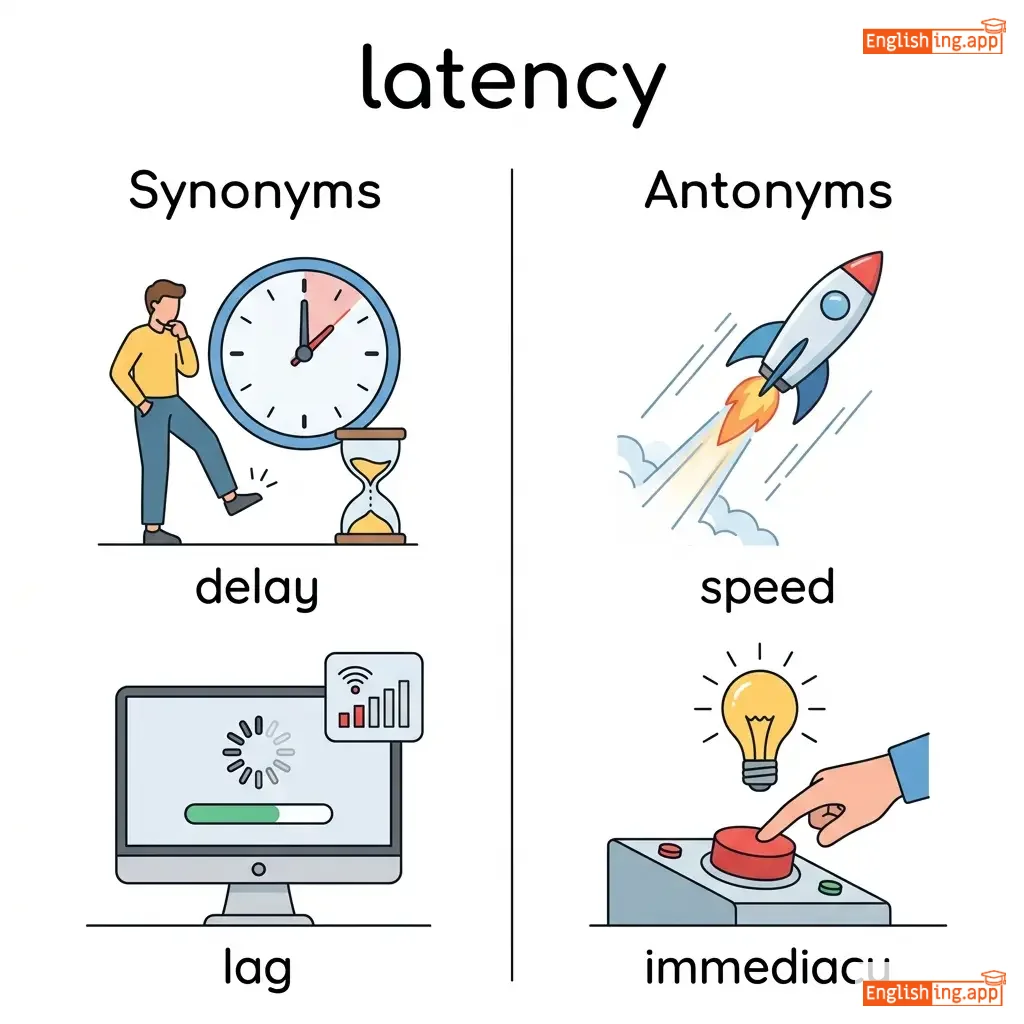
delay, lag, pause, waiting time, downtime
••••••
|
speed, immediacy, promptness
••••••
|
network latency, low latency, latency period, latency issues
••••••
|
Latencyは 'late' + 'see' から来て、遅延を示しているので、'レイテンシ' が適切な訳です。
••••••
|
|
#5077
🔒
|
/lætʃ/
verb
(ラッチ)
••••••
|
- •••••• |
ラッチで閉める
ratchi de shimeru
••••••
|
latched
ラッチド
••••••
|
latched
ラッチド
••••••
|
latches
ラッチズ
••••••
|
latching
ラッチング
••••••
|
to fasten or close something with a latch
••••••
|
She latched the door before leaving the house.
彼女は家を出る前にドアをラッチで閉めた。
••••••
|
彼女は家を出る前にドアをラッチで閉めた。
Kanojo wa ie o deru mae ni doa o ratchi de shimeta.
••••••
|
latch onto
latch onto
••••••
|
to take firm hold of something or to adopt an idea eagerly
••••••
|
しっかりとつかむ、または熱心にアイデアを受け入れる
shikkari to tsukamu, mata wa nesshin ni aidea o ukeireru
••••••
|
lock, fasten, secure, clasp
••••••
|
unlock, release, open
••••••
|
latch the door, latch onto an idea, baby latching
••••••
|
ラッチはドアを閉める意味です。ラッチを使うとドアが開かなくなります。
••••••
|
|
#5078
😴
|
/ˈlæsɪtjuːd/
noun
(ラスティチュード)
••••••
|
|
疲労
hirou
••••••
|
- •••••• | - •••••• | - •••••• | - •••••• |
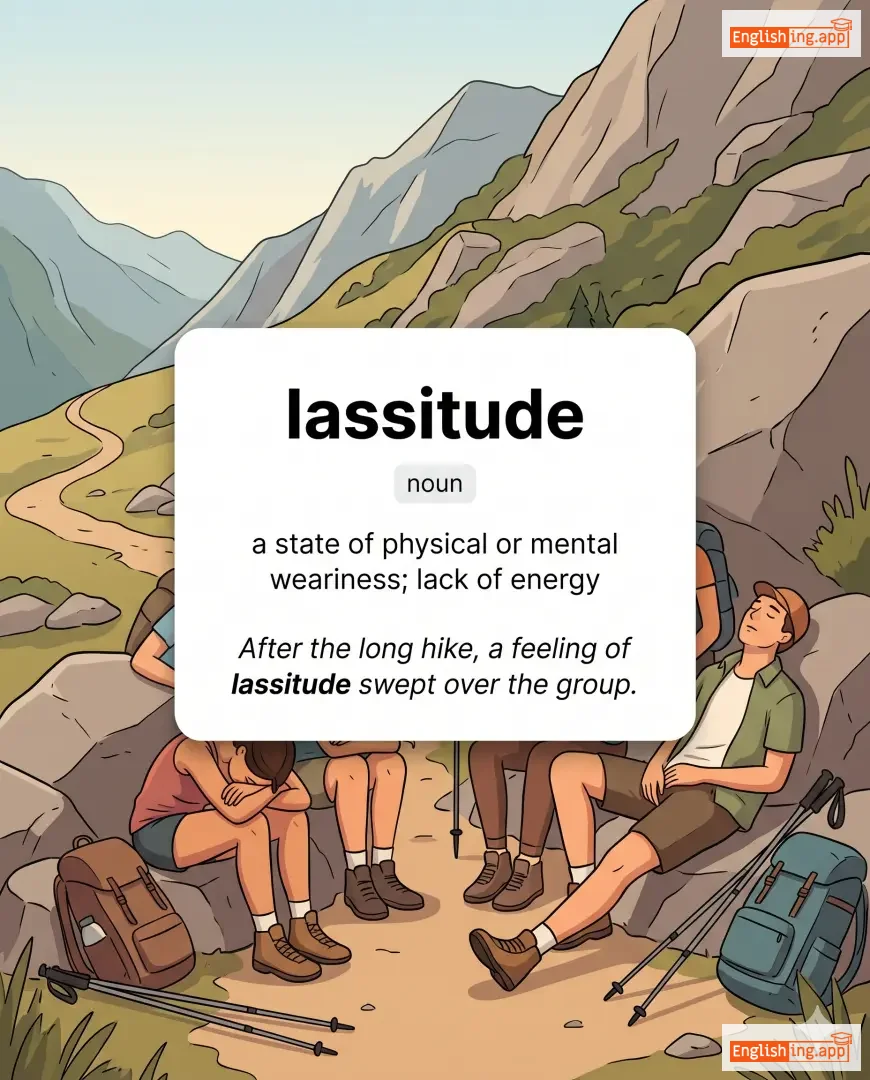
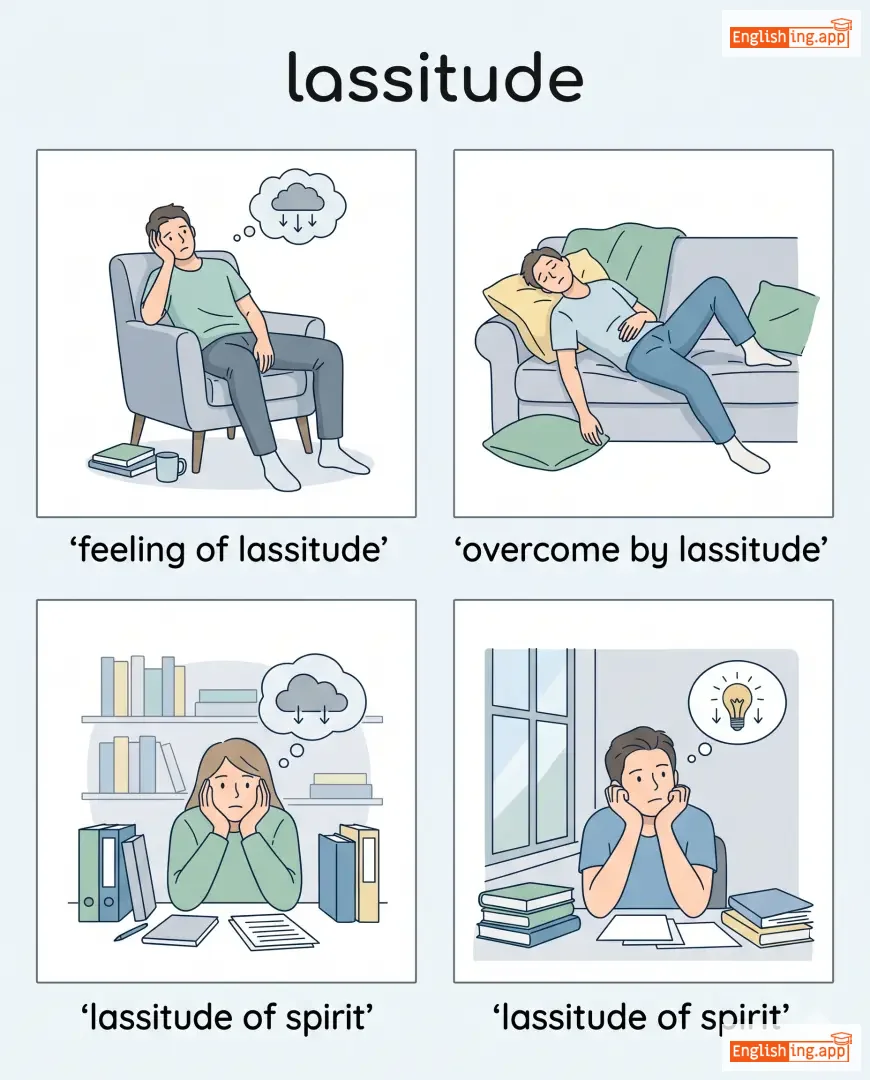
a state of physical or mental weariness; lack of energy
••••••
|
After the long hike, a feeling of lassitude swept over the group. |
長いハイキングの後、疲労感がグループに広がった。
Nagai haikingu no ato, hiroukan ga gurūpu ni hirogatta.
••••••
|
- •••••• | - •••••• | - •••••• |
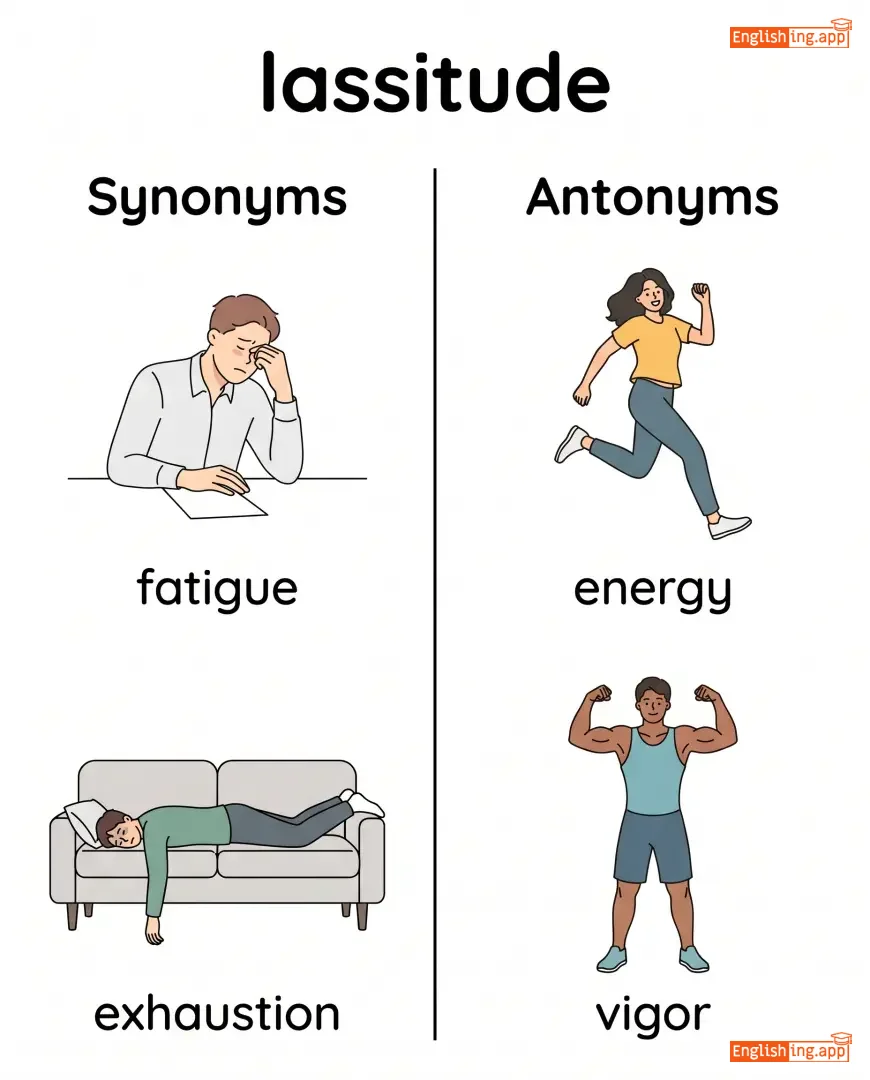
fatigue, exhaustion, tiredness, lethargy, weariness
••••••
|
energy, vigor, vitality
••••••
|
feeling of lassitude, overcome by lassitude, lassitude of spirit
••••••
|
Lassiで疲労感が増す
••••••
|
|
#5079
👧
|
/ˈlæsi/
noun
(ラッシー)
••••••
|
- •••••• |
小さな女の子
chiisana onnanoko
••••••
|
- •••••• | - •••••• | - •••••• | - •••••• |
a young girl (informal, mainly Scottish)
••••••
|
The old man greeted the little lassie warmly. |
老人は小さな女の子を温かく迎えました。
rōjin wa chiisana onnanoko o atatakai kaku mukaemashita.
••••••
|
- •••••• | - •••••• | - •••••• |
girl, maiden, miss, damsel
••••••
|
lad, boy
••••••
|
little lassie, Scottish lassie, pretty lassie
••••••
|
Lassie は小さな女の子を意味します。赤いスカーフをしている女の子を想像してみてください。
••••••
|
|
#5080
🪢
|
/læʃ/
verb
(ラッシュ)
••••••
|
- •••••• |
むち打つ/縛る
muchiutsu/shibaru
••••••
|
lashed
ラッシュド
••••••
|
lashed
ラッシュド
••••••
|
lashes
ラッシュズ
••••••
|
lashing
ラッシング
••••••
|
to strike with a whip or to fasten tightly
••••••
|
The sailor lashed the rope to the mast.
船員はロープをマストに縛り付けた。
••••••
|
船員はロープをマストに縛り付けた。
Sen'in wa rōpu o masuto ni shibari tsuketa.
••••••
|
lash out
lash out
••••••
|
to suddenly attack someone verbally or physically
••••••
|
突然攻撃する
totsuzen kōgeki suru
••••••
|
whip, strike, beat, bind, fasten
••••••
|
release, untie, loosen
••••••
|
lash out, lash the rope, lash with anger
••••••
|
Lash はむち打つことを意味します。むちで打つか、きつく縛ることです。
••••••
|
|
#5081
😏
|
/ləˈsɪviəs/
adjective
(ラシビアス)
••••••
|
|
好色な
kōshokuna
••••••
|
- •••••• | - •••••• | - •••••• | - •••••• |
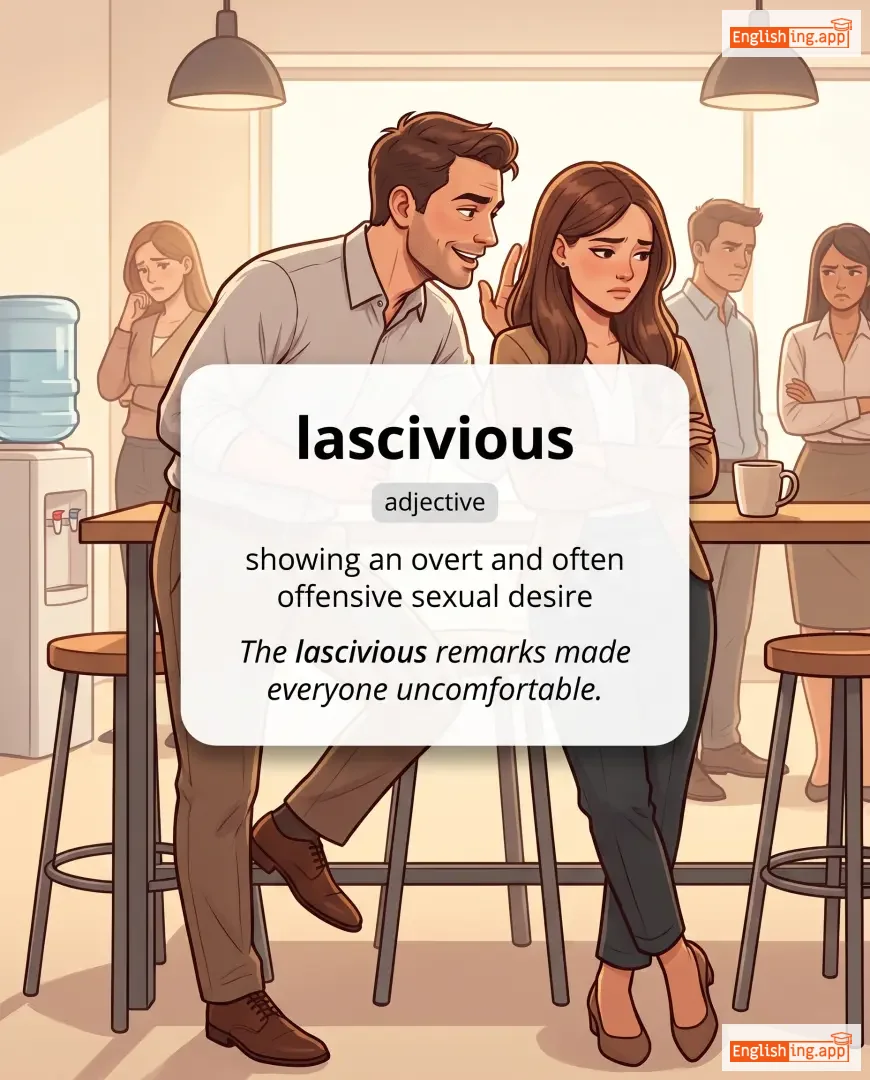
showing an overt and often offensive sexual desire
••••••
|
The lascivious remarks made everyone uncomfortable. |
その好色な言葉がみんなを不快にさせた。
Sono kōshokuna kotoba ga minna o fukai ni saseta.
••••••
|
- •••••• | - •••••• | - •••••• |
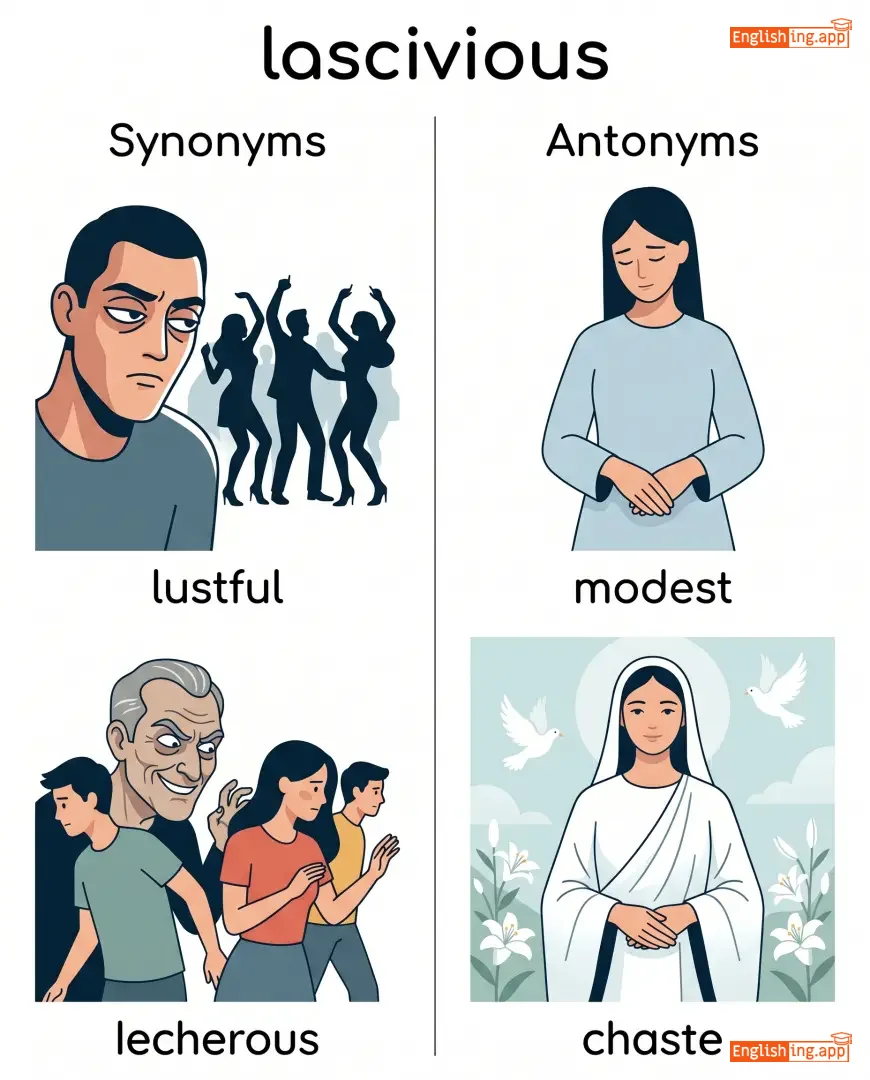
lustful, lecherous, lewd, salacious, wanton
••••••
|
modest, chaste, innocent
••••••
|
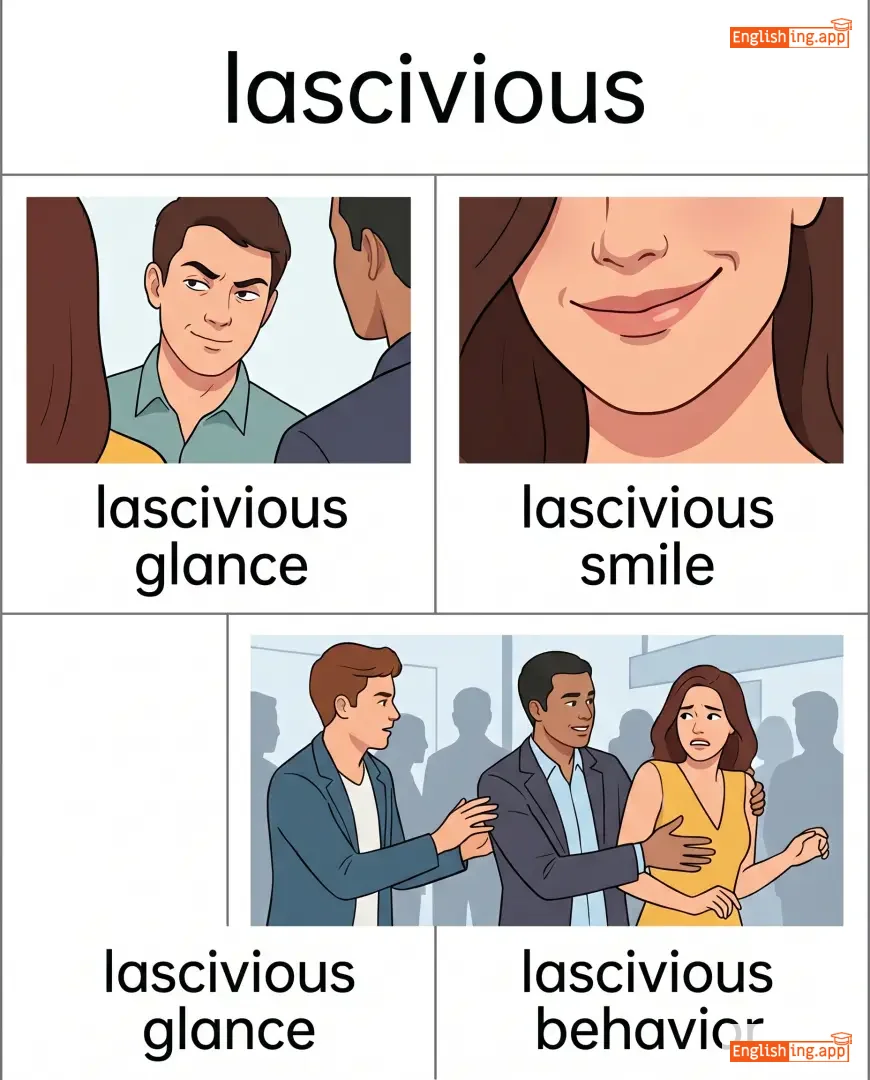
lascivious glance, lascivious smile, lascivious behavior
••••••
|
Kōshoku + 欲望 = 好色な
••••••
|
|
#5082
🤠
|
/ˈlæriət/
noun
(ラリアット)
••••••
|
- •••••• |
ロープ
roopu
••••••
|
- •••••• | - •••••• | - •••••• | - •••••• |
A long rope with a noose at one end used to catch animals such as cattle or horses.
••••••
|
The cowboy threw his lariat to catch the stray horse. |
カウボーイは迷子の馬を捕まえるためにロープを投げました。
Kauboi wa maigo no uma o tsukamaeru tame ni roopu o nagemashita.
••••••
|
- •••••• | - •••••• | - •••••• |
lasso, rope, cord, tether
••••••
|
freedom, release
••••••
|
throw lariat, swing lariat, catch with lariat
••••••
|
ロープは縄 → カウボーイ映画でロープを使って馬を捕まえるシーンを思い出してください。
••••••
|
|
#5083
💝
|
/lɑːrˈʒɛs/
noun
(ラルジェス)
••••••
|
|
寛大さ
kandaisa
••••••
|
- •••••• | - •••••• | - •••••• | - •••••• |
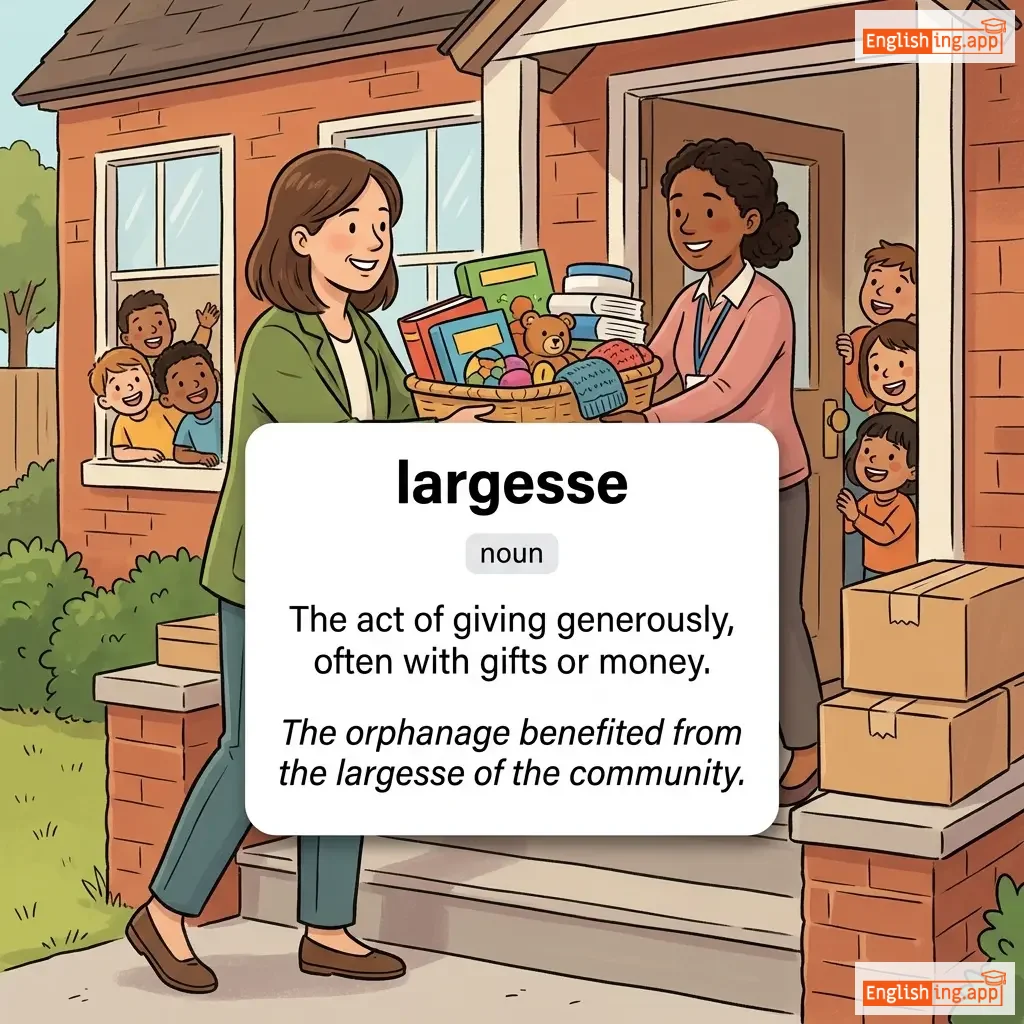
The act of giving generously, often with gifts or money.
••••••
|
The orphanage benefited from the largesse of the community. |
孤児院は地域社会の寛大さの恩恵を受けた。
Kojien wa chiiki shakai no kandaisa no onkei o uketa.
••••••
|
- •••••• | - •••••• | - •••••• |
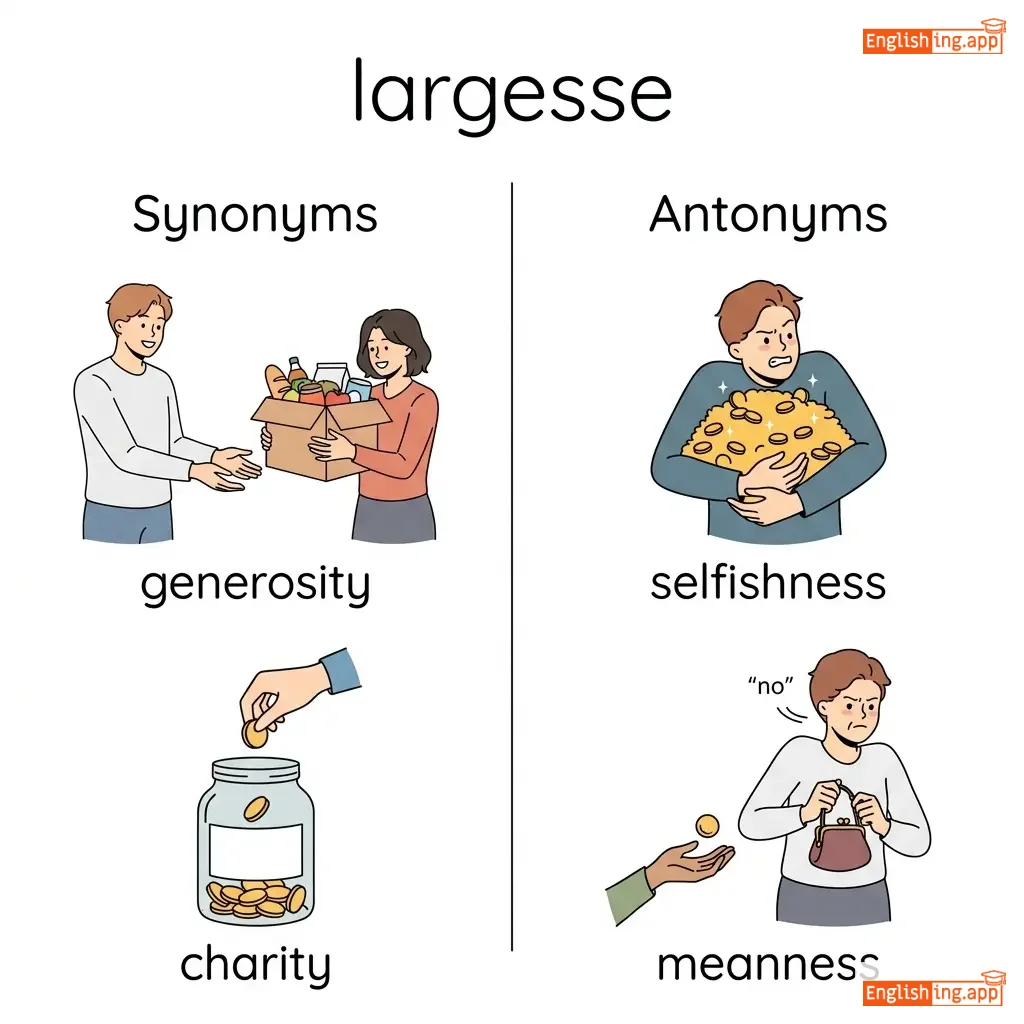
generosity, charity, benevolence, bounty
••••••
|
selfishness, meanness
••••••
|
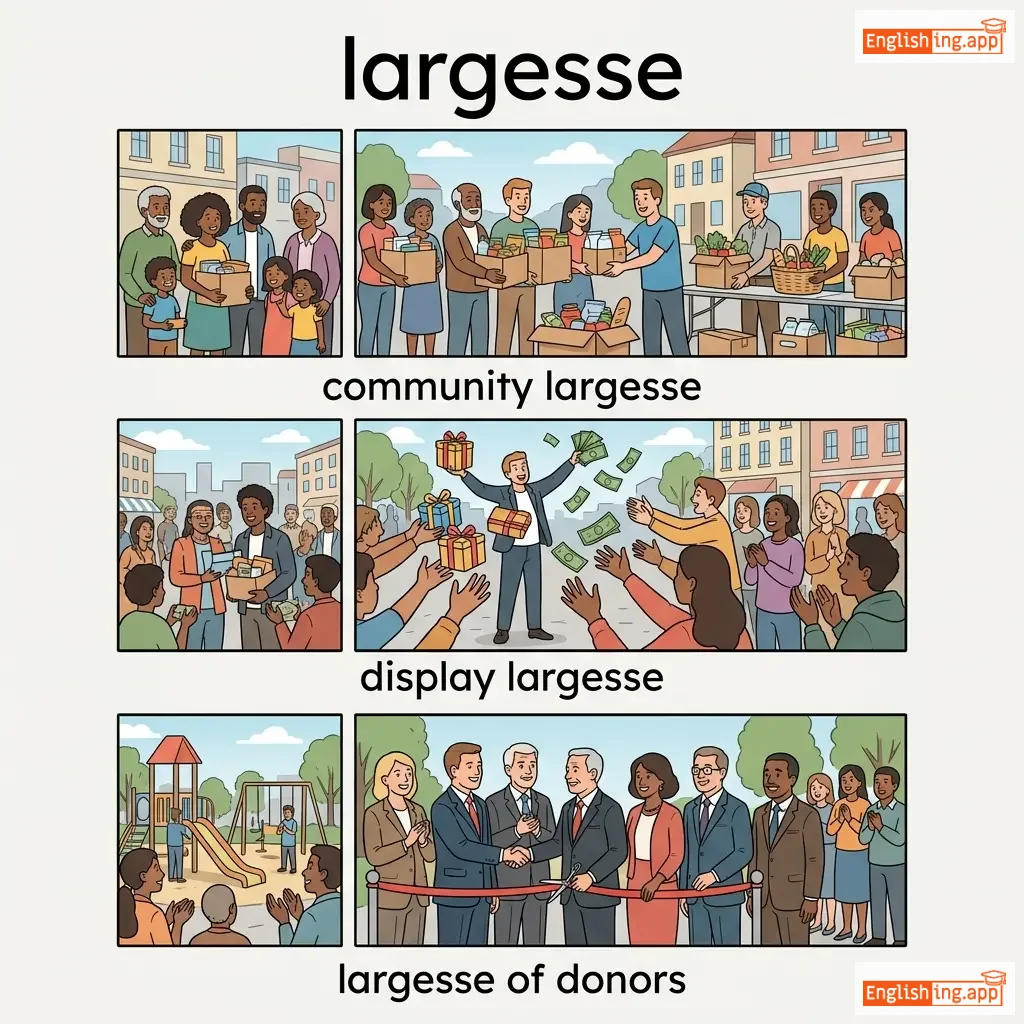
community largesse, display largesse, largesse of donors
••••••
|
Largesse = large gift → 大きな贈り物は寛大さを意味する。
••••••
|
|
#5084
🎁
|
/lɑːrˈʒes/
noun
(ラージェス)
••••••
|
- •••••• |
寛大さ
kandaisa
••••••
|
- •••••• | - •••••• | - •••••• | - •••••• |
Generosity in giving gifts or money.
••••••
|
The foundation survived thanks to the largess of wealthy donors. |
財団は裕福な寄付者の寛大さのおかげで存続しました。
Zaidan wa yūfukuna kifusha no kandaisa no okage de sonzoku shimashita.
••••••
|
- •••••• | - •••••• | - •••••• |
generosity, munificence, philanthropy, bounty
••••••
|
stinginess, miserliness
••••••
|
show largess, act of largess, thanks to largess
••••••
|
Largessは寛大さを意味します → 'large' heart = 寛大な心を覚えておいてください。
••••••
|
|
#5085
🥖
|
/ˈlɑːrdər/
noun
(ラーダー)
••••••
|
- •••••• |
食料庫
shokuryouko
••••••
|
- •••••• | - •••••• | - •••••• | - •••••• |
A place, such as a pantry, where food is stored.
••••••
|
The larder was full of fresh bread and cheese.
The larder was full of fresh bread and cheese.
••••••
|
食料庫は新鮮なパンとチーズでいっぱいでした。
Shokuryouko wa shinsen na pan to chīzu de ippai deshita.
••••••
|
- •••••• | - •••••• | - •••••• |
pantry, storeroom, cupboard, food store
••••••
|
emptiness, scarcity
••••••
|
full larder, empty larder, stocked larder
••••••
|
Larderは「ラーダー」→「食料」を保存する場所。
••••••
|
|
#5086
📰
|
/læmˈpuːn/
verb
(ランプーン)
••••••
|
- •••••• |
嘲笑する
choushou suru
••••••
|
lampooned
ランプーンド
••••••
|
lampooned
ランプーンド
••••••
|
lampoons
ランプーンズ
••••••
|
lampooning
ランプーニング
••••••
|
to publicly criticize or ridicule someone or something with humor, irony, or sarcasm
••••••
|
The cartoonist lampooned the politician for his contradictory statements.
カリカチュアリストはその矛盾する発言で政治家をランプーンした。
••••••
|
カリカチュアリストはその矛盾する発言で政治家を嘲笑した。
Karikachuarisuto wa sono moujun suru hatsugen de seijika wo choushou shita.
••••••
|
- •••••• | - •••••• | - •••••• |
mock, satirize, parody, ridicule, caricature
••••••
|
praise, admire, compliment
••••••
|
lampoon a leader, lampoon society, satirical lampoon, harshly lampoon
••••••
|
Lamp + Moon = 嘲笑する (lampoonは嘲笑する意味)
••••••
|
|
#5087
⏳
|
/læps/
noun/verb
(ラプス)
••••••
|
- •••••• |
誤り
ayamari
••••••
|
lapsed
ラプスド
••••••
|
lapsed
ラプスド
••••••
|
lapses
ラプセス
••••••
|
lapsing
ラプシング
••••••
|
As noun: a temporary failure or slip; As verb: to end or fall into disuse.
••••••
|
She apologized for her lapse in judgment.
彼女は判断の誤りについて謝罪しました。
••••••
|
彼女は判断の誤りについて謝罪しました。
Kanojo wa handan no ayamari ni tsuite shazai shimashita.
••••••
|
time lapse
時間の経過
••••••
|
A sequence of photos or video showing change over time
••••••
|
時間の経過
Jikan no keika
••••••
|
failure, mistake, error, decline, gap
••••••
|
continuity, progress
••••••
|
lapse of memory, lapse in judgment, time lapse
••••••
|
Lapse は記憶の誤りと覚えると良い。
••••••
|
|
#5088
💎
|
/ˈlæpɪˌdɛri/
noun/adjective
(ラピダリー)
••••••
|
- •••••• |
宝石細工師
houseki saikushi
••••••
|
- •••••• | - •••••• | - •••••• | - •••••• |
As noun: a person who cuts, polishes, or engraves precious stones; As adjective: relating to such work.
••••••
|
The museum displayed lapidary tools used in ancient times. |
博物館は古代に使用された宝石細工の道具を展示しました。
Hakubutsukan wa kodai ni shiyou sareta houseki saiku no dougu o tenji shimashita.
••••••
|
- •••••• | - •••••• | - •••••• |
gemcutter, jeweler, engraver, artisan
••••••
|
buyer, customer
••••••
|
lapidary work, lapidary skills, lapidary art
••••••
|
ラピダリーは宝石を扱う専門家です。
••••••
|
|
#5089
🪑
|
/læp/
noun/verb
(ハピネス)
••••••
|
- •••••• |
幸せ
shiawase
••••••
|
lapped
••••••
|
lapped
••••••
|
laps
••••••
|
lapping
••••••
|
As noun: the flat area between the waist and knees of a seated person; As verb: to drink liquid with the tongue.
••••••
|
The child sat on her mother's lap. |
彼女は賞を受け取ったとき、幸せを隠すことができなかった。
Kanojo wa shō o uketotta toki, shiawase o kakusu koto ga dekinakatta.
••••••
|
in the lap of luxury |
Living in great comfort and wealth
••••••
|
幸せを追い求める
shiawase o oimotomeru
••••••
|
thighs, knee, embrace, lick, sip
••••••
|
stand, rise
••••••
|
sit on lap, lap of luxury, lap time
••••••
|
幸せ = happiness, 追い求める = search, 'searching for happiness'
••••••
|
|
#5090
🧍
|
/læŋk/
adjective
(ランク)
••••••
|
- •••••• |
高くて細い
takakute hosoi
••••••
|
- •••••• | - •••••• | - •••••• | - •••••• |
Tall, thin, and often awkward in appearance.
••••••
|
The lank teenager towered over his classmates. |
その高くて細いティーンエイジャーはクラスメートよりも高かった。
Sono takakute hosoi tīneijā wa kurasumēto yori mo takakatta.
••••••
|
- •••••• | - •••••• | - •••••• |
lean, thin, skinny, gaunt
••••••
|
plump, chubby, stout
••••••
|
lank figure, lank hair, lank frame
••••••
|
Lankは高くて細い、そして少し不器用な感じ!
••••••
|
|
#5091
😴
|
/ˈlæŋɡər/
noun
(ランガー)
••••••
|
- •••••• |
倦怠
kentai
••••••
|
- •••••• | - •••••• | - •••••• | - •••••• |
A state of tiredness, inertia, or dreamy relaxation.
••••••
|
The hot afternoon filled her with languor.
暑い午後は彼女をランガーで満たしました。
••••••
|
暑い午後は彼女を倦怠で満たしました。
Atsui gogo wa kanojo o kentai de mitashimashita.
••••••
|
- •••••• | - •••••• | - •••••• |
fatigue, weariness, listlessness, lethargy, weakness
••••••
|
energy, vigor, vitality
••••••
|
state of languor, summer languor, languor of heat
••••••
|
倦怠は疲れやリラックスした状態を意味する
••••••
|
|
#5092
🥀
|
/ˈlæŋɡwɪʃ/
verb
(ランギッシュ)
••••••
|
|
衰弱する / 無視される
suijaku suru / mushi sareru
••••••
|
languished
ランギッシュド
••••••
|
languished
ランギッシュド
••••••
|
languishes
ランギッシュズ
••••••
|
languishing
ランギッシング
••••••
|
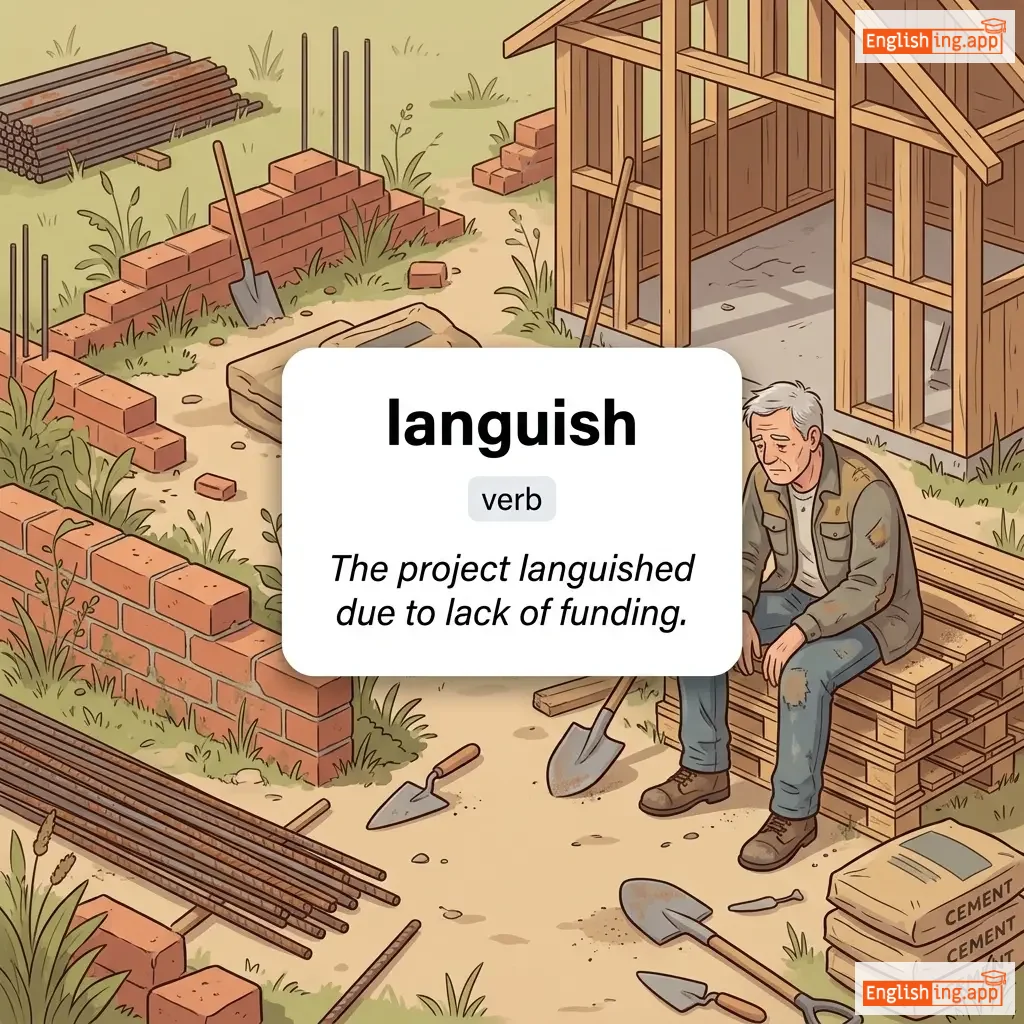
To become weak or feeble; to suffer neglect or remain in an unpleasant situation for a long time.
••••••
|
The project languished due to lack of funding.
プロジェクトは資金不足のため停滞しました。
••••••
|
プロジェクトは資金不足で停滞しました。
Purojekuto wa shikin fusoku de teitai shimashita.
••••••
|
languish in prison
刑務所で長期間過ごす
••••••
|
To remain imprisoned for a long time, often in poor conditions.
••••••
|
長期間刑務所にいる
Chōkikan keimusho ni iru
••••••
|
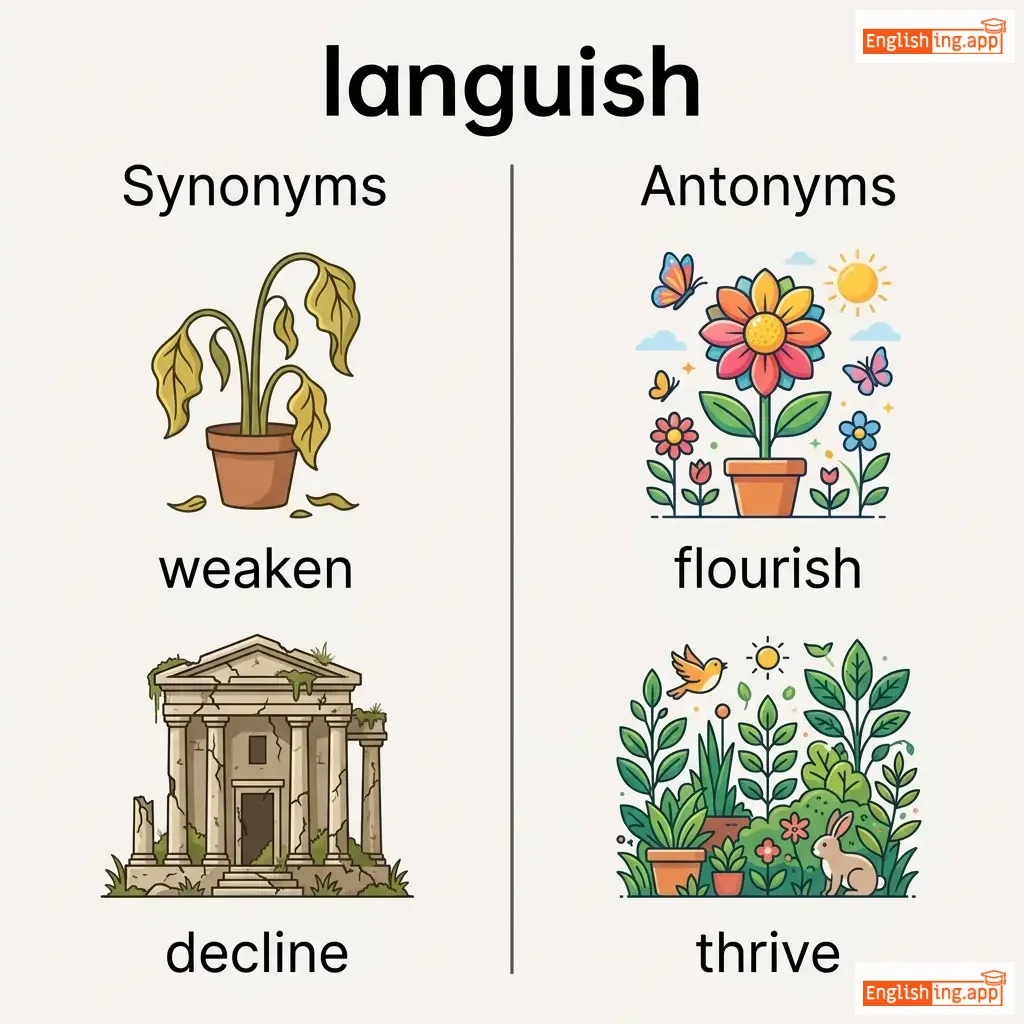
weaken, decline, wither, waste away, suffer
••••••
|
flourish, thrive, prosper
••••••
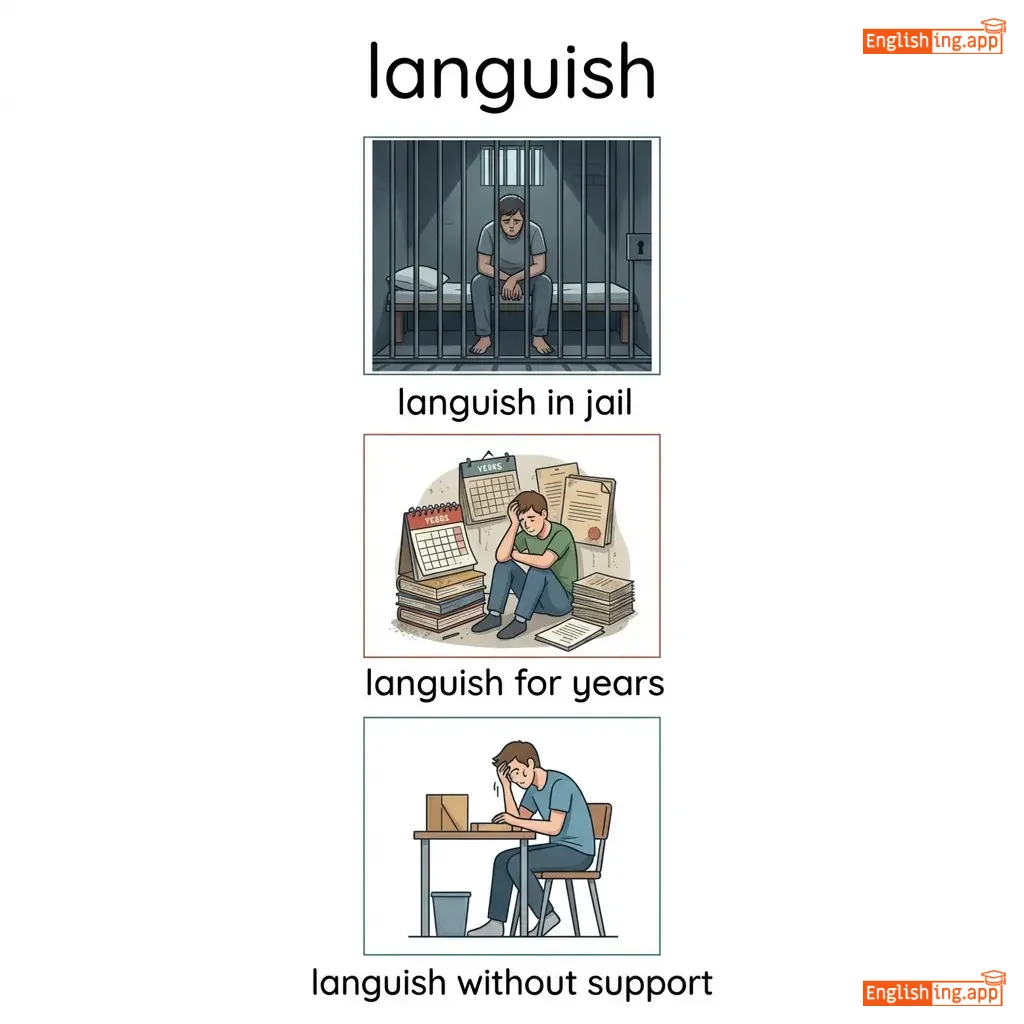
|
languish in jail, languish for years, languish without support, languish in obscurity
••••••
|
Languishは長い間困難な状況に置かれることを意味します。
••••••
|
|
#5093
😪
|
/ˈlæŋɡwɪd/
adjective
(ランギッド)
••••••
|
- •••••• |
無気力
mukiryoku
••••••
|
- •••••• | - •••••• | - •••••• | - •••••• |
Displaying or having a disinclination for physical exertion; weak or faint.
••••••
|
He gave a languid wave before leaving the room. |
彼は部屋を出る前に無気力な手を振った。
Kare wa heya o deru mae ni mukiryoku na te o futta.
••••••
|
- •••••• | - •••••• | - •••••• |
listless, weary, sluggish, lazy, faint
••••••
|
energetic, lively, active
••••••
|
languid manner, languid smile, languid pace, languid afternoon
••••••
|
無気力は動きが遅く、エネルギーがない状態を意味します。
••••••
|
|
#5094
🌄
|
/ˈlændskeɪp/
noun
(ランドスケープ)
••••••
|
- •••••• |
風景
fūkei
••••••
|
- •••••• | - •••••• | - •••••• | - •••••• |
All the visible features of an area of land, often considered in terms of their aesthetic appeal.
••••••
|
The mountain landscape was breathtaking. |
山の風景は息を呑むほど美しかった。
Yama no fūkei wa iki o nomu hodo utsukushikatta.
••••••
|
- •••••• | - •••••• | - •••••• |
scenery, view, panorama, outlook, terrain
••••••
|
sky, indoors
••••••
|
beautiful landscape, urban landscape, rural landscape, landscape painting
••••••
|
Land+Scape = 自然の美しい風景
••••••
|
|
#5095
📍
|
/ˈlændmɑːrk/
noun
(ランドマーク)
••••••
|
|
ランドマーク
randōmāku
••••••
|
- •••••• | - •••••• | - •••••• | - •••••• |
A recognizable object or structure that serves as a point of reference, or an event marking an important stage.
••••••
|
The Eiffel Tower is a famous landmark in Paris. |
エッフェル塔はパリの有名なランドマークです。
Efferu-tō wa Pari no yūmei na randōmāku desu.
••••••
|
landmark decision |
An important or historic ruling or choice.
••••••
|
歴史的決定
rekishiteki kettei
••••••
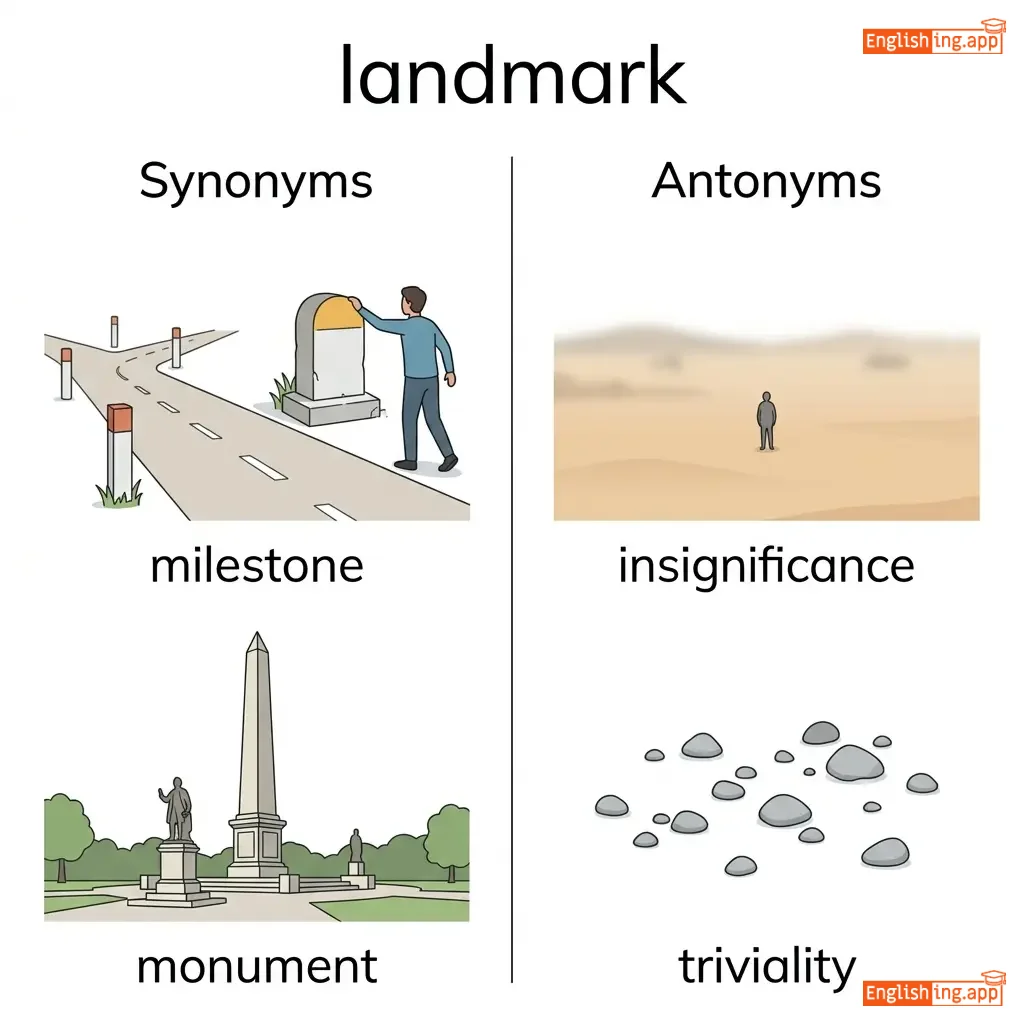
|
milestone, monument, marker, signpost, reference point
••••••
|
insignificance, triviality
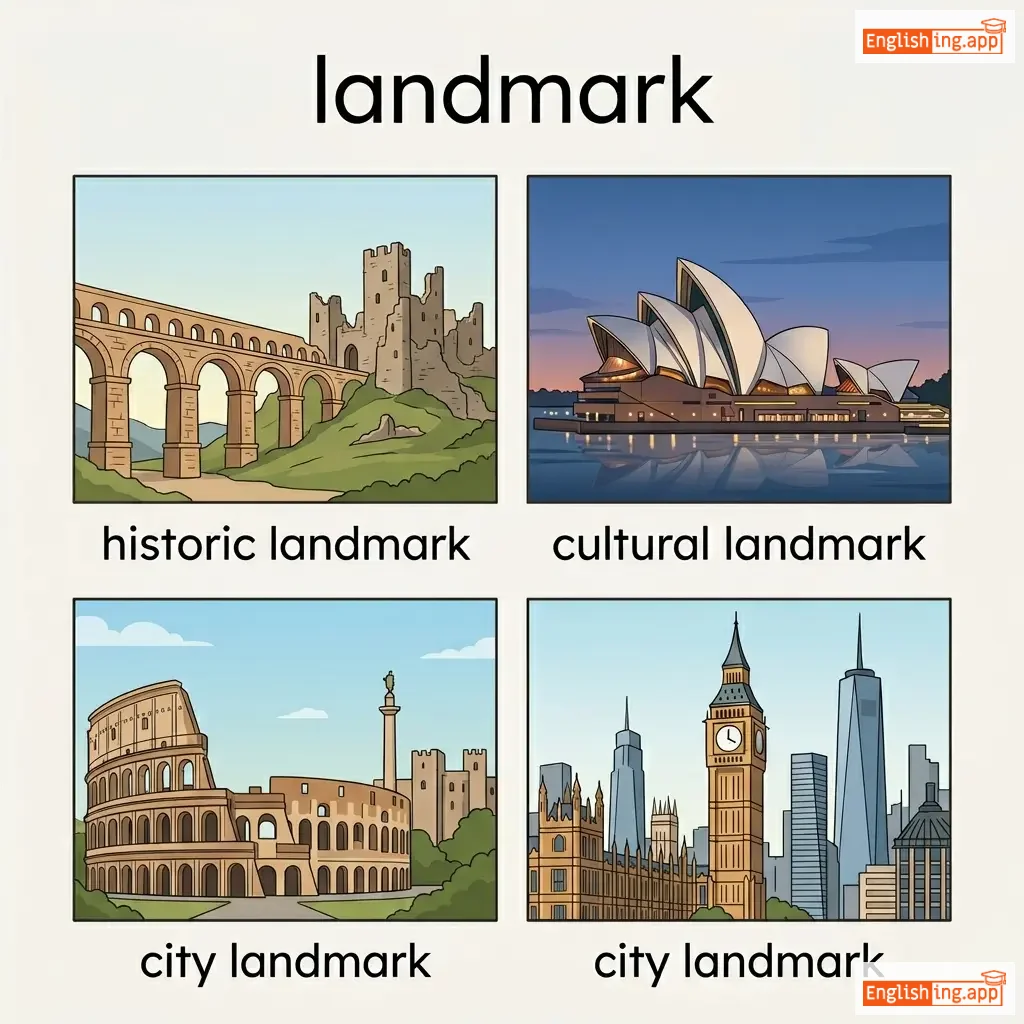
••••••
|
historic landmark, cultural landmark, city landmark, national landmark
••••••
|
Land+Mark = 地図の重要な位置
••••••
|
|
#5096
🏠
|
/ˈlændlɔːrd/
noun
(ランドロード)
••••••
|
- •••••• |
家主
iemushi
••••••
|
- •••••• | - •••••• | - •••••• | - •••••• |
A person who owns and rents out land, buildings, or accommodation.
••••••
|
The landlord increased the rent for all tenants this year. |
今年、家主はすべての入居者の家賃を上げました。
Kotoshi, iemushi wa subete no nyūkyo-sha no yachin o agemashita.
••••••
|
the landlord's word is law |
The landlord has complete authority over the property.
••••••
|
家主の言葉は法です
Iemushi no kotoba wa hō desu
••••••
|
owner, lessor, proprietor, landowner, property-holder
••••••
|
tenant, renter, lessee
••••••
|
landlord and tenant, landlord duties, landlord agreement, friendly landlord
••••••
|
Land+Lord = 家主, 家主とは家を貸す人。
••••••
|
|
#5097
🏡
|
/ˈlændˌhoʊl.dər/
noun
(ランドホルダー)
••••••
|
- •••••• |
土地所有者
tochi shoyuusha
••••••
|
- •••••• | - •••••• | - •••••• | - •••••• |
a person who owns land, especially in large amounts
••••••
|
The landholder leased part of his property to local farmers. |
土地所有者は自分の財産の一部を地元の農民に貸しました。
Tochi shoyuusha wa jibun no zaisan no ichibu o jimoto no nōmin ni kashimashita.
••••••
|
- •••••• | - •••••• | - •••••• |
landowner, proprietor, estate holder, landlord
••••••
|
tenant, renter
••••••
|
large landholder, wealthy landholder, landholder rights, landholder estate
••••••
|
Land + Holder = 土地所有者
••••••
|
|
#5098
🗑️
|
/ˈlænd.fɪl/
noun
(ランドフィル)
••••••
|
- •••••• |
埋立地
umetatechi
••••••
|
- •••••• | - •••••• | - •••••• | - •••••• |
a site where waste material is buried under the ground
••••••
|
The city built a new landfill to manage its growing waste problem. |
その都市は増え続ける廃棄物問題を解決するために新しい埋立地を作りました。
Sono toshi wa fue tsudzukeru haikibutsu mondai o kaiketsu suru tame ni atarashii umetatechi o tsukurimashita.
••••••
|
- •••••• | - •••••• | - •••••• |
dump, disposal site, waste ground, garbage site
••••••
|
recycling center, compost facility
••••••
|
sanitary landfill, landfill site, landfill waste, landfill management
••••••
|
Land + Fill = ゴミを埋める場所
••••••
|
|
#5099
💉
|
/ˈlæn.sɪt/
noun
(ランセット)
••••••
|
- •••••• |
外科用ナイフ
gekayou naifu
••••••
|
- •••••• | - •••••• | - •••••• | - •••••• |
a small, sharp, two-edged surgical knife used for making small incisions
••••••
|
The doctor used a lancet to prick the patient’s finger for a blood test. |
医者は血液検査のために患者の指を刺すためにランセットを使用しました。
Isha wa ketsueki kensa no tame ni kanja no yubi o sasu tame ni ransetto o shiyou shimashita.
••••••
|
- •••••• | - •••••• | - •••••• |
scalpel, blade, knife, cutter
••••••
|
blunt tool, non-sharp instrument
••••••
|
surgical lancet, lancet blade, finger lancet, disposable lancet
••••••
|
Lancet = レンズ + セット – 手術で使用する小さなナイフ
••••••
|
|
#5100
⚔️
|
/læns/
noun
(ランス)
••••••
|
- •••••• |
槍
yari
••••••
|
- •••••• | - •••••• | - •••••• | - •••••• |
a long weapon with a pointed tip used by knights or soldiers on horseback
••••••
|
The knight lowered his lance before charging at the opponent. |
騎士は対戦相手に突進する前に槍を下ろした。
Kishi wa taisen aite ni toshin suru mae ni yari o oroshita.
••••••
|
break a lance |
to engage in a contest or fight
••••••
|
槍を折る
yari o oru
••••••
|
spear, javelin, pike, polearm
••••••
|
shield, armor
••••••
|
knight’s lance, sharp lance, wooden lance, break a lance
••••••
|
槍は戦士が使う武器です。ランスという名前から槍を覚えましょう。
••••••
|
Vocabulary Quiz
Test your vocabulary by matching words with their translations or meanings.
Login to take the quiz
Comments (0)
Share your thoughts and join the discussion.
Join the discussion by logging in
Login to CommentNo comments yet
Be the first to share your thoughts!