

翻訳
過去
過去分詞
三人称単数
動名詞
意味
例文
例文の翻訳
同義語
対義語
コロケーション
ニーモニック
Swipe left or right, or use the buttons. Tap image to zoom.
例文の翻訳
単語
Lesson 411Lesson 411 - マスクトグル
|
絵文字
|
単語 | Images | 翻訳 | 過去 | 過去分詞 | 三人称単数 | 動名詞 | 意味 | 例文 | 例文の翻訳 | 同義語 | 対義語 | コロケーション | ニーモニック |
|---|---|---|---|---|---|---|---|---|---|---|---|---|---|---|
|
#12295
🌊
|
/weɪv/
noun
(weibu)
••••••
|
|
波
nami
••••••
|
- •••••• | - •••••• | - •••••• | - •••••• |
a long body of water curling into an arched form and breaking on the shore
••••••
|
The waves crashed against the rocks during the storm. |
嵐の間に波が岩にぶつかった。
Arashi no aida ni nami ga iwa ni butsukatta.
••••••
|
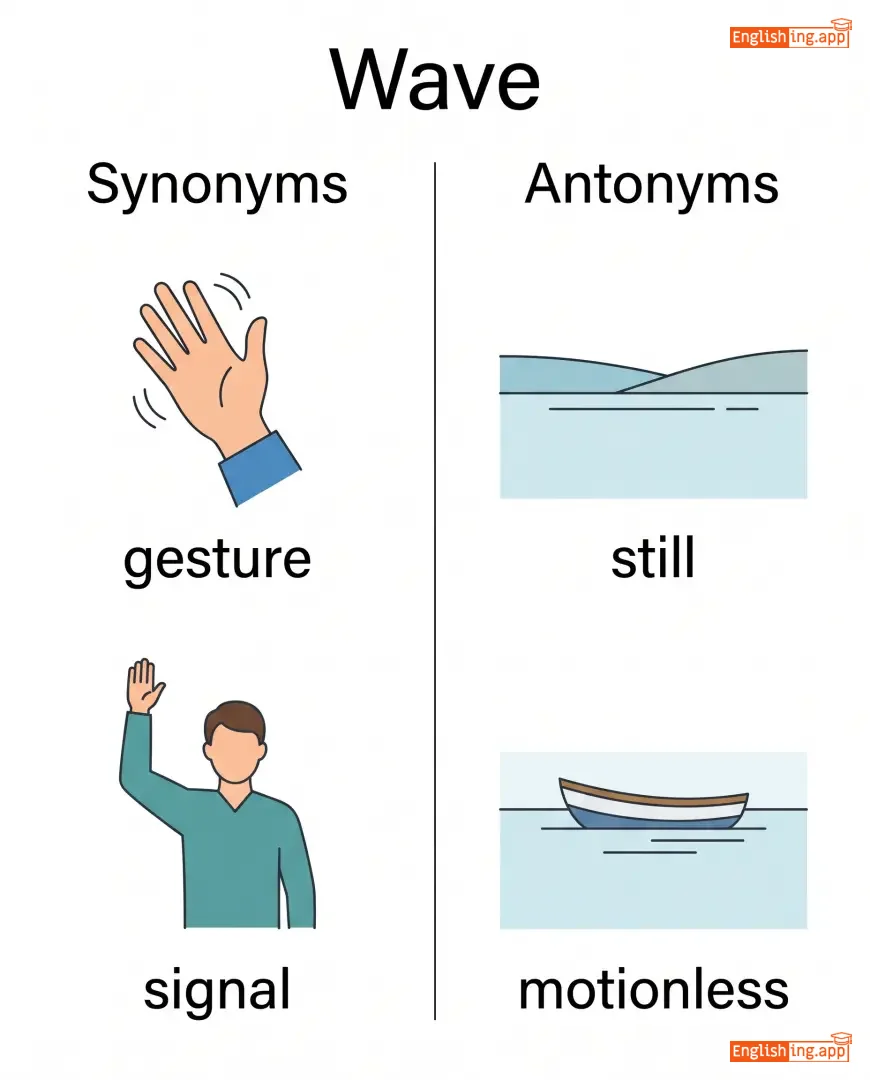
surge, swell, breaker, ripple
••••••
|
still, calm, stagnant
••••••
|
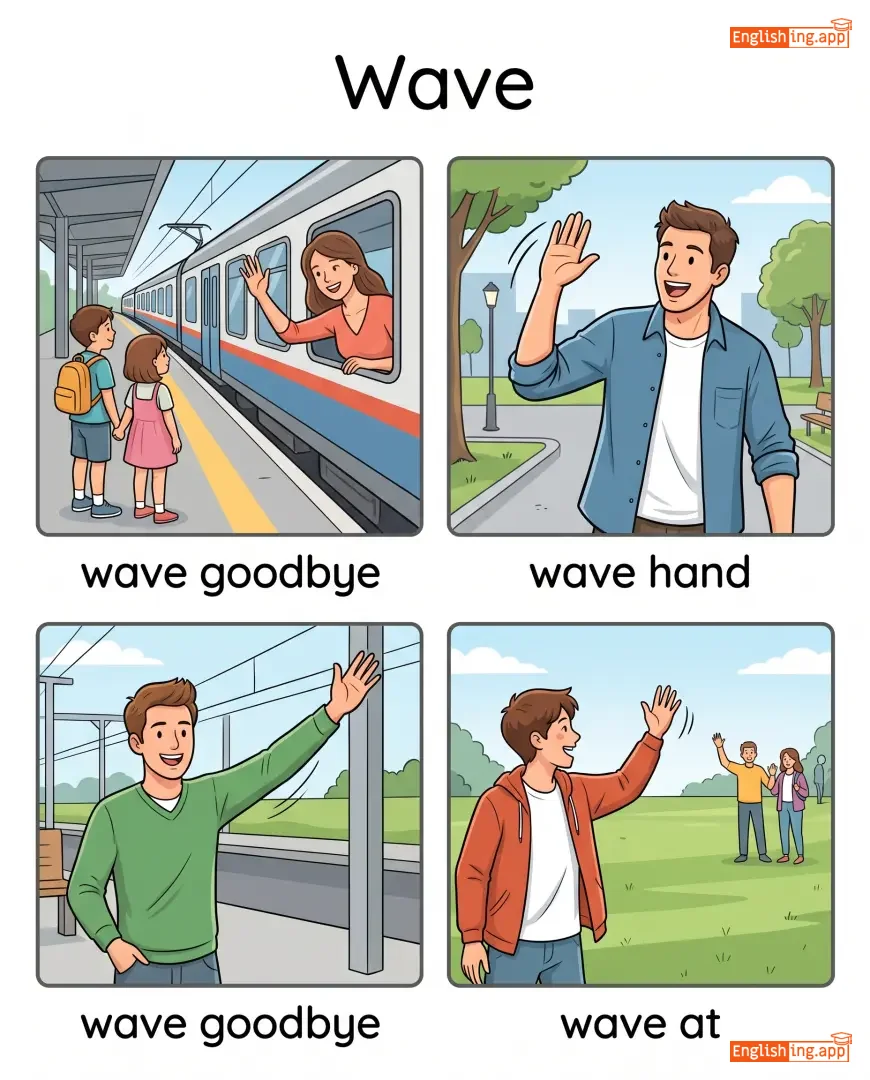
big wave, tidal wave, surf the wave, wave goodbye
••••••
|
NAMI means wave in Japanese! Imagine the waves crashing!
••••••
|
|
#12296
🌅
|
/wɛst/
noun
(ウエスト)
••••••
|
- •••••• |
西
nishi
••••••
|
- •••••• | - •••••• | - •••••• | - •••••• |
the direction to the left of the north and to the right of the south, typically associated with the sunset
••••••
|
The sun sets in the west. |
太陽は西に沈みます。
Taiyō wa nishi ni shizumimasu.
••••••
|
sunset, occident
••••••
|
east, orient
••••••
|
west coast, west side, go west, western civilization
••••••
|
太陽は西に沈みます - The sun sets in the west.
••••••
|
|
#12297
👍
|
/wɛl/
adverb
(wɛl)
••••••
|
- •••••• |
うまく
umaku
••••••
|
- •••••• | - •••••• | - •••••• | - •••••• |
in a good or satisfactory way
••••••
|
She did well in her exams.
彼女は試験でうまくいった。
••••••
|
彼女は試験でうまくいった。
Kanojo wa shiken de umaku itta.
••••••
|
successfully, excellently, proficiently
••••••
|
poorly, badly
••••••
|
do well, perform well, feel well
••••••
|
うまくいったので、試験でうまくいった!
••••••
|
|
#12298
💼
|
/ˈwɛlfɛr/
noun
(wɛlfɛr)
••••••
|
- •••••• |
福祉
fukushi
••••••
|
- •••••• | - •••••• | - •••••• | - •••••• |
the health, happiness, and fortunes of a person or group
••••••
|
The government provides welfare to low-income families. |
政府は低所得の家庭に福祉を提供します。
Seifu wa teishōtoku no katei ni fukushi o teikyō shimasu.
••••••
|
well-being, benefit, assistance
••••••
|
harm, damage
••••••
|
social welfare, welfare system, welfare state
••••••
|
福祉のために、社会の福祉。
••••••
|
|
#12299
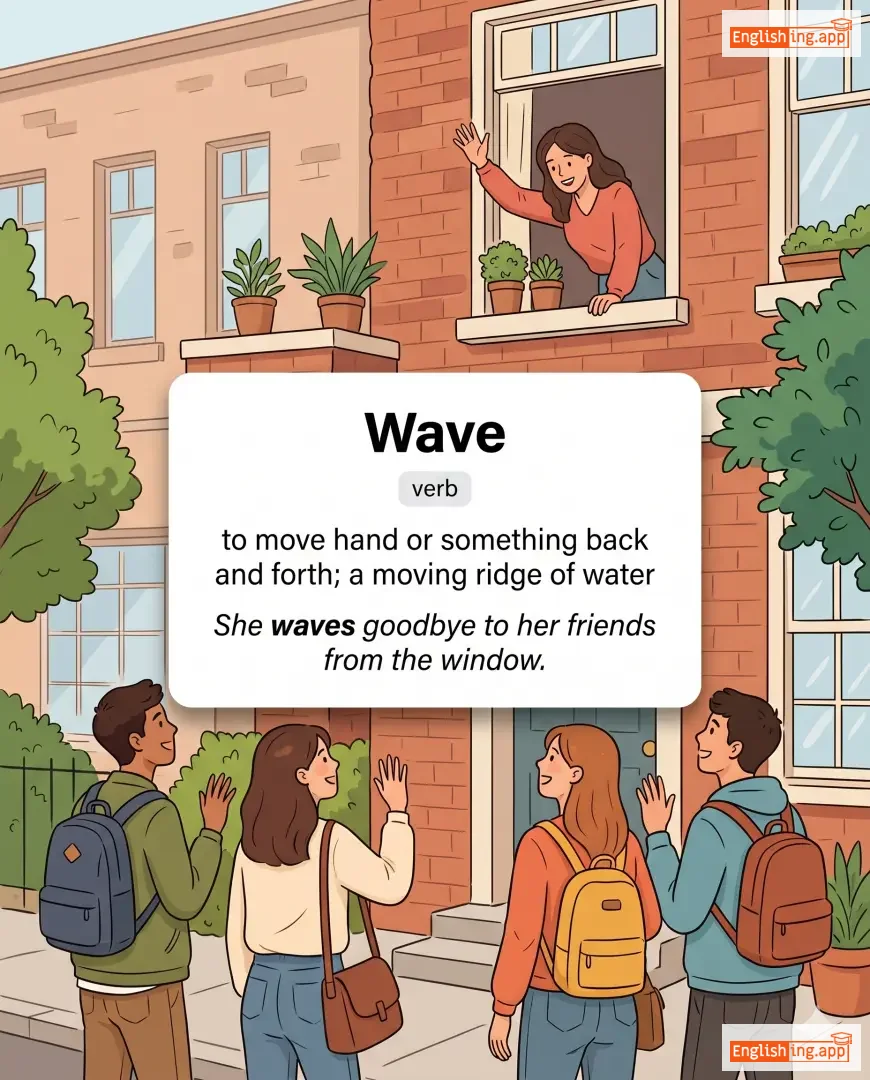
👋
|
/ˈwɛlkəm/
verb
(ウェルカム)
••••••
|
|
歓迎
kangei
••••••
|
welcomed
ウェルカムド
••••••
|
welcomed
ウェルカムド
••••••
|
welcomes
ウェルカムズ
••••••
|
welcoming
ウェルカミング
••••••
|
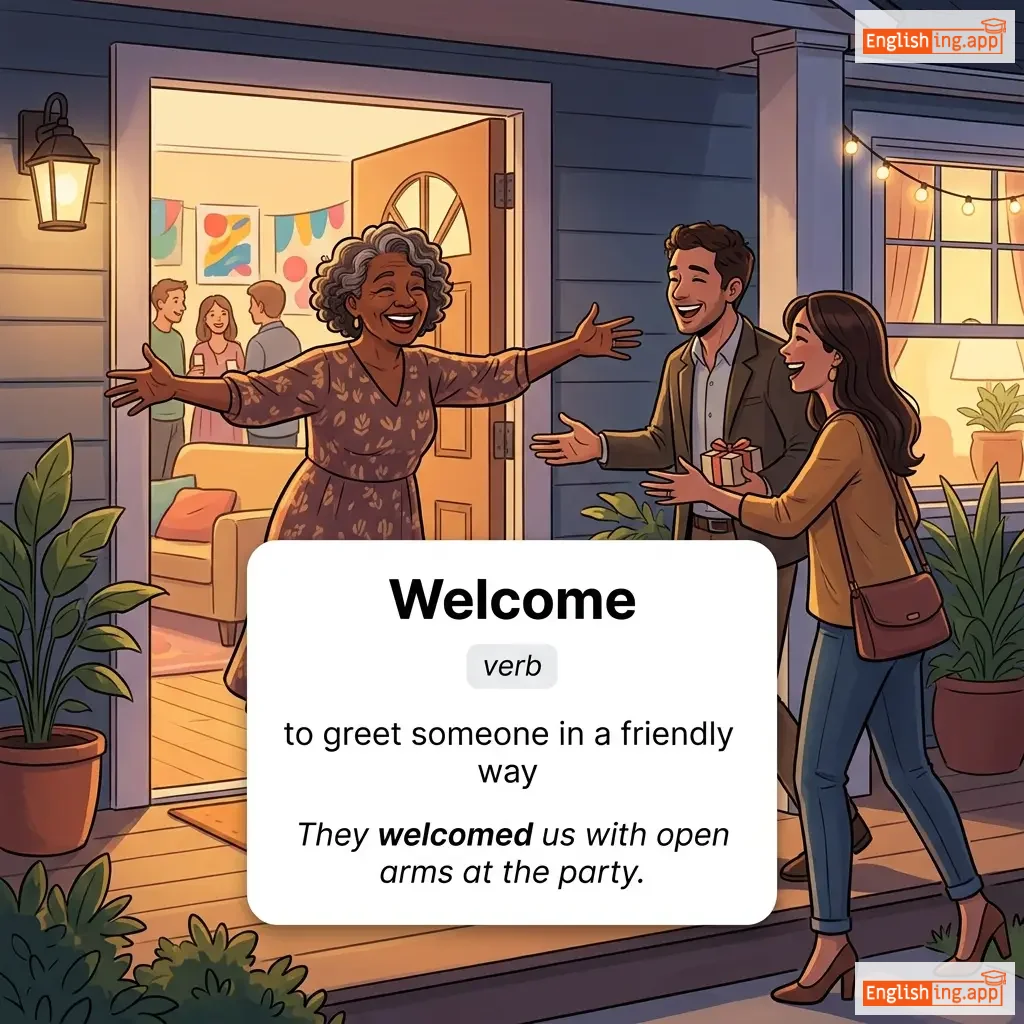
to greet someone in a friendly way
••••••
|
They welcomed us with open arms at the party.
彼らはパーティーで私たちを暖かく迎えてくれました。
••••••
|
彼らはパーティーで私たちを暖かく迎えてくれました。
Karera wa pātii de watashitachi o atatakai mu kaete kuremashita.
••••••
|
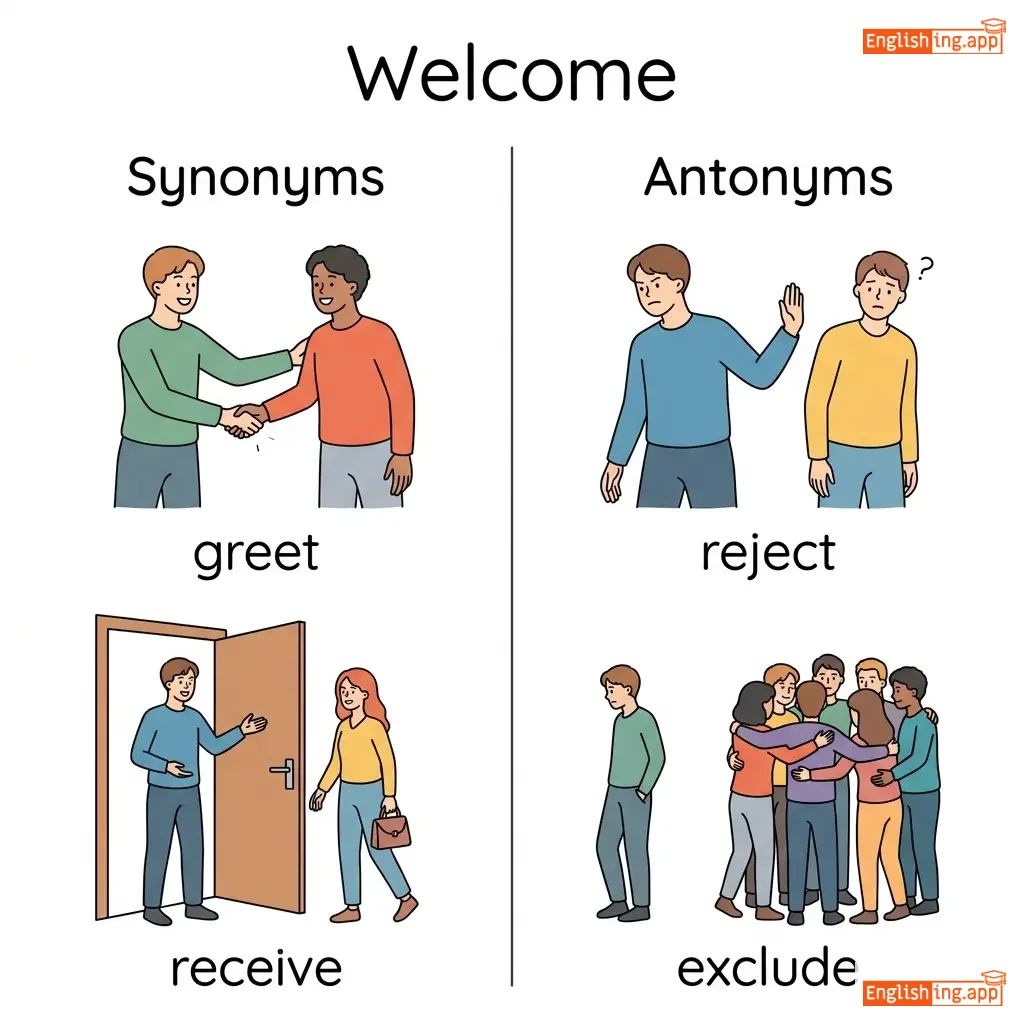
greet, receive, invite
••••••
|
reject, exclude
••••••
|
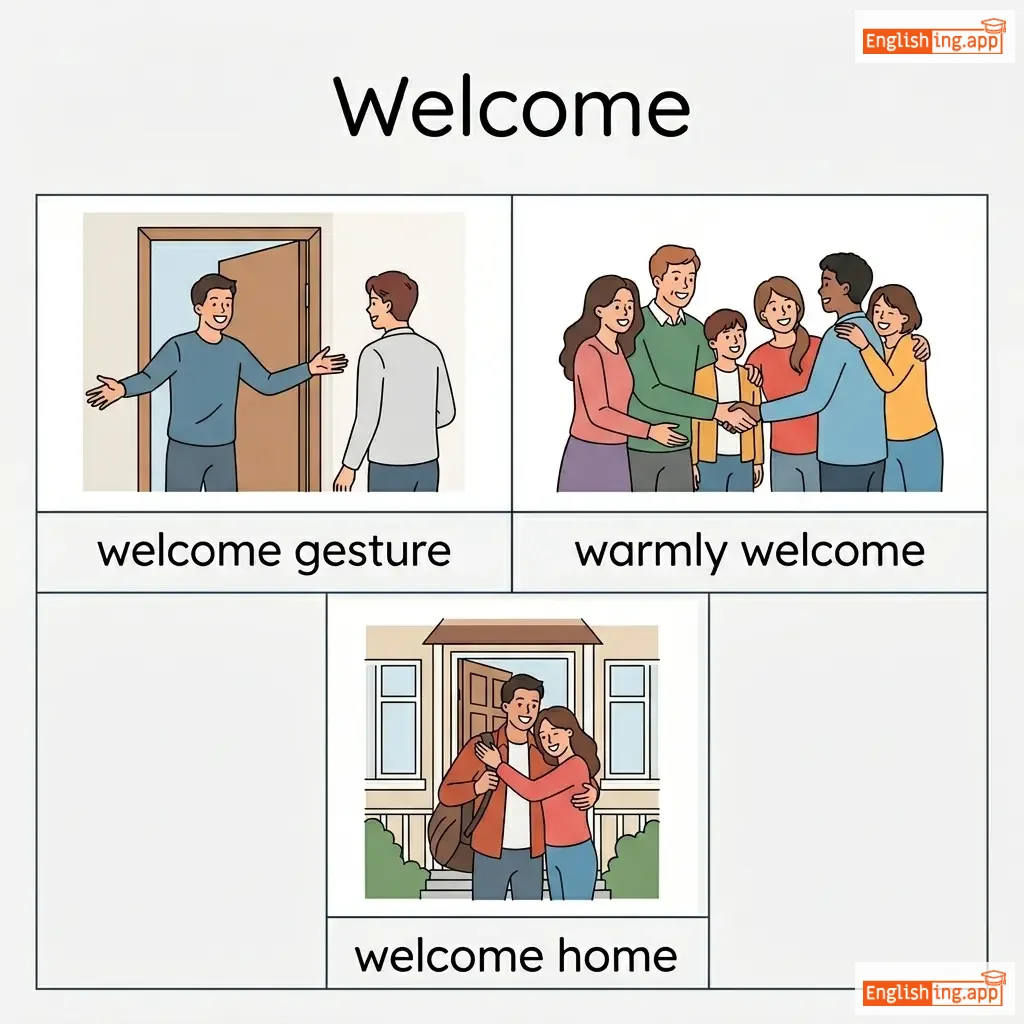
welcome gesture, warmly welcome, welcome home
••••••
|
パーティーで温かい抱擁で歓迎します!
••••••
|
|
#12300
⚖️
|
/weɪt/
noun
(ウェイト)
••••••
|
- •••••• |
重さ
omosa
••••••
|
- •••••• | - •••••• | - •••••• | - •••••• |
a measure of how heavy something is
••••••
|
The weight of the package was 10 kilograms. |
パッケージの重さは10キログラムでした。
Pakkēji no omosa wa 10 kiroguramu deshita.
••••••
|
mass, heaviness, load
••••••
|
lightness
••••••
|
body weight, weight lifting, weight loss
••••••
|
パッケージの重さはキログラムで測ります。
••••••
|
|
#12301
📅
|
/ˈwiːkli/
adjective
(ウィークリー)
••••••
|
- •••••• |
毎週の
maishuu no
••••••
|
- •••••• | - •••••• | - •••••• | - •••••• |
occurring or done every week
••••••
|
We have a weekly meeting on Mondays.
ウィー ハブ ア ウィークリー ミーティング オン マンデーズ
••••••
|
私たちは毎週月曜日に会議があります。
Watashitachi wa maishuu getsuyoubi ni kaigi ga arimasu.
••••••
|
regular, periodic, routine
••••••
|
irregular, occasional
••••••
|
weekly meeting, weekly report, weekly schedule
••••••
|
Weekly = maishuu, sounds like ‘my shoe’ — every week you wear shoes!
••••••
|
|
#12302
🌴
|
/ˈwiːkˌɛnd/
noun
(ウィークエンド)
••••••
|
- •••••• |
週末
shūmatsu
••••••
|
- •••••• | - •••••• | - •••••• | - •••••• |
the end of the week, typically regarded as Saturday and Sunday
••••••
|
They are planning a trip for the weekend. |
彼らは週末に旅行の計画を立てています。
Karera wa shūmatsu ni ryokō no keikaku o tateteimasu.
••••••
|
rest days, holiday, break
••••••
|
workday
••••••
|
spend the weekend, weekend trip, weekend getaway
••••••
|
Weekend – 'We' enjoy the 'end' of the week!
••••••
|
|
#12303
📅
|
/wiːk/
noun
(ウィーク)
••••••
|
- •••••• |
週
shū
••••••
|
- •••••• | - •••••• | - •••••• | - •••••• |
a period of seven days
••••••
|
I will finish the project by the end of the week. |
私は今週末までにプロジェクトを終わらせます。
Watashi wa konshūmatsu made ni purojekuto o owarasemasu.
••••••
|
seven days, workweek, time span
••••••
|
day, month
••••••
|
work week, start of the week, end of the week
••••••
|
Week – 'We' work 'every' week!
••••••
|
|
#12304
💍
|
/ˈwɛdɪŋ/
noun
(wedding)
••••••
|
- •••••• |
結婚式
けっこんしき
••••••
|
- •••••• | - •••••• | - •••••• | - •••••• |
a marriage ceremony, especially considered as including the associated celebrations
••••••
|
They are planning a wedding in the summer. |
彼らは夏に結婚式を計画しています。
Karera wa natsu ni kekkonshiki o keikaku shiteimasu.
••••••
|
marriage, nuptials, ceremony, union
••••••
|
divorce, separation
••••••
|
attend a wedding, wedding ceremony, wedding dress, wedding reception
••••••
|
Wedding – Picture the elegant 'けっこんしき' with joyful festivities!
••••••
|
|
#12305
👗
|
/wɛə(r)/
verb
(wɛə(r))
••••••
|
|
着る
kiru
••••••
|
wore
wɔr
••••••
|
worn
wɔrn
••••••
|
wears
wɛərz
••••••
|
wearing
wɛə(r)ɪŋ
••••••
|
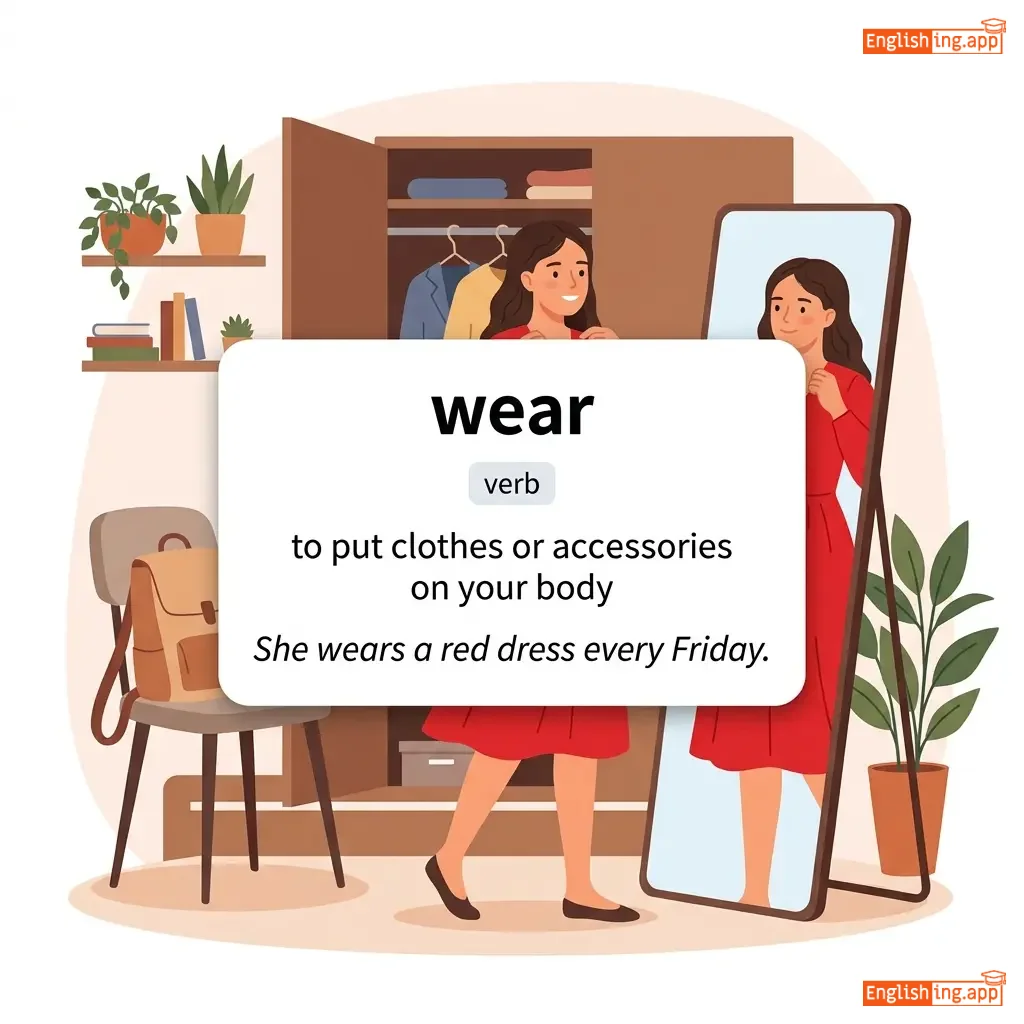
to put clothes or accessories on your body
••••••
|
She wears a red dress every Friday.
彼女は毎週金曜日に赤いドレスを着ます。
••••••
|
彼女は毎週金曜日に赤いドレスを着ます。
Kanojo wa maishū kin'yōbi ni akai doresu o kimasu.
••••••
|
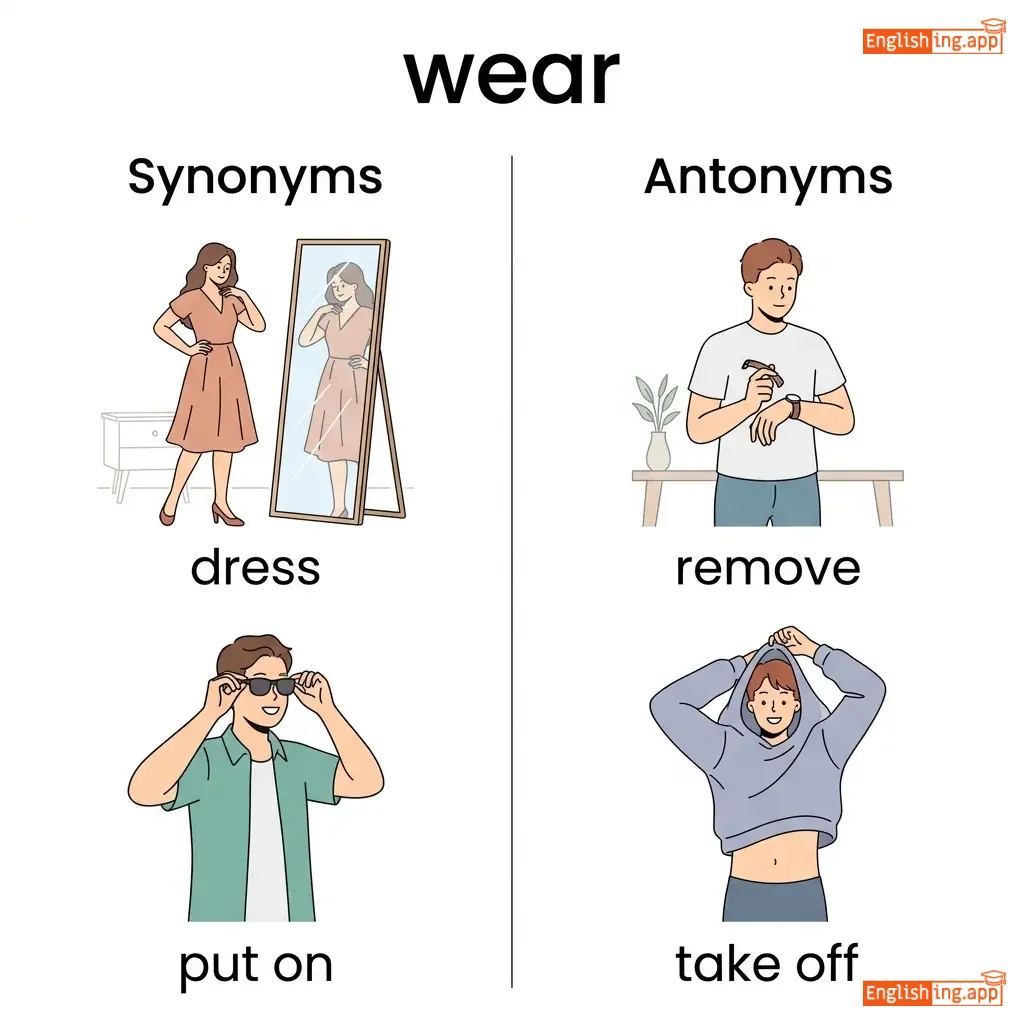
dress, put on, don, sport
••••••
|
remove, take off
••••••
|
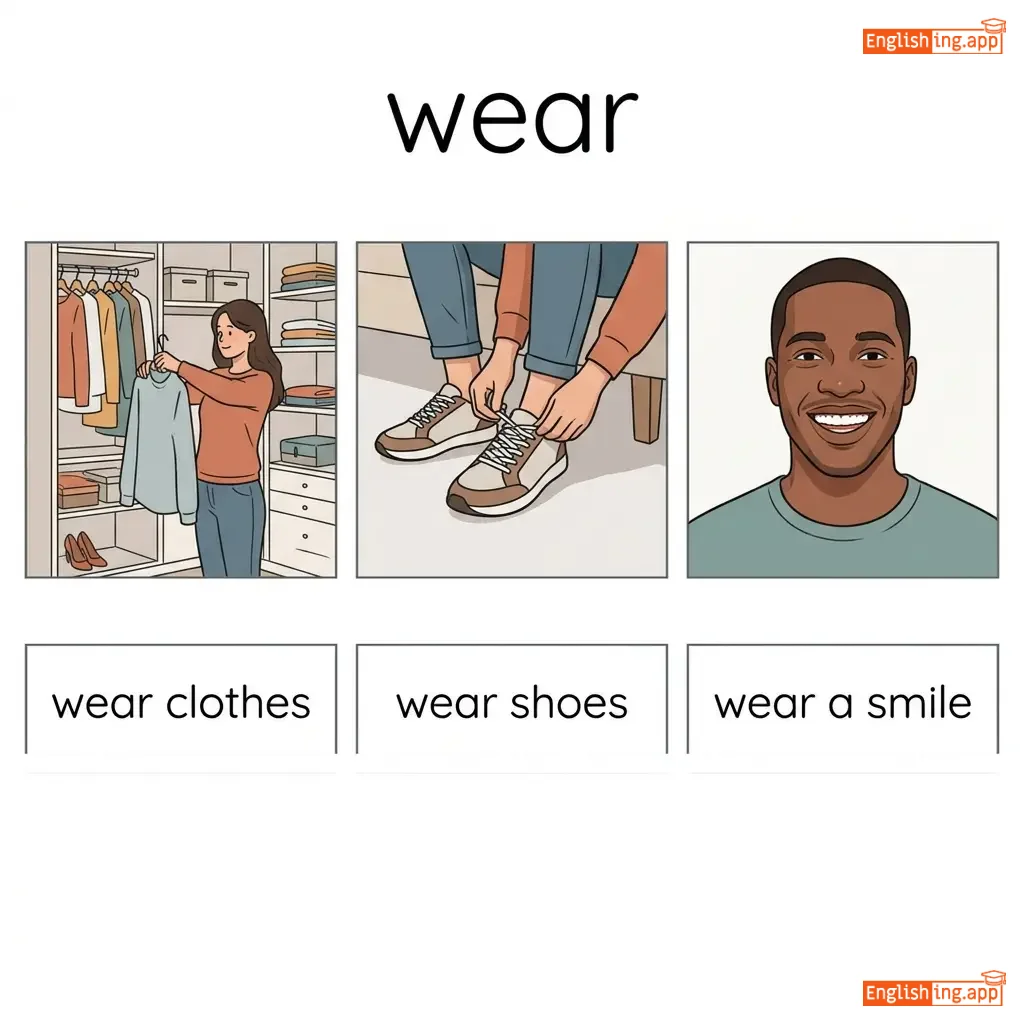
wear clothes, wear shoes, wear a smile, wear a hat
••••••
|
Wear sounds like 'where' – 'Where’s my dress? I want to wear it!'
••••••
|
|
#12306
🗡️
|
/ˈwɛpən/
noun
(ウェポン)
••••••
|
- •••••• |
武器
buki
••••••
|
- •••••• | - •••••• | - •••••• | - •••••• |
a thing designed or used for inflicting harm or damage
••••••
|
He carried a weapon for self-defense.
彼は自己防衛のために武器を携帯していた。
••••••
|
彼は自己防衛のために武器を携帯していた。
Kare wa jiko bōei no tame ni buki o keitai shite ita.
••••••
|
arm, tool, instrument, device
••••••
|
peace, harmony, defense
••••••
|
carry a weapon, use a weapon, weapon of choice
••••••
|
Weapon sounds like 'wheeled' – Think of a car wheel as a 'weapon' in a chase!
••••••
|
|
#12307
💰
|
/ˈwɛlθi/
adjective
(wélthi)
••••••
|
- •••••• |
裕福
yūfuku
••••••
|
- •••••• | - •••••• | - •••••• | - •••••• |
having a great deal of money, resources, or assets
••••••
|
He became wealthy after investing in real estate.
彼は不動産に投資した後、裕福になった。
••••••
|
彼は不動産に投資した後、裕福になった。
Kare wa fudōsan ni tōshi shita ato, yūfuku ni natta.
••••••
|
rich, prosperous, affluent, loaded
••••••
|
poor, broke, destitute
••••••
|
wealthy family, wealthy businessman, wealthy lifestyle, wealthy country
••••••
|
Wealthy people are ‘yūfuku’ in Japanese!
••••••
|
|
#12308
💪
|
/wiːk/
adjective
(ウィーク)
••••••
|
- •••••• |
弱い
yowai
••••••
|
- •••••• | - •••••• | - •••••• | - •••••• |
lacking physical strength or energy
••••••
|
She felt weak after the long run. |
長いランニングの後、彼女は弱く感じた。
Nagai ranningu no ato, kanojo wa yowaku kanjita.
••••••
|
frail, delicate, feeble, fragile
••••••
|
strong, powerful, robust
••••••
|
feel weak, weak point, weak health, weak muscles
••••••
|
Think of WEAK as feeling ‘弱い’ and needing rest!
••••••
|
|
#12309
👥
|
/wi/
pronoun
(ウィ)
••••••
|
- •••••• |
私たち
watashitachi
••••••
|
- •••••• | - •••••• | - •••••• | - •••••• |
used by a speaker to refer to himself or herself and one or more other people
••••••
|
We are going to the park this afternoon.
私たちは今日の午後公園に行きます。
••••••
|
私たちは今日の午後公園に行きます。
Watashitachi wa kyō no gogo kōen ni ikimasu.
••••••
|
us, ourselves, we two, we three
••••••
|
I, you
••••••
|
we are, we need, we can, we love
••••••
|
We are always ‘Watashitachi’ in Japanese!
••••••
|
|
#12310
🤝
|
/ˌvɒl.ənˈtɪə/
noun/verb
(ボランティア)
••••••
|
- •••••• |
ボランティア
borantia
••••••
|
volunteered
ボランティアした
••••••
|
volunteered
ボランティアした
••••••
|
volunteers
ボランティアする人たち
••••••
|
volunteering
ボランティアする
••••••
|
a person who does something, especially helping other people, willingly and without being paid
••••••
|
She decided to volunteer at the local animal shelter.
彼女は地元の動物保護施設でボランティアをすることに決めた。
••••••
|
彼女は地元の動物保護施設でボランティアをすることに決めた。
Kanojo wa jimoto no dōbutsu hogo shisetsu de borantia o suru koto ni kimeta.
••••••
|
helper, contributor, supporter, participant
••••••
|
recipient, beneficiary
••••••
|
volunteer work, volunteer for, volunteer program, volunteer at
••••••
|
ボランティアは無償で助ける。
••••••
|
|
#12311
💧
|
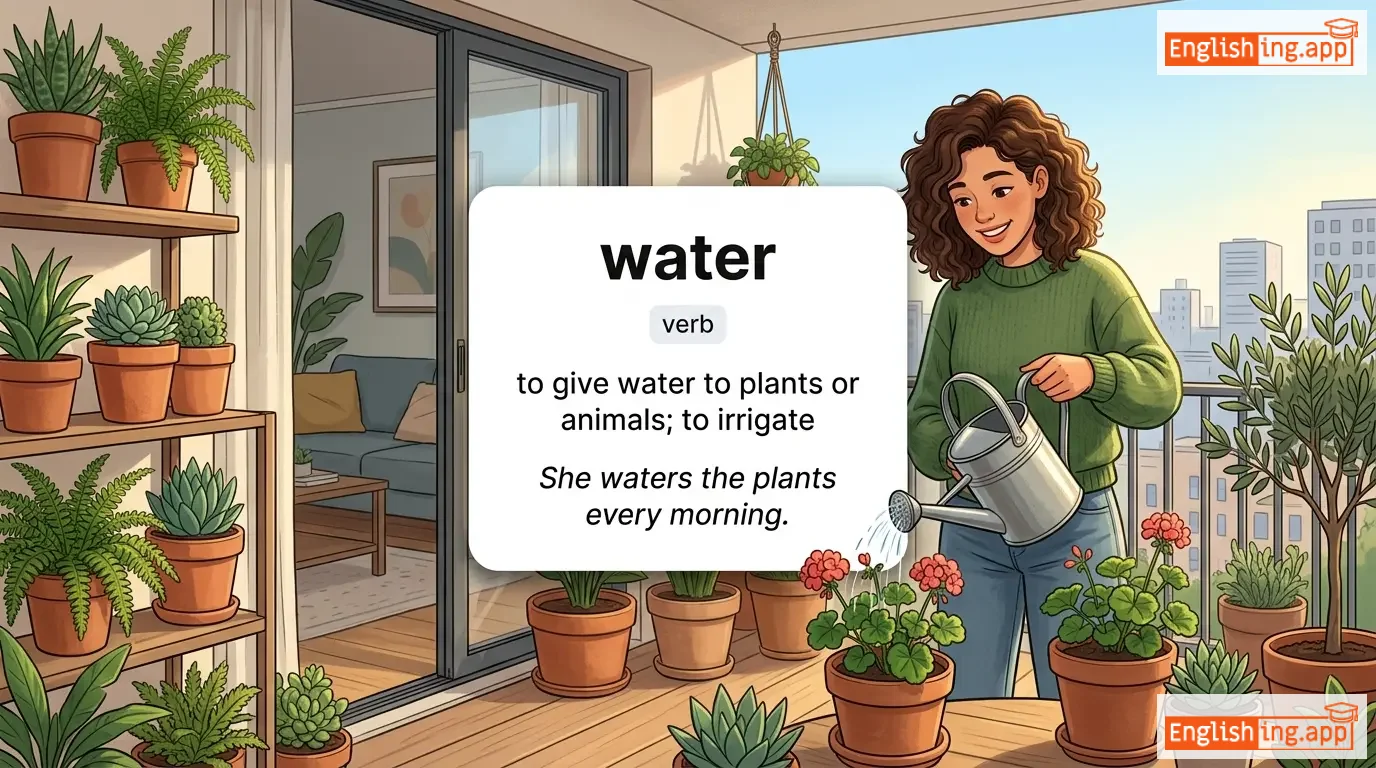
/ˈwɔːtər/
noun
(ウォーター)
••••••
|
|
水
mizu
••••••
|
- •••••• | - •••••• | - •••••• | - •••••• |
a clear, colorless, odorless, and tasteless liquid that is essential for life
••••••
|
We need to drink water to stay hydrated. |
私たちは水分補給のために水を飲む必要があります。
Watashitachi wa suibun hokyū no tame ni mizu o nomu hitsuyō ga arimasu.
••••••
|
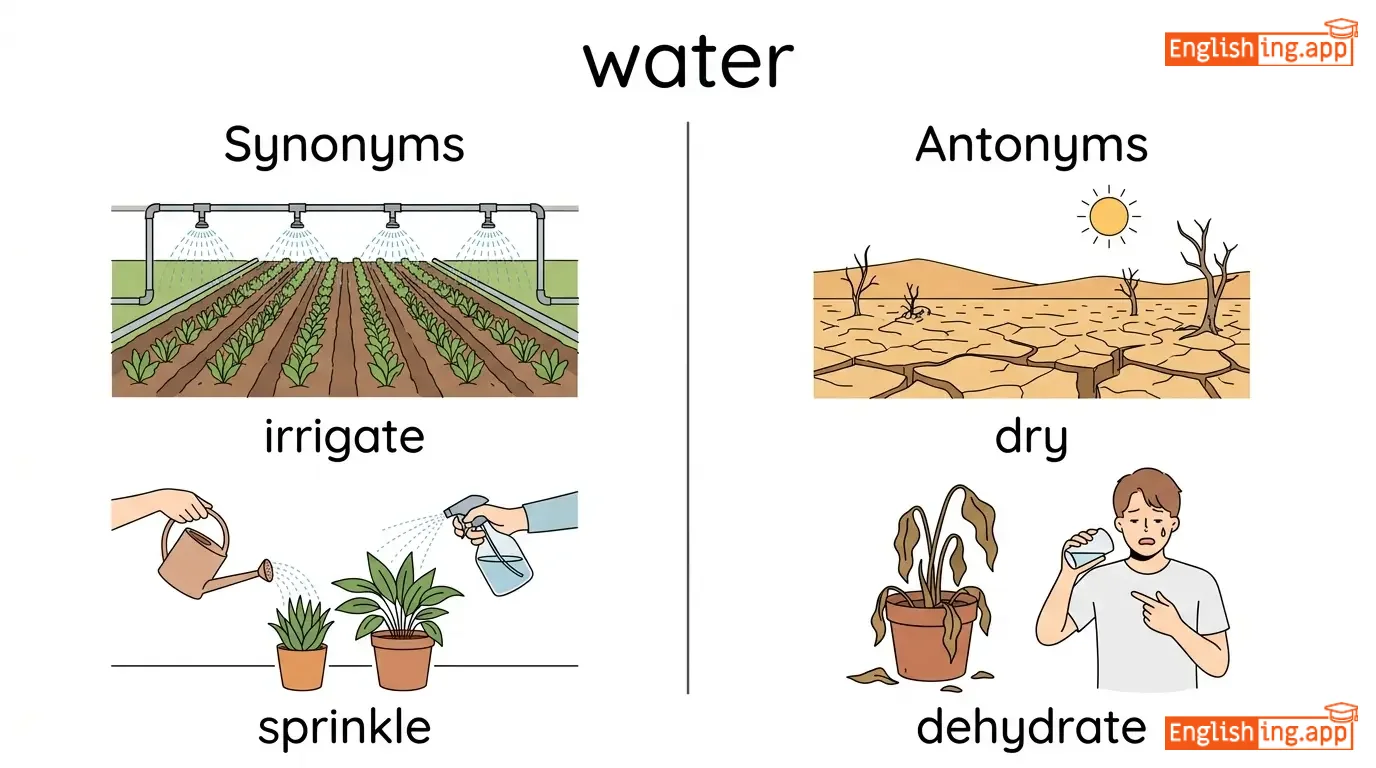
liquid, H2O, aqua, spring water
••••••
|
dry, desert, parched
••••••
|
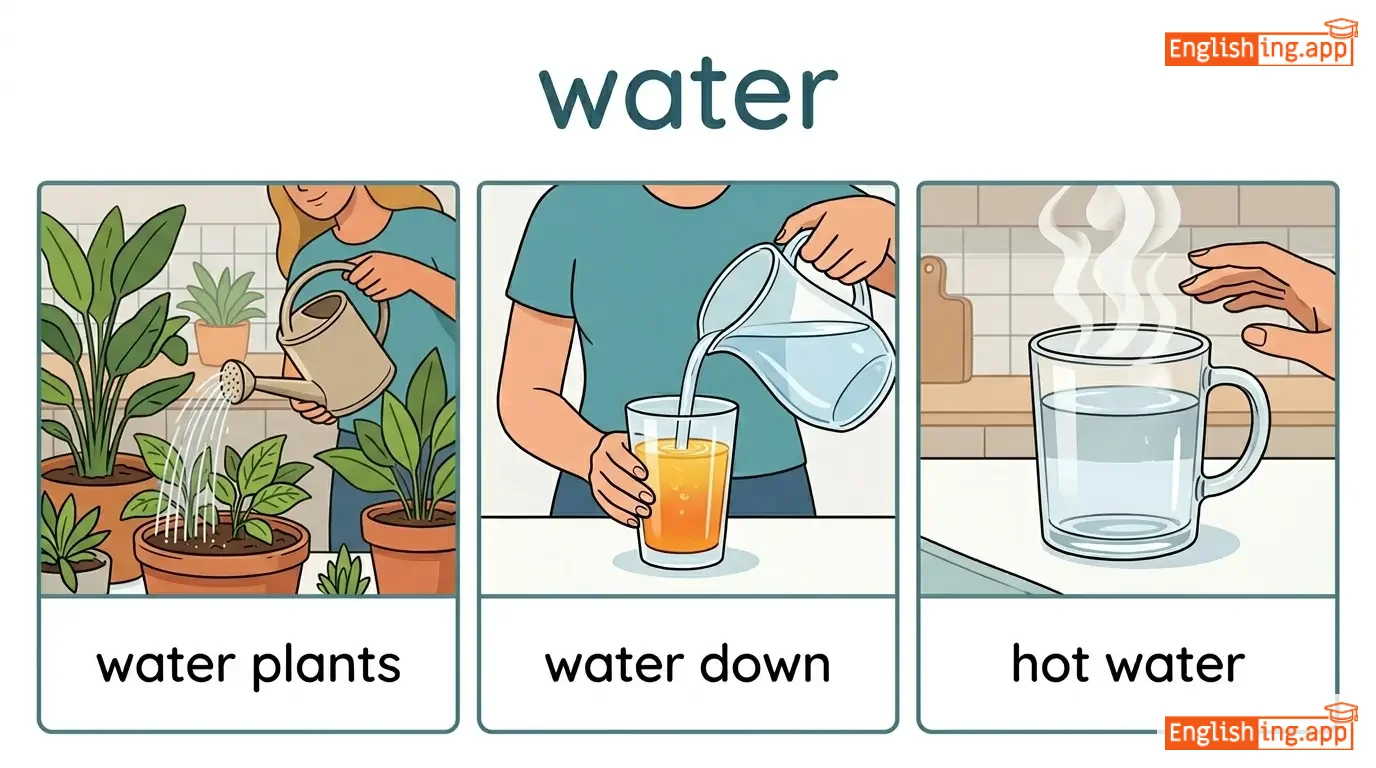
drink water, water bottle, clean water, water source
••••••
|
水分補給のために水を飲む!
••••••
|
|
#12312
👀
|
/wɒtʃ/
verb
(ウォッチ)
••••••
|
|
見る
miru
••••••
|
watched
ウォッチド
••••••
|
watched
ウォッチド
••••••
|
watches
ウォッチズ
••••••
|
watching
ウォッチング
••••••
|
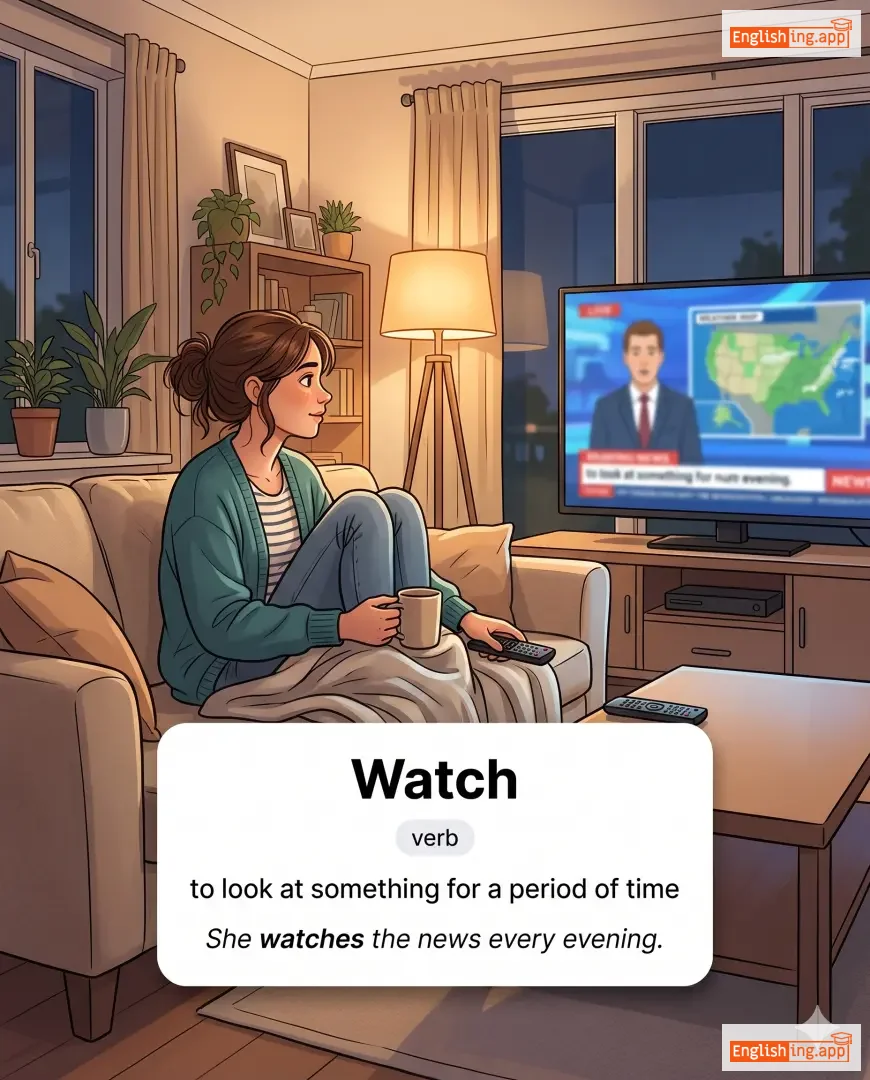
to look at something for a period of time
••••••
|
She watches the news every evening.
彼女は毎晩ニュースを見ます。
••••••
|
彼女は毎晩ニュースを見ます。
Kanojo wa mainichi ban nyūsu o mimasu.
••••••
|
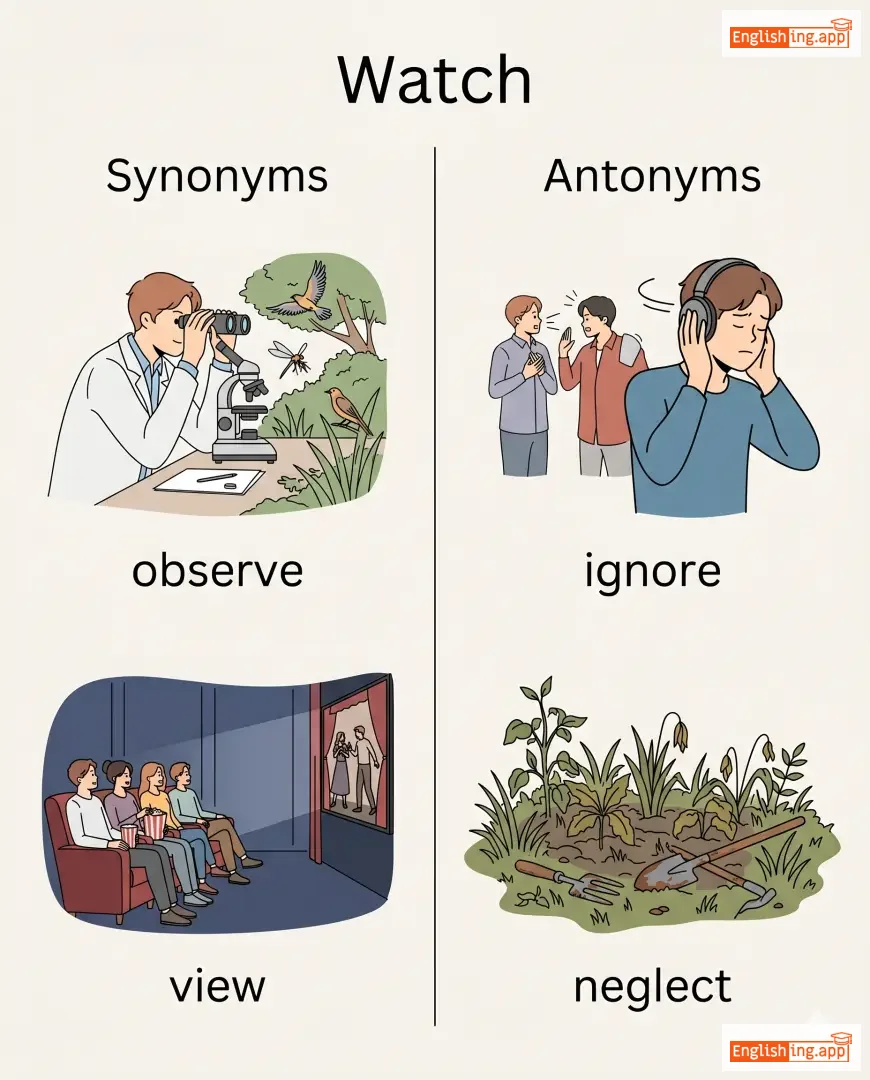
observe, view, look at, gaze
••••••
|
ignore, neglect, overlook
••••••
|
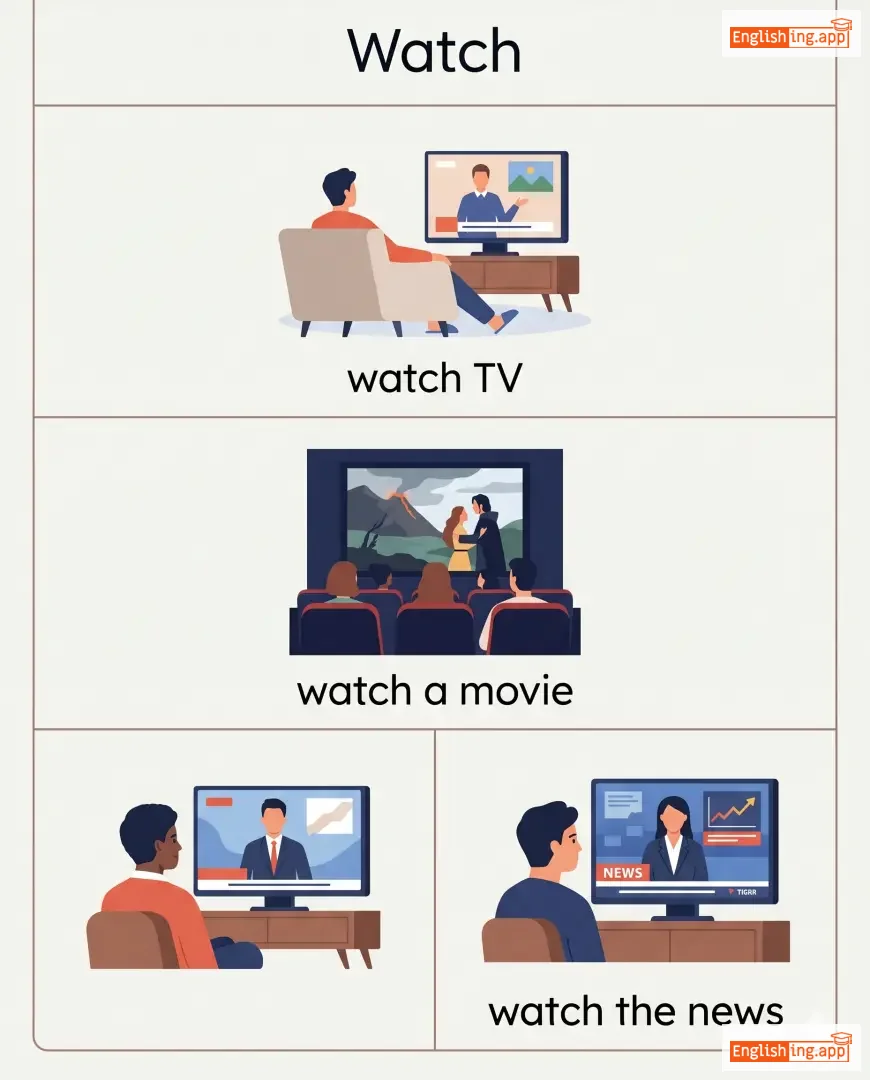
watch TV, watch a movie, watch the news, watch carefully
••••••
|
WATCH the news every night, don't miss anything!
••••••
|
|
#12313
🗑️
|
/weɪst/
noun
(ウェイスト)
••••••
|
|
無駄
muda
••••••
|
- •••••• | - •••••• | - •••••• | - •••••• |
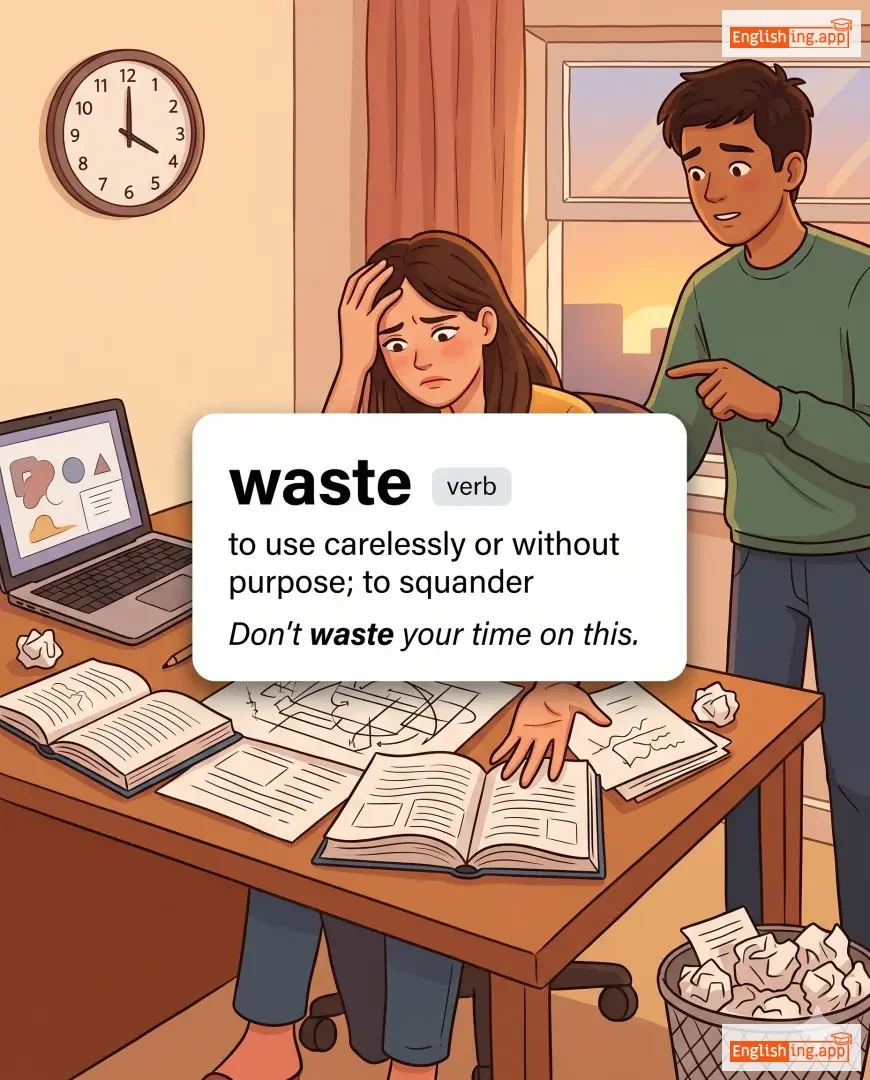
something that is not useful and is thrown away
••••••
|
Don't waste your time on unnecessary tasks. |
無駄な作業に時間を浪費しないでください。
Muda na sagyō ni jikan o rōhi shinai de kudasai.
••••••
|
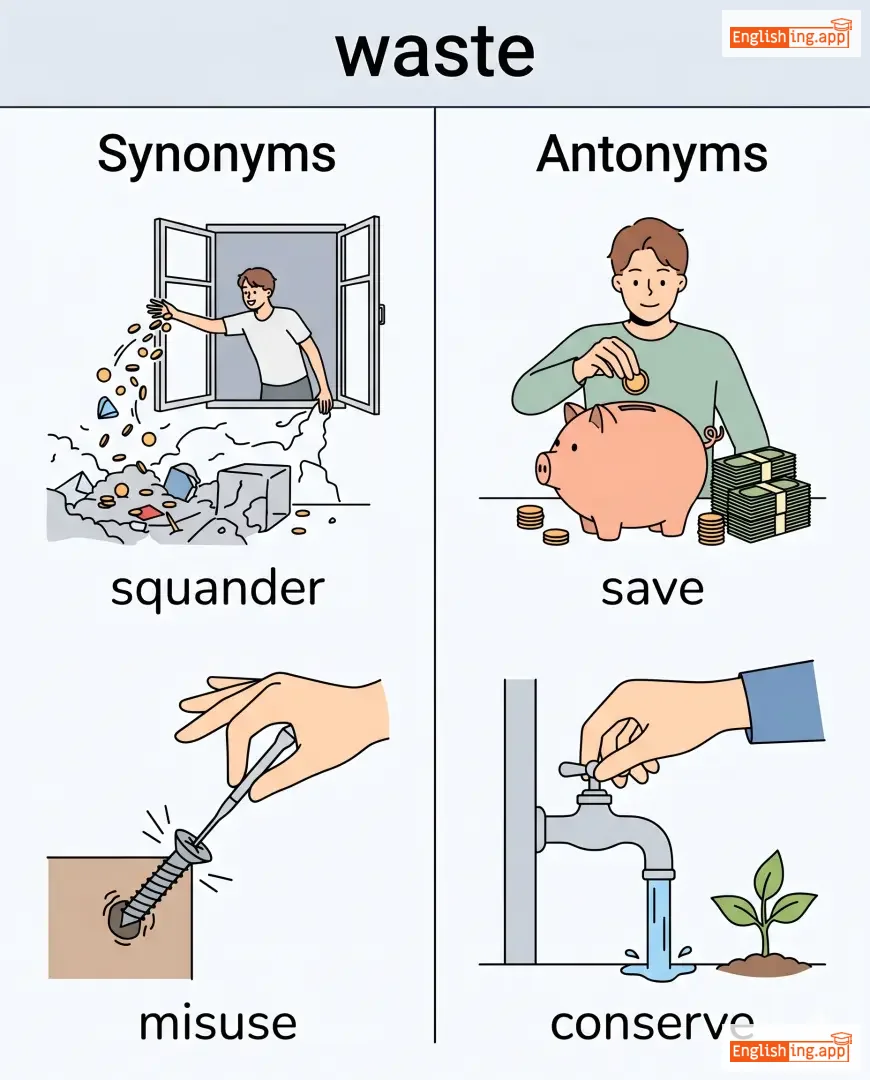
garbage, trash, rubbish, refuse
••••••
|
value, resource, asset
••••••
|
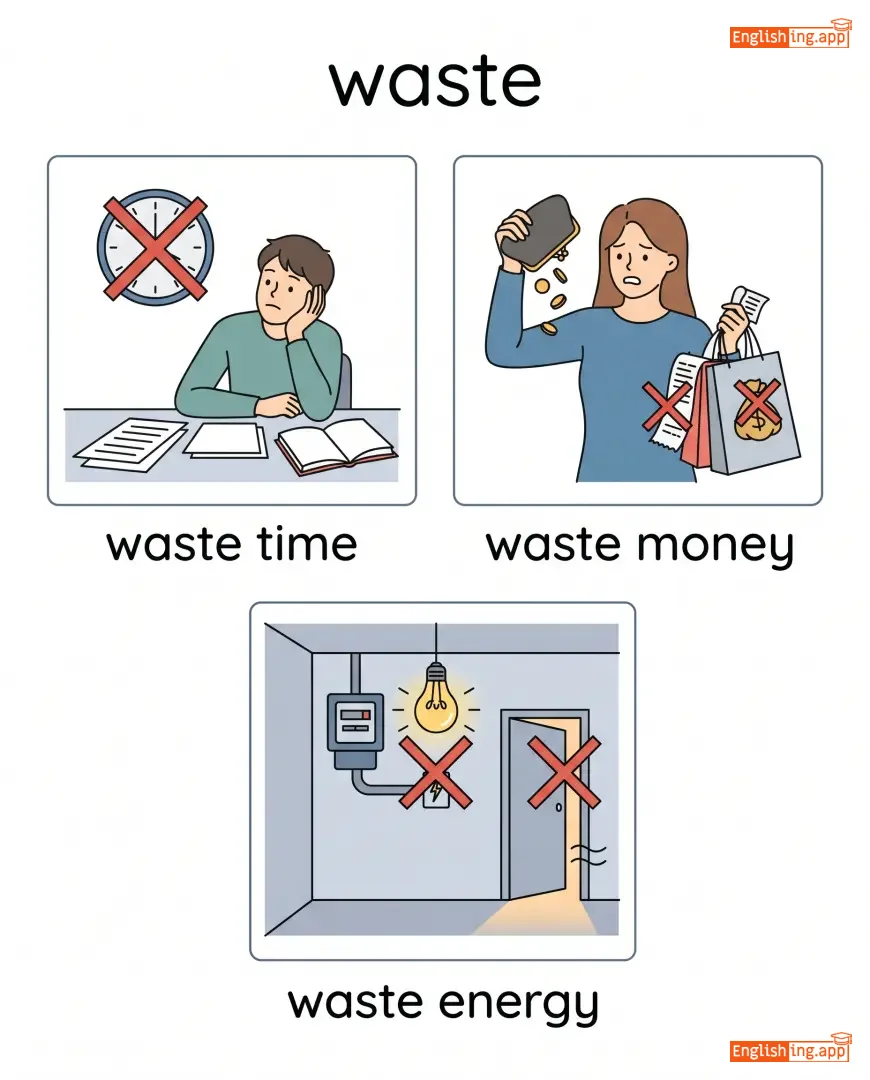
waste time, waste energy, waste of resources, waste disposal
••••••
|
Don’t WASTE food, use it wisely!
••••••
|
|
#12314
🧼
|
/wɒʃ/
verb
(woshi)
••••••
|
|
洗う
arau
••••••
|
washed
woshid
••••••
|
washed
woshid
••••••
|
washes
woshes
••••••
|
washing
woshing
••••••
|
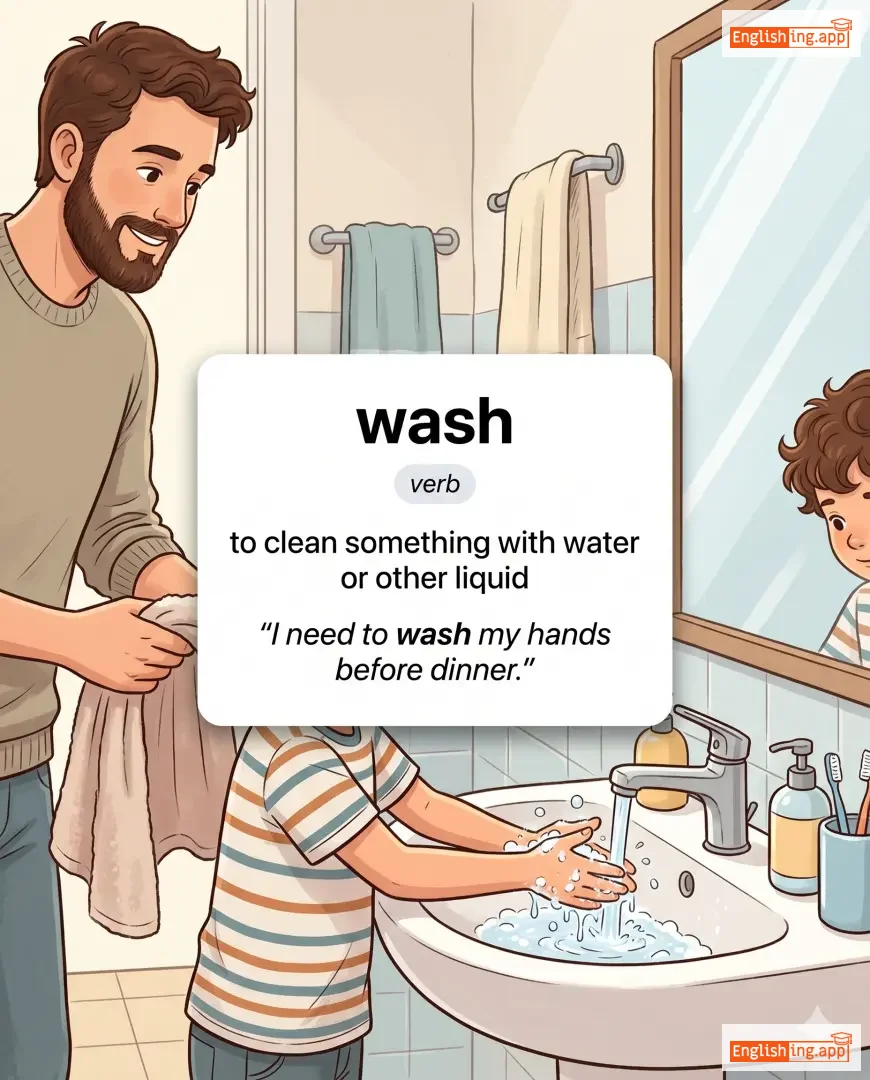
to clean something with water or other liquid
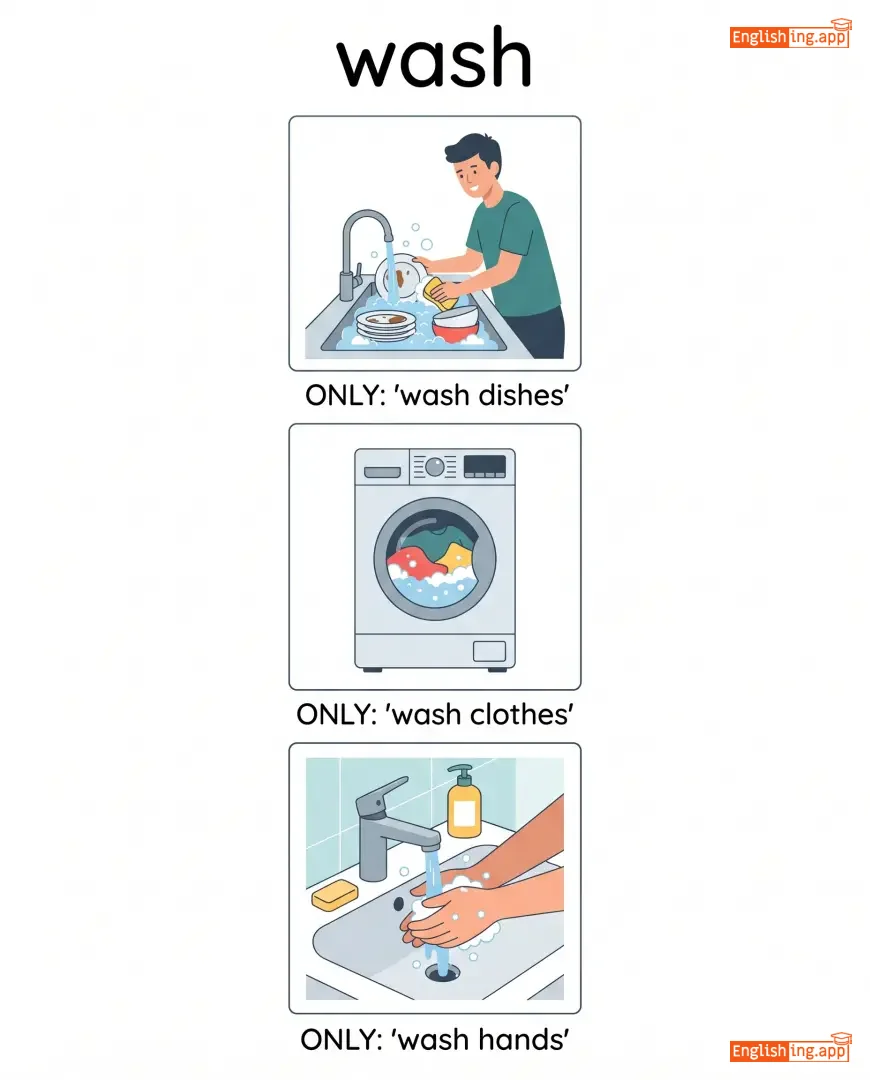
••••••
|
I need to wash my hands before dinner.
夕食前に手を洗う必要があります。
••••••
|
夕食前に手を洗う必要があります。
Yuushoku mae ni te o arau hitsuyou ga arimasu.
••••••
|
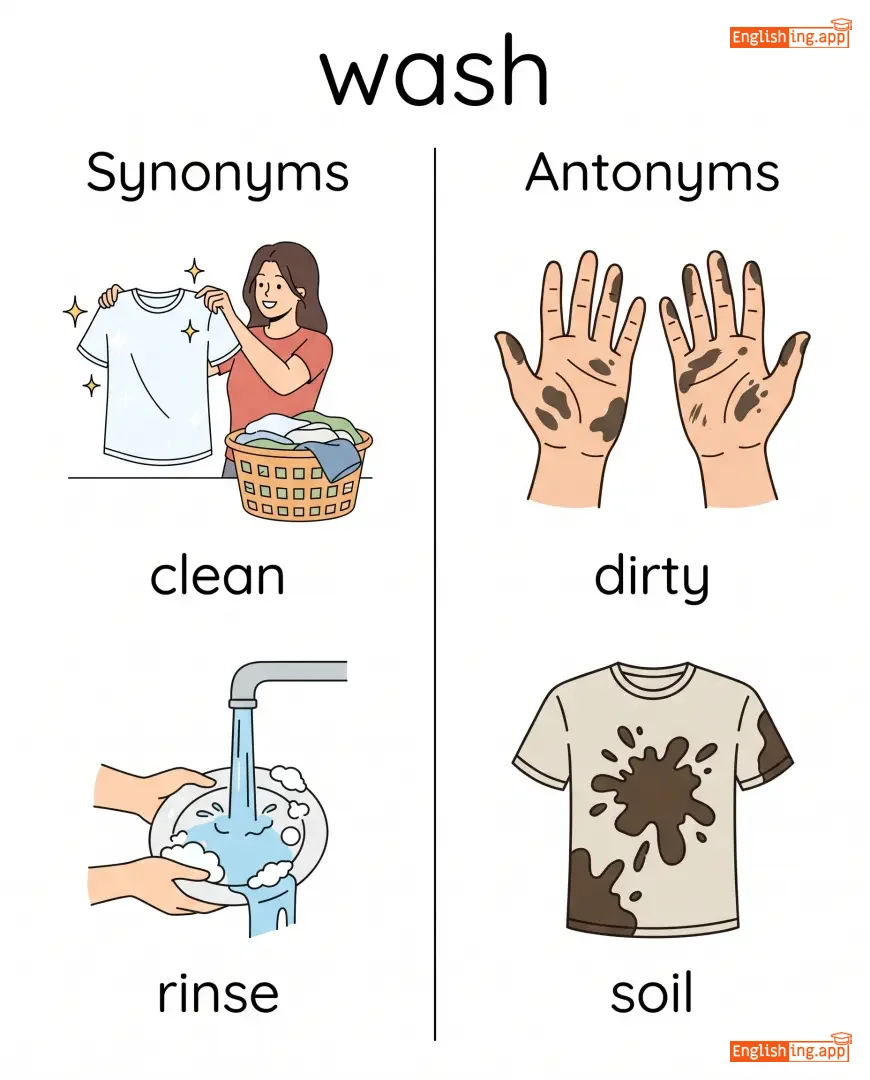
clean, rinse, scrub, bathe
••••••
|
dirty, soil, contaminate
••••••
|
wash dishes, wash clothes, wash hands, wash face
••••••
|
When you WASH, you make everything fresh and clean!
••••••
|
|
#12315
⚠️
|
/ˈwɔːrnɪŋ/
noun
(ウォーニング)
••••••
|
|
警告
keikoku
••••••
|
- •••••• | - •••••• | - •••••• | - •••••• |
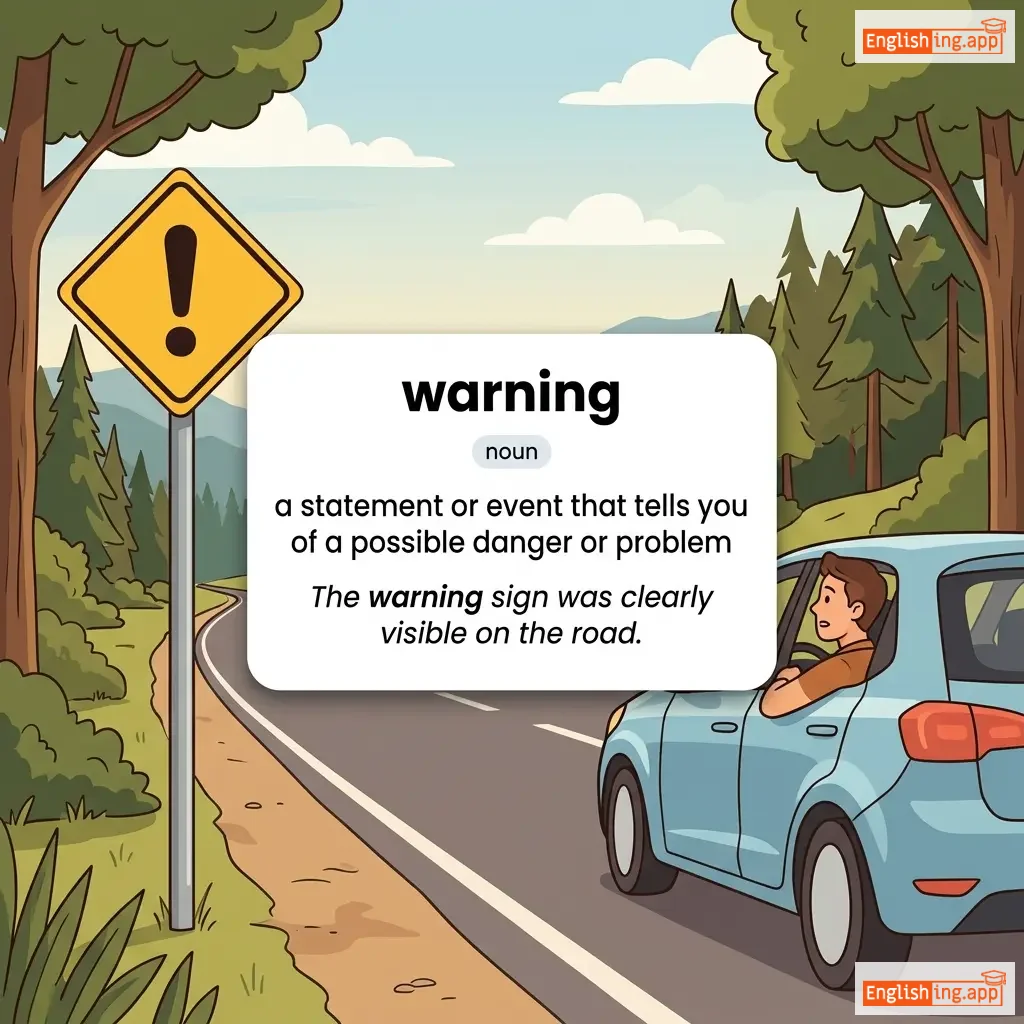
a statement or event that tells you of a possible danger or problem
••••••
|
The warning sign was clearly visible on the road. |
道路上の警告サインははっきりと見えました。
Dourojou no keikoku sain wa hakkiri to miemashita.
••••••
|
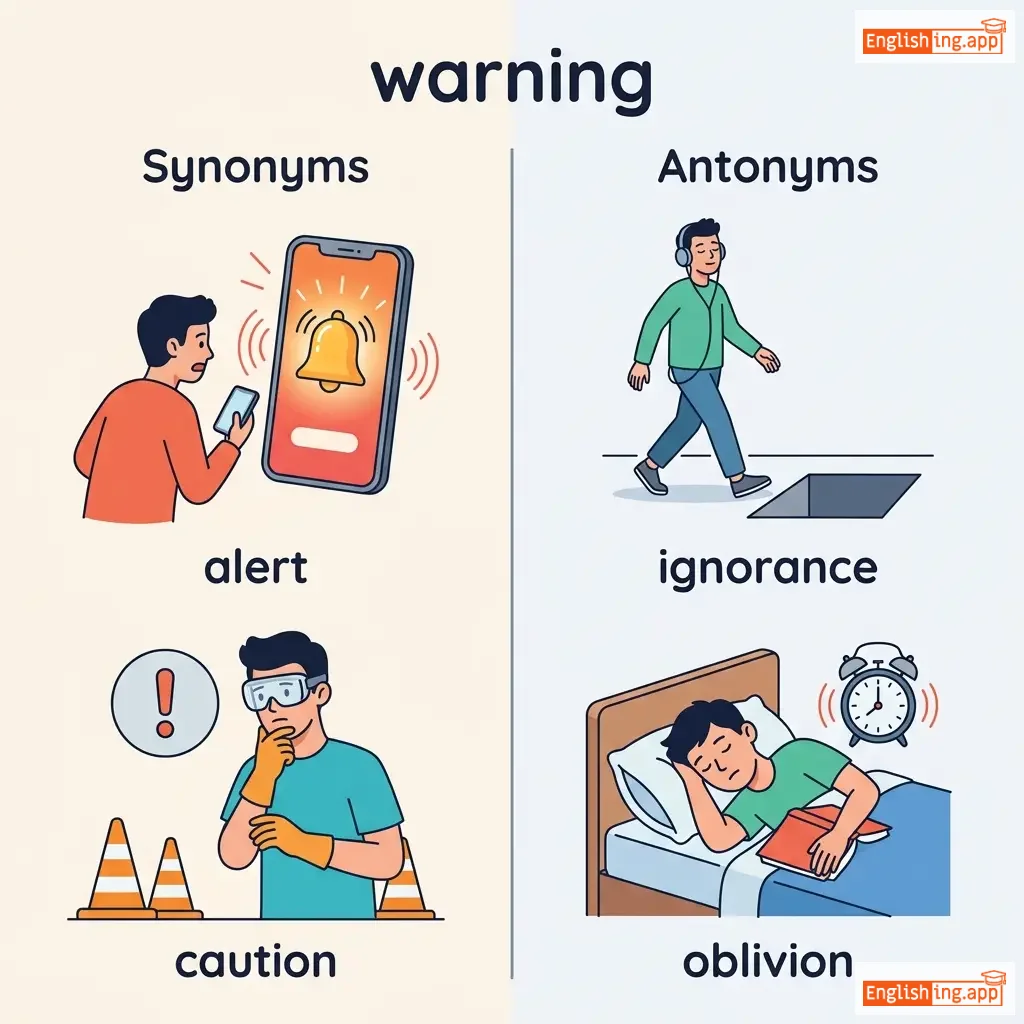
alert, caution, notice, heads-up
••••••
|
ignorance, oblivion, indifference
••••••
|
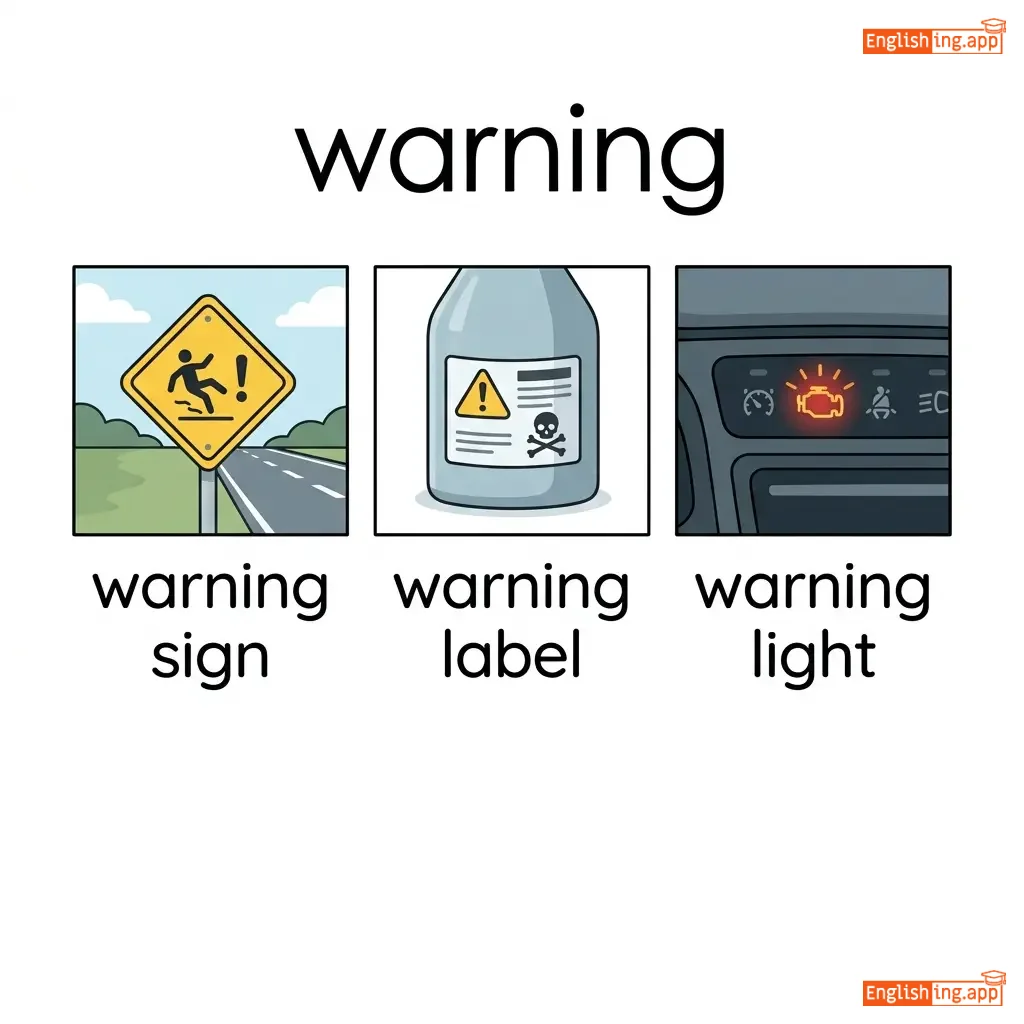
warning sign, warning label, warning light, warning message
••••••
|
A WARNING can save you from danger – Just like a traffic sign!
••••••
|
|
#12316
⚠️
|
/wɔːrn/
verb
(ワーン)
••••••
|
|
警告する
keikoku suru
••••••
|
warned
ワーンド
••••••
|
warned
ワーンド
••••••
|
warns
ワーンズ
••••••
|
warning
ワーニング
••••••
|
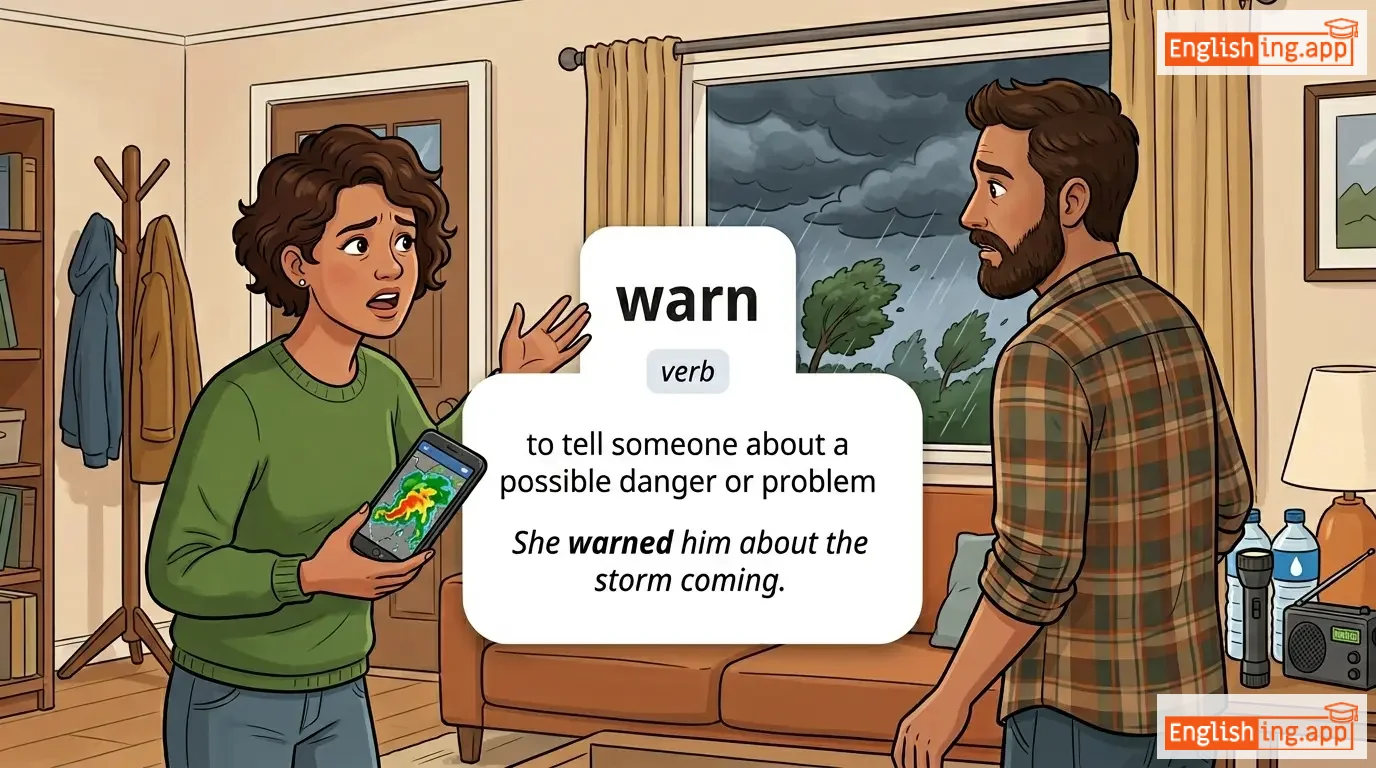
to tell someone about a possible danger or problem
••••••
|
She warned him about the storm coming.
彼女は迫り来る嵐について彼に警告した。
••••••
|
彼女は迫り来る嵐について彼に警告した。
Kanojo wa semarikuru arashi ni tsuite kare ni keikoku shita.
••••••
|
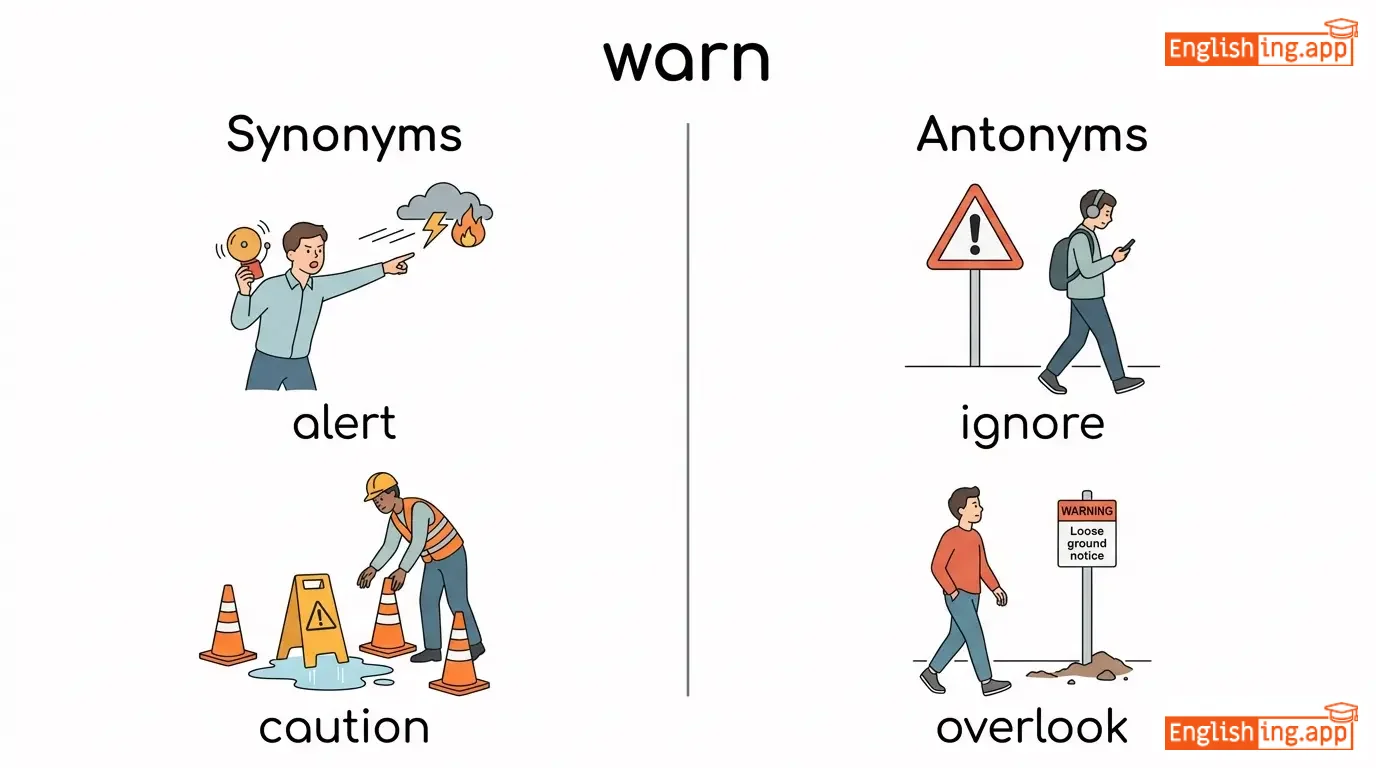
alert, caution, notify, advise
••••••
|
ignore, overlook, neglect
••••••
|
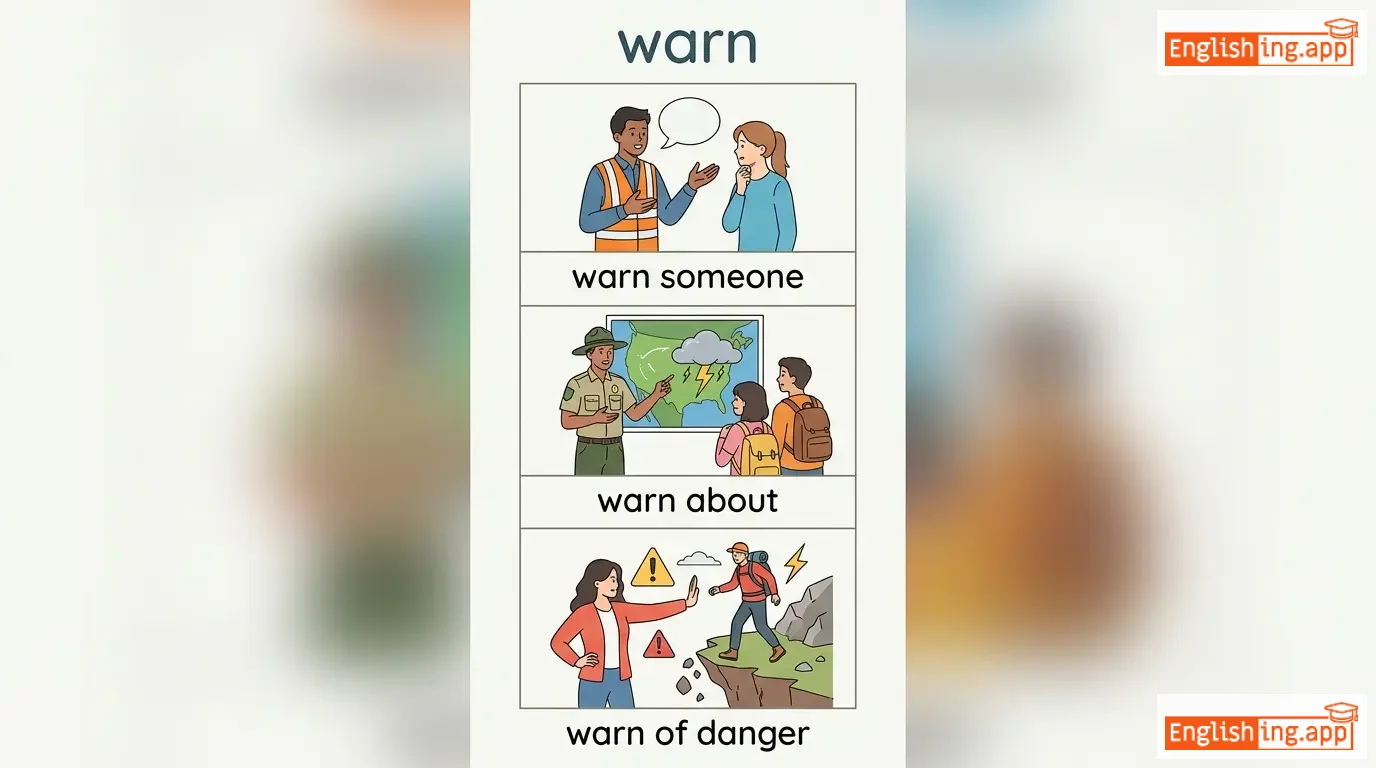
warn someone, warn about, warn of danger, warn in advance
••••••
|
When you WARN someone, you give them a heads up! (日本語: 警告する)
••••••
|
|
#12317
☀️
|
/wɔːrm/
adjective
(ワーム)
••••••
|
- •••••• |
暖かい
atatakai
••••••
|
- •••••• | - •••••• | - •••••• | - •••••• |
having a moderate degree of heat
••••••
|
The warm sunlight made the room feel cozy.
暖かい日差しが部屋を快適にした。
••••••
|
暖かい日差しが部屋を快適にした。
Atatakai hizashi ga heya o kaiteki ni shita.
••••••
|
hot, mild, heated, comfortable
••••••
|
cold, cool, chilly
••••••
|
warm weather, warm drink, warm blanket
••••••
|
WARM yourself up - 暖かくすると、もっと気持ちが良くなる
••••••
|
|
#12318
⚔️
|
/wɔːr/
noun
(戦争)
••••••
|
- •••••• |
戦争
sensou
••••••
|
- •••••• | - •••••• | - •••••• | - •••••• |
a state of conflict between different countries or groups
••••••
|
The war caused great suffering to the people. |
戦争は人々に大きな苦しみをもたらしました。
Sensou wa hitobito ni ookina kurushimi wo motarashimashita.
••••••
|
battle, conflict, fight, combat
••••••
|
peace, harmony
••••••
|
war zone, world war, civil war
••••••
|
WAR is a win for destruction - 戦争はすべての人々にとって破壊です
••••••
|
|
#12319
🧱
|
/wɔːl/
noun
(ウォール)
••••••
|
- •••••• |
壁
kabe
••••••
|
- •••••• | - •••••• | - •••••• | - •••••• |
a vertical structure that encloses or divides an area
••••••
|
The wall in our living room is painted blue. |
リビングルームの壁は青く塗られています。
Ribingu rūmu no kabe wa aoku nurarete imasu.
••••••
|
barrier, partition, fence, divider
••••••
|
open, doorway
••••••
|
wall of bricks, brick wall, wall art
••••••
|
WALL your dreams - 壁に夢を描く
••••••
|
|
#12320
🚶
|
/wɔːk/
verb
(woku)
••••••
|
|
歩く
aruku
••••••
|
walked
wokudo
••••••
|
walked
wokudo
••••••
|
walks
wokusu
••••••
|
walking
wōkingu
••••••
|
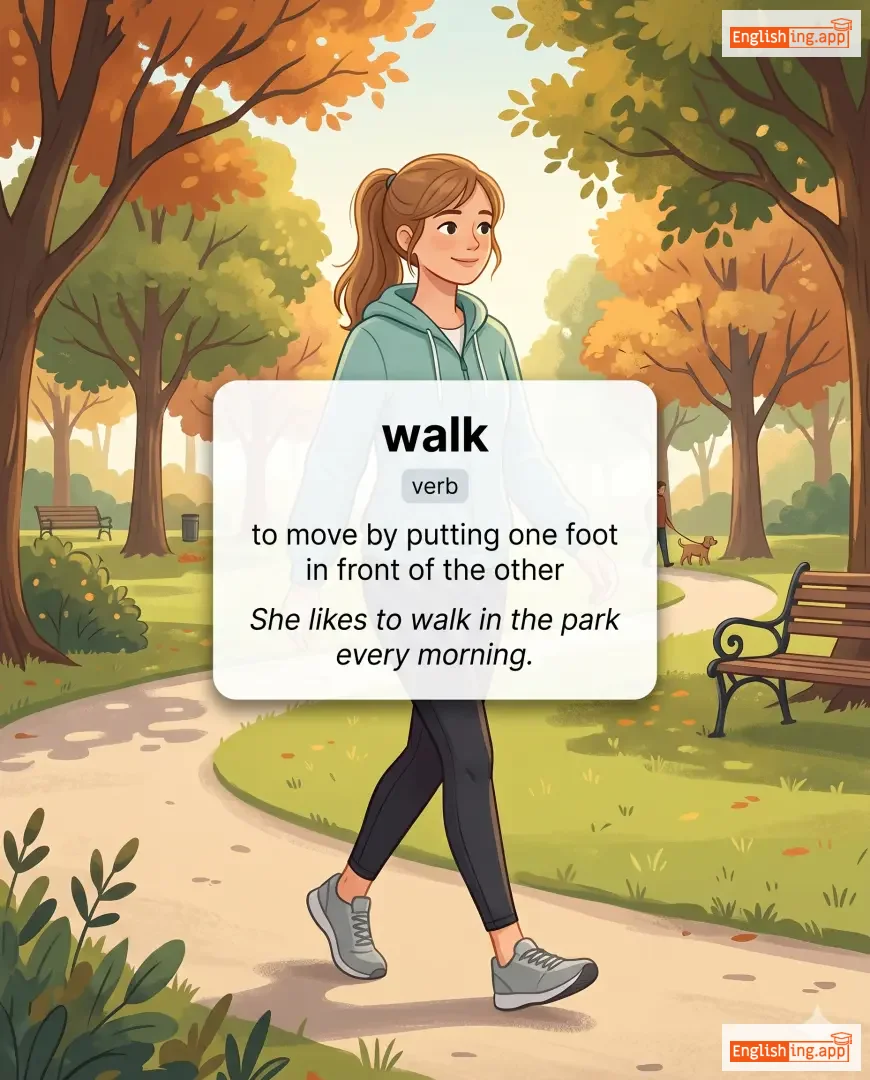
to move by putting one foot in front of the other
••••••
|
She likes to walk in the park every morning.
彼女は毎朝公園を歩くのが好きです。
••••••
|
彼女は毎朝公園を歩くのが好きです。
Kanojo wa maiasa kōen o aruku no ga suki desu.
••••••
|
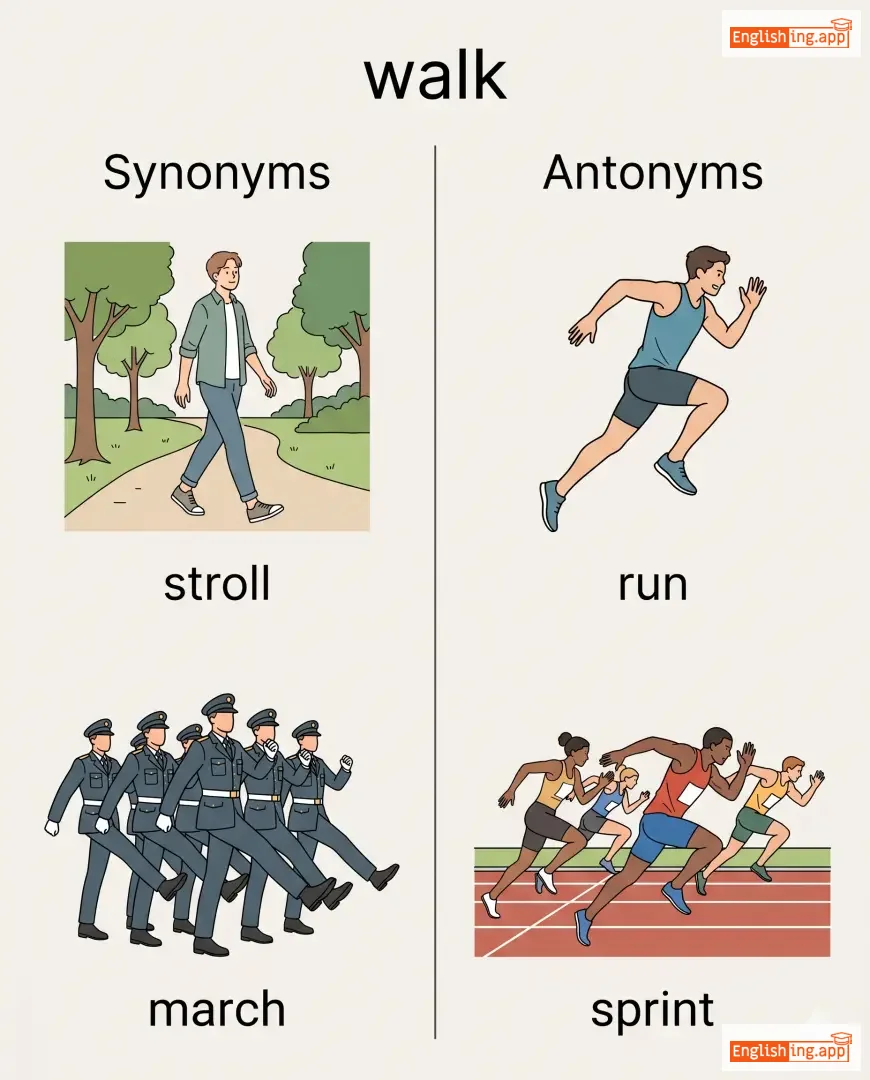
stroll, march, stride, step
••••••
|
run, sprint
••••••
|
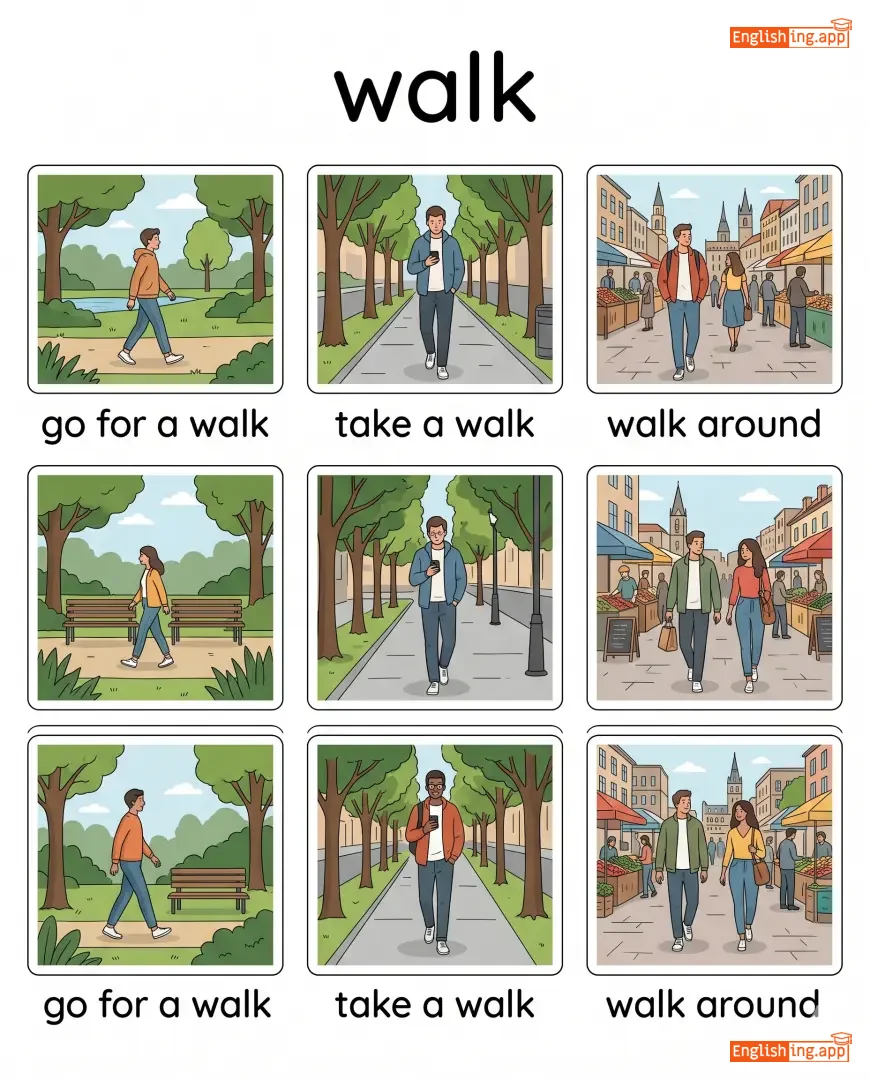
go for a walk, take a walk, walk around
••••••
|
WALK with ease - 歩くことは簡単
••••••
|
|
#12321
⏳
|
/weɪt/
verb
(ウェイト)
••••••
|
|
待つ
matsu
••••••
|
waited
ウェイテッド
••••••
|
waited
ウェイテッド
••••••
|
waits
ウェイツ
••••••
|
waiting
ウェイティング
••••••
|
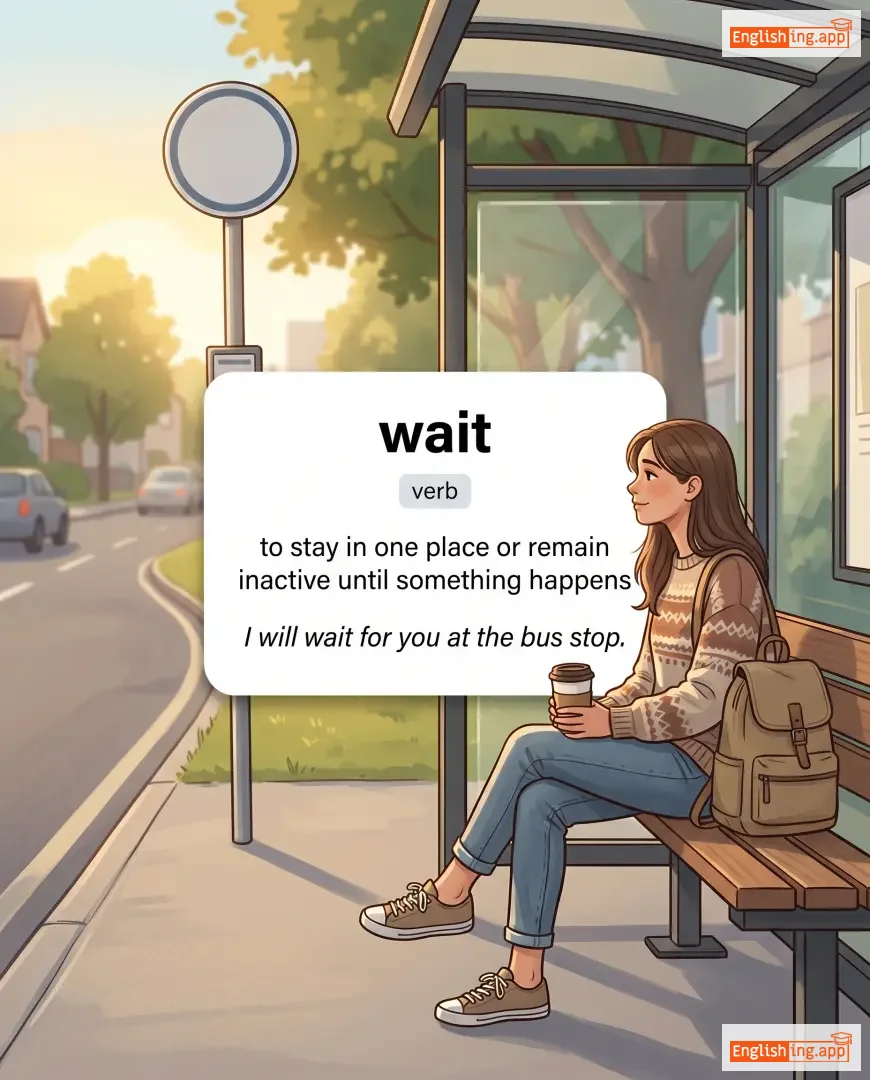
to stay in one place or remain inactive until something happens
••••••
|
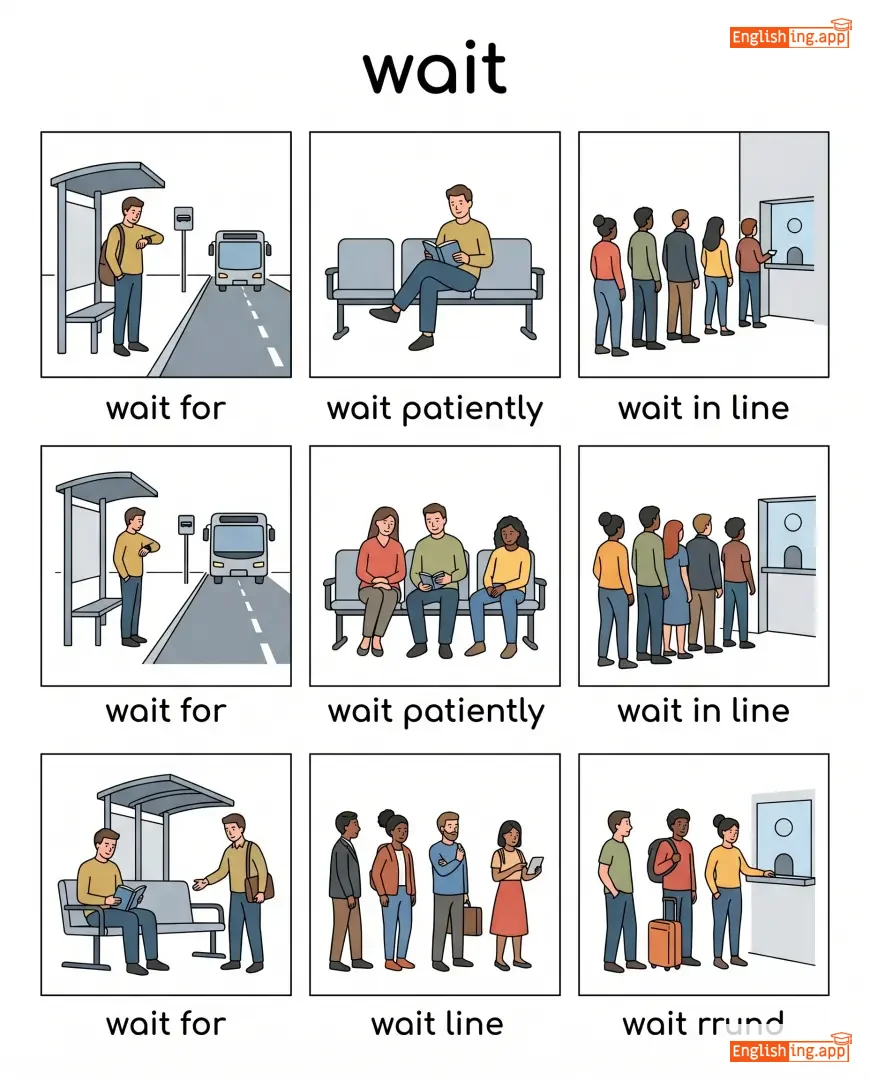
I will wait for you at the bus stop.
私はバス停であなたを待ちます。
••••••
|
私はバス停であなたを待ちます。
Watashi wa basutei de anata o machimasu.
••••••
|
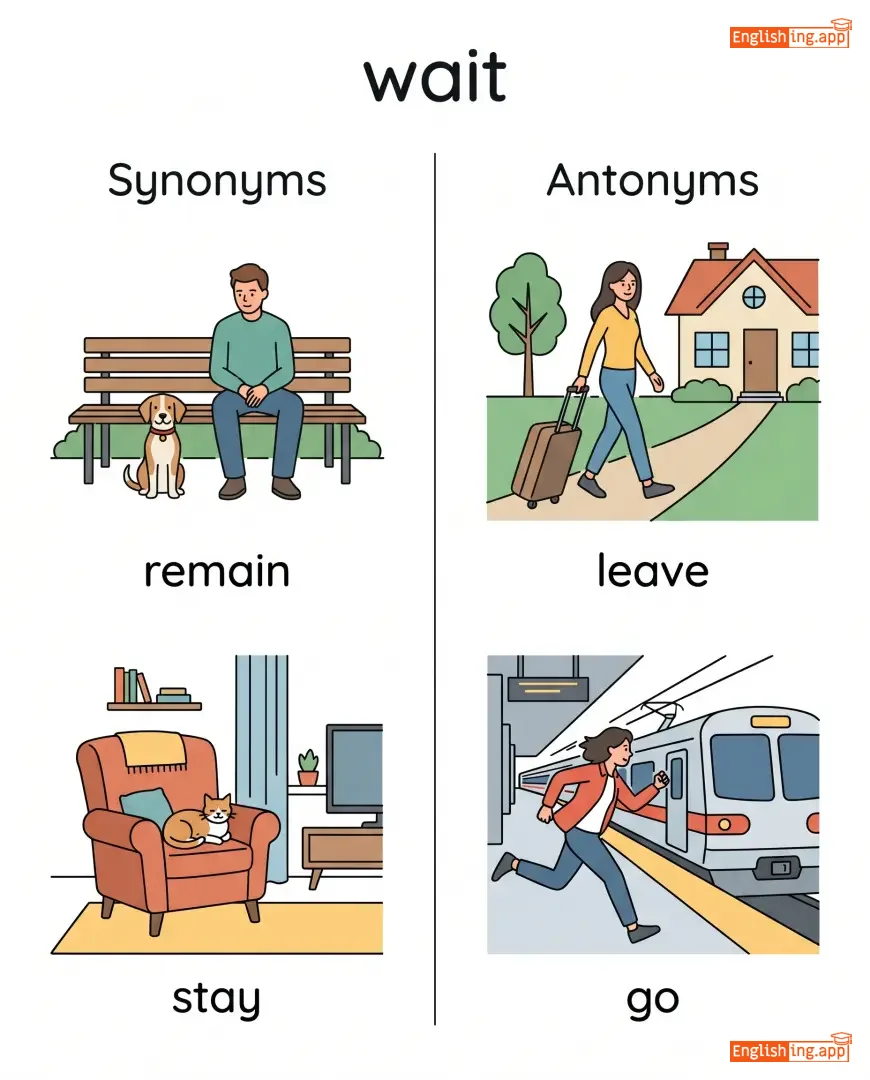
remain, stay, linger, anticipate
••••••
|
leave, go, depart
••••••
|
wait for, wait patiently, wait in line
••••••
|
WAIT - バスを待つ
••••••
|
|
#12322
⚔️
|
/vərsəs/
abbreviation
(バーサス)
••••••
|
- •••••• |
対
tai
••••••
|
- •••••• | - •••••• | - •••••• | - •••••• |
used to indicate opposition or contrast between two things
••••••
|
The match was Brazil vs Argentina in the final. |
試合はブラジル対アルゼンチンの決勝戦でした。
Shiai wa Burajiru tai Aruzenchin no kesshōsen deshita.
••••••
|
against, versus, compared to
••••••
|
with
••••••
|
vs each other, A vs B, team vs team, person vs person
••••••
|
VS (versus) - 2つの選択肢があるときに言う'VS'。
••••••
|
|
#12323
🗳️
|
/ˈvəʊtə/
noun
(ヴォーター)
••••••
|
- •••••• |
有権者
yūken-sha
••••••
|
- •••••• | - •••••• | - •••••• | - •••••• |
a person who votes in an election
••••••
|
Voters lined up outside the polling station to cast their ballots. |
有権者は投票所の外で列を作り、投票を行いました。
Yūken-sha wa tōhyōjo no soto de retsu o tsukuri, tōhyō o okonaimashita.
••••••
|
elector, constituent, citizen
••••••
|
non-voter, abstainer
••••••
|
eligible voter, registered voter, voting rights, active voter
••••••
|
有権者—選挙で投票することで未来を選ぶ人。
••••••
|
|
#12324
🗳️
|
/vəʊt/
verb/noun
(投票)
••••••
|
|
投票
tōhyō
••••••
|
voted
投票した
••••••
|
voted
投票した
••••••
|
votes
投票する
••••••
|
voting
投票している
••••••
|
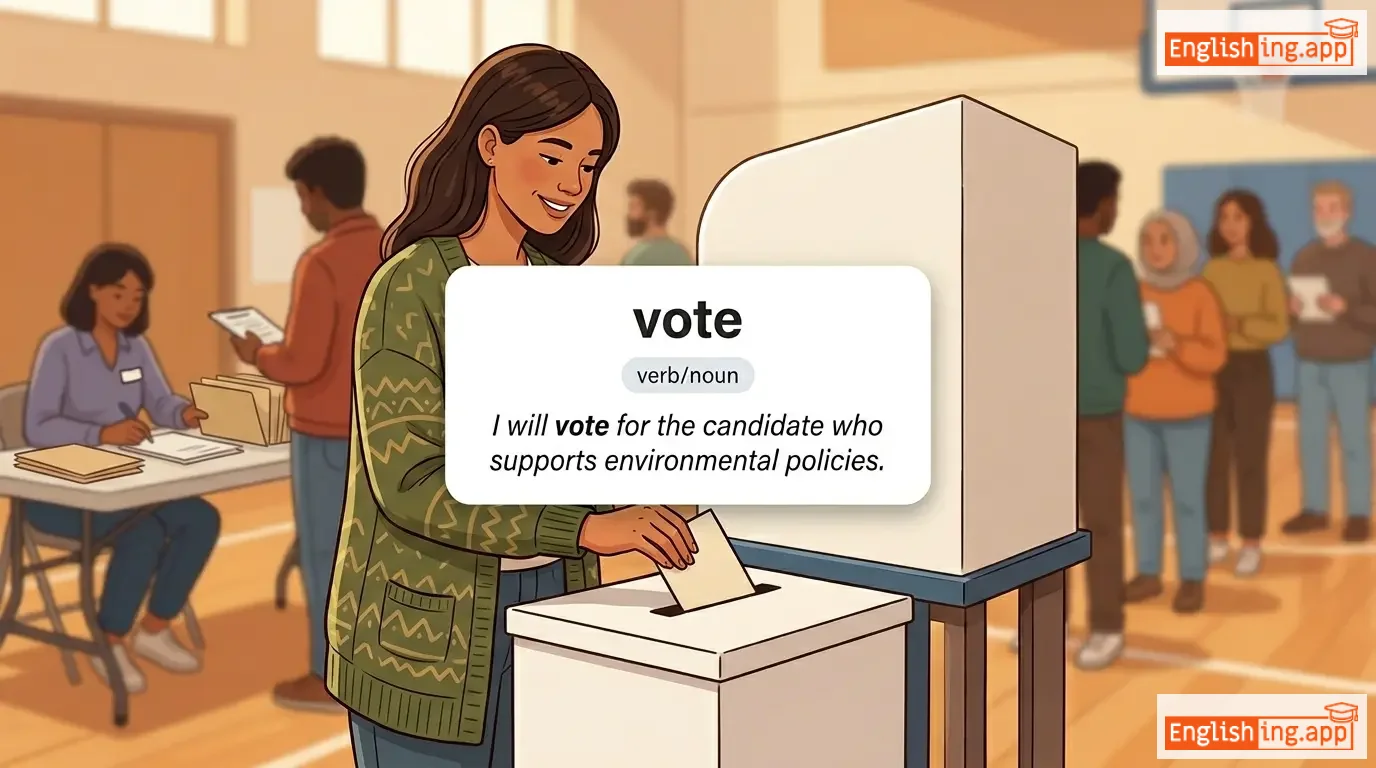
to express a choice or opinion in a formal decision-making process, especially in elections
••••••
|
I will vote for the candidate who supports environmental policies.
私は環境政策を支持する候補者に投票します。
••••••
|
私は環境政策を支持する候補者に投票します。
Watashi wa kankyō seisaku o shiji suru kōhosha ni tōhyō shimasu.
••••••
|
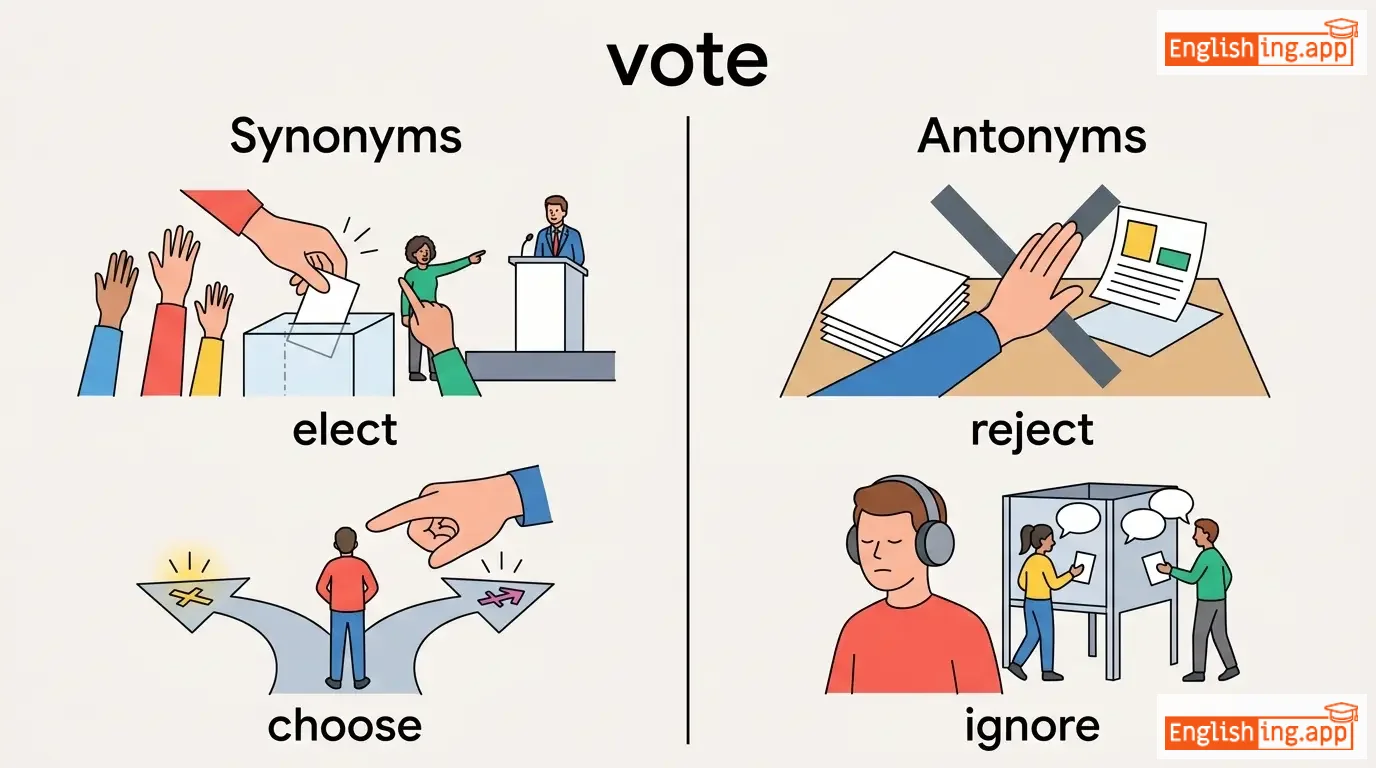
elect, choose, select, decide
••••••
|
reject, ignore
••••••
|
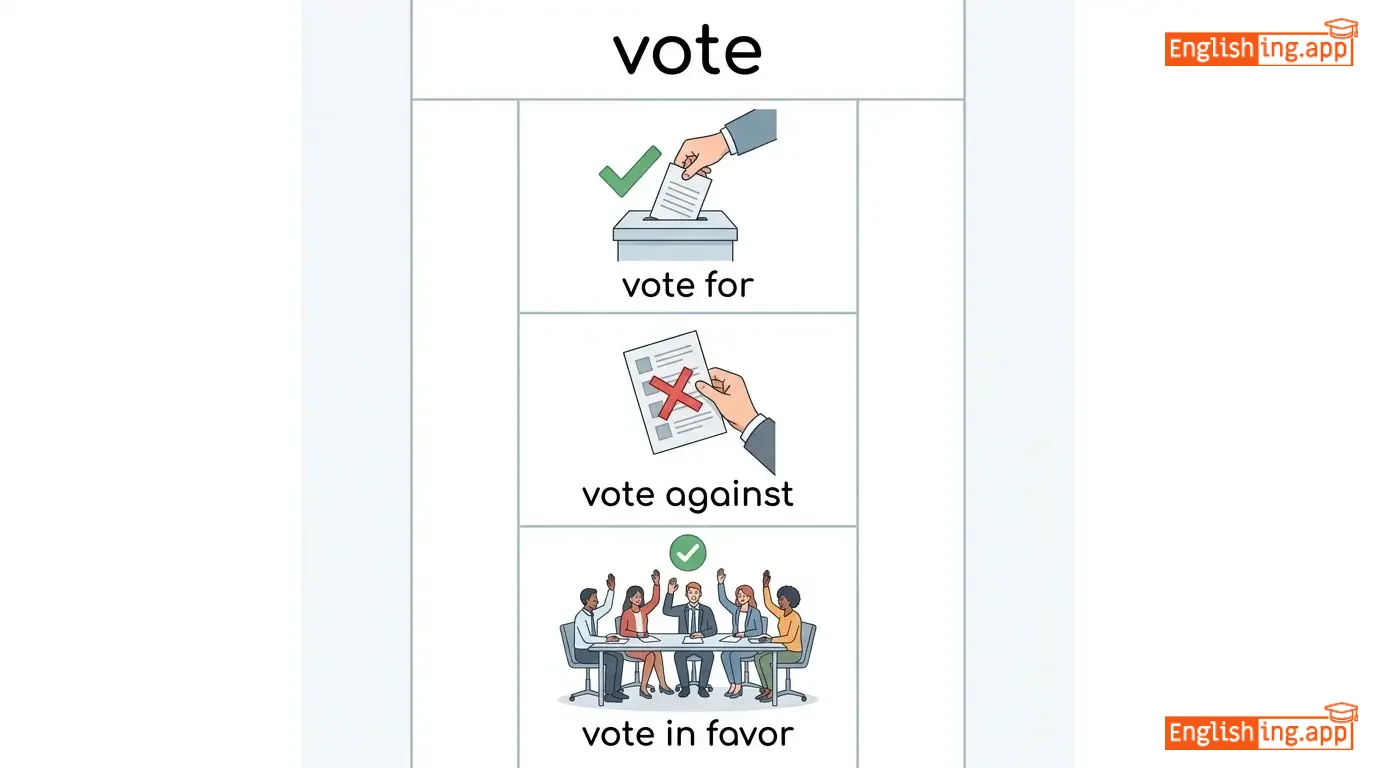
vote for, vote against, vote in favor, voting rights
••••••
|
投票して未来を変える - あなたの一票が未来を形作る。
••••••
|
Vocabulary Quiz
Test your vocabulary by matching words with their translations or meanings.
Login to take the quiz
Comments (0)
Share your thoughts and join the discussion.
Join the discussion by logging in
Login to CommentNo comments yet
Be the first to share your thoughts!