

翻訳
過去
過去分詞
三人称単数
動名詞
意味
例文
例文の翻訳
同義語
対義語
コロケーション
ニーモニック
Swipe left or right, or use the buttons. Tap image to zoom.
例文の翻訳
単語
Lesson 365Lesson 365 - マスクトグル
|
絵文字
|
単語 | Images | 翻訳 | 過去 | 過去分詞 | 三人称単数 | 動名詞 | 意味 | 例文 | 例文の翻訳 | 表現例 | 表現例の意味 | 表現例の翻訳 | 同義語 | 対義語 | コロケーション | ニーモニック |
|---|---|---|---|---|---|---|---|---|---|---|---|---|---|---|---|---|---|
|
#10915
📊
|
/ˈɛstɪˌmeɪt/
verb
(エスティメイト)
••••••
|
- •••••• |
見積もる
mitsumoru
••••••
|
estimated
エスティメイテッド
••••••
|
estimated
エスティメイテッド
••••••
|
estimates
エスティメイツ
••••••
|
estimating
エスティメイティング
••••••
|
To roughly calculate or judge the value, number, quantity, or extent of something.
••••••
|
The engineer estimated the cost of the project at $5 million.
エンジニアはプロジェクトのコストを500万ドルと見積もりました。
••••••
|
エンジニアはプロジェクトのコストを500万ドルと見積もりました。
Enjinia wa purojekuto no kosuto o 500-man doru to mitsumorimashita.
••••••
|
rough estimate
ラフ見積もり
••••••
|
An approximate calculation
••••••
|
ラフ見積もり
Rafu mitsumori
••••••
|
calculate, assess, evaluate, appraise, guess
••••••
|
measure exactly, determine
••••••
|
make an estimate, accurate estimate, cost estimate, estimate value
••••••
|
見積もりは大まかな計算のようなものです、見積もり 📊
••••••
|
|
#10916
🌍
|
/ˈɛv.ri.wɛər/
adverb
(エヴリウェア)
••••••
|
- •••••• |
どこでも
dokodemo
••••••
|
- •••••• | - •••••• | - •••••• | - •••••• |
in or to all places
••••••
|
Tourists can be seen everywhere in the city during summer. |
夏の間、観光客は都市のどこでも見かけることができます。
Natsu no aida, kankōkyaku wa toshi no dokodemo mikakeru koto ga dekimasu.
••••••
|
here, there, and everywhere |
in all places without exception
••••••
|
ここ、あそこ、そしてどこでも
Koko, asoko, soshite dokodemo
••••••
|
all around, throughout, all over, universally, omnipresently
••••••
|
nowhere, somewhere
••••••
|
found everywhere, seen everywhere, spread everywhere, everywhere else
••••••
|
Everywhereはどこでもを意味します-世界中のどこにでもいるように想像してみてください!
••••••
|
|
#10917
🎒
|
/ˈɛvrɪθɪŋ/
pronoun
(エヴリシング)
••••••
|
- •••••• |
すべて
subete
••••••
|
- •••••• | - •••••• | - •••••• | - •••••• |
all things; the whole lot
••••••
|
He packed everything in his suitcase. |
彼はすべてをスーツケースに詰め込んだ。
Kare wa subete o sūtsukēsu ni tsumekonda.
••••••
|
everything under the sun |
all things possible; anything imaginable
••••••
|
太陽の下のすべて
taiyō no moto no subete
••••••
|
all, whole, entirety, totality
••••••
|
nothing, little
••••••
|
everything possible, everything ready, everything needed
••••••
|
Everythingはすべてを意味します - 'Every Thing'はすべてのもの
••••••
|
|
#10918
👫
|
/ˈɛvrɪwʌn/
pronoun
(エヴリワン)
••••••
|
- •••••• |
みんな
minna
••••••
|
- •••••• | - •••••• | - •••••• | - •••••• |
every person; all people
••••••
|
Everyone must bring their own lunch. |
みんな自分のランチを持ってこなければならない。
Minna jibun no ranchi o mottekonakereba naranai.
••••••
|
- •••••• | - •••••• | - •••••• |
everybody, all, people, all persons
••••••
|
no one, nobody
••••••
|
everyone knows, everyone agrees, everyone must
••••••
|
Everyoneは日本語でみんなです。
••••••
|
|
#10919
📅
|
/ˈɛvrideɪ/
adjective
(エブリデイ)
••••••
|
- •••••• |
日常
nichijou
••••••
|
- •••••• | - •••••• | - •••••• | - •••••• |
common or ordinary; occurring daily
••••••
|
These shoes are perfect for everyday use. |
これらの靴は日常使いに最適です。
Korera no kutsu wa nichijou tsukai ni saiteki desu.
••••••
|
- •••••• | - •••••• | - •••••• |
ordinary, daily, routine, common
••••••
|
extraordinary, unusual
••••••
|
everyday life, everyday use, everyday routine
••••••
|
Everyday は日常を意味し、毎日のようなものです。
••••••
|
|
#10920
👥
|
/ˈɛvribɒdi/
pronoun
(ˈɛvɾibɒdi)
••••••
|
- •••••• |
皆
minna
••••••
|
- •••••• | - •••••• | - •••••• | - •••••• |
all people; everyone
••••••
|
Everybody enjoyed the party.
皆がパーティーを楽しんでいました。
••••••
|
皆がパーティーを楽しんでいました。
Minna ga pātii o tanoshinde imashita.
••••••
|
- •••••• | - •••••• | - •••••• |
everyone, all, people, all persons
••••••
|
nobody, no one
••••••
|
everybody knows, everybody says, everybody agrees
••••••
|
Everybody は皆を意味します - Imagine 皆 (minna) がパーティーで踊っている
••••••
|
|
#10921
📚
|
/ˈɛvri/
determiner
(エヴリ)
••••••
|
- •••••• |
すべて
subete
••••••
|
- •••••• | - •••••• | - •••••• | - •••••• |
used to refer to all members of a group without exception
••••••
|
She reads every book she can find. |
彼女は見つけたすべての本を読んでいます。
Kanojo wa mitsuketa subete no hon o yondeimasu.
••••••
|
every now and then |
occasionally, from time to time
••••••
|
時々
tokidoki
••••••
|
each, all, any, entire, whole
••••••
|
none, some
••••••
|
every day, every year, every chance, every effort
••••••
|
すべてはEveryの意味 - すべての本を読むことがすべてを意味します。
••••••
|
|
#10922
♾️
|
/ˈev.ər/
adverb
(エバー)
••••••
|
- •••••• |
今まで
ima made
••••••
|
- •••••• | - •••••• | - •••••• | - •••••• |
at any time; always; continuously
••••••
|
Have you ever been to London?
ロンドンに行ったことがありますか?
••••••
|
ロンドンに行ったことがありますか?
Rondon ni itta koto ga arimasu ka?
••••••
|
ever since
それ以来
••••••
|
from a particular time in the past until now
••••••
|
それ以来
sore irai
••••••
|
always, continuously, at any time, forever
••••••
|
never
••••••
|
ever seen, ever heard, best ever, hardly ever
••••••
|
Ever = 永遠, ずっと続くようなもの
••••••
|
|
#10923
⌛
|
/ɪˈven.tʃu.ə.li/
adverb
(イベントゥアリー)
••••••
|
- •••••• |
結局
kekkyoku
••••••
|
- •••••• | - •••••• | - •••••• | - •••••• |
in the end, especially after a long delay or series of problems
••••••
|
He eventually finished his degree after many challenges. |
彼は多くの挑戦の後、結局学位を取得しました。
Kare wa ōku no chōsen no ato, kekkyoku gakui o shutsuryoku shimashita.
••••••
|
- •••••• | - •••••• | - •••••• |
finally, ultimately, at last, sooner or later
••••••
|
never, immediately
••••••
|
eventually succeed, eventually return, eventually happen, eventually find
••••••
|
Eventuallyは結局を意味する ⏳ 最後にすべてが解決する
••••••
|
|
#10924
🎉
|
/ɪˈvent/
noun
(イベント)
••••••
|
- •••••• |
出来事
dekigoto
••••••
|
- •••••• | - •••••• | - •••••• | - •••••• |
something that happens, especially something important
••••••
|
The concert was the biggest event of the year. |
コンサートは今年最大の出来事でした。
Konsāto wa kotoshi saidai no dekigoto deshita.
••••••
|
in any event |
whatever happens; regardless of the circumstances
••••••
|
いずれにせよ
izureniseyo
••••••
|
incident, occurrence, happening, affair
••••••
|
nonoccurrence, inactivity
••••••
|
major event, sporting event, social event, special event
••••••
|
出来事 = 特別で忘れられない出来事! 🎉
••••••
|
|
#10925
🌆
|
/ˈiːv.nɪŋ/
noun
(ivning)
••••••
|
- •••••• |
夕方
yūgata
••••••
|
- •••••• | - •••••• | - •••••• | - •••••• |
the part of the day between afternoon and night
••••••
|
We went for a walk in the cool evening.
私たちは涼しい夕方に散歩に行きました。
••••••
|
私たちは涼しい夕方に散歩に行きました。
Watashitachi wa suzushī yūgata ni sanpo ni ikimashita.
••••••
|
good evening
こんばんは
••••••
|
a greeting used in the evening
••••••
|
こんばんは
Konbanwa
••••••
|
nightfall, dusk, twilight, sundown
••••••
|
morning, dawn
••••••
|
evening walk, evening meal, evening star, evening news
••••••
|
Evening = 日が沈んだ後の涼しい時間 🌆
••••••
|
|
#10926
⚖️
|
/ˈiː.vən/
adjective, adverb
(イーブン)
••••••
|
- •••••• |
平らな
tairana
••••••
|
- •••••• | - •••••• | - •••••• | - •••••• |
flat or smooth; equal in degree or amount; used to emphasize something surprising
••••••
|
The road was surprisingly even after the storm.
嵐の後、道路は驚くほど平坦でした。
••••••
|
嵐の後、道路は驚くほど平坦でした。
Arashi no ato, douro wa odoroku hodo tairan deshita.
••••••
|
even odds
イーブンオッズ
••••••
|
a situation where chances of success or failure are equal
••••••
|
平等なチャンス
byoudou na chansu
••••••
|
level, flat, equal, balanced, fair
••••••
|
uneven, unfair, irregular
••••••
|
even surface, even chance, even number, even tone, even odds
••••••
|
Evenは平らな意味で、'イーブンオッズ' ⚖️
••••••
|
|
#10927
📝
|
/ɪˌvæljʊˈeɪʃən/
noun
(イヴァリューエイション)
••••••
|
|
評価
hyouka
••••••
|
- •••••• | - •••••• | - •••••• | - •••••• |
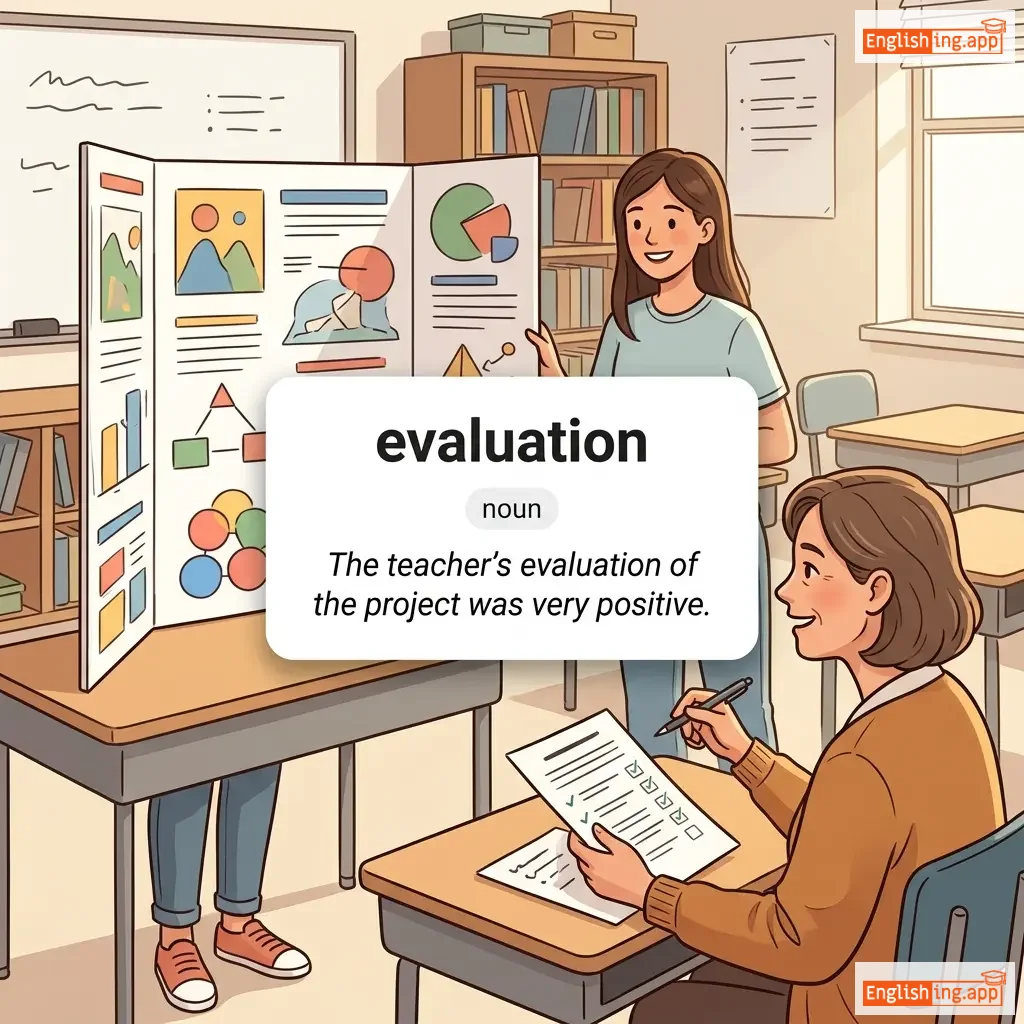
The process of assessing or judging the value, quality, or importance of something.
••••••
|
The teacher’s evaluation of the project was very positive. |
教師のプロジェクトの評価は非常に肯定的でした。
Kyoushi no purojekuto no hyouka wa hijou ni kouteki deshita.
••••••
|
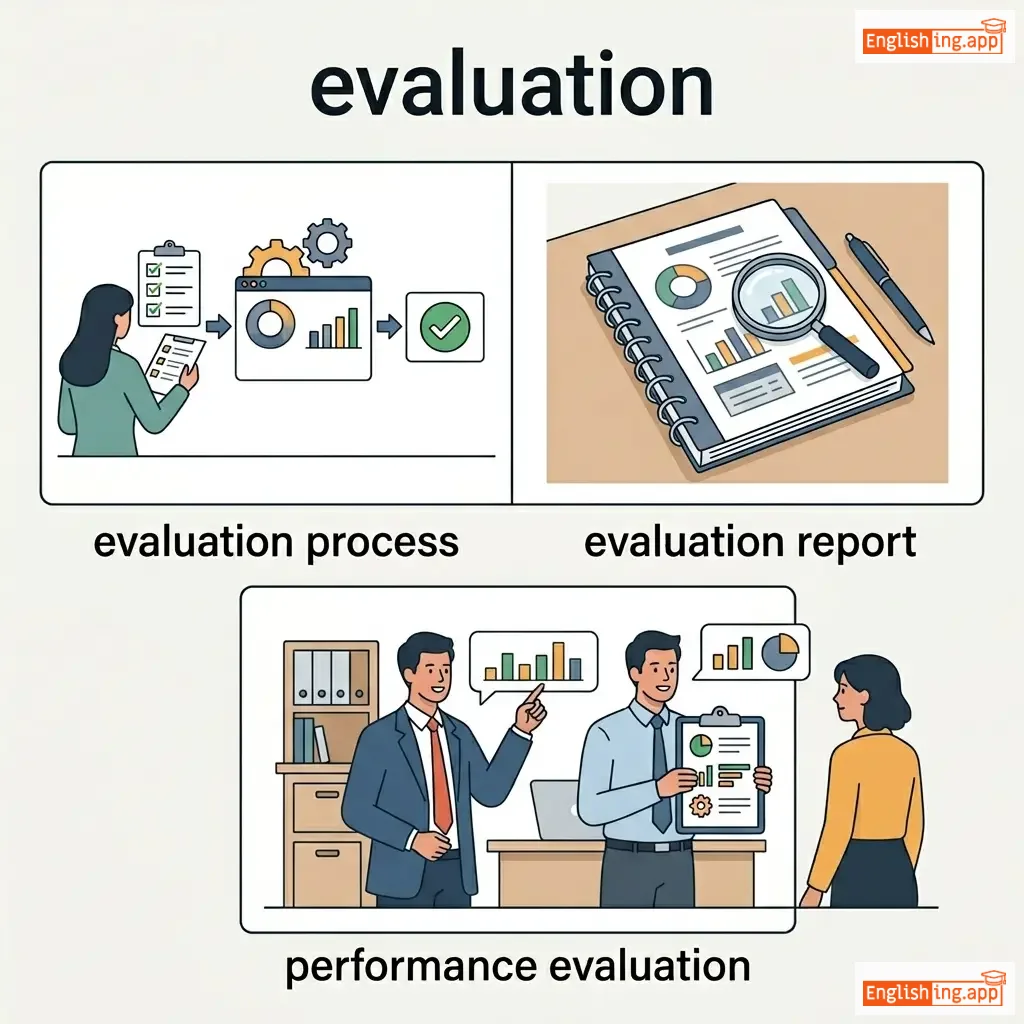
performance evaluation |
The process of assessing how well someone performs their job
••••••
|
パフォーマンス評価
Pafōmansu hyōka
••••••
|
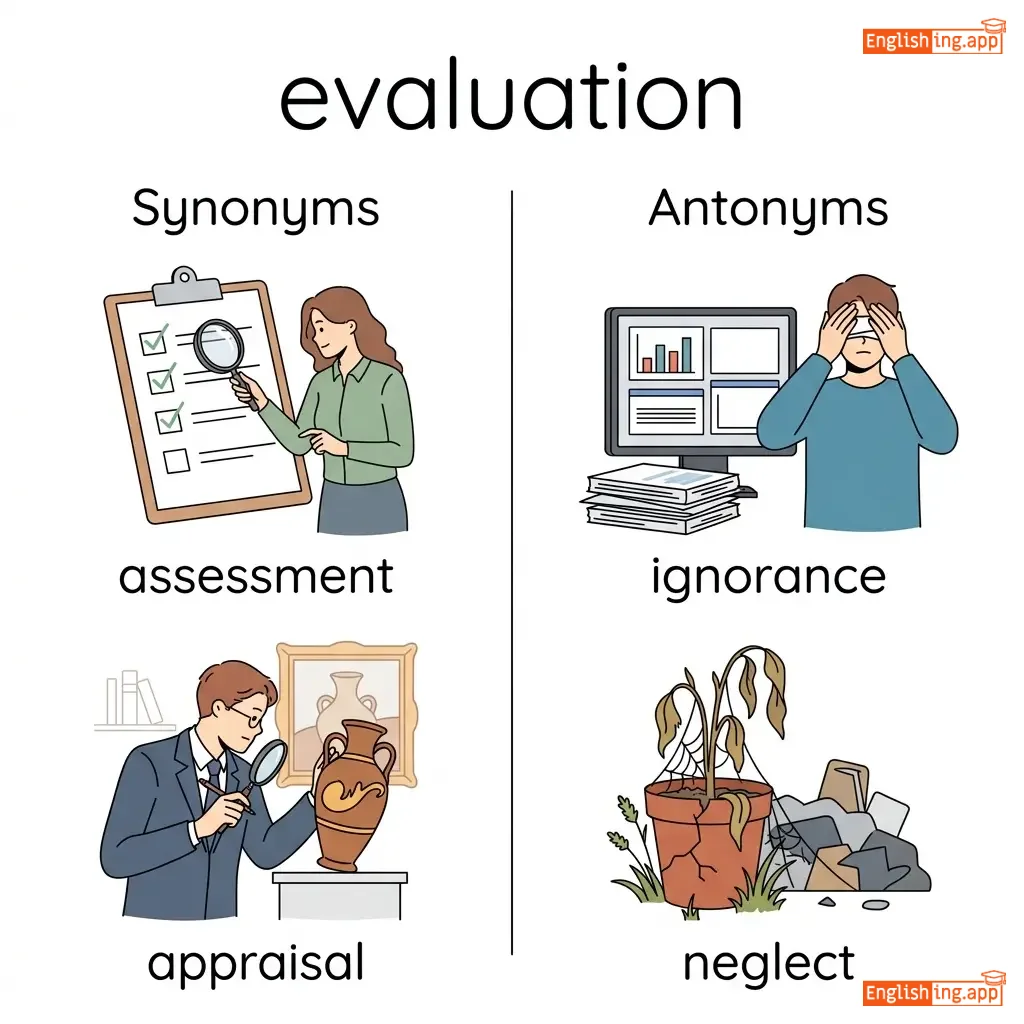
assessment, appraisal, review, judgment, analysis
••••••
|
ignorance, neglect
••••••
|
evaluation process, evaluation report, performance evaluation, self-evaluation
••••••
|
評価 = 評価 📝 テストで教師が評価を行うように
••••••
|
|
#10928
🇪🇺
|
/ˌjʊərəˈpiːən/
adjective
(ヨーロピアン)
••••••
|
- •••••• |
ヨーロピアン
Yōropian
••••••
|
- •••••• | - •••••• | - •••••• | - •••••• |
Relating to Europe or its people.
••••••
|
She studied European history at university. |
彼女は大学でヨーロッパの歴史を学びました。
Kanojo wa daigaku de Yōroppa no rekishi o manabimashita.
••••••
|
European Union |
A political and economic union of European countries
••••••
|
ヨーロッパ連合
Yōroppa rengō
••••••
|
continental, western, EU-related
••••••
|
non-European, Asian
••••••
|
European culture, European history, European countries, European Union
••••••
|
European はヨーロッパの人々や物を意味します = ヨーロッパの歴史はヨーロッパの物語を意味します 🇪🇺
••••••
|
|
#10929
➕
|
/ɛtˈsɛtərə/
abbreviation
(エトセトラ)
••••••
|
- •••••• |
など
nado
••••••
|
- •••••• | - •••••• | - •••••• | - •••••• |
Used to indicate additional, similar items in a list that are not mentioned.
••••••
|
The shop sells fruits, vegetables, dairy, etc. |
店では果物、野菜、乳製品などが販売されています。
Mise de wa kudamono, yasai, nyūseihin nado ga hanbai sareteimasu.
••••••
|
- •••••• | - •••••• | - •••••• |
and so on, and the rest, and others
••••••
|
none
••••••
|
etc., and so on, etcetera list
••••••
|
etc = など ➕ = 他のものもある
••••••
|
|
#10930
🎭
|
/ˌɛntərˈteɪnmənt/
noun
(エンターテインメント)
••••••
|
- •••••• |
エンターテインメント
entāteinmento
••••••
|
- •••••• | - •••••• | - •••••• | - •••••• |
something that amuses, pleases, or diverts
••••••
|
The concert was a great source of entertainment. |
コンサートは素晴らしいエンターテインメントの源でした。
Konsāto wa subarashī entāteinmento no minamoto deshita.
••••••
|
light entertainment |
amusing or simple shows intended to entertain
••••••
|
軽いエンターテインメント
karui entāteinmento
••••••
|
amusement, recreation, fun, show, enjoyment
••••••
|
boredom, dullness
••••••
|
form of entertainment, entertainment industry, entertainment show, provide entertainment
••••••
|
テレビのエンターテインメントは観客を楽しませることです。
••••••
|
|
#10931
🏡
|
/ɪˈsteɪt/
noun
••••••
|
- •••••• | - •••••• | - •••••• | - •••••• | - •••••• | - •••••• |
A large area of land, property, or possessions owned by someone, often including a big house.
••••••
|
The family owned a large estate in the countryside. |
- •••••• |
real estate |
Property consisting of land or buildings
••••••
|
- •••••• |
property, land, assets, holdings, manor
••••••
|
liabilities, debt
••••••
|
real estate, country estate, large estate, estate planning
••••••
|
No •••••• |
|
#10932
🏢
|
/ɪˈstæblɪʃmənt/
noun
(es-taburisshumento)
••••••
|
- •••••• |
設立
setsuritsu
••••••
|
- •••••• | - •••••• | - •••••• | - •••••• |
An organization, business, or system; the act of setting something up.
••••••
|
The restaurant is a new establishment in town. |
レストランは町の新しい設立です。
Resutoran wa machi no atarashī setsuritsu desu.
••••••
|
the establishment |
A group in society with power and influence.
••••••
|
権力者の集団
kenryokusha no shūdan
••••••
|
institution, organization, foundation, business, setup
••••••
|
disbandment, dissolution
••••••
|
establishment of, business establishment, political establishment
••••••
|
設立は、すべてを始める場所です。ここからすべてが始まります!
••••••
|
|
#10933
🔑
|
/ɪˈsɛnʃəli/
adverb
(エッセンシャリー)
••••••
|
- •••••• |
本質的に
honshitsuteki ni
••••••
|
- •••••• | - •••••• | - •••••• | - •••••• |
Used to emphasize the basic or fundamental nature of something.
••••••
|
The two plans are essentially the same. |
その2つの計画は本質的に同じです。
Sono futatsu no keikaku wa honshitsuteki ni onaji desu.
••••••
|
- •••••• | - •••••• | - •••••• |
basically, fundamentally, primarily, inherently, intrinsically
••••••
|
incidentally, superficially
••••••
|
essentially true, essentially different, essentially the same
••••••
|
Essentiallyは本質的に – 本質的なものが一番大切です。
••••••
|
|
#10934
📝
|
/ˈɛseɪ/
noun
(エッセイ)
••••••
|
|
エッセイ
essei
••••••
|
- •••••• | - •••••• | - •••••• | - •••••• |
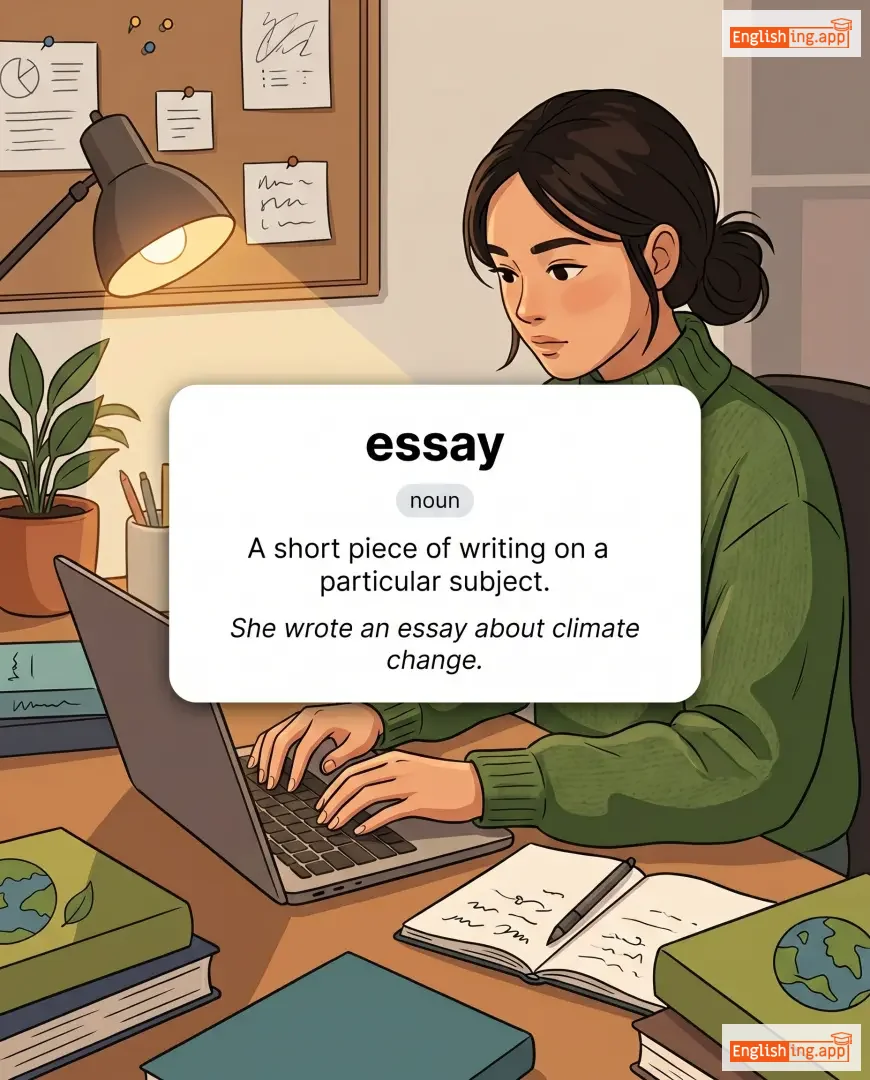
A short piece of writing on a particular subject.
••••••
|
She wrote an essay about climate change. |
彼女は気候変動についてのエッセイを書きました。
Kanojo wa kikō hendō ni tsuite no essei o kakimashita.
••••••
|
- •••••• | - •••••• | - •••••• |
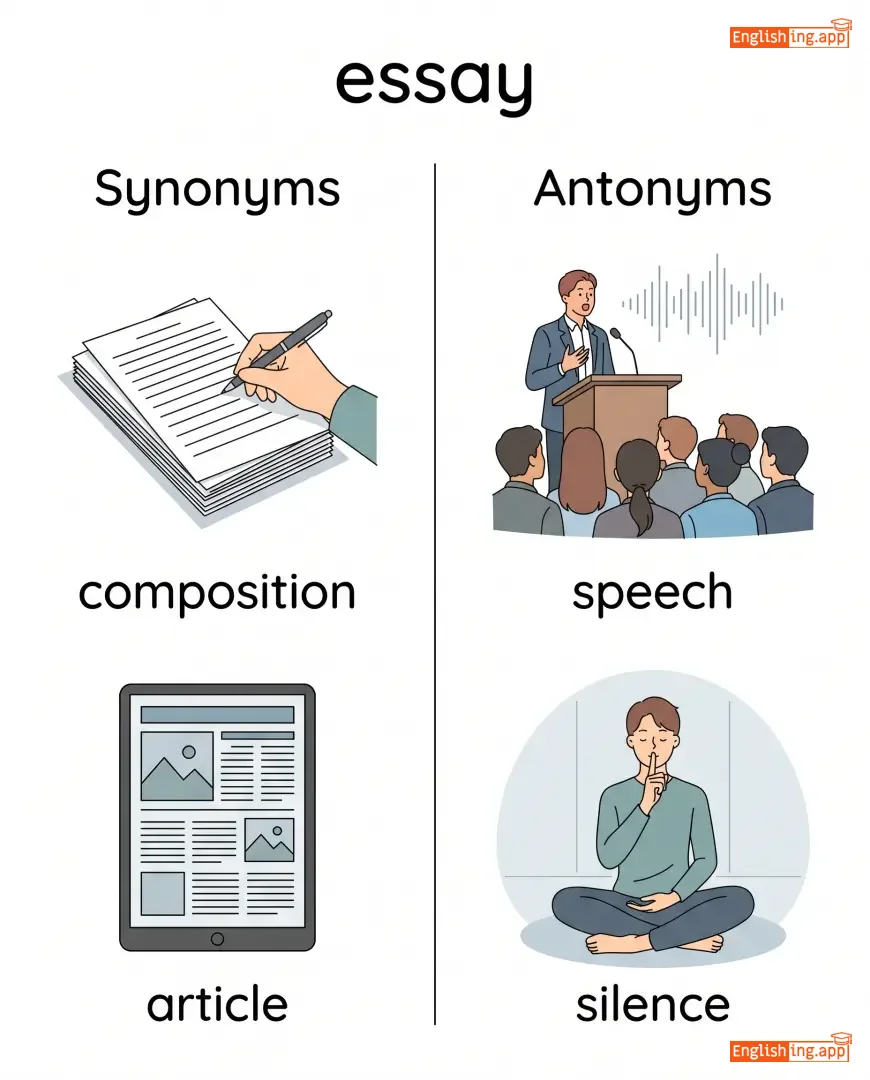
composition, article, paper, text, prose
••••••
|
speech, silence
••••••
|
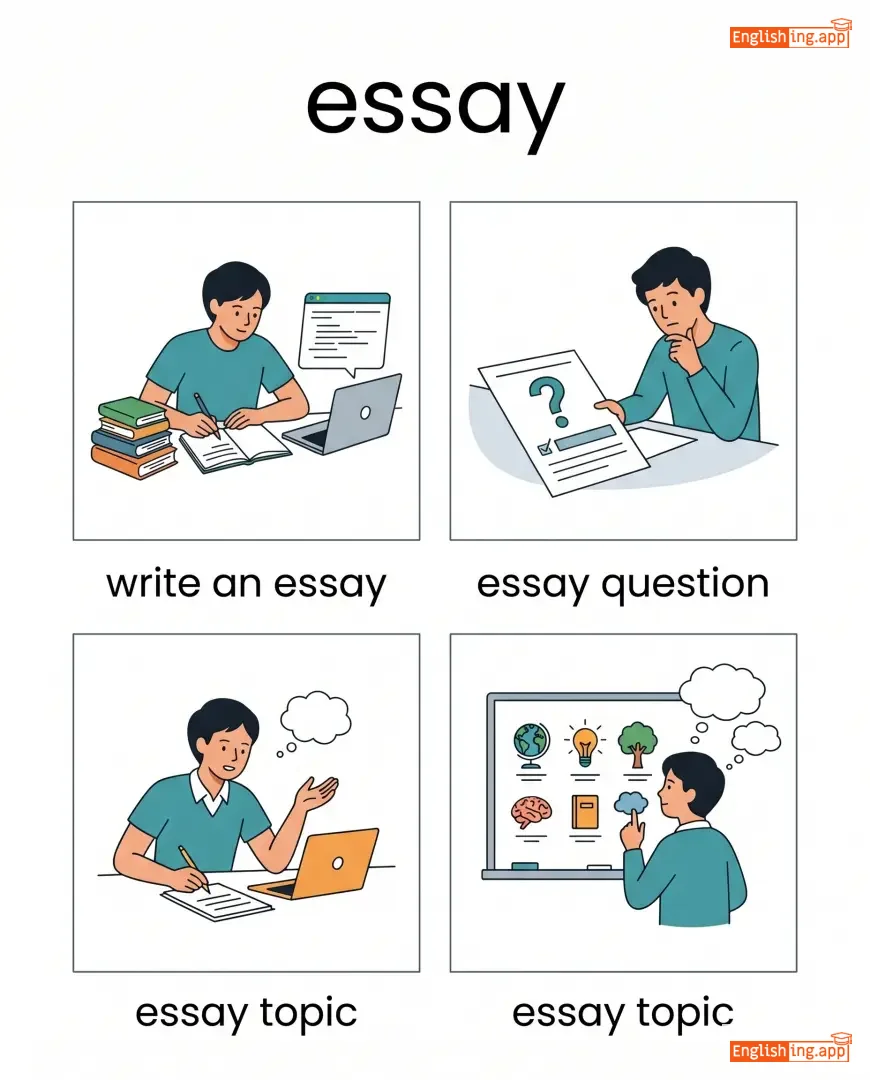
write an essay, essay question, essay topic, essay competition
••••••
|
Essayはエッセイを意味する – 学校ではエッセイを書くことはエッセイを書くことです。
••••••
|
|
#10935
🏃♂️
|
/ɪˈskeɪp/
verb
(eskeipu)
••••••
|
- •••••• |
逃げる
nigeru
••••••
|
escaped
eskeipudo
••••••
|
escaped
eskeipudo
••••••
|
escapes
eskeipusu
••••••
|
escaping
eskeipingu
••••••
|
To break free from confinement or control; to get away.
••••••
|
The prisoner tried to escape from jail.
囚人は刑務所から逃げようとした。
••••••
|
囚人は刑務所から逃げようとした。
Shuujin wa keimusho kara nigeyou to shita.
••••••
|
escape reality
現実から逃れる
••••••
|
To avoid or forget real-life problems by focusing on something else.
••••••
|
現実から逃れる
genjitsu kara nogareru
••••••
|
flee, break out, evade, get away, run away
••••••
|
stay, capture, confinement
••••••
|
escape route, escape plan, escape from, narrow escape
••••••
|
逃げるは逃げる – Nige + ru = Nogeru!
••••••
|
|
#10936
⚠️
|
/ˈɛrər/
noun
(エラー)
••••••
|
- •••••• |
誤り
ayamari
••••••
|
- •••••• | - •••••• | - •••••• | - •••••• |
A mistake or inaccuracy in action, thought, or judgment.
••••••
|
The report contained a major error in the data analysis. |
レポートにはデータ分析における重大な誤りが含まれていました。
Repoto ni wa deeta bunseki ni okeru juudaina ayamari ga fukumarete imashita.
••••••
|
trial and error |
A way of solving problems by trying different methods until finding one that works.
••••••
|
試行錯誤
shikou sakugo
••••••
|
mistake, fault, blunder, slip, inaccuracy
••••••
|
accuracy, correctness, precision
••••••
|
human error, computer error, make an error, error message
••••••
|
誤りは日本語でミスを意味します。何か間違ったことが起きると、私たちは '誤り' と言います。
••••••
|
|
#10937
⏳
|
/ˈɪərə/
noun
(エラ)
••••••
|
- •••••• |
時代
jidai
••••••
|
- •••••• | - •••••• | - •••••• | - •••••• |
a long and distinct period of history with a particular feature or characteristic
••••••
|
The invention of the internet marked a new era in communication. |
インターネットの発明は、通信における新しい時代の幕開けを意味しました。
Intānetto no hatsumei wa, tsūshin ni okeru atarashī jidai no makuake o imi shimashita.
••••••
|
end of an era |
the close of a significant period in history or someone's life
••••••
|
時代の終わり
jidai no owari
••••••
|
age, epoch, period, time, generation
••••••
|
moment, instant, short-term
••••••
|
modern era, digital era, new era, Victorian era
••••••
|
時代はデジタル時代のように、特別な期間を表す言葉です。
••••••
|
|
#10938
🛠️
|
/ɪˈkwɪpmənt/
noun
(エクイップメント)
••••••
|
- •••••• |
機器
kiki
••••••
|
- •••••• | - •••••• | - •••••• | - •••••• |
the necessary tools, machines, or other items needed for a particular purpose
••••••
|
The laboratory bought new equipment for research. |
実験室は研究のために新しい機器を購入しました。
jikken-shitsu wa kenkyū no tame ni atarashī kiki o kōnyū shimashita.
••••••
|
state-of-the-art equipment |
the most modern and advanced tools or machines available
••••••
|
最先端の機器
saizentan no kiki
••••••
|
tools, gear, apparatus, machinery, instruments
••••••
|
supplies, consumables, disposables
••••••
|
sports equipment, safety equipment, office equipment, medical equipment
••••••
|
機器は仕事に必要な道具です (kiki)
••••••
|
|
#10939
➗
|
/ˈiːkwəli/
adverb
(イコーリー)
••••••
|
- •••••• |
平等に
byoudou ni
••••••
|
- •••••• | - •••••• | - •••••• | - •••••• |
in an equal or fair way; to the same degree
••••••
|
The prize money was equally divided among the winners. |
賞金は受賞者の間で平等に分けられました。
Shoukin wa jushousha no aida de byoudou ni wakeraremashita.
••••••
|
- •••••• | - •••••• | - •••••• |
fairly, evenly, impartially, uniformly
••••••
|
unequally, unfairly, disproportionately
••••••
|
equally important, equally divided, equally responsible
••••••
|
Equally は平等に(平等に)することを意味します
••••••
|
|
#10940
⚖️
|
/ˈiːkwəl/
adjective
(イクォール)
••••••
|
|
平等
byoudou
••••••
|
- •••••• | - •••••• | - •••••• | - •••••• |
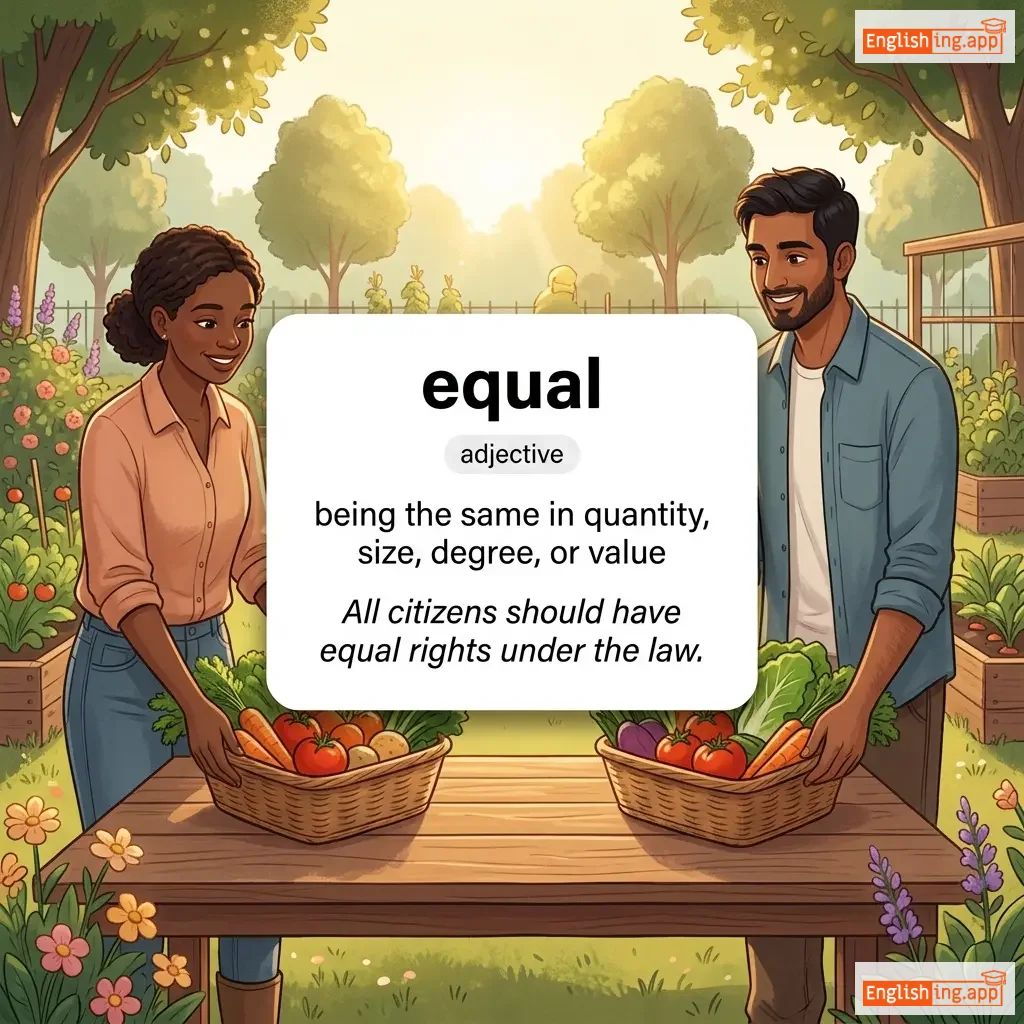
being the same in quantity, size, degree, or value
••••••
|
All citizens should have equal rights under the law.
すべての市民は法の下で平等な権利を持つべきです。
••••••
|
すべての市民は法の下で平等な権利を持つべきです。
Subete no shimin wa hō no moto de byōdō na kenri o motsu beki desu.
••••••
|
equal opportunity
平等な機会
••••••
|
the principle that everyone should have the same chances in life
••••••
|
平等な機会
byoudou na kikai
••••••
|
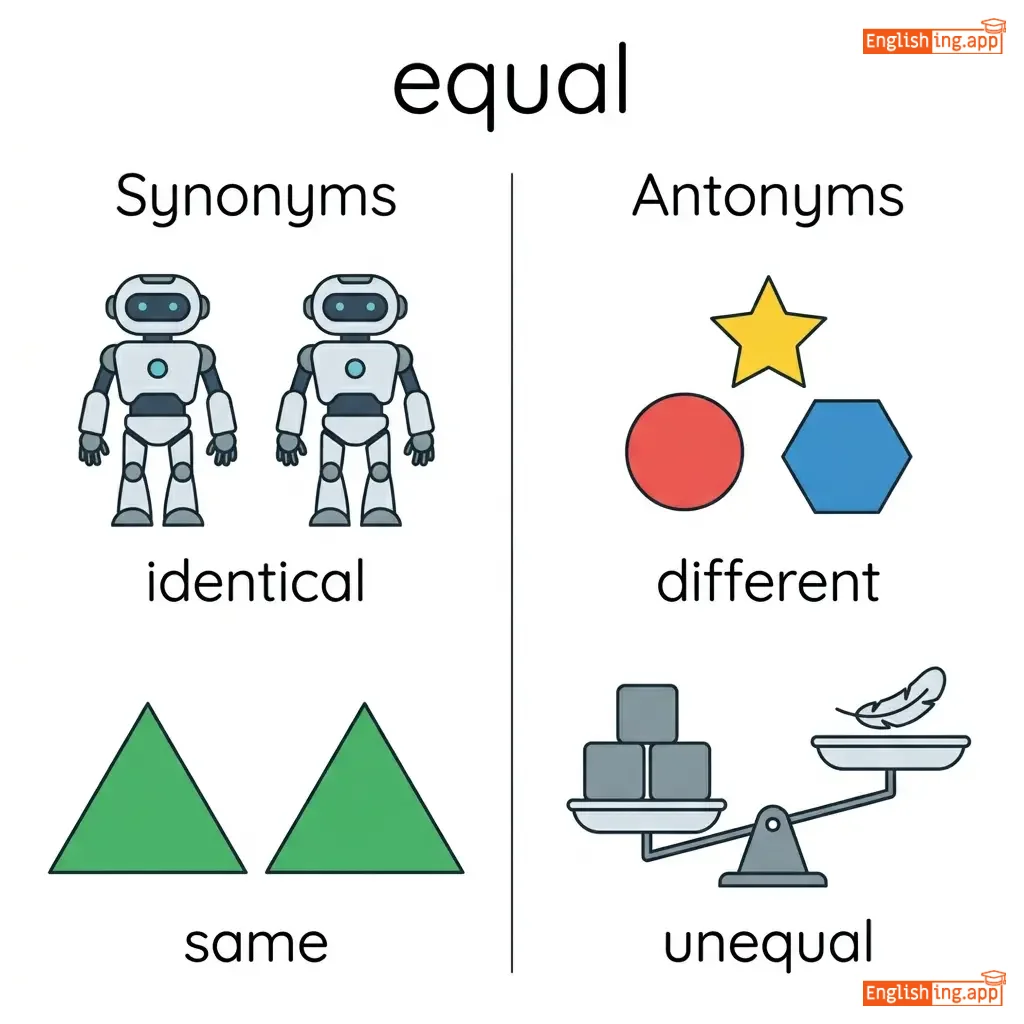
identical, same, equivalent, matching, uniform
••••••
|
different, unequal, unfair
••••••
|
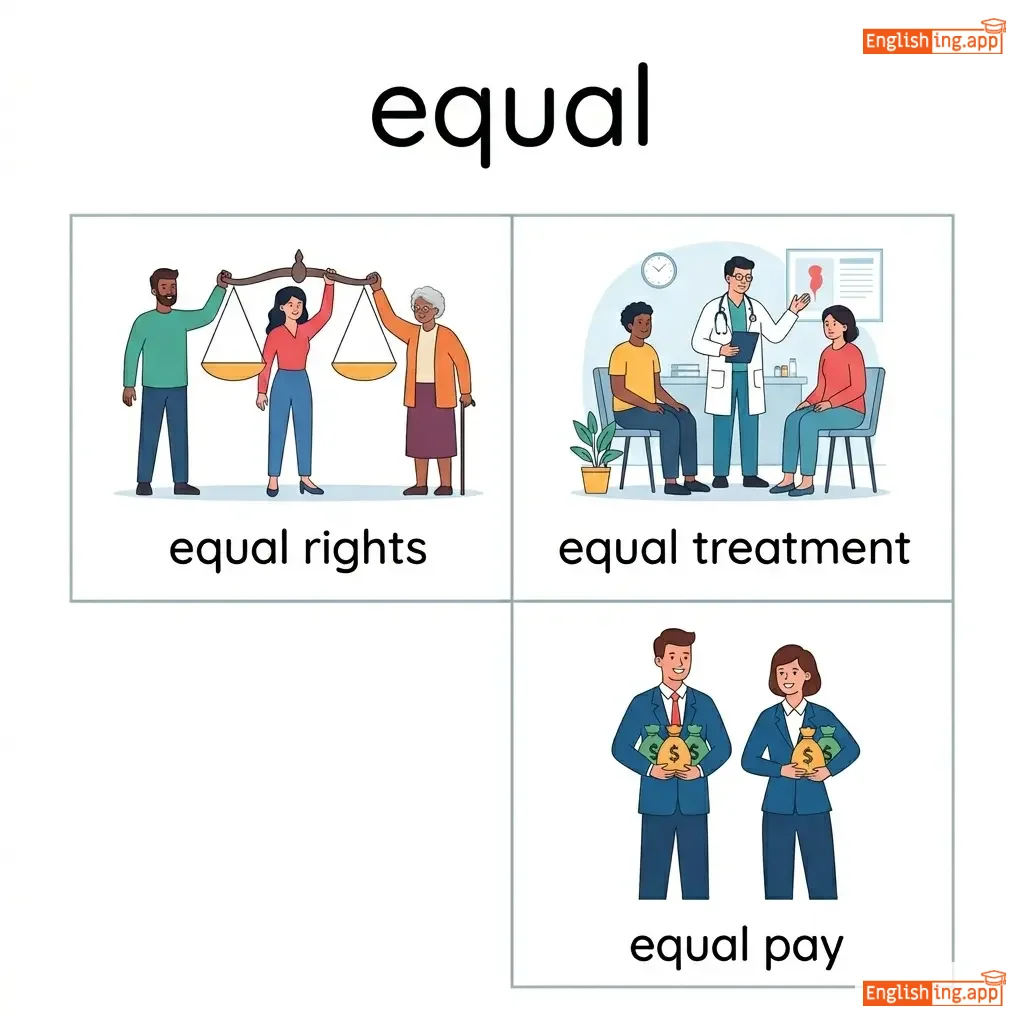
equal rights, equal treatment, equal pay, equal opportunity
••••••
|
Equalとはすべての人を平等に見ることです
••••••
|
|
#10941
🌍
|
/ɪnˌvaɪrənˈmɛntl/
adjective
(エンバイアロンメンタル)
••••••
|
- •••••• |
環境的な
kankyōtekina
••••••
|
- •••••• | - •••••• | - •••••• | - •••••• |
relating to the natural world and the impact of human activity on its condition
••••••
|
The company adopted new policies to reduce environmental damage. |
その会社は環境へのダメージを減らすために新しい方針を採用しました。
Sono kaisha wa kankyō e no damēji o herasu tame ni atarashī hōshin o saiyō shimashita.
••••••
|
environmental impact |
the effect that activities have on the natural world
••••••
|
環境への影響
kankyō e no eikyō
••••••
|
ecological, green, natural, sustainable, conservation
••••••
|
industrial, artificial, destructive
••••••
|
environmental protection, environmental law, environmental awareness, environmental issue
••••••
|
環境的なは自然に関連すること。
••••••
|
|
#10942
🌱
|
/ɪnˈvaɪrənmənt/
noun
(enbaironment)
••••••
|
|
環境
kankyou
••••••
|
- •••••• | - •••••• | - •••••• | - •••••• |
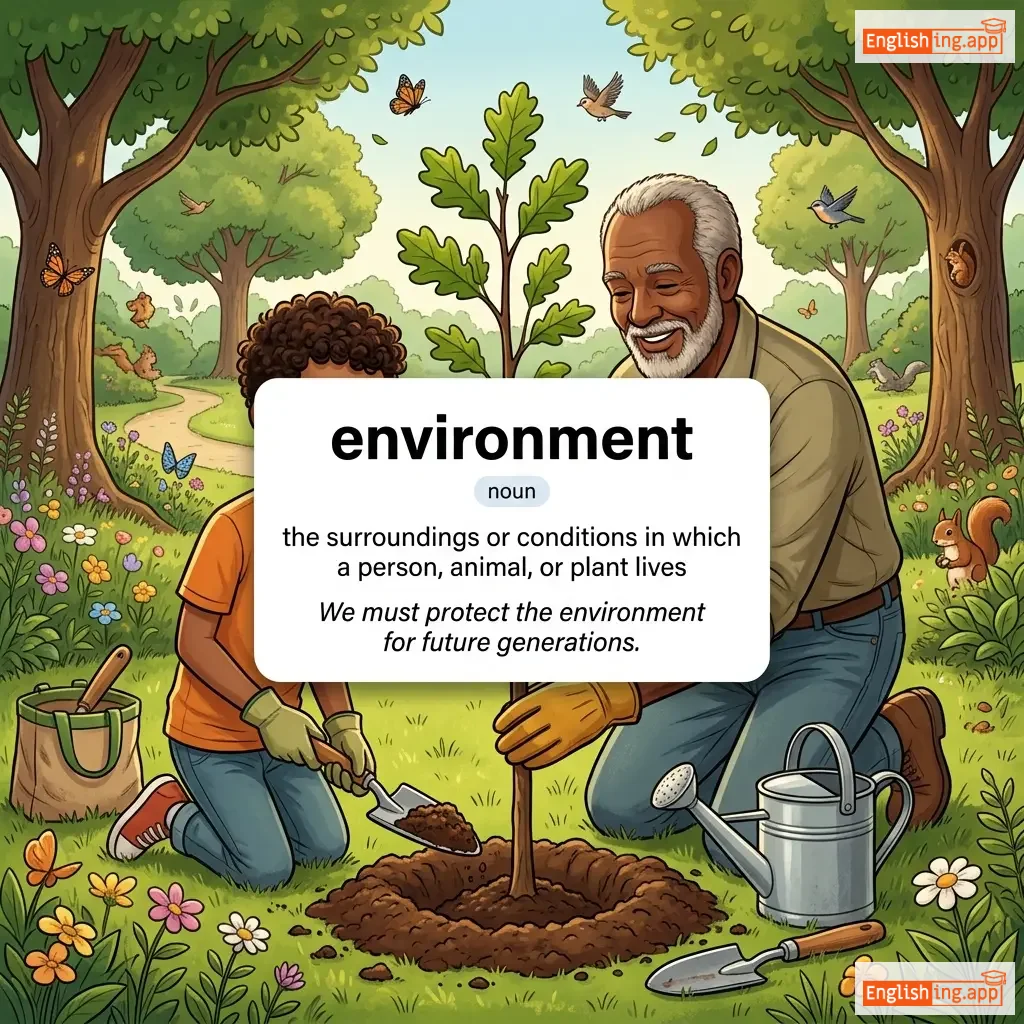
the surroundings or conditions in which a person, animal, or plant lives
••••••
|
We must protect the environment for future generations. |
私たちは未来の世代のために環境を守らなければなりません。
Watashitachi wa mirai no sedai no tame ni kankyou o mamoranakereba narimasen.
••••••
|
environmentally friendly |
not harmful to the natural world
••••••
|
環境に優しい
kankyou ni yasashii
••••••
|
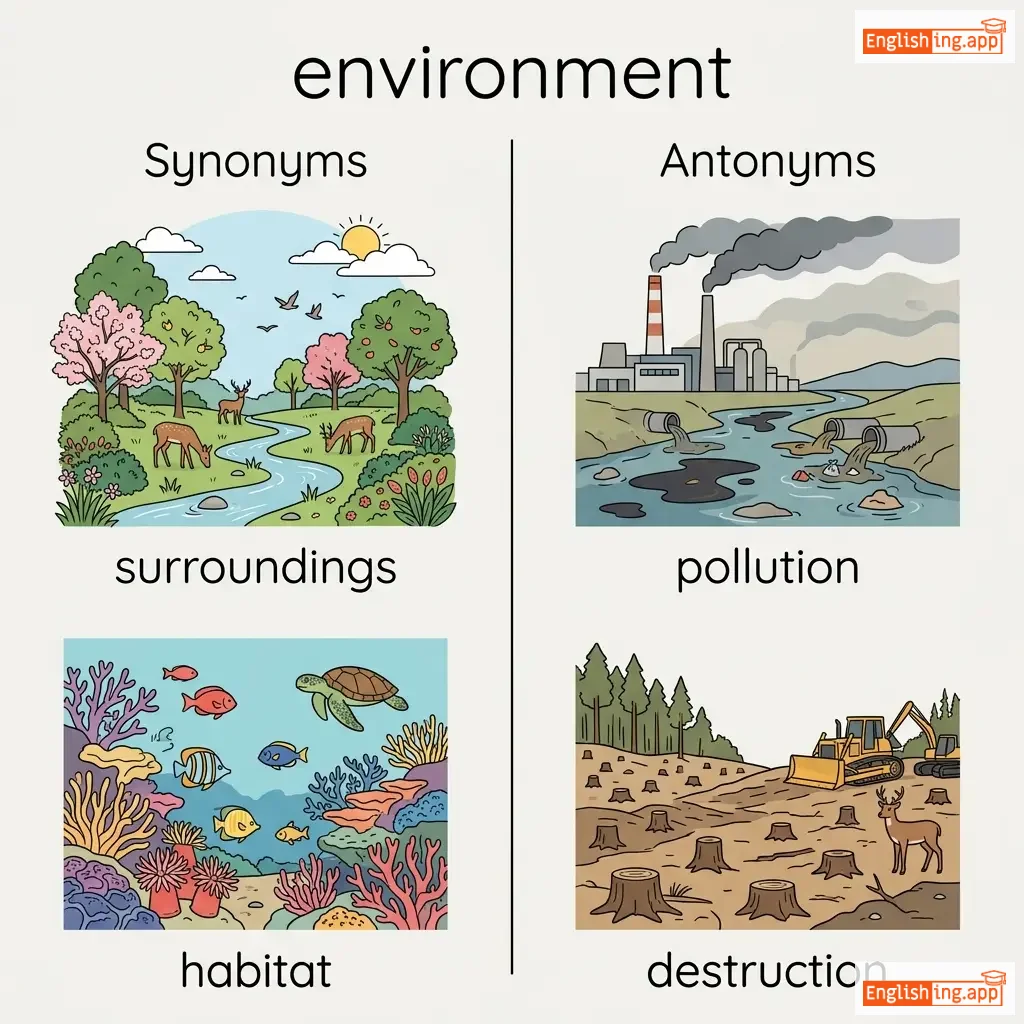
surroundings, habitat, ecology, atmosphere, setting
••••••
|
pollution, destruction
••••••
|
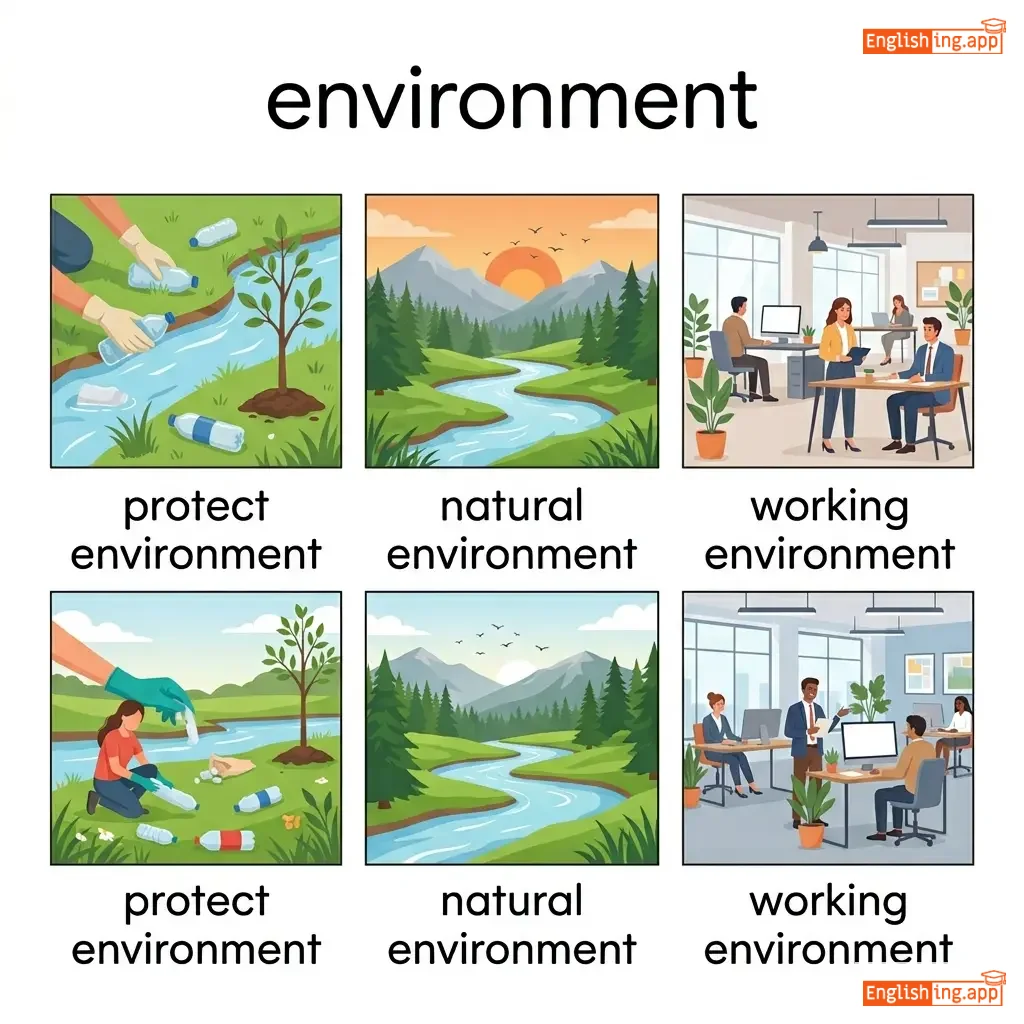
protect environment, natural environment, working environment, environment protection
••••••
|
環境:自然と共生する
••••••
|
|
#10943
🎟️
|
/ˈɛntri/
noun
(エントリー)
••••••
|
- •••••• |
エントランス
entoransu
••••••
|
- •••••• | - •••••• | - •••••• | - •••••• |
the act of going into a place, or permission to go in
••••••
|
Entry to the museum is free on Fridays. |
金曜日は博物館のエントランスが無料です。
Kin'yōbi wa hakubutsukan no entoransu ga muryō desu.
••••••
|
deny entry |
to refuse permission to enter
••••••
|
エントランスを拒否する
entoransu o kyohi suru
••••••
|
admission, access, doorway, record
••••••
|
exit, departure
••••••
|
entry fee, entry point, gain entry, deny entry
••••••
|
Entry は場所に入るためのエントランス
••••••
|
|
#10944
🌍
|
/ɪnˈtaɪər/
adjective
(エンタイア)
••••••
|
- •••••• |
完全な
kanzen na
••••••
|
- •••••• | - •••••• | - •••••• | - •••••• |
whole; with no part left out
••••••
|
He spent the entire day reading books. |
彼は一日中本を読んで過ごしました。
Kare wa ichinichijū hon o yonde sugoshimashita.
••••••
|
the entire world |
everywhere; globally
••••••
|
全世界
zenshikai
••••••
|
whole, complete, full, total, all
••••••
|
partial, incomplete
••••••
|
entire day, entire life, entire system, entire team
••••••
|
Entire はエンタイア、完全に、すべてが含まれている
••••••
|
Vocabulary Quiz
Test your vocabulary by matching words with their translations or meanings.
Login to take the quiz
Comments (0)
Share your thoughts and join the discussion.
Join the discussion by logging in
Login to CommentNo comments yet
Be the first to share your thoughts!