

翻訳
過去
過去分詞
三人称単数
動名詞
意味
例文
例文の翻訳
同義語
対義語
コロケーション
ニーモニック

Swipe left or right, or use the buttons. Tap image to zoom.
例文の翻訳
単語
Lesson 270Lesson 270 - マスクトグル
|
絵文字
|
単語 | Images | 翻訳 | 過去 | 過去分詞 | 三人称単数 | 動名詞 | 意味 | 例文 | 例文の翻訳 | 表現例 | 表現例の意味 | 表現例の翻訳 | 同義語 | 対義語 | コロケーション | ニーモニック |
|---|---|---|---|---|---|---|---|---|---|---|---|---|---|---|---|---|---|
|
#8070
💪
|
/ˈsɪnjuː/
noun
(シニュー)
••••••
|
- •••••• |
腱
ken
••••••
|
- •••••• | - •••••• | - •••••• | - •••••• |
A tendon; figuratively, the source of strength, power, or resilience.
••••••
|
The sinews in his arms stood out as he lifted the heavy box. |
重い箱を持ち上げると、彼の腕の腱が目立ちました。
Omoi hako o mochiageru to, kare no ude no ken ga medachimashita.
••••••
|
the sinews of war |
The resources and means necessary to conduct war, often referring to money.
••••••
|
戦争の力
Sensō no chikara
••••••
|
tendon, ligament, strength, vigor, muscle
••••••
|
weakness, frailty
••••••
|
strong sinew, the sinews of war, sinew and muscle
••••••
|
Sinewは腱を意味し、筋力と力に関連しています。💪
••••••
|
|
#8071
❓
|
/ˈskɛptɪˌsɪzəm/
noun
(skepticism)
••••••
|
|
懐疑主義
kaigi shugi
••••••
|
- •••••• | - •••••• | - •••••• | - •••••• |
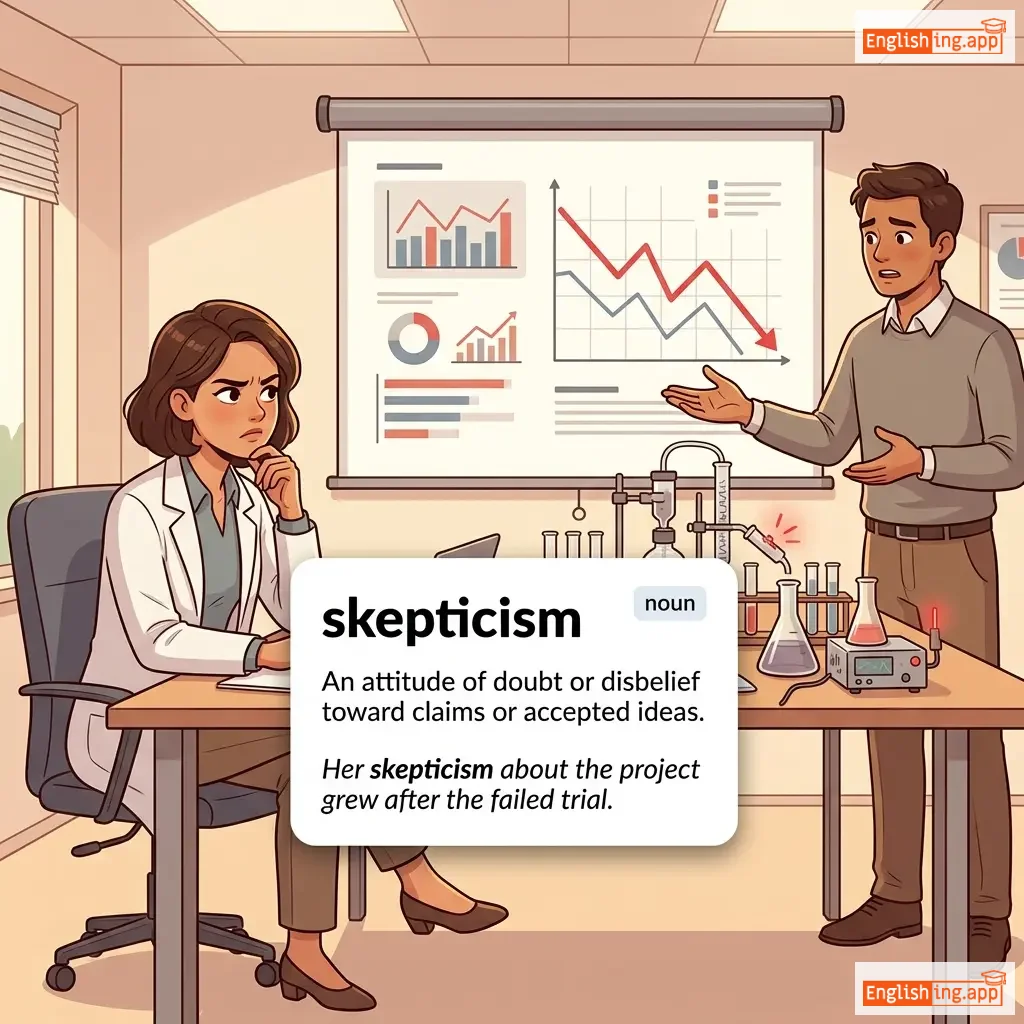
An attitude of doubt or disbelief toward claims or accepted ideas.
••••••
|
Her skepticism about the project grew after the failed trial. |
プロジェクトに対する彼女の懐疑主義は、失敗した実験の後に強まりました。
Purojekuto ni taisuru kanojo no kaigi shugi wa, shippai shita jikken no ato ni tsuyomarimashita.
••••••
|
healthy skepticism |
A rational and balanced doubt about claims, which can prevent deception.
••••••
|
健康的な懐疑主義
kenkō-teki na kaigi shugi
••••••
|
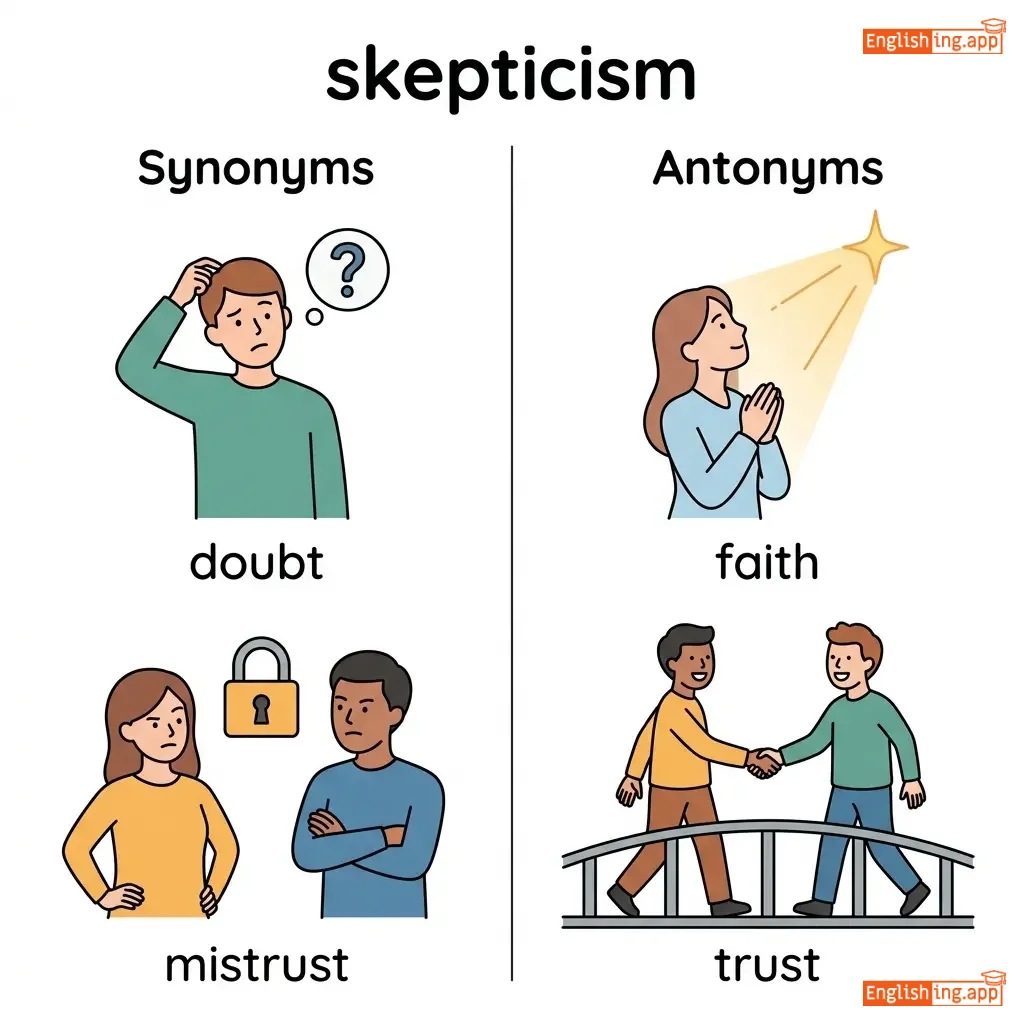
doubt, mistrust, disbelief, uncertainty
••••••
|
faith, trust
••••••
|
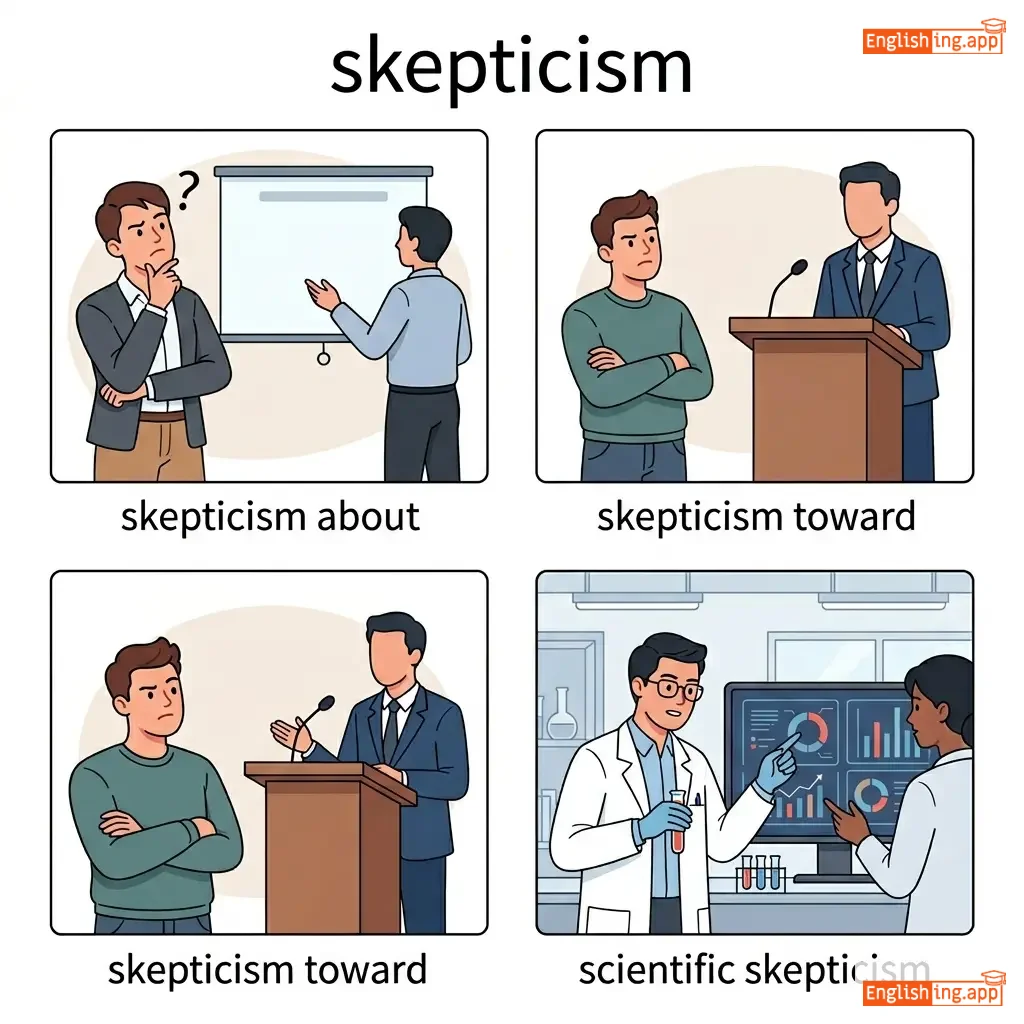
skepticism about, skepticism toward, scientific skepticism, public skepticism
••••••
|
懐疑主義はすべてに疑問を持つこと。これが健全な懐疑主義だ!
••••••
|
|
#8072
🤔
|
/ˈskɛptɪk/
noun
(スケプティック)
••••••
|
|
懐疑論者
kaigironsha
••••••
|
- •••••• | - •••••• | - •••••• | - •••••• |
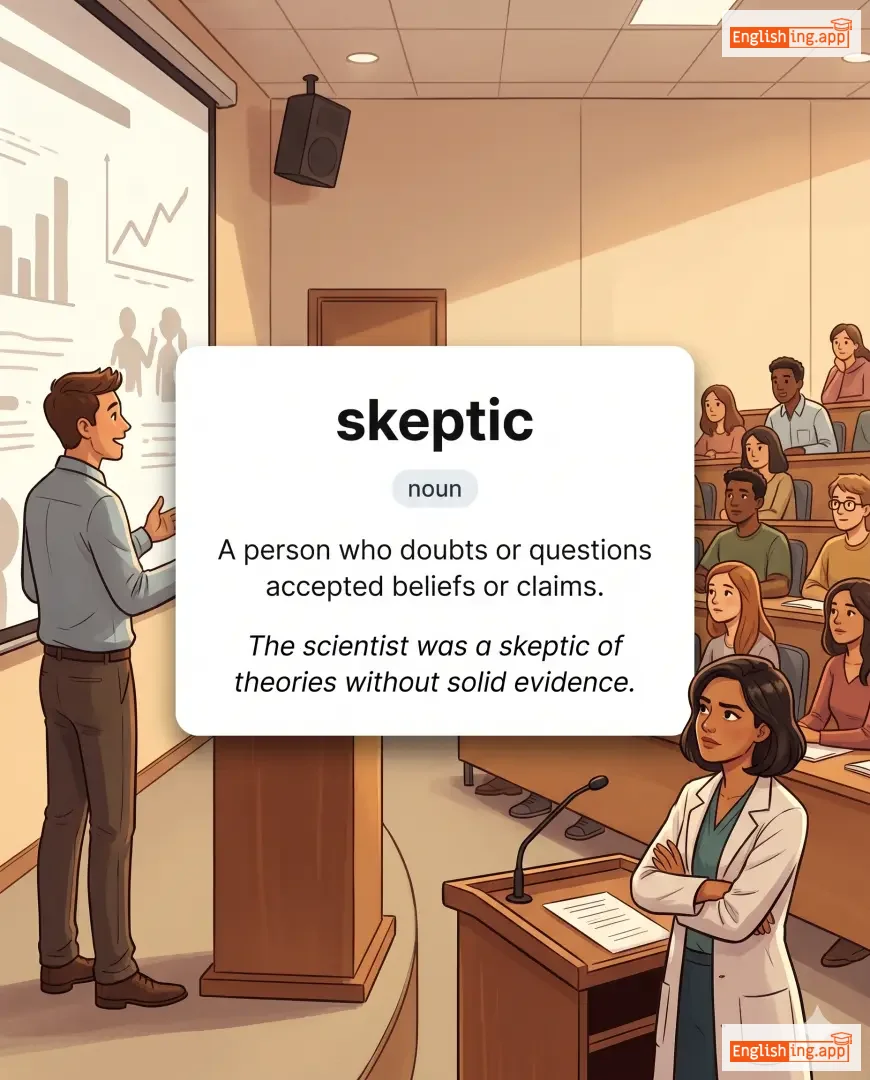
A person who doubts or questions accepted beliefs or claims.
••••••
|
The scientist was a skeptic of theories without solid evidence. |
その科学者は確固たる証拠のない理論に懐疑的でした。
Sono kagakusha wa kakotaru shouko no nai riron ni kaigiteki deshita.
••••••
|
healthy skeptic |
A person who doubts claims in a rational and balanced way.
••••••
|
健康的な懐疑論者
kenkouteki na kaigironsha
••••••
|
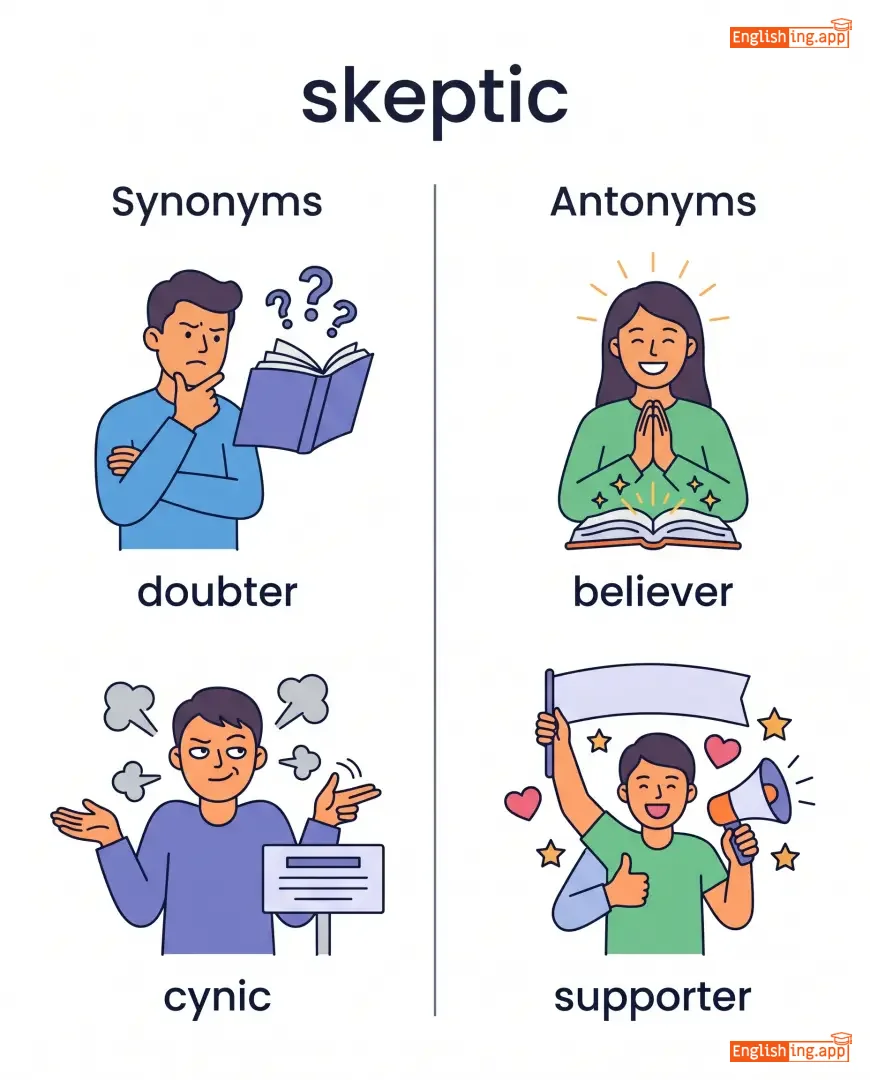
doubter, cynic, questioner, disbeliever
••••••
|
believer, supporter
••••••
|
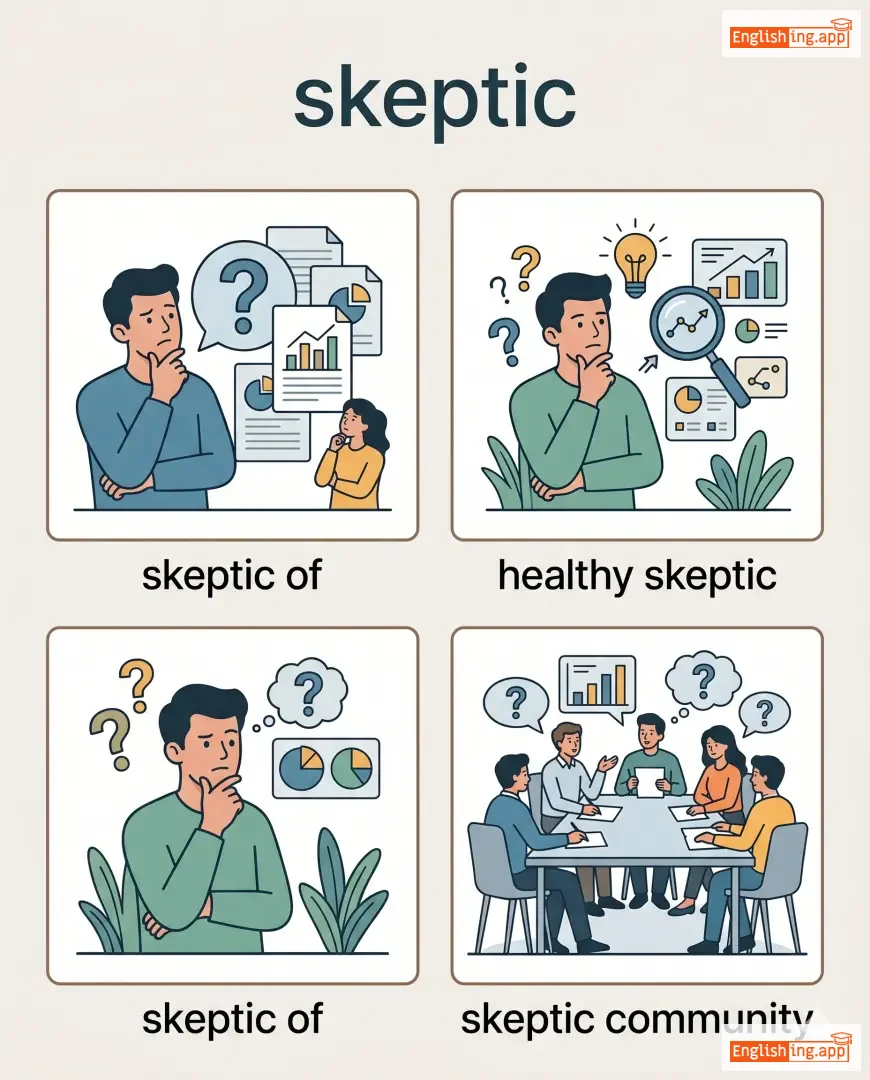
skeptic of, healthy skeptic, skeptic community, skeptic movement
••••••
|
懐疑論者はすべてに疑問を抱く、まるで真実を追い求める探偵のように。
••••••
|
|
#8073
💀
|
/ˈskɛlɪtən/
noun
(スケルトン)
••••••
|
- •••••• |
骨格
kekkaku
••••••
|
- •••••• | - •••••• | - •••••• | - •••••• |
The internal framework of bones that supports the body of a human or animal.
••••••
|
The teacher showed the students a human skeleton in the biology class. |
先生は生物の授業で学生たちに人間の骨格を見せました。
Sensei wa seibutsu no jugyō de gakusei-tachi ni ningen no kekkaku o misemashita.
••••••
|
skeleton in the closet |
A hidden and potentially embarrassing or shameful secret.
••••••
|
クローゼットの中の骨格
Kurōzetto no naka no kekkaku
••••••
|
framework, bones, structure, anatomy
••••••
|
flesh, body
••••••
|
human skeleton, animal skeleton, skeleton crew, skeleton structure
••••••
|
スケルトン = 骨格 (bones)
••••••
|
|
#8074
👭
|
/ˈsɪstərhʊd/
noun
(sisutāhudo)
••••••
|
- •••••• |
姉妹関係
shimai kankei
••••••
|
- •••••• | - •••••• | - •••••• | - •••••• |
The relationship between sisters, or a community of women united by shared experiences or goals.
••••••
|
The feminist movement created a strong sense of sisterhood among women. |
フェミニスト運動は女性たちの間に強い姉妹関係の感覚を生み出しました。
Feminisuto undō wa joseitachi no aida ni tsuyoi shimai kankei no kankaku o umidashimashita.
••••••
|
bond of sisterhood |
A deep connection or solidarity among women.
••••••
|
姉妹関係の絆
shimai kankei no kizuna
••••••
|
solidarity, companionship, fellowship, fraternity
••••••
|
division, isolation
••••••
|
spirit of sisterhood, bond of sisterhood, sense of sisterhood, global sisterhood
••••••
|
Sister + hoodは姉妹関係を意味します - すべての女性が姉妹関係で一つになります。
••••••
|
|
#8075
🌬️
|
/sɪˈrɒkoʊ/
noun
(シロッコ)
••••••
|
- •••••• |
熱く乾燥した風
atsuku kansou shita kaze
••••••
|
- •••••• | - •••••• | - •••••• | - •••••• |
A hot, dry wind blowing from North Africa across the Mediterranean to southern Europe.
••••••
|
The sirocco made the city unbearably hot and dusty. |
シロッコは街を耐えられないほど暑く、ほこりっぽくした。
Shirokko wa machi o taerarenai hodo atsuku, hokorippoku shita.
••••••
|
- •••••• | - •••••• | - •••••• |
desert wind, hot wind, dust storm, dry wind
••••••
|
cool breeze, zephyr
••••••
|
blowing sirocco, desert sirocco, hot sirocco, summer sirocco
••••••
|
シロッコ = 砂漠から来る暑い風 🌪️
••••••
|
|
#8076
🚨
|
/ˈsaɪrən/
noun
(サイレン)
••••••
|
- •••••• |
サイレン
sairen
••••••
|
- •••••• | - •••••• | - •••••• | - •••••• |
A device that makes a loud prolonged sound as a signal or warning; in mythology, a creature that lures sailors with enchanting songs.
••••••
|
The police car passed with its siren blaring. |
警察車両はサイレンを鳴らしながら通り過ぎました。
Keisatsu sharyō wa sairen o narashinagara tōrisugimashita.
••••••
|
siren song |
An alluring appeal that is hard to resist but may be dangerous
••••••
|
サイレンの歌
sairen no uta
••••••
|
alarm, signal, warning, enchantress, temptress
••••••
|
silence, quiet
••••••
|
police siren, ambulance siren, fire siren, siren song
••••••
|
SIRENの音 🚨 が鳴ると、みんな走り出す。神話のSIRENは船員を引き寄せた。
••••••
|
|
#8077
🍵
|
/sɪp/
verb
(sip)
••••••
|
|
ひと口
hitokuchi
••••••
|
sipped
sipped
••••••
|
sipped
sipped
••••••
|
sips
sips
••••••
|
sipping
sipping
••••••
|
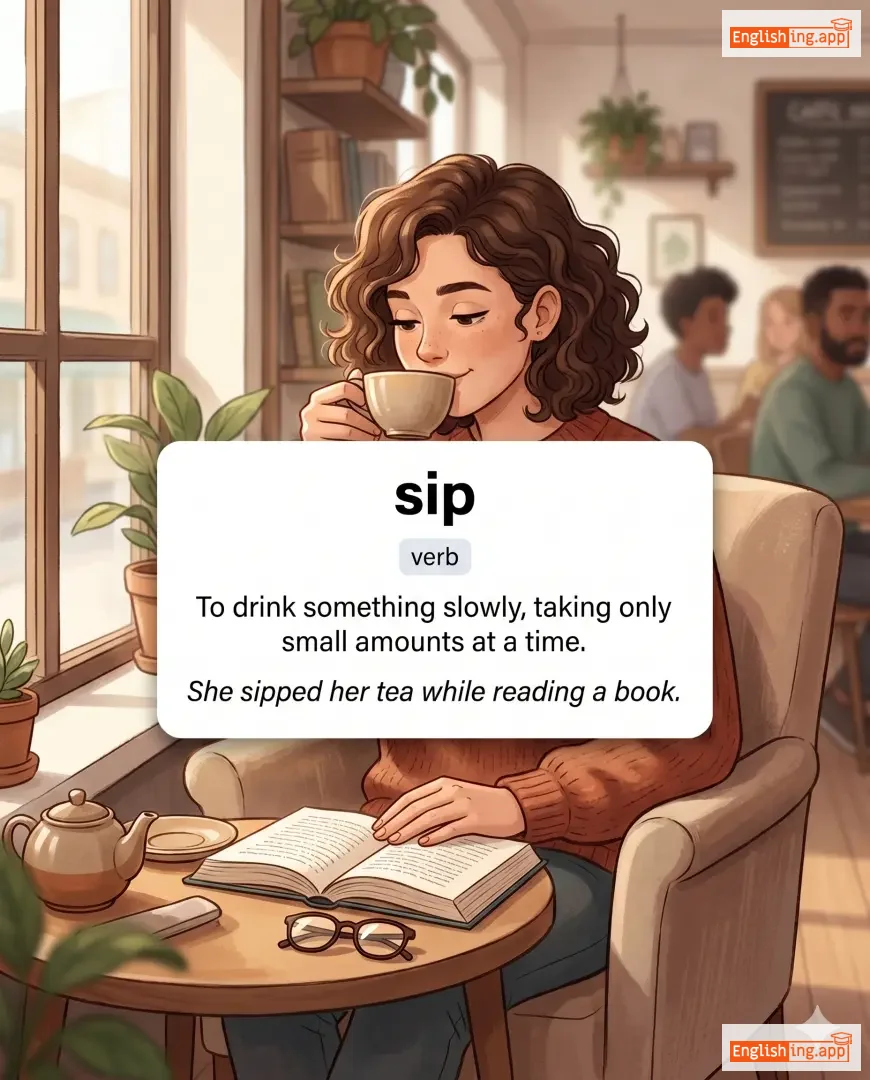
To drink something slowly, taking only small amounts at a time.
••••••
|
She sipped her tea while reading a book.
彼女は本を読みながらお茶を少しずつ飲んでいた。
••••••
|
彼女は本を読みながらお茶をひと口ずつ飲んでいた。
Kanojo wa hon wo yomi nagara ocha wo hitokochi zutsu nonde ita.
••••••
|
sip of tea
お茶の一口
••••••
|
A small amount of tea drunk at one time
••••••
|
お茶のひと口
ocha no hitokuchi
••••••
|
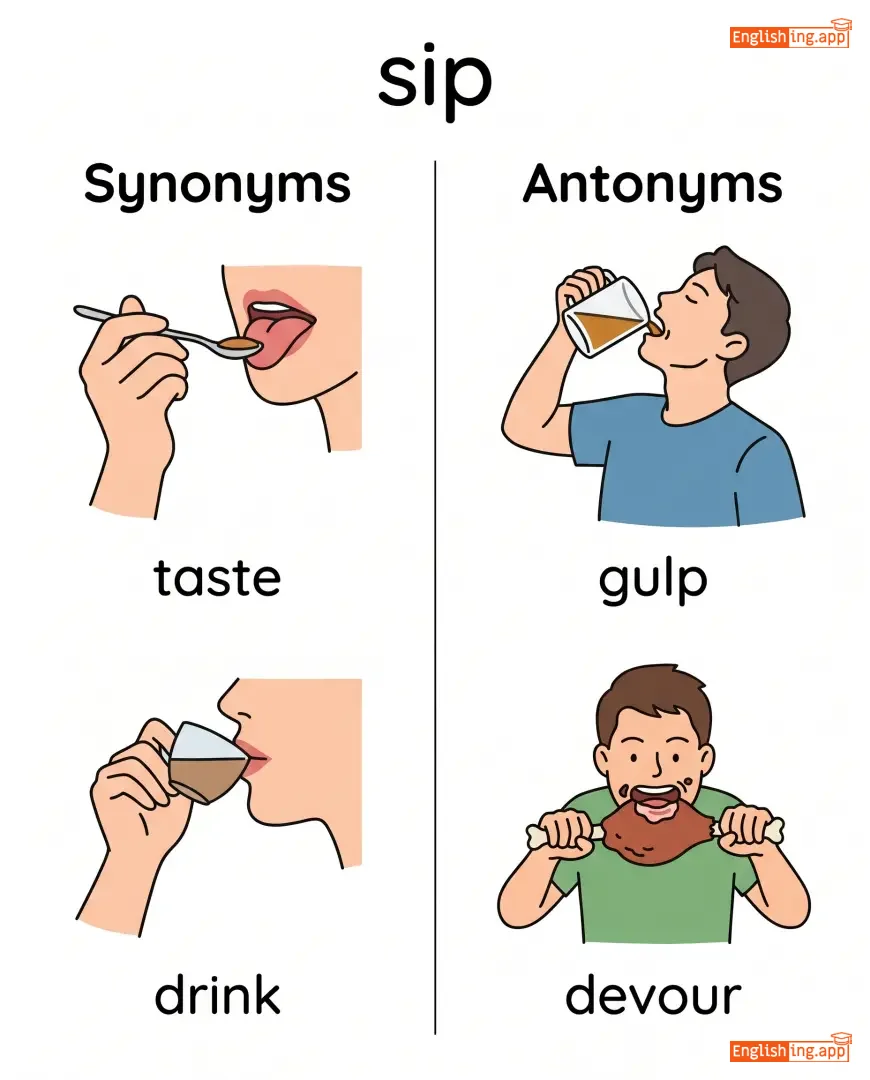
taste, drink, swallow, imbibe
••••••
|
gulp, devour
••••••
|
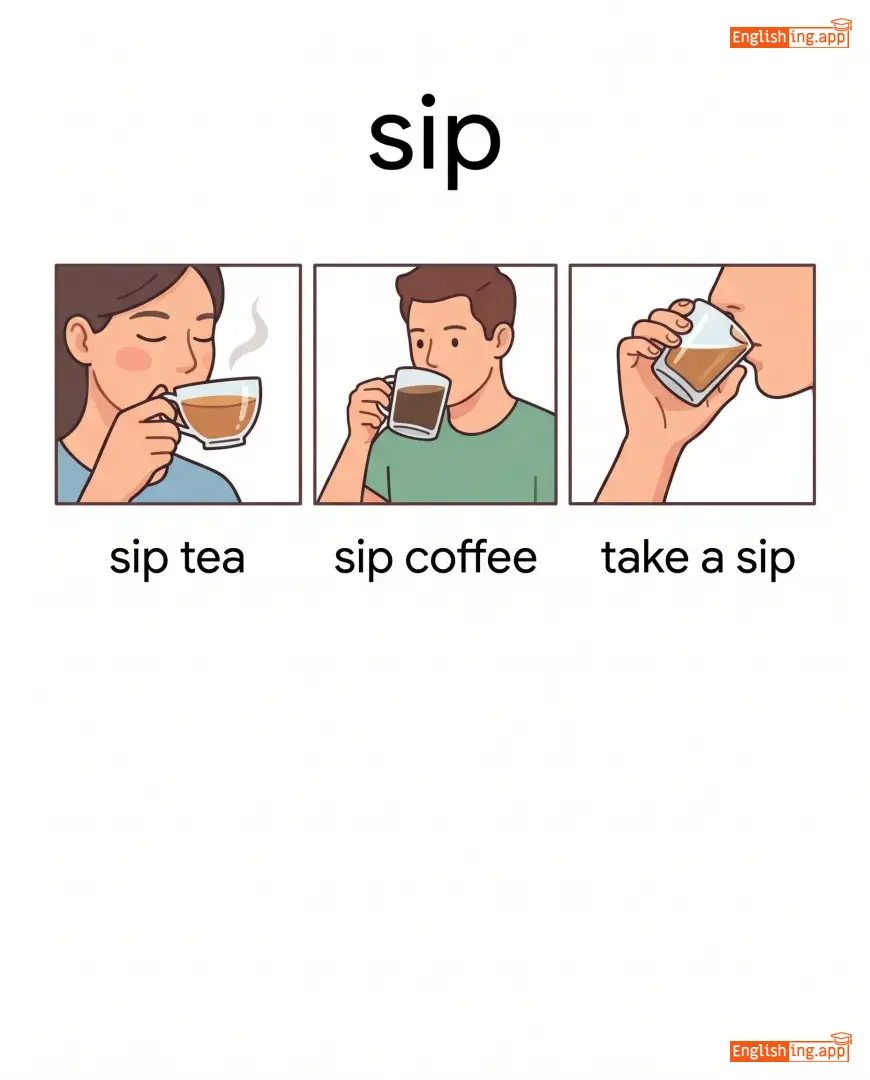
sip tea, sip coffee, take a sip, sip slowly
••••••
|
SIPはひと口を意味します。‘お茶のひと口をSIPしよう!’
••••••
|
|
#8078
🤧
|
/ˈsaɪnəs/
noun
(サイナス)
••••••
|
- •••••• |
副鼻腔
fukubikō
••••••
|
- •••••• | - •••••• | - •••••• | - •••••• |
A cavity within a bone or tissue, especially those in the bones of the face connected with the nasal cavities.
••••••
|
He suffered from a sinus infection that caused headaches.
彼は副鼻腔感染症に苦しんでおり、頭痛を引き起こしました。
••••••
|
彼は副鼻腔感染症に苦しんでおり、頭痛を引き起こしました。
Kare wa fukubikō kansen-shō ni kurushinde ori, zutsū o hikiokoshimashita.
••••••
|
sinus infection
副鼻腔感染症
••••••
|
An infection or inflammation of the sinus cavities
••••••
|
副鼻腔感染症
fukubikō kansen-shō
••••••
|
cavity, hollow, chamber, recess
••••••
|
solid, fullness
••••••
|
sinus infection, sinus pain, sinus congestion, sinus cavity
••••••
|
副鼻腔が痛むときは頭痛に繋がります。
••••••
|
|
#8079
〰️
|
/ˈsɪnjuəs/
adjective
(シニュアス)
••••••
|
|
曲がりくねった
magarikunetta
••••••
|
- •••••• | - •••••• | - •••••• | - •••••• |
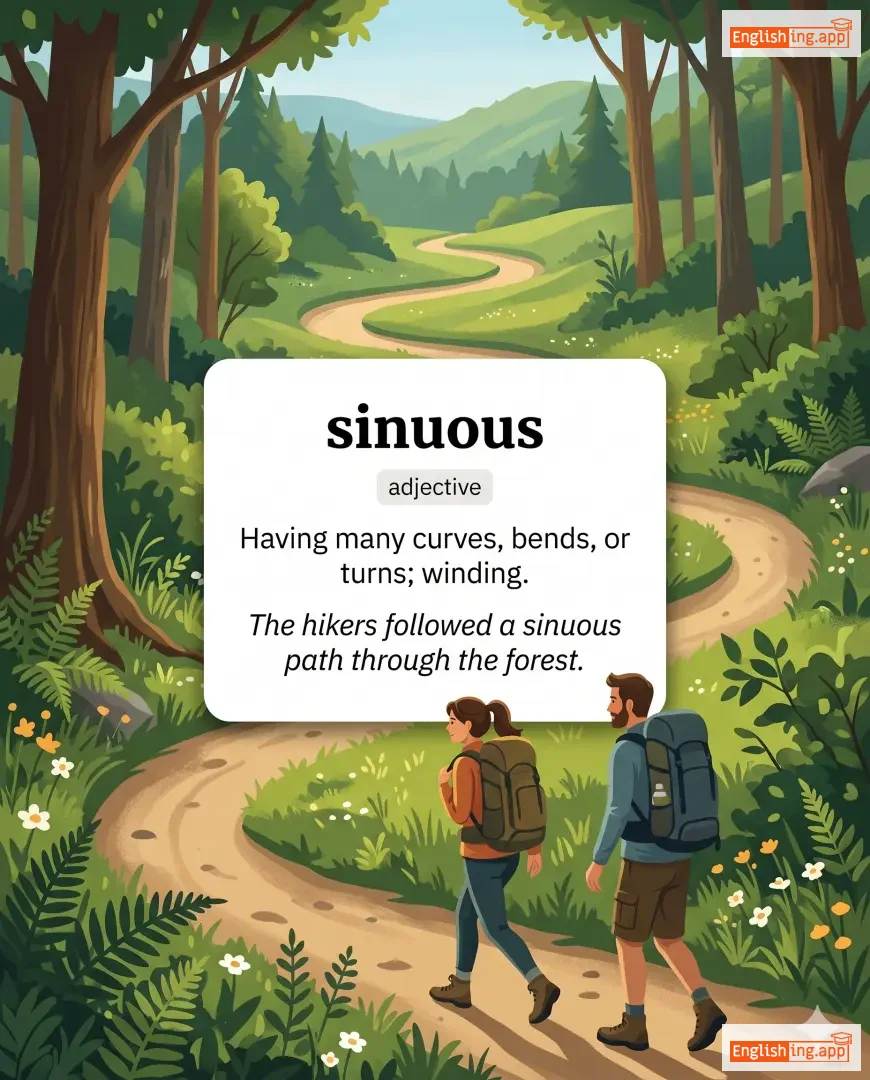
Having many curves, bends, or turns; winding.
••••••
|
The hikers followed a sinuous path through the forest. |
ハイカーたちは森を通る曲がりくねった道を進んだ。
Haikaa-tachi wa mori wo tooru magarikunetta michi wo sunda.
••••••
|
- •••••• | - •••••• | - •••••• |
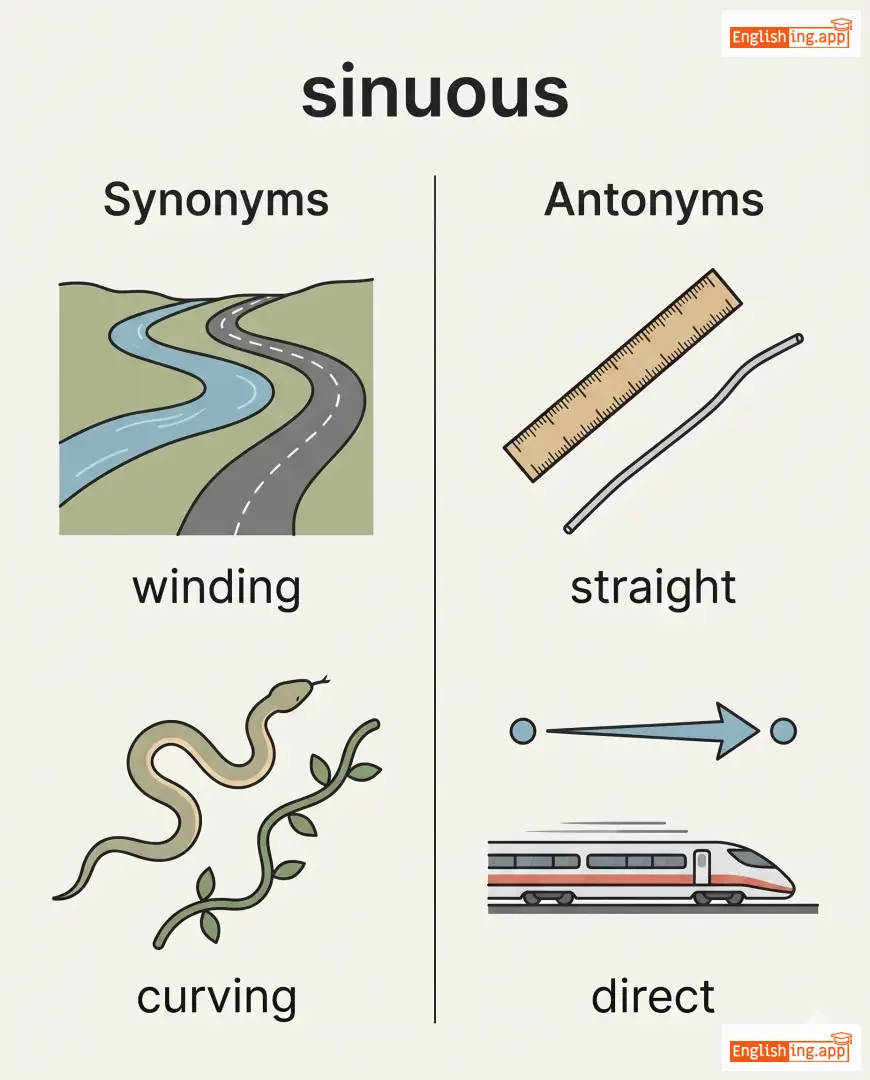
winding, curving, twisting, meandering, serpentine
••••••
|
straight, direct, linear
••••••
|
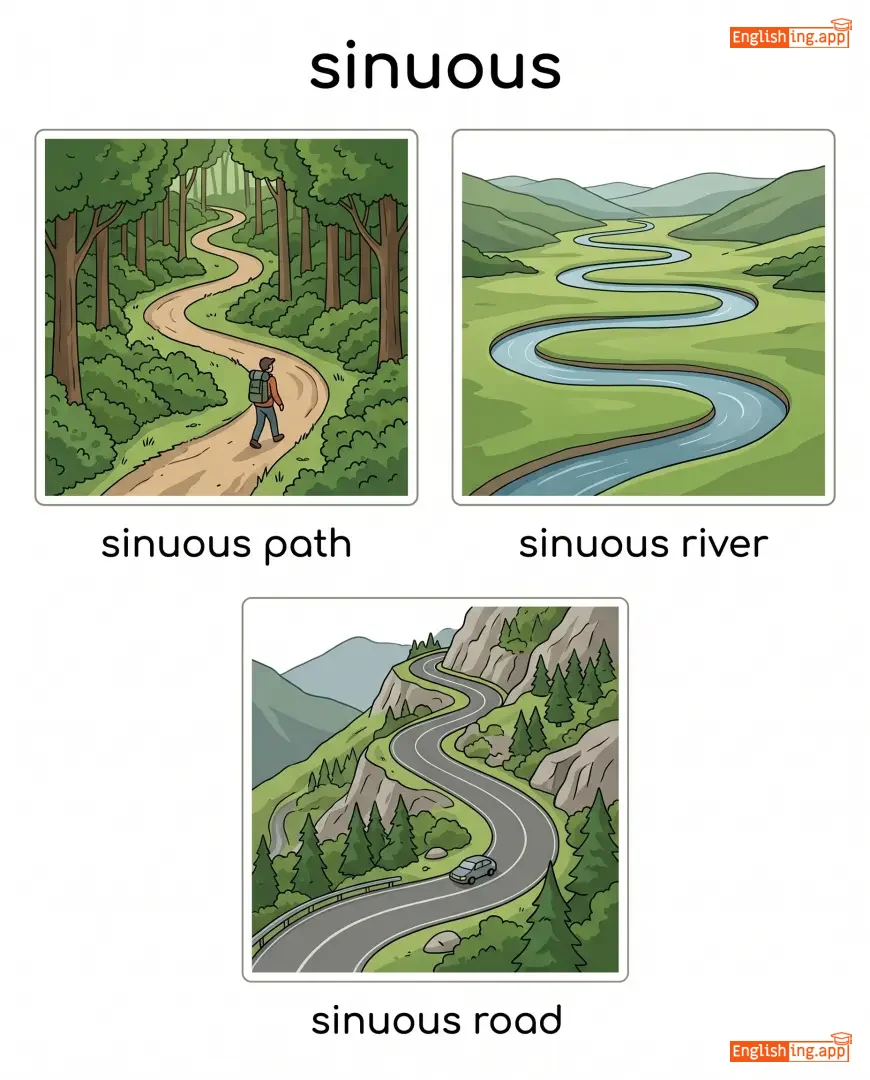
sinuous path, sinuous river, sinuous road, sinuous line
••••••
|
曲がりくねった道は蛇のように曲がっている道です。
••••••
|
|
#8080
🌀
|
/ˌsɪnjuˈɒsɪti/
noun
(sinwositi)
••••••
|
- •••••• |
曲がり具合
magari guai
••••••
|
- •••••• | - •••••• | - •••••• | - •••••• |
The quality or state of being winding, curving, or having many turns.
••••••
|
The sinuosity of the river made navigation challenging. |
川の曲がり具合はナビゲーションを難しくした。
Kawa no magari guai wa nabigēshon o muzukashiku shita.
••••••
|
- •••••• | - •••••• | - •••••• |
curvature, winding, twisting, bend, meandering
••••••
|
straightness, directness
••••••
|
river sinuosity, channel sinuosity, measure sinuosity, high sinuosity
••••••
|
曲がり具合は曲がると関連があり、曲がり具合が曲線を意味します。
••••••
|
|
#8081
😈
|
/ˈsɪnɪstər/
adjective
(シニスター)
••••••
|
- •••••• |
不吉な
fukitsuna
••••••
|
- •••••• | - •••••• | - •••••• | - •••••• |
Giving the impression that something harmful or evil is happening or will happen.
••••••
|
The abandoned house had a sinister atmosphere. |
その廃屋には不吉な雰囲気が漂っていた。
Sono haiyoku niwa fukitsuna fun'iki ga tadayotte ita.
••••••
|
sinister motive |
An evil or harmful intention behind an action.
••••••
|
不吉な動機
fukitsuna douki
••••••
|
menacing, threatening, evil, ominous
••••••
|
harmless, innocent, benign
••••••
|
sinister plot, sinister figure, sinister atmosphere
••••••
|
Sinisterは不吉なことを意味します → 悪意のある動機
••••••
|
|
#8082
🌟
|
/ˈsɪŋɡjələr/
adjective, noun
(シンギュラー)
••••••
|
|
非凡 / 単数
hiban / tansuu
••••••
|
- •••••• | - •••••• | - •••••• | - •••••• |
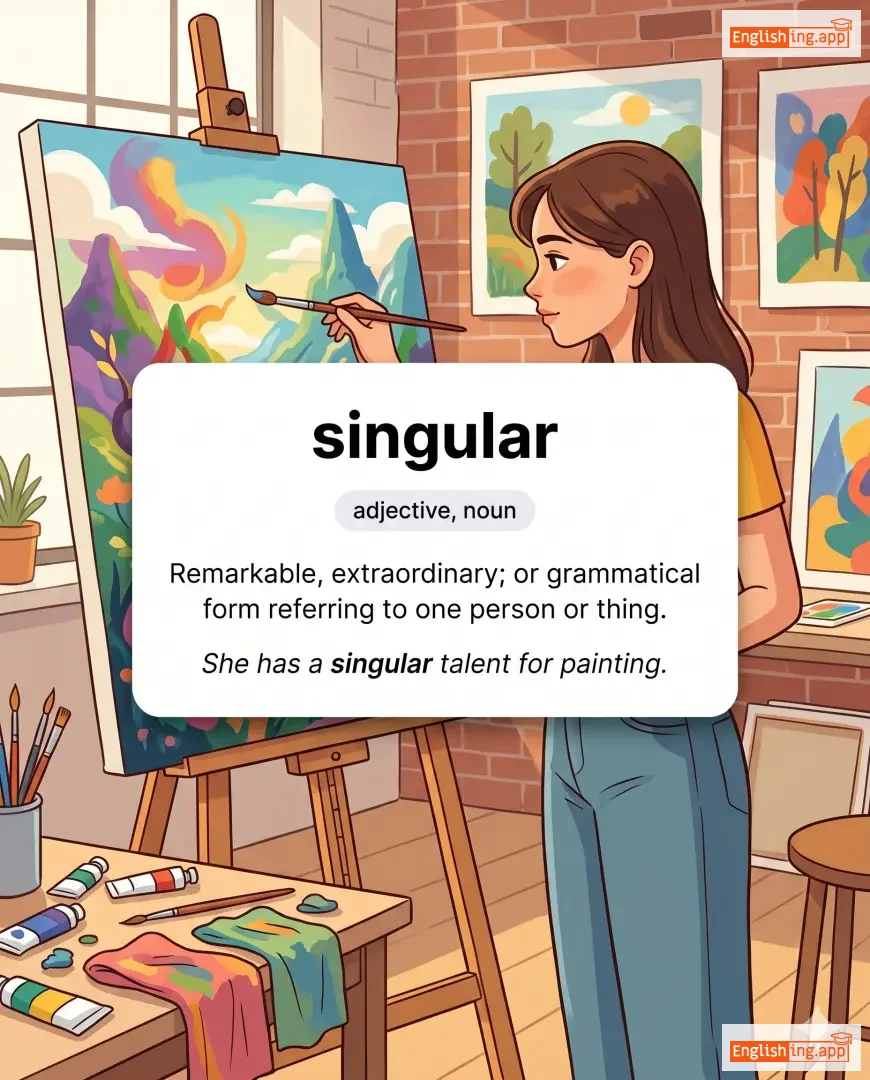
Remarkable, extraordinary; or grammatical form referring to one person or thing.
••••••
|
She has a singular talent for painting. |
彼女は絵画において非凡な才能を持っています。
Kanojo wa kaiga ni oite hiban na sainou o motteimasu.
••••••
|
singular focus |
Exclusive concentration on one thing.
••••••
|
単一の集中
tansuu no shuuchuu
••••••
|
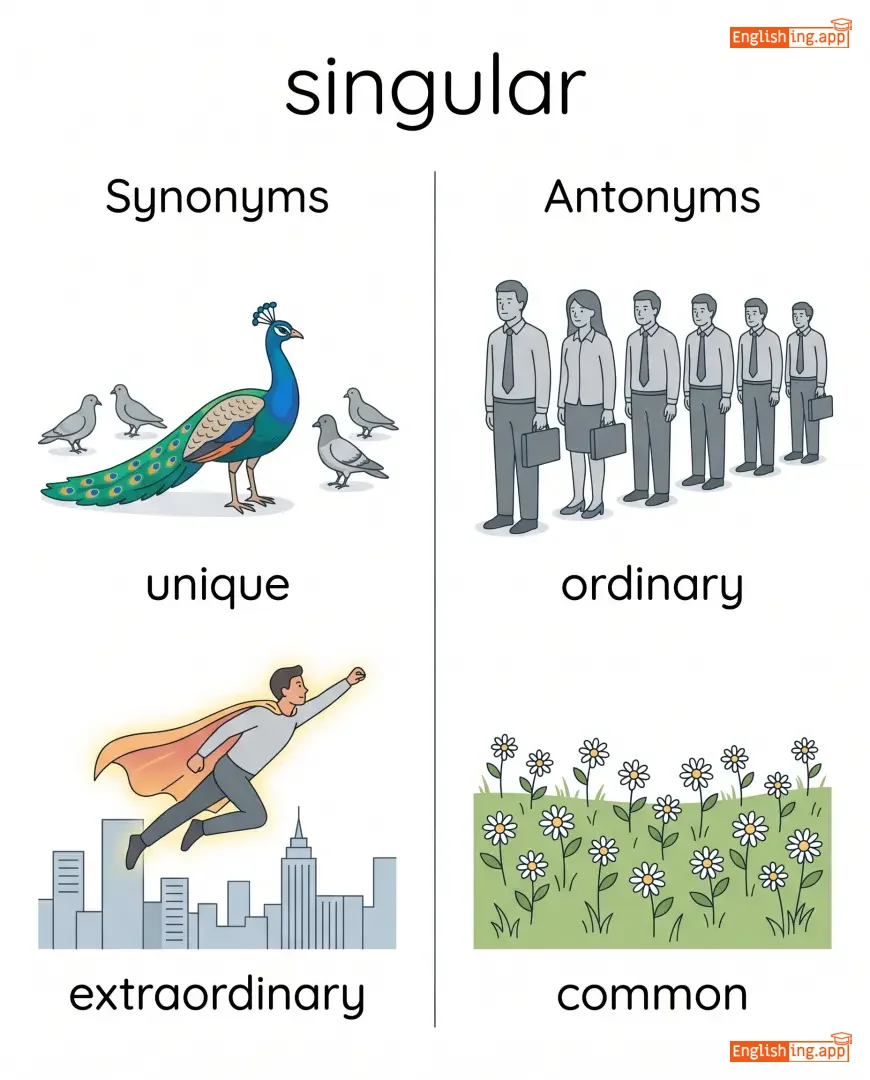
unique, extraordinary, remarkable, exceptional
••••••
|
ordinary, common, usual
••••••
|
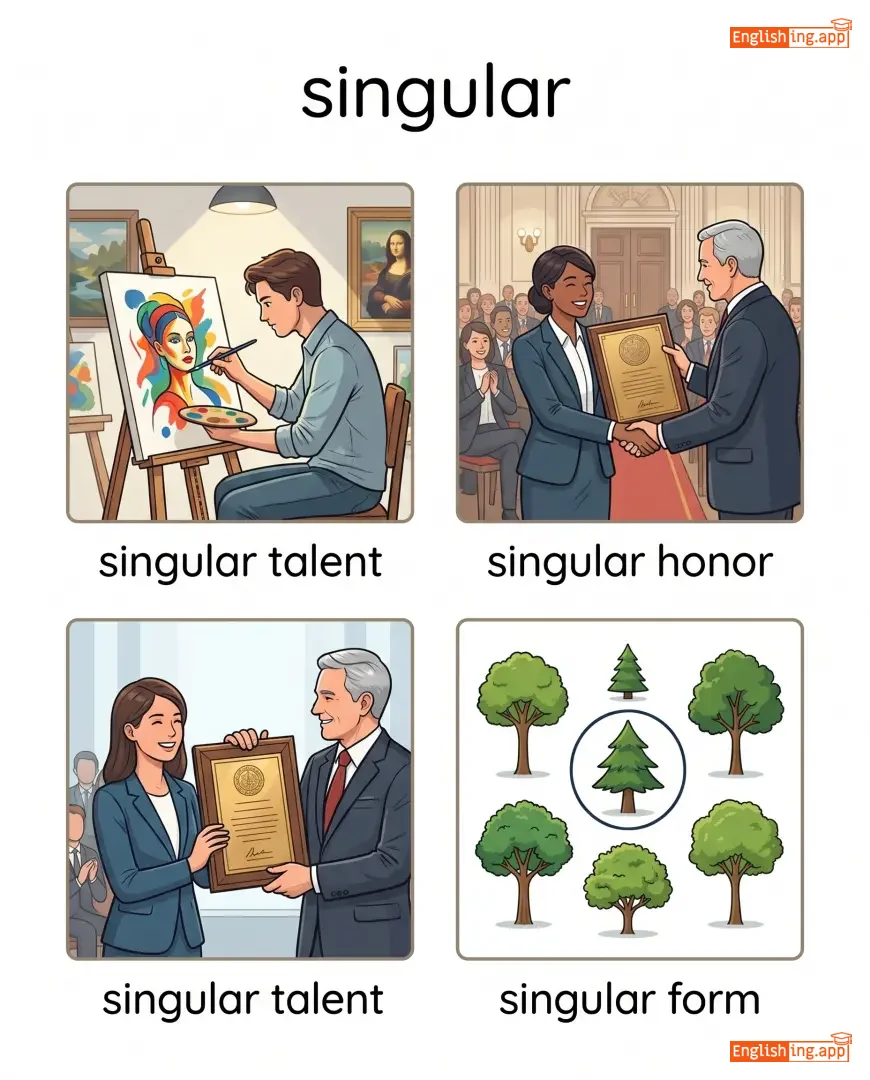
singular talent, singular honor, singular form
••••••
|
Singular = 一つで、注目すべき 🌟
••••••
|
|
#8083
🔥
|
/sɪndʒ/
verb
(シンジ)
••••••
|
- •••••• |
軽く焼く
karuku yaku
••••••
|
singed
シンジド
••••••
|
singed
シンジド
••••••
|
singes
シンジェス
••••••
|
singeing
シンジング
••••••
|
To burn something superficially or lightly, especially at the edges.
••••••
|
The fire singed his eyebrows.
火が彼の眉毛を焼きました。
••••••
|
火が彼の眉毛を焼きました。
Hi ga kare no mayuge o yakimashita.
••••••
|
- •••••• | - •••••• | - •••••• |
scorch, burn, char, sear
••••••
|
cool, extinguish
••••••
|
singe hair, singe cloth, singe the edge
••••••
|
Singe = sing + 火🔥 → 軽く焼く
••••••
|
|
#8084
🏋️
|
/ˈsɪnjuːi/
adjective
(sinyui)
••••••
|
- •••••• |
筋肉質で強い
kinnrokushitsu de tsuyoi
••••••
|
- •••••• | - •••••• | - •••••• | - •••••• |
Lean and muscular; strong and tough.
••••••
|
The athlete had a sinewy build that showed his strength. |
そのアスリートは筋肉質な体型をしており、力強さを示していた。
Sono asurīto wa kinnrokushitsu na taikei o shite ori, chikara zuyosa o shimeshite ita.
••••••
|
- •••••• | - •••••• | - •••••• |
muscular, wiry, strong, brawny
••••••
|
weak, frail
••••••
|
sinewy build, sinewy arms, sinewy frame
••••••
|
Sinewyとは筋肉質で強いという意味です – sinew + y = 筋肉でいっぱい。
••••••
|
|
#8085
🌊
|
/sɪlt/
noun
(シルト)
••••••
|
- •••••• |
シルト
shiruto
••••••
|
- •••••• | - •••••• | - •••••• | - •••••• |
Fine sand, clay, or other material carried by running water and deposited as a sediment.
••••••
|
The river deposited layers of silt along its banks.
川はその岸にシルトの層を堆積させた。
••••••
|
川はその岸にシルトの層を堆積させた。
Kawa wa sono kishi ni shiruto no sō o taiseki saseta.
••••••
|
silt up
シルトアップ
••••••
|
To become blocked or filled with silt.
••••••
|
シルトが詰まる
Shiruto ga tsumaru
••••••
|
sediment, deposit, mud, sludge, alluvium
••••••
|
rock, gravel, stone
••••••
|
river silt, fine silt, silt deposit, silt accumulation
••••••
|
SILTは川のように積もるシルトの層です。
••••••
|
|
#8086
💼
|
/ˈsaɪnɪkjʊər/
noun
(サイネキュア)
••••••
|
|
楽な仕事
rakuna shigoto
••••••
|
- •••••• | - •••••• | - •••••• | - •••••• |
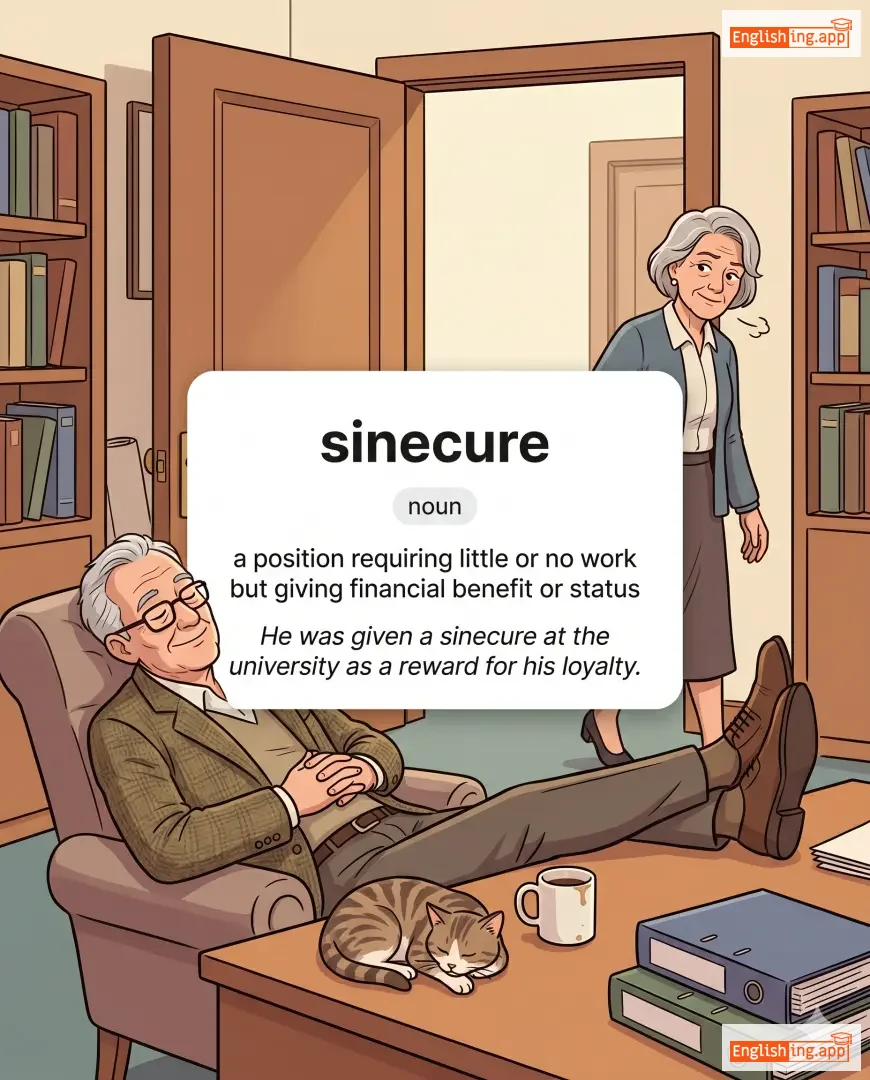
a position requiring little or no work but giving financial benefit or status
••••••
|
He was given a sinecure at the university as a reward for his loyalty. |
彼は大学で忠誠心の報酬として楽な仕事を与えられました。
Kare wa daigaku de chūseishin no hōshū to shite rakuna shigoto o ataeraremashita.
••••••
|
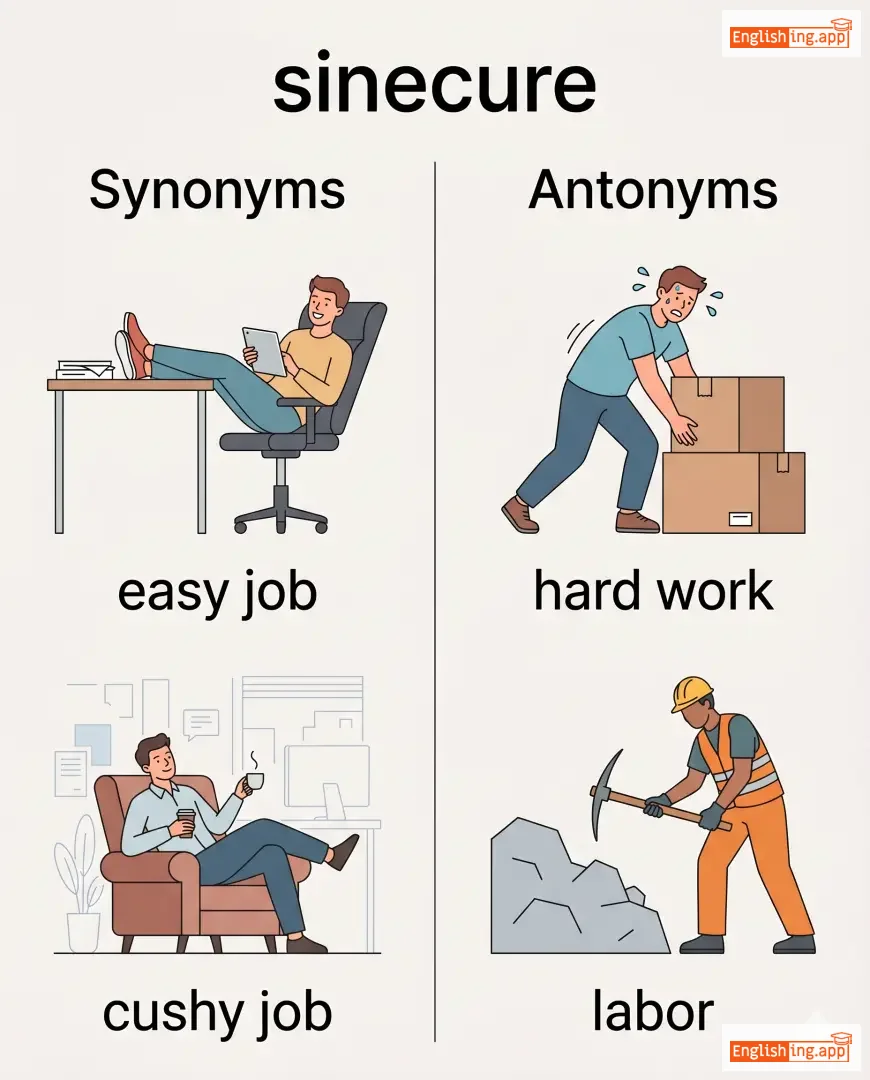
- •••••• | - •••••• | - •••••• |
easy job, cushy job, honorary position, figurehead role
••••••
|
hard work, labor, drudgery
••••••
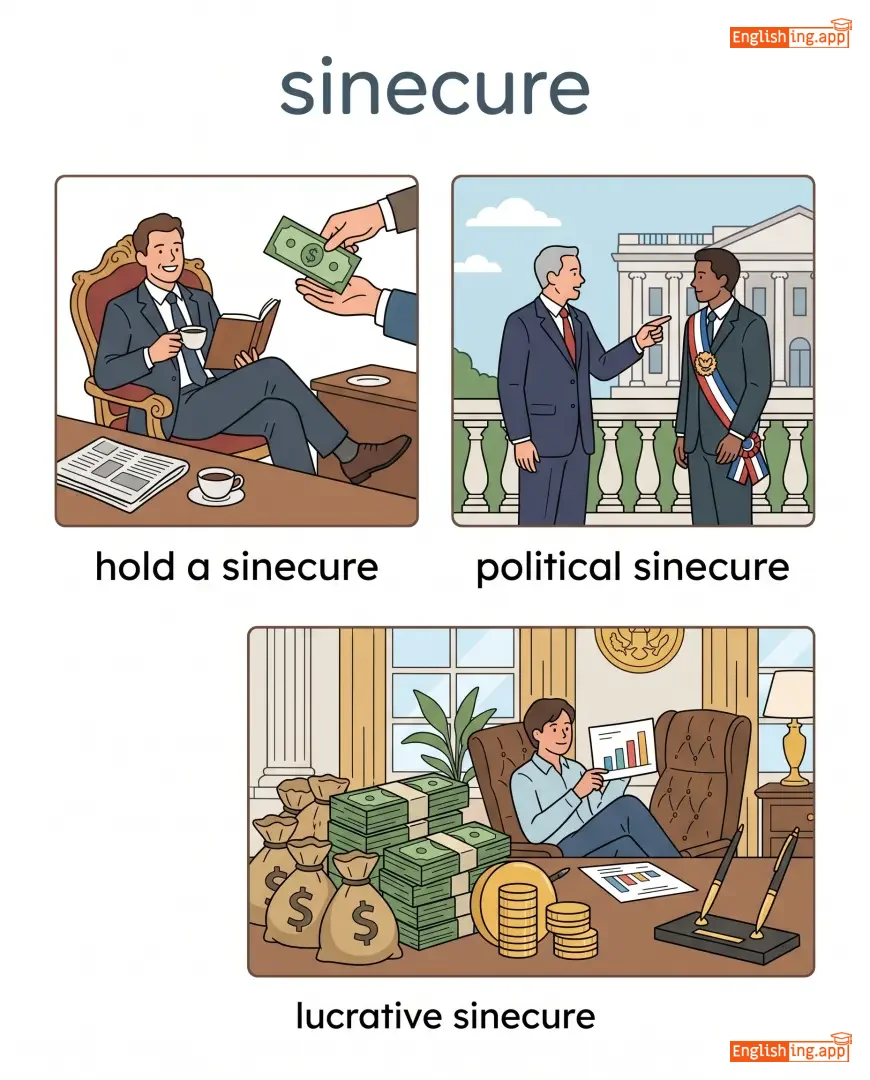
|
hold a sinecure, political sinecure, lucrative sinecure, sinecure position
••••••
|
SINE 努力なしで楽な仕事
••••••
|
|
#8087
❤️
|
/sɪnˈsɪr/
adjective
(シンシア)
••••••
|
- •••••• |
誠実
seijitsu
••••••
|
- •••••• | - •••••• | - •••••• | - •••••• |
genuine and honest; free from pretense or deceit
••••••
|
She gave a sincere apology for her mistake. |
彼女は自分の間違いに対して誠実に謝罪した。
Kanojo wa jibun no machigai ni taishite seijitsu ni shazai shita.
••••••
|
sincere thanks |
genuine gratitude without hidden motives
••••••
|
誠実な感謝
seijitsu na kansha
••••••
|
genuine, honest, heartfelt, truthful
••••••
|
insincere, fake, deceitful
••••••
|
sincere effort, sincere apology, sincere gratitude, sincere belief
••••••
|
Sincere = 誠実 (seijitsu)
••••••
|
|
#8088
⚖️
|
/sɪn/
noun, verb
(シン)
••••••
|
- •••••• |
罪
tsumi
••••••
|
sinned
シンデッド
••••••
|
sinned
シンデッド
••••••
|
sins
シンズ
••••••
|
sinning
シニン
••••••
|
an immoral act considered to be a transgression against divine law; to commit an offense against religious or moral law
••••••
|
He confessed his sin to the priest.
彼は神父に自分の罪を告白しました。
••••••
|
彼は神父に自分の罪を告白しました。
Kare wa shinpu ni jibun no tsumi wo kokuhaku shimashita.
••••••
|
fall into sin
罪に陥る
••••••
|
to commit immoral or wrong actions
••••••
|
罪に陥る
tsumi ni ochiru
••••••
|
offense, wrongdoing, crime, transgression
••••••
|
virtue, goodness, morality
••••••
|
deadly sin, confess sin, forgive sin, commit sin
••••••
|
罪 (tsumi) という音
••••••
|
|
#8089
⏱️
|
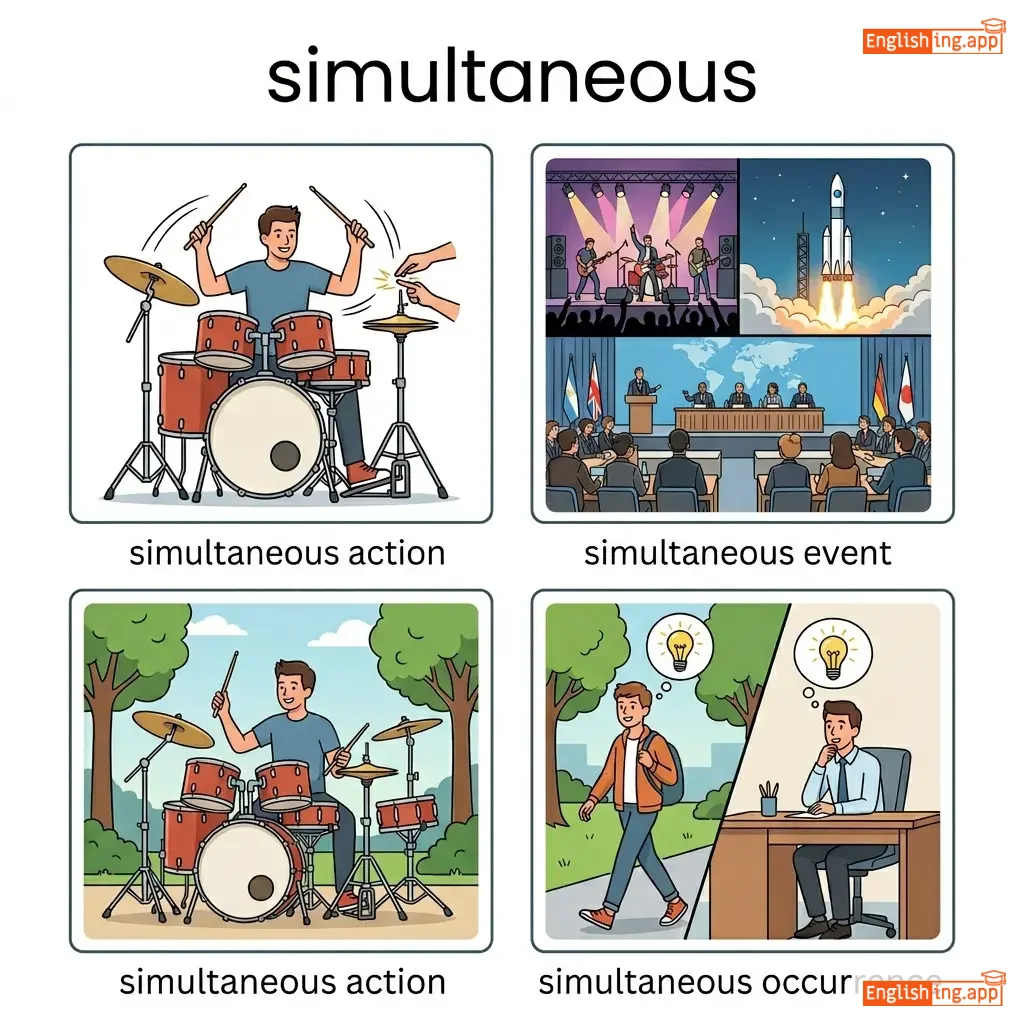
/ˌsaɪməlˈteɪniəs/
adjective
(シムルタニアス)
••••••
|
|
同時の
dōji no
••••••
|
- •••••• | - •••••• | - •••••• | - •••••• |
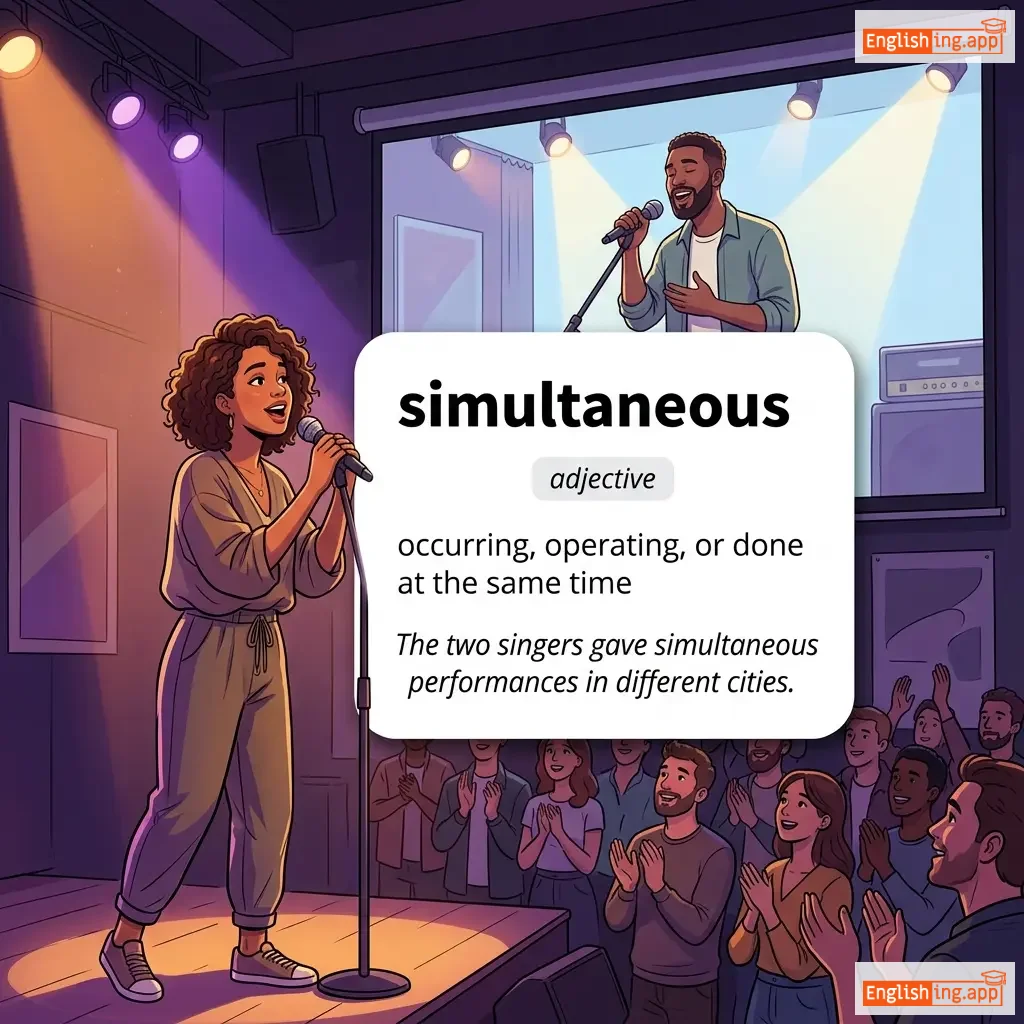
occurring, operating, or done at the same time
••••••
|
The two singers gave simultaneous performances in different cities. |
2人の歌手は異なる都市で同時にパフォーマンスを行った。
Futari no kashu wa kotonaru toshi de dōji ni pafōmansu o okonatta.
••••••
|
simultaneous equation |
a set of equations that are solved together because they share variables
••••••
|
同時方程式
dōji hōteishiki
••••••
|
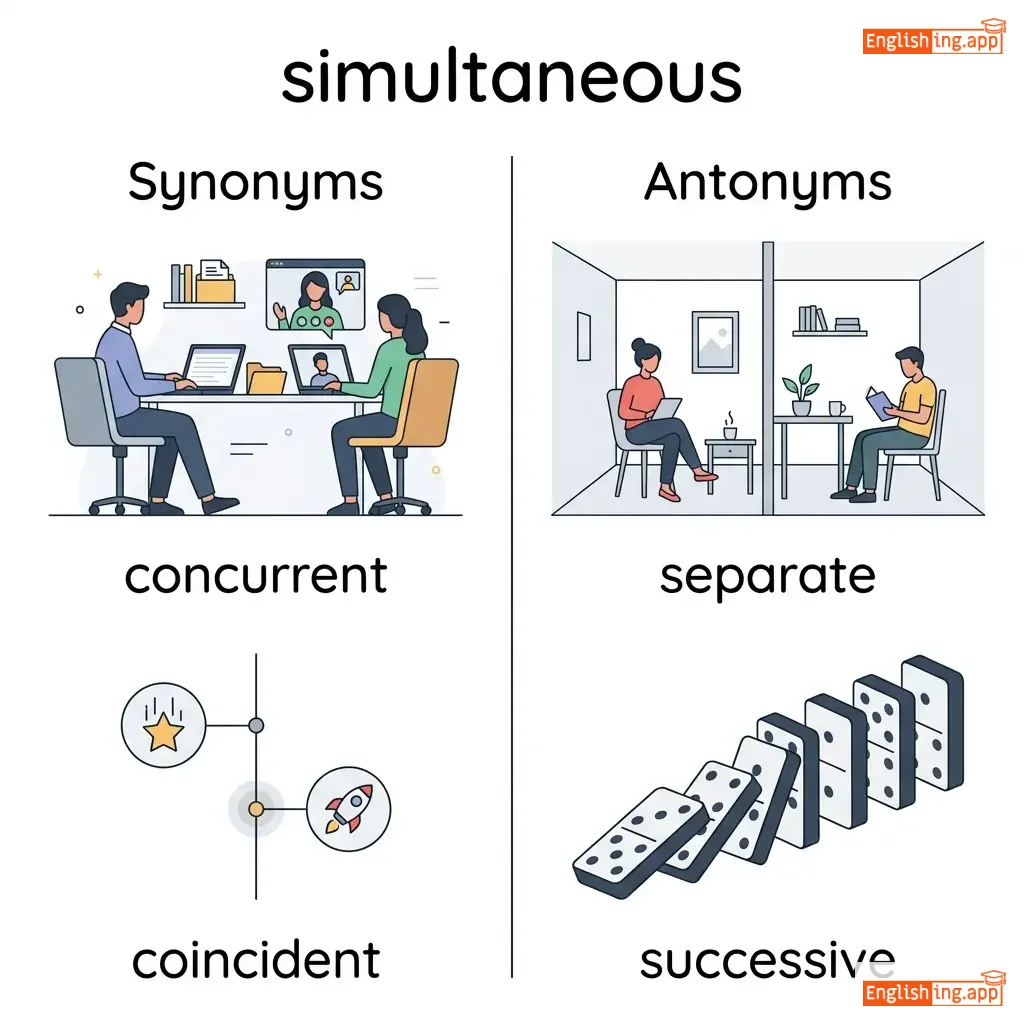
concurrent, coincident, synchronous, parallel
••••••
|
separate, successive, sequential
••••••
|
simultaneous action, simultaneous event, simultaneous occurrence, simultaneous translation
••••••
|
同時のっていうのは simultaneous のように、同じタイミングで
••••••
|
|
#8090
🎮
|
/ˈsɪmjʊˌleɪt/
verb
(シミュレート)
••••••
|
- •••••• |
シミュレート
shimyurēto
••••••
|
simulated
シミュレートされた
••••••
|
simulated
シミュレートされた
••••••
|
simulates
シミュレートする
••••••
|
simulating
シミュレートしている
••••••
|
to imitate the appearance, character, or behavior of something; to pretend or reproduce conditions artificially
••••••
|
The pilot had to simulate an emergency landing during training.
パイロットは訓練中に緊急着陸をシミュレートしなければならなかった。
••••••
|
パイロットは訓練中に緊急着陸をシミュレートしなければならなかった。
Pairotto wa kunrenchū ni kinkyū chakuriku o shimyurēto shinakereba naranakatta.
••••••
|
- •••••• | - •••••• | - •••••• |
imitate, mimic, reproduce, replicate, pretend
••••••
|
differ, real, genuine
••••••
|
simulate behavior, simulate conditions, simulate response, computer simulate
••••••
|
シミュレーターで緊急着陸をシミュレート
••••••
|
|
#8091
🗿
|
/ˌsɪmjʊˈleɪkrəm/
noun
(シミュラクラム)
••••••
|
- •••••• |
シミュラクル
shimyurakuru
••••••
|
- •••••• | - •••••• | - •••••• | - •••••• |
an image or representation of someone or something; a superficial likeness
••••••
|
The statue was only a simulacrum of the ancient god. |
その像は古代の神のシミュラクルに過ぎなかった。
Sono zou wa kodai no kami no shimyurakuru ni suginakatta.
••••••
|
- •••••• | - •••••• | - •••••• |
likeness, image, representation, copy, semblance
••••••
|
original, reality, truth
••••••
|
mere simulacrum, create a simulacrum, simulacrum of
••••••
|
SIMUlatorで作られるのはすべてシミュラクル(シミュラクル)です。
••••••
|
|
#8092
🔍
|
/sɪmˈplɪstɪk/
adjective
(シンプリスティック)
••••••
|
- •••••• |
過度に単純化された
kado ni tanjunkan sareta
••••••
|
- •••••• | - •••••• | - •••••• | - •••••• |
treating complex issues as if they were much simpler than they really are
••••••
|
His explanation was too simplistic and ignored key details.
His explanation was too simplistic and ignored key details.
••••••
|
彼の説明は過度に単純化されており、重要な詳細を無視していました。
Kare no setsumei wa kado ni tanjunkan sarete ori, jūyōna shōsai o mushi shite imashita.
••••••
|
- •••••• | - •••••• | - •••••• |
oversimplified, naive, shallow, superficial
••••••
|
complex, detailed, thorough
••••••
|
simplistic view, simplistic approach, overly simplistic
••••••
|
Simplisticは物事を単純化しすぎて真実を失うことです。
••••••
|
|
#8093
📝
|
/ˈsɪmplɪˌfaɪ/
verb
(シンプルファイ)
••••••
|
|
簡素化する
kansoka suru
••••••
|
simplified
シンプルファイド
••••••
|
simplified
シンプルファイド
••••••
|
simplifies
シンプルファイズ
••••••
|
simplifying
シンプルファイング
••••••
|
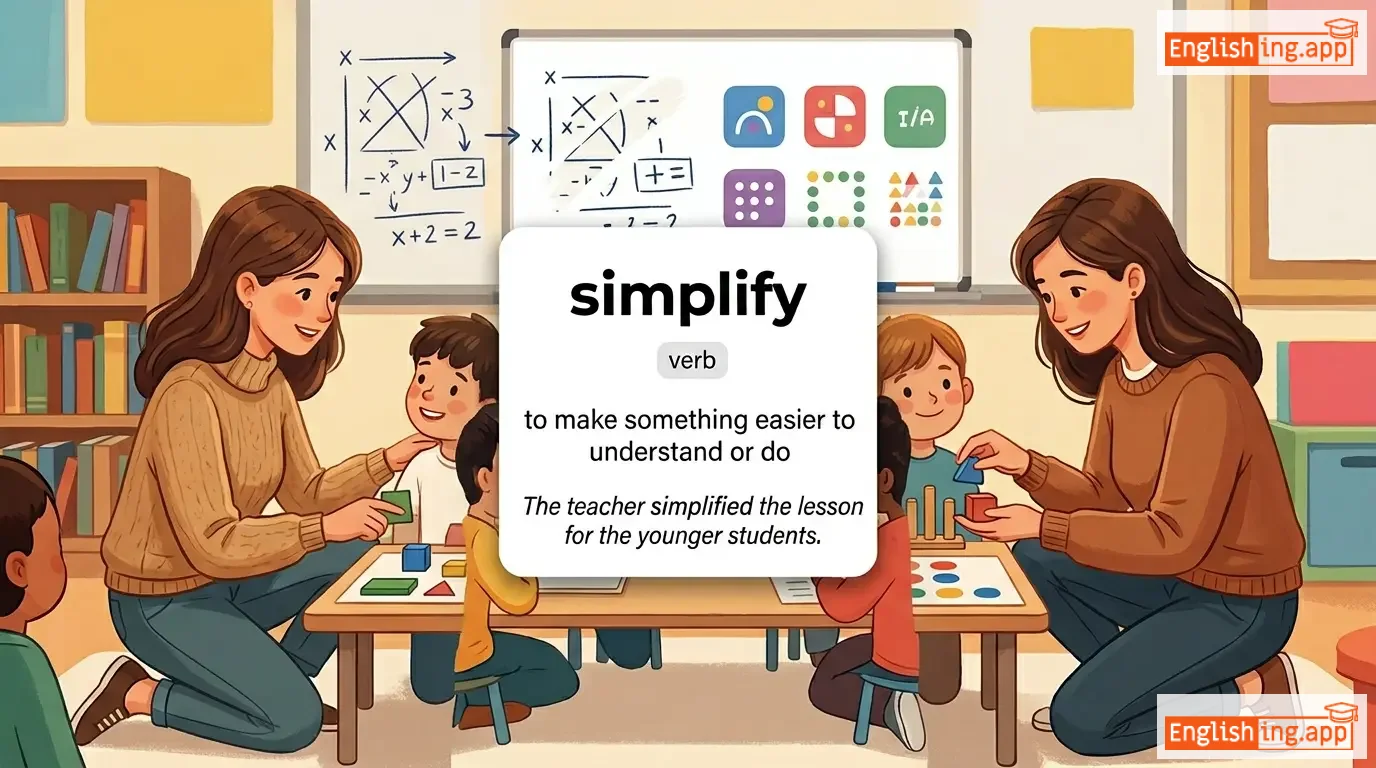
to make something easier to understand or do
••••••
|
The teacher simplified the lesson for the younger students.
先生は若い生徒のために授業を簡素化しました。
••••••
|
先生は若い生徒のために授業を簡素化しました。
Sensei wa wakai seito no tame ni jugyou o kansoka shimashita.
••••••
|
- •••••• | - •••••• | - •••••• |
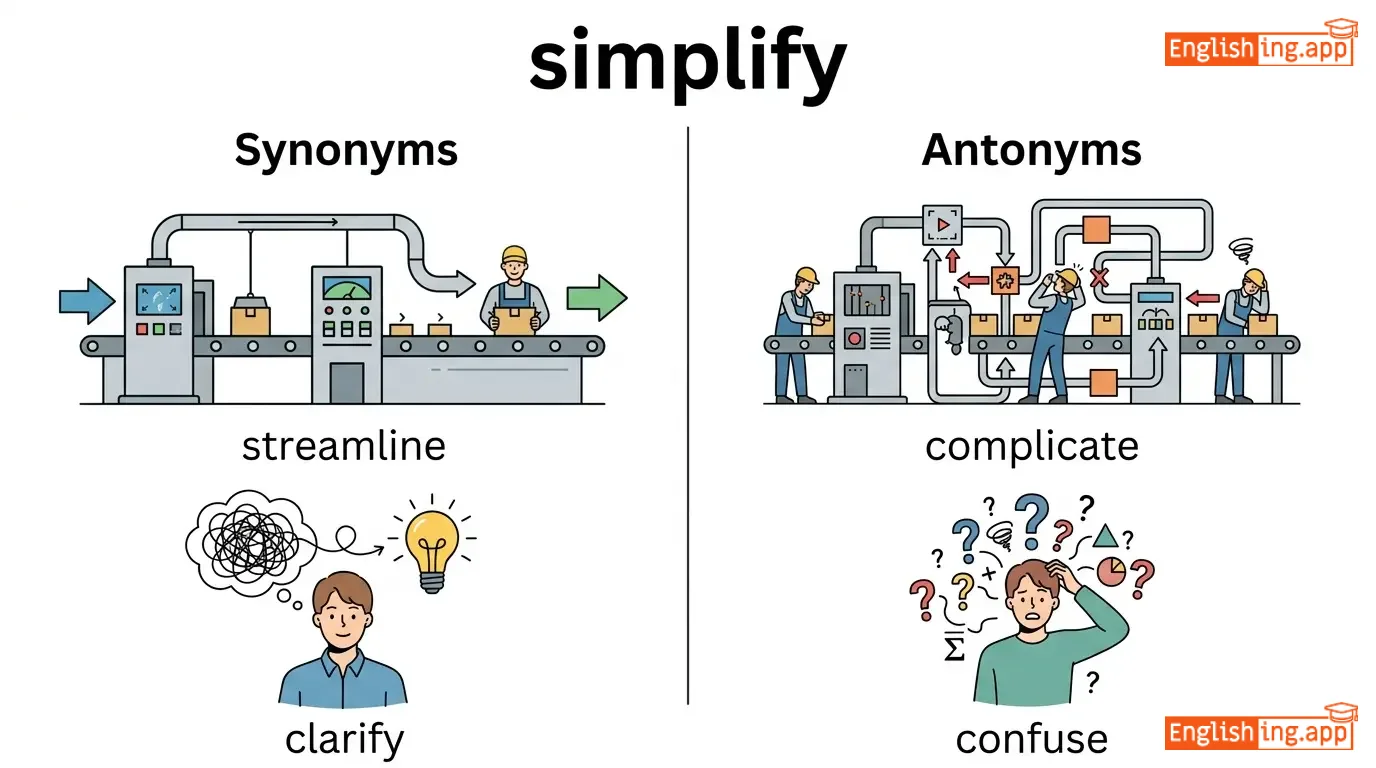
streamline, clarify, ease, reduce
••••••
|
complicate, confuse, perplex
••••••
|
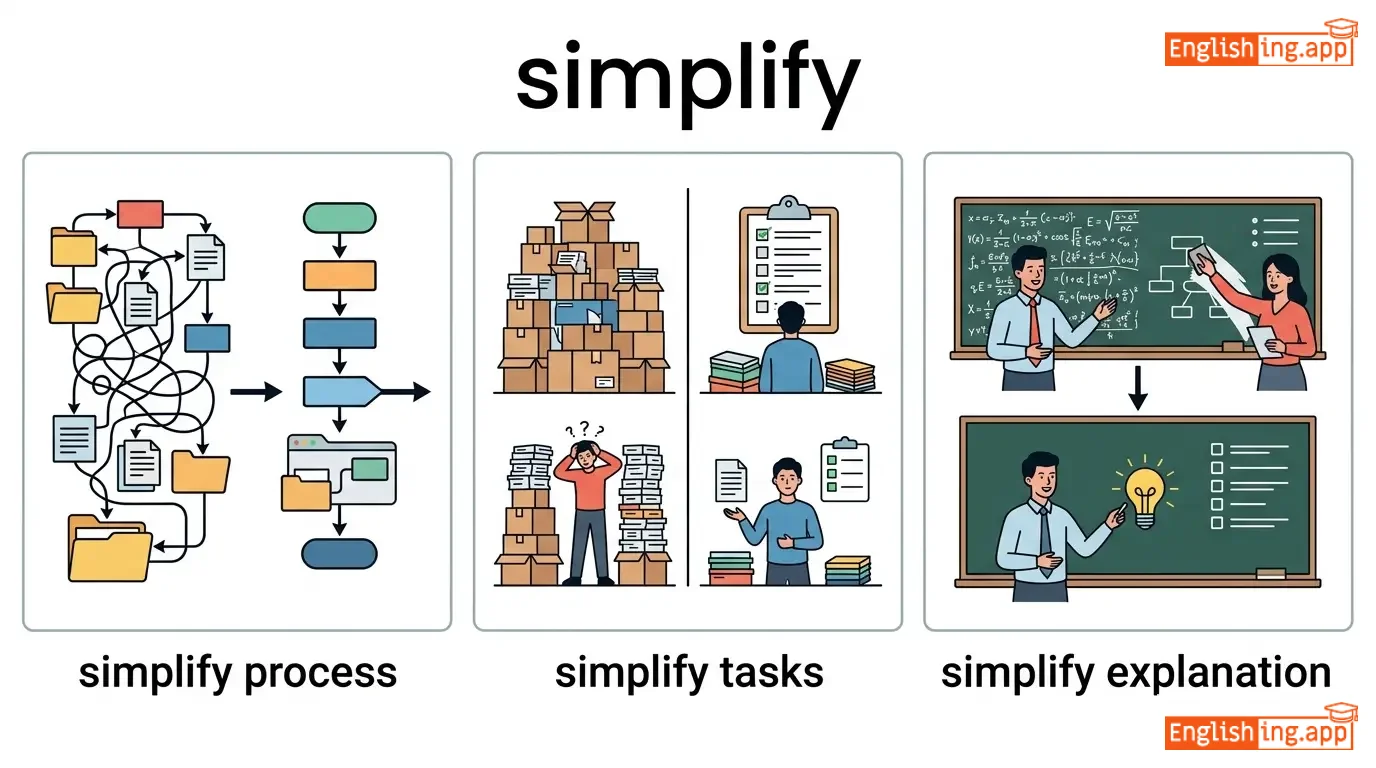
simplify process, simplify tasks, simplify explanation
••••••
|
SIMple + fi = 簡素化する、何かを簡単にする意味
••••••
|
|
#8094
🤪
|
/ˈsɪmpəltən/
noun
(シンプルトン)
••••••
|
- •••••• |
おバカさん
obakasan
••••••
|
- •••••• | - •••••• | - •••••• | - •••••• |
a foolish or gullible person
••••••
|
They treated him like a simpleton who could not understand anything complex. |
彼らは彼を、何も複雑なことが理解できないおバカさんのように扱いました。
Karera wa kare o, nanimo fukuzatsu na koto ga rikai dekinai obakasan no yō ni atsukaimashita.
••••••
|
- •••••• | - •••••• | - •••••• |
fool, dolt, idiot, nincompoop, dunce
••••••
|
genius, intellect, sage
••••••
|
act like a simpleton, foolish simpleton, naive simpleton
••••••
|
Simpleton = Simple + おバカさん、つまり愚かな人
••••••
|
|
#8095
😊
|
/ˈsɪmpər/
verb
(シンパー)
••••••
|
- •••••• |
不自然に笑う
fushizen ni warau
••••••
|
simpered
シンパード
••••••
|
simpered
シンパード
••••••
|
simpers
シンパーズ
••••••
|
simpering
シンパリング
••••••
|
to smile in a silly, self-conscious, or affected way
••••••
|
She simpered at his compliment, clearly embarrassed.
彼女は彼の褒め言葉にシンパードし、明らかに恥ずかしそうだった。
••••••
|
彼女は彼の褒め言葉に不自然に笑い、明らかに恥ずかしそうだった。
Kanojo wa kare no homekotoba ni fushizen ni warai, akiraka ni hazukashisou datta.
••••••
|
- •••••• | - •••••• | - •••••• |
smirk, grin, beam, leer, giggle
••••••
|
frown, glare, scowl
••••••
|
simper foolishly, simper nervously, simper shyly
••••••
|
SIMカードで不自然に笑う、シンパーみたいに。
••••••
|
|
#8096
🪞
|
/sɪˈmɪlɪˌtjuːd/
noun
(シミリチュード)
••••••
|
- •••••• |
類似性
ruizisei
••••••
|
- •••••• | - •••••• | - •••••• | - •••••• |
The quality or state of being similar; resemblance or likeness.
••••••
|
There is a striking similitude between the two paintings. |
この二つの絵の間には顕著な類似性があります。
Kono futatsu no e no aida ni wa kencho na ruizisei ga arimasu.
••••••
|
- •••••• | - •••••• | - •••••• |
likeness, resemblance, similarity, analogy
••••••
|
difference, contrast, dissimilarity
••••••
|
striking similitude, close similitude, remarkable similitude
••••••
|
SIMILITUDEは類似性を意味します—SIMILAR attitudeがSIMILITUDEに導きます。
••••••
|
|
#8097
✨
|
/ˈsɪməli/
noun
(シミリー)
••••••
|
|
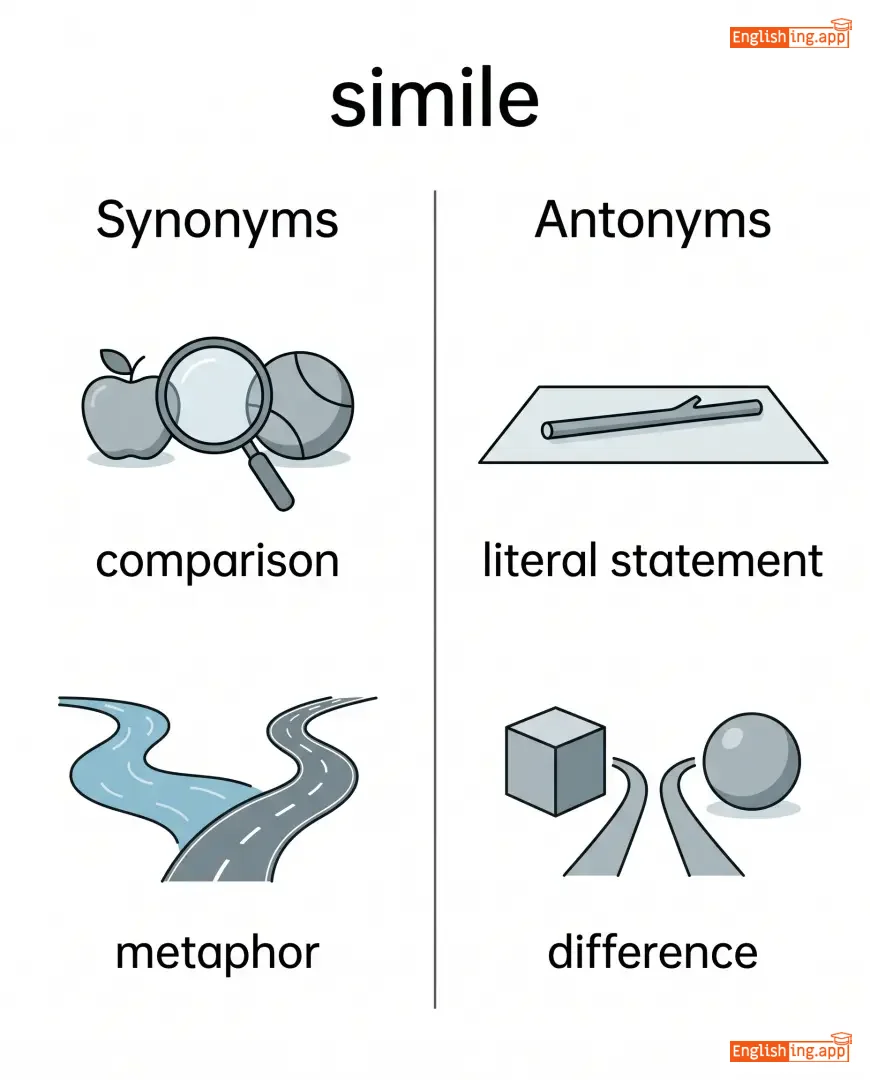
直喩
chokuyu
••••••
|
- •••••• | - •••••• | - •••••• | - •••••• |
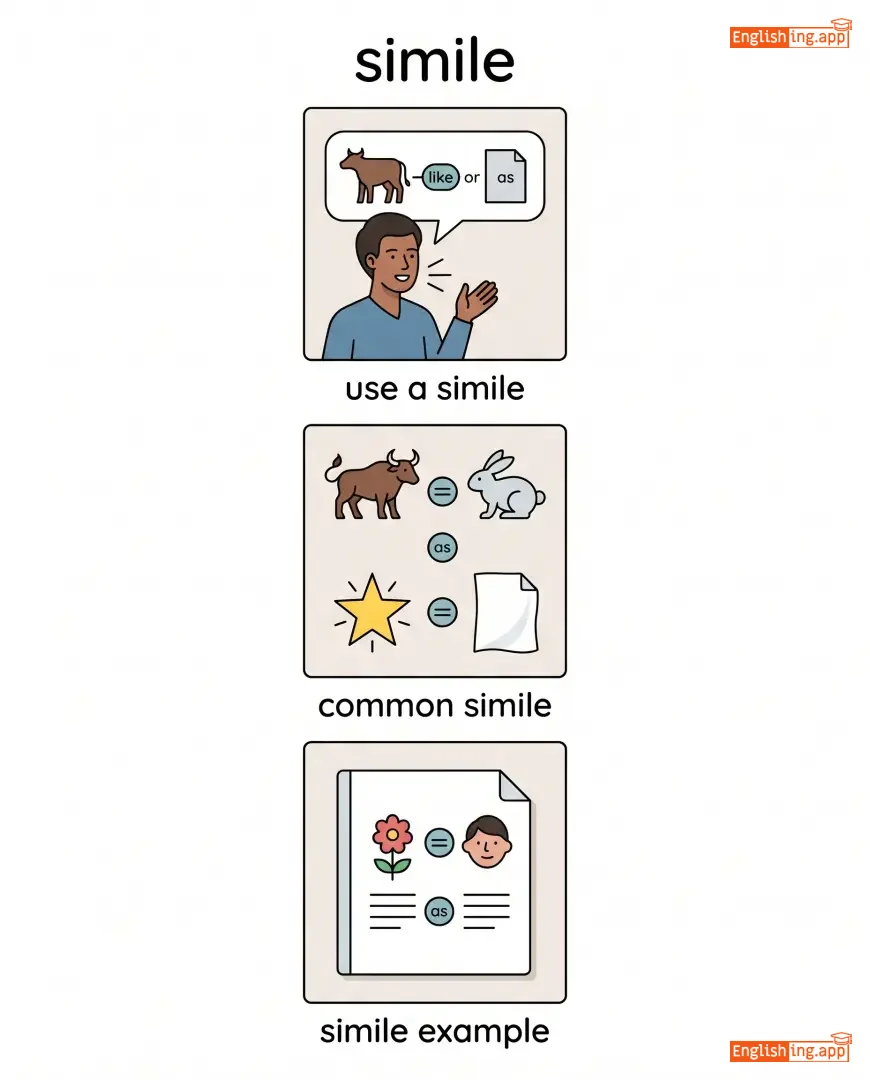
A figure of speech involving the comparison of one thing with another using 'like' or 'as'.
••••••
|
She used a simile to describe her eyes as bright as stars. |
彼女は自分の目を星のように明るいと表現するために直喩を使いました。
Kanojo wa jibun no me o hoshi no yō ni akarui to hyōgen suru tame ni chokuyu o tsukaimashita.
••••••
|
- •••••• | - •••••• | - •••••• |
comparison, metaphor, analogy, resemblance
••••••
|
literal statement, difference
••••••
|
use a simile, common simile, simile example
••••••
|
SIMILE は直喩を意味します:SIMILAR + ように
••••••
|
|
#8098
🔄
|
/ˈsɪmɪlər/
adjective
(シミラー)
••••••
|
- •••••• |
似ている
niteru
••••••
|
- •••••• | - •••••• | - •••••• | - •••••• |
Having a resemblance in appearance, character, or quantity, without being identical.
••••••
|
The twins wore similar clothes to the party. |
双子はパーティーで似たような服を着ていました。
Futago wa pātī de nita yō na fuku o kiteimashita.
••••••
|
similar to |
Having a likeness or resemblance to something.
••••••
|
~に似ている
~ni niteiru
••••••
|
alike, comparable, related, akin, resembling
••••••
|
different, dissimilar, unlike
••••••
|
similar case, similar result, similar style, similar appearance
••••••
|
SIMILARは似ているという意味で、'似ている'の日本語と同じです。
••••••
|
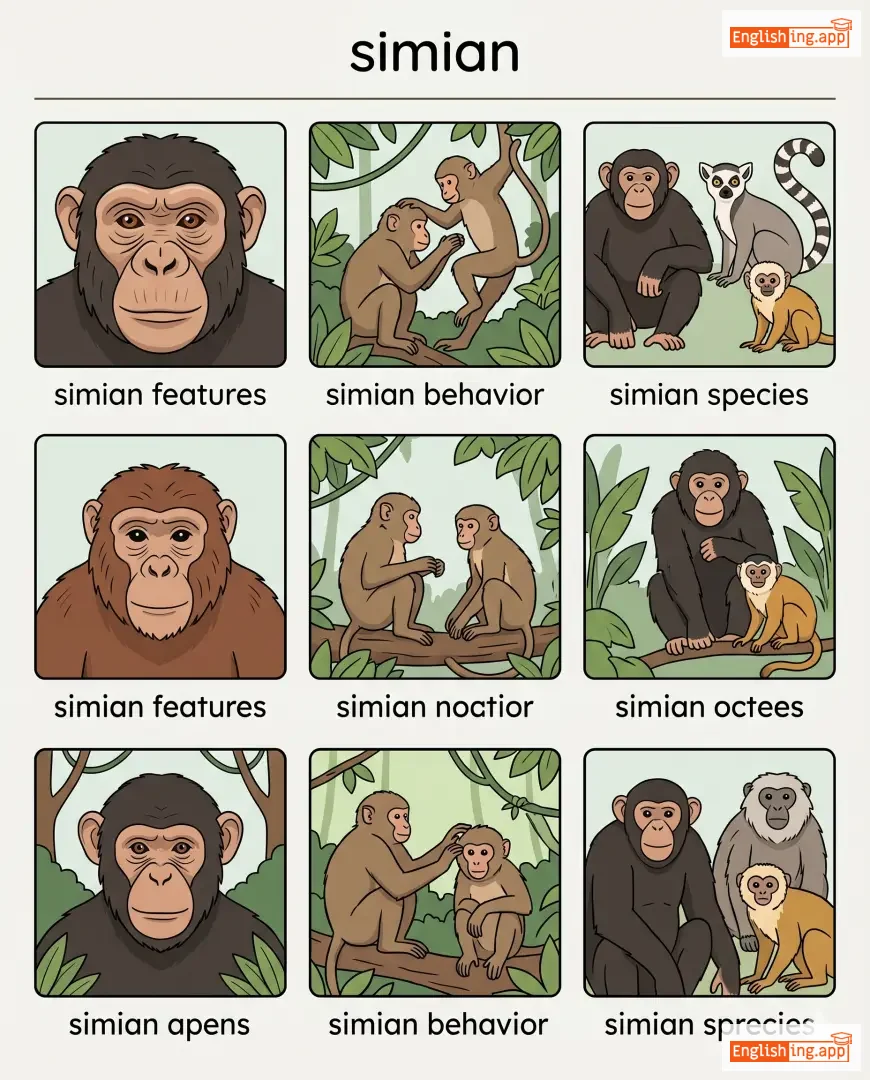
|
#8099
🐒
|
/ˈsɪmiən/
adjective
(シミアン)
••••••
|
|
類人猿の
ruijin'en no
••••••
|
- •••••• | - •••••• | - •••••• | - •••••• |
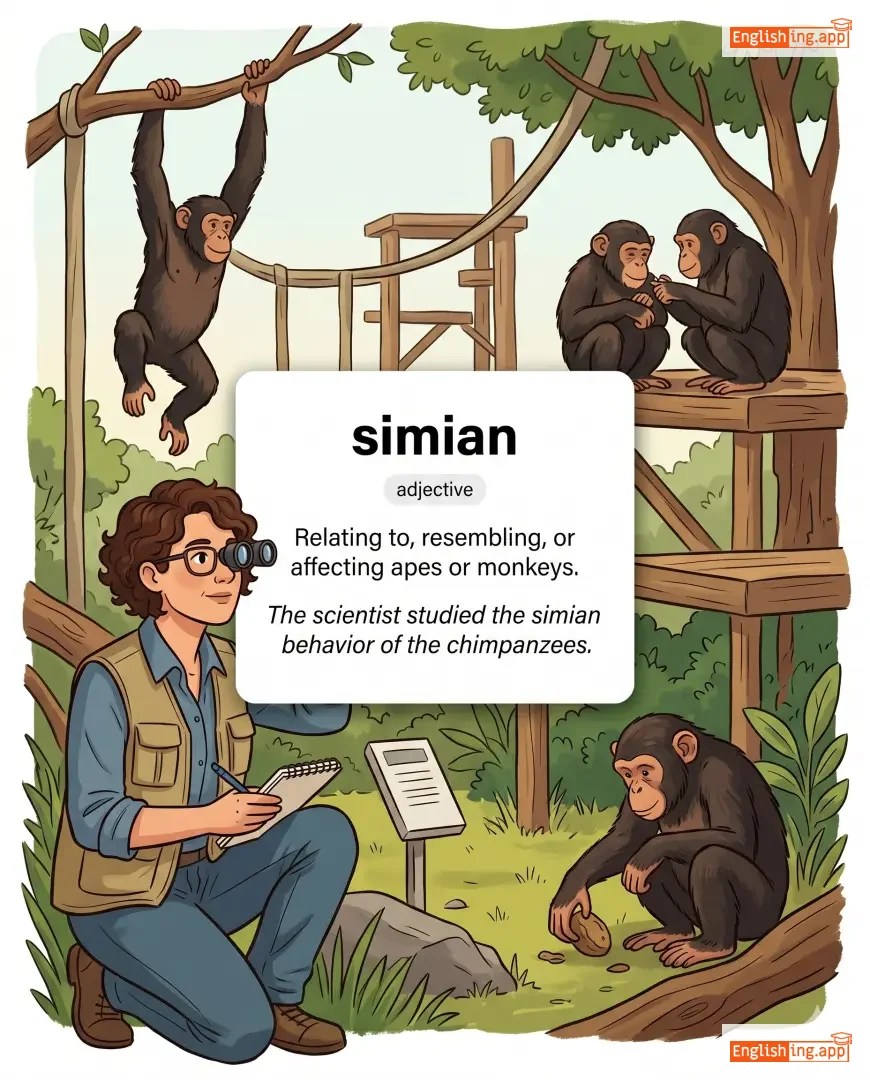
Relating to, resembling, or affecting apes or monkeys.
••••••
|
The scientist studied the simian behavior of the chimpanzees. |
科学者はチンパンジーの類人猿の行動を研究した。
Kagakusha wa chinpanjī no ruijin'en no kōdō o kenkyū shita.
••••••
|
- •••••• | - •••••• | - •••••• |
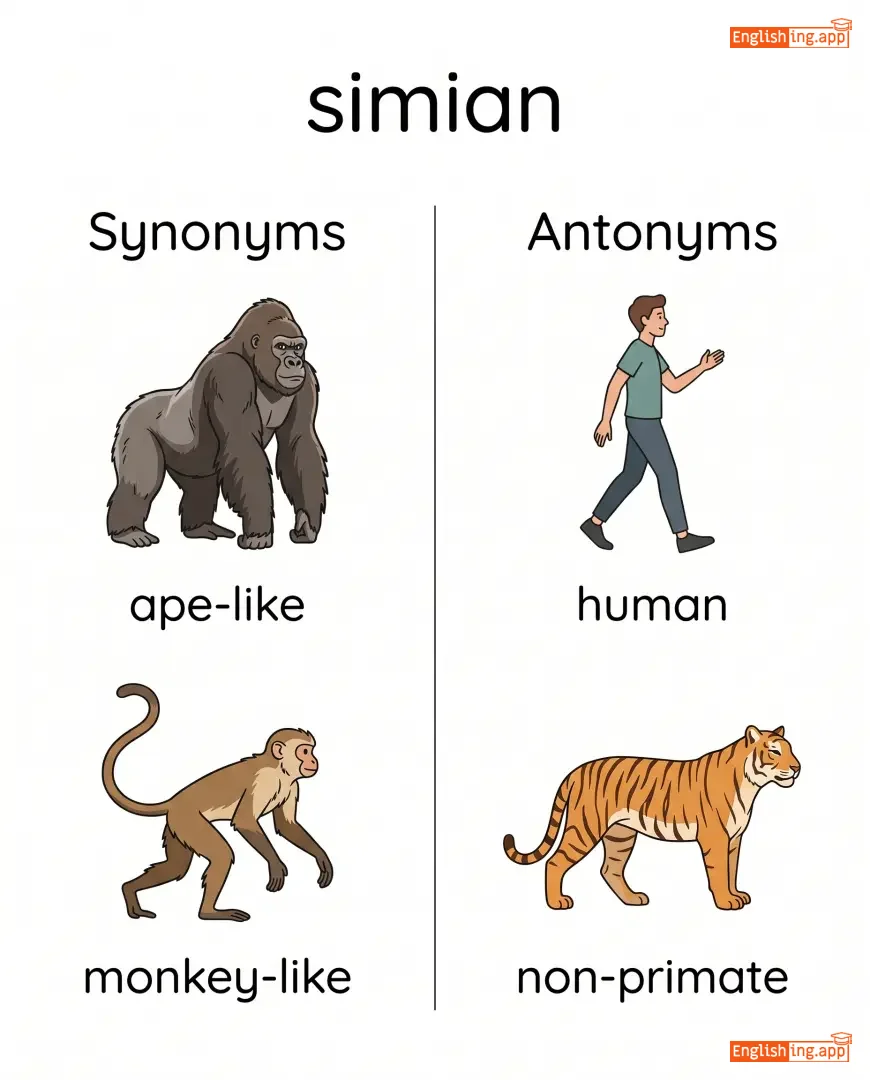
ape-like, monkey-like, primate, anthropoid
••••••
|
human, non-primate, inhuman
••••••
|
simian features, simian behavior, simian species
••••••
|
SIMIAN は SIM と似ているので、SIMカードを持つサルを想像してみてください!
••••••
|
Vocabulary Quiz
Test your vocabulary by matching words with their translations or meanings.
Login to take the quiz
Comments (0)
Share your thoughts and join the discussion.
Join the discussion by logging in
Login to CommentNo comments yet
Be the first to share your thoughts!