

翻訳
過去
過去分詞
三人称単数
動名詞
意味
例文
例文の翻訳
同義語
対義語
コロケーション
ニーモニック

Swipe left or right, or use the buttons. Tap image to zoom.
例文の翻訳
単語
Lesson 266Lesson 266 - マスクトグル
|
絵文字
|
単語 | Images | 翻訳 | 過去 | 過去分詞 | 三人称単数 | 動名詞 | 意味 | 例文 | 例文の翻訳 | 表現例 | 表現例の意味 | 表現例の翻訳 | 同義語 | 対義語 | コロケーション | ニーモニック |
|---|---|---|---|---|---|---|---|---|---|---|---|---|---|---|---|---|---|
|
#7950
📜
|
/ˈsɛntəns/
noun, verb
(センテンス)
••••••
|
- •••••• |
文; 刑期
bun; keiki
••••••
|
sentenced
センテンスド
••••••
|
sentenced
センテンスド
••••••
|
sentences
センテンスズ
••••••
|
sentencing
センテンスイング
••••••
|
A set of words that expresses a complete thought; or a punishment given by a court of law.
••••••
|
The judge gave him a five-year prison sentence.
裁判官は彼に5年間の刑期を与えました。
••••••
|
裁判官は彼に5年間の刑期を与えました。
Saibankan wa kare ni go-nenkan no keiki o ataemashita.
••••••
|
serve a sentence
刑期を終える
••••••
|
to spend time in prison as ordered by a court
••••••
|
刑期を終える
keiki o oeru
••••••
|
judgment, ruling, phrase, clause, punishment
••••••
|
acquittal, freedom
••••••
|
long sentence, short sentence, prison sentence, death sentence
••••••
|
Sentence は文や刑期を意味します。どちらも最後にピリオドがつきます!
••••••
|
|
#7951
🎬
|
/ˈsiːkwəl/
noun
(シークウェル)
••••••
|
- •••••• |
続編
zokuhen
••••••
|
- •••••• | - •••••• | - •••••• | - •••••• |
A published, broadcast, or recorded work that continues the story or develops the theme of an earlier one.
••••••
|
The movie's sequel was even more successful than the original. |
映画の続編はオリジナルよりもさらに成功した。
Eiga no zokuhen wa orijinaru yori mo sara ni seikō shita.
••••••
|
- •••••• | - •••••• | - •••••• |
continuation, follow-up, next installment, spin-off
••••••
|
prequel, origin
••••••
|
movie sequel, book sequel, successful sequel, sequel to
••••••
|
続編:物語の次の部分、映画や本の次の章のようなもの。
••••••
|
|
#7952
🙇
|
/sɪˈkweɪʃəs/
adjective
(シクウェイシャス)
••••••
|
- •••••• |
盲目的に従う
mōmokuteki ni shitagau
••••••
|
- •••••• | - •••••• | - •••••• | - •••••• |
Lacking independence of thought; blindly following.
••••••
|
The sequacious students never questioned their teacher's opinions. |
シクウェイシャスな学生は、教師の意見に疑問を呈することはありませんでした。
Shikweishasu na gakusei wa, kyōshi no iken ni gimon o teishutsu suru koto wa arimasen deshita.
••••••
|
- •••••• | - •••••• | - •••••• |
submissive, obedient, compliant, dependent, servile
••••••
|
independent, critical, rebellious
••••••
|
sequacious mind, sequacious attitude, sequacious behavior, sequacious follower
••••••
|
Sequaciousは「シークエンス」に似ており、考えずにただ従うことを意味します。
••••••
|
|
#7953
🌑
|
/səˈpʌlkrəl/
adjective
(セプルクラル)
••••••
|
- •••••• |
墓に関連する、陰気な
haka ni kanren suru, inki na
••••••
|
- •••••• | - •••••• | - •••••• | - •••••• |
Relating to a tomb or burial; gloomy, dismal.
••••••
|
The abandoned house had a sepulchral silence about it.
放棄された家にはセプルクラルな静けさが漂っていた。
••••••
|
放棄された家には墓のような静けさが漂っていた。
Hōki sareta ie ni wa haka no yō na shizukesa ga tadayotte ita.
••••••
|
- •••••• | - •••••• | - •••••• |
gloomy, funereal, somber, dismal, mournful
••••••
|
cheerful, lively, bright
••••••
|
sepulchral silence, sepulchral voice, sepulchral atmosphere, sepulchral tone
••••••
|
Sepulchralはsepulcher(墓)から来ており、暗く重い雰囲気を持つ。
••••••
|
|
#7954
⚰️
|
/ˈsɛpəlkər/
noun
(sepulker)
••••••
|
- •••••• |
墓室
boku shitsu
••••••
|
- •••••• | - •••••• | - •••••• | - •••••• |
A small room or monument, cut in rock or built of stone, in which a dead person is buried.
••••••
|
The ancient king was laid to rest in a grand sepulcher. |
古代の王は大きな墓室に埋葬されました。
Kodai no ō wa ōkina boku shitsu ni maizō saremashita.
••••••
|
- •••••• | - •••••• | - •••••• |
tomb, grave, mausoleum, crypt, burial chamber
••••••
|
home, dwelling, shelter
••••••
|
grand sepulcher, royal sepulcher, stone sepulcher, ancient sepulcher
••••••
|
Sepulcherは日本語で‘墓室’に似て、埋葬場所を示します。
••••••
|
|
#7955
🦠
|
/ˈsɛptɪk/
adjective
(セプティック)
••••••
|
- •••••• |
感染した
kansen shita
••••••
|
- •••••• | - •••••• | - •••••• | - •••••• |
Infected with harmful bacteria; relating to or causing infection.
••••••
|
The doctor treated the patient's septic wound immediately. |
医者は患者のセプティックな傷をすぐに治療しました。
Isha wa kanja no septikku na kizu o sugu ni chiryo shimashita.
••••••
|
- •••••• | - •••••• | - •••••• |
infected, contaminated, putrid, toxic, diseased
••••••
|
sterile, clean, pure
••••••
|
septic wound, septic infection, septic tank, septic shock
••••••
|
Septicは汚れた水や感染を意味し、汚い傷と関連しています。
••••••
|
|
#7956
7️⃣
|
/sɛpˈtɛnɪəl/
adjective
(セプテニアル)
••••••
|
- •••••• |
7年ごとの
7 nen goto no
••••••
|
- •••••• | - •••••• | - •••••• | - •••••• |
Occurring every seven years.
••••••
|
The festival is a septennial tradition in the village. |
その祭りは村で7年ごとの伝統です。
Sono matsuri wa mura de 7 nen goto no dentou desu.
••••••
|
- •••••• | - •••••• | - •••••• |
seven-yearly, periodic, cyclical
••••••
|
annual, perpetual
••••••
|
septennial festival, septennial event, septennial celebration
••••••
|
Septennial = '9月' + '年次'の連想で、7年ごとのイベントを思い出す。
••••••
|
|
#7957
🚩
|
/ˈsɛpərətɪst/
noun
(セパラティスト)
••••••
|
- •••••• |
分離主義者
bunrishugisha
••••••
|
- •••••• | - •••••• | - •••••• | - •••••• |
A person who supports the separation of a group from a larger body, often for political or cultural independence.
••••••
|
The separatist group demanded independence from the central government. |
分離主義者グループは中央政府からの独立を要求した。
Bunrishugisha gurūpu wa chūō seifu kara no dokuritsu o yōkyū shita.
••••••
|
- •••••• | - •••••• | - •••••• |
dissenter, nationalist, rebel, secessionist
••••••
|
unionist, loyalist
••••••
|
separatist movement, separatist group, separatist leader
••••••
|
分離主義者 = 分ける、'Separate list' = グループを分ける。
••••••
|
|
#7958
↔️
|
/ˈsɛpəˌreɪt/
verb
(セパレート)
••••••
|
- •••••• |
分ける
wakeru
••••••
|
separated
セパレーテッド
••••••
|
separated
セパレーテッド
••••••
|
separates
セパレーツ
••••••
|
separating
セパレーティング
••••••
|
To cause to move or be apart; to divide into distinct elements.
••••••
|
The teacher separated the students into groups.
教師は学生をグループに分けました。
••••••
|
教師は学生をグループに分けました。
Kyoushi wa gakusei wo guruupu ni wakemashita.
••••••
|
separate the wheat from the chaff
穀物とわらを分ける
••••••
|
To distinguish what is valuable or useful from what is worthless.
••••••
|
価値のあるものと価値のないものを分ける
Kachi no aru mono to kachi no nai mono wo wakeru
••••••
|
divide, split, detach, isolate, disconnect
••••••
|
unite, combine, connect
••••••
|
separate rooms, separate ways, separate from, separate into groups
••••••
|
分ける = '分ける', 'We care' = 分ける。
••••••
|
|
#7959
✂️
|
/ˈsɛpərəbəl/
adjective
(セパラブル)
••••••
|
- •••••• |
分離可能な
bunri kanō na
••••••
|
- •••••• | - •••••• | - •••••• | - •••••• |
Capable of being separated or divided.
••••••
|
The two issues are separable and should be discussed independently. |
この二つの問題は分離可能であり、独立して議論されるべきです。
Kono futatsu no mondai wa bunri kanō de ari, dokuritsu shite giron sareru beki desu.
••••••
|
- •••••• | - •••••• | - •••••• |
divisible, detachable, distinct, breakable
••••••
|
inseparable, indivisible
••••••
|
separable elements, separable parts, separable factors
••••••
|
Separableは'分離可能'という意味です。'分ける'と'able'を覚えておきましょう。
••••••
|
|
#7960
🪖
|
/ˈsɛntɪnəl/
noun
(センティネル)
••••••
|
- •••••• |
衛兵
eibei
••••••
|
- •••••• | - •••••• | - •••••• | - •••••• |
A soldier or guard whose job is to stand and keep watch.
••••••
|
A sentinel stood at the entrance of the camp. |
一人の衛兵がキャンプの入り口に立っていた。
Hitori no eibei ga kyanpu no iriguchi ni tatte ita.
••••••
|
stand sentinel |
To act as a guard or watchman.
••••••
|
衛兵として立つ
eibei toshite tatsu
••••••
|
guard, watchman, sentry, lookout, protector
••••••
|
intruder, enemy, attacker
••••••
|
sentinel post, sentinel duty, act as sentinel, stand sentinel
••••••
|
衛兵は守る役目、‘セ’=‘守’‘テ’=‘兵’のように覚える。
••••••
|
|
#7961
💖
|
/ˌsɛntɪˈmɛntəl/
adjective
(センチメンタル)
••••••
|
- •••••• |
センチメンタル
senchimentaru
••••••
|
- •••••• | - •••••• | - •••••• | - •••••• |
Having or showing tender, emotional feelings, often excessively.
••••••
|
She kept the old letters for sentimental reasons. |
彼女は感傷的な理由で古い手紙を取っておいた。
Kanojo wa kanshō-teki na riyū de furui tegami o totte oita.
••••••
|
sentimental value |
the personal emotional significance of something, regardless of its material worth
••••••
|
感傷的な価値
kanshō-teki na kachi
••••••
|
emotional, affectionate, nostalgic, tender
••••••
|
practical, unsentimental
••••••
|
sentimental value, sentimental attachment, sentimental reasons
••••••
|
Sentimental のように、過去のものを感情的に大切にする気持ち。
••••••
|
|
#7962
👁️
|
/ˈsɛnʃənt/
adjective
(センティエント)
••••••
|
|
感覚的
kankakuteki
••••••
|
- •••••• | - •••••• | - •••••• | - •••••• |
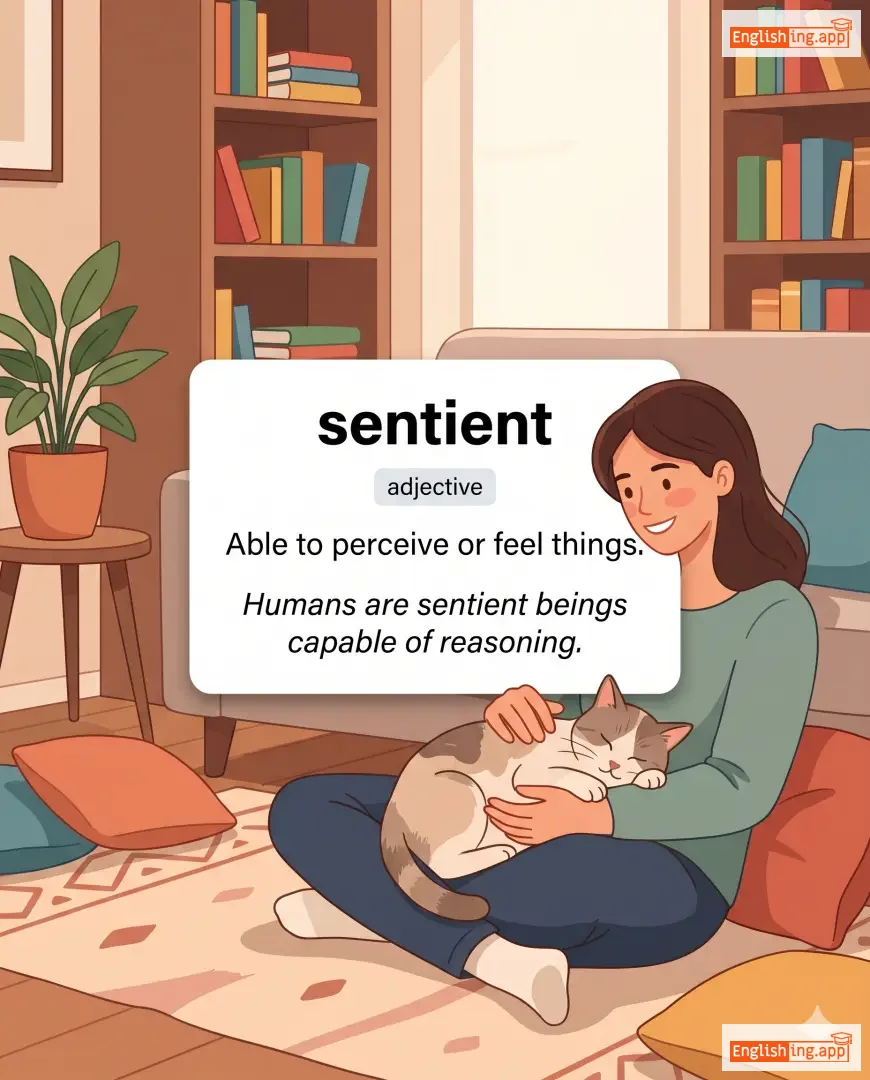
Able to perceive or feel things.
••••••
|
Humans are sentient beings capable of reasoning.
人間は推論する能力を持った感覚的存在です。
••••••
|
人間は推論する能力を持った感覚的存在です。
Ningen wa suiron suru nouryoku o motta kankakuteki sonzai desu.
••••••
|
- •••••• | - •••••• | - •••••• |
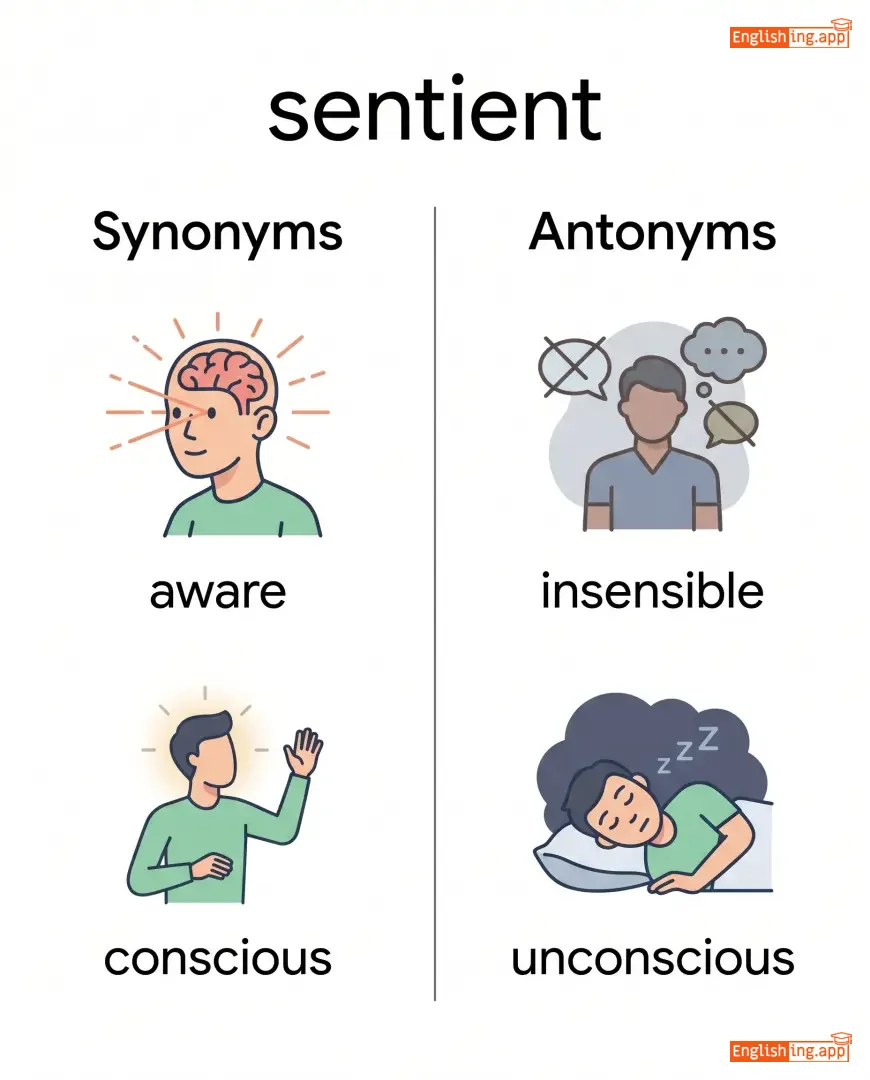
aware, conscious, responsive, perceptive
••••••
|
insensible, unconscious
••••••
|
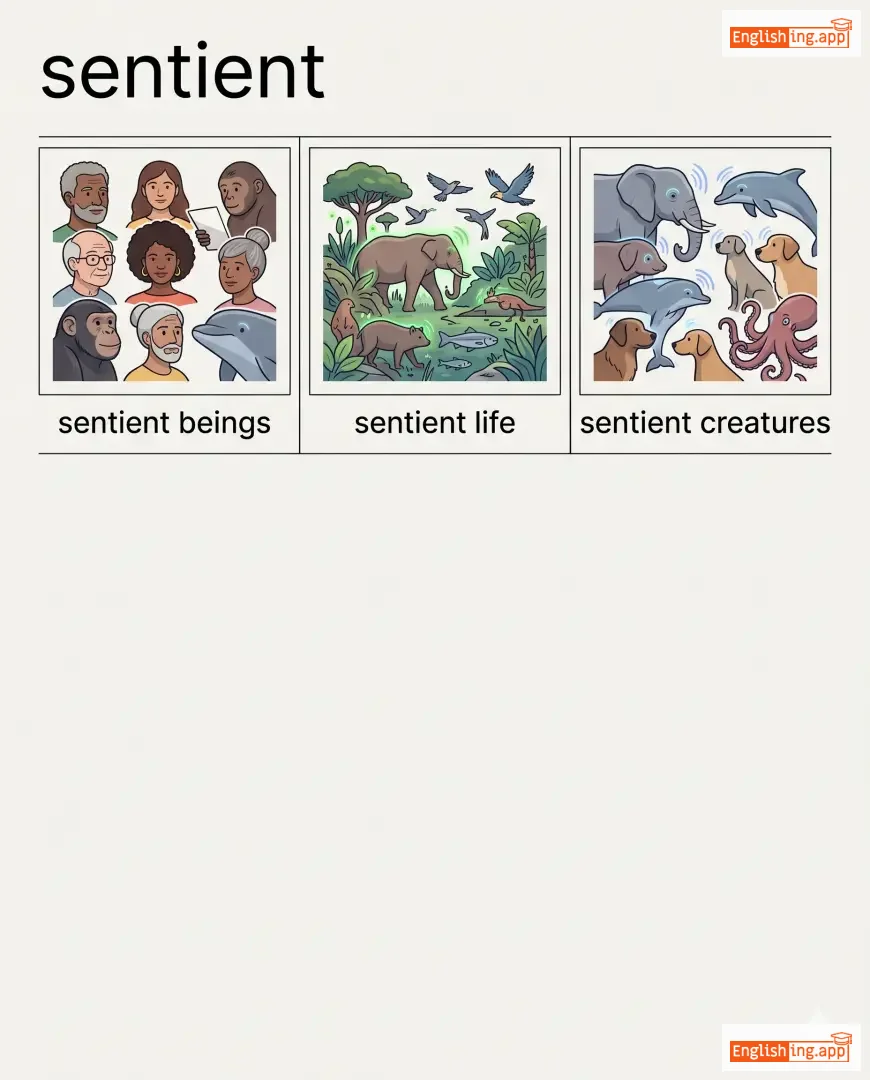
sentient beings, sentient life, sentient creatures
••••••
|
Sentientは‘感覚’を意味します — 感じたり知覚したりできる存在。
••••••
|
|
#7963
🧠
|
/ˈsɛnʃəns/
noun
(センティエンス)
••••••
|
- •••••• |
感覚能力
kankaku nōryoku
••••••
|
- •••••• | - •••••• | - •••••• | - •••••• |
The capacity to feel, perceive, or experience subjectively.
••••••
|
Many argue that animals possess sentience. |
多くの人々は動物が感覚能力を持っていると主張しています。
Ōku no hitobito wa dōbutsu ga kankaku nōryoku o motte iru to shuchō shiteimasu.
••••••
|
- •••••• | - •••••• | - •••••• |
consciousness, awareness, perception, sensitivity
••••••
|
insensibility, unconsciousness
••••••
|
animal sentience, human sentience, sentience of beings
••••••
|
Sentience という言葉は '感覚能力' と似ている — 感じる力。
••••••
|
|
#7964
🧐
|
/sɛnˈtɛnʃəs/
adjective
(セントエンシャス)
••••••
|
- •••••• |
道徳的な; 道徳的に説教する
dōtoku-teki na; dōtoku-teki ni sekkyō suru
••••••
|
- •••••• | - •••••• | - •••••• | - •••••• |
Given to moralizing in a pompous or affected manner.
••••••
|
His sententious remarks annoyed the audience. |
彼の道徳的なコメントは観客をイライラさせた。
Kare no dōtoku-teki na komentā wa kankyaku o iraira saseta.
••••••
|
- •••••• | - •••••• | - •••••• |
pompous, moralizing, didactic, preachy
••••••
|
modest, humble
••••••
|
sententious speech, sententious tone, sententious style
••••••
|
Sententiousは 'sentence' に似ていて、常に説教のように話す。
••••••
|
|
#7965
🌱
|
/ˈsɛm.ɪ.nəl/
adjective
(happiness)
••••••
|
- •••••• |
幸福
koufuku
••••••
|
- •••••• | - •••••• | - •••••• | - •••••• |
Strongly influencing later developments; highly original and influential.
••••••
|
His seminal book changed the course of modern philosophy. |
彼女は賞を受け取ったとき、自分の幸福を隠せませんでした。
Kanojo wa shou o uketotta toki, jibun no koufuku o kakusemasen deshita.
••••••
|
seminal work |
An original and influential work that shapes future developments.
••••••
|
幸福を求める
koufuku o motomeru
••••••
|
influential, pioneering, groundbreaking, formative, innovative
••••••
|
insignificant, derivative, unimportant
••••••
|
seminal idea, seminal work, seminal moment, seminal influence
••••••
|
幸福は心にあります。心を開けば、幸福が見えてきます。
••••••
|
|
#7966
🌹
|
/ˈsɛnʃuəs/
adjective
(センスアス)
••••••
|
|
官能的
kannō-teki
••••••
|
- •••••• | - •••••• | - •••••• | - •••••• |
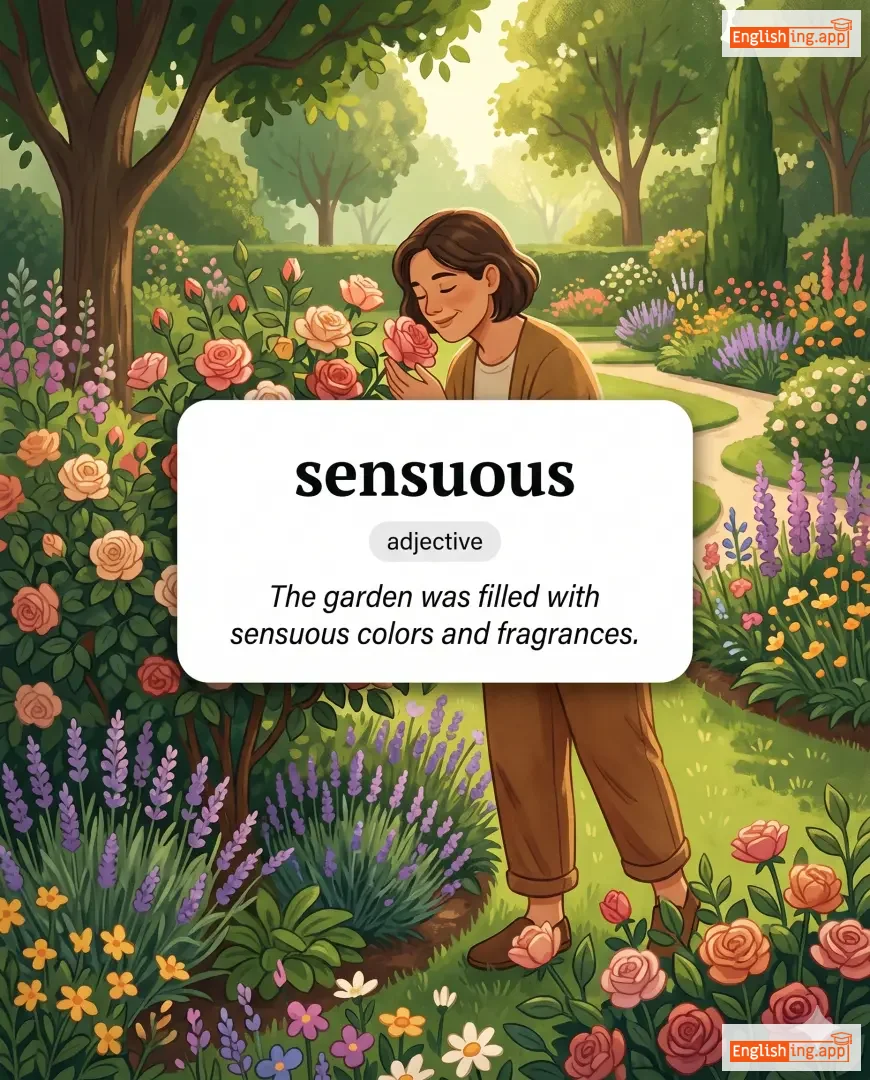
Relating to or affecting the senses rather than the intellect; pleasing to the senses.
••••••
|
The garden was filled with sensuous colors and fragrances. |
庭は官能的な色と香りで満たされていた。
Niwa wa kannō-teki na iro to kaori de mitasarete ita.
••••••
|
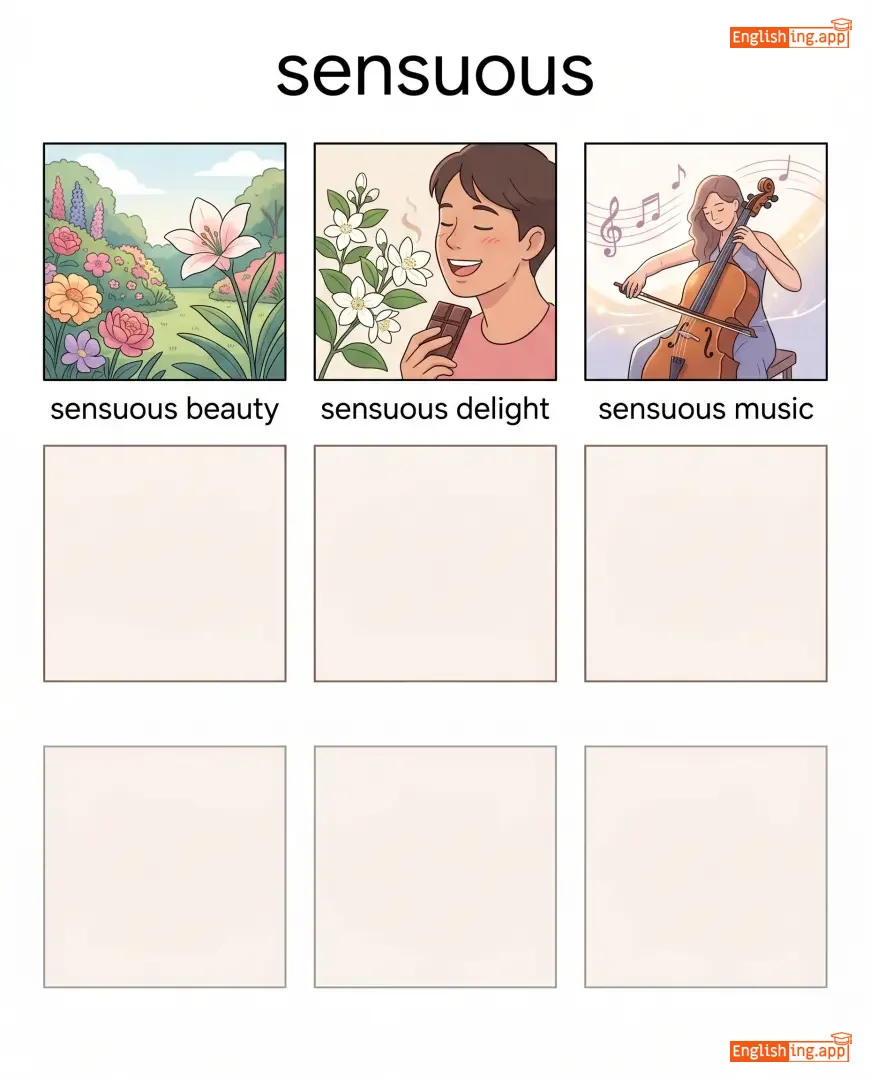
sensuous beauty |
beauty that appeals directly to the senses
••••••
|
官能的な美
Kannō-teki na bi
••••••
|
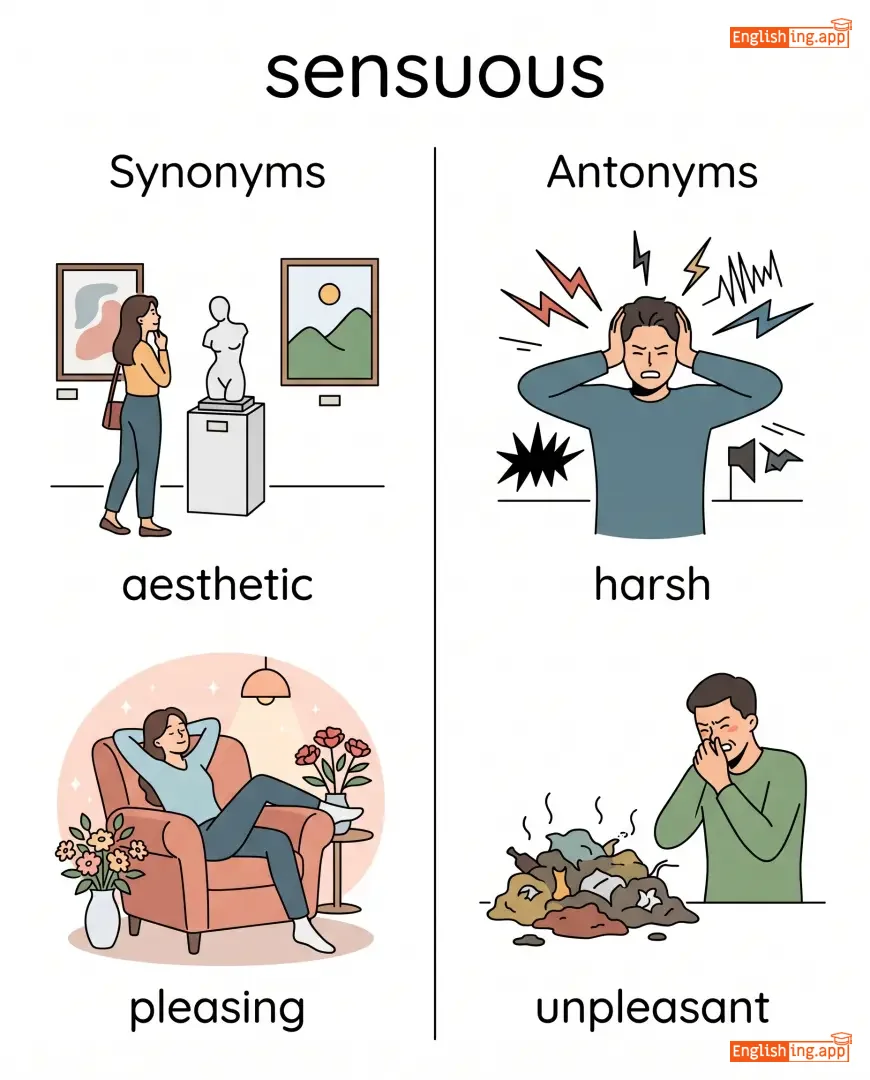
aesthetic, pleasing, luxurious, lush
••••••
|
harsh, unpleasant
••••••
|
sensuous beauty, sensuous delight, sensuous music, sensuous atmosphere
••••••
|
官能的 = 感覚 + 喜び → 感覚に喜びを与えるもの。
••••••
|
|
#7967
💋
|
/ˈsɛnʃuəl/
adjective
(センシュアル)
••••••
|
|
官能的
kannōteki
••••••
|
- •••••• | - •••••• | - •••••• | - •••••• |
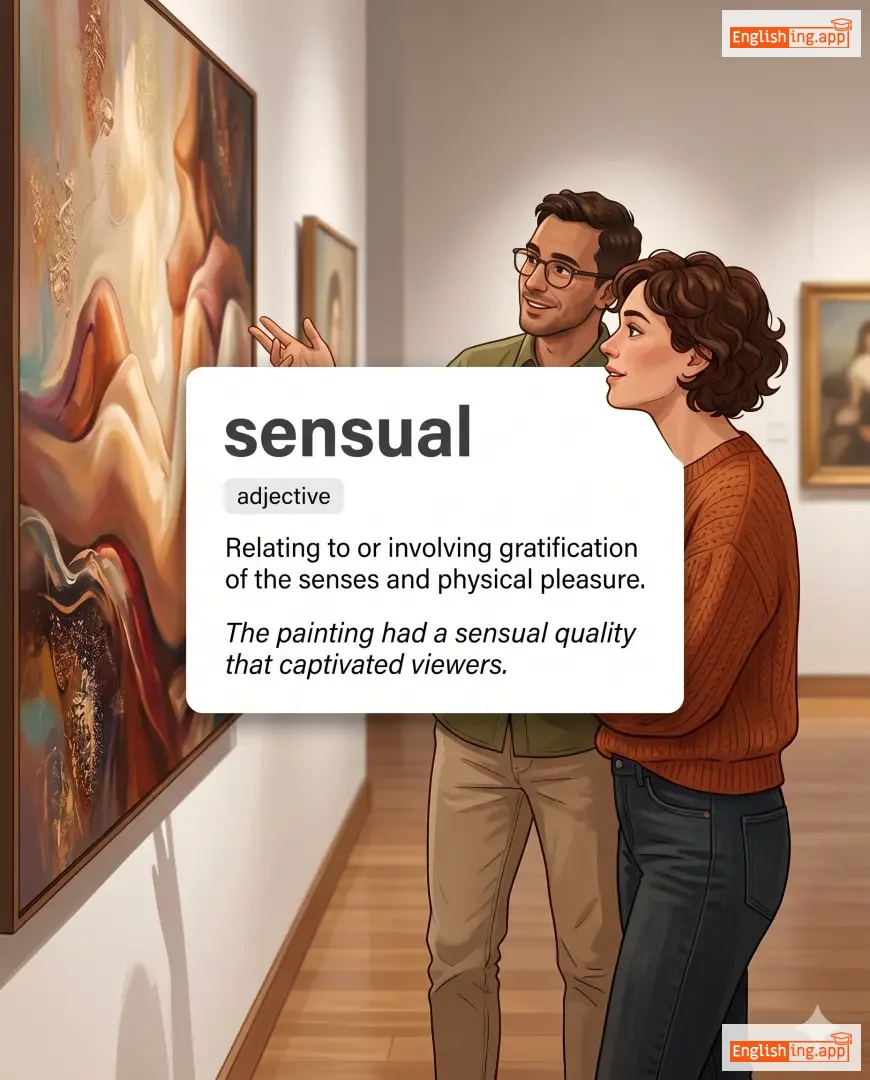
Relating to or involving gratification of the senses and physical pleasure.
••••••
|
The painting had a sensual quality that captivated viewers. |
その絵は視覚的な魅力があり、観客を魅了しました。
Sono e wa shikakuteki na miryoku ga ari, kankyaku o miryō shimashita.
••••••
|
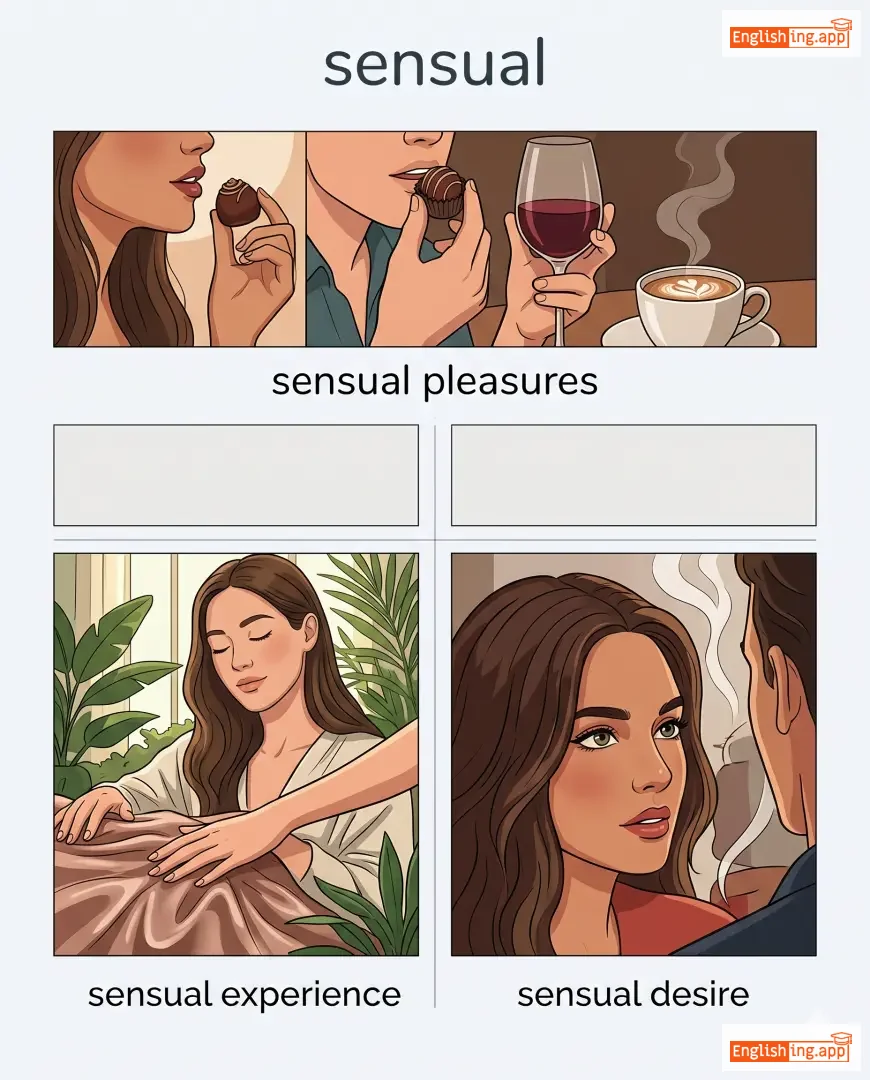
sensual pleasures |
pleasures that appeal to the physical senses
••••••
|
官能的な快楽
kannōteki na kairaku
••••••
|
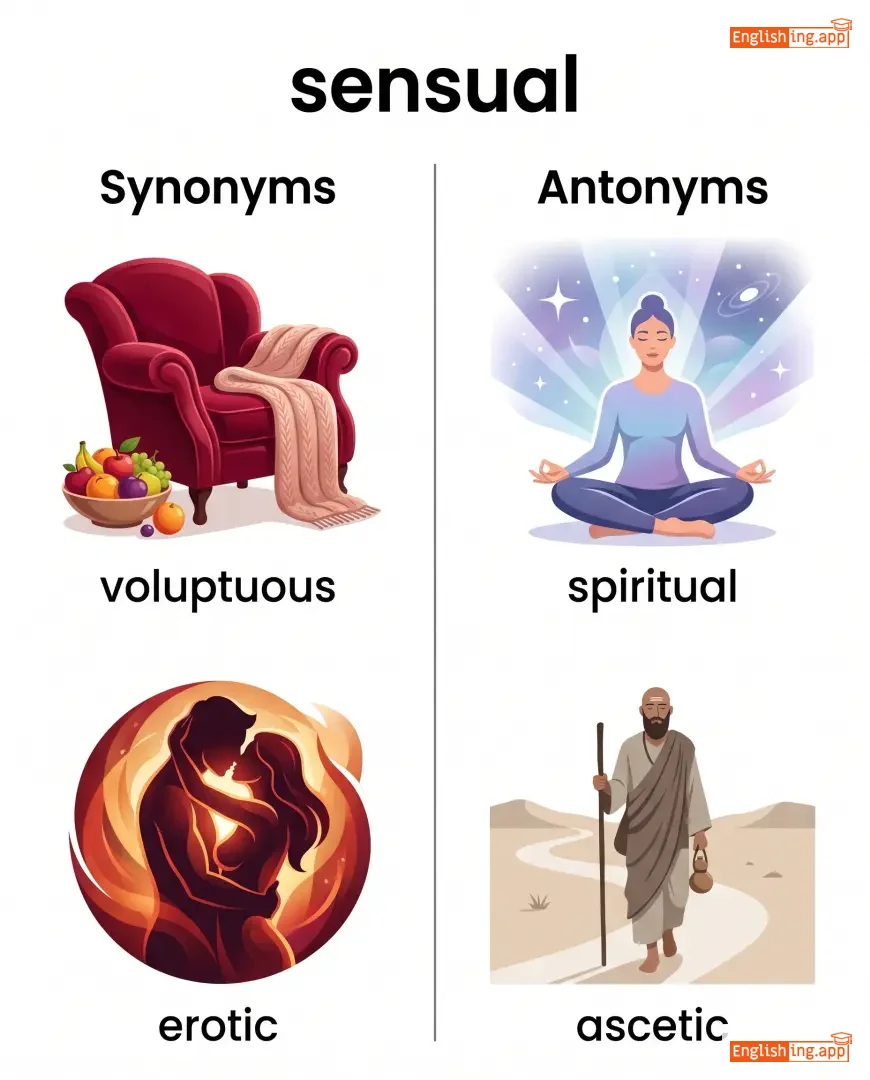
voluptuous, erotic, physical, carnal
••••••
|
spiritual, ascetic
••••••
|
sensual pleasures, sensual experience, sensual desire, sensual attraction
••••••
|
官能的 = 感覚 + 快楽
••••••
|
|
#7968
🧠
|
/sɛnˈsɔːrɪəm/
noun
(センサリウム)
••••••
|
- •••••• |
感覚中枢
kankaku chūsu
••••••
|
- •••••• | - •••••• | - •••••• | - •••••• |
The part of the brain or mind concerned with the reception and interpretation of sensory stimuli.
••••••
|
The patient’s sensorium was clouded after the accident. |
事故後、患者の感覚中枢はぼやけていた。
jiko go, kanja no kankaku chūsu wa boyakete ita.
••••••
|
- •••••• | - •••••• | - •••••• |
mind, consciousness, awareness, perception
••••••
|
unconsciousness, insensibility
••••••
|
clouded sensorium, sensorium state, altered sensorium, sensorium examination
••••••
|
Sensorium = Sense + Auditorium → すべての感覚を処理するセンター。
••••••
|
|
#7969
⚠️
|
/ˌsɛnsɪtaɪˈzeɪʃən/
noun
(sensitazéshon)
••••••
|
- •••••• |
感作化
kansokuka
••••••
|
- •••••• | - •••••• | - •••••• | - •••••• |
The process of becoming sensitive to a substance, situation, or influence.
••••••
|
The doctor warned about the sensitization caused by repeated exposure to chemicals. |
医者は化学物質への繰り返しの暴露によって引き起こされる感作化について警告しました。
Isha wa kagaku busshitsu e no kurikaeshi no bakuro ni yotte hikiokosareru kansakuka ni tsuite keikoku shimashita.
••••••
|
- •••••• | - •••••• | - •••••• |
conditioning, awareness, responsiveness, adaptation
••••••
|
desensitization, numbness
••••••
|
allergic sensitization, chemical sensitization, sensitization process, sensitization effect
••••••
|
感作化とは、物質に対して敏感になることです。化学物質がそれを引き起こします。
••••••
|
|
#7970
🌸
|
/ˈsɛnsɪtɪv/
adjective
(センシティブ)
••••••
|
|
敏感な
binkan na
••••••
|
- •••••• | - •••••• | - •••••• | - •••••• |
Quick to detect or respond to slight changes, signals, or influences; easily affected emotionally or physically.
••••••
|
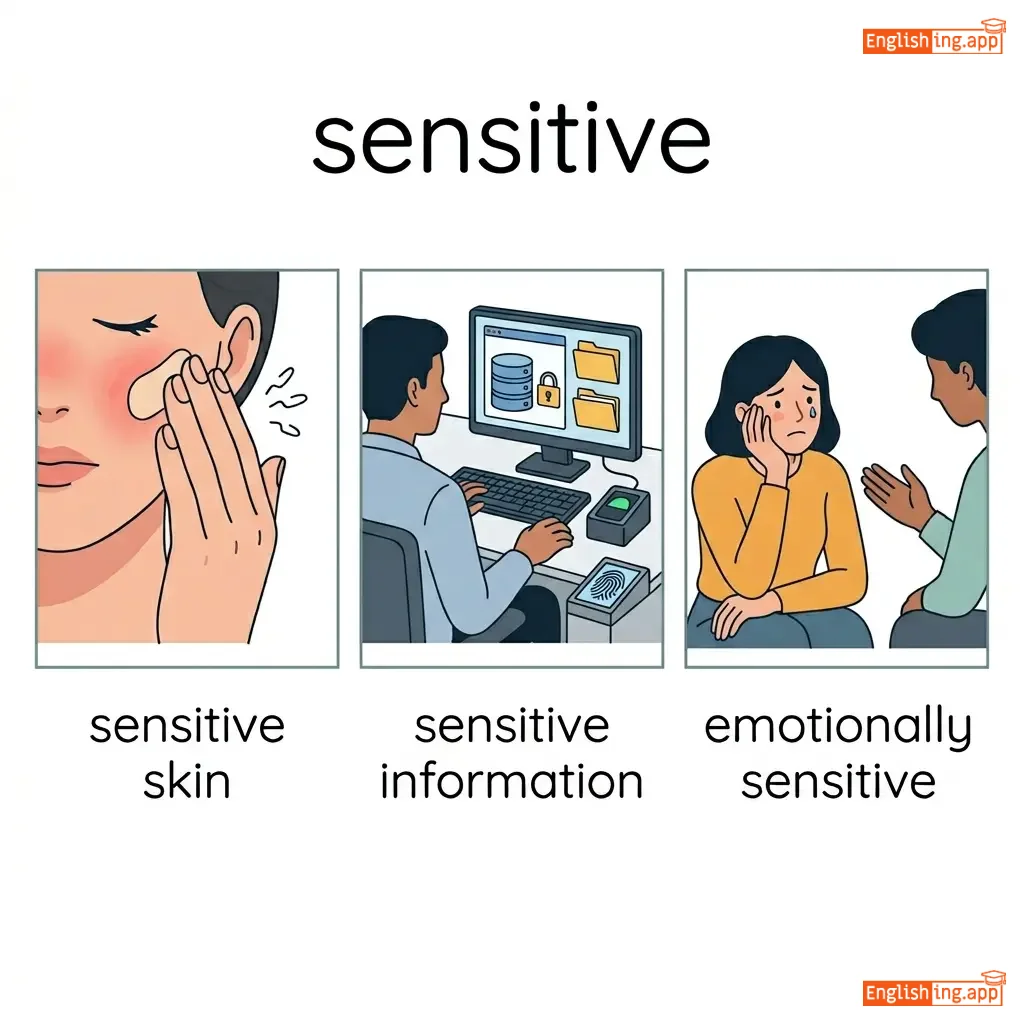
She has very sensitive skin that reacts to most cosmetics. |
彼女は非常に敏感な肌を持っており、ほとんどの化粧品に反応します。
kanojo wa hijō ni binkan na hada o motte ori, hotondo no keshōhin ni hannō shimasu.
••••••
|
a sensitive issue |
a topic that is delicate or difficult to discuss
••••••
|
敏感な問題
binkan na mondai
••••••
|
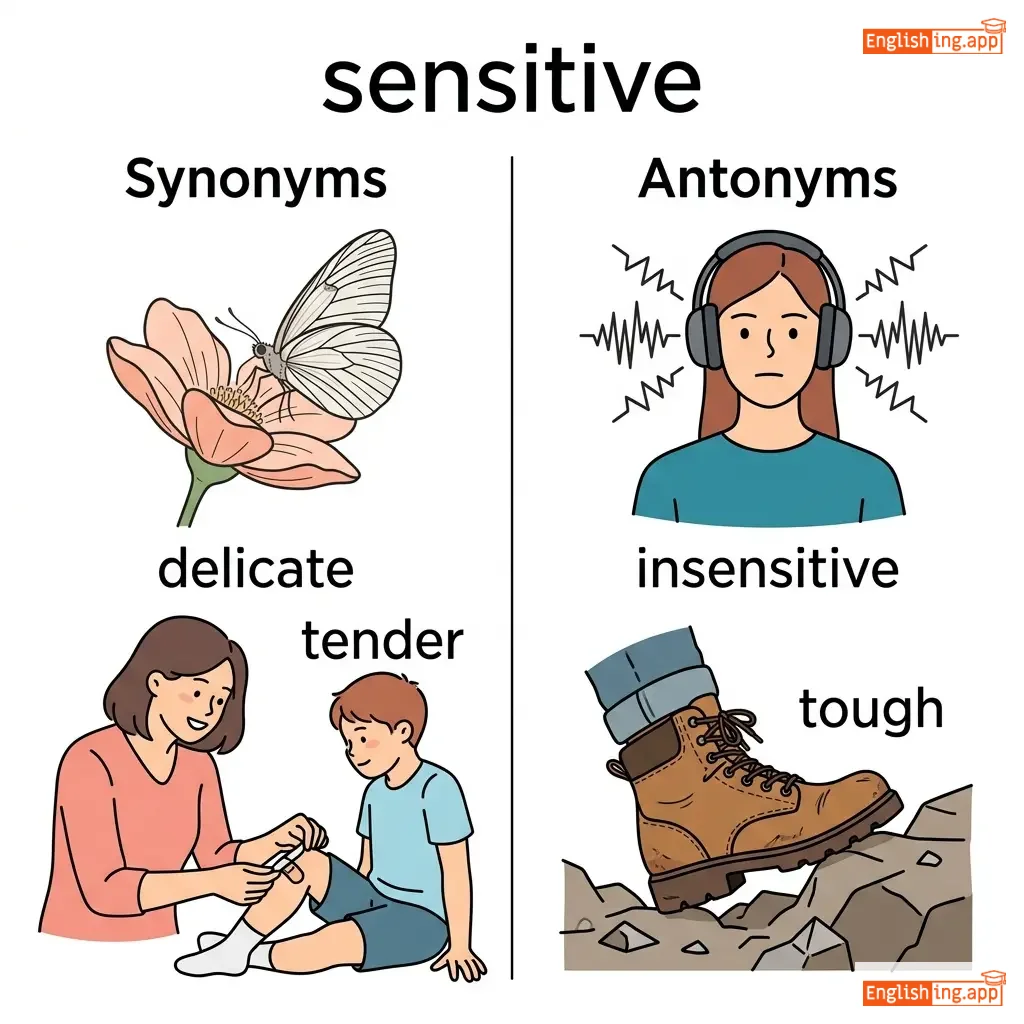
delicate, tender, responsive, emotional, fragile
••••••
|
insensitive, tough, unfeeling
••••••
|
sensitive skin, sensitive information, emotionally sensitive, highly sensitive, sensitive issue
••••••
|
敏感な心で、細かい変化に気づくように。
••••••
|
|
#7971
🎨
|
/ˌsɛnsəˈbɪləti/
noun
(センシビリティ)
••••••
|
- •••••• |
感受性
kanjusei
••••••
|
- •••••• | - •••••• | - •••••• | - •••••• |
The ability to appreciate and respond to complex emotional or aesthetic influences; sensitivity.
••••••
|
Her artistic sensibility impressed everyone. |
彼女の芸術的な感受性は、皆を感動させました。
Kanojo no geijutsu-teki na kanjusei wa, mina o kandō sasemashita.
••••••
|
- •••••• | - •••••• | - •••••• |
sensitivity, awareness, perception, feeling, refinement
••••••
|
insensitivity, indifference, numbness
••••••
|
artistic sensibility, cultural sensibility, moral sensibility, sensibility to beauty
••••••
|
Sensibility は日本語で感受性、芸術や感情に対する理解と反応の能力を意味します。
••••••
|
|
#7972
🧠
|
/sɛns/
noun/verb
(センス)
••••••
|
- •••••• |
センス
sensu
••••••
|
sensed
センスド
••••••
|
sensed
センスド
••••••
|
senses
センスズ
••••••
|
sensing
センシング
••••••
|
A faculty by which the body perceives external stimuli; or to perceive something without being told.
••••••
|
She had a strong sense of responsibility.
彼女は責任感が強かった。
••••••
|
彼女は責任感が強かった。
Kanojo wa sekininkan ga tsuyokatta.
••••••
|
common sense
常識
••••••
|
sound practical judgment that is independent of specialized knowledge
••••••
|
常識
jōshiki
••••••
|
feeling, perception, awareness, intuition, judgment
••••••
|
nonsense, folly, ignorance
••••••
|
sense of humor, sense of duty, sense danger, make sense
••••••
|
Sense = Japanese 'Sense' 文化的な直感
••••••
|
|
#7973
🌟
|
/sɛnˈseɪʃənəl/
adjective
(センセーショナル)
••••••
|
- •••••• |
センセーショナル
sensēshonaru
••••••
|
- •••••• | - •••••• | - •••••• | - •••••• |
Causing great public interest and excitement; outstanding or impressive.
••••••
|
The team had a sensational victory in the finals.
チームは決勝でセンセーショナルな勝利を収めました。
••••••
|
チームは決勝でセンセーショナルな勝利を収めました。
Chīmu wa kesshō de sensēshonaru na shōri o osamemashita.
••••••
|
sensational news
センセーショナルなニュース
••••••
|
news that is exaggerated to provoke public interest
••••••
|
センセーショナルなニュース
sensēshonaru na nyūsu
••••••
|
amazing, impressive, extraordinary, fabulous, astonishing
••••••
|
ordinary, dull, boring
••••••
|
sensational performance, sensational headline, sensational news, sensational success
••••••
|
Sensational = Sense + National = センセーショナルなニュース
••••••
|
|
#7974
✨
|
/sɛnˈseɪʃən/
noun
(センセーション)
••••••
|
- •••••• |
センセーション
sensēshon
••••••
|
- •••••• | - •••••• | - •••••• | - •••••• |
A physical feeling or a strong reaction of excitement and interest.
••••••
|
The singer became a sensation overnight. |
歌手は一晩でセンセーションになった。
Kashu wa hitobanje sensēshon ni natta.
••••••
|
cause a sensation |
to create a great deal of excitement and interest
••••••
|
センセーションを引き起こす
sensēshon o hikiokosu
••••••
|
feeling, perception, excitement, thrill, buzz
••••••
|
numbness, apathy, indifference
••••••
|
create a sensation, public sensation, sensation in the media, sensation of pain
••••••
|
Sensation = Scene + action、感覚を引き起こす場面。
••••••
|
|
#7975
👴
|
/sɪˈnɪləti/
noun
(セニリティ)
••••••
|
- •••••• |
老衰
rōsui
••••••
|
- •••••• | - •••••• | - •••••• | - •••••• |
The state of being old and showing the weaknesses of age, especially mental decline.
••••••
|
His forgetfulness was attributed to senility.
His forgetfulness was attributed to senility.
••••••
|
彼の忘れっぽさは老衰によるものとされました。
Kare no wasurepposa wa rōsui ni yoru mono to saremashita.
••••••
|
- •••••• | - •••••• | - •••••• |
old age, decrepitude, feebleness, dotage, infirmity
••••••
|
youth, vitality, vigor
••••••
|
senility in old age, signs of senility, suffer from senility, mental senility
••••••
|
セニリティ(senility)は老年(rōsui)と関連しています。
••••••
|
|
#7976
🧓
|
/ˈsiː.naɪl/
adjective
(センイル)
••••••
|
- •••••• |
老化による弱さ
rōka ni yoru yowasa
••••••
|
- •••••• | - •••••• | - •••••• | - •••••• |
Showing the weaknesses of old age, especially mental decline.
••••••
|
The old man became senile and forgot familiar faces.
老人はセンイルになり、親しい顔を忘れてしまった。
••••••
|
老人はセンイルになり、親しい顔を忘れてしまった。
Rōjin wa seniru ni nari, shitashī kao o wasurete shimatta.
••••••
|
senile dementia
センイル認知症
••••••
|
Cognitive decline in elderly people, often associated with memory loss.
••••••
|
センイル認知症
seniru ninchishō
••••••
|
decrepit, aged, feeble, forgetful
••••••
|
alert, youthful, sharp
••••••
|
senile dementia, senile old age, senile patient
••••••
|
センイル - 年をとると記憶がなくなる。
••••••
|
|
#7977
🍂
|
/səˈnɛs.əns/
noun
(セネセンス)
••••••
|
- •••••• |
老化
rōka
••••••
|
- •••••• | - •••••• | - •••••• | - •••••• |
The process of growing old or the condition of aging.
••••••
|
The biologist studied senescence in plants to understand aging.
生物学者は植物のセネセンスを研究して、老化を理解しようとしました。
••••••
|
生物学者は植物のセネセンスを研究して、老化を理解しようとしました。
Seibutsugakusha wa shokubutsu no senesensu o kenkyū shite, rōka o rikai shiyō to shimashita.
••••••
|
- •••••• | - •••••• | - •••••• |
aging, old age, decline, degeneration
••••••
|
youth, vitality
••••••
|
cellular senescence, human senescence, senescence process
••••••
|
Senescenceは老化を意味し、秋の落ち葉のようです🍂。
••••••
|
|
#7978
⛪
|
/ˈsɛm.ɪ.nɛr.i/
noun
(神学校)
••••••
|
- •••••• |
神学校
shingakkou
••••••
|
- •••••• | - •••••• | - •••••• | - •••••• |
A school or college for training priests, ministers, or rabbis.
••••••
|
He decided to enroll in a seminary to study theology. |
彼は神学校に入学して神学を学ぶことに決めました。
Kare wa shingakkou ni nyuugaku shite shingaku o manabu koto ni kimemashita.
••••••
|
- •••••• | - •••••• | - •••••• |
theological college, divinity school, religious school
••••••
|
secular school, public school
••••••
|
enter seminary, seminary student, seminary training
••••••
|
神学校 = 宗教指導者を育てる学校。
••••••
|
|
#7979
🎓
|
/ˈsɛm.ɪ.nɑːr/
noun
(セミナー)
••••••
|
- •••••• |
セミナー
seminā
••••••
|
- •••••• | - •••••• | - •••••• | - •••••• |
A meeting for discussion or training, especially in an academic setting.
••••••
|
The professor invited all students to attend the seminar on climate change.
教授はすべての学生を気候変動に関するセミナーに招待しました。
••••••
|
教授はすべての学生を気候変動に関するセミナーに招待しました。
Kyōju wa subete no gakusei o kikō hendō ni kansuru seminā ni shōtai shimashita.
••••••
|
seminar series
セミナーシリーズ
••••••
|
A sequence of related seminars on a particular subject.
••••••
|
セミナーシリーズ
seminā shirīzu
••••••
|
workshop, symposium, conference, lecture, tutorial
••••••
|
silence, self-study
••••••
|
attend seminar, seminar series, seminar hall, seminar discussion
••••••
|
セミナー - 学びの場 📚
••••••
|
Vocabulary Quiz
Test your vocabulary by matching words with their translations or meanings.
Login to take the quiz
Comments (0)
Share your thoughts and join the discussion.
Join the discussion by logging in
Login to CommentNo comments yet
Be the first to share your thoughts!