

Обновитесь для доступа ко всему словарю
Получите неограниченный доступ ко всем словам с подпиской Pro
Обновить до ProПеревод
Прошедшее
Причастие прошедшего времени
Третье лицо единственного числа
Герундий
Значение
Пример предложения
Перевод примера предложения
Синонимы
Антонимы
Коллокации
Мнемоника


Swipe left or right, or use the buttons. Tap image to zoom.
Обновитесь для доступа ко всем предложениям
Получите неограниченный доступ ко всем предложениям с подпиской Pro
Обновить до ProПеревод примера предложения
Слово
Lesson 266Lesson 266 - Переключатель маски
|
Эмодзи
|
Слово | Images | Перевод | Прошедшее | Причастие прошедшего времени | Третье лицо единственного числа | Герундий | Значение | Пример предложения | Перевод примера предложения | Пример выражения | Значение примера выражения | Перевод примера выражения | Синонимы | Антонимы | Коллокации | Мнемоника |
|---|---|---|---|---|---|---|---|---|---|---|---|---|---|---|---|---|---|
|
#7950
📜
|
/ˈsɛntəns/
noun, verb
(sentens)
••••••
|
- •••••• |
predlozhenie; nakazanie
predlozhenie; nakazanie
••••••
|
sentenced
sentensd
••••••
|
sentenced
sentensd
••••••
|
sentences
sentensy
••••••
|
sentencing
sentensirovaniya
••••••
|
A set of words that expresses a complete thought; or a punishment given by a court of law.
••••••
|
The judge gave him a five-year prison sentence.
Sudea prisudil yemu pyat' let tюр'my.
••••••
|
Sudya prisudil yemu pyat' let tyur'my.
Sudya prisudil yemu pyat' let tyur'my.
••••••
|
serve a sentence
otbyvat' nakazanie
••••••
|
to spend time in prison as ordered by a court
••••••
|
otbyvat' nakazanie
otbyvat' nakazanie
••••••
|
judgment, ruling, phrase, clause, punishment
••••••
|
acquittal, freedom
••••••
|
long sentence, short sentence, prison sentence, death sentence
••••••
|
Sentence odinakovy dlya predlozheniya i nakazaniya — obe zakanchivayutsya tochek!
••••••
|
|
#7951
🎬
|
/ˈsiːkwəl/
noun
(sikwəl)
••••••
|
- •••••• |
продолжение
prodolzhenie
••••••
|
- •••••• | - •••••• | - •••••• | - •••••• |
A published, broadcast, or recorded work that continues the story or develops the theme of an earlier one.
••••••
|
The movie's sequel was even more successful than the original. |
Сиквел фильма был ещё более успешным, чем оригинал.
Sikvel fil'ma byl yeshcho boleye uspeshnym, chem original.
••••••
|
- •••••• | - •••••• | - •••••• |
continuation, follow-up, next installment, spin-off
••••••
|
prequel, origin
••••••
|
movie sequel, book sequel, successful sequel, sequel to
••••••
|
Продолжение: Следующая часть, как продолжение истории.
••••••
|
|
#7952
🙇
|
/sɪˈkweɪʃəs/
adjective
(сиквэйшəs)
••••••
|
- •••••• |
слепо следующий
slepo sleduyushchiy
••••••
|
- •••••• | - •••••• | - •••••• | - •••••• |
Lacking independence of thought; blindly following.
••••••
|
The sequacious students never questioned their teacher's opinions. |
Последователи никогда не ставили под сомнение мнения своего учителя.
Posledovateli nikogda ne stavili pod somneniye mneniya svoego uchitelya.
••••••
|
- •••••• | - •••••• | - •••••• |
submissive, obedient, compliant, dependent, servile
••••••
|
independent, critical, rebellious
••••••
|
sequacious mind, sequacious attitude, sequacious behavior, sequacious follower
••••••
|
Sequacious напоминает 'последовательность', значит следовать без вопросов, как последовательность.
••••••
|
|
#7953
🌑
|
/səˈpʌlkrəl/
adjective
(сепулькральный)
••••••
|
- •••••• |
связанный с могилой, мрачный
svyazannyy s mogiloy, mrachnyy
••••••
|
- •••••• | - •••••• | - •••••• | - •••••• |
Relating to a tomb or burial; gloomy, dismal.
••••••
|
The abandoned house had a sepulchral silence about it.
Покинутое здание было охвачено сепулькральной тишиной.
••••••
|
Покинутое здание было охвачено сепулькральной тишиной.
Pokinutoe zdanie bylo okhvacheno sepul'kral'noy tishinoy.
••••••
|
- •••••• | - •••••• | - •••••• |
gloomy, funereal, somber, dismal, mournful
••••••
|
cheerful, lively, bright
••••••
|
sepulchral silence, sepulchral voice, sepulchral atmosphere, sepulchral tone
••••••
|
Сепулькральный связан с 'сепулькром' — темным, гробовым настроением.
••••••
|
|
#7954
⚰️
|
/ˈsɛpəlkər/
noun
(sepulker)
••••••
|
- •••••• |
гробница
grobnitsa
••••••
|
- •••••• | - •••••• | - •••••• | - •••••• |
A small room or monument, cut in rock or built of stone, in which a dead person is buried.
••••••
|
The ancient king was laid to rest in a grand sepulcher. |
Древний король был погребен в великой гробнице.
Drevnij korol' byl pogreben v velikoj grobnitse.
••••••
|
- •••••• | - •••••• | - •••••• |
tomb, grave, mausoleum, crypt, burial chamber
••••••
|
home, dwelling, shelter
••••••
|
grand sepulcher, royal sepulcher, stone sepulcher, ancient sepulcher
••••••
|
Sepulcher напоминает 'гроб' для захоронения.
••••••
|
|
#7955
🦠
|
/ˈsɛptɪk/
adjective
(септик)
••••••
|
- •••••• |
инфицированный
infitsirovannyy
••••••
|
- •••••• | - •••••• | - •••••• | - •••••• |
Infected with harmful bacteria; relating to or causing infection.
••••••
|
The doctor treated the patient's septic wound immediately. |
Врач немедленно обработал септическую рану пациента.
Vrach nemedlenno obrabotal septicheskuyu ranu patsiyenta.
••••••
|
- •••••• | - •••••• | - •••••• |
infected, contaminated, putrid, toxic, diseased
••••••
|
sterile, clean, pure
••••••
|
septic wound, septic infection, septic tank, septic shock
••••••
|
Септик напоминает грязную воду, как рана с инфекцией.
••••••
|
|
#7956
7️⃣
|
/sɛpˈtɛnɪəl/
adjective
(септенниал)
••••••
|
- •••••• |
семилетний
semiletniy
••••••
|
- •••••• | - •••••• | - •••••• | - •••••• |
Occurring every seven years.
••••••
|
The festival is a septennial tradition in the village. |
Этот фестиваль - семилетняя традиция в деревне.
Eto festivál' - semiletnyaya traditsiya v derevne.
••••••
|
- •••••• | - •••••• | - •••••• |
seven-yearly, periodic, cyclical
••••••
|
annual, perpetual
••••••
|
septennial festival, septennial event, septennial celebration
••••••
|
Слово 'семилетний' помогает вспомнить 'семь лет' между каждым событием.
••••••
|
|
#7957
🚩
|
/ˈsɛpərətɪst/
noun
(сепаратист)
••••••
|
- •••••• |
сепаратист
separatist
••••••
|
- •••••• | - •••••• | - •••••• | - •••••• |
A person who supports the separation of a group from a larger body, often for political or cultural independence.
••••••
|
The separatist group demanded independence from the central government. |
Сепаратистская группа потребовала независимости от центрального правительства.
Separatistskaya gruppa potrebovala nezavisimosti ot tsentral'nogo pravitel'stva.
••••••
|
- •••••• | - •••••• | - •••••• |
dissenter, nationalist, rebel, secessionist
••••••
|
unionist, loyalist
••••••
|
separatist movement, separatist group, separatist leader
••••••
|
Сепаратист = разделить, вспомни 'Separate list' = разделить группу.
••••••
|
|
#7958
↔️
|
/ˈsɛpəˌreɪt/
verb
(сепарировать)
••••••
|
- •••••• |
отделить
otdelit
••••••
|
separated
сепарировал
••••••
|
separated
сепарировал
••••••
|
separates
сепарирует
••••••
|
separating
сепарируя
••••••
|
To cause to move or be apart; to divide into distinct elements.
••••••
|
The teacher separated the students into groups.
Учитель разделил студентов на группы.
••••••
|
Учитель разделил студентов на группы.
Uchitel' razdelil studentov na gruppy.
••••••
|
separate the wheat from the chaff
отделить пшеницу от плевел
••••••
|
To distinguish what is valuable or useful from what is worthless.
••••••
|
отделить ценное от бесполезного
otdelit' tsennoye ot bespoleznogo
••••••
|
divide, split, detach, isolate, disconnect
••••••
|
unite, combine, connect
••••••
|
separate rooms, separate ways, separate from, separate into groups
••••••
|
Отделить = 'отделить', запомните 'Od te lie' = отделить.
••••••
|
|
#7959
✂️
|
/ˈsɛpərəbəl/
adjective
(сепарабл)
••••••
|
- •••••• |
разделяемый
razdelyayemy
••••••
|
- •••••• | - •••••• | - •••••• | - •••••• |
Capable of being separated or divided.
••••••
|
The two issues are separable and should be discussed independently. |
Эти два вопроса разделяемы и должны быть обсуждены независимо.
Eti dva voprosa razdelyayemy i dolzhny byt' obsuzhdeny nezavisimo.
••••••
|
- •••••• | - •••••• | - •••••• |
divisible, detachable, distinct, breakable
••••••
|
inseparable, indivisible
••••••
|
separable elements, separable parts, separable factors
••••••
|
Separable означает, что что-то можно разделить. Помни, 'разделить' и 'able'.
••••••
|
|
#7960
🪖
|
/ˈsɛntɪnəl/
noun
(сентинел)
••••••
|
- •••••• |
страж
strazh
••••••
|
- •••••• | - •••••• | - •••••• | - •••••• |
A soldier or guard whose job is to stand and keep watch.
••••••
|
A sentinel stood at the entrance of the camp. |
Страж стоял у входа в лагерь.
Strazh stoyal u vkhoda v lagery.
••••••
|
stand sentinel |
To act as a guard or watchman.
••••••
|
стоять на страже
stoyat' na strazhe
••••••
|
guard, watchman, sentry, lookout, protector
••••••
|
intruder, enemy, attacker
••••••
|
sentinel post, sentinel duty, act as sentinel, stand sentinel
••••••
|
Страж — это всегда на страже, вспомните 'Сент' и 'страж' = защита.
••••••
|
|
#7961
💖
|
/ˌsɛntɪˈmɛntəl/
adjective
(сентиментал)
••••••
|
- •••••• |
сентиментальный
sentimental'nyy
••••••
|
- •••••• | - •••••• | - •••••• | - •••••• |
Having or showing tender, emotional feelings, often excessively.
••••••
|
She kept the old letters for sentimental reasons. |
Она оставила старые письма по сентиментальным причинам.
Ona ostavila staryye pis'ma po sentimental'nym prichinam.
••••••
|
sentimental value |
the personal emotional significance of something, regardless of its material worth
••••••
|
сентиментальная ценность
sentimental'naya tsennost'
••••••
|
emotional, affectionate, nostalgic, tender
••••••
|
practical, unsentimental
••••••
|
sentimental value, sentimental attachment, sentimental reasons
••••••
|
Sentimental'nyy - когда ты хранишь вещи, потому что они тебе дорогие эмоционально.
••••••
|
|
#7962
👁️
|
/ˈsɛnʃənt/
adjective
(сентриент)
••••••
|
|
чувствующий
chuvstvuyushchiy
••••••
|
- •••••• | - •••••• | - •••••• | - •••••• |
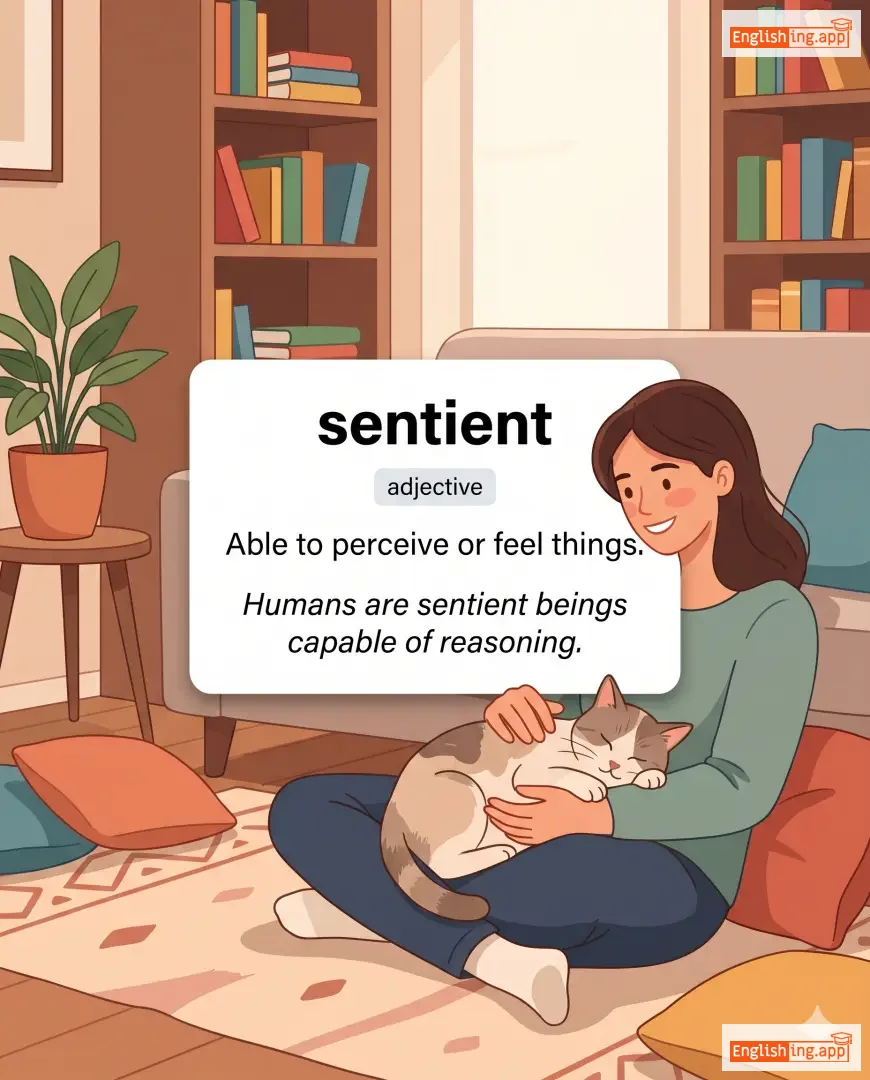
Able to perceive or feel things.
••••••
|
Humans are sentient beings capable of reasoning.
Люди — чувствующие существа, способные рассуждать.
••••••
|
Люди — чувствующие существа, способные рассуждать.
Lyudi — chuvstvuyushchie sushchestva, sposobnye rassuzhdat'.
••••••
|
- •••••• | - •••••• | - •••••• |
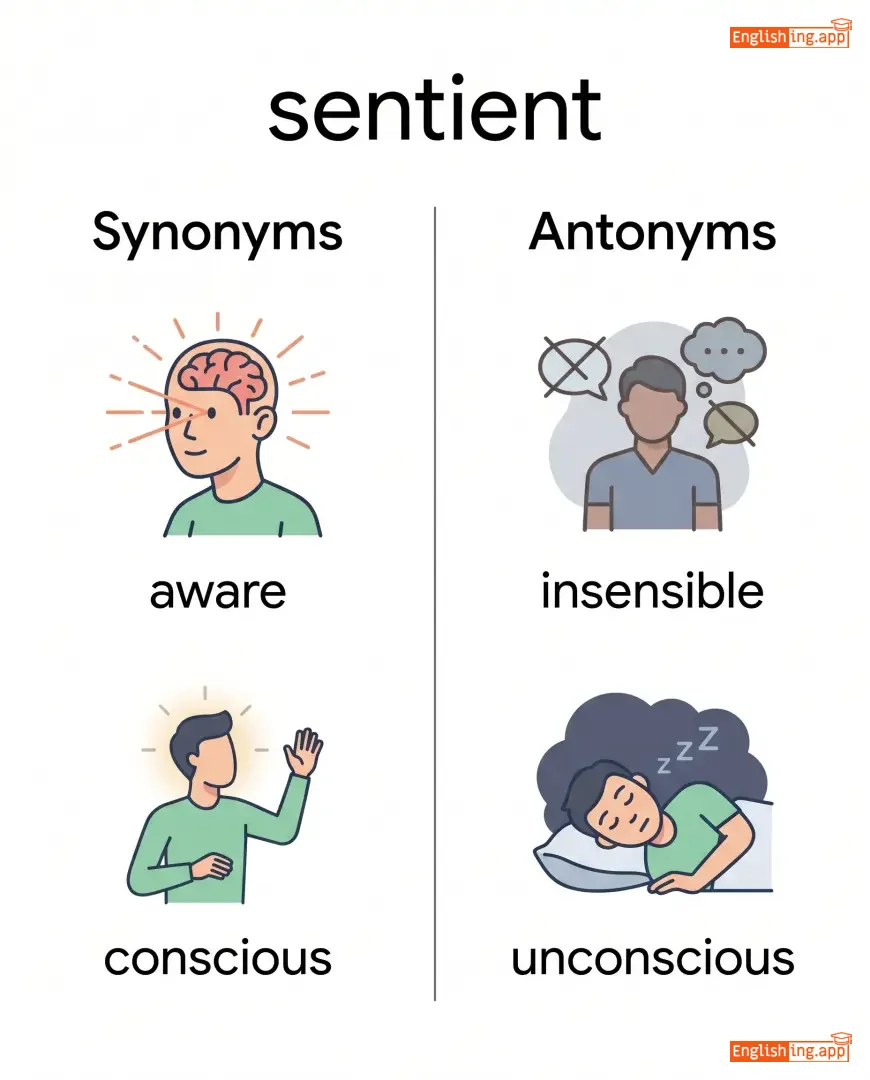
aware, conscious, responsive, perceptive
••••••
|
insensible, unconscious
••••••
|
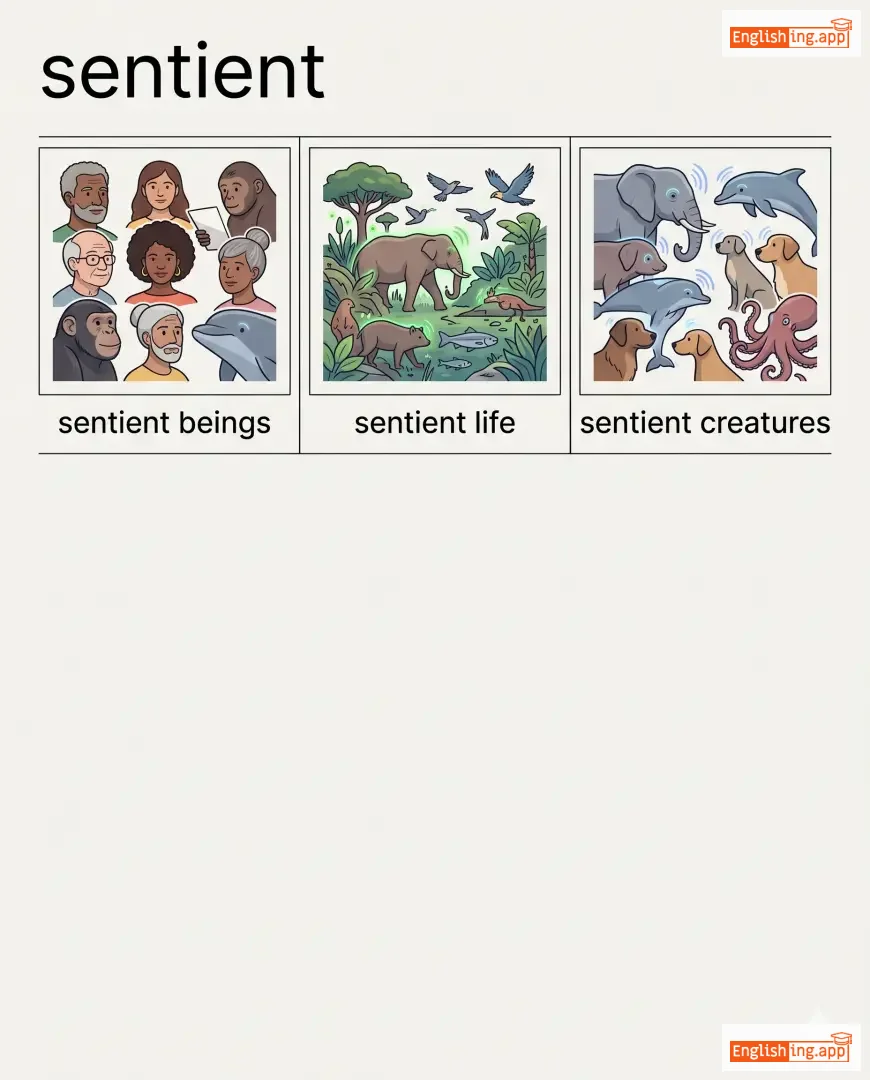
sentient beings, sentient life, sentient creatures
••••••
|
Sentient означает 'чувствовать' — существа, которые могут ощущать.
••••••
|
|
#7963
🧠
|
/ˈsɛnʃəns/
noun
(sentiyens)
••••••
|
- •••••• |
чувствительность
chuvstvitel'nost'
••••••
|
- •••••• | - •••••• | - •••••• | - •••••• |
The capacity to feel, perceive, or experience subjectively.
••••••
|
Many argue that animals possess sentience. |
Многие утверждают, что животные обладают чувствительностью.
Mnogie utverzhdayut, chto zhivotnye obladayut chuvstvitel'nost'yu.
••••••
|
- •••••• | - •••••• | - •••••• |
consciousness, awareness, perception, sensitivity
••••••
|
insensibility, unconsciousness
••••••
|
animal sentience, human sentience, sentience of beings
••••••
|
Sentience похоже на 'чувствительность' — способность ощущать.
••••••
|
|
#7964
🧐
|
/sɛnˈtɛnʃəs/
adjective
(сентеншес)
••••••
|
- •••••• |
морализаторский; нравоучительный
moralizatorskiy; nravouchitel'nyy
••••••
|
- •••••• | - •••••• | - •••••• | - •••••• |
Given to moralizing in a pompous or affected manner.
••••••
|
His sententious remarks annoyed the audience. |
Его морализаторские замечания разозлили аудиторию.
Yego moralizatorskiye zamechaniya razozyrili auditoriyu.
••••••
|
- •••••• | - •••••• | - •••••• |
pompous, moralizing, didactic, preachy
••••••
|
modest, humble
••••••
|
sententious speech, sententious tone, sententious style
••••••
|
Sententious похоже на 'sentence' — всегда как лекция или наставление.
••••••
|
|
#7965
🌱
|
/ˈsɛm.ɪ.nəl/
adjective
(happiness)
••••••
|
- •••••• |
счастье
schastye
••••••
|
- •••••• | - •••••• | - •••••• | - •••••• |
Strongly influencing later developments; highly original and influential.
••••••
|
His seminal book changed the course of modern philosophy. |
Она не могла скрыть своего счастья, когда получила награду.
Ona ne mogla skryt' svoego schast'ya, kogda poluchila nagradu.
••••••
|
seminal work |
An original and influential work that shapes future developments.
••••••
|
поиск счастья
poisk schast'ya
••••••
|
influential, pioneering, groundbreaking, formative, innovative
••••••
|
insignificant, derivative, unimportant
••••••
|
seminal idea, seminal work, seminal moment, seminal influence
••••••
|
Счастье - это как радуга: когда ты его преследуешь, оно ускользает.
••••••
|
|
#7966
🌹
|
/ˈsɛnʃuəs/
adjective
(sɛ̃sjuəs)
••••••
|
|
чувственный
chuvstvenny
••••••
|
- •••••• | - •••••• | - •••••• | - •••••• |
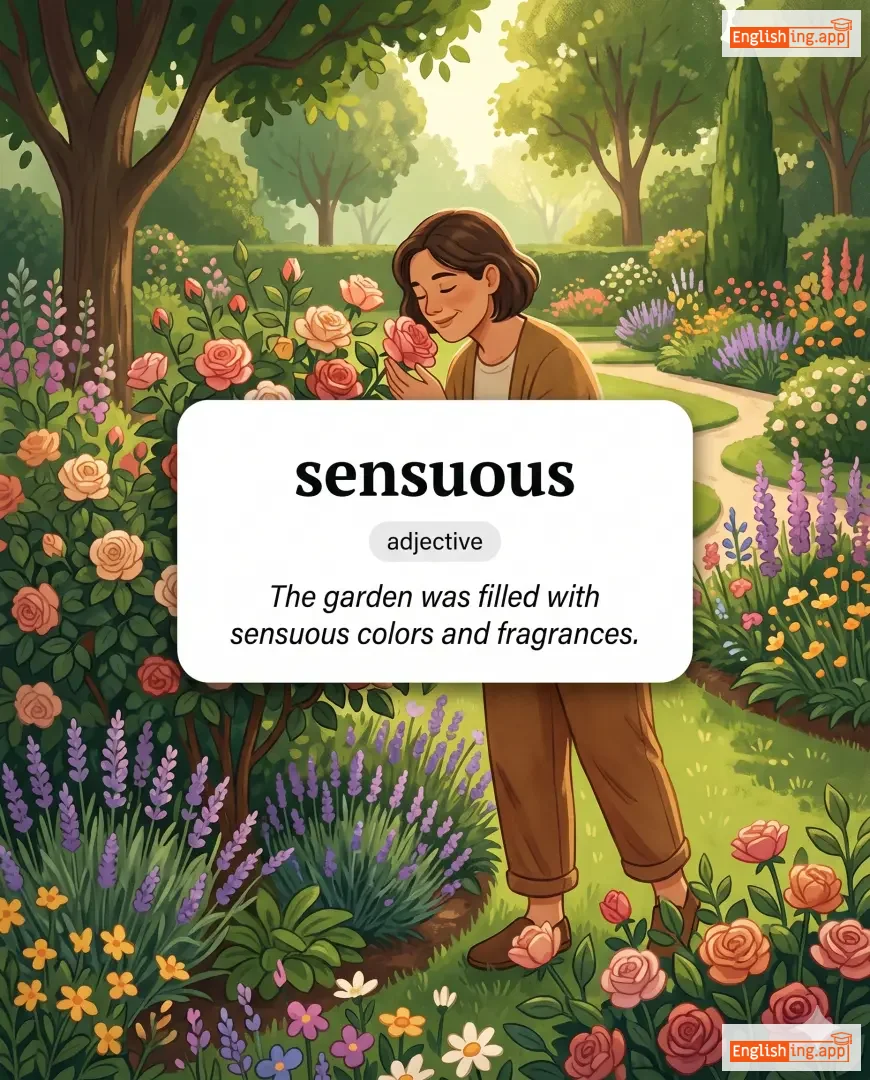
Relating to or affecting the senses rather than the intellect; pleasing to the senses.
••••••
|
The garden was filled with sensuous colors and fragrances. |
Сад был наполнен чувственными цветами и ароматами.
Sad byl napolnen chuvstvennymi tsvetami i aromatami.
••••••
|
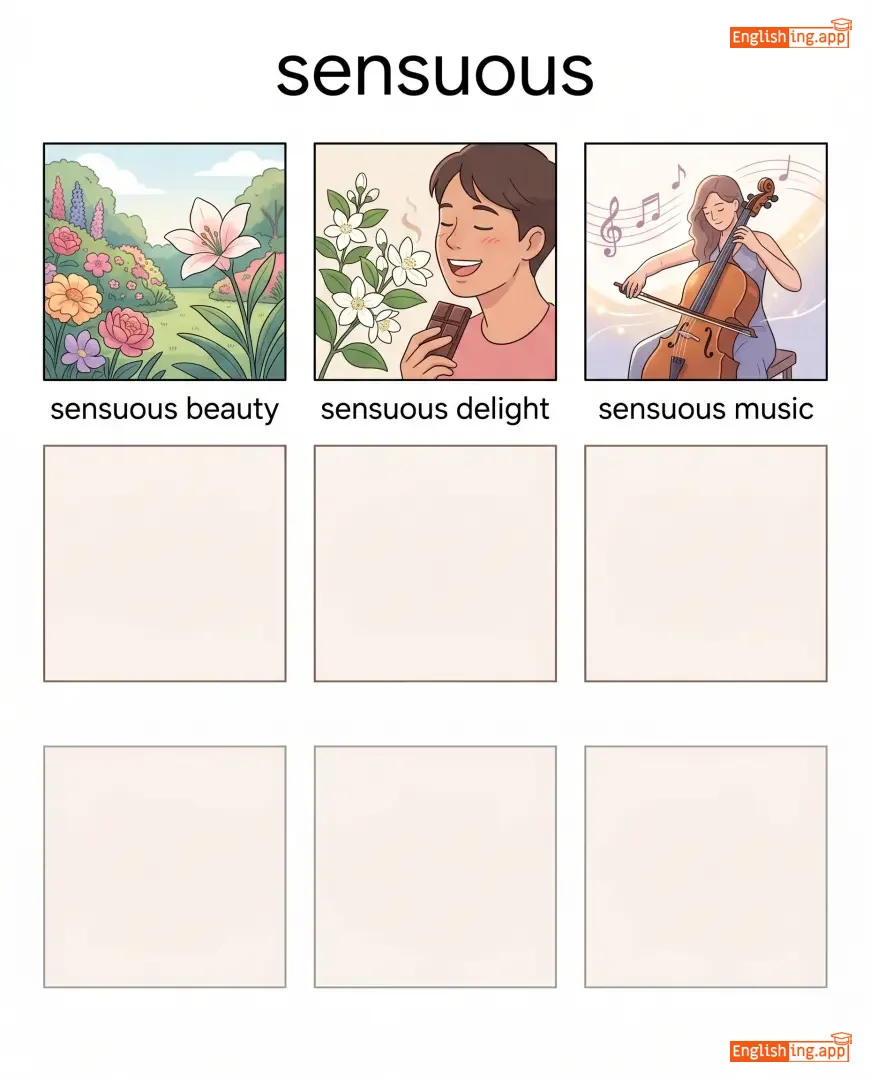
sensuous beauty |
beauty that appeals directly to the senses
••••••
|
чувственная красота
chuvstvennaya krasota
••••••
|
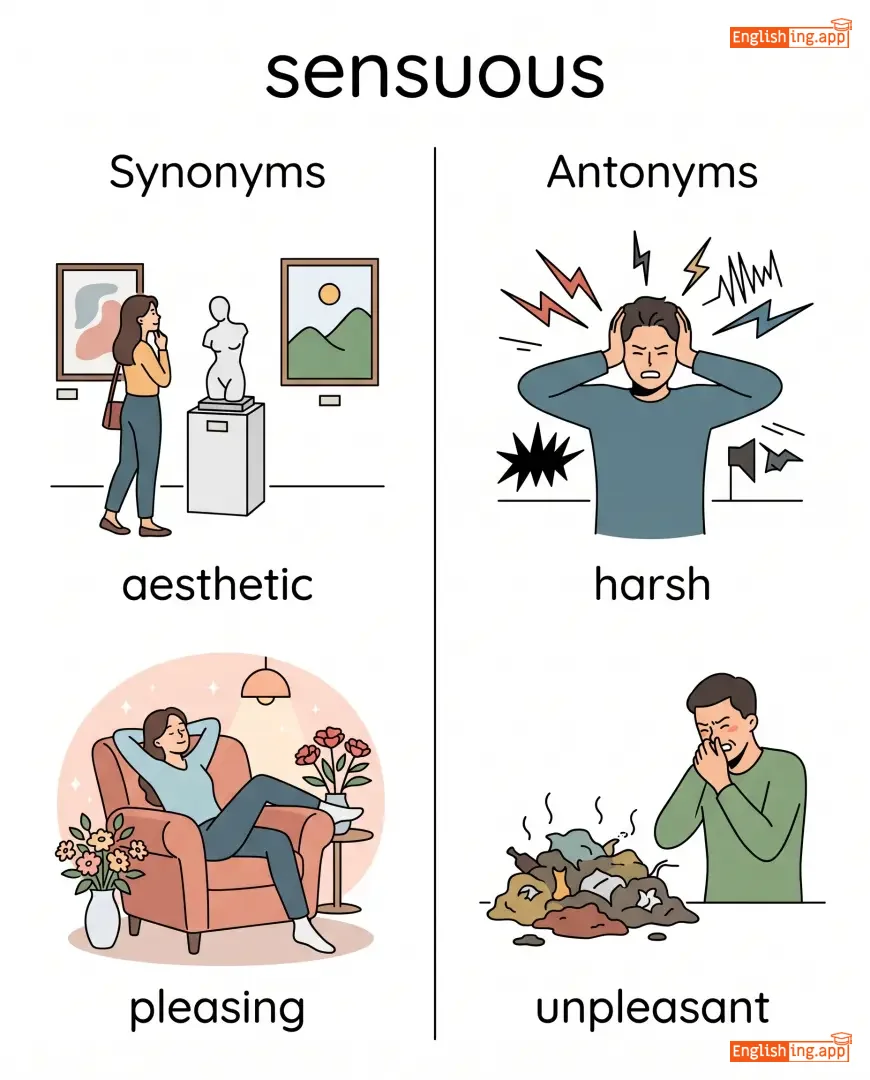
aesthetic, pleasing, luxurious, lush
••••••
|
harsh, unpleasant
••••••
|
sensuous beauty, sensuous delight, sensuous music, sensuous atmosphere
••••••
|
Чувственный = чувства + удовольствие → то, что доставляет удовольствие чувствам.
••••••
|
|
#7967
💋
|
/ˈsɛnʃuəl/
adjective
(сенсуэль)
••••••
|
|
чувственный
chuvstvennyy
••••••
|
- •••••• | - •••••• | - •••••• | - •••••• |
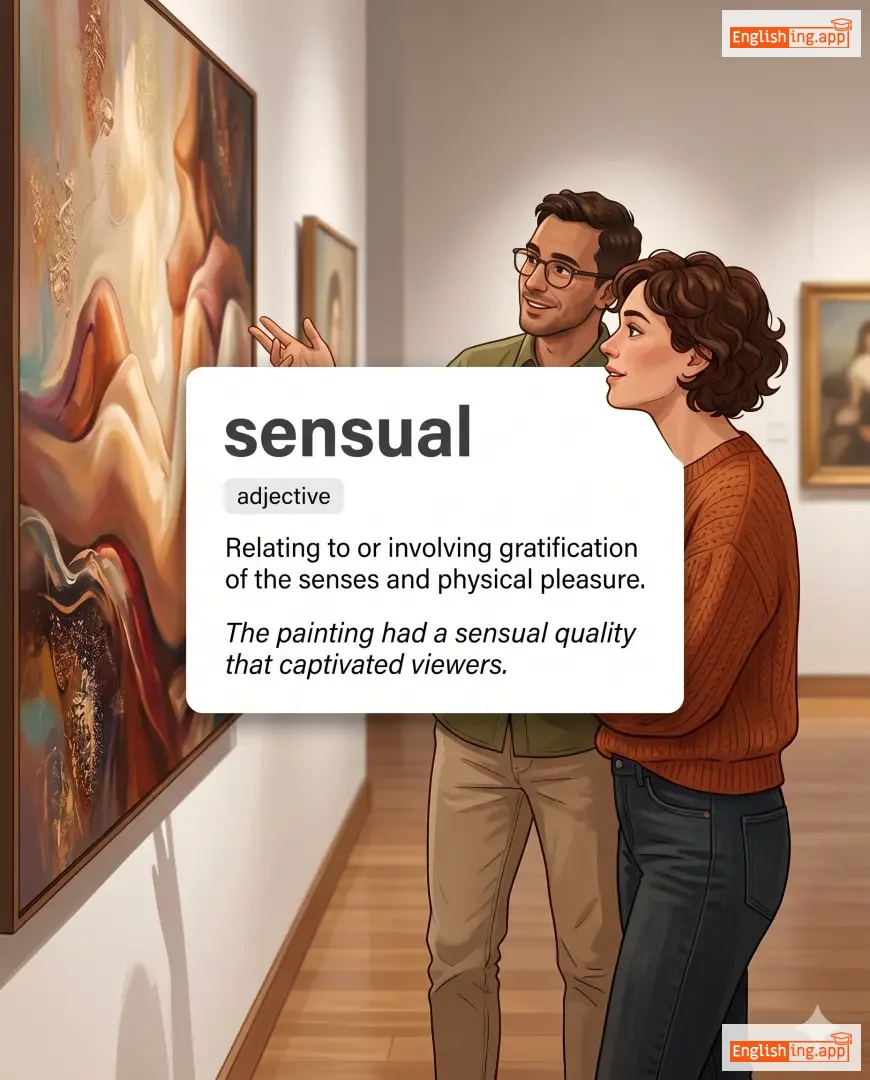
Relating to or involving gratification of the senses and physical pleasure.
••••••
|
The painting had a sensual quality that captivated viewers. |
Картина имела чувственную атмосферу, которая захватывала зрителей.
Kartina imela chuvstvennuyu atmosferu, kotoraya zakhvatyvala zritelyey.
••••••
|
sensual pleasures |
pleasures that appeal to the physical senses
••••••
|
чувственные удовольствия
chuvstvennye udovol'stviya
••••••
|
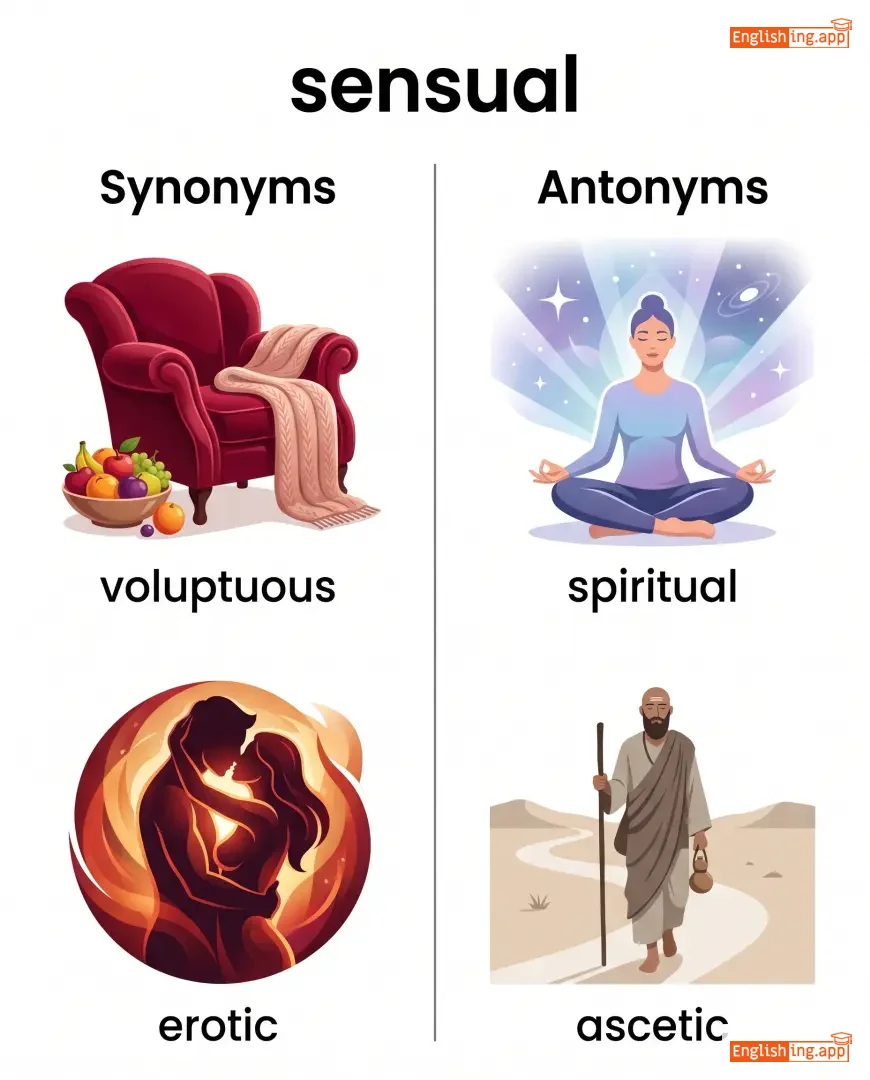
voluptuous, erotic, physical, carnal
••••••
|
spiritual, ascetic
••••••
|
sensual pleasures, sensual experience, sensual desire, sensual attraction
••••••
|
Чувственный = чувства + удовольствие.
••••••
|
|
#7968
🧠
|
/sɛnˈsɔːrɪəm/
noun
(сенсориум)
••••••
|
- •••••• |
сенсорный центр
sensorny tsentr
••••••
|
- •••••• | - •••••• | - •••••• | - •••••• |
The part of the brain or mind concerned with the reception and interpretation of sensory stimuli.
••••••
|
The patient’s sensorium was clouded after the accident. |
Сенсорный центр пациента был затуманен после аварии.
Sensorny tsentr patsiyenta byl zatumanyen posle avarii.
••••••
|
- •••••• | - •••••• | - •••••• |
mind, consciousness, awareness, perception
••••••
|
unconsciousness, insensibility
••••••
|
clouded sensorium, sensorium state, altered sensorium, sensorium examination
••••••
|
Sensorium = Sense + Auditorium → Центр, где обрабатываются все ощущения.
••••••
|
|
#7969
⚠️
|
/ˌsɛnsɪtaɪˈzeɪʃən/
noun
(sensitizéyshon)
••••••
|
- •••••• |
сенсибилизация
sensibilizatsiya
••••••
|
- •••••• | - •••••• | - •••••• | - •••••• |
The process of becoming sensitive to a substance, situation, or influence.
••••••
|
The doctor warned about the sensitization caused by repeated exposure to chemicals. |
Врач предупредил о сенсибилизации, вызванной повторным воздействием химических веществ.
Vrach predupredil o sensibillizatsii, vyzvannoy povtornym vozdeystviyem khimicheskikh veshchestv.
••••••
|
- •••••• | - •••••• | - •••••• |
conditioning, awareness, responsiveness, adaptation
••••••
|
desensitization, numbness
••••••
|
allergic sensitization, chemical sensitization, sensitization process, sensitization effect
••••••
|
Сенсибилизация – это становление чувствительным, например, к химикатам.
••••••
|
|
#7970
🌸
|
/ˈsɛnsɪtɪv/
adjective
(сензитив)
••••••
|
|
чувствительный
chuvstvitel'nyy
••••••
|
- •••••• | - •••••• | - •••••• | - •••••• |
Quick to detect or respond to slight changes, signals, or influences; easily affected emotionally or physically.
••••••
|
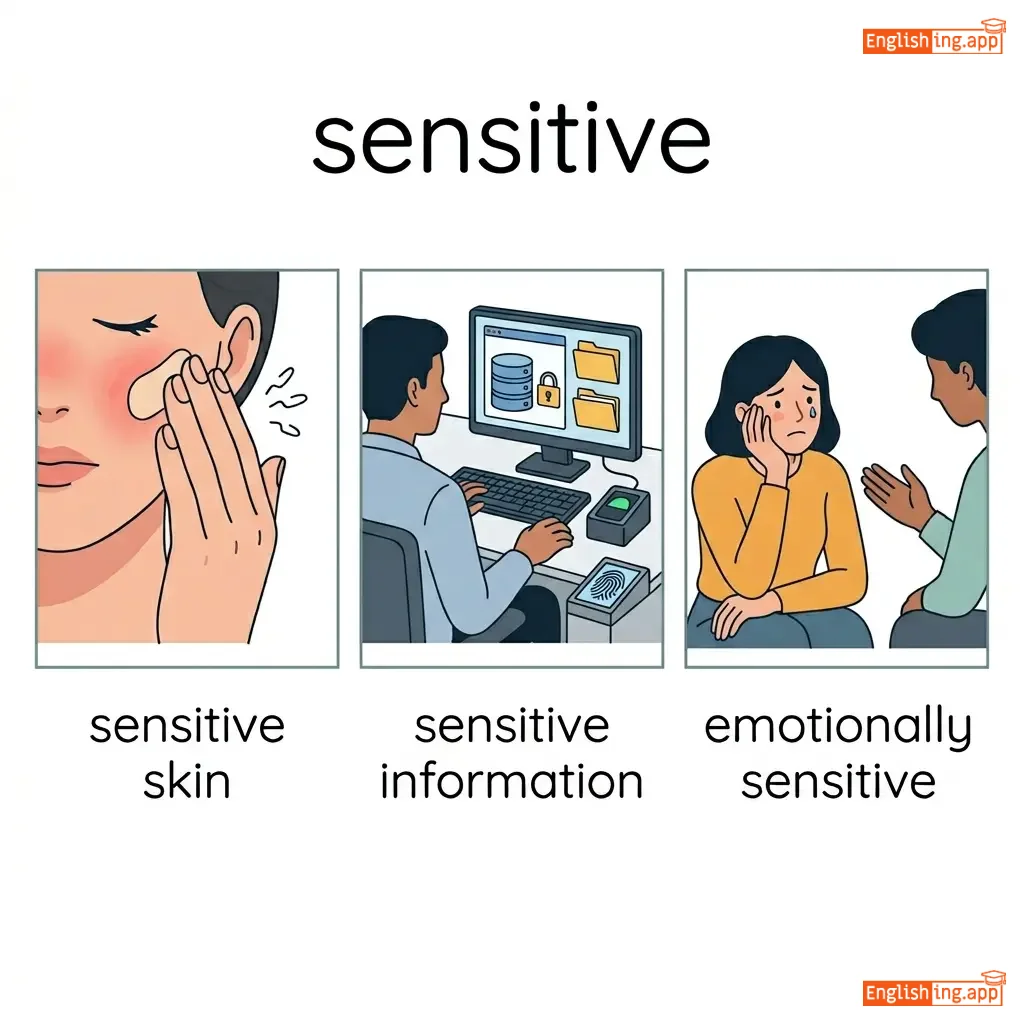
She has very sensitive skin that reacts to most cosmetics. |
У неё очень чувствительная кожа, которая реагирует на большинство косметических средств.
U nee ochen' chuvstvitel'naya kozha, kotoraya reaguet na bol'shinstvo kosmeticheskikh sredstv.
••••••
|
a sensitive issue |
a topic that is delicate or difficult to discuss
••••••
|
чувствительная тема
chuvstvitel'naya tema
••••••
|
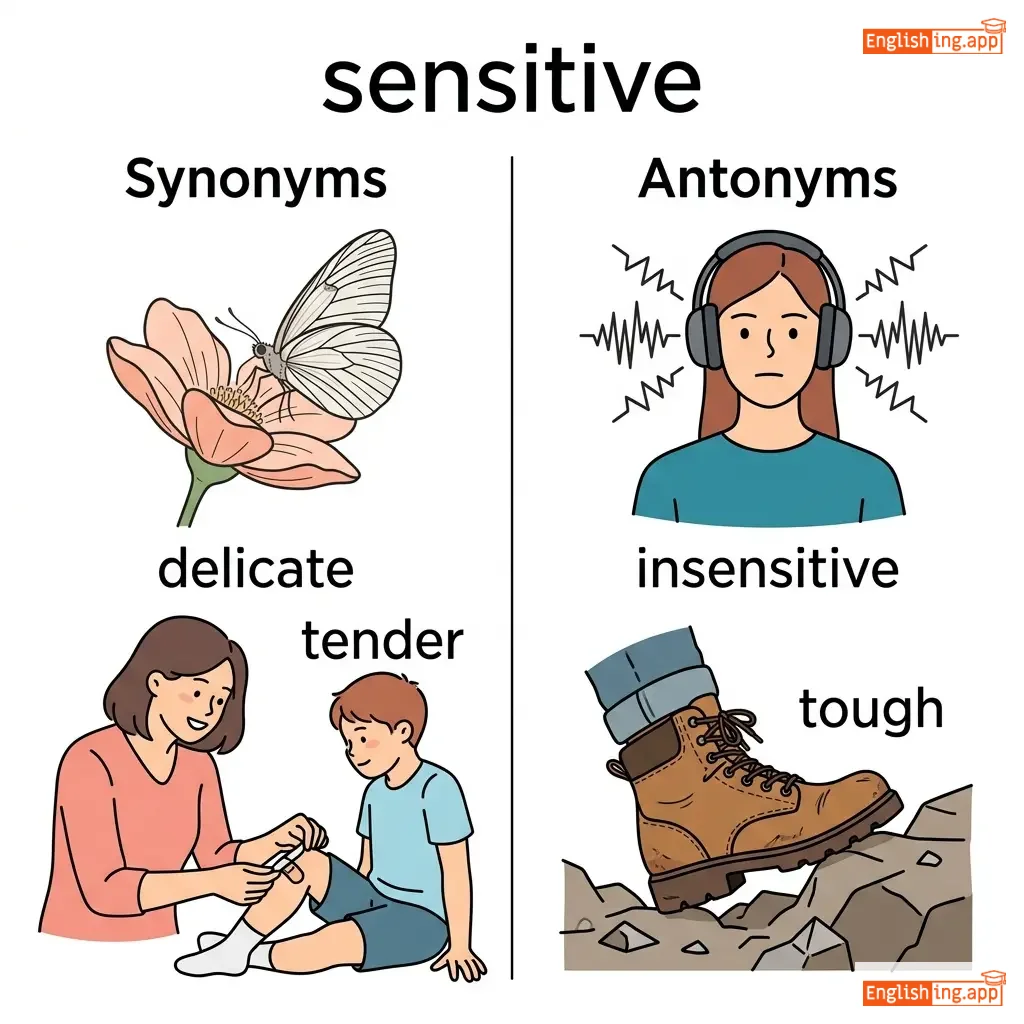
delicate, tender, responsive, emotional, fragile
••••••
|
insensitive, tough, unfeeling
••••••
|
sensitive skin, sensitive information, emotionally sensitive, highly sensitive, sensitive issue
••••••
|
Чувствительный, как ранимая душа, которая реагирует на каждый жест.
••••••
|
|
#7971
🎨
|
/ˌsɛnsəˈbɪləti/
noun
(сенсибилити)
••••••
|
- •••••• |
чувствительность
chuvstvitel'nost'
••••••
|
- •••••• | - •••••• | - •••••• | - •••••• |
The ability to appreciate and respond to complex emotional or aesthetic influences; sensitivity.
••••••
|
Her artistic sensibility impressed everyone. |
Ее художественная чувствительность впечатлила всех.
Eye khudozhestvennaya chuvstvitel'nost' vpechatlila vsekh.
••••••
|
- •••••• | - •••••• | - •••••• |
sensitivity, awareness, perception, feeling, refinement
••••••
|
insensitivity, indifference, numbness
••••••
|
artistic sensibility, cultural sensibility, moral sensibility, sensibility to beauty
••••••
|
Sensibility по-русски — чувствительность, способность понимать эмоции и искусство.
••••••
|
|
#7972
🧠
|
/sɛns/
noun/verb
(сэнс)
••••••
|
- •••••• |
чувство
chuvstvo
••••••
|
sensed
сенсирован
••••••
|
sensed
сенсирован
••••••
|
senses
сенсирует
••••••
|
sensing
сенсинг
••••••
|
A faculty by which the body perceives external stimuli; or to perceive something without being told.
••••••
|
She had a strong sense of responsibility.
У неё было сильное чувство ответственности.
••••••
|
У неё было сильное чувство ответственности.
U nee bylo sil'noe chuvstvo otvetstvennosti.
••••••
|
common sense
здравый смысл
••••••
|
sound practical judgment that is independent of specialized knowledge
••••••
|
здравый смысл
zdravyy smysl
••••••
|
feeling, perception, awareness, intuition, judgment
••••••
|
nonsense, folly, ignorance
••••••
|
sense of humor, sense of duty, sense danger, make sense
••••••
|
Sense = sensibilité en russe, на русском чувствуем как интуитивное ощущение.
••••••
|
|
#7973
🌟
|
/sɛnˈseɪʃənəl/
adjective
(sɛnsɛɪʃənəl)
••••••
|
- •••••• |
сенсационный
sensatsionnyi
••••••
|
- •••••• | - •••••• | - •••••• | - •••••• |
Causing great public interest and excitement; outstanding or impressive.
••••••
|
The team had a sensational victory in the finals.
Команда одержала сенсационную победу в финале.
••••••
|
Команда одержала сенсационную победу в финале.
Komanda oderzhala sensatsionnuyu pobedu v finale.
••••••
|
sensational news
сенсационные новости
••••••
|
news that is exaggerated to provoke public interest
••••••
|
сенсационные новости
sensatsionnye novosti
••••••
|
amazing, impressive, extraordinary, fabulous, astonishing
••••••
|
ordinary, dull, boring
••••••
|
sensational performance, sensational headline, sensational news, sensational success
••••••
|
Sensational = Sense + National = Сенсационные новости
••••••
|
|
#7974
✨
|
/sɛnˈseɪʃən/
noun
(сэнсейшн)
••••••
|
- •••••• |
сенсация
sensatsiya
••••••
|
- •••••• | - •••••• | - •••••• | - •••••• |
A physical feeling or a strong reaction of excitement and interest.
••••••
|
The singer became a sensation overnight. |
Певец стал сенсацией за одну ночь.
Pevets stal sensatsiey za odnu noch'.
••••••
|
cause a sensation |
to create a great deal of excitement and interest
••••••
|
вызвать сенсацию
vyzvat' sensatsiyu
••••••
|
feeling, perception, excitement, thrill, buzz
••••••
|
numbness, apathy, indifference
••••••
|
create a sensation, public sensation, sensation in the media, sensation of pain
••••••
|
Sensation = Scene + action, как сцена, которая вызывает сильные эмоции.
••••••
|
|
#7975
👴
|
/sɪˈnɪləti/
noun
(сенилити)
••••••
|
- •••••• |
старческое слабоумие
starcheskoye slaboumye
••••••
|
- •••••• | - •••••• | - •••••• | - •••••• |
The state of being old and showing the weaknesses of age, especially mental decline.
••••••
|
His forgetfulness was attributed to senility.
His forgetfulness was attributed to senility.
••••••
|
Его забывчивость была приписана старческому слабоумию.
Yego zabyvchivost' byla pririsena starcheskomu slaboumiyu.
••••••
|
- •••••• | - •••••• | - •••••• |
old age, decrepitude, feebleness, dotage, infirmity
••••••
|
youth, vitality, vigor
••••••
|
senility in old age, signs of senility, suffer from senility, mental senility
••••••
|
Сенилити похоже на старческий, что связано с возрастом.
••••••
|
|
#7976
🧓
|
/ˈsiː.naɪl/
adjective
(сенильный)
••••••
|
- •••••• |
слабость, связанная с возрастом
slabost', svyazannaya s vozrastom
••••••
|
- •••••• | - •••••• | - •••••• | - •••••• |
Showing the weaknesses of old age, especially mental decline.
••••••
|
The old man became senile and forgot familiar faces.
Старик стал сенильным и забыл знакомые лица.
••••••
|
Старик стал сенильным и забыл знакомые лица.
Starik stal senil'nym i zabyl znakomye litsa.
••••••
|
senile dementia
сенильная деменция
••••••
|
Cognitive decline in elderly people, often associated with memory loss.
••••••
|
сенильная деменция
senil'naya dementsiya
••••••
|
decrepit, aged, feeble, forgetful
••••••
|
alert, youthful, sharp
••••••
|
senile dementia, senile old age, senile patient
••••••
|
Сенильный - когда старость забирает память и 'свежесть'.
••••••
|
|
#7977
🍂
|
/səˈnɛs.əns/
noun
(сенесценция)
••••••
|
- •••••• |
старение
stareniye
••••••
|
- •••••• | - •••••• | - •••••• | - •••••• |
The process of growing old or the condition of aging.
••••••
|
The biologist studied senescence in plants to understand aging.
Биолог изучал сенесценцию растений, чтобы понять старение.
••••••
|
Биолог изучал сенесценцию растений, чтобы понять старение.
Biolog izuchal senestsentsiyu rasteniy, chtoby ponyat' stareniye.
••••••
|
- •••••• | - •••••• | - •••••• |
aging, old age, decline, degeneration
••••••
|
youth, vitality
••••••
|
cellular senescence, human senescence, senescence process
••••••
|
Senescence означает старение, как листья деревьев осенью 🍂.
••••••
|
|
#7978
⛪
|
/ˈsɛm.ɪ.nɛr.i/
noun
(семинария)
••••••
|
- •••••• |
семинария
seminariya
••••••
|
- •••••• | - •••••• | - •••••• | - •••••• |
A school or college for training priests, ministers, or rabbis.
••••••
|
He decided to enroll in a seminary to study theology. |
Он решил записаться в семинарию, чтобы изучать теологию.
On reshil zapisatsya v seminariju, chtoby izuchat' teologiyu.
••••••
|
- •••••• | - •••••• | - •••••• |
theological college, divinity school, religious school
••••••
|
secular school, public school
••••••
|
enter seminary, seminary student, seminary training
••••••
|
Семинария = место для религиозного обучения.
••••••
|
|
#7979
🎓
|
/ˈsɛm.ɪ.nɑːr/
noun
(семинар)
••••••
|
- •••••• |
семинар
seminar
••••••
|
- •••••• | - •••••• | - •••••• | - •••••• |
A meeting for discussion or training, especially in an academic setting.
••••••
|
The professor invited all students to attend the seminar on climate change.
Профессор пригласил всех студентов на семинар по изменению климата.
••••••
|
Профессор пригласил всех студентов на семинар по изменению климата.
Professor priglasil vsekh studentov na seminar po izmeneniyu klimata.
••••••
|
seminar series
серия семинаров
••••••
|
A sequence of related seminars on a particular subject.
••••••
|
серия семинаров
seriya seminarov
••••••
|
workshop, symposium, conference, lecture, tutorial
••••••
|
silence, self-study
••••••
|
attend seminar, seminar series, seminar hall, seminar discussion
••••••
|
Семинар - место для обучения 📚
••••••
|
Vocabulary Quiz
Test your vocabulary by matching words with their translations or meanings.
Login to take the quiz
Comments (0)
Share your thoughts and join the discussion.
Join the discussion by logging in
Login to CommentNo comments yet
Be the first to share your thoughts!