

Обновитесь для доступа ко всему словарю
Получите неограниченный доступ ко всем словам с подпиской Pro
Обновить до ProПеревод
Прошедшее
Причастие прошедшего времени
Третье лицо единственного числа
Герундий
Значение
Пример предложения
Перевод примера предложения
Синонимы
Антонимы
Коллокации
Мнемоника


Swipe left or right, or use the buttons. Tap image to zoom.
Обновитесь для доступа ко всем предложениям
Получите неограниченный доступ ко всем предложениям с подпиской Pro
Обновить до ProПеревод примера предложения
Слово
Lesson 61Lesson 61 - Переключатель маски
|
Эмодзи
|
Слово | Images | Перевод | Прошедшее | Причастие прошедшего времени | Третье лицо единственного числа | Герундий | Значение | Пример предложения | Перевод примера предложения | Пример выражения | Значение примера выражения | Перевод примера выражения | Синонимы | Антонимы | Коллокации | Мнемоника |
|---|---|---|---|---|---|---|---|---|---|---|---|---|---|---|---|---|---|
|
#1801
⚡
|
/kənˈsʌmpʃən/
noun
(kənˈsʌmpʃən)
••••••
|
|
потребление
potreblenie
••••••
|
- •••••• | - •••••• | - •••••• | - •••••• |
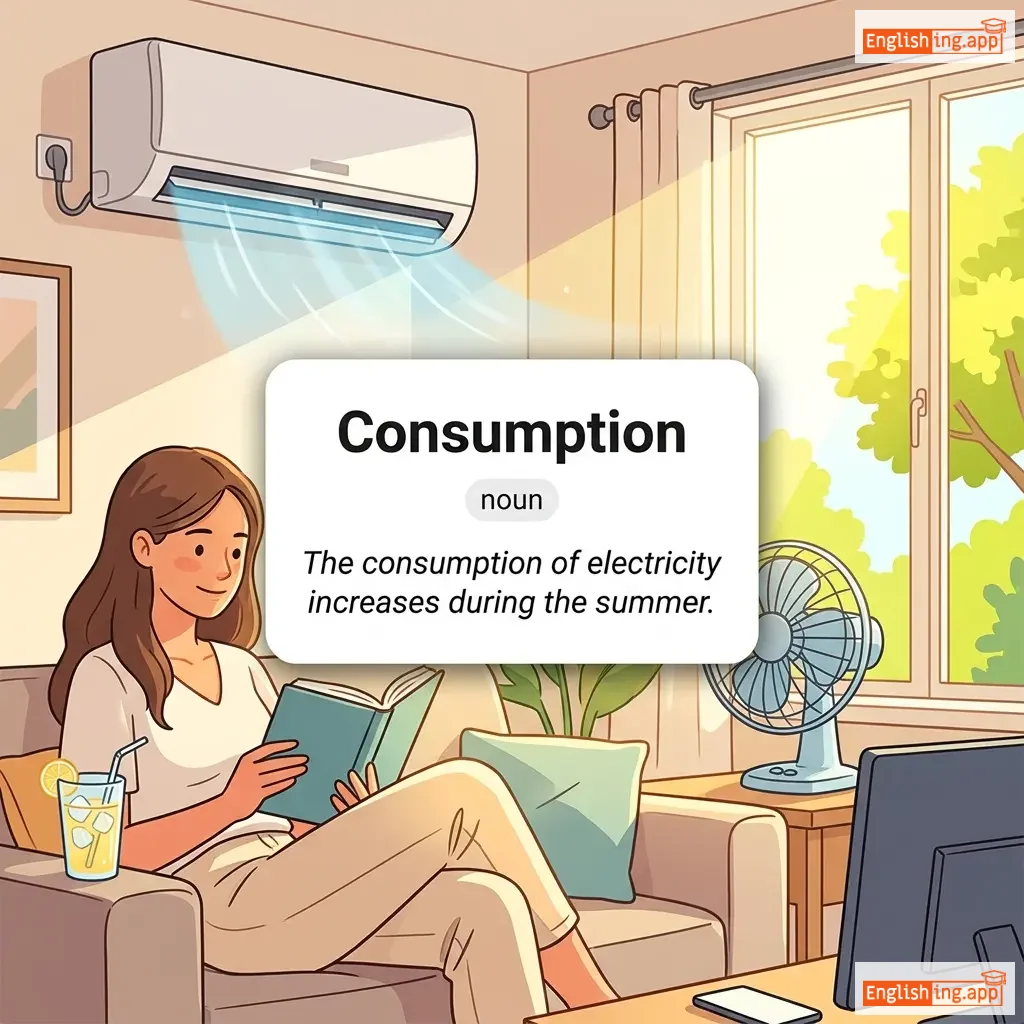
The act of using up resources, goods, or energy; also refers to the eating or drinking of something.
••••••
|
The consumption of electricity increases during the summer. |
Потребление электричества увеличивается летом.
Potreblenie elektrichestva uvelichivaetsya letom.
••••••
|
consumption tax |
A tax placed on goods and services purchased by consumers.
••••••
|
потребительский налог
potrebitelskiy nalog
••••••
|
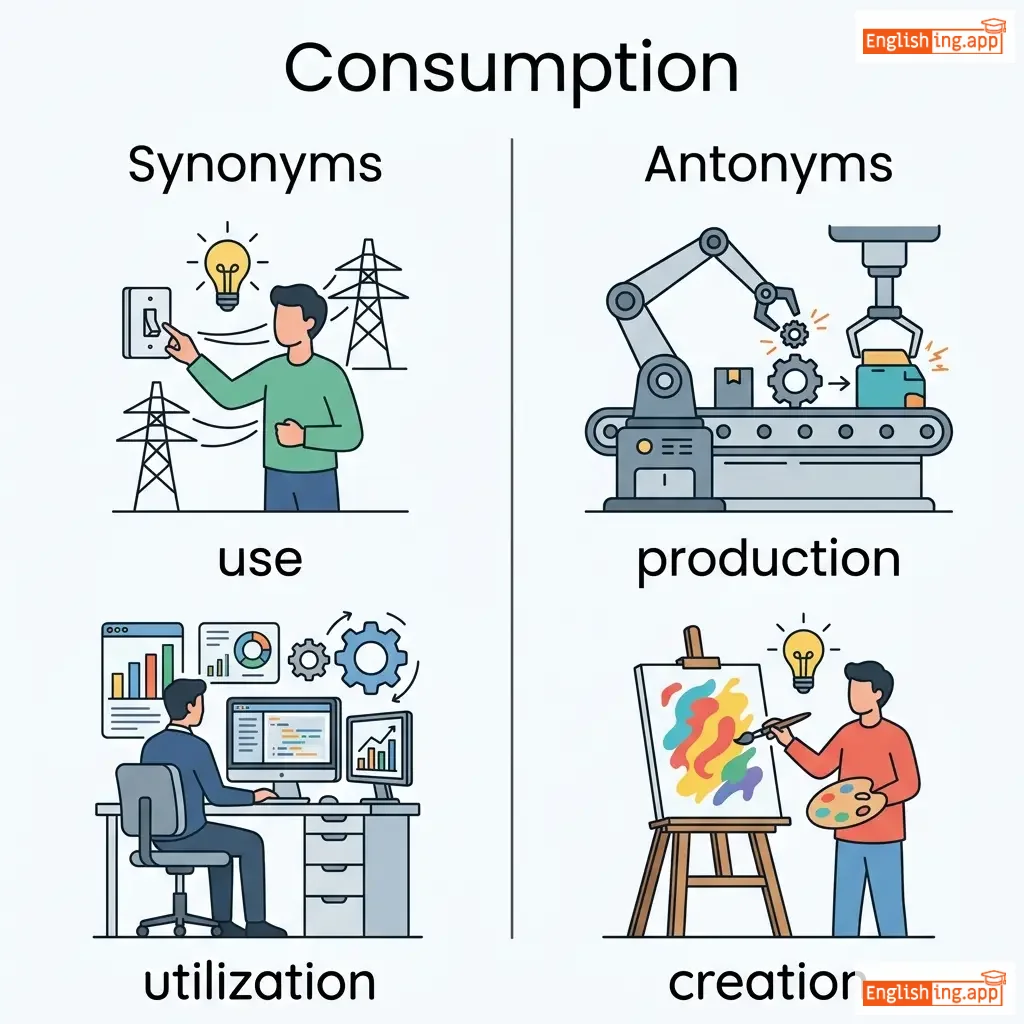
use, utilization, expenditure, intake, absorption
••••••
|
production, creation, conservation
••••••
|
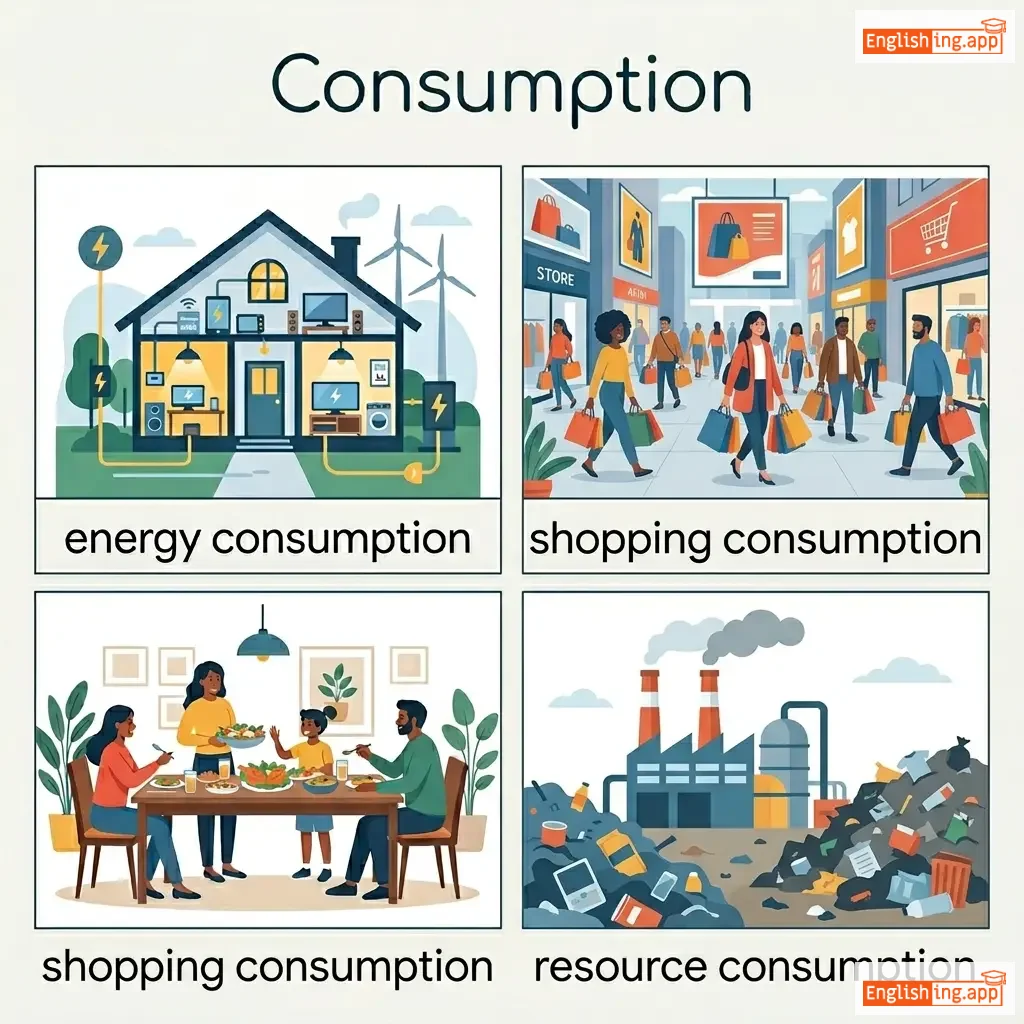
energy consumption, food consumption, mass consumption, over consumption
••••••
|
Потребление - это использовать и есть, как электричество, которое потребляется и увеличивается летом.
••••••
|
|
#1802
😊
|
/ˈkɒntɛnt/
adjective
(kontent)
••••••
|
- •••••• |
удовлетворённый, довольный
udovletvorjonnyj, dovol'nyj
••••••
|
- •••••• | - •••••• | - •••••• | - •••••• |
in a state of satisfaction; pleased
••••••
|
He felt content after finishing his work. |
Он чувствовал себя удовлетворённым после того, как завершил свою работу.
On chuvstvoval sebya udovletvorjonnym posle togo, kak zavershil svoyu rabotu.
••••••
|
- •••••• | - •••••• | - •••••• |
satisfied, pleased, happy, fulfilled
••••••
|
discontent, unhappy, dissatisfied
••••••
|
content with, feel content, perfectly content, content smile
••••••
|
Content значит удовлетворённый - завершив работу, ты чувствуешь удовлетворение
••••••
|
|
#1803
🥇
|
/kənˈtɛndər/
noun
(kontender)
••••••
|
- •••••• |
конкурент, претендент
konkurent, pretendent
••••••
|
- •••••• | - •••••• | - •••••• | - •••••• |
a person or team competing for a title or prize
••••••
|
She is a strong contender for the mayoral position.
Она сильный претендент на пост мэра.
••••••
|
Она сильный претендент на пост мэра.
Ona sil'nyy pretendent na post mera.
••••••
|
- •••••• | - •••••• | - •••••• |
challenger, competitor, aspirant, nominee
••••••
|
non-contender, bystander
••••••
|
strong contender, main contender, serious contender, leading contender
••••••
|
Contender - тот, кто претендует на победу, как претендент.
••••••
|
|
#1804
🏆
|
/kənˈtɛnd/
verb
(контенд)
••••••
|
|
состязаться, утверждать
sostyazatsya, utverzhdat
••••••
|
contended
контендед
••••••
|
contended
контендед
••••••
|
contends
контендс
••••••
|
contending
контендий
••••••
|
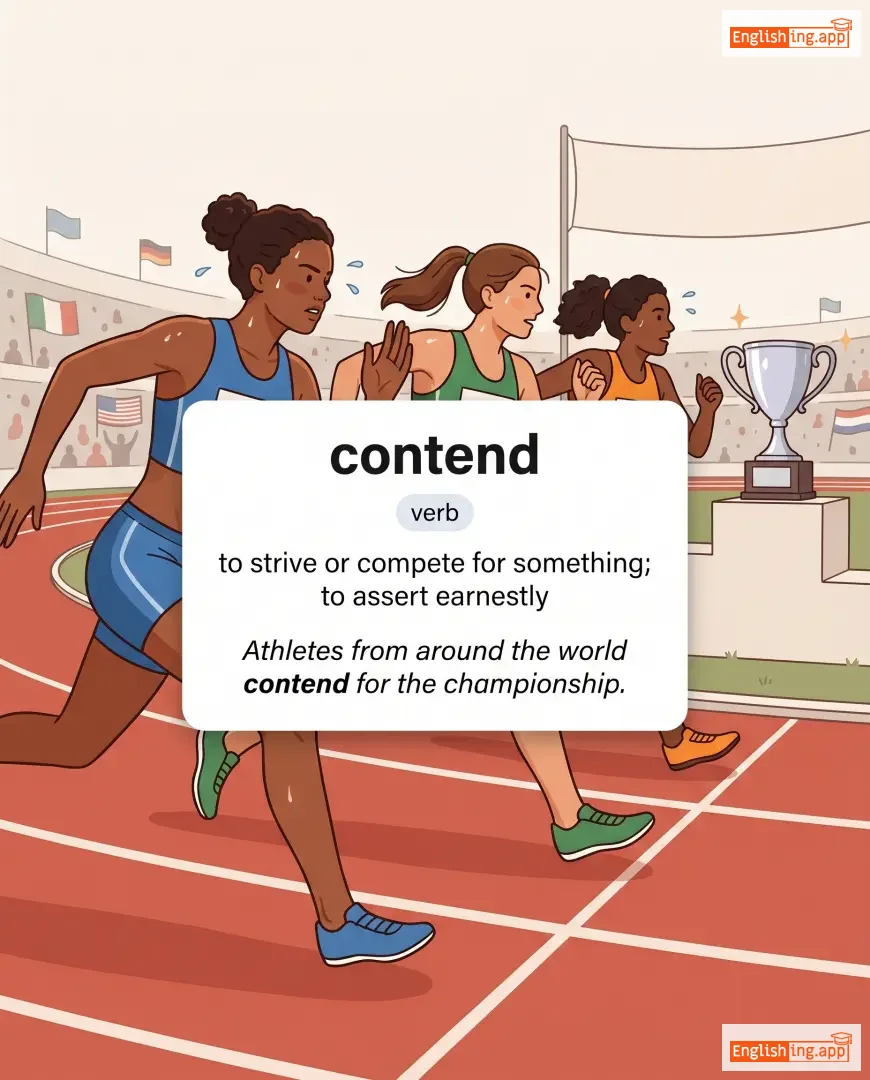
to strive or compete for something; to assert earnestly
••••••
|
Athletes from around the world contend for the championship.
Атлеты со всего мира борются за чемпионство.
••••••
|
Атлеты со всего мира борются за чемпионство.
Atlety so vsego mira boryutsya za chempionstvo.
••••••
|
- •••••• | - •••••• | - •••••• |
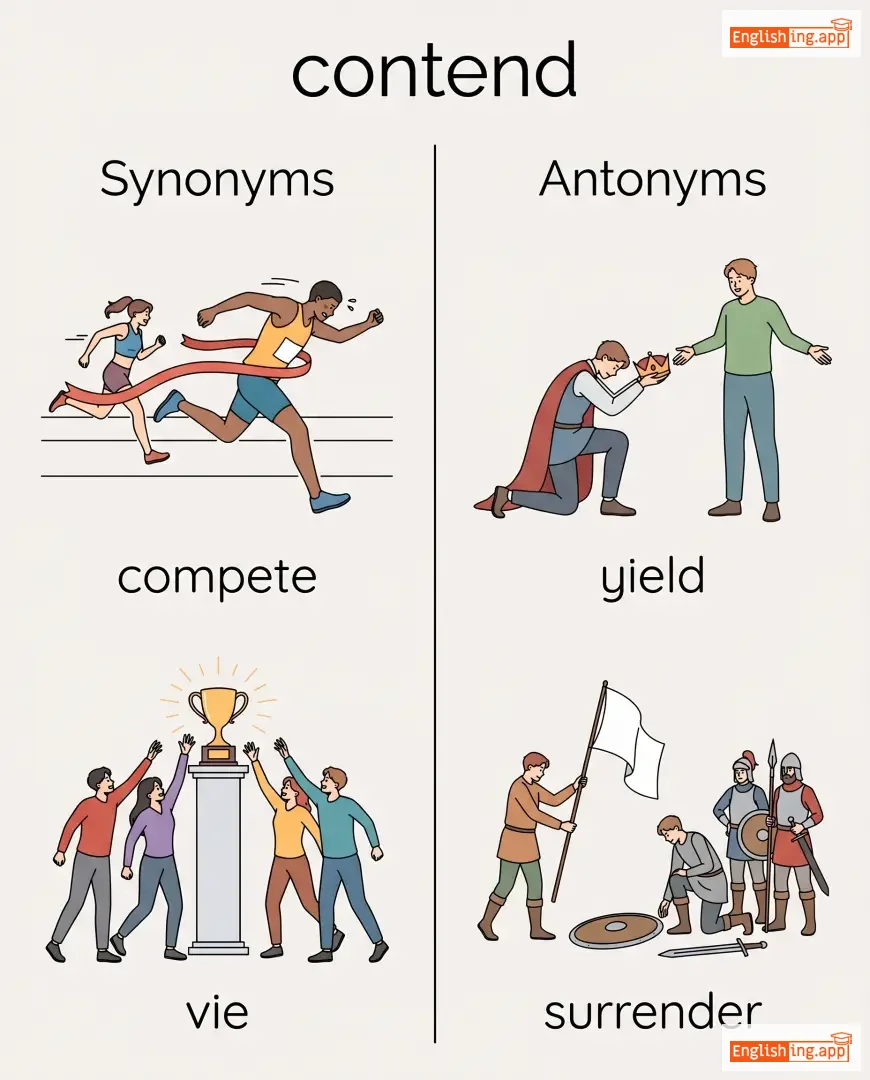
compete, vie, struggle, assert
••••••
|
yield, surrender, concede
••••••
|
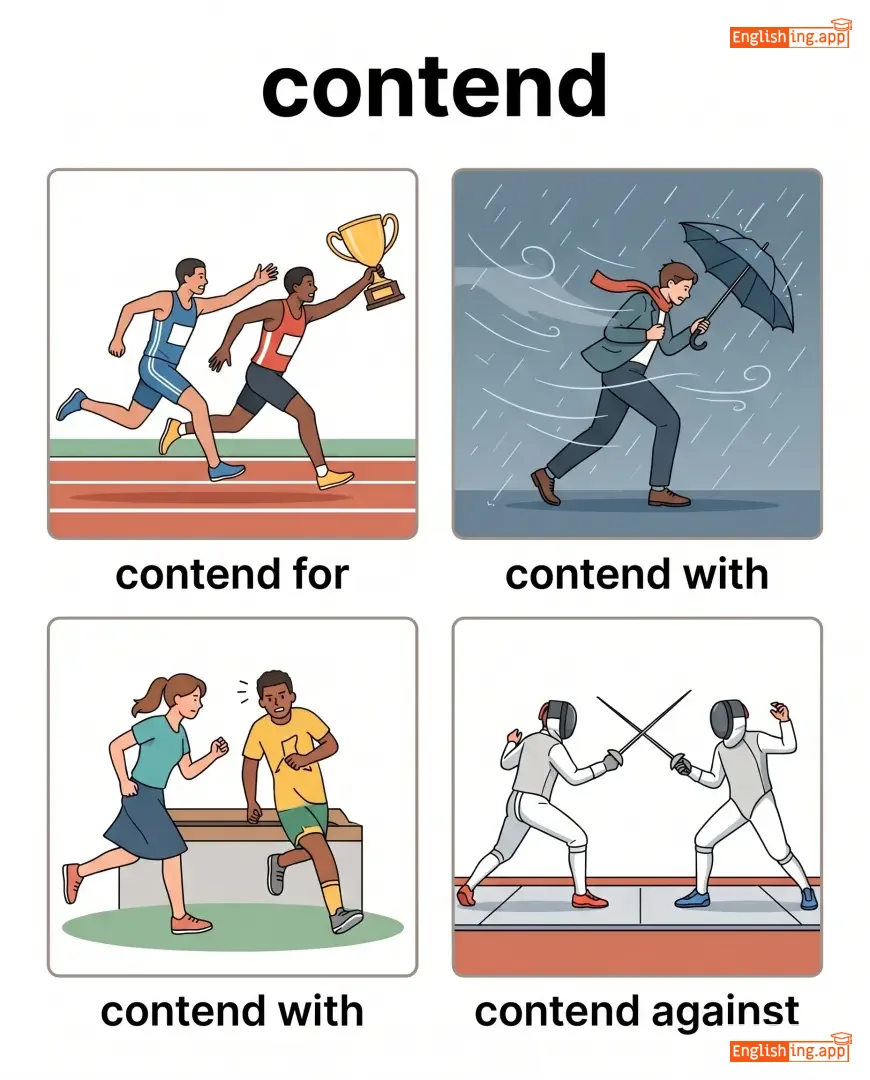
contend for, contend with, contend against, contend successfully
••••••
|
Contend означает бороться в конкурсах - Всегда contend в конкурсах
••••••
|
|
#1805
😤
|
/kənˈtɛmptʃuəs/
adjective
(кənˈtɛmптʃуэс)
••••••
|
- •••••• |
презрительный, пренебрежительный
prezritylnyy, prenebrezhitel'nyy
••••••
|
- •••••• | - •••••• | - •••••• | - •••••• |
showing or expressing contempt; scornful
••••••
|
She gave him a contemptuous glance. |
Она посмотрела на него презрительным взглядом.
Ona posmotrela na nego prezritelnym vzglyadom.
••••••
|
- •••••• | - •••••• | - •••••• |
scornful, disdainful, derisive, sneering
••••••
|
respectful, admiring, humble
••••••
|
contemptuous look, contemptuous tone, contemptuous remark
••••••
|
Contemptuous означает взгляд с презрением - Show contempt in eyes
••••••
|
|
#1806
😒
|
/kənˈtɛmptəbl/
adjective
(кənˈтɛmптəбл)
••••••
|
- •••••• |
презренный, достойный презрения
prezrenny, dostoyny prezreniya
••••••
|
- •••••• | - •••••• | - •••••• | - •••••• |
deserving of contempt; despicable
••••••
|
His deceitful actions were truly contemptible. |
Его обманные действия были действительно презренными.
Ego obmannye deystviya byli deystvitel'no prezrennymi.
••••••
|
- •••••• | - •••••• | - •••••• |
despicable, vile, abhorrent, shameful
••••••
|
admirable, honorable, respectable
••••••
|
contemptible behavior, contemptible act, contemptible lie
••••••
|
Презренный начинается с презрения. Что презирается — отвратительно.
••••••
|
|
#1807
😤
|
/kənˈtɛmpt/
noun
(контемпт)
••••••
|
- •••••• |
презрение
prezrenie
••••••
|
- •••••• | - •••••• | - •••••• | - •••••• |
a strong feeling of dislike and lack of respect towards someone or something
••••••
|
He spoke with contempt about the corrupt officials.
Он говорил с презрением о коррумпированных чиновниках.
••••••
|
Он говорил с презрением о коррумпированных чиновниках.
On govoril s prezreniem o korrumpirovannykh chinovnikakh.
••••••
|
hold in contempt
держать в презрении
••••••
|
to consider someone or something unworthy of respect
••••••
|
держать кого-либо в презрении
derzhat kogo libo v prezrenii
••••••
|
disdain, scorn, disrespect, derision
••••••
|
respect, admiration, honor
••••••
|
deep contempt, open contempt, show contempt, treat with contempt
••••••
|
Mnemonic: Контемпт = кон + темп + т, запомни: презрение к коррупции
••••••
|
|
#1808
🎨
|
/kənˈtɛmpərɛri/
adjective
(контемпорари)
••••••
|
- •••••• |
современный, современный
sovremennyy, sovremennyy
••••••
|
- •••••• | - •••••• | - •••••• | - •••••• |
belonging to the same time period; modern
••••••
|
She enjoys contemporary art exhibitions.
Она наслаждается выставками современного искусства.
••••••
|
Она наслаждается выставками современного искусства.
Ona naslazhdaetsya vystavkami sovremennogo iskusstva.
••••••
|
contemporary issues
современные проблемы
••••••
|
current problems or topics relevant to the present time
••••••
|
современные проблемы
sovremennye problemy
••••••
|
modern, current, present-day, up-to-date
••••••
|
old-fashioned, outdated, ancient
••••••
|
contemporary art, contemporary culture, contemporary society, contemporary issues
••••••
|
Contemporary = con+temporary = современный, текущий.
••••••
|
|
#1809
🕰️
|
/kənˌtɛmpəˈreɪniəs/
adjective
(kɒntɛmpəˈreɪnɪəs)
••••••
|
- •••••• |
современны́й
sovremennyy
••••••
|
- •••••• | - •••••• | - •••••• | - •••••• |
existing, happening, or occurring at the same time
••••••
|
The two artists were contemporaneous and often influenced each other. |
Оба художника были современными и часто влияли друг на друга.
Oba khudozhnika byli sovremennymi i chasto vliyali drug na druga.
••••••
|
- •••••• | - •••••• | - •••••• |
simultaneous, coexistent, concurrent, synchronous
••••••
|
separate, different, asynchronous
••••••
|
contemporaneous events, contemporaneous writings, contemporaneous accounts
••••••
|
Contemporary и contemporaneous — оба означают современный.
••••••
|
|
#1810
🤔
|
/ˈkɒntəmpleɪt/
verb
(kəntɛmpleɪt)
••••••
|
- •••••• |
размышлять
razmyshlyat
••••••
|
contemplated
kəntɛmpleɪtəd
••••••
|
contemplated
kəntɛmpleɪtəd
••••••
|
contemplates
kəntɛmpleɪts
••••••
|
contemplating
kəntɛmpleɪtɪŋ
••••••
|
to think deeply and carefully about something; to consider thoughtfully
••••••
|
She sat quietly to contemplate her future plans.
Она сидела тихо, чтобы обдумать свои будущие планы.
••••••
|
Она сидела тихо, чтобы обдумать свои будущие планы.
Ona sidelа tikho, chtoby obdumаt' svoi budushchie plany.
••••••
|
contemplate the meaning of life
размышлять о смысле жизни
••••••
|
to think deeply about the purpose or nature of life
••••••
|
размышлять о смысле жизни
razmyshlyat o smysle zhizni
••••••
|
consider, ponder, meditate, reflect, deliberate
••••••
|
ignore, dismiss, neglect
••••••
|
contemplate the future, contemplate change, deeply contemplate, seriously contemplate
••••••
|
Размышлять — это глубокое размышление о жизни.
••••••
|
|
#1811
😒
|
/kənˈtɛm/
verb
(kənˈtɛm)
••••••
|
- •••••• |
презирать
prezirat
••••••
|
contemned
kənˈtɛmd
••••••
|
contemned
kənˈtɛmd
••••••
|
contemns
kənˈtɛmz
••••••
|
contemning
kənˈtɛmɪŋ
••••••
|
to treat or regard with disdain, scorn, or contempt
••••••
|
He would never contemn honest work, no matter how humble.
ʌɪ wʊd ˈnɛvər kənˈtɛmn hɒnɪst wɜrk, nəʊ ˈmætər haʊ hʌmbəl.
••••••
|
Он никогда не стал бы презирать честную работу, независимо от того, насколько она скромна.
On nikogda ne stal by prezirat' chestnuyu rabotu, nezavisimo ot togo, naskol'ko ona skromna.
••••••
|
- •••••• | - •••••• | - •••••• |
despise, scorn, disdain, deride, spurn
••••••
|
respect, honor, admire
••••••
|
contemn authority, contemn tradition, openly contemn, silently contemn
••••••
|
Contemn означает презирать, как и слово презирать.
••••••
|
|
#1812
☣️
|
/kənˈtæmɪneɪt/
verb
••••••
|
- •••••• | - •••••• |
contaminated
••••••
|
contaminated
••••••
|
contaminates
••••••
|
contaminating
••••••
|
To make something impure, dirty, or harmful by contact with a poisonous or polluting substance.
••••••
|
The river was contaminated by industrial waste. |
- •••••• |
contaminate the mind |
To corrupt someone's thoughts or beliefs.
••••••
|
- •••••• |
pollute, defile, taint, spoil, infect
••••••
|
purify, cleanse, sanitize
••••••
|
contaminate water, contaminate food, contaminate soil, contaminate environment
••••••
|
No •••••• |
|
#1813
😂
|
/kənˈteɪdʒəs/
adjective
(кэнˈтейджəs)
••••••
|
- •••••• |
заразный
zarazny
••••••
|
- •••••• | - •••••• | - •••••• | - •••••• |
Able to be transmitted from one person to another, typically by direct contact; also used for emotions or attitudes that spread quickly.
••••••
|
Her laughter was so contagious that everyone started laughing. |
Её смех был настолько заразным, что все начали смеяться.
Eyo smekh byl nastol'ko zaraznym, chto vse nachali smeyat'sya.
••••••
|
contagious enthusiasm |
An excitement or energy that spreads quickly to others.
••••••
|
заразный энтузиазм
zaraznyy entuziyazm
••••••
|
infectious, communicable, transmittable, spreading
••••••
|
noninfectious, immune
••••••
|
contagious disease, contagious smile, contagious laughter, highly contagious
••••••
|
Заразный, как смех, который распространяется по всему.
••••••
|
|
#1814
🦠
|
/kənˈteɪdʒən/
noun
(kəntædʒən)
••••••
|
- •••••• |
заражение
zarazhenie
••••••
|
- •••••• | - •••••• | - •••••• | - •••••• |
The communication of disease from one person to another by close contact; also the spread of harmful ideas or behaviors.
••••••
|
Fear spread like a contagion through the crowd. |
Страх распространился как заражение через толпу.
Strakh rasprostranilsya kak zarazhenie cherez tolpu.
••••••
|
- •••••• | - •••••• | - •••••• |
infection, transmission, spread, epidemic, influence
••••••
|
immunity, prevention
••••••
|
viral contagion, financial contagion, contagion risk, contagion effect
••••••
|
Contagion звучит как 'заражение'—болезнь или страх легко распространяются.
••••••
|
|
#1815
😷
|
/kənˈsʌmptɪv/
adjective
(кэнˈсʌмптив)
••••••
|
- •••••• |
потребительский
potrebitelskiy
••••••
|
- •••••• | - •••••• | - •••••• | - •••••• |
Relating to or characterized by consumption; historically used to describe someone suffering from tuberculosis.
••••••
|
The doctor advised against consumptive habits. |
Врач посоветовал избегать потребительских привычек.
Vrach posovetoval izbegat' potrebitel'skikh privychek.
••••••
|
- •••••• | - •••••• | - •••••• |
wasteful, extravagant, draining, debilitating
••••••
|
productive, conserving, preserving
••••••
|
consumptive habits, consumptive lifestyle, consumptive disease
••••••
|
Consumptive означает привычки, которые потребляют здоровье—потребительский.
••••••
|
|
#1816
😨
|
/ˌkɒnstəˈneɪʃən/
noun
(констернейшн)
••••••
|
- •••••• |
беспокойство
bespokoystvo
••••••
|
- •••••• | - •••••• | - •••••• | - •••••• |
A feeling of anxiety, dismay, or confusion, often caused by something unexpected.
••••••
|
The sudden announcement caused widespread consternation among the employees. |
Внезапное объявление вызвало широкое беспокойство среди сотрудников
Vnezapnoe ob'yavlenie vyzvalo shirokoe bespokoystvo sredi sotrudnikov
••••••
|
- •••••• | - •••••• | - •••••• |
dismay, alarm, fear, shock, anxiety
••••••
|
calm, composure, confidence
••••••
|
cause consternation, in consternation, widespread consternation, with consternation
••••••
|
Когда что-то неожиданное вызывает тревогу и беспокойство, это как констенейшн
••••••
|
|
#1817
🏅
|
/ˈkɒnsəmət/ (adj), /ˈkɒnsəmeɪt/ (verb)
adjective, verb
(konsumet)
••••••
|
|
совершить / полный
sovershit / polny
••••••
|
consummated
konsumirovanny
••••••
|
consummated
konsumirovanny
••••••
|
consummates
konsumiruet
••••••
|
consummating
konsumiruya
••••••
|
to complete or perfect something; showing great skill or excellence
••••••
|
She is a consummate professional in her field.
Она совершенный профессионал в своей области.
••••••
|
Она совершенный профессионал в своей области.
Ona sovershennyy professional v svoey oblasti.
••••••
|
consummate skill
совершенное мастерство
••••••
|
a high level of expertise or mastery
••••••
|
совершенное мастерство
sovershennoe masterstvo
••••••
|
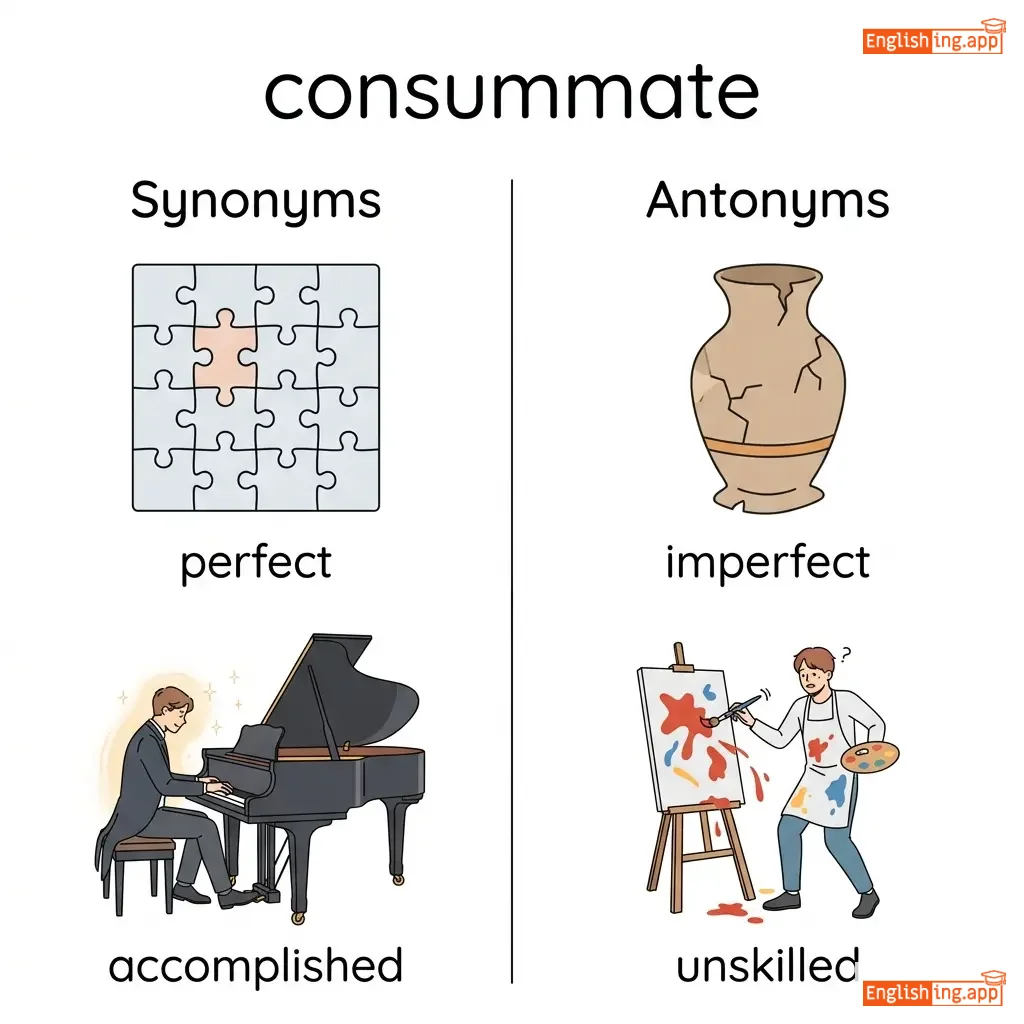
perfect, accomplished, skilled, expert, complete
••••••
|
imperfect, unskilled, amateur
••••••
|
consummate professional, consummate artist, consummate skill, consummate liar
••••••
|
КОНСУММАТ = завершить всё
••••••
|
|
#1818
🏢
|
/ˈkɒnsjʊlət/
noun
(konsulat)
••••••
|
- •••••• |
консульство
konsul'stvo
••••••
|
- •••••• | - •••••• | - •••••• | - •••••• |
the building or office where a consul works
••••••
|
He went to the consulate to renew his visa.
Он пошел в консульство, чтобы продлить свою визу.
••••••
|
Он пошел в консульство, чтобы продлить свою визу.
On poshel v konsul'stvo, chtoby prodlit' svoiu vizu.
••••••
|
- •••••• | - •••••• | - •••••• |
embassy, mission, office, legation
••••••
|
domestic office, home office
••••••
|
visit consulate, consulate building, American consulate, consulate staff
••••••
|
В консульстве консул помогает гражданам.
••••••
|
|
#1819
🎖️
|
/ˈkɒnsəl/
noun
(konsul)
••••••
|
- •••••• |
консул / посол
konsul / posol
••••••
|
- •••••• | - •••••• | - •••••• | - •••••• |
an official appointed by a government to live in a foreign city and protect its citizens and interests there
••••••
|
The consul assisted travelers who lost their passports. |
Консул помог путешественникам, которые потеряли свои паспорта.
Konsul pomog puteshestvennikam, kotorye poteryali svoi pasporty.
••••••
|
- •••••• | - •••••• | - •••••• |
diplomat, envoy, representative, official
••••••
|
citizen, civilian
••••••
|
consul general, vice consul, appoint a consul, foreign consul
••••••
|
CONSUL - это как 'console' для граждан за границей
••••••
|
|
#1820
🧐
|
/kənˈstruː/
verb
(кənˈstruː)
••••••
|
- •••••• |
интерпретировать
interpretirovat'
••••••
|
construed
кənˈstruːd
••••••
|
construed
кənˈstruːd
••••••
|
construes
кənˈstruːz
••••••
|
construing
кənˈstruːɪŋ
••••••
|
to interpret or understand the meaning of something in a particular way
••••••
|
His words could be construed as a threat.
Его слова могут быть интерпретированы как угроза.
••••••
|
Его слова могут быть интерпретированы как угроза.
Ego slova mogut byt' interpretirovany kak ugroza.
••••••
|
construe something as
интерпретировать что-то как
••••••
|
to interpret or take something in a particular sense
••••••
|
интерпретировать что-то как
interpretirovat' chto-to kak
••••••
|
interpret, understand, explain, translate
••••••
|
misinterpret, misunderstand
••••••
|
construe as, wrongly construed, correctly construed, legally construed
••••••
|
CONSTRUE значит строить смысл—интерпретировать что-то.
••••••
|
|
#1821
🏗️
|
/kənˈstrʌkt/
verb
(кэнстракт)
••••••
|
- •••••• |
строить
stroyt
••••••
|
constructed
кэнстракштед
••••••
|
constructed
кэнстракштед
••••••
|
constructs
кэнстрактс
••••••
|
constructing
кэнстрактинг
••••••
|
to build or form something by putting parts together
••••••
|
They plan to construct a new bridge over the river.
Они планируют построить новый мост через реку.
••••••
|
Они планируют построить новый мост через реку.
Oni planiroiut postroit' novyi most cherez reku.
••••••
|
construct an argument
Построить аргумент
••••••
|
to build or develop a logical case or reasoning
••••••
|
Построить аргумент
Postroit' argument
••••••
|
build, erect, assemble, create, establish
••••••
|
demolish, destroy, dismantle
••••••
|
construct a building, construct a theory, construct a bridge, construct meaning
••••••
|
СТРОИТЕЛЬСТВО = строить
••••••
|
|
#1822
🩹
|
/kənˈstrɪndʒ/
verb
(кəнстрɪндж)
••••••
|
- •••••• |
сжимать
szhimat
••••••
|
constringed
кəнстрɪнджд
••••••
|
constringed
кəнстрɪнджд
••••••
|
constringes
кəнстрɪнджес
••••••
|
constringing
кəнстрɪнджинг
••••••
|
to cause to shrink or contract; to constrict
••••••
|
The medicine helped constringe the swollen tissues.
Лекарство помогло сжать опухшие ткани.
••••••
|
Лекарство помогло сжать опухшие ткани.
Lekarstvo pomoglo szhat' opukhshiye tkani.
••••••
|
- •••••• | - •••••• | - •••••• |
constrict, contract, tighten, compress
••••••
|
expand, loosen
••••••
|
constringe tissue, constringe skin, constringe muscles
••••••
|
Constringe напоминает слово 'string', и можно представить, что что-то сжимается, как веревка.
••••••
|
|
#1823
🐍
|
/kənˈstrɪkt/
verb
(кОнстрикт)
••••••
|
- •••••• |
сжимать
szhimat
••••••
|
constricted
кОнстриктед
••••••
|
constricted
кОнстриктед
••••••
|
constricts
кОнстриктс
••••••
|
constricting
кОнстриктинг
••••••
|
to make narrower or tighter; to shrink or compress
••••••
|
The snake constricted its prey before swallowing.
Змея сжала свою добычу, прежде чем проглотить её.
••••••
|
Змея сжала свою добычу, прежде чем проглотить её.
Zmeyas zhzhalo svoiu dobychu prezhde chem proglotit ee.
••••••
|
constrict the flow
сжать поток
••••••
|
to reduce or limit movement or passage
••••••
|
сжать поток
szhat potok
••••••
|
tighten, squeeze, compress, narrow
••••••
|
expand, loosen, widen
••••••
|
constrict blood vessels, constrict movement, constrict airway
••••••
|
Сжать, как сжимание сжимающего кольца.
••••••
|
|
#1824
📉
|
/kənˈstreɪnt/
noun
(кənˈстрейнд)
••••••
|
- •••••• |
ограничение
ogranichenie
••••••
|
- •••••• | - •••••• | - •••••• | - •••••• |
a limitation or restriction
••••••
|
Time is the biggest constraint in completing the project. |
Время - это самое большое ограничение при завершении проекта.
Vremya - eto samoe bol'shoe ogranichenie pri zavershenii proekta.
••••••
|
budget constraint |
a financial limitation on spending
••••••
|
бюджетное ограничение
byudzhetnoye ogranichenie
••••••
|
restriction, limitation, curb, control, restraint
••••••
|
freedom, liberty, allowance
••••••
|
budget constraint, legal constraint, time constraint, resource constraint
••••••
|
Constraint = Ограничение: как лимит на деньги
••••••
|
|
#1825
😬
|
/kənˈstreɪnd/
adjective
(кэнстрейнд)
••••••
|
- •••••• |
ограниченный, искусственный
ogranichennyy, iskusstvennyy
••••••
|
- •••••• | - •••••• | - •••••• | - •••••• |
appearing forced, unnatural, or restricted
••••••
|
He gave a constrained smile during the awkward meeting. |
Он сделал принужденную улыбку во время неловкой встречи.
On sdelal prinuzhdennuyu ulybku vo vremya nelovkoy vstrechi.
••••••
|
- •••••• | - •••••• | - •••••• |
restricted, forced, unnatural, limited
••••••
|
free, natural, unrestricted
••••••
|
constrained smile, constrained behavior, constrained environment
••••••
|
Constrained = принужденная улыбка 😬
••••••
|
|
#1826
⛓️
|
/kənˈstreɪn/
verb
(кэнстрэйн)
••••••
|
- •••••• |
ограничить
ogranichit
••••••
|
constrained
кэнстрейнд
••••••
|
constrained
кэнстрейнд
••••••
|
constrains
кэнстрейнз
••••••
|
constraining
кэнстрейнинг
••••••
|
to limit or restrict someone or something; to force or compel
••••••
|
The new regulations constrain businesses from polluting the environment.
зэ нью ригьюлэйшнз кэнстрэйн бизнесиз фром пэлуˈтинг зэ инˈвайэронмент
••••••
|
Новые правила ограничивают компании от загрязнения окружающей среды.
Novye pravila ogranichivayut kompanii ot zagryazneniya okruzhayushchey sredy.
••••••
|
constrain by circumstances
кэнстрэйн бай саркамстэнсэз
••••••
|
to be forced or limited by external conditions
••••••
|
ограничен обстоятельствами
ogranichen obstoyatelstvami
••••••
|
limit, restrict, curb, compel, restrain
••••••
|
free, release, allow
••••••
|
constrain behavior, constrain growth, legally constrain, tightly constrain
••••••
|
Constrain означает ограничить как цепь
••••••
|
|
#1827
📜
|
/ˌkɒnstɪˈtjuːʃən/
noun
(конституция)
••••••
|
|
конституция
konstituciya
••••••
|
- •••••• | - •••••• | - •••••• | - •••••• |
The system of fundamental principles according to which a nation or organization is governed.
••••••
|
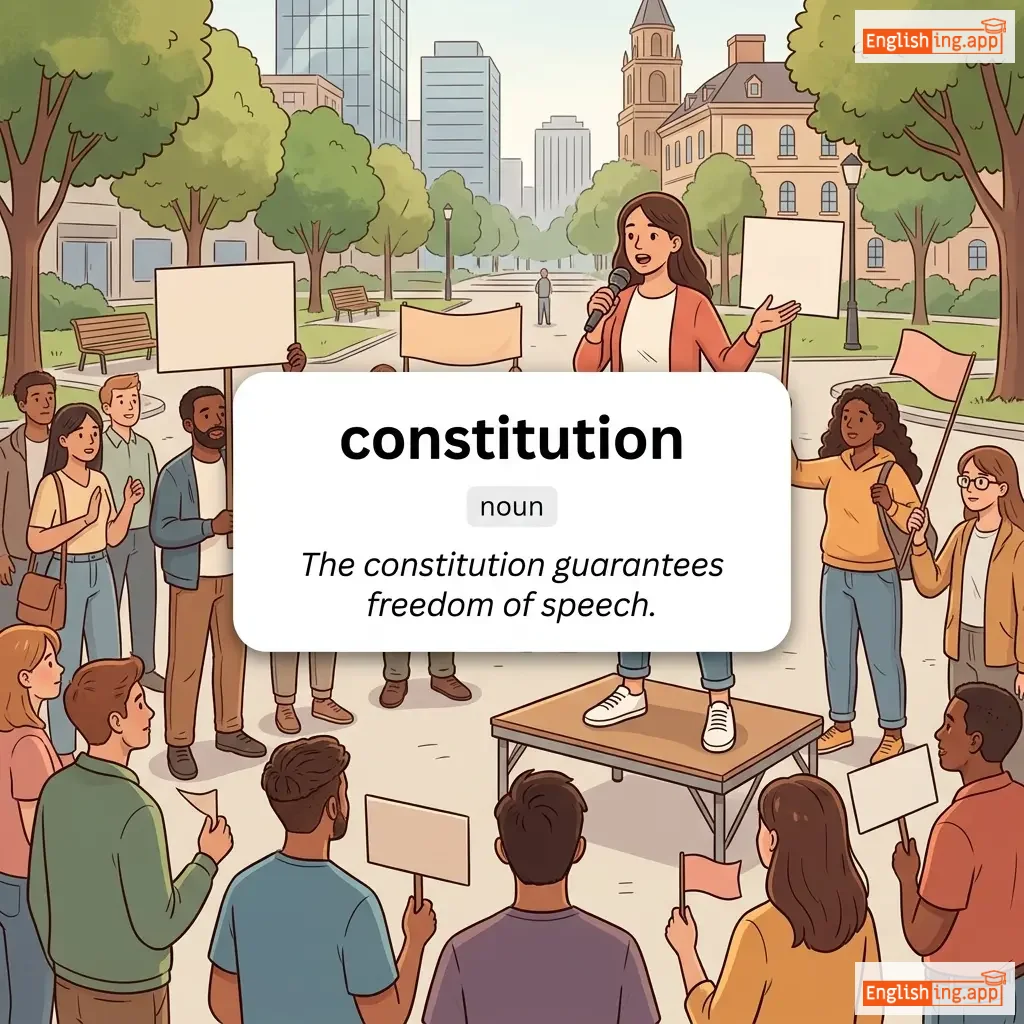
The constitution guarantees freedom of speech. |
Конституция гарантирует свободу слова.
Konstituciya garantiruet svobodu slova.
••••••
|
- •••••• | - •••••• | - •••••• |
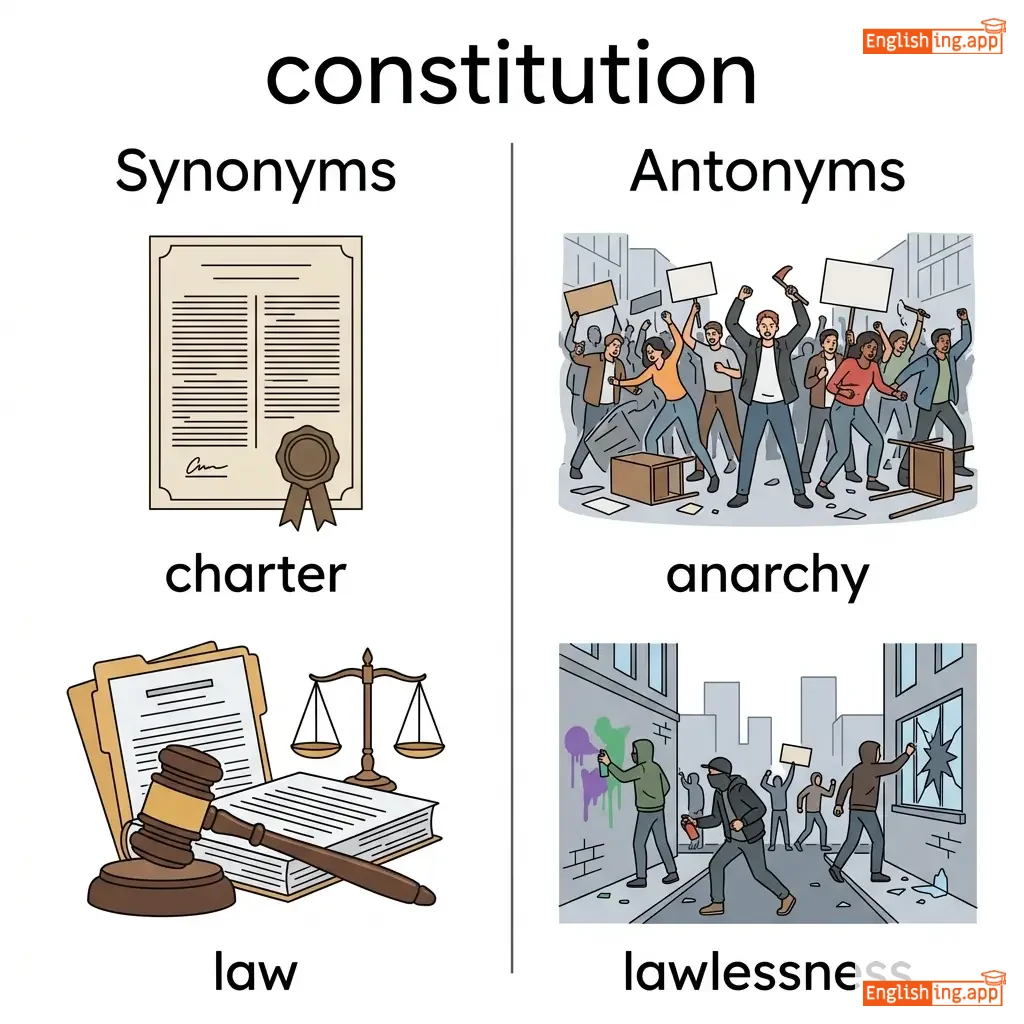
charter, law, code, framework, fundamental law
••••••
|
anarchy, lawlessness, disorder
••••••
|
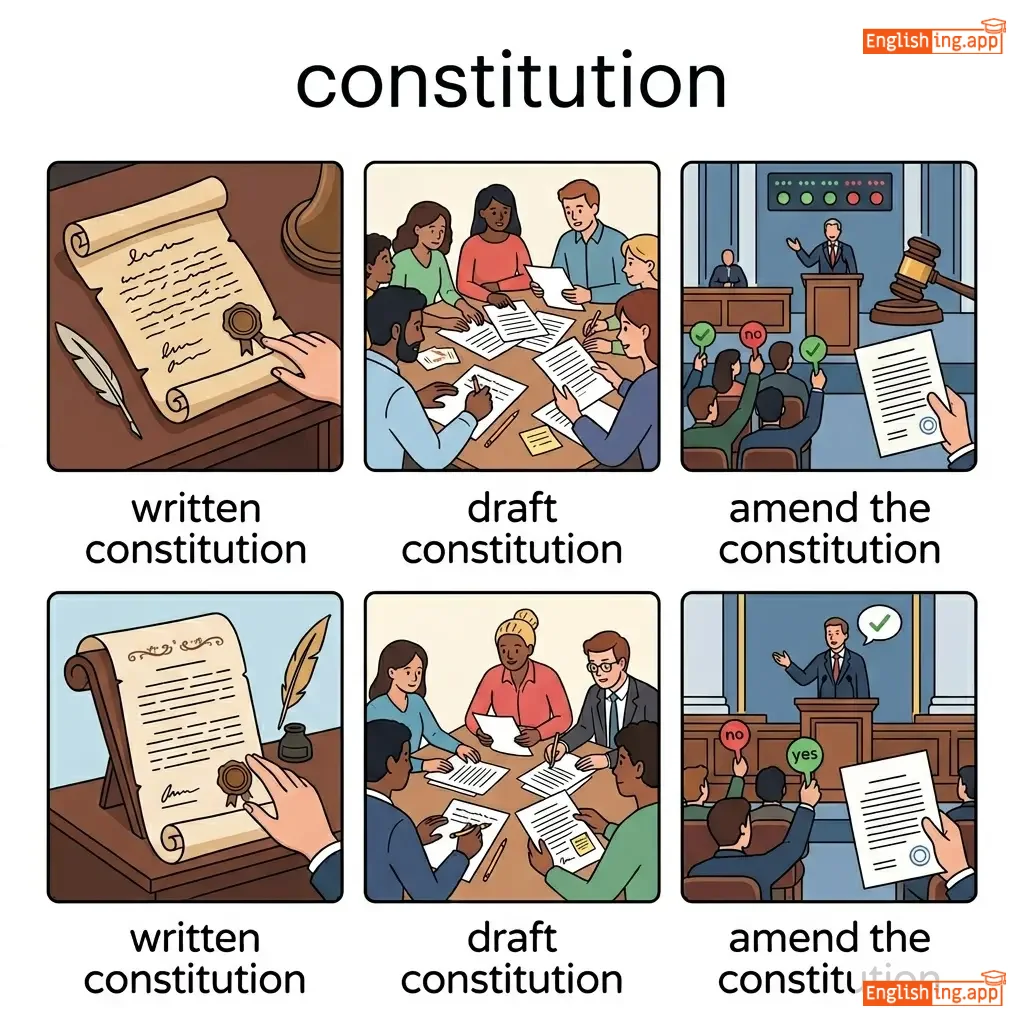
written constitution, draft constitution, amend the constitution, constitution of a country
••••••
|
Constitution = конституция – что управляет страной по 'конституционному' праву.
••••••
|
|
#1828
⚖️
|
/ˈkɒnstɪtjuːt/
verb
(kɒnstɪtjuːt)
••••••
|
- •••••• |
составлять
sostavlyat'
••••••
|
constituted
kɒnstɪtjuːtɪd
••••••
|
constituted
kɒnstɪtjuːtɪd
••••••
|
constitutes
kɒnstɪtjuːts
••••••
|
constituting
kɒnstɪtjuːtɪŋ
••••••
|
To make up, form, or establish something.
••••••
|
These documents constitute the legal agreement between the two parties.
Эти документы составляют юридическое соглашение между двумя сторонами.
••••••
|
Эти документы составляют юридическое соглашение между двумя сторонами.
Ety dokumenty sostavlyayut yuridicheskoe soglashenie mezhdu dvumya storonami.
••••••
|
- •••••• | - •••••• | - •••••• |
comprise, form, make up, establish, create
••••••
|
exclude, destroy, abolish
••••••
|
constitute a crime, constitute an offense, constitute a majority, constitute evidence
••••••
|
Constitute означает 'составлять' – как конституция в стране.
••••••
|
|
#1829
👥
|
/kənˈstɪtʃuənt/
noun/adjective
(kənˈstɪtʲʉənt)
••••••
|
- •••••• |
составная часть / избиратель
sostavnaya chast / izbiratel
••••••
|
- •••••• | - •••••• | - •••••• | - •••••• |
Noun: A member of a constituency or an essential part of something. Adjective: Being a necessary part of a whole.
••••••
|
The senator met with his constituents to discuss local issues. |
Сенатор встретился со своими избирателями, чтобы обсудить местные проблемы.
Senator vstretilsya so svoimi izbiratelyami, chtoby obsudit' mestnye problemy.
••••••
|
- •••••• | - •••••• | - •••••• |
component, element, member, voter
••••••
|
whole, outsider, nonmember
••••••
|
constituent parts, constituent elements, constituents of society
••••••
|
Constituent означает часть или избиратель – Это слово связано с выборным округом
••••••
|
|
#1830
🗳️
|
/kənˈstɪtʃuənsi/
noun
(кənˈстɪтʃуэнси)
••••••
|
- •••••• |
избирательный округ
izbiratel'nyy okrug
••••••
|
- •••••• | - •••••• | - •••••• | - •••••• |
A geographical area whose residents elect a representative to a legislative body.
••••••
|
She campaigned tirelessly across her constituency. |
Она неустанно вела кампанию по своему избирательному округу.
Ona neustanno vela kampaniyu po svojemu izbiratel'nomu okrugu.
••••••
|
- •••••• | - •••••• | - •••••• |
district, electorate, ward, division
••••••
|
nonelectoral area, nonvoting zone
••••••
|
electoral constituency, parliamentary constituency, within the constituency
••••••
|
Constitute + округ = Constituency на русском
••••••
|
Vocabulary Quiz
Test your vocabulary by matching words with their translations or meanings.
Login to take the quiz
Comments (0)
Share your thoughts and join the discussion.
Join the discussion by logging in
Login to CommentNo comments yet
Be the first to share your thoughts!