

Обновитесь для доступа ко всему словарю
Получите неограниченный доступ ко всем словам с подпиской Pro
Обновить до ProПеревод
Прошедшее
Причастие прошедшего времени
Третье лицо единственного числа
Герундий
Значение
Пример предложения
Перевод примера предложения
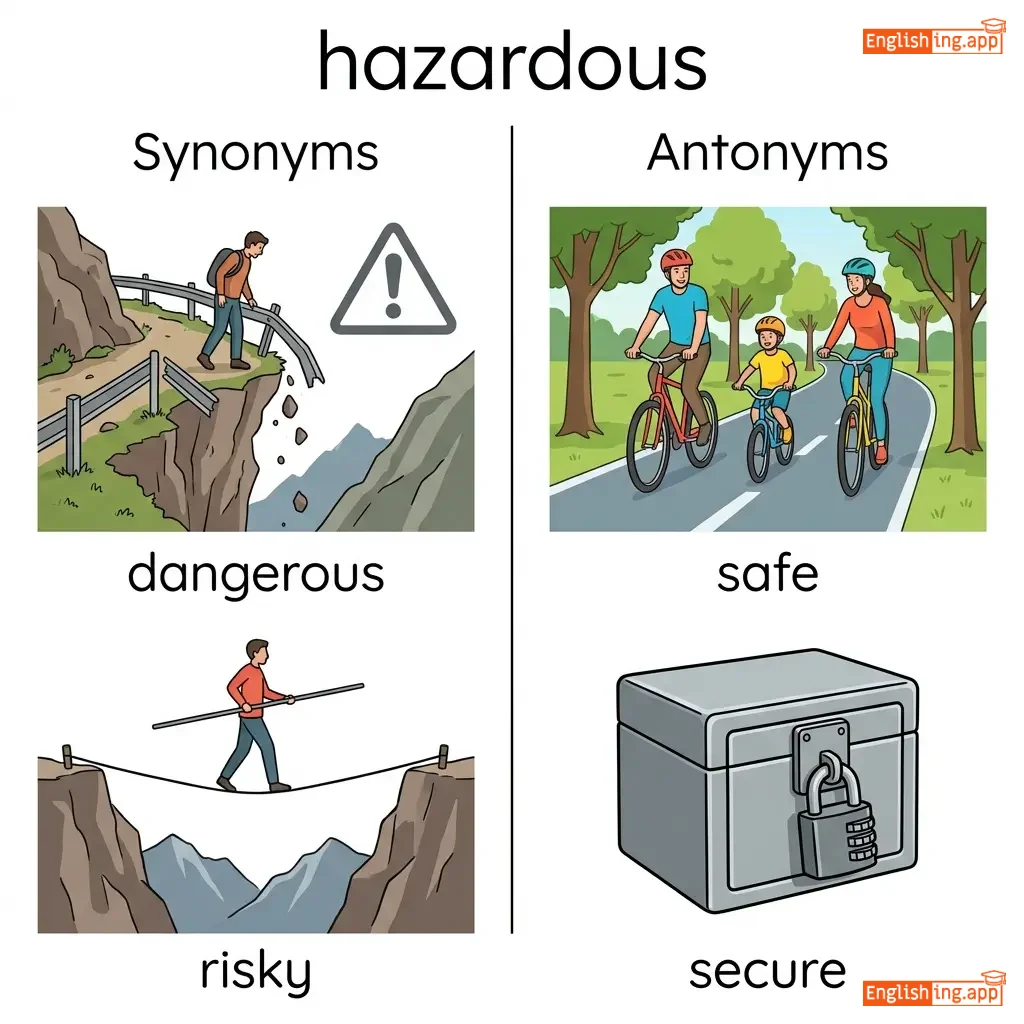
Синонимы
Антонимы
Коллокации
Мнемоника



Swipe left or right, or use the buttons. Tap image to zoom.
Обновитесь для доступа ко всем предложениям
Получите неограниченный доступ ко всем предложениям с подпиской Pro
Обновить до ProПеревод примера предложения
Слово
Lesson 136Lesson 136 - Переключатель маски
|
Эмодзи
|
Слово | Images | Перевод | Прошедшее | Причастие прошедшего времени | Третье лицо единственного числа | Герундий | Значение | Пример предложения | Перевод примера предложения | Пример выражения | Значение примера выражения | Перевод примера выражения | Синонимы | Антонимы | Коллокации | Мнемоника |
|---|---|---|---|---|---|---|---|---|---|---|---|---|---|---|---|---|---|
|
#4051
🌑
|
/ˈhiːðənɪʃ/
adjective
(хизениш)
••••••
|
- •••••• |
дикарь
dikary
••••••
|
- •••••• | - •••••• | - •••••• | - •••••• |
Lacking culture or religion; barbaric or uncivilized.
••••••
|
They considered the ancient tribe’s rituals heathenish.
Они считали ритуалы древнего племени языческими.
••••••
|
Они считали ритуалы древнего племени языческими.
Oni schitali ritualy drevnego plemeni yazicheskimi.
••••••
|
- •••••• | - •••••• | - •••••• |
pagan, irreligious, uncivilized, barbaric
••••••
|
civilized, religious
••••••
|
heathenish behavior, heathenish practices, heathenish rituals
••••••
|
Heathenish = heath + ish → дикарь или нецивилизованный
••••••
|
|
#4052
⛑️
|
/ˈhɛl.mət/
noun
(хэлмэт)
••••••
|
- •••••• |
шлем
shlem
••••••
|
- •••••• | - •••••• | - •••••• | - •••••• |
a hard protective hat worn to protect the head
••••••
|
The rider put on his helmet before starting the motorcycle. |
Наездник надел шлем перед тем, как начать ехать на мотоцикле.
Naezdnik nadel shlem pered tem, kak nachat' yekhat' na motosikle.
••••••
|
- •••••• | - •••••• | - •••••• |
headgear, hardhat, cap, protective hat
••••••
|
bare head, uncovered
••••••
|
wear helmet, safety helmet, motorcycle helmet, protective helmet
••••••
|
Шлем = Ш + Лем (защищает голову от ударов)
••••••
|
|
#4053
🛳️
|
/hɛlm/
noun
(хелм)
••••••
|
- •••••• |
руководство, штурвал
rukovodstvo, shturval
••••••
|
- •••••• | - •••••• | - •••••• | - •••••• |
a position of leadership or the steering apparatus of a ship
••••••
|
After years of service, she finally took the helm of the company. |
После многих лет службы, она наконец взяла на себя руководство компанией.
Posle mnogikh let sluzhby, ona nakonec vzyala na sebya rukovodstvo kompaniy.
••••••
|
at the helm |
in control or in charge of something
••••••
|
у руля
u rulya
••••••
|
control, leadership, command, tiller
••••••
|
subordination, follower
••••••
|
at the helm, take the helm, helm of the ship, company helm
••••••
|
Helm – это как помогать (help) рулить
••••••
|
|
#4054
💍
|
/ˈɛər.luːm/
noun
(хэйрлум)
••••••
|
- •••••• |
наследие
naslediye
••••••
|
- •••••• | - •••••• | - •••••• | - •••••• |
a valuable object that has belonged to a family for several generations
••••••
|
The ring is a family heirloom passed down from her grandmother. |
Кольцо — это семейное наследие, переданное от бабушки.
Kol'tso — eto semeynoye naslediye, peredannoye ot babushki.
••••••
|
- •••••• | - •••••• | - •••••• |
inheritance, legacy, patrimony, relic
••••••
|
new item, disposable item
••••••
|
family heirloom, treasured heirloom, precious heirloom, antique heirloom
••••••
|
Heir + loom = наследие переданное в поколениях
••••••
|
|
#4055
😈
|
/ˈheɪ.nəs/
adjective
(hɛɪnəs)
••••••
|
- •••••• |
мерзкий
merzkiy
••••••
|
- •••••• | - •••••• | - •••••• | - •••••• |
extremely wicked, deeply offensive, or shockingly evil
••••••
|
The dictator was condemned for his heinous crimes against humanity. |
Диктатор был осуждён за свои мерзкие преступления против человечности.
Diktator byl osuzhdyon za svoi merzkiye prestupleniya protiv chelovechnosti.
••••••
|
- •••••• | - •••••• | - •••••• |
atrocious, monstrous, horrific, vile, egregious
••••••
|
noble, admirable, good
••••••
|
heinous crime, heinous act, heinous offense, heinous deed
••••••
|
Heinous = мерзкие преступления
••••••
|
|
#4056
🐄
|
/ˈhɛfər/
noun
(хэйфер)
••••••
|
- •••••• |
тёлка
tyolka
••••••
|
- •••••• | - •••••• | - •••••• | - •••••• |
a young cow that has not borne a calf
••••••
|
The farmer raised a heifer for dairy production.
Фермер вырастил телку для производства молока.
••••••
|
Фермер вырастил телку для производства молока.
Fermyer vyrastil tyolku dlya proizvodstva moloka.
••••••
|
- •••••• | - •••••• | - •••••• |
young cow, calf, bovine
••••••
|
bull, ox
••••••
|
raise a heifer, dairy heifer, heifer calf
••••••
|
Heifer означает тёлка 🐄—heifer, молодая корова.
••••••
|
|
#4057
🚶♂️
|
/ˈhɛdʒɪrə/ or /hɪˈdʒaɪrə/
noun
(хеджира)
••••••
|
- •••••• |
Исход, миграция
Iskhod, migratsiya
••••••
|
- •••••• | - •••••• | - •••••• | - •••••• |
a journey, especially when undertaken to escape from a dangerous or undesirable situation
••••••
|
The refugees began their hegira across the desert. |
Беженцы начали свой исход через пустыню.
Bezhtsentsy nachali svoy iskhod cherez pustynyu.
••••••
|
- •••••• | - •••••• | - •••••• |
exodus, flight, escape, migration
••••••
|
arrival, stay
••••••
|
hegira from danger, long hegira, desert hegira
••••••
|
Хеджира напоминает исход—путешествие, чтобы убежать от опасности 🚶♂️.
••••••
|
|
#4058
👑
|
/hɪˈdʒɛməni/ or /ˈhɛdʒəmoʊni/
noun
(хегемония)
••••••
|
- •••••• |
гегемония
gehemoniya
••••••
|
- •••••• | - •••••• | - •••••• | - •••••• |
leadership or dominance, especially by one state or group over others
••••••
|
The empire maintained its hegemony over neighboring states. |
Империя сохраняла свою гегемонию над соседними государствами.
Imperiya sokhranyala svoyu hegemoniyu nad sosednimi gosudarstvami.
••••••
|
- •••••• | - •••••• | - •••••• |
dominance, supremacy, authority, control, power
••••••
|
subordination, weakness, inferiority
••••••
|
political hegemony, cultural hegemony, economic hegemony
••••••
|
Гегемония — это как быть правителем, который контролирует все.
••••••
|
|
#4059
😒
|
/ˈhiːdləs/
adjective
(хидлэс)
••••••
|
- •••••• |
беспечный
bespechnyy
••••••
|
- •••••• | - •••••• | - •••••• | - •••••• |
showing a reckless lack of care or attention
••••••
|
He drove with heedless disregard for the rules. |
Он ехал с беспечным пренебрежением к правилам.
On yekhal s bespechnym prenebrazheniyem k pravilam.
••••••
|
- •••••• | - •••••• | - •••••• |
careless, reckless, inattentive, negligent
••••••
|
careful, cautious, attentive
••••••
|
heedless behavior, heedless actions, heedless disregard
••••••
|
Heedless означает без heed (внимание), следовательно беспечный.
••••••
|
|
#4060
👂
|
/hiːd/
verb
(хид)
••••••
|
- •••••• |
обратить внимание
obratit vnimanie
••••••
|
heeded
хидед
••••••
|
heeded
хидед
••••••
|
heeds
хидс
••••••
|
heeding
хидин
••••••
|
to pay attention to; to take notice of
••••••
|
You should heed the teacher's advice.
Ты должен обратить внимание на советы учителя.
••••••
|
Ты должен обратить внимание на советы учителя.
Ty dolzhen obratit vnimanie na sovety uchitelya.
••••••
|
heed the call
откликнуться на зов
••••••
|
to respond to or take notice of an appeal or demand
••••••
|
откликнуться на зов
otkliknutsya na zov
••••••
|
notice, observe, mind, regard, attend
••••••
|
ignore, disregard, neglect
••••••
|
heed advice, heed warning, heed call, heed instructions
••••••
|
Heed значит обратить внимание—слушай внимательно, чтобы ответить на зов (👂).
••••••
|
|
#4061
😌
|
/ˈhiːdənɪst/
noun
(хедонист)
••••••
|
- •••••• |
гедонист
gedonist
••••••
|
- •••••• | - •••••• | - •••••• | - •••••• |
A person who believes that the pursuit of pleasure is the most important thing in life.
••••••
|
She was called a hedonist because she always prioritized enjoyment over duty. |
Ее называли гедонистом, потому что она всегда ставила удовольствие выше долга.
Eyo nazyvali gedonistom, potomu chto ona vsegda stavila udovol'stviye vyshe dolga.
••••••
|
- •••••• | - •••••• | - •••••• |
pleasure-seeker, epicure, sensualist, sybarite
••••••
|
ascetic, puritan
••••••
|
true hedonist, modern hedonist, lifestyle of a hedonist
••••••
|
Гедонист = Head + Honest = Жизнь ради удовольствия.
••••••
|
|
#4062
🍷
|
/ˈhiːdəˌnɪzəm/
noun
(гедонизм)
••••••
|
- •••••• |
гедонизм
gedonizm
••••••
|
- •••••• | - •••••• | - •••••• | - •••••• |
The pursuit of pleasure and self-indulgence as the highest goal.
••••••
|
The lifestyle of the rich is often criticized as pure hedonism. |
Образ жизни богатых часто критикуется как чистый гедонизм.
Obraz zhizni bogatykh chasto kritikuetsya kak chisty gedonizm.
••••••
|
- •••••• | - •••••• | - •••••• |
self-indulgence, pleasure-seeking, sensualism, luxury
••••••
|
asceticism, self-denial, restraint
••••••
|
modern hedonism, pure hedonism, philosophy of hedonism
••••••
|
Гедонизм = Get on, это стремление к удовольствию.
••••••
|
|
#4063
🌳
|
/hɛdʒ/
noun, verb
(хэдж)
••••••
|
|
живая изгородь
zhivaya izgorod
••••••
|
hedged
хэджд
••••••
|
hedged
хэджд
••••••
|
hedges
хэджес
••••••
|
hedging
хэджинг
••••••
|
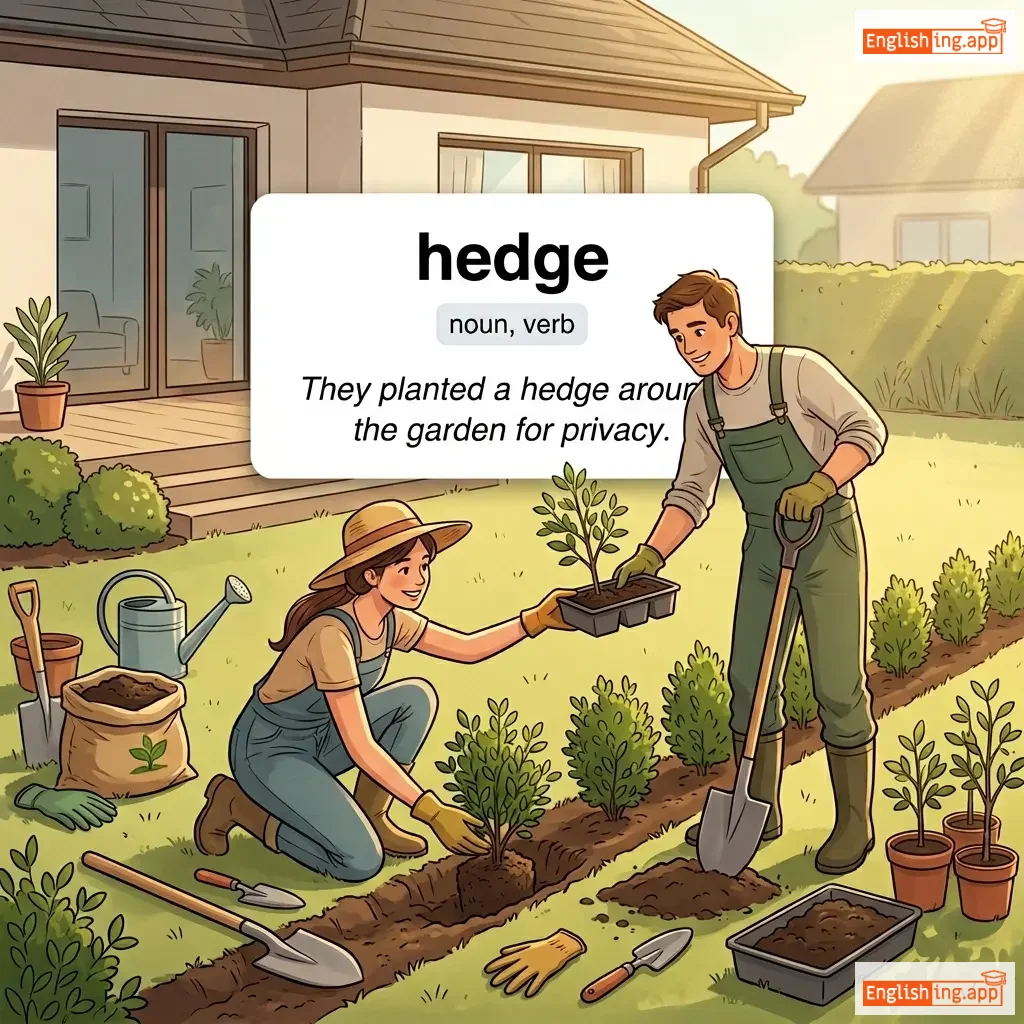
A fence or boundary formed by closely planted shrubs; also, to limit or qualify a statement.
••••••
|
They planted a hedge around the garden for privacy.
Они посадили изгородь вокруг сада для конфиденциальности.
••••••
|
Они посадили изгородь вокруг сада для конфиденциальности.
Oni posadili izgorod' vokrug sada dlya konfidentsial'nosti.
••••••
|
hedge your bets
хеджировать свои ставки
••••••
|
To reduce risk by choosing several options instead of relying on one.
••••••
|
хеджировать свои ставки
khedzhirovat' svoi stavki
••••••
|
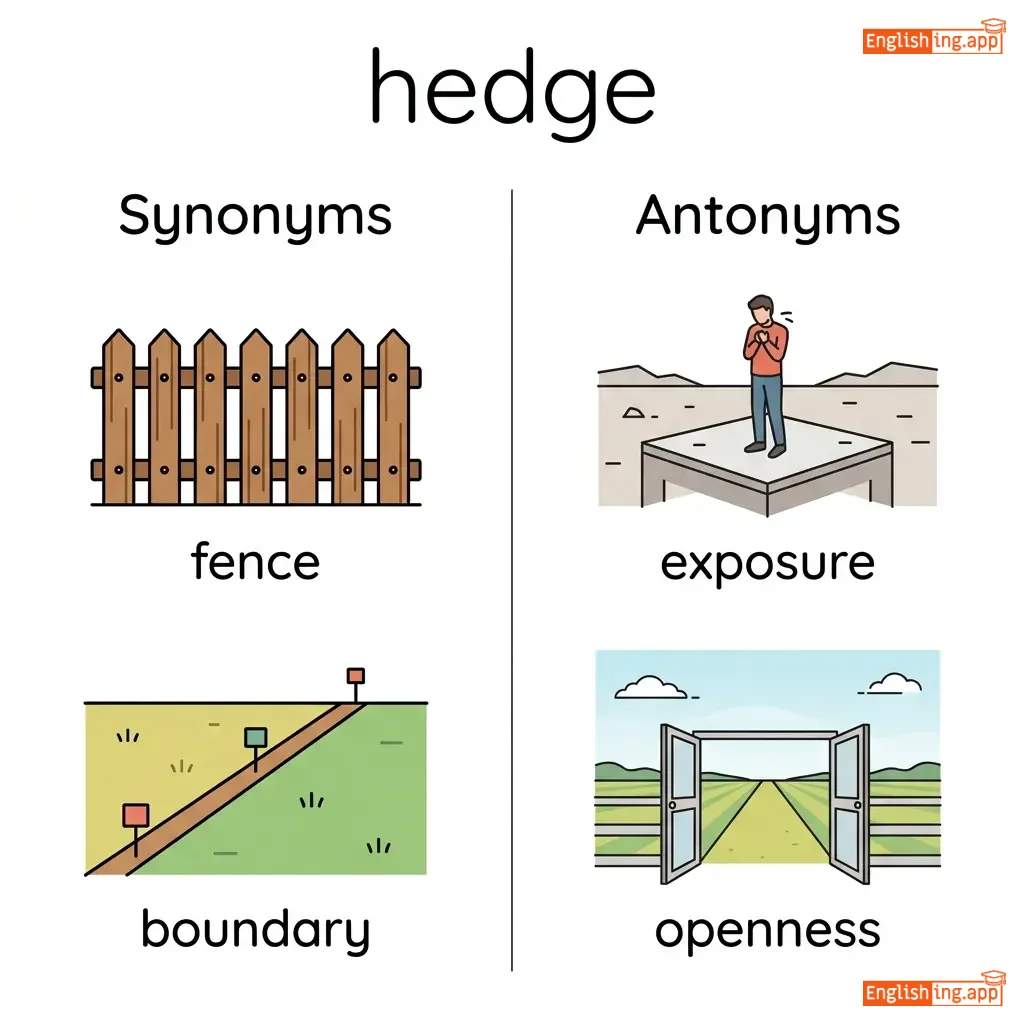
fence, boundary, barrier, safeguard
••••••
|
exposure, openness
••••••
|
hedge fund, hedge your bets, tall hedge, hedge against
••••••
|
Hedge = Хеджируем свои ставки, защищая свои интересы.
••••••
|
|
#4064
😡
|
/ˈhɛktər/
verb
(хектор)
••••••
|
- •••••• |
угрожать разговором
ugrozhat' razgovorom
••••••
|
hectored
хекторил
••••••
|
hectored
хекторил
••••••
|
hectors
хекторит
••••••
|
hectoring
хекторинг
••••••
|
To talk to someone in a bullying or intimidating way.
••••••
|
The manager hectored the staff into working overtime.
Менеджер хекторил сотрудников, чтобы они работали сверхурочно.
••••••
|
Менеджер заставил сотрудников работать сверхурочно, угрожая им.
Menedzher zayavil sotrudnikov rabotat' sverkhurochno, ugrozhaya im.
••••••
|
- •••••• | - •••••• | - •••••• |
bully, intimidate, browbeat, domineer
••••••
|
encourage, support, assist
••••••
|
hector into, constantly hector, hectoring tone
••••••
|
Hector означает угрожать разговором, как если бы Hector всегда пугал.
••••••
|
|
#4065
🙄
|
/ˈhɛklər/
noun
(хеклер)
••••••
|
- •••••• |
нарушитель
narushitel
••••••
|
- •••••• | - •••••• | - •••••• | - •••••• |
A person who interrupts a speaker with rude or aggressive comments.
••••••
|
The politician remained calm despite the heckler shouting from the crowd. |
Политик остался спокойным, несмотря на крикачащего нарушителя из толпы.
Politik ostalsya spokoynym, nesmotrya na krikacheshchego narushitelya iz tolpy.
••••••
|
- •••••• | - •••••• | - •••••• |
disrupter, interrupter, agitator, critic, protester
••••••
|
supporter, admirer
••••••
|
angry heckler, disruptive heckler, silence the heckler
••••••
|
Heckler = Hek (хек) из толпы нарушает спокойствие
••••••
|
|
#4066
🌪️
|
/ˈhævək/
noun
(хэвок)
••••••
|
- •••••• |
опустошение
opustoshenie
••••••
|
- •••••• | - •••••• | - •••••• | - •••••• |
widespread destruction or disorder
••••••
|
The storm caused havoc in the coastal villages. |
Шторм вызвал опустошение в прибрежных деревнях.
Shtorm vyzval opustoshenie v pribrezhnykh derevnyakh.
••••••
|
wreak havoc |
to cause great damage or chaos
••••••
|
сеять разрушения
sejat' razrusheniya
••••••
|
devastation, destruction, chaos, ruin, mayhem
••••••
|
order, peace, harmony
••••••
|
wreak havoc, cause havoc, havoc on the economy, havoc of war
••••••
|
Havoc означает опустошение - представь, что ураган уничтожает все, что ты 'Have'.
••••••
|
|
#4067
💔
|
/ˈhɑːrtˌrɛndɪŋ/
adjective
(хартрендинг)
••••••
|
- •••••• |
душераздирающий
dusherazdiraushchiy
••••••
|
- •••••• | - •••••• | - •••••• | - •••••• |
Causing great sadness or distress; very moving emotionally.
••••••
|
The documentary showed heartrending scenes of war victims.
Документальный фильм показал душераздирающие сцены жертв войны.
••••••
|
Документальный фильм показал душераздирающие сцены жертв войны.
Dokumental'nyy film pokazal dusherazdyirayushchiye stseny zhertv voyny.
••••••
|
- •••••• | - •••••• | - •••••• |
moving, touching, heartbreaking, poignant, distressing
••••••
|
comforting, uplifting
••••••
|
heartrending story, heartrending cry, heartrending scene
••••••
|
Heart + Rending = Душераздирающий, что разрывает сердце
••••••
|
|
#4068
❤️
|
/ˈhɑːrtən/
verb
(хартен)
••••••
|
- •••••• |
ободрить
obodrit
••••••
|
heartened
хартенд
••••••
|
heartened
хартенд
••••••
|
heartens
хартенс
••••••
|
heartening
хартенинг
••••••
|
To give courage, confidence, or hope.
••••••
|
The teacher’s encouragement heartened the students.
Воодушевление учителя вдохновило студентов.
••••••
|
Вдохновение учителя дало студентам смелость.
Vdokhnovenie uchitelya dalo studentam smelost'.
••••••
|
- •••••• | - •••••• | - •••••• |
encourage, inspire, cheer, uplift
••••••
|
discourage, dishearten
••••••
|
hearten by, hearten someone, hearten the team
••••••
|
Heart + вдохновение = ободрить, воодушевить
••••••
|
|
#4069
👂
|
/ˈhɑːrkən/
verb
(харкен)
••••••
|
- •••••• |
слушать внимательно
slushat vnimatel'no
••••••
|
hearkened
харкенд
••••••
|
hearkened
харкенд
••••••
|
hearkens
харкенс
••••••
|
hearkening
харкенинг
••••••
|
To listen attentively; to give heed.
••••••
|
He would hearken to his mentor’s advice before making decisions.
Он бы внимательно слушал советы своего наставника, прежде чем принимать решения.
••••••
|
Он бы внимательно слушал советы своего наставника, прежде чем принимать решения.
On by vnimatel'no slushal sovety svoego nastavnika, prezhde chem prinimat' resheniya.
••••••
|
- •••••• | - •••••• | - •••••• |
listen, attend, heed, observe
••••••
|
ignore, neglect
••••••
|
hearken to, hearken back, hearken carefully
••••••
|
Hear + слушать (slushat) = Hearken → слушать внимательно
••••••
|
|
#4070
🍎
|
/ˈhɛlθi/
adjective
(хэппинесс)
••••••
|
|
счастье
schastye
••••••
|
- •••••• | - •••••• | - •••••• | - •••••• |
Being in good physical or mental condition; promoting good health.
••••••
|
She follows a healthy lifestyle by exercising regularly.
Она не могла скрыть свое счастье, когда получила награду.
••••••
|
Она не могла скрыть свое счастье, когда получила награду.
Ona ne mogla skryt' svoyo schast'ye, kogda poluchila nagradu.
••••••
|
healthy competition
поиск счастья
••••••
|
A form of competition that is fair and encourages improvement.
••••••
|
поиск счастья
poisk schast'ya
••••••
|
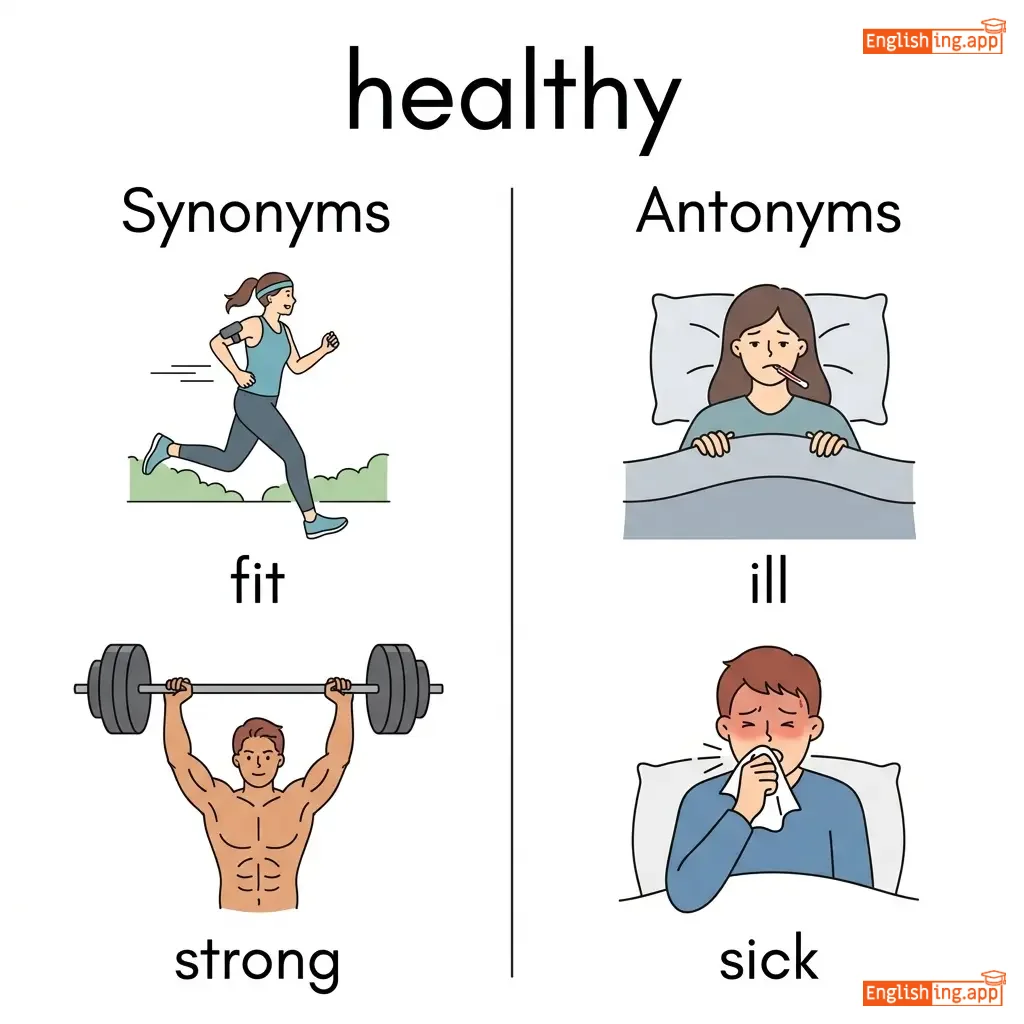
fit, strong, well, robust, sound
••••••
|
ill, sick, weak
••••••
|
healthy lifestyle, healthy diet, healthy relationship, healthy environment
••••••
|
Счастье = чувство радости и удовлетворения
••••••
|
|
#4071
🥦
|
/ˈhɛlθfəl/
adjective
(хэлθфул)
••••••
|
- •••••• |
оздоровительный
ozdorovitel'nyy
••••••
|
- •••••• | - •••••• | - •••••• | - •••••• |
Promoting good health; beneficial to health.
••••••
|
A healthful diet includes fresh fruits and vegetables. |
Оздоровительная диета включает свежие фрукты и овощи.
Ozdorovitel'naya dieta vklyuchayet svezhiye frukty i ovoshchi.
••••••
|
- •••••• | - •••••• | - •••••• |
wholesome, nutritious, beneficial, salubrious
••••••
|
unhealthy, harmful, injurious
••••••
|
healthful diet, healthful lifestyle, healthful exercise
••••••
|
Healthful – оздоровительный (создавая здоровье)
••••••
|
|
#4072
🌸
|
/ˈhɛdi/
adjective
(hehdi)
••••••
|
- •••••• |
опьяняющий
opyanyayushchiy
••••••
|
- •••••• | - •••••• | - •••••• | - •••••• |
Exciting or intoxicating; having a strong or exhilarating effect.
••••••
|
The heady aroma of the flowers filled the room.
Головокружительный аромат цветов наполнил комнату.
••••••
|
Головокружительный аромат цветов наполнил комнату.
Golovokruzhitel'nyy aromat tsvetov napolnil komnatu.
••••••
|
- •••••• | - •••••• | - •••••• |
intoxicating, thrilling, exciting, stimulating
••••••
|
dull, boring, depressing
••••••
|
heady aroma, heady excitement, heady atmosphere
••••••
|
Heady smell означает такой сильный запах, который опьяняет.
••••••
|
|
#4073
🐂
|
/ˈhɛdˌstrɔŋ/
adjective
(хэдстронг)
••••••
|
- •••••• |
упрямый
upryamy
••••••
|
- •••••• | - •••••• | - •••••• | - •••••• |
Determined to do what one wants, even if it is not sensible.
••••••
|
The headstrong child refused to listen to anyone.
ðə хэдстронг чaйлд рифьюзд ту лисэн ту энивэн.
••••••
|
Упрямый ребенок отказался слушать кого-либо.
Upryamy rebenok otkazalsya slushat' kogo-libo.
••••••
|
- •••••• | - •••••• | - •••••• |
stubborn, willful, obstinate, determined
••••••
|
obedient, flexible, compliant
••••••
|
headstrong child, headstrong attitude, headstrong personality
••••••
|
Head strong - упрямый, как голова, полная своей идеи.
••••••
|
|
#4074
🏃♂️
|
/ˈhɛdˌlɔŋ/
adverb
(хэдлонг)
••••••
|
- •••••• |
в слепую
v slepuyu
••••••
|
- •••••• | - •••••• | - •••••• | - •••••• |
With the head leading; in a rush or without thinking.
••••••
|
She rushed headlong into the new project.
Она бросилась в новый проект с головой.
••••••
|
Она в слепую бросилась в новый проект.
Ona v slepuyu brosilas' v novyy proyekt.
••••••
|
- •••••• | - •••••• | - •••••• |
recklessly, hastily, rashly, precipitously
••••••
|
thoughtfully, cautiously
••••••
|
rush headlong, plunge headlong, headlong flight
••••••
|
Headlong значит идти в слепую, не думая.
••••••
|
|
#4075
🤿
|
/ˌhɛdˈfɜrst/
adverb
(хэдфёрст)
••••••
|
- •••••• |
головой вперёд
golovoy vperyod
••••••
|
- •••••• | - •••••• | - •••••• | - •••••• |
With the head leading; in a reckless or hasty manner.
••••••
|
He dived headfirst into the pool.
Он нырнул головой вперёд в бассейн.
••••••
|
Он нырнул головой вперёд в бассейн.
On nyrnul golovoy vperyod v basseyn.
••••••
|
- •••••• | - •••••• | - •••••• |
recklessly, impulsively, rashly, hurriedly
••••••
|
cautiously, carefully
••••••
|
dive headfirst, jump headfirst, plunge headfirst
••••••
|
Голова (head) вперёд — это как прыгать в воду без раздумий.
••••••
|
|
#4076
🌫️
|
/ˈheɪzi/
adjective
(heizi)
••••••
|
- •••••• |
туманный
tumanny
••••••
|
- •••••• | - •••••• | - •••••• | - •••••• |
Unclear, misty, or not easy to see; also vague or uncertain.
••••••
|
The mountains looked hazy in the morning light. |
Горы выглядели туманными при утреннем свете.
Gory viglyadeli tumannymi pri utrevnem svete.
••••••
|
a hazy memory |
a memory that is unclear or vague
••••••
|
туманные воспоминания
tummanye vospominaniya
••••••
|
foggy, misty, blurry, unclear, vague
••••••
|
clear, bright, distinct
••••••
|
hazy sky, hazy morning, hazy view, hazy memory
••••••
|
Hazy как туман, все кажется смутным.
••••••
|
|
#4077
☣️
|
/ˈhæzərdəs/
adjective
(хазардуас)
••••••
|
|
опасный
opasnyy
••••••
|
- •••••• | - •••••• | - •••••• | - •••••• |
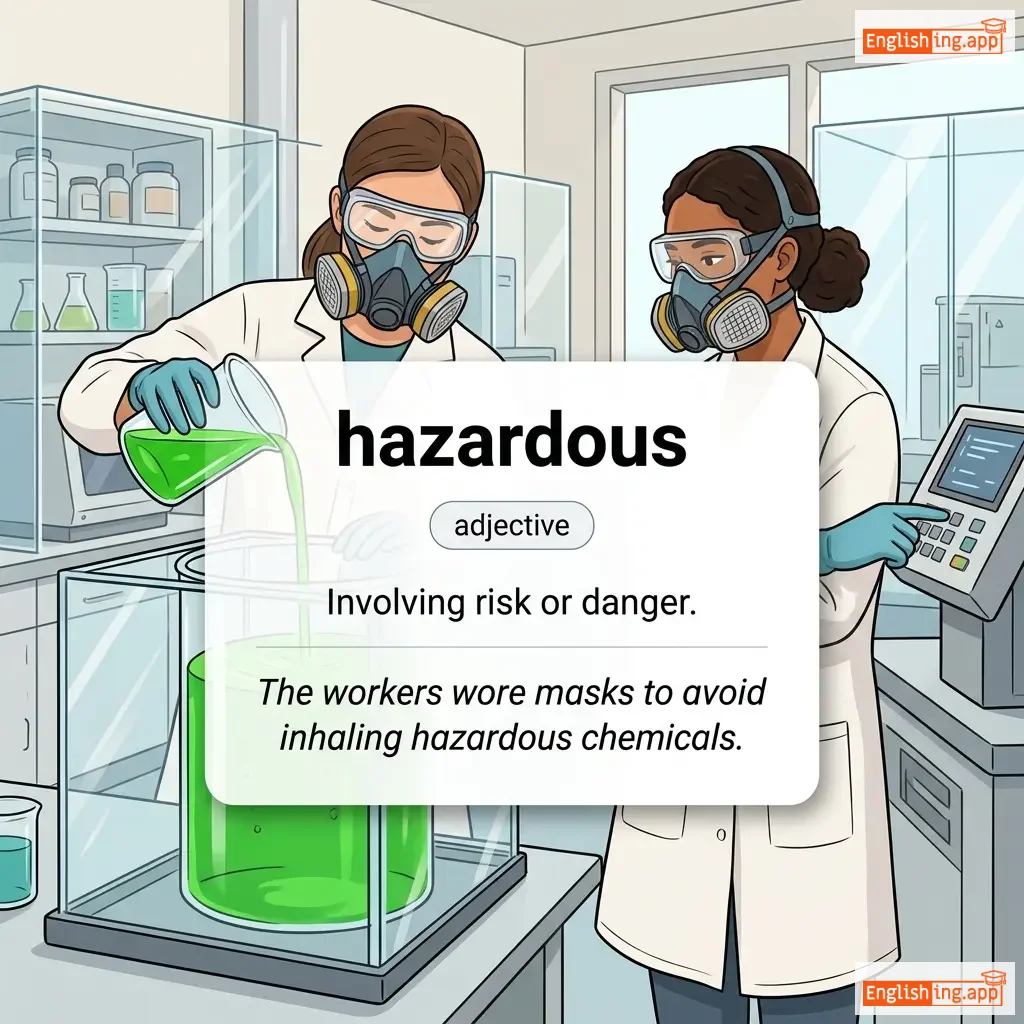
Involving risk or danger.
••••••
|
The workers wore masks to avoid inhaling hazardous chemicals.
Рабочие носили маски, чтобы избежать вдыхания опасных химикатов.
••••••
|
Рабочие носили маски, чтобы избежать вдыхания опасных химикатов.
Rabochie nosili maski, chtoby izbezhat' vdykhaniya opasnykh khimikatov.
••••••
|
- •••••• | - •••••• | - •••••• |
dangerous, risky, unsafe, perilous, harmful
••••••
|
safe, secure, harmless
••••••
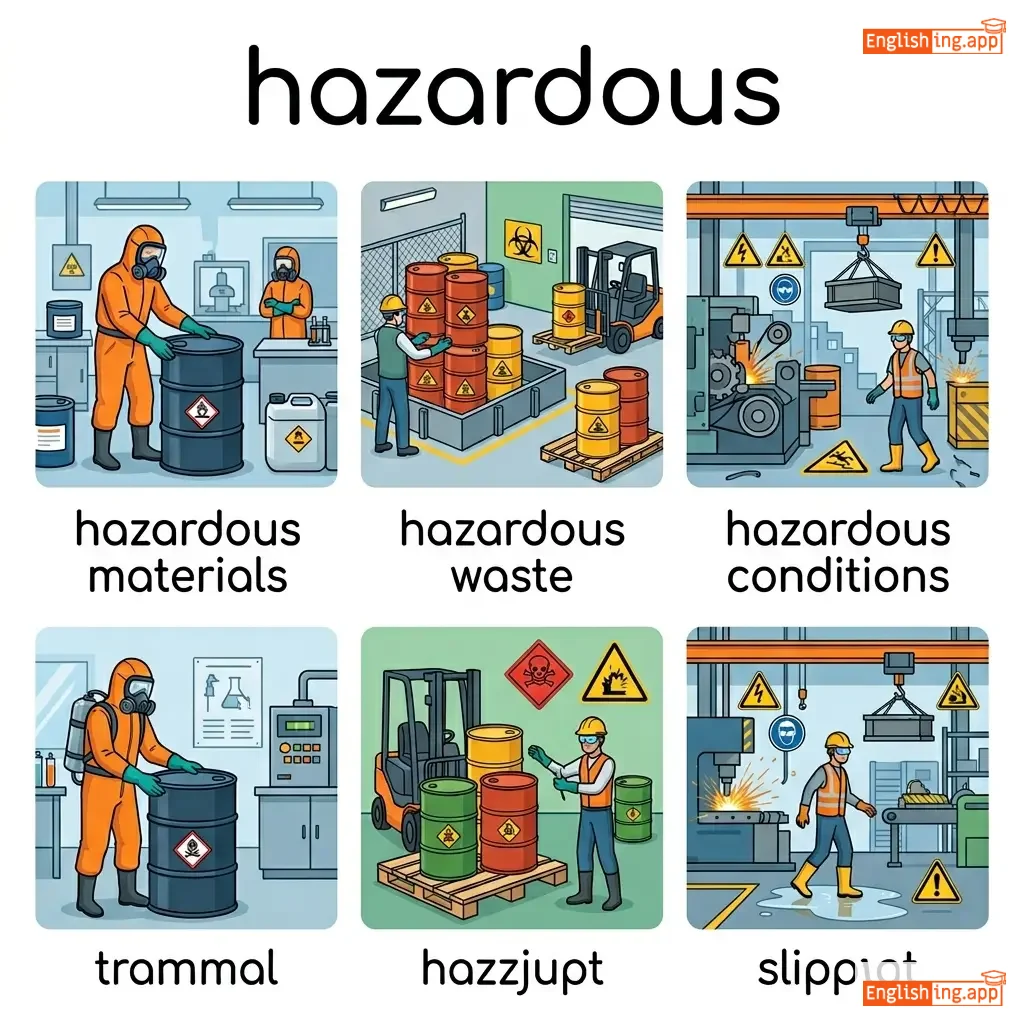
|
hazardous materials, hazardous waste, hazardous conditions, hazardous chemicals
••••••
|
Hazard + ous = полный опасности → hazardous = опасный.
••••••
|
|
#4078
⚠️
|
/ˈhæzərd/
noun
(хэзард)
••••••
|
- •••••• |
опасность
opasnost
••••••
|
- •••••• | - •••••• | - •••••• | - •••••• |
A danger or risk.
••••••
|
Wet floors are a common hazard in the workplace.
Мокрые полы — это общая опасность на рабочем месте.
••••••
|
Мокрые полы — это общая опасность на рабочем месте.
Mokrye poly — eto obshchaya opasnost' na rabochem meste.
••••••
|
at your own hazard
на ваш риск
••••••
|
at your own risk or responsibility
••••••
|
на ваш риск
na vash risk
••••••
|
danger, risk, threat, peril, menace
••••••
|
safety, security, protection
••••••
|
fire hazard, safety hazard, health hazard, potential hazard
••••••
|
Hazard означает опасность, как предупреждающий знак ⚠️, будьте осторожны.
••••••
|
|
#4079
🌸
|
/ˈhɔːθɔːrn/
noun
(ховторн)
••••••
|
- •••••• |
колючий кустарник
kolyuchiy kustarnik
••••••
|
- •••••• | - •••••• | - •••••• | - •••••• |
A thorny shrub or small tree with white or pink flowers, often used for hedges.
••••••
|
The garden was lined with blooming hawthorn bushes.
Сад был окружён цветущими кустами боярышника.
••••••
|
Сад был окружён цветущими кустами боярышника.
Sad byl okruzhen tsvetushchimi kustami boyaryshnika.
••••••
|
- •••••• | - •••••• | - •••••• |
shrub, tree, hedge, bush
••••••
|
none, barren
••••••
|
hawthorn bush, hawthorn hedge, blooming hawthorn, hawthorn flowers
••••••
|
Hawthorn, куст с колючками и цветами – боярышник в саду.
••••••
|
|
#4080
🪢
|
/ˈhɔːzər/
noun
(хоузер)
••••••
|
- •••••• |
толстый канат для швартовки корабля
tolstyy kanat dlya shvartovki korablya
••••••
|
- •••••• | - •••••• | - •••••• | - •••••• |
A thick rope or cable used in mooring or towing a ship.
••••••
|
The sailors secured the ship to the dock with a heavy hawser. |
Моряки закрепили корабль у причала с помощью тяжелого хоузера.
Moryaki zakrepyili korabl' u prichala s pomoshch'yu tyazhelogo houzera.
••••••
|
- •••••• | - •••••• | - •••••• |
rope, cable, line, cord, towline
••••••
|
thread, string
••••••
|
heavy hawser, mooring hawser, tow hawser, secure with hawser
••••••
|
Толстый канат для корабля = hawser.
••••••
|
Vocabulary Quiz
Test your vocabulary by matching words with their translations or meanings.
Login to take the quiz
Comments (0)
Share your thoughts and join the discussion.
Join the discussion by logging in
Login to CommentNo comments yet
Be the first to share your thoughts!