

Обновитесь для доступа ко всему словарю
Получите неограниченный доступ ко всем словам с подпиской Pro
Обновить до ProПеревод
Прошедшее
Причастие прошедшего времени
Третье лицо единственного числа
Герундий
Значение
Пример предложения
Перевод примера предложения
Синонимы
Антонимы
Коллокации
Мнемоника


Swipe left or right, or use the buttons. Tap image to zoom.
Обновитесь для доступа ко всем предложениям
Получите неограниченный доступ ко всем предложениям с подпиской Pro
Обновить до ProПеревод примера предложения
Слово
Lesson 1Lesson 1 - Переключатель маски
|
Эмодзи
|
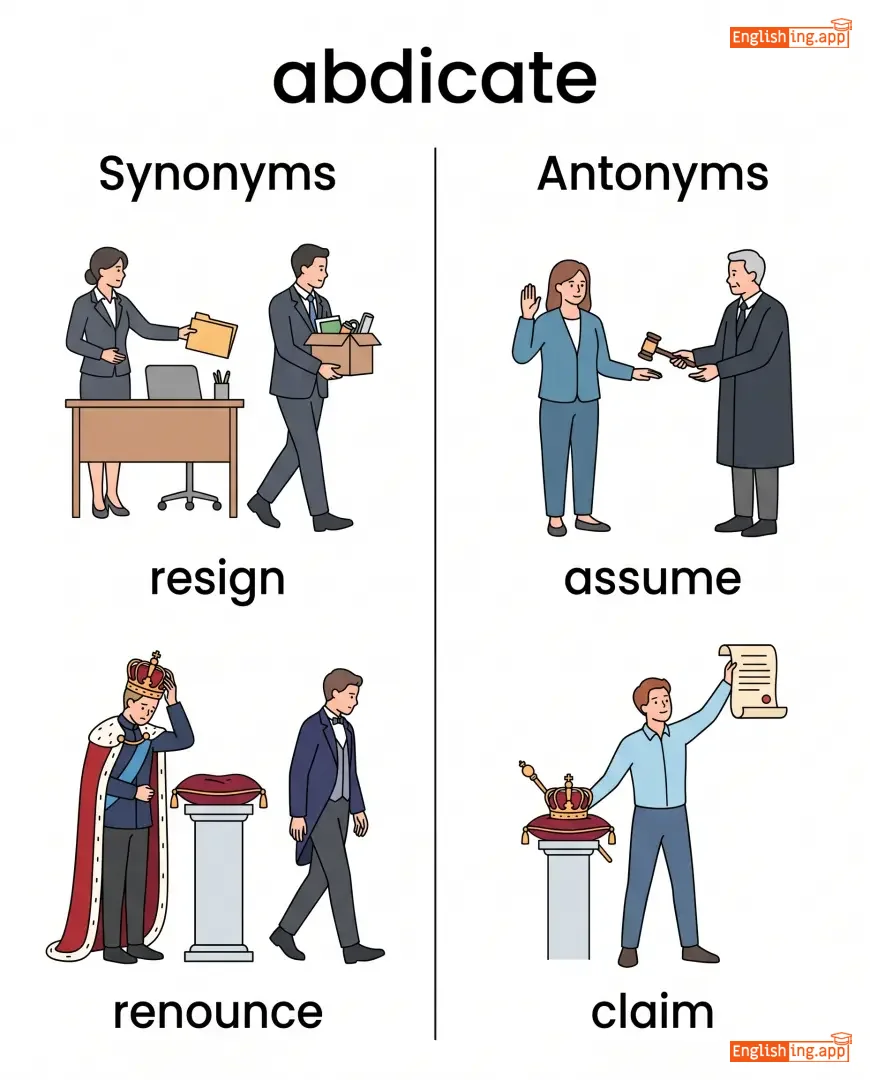
Слово | Images | Перевод | Прошедшее | Причастие прошедшего времени | Третье лицо единственного числа | Герундий | Значение | Пример предложения | Перевод примера предложения | Пример выражения | Значение примера выражения | Перевод примера выражения | Синонимы | Антонимы | Коллокации | Мнемоника |
|---|---|---|---|---|---|---|---|---|---|---|---|---|---|---|---|---|---|
|
#1
🕵️
|
/əˈbɛt/
verb
••••••
|
- •••••• | - •••••• |
abetted
••••••
|
abetted
••••••
|
abets
••••••
|
abetting
••••••
|
to encourage or assist someone to commit a crime or wrongdoing
••••••
|
He was accused of abetting the criminals in their escape. |
- •••••• |
aid and abet |
to assist someone in committing a crime
••••••
|
- •••••• |
assist, encourage, support, provoke, incite
••••••
|
deter, hinder, prevent
••••••
|
abet a crime, aid and abet, abet wrongdoing
••••••
|
No •••••• |
|
#2
⚠️
|
/æbˈnɔːr.məl/
adjective
(æbnɔːrməl)
••••••
|
- •••••• |
аномальный
anomal'nyy
••••••
|
- •••••• | - •••••• | - •••••• | - •••••• |
deviating from what is normal or usual, typically in a way that is undesirable
••••••
|
The doctor noticed an abnormal growth in the patient’s lung. |
Врач заметил аномальный рост в легких пациента.
Vrach zame'til anomaliy rosta v lyokhkiakh patsiyenta.
••••••
|
- •••••• | - •••••• | - •••••• |
unusual, irregular, deviant, atypical, odd
••••••
|
normal, usual, regular
••••••
|
abnormal behavior, abnormal growth, abnormal condition
••••••
|
Ab-normal = не нормальный → аномальный
••••••
|
|
#3
🙏
|
/ˌæbnɪˈɡeɪʃən/
noun
(абнегация)
••••••
|
- •••••• |
самоотречение
samootrechenie
••••••
|
- •••••• | - •••••• | - •••••• | - •••••• |
the act of renouncing or rejecting something, especially self-denial
••••••
|
The monk’s life was one of complete abnegation of worldly pleasures. |
Жизнь монаха была полным самоотречением от мирских удовольствий.
Zhizn monakha byla polnym samootrecheniem ot mirskikh udovolstviy.
••••••
|
- •••••• | - •••••• | - •••••• |
renunciation, denial, rejection, self-denial
••••••
|
acceptance, indulgence
••••••
|
abnegation of pleasure, abnegation of responsibility, spirit of abnegation
••••••
|
Abnegation означает самоотречение – отречься от себя ради нации
••••••
|
|
#4
🚫
|
/ˈæbnɪˌɡeɪt/
verb
(абнегейт)
••••••
|
- •••••• |
отказаться
otkazat'sya
••••••
|
abnegated
абнегейтед
••••••
|
abnegated
абнегейтед
••••••
|
abnegates
абнегейтс
••••••
|
abnegating
абнегейтинг
••••••
|
to deny or renounce something, especially a right or desire
••••••
|
She chose to abnegate her personal interests for the sake of the team.
Она выбрала отказаться от личных интересов ради блага команды.
••••••
|
Она выбрала отказаться от личных интересов ради блага команды.
Ona vybrala otkazat'sya ot lichnykh interesov radi blaga komandy.
••••••
|
- •••••• | - •••••• | - •••••• |
renounce, reject, deny, relinquish
••••••
|
accept, claim, embrace
••••••
|
abnegate desire, abnegate responsibility, abnegate rights
••••••
|
Abnegate в русском языке означает 'отказаться', что помогает вспомнить этот процесс.
••••••
|
|
#5
🚿
|
/əˈbluːʃən/
noun
(аблюшн)
••••••
|
- •••••• |
омовение
omovenie
••••••
|
- •••••• | - •••••• | - •••••• | - •••••• |
the act of washing oneself, often for religious purposes
••••••
|
He performed his morning ablution before the prayer.
Он совершил утреннюю аблюшн перед молитвой.
••••••
|
Он совершил утреннюю омовение перед молитвой.
On sovershil utrevnyuyu omovenie pered molitvoy.
••••••
|
- •••••• | - •••••• | - •••••• |
washing, cleansing, purification, bath
••••••
|
defilement, pollution
••••••
|
morning ablution, perform ablution, ritual ablution
••••••
|
Ablution означает омовение, как в утреннем омовении перед молитвой.
••••••
|
|
#6
💪
|
/ˌeɪ.bəlˈbɒd.id/
adjective
(эйбл-бодид)
••••••
|
- •••••• |
физически способный
fizicheski sposobny
••••••
|
- •••••• | - •••••• | - •••••• | - •••••• |
physically strong and healthy, not disabled
••••••
|
The company is looking for able-bodied workers for the construction site. |
Компания ищет физически способных рабочих для строительного участка.
Kompaniya ishchet fizicheski sposobnykh rabochikh dlya stroitel'nogo uchastka.
••••••
|
- •••••• | - •••••• | - •••••• |
fit, healthy, strong, robust, vigorous
••••••
|
disabled, weak, unfit
••••••
|
able-bodied men, able-bodied person, able-bodied seaman
••••••
|
Able значит способный, так что able-bodied = способное тело (физически способный)
••••••
|
|
#7
🙅
|
/æbˈdʒʊər/
verb
(аб-джюр)
••••••
|
|
отказаться
otkazat'sya
••••••
|
abjured
аб-джюрэд
••••••
|
abjured
аб-джюрэд
••••••
|
abjures
аб-джюрес
••••••
|
abjuring
аб-джюрин
••••••
|
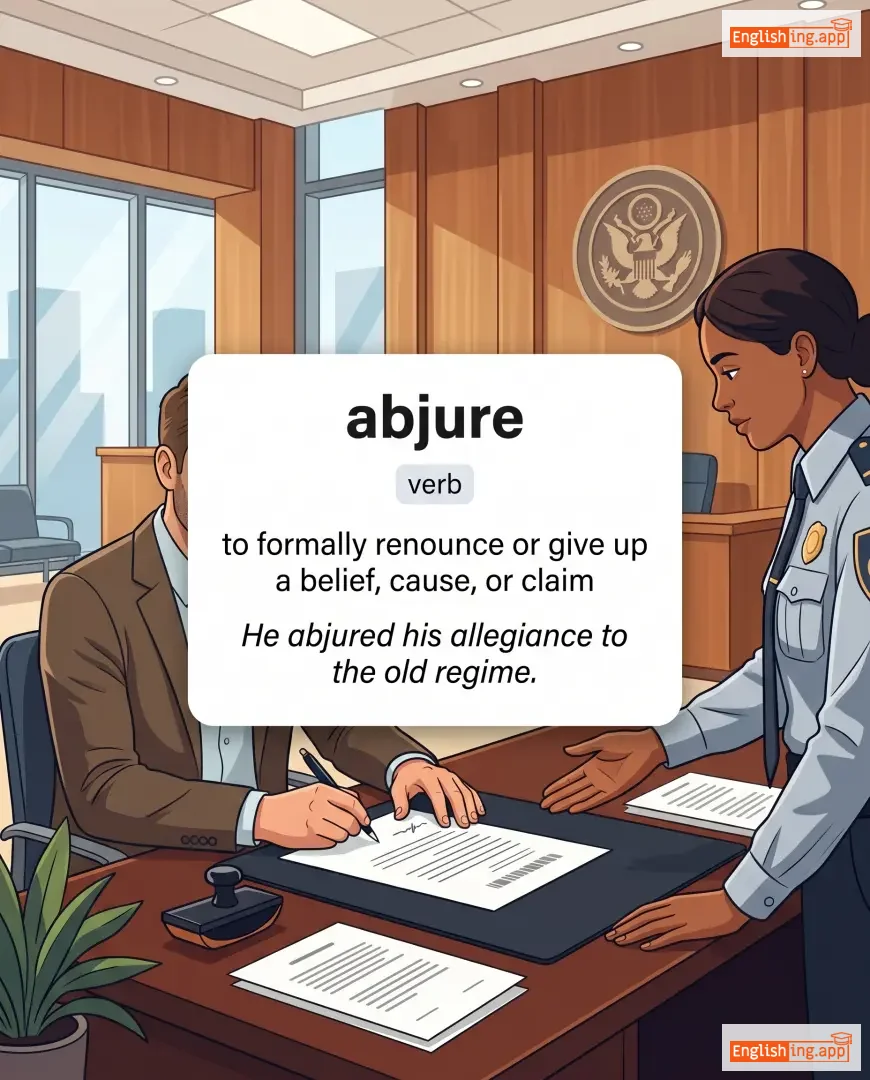
to formally renounce or give up a belief, cause, or claim
••••••
|
He abjured his allegiance to the old regime.
Он абжурировал свою верность старому режиму.
••••••
|
Он отказался от своей верности старому режиму.
On otkazalsya ot svoey vernosti staromu rezimu.
••••••
|
- •••••• | - •••••• | - •••••• |
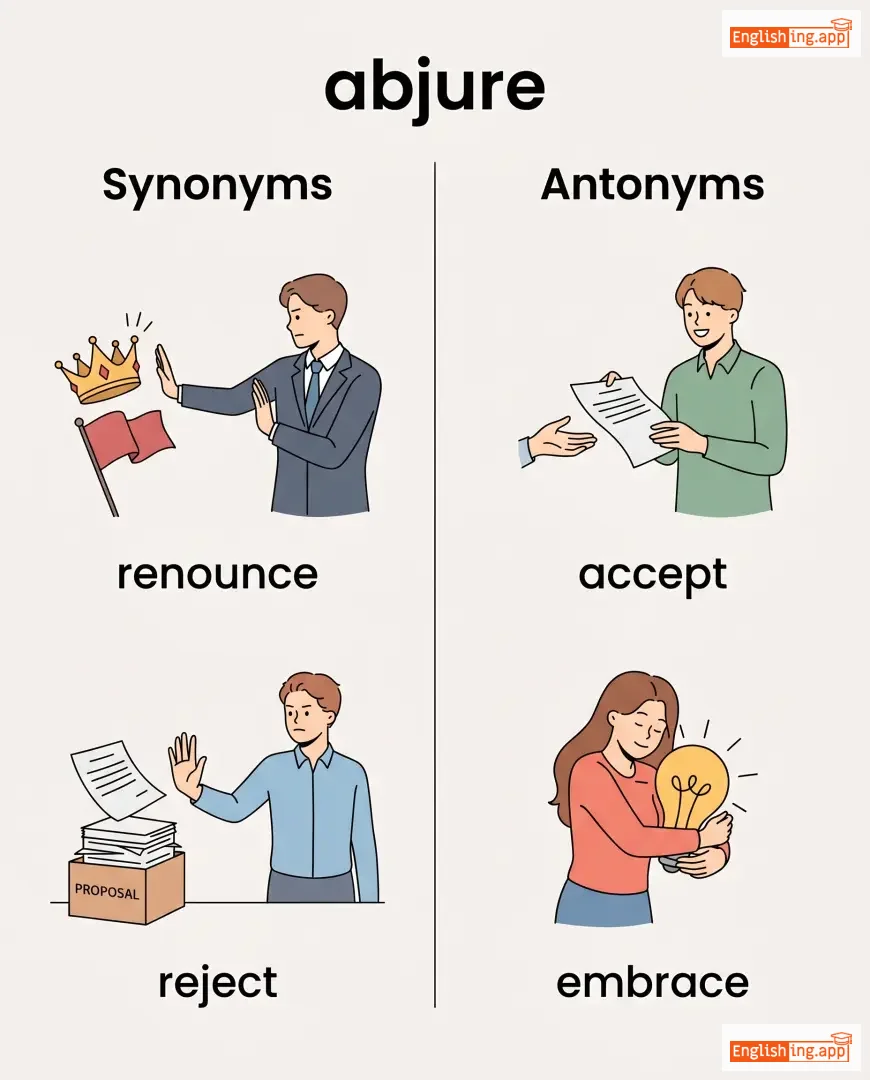
renounce, reject, repudiate, forswear
••••••
|
accept, embrace
••••••
|
abjure violence, abjure faith, abjure allegiance
••••••
|
Abjure означает ABandon + JURy = отказаться от чего-либо официально.
••••••
|
|
#8
😞
|
/ˈæbdʒɛkt/
adjective
(æbdʒɛkt)
••••••
|
|
отвратительный
otvratitel'nyy
••••••
|
- •••••• | - •••••• | - •••••• | - •••••• |
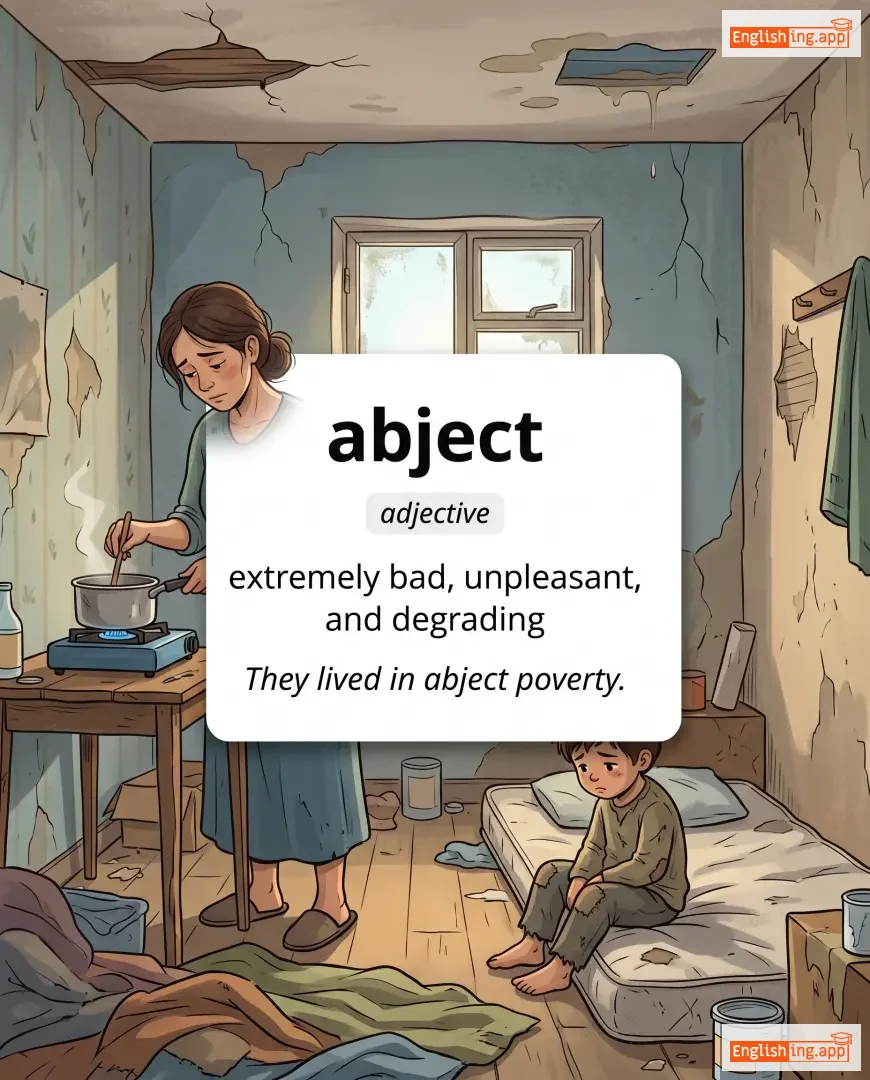
extremely bad, unpleasant, and degrading
••••••
|
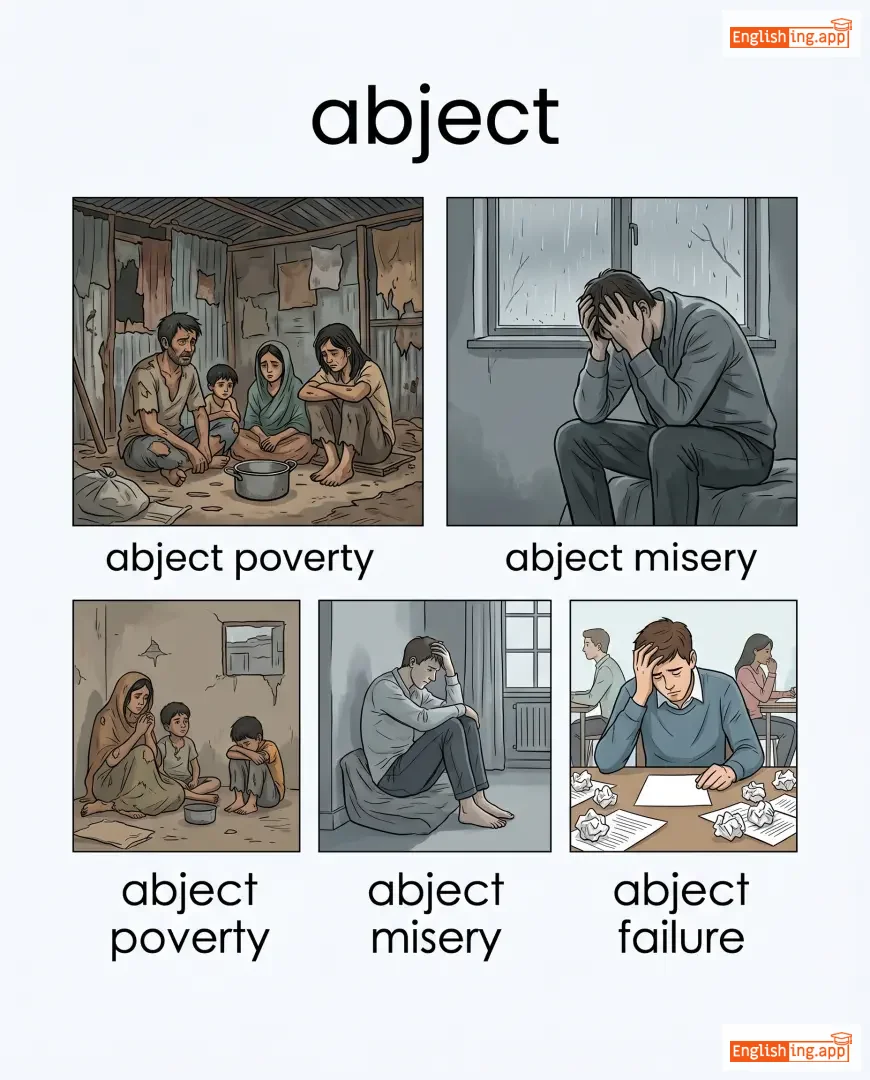
They lived in abject poverty. |
Они жили в отвратительной бедности.
Oni zhili v otvratitel'noy bednosti.
••••••
|
abject poverty |
a condition of extreme poverty
••••••
|
отвратительная бедность
otvratitel'naya bednost'
••••••
|
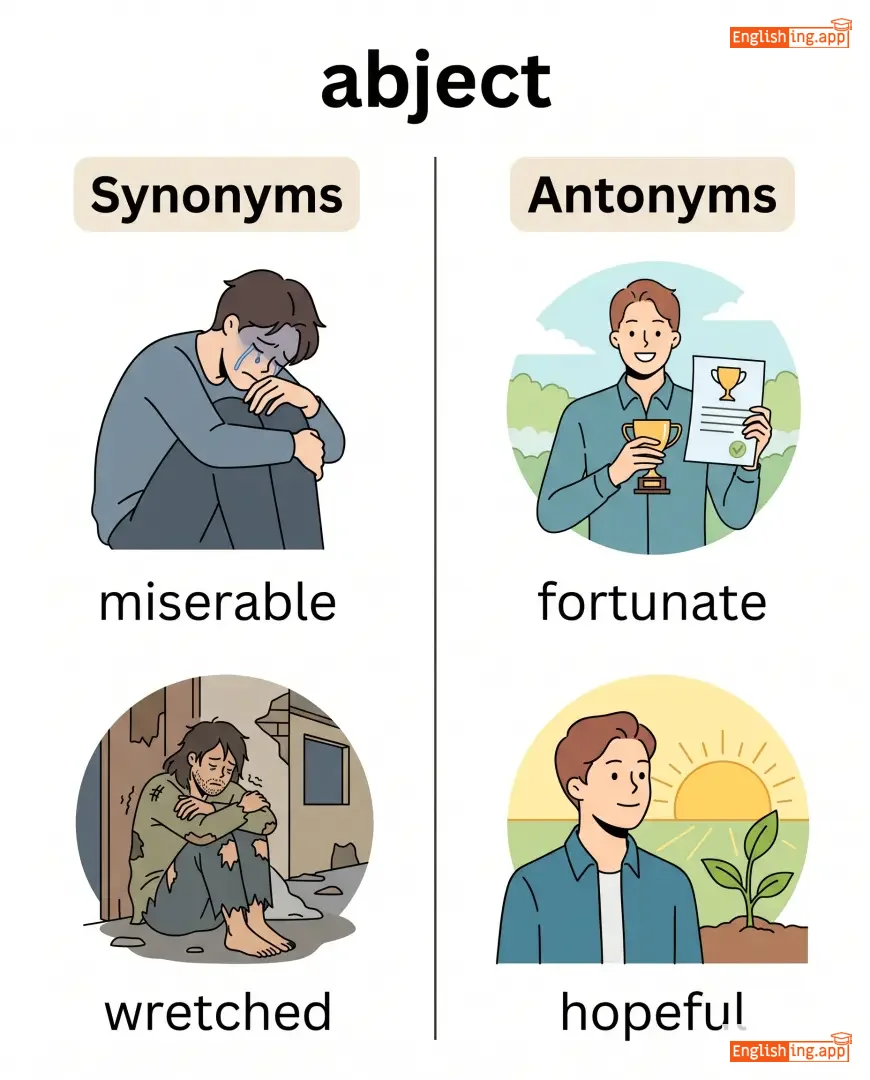
miserable, wretched, hopeless, pitiful
••••••
|
fortunate, hopeful
••••••
|
abject poverty, abject misery, abject failure
••••••
|
Abject = Отвратительный, как ужасная бедность.
••••••
|
|
#9
⏳
|
/əˈbaɪdɪŋ/
adjective
(абайдинг)
••••••
|
- •••••• |
постоянный
postoyanniy
••••••
|
- •••••• | - •••••• | - •••••• | - •••••• |
lasting for a long time; enduring
••••••
|
She had an abiding love for her hometown. |
У неё была постоянная любовь к её родному городу.
U neyo byla postoyannaya lyubov' k yeye rodnomu gorodu.
••••••
|
abiding faith |
a strong and lasting belief
••••••
|
постоянная вера
postoyannaya vera
••••••
|
enduring, lasting, permanent, constant
••••••
|
temporary, fleeting
••••••
|
abiding love, abiding faith, abiding memory
••••••
|
Abiding = A-BID означает постоянный (долговечный).
••••••
|
|
#10
⚖️
|
/əˈbaɪd/
verb
(абайд)
••••••
|
- •••••• |
соблюдать
soblyudat
••••••
|
abode
абод
••••••
|
abode
абод
••••••
|
abides
абайдс
••••••
|
abiding
абайдінг
••••••
|
to accept, tolerate, or remain faithful to something
••••••
|
Citizens must abide by the laws of their country.
Граждане должны соблюдать законы своей страны.
••••••
|
Граждане должны соблюдать законы своей страны.
Grazhdane dolzhny soblyudat' zakony svoey strany.
••••••
|
abide by the rules
соблюдать правила
••••••
|
to follow or obey the rules
••••••
|
соблюдать правила
soblyudat pravila
••••••
|
obey, comply, accept, follow, tolerate
••••••
|
disobey, defy
••••••
|
abide by law, abide by contract, cannot abide
••••••
|
Abide = Соблюдать правила. Abide означает соблюдать.
••••••
|
|
#11
📜
|
/əˈbaɪdəns/
noun
(абайденс)
••••••
|
- •••••• |
послушание
poslushanie
••••••
|
- •••••• | - •••••• | - •••••• | - •••••• |
the act of following, accepting, or complying with something
••••••
|
Her abidance by the rules impressed the committee. |
Ее послушание правилам впечатлило комитет.
Eyo poslu shanie pravilam vpechatlilo komitet.
••••••
|
- •••••• | - •••••• | - •••••• |
compliance, adherence, obedience, conformity
••••••
|
violation, disobedience
••••••
|
abidance by rules, abidance with law
••••••
|
Abidance = послушание законам.
••••••
|
|
#12
🚫
|
/əbˈhɒrənt/
adjective
(абхоррент)
••••••
|
- •••••• |
отвратительный
otvratitel'nyj
••••••
|
- •••••• | - •••••• | - •••••• | - •••••• |
causing or deserving strong dislike or hatred
••••••
|
Such cruelty is abhorrent to civilized society.
Такая жестокость абхоррент для цивилизованного общества.
••••••
|
Такая жестокость отвратительна для цивилизованного общества.
Takaya zhestokost' otvratitel'na dlya tsivilizovannogo obshchestva.
••••••
|
- •••••• | - •••••• | - •••••• |
repugnant, hateful, detestable, offensive
••••••
|
acceptable, admirable, pleasant
••••••
|
abhorrent practice, abhorrent behavior, morally abhorrent
••••••
|
‘Отвратительный’ - как abhorrent, когда что-то вызывает ужас.
••••••
|
|
#13
😡
|
/əbˈhɒrəns/
noun
(абхорренс)
••••••
|
- •••••• |
отвращение
otvrashchenie
••••••
|
- •••••• | - •••••• | - •••••• | - •••••• |
a feeling of strong disgust or hatred
••••••
|
He expressed his abhorrence of racial discrimination. |
Он выразил своё отвращение к расовой дискриминации.
On vyrazil svoe otvrashchenie k rasovoj diskriminatsii.
••••••
|
- •••••• | - •••••• | - •••••• |
hatred, disgust, loathing, detestation
••••••
|
affection, admiration
••••••
|
abhorrence of violence, express abhorrence, deep abhorrence
••••••
|
Отвращение — это глубокая ненависть, как в ужасе.
••••••
|
|
#14
🤮
|
/əbˈhɔːr/
verb
(абхор)
••••••
|
- •••••• |
ненавидеть
nenavidet'
••••••
|
abhorred
абхорред
••••••
|
abhorred
абхорред
••••••
|
abhors
абхорс
••••••
|
abhorring
абхоринг
••••••
|
to regard with disgust and hatred
••••••
|
She abhors cruelty to animals.
Она ненавидит жестокость по отношению к животным.
••••••
|
Она ненавидит жестокость по отношению к животным.
Ona nenavidit zhestokost' po otnosheniyu k zhivotnym.
••••••
|
- •••••• | - •••••• | - •••••• |
detest, hate, loathe, despise, dislike
••••••
|
admire, love, cherish
••••••
|
abhor violence, abhor injustice, abhor cruelty
••••••
|
ABHOR = Ненавидеть что-то, что вызывает отвращение
••••••
|
|
#15
⏸️
|
/əˈbeɪəns/
noun
(abeyans)
••••••
|
|
временная приостановка
vremennaya priostanovka
••••••
|
- •••••• | - •••••• | - •••••• | - •••••• |
a state of temporary suspension or inactivity
••••••
|
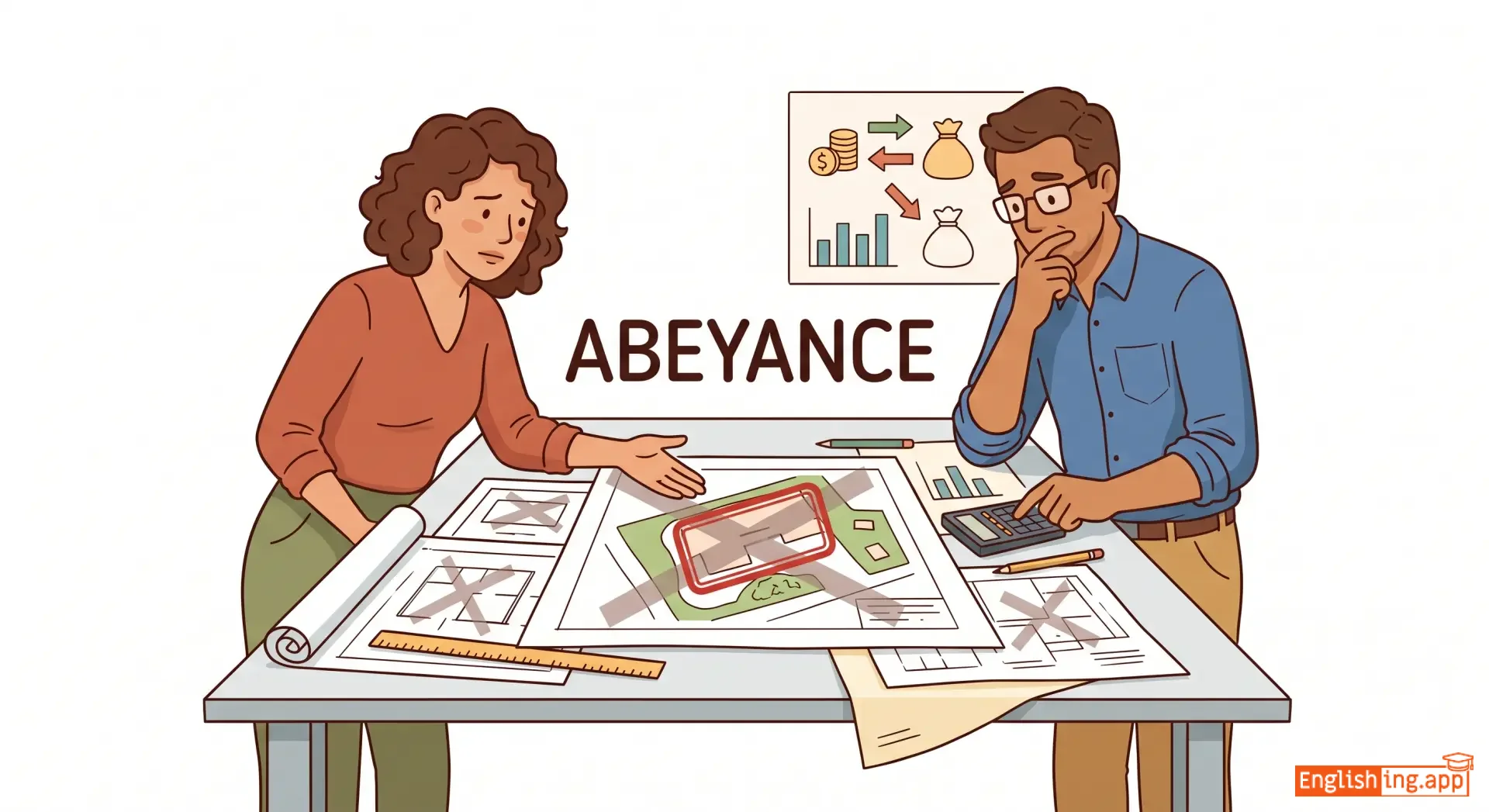
The project was held in abeyance until funds became available.
Проект был приостановлен, пока не стали доступны средства.
••••••
|
Проект был приостановлен до тех пор, пока средства не стали доступны.
Proyekt byl priostanovlen do tekh por, poka sredstva ne stali dostupny.
••••••
|
- •••••• | - •••••• | - •••••• |
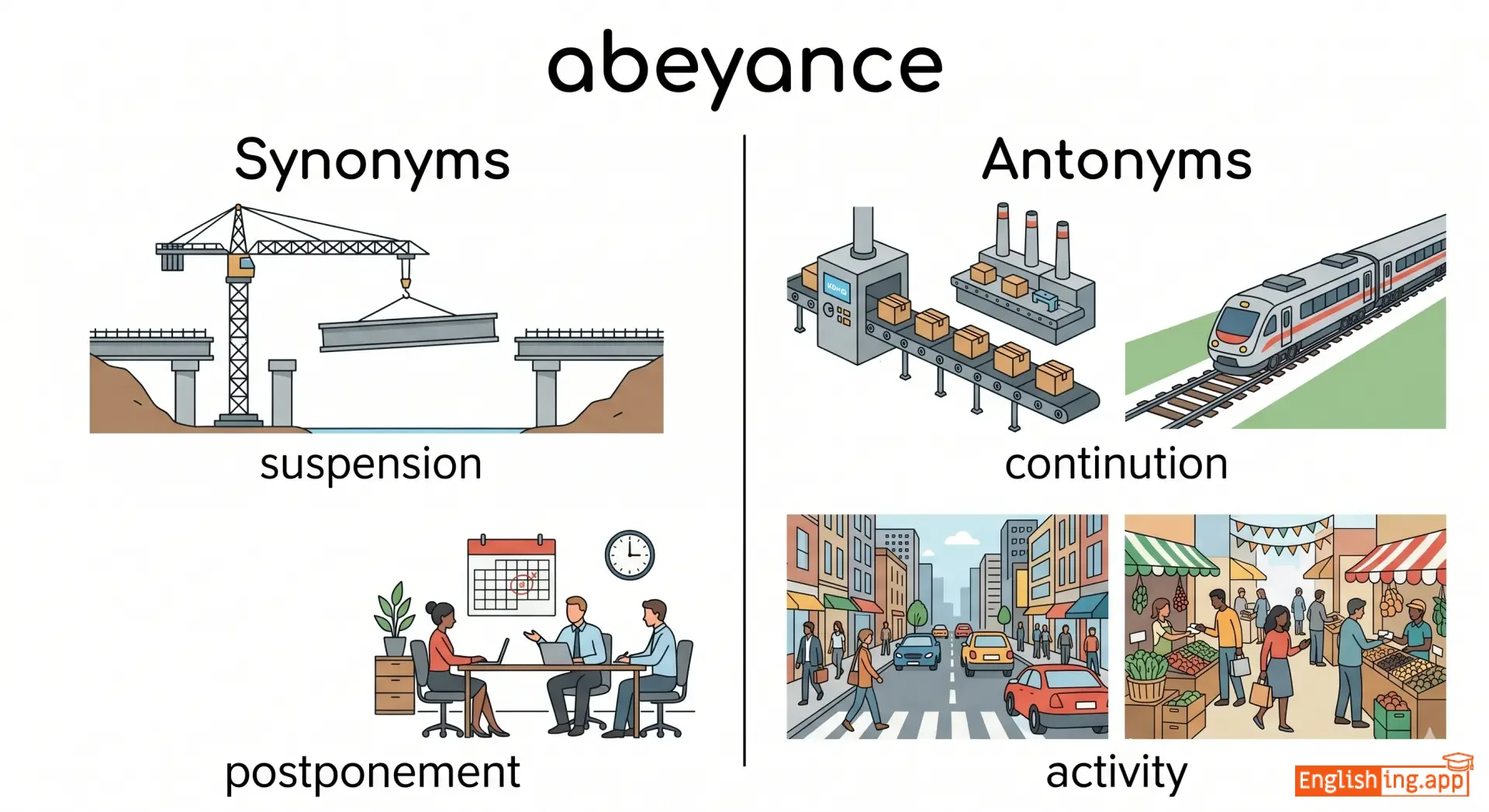
suspension, postponement, delay, dormancy
••••••
|
continuation, activity
••••••
|
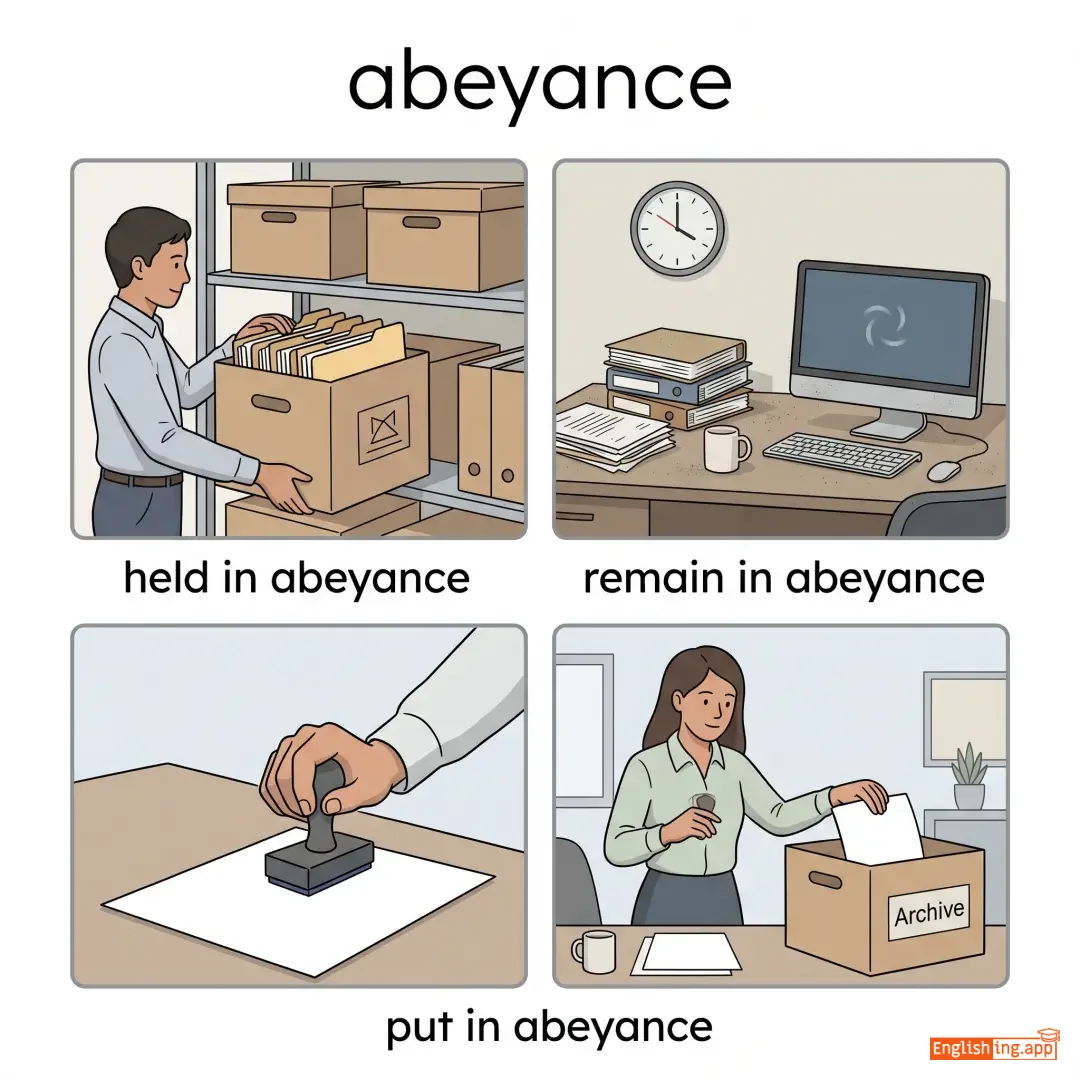
held in abeyance, remain in abeyance, put in abeyance
••••••
|
A BAY временно приостановлен - abeyance означает приостановка
••••••
|
|
#16
🏃
|
/əˈbændən/
verb
(абандон)
••••••
|
|
бросать
brosat'
••••••
|
abandoned
абандонед
••••••
|
abandoned
абандонед
••••••
|
abandons
абандонс
••••••
|
abandoning
абандоннинг
••••••
|
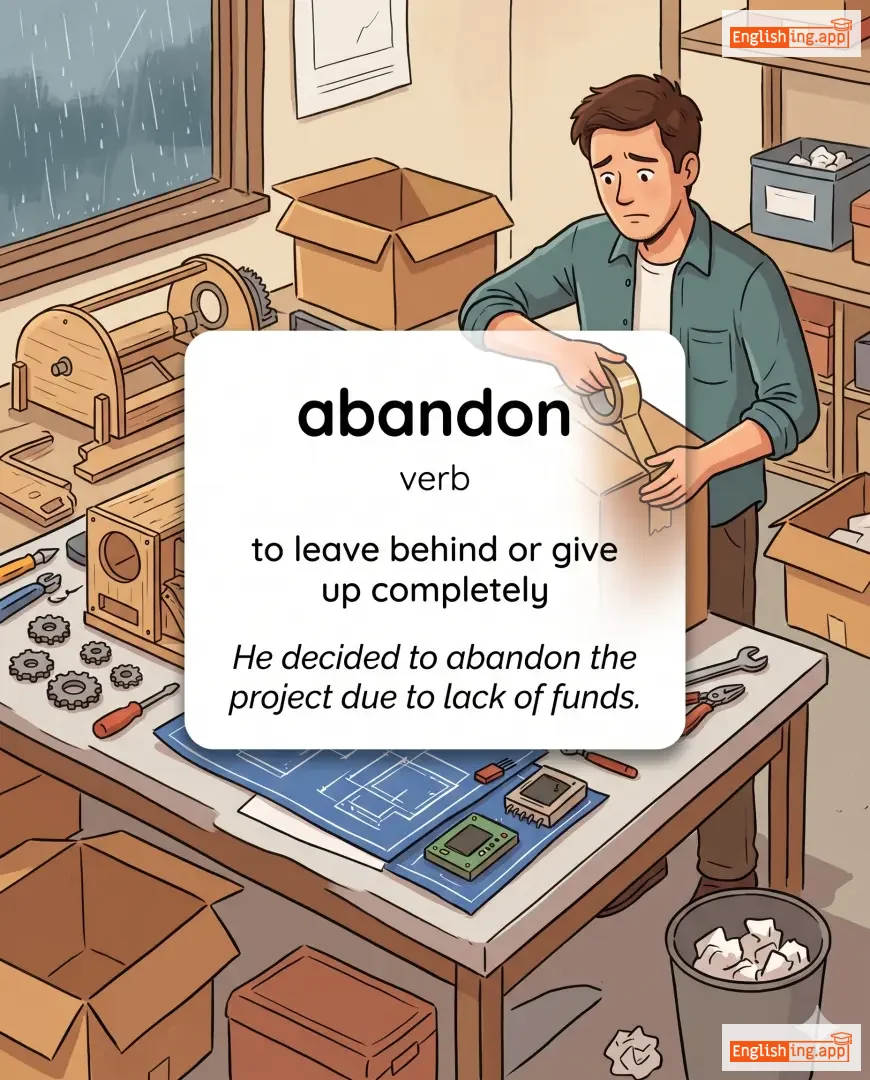
to leave behind or give up completely
••••••
|
He decided to abandon the project due to lack of funds.
Он решил абандонить проект из-за нехватки средств.
••••••
|
Он решил бросить проект из-за нехватки средств.
On reshil brosit' proekt iz-za nekhvatki sredstv.
••••••
|
abandon ship
покинуть корабль
••••••
|
to leave a failing situation quickly
••••••
|
покинуть корабль
pokinut' korabl'
••••••
|
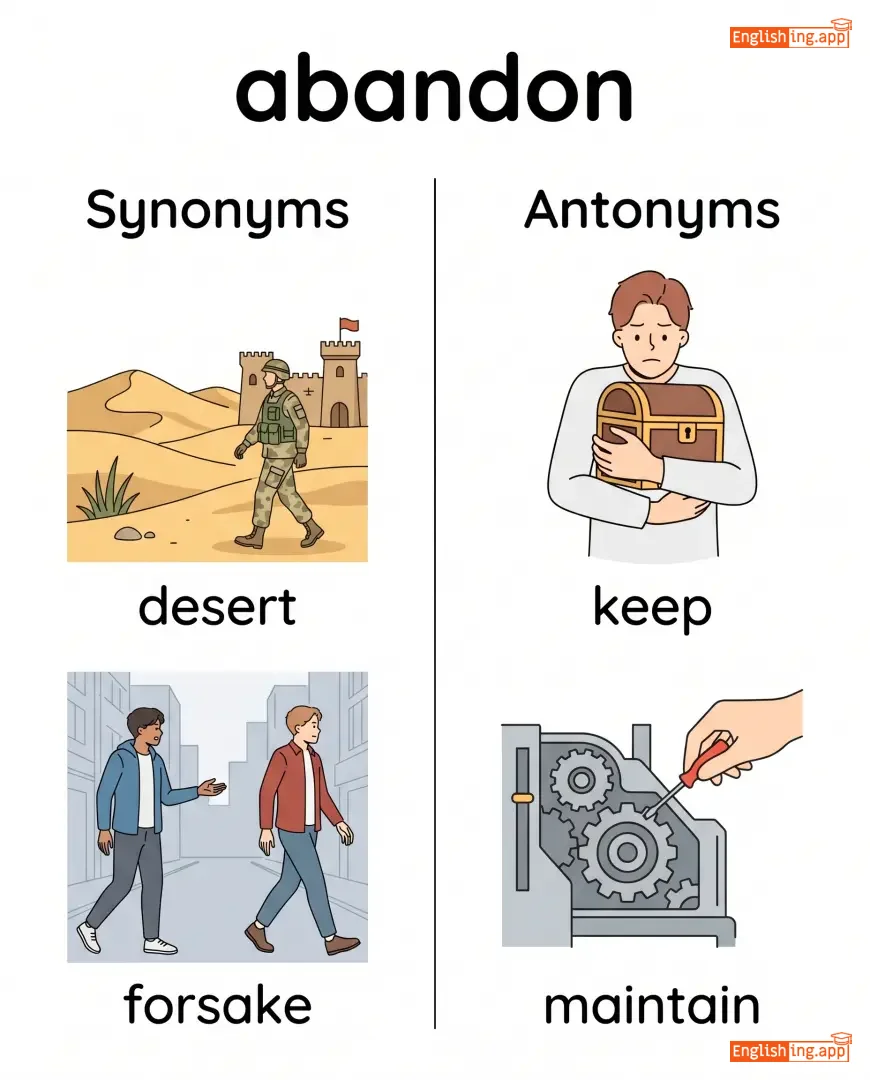
desert, forsake, leave, quit, relinquish
••••••
|
keep, maintain, continue
••••••
|
abandon hope, abandon plan, abandon effort, abandon project
••••••
|
Бросить - это оставить что-то, как BandOn (бандон) оставить позади.
••••••
|
|
#17
❓
|
/ˌæb.əˈreɪ.ʃən/
noun
(аберрация)
••••••
|
|
аберрация
aberraciya
••••••
|
- •••••• | - •••••• | - •••••• | - •••••• |
a departure from what is normal, usual, or expected; an anomaly
••••••
|
The sudden drop in temperature was an aberration for this season.
The sudden drop in temperature was an aberration for this season.
••••••
|
Резкое падение температуры было аномалией для этого сезона.
Rezkoye padeniye temperatury bylo anomaliyei dlya etogo sezona.
••••••
|
- •••••• | - •••••• | - •••••• |
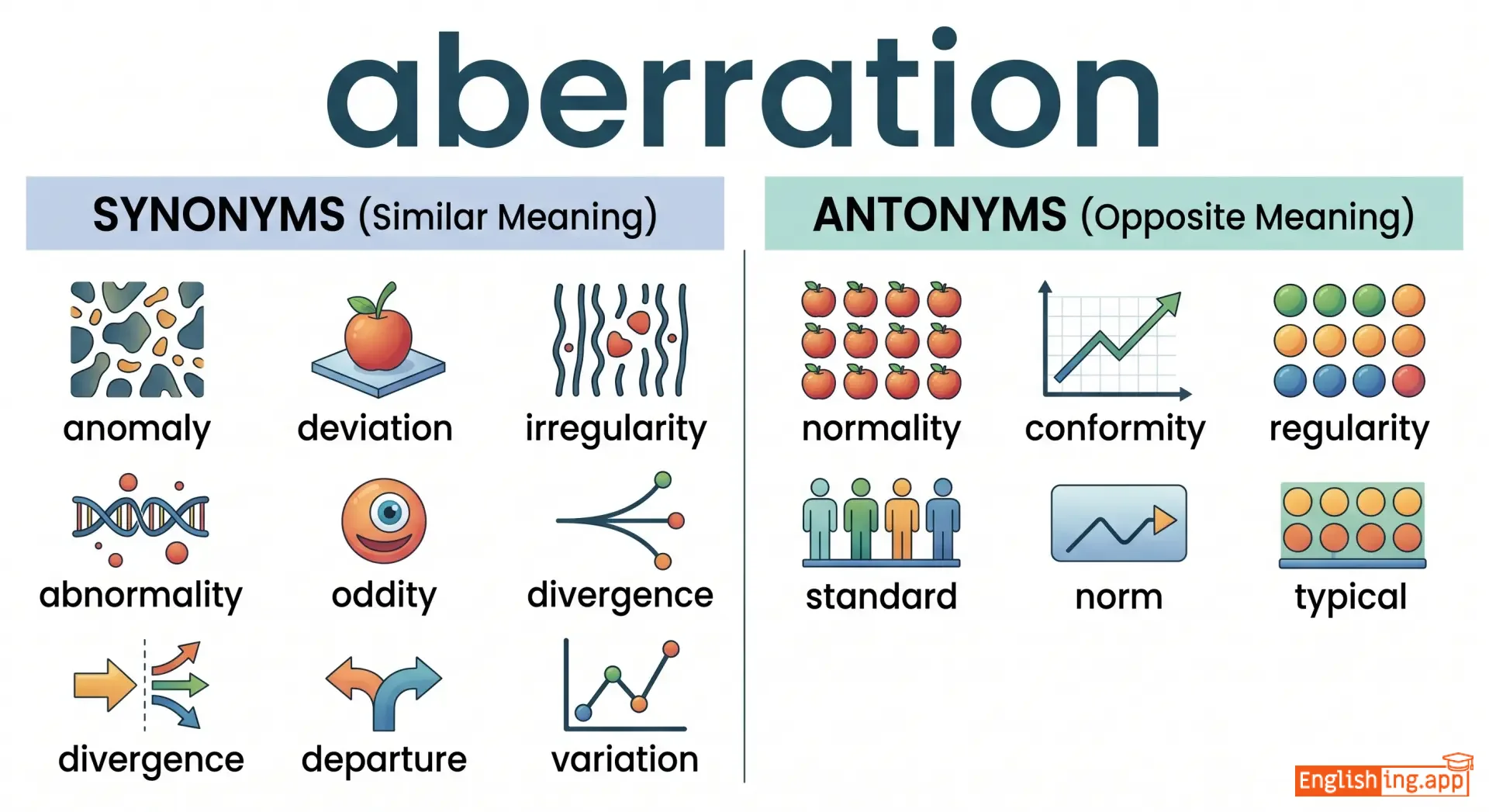
anomaly, deviation, irregularity, abnormality, oddity
••••••
|
normality, regularity
••••••
|
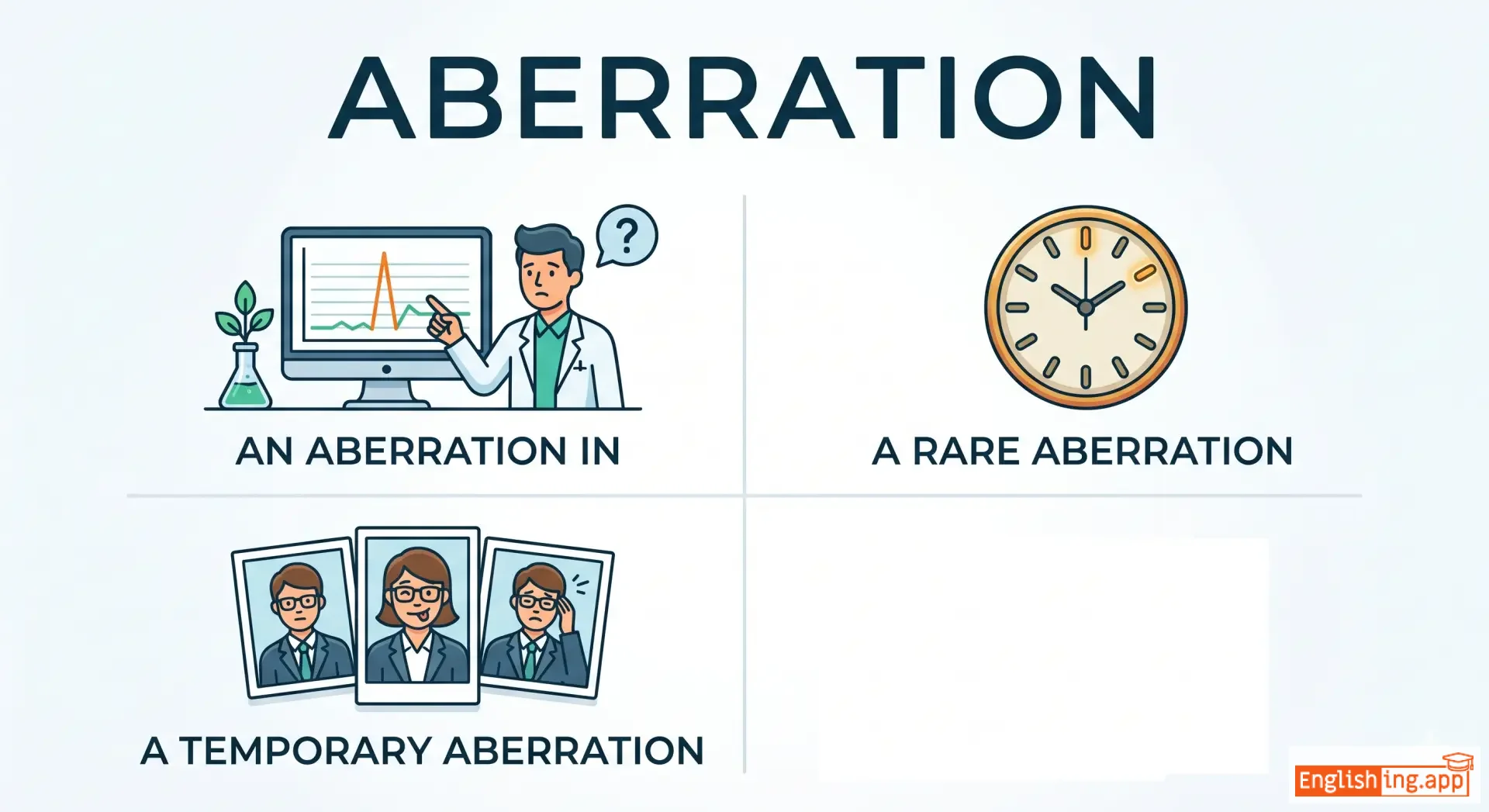
an aberration in, a rare aberration, a temporary aberration
••••••
|
Aberration = abnormal + variation = аберрация
••••••
|
|
#18
⚠️
|
/ˈæb.ə.rənt/
adjective
(аберант)
••••••
|
|
аберрантный
aberrantny
••••••
|
- •••••• | - •••••• | - •••••• | - •••••• |
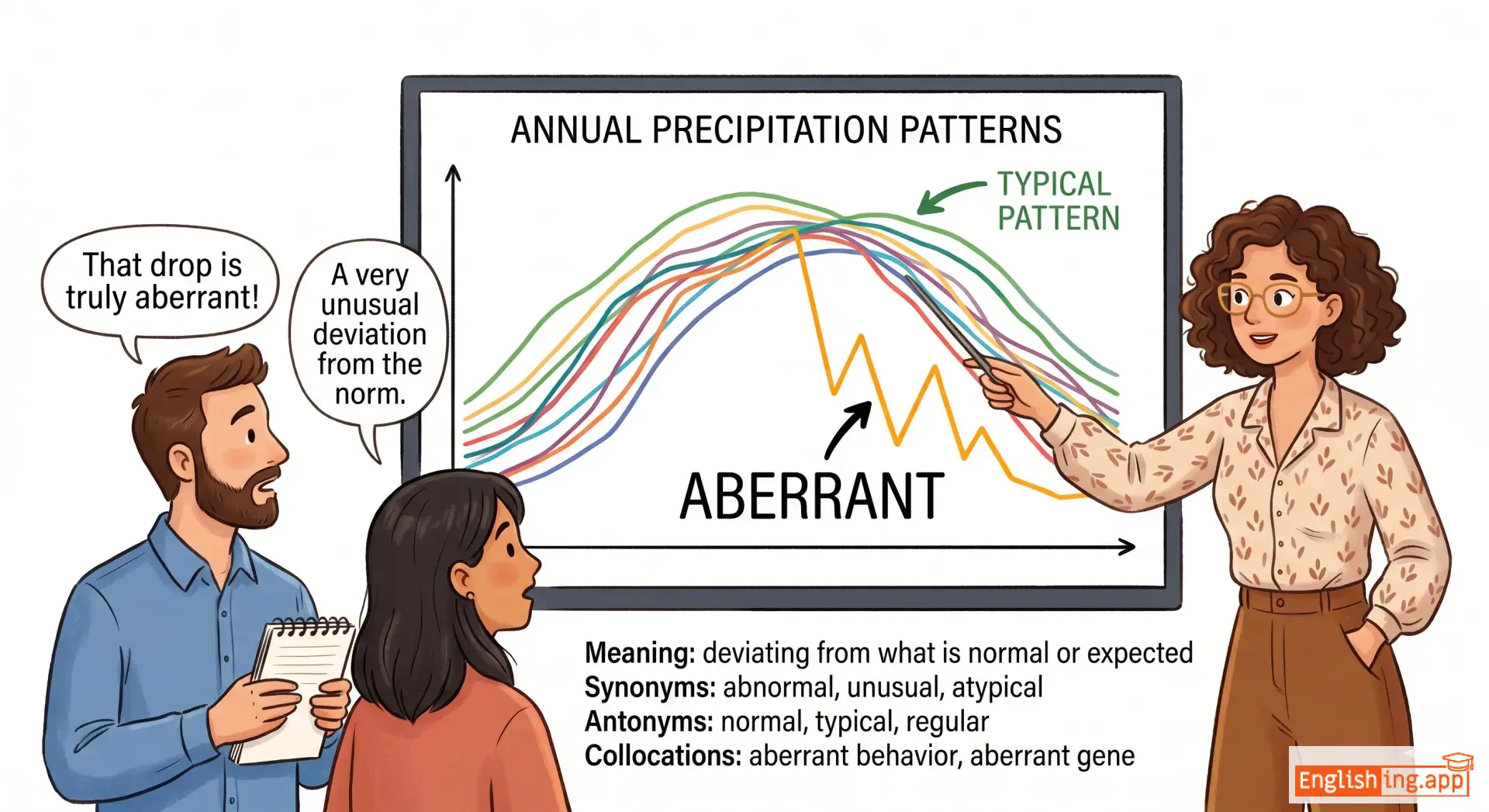
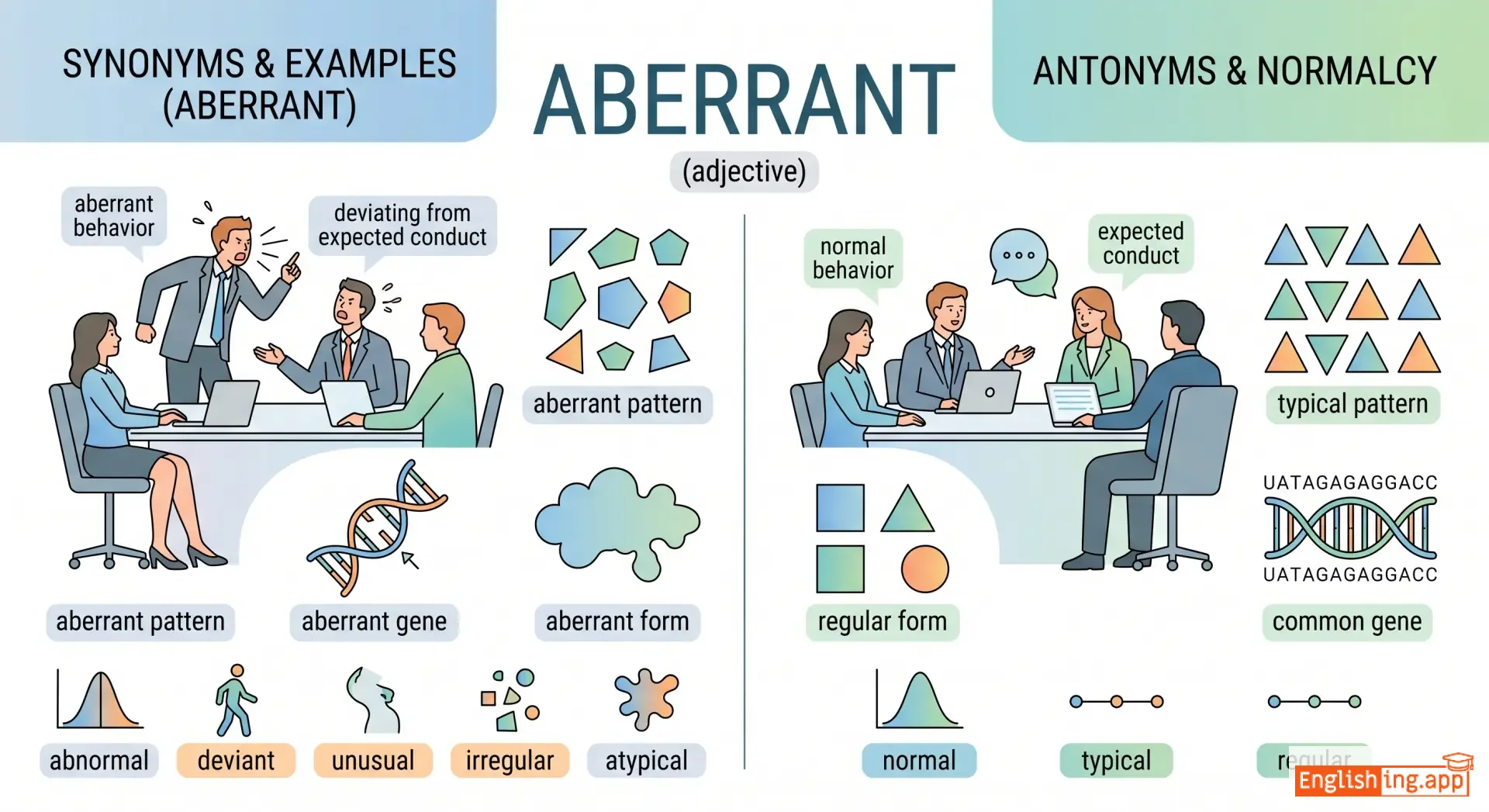
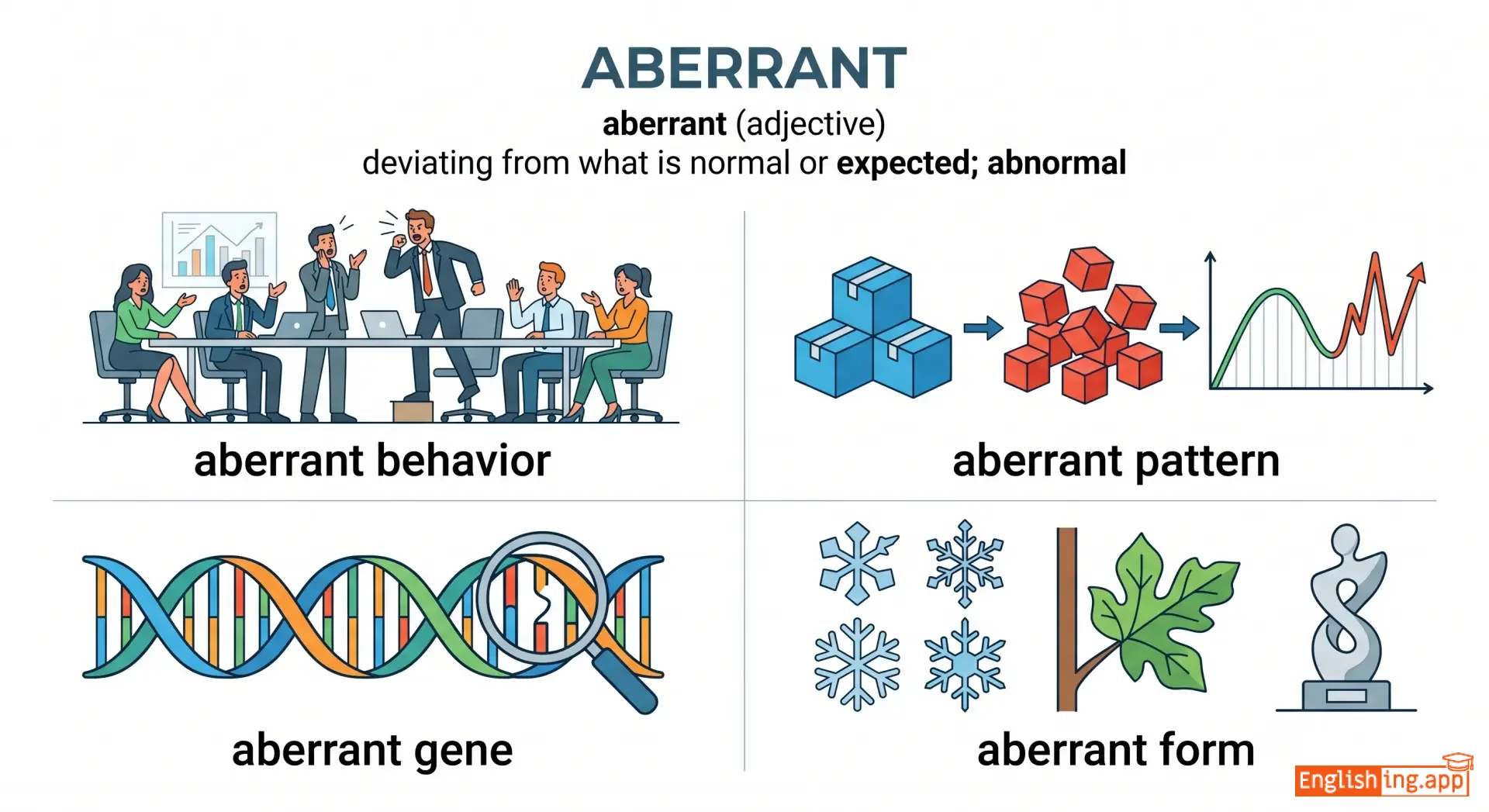
deviating from what is normal or expected; abnormal
••••••
|
His aberrant behavior shocked everyone at the meeting.
Его аберрантное поведение шокировало всех на встрече.
••••••
|
Его аберрантное поведение шокировало всех на встрече.
Ego aberrantnoe povedenie shokirovalo vsekh na vstreche.
••••••
|
- •••••• | - •••••• | - •••••• |
abnormal, deviant, unusual, irregular, atypical
••••••
|
normal, typical, regular
••••••
|
aberrant behavior, aberrant pattern, aberrant gene, aberrant form
••••••
|
Aberrant означает аномальный, запомни - аномальный + ошибающийся = на неправильном пути
••••••
|
|
#19
🛏️
|
/əˈbɛd/
adverb
(абед)
••••••
|
- •••••• |
в кровати
v krovaty
••••••
|
- •••••• | - •••••• | - •••••• | - •••••• |
in bed
••••••
|
She stayed abed all day due to illness. |
Она осталась в кровати весь день из-за болезни.
Ona ostalas' v krovaty ves' den' iz-za bolezni.
••••••
|
- •••••• | - •••••• | - •••••• |
in bed, resting, lying down, bedridden
••••••
|
up, active, awake
••••••
|
remain abed, lie abed, stay abed
••••••
|
A + bed = в кровати, легко запомнить
••••••
|
|
#20
🕵️
|
/æbˈdʌk.ʃən/
noun
(abdukcija)
••••••
|
- •••••• |
похищение
pokhishchenie
••••••
|
- •••••• | - •••••• | - •••••• | - •••••• |
the act of taking someone away illegally by force; kidnapping
••••••
|
The police are investigating the abduction of the child. |
Полиция расследует похищение ребенка.
Politsiya rassleduyet pokhishcheniye rebenka.
••••••
|
- •••••• | - •••••• | - •••••• |
kidnapping, capture, seizure, snatching, hijacking
••••••
|
release, liberation
••••••
|
child abduction, abduction case, abduction victim, abduction report
••••••
|
Abduction = abba + duction, помни - отец бежит, чтобы спасти ребенка от похищения
••••••
|
|
#21
🤰
|
/æbˈdɑː.mə.nəl/
adjective
(абдоминал)
••••••
|
- •••••• |
абдоминальный
abdominal'nyy
••••••
|
- •••••• | - •••••• | - •••••• | - •••••• |
relating to the abdomen (the part of the body between the chest and pelvis)
••••••
|
He complained of severe abdominal pain. |
Он жаловался на сильную боль в животе.
On zhalovalsya na sil'nuyu bol' v zhivote.
••••••
|
- •••••• | - •••••• | - •••••• |
stomach, belly, tummy, midsection, gut
••••••
|
thoracic, cranial
••••••
|
abdominal pain, abdominal muscles, abdominal cavity, abdominal surgery
••••••
|
Abdominal = относящийся к животу - боль в животе
••••••
|
|
#22
🫃
|
/ˈæbdəmən/
noun
(абдомен)
••••••
|
- •••••• |
живот
zhivot
••••••
|
- •••••• | - •••••• | - •••••• | - •••••• |
The part of the body below the chest and above the hips that contains the stomach and other organs.
••••••
|
He complained of pain in his abdomen. |
Он пожаловался на боль в животе.
On pozhalovalsya na bol' v zhivote.
••••••
|
- •••••• | - •••••• | - •••••• |
belly, stomach, tummy, midsection
••••••
|
back, spine
••••••
|
lower abdomen, abdomen pain, abdomen muscles, abdomen cavity
••••••
|
Abdomen означает живот 🫃 – запомните, Ab-do-men = Ab (abs) + men, в животе.
••••••
|
|
#23
👑
|
/ˈæbdɪkeɪt/
verb
(abdikéit)
••••••
|
|
отрекаться
otrekatsya
••••••
|
abdicated
abdikéitid
••••••
|
abdicated
abdikéitid
••••••
|
abdicates
abdikéits
••••••
|
abdicating
abdikéiting
••••••
|
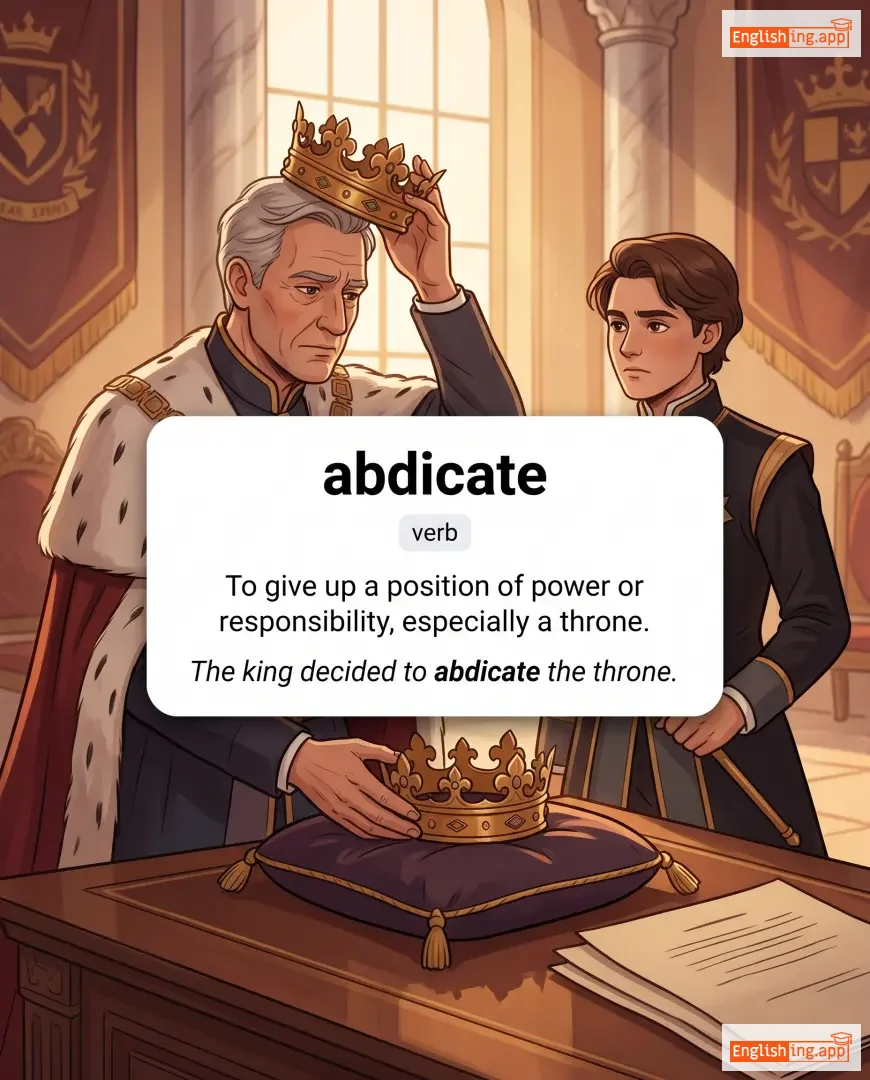
To give up a position of power or responsibility, especially a throne.
••••••
|
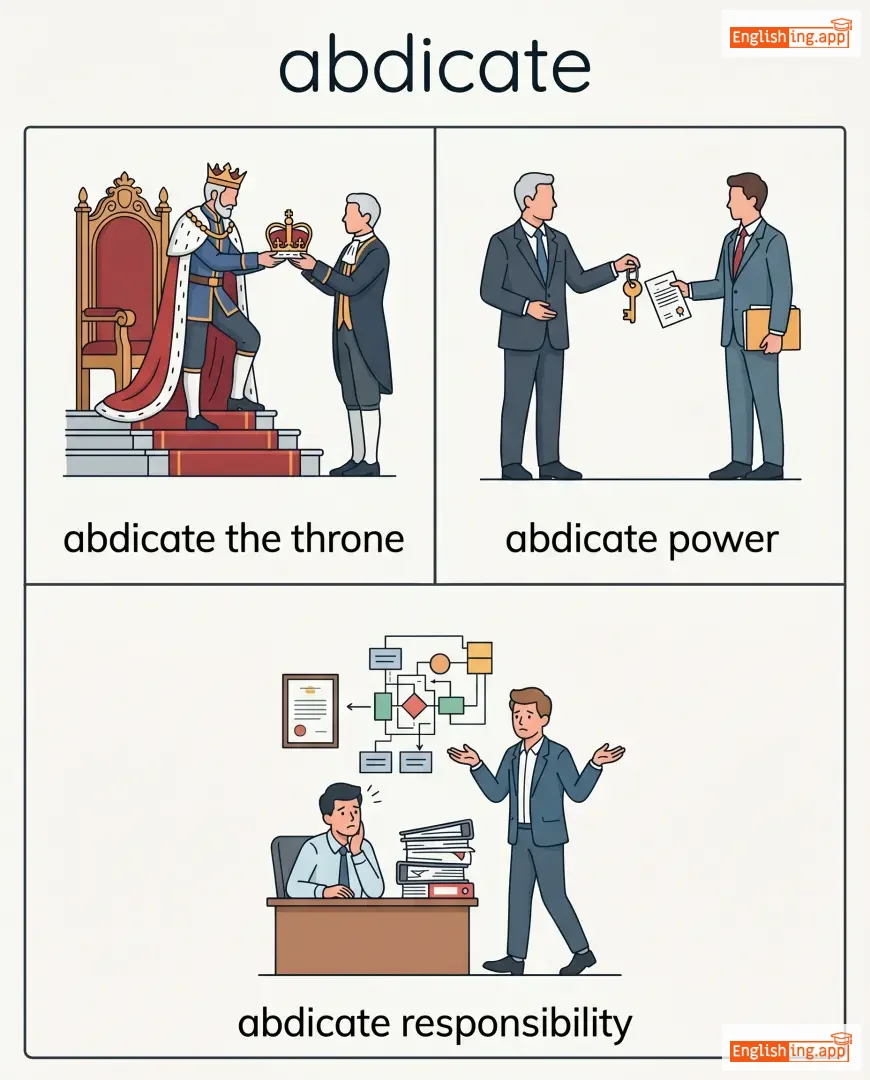
The king decided to abdicate the throne.
Царь решил абдицировать трон.
••••••
|
Царь решил абдицировать трон.
Tsar reshil abdiczirovat' tron.
••••••
|
abdicate responsibility
абдицировать ответственность
••••••
|
To avoid or refuse to take responsibility.
••••••
|
отказ от ответственности
otkaz ot otvetstvennosti
••••••
|
resign, renounce, relinquish, quit, surrender
••••••
|
assume, claim, retain
••••••
|
abdicate the throne, abdicate power, abdicate responsibility, forced to abdicate
••••••
|
Отрекаться означает оставить трон — представь себе 'Абдула', который отказывается.
••••••
|
|
#24
✂️
|
/əˈbriːvieɪt/
verb
(сокращать)
••••••
|
- •••••• |
сокращать
sokrashchat'
••••••
|
abbreviated
сократил
••••••
|
abbreviated
сокращенный
••••••
|
abbreviates
сокращает
••••••
|
abbreviating
сокращая
••••••
|
To shorten a word, phrase, or text by leaving out letters or parts.
••••••
|
We often abbreviate 'Doctor' to 'Dr'.
Мы часто сокращаем 'Доктор' до 'Др'.
••••••
|
Мы часто сокращаем 'Доктор' до 'Др'.
My chasto sokrashchaem 'Doktor' do 'Dr'.
••••••
|
- •••••• | - •••••• | - •••••• |
shorten, condense, contract, reduce, cut
••••••
|
expand, lengthen, extend
••••••
|
abbreviate words, abbreviate term, abbreviate name, commonly abbreviated
••••••
|
Abbreviate означает сокращать ✂️ — в русском A+B+речь = сокращать слово.
••••••
|
|
#25
🙏
|
/ˈæbət/
noun
(абот)
••••••
|
- •••••• |
аббат
abbat
••••••
|
- •••••• | - •••••• | - •••••• | - •••••• |
The head of a monastery for monks.
••••••
|
The abbot welcomed the visitors to the monastery. |
Аббат поприветствовал посетителей в монастыре.
Abbat poprivetsvoval posetiteley v monastyre.
••••••
|
- •••••• | - •••••• | - •••••• |
monk leader, prior, superior, father
••••••
|
novice, layperson
••••••
|
abbot of the monastery, wise abbot, abbot and monks
••••••
|
Abbat = Abbot
••••••
|
|
#26
⛪
|
/ˈæbi/
noun
(эби)
••••••
|
- •••••• |
аббатство
abbatstvo
••••••
|
- •••••• | - •••••• | - •••••• | - •••••• |
A large church building or monastery where monks or nuns live, work, and worship.
••••••
|
The old abbey on the hill attracts many tourists each year. |
Старая аббатство на холме привлекает множество туристов каждый год.
Staraya abbatstvo na kholme privlekaet mnozhestvo turitov kazhdyy god.
••••••
|
- •••••• | - •••••• | - •••••• |
monastery, convent, priory, cloister, cathedral
••••••
|
temple, mosque
••••••
|
ancient abbey, ruined abbey, abbey church, abbey grounds
••••••
|
Abbey = Где монахи молятся и работают.
••••••
|
|
#27
🙏
|
/ˈæbɪs/
noun
(эбесс)
••••••
|
- •••••• |
аббесса (женщина, возглавляющая монастырь)
abbessa (zhenshchina, vozglavlyayushchaya monastyr')
••••••
|
- •••••• | - •••••• | - •••••• | - •••••• |
the woman in charge of a convent of nuns
••••••
|
The abbess welcomed the visitors to the convent. |
Аббесса приветствовала посетителей в монастыре.
Abbessa privetstvovala posetiteley v monastyre.
••••••
|
- •••••• | - •••••• | - •••••• |
mother superior, prioress, nun leader
••••••
|
monk, abbot
••••••
|
abbess of convent, abbess authority, abbess role
••••••
|
Abbess = женщина-босс монастыря — abbess = женщина, ведущая монастырь.
••••••
|
|
#28
🌧️
|
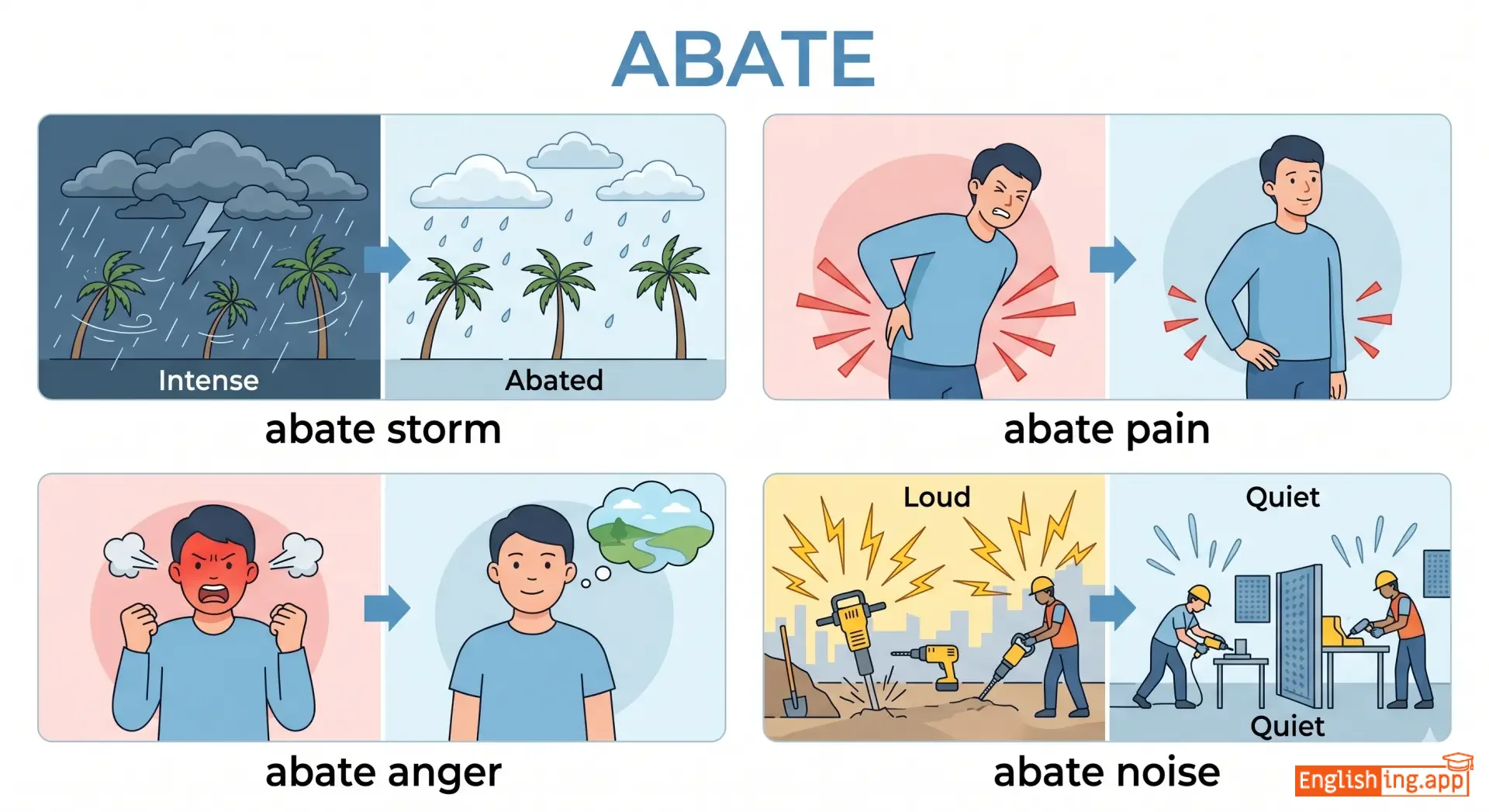
/əˈbeɪt/
verb
(абейт)
••••••
|
|
уменьшаться
umenshatsya
••••••
|
abated
абейтид
••••••
|
abated
абейтид
••••••
|
abates
абейтс
••••••
|
abating
абейтинг
••••••
|
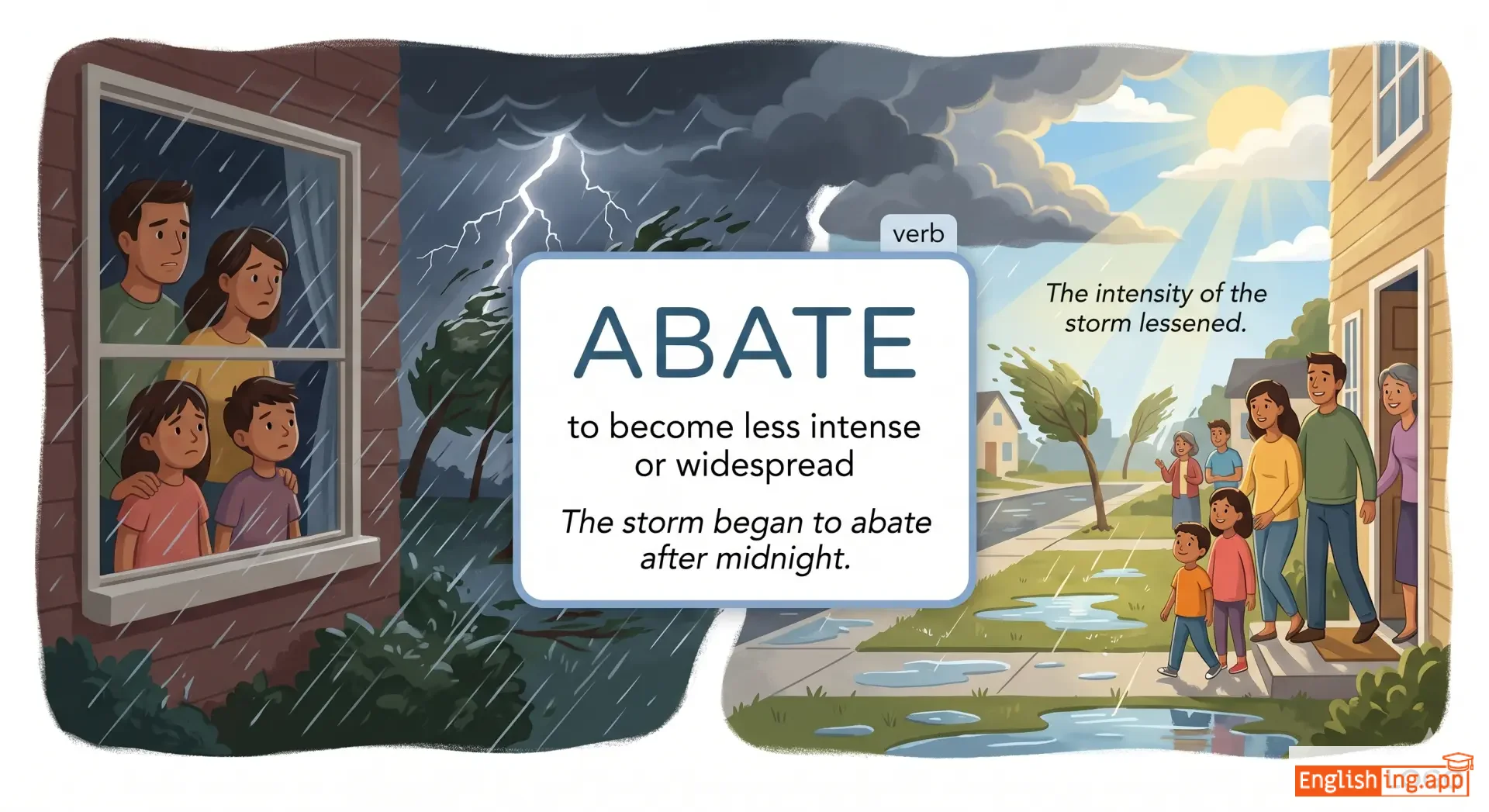
to become less intense or widespread
••••••
|
The storm began to abate after midnight.
Шторм начал стихать после полуночи.
••••••
|
Шторм начал стихать после полуночи.
Shtorm nachal stikhayt posle polnoch.
••••••
|
- •••••• | - •••••• | - •••••• |
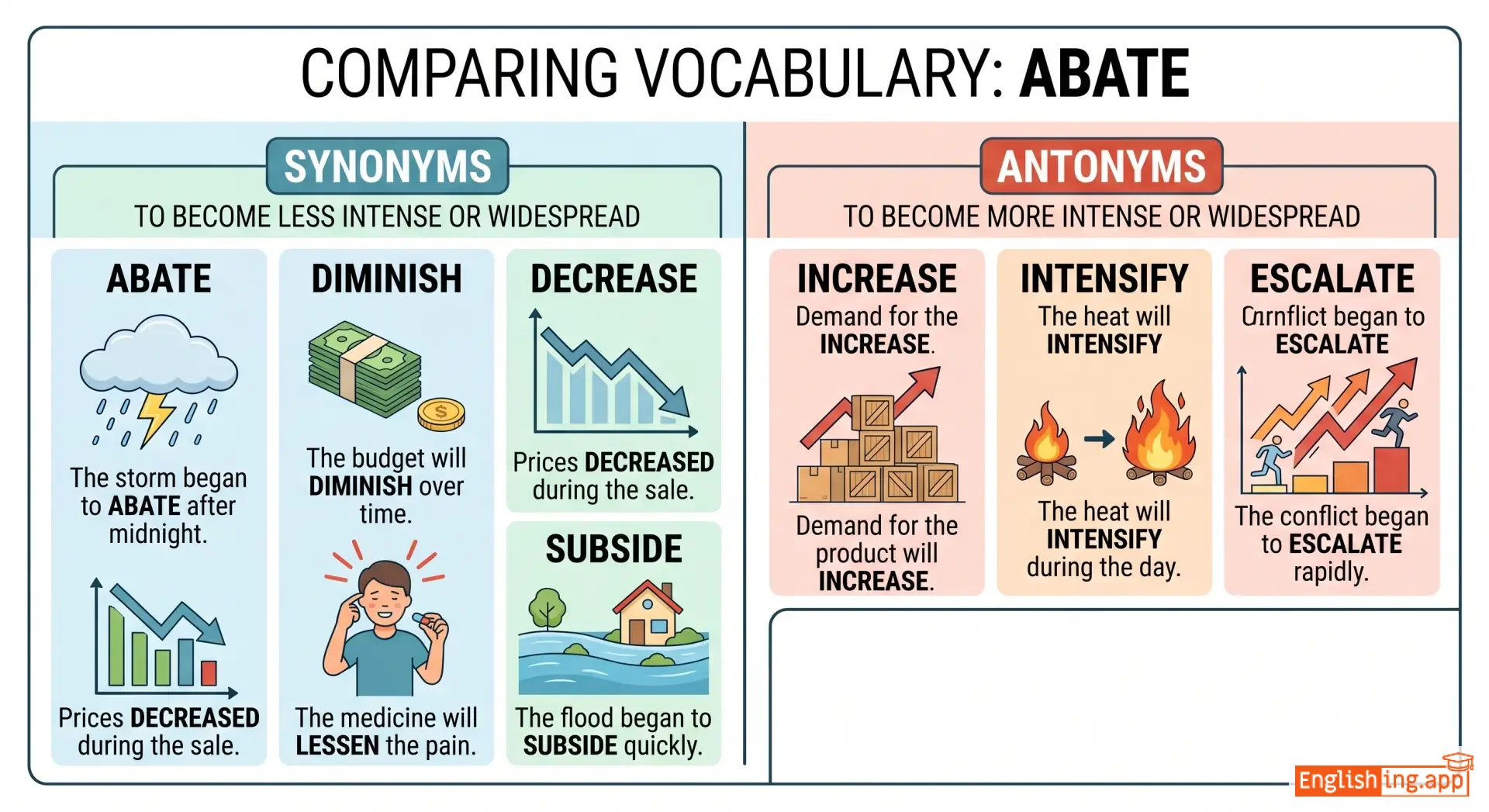
diminish, decrease, lessen, subside
••••••
|
increase, intensify, escalate
••••••
|
abate storm, abate pain, abate anger, abate noise
••••••
|
No •••••• |
|
#29
😳
|
/əˈbæʃ/
verb
(абаш)
••••••
|
- •••••• |
смущать
smushchat
••••••
|
abashed
абашд
••••••
|
abashed
абашд
••••••
|
abashes
абашес
••••••
|
abashing
абашинг
••••••
|
to make someone feel embarrassed or ashamed
••••••
|
Her sudden question seemed to abash him.
Ее внезапный вопрос, похоже, смутил его.
••••••
|
Ее внезапный вопрос, похоже, смутил его.
Eyo vnezapnyy vopros, pokhozhe, smutil ego.
••••••
|
- •••••• | - •••••• | - •••••• |
embarrass, shame, confuse, disconcert
••••••
|
encourage, reassure, comfort
••••••
|
abash someone, abash completely, visibly abash
••••••
|
Abash означает смущать, как неожиданный вопрос, который вызывает стыд.
••••••
|
|
#30
😔
|
/əˈbeɪs/
verb
(абэйс)
••••••
|
- •••••• |
унижать
unizhat
••••••
|
abased
абэйсд
••••••
|
abased
абэйсд
••••••
|
abases
абэйсес
••••••
|
abasing
абэйсинг
••••••
|
to belittle or degrade someone
••••••
|
He refused to abase himself before the king.
Он отказался унижать себя перед королем.
••••••
|
Он отказался унижать себя перед королем.
On otkazalsya unizhat sebya pered korolem.
••••••
|
- •••••• | - •••••• | - •••••• |
humiliate, demean, degrade, belittle
••••••
|
honor, respect, praise
••••••
|
abase oneself, morally abase, socially abase
••••••
|
Abase значит унижать, что связано с понижением статуса.
••••••
|
Vocabulary Quiz
Test your vocabulary by matching words with their translations or meanings.
Login to take the quiz
Comments (0)
Share your thoughts and join the discussion.
Join the discussion by logging in
Login to CommentNo comments yet
Be the first to share your thoughts!