

Обновитесь для доступа ко всему словарю
Получите неограниченный доступ ко всем словам с подпиской Pro
Обновить до ProПеревод
Прошедшее
Причастие прошедшего времени
Третье лицо единственного числа
Герундий
Значение
Пример предложения
Перевод примера предложения
Синонимы
Антонимы
Коллокации
Мнемоника
Swipe left or right, or use the buttons. Tap image to zoom.
Обновитесь для доступа ко всем предложениям
Получите неограниченный доступ ко всем предложениям с подпиской Pro
Обновить до ProПеревод примера предложения
Слово
Lesson 341Lesson 341 - Переключатель маски
|
Эмодзи
|
Слово | Images | Перевод | Прошедшее | Причастие прошедшего времени | Третье лицо единственного числа | Герундий | Значение | Пример предложения | Перевод примера предложения | Пример выражения | Значение примера выражения | Перевод примера выражения | Синонимы | Антонимы | Коллокации | Мнемоника |
|---|---|---|---|---|---|---|---|---|---|---|---|---|---|---|---|---|---|
|
#10195
🧼
|
/sɔɪld/
adjective
(сойлд)
••••••
|
- •••••• |
грязный
gryaznyy
••••••
|
- •••••• | - •••••• | - •••••• | - •••••• |
dirty or stained; not clean
••••••
|
His clothes were soiled after playing in the mud. |
Его одежда была грязной после игры в грязи.
Ego odezhda byla gryaznoy posle igry v gryazi.
••••••
|
- •••••• | - •••••• | - •••••• |
dirty, stained, filthy, unclean, tainted
••••••
|
clean, spotless, pure
••••••
|
soiled clothes, soiled hands, soiled reputation, heavily soiled
••••••
|
Soil означает земля, а когда падаешь в землю, одежда становится грязной (грязный).
••••••
|
|
#10196
🛑
|
/stɑːp/
verb
(стоп)
••••••
|
- •••••• |
остановить
ostanovit
••••••
|
stopped
стопал
••••••
|
stopped
стопал
••••••
|
stops
стопит
••••••
|
stopping
стопящий
••••••
|
to bring to an end or cause to cease
••••••
|
Please stop talking while I’m working.
Пожалуйста, прекрати говорить, пока я работаю.
••••••
|
Пожалуйста, прекрати говорить, пока я работаю.
Pozhaluysta, prekrati govorit', poka ya rabotayu.
••••••
|
stop at nothing
не остановиться ни перед чем
••••••
|
to do anything, no matter how extreme, to achieve a goal
••••••
|
не остановиться ни перед чем
ne ostanovit'sya ni pered chem
••••••
|
halt, cease, end, discontinue, pause
••••••
|
continue, start, proceed
••••••
|
stop sign, stop talking, stop doing, stop immediately
••••••
|
🛑 Стоп! Мы все должны остановиться, это значит остановить → остановить означает завершить
••••••
|
|
#10197
🤐
|
/ˈstaɪfəld/
verb
(stifeld)
••••••
|
- •••••• |
подавлять
podavlyat
••••••
|
stifled
stifeld
••••••
|
stifled
stifeld
••••••
|
stifles
stifols
••••••
|
stifling
stifling
••••••
|
to suppress, hold back, or prevent something from happening
••••••
|
He stifled a laugh during the serious meeting.
Он подавил смех во время серьезной встречи.
••••••
|
Он подавил смех во время серьезной встречи.
On podavil smekh vo vremya seryoznoj vstrechi.
••••••
|
- •••••• | - •••••• | - •••••• |
suppress, smother, restrain, hold back, repress
••••••
|
release, express, allow
••••••
|
stifled laugh, stifled cry, stifled yawn, stifled growth
••••••
|
подавлять означает stifled → подавить смех
••••••
|
|
#10198
❓
|
/ˈsʌmθɪŋ/
abbreviation (noun/pronoun)
(эс-те-аш)
••••••
|
- •••••• |
что-то
chto-to
••••••
|
- •••••• | - •••••• | - •••••• | - •••••• |
abbreviation for 'something'
••••••
|
Can you give me sth. to write with? |
Можешь ли ты дать мне что-то для письма?
Mozhesh' li ty dat' mne chto-to dlya pis'ma?
••••••
|
- •••••• | - •••••• | - •••••• |
something, item, object, thing
••••••
|
nothing, none
••••••
|
sth important, sth to eat, sth new
••••••
|
sth - это сокращение от 'something' = что-то
••••••
|
|
#10199
⚖️
|
/ˈstɛdi/
adjective
(стейди)
••••••
|
- •••••• |
стабильный
stabil'nyj
••••••
|
- •••••• | - •••••• | - •••••• | - •••••• |
firm, stable, and not likely to change suddenly
••••••
|
He kept his hand steady while painting the picture.
Он держал свою руку стабильно, рисуя картину.
••••••
|
Он держал свою руку стабильно, рисуя картину.
On derzhal svoyu ruku stabil'no, risuya kartinu.
••••••
|
steady as a rock
стабильный как скала
••••••
|
extremely stable and reliable
••••••
|
стабильный как скала
stabil'nyj kak skala
••••••
|
stable, firm, constant, fixed, reliable
••••••
|
unstable, unsteady, shaky
••••••
|
steady job, steady growth, steady hand, steady pace
••••••
|
steady означает стабильный → стабильная рука, стабильная картина
••••••
|
|
#10200
😲
|
/ˈstɑːrtəld/
adjective
(stahr-tuhld)
••••••
|
- •••••• |
испуганный
ispugannyy
••••••
|
- •••••• | - •••••• | - •••••• | - •••••• |
suddenly shocked or surprised by something unexpected
••••••
|
She was startled by the loud noise outside. |
Она испугалась от громкого шума снаружи.
Ona ispugalas' ot gromkogo shuma s naruzhi.
••••••
|
- •••••• | - •••••• | - •••••• |
shocked, surprised, alarmed, stunned, taken aback
••••••
|
calm, composed, relaxed
••••••
|
startled look, startled reaction, startled expression, startled cry
••••••
|
Представьте, как вас испугала громкая звука!
••••••
|
|
#10201
🩸
|
/steɪn/
verb
••••••
|
- •••••• | - •••••• |
stained
••••••
|
stained
••••••
|
stains
••••••
|
staining
••••••
|
to mark or discolor something permanently; a spot or mark left behind
••••••
|
The coffee spilled and stained the tablecloth. |
- •••••• |
stain one's reputation |
to damage someone's character or image
••••••
|
- •••••• |
taint, blemish, soil, mark, discolor
••••••
|
clean, purify, whiten
••••••
|
stain remover, blood stain, permanent stain, stain resistant
••••••
|
No •••••• |
|
#10202
🏠
|
/ˈsteɪ.bəl/
adjective
(стейбл)
••••••
|
|
стабильный / конюшня
stabil'nyy / konyushnya
••••••
|
- •••••• | - •••••• | - •••••• | - •••••• |
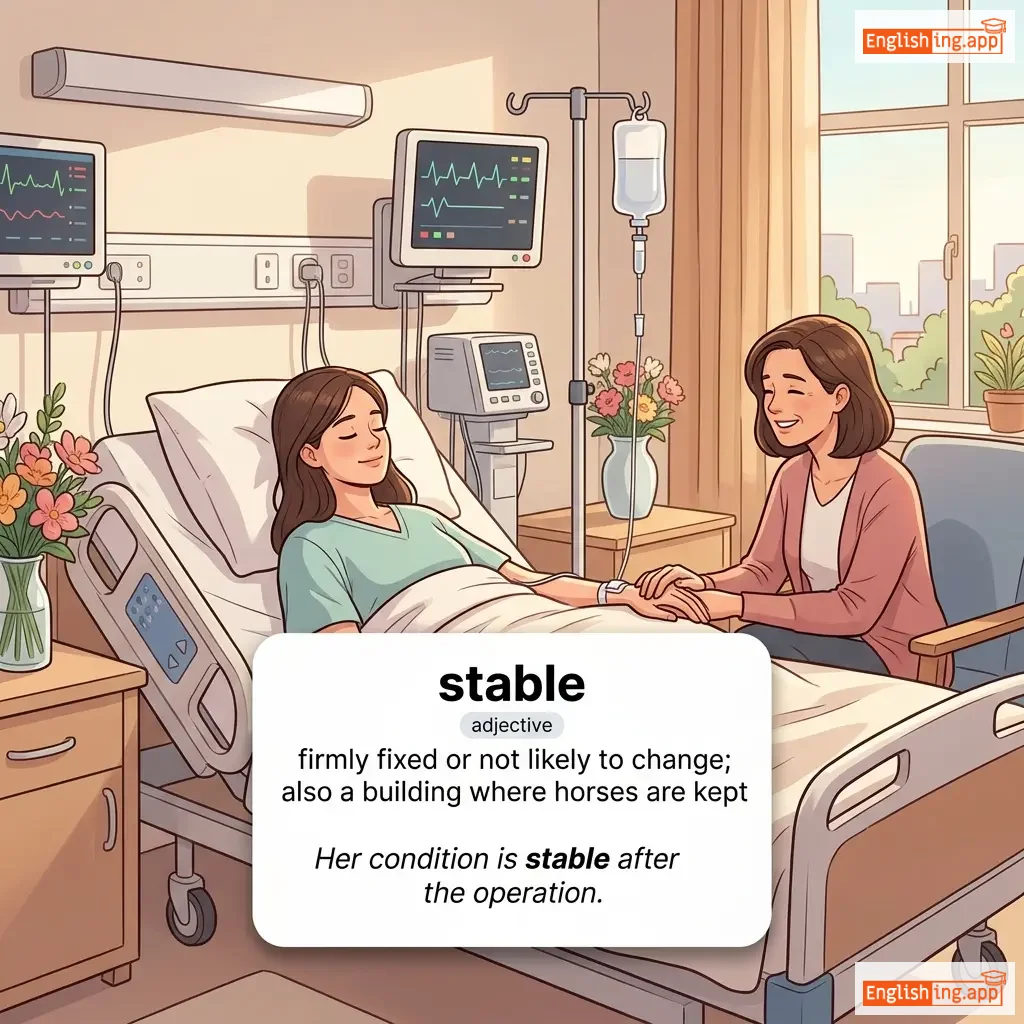
firmly fixed or not likely to change; also a building where horses are kept
••••••
|
Her condition is stable after the operation. |
Ее состояние стабильно после операции.
Eyo sostoyanie stabil'no posle operatsii.
••••••
|
stable condition |
a state of being steady and not worsening
••••••
|
стабильное состояние
stabil'noye sostoyaniye
••••••
|
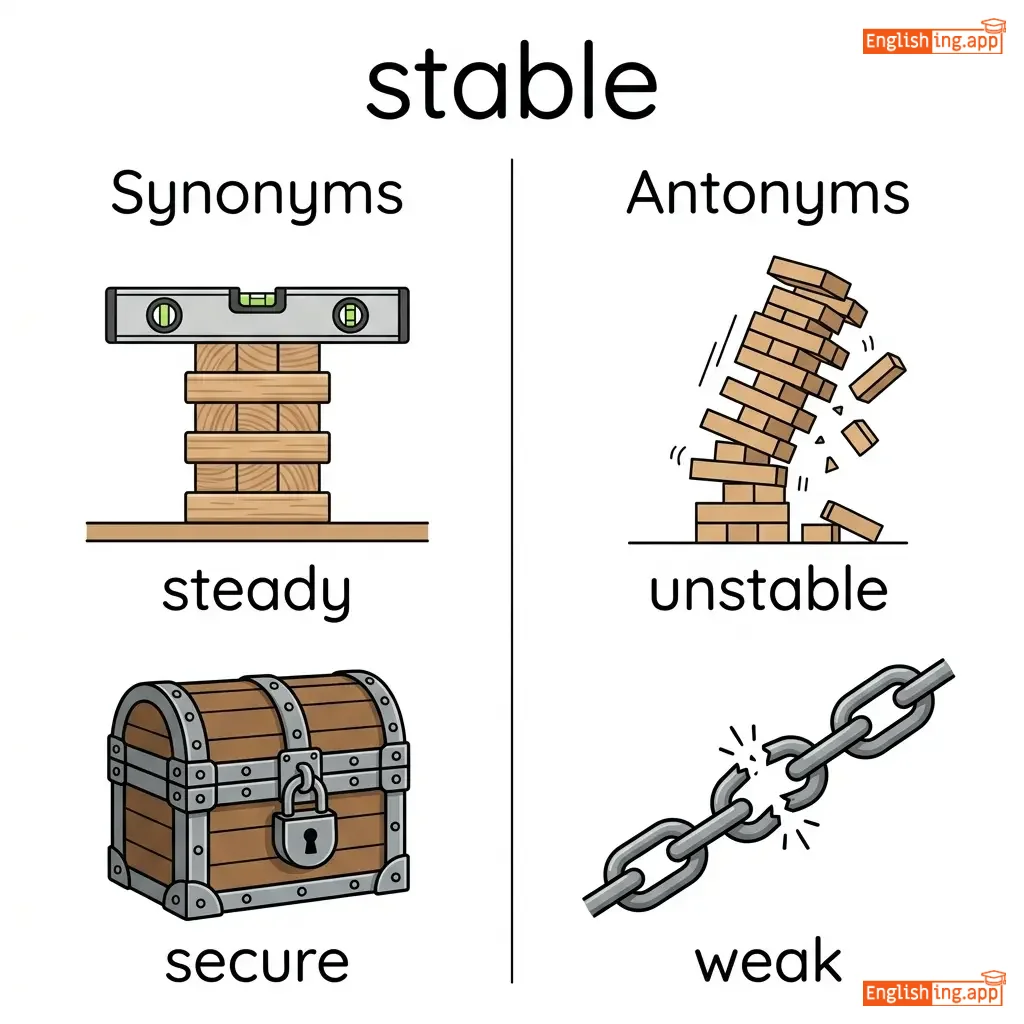
steady, secure, firm, constant, balanced
••••••
|
unstable, weak, shaky
••••••
|
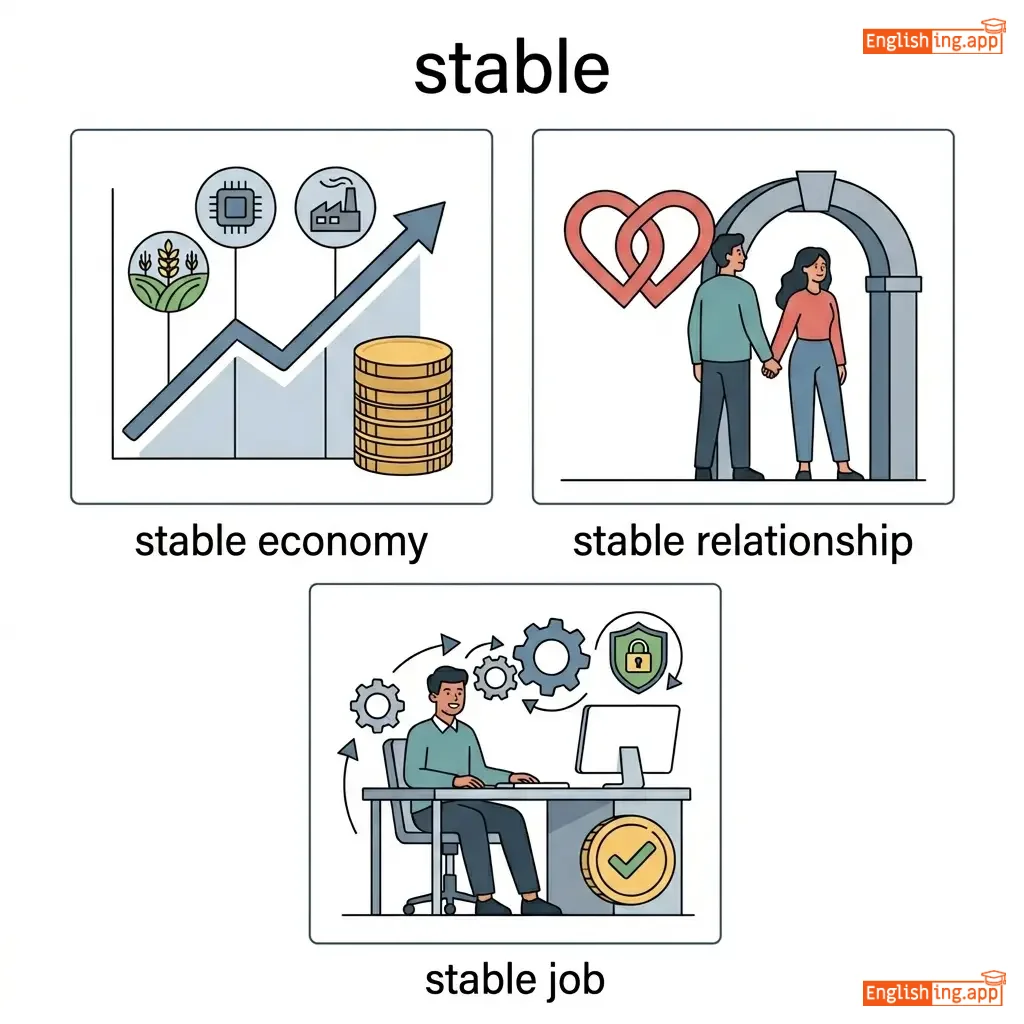
stable economy, stable relationship, stable job, stable environment
••••••
|
Stable значит стабильный, как конюшня, где лошади стабильно находятся.
••••••
|
|
#10203
🔦
|
/ˈspɒt.laɪt/
noun
(спотлайт)
••••••
|
- •••••• |
прожектор
spotlayt
••••••
|
- •••••• | - •••••• | - •••••• | - •••••• |
a strong beam of light directed onto a particular area; figuratively, public attention
••••••
|
The singer stood proudly in the spotlight.
Певец гордо стоял в свете прожектора.
••••••
|
Певец гордо стоял в свете прожектора.
Pevets gordo stoyal v svete prozhektora.
••••••
|
in the spotlight
ин зе спотлайт
••••••
|
receiving a lot of public attention
••••••
|
в центре внимания
in ze spotlayt
••••••
|
highlight, focus, limelight, glare
••••••
|
obscurity, shadow
••••••
|
under spotlight, grab spotlight, media spotlight, stage spotlight
••••••
|
Спотлайт = spot + light; представь сцену: spot и light дружно сияют над головой и ты в центре внимания под прожектором
••••••
|
|
#10204
🦴
|
/spaɪn/
noun
(spajn)
••••••
|
- •••••• |
позвоночник
pozvonochnik
••••••
|
- •••••• | - •••••• | - •••••• | - •••••• |
the backbone; a series of bones extending from the skull to the lower back
••••••
|
The doctor examined her spine after the accident. |
Врач осмотрел ее позвоночник после аварии.
Vrach osmotrel yeye pozvonochnik posle avarii.
••••••
|
backbone of something |
the most important part or support of something
••••••
|
основная часть чего-то
osnovnaya chast' chego-to
••••••
|
backbone, vertebrae, ridge, support
••••••
|
weakness, fragility
••••••
|
spine injury, spine surgery, curved spine, spine health
••••••
|
Spine это позвоночник, spine-less значит слабый.
••••••
|
|
#10205
✨
|
/spɛl/
verb
(спелл)
••••••
|
- •••••• |
произносить / заклинание
proiznosit' / zaklinanie
••••••
|
spelled
спеллд
••••••
|
spelled
спеллд
••••••
|
spells
спелс
••••••
|
spelling
спеллинг
••••••
|
to write or name the letters of a word in the correct order; also a short period of time or a state of enchantment
••••••
|
She asked me to spell her name correctly on the form.
Она попросила меня правильно написать её имя на форме.
••••••
|
Она попросила меня правильно написать её имя на форме.
Ona poprosila menya pravil'no napisat' yeë imya na forme.
••••••
|
cast a spell
произнести заклинание
••••••
|
to use magic words to make something happen
••••••
|
произнести заклинание
proiznesi zaklinanie
••••••
|
write, recite, articulate, enchant, charm
••••••
|
miswrite, confuse, neglect
••••••
|
spell a word, spell correctly, cast a spell, spelling mistake
••••••
|
Спелл = заклинание! Зачаровывай, как профессионал.
••••••
|
|
#10206
✨
|
/ˈspɛʃəl/
adjective
(спешиал)
••••••
|
- •••••• |
особенный
osobennyj
••••••
|
- •••••• | - •••••• | - •••••• | - •••••• |
different from what is usual; better or greater than normal
••••••
|
This gift is very special to me.
этот подарок очень особенный для меня.
••••••
|
Этот подарок очень особенный для меня.
Etot podarok ochen' osobennyj dlya menya.
••••••
|
special treatment
особое обращение
••••••
|
different or better care or service than usual
••••••
|
особое обращение
osoboe obshchenie
••••••
|
unique, exceptional, distinctive, extraordinary
••••••
|
ordinary, common, usual
••••••
|
special occasion, special day, special gift, special attention
••••••
|
Special означает 'особенный', как когда у тебя особое обращение.
••••••
|
|
#10207
😢
|
/ˈsɑːroʊ/
noun
(соро)
••••••
|
- •••••• |
горе
gore
••••••
|
- •••••• | - •••••• | - •••••• | - •••••• |
a feeling of deep sadness or grief
••••••
|
She was filled with sorrow after the loss of her friend. |
Она была полна горя после потери своей подруги.
Ona byla polna gory posle poteri svoey podrugi.
••••••
|
drown one's sorrows |
to drink alcohol in order to forget sadness
••••••
|
топить горе в алкоголе
topit' gore v alkogole
••••••
|
grief, sadness, anguish, heartache
••••••
|
joy, happiness, delight
••••••
|
deep sorrow, express sorrow, filled with sorrow, great sorrow
••••••
|
Sorrow и горе означают одно и то же — глубокая печаль.
••••••
|
|
#10208
❓
|
/ˈsʌmθɪŋ/
pronoun
(sʌmθɪŋ)
••••••
|
- •••••• |
что-то
chto-to
••••••
|
- •••••• | - •••••• | - •••••• | - •••••• |
an unspecified or unknown thing
••••••
|
I think something is wrong with my phone. |
Я думаю, что с моим телефоном что-то не так.
Ya dumayu, chto s moim telefonov chto-to ne tak.
••••••
|
make something of |
to understand or interpret something in a particular way
••••••
|
придавать смысл чему-то
pridavat' smysl chemu-to
••••••
|
thing, object, item, matter
••••••
|
nothing, void
••••••
|
something new, something special, something wrong, something else
••••••
|
Some + Thing = что-то (chto-to)
••••••
|
|
#10209
🪖
|
/ˈsoʊldʒərz/
noun
••••••
|
- •••••• | - •••••• | - •••••• | - •••••• | - •••••• | - •••••• |
members of an army who serve their country in war or peace
••••••
|
The soldiers marched proudly down the street. |
- •••••• |
soldier on |
to continue doing something despite difficulty
••••••
|
- •••••• |
troops, fighters, warriors, servicemen
••••••
|
civilians, noncombatants
••••••
|
brave soldiers, trained soldiers, soldiers in battle, fallen soldiers
••••••
|
No •••••• |
|
#10210
🧥
|
/ˈʃæbi/
adjective
(シャビー)
••••••
|
- •••••• |
потрепанный
potreppannyy
••••••
|
- •••••• | - •••••• | - •••••• | - •••••• |
In poor condition through long use or lack of care; of low quality.
••••••
|
The hotel room looked shabby and old-fashioned. |
Номер в отеле выглядел потрепанным и старомодным.
Nomer v otele viglyadel potreppannym i staromodnym.
••••••
|
shabby treatment |
unfair or poor treatment of someone
••••••
|
плохое обращение
plokhoje obrashcheniye
••••••
|
worn, dilapidated, ragged, run-down, tattered
••••••
|
elegant, new, pristine
••••••
|
shabby clothes, shabby treatment, shabby house, shabby look
••••••
|
Shabby означает shabby show – потрепанный стиль, shabby look!
••••••
|
|
#10211
❄️
|
/snoʊ/
noun
(снег)
••••••
|
- •••••• |
снег
sneg
••••••
|
- •••••• | - •••••• | - •••••• | - •••••• |
frozen water vapor that falls from the sky as white flakes
••••••
|
Children love to play in the snow. |
Дети любят играть в снегу.
Deti lyubyat igrat' v snegu.
••••••
|
snowed under |
to be overwhelmed with too much work
••••••
|
погрязнуть в работе
pogryaznut' v rabote
••••••
|
frost, ice, sleet, flurry, blizzard
••••••
|
heat, sun
••••••
|
heavy snow, snow storm, snow fall, snow covered
••••••
|
Снег – это как английское snow, падает белыми хлопьями.
••••••
|
|
#10212
🪞
|
/smuːð/
adjective
(сму́ð)
••••••
|
- •••••• |
гладкий
gladkiy
••••••
|
- •••••• | - •••••• | - •••••• | - •••••• |
having an even surface without roughness; happening without difficulty
••••••
|
The table has a smooth surface. |
У стола гладкая поверхность.
U stola gladkaya poverkhnost'.
••••••
|
smooth sailing |
a situation that goes easily without problems
••••••
|
плавное плавание
plavnoe plavanie
••••••
|
even, flat, polished, silky, sleek
••••••
|
rough, uneven, coarse
••••••
|
smooth surface, smooth skin, smooth operation, smooth transition
••••••
|
Гладкая поверхность, как плавное плавание.
••••••
|
|
#10213
🔹
|
/smɔːl/
adjective
(smol)
••••••
|
- •••••• |
маленький
malen'kiy
••••••
|
- •••••• | - •••••• | - •••••• | - •••••• |
not large in size, amount, or importance
••••••
|
He lives in a small house near the river. |
Он живет в маленьком доме рядом с рекой.
On zhivet v malen'kom dome ryadom s rekoy.
••••••
|
small talk |
light or casual conversation about unimportant matters
••••••
|
легкий разговор
legkiy razgovor
••••••
|
tiny, little, petite, compact, miniature
••••••
|
big, large, huge
••••••
|
small house, small amount, small group, small talk
••••••
|
маленький значит small – маленькие шаги ведут к большим победам.
••••••
|
|
#10214
👗
|
/slɪm/
adjective
(слим)
••••••
|
- •••••• |
стройный
stroynyy
••••••
|
- •••••• | - •••••• | - •••••• | - •••••• |
thin in an attractive or healthy way; small in amount or chance
••••••
|
She looked slim in her new dress. |
Она выглядела стройной в своем новом платье.
Ona viglyadela stroynoy v svoem novom plat'ye.
••••••
|
slim chance |
a very small probability of something happening
••••••
|
маленькая вероятность
malenkaya veroyatnost'
••••••
|
thin, slender, lean, slight, trim
••••••
|
fat, obese, bulky
••••••
|
slim figure, slim chance, slim possibility, slim design
••••••
|
Slim – стройный, как тело, которое идеально сидит в одежде.
••••••
|
|
#10215
💀
|
/skʌl/
noun
(skal)
••••••
|
- •••••• |
череп
cherep
••••••
|
- •••••• | - •••••• | - •••••• | - •••••• |
the bony structure that forms the head and protects the brain
••••••
|
The archaeologists found an ancient human skull. |
Археологи нашли древний человеческий череп.
Arkhieologi nashli drevniy chelovecheskiy cherep.
••••••
|
skull and crossbones |
a symbol of death or danger, often used on pirate flags or poison labels
••••••
|
череп и скрещённые кости
cherep i skreshchyonnyye kosti
••••••
|
cranium, head, braincase, noggin, dome
••••••
|
none, flesh
••••••
|
fractured skull, human skull, skull bones, skull shape
••••••
|
Череп защищает мозг, как череп и скрещённые кости символизируют опасность.
••••••
|
|
#10216
📝
|
/ˈskɛtʃi/
adjective
(sketchi)
••••••
|
- •••••• |
незавершенный
nezavershenny
••••••
|
- •••••• | - •••••• | - •••••• | - •••••• |
not thorough or detailed; suspicious or unsafe
••••••
|
The details of the project were still sketchy.
Детали проекта были еще неясными.
••••••
|
Детали проекта все еще были незавершенными.
Detali proekta vse eshche byli nezavershennymi.
••••••
|
- •••••• | - •••••• | - •••••• |
incomplete, vague, suspicious, dodgy
••••••
|
clear, detailed, reliable
••••••
|
sketchy details, sketchy plan, sketchy area, sketchy report
••••••
|
Sketchy означает незавершенный или подозрительный — Sketchy details означает ‘незавершенные или подозрительные детали’.
••••••
|
|
#10217
🤔
|
/ˈskɛptɪkəl/
adjective
(skeptikal)
••••••
|
- •••••• |
скептический
skepticheskiy
••••••
|
- •••••• | - •••••• | - •••••• | - •••••• |
not easily convinced; having doubts or reservations
••••••
|
She was skeptical about the new plan. |
Она была скептически настроена к новому плану.
Ona byla skepticheski nastroena k novomu planu.
••••••
|
healthy skepticism |
a balanced doubt that helps in rational judgment
••••••
|
здоровый скептицизм
zdorovyy skeptitsizm
••••••
|
doubtful, suspicious, unconvinced, hesitant
••••••
|
trusting, convinced, certain
••••••
|
skeptical attitude, skeptical view, skeptical mind, skeptical about
••••••
|
Skeptical означает скептический — Когда ты скептически настроен, каждый план вызывает сомнение.
••••••
|
|
#10218
🤪
|
/ˈsɪli/
adjective
(сили)
••••••
|
- •••••• |
глупый
glupyy
••••••
|
- •••••• | - •••••• | - •••••• | - •••••• |
showing a lack of good sense; foolish or playful
••••••
|
He made a silly mistake on the test. |
Он сделал глупую ошибку на экзамене.
On sdelal glupuyu oshibku na ekzamene.
••••••
|
silly goose |
a playful way to call someone foolish or goofy
••••••
|
глупая утка
glupaya utka
••••••
|
foolish, goofy, childish, playful, nonsensical
••••••
|
serious, sensible, wise
••••••
|
silly mistake, silly joke, silly idea, feel silly
••••••
|
Silly означает глупый — Silly mistake означает глупая ошибка.
••••••
|
|
#10219
🧺
|
/sɪv/
noun
(siv)
••••••
|
- •••••• |
сито
sito
••••••
|
- •••••• | - •••••• | - •••••• | - •••••• |
a utensil with a mesh or perforated bottom, used for straining or sifting
••••••
|
She used a sieve to strain the pasta. |
Она использовала сито, чтобы процеживать пасту.
Ona ispol'zovala sito, chtoby protsedzhivat' pastu.
••••••
|
memory like a sieve |
a very poor memory
••••••
|
память как сито
pamyat' kak sito
••••••
|
strainer, filter, colander, screen
••••••
|
container, solid bowl
••••••
|
use a sieve, fine sieve, metal sieve, sieve flour
••••••
|
Sieve означает сито — запомни: 'профильтровать с ситом' легко.
••••••
|
|
#10220
🤒
|
/sɪk/
adjective
(сик)
••••••
|
- •••••• |
больной
bolnoy
••••••
|
- •••••• | - •••••• | - •••••• | - •••••• |
feeling unwell or suffering from illness
••••••
|
She stayed home because she was feeling sick.
ши стейд хоум бикоз ши уоз филинг сик
••••••
|
Она осталась дома, потому что чувствовала себя больной.
Ona ostalas doma potomu chto chuvstvovala sebya bolnoy
••••••
|
sick and tired
сик энд тайэрд
••••••
|
completely fed up or annoyed
••••••
|
устал и раздражён
ustal i razdrazhon
••••••
|
ill, unwell, unhealthy, nauseous, ailing
••••••
|
healthy, well, fit
••••••
|
feel sick, get sick, sick leave, sick child, sick person
••••••
|
Sick звучит как 'сик' — когда ты sick, ты больной!
••••••
|
|
#10221
🙈
|
/ʃaɪ/
adjective
(shai)
••••••
|
- •••••• |
застенчивый
zastenchivyy
••••••
|
- •••••• | - •••••• | - •••••• | - •••••• |
Being reserved or nervous around other people.
••••••
|
The child was too shy to speak in class. |
Ребёнок был слишком застенчив, чтобы говорить в классе.
Rebyonok byl slishkom zastenchiv, chtoby govorit' v klasse.
••••••
|
shy away |
to avoid something because of fear or lack of confidence
••••••
|
уклоняться
uklonyat'sya
••••••
|
timid, bashful, reserved, modest
••••••
|
bold, confident, outgoing
••••••
|
shy smile, shy away, shy child, shy personality
••••••
|
Застенчивый ребёнок избегает разговора в классе.
••••••
|
|
#10222
🌽
|
/ʃʌk/
verb
(shak)
••••••
|
- •••••• |
снимать оболочку
snimat' obolochku
••••••
|
shucked
shakt
••••••
|
shucked
shakt
••••••
|
shucks
shaks
••••••
|
shucking
shaking
••••••
|
To remove the outer covering, such as the husk of corn or shell of shellfish.
••••••
|
She learned how to shuck oysters quickly.
ona uchenilas' kak bystro otkryvat' ustrets
••••••
|
Она научилась быстро открывать устриц.
Ona nauchilas' bystro otkryvat' ustrits.
••••••
|
shuck off
shak off
••••••
|
to get rid of something unwanted
••••••
|
сбросить
sbrodit'
••••••
|
peel, strip, remove, husk, shell
••••••
|
cover, enclose, wrap
••••••
|
shuck corn, shuck oysters, shuck off
••••••
|
Shuck означает снимать оболочку – как кукуруза (shak).
••••••
|
|
#10223
👀
|
/ʃoʊ/
verb
(шоу)
••••••
|
|
показывать
pokazyvat
••••••
|
showed
шоуэд
••••••
|
shown
шоун
••••••
|
shows
шоз
••••••
|
showing
шоуинг
••••••
|
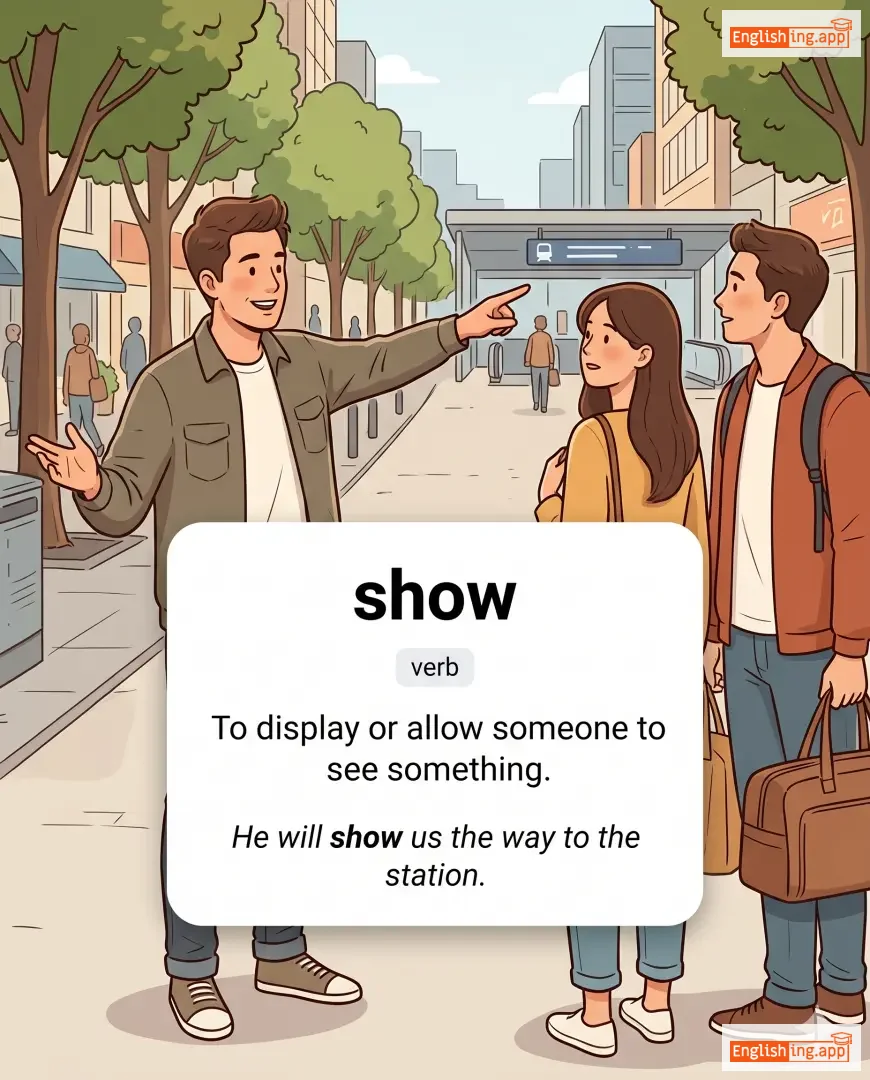
To display or allow someone to see something.
••••••
|
He will show us the way to the station.
хи вил шоу ас зэ уэй ту зэ стейшн
••••••
|
Он покажет нам дорогу к станции.
On pokazhet nam dorogu k stantsii.
••••••
|
show off
шоу оф
••••••
|
to try to impress others by displaying abilities or possessions
••••••
|
хвастаться
khvastat'sya
••••••
|
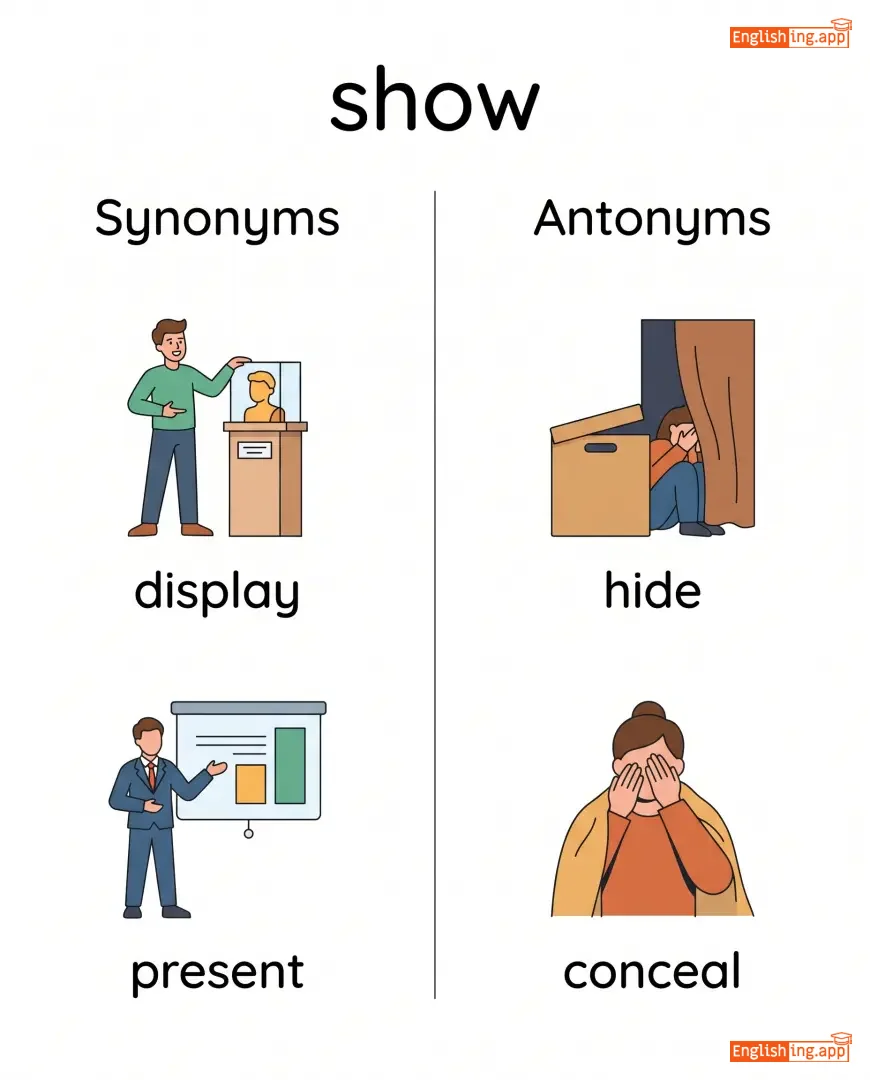
display, present, demonstrate, reveal, exhibit
••••••
|
hide, conceal, cover
••••••
|
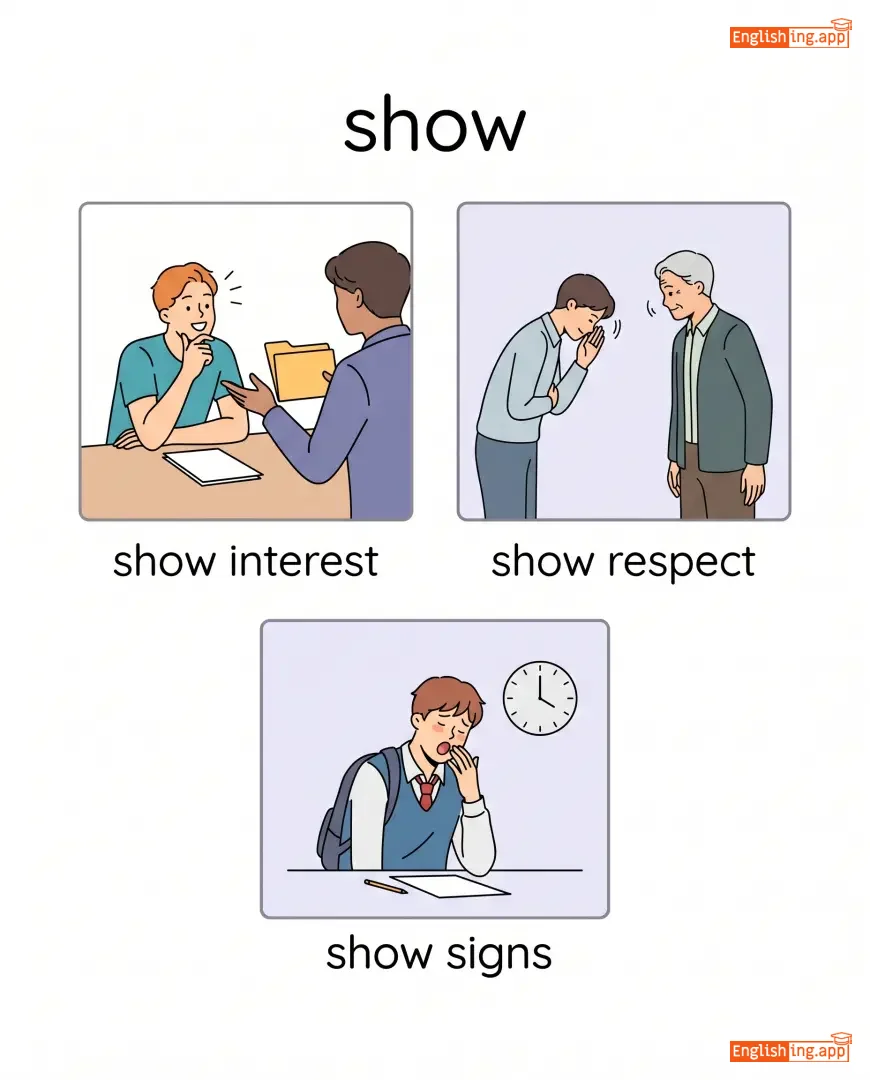
show interest, show respect, show signs, show off
••••••
|
Show означает показывать – в шоу показывают все.
••••••
|
|
#10224
💥
|
/ˈʃætər/
verb
(шэтэр)
••••••
|
- •••••• |
разбивать
razbivat'
••••••
|
shattered
шэтэрд
••••••
|
shattered
шэтэрд
••••••
|
shatters
шэтэрс
••••••
|
shattering
шэтэринг
••••••
|
To break suddenly into many small pieces.
••••••
|
The glass will shatter if you drop it.
The glass will shatter if you drop it.
••••••
|
Стекло разобьется, если ты уронишь его.
Steklo razobyotsya, esli ty uronish' ego.
••••••
|
shatter dreams
шэтэр дримс
••••••
|
to completely ruin someone's hopes or plans
••••••
|
разбить мечты
razbit' mechty
••••••
|
break, smash, crack, demolish, splinter
••••••
|
repair, fix, build
••••••
|
shatter glass, shatter dreams, shatter confidence
••••••
|
Shatter означает разбить – как стакан, который разбивается при падении.
••••••
|
Vocabulary Quiz
Test your vocabulary by matching words with their translations or meanings.
Login to take the quiz
Comments (0)
Share your thoughts and join the discussion.
Join the discussion by logging in
Login to CommentNo comments yet
Be the first to share your thoughts!