

Обновитесь для доступа ко всему словарю
Получите неограниченный доступ ко всем словам с подпиской Pro
Обновить до ProПеревод
Прошедшее
Причастие прошедшего времени
Третье лицо единственного числа
Герундий
Значение
Пример предложения
Перевод примера предложения
Синонимы
Антонимы
Коллокации
Мнемоника

Swipe left or right, or use the buttons. Tap image to zoom.
Обновитесь для доступа ко всем предложениям
Получите неограниченный доступ ко всем предложениям с подпиской Pro
Обновить до ProПеревод примера предложения
Слово
Lesson 82Lesson 82 - Переключатель маски
|
Эмодзи
|
Слово | Images | Перевод | Прошедшее | Причастие прошедшего времени | Третье лицо единственного числа | Герундий | Значение | Пример предложения | Перевод примера предложения | Пример выражения | Значение примера выражения | Перевод примера выражения | Синонимы | Антонимы | Коллокации | Мнемоника |
|---|---|---|---|---|---|---|---|---|---|---|---|---|---|---|---|---|---|
|
#2431
🏚️
|
/dɪˈlæpɪˌdeɪtɪd/
adjective
(дɪˈlæпɪˌдеɪтɪд)
••••••
|
- •••••• |
обветшалый
obvetshalyy
••••••
|
- •••••• | - •••••• | - •••••• | - •••••• |
Fallen into disrepair or ruin due to neglect or age.
••••••
|
The family lived in a dilapidated house at the edge of town. |
Семья жила в обветшавшем доме на окраине города.
Sem'ya zhila v obvetshavshom dome na okraine goroda.
••••••
|
- •••••• | - •••••• | - •••••• |
ruined, decayed, shabby, broken-down, crumbling
••••••
|
new, strong, well-kept
••••••
|
dilapidated building, dilapidated house, dilapidated structure
••••••
|
Dilapidated = 'dil' + 'a' + 'pita', что означает, что дом в плохом состоянии, как разрушенная пита.
••••••
|
|
#2432
🔊
|
/dɪn/
noun
(дин)
••••••
|
- •••••• |
шум
shum
••••••
|
- •••••• | - •••••• | - •••••• | - •••••• |
a loud, unpleasant, and prolonged noise
••••••
|
The din of traffic outside made it hard to concentrate. |
Шум от движения транспорта снаружи затруднял сосредоточение.
Shum ot dvizhiniya transporta snaruzi zatrudnyal sosredotochenie.
••••••
|
make a din |
to create a lot of loud and unpleasant noise
••••••
|
создавать шум
sozdavat' shum
••••••
|
noise, racket, clamor, uproar, commotion
••••••
|
silence, quiet
••••••
|
din of traffic, constant din, loud din, make a din
••••••
|
DIN означает шум, как звук громкого колокольного звона.
••••••
|
|
#2433
🕯️
|
/ˈdɪmli/
adverb
(димли)
••••••
|
- •••••• |
тускло
tusklo
••••••
|
- •••••• | - •••••• | - •••••• | - •••••• |
in a faint or unclear way; with little light
••••••
|
The room was dimly lit by a single candle.
комната была слабо освещена одной единственной свечой.
••••••
|
Комната была тускло освещена одной единственной свечой.
Komnata byla tusklo osveshchena odnoi edinstvennoi svechoy.
••••••
|
- •••••• | - •••••• | - •••••• |
faintly, weakly, obscurely, vaguely
••••••
|
brightly, clearly
••••••
|
dimly lit, dimly remembered, dimly visible
••••••
|
Dimly lit означает тускло освещенный, так что dimly = тускло.
••••••
|
|
#2434
🐭
|
/dɪˈmɪnjətɪv/
adjective
(диминитив)
••••••
|
- •••••• |
крошечный
kroshechny
••••••
|
- •••••• | - •••••• | - •••••• | - •••••• |
extremely or unusually small
••••••
|
Despite his diminutive size, he was a powerful leader.
Несмотря на его миниатюрный размер, он был мощным лидером.
••••••
|
Несмотря на его крошечный размер, он был мощным лидером.
Nesmotrya na ego kroshichnyy razmer, on byl moschtym liderom.
••••••
|
- •••••• | - •••••• | - •••••• |
small, tiny, little, petite, miniature
••••••
|
large, big, huge
••••••
|
diminutive figure, diminutive size, diminutive form
••••••
|
Diminutiv означает очень маленький — слово 'мини' помогает запомнить.
••••••
|
|
#2435
📉
|
/ˌdɪmɪˈnjuːʃən/
noun
(диминиюшн)
••••••
|
|
уменьшение
diminyushun
••••••
|
- •••••• | - •••••• | - •••••• | - •••••• |
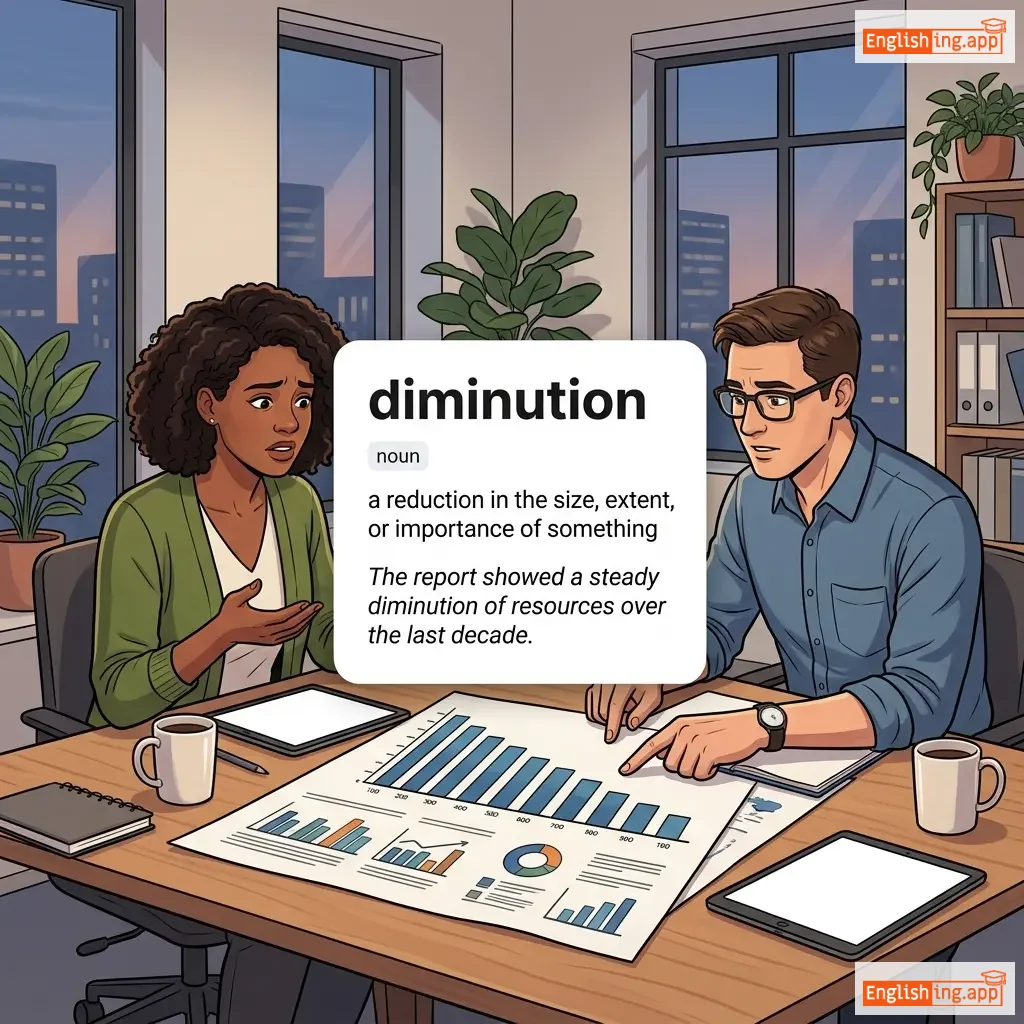
a reduction in the size, extent, or importance of something
••••••
|
The report showed a steady diminution of resources over the last decade.
Доклад показал устойчивое уменьшение ресурсов за последнее десятилетие.
••••••
|
Доклад показал устойчивое уменьшение ресурсов за последнее десятилетие.
Doklad pokazal ustoychivoe umenchenie resursov za poslednee desyatiletiye.
••••••
|
- •••••• | - •••••• | - •••••• |
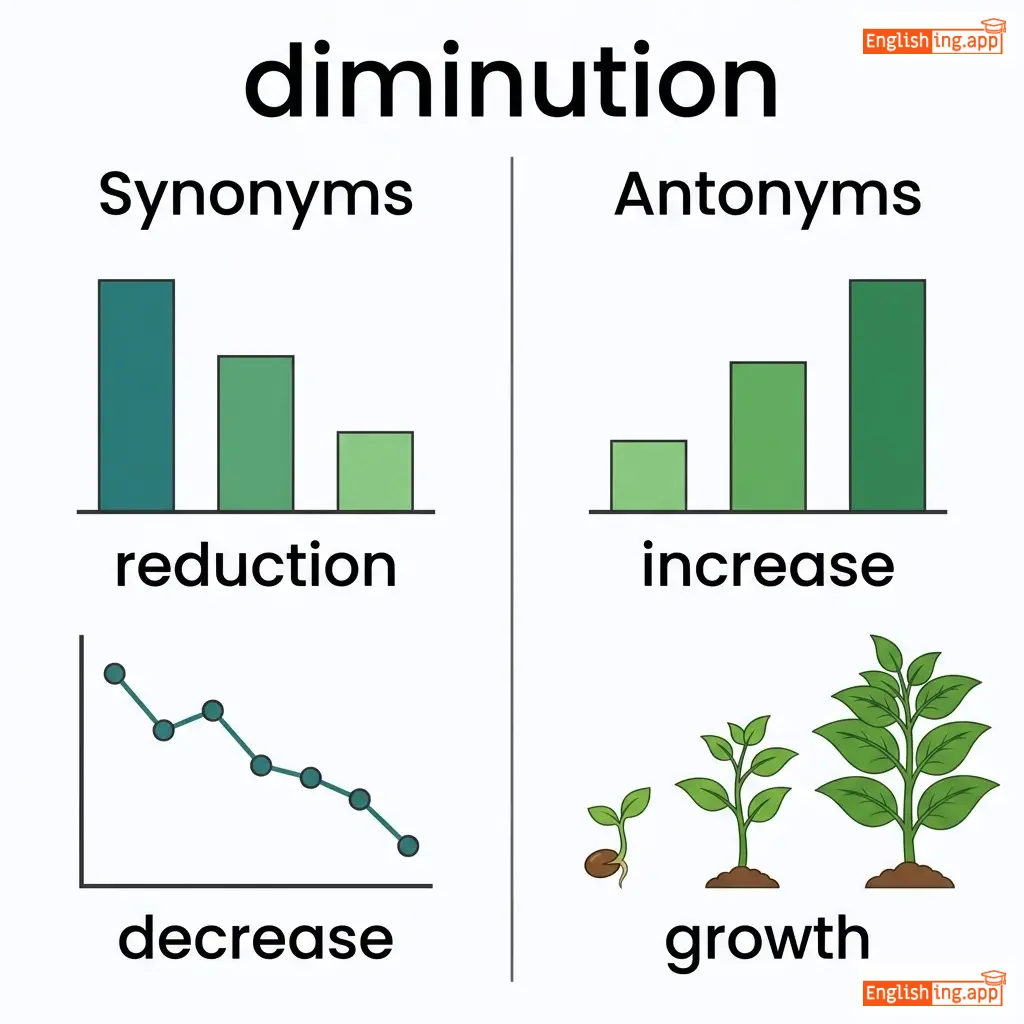
reduction, decrease, decline, lessening, weakening
••••••
|
increase, growth, expansion
••••••
|
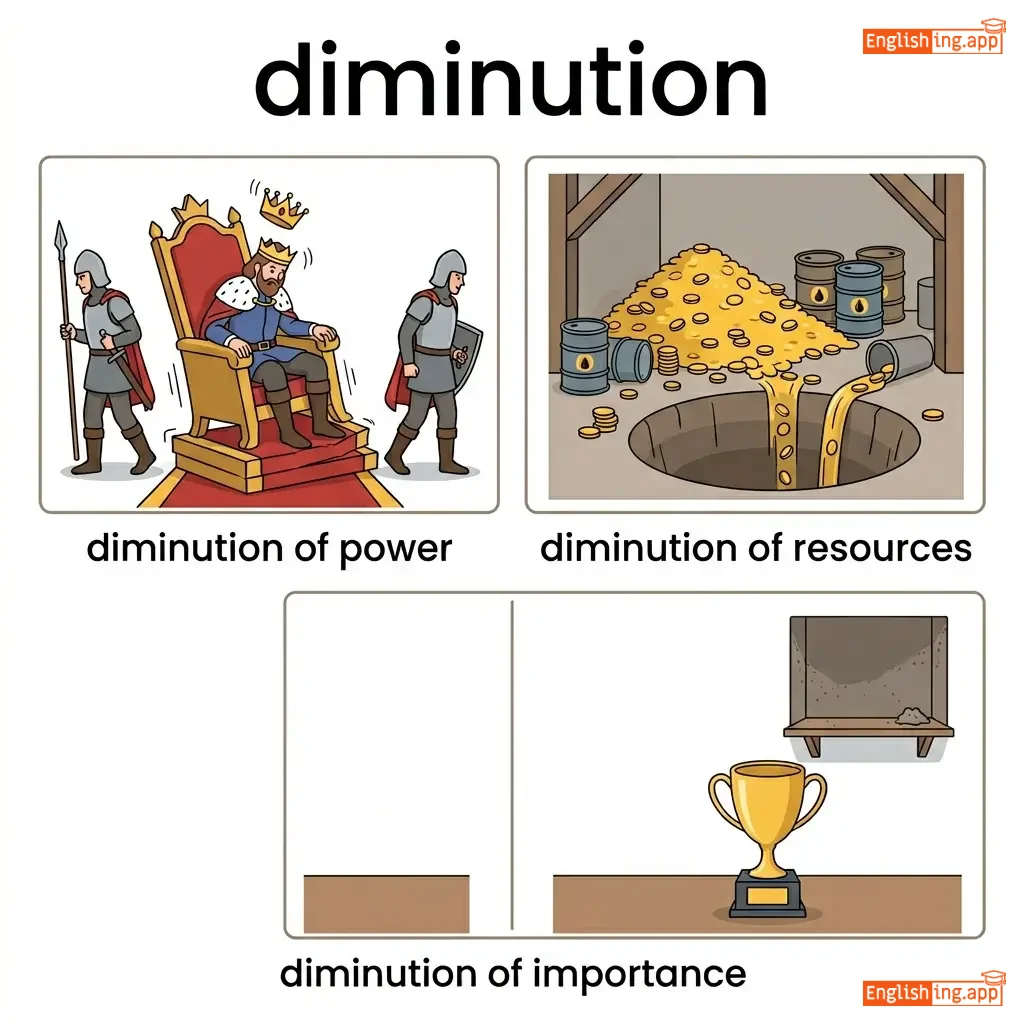
diminution of power, diminution of resources, diminution of importance
••••••
|
DimiNyuShun: Dim in yu shun, predstavlenie umensheniya: umenshenie razmera, obyema i znacheniya
••••••
|
|
#2436
⬇️
|
/dɪˈmɪnɪʃ/
verb
••••••
|
- •••••• | - •••••• |
diminished
••••••
|
diminished
••••••
|
diminishes
••••••
|
diminishing
••••••
|
to make or become less; to reduce in size, importance, or value
••••••
|
Over time, his influence in the company began to diminish. |
- •••••• |
diminish returns |
a situation where the benefit gained is less compared to the effort or investment put in
••••••
|
- •••••• |
reduce, decrease, lessen, weaken, dwindle
••••••
|
increase, enlarge, expand
••••••
|
diminish value, diminish importance, diminish role, diminish returns
••••••
|
No •••••• |
|
#2437
📐
|
/dɪˈmɛnʃən/
noun
(daimensiya)
••••••
|
|
измерение
izmereniye
••••••
|
- •••••• | - •••••• | - •••••• | - •••••• |
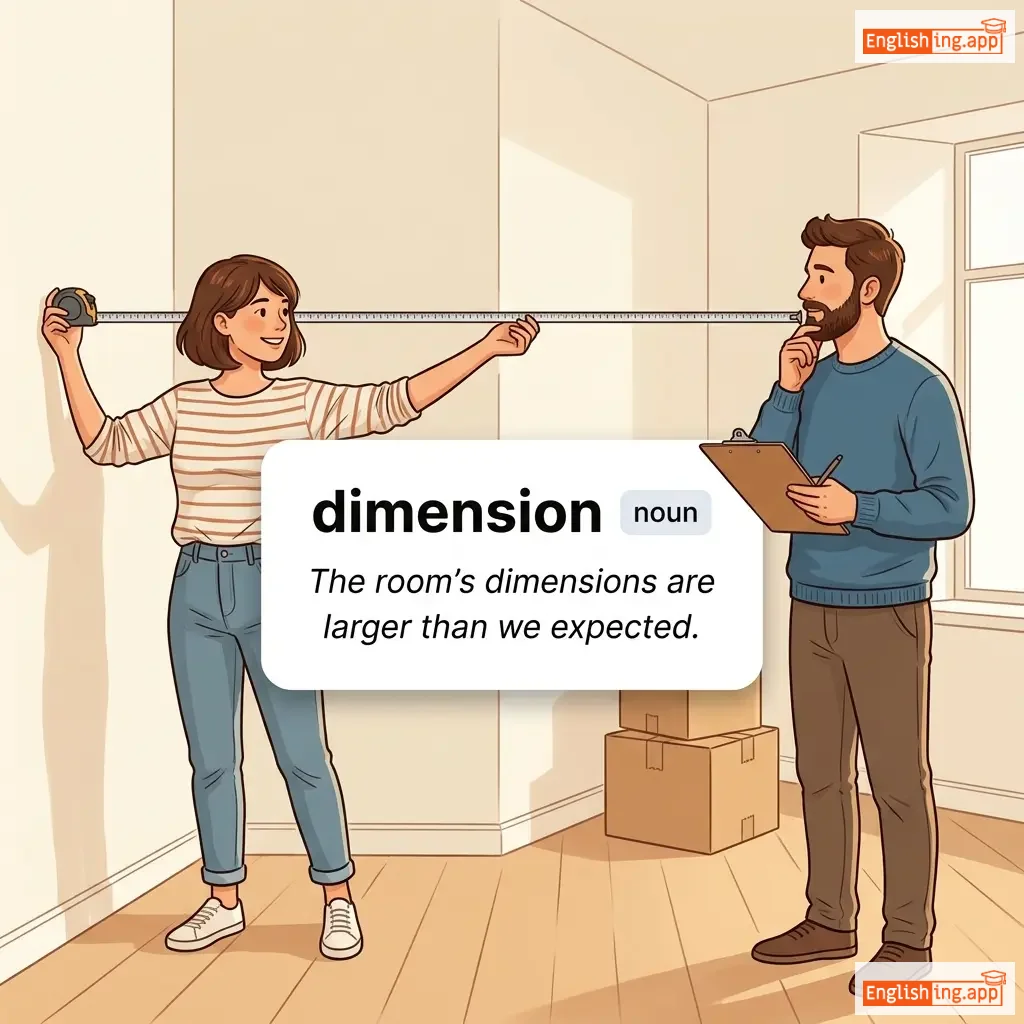
A measurable extent of a particular kind, such as length, breadth, depth, or height.
••••••
|
The room’s dimensions are larger than we expected. |
Размеры комнаты больше, чем мы ожидали.
Razmery komnaty bol'she, chem my ozhidali.
••••••
|
new dimension |
An additional aspect or perspective of a situation.
••••••
|
новое измерение
novoye izmereniye
••••••
|
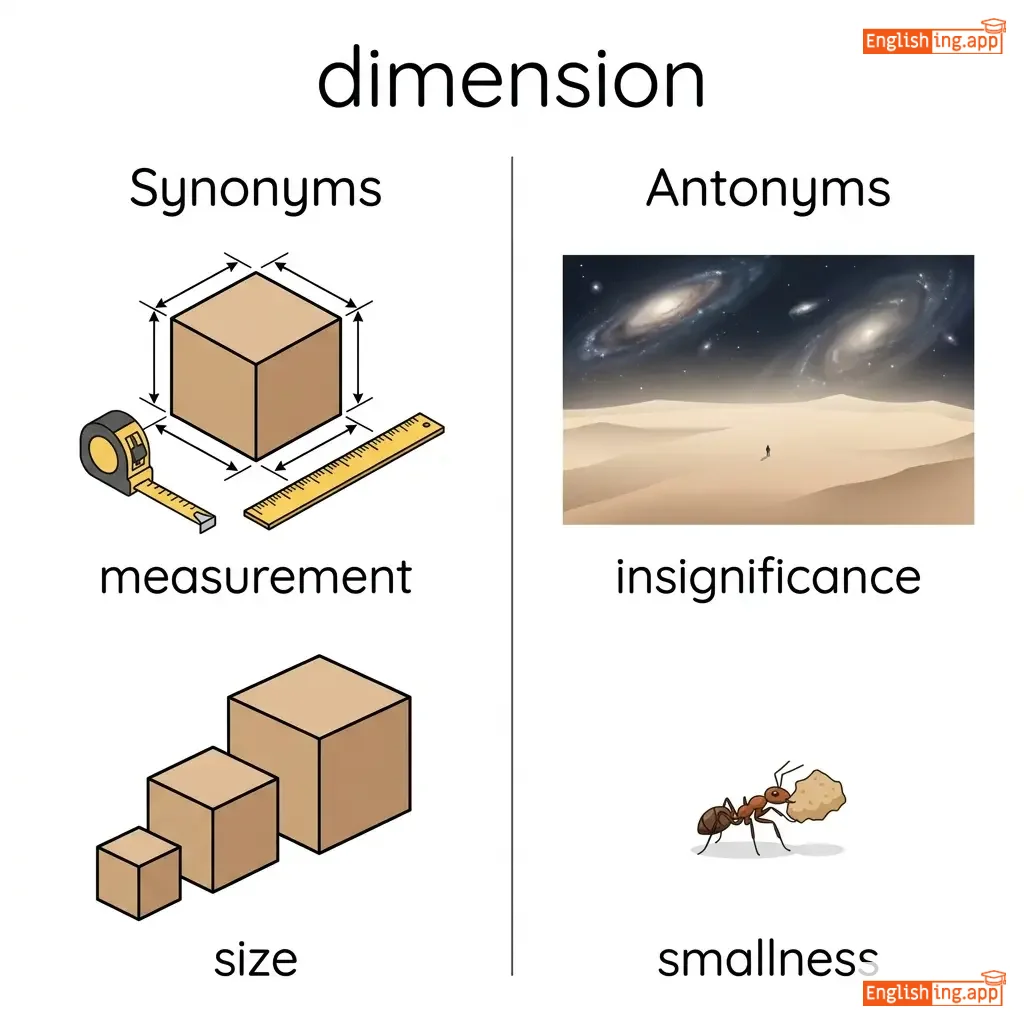
measurement, size, proportion, extent, aspect
••••••
|
insignificance, smallness
••••••
|
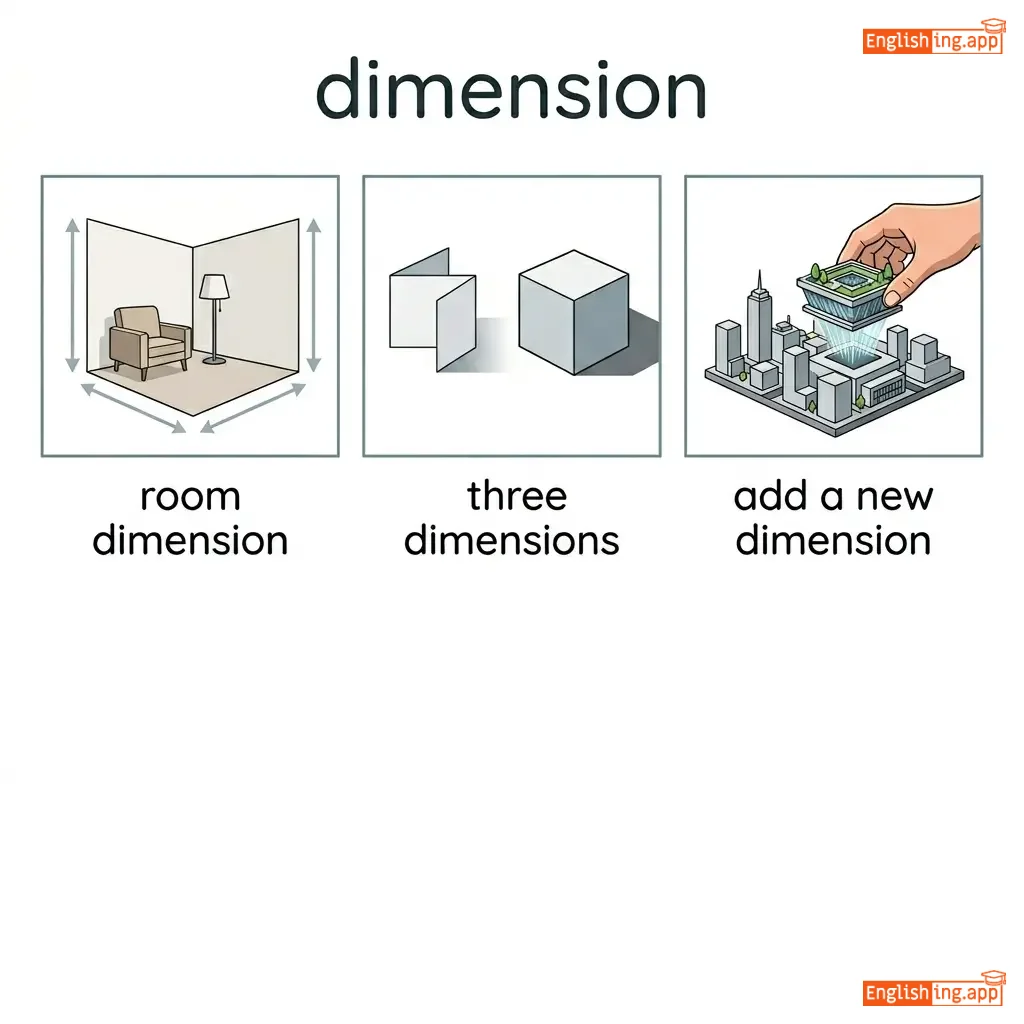
room dimension, three dimensions, add a new dimension
••••••
|
Измерение = измерять, как измерять что-то большее.
••••••
|
|
#2438
💧
|
/daɪˈluːt/
verb
(дайˈлуːт)
••••••
|
- •••••• |
разбавить
razbavit'
••••••
|
diluted
дайˈлуːтед
••••••
|
diluted
дайˈлуːтед
••••••
|
dilutes
дайˈлуːтс
••••••
|
diluting
дайˈлуːтинг
••••••
|
To make a liquid thinner or weaker by adding water or another solvent.
••••••
|
You should dilute the juice with water before serving it to children.
Вы должны разбавить сок водой перед тем, как подавать его детям.
••••••
|
Вы должны разбавить сок водой перед тем, как подавать его детям.
Vy dolzhny razbavit' sok vodoy pered tem, kak podavat' yego detyam.
••••••
|
dilute the effect
разбавить эффект
••••••
|
To make something less effective or powerful.
••••••
|
разбавить эффект
razbavit' effekt
••••••
|
weaken, thin, reduce, lessen, diminish
••••••
|
strengthen, concentrate, intensify
••••••
|
dilute solution, dilute juice, dilute effect, dilute mixture
••••••
|
Разбавить значит сделать что-то слабее, добавив воду.
••••••
|
|
#2439
📚
|
/ˈdɪlɪdʒənt/
adjective
(дɪлɪджент)
••••••
|
- •••••• |
старательный
staratelnyy
••••••
|
- •••••• | - •••••• | - •••••• | - •••••• |
Showing care and conscientiousness in one's work or duties.
••••••
|
She is a diligent student who always finishes her assignments on time. |
Она старательная студентка, которая всегда вовремя заканчивает свои задания.
Ona staratel'naya studentka, kotoraya vsegda vovremya zakanchivayet svoi zadaniya.
••••••
|
- •••••• | - •••••• | - •••••• |
hardworking, industrious, careful, persistent, attentive
••••••
|
lazy, careless, negligent
••••••
|
diligent student, diligent worker, diligent effort
••••••
|
Старательный = Студент, который никогда не опаздывает.
••••••
|
|
#2440
💪
|
/ˈdɪlɪdʒəns/
noun
(дɪлɪдʒəнс)
••••••
|
|
усердие
userdie
••••••
|
- •••••• | - •••••• | - •••••• | - •••••• |
Careful and persistent work or effort.
••••••
|
Through diligence and determination, she completed her research on time. |
С помощью усердия и решимости она завершила своё исследование вовремя.
S pomoshch'yu userdiya i reshimosti ona zavershila svojo issledovanie vovremya.
••••••
|
due diligence |
The process of carefully investigating before making a decision, especially in business.
••••••
|
должная осмотрительность
dolzhnaya osmotritel'nost'
••••••
|
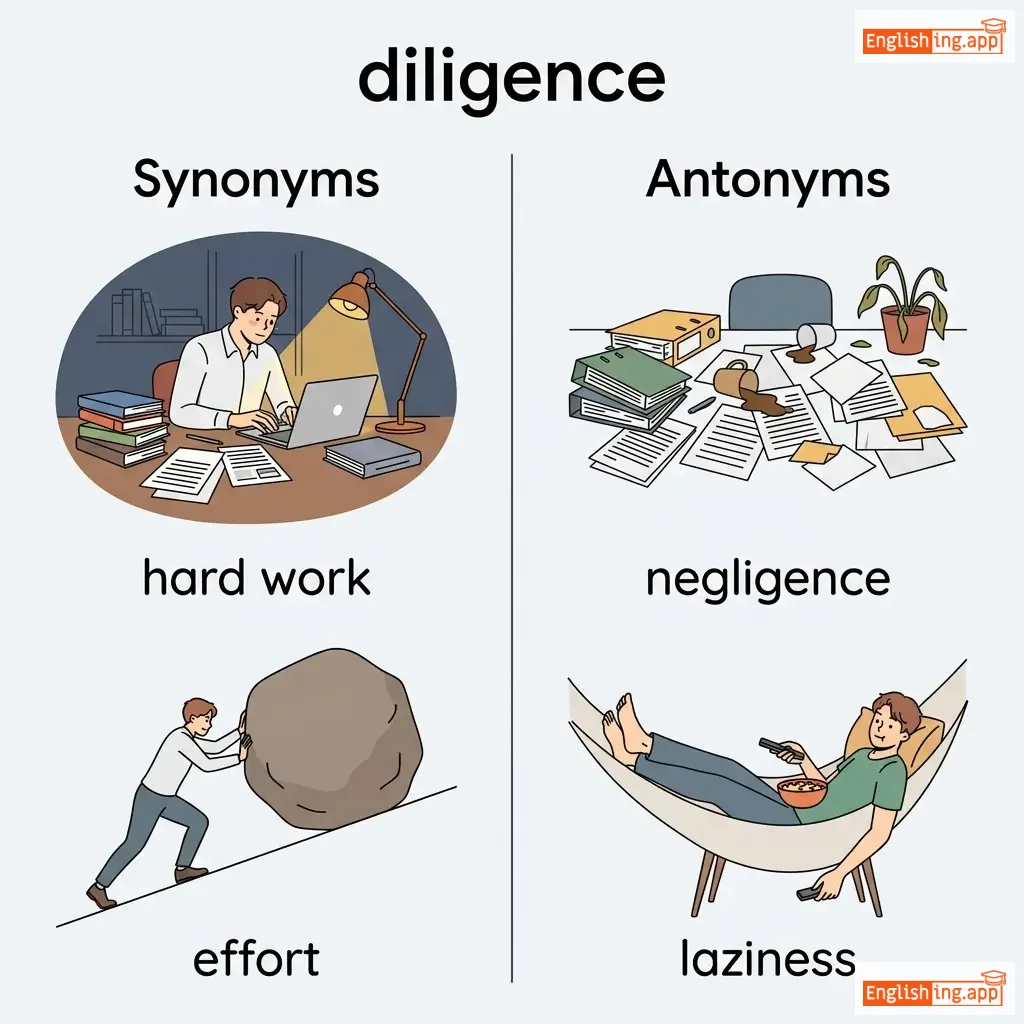
hard work, effort, persistence, perseverance, dedication
••••••
|
negligence, laziness, carelessness
••••••
|
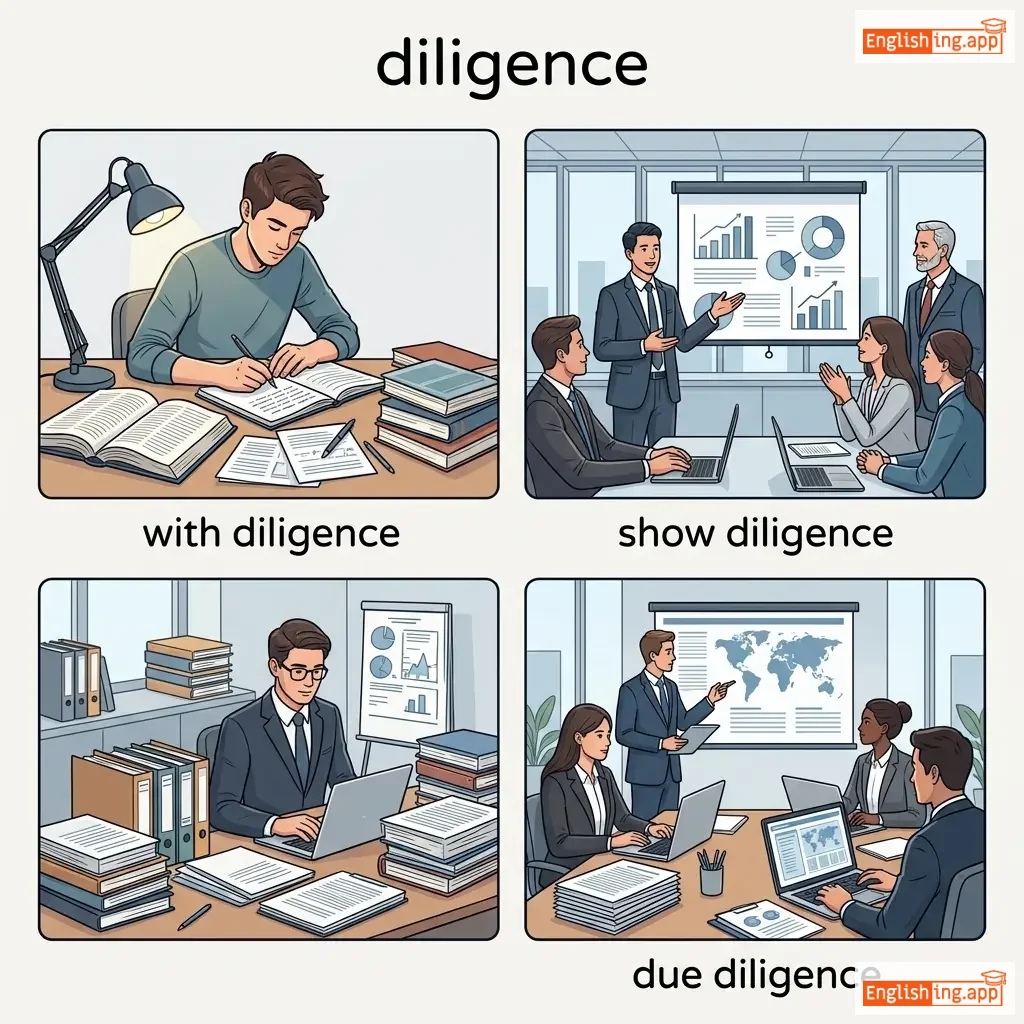
with diligence, show diligence, due diligence
••••••
|
Усердие = ежедневные усилия для достижения результата.
••••••
|
|
#2441
🎨
|
/ˌdɪləˈtænt/
noun
(ди-лета́нт)
••••••
|
- •••••• |
делетант
deletant
••••••
|
- •••••• | - •••••• | - •••••• | - •••••• |
A person who takes up an art, activity, or subject merely for amusement, especially in a superficial way.
••••••
|
He was dismissed as a dilettante in the art world because he lacked formal training. |
Его отвергли как дилетанта в мире искусства, потому что ему не хватало формального образования.
Ego otvergli kak dilettanta v mire iskusstva, potomu chto emu ne khvatalo formal'nogo obrazovaniya.
••••••
|
- •••••• | - •••••• | - •••••• |
amateur, novice, dabbler, nonprofessional, layman
••••••
|
expert, professional, specialist
••••••
|
artistic dilettante, cultural dilettante, intellectual dilettante
••••••
|
Dilettante означает человека, который занимается чем-то ради удовольствия, но без настоящих знаний.
••••••
|
|
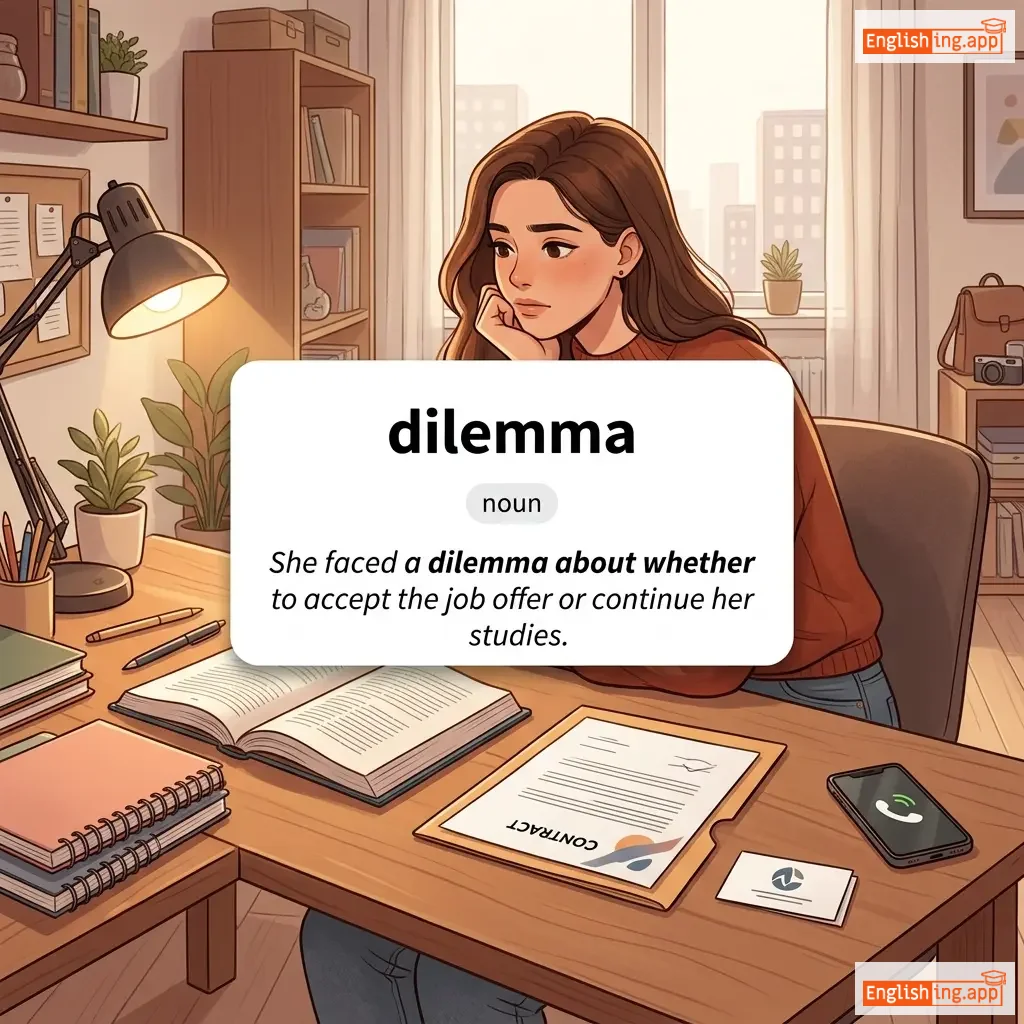
#2442
🤔
|
/daɪˈlɛmə/
noun
(дилемма)
••••••
|
|
дилемма
dilemma
••••••
|
- •••••• | - •••••• | - •••••• | - •••••• |
A situation in which a difficult choice has to be made between two or more alternatives.
••••••
|
She faced a dilemma about whether to accept the job offer or continue her studies. |
Она столкнулась с дилеммой, стоит ли принять предложение о работе или продолжить учебу.
Ona stolknulas' s dilemmoy, stoit li prinimat' predlozhenie o rabote ili prodolzhit' uchebu.
••••••
|
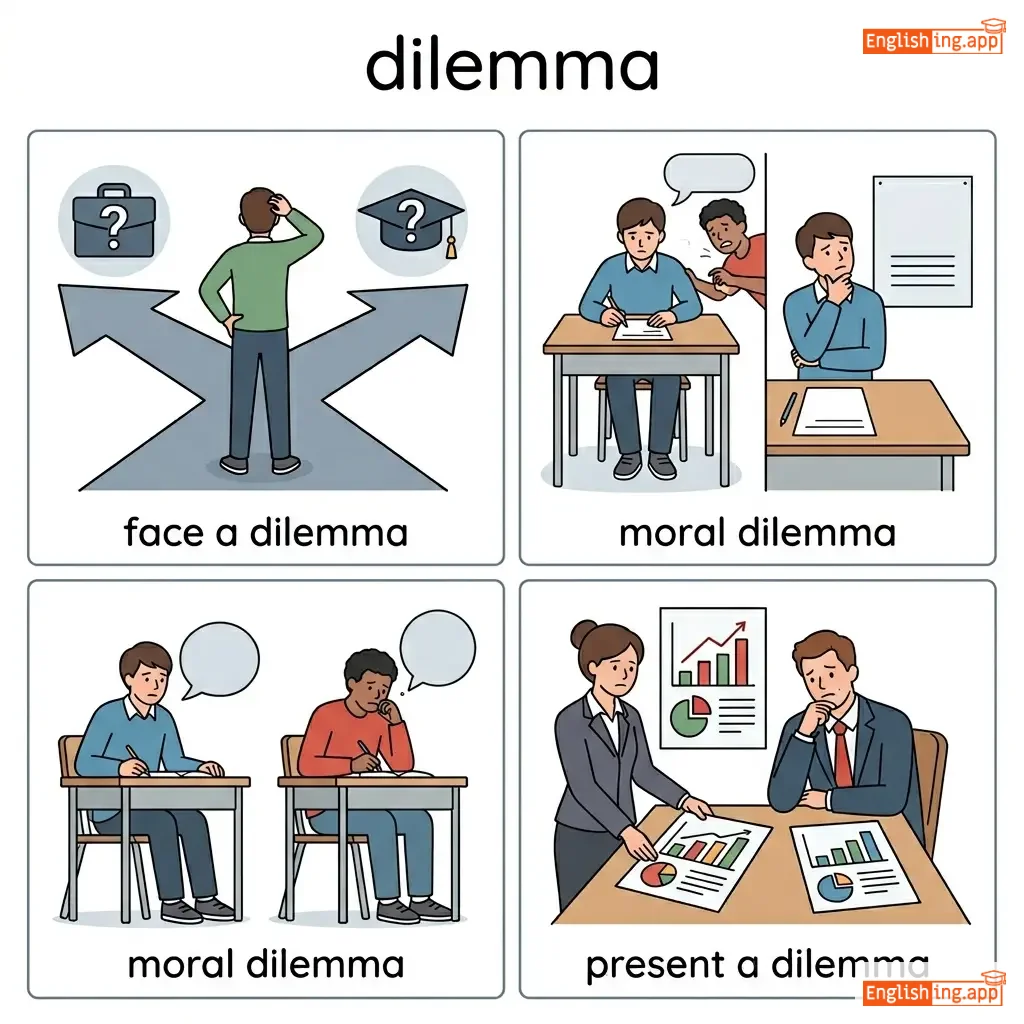
moral dilemma |
A difficult choice involving a conflict of moral principles.
••••••
|
моральная дилемма
moral'naya dilemma
••••••
|
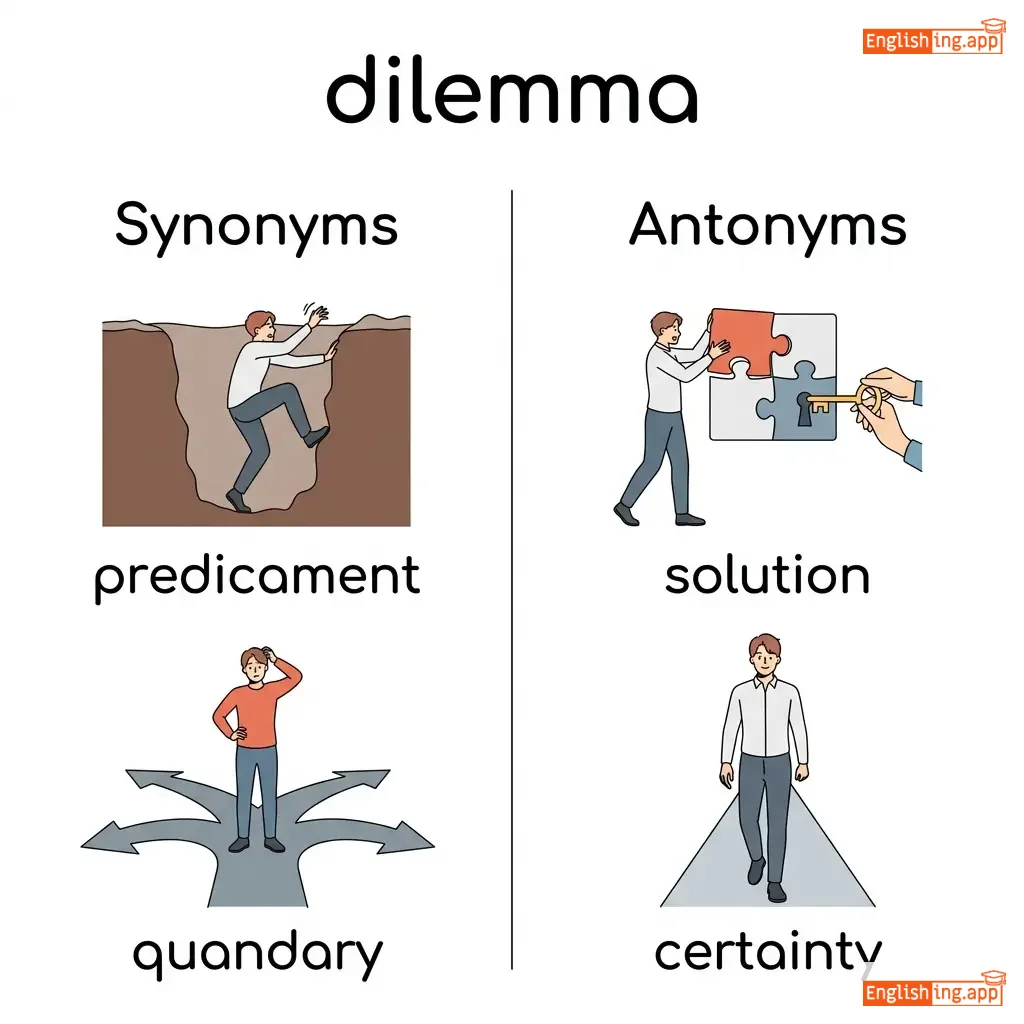
predicament, quandary, problem, difficulty
••••••
|
solution, certainty, clarity
••••••
|
face a dilemma, moral dilemma, present a dilemma
••••••
|
Dilemma означает di (два) + lemma (выбор) = два трудных выбора.
••••••
|
|
#2443
🐢
|
/ˈdɪlətɔːri/
adjective
(делаторий)
••••••
|
- •••••• |
замедляющий
zamedlyayushchiy
••••••
|
- •••••• | - •••••• | - •••••• | - •••••• |
Tending to cause delay; slow to act.
••••••
|
The committee was criticized for its dilatory response to the crisis.
Комитет был раскритикован за его медленный ответ на кризис.
••••••
|
Комитет был раскритикован за его медленный ответ на кризис.
Komitet byl raskritikovann za ego medlennyy otvet na krizis.
••••••
|
- •••••• | - •••••• | - •••••• |
slow, delaying, sluggish, tardy
••••••
|
prompt, quick, immediate
••••••
|
dilatory tactics, dilatory behavior, dilatory response
••••••
|
Dilatory - замедление + рассказ, всегда рассказывает истории о задержках.
••••••
|
|
#2444
🔍
|
/daɪˈleɪt/
verb
(дайлеит)
••••••
|
- •••••• |
расширять
rasshiryat
••••••
|
dilated
дилэйтед
••••••
|
dilated
дилэйтед
••••••
|
dilates
дайлетс
••••••
|
dilating
дайлетинг
••••••
|
To make wider, larger, or more open.
••••••
|
The doctor used drops to dilate the patient's pupils.
Доктор использовал капли, чтобы расширить зрачки пациента.
••••••
|
Доктор использовал капли, чтобы расширить зрачки пациента.
Doktor ispol'zoval kapli, chtoby rasshirit' zrachki patsiyenta.
••••••
|
dilate on
дайлет он
••••••
|
To speak or write at length on a subject.
••••••
|
подробно рассуждать
podrobno rassuzhdat'
••••••
|
expand, enlarge, widen, open
••••••
|
contract, shrink, compress
••••••
|
dilate pupils, dilate blood vessels, dilate on a subject
••••••
|
Расширять – это когда глаза становятся больше!
••••••
|
|
#2445
⚒️
|
/dɪˌlæpɪˈdeɪʃən/
noun
(дɪˌлæпɪˈдеɪʃен)
••••••
|
- •••••• |
упадок
upadok
••••••
|
- •••••• | - •••••• | - •••••• | - •••••• |
The state of disrepair or ruin as a result of neglect.
••••••
|
The old temple was in a state of dilapidation.
Старый храм был в состоянии упадка.
••••••
|
Старый храм был в состоянии упадка.
Staryi khram byl v sostoyanii upadka.
••••••
|
- •••••• | - •••••• | - •••••• |
decay, ruin, neglect, deterioration
••••••
|
repair, restoration, upkeep
••••••
|
in dilapidation, state of dilapidation
••••••
|
Dilapidation означает daily + pit + shon = каждый день разрушение, как упадок.
••••••
|
|
#2446
🔍
|
/ˌdɪfəˈrɛnʃə/
noun
(diferentsiya)
••••••
|
- •••••• |
отличительная характеристика
otlichitelnaya kharakteristika
••••••
|
- •••••• | - •••••• | - •••••• | - •••••• |
A distinguishing characteristic that sets one thing apart from another.
••••••
|
The differentia of humans is their ability to reason abstractly. |
Отличительная характеристика человека — это способность мыслить абстрактно.
Otlichitelnaya kharakteristika cheloveka — eto sposobnost' myslyt' abstraktnо.
••••••
|
- •••••• | - •••••• | - •••••• |
distinction, characteristic, feature, trait, mark
••••••
|
similarity, sameness, uniformity
••••••
|
philosophical differentia, defining differentia, essential differentia
••••••
|
Differentia означает различие, как и слово 'different' в английском.
••••••
|
|
#2447
🏚️
|
/dɪˈlæpɪdeɪt/
verb
(дɪˈлэпɪдеɪт)
••••••
|
- •••••• |
разрушать
razrushat
••••••
|
dilapidated
дɪˈлэпɪдеɪтед
••••••
|
dilapidated
дɪˈлэпɪдеɪтед
••••••
|
dilapidates
дɪˈлэпɪдеɪтс
••••••
|
dilapidating
дɪˈлэпɪдеɪтɪнɡ
••••••
|
To cause something, especially a building, to fall into ruin or disrepair.
••••••
|
The abandoned house began to dilapidate over the years.
Покинутое здание начало разрушаться с годами.
••••••
|
Покинутое здание начало разрушаться с годами.
Pokinutoe zdanie nachalo razrushatsya s godami.
••••••
|
- •••••• | - •••••• | - •••••• |
decay, deteriorate, crumble, ruin, collapse
••••••
|
restore, renovate, repair
••••••
|
dilapidate quickly, dilapidated house, dilapidating structure
••••••
|
Dilapidate означает разрушать здание или дом, доводя его до упадка.
••••••
|
|
#2448
🌀
|
/daɪˈɡrɛsɪv/
adjective
(дайˈɡрɛсɪв)
••••••
|
- •••••• |
тенденция отклоняться от основной темы
tendentsiya otklonyatsya ot osnovnoy temy
••••••
|
- •••••• | - •••••• | - •••••• | - •••••• |
Tending to depart from the main subject in speech or writing.
••••••
|
The speaker's digressive style made the lecture difficult to follow. |
Дигрессивный стиль лектора усложнил следование за лекцией.
Digressivnyy stil' lektora uslozhnil sleduyushcheye za lektsiyey.
••••••
|
- •••••• | - •••••• | - •••••• |
rambling, wandering, meandering, deviating
••••••
|
focused, direct
••••••
|
digressive remarks, digressive style, digressive tendency
••••••
|
Digressive на русском — это когда отклоняешься от основной темы
••••••
|
|
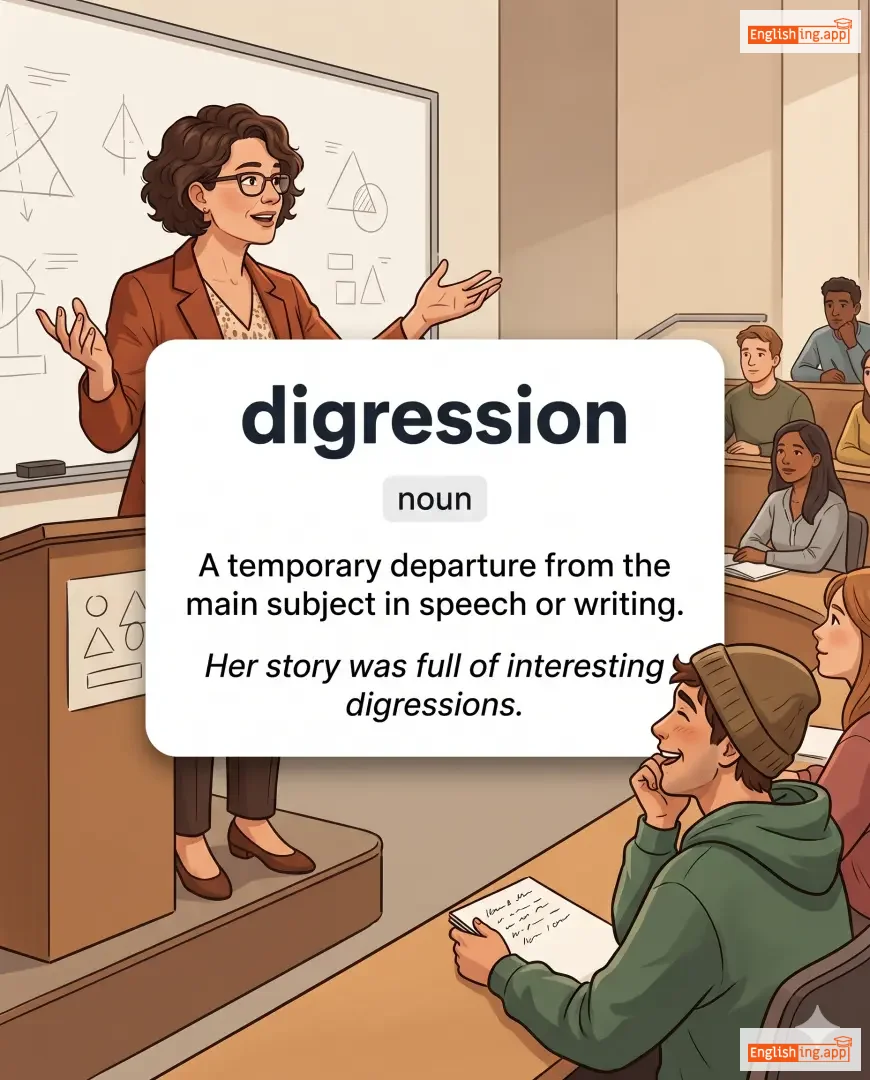
#2449
🛤️
|
/daɪˈɡrɛʃən/
noun
(дайˈгрэшн)
••••••
|
|
отступление
otstupleenie
••••••
|
- •••••• | - •••••• | - •••••• | - •••••• |
A temporary departure from the main subject in speech or writing.
••••••
|
Her story was full of interesting digressions. |
Её история была полна интересных отступлений.
Yeyo istoriya byla polna interesnykh otstupleniy.
••••••
|
- •••••• | - •••••• | - •••••• |
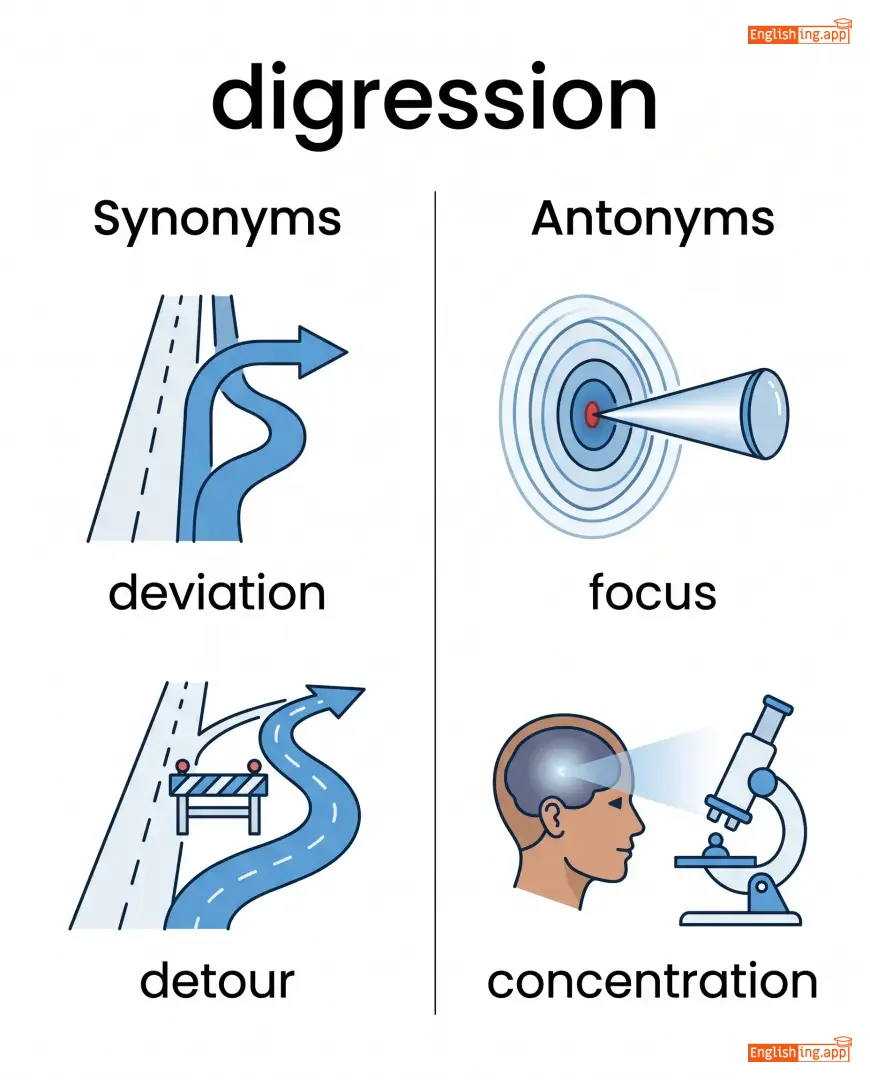
deviation, detour, aside, tangent
••••••
|
focus, concentration
••••••
|
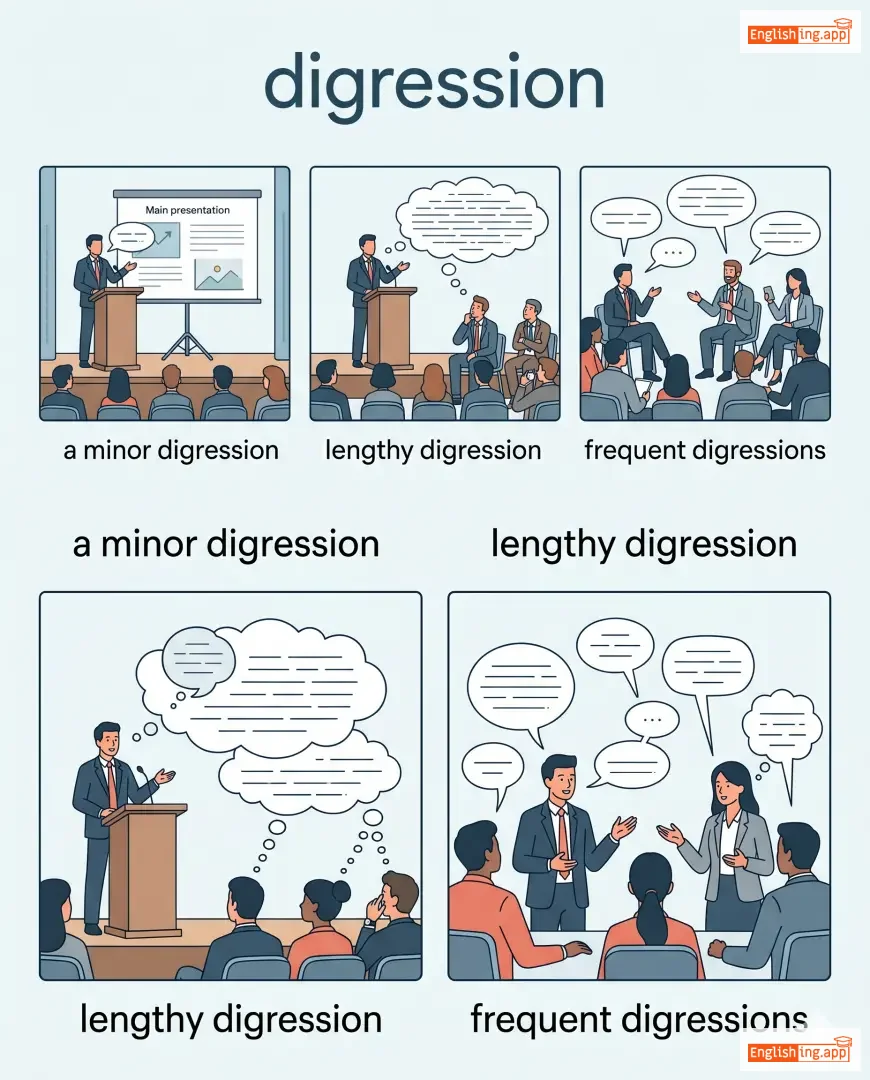
a minor digression, lengthy digression, frequent digressions
••••••
|
Отступление — это отклонение от основного обсуждения.
••••••
|
|
#2450
↪️
|
/daɪˈɡrɛs/
verb
(дигрэс)
••••••
|
- •••••• |
отклоняться от темы
digres
••••••
|
digressed
дигрест
••••••
|
digressed
дигрест
••••••
|
digresses
дигрэсиз
••••••
|
digressing
дигрэсинг
••••••
|
To leave the main subject temporarily in speech or writing.
••••••
|
The professor began to digress from the main topic of the lecture.
Зе профессор биген ту дигрэс фром зе мэйн топик оф зе лектчер.
••••••
|
Профессор начал отклоняться от основной темы лекции.
Professor nachal otklonyatsya ot osnovnoy temy lektsii.
••••••
|
if I may digress
esli mozhno otvlekus ot temy
••••••
|
used to introduce a temporary departure from the main subject
••••••
|
Если можно, отвлекусь от темы.
esli mozhno otvlekus ot temy
••••••
|
deviate, stray, wander, drift, ramble
••••••
|
focus, concentrate
••••••
|
tend to digress, digress into, digress slightly, digress from
••••••
|
ДиГРЕСС = ди + гресс: дай гресс — уйти от темы, запомни: не уходи от темы.
••••••
|
|
#2451
🔡
|
/ˈdaɪɡræf/
noun
(дайграф)
••••••
|
- •••••• |
диграф
digraf
••••••
|
- •••••• | - •••••• | - •••••• | - •••••• |
A pair of letters representing a single sound, such as 'sh' in 'ship'.
••••••
|
In the word 'phone', the letters 'ph' form a digraph. |
В слове 'телефон' буквы 'ph' образуют диграф.
V slove 'telefon' bukvy 'ph' obrazyuyut digraf.
••••••
|
- •••••• | - •••••• | - •••••• |
letter pair, combination, grapheme, phoneme unit
••••••
|
single letter, monograph
••••••
|
vowel digraph, consonant digraph, letter digraph, English digraph
••••••
|
Di + graph, два буквы, которые вместе дают один звук.
••••••
|
|
#2452
🎖️
|
/ˈdɪɡnɪˌtɛri/
noun
(дигнитери)
••••••
|
- •••••• |
важная персона
vazhnaia persona
••••••
|
- •••••• | - •••••• | - •••••• | - •••••• |
a person considered to be important because of high rank or office
••••••
|
Several foreign dignitaries attended the state banquet. |
Несколько иностранных высокопоставленных лиц присутствовали на государственном банкете.
Neskol'ko inostrannykh vysokopostavlennykh lits prisutstvovali na gosudarstvennom bankete.
••••••
|
- •••••• | - •••••• | - •••••• |
official, VIP, leader, notable, luminary
••••••
|
commoner, ordinary person
••••••
|
foreign dignitary, visiting dignitary, local dignitary, high dignitary
••••••
|
Dignitary - это человек с 'достоинством' на высоком уровне.
••••••
|
|
#2453
🔢
|
/ˈdɪdʒɪt/
noun
••••••
|
- •••••• | - •••••• | - •••••• | - •••••• | - •••••• | - •••••• |
a numeral from 0 to 9; also a finger or toe
••••••
|
You must enter a four-digit code to unlock the phone. |
- •••••• |
count on your digits |
rely on your fingers for counting
••••••
|
- •••••• |
number, numeral, figure, character
••••••
|
letter, word
••••••
|
digit code, single digit, multi digit, digit system
••••••
|
No •••••• |
|
#2454
🌐
|
/dɪˈfjuːʒən/
noun
(диффьюзион)
••••••
|
- •••••• |
диффузия
diffyuzion
••••••
|
- •••••• | - •••••• | - •••••• | - •••••• |
the spreading of something more widely or the movement of particles from high to low concentration
••••••
|
The diffusion of information on social media is rapid.
Распространение информации в социальных сетях происходит быстро.
••••••
|
Распространение информации в социальных сетях происходит быстро.
Rasprostranenie informatsii v sotsialnykh setyakh proiskhodit bystro
••••••
|
cultural diffusion
культурная диффузия
••••••
|
the spread of cultural beliefs and activities from one group to another
••••••
|
культурная диффузия
kulturnaya diffuziya
••••••
|
spread, dissemination, circulation, dispersal
••••••
|
concentration, containment
••••••
|
diffusion process, diffusion theory, cultural diffusion, diffusion rate
••••••
|
Два F держат YOU и несут его в ЗОНУ: DIFFU-ZION — запомни, диффузия это распространение
••••••
|
|
#2455
💨
|
/dɪˈfjuːzəbl/
adjective
(дифьюзибл)
••••••
|
- •••••• |
распространяемый
rasprostranyayemyy
••••••
|
- •••••• | - •••••• | - •••••• | - •••••• |
able to spread or be spread through a medium
••••••
|
Oxygen is diffusible through cell membranes. |
Кислород может распространяться через клеточные мембраны.
Kislorod mozhet rasprostranyatsya cherez kletochniye membrany.
••••••
|
- •••••• | - •••••• | - •••••• |
spreadable, permeable, dispersible, distributable
••••••
|
non-permeable, concentrated
••••••
|
diffusible gas, diffusible substance, diffusible molecules
••••••
|
Diffusible означает 'распространять' - можно распространяться.
••••••
|
|
#2456
🌫️
|
/dɪˈfjuːz/
verb
(дифьюз)
••••••
|
|
распространять
rasprostranyat
••••••
|
diffused
дифьюзд
••••••
|
diffused
дифьюзд
••••••
|
diffuses
дифьюзес
••••••
|
diffusing
дифьюзинг
••••••
|
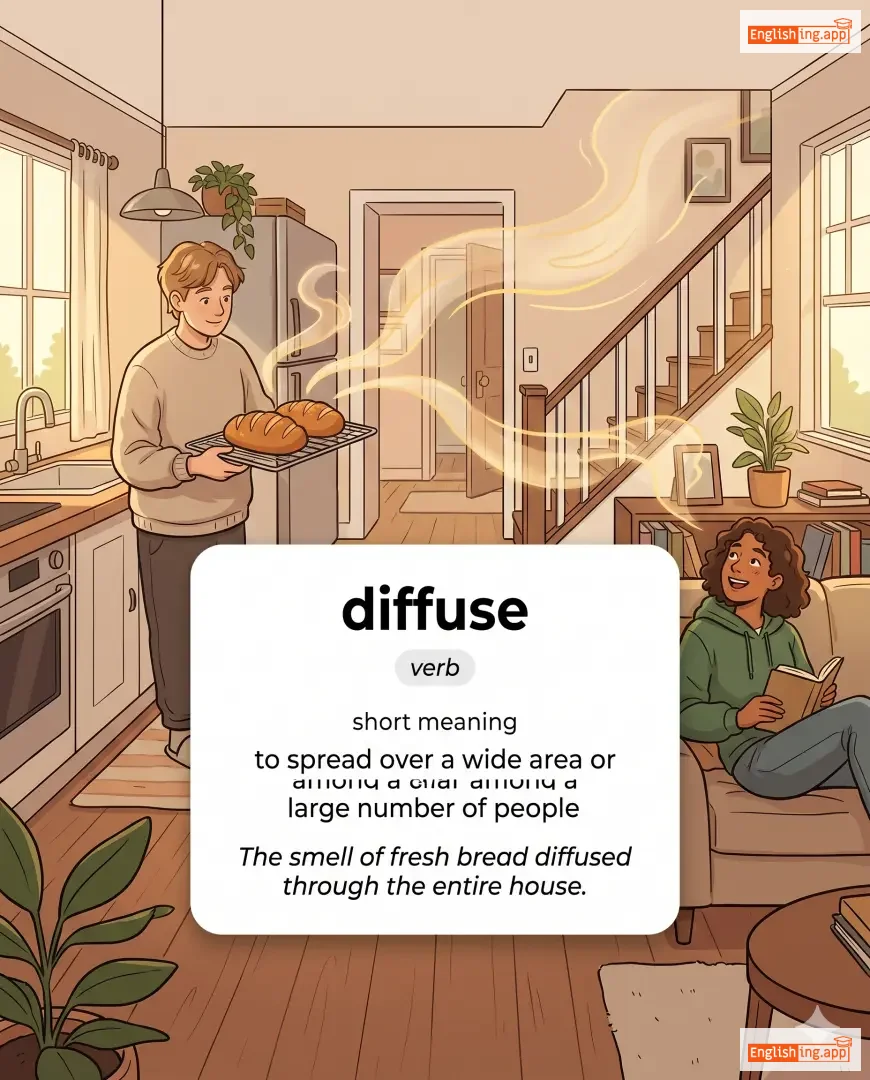
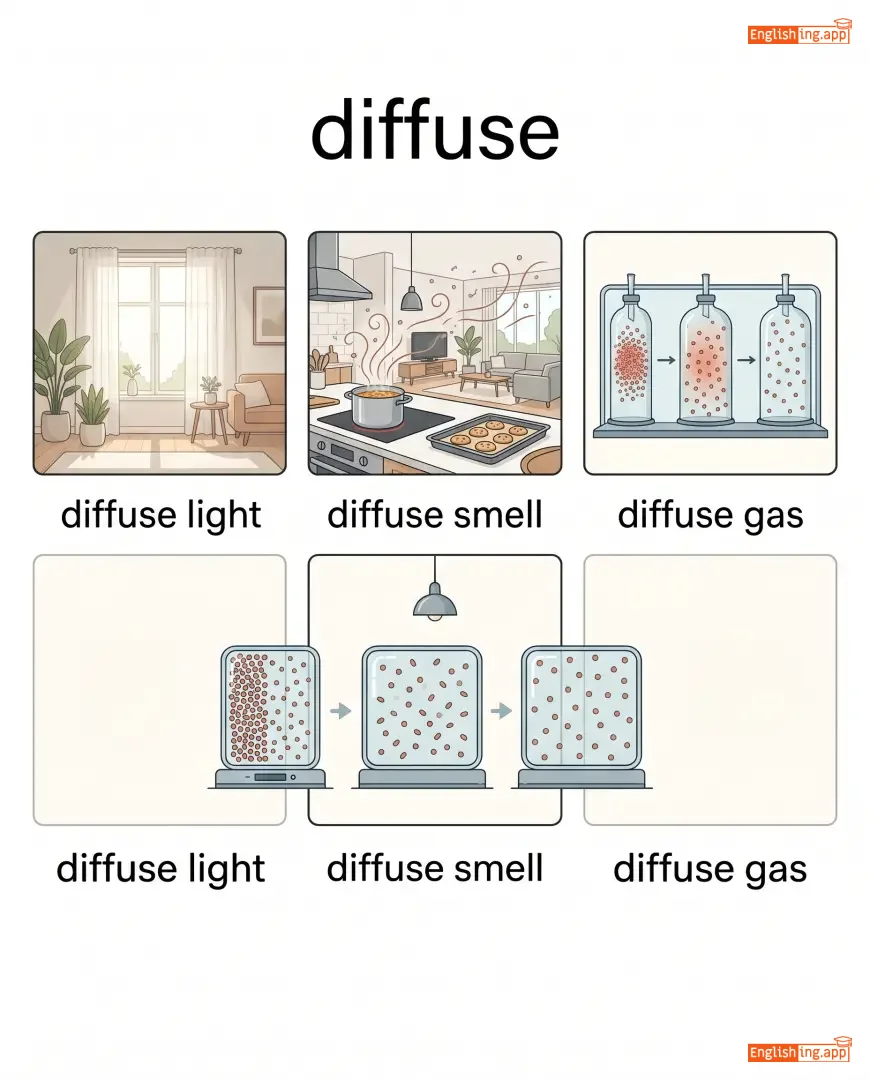
to spread over a wide area or among a large number of people
••••••
|
The smell of fresh bread diffused through the entire house.
Запах свежего хлеба распространился по всему дому.
••••••
|
Запах свежего хлеба распространился по всему дому.
Zapakh svezhago khleba rasprostranilsya po vsemu domu.
••••••
|
diffuse tension
распространить напряжение
••••••
|
to reduce or calm down stress or conflict
••••••
|
уменьшить напряжение
umenshit' napryazhenie
••••••
|
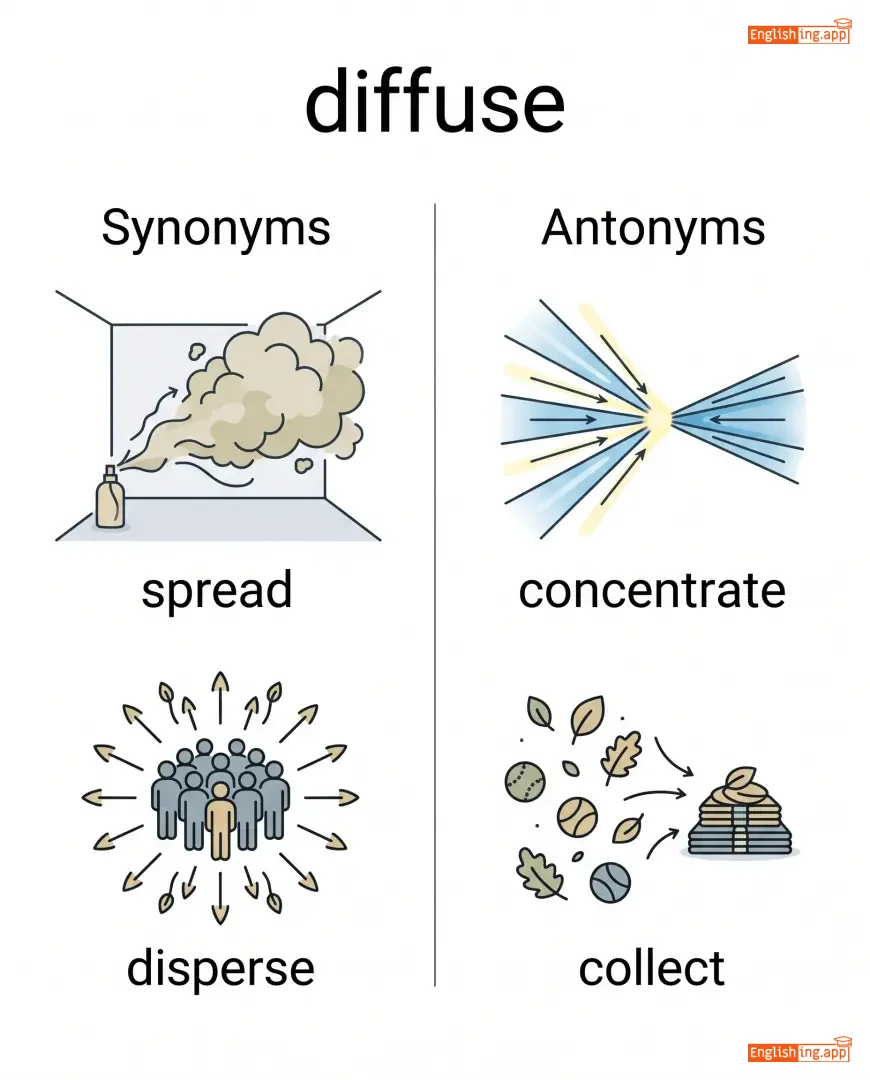
spread, disperse, scatter, distribute, dissipate
••••••
|
concentrate, collect, gather
••••••
|
diffuse light, diffuse smell, diffuse gas, diffuse conflict
••••••
|
Распределение напряжения - распространить и уменьшить.
••••••
|
|
#2457
🙇
|
/ˈdɪfɪdənt/
adjective
••••••
|
- •••••• | - •••••• | - •••••• | - •••••• | - •••••• | - •••••• |
Shy or lacking confidence in one's own abilities.
••••••
|
He was too diffident to ask a question in class. |
- •••••• | - •••••• | - •••••• | - •••••• |
shy, timid, self-effacing, modest, unconfident
••••••
|
confident, bold, assertive
••••••
|
seem diffident, appear diffident, act diffidently
••••••
|
No •••••• |
|
#2458
😶
|
/ˈdɪfɪdəns/
noun
(дифи́денс)
••••••
|
|
неуверенность в себе
neuverennost' v sebe
••••••
|
- •••••• | - •••••• | - •••••• | - •••••• |
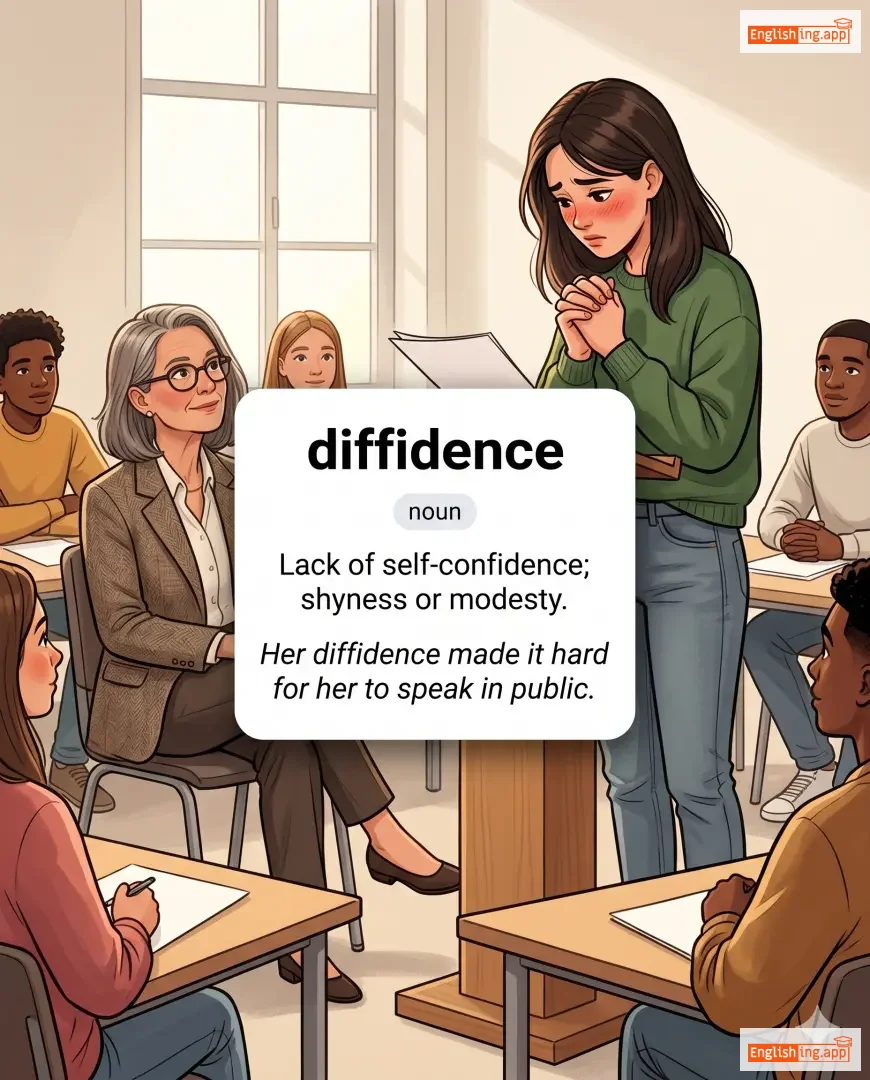
Lack of self-confidence; shyness or modesty.
••••••
|
Her diffidence made it hard for her to speak in public. |
Её неуверенность в себе затрудняла ей выступать на публике.
Yeyo neuverennost' v sebe zatrudnyala yey vystupat' na publike.
••••••
|
- •••••• | - •••••• | - •••••• |
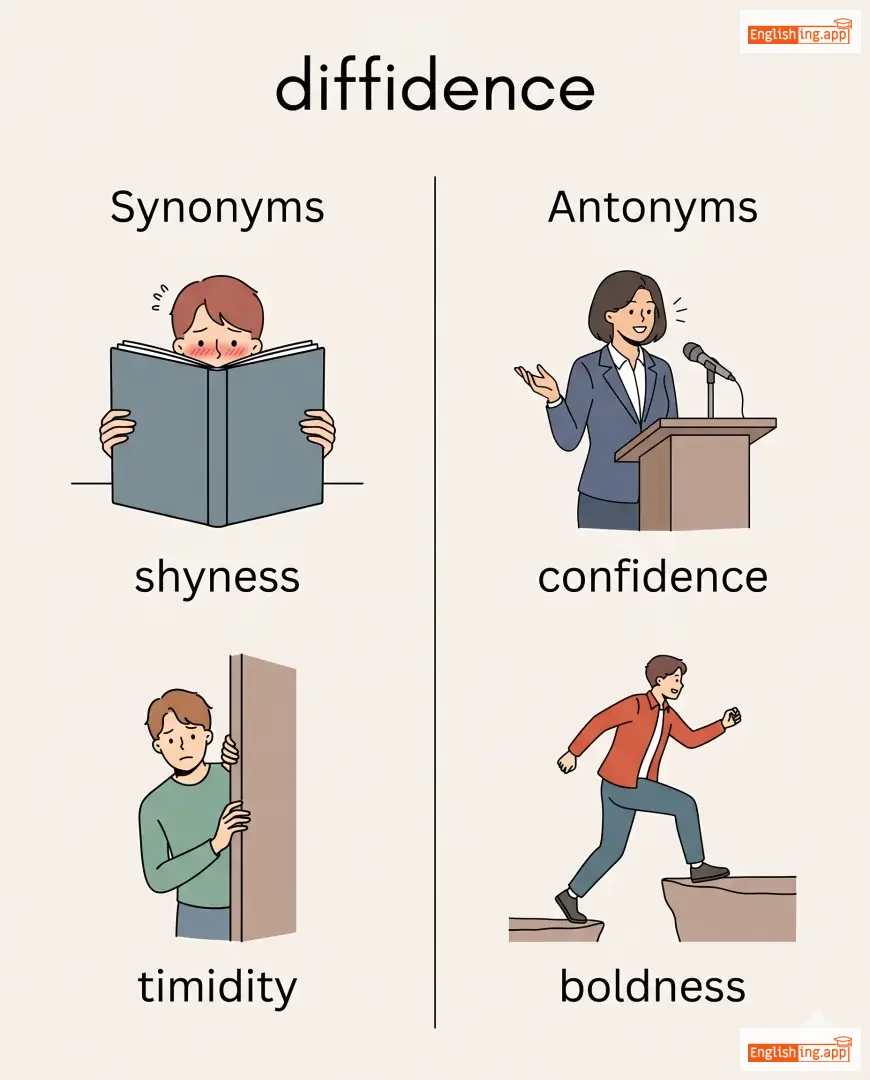
shyness, timidity, insecurity, reserve, modesty
••••••
|
confidence, boldness, assertiveness
••••••
|
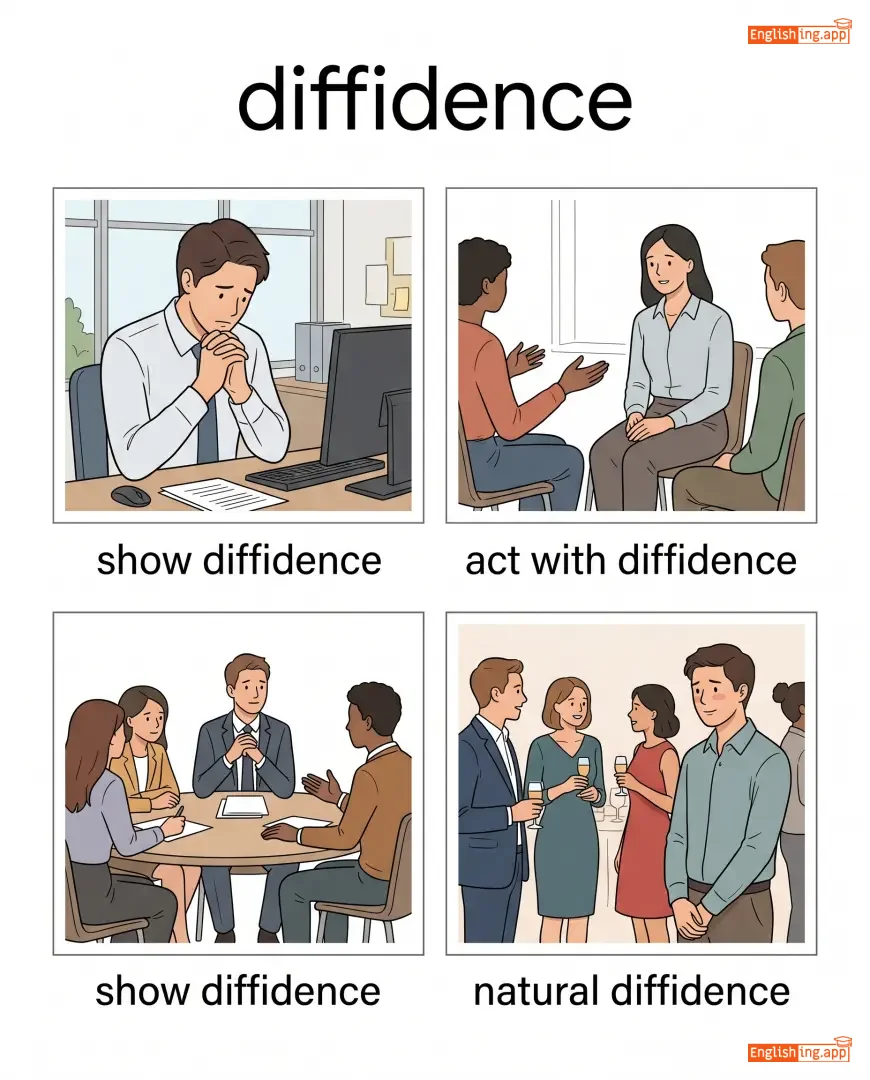
show diffidence, act with diffidence, natural diffidence
••••••
|
Diffidence значит неуверенность - помни, что D = Down уверенность.
••••••
|
|
#2459
🧩
|
/ˌdɪfəˈrɛnʃieɪt/
verb
(дифференцировать)
••••••
|
- •••••• |
дифференцировать
differentsirovat'
••••••
|
differentiated
дифференцировал
••••••
|
differentiated
дифференцировал
••••••
|
differentiates
дифференцирует
••••••
|
differentiating
дифференцируя
••••••
|
To recognize or make a distinction between things.
••••••
|
It is important to differentiate between fact and opinion.
Важно дифференцировать факты и мнения.
••••••
|
Важно дифференцировать факты и мнения.
Vazhno differentsirovat' fakty i mneniya.
••••••
|
differentiate yourself
дифференцировать себя
••••••
|
To make oneself stand out as unique or distinct.
••••••
|
дифференцировать себя
differentsirovat' sebya
••••••
|
distinguish, discern, separate, identify, contrast
••••••
|
confuse, equate, mix
••••••
|
differentiate clearly, differentiate products, differentiate features
••••••
|
Дифференцировать означает разделить - помни о различии между фактами и мнениями.
••••••
|
|
#2460
⚖️
|
/ˌdɪfəˈrɛnʃəl/
adjective
(дифференциальный)
••••••
|
- •••••• |
дифференциальный
differentsialnyy
••••••
|
- •••••• | - •••••• | - •••••• | - •••••• |
Relating to or showing a difference; involving a distinction.
••••••
|
There is a differential treatment between the two groups. |
Существует дифференцированное отношение между двумя группами.
Sushchestvuet differentsirovannoye otnosheniye mezhdu dvumya gruppami.
••••••
|
- •••••• | - •••••• | - •••••• |
distinct, variable, contrasting, divergent, relative
••••••
|
uniform, identical, equal
••••••
|
differential equation, differential treatment, wage differential
••••••
|
Differential означает разницу - как дифференцированное отношение
••••••
|
Vocabulary Quiz
Test your vocabulary by matching words with their translations or meanings.
Login to take the quiz
Comments (0)
Share your thoughts and join the discussion.
Join the discussion by logging in
Login to CommentNo comments yet
Be the first to share your thoughts!