

Обновитесь для доступа ко всему словарю
Получите неограниченный доступ ко всем словам с подпиской Pro
Обновить до ProПеревод
Прошедшее
Причастие прошедшего времени
Третье лицо единственного числа
Герундий
Значение
Пример предложения
Перевод примера предложения
Синонимы
Антонимы
Коллокации
Мнемоника
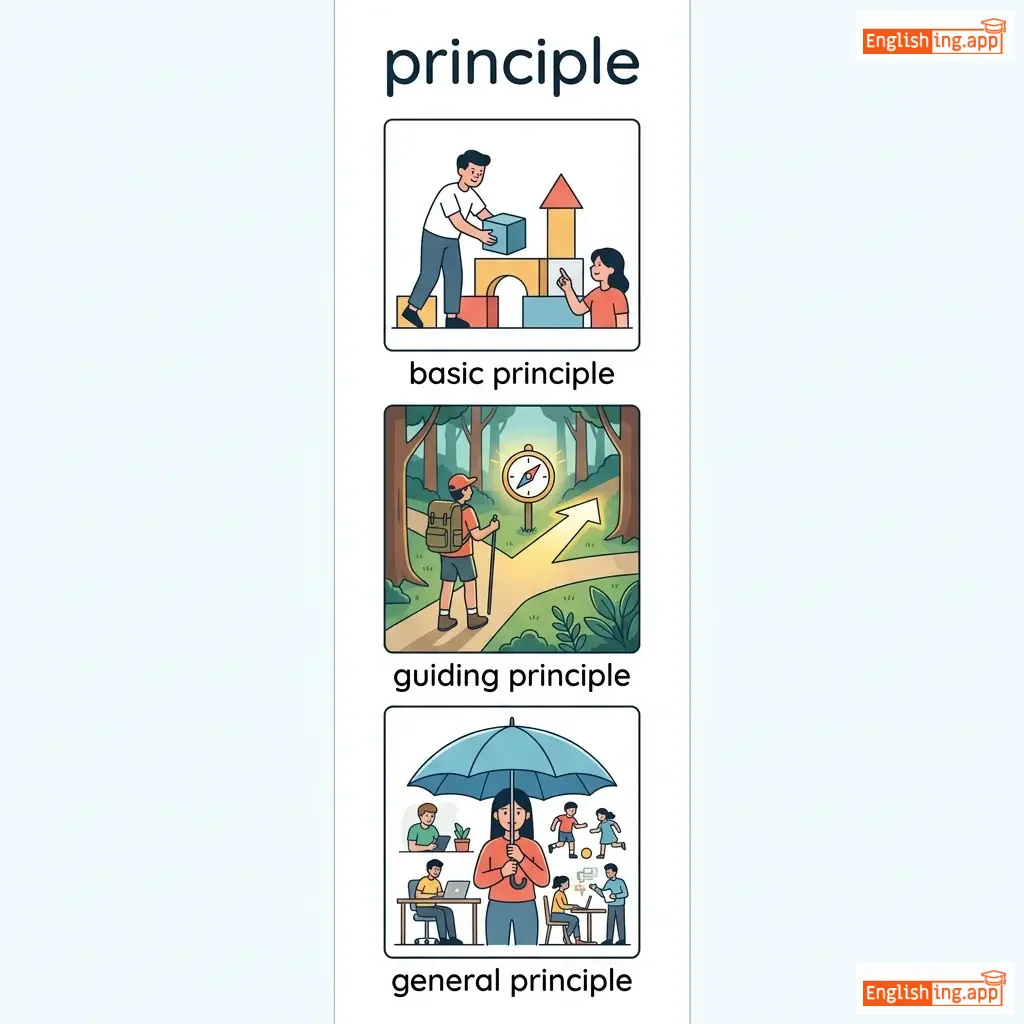
Swipe left or right, or use the buttons. Tap image to zoom.
Обновитесь для доступа ко всем предложениям
Получите неограниченный доступ ко всем предложениям с подпиской Pro
Обновить до ProПеревод примера предложения
Слово
Lesson 232Lesson 232 - Переключатель маски
|
Эмодзи
|
Слово | Images | Перевод | Прошедшее | Причастие прошедшего времени | Третье лицо единственного числа | Герундий | Значение | Пример предложения | Перевод примера предложения | Пример выражения | Значение примера выражения | Перевод примера выражения | Синонимы | Антонимы | Коллокации | Мнемоника |
|---|---|---|---|---|---|---|---|---|---|---|---|---|---|---|---|---|---|
|
#6930
🎓
|
/ˈprɪnsəpəl/
noun, adjective
(prɪnsɪpəl)
••••••
|
- •••••• |
директор, главный
direktor, glavniy
••••••
|
- •••••• | - •••••• | - •••••• | - •••••• |
the person with the highest authority or most important position; main or most important
••••••
|
The school principal addressed the students in the auditorium. |
Директор школы обратился к ученикам в аудитории.
Direktor shkoly obratilsya k uchenikam v auditorii.
••••••
|
principal and interest |
the original amount of money invested or loaned and the charge for borrowing it
••••••
|
основной капитал и проценты
osnovnoy kapital i protsenty
••••••
|
head, leader, chief, primary, main
••••••
|
subordinate, minor, secondary
••••••
|
school principal, principal amount, principal role, principal office
••••••
|
Principal означает главного человека в школе, директора.
••••••
|
|
#6931
🔍
|
/proʊb/
verb, noun
(проб)
••••••
|
|
исследовать
issledovat'
••••••
|
probed
пробд
••••••
|
probed
пробд
••••••
|
probes
пробс
••••••
|
probing
пробинг
••••••
|
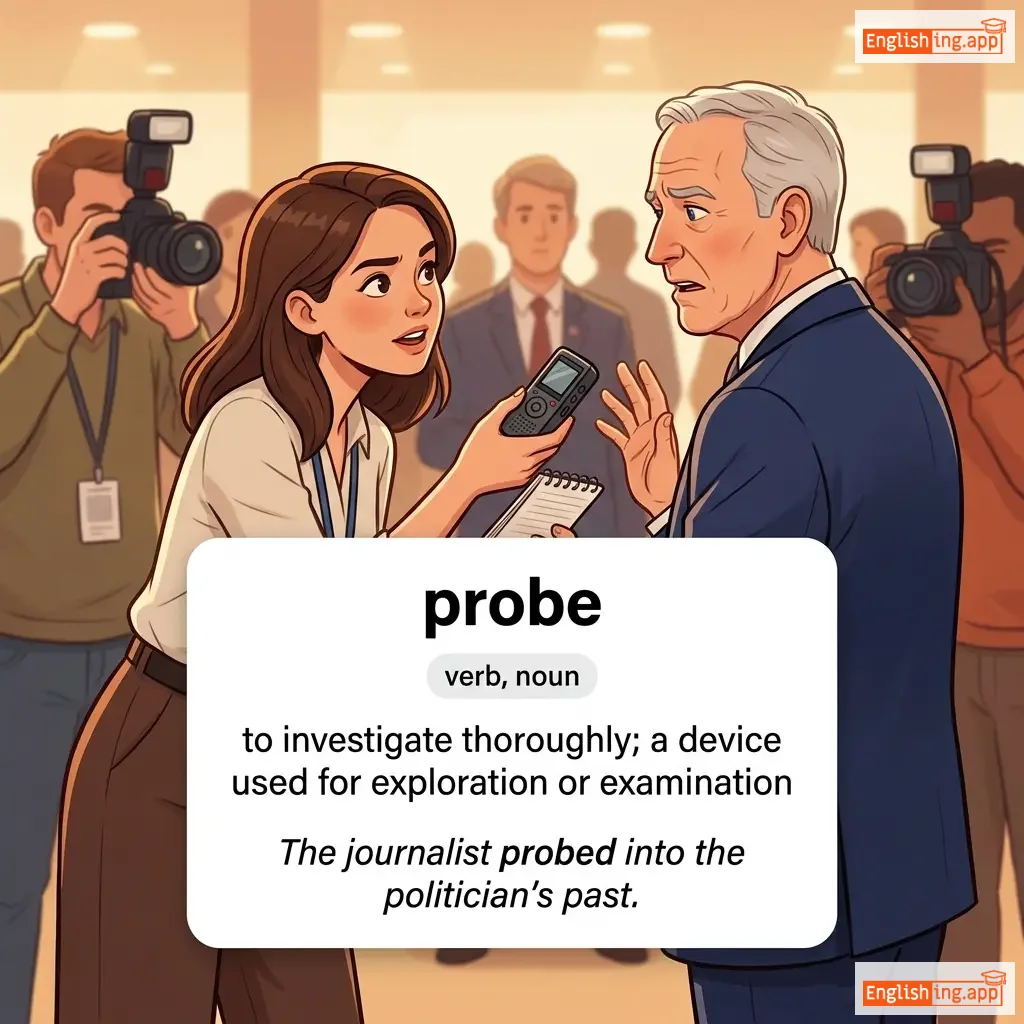
to investigate thoroughly; a device used for exploration or examination
••••••
|
The journalist probed into the politician’s past.
Журналист исследовал прошлое политика.
••••••
|
Журналист исследовал прошлое политика.
Zhurnalist issledoval proshloye politika.
••••••
|
probe deeper
проверьте глубже
••••••
|
to investigate more thoroughly
••••••
|
проверьте глубже
prover'te glubzhe
••••••
|
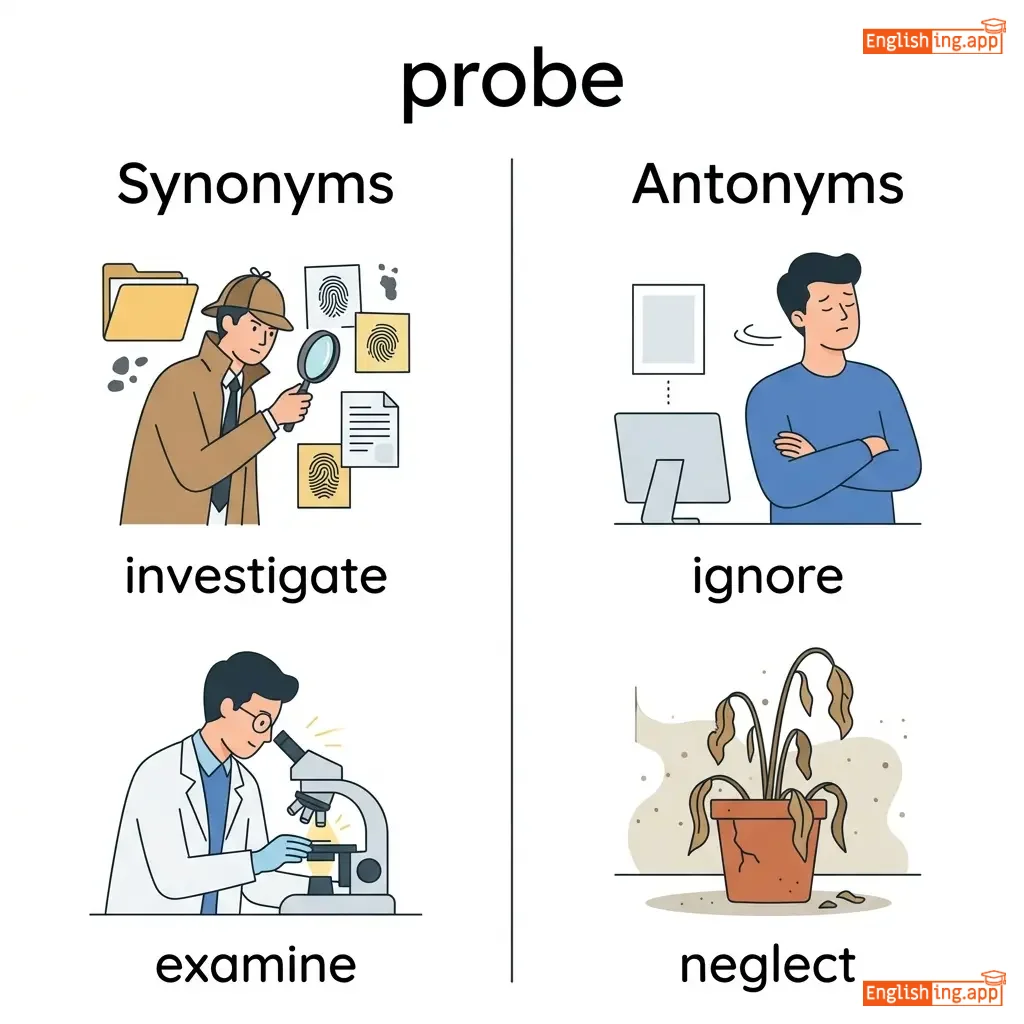
investigate, examine, explore, scrutinize, research
••••••
|
ignore, neglect, overlook
••••••
|
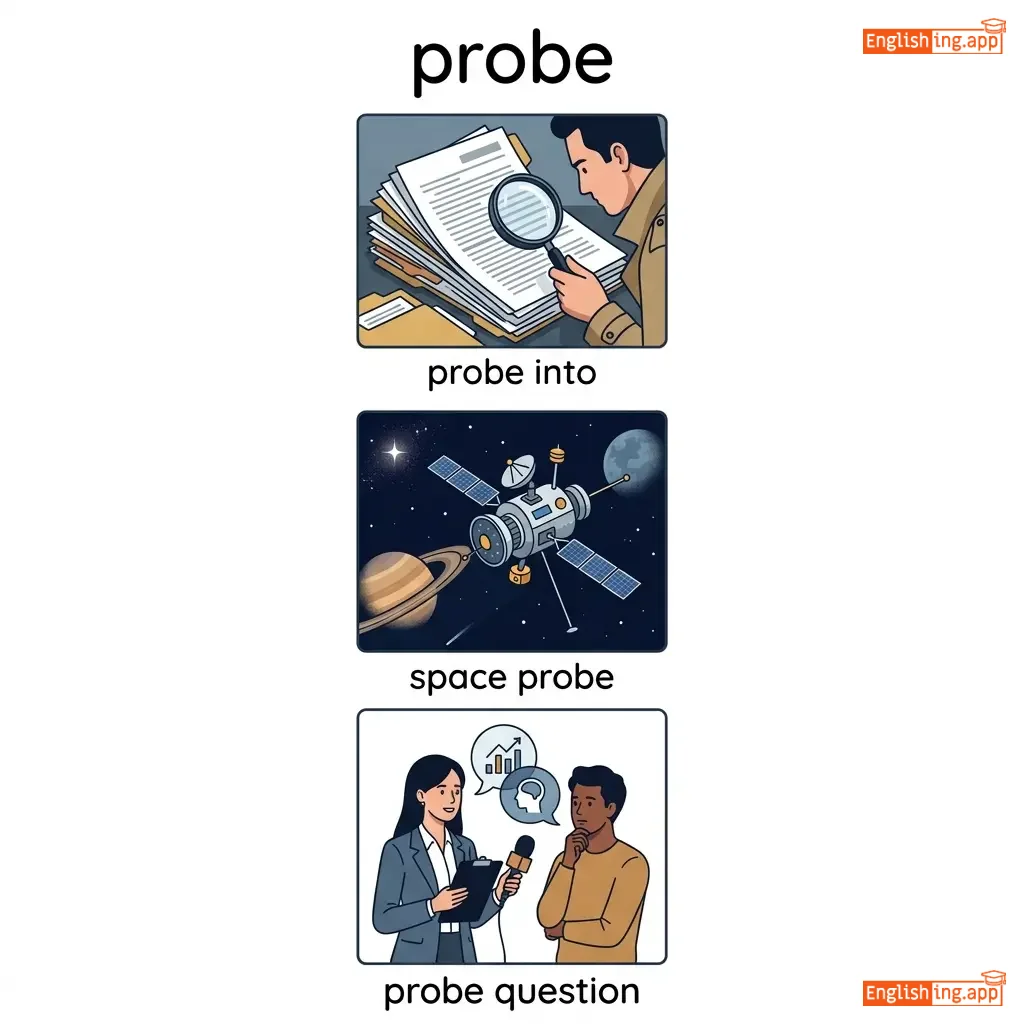
probe into, space probe, probe question, probe deeper
••••••
|
Probe значит исследовать глубже — исследовать прошлое, как в археологии.
••••••
|
|
#6932
📝
|
/proʊˈbeɪʃən/
noun
(prō-bey-shun)
••••••
|
- •••••• |
испытательный срок
ispytatel'nyy srok
••••••
|
- •••••• | - •••••• | - •••••• | - •••••• |
a period of testing or supervision, especially for offenders or new employees
••••••
|
He was placed on probation for six months. |
Его поставили на испытательный срок на шесть месяцев.
Yego postavili na ispytatel'nyy srok na shest' mesyatsev.
••••••
|
on probation |
under supervision or trial period
••••••
|
на испытательном сроке
na ispytatelnom sroke
••••••
|
trial, testing, supervision, evaluation, observation
••••••
|
freedom, release, permanence
••••••
|
on probation, probation period, probation officer, probation terms
••••••
|
Probation означает испытательный срок для работы — испытательный срок
••••••
|
|
#6933
⚖️
|
/ˈproʊbeɪt/
noun
(proubeyt)
••••••
|
- •••••• |
завещание проверка
zaveshchanie proverka
••••••
|
- •••••• | - •••••• | - •••••• | - •••••• |
the official proving of a will in a court of law
••••••
|
The family had to go through probate after his death.
Семья должна была пройти через процесс probate после его смерти.
••••••
|
Семья должна была пройти через процесс проверки завещания после его смерти.
Sem'ya dolzhna byla proyti cherez protsess proverki zaveshchaniya posle ego smerti.
••••••
|
- •••••• | - •••••• | - •••••• |
validation, certification, approval, legal process
••••••
|
dispute, contest, rejection
••••••
|
probate court, probate process, probate law, probate judge
••••••
|
Probate означает PROve завещание в суде — проверка завещания
••••••
|
|
#6934
🏆
|
/praɪz/
noun, verb
(praiz)
••••••
|
- •••••• |
приз
priz
••••••
|
prized
praizd
••••••
|
prized
praizd
••••••
|
prizes
praizes
••••••
|
prizing
praizing
••••••
|
something given as a reward for achievement; to value highly
••••••
|
He won the first prize in the competition.
Он выиграл первый приз в конкурсе.
••••••
|
Он выиграл первый приз в конкурсе.
On vyigral pervyi priz v konkyrse.
••••••
|
prize possession
ценное имущество
••••••
|
something cherished greatly
••••••
|
ценное имущество
tsennoye imushchestvo
••••••
|
award, reward, trophy, treasure, honor
••••••
|
loss, forfeit, neglect
••••••
|
first prize, grand prize, prize money, prize possession
••••••
|
Приз — как Prize, только по-русски. Выиграл приз — получил призовое имущество.
••••••
|
|
#6935
🤫
|
/ˈprɪvi/
adjective
(privi)
••••••
|
- •••••• |
тайное знание
taynoe znanie
••••••
|
- •••••• | - •••••• | - •••••• | - •••••• |
having access to secret or private knowledge
••••••
|
She was privy to the confidential discussions.
Она была осведомлена о конфиденциальных обсуждениях.
••••••
|
Она была осведомлена о конфиденциальных обсуждениях.
Ona byla osvedomlena o konfidentsial'nykh obshchushcheniyakh.
••••••
|
privy council
приви совет
••••••
|
a body of advisors to a sovereign or ruler
••••••
|
тайный совет
taynyy sovet
••••••
|
aware, informed, acquainted, conscious, inside
••••••
|
ignorant, unaware, oblivious
••••••
|
privy to information, privy council, privy chamber, privy knowledge
••••••
|
Privy означает знать секретную информацию — Privy означает тайное знание
••••••
|
|
#6936
📜
|
/ˈprɪvɪti/
noun
(priviti)
••••••
|
- •••••• |
частные отношения, договорные отношения
chastnye otnosheniya, dogovornye otnosheniya
••••••
|
- •••••• | - •••••• | - •••••• | - •••••• |
A close, private, or special relationship; in law, the direct connection between parties to a contract.
••••••
|
There was no privity of contract between the supplier and the customer. |
Не было частных договорных отношений между поставщиком и клиентом.
ne bylo chastnykh dogovornykh otnosheniy mezhdu postavshchikom i klientom.
••••••
|
privity of contract |
The relationship that exists between the parties to a contract, allowing them to sue each other but preventing a third party from doing so.
••••••
|
договорные отношения
dogovornye otnosheniya
••••••
|
connection, relationship, association, link
••••••
|
detachment, separation, distance
••••••
|
privity of contract, in privity with, privity relationship
••••••
|
Privity – частные договорные отношения.
••••••
|
|
#6937
🎖️
|
/ˈprɪvəlɪdʒ/
noun
(привилегия)
••••••
|
- •••••• |
привилегия, преимущество
privilegiya, preimushchestvo
••••••
|
- •••••• | - •••••• | - •••••• | - •••••• |
A special right, advantage, or immunity granted or available only to a particular person or group.
••••••
|
Education is considered a privilege in many developing countries. |
Образование считается привилегией во многих развивающихся странах.
Obrazovanie schitayetsya privilegiyey v mnogikh razvivayushchikhsya stranakh.
••••••
|
white privilege |
Societal advantages that benefit white people beyond what is commonly experienced by non-white people under the same circumstances.
••••••
|
белое привилегия
beloe privilegiya
••••••
|
advantage, benefit, right, entitlement, honor
••••••
|
disadvantage, restriction, burden
••••••
|
enjoy privilege, special privilege, privilege of, privilege to
••••••
|
Privilege напоминает о привилегии, которая дается немногим избранным.
••••••
|
|
#6938
🥀
|
/praɪˈveɪʃən/
noun
(привэйшн)
••••••
|
- •••••• |
лишение, бедность
lisheniye, bednost'
••••••
|
- •••••• | - •••••• | - •••••• | - •••••• |
A state in which things essential for human well-being such as food and warmth are lacking.
••••••
|
The refugees suffered great privation during the harsh winter. |
Беженцы страдали от сильного лишения во время суровой зимы.
Bezhtsy stradali ot sil'nogo lisheniya vo vremya surovoy zimy.
••••••
|
- •••••• | - •••••• | - •••••• |
hardship, deprivation, poverty, destitution
••••••
|
luxury, abundance, wealth
••••••
|
suffer privation, endure privation, extreme privation
••••••
|
Privation как deprivation — отсутствие всего необходимого.
••••••
|
|
#6939
⛵
|
/ˌpraɪvəˈtɪə/
noun
(praivetiér)
••••••
|
- •••••• |
пиратский корабль
piratskiy korabl
••••••
|
- •••••• | - •••••• | - •••••• | - •••••• |
A privately owned armed ship authorized by a government to attack enemy ships during war.
••••••
|
The privateer captured several enemy vessels during the conflict. |
Пиратский корабль захватил несколько вражеских судов во время конфликта.
Piratskiy korabl' zakhvatil neskol'ko vrazheskikh sudov vo vremya konflikta.
••••••
|
- •••••• | - •••••• | - •••••• |
corsair, buccaneer, pirate, raider
••••••
|
naval officer, defender
••••••
|
privateer ship, licensed privateer, privateer captain
••••••
|
Private + ear = 'Private' судно, которое 'ear' слышит во время атаки.
••••••
|
|
#6940
🌿
|
/ˈprɪstiːn/
adjective
••••••
|
|
- •••••• | - •••••• | - •••••• | - •••••• | - •••••• |
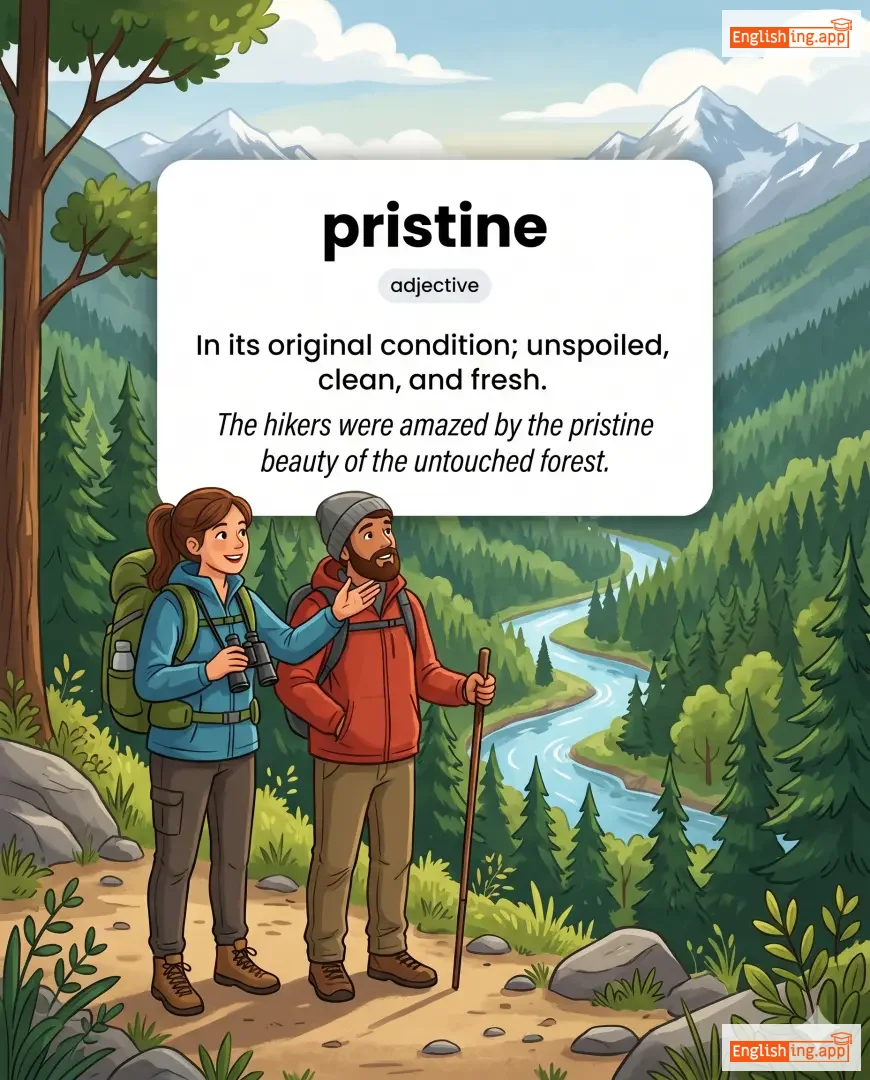
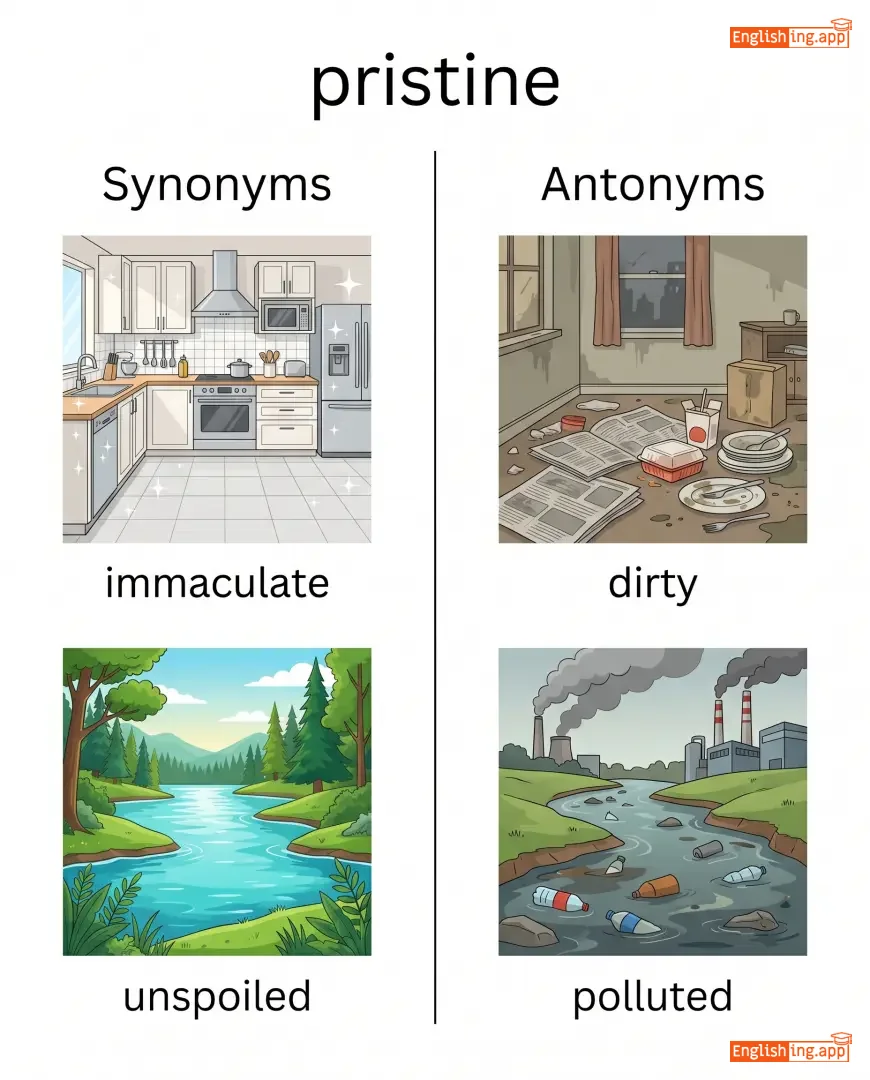
In its original condition; unspoiled, clean, and fresh.
••••••
|
The hikers were amazed by the pristine beauty of the untouched forest. |
- •••••• |
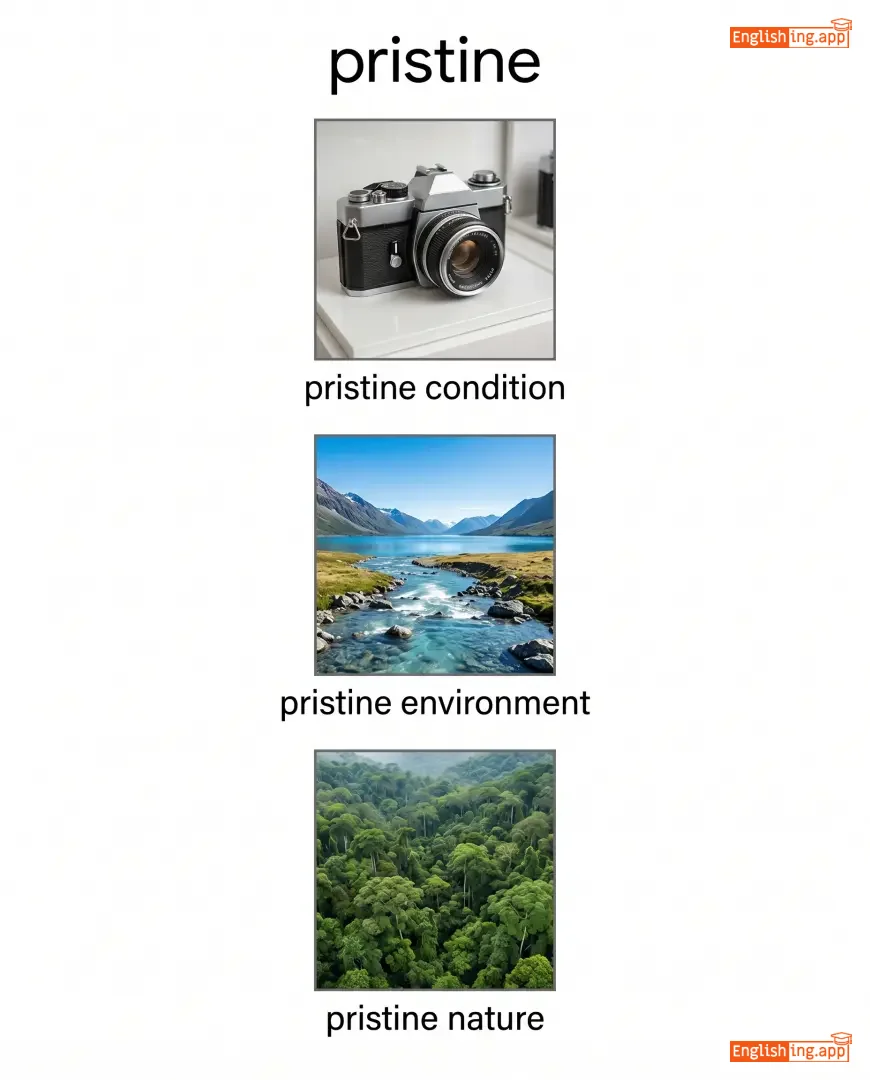
pristine condition |
Something that is perfectly clean, undamaged, or in its original state.
••••••
|
- •••••• |
immaculate, unspoiled, untouched, pure, fresh
••••••
|
dirty, polluted, spoiled
••••••
|
pristine condition, pristine environment, pristine nature, pristine forest
••••••
|
No •••••• |
|
#6941
⛪
|
/ˈpraɪəri/
noun
(прайори)
••••••
|
- •••••• |
приорат
priorat
••••••
|
- •••••• | - •••••• | - •••••• | - •••••• |
a small monastery or convent governed by a prior or prioress
••••••
|
The old priory was converted into a museum. |
Старый приорат был преобразован в музей.
Staryy priorat byl preobrazovan v muzey.
••••••
|
- •••••• | - •••••• | - •••••• |
abbey, monastery, convent, cloister
••••••
|
secular building, marketplace
••••••
|
old priory, medieval priory, ancient priory, ruined priory
••••••
|
Приорат—это место, где приор или приоресса управляют монастырем.
••••••
|
|
#6942
⚖️
|
/ˈprɪnsəpəld/
adjective
(prɪnsɪpəld)
••••••
|
- •••••• |
принципиальный
printsipal'nyy
••••••
|
- •••••• | - •••••• | - •••••• | - •••••• |
acting in accordance with moral or ethical standards
••••••
|
He is a principled leader who always puts honesty first. |
Он принципиальный лидер, который всегда ставит честность на первое место.
On printsipal'nyy lider, kotoryy vsegda stavit chestnost' na pervoye mesto.
••••••
|
- •••••• | - •••••• | - •••••• |
ethical, moral, righteous, upright, honorable
••••••
|
corrupt, dishonest, immoral
••••••
|
principled stand, principled leader, highly principled, principled decision
••••••
|
Принципиальный—тот, кто придерживается принципов.
••••••
|
|
#6943
📜
|
/ˈprɪnsəpəl/
noun
(prin-tsipal)
••••••
|
|
принцип
printsip
••••••
|
- •••••• | - •••••• | - •••••• | - •••••• |
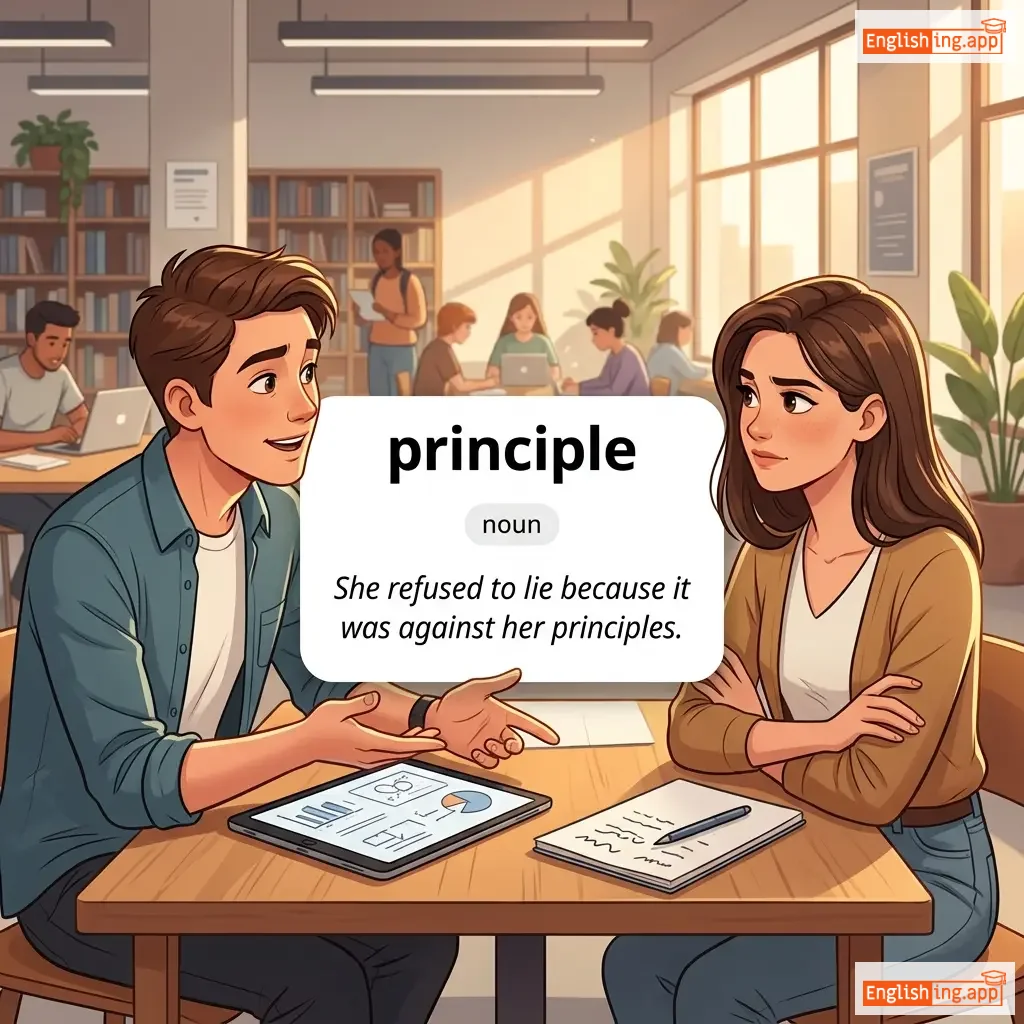
a fundamental truth, law, or rule that serves as the foundation for a system of belief or behavior
••••••
|
She refused to lie because it was against her principles. |
Она отказалась лгать, потому что это шло против её принципов.
Ona otkazalas' lgat', potomu chto eto shlo protiv yeye printsipov.
••••••
|
in principle |
as a general idea or rule, even if not applied in practice
••••••
|
в принципе
v printsipe
••••••
|
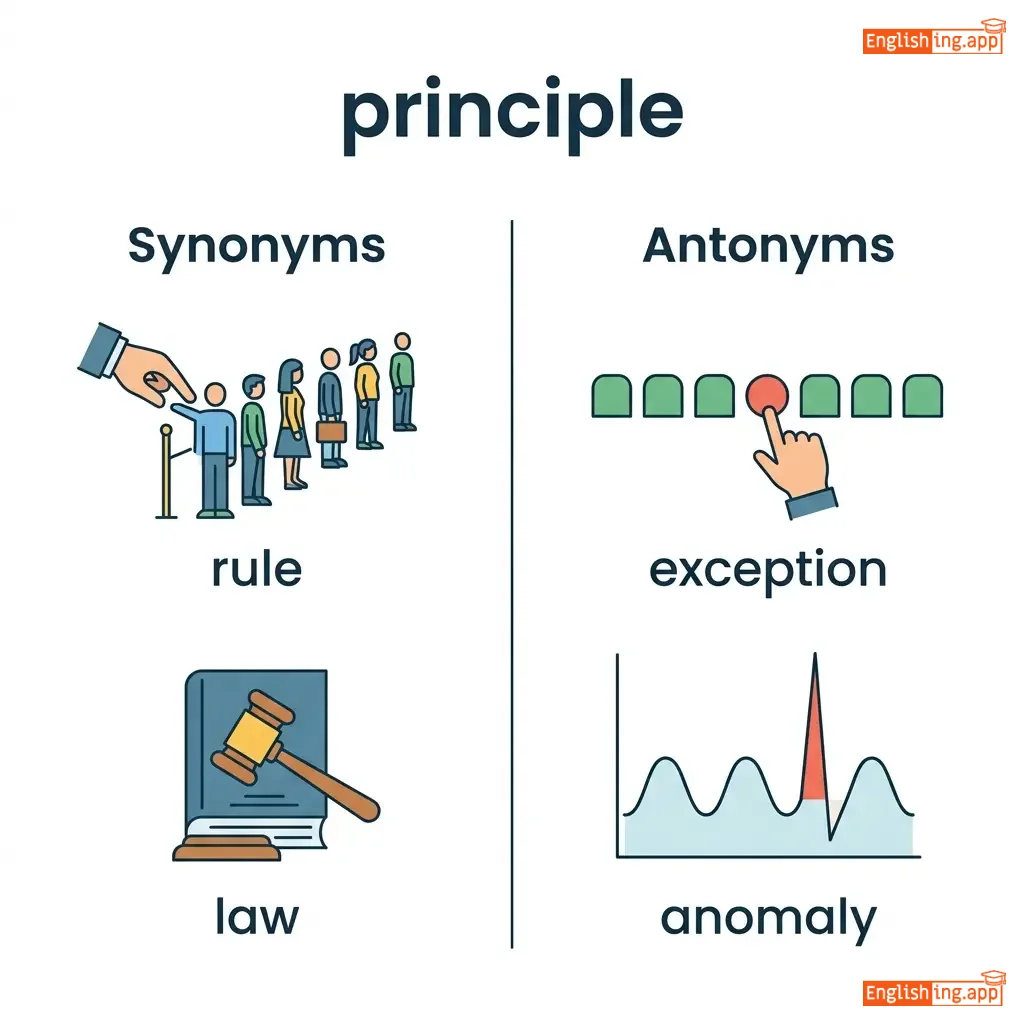
rule, law, tenet, belief, doctrine
••••••
|
exception, anomaly
••••••
|
basic principle, guiding principle, general principle, moral principle
••••••
|
Принцип означает основу—'Принцип дисциплины' означает правило дисциплины в школе.
••••••
|
|
#6944
👑
|
/ˌprɪnsɪˈpæləti/
noun
(принсипалити)
••••••
|
- •••••• |
княжество
knyazhestvo
••••••
|
- •••••• | - •••••• | - •••••• | - •••••• |
a state ruled by a prince
••••••
|
Monaco is a famous principality in Europe. |
Монако — известное княжество в Европе.
Monako — izvestnoe knyazhestvo v Evrope.
••••••
|
- •••••• | - •••••• | - •••••• |
duchy, territory, dominion, state, realm
••••••
|
republic, democracy
••••••
|
small principality, medieval principality, powerful principality
••••••
|
Княжество — это территория князя
••••••
|
|
#6945
🌵
|
/ˈprɪkəl/
verb
••••••
|
- •••••• | - •••••• |
prickled
••••••
|
prickled
••••••
|
prickles
••••••
|
prickling
••••••
|
to cause a slight stinging or tingling sensation on the skin
••••••
|
Her skin began to prickle in the cold wind. |
- •••••• |
make someone's skin prickle |
to give someone a shiver of fear, excitement, or unease
••••••
|
- •••••• |
tingle, sting, itch, irritate, smart
••••••
|
soothe, calm
••••••
|
skin prickle, prickle with fear, prickle with excitement, prickle of heat
••••••
|
No •••••• |
|
#6946
💄
|
/prɪmp/
verb
(happiness)
••••••
|
- •••••• |
счастье
schast'ye
••••••
|
primped
••••••
|
primped
••••••
|
primps
••••••
|
primping
••••••
|
To spend time making minor adjustments to one's appearance.
••••••
|
She primped in front of the mirror before the party.
Она не могла скрыть своего счастья, когда получила награду.
••••••
|
Она не могла скрыть своего счастья, когда получила награду.
Ona ne mogla skryt' svoego schast'ya, kogda poluchila nagradu.
••••••
|
- •••••• | - •••••• | - •••••• |
preen, groom, adorn, beautify, tidy
••••••
|
neglect, ignore, dishevel
••••••
|
primp before, primp for, primp in front of mirror
••••••
|
Schast'ye = Shashta (положительный) + Ye (что-то хорошее).
••••••
|
|
#6947
🌌
|
/praɪˈmɔːrdiəl/
adjective
(праймориал)
••••••
|
- •••••• |
первобытный
pervobytnyy
••••••
|
- •••••• | - •••••• | - •••••• | - •••••• |
Existing at or from the beginning of time; fundamental and original.
••••••
|
Scientists study the primordial soup from which life emerged. |
Учёные изучают первобытный суп, из которого возникла жизнь.
Uchënyye izuchayut pervobytnyy sup, iz kotorogo voznikla zhizn'.
••••••
|
primordial soup |
The hypothetical mixture of organic molecules from which life originated.
••••••
|
первобытный суп
pervobytnyy sup
••••••
|
ancient, original, primal, early, fundamental
••••••
|
modern, recent, secondary
••••••
|
primordial soup, primordial chaos, primordial matter, primordial universe
••••••
|
Первобытный означает с самого начала — как первобытный суп, из которого возникла жизнь.
••••••
|
|
#6948
👑
|
/ˌpraɪmoʊˈdʒɛnɪtʃər/
noun
(praɪmoʊˈdʒɛnɪtʃər)
••••••
|
- •••••• |
прамогенитура
pramogenitura
••••••
|
- •••••• | - •••••• | - •••••• | - •••••• |
The right of the firstborn child to inherit the family estate or title.
••••••
|
Under primogeniture, the eldest son inherited the entire estate. |
По праву первородства старший сын унаследовал все имущество.
Po pravu pervorodstva starshiy syn unasledoval vse imushchestvo.
••••••
|
- •••••• | - •••••• | - •••••• |
inheritance law, succession, heirship, birthright
••••••
|
equal inheritance, partible inheritance
••••••
|
law of primogeniture, system of primogeniture, primogeniture rights
••••••
|
Primogenitura от 'primo' (первый) и 'genitura' (рождение) — право первенца.
••••••
|
|
#6949
🪵
|
/ˈprɪmətɪv/
adjective
(примитив)
••••••
|
- •••••• |
примитивный
primitivnyy
••••••
|
- •••••• | - •••••• | - •••••• | - •••••• |
Relating to an early stage of development; simple and basic.
••••••
|
The tribe lived in primitive huts made of mud and straw. |
Племя жило в примитивных хижинах, сделанных из глины и соломы.
Plemya zhilo v primitivnykh khizhinakh, sdelannykh iz gliny i solomy.
••••••
|
primitive instincts |
Basic natural urges or behaviors present from early human existence.
••••••
|
примитивные инстинкты
primitivnye instinkty
••••••
|
basic, crude, simple, undeveloped, early
••••••
|
advanced, modern, developed
••••••
|
primitive society, primitive technology, primitive life, primitive culture
••••••
|
Примитив – это начало, как в примитивных орудиях труда!
••••••
|
|
#6950
🌲
|
/praɪˈmiːvəl/
adjective
(prɪˈmiːvəl)
••••••
|
- •••••• |
древний
drevniy
••••••
|
- •••••• | - •••••• | - •••••• | - •••••• |
Relating to the earliest ages in history; ancient and primitive.
••••••
|
The explorers ventured into the primeval forest untouched by humans. |
Исследователи отправились в древний лес, не тронутый людьми.
Issledovateli otpravilis' v drevniy les, ne tronutyy lyud'mi.
••••••
|
- •••••• | - •••••• | - •••••• |
ancient, prehistoric, primal, primordial, archaic
••••••
|
modern, contemporary, recent
••••••
|
primeval forest, primeval world, primeval times, primeval landscape
••••••
|
Primeval = древний, как начало всего.
••••••
|
|
#6951
📘
|
/ˈpraɪ.mər/ (US), /ˈprɪm.ər/ (UK)
noun
(праймер)
••••••
|
- •••••• |
вводная книга, грунтовка
vvodnaya kniga, gruntovka
••••••
|
- •••••• | - •••••• | - •••••• | - •••••• |
A basic introductory book or a substance used to prepare a surface for painting.
••••••
|
He read a primer on programming before starting his course.
Он прочитал вводную книгу по программированию перед началом курса.
••••••
|
Он прочитал вводную книгу по программированию перед началом курса.
On prochital vvodnuyu knigu po programmirovaniyu pered nachalom kursa.
••••••
|
- •••••• | - •••••• | - •••••• |
introduction, guide, handbook, textbook
••••••
|
advanced book, complex manual
••••••
|
primer coat, reading primer, primer lesson
••••••
|
Primer означает вводная книга — 'prime' в 'primer' символизирует начало, это книга для старта.
••••••
|
|
#6952
⭐
|
/praɪm/
adjective
(praim)
••••••
|
- •••••• |
первоклассный, важный
pervoklassnyy, vazhnyy
••••••
|
- •••••• | - •••••• | - •••••• | - •••••• |
Of the best quality; most important; peak condition.
••••••
|
She is in the prime of her career.
Она на пике своей карьеры.
••••••
|
Она на лучшем этапе своей карьеры.
Ona na luchshem etape svoey kar'ery.
••••••
|
prime time
прайм-тайм
••••••
|
the most popular time for television or activity
••••••
|
пиковое время
pikovoye vremya
••••••
|
best, peak, top, leading, foremost
••••••
|
inferior, worst, minor
••••••
|
prime time, prime number, prime example, prime minister
••••••
|
Prime значит первоклассный — Prime Minister значит важный, Prime Time значит пиковое время.
••••••
|
|
#6953
🐒
|
/ˈpraɪ.meɪt/
noun
(prahy-meyt)
••••••
|
- •••••• |
примат, обезьяна или человекоподобное существо
primate, obez'yana ili chelovekopodobnoe sushchestvo
••••••
|
- •••••• | - •••••• | - •••••• | - •••••• |
A member of the group of animals including humans, apes, and monkeys.
••••••
|
Humans are classified as primates.
Люди классифицируются как приматы.
••••••
|
Люди классифицируются как приматы.
Lyudi klassifitsiruyutsya kak primaty.
••••••
|
- •••••• | - •••••• | - •••••• |
ape, monkey, hominid, anthropoid
••••••
|
non-primate, invertebrate
••••••
|
primate species, primate behavior, primate group
••••••
|
Приматы = обезьяны и люди — 'Prime' = главный, 'mate' = партнер.
••••••
|
|
#6954
1️⃣
|
/ˈpraɪ.mɛr.i/
adjective
(praimari)
••••••
|
- •••••• |
основной, первичный
osnovnoy, pervichny
••••••
|
- •••••• | - •••••• | - •••••• | - •••••• |
Most important; main; happening first.
••••••
|
Education is a primary factor in economic growth.
Образование — основной фактор экономического роста.
••••••
|
Образование — основной фактор экономического роста.
Obrazovanie - osnovnoy faktor ekonomicheskogo rosta.
••••••
|
primary concern
основная забота
••••••
|
the most important issue or problem
••••••
|
основная забота
osnovnaya zabota
••••••
|
main, chief, principal, essential, fundamental
••••••
|
secondary, minor, trivial
••••••
|
primary education, primary reason, primary goal, primary source
••••••
|
Primary означает основной или первичный, как в Primary School (начальная школа).
••••••
|
|
#6955
🔥
|
/ˈpraɪ.məl/
adjective
(praɪməl)
••••••
|
- •••••• |
первобытный, основной
pervobytnyy, osnovnoy
••••••
|
- •••••• | - •••••• | - •••••• | - •••••• |
Relating to the earliest stage of development; essential or fundamental.
••••••
|
Fear is one of the most primal emotions humans experience.
Страх - это одно из самых примитивных эмоций, которые испытывают люди.
••••••
|
Страх - это одно из самых примитивных эмоций, которые испытывают люди.
Strakh - eto odno iz samykh primitivnykh emotsiy, kotoryye ispytyvayut lyudi.
••••••
|
- •••••• | - •••••• | - •••••• |
fundamental, basic, essential, primitive, primary
••••••
|
secondary, advanced, modern
••••••
|
primal urge, primal instinct, primal fear, primal force
••••••
|
Primal означает основной, как основной аспект жизни.
••••••
|
|
#6956
🏆
|
/ˈpraɪməsi/
noun
(prɑɪməsi)
••••••
|
- •••••• |
приоритет
prioritet
••••••
|
- •••••• | - •••••• | - •••••• | - •••••• |
the state of being first in importance or authority
••••••
|
The primacy of education cannot be denied. |
Приоритет образования не может быть оспорен.
Prioritet obrazovaniya ne mozhet byt' osporen.
••••••
|
- •••••• | - •••••• | - •••••• |
supremacy, dominance, precedence, priority
••••••
|
inferiority, subordination
••••••
|
primacy of law, primacy of education, claim to primacy
••••••
|
Primacy – это быть на первом месте, как образование!
••••••
|
|
#6957
👑
|
/ˈpriːmə/
adjective
(прима)
••••••
|
- •••••• |
основной, отличный
osnovnoy, otlichnyy
••••••
|
- •••••• | - •••••• | - •••••• | - •••••• |
first or most important; excellent
••••••
|
She was treated as the prima ballerina of the troupe. |
Ее считали главной балериной группы.
Eyo schitali glavnoy balerinoy gruppy.
••••••
|
prima facie |
based on first impression; accepted as correct until proved otherwise
••••••
|
prima facie
prima facie
••••••
|
chief, main, foremost, top
••••••
|
secondary, minor
••••••
|
prima ballerina, prima facie case, prima role
••••••
|
Prima = Prime 👑 – основной или отличный
••••••
|
|
#6958
🎩
|
/prɪm/
adjective
(прим)
••••••
|
- •••••• |
чрезмерно формальный или правильный
chrezmerno formal'nyy ili pravil'nyy
••••••
|
- •••••• | - •••••• | - •••••• | - •••••• |
stiffly formal and proper in appearance or behavior
••••••
|
She looked prim in her neatly pressed dress.
Она выглядела прим в своем аккуратно поглаженном платье.
••••••
|
Она выглядела прим в своем аккуратно поглаженном платье.
Ona vyglyadela prim v svoem akuratno poglazhennom plat'e.
••••••
|
prim and proper
прим и правильный
••••••
|
very formal and correct in behavior
••••••
|
чрезмерно формальный и правильный
chrezmerno formal'nyy i pravil'nyy
••••••
|
formal, stiff, proper, uptight
••••••
|
casual, informal
••••••
|
prim appearance, prim dress, prim manners
••••••
|
Prim значит Proper - Прим и Правильный легко запомнить!
••••••
|
|
#6959
😏
|
/ˈprɪɡɪʃ/
adjective
(приггиш)
••••••
|
- •••••• |
моралистичный и самодовольный
moralistichnyy i samodovol'nyy
••••••
|
- •••••• | - •••••• | - •••••• | - •••••• |
self-righteously moralistic and superior
••••••
|
He came across as priggish when correcting everyone's manners. |
Он казался моралистом и самодовольным, когда исправлял манеры всех.
On kazalsya moralistom i samodovol'nym, kogda ispravlyal manery vsekh.
••••••
|
- •••••• | - •••••• | - •••••• |
self-righteous, pompous, smug, moralistic
••••••
|
humble, modest
••••••
|
priggish attitude, priggish behavior, priggish tone
••••••
|
Priggish - это когда человек самодовольный и чрезмерно моралистичный, как в 'приггиш'.
••••••
|
Vocabulary Quiz
Test your vocabulary by matching words with their translations or meanings.
Login to take the quiz
Comments (0)
Share your thoughts and join the discussion.
Join the discussion by logging in
Login to CommentNo comments yet
Be the first to share your thoughts!