

Обновитесь для доступа ко всему словарю
Получите неограниченный доступ ко всем словам с подпиской Pro
Обновить до ProПеревод
Прошедшее
Причастие прошедшего времени
Третье лицо единственного числа
Герундий
Значение
Пример предложения
Перевод примера предложения
Синонимы
Антонимы
Коллокации
Мнемоника

Swipe left or right, or use the buttons. Tap image to zoom.
Обновитесь для доступа ко всем предложениям
Получите неограниченный доступ ко всем предложениям с подпиской Pro
Обновить до ProПеревод примера предложения
Слово
Lesson 196Lesson 196 - Переключатель маски
|
Эмодзи
|
Слово | Images | Перевод | Прошедшее | Причастие прошедшего времени | Третье лицо единственного числа | Герундий | Значение | Пример предложения | Перевод примера предложения | Пример выражения | Значение примера выражения | Перевод примера выражения | Синонимы | Антонимы | Коллокации | Мнемоника |
|---|---|---|---|---|---|---|---|---|---|---|---|---|---|---|---|---|---|
|
#5851
⚠️
|
/ˈnɛɡ.lɪ.dʒənt/
adjective
(неглиджент)
••••••
|
- •••••• |
небрежный
nebrezhnyy
••••••
|
- •••••• | - •••••• | - •••••• | - •••••• |
Failing to take proper care in doing something; careless.
••••••
|
The company was found negligent in providing workplace safety. |
Компания была признана небрежной при обеспечении безопасности на рабочем месте.
Kompaniya byla priznana nebrezhnoy pri obespechenii bezopasnosti na rabochem meste.
••••••
|
grossly negligent |
Extremely careless or reckless behavior.
••••••
|
крайне небрежный
krayne nebrezhnyy
••••••
|
careless, inattentive, reckless, heedless, lax
••••••
|
careful, attentive, responsible
••••••
|
negligent in duty, found negligent, grossly negligent, negligent behavior
••••••
|
Небрежный = не обращать внимания на важные вещи.
••••••
|
|
#5852
🧠
|
/nɜːrv/
noun, verb
(нерв)
••••••
|
- •••••• |
нерв; мужество
nerv; muzhestvo
••••••
|
nerved
нервил
••••••
|
nerved
нервил
••••••
|
nerves
нервирует
••••••
|
nerving
нервить
••••••
|
A bundle of fibers in the body that transmits signals between the brain and other parts; also courage or audacity.
••••••
|
She gathered the nerve to speak in front of the large audience.
Она собрала смелость поговорить перед большой аудиторией.
••••••
|
Она собрала смелость поговорить перед большой аудиторией.
Ona sobral smelost' pogovorit' pered bol'shoy auditoriey.
••••••
|
get on someone's nerves
действовать на нервы
••••••
|
to irritate or annoy someone
••••••
|
действовать на нервы
deystvovat' na nervy
••••••
|
courage, boldness, audacity, fiber, bravery
••••••
|
fear, cowardice, timidity
••••••
|
have the nerve, lose nerve, get on nerves, damaged nerve
••••••
|
Nerv означает нерв, но также мужество → иметь нерв значит иметь мужество
••••••
|
|
#5853
👪
|
/ˈnɛpətɪzəm/
noun
(непотизм)
••••••
|
- •••••• |
непотизм
nepotizm
••••••
|
- •••••• | - •••••• | - •••••• | - •••••• |
The practice of giving unfair advantages to relatives, especially in jobs or positions of power.
••••••
|
The company was accused of nepotism after the manager hired his brother. |
Компания была обвинена в непотизме после того, как менеджер нанял своего брата.
Kompanija byla obvinena v nepotizme posle togo, kak menedzher nanyl svoego brata.
••••••
|
- •••••• | - •••••• | - •••••• |
favoritism, bias, partiality, cronyism, preference
••••••
|
meritocracy, fairness, impartiality
••••••
|
accused of nepotism, nepotism in politics, nepotism scandal
••••••
|
Nephew + tism → Непотизм, когда даешь работу родственнику.
••••••
|
|
#5854
🌱
|
/ˈniːəˌfaɪt/
noun
(неофайт)
••••••
|
|
новичок
novichok
••••••
|
- •••••• | - •••••• | - •••••• | - •••••• |
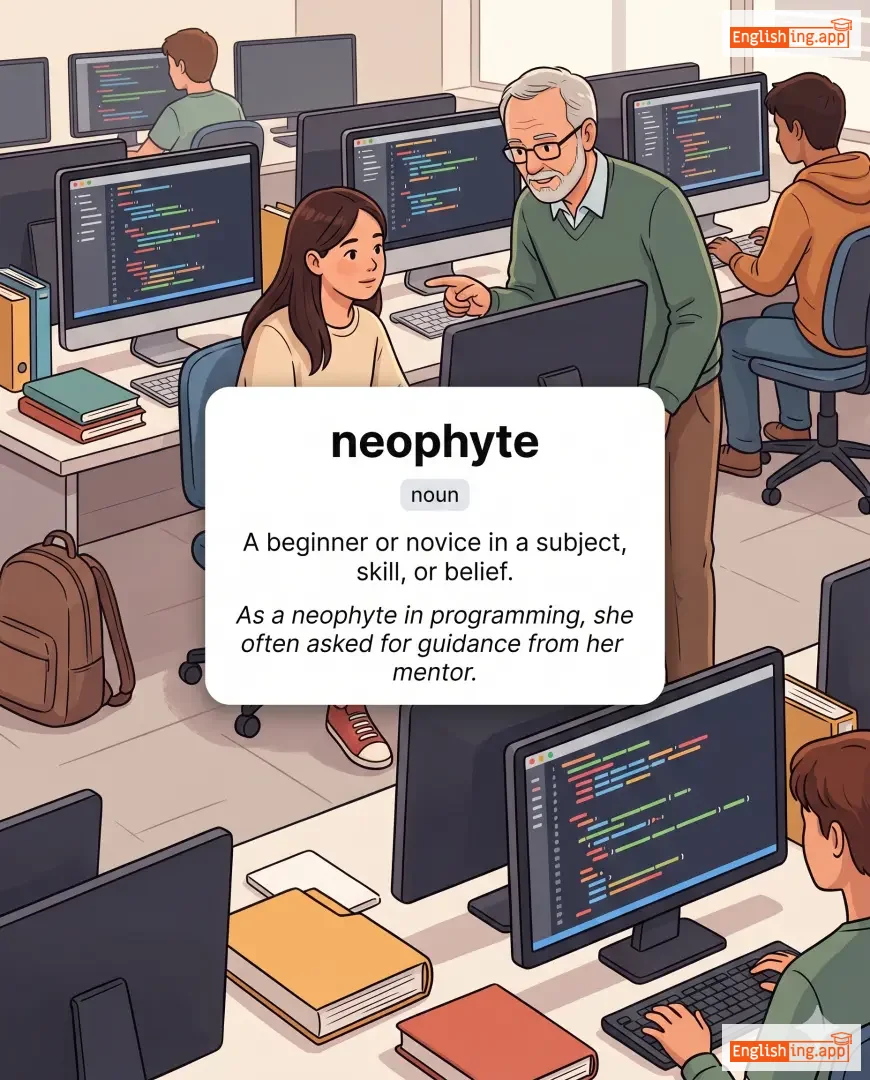
A beginner or novice in a subject, skill, or belief.
••••••
|
As a neophyte in programming, she often asked for guidance from her mentor. |
Будучи новичком в программировании, она часто просила советы у своего наставника.
Buduchi novichkom v programmirovanii, ona chasto prosila sovety u svoego nastavnika.
••••••
|
- •••••• | - •••••• | - •••••• |
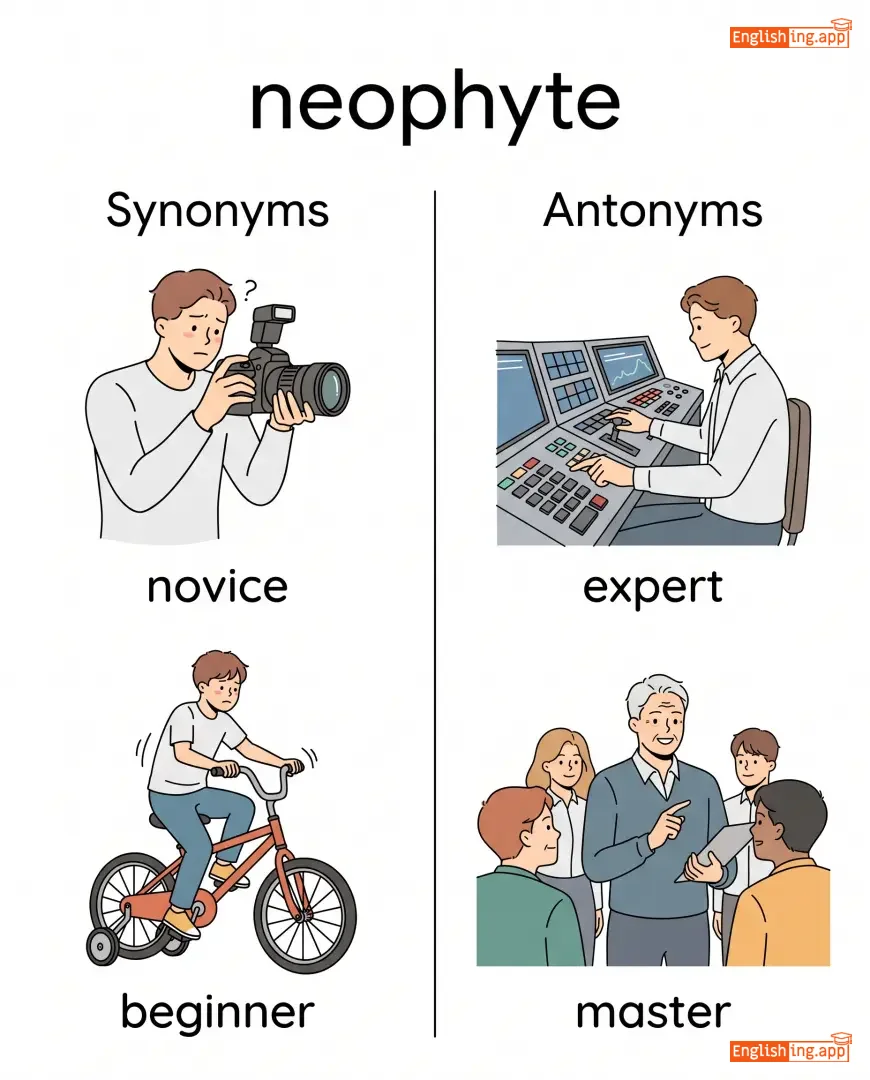
novice, beginner, newcomer, rookie, trainee
••••••
|
expert, master, veteran
••••••
|
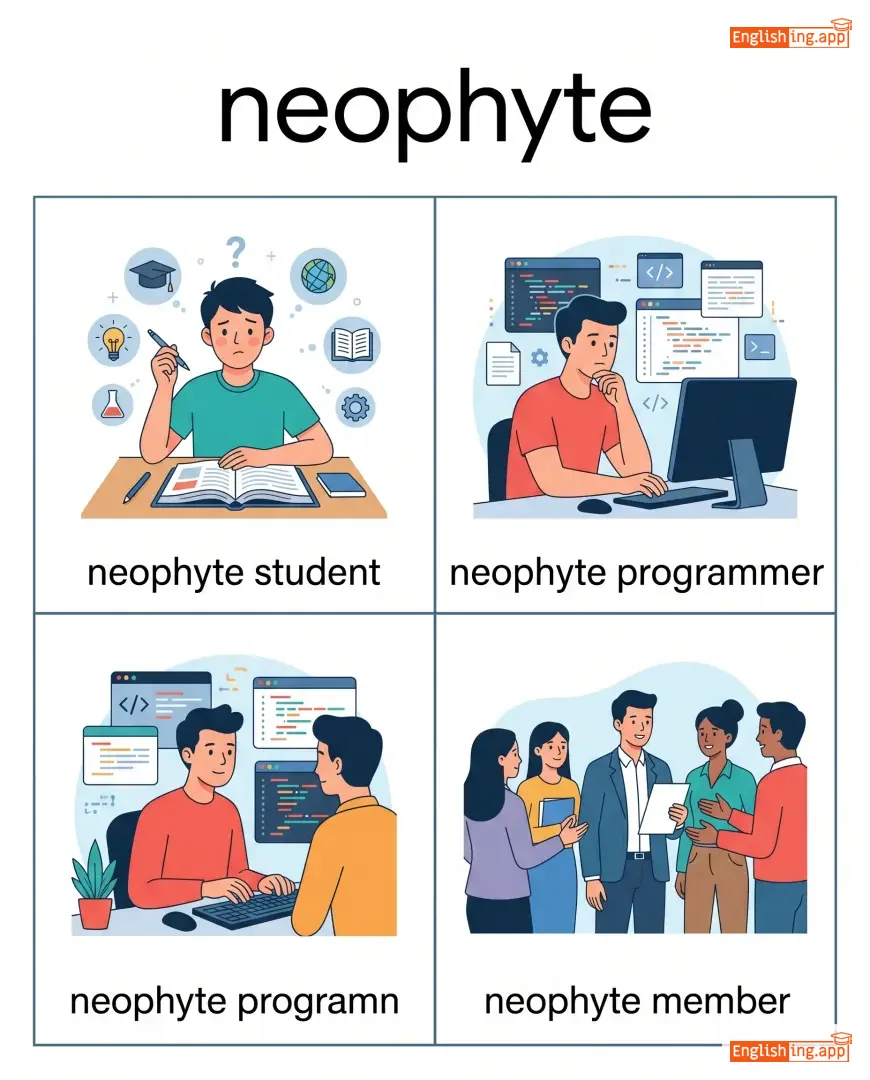
neophyte student, neophyte programmer, neophyte member
••••••
|
Neo означает новый + phyte означает растение → новичок — как новое растение, которое начинает расти.
••••••
|
|
#5855
🌿
|
/ˌniːoʊˈpeɪɡənɪzəm/
noun
(неопаганизм)
••••••
|
- •••••• |
неопаганизм
neopaganizm
••••••
|
- •••••• | - •••••• | - •••••• | - •••••• |
Modern religious movements influenced by or claiming to be derived from the various historical pagan beliefs of pre-modern Europe.
••••••
|
Neopaganism has gained popularity as people seek spiritual alternatives to mainstream religions. |
Неопаганизм приобрел популярность, так как люди ищут духовные альтернативы основным религиям.
Neopaganizm priobrels populyarnost', tak kak lyudi ishchut dukhovnye al'ternativy osnovnym religiyam.
••••••
|
- •••••• | - •••••• | - •••••• |
neo-pagan belief, pagan revival, nature worship, earth religion
••••••
|
Christianity, Islam, mainstream religion
••••••
|
rise of neopaganism, neopaganism practices, neopaganism beliefs
••••••
|
Neo означает новый + Paganism означает язычество → новая форма языческих верований
••••••
|
|
#5856
📖
|
/niˈɒlədʒi/
noun
(неоˈлɔʒи)
••••••
|
- •••••• |
использование новых слов или изучение их происхождения
ispol'zovaniye novykh slov ili izucheniye ikh proiskhozhdeniya
••••••
|
- •••••• | - •••••• | - •••••• | - •••••• |
The use of new words or the study of their origin.
••••••
|
The professor specialized in neology, studying the creation of modern slang.
Профессор специализировался на неологии, изучая создание современного сленга.
••••••
|
Профессор специализировался на неологии, изучая создание современного сленга.
Professor spetsializirovalsya na neologii, izuchaya sozdanie sovremennogo slenga.
••••••
|
- •••••• | - •••••• | - •••••• |
coinage, neologism, terminology, word-formation, linguistics
••••••
|
archaism, old usage, antiquated term
••••••
|
study of neology, field of neology, neology research
••••••
|
Neo означает новое + logia означает изучение → изучение новых слов = Неология
••••••
|
|
#5857
🆕
|
/niːˈɒlədʒɪzəm/
noun
(неологизм)
••••••
|
- •••••• |
неологизм
neologizm
••••••
|
- •••••• | - •••••• | - •••••• | - •••••• |
A newly coined word or expression.
••••••
|
The internet has given rise to many neologisms like 'selfie' and 'hashtag'. |
Интернет дал начало многим неологизмам, таким как 'селфи' и 'хэштег'.
Internet dal nachalo mnogim neologizmam, takim kak 'selfi' i 'kheshtheg'.
••••••
|
- •••••• | - •••••• | - •••••• |
new word, coinage, term, expression
••••••
|
archaic word, old term
••••••
|
neologism usage, coin a neologism, popular neologism
••••••
|
Neo = новое + logism = слово → новое слово
••••••
|
|
#5858
🪨
|
/ˌniːoʊˈlɪθɪk/
adjective
(неолитик)
••••••
|
- •••••• |
неолитический
neolitischeskiy
••••••
|
- •••••• | - •••••• | - •••••• | - •••••• |
Relating to the later part of the Stone Age, when ground or polished stone weapons and tools prevailed.
••••••
|
Neolithic communities began practicing agriculture and domesticating animals. |
Неолитические общества начали заниматься сельским хозяйством и одомашнивать животных.
Neoliticheskie obshchestva nachali zanimaćsya sel'skim khozyaystvom i odomashnivat' zhivotnykh.
••••••
|
- •••••• | - •••••• | - •••••• |
Stone Age, prehistoric, ancient, primitive
••••••
|
modern, contemporary
••••••
|
Neolithic tools, Neolithic period, Neolithic settlement
••••••
|
Neo = новый + Lithic = камень → Новый каменный век
••••••
|
|
#5859
🏛️
|
/niːˈɒkrəsi/
noun
(неократия)
••••••
|
- •••••• |
Правительство, возглавляемое неопытными или новыми чиновниками
Pravitel'stvo, vozglavlyaemoe neopitnymi ili novymi chinovnikami
••••••
|
- •••••• | - •••••• | - •••••• | - •••••• |
A government or leadership run by inexperienced or new officials.
••••••
|
The sudden revolution led to a neocracy with inexperienced leaders.
Внезапная революция привела к неократии с неопытными лидерами.
••••••
|
Внезапная революция привела к неократии с неопытными лидерами.
Vnezapnaya revolyutsiya privela k neokraty s neopitnymi liderami.
••••••
|
- •••••• | - •••••• | - •••••• |
new government, novice rule, inexperienced leadership, young administration
••••••
|
plutocracy, aristocracy
••••••
|
neocracy system, rise of neocracy, political neocracy
••••••
|
Neo = Новый + Cracy = Правительство → Правительство новых лидеров
••••••
|
|
#5860
📜
|
/ˌniːoʊˈlætɪn/
noun
(нео-латин)
••••••
|
- •••••• |
нео-латин
neo-latin
••••••
|
- •••••• | - •••••• | - •••••• | - •••••• |
The use of Latin language for scholarly, scientific, and literary purposes after the medieval period.
••••••
|
Many scientific names are derived from Neo-Latin. |
Многие научные названия происходят от нео-латинского.
Mnogie nauchnye nazvaniya proiskhodyat ot neo-latinskogo.
••••••
|
- •••••• | - •••••• | - •••••• |
modern Latin, scholarly Latin, scientific Latin, post-medieval Latin
••••••
|
vernacular, non-Latin languages
••••••
|
Neo-Latin literature, Neo-Latin texts, Neo-Latin terminology
••••••
|
Neo = новое, Latin = латинский язык → использование нового латинского языка
••••••
|
|
#5861
🧬
|
/ˌniːoʊˈdɑːrwɪnɪzəm/
noun
(нео-дарвинизм)
••••••
|
- •••••• |
нео-дарвинизм
neo-darvinizm
••••••
|
- •••••• | - •••••• | - •••••• | - •••••• |
A modern interpretation of Darwin's theory of evolution, integrating genetics and natural selection.
••••••
|
Neo-Darwinism combines Darwin’s theory of natural selection with modern genetics.
Нео-дарвинизм сочетает теорию естественного отбора Дарвина с современной генетикой.
••••••
|
Нео-дарвинизм сочетает теорию естественного отбора Дарвина с современной генетикой.
Neo-darvinizm sochetaet teoryyu estestvennogo otbora Darvina s sovremennoy genetiekoy.
••••••
|
- •••••• | - •••••• | - •••••• |
modern evolutionary synthesis, evolutionary biology, genetic Darwinism, evolutionary theory
••••••
|
creationism, intelligent design
••••••
|
neo-Darwinism theory, neo-Darwinism synthesis, neo-Darwinism approach
••••••
|
Neo означает новый + Дарвинизм = Новая интерпретация Дарвина
••••••
|
|
#5862
⚔️
|
/ˈnɛm.ə.sɪs/
noun
(немезис)
••••••
|
- •••••• |
враг / соперник
vrag / sopeerik
••••••
|
- •••••• | - •••••• | - •••••• | - •••••• |
A long-standing rival or an inescapable agent of downfall.
••••••
|
For years, he considered his colleague to be his nemesis. |
Годами он считал своего коллегу своим врагом.
Godami on schital svoego kollegu svoim vragom.
••••••
|
meet one's nemesis |
To encounter a rival or force that defeats you.
••••••
|
встретить своего врага
vstretit' svoego vraga
••••••
|
rival, adversary, foe, opponent, enemy
••••••
|
ally, friend, supporter
••••••
|
arch nemesis, old nemesis, lifelong nemesis, nemesis character
••••••
|
Немезис - это враг, который постоянно вас преследует.
••••••
|
|
#5863
🤝
|
/nɪˈɡoʊ.ʃi.eɪt/
verb
(вести переговоры)
••••••
|
- •••••• |
вести переговоры
vesti peregovory
••••••
|
negotiated
вел переговоры
••••••
|
negotiated
вел переговоры
••••••
|
negotiates
ведет переговоры
••••••
|
negotiating
ведя переговоры
••••••
|
To discuss something formally in order to reach an agreement.
••••••
|
They negotiated a fair deal with the supplier.
Они провели переговоры о справедливой сделке с поставщиком.
••••••
|
Они провели переговоры о справедливой сделке с поставщиком.
Oni proveli peregovory o spravedlivoy sdelke s postavshchikom.
••••••
|
negotiate a deal
вести переговоры о сделке
••••••
|
To bargain and reach an agreement.
••••••
|
вести переговоры о сделке
vesti peregovory o sdelke
••••••
|
bargain, discuss, mediate, arrange, settle
••••••
|
refuse, reject, decline
••••••
|
negotiate terms, negotiate peace, negotiate agreement, negotiate contract
••••••
|
Vesti peregovory = VESti + peregovory - Сидите и ведите переговоры.
••••••
|
|
#5864
💬
|
/nɪˈɡoʊ.ʃi.ə.bəl/
adjective
(негосиабл)
••••••
|
- •••••• |
договорной
dogovornoy
••••••
|
- •••••• | - •••••• | - •••••• | - •••••• |
Open to discussion or modification; capable of being bargained for.
••••••
|
The salary offered is negotiable. |
Предложенная зарплата договорная.
Predlozhennaya zarplata dogovornaya.
••••••
|
terms are negotiable |
Conditions can be discussed and modified.
••••••
|
условия обсуждаемы
usloviya obshchayemy
••••••
|
discussable, flexible, adjustable, bargainable
••••••
|
fixed, nonnegotiable, rigid
••••••
|
negotiable price, negotiable terms, negotiable salary, negotiable contract
••••••
|
Договорной означает, что условия можно обсудить или изменить.
••••••
|
|
#5865
🪶
|
/ˈnɛɡ.lɪ.dʒə.bəl/
adjective
(нэглиджибл)
••••••
|
- •••••• |
незначительный
neznachitel'nyy
••••••
|
- •••••• | - •••••• | - •••••• | - •••••• |
So small or unimportant as to be not worth considering; insignificant.
••••••
|
The cost of the error was negligible. |
Стоимость ошибки была незначительной.
Stoimost' oshibki byla neznačitel'noj.
••••••
|
- •••••• | - •••••• | - •••••• |
insignificant, trivial, minor, unimportant
••••••
|
significant, considerable, important
••••••
|
negligible amount, negligible impact, almost negligible, negligible risk
••••••
|
Negligible по-русски - незначительный, маленький или без значимости.
••••••
|
|
#5866
🧙♂️
|
/ˈnɛkrəˌmænsər/
noun
(некромансер)
••••••
|
- •••••• |
некромант
nekromancer
••••••
|
- •••••• | - •••••• | - •••••• | - •••••• |
a person who practices necromancy; a wizard or magician who claims to communicate with the dead
••••••
|
The villagers feared the old necromancer who lived at the edge of the forest.
Жители деревни боялись старого некроманта, который жил на краю леса.
••••••
|
Жители деревни боялись старого некроманта, который жил на краю леса.
Zhiteli derevni boyalis starogo nekromanta, kotoryi zhil na kraju lesa.
••••••
|
- •••••• | - •••••• | - •••••• |
sorcerer, magician, wizard, conjurer, occultist
••••••
|
priest, believer, realist
••••••
|
dark necromancer, powerful necromancer, evil necromancer, ancient necromancer
••••••
|
nekroMANSer = Некро + Мансер; представь старого джентльмена Sir Manser, который собирает души
••••••
|
|
#5867
⚠️
|
/ˈnɛɡlɪdʒəns/
noun
(неглигенс)
••••••
|
- •••••• |
небрежность
nebrezhnost
••••••
|
- •••••• | - •••••• | - •••••• | - •••••• |
Failure to take proper care in doing something, often resulting in damage or harm.
••••••
|
The accident was caused by the driver's negligence. |
Авария произошла из-за небрежности водителя.
Avariya proishla iz-za nebrezhnosti voditelya.
••••••
|
criminal negligence |
Serious neglect of duty or care that can be prosecuted as a crime.
••••••
|
криминальная небрежность
kriminal'naya nebrezhnost
••••••
|
carelessness, oversight, neglect, irresponsibility
••••••
|
care, diligence, attention
••••••
|
gross negligence, criminal negligence, negligence claim
••••••
|
Negligence = небрежность = небрежность вызывает ущерб.
••••••
|
|
#5868
👗
|
/ˌnɛɡlɪˈʒeɪ/
noun
(неглиже)
••••••
|
- •••••• |
легкий шелковый халат
legkiy shelkovyy khalat
••••••
|
- •••••• | - •••••• | - •••••• | - •••••• |
A woman's light dressing gown, often made of thin or silky material.
••••••
|
She wore a silk negligee before going to bed. |
Она носила шелковый халат перед тем, как лечь спать.
Ona nosila shelkovyy khalat pered tem, kak lech' spat'.
••••••
|
- •••••• | - •••••• | - •••••• |
nightgown, nightdress, lingerie, robe
••••••
|
coat, jacket
••••••
|
silk negligee, lace negligee, satin negligee
••••••
|
Negligee = Неглект + Же → легкий халат для отдыха.
••••••
|
|
#5869
😶🌫️
|
/nɪˈɡlɛktfʊl/
adjective
(нɪˈɡлɛктфʊл)
••••••
|
- •••••• |
небрежный
nebrezhnyy
••••••
|
- •••••• | - •••••• | - •••••• | - •••••• |
Failing to give proper care or attention.
••••••
|
The neglectful parent left the child alone for hours.
ðə nɪˈɡlɛktfʊl ˈpɛərənt лɛфт ðə тʃаɪлд əˈлоʊн фɔр аʊərз.
••••••
|
Небрежный родитель оставил ребенка одного на несколько часов.
Nebrezhnyy roditel' ostavil rebenka odnogo na neskol'ko chasov.
••••••
|
- •••••• | - •••••• | - •••••• |
careless, inattentive, irresponsible, thoughtless
••••••
|
careful, attentive, responsible
••••••
|
neglectful attitude, neglectful parent, neglectful behavior
••••••
|
Neglectful parent означает небрежный родитель.
••••••
|
|
#5870
😔
|
/nɪˈɡlɛkt/
verb
(неглект)
••••••
|
|
пренебрежение
prenebrezhene
••••••
|
neglected
неглектед
••••••
|
neglected
неглектед
••••••
|
neglects
неглектс
••••••
|
neglecting
неглектинг
••••••
|
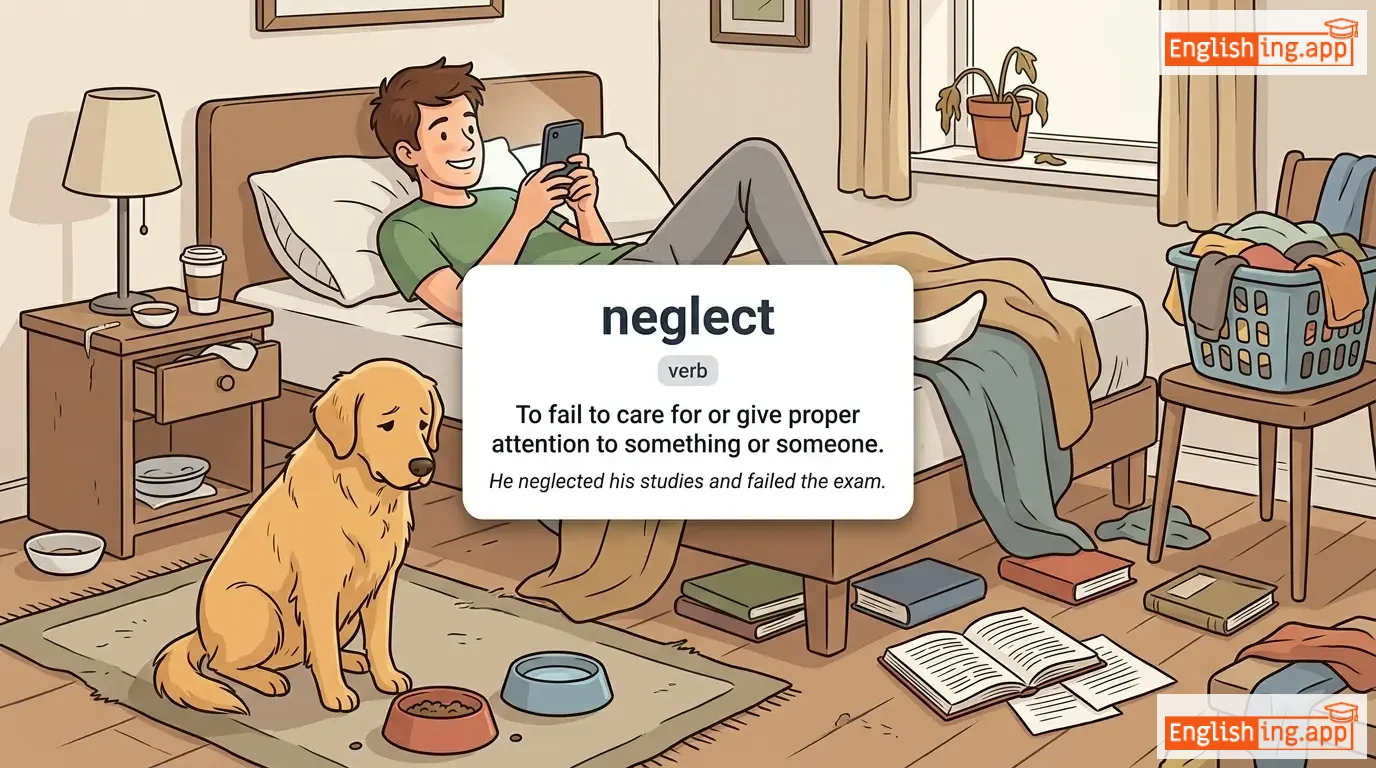
To fail to care for or give proper attention to something or someone.
••••••
|
He neglected his studies and failed the exam.
Он не заботился о своих учебных занятиях и провалил экзамен.
••••••
|
Он пренебрег учебой и не сдал экзамен.
On prenebreg ucheboy i ne sdal ekzamen.
••••••
|
neglect of duty
недооценка долга
••••••
|
Failure to fulfill one's responsibilities.
••••••
|
пренебрежение долгом
prenebrezhene dolgom
••••••
|
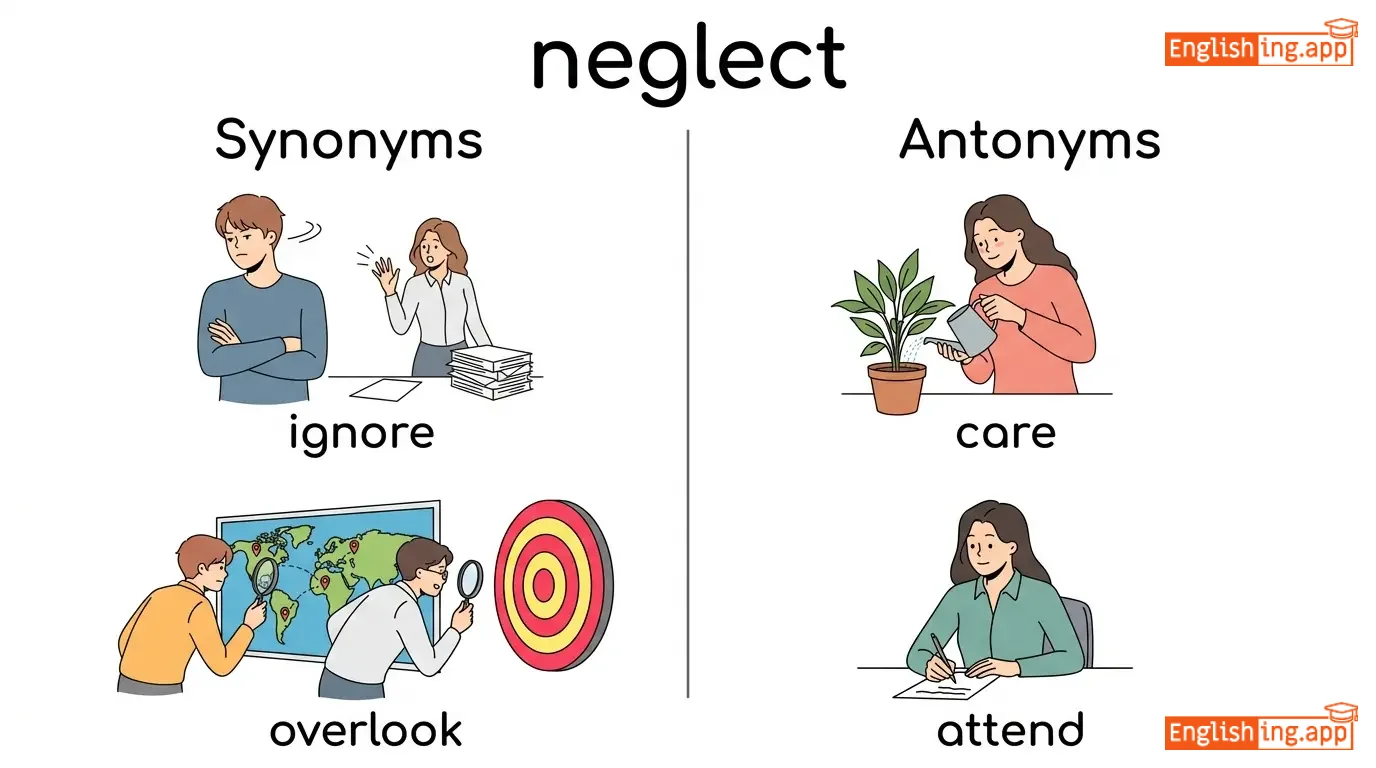
ignore, overlook, disregard, abandon, forget
••••••
|
care, attend, maintain
••••••
|
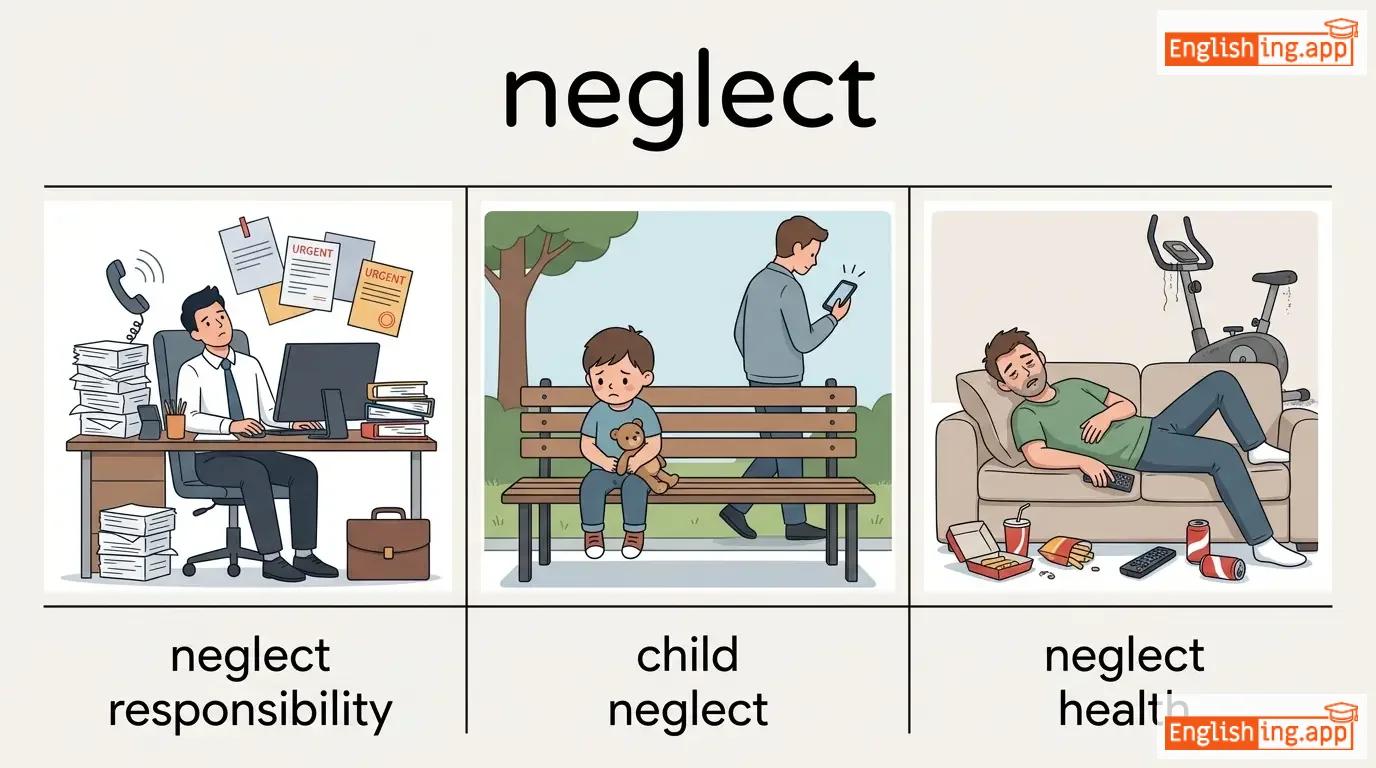
neglect responsibility, child neglect, neglect health, neglect work
••••••
|
Neglect означает negative + collect → ничего не собирать = пренебрежение.
••••••
|
|
#5871
🚫
|
/nɪˈɡeɪʃən/
noun
(нɪˈɡеɪʃн)
••••••
|
- •••••• |
отрицание
otricanie
••••••
|
- •••••• | - •••••• | - •••••• | - •••••• |
The act of denying something; the contradiction or absence of something.
••••••
|
The theory is built on the negation of traditional beliefs. |
Теория основана на отрицании традиционных убеждений.
Teoriya osnova na otritsanii traditsionnykh ubezhdeniy.
••••••
|
double negation |
A grammatical construction where two negatives are used, often to create a positive meaning.
••••••
|
двойное отрицание
dvoinoe otricanie
••••••
|
denial, contradiction, rejection, invalidation, refusal
••••••
|
affirmation, confirmation, acceptance
••••••
|
negation of truth, complete negation, logical negation, double negation
••••••
|
Negation = negative + action = отрицание чего-то.
••••••
|
|
#5872
🚫
|
/nɪˈɡeɪt/
verb
••••••
|
|
- •••••• |
negated
••••••
|
negated
••••••
|
negates
••••••
|
negating
••••••
|
To cancel out or make ineffective; to deny the truth of something.
••••••
|
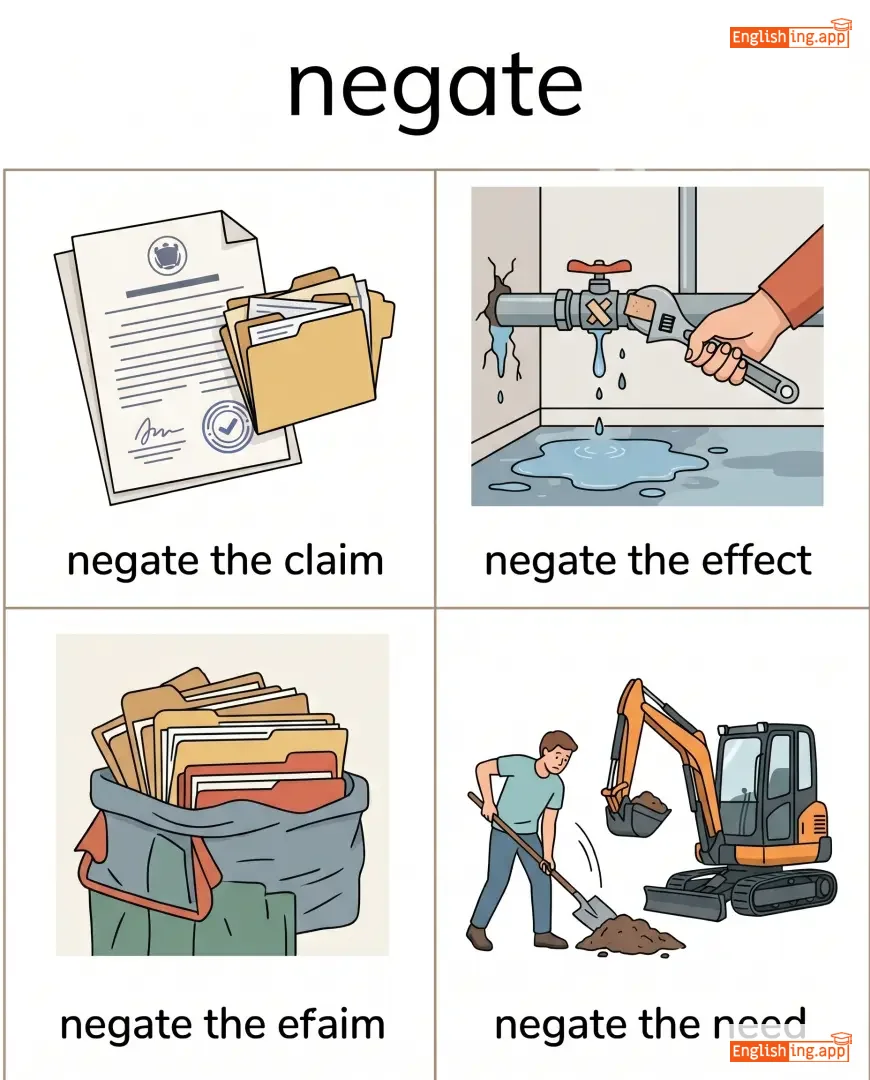
The new evidence will negate the claims made earlier. |
- •••••• |
negate the effect |
To cancel or reduce the impact of something.
••••••
|
- •••••• |
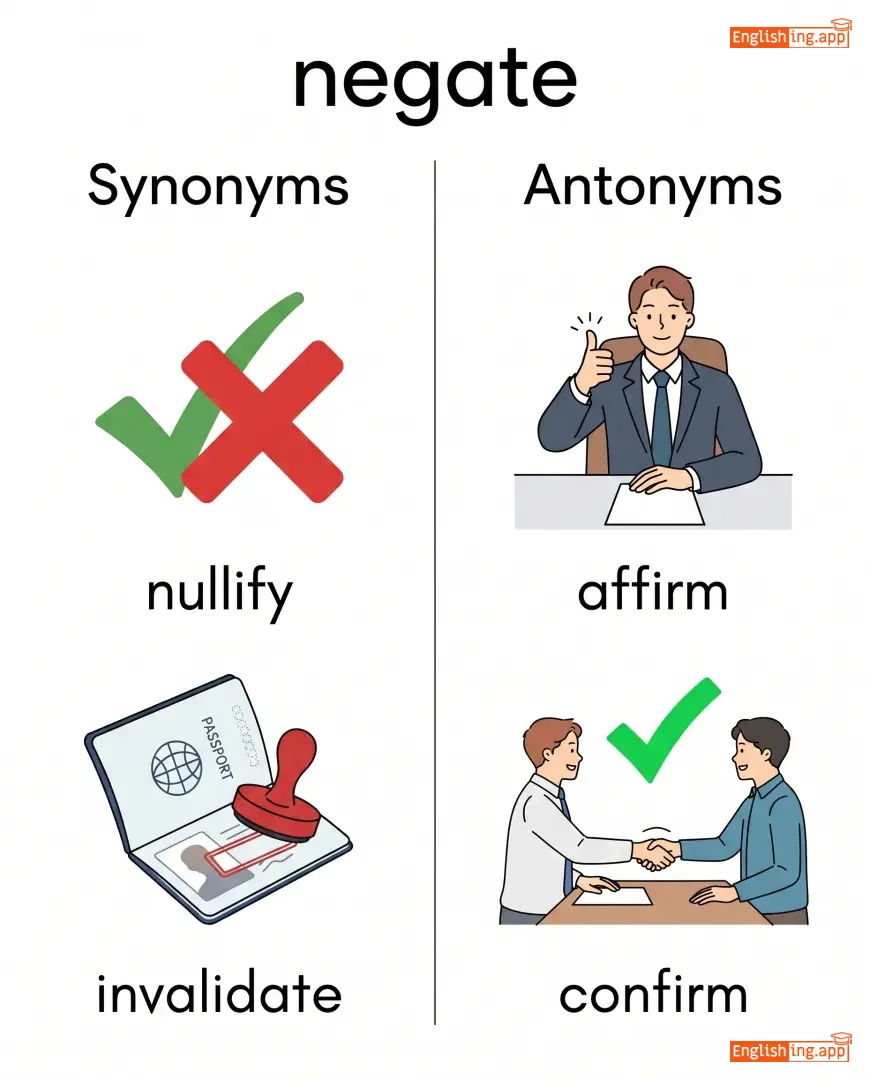
nullify, invalidate, deny, cancel, counteract
••••••
|
affirm, confirm, validate
••••••
|
negate the claim, negate the effect, negate the need, negate responsibility
••••••
|
No •••••• |
|
#5873
😈
|
/nɪˈfɛəriəs/
adjective
(нэфэриас)
••••••
|
- •••••• |
злой, преступный или морально плохой
zloy, prestupnyy ili moral'no plokhoy
••••••
|
- •••••• | - •••••• | - •••••• | - •••••• |
Wicked, criminal, or morally bad.
••••••
|
The police uncovered a nefarious plot to cheat investors. |
Полиция раскрыла зловещий заговор, чтобы обмануть инвесторов.
Politsiya raskryla zloveshchiy zagovor, chtoby obmanut' investorov.
••••••
|
- •••••• | - •••••• | - •••••• |
wicked, evil, villainous, immoral, corrupt
••••••
|
honorable, noble, virtuous
••••••
|
nefarious activities, nefarious scheme, nefarious plot, nefarious character
••••••
|
Nefarious звучит как ‘нефар’ – что-то плохое, нехорошее.
••••••
|
|
#5874
🤲
|
/ˈniːdi/
adjective
(ниди)
••••••
|
- •••••• |
нуждающийся
nuzhdayushchiesya
••••••
|
- •••••• | - •••••• | - •••••• | - •••••• |
Lacking the basic necessities of life; poor.
••••••
|
The charity provides food and shelter for needy families. |
Благотворительность предоставляет еду и кров нуждающимся семьям.
Blagotvoritel'nost' predostavlyayet edu i krov nuzhdayushchimsya sem'yam.
••••••
|
- •••••• | - •••••• | - •••••• |
poor, impoverished, destitute, underprivileged
••••••
|
wealthy, rich, affluent
••••••
|
needy people, needy families, help the needy, support the needy
••••••
|
Needy напоминает ‘нуждающийся’ в русском, что означает тех, кто нуждается в помощи.
••••••
|
|
#5875
🧵
|
/ˈniːdəlwɜːrk/
noun
(ни́длворк)
••••••
|
- •••••• |
работа с иглой, вышивка
rabota s igloy, vishivka
••••••
|
- •••••• | - •••••• | - •••••• | - •••••• |
The craft of sewing, embroidery, or knitting done with a needle.
••••••
|
Her grandmother taught her the art of needlework.
Ее бабушка научила ее искусству работы с иглой.
••••••
|
Ее бабушка научила ее искусству работы с иглой.
Eyo babushka nauchila yeye iskusstvy raboty s igloy.
••••••
|
- •••••• | - •••••• | - •••••• |
embroidery, sewing, stitching, knitting, handiwork
••••••
|
machine work, mass production
••••••
|
fine needlework, traditional needlework, needlework skills, needlework pattern
••••••
|
Needlework – это работа с иглой, то есть вышивка или шитье.
••••••
|
|
#5876
🍑
|
/ˈnɛktəriːn/
noun
(нектарин)
••••••
|
- •••••• |
нектарин (сорт персика с гладкой кожурой)
nektarin
••••••
|
- •••••• | - •••••• | - •••••• | - •••••• |
A smooth-skinned variety of peach.
••••••
|
She bought a basket of fresh nectarines from the market. |
Она купила корзину с свежими нектаринами на рынке.
Ona kupila korzinu s svezhimi nektarinami na rynke.
••••••
|
- •••••• | - •••••• | - •••••• |
peach, fruit, drupe, stone fruit
••••••
|
vegetable, meat
••••••
|
fresh nectarine, ripe nectarine, nectarine tree, nectarine juice
••••••
|
Nektarin напоминает слово 'нектар', что делает его сладким и сочным фруктом.
••••••
|
|
#5877
🍯
|
/ˈnɛktər/
noun
(нектар)
••••••
|
|
нектар
nektar
••••••
|
- •••••• | - •••••• | - •••••• | - •••••• |
a sweet liquid produced by flowers and collected by bees; in mythology, the drink of the gods
••••••
|
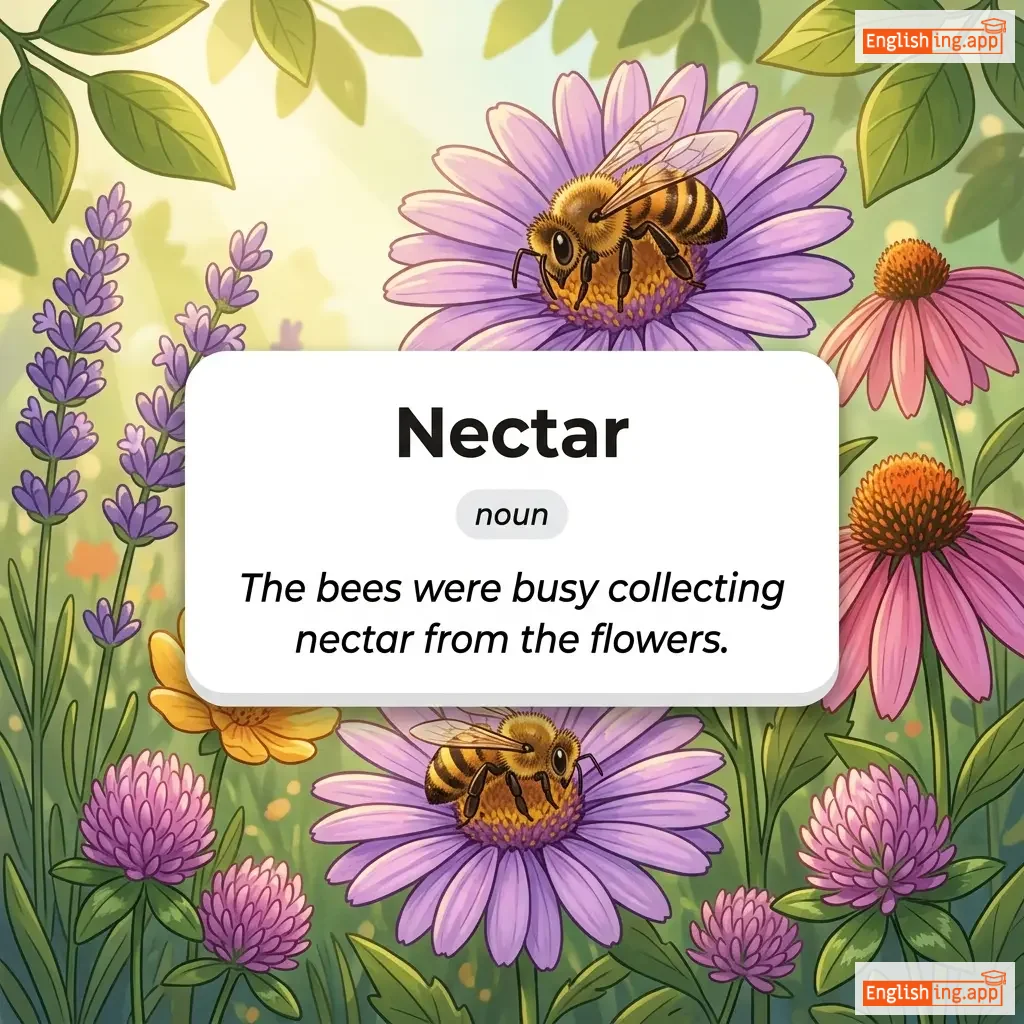
The bees were busy collecting nectar from the flowers. |
Пчелы были заняты сбором нектара с цветов.
Pchely byli zanyaty sbornom nektara s tsvetov.
••••••
|
nectar of the gods |
something considered extremely delicious or delightful
••••••
|
нектар богов
nektar bogov
••••••
|
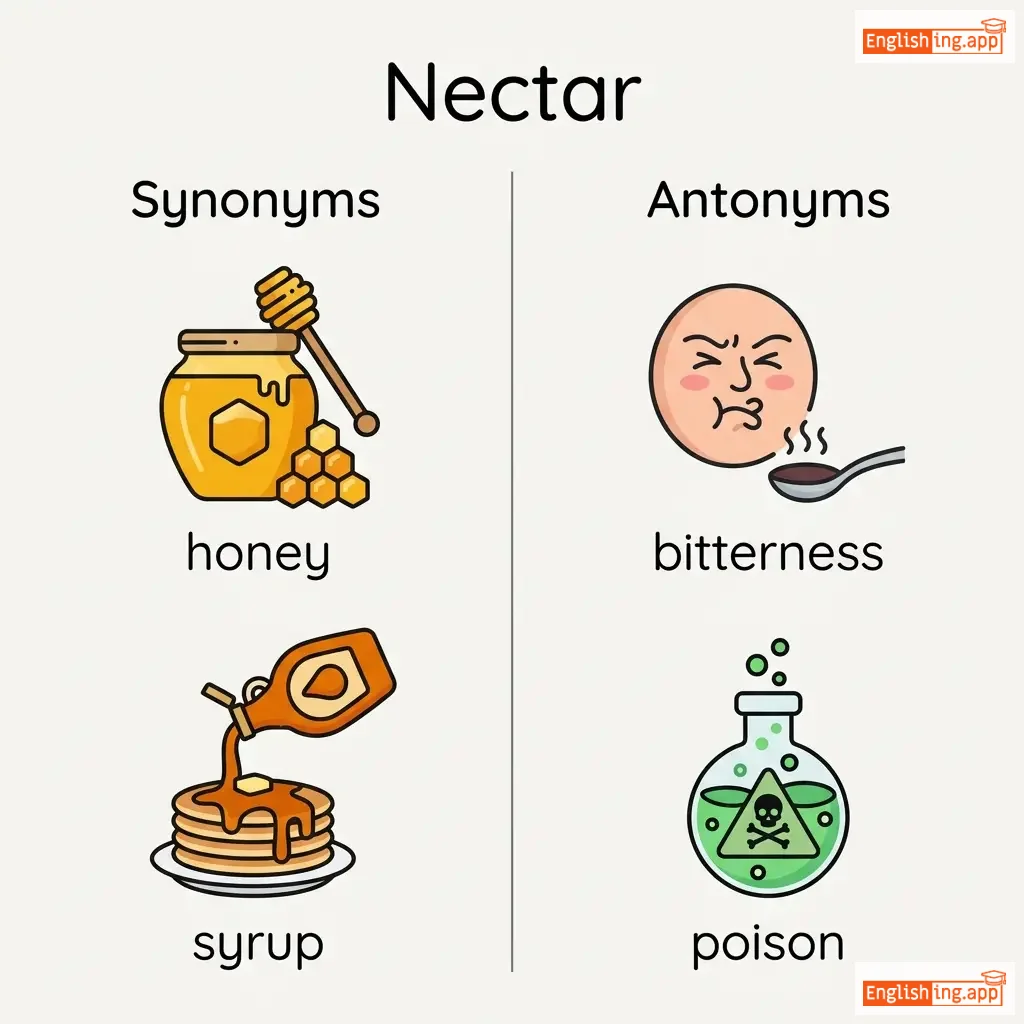
honey, syrup, ambrosia, sweetness, juice
••••••
|
bitterness, poison, toxin
••••••
|
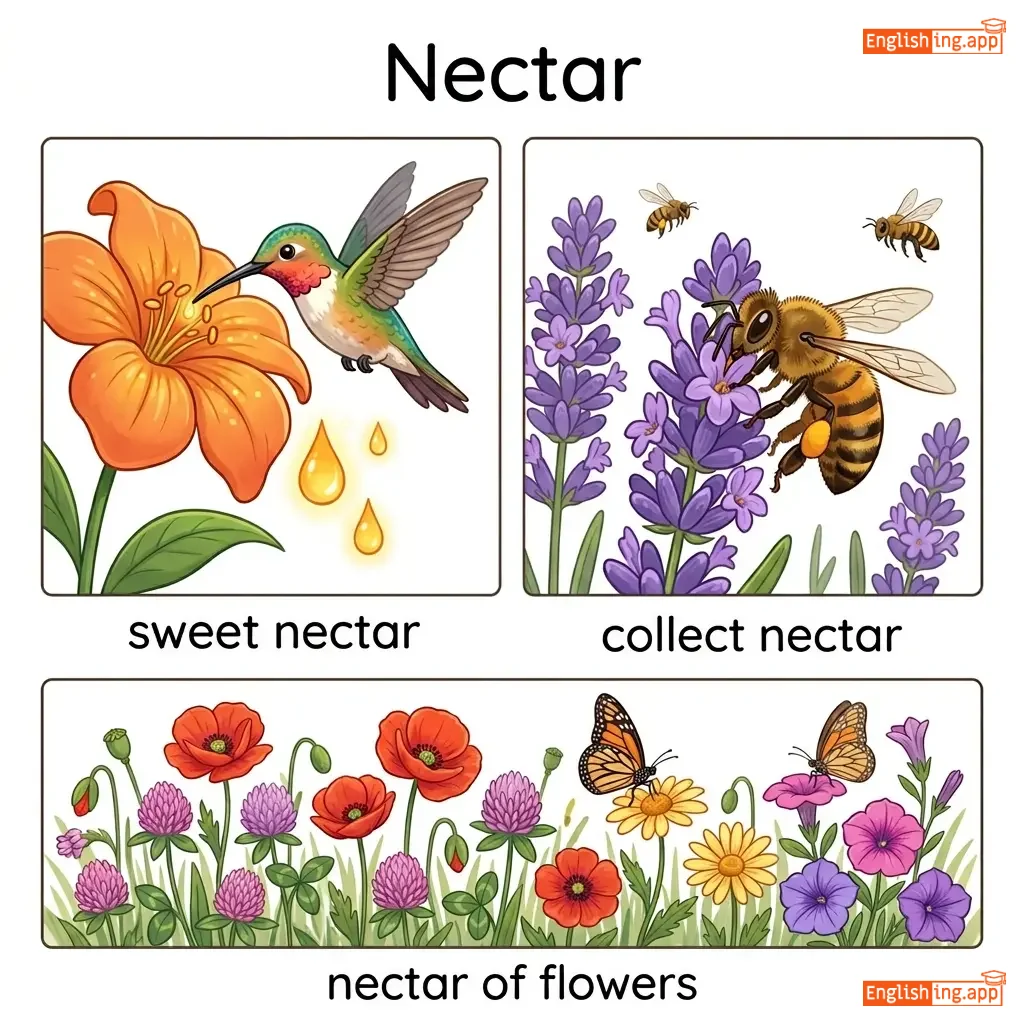
sweet nectar, collect nectar, nectar of flowers, nectar drink
••••••
|
Нектар - это сладкое вещество, которое пчелы собирают с цветов и что считается напитком богов.
••••••
|
|
#5878
🩸
|
/nɛˈkroʊsɪs/
noun
(некрозис)
••••••
|
- •••••• |
некроз
nekroz
••••••
|
- •••••• | - •••••• | - •••••• | - •••••• |
the death of body tissue due to disease, injury, or lack of blood supply
••••••
|
The doctor explained that the patient’s wound showed signs of necrosis. |
Врач объяснил, что рана пациента показала признаки некроза.
Vrach obyasnil, chto rana patsienta pokazala priznak nekroza.
••••••
|
- •••••• | - •••••• | - •••••• |
tissue death, gangrene, decay, degeneration
••••••
|
growth, regeneration, healing
••••••
|
tissue necrosis, necrosis of the skin, necrosis caused by infection, bone necrosis
••••••
|
Некроз = Некро (смерть) + ос (состояние) - Состояние мертвых тканей.
••••••
|
|
#5879
⚰️
|
/nəˈkrɒpəlɪs/
noun
(некрополь)
••••••
|
- •••••• |
некрополь
nekropol
••••••
|
- •••••• | - •••••• | - •••••• | - •••••• |
a large ancient cemetery with elaborate tombs
••••••
|
The archaeologists discovered artifacts in the necropolis of the ancient city. |
Археологи обнаружили артефакты на некрополе древнего города.
Arheologi obnaruzhili artefakty na nekropole drevnego goroda.
••••••
|
- •••••• | - •••••• | - •••••• |
cemetery, graveyard, burial ground, catacomb
••••••
|
city, town, village
••••••
|
ancient necropolis, vast necropolis, Egyptian necropolis, Roman necropolis
••••••
|
Necro означает мертвые + polis означает город, город мертвых — некрополь.
••••••
|
|
#5880
🔮
|
/ˈnɛkrəˌmænsi/
noun
(некромантия)
••••••
|
- •••••• |
некромантия
nekromantiya
••••••
|
- •••••• | - •••••• | - •••••• | - •••••• |
the practice of communicating with the dead, often to predict the future
••••••
|
Ancient texts described rituals of necromancy performed by priests. |
Древние тексты описывают ритуалы некромантии, проводимые священниками.
Drevnie teksty opisyvayut ritualy nekromantii, provodimye svyashchennikami.
••••••
|
- •••••• | - •••••• | - •••••• |
sorcery, witchcraft, black magic, occultism, divination
••••••
|
science, rationalism, realism
••••••
|
ancient necromancy, dark necromancy, practice of necromancy, art of necromancy
••••••
|
Некро означает мертвый, а мансия - магия, то есть магия мертвых, некромантия.
••••••
|
Vocabulary Quiz
Test your vocabulary by matching words with their translations or meanings.
Login to take the quiz
Comments (0)
Share your thoughts and join the discussion.
Join the discussion by logging in
Login to CommentNo comments yet
Be the first to share your thoughts!