

Обновитесь для доступа ко всему словарю
Получите неограниченный доступ ко всем словам с подпиской Pro
Обновить до ProПеревод
Прошедшее
Причастие прошедшего времени
Третье лицо единственного числа
Герундий
Значение
Пример предложения
Перевод примера предложения
Синонимы
Антонимы
Коллокации
Мнемоника
Swipe left or right, or use the buttons. Tap image to zoom.
Обновитесь для доступа ко всем предложениям
Получите неограниченный доступ ко всем предложениям с подпиской Pro
Обновить до ProПеревод примера предложения
Слово
Lesson 213Lesson 213 - Переключатель маски
|
Эмодзи
|
Слово | Images | Перевод | Прошедшее | Причастие прошедшего времени | Третье лицо единственного числа | Герундий | Значение | Пример предложения | Перевод примера предложения | Пример выражения | Значение примера выражения | Перевод примера выражения | Синонимы | Антонимы | Коллокации | Мнемоника |
|---|---|---|---|---|---|---|---|---|---|---|---|---|---|---|---|---|---|
|
#6360
🏛️
|
/pəˈtrɪʃən/
noun, adjective
(патриций)
••••••
|
- •••••• |
патриций
patritsiy
••••••
|
- •••••• | - •••••• | - •••••• | - •••••• |
A person of noble rank or high social standing; relating to aristocracy.
••••••
|
The patrician families of Rome wielded great power in politics. |
Патрицианские семьи Рима имели огромное влияние в политике.
Patritsianskie sem'i Rima imeli ogromnoe vliyanie v politike.
••••••
|
- •••••• | - •••••• | - •••••• |
aristocrat, noble, elite, highborn, lord
••••••
|
commoner, plebeian, peasant
••••••
|
patrician family, patrician class, patrician background, Roman patrician
••••••
|
Патриций - 'Пат' = род + 'риций' = аристократ
••••••
|
|
#6361
💰
|
/peɪˈiː/
noun
(пэйи)
••••••
|
- •••••• |
получатель
poluchatel
••••••
|
- •••••• | - •••••• | - •••••• | - •••••• |
A person to whom money is paid or is to be paid.
••••••
|
The payee must sign the check before cashing it. |
Получатель должен подписать чек перед его обналичиванием.
Poluchatel' dolzhen podpisat' chek pered ego obnalichivaniem.
••••••
|
- •••••• | - •••••• | - •••••• |
recipient, beneficiary, receiver, claimant
••••••
|
payer, debtor
••••••
|
payee account, payee details, check payee
••••••
|
Payee означает получатель – человек, который получает деньги, это и есть payee.
••••••
|
|
#6362
⛺
|
/pəˈvɪliən/
noun
(павильон)
••••••
|
- •••••• |
павильон
pavilyon
••••••
|
- •••••• | - •••••• | - •••••• | - •••••• |
A large tent or temporary building, often used for events or exhibitions.
••••••
|
The wedding reception was held in a decorated pavilion. |
Свадебный приём прошёл в украшенном павильоне.
Svadebnyy priyom proshyol v ukrashennom pavilyone.
••••••
|
- •••••• | - •••••• | - •••••• |
marquee, tent, hall, shelter
••••••
|
open space, outdoors
••••••
|
sports pavilion, exhibition pavilion, wedding pavilion
••••••
|
Pavilion — это павильон, свадьба и павильон вместе!
••••••
|
|
#6363
🥀
|
/ˈpɔːpərɪzəm/
noun
(пауперизм)
••••••
|
- •••••• |
бедность
bednost
••••••
|
- •••••• | - •••••• | - •••••• | - •••••• |
The state of being extremely poor.
••••••
|
The country struggled with rising pauperism in the 19th century. |
Страна боролась с растущей бедностью в XIX веке.
Strana borolas' s rastushchey bednost'yu v XIX veke.
••••••
|
- •••••• | - •••••• | - •••••• |
poverty, destitution, deprivation, penury
••••••
|
wealth, prosperity, affluence
••••••
|
extreme pauperism, rising pauperism, fight pauperism
••••••
|
Pauperism - это бедность, где 'pauper' означает бедняка.
••••••
|
|
#6364
🧑🦲
|
/ˈpɔːpər/
noun
(пау́пер)
••••••
|
- •••••• |
нищенствующий
nishchentsvuyushchiy
••••••
|
- •••••• | - •••••• | - •••••• | - •••••• |
A very poor person.
••••••
|
The pauper begged for food on the street corner. |
Нищенствующий просил еду на углу улицы.
Nishchentsvuyushchiy prosil yedu na uglu ulitsy.
••••••
|
from prince to pauper |
A fall from wealth to poverty.
••••••
|
от принца до нищего
ot printsa do nishchego
••••••
|
beggar, destitute, indigent, needy
••••••
|
rich, wealthy, affluent
••••••
|
pauper's grave, poor pauper, pauper class
••••••
|
Pauper означает нищий – если у тебя нет 'pocket' (карман), ты паупер!
••••••
|
|
#6365
👨🦲
|
/ˈpɔːntʃi/
adjective
(paun-chi)
••••••
|
- •••••• |
с животом
s zhivotom
••••••
|
- •••••• | - •••••• | - •••••• | - •••••• |
Having a large or protruding belly.
••••••
|
The paunchy man struggled to button his shirt. |
Толстяк с трудом застегивал свою рубашку.
Tolstyak s trudom zastegival svoyu rubashku.
••••••
|
- •••••• | - •••••• | - •••••• |
potbellied, corpulent, chubby, obese
••••••
|
slim, lean, fit
••••••
|
paunchy figure, paunchy man, paunchy look
••••••
|
Paunchy означает с животом – представьте себе большой живот!
••••••
|
|
#6366
⚠️
|
/ˈpɔːsɪti/
noun
(посити)
••••••
|
|
нехватка / дефицит
nekhvatka / defitsit
••••••
|
- •••••• | - •••••• | - •••••• | - •••••• |
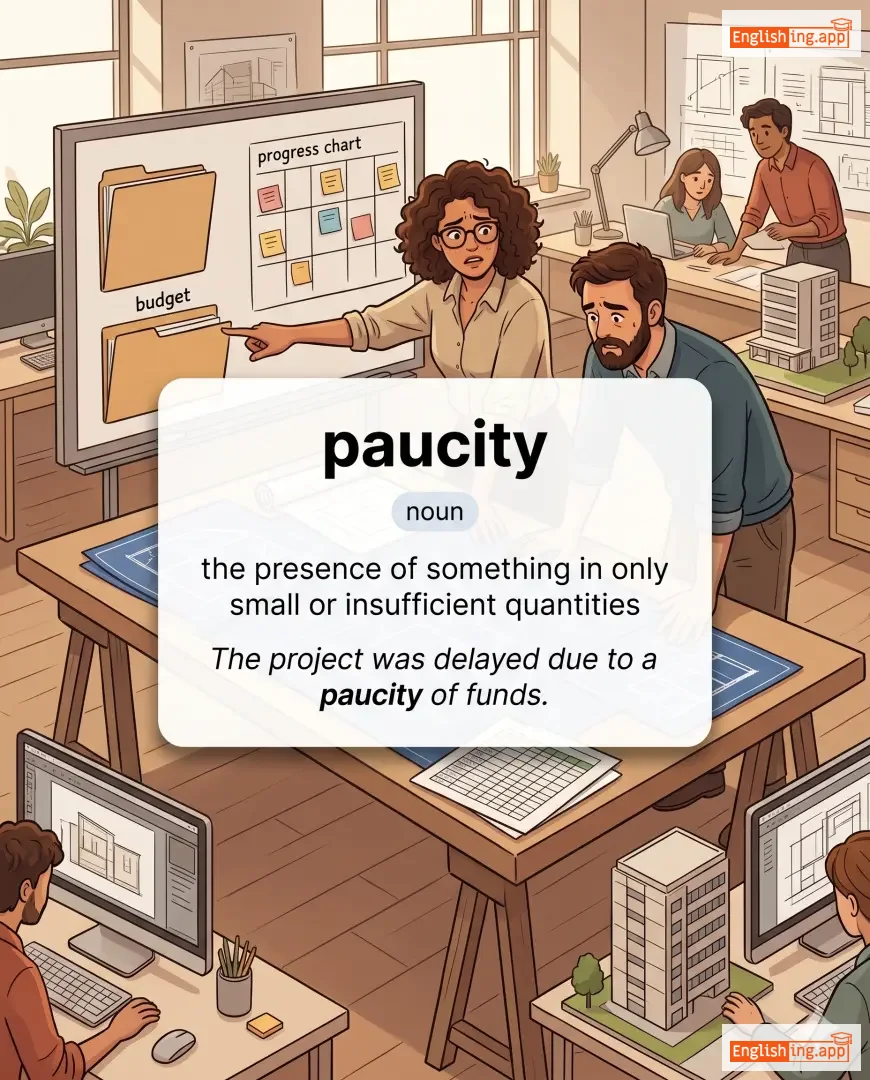
the presence of something in only small or insufficient quantities
••••••
|
The project was delayed due to a paucity of funds. |
Проект был отложен из-за нехватки средств.
Proyekt byl otlozhen iz-za nekhvatki sredstv.
••••••
|
- •••••• | - •••••• | - •••••• |
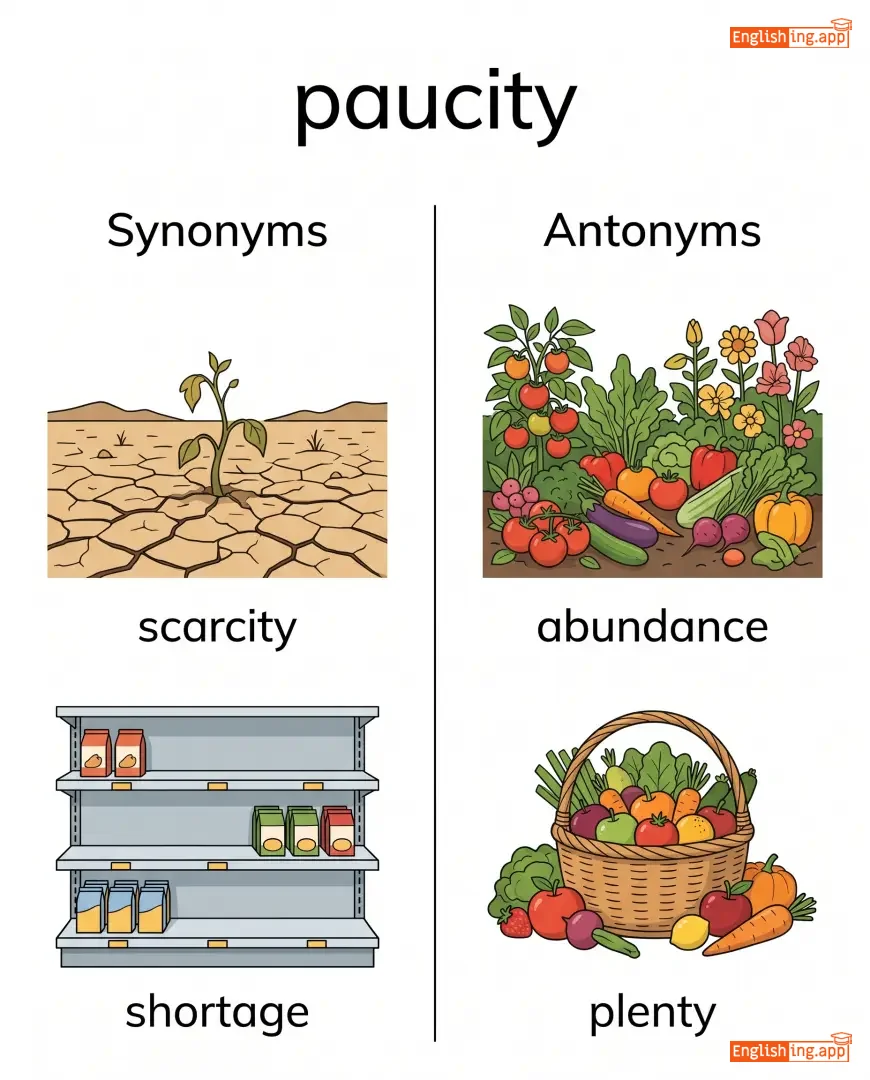
scarcity, shortage, lack, dearth, insufficiency
••••••
|
abundance, plenty, surplus
••••••
|
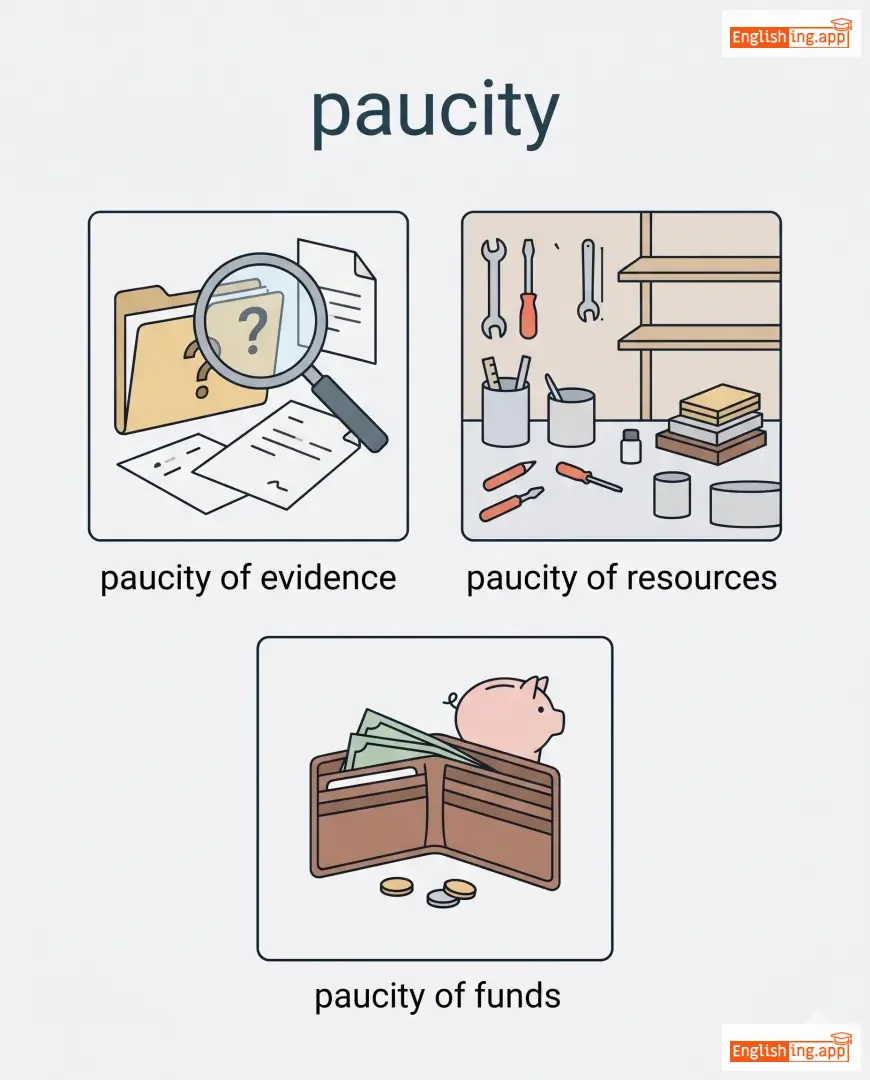
paucity of evidence, paucity of resources, paucity of funds, general paucity
••••••
|
Pau означает немного, а в городе, где что-то не хватает, это называется paucity.
••••••
|
|
#6367
🌧️
|
/ˈpætər/
verb
(пэттер)
••••••
|
- •••••• |
издавать повторяющийся звук лёгкого постукивания / быстро говорить механическим способом
izdavat' povtoryayushchiesya zvuki lyogkogo postukivaniya / bystro govorit' mekhanicheskim sposobom
••••••
|
pattered
пэттерд
••••••
|
pattered
пэттерд
••••••
|
patters
пэттерс
••••••
|
pattering
пэттеринг
••••••
|
to make a repeated light tapping sound; to talk quickly in a rehearsed or mechanical way
••••••
|
Rain pattered softly on the window.
Дождь тихо капал на окно.
••••••
|
Дождь тихо капал на окно.
Dozhd' tikho kapal na okno.
••••••
|
patter of little feet
шаги маленьких ног
••••••
|
the sound of small children walking or running around
••••••
|
звук маленьких шагов или бега
zvuk malenkikh shagov ili bega
••••••
|
tap, drum, beat, chatter, babble
••••••
|
silence, quiet
••••••
|
rain patter, patter of rain, patter of feet, patter speech
••••••
|
Patter означает постукивание – вспомни звук дождя.
••••••
|
|
#6368
👨👦
|
/ˌpætrəˈnɪmɪk/
noun
(патронимический)
••••••
|
- •••••• |
патронимическое имя
patronimicheskoe imya
••••••
|
- •••••• | - •••••• | - •••••• | - •••••• |
a name derived from the name of a father or ancestor
••••••
|
In many cultures, surnames are patronymic in origin. |
Во многих культурах фамилии происходят от патронимических имен.
Vo mnogikh kul'turakh familii proiskhodyat ot patronimicheskikh imen.
••••••
|
- •••••• | - •••••• | - •••••• |
surname, family name, lineage name, ancestral name
••••••
|
given name, forename
••••••
|
patronymic tradition, patronymic system, patronymic naming, patronymic form
••••••
|
Patro означает отец, нмик означает имя: патронимическое имя - имя отца.
••••••
|
|
#6369
😏
|
/ˈpeɪtrənaɪzɪŋ/
adjective
(пэйтронайзинг)
••••••
|
- •••••• |
снисходительный
sniskhoditel'nyy
••••••
|
- •••••• | - •••••• | - •••••• | - •••••• |
showing kindness that is perceived as condescending or superior
••••••
|
His patronizing tone offended the audience. |
Его снисходительный тон оскорбил аудиторию.
Ego sniskhoditel'nyy ton oskorbil auditoriyu.
••••••
|
- •••••• | - •••••• | - •••••• |
condescending, superior, snobbish, disdainful
••••••
|
respectful, humble, modest
••••••
|
patronizing smile, patronizing tone, patronizing manner, sound patronizing
••••••
|
‘Patron’ и ‘izing’ показывают доброту с оттенком превосходства.
••••••
|
|
#6370
🛍️
|
/ˈpeɪtrənaɪz/
verb
••••••
|
|
- •••••• |
patronized
••••••
|
patronized
••••••
|
patronizes
••••••
|
patronizing
••••••
|
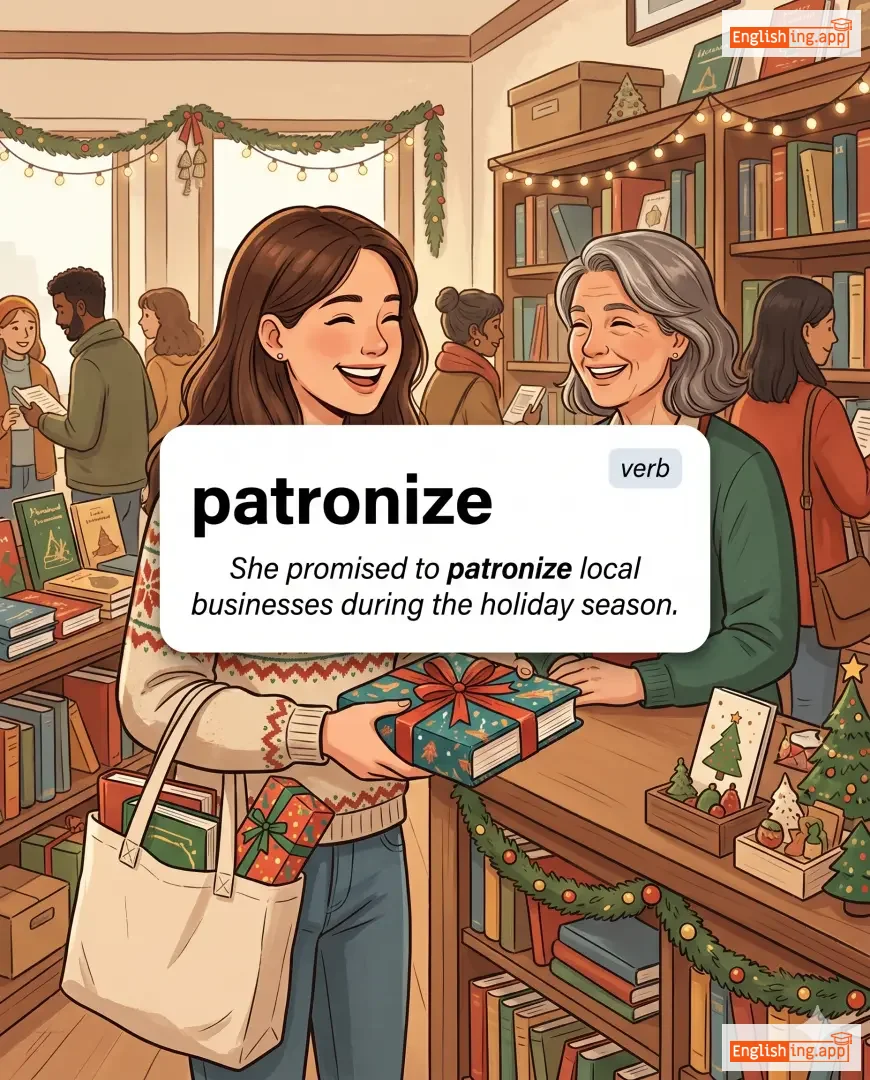
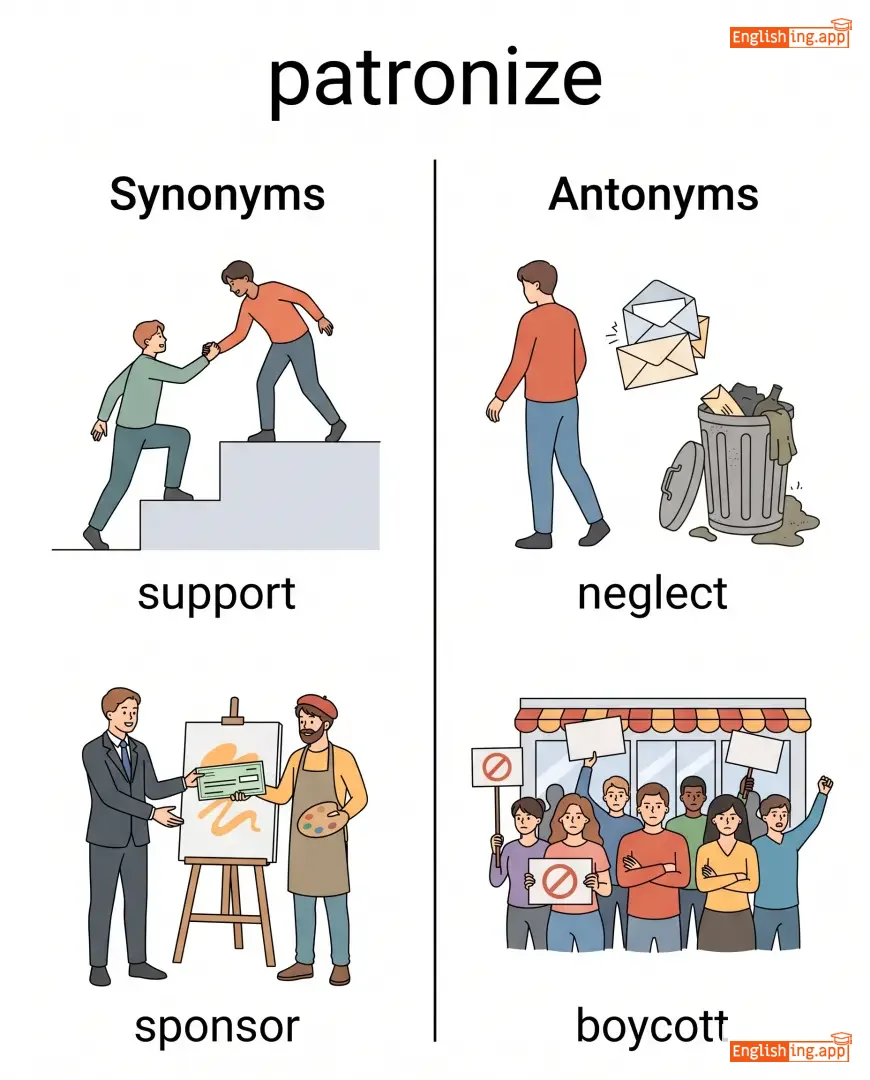
to support or sponsor; to treat someone with apparent kindness that betrays a sense of superiority; to be a regular customer of a business
••••••
|
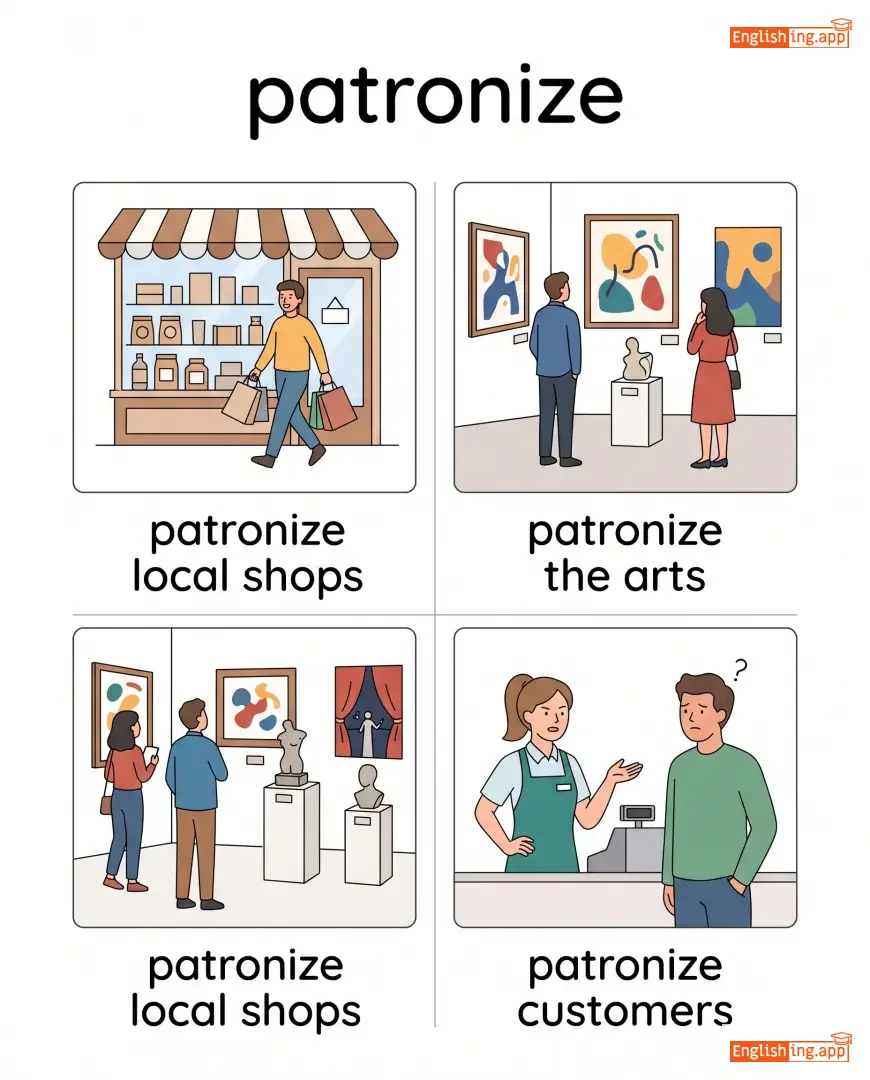
She promised to patronize local businesses during the holiday season. |
- •••••• |
patronize someone |
to speak or behave towards someone in a way that seems friendly but shows a feeling of superiority
••••••
|
- •••••• |
support, sponsor, condescend, frequent, promote
••••••
|
neglect, boycott, ignore
••••••
|
patronize local shops, patronize the arts, patronize customers, patronize someone
••••••
|
No •••••• |
|
#6371
❤️🇧🇩
|
/ˈpeɪtriətɪzəm/
noun
(пэтриотизм)
••••••
|
|
патриотизм
patriotizm
••••••
|
- •••••• | - •••••• | - •••••• | - •••••• |
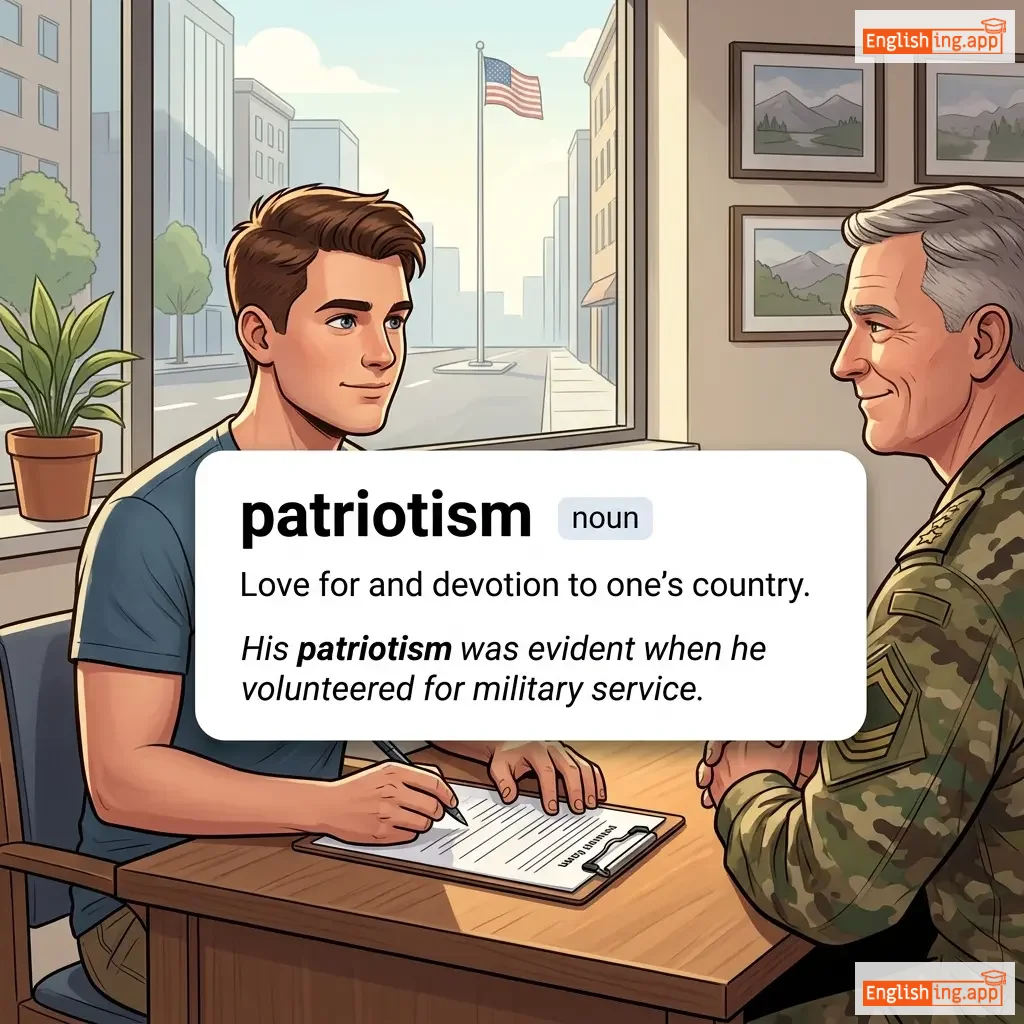
Love for and devotion to one's country.
••••••
|
His patriotism was evident when he volunteered for military service. |
Его патриотизм был очевиден, когда он добровольно записался на военную службу.
Ego patriotizm byl ocheviden, kogda on dobrovol'no zapisalsya na voyennuyu sluzhbu.
••••••
|
wave of patriotism |
a strong feeling of love and pride for one's country that spreads among people
••••••
|
волна патриотизма
volna patriotizma
••••••
|
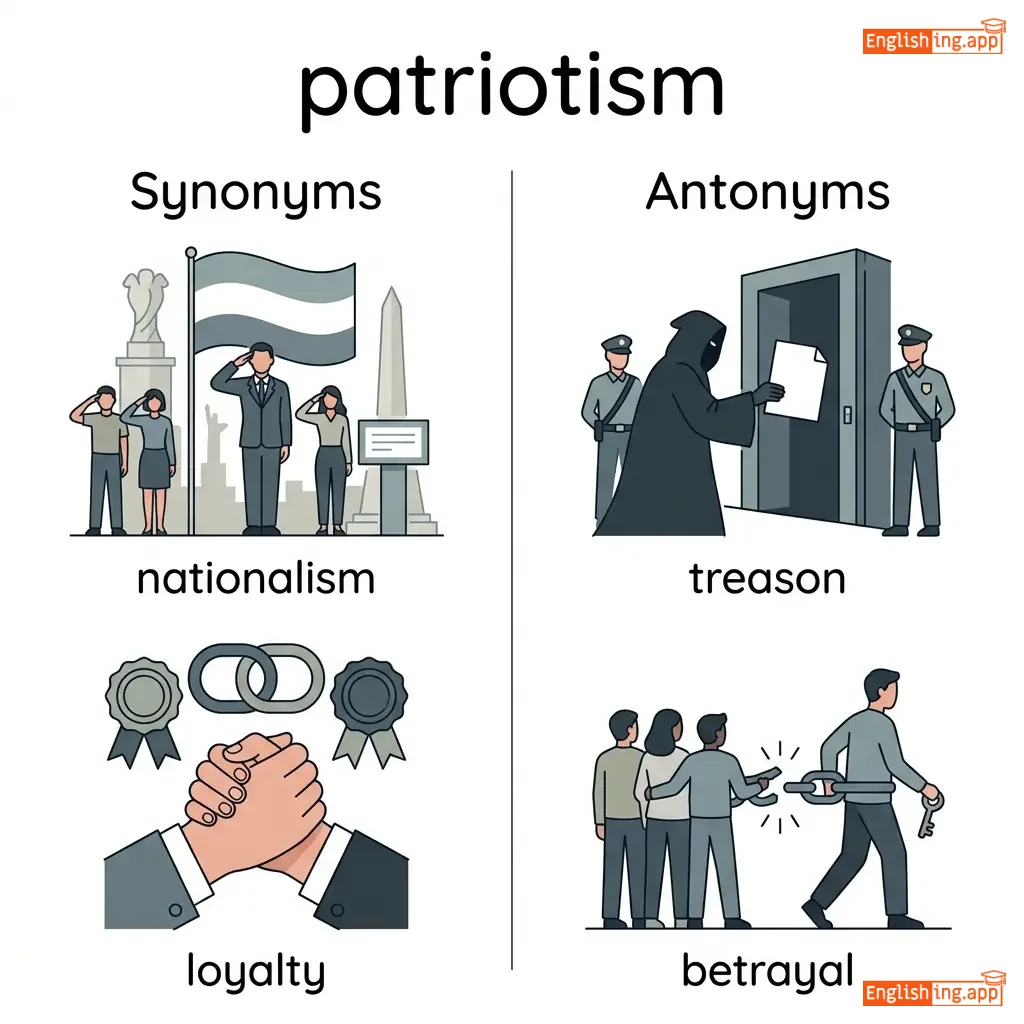
nationalism, loyalty, devotion, allegiance
••••••
|
treason, betrayal
••••••
|
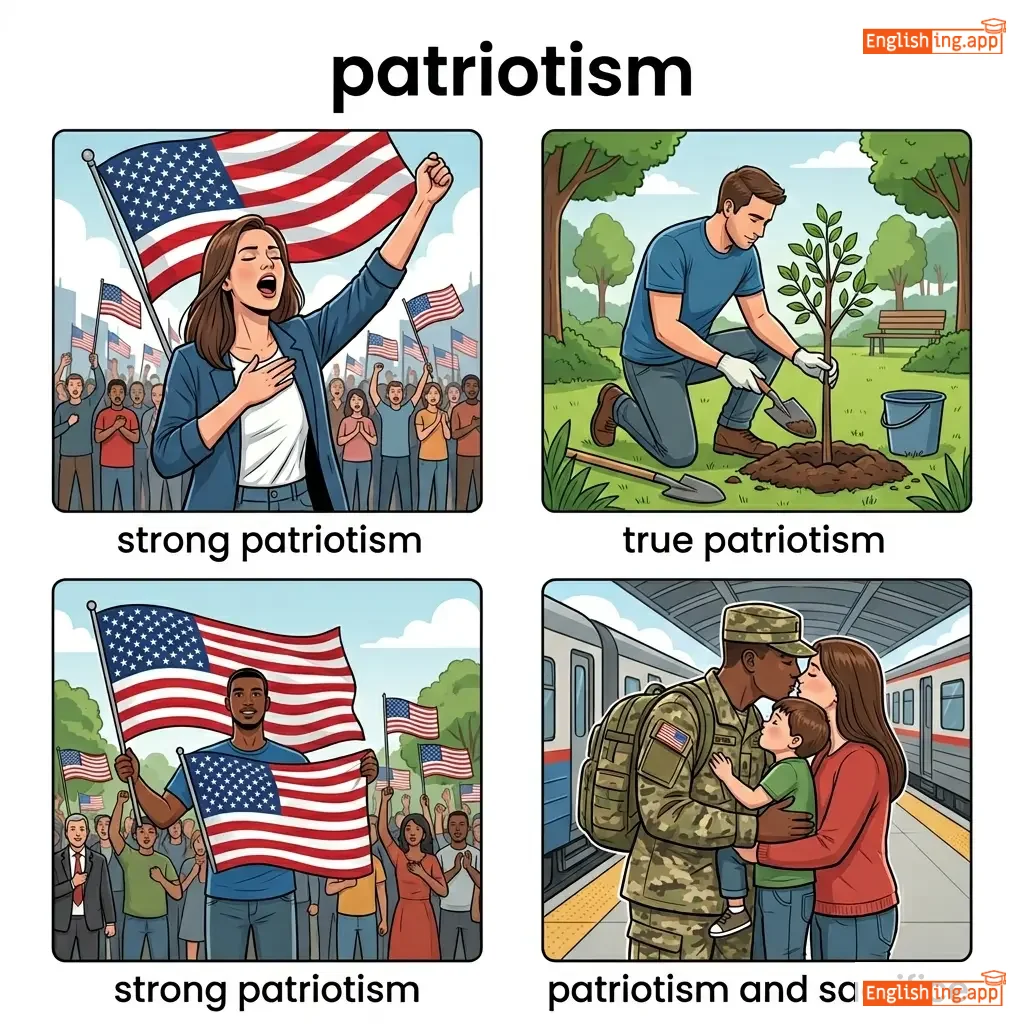
strong patriotism, true patriotism, patriotism and sacrifice, spirit of patriotism
••••••
|
Патриотизм = патриотизм; 'Patri' означает отец, 'изм' означает преданность
••••••
|
|
#6372
🇺🇸
|
/ˈpeɪtriət/
noun
(пэтриот)
••••••
|
- •••••• |
патриот
patriot
••••••
|
- •••••• | - •••••• | - •••••• | - •••••• |
A person who loves and strongly supports their country.
••••••
|
The patriot stood proudly under the national flag. |
Патриот стоял гордо под национальным флагом.
Patriot stoyal gordo pod natsional'nym flagom.
••••••
|
true patriot |
a person who genuinely loves and serves their country
••••••
|
настоящий патриот
nastoyashchiy patriot
••••••
|
nationalist, loyalist, supporter, defender
••••••
|
traitor, betrayer
••••••
|
true patriot, patriotic act, patriot leader, patriot movement
••••••
|
Patriot в русском языке значит 'патриот' — человек, который защищает свою страну.
••••••
|
|
#6373
🏰
|
/ˈpætrɪˌmoʊni/
noun
(пэтримони)
••••••
|
- •••••• |
наследство
nasledstvo
••••••
|
- •••••• | - •••••• | - •••••• | - •••••• |
Property or inheritance passed down from one's father or ancestors.
••••••
|
The castle was part of his patrimony from his noble ancestors. |
Замок был частью его наследства, полученного от его благородных предков.
Zamok byl chastyu ego nasledstva, poluchennogo ot ego blagorodnykh predkov.
••••••
|
- •••••• | - •••••• | - •••••• |
inheritance, heritage, legacy, estate
••••••
|
loss, debt
••••••
|
family patrimony, cultural patrimony, protect patrimony, ancestral patrimony
••••••
|
Patrimony = отец (papa) + имущество (property) → наследство от отца
••••••
|
|
#6374
🗡️
|
/ˈpætrɪsaɪd/
noun
(пэтрисайд)
••••••
|
- •••••• |
патрици́д
patritsid
••••••
|
- •••••• | - •••••• | - •••••• | - •••••• |
The act of killing one's own father.
••••••
|
The ancient myth describes a son committing patricide to take the throne. |
Древний миф описывает сына, совершившего патрици́д, чтобы занять трон.
Drevniy mif opisyvayet syna, sovershivshego patritsid, chtoby zanyat' tron.
••••••
|
- •••••• | - •••••• | - •••••• |
father-killing, parricide, murder, killing
••••••
|
filial piety, devotion
••••••
|
commit patricide, case of patricide, accused of patricide
••••••
|
Patricide = Patri (отец) + cide (убить) → патрици́д
••••••
|
|
#6375
📋
|
/peɪst/
verb, noun
(pɛst)
••••••
|
|
клеить
kleit
••••••
|
pasted
pæstɪd
••••••
|
pasted
pæstɪd
••••••
|
pastes
pæstɪz
••••••
|
pasting
pæstɪŋ
••••••
|
to stick or attach something using a soft, moist substance; also a thick, soft, moist substance itself
••••••
|
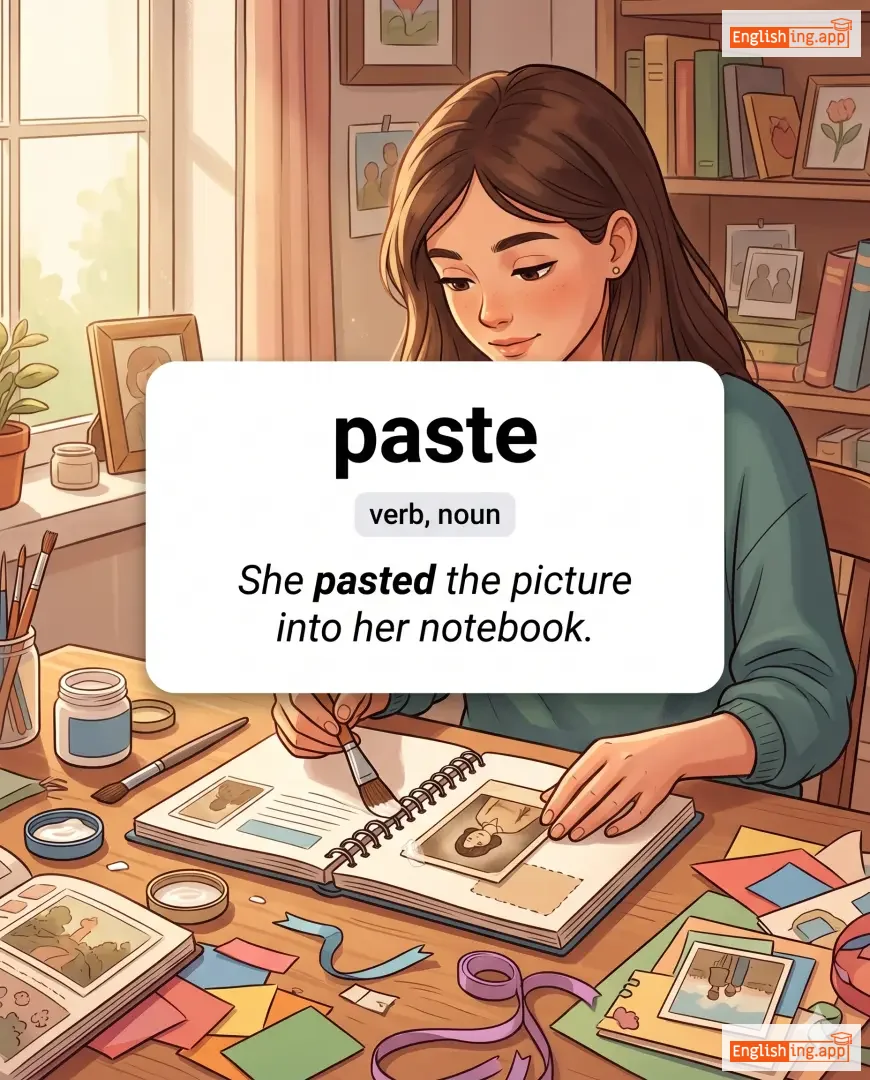
She pasted the picture into her notebook.
Она приклеила картину в свой блокнот.
••••••
|
Она приклеила картину в свой блокнот.
Ona prikleila kartinu v svoy bloknot.
••••••
|
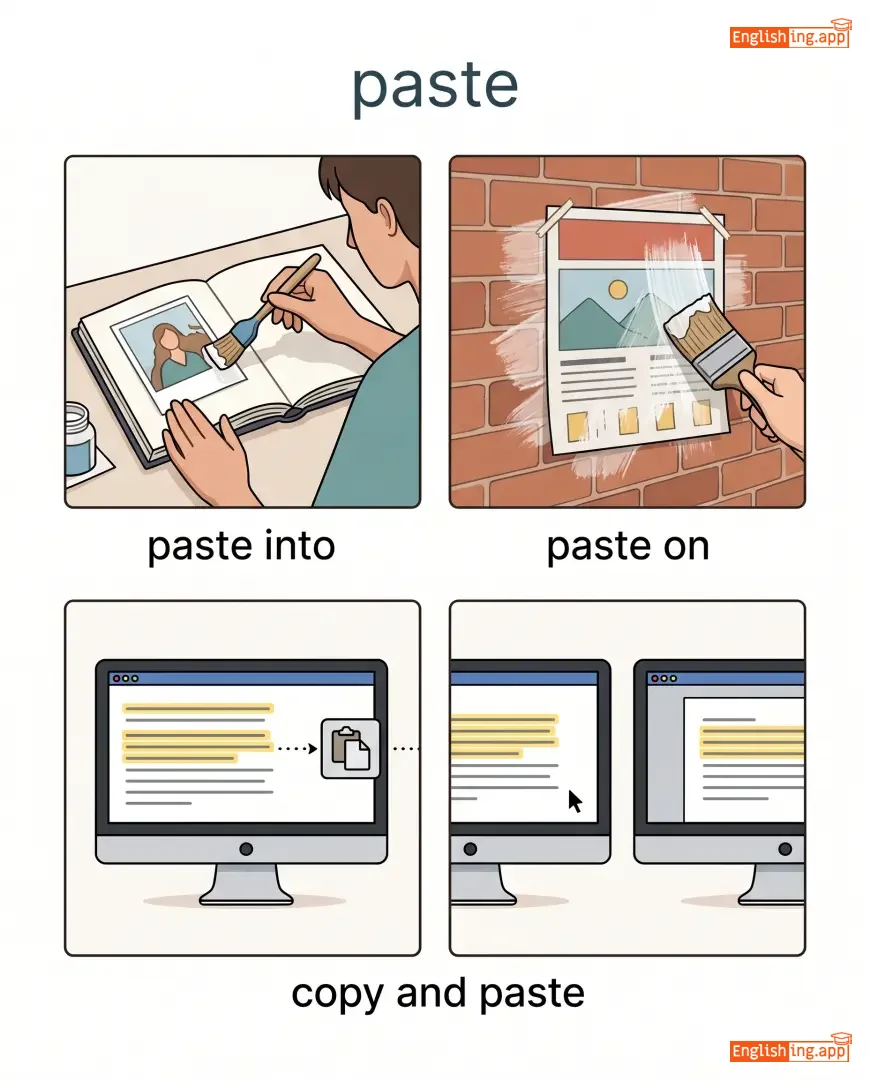
copy and paste
копировать и вставить
••••••
|
to duplicate text or images from one place and put them in another using software commands
••••••
|
копировать и вставить
kopirovat' i vstavit'
••••••
|
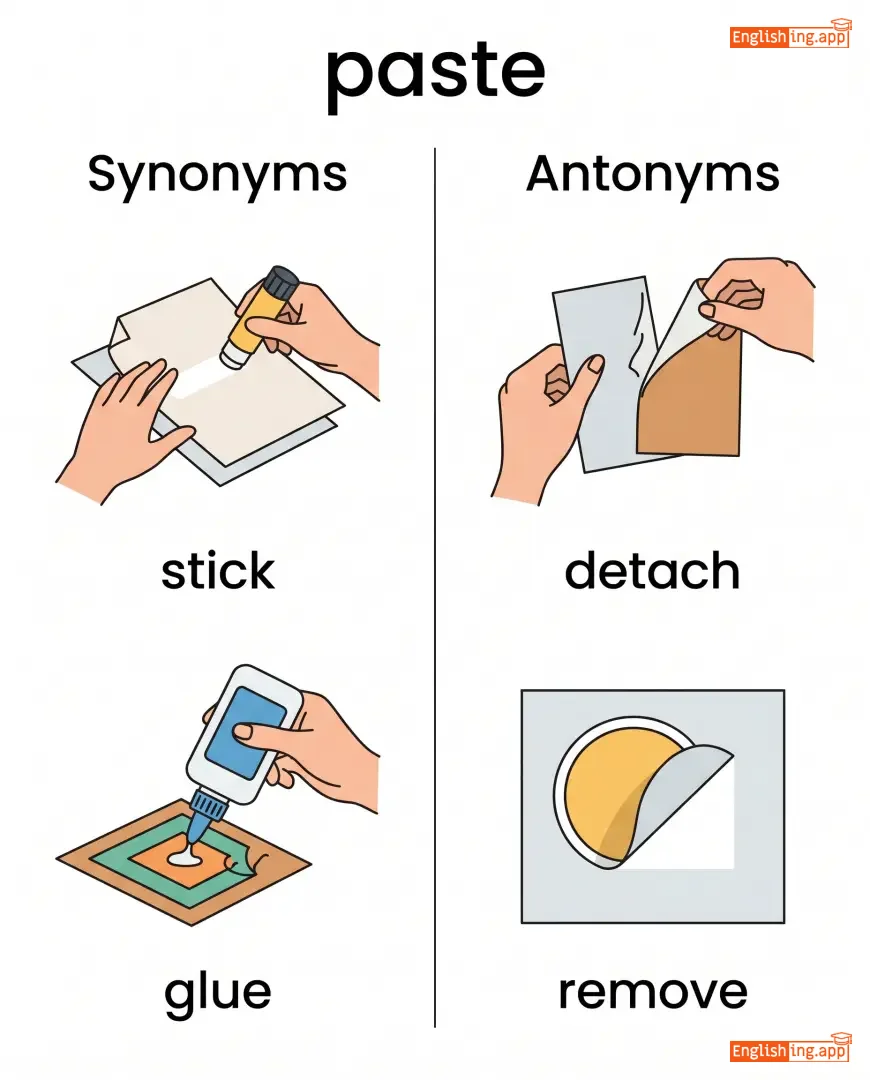
stick, glue, affix, attach, insert
••••••
|
detach, remove, separate
••••••
|
paste into, paste on, copy and paste, paste image
••••••
|
Paste похоже на клеить – как когда вы копируете и вставляете на компьютере.
••••••
|
|
#6376
👴
|
/ˈpeɪtriɑːrk/
noun
(патриарх)
••••••
|
- •••••• |
патриарх
patriarkh
••••••
|
- •••••• | - •••••• | - •••••• | - •••••• |
a male head of a family or tribe; an older respected man who leads a group
••••••
|
As the family patriarch, he mediated disputes and kept long traditions alive. |
Как патриарх семьи, он разрешал споры и поддерживал старые традиции.
Kak patriarkh sem'i, on reshil spory i podderzhival starye traditsii.
••••••
|
the patriarch of |
the male leader or founding figure of a group or family
••••••
|
патриарх
patriarkh
••••••
|
paterfamilias, elder, forefather, chieftain, father figure
••••••
|
matriarch, subordinate, junior
••••••
|
family patriarch, clan patriarch, church patriarch, patriarch of the family, patriarchal authority
••••••
|
Patri = отец (otets) + арх (arkh) = главный; патриарх означает главного мужчины в семье.
••••••
|
|
#6377
🗣️
|
/ˈpætwɑː/
noun
(патоа)
••••••
|
- •••••• |
патуа
patoa
••••••
|
- •••••• | - •••••• | - •••••• | - •••••• |
a regional or social dialect, especially one considered nonstandard or informal
••••••
|
The guide slipped into local patois when chatting with the fishermen.
Гид начал говорить на местном патуа, общаясь с рыбаками.
••••••
|
Гид начал говорить на местном патуа, общаясь с рыбаками.
Gid nachal govorit' na mestnom patoà, obshchayas' s rybakami.
••••••
|
- •••••• | - •••••• | - •••••• |
dialect, vernacular, argot, creole, jargon
••••••
|
standard language, formal speech, lingua franca
••••••
|
local patois, rural patois, speak in patois, Caribbean patois, native patois
••••••
|
Patois — это как разговор на патуа, разговоры местных жителей, звучат особенно.
••••••
|
|
#6378
🗿
|
/pəˈtiːnə/
noun
(pa-tee-na)
••••••
|
- •••••• |
пленка или блеск на металле, камне или дереве из-за возраста или использования; также поверхностный вид
plenka ili blesk na metalle, kamne ili dereve iz-za vozrasta ili ispol'zovaniya; takzhe poverkhnostnyy vid
••••••
|
- •••••• | - •••••• | - •••••• | - •••••• |
a surface film or sheen on metal, stone, or wood due to age or use; also, a superficial appearance
••••••
|
The bronze statue developed a green patina after years in the sea air. |
Бронзовая статуя развила зеленую патину после многих лет в морском воздухе.
Bronzovaya statuya razvila zelyonuyu patinu posle mnogikh let v morskoy vozdukhe.
••••••
|
a patina of respectability |
an outward look of being proper that may hide something less respectable
••••••
|
покрытие респектабельности
pokrytiye respiektabel'nosti
••••••
|
sheen, film, tarnish, gloss, verdigris
••••••
|
brightness, rawness, freshness
••••••
|
green patina, develop a patina, patina of age, patina of respectability, bronze patina
••••••
|
Патина = слои; покров респектабельности скрывает не всегда хорошее.
••••••
|
|
#6379
🥺
|
/ˈpeɪθɒs/
noun
(пэйθос)
••••••
|
- •••••• |
патос
patos
••••••
|
- •••••• | - •••••• | - •••••• | - •••••• |
a quality in speech, writing, or events that evokes pity or deep emotion
••••••
|
The documentary balanced pathos with hope, making the audience both weep and think. |
Документальный фильм сбалансировал патос с надеждой, заставив зрителей и плакать, и размышлять.
Dokumental'nyy film sbalansiroval patos s nadezhdoy, zastaviv zriteley i plakat', i razmyshlyat'.
••••••
|
a touch of pathos |
a small but noticeable amount of emotional appeal or sadness
••••••
|
прикосновение патоса
prikosnoveniye patosa
••••••
|
poignancy, sentiment, emotion, sorrow, poignance
••••••
|
apathy, indifference, detachment
••••••
|
pathos and humor, a touch of pathos, genuine pathos, evoke pathos, dramatic pathos
••••••
|
Pathos напоминает нас о патосе, когда чувствуем сильное сочувствие.
••••••
|
|
#6380
🧫
|
/pəˈθɒlədʒi/
noun
(пато́логия)
••••••
|
- •••••• |
психология
psikhologiya
••••••
|
- •••••• | - •••••• | - •••••• | - •••••• |
the scientific study of diseases, their causes, processes, and effects on the body
••••••
|
Advances in pathology helped the doctors identify the rare infection quickly. |
Достижения в патологии помогли врачам быстро определить редкую инфекцию.
Dostizheniya v patologii pomogli vracham bistro opredelit' redkuyu infektsiyu.
••••••
|
- •••••• | - •••••• | - •••••• |
pathobiology, morbid anatomy, etiology, pathogenesis, disease science
••••••
|
health, physiology, hygiene
••••••
|
clinical pathology, forensic pathology, pathology report, pathology lab, study of pathology
••••••
|
Патология = наука о болезнях; в больнице изучают патологии - pathology изучает болезни.
••••••
|
|
#6381
🧠
|
/ˌpæθəˈlɑːdʒɪkəl/
adjective
(патологический)
••••••
|
|
патологический, болезненный
patologicheskiy, boleznennyy
••••••
|
- •••••• | - •••••• | - •••••• | - •••••• |
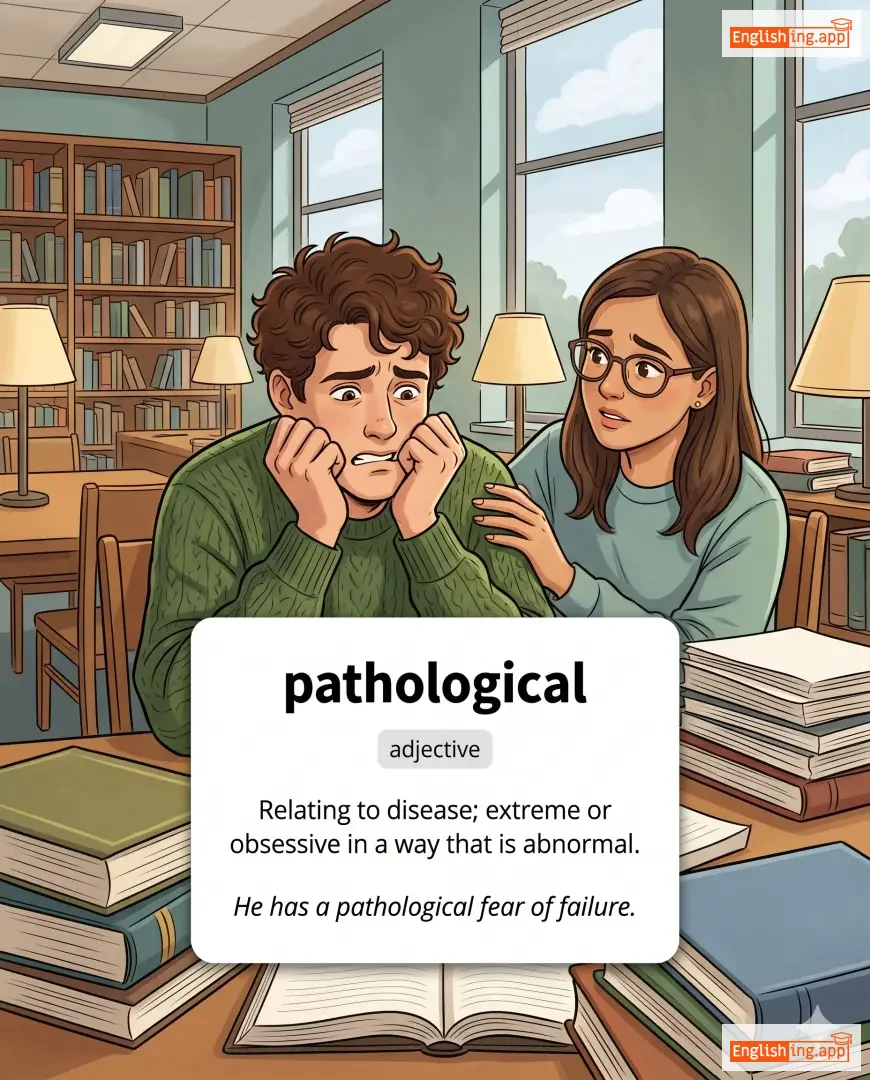
Relating to disease; extreme or obsessive in a way that is abnormal.
••••••
|
He has a pathological fear of failure. |
У него патологический страх неудачи.
U nego patologicheskiy strakh neudachi.
••••••
|
pathological liar |
A person who lies compulsively and uncontrollably.
••••••
|
патологический лжец
patologicheskiy lzhets
••••••
|
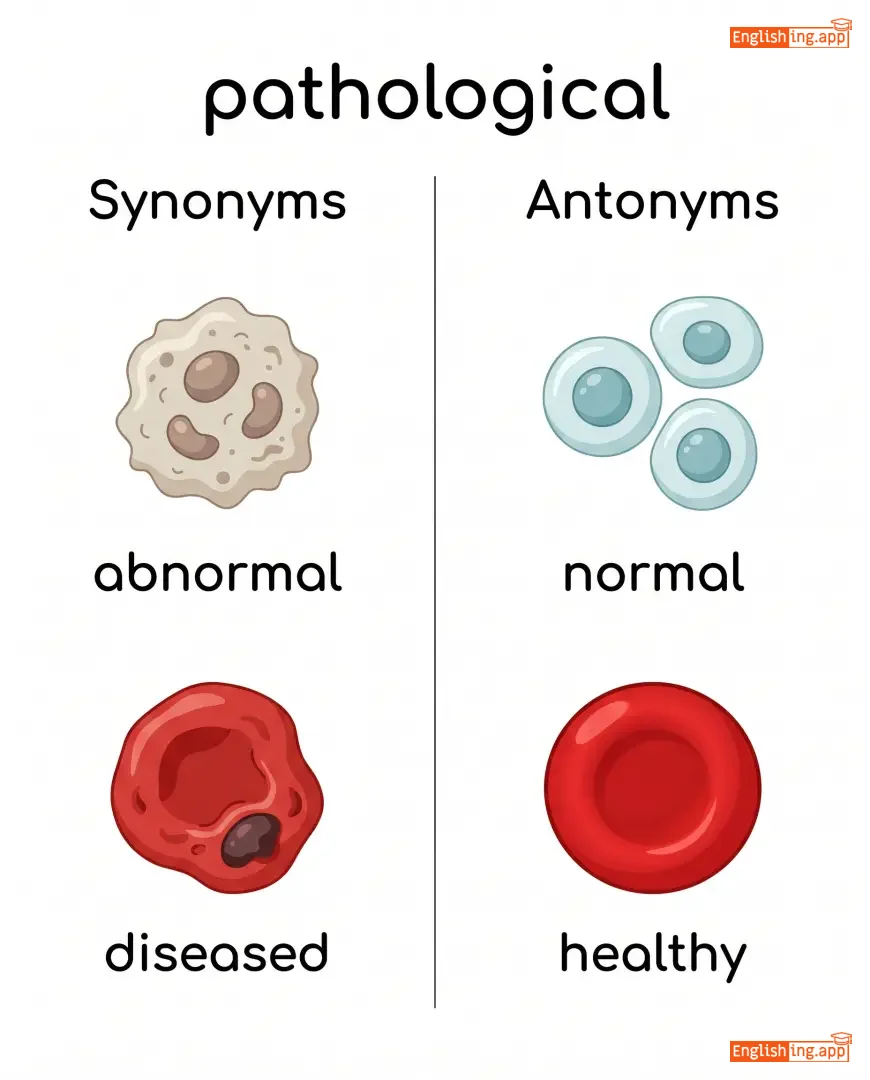
abnormal, diseased, compulsive, obsessive
••••••
|
normal, healthy
••••••
|
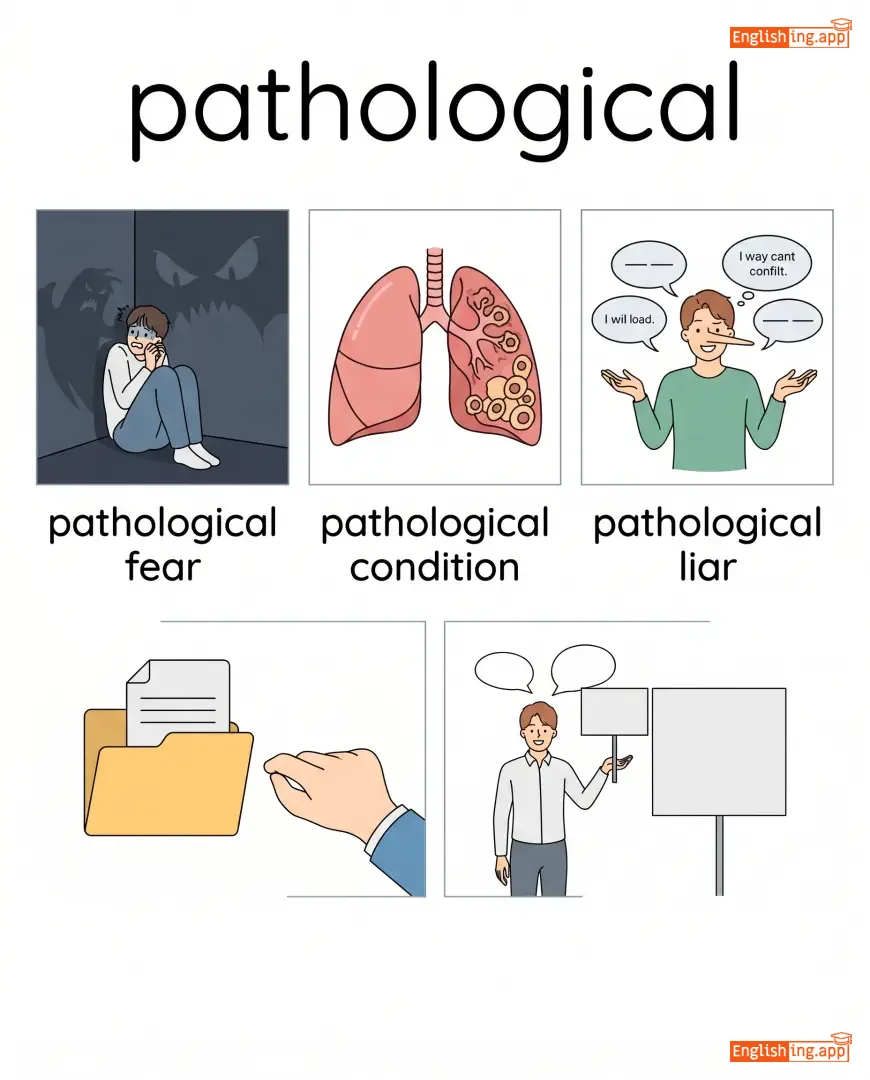
pathological fear, pathological condition, pathological liar
••••••
|
PATHология означает болезнь, поэтому патологический означает связанный с болезнью или ненормальный.
••••••
|
|
#6382
🦠
|
/ˌpæθəˈdʒɛnɪk/
adjective
(патогенный)
••••••
|
- •••••• |
патогенный
patogennyy
••••••
|
- •••••• | - •••••• | - •••••• | - •••••• |
Capable of causing disease.
••••••
|
Some bacteria are harmless, while others are highly pathogenic. |
Некоторые бактерии безвредны, а другие являются высоко патогенными.
Nekotorye bakterii bezvredny, a drugie yavlyayutsya vysoko patogennymi.
••••••
|
- •••••• | - •••••• | - •••••• |
disease-causing, harmful, infectious, virulent
••••••
|
harmless, benign
••••••
|
pathogenic bacteria, pathogenic virus, pathogenic organism
••••••
|
Patho (болезнь) + ген (вызывающий) = патогенный.
••••••
|
|
#6383
😢
|
/pəˈθɛtɪk/
adjective
••••••
|
- •••••• | - •••••• | - •••••• | - •••••• | - •••••• | - •••••• |
Causing feelings of pity, sadness, or sometimes contempt.
••••••
|
The team’s performance in the match was simply pathetic. |
- •••••• |
pathetic excuse |
A very weak or unconvincing explanation.
••••••
|
- •••••• |
pitiful, miserable, wretched, deplorable, lamentable
••••••
|
impressive, admirable
••••••
|
pathetic attempt, pathetic excuse, pathetic condition, pathetic performance
••••••
|
No •••••• |
|
#6384
👶
|
/pəˈtɜːrnəti/
noun
(папа)
••••••
|
- •••••• |
отцовство
otcovstvo
••••••
|
- •••••• | - •••••• | - •••••• | - •••••• |
The state of being someone's father.
••••••
|
He demanded a paternity test to confirm his relationship with the child. |
Он потребовал тест на отцовство, чтобы подтвердить свои отношения с ребенком.
On potreboval test na otcovstvo, chtoby podtverdit' svoi otnosheniya s rebenkom.
••••••
|
paternity leave |
Time off from work granted to a father after the birth of his child.
••••••
|
отпуск по отцовству
otpusk po otcovstvu
••••••
|
fatherhood, parenthood, progenitorship
••••••
|
maternity, orphanhood
••••••
|
paternity test, paternity leave, claim paternity, establish paternity
••••••
|
Отцовство (paternity) означает быть отцом и заботиться о своей семье.
••••••
|
|
#6385
👨👦
|
/pəˈtɜːrnəl/
adjective
(патрнель)
••••••
|
- •••••• |
отцовский
ottsovskiy
••••••
|
- •••••• | - •••••• | - •••••• | - •••••• |
Relating to or characteristic of a father.
••••••
|
He took a paternal interest in the boy’s education. |
Он проявил отцовский интерес к обучению мальчика.
On proyavil ottsovskiy interes k obucheniu mal'chika.
••••••
|
paternal instinct |
The natural protective and caring behavior of a father.
••••••
|
отцовский инстинкт
ottsovskiy instinkt
••••••
|
fatherly, protective, caring, nurturing, benevolent
••••••
|
maternal, neglectful
••••••
|
paternal care, paternal rights, paternal love, paternal influence
••••••
|
отцовский – поведение, как у отца.
••••••
|
|
#6386
📜
|
/ˈpeɪtənt/ or /ˈpætənt/
noun, verb, adjective
(патент)
••••••
|
- •••••• |
патент
patent
••••••
|
patented
запатентован
••••••
|
patented
запатентован
••••••
|
patents
патенты
••••••
|
patenting
патентование
••••••
|
a government license granting exclusive rights to an inventor; also to obtain such rights
••••••
|
He patented his new invention to protect it from being copied.
Он запатентовал свое новое изобретение, чтобы защитить его от копирования.
••••••
|
Он запатентовал свое новое изобретение, чтобы защитить его от копирования.
On zapatentoval svoe novoe izobretenie, chtoby zashchitit' ego ot kopirovaniya.
••••••
|
patent pending
патент в ожидании
••••••
|
a phrase indicating that a patent application has been filed but not yet granted
••••••
|
патент в ожидании
patent v ozhidanii
••••••
|
copyright, license, privilege, protection
••••••
|
infringement, imitation
••••••
|
patent law, file a patent, patent rights, patent office
••••••
|
Патент означает патент - изобретатель защищает свою идею.
••••••
|
|
#6387
🥐
|
/ˈpeɪstri/
noun
(pɛstʁi)
••••••
|
- •••••• |
выпечка
vypechka
••••••
|
- •••••• | - •••••• | - •••••• | - •••••• |
a baked food product made from flour, fat, and water, often sweet or savory
••••••
|
I bought a box of fresh pastries for breakfast. |
Я купил коробку свежей выпечки на завтрак.
Ya kupil korobku svezhey vypechki na zavtrak.
••••••
|
- •••••• | - •••••• | - •••••• |
cake, tart, pie, croissant
••••••
|
meat, vegetable
••••••
|
pastry shop, pastry chef, sweet pastry, puff pastry
••••••
|
Выпечка - это выпечка - в пекарне все это едят!
••••••
|
|
#6388
🌾
|
/ˈpæstərəl/
adjective, noun
(пастораль)
••••••
|
- •••••• |
деревенский, связанный с пастухами
derevenskiy, svyazannyy s pastukhami
••••••
|
- •••••• | - •••••• | - •••••• | - •••••• |
relating to the countryside, shepherds, or rural life; also relating to spiritual guidance by a pastor
••••••
|
The painting had a calm pastoral scene with sheep grazing. |
Картина изображала спокойную пасторальную сцену с овцами, пасущимися.
Kartina izobrazhala spokoynuyu pastoral'nuyu stsenu s ovtsami, pasushchimisya.
••••••
|
pastoral care |
spiritual and emotional support provided by religious leaders
••••••
|
пасторский уход
pastorskij uhod
••••••
|
rural, rustic, bucolic, idyllic
••••••
|
urban, industrial
••••••
|
pastoral scene, pastoral life, pastoral care, pastoral poetry
••••••
|
Pastoral означает жизнь на деревне, как картинка с овцами на пастбище.
••••••
|
|
#6389
🎭
|
/pæˈstiːʃ/
noun
(пасˈтиʃ)
••••••
|
- •••••• |
пастиш
pastish
••••••
|
- •••••• | - •••••• | - •••••• | - •••••• |
a work of art, literature, or music that imitates the style of another artist, period, or genre
••••••
|
The film was a clever pastiche of 1950s detective movies. |
Фильм был умелым пастишем детективных фильмов 1950-х годов.
Film byl umelym pastishem detektivnykh filmov 1950-kh godov.
••••••
|
- •••••• | - •••••• | - •••••• |
imitation, parody, spoof, homage
••••••
|
original, authentic
••••••
|
musical pastiche, literary pastiche, create a pastiche, pastiche style
••••••
|
Pastiche = Подражание стилю прошлого.
••••••
|
Vocabulary Quiz
Test your vocabulary by matching words with their translations or meanings.
Login to take the quiz
Comments (0)
Share your thoughts and join the discussion.
Join the discussion by logging in
Login to CommentNo comments yet
Be the first to share your thoughts!