

Обновитесь для доступа ко всему словарю
Получите неограниченный доступ ко всем словам с подпиской Pro
Обновить до ProПеревод
Прошедшее
Причастие прошедшего времени
Третье лицо единственного числа
Герундий
Значение
Пример предложения
Перевод примера предложения
Синонимы
Антонимы
Коллокации
Мнемоника



Swipe left or right, or use the buttons. Tap image to zoom.
Обновитесь для доступа ко всем предложениям
Получите неограниченный доступ ко всем предложениям с подпиской Pro
Обновить до ProПеревод примера предложения
Слово
Lesson 359Lesson 359 - Переключатель маски
|
Эмодзи
|
Слово | Images | Перевод | Прошедшее | Причастие прошедшего времени | Третье лицо единственного числа | Герундий | Значение | Пример предложения | Перевод примера предложения | Пример выражения | Значение примера выражения | Перевод примера выражения | Синонимы | Антонимы | Коллокации | Мнемоника |
|---|---|---|---|---|---|---|---|---|---|---|---|---|---|---|---|---|---|
|
#10735
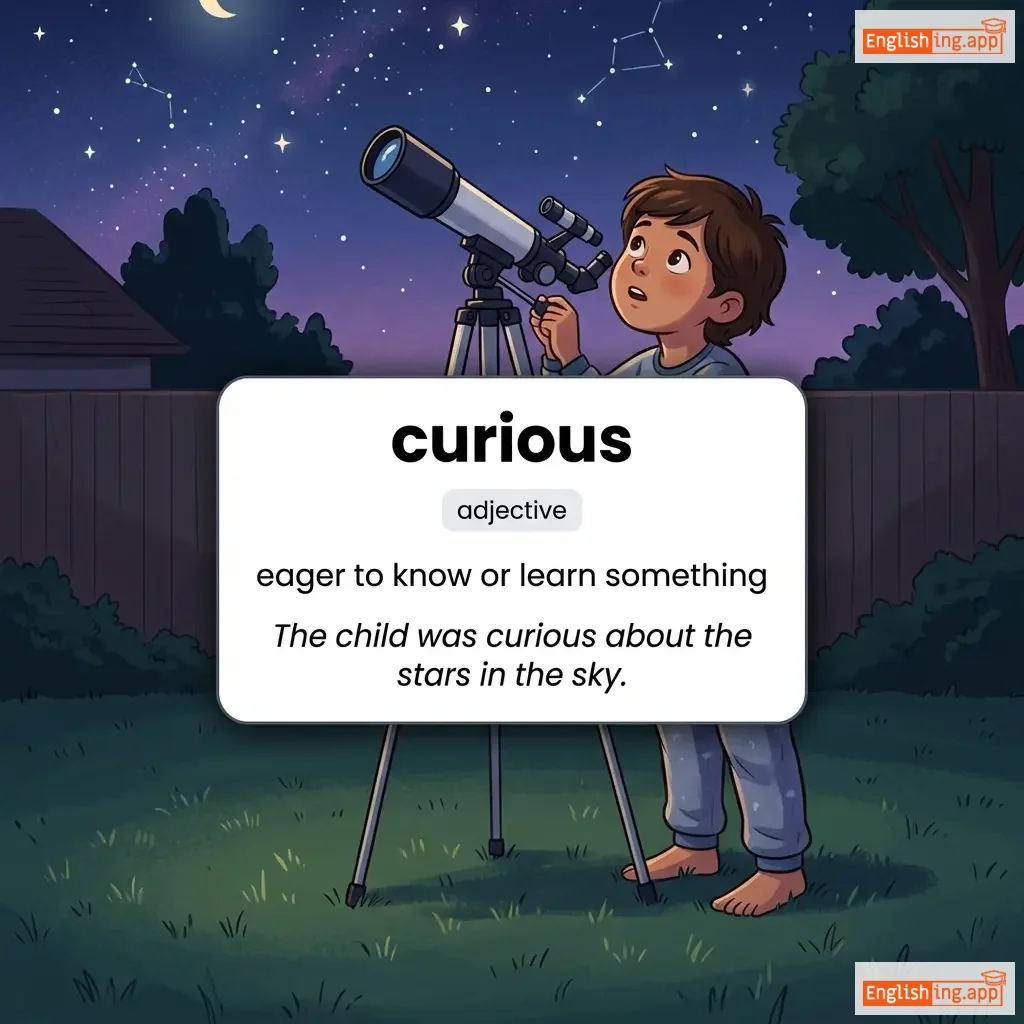
🤔
|
/ˈkjʊəriəs/
adjective
(кьюриас)
••••••
|
|
любопытный
lyubopytnyy
••••••
|
- •••••• | - •••••• | - •••••• | - •••••• |
eager to know or learn something
••••••
|
The child was curious about the stars in the sky. |
Ребёнок был любопытен насчёт звёзд на небе.
Rebyonok byl lyubopyten naschёt zvyozd na nebe.
••••••
|
curiosity killed the cat |
being too inquisitive can lead to trouble
••••••
|
любопытство убило кошку
lyubopytstvo ubilo koshku
••••••
|
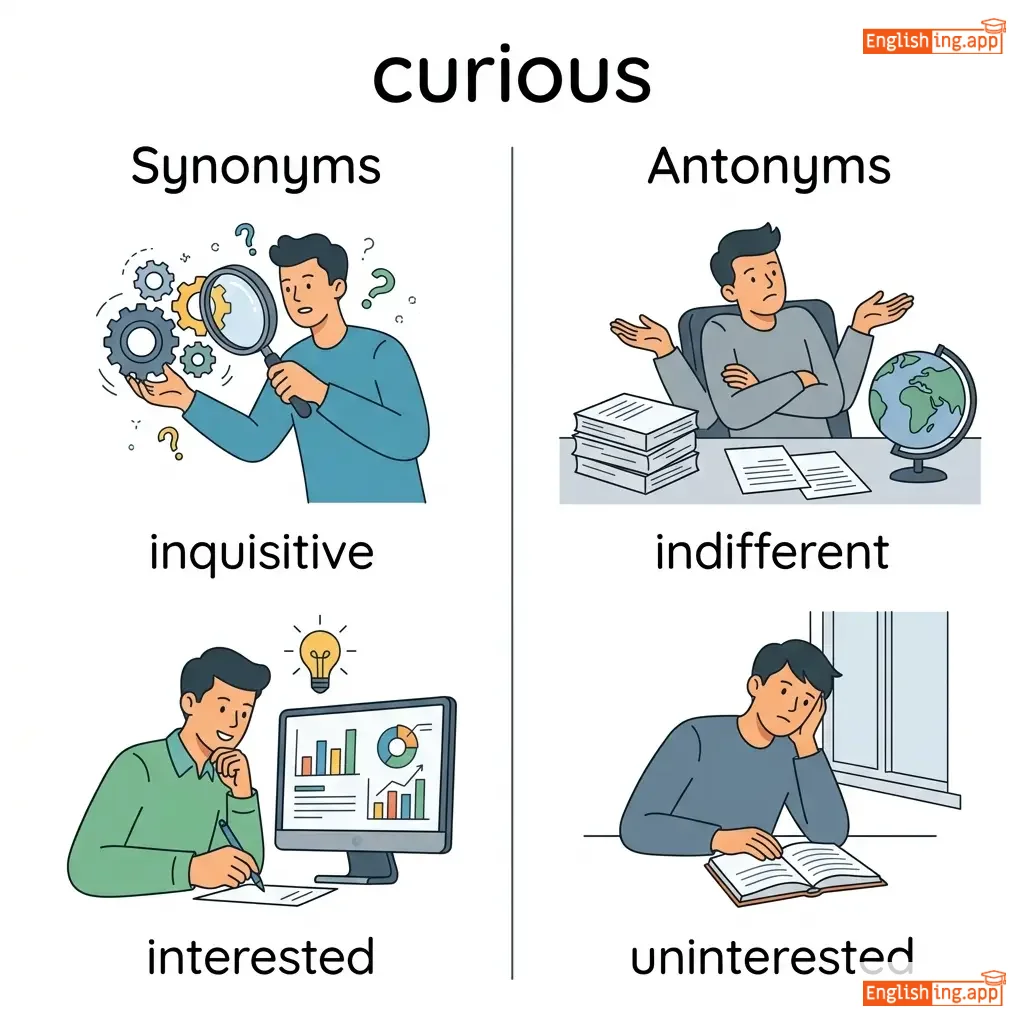
inquisitive, interested, eager, questioning
••••••
|
indifferent, uninterested
••••••
|
curious mind, curious about, curious look, curious case
••••••
|
Любопытный — как спрашивать 'Что?' постоянно.
••••••
|
|
#10736
👧
|
/ˈdɔːtər/
noun
(дотер)
••••••
|
- •••••• |
дочь
doch
••••••
|
- •••••• | - •••••• | - •••••• | - •••••• |
a female child in relation to her parents
••••••
|
They are proud of their daughter for graduating college. |
Они гордятся своей дочерью за то, что она закончила колледж.
Oni gordyatsya svoey docher'yu za to, chto ona zakonchila kolledzh.
••••••
|
apple of her father's eye |
a phrase used to describe a beloved daughter
••••••
|
яблоко из глаза ее отца
yabloko iz glaza yeye ottsa
••••••
|
girl child, offspring, child, descendant
••••••
|
son, parent
••••••
|
eldest daughter, only daughter, daughter-in-law, proud daughter
••••••
|
Daughter значит дочь, как яблоко из глаз отца.
••••••
|
|
#10737
📅
|
/deɪt/
noun/verb
••••••
|
- •••••• | - •••••• |
dated
••••••
|
dated
••••••
|
dates
••••••
|
dating
••••••
|
A particular day of the month or year; also, a social or romantic appointment.
••••••
|
They decided to meet on the date of her birthday. |
- •••••• |
blind date |
a romantic meeting with someone you have not met before
••••••
|
- •••••• |
day, appointment, meeting, outing
••••••
|
indefinite, timeless
••••••
|
set a date, important date, go on a date, due date
••••••
|
No •••••• |
|
#10738
📊
|
/ˈdeɪ.tə/ or /ˈdæt.ə/
noun
(датэ)
••••••
|
- •••••• |
данные
dannye
••••••
|
- •••••• | - •••••• | - •••••• | - •••••• |
Facts, statistics, or information collected for reference or analysis.
••••••
|
The scientists analyzed the data to find patterns. |
Ученые проанализировали данные, чтобы найти закономерности.
Uchonyye proanalizirovali dannye, chtoby nayti zakonomernosti.
••••••
|
data-driven |
based on analysis of information or evidence
••••••
|
основанный на данных
osnovannyy na dannykh
••••••
|
information, facts, statistics, figures
••••••
|
assumptions, guesses
••••••
|
collect data, analyze data, data set, process data
••••••
|
Данные - это как карта для поиска нужных знаний!
••••••
|
|
#10739
🌑
|
/ˈdɑːrk.nəs/
noun
(тьма)
••••••
|
- •••••• |
тьма
t'ma
••••••
|
- •••••• | - •••••• | - •••••• | - •••••• |
The absence of light; the state of being dark.
••••••
|
The room was filled with darkness after the lights went out. |
Комната наполнилась тьмой, когда погасли огни.
Komnata napolnilas t'moy, kogda pogasli ogni.
••••••
|
pitch darkness |
complete absence of light
••••••
|
полная тьма
polnaya t'ma
••••••
|
gloom, shadow, obscurity, night
••••••
|
light, brightness, daylight
••••••
|
in darkness, total darkness, fall into darkness, fear of darkness
••••••
|
Тьма - это когда нет света, и всё вокруг тёмное.
••••••
|
|
#10740
😎
|
/der/
verb
(dɛr)
••••••
|
|
осмелиться
osmelitsya
••••••
|
dared
dɛrd
••••••
|
dared
dɛrd
••••••
|
dares
derz
••••••
|
daring
dɛrɪŋ
••••••
|
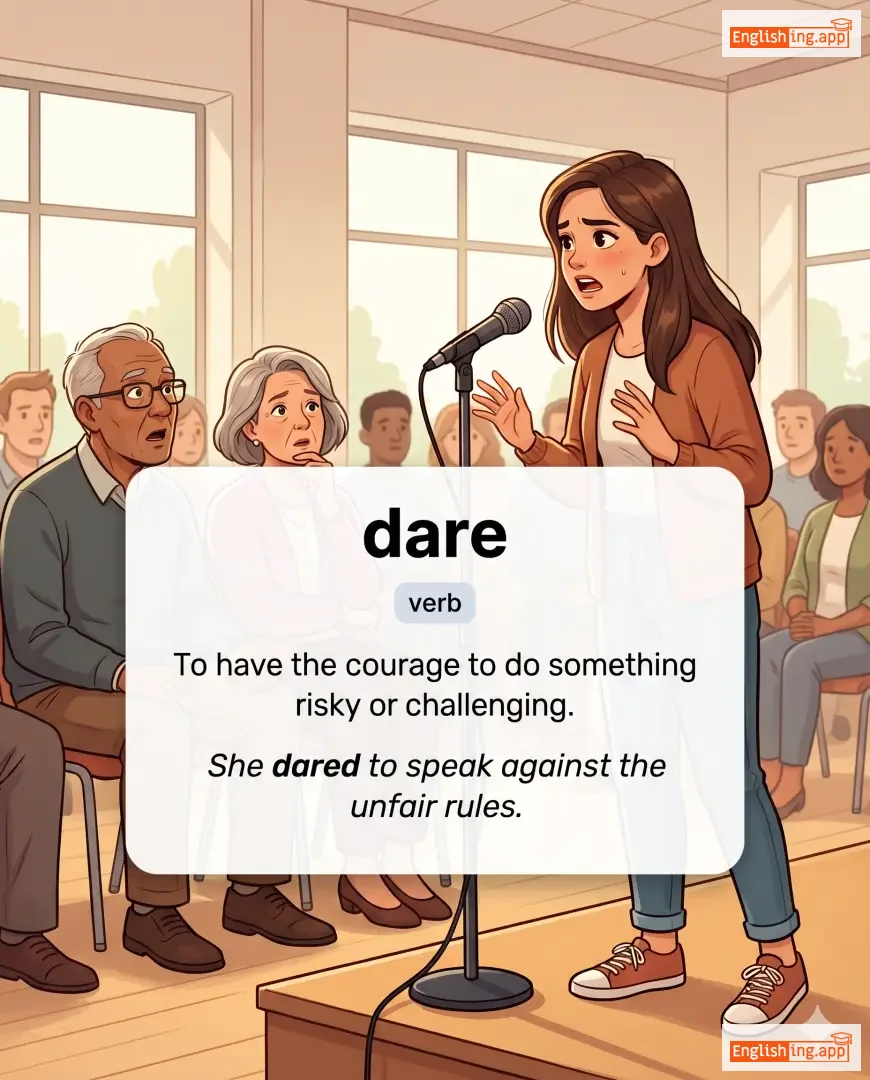
To have the courage to do something risky or challenging.
••••••
|
She dared to speak against the unfair rules.
Она осмелилась выступить против несправедливых правил.
••••••
|
Она осмелилась выступить против несправедливых правил.
Ona osmelilas' vystupit' protiv nespravedlivykh pravil.
••••••
|
How dare you
Как ты смеешь?
••••••
|
Used to express anger or shock at someone's bold action
••••••
|
Как ты смеешь?
Kak ty smeyesh'?
••••••
|
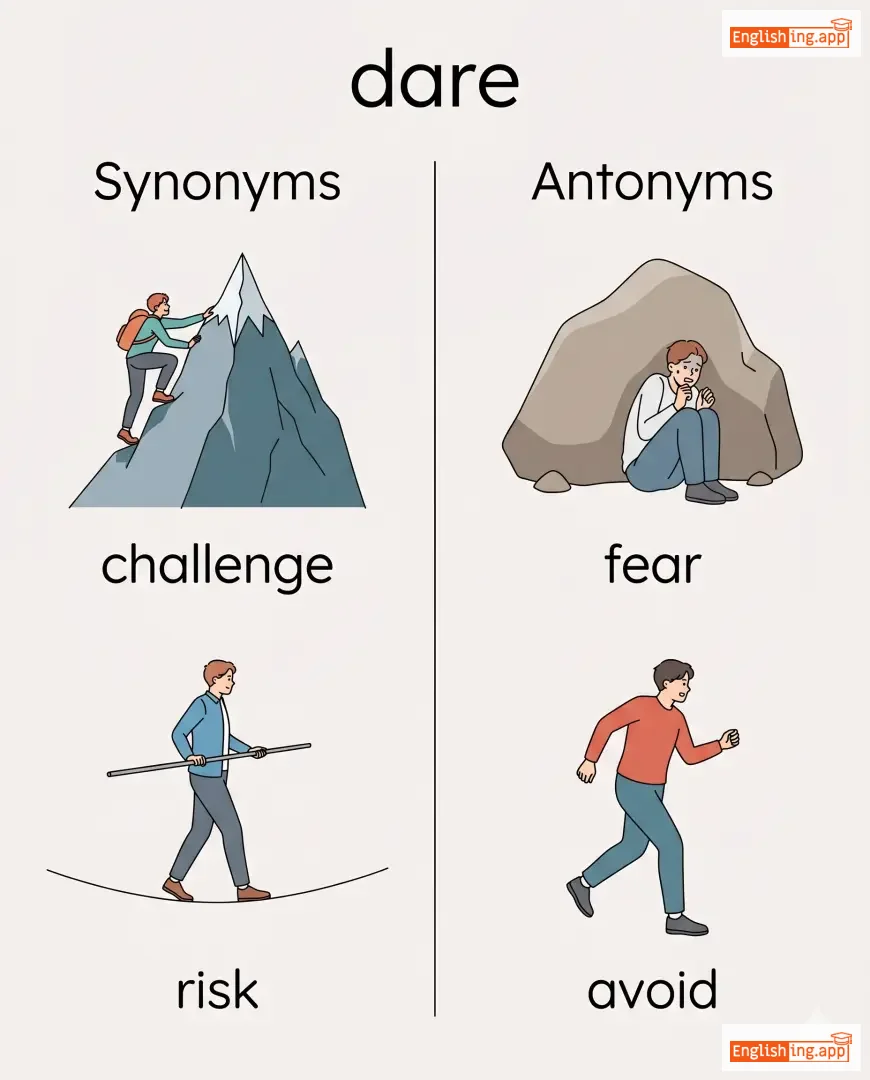
challenge, risk, venture, defy
••••••
|
fear, avoid, hesitate
••••••
|
dare to dream, dare to ask, I dare say, dare someone
••••••
|
Dare - это осмелиться, сделать что-то смелое!
••••••
|
|
#10741
⚠️
|
/ˈdeɪn.dʒər/
noun
(дэйнджер)
••••••
|
- •••••• |
опасность
opasnost
••••••
|
- •••••• | - •••••• | - •••••• | - •••••• |
The possibility of harm, injury, or loss.
••••••
|
The hikers were in great danger during the storm. |
Путешественники были в большой опасности во время бури.
Puteshestvenniki byli v bol'shoy opasnosti vo vremya buri.
••••••
|
in danger |
at risk of harm or injury
••••••
|
в опасности
v opasnosti
••••••
|
risk, threat, peril, hazard, jeopardy
••••••
|
safety, security, protection
••••••
|
serious danger, put in danger, danger zone, face danger
••••••
|
Danger по-английски означает 'опасность' - ⚠️ будь осторожен, если ты в опасности!
••••••
|
|
#10742
💃
|
/dæns/
verb/noun
(счастье)
••••••
|
- •••••• |
счастье
schast'ye
••••••
|
danced
••••••
|
danced
••••••
|
dances
••••••
|
dancing
••••••
|
to move rhythmically to music, typically following a set sequence of steps
••••••
|
They danced all night at the wedding. |
Она не могла скрыть своего счастья, когда получила награду.
Ona ne mogla skryt' svoego schast'ya, kogda poluchila nagradu.
••••••
|
dance to someone's tune |
to do what someone else wants or controls
••••••
|
поиск счастья
poisk schast'ya
••••••
|
move, sway, groove, waltz, perform
••••••
|
stand, stillness
••••••
|
dance floor, dance party, traditional dance, dance steps
••••••
|
Счастье звучит как 'счастье', оно всегда внутри вас.
••••••
|
|
#10743
📅
|
/ˈdeɪli/
adjective/adverb
(деɪли)
••••••
|
- •••••• |
ежедневный
ezhednevny
••••••
|
- •••••• | - •••••• | - •••••• | - •••••• |
happening every day
••••••
|
She reads the newspaper daily. |
Она читает газету ежедневно.
Ona chitayet gazetу ezhednevno.
••••••
|
daily grind |
the monotonous routine of everyday work and life
••••••
|
ежедневная рутина
ezhednevnaya rutina
••••••
|
everyday, regular, routine, habitual
••••••
|
occasional, rare
••••••
|
daily basis, daily routine, daily life, daily tasks
••••••
|
Ежедневный значит каждый день, ежедневные действия приведут к успеху.
••••••
|
|
#10744
👨
|
/dæd/
noun
(дэд)
••••••
|
- •••••• |
папа
papa
••••••
|
- •••••• | - •••••• | - •••••• | - •••••• |
an informal term for father
••••••
|
My dad taught me how to ride a bike. |
Мой папа научил меня кататься на велосипеде.
Moy papa nauchil menya katat'sya na velosipede.
••••••
|
like father, like son |
a child often resembles or behaves like their father
••••••
|
как отец, так и сын
kak otets, tak i syn
••••••
|
father, papa, daddy, pa
••••••
|
mother, mom
••••••
|
dad joke, dad's advice, proud dad, dad and son
••••••
|
Dad - это папа, 'дэд' и папа всегда рядом.
••••••
|
|
#10745
🚴
|
/ˈsaɪkl/
noun/verb
(сайкл)
••••••
|
- •••••• |
велосипед / цикл
velosiped / tsikl
••••••
|
cycled
сайкэлд
••••••
|
cycled
сайкэлд
••••••
|
cycles
сайклс
••••••
|
cycling
сайклинг
••••••
|
a series of events that repeat in the same order; or to ride a bicycle
••••••
|
She cycles to school every day.
она ездит в школу на велосипеде каждый день.
••••••
|
Она ездит в школу на велосипеде каждый день.
Ona yezdit v shkolu na velosipede kazhdyi den.
••••••
|
vicious cycle
порочный круг
••••••
|
a negative repeating pattern of events that worsens over time
••••••
|
порочный круг
porochny krug
••••••
|
sequence, rotation, series, bike, bicycle
••••••
|
stop, stagnation
••••••
|
life cycle, business cycle, cycle of events, riding a cycle
••••••
|
Cycle означает цикл, а велосипед — это движущийся цикл.
••••••
|
|
#10746
🛍️
|
/ˈkʌstəmər/
noun
(kʌstəmər)
••••••
|
- •••••• |
клиент
klient
••••••
|
- •••••• | - •••••• | - •••••• | - •••••• |
a person or organization that buys goods or services from a store or business
••••••
|
The shopkeeper greeted the customer with a smile. |
Продавец поприветствовал клиента с улыбкой.
Prodavets poprivetsvoval klienta s ulybkoy.
••••••
|
the customer is always right |
a principle suggesting that businesses should prioritize customer satisfaction
••••••
|
клиент всегда прав
klient vsegda prav
••••••
|
client, buyer, consumer, purchaser, shopper
••••••
|
seller, vendor
••••••
|
customer service, loyal customer, potential customer, regular customer
••••••
|
Customer означает клиент, он покупает что-то в магазине.
••••••
|
|
#10747
🎎
|
/ˈkʌstəm/
noun
(кастом)
••••••
|
- •••••• |
обычай
obychay
••••••
|
- •••••• | - •••••• | - •••••• | - •••••• |
a traditional practice or usual way of behaving in a particular society or place
••••••
|
Shaking hands is a common custom in many countries. |
Пожимание рук — это обычай во многих странах.
Pozhimanie ruk — eto obyuchay vo mnogikh stranak.
••••••
|
old habits die hard |
customs or habits are difficult to change
••••••
|
старые привычки трудно изменяются
starye privychki trudno izmenyayutsya
••••••
|
tradition, practice, ritual, convention
••••••
|
innovation, novelty
••••••
|
local custom, cultural custom, follow custom, business custom
••••••
|
Custom означает обычай: в магазине 'custom duty' и в обществе 'обычай'.
••••••
|
|
#10748
⏳
|
/ˈkʌrəntli/
adverb
(kʌrəntli)
••••••
|
- •••••• |
в данный момент
v dannyy moment
••••••
|
- •••••• | - •••••• | - •••••• | - •••••• |
at the present time; now
••••••
|
He is currently working on a new project. |
Он сейчас работает над новым проектом.
On seychas rabotaet nad novym proyektom.
••••••
|
- •••••• | - •••••• | - •••••• |
presently, now, at the moment, as of now
••••••
|
formerly, previously
••••••
|
currently working, currently available, currently involved, currently under
••••••
|
Сейчас—что происходит в данный момент.
••••••
|
|
#10749
🌊
|
/ˈkʌrənt/
adjective, noun
(кёрэнт)
••••••
|
- •••••• |
текущий, поток
tekushchiy, potok
••••••
|
- •••••• | - •••••• | - •••••• | - •••••• |
belonging to the present time; a flow of water or electricity
••••••
|
She is reading the current issue of the magazine. |
Она читает текущий выпуск журнала.
Ona chitayet tekushchiy vypusk zhurnala.
••••••
|
go with the flow |
to follow the current trend or situation without resistance
••••••
|
плыть по течению
plyt' po techeniyu
••••••
|
present, ongoing, modern, flow
••••••
|
past, outdated
••••••
|
current events, current issue, electric current, ocean current
••••••
|
'Current' означает 'поток', как течение воды или электричества.
••••••
|
|
#10750
🎨
|
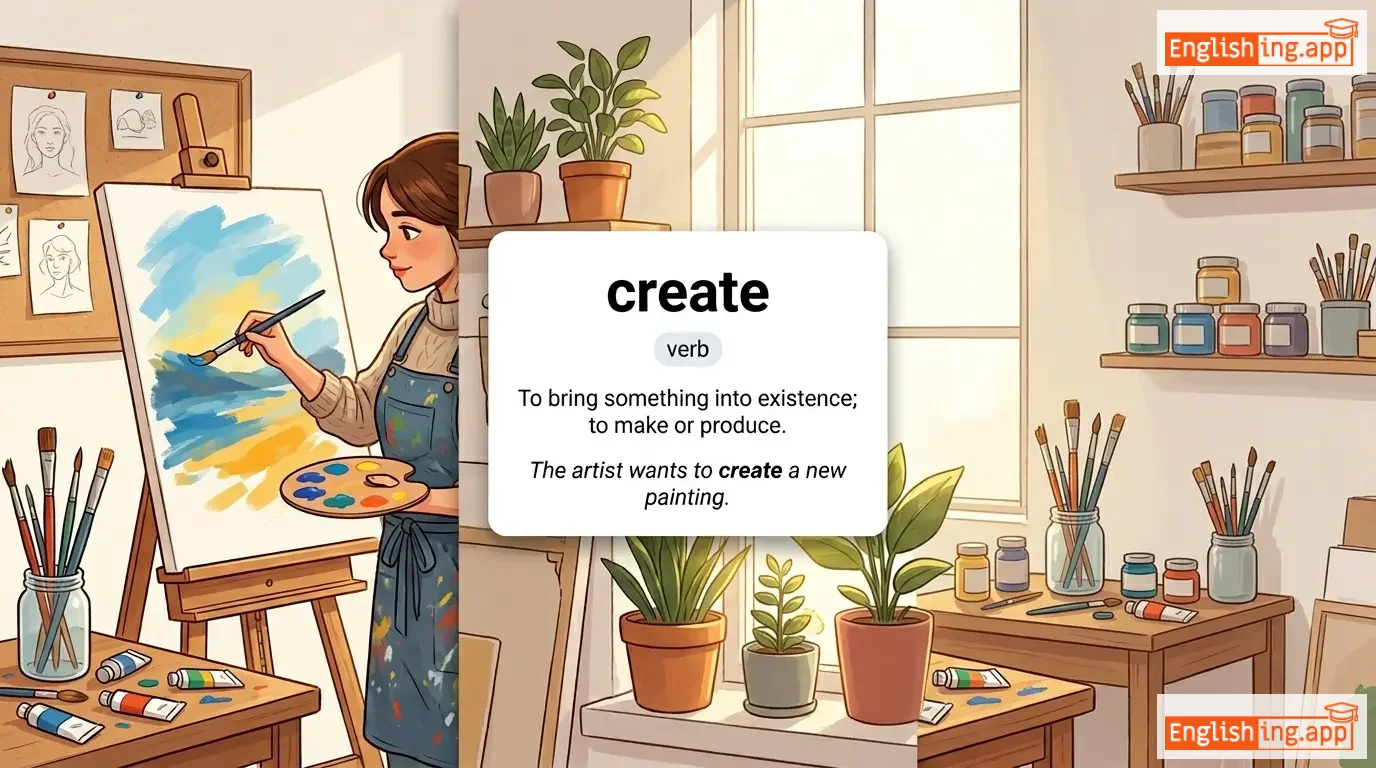
/kriˈeɪt/
verb
(криэйт)
••••••
|
|
создавать
sozdat'
••••••
|
created
криэйтед
••••••
|
created
криэйтед
••••••
|
creates
криэйтс
••••••
|
creating
криэйтинг
••••••
|
To bring something into existence; to make or produce.
••••••
|
The artist wants to create a new painting.
Художник хочет создать новую картину.
••••••
|
Художник хочет создать новую картину.
Kudozhnik khochet sozdavat' novuyu kartinu.
••••••
|
create a scene
создать сцену
••••••
|
to behave in a loud or disruptive way
••••••
|
создать шум
sozdat' shum
••••••
|
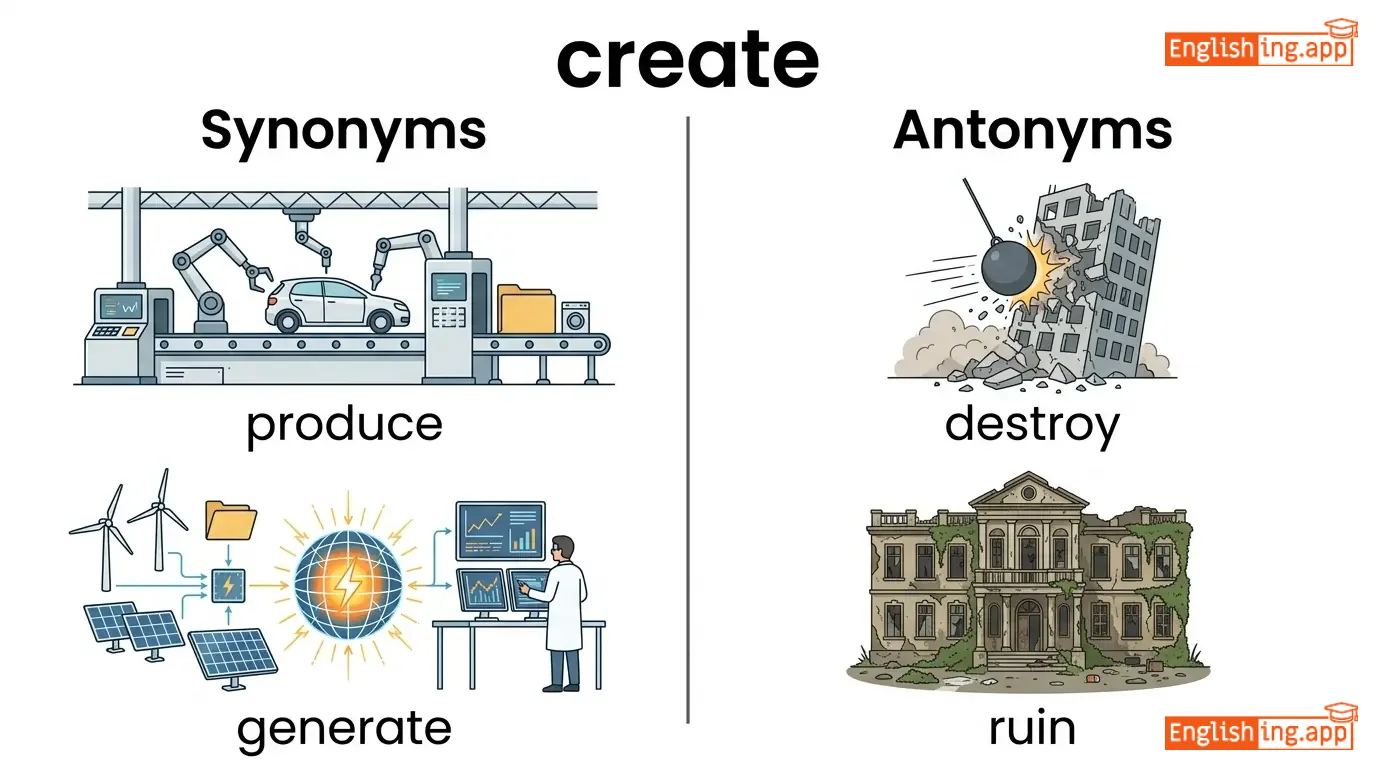
produce, generate, invent, design, build
••••••
|
destroy, ruin, abolish
••••••
|
create jobs, create opportunities, create art, create value
••••••
|
СОЗДАВАТЬ означает создавать, как когда ты создаешь новый проект.
••••••
|
|
#10751
☕
|
/kʌp/
noun
(кап)
••••••
|
- •••••• |
чашка
chashka
••••••
|
- •••••• | - •••••• | - •••••• | - •••••• |
a small bowl-shaped container for drinking from, typically with a handle
••••••
|
She drank a cup of tea in the morning. |
Она выпила чашку чая утром.
Ona vypila chashku chaya utrom.
••••••
|
cup of tea |
something one enjoys or prefers
••••••
|
чашка чая
chashka chaya
••••••
|
mug, glass, goblet, chalice
••••••
|
bottle, jug
••••••
|
cup of tea, coffee cup, paper cup, measuring cup
••••••
|
чашка = питье из любимой посуды
••••••
|
|
#10752
🌍
|
/ˈkʌltʃər/
noun
(kʊlʲtʊrɨ)
••••••
|
- •••••• |
культура
kultura
••••••
|
- •••••• | - •••••• | - •••••• | - •••••• |
the customs, arts, social institutions, and achievements of a particular people or society
••••••
|
Japanese culture is admired all over the world. |
Японская культура восхищает весь мир.
Yaponskaya kul'tura voskhishchayet ves' mir.
••••••
|
popular culture |
modern cultural activities and products that are well-liked by many people
••••••
|
популярная культура
populyarnaya kul'tura
••••••
|
civilization, tradition, lifestyle, heritage, society
••••••
|
barbarism, uncivilized
••••••
|
rich culture, preserve culture, local culture, diverse culture
••••••
|
Культура и культура — это то, что формирует общество.
••••••
|
|
#10753
🎭
|
/ˈkʌltʃərəl/
adjective
(кʌлтшерал)
••••••
|
|
культурный
kul'turnyy
••••••
|
- •••••• | - •••••• | - •••••• | - •••••• |
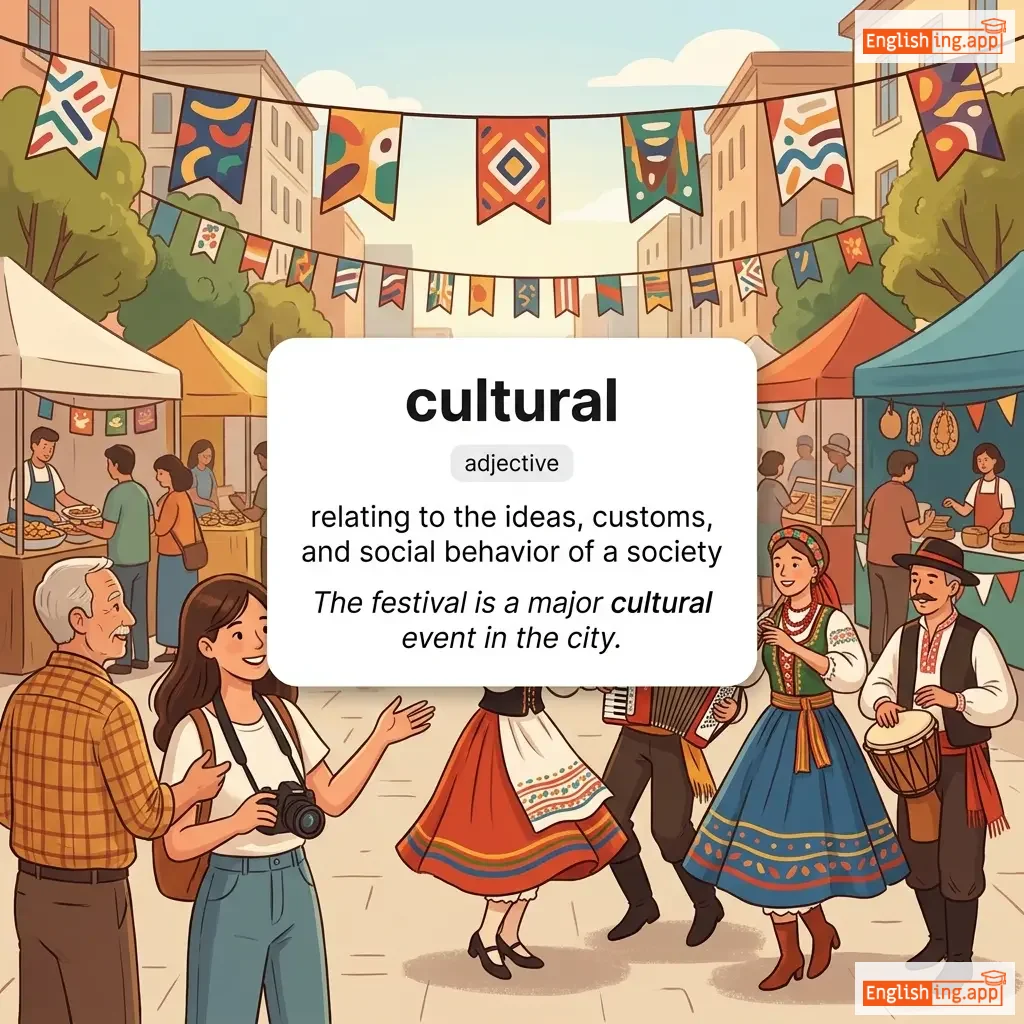
relating to the ideas, customs, and social behavior of a society
••••••
|
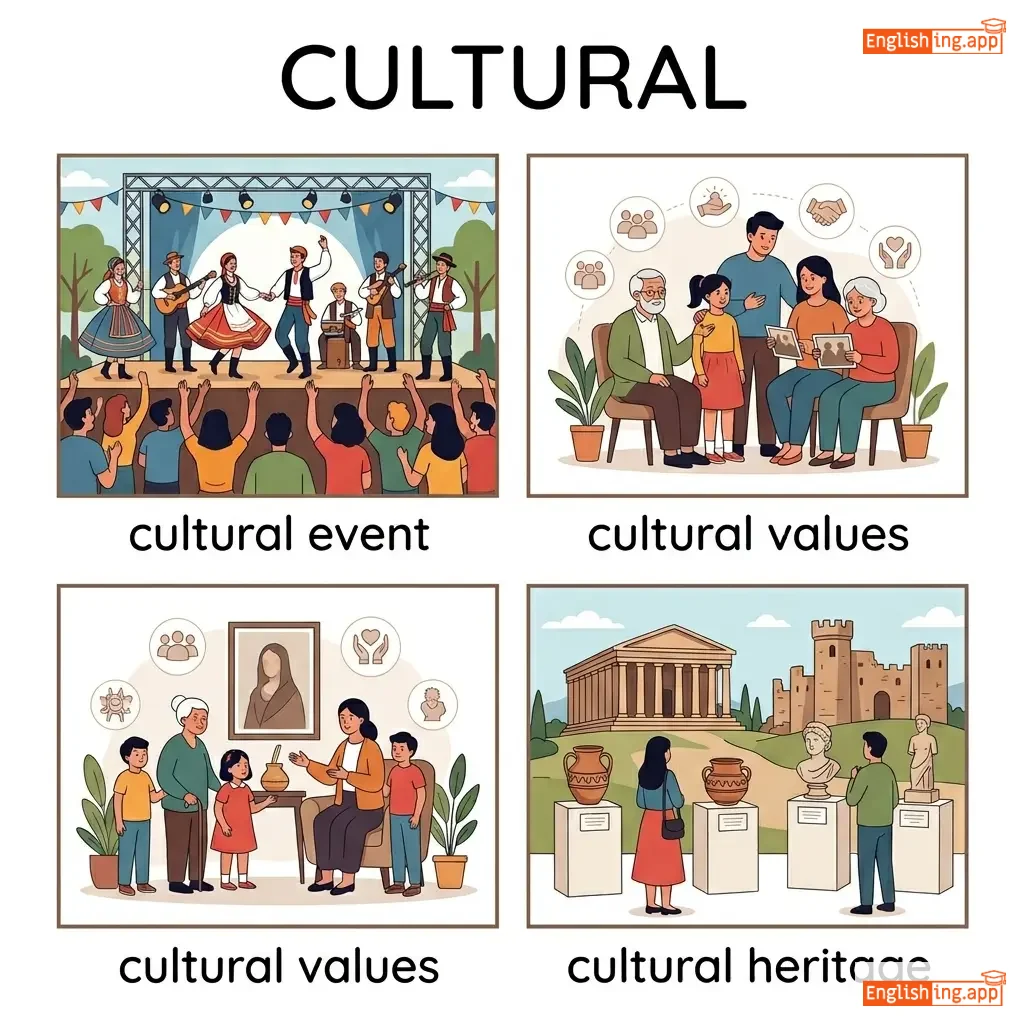
The festival is a major cultural event in the city. |
Фестиваль — это важное культурное событие в городе.
Festival' — eto vazhnoe kul'turnoe sobytiye v gorode.
••••••
|
- •••••• | - •••••• | - •••••• |
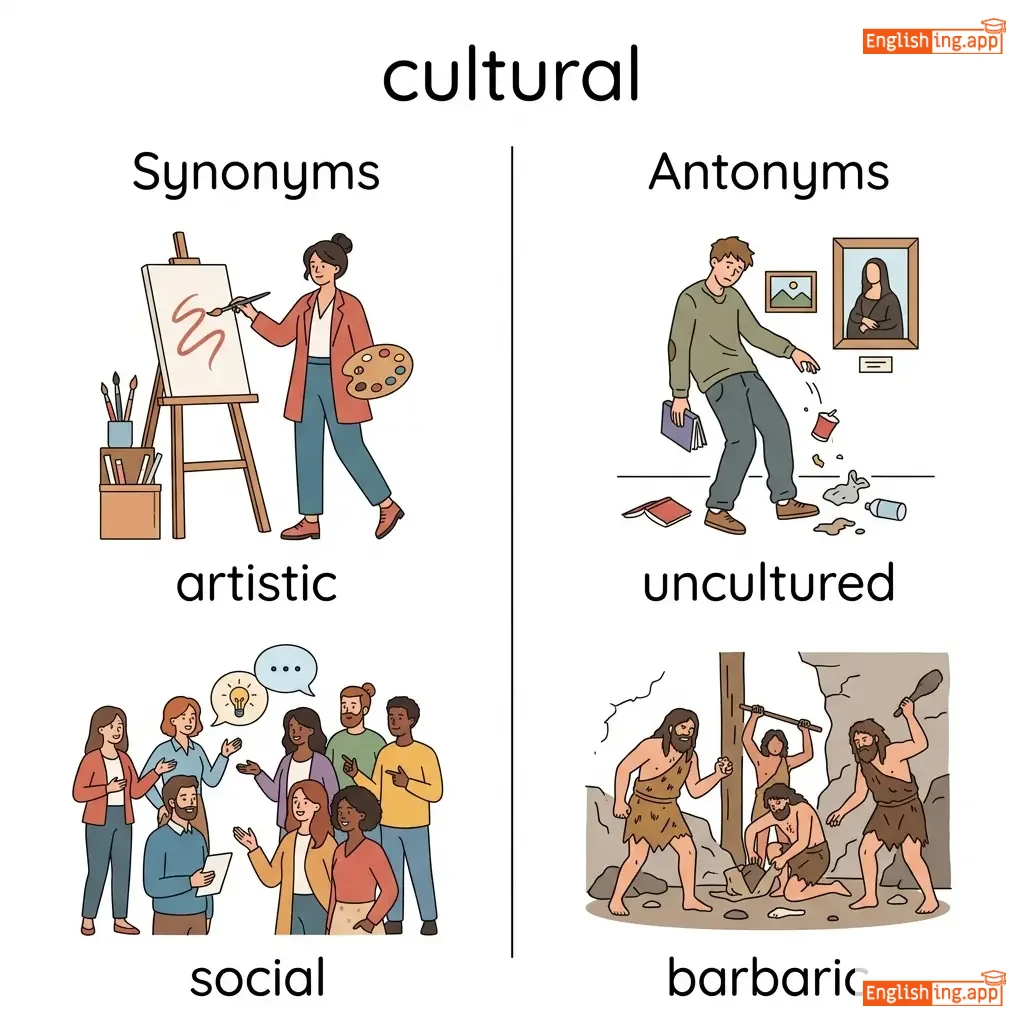
artistic, social, traditional, heritage, ethnic
••••••
|
uncultured, barbaric
••••••
|
cultural event, cultural values, cultural heritage, cultural identity
••••••
|
Культурный — это что-то, что связано с традициями и поведением в обществе.
••••••
|
|
#10754
👥
|
/kraʊd/
noun
(kraud)
••••••
|
- •••••• |
толпа
tolpa
••••••
|
- •••••• | - •••••• | - •••••• | - •••••• |
a large number of people gathered together
••••••
|
A huge crowd gathered to watch the concert.
A hjuʒ kraʊd gæðərd tu wɒtʃ ðə kənˈsɜrt.
••••••
|
Огромная толпа собралась, чтобы посмотреть концерт.
Ogromnaya tolpa sobralas', chtoby posmotret' kontsert.
••••••
|
follow the crowd
fɔloʊ ðə kraʊd
••••••
|
to do what most other people are doing
••••••
|
идти за толпой
idti za tolpoy
••••••
|
gathering, throng, multitude, mob, audience
••••••
|
individual, solitude
••••••
|
huge crowd, large crowd, control the crowd, cheer the crowd
••••••
|
Crowd означает толпа - много людей вместе.
••••••
|
|
#10755
🌾
|
/krɒp/
noun
(krɒp)
••••••
|
- •••••• |
урожай
urozhay
••••••
|
- •••••• | - •••••• | - •••••• | - •••••• |
plants that are grown and harvested for food or other use
••••••
|
The farmers harvested their rice crop in autumn. |
Фермеры собрали свой урожай риса осенью.
Fermery sobrali svoj urozhaj risa osenyu.
••••••
|
bumper crop |
an unusually large harvest
••••••
|
богатый урожай
bogatyj urozhaj
••••••
|
harvest, yield, produce, grain
••••••
|
famine, scarcity
••••••
|
crop yield, crop production, crop failure, crop season
••••••
|
Crop означает урожай, идите в поле и собирайте урожай.
••••••
|
|
#10756
📝
|
/ˈkrɪtɪsaɪz/
verb
(критикалайз)
••••••
|
|
критиковать
kritikovat
••••••
|
criticized
критикалайтед
••••••
|
criticized
критикалайтед
••••••
|
criticizes
критикает
••••••
|
criticizing
критикализинг
••••••
|
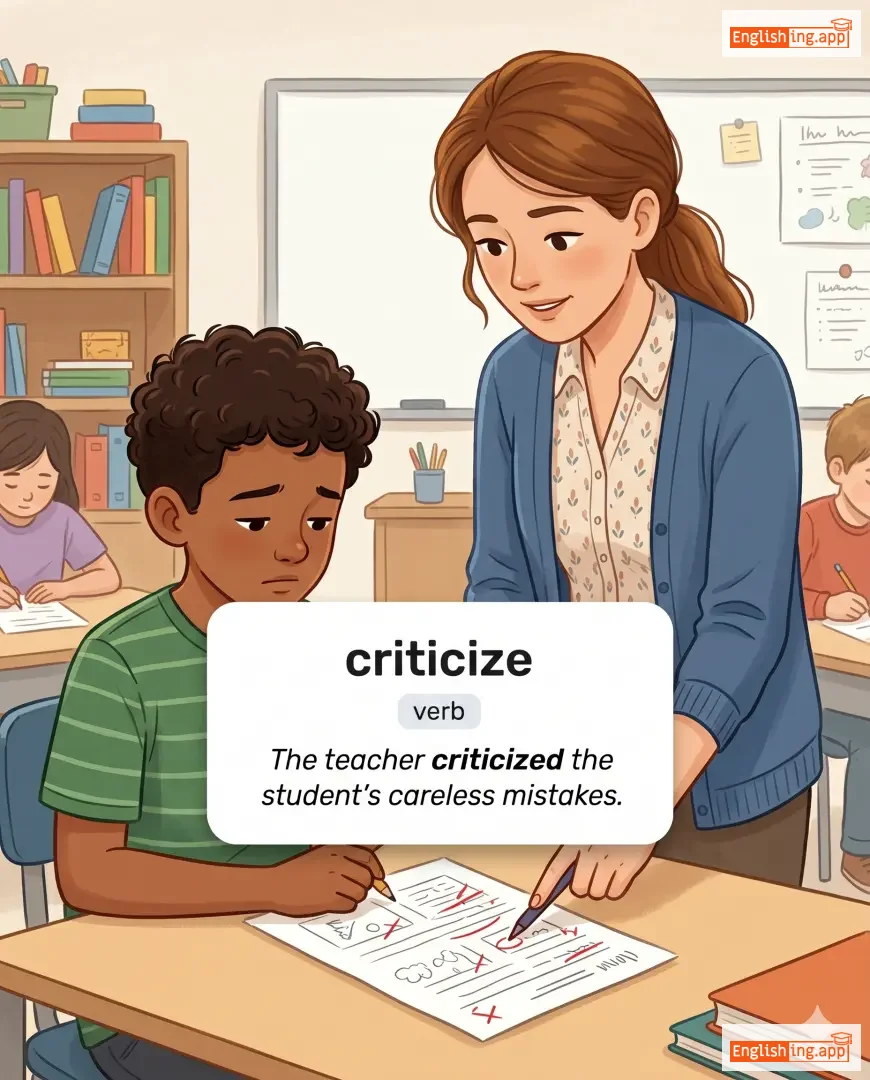
to express disapproval of someone or something by pointing out faults or shortcomings
••••••
|
The teacher criticized the student's careless mistakes.
Учитель раскритиковал неосторожные ошибки студента.
••••••
|
Учитель раскритиковал неосторожные ошибки студента.
Uchitel' raskritikoval neostorozhnye oshibki studenta.
••••••
|
constructive criticism
конструктивная критика
••••••
|
helpful feedback intended to improve performance
••••••
|
конструктивная критика
konstruktiivnaya kritika
••••••
|
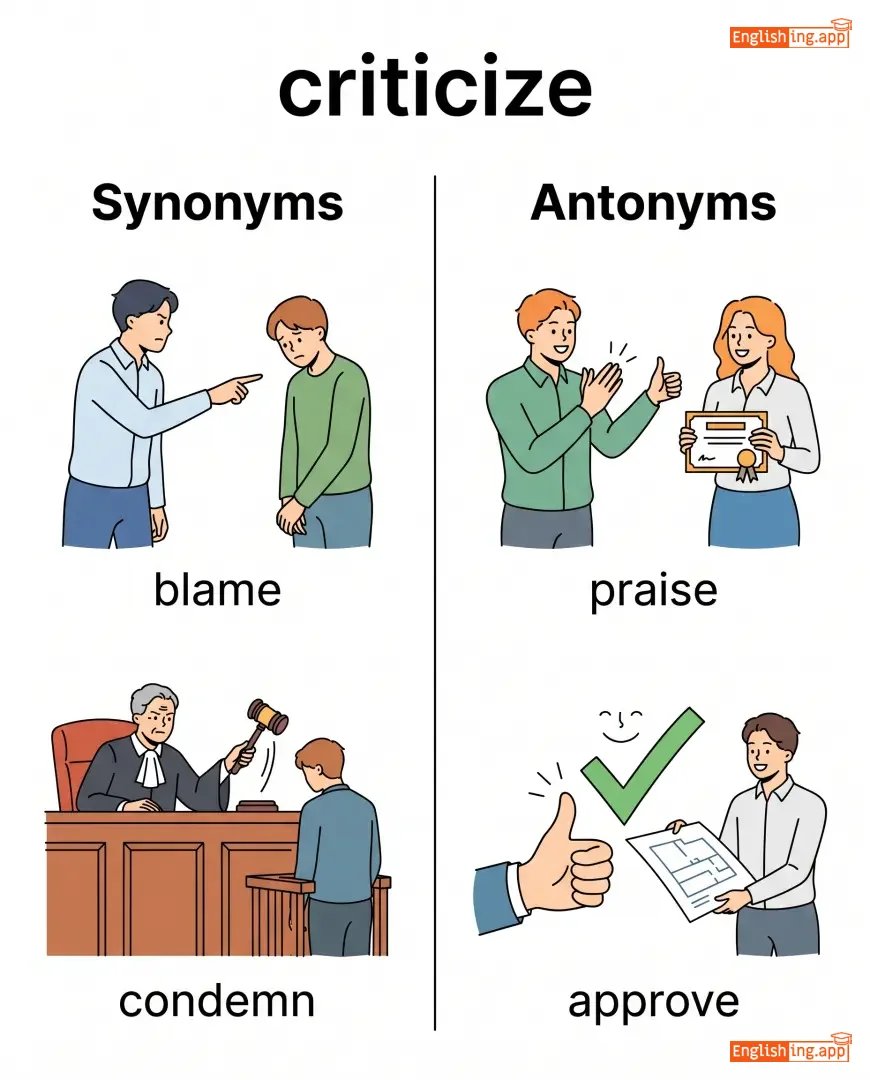
blame, condemn, censure, evaluate, review
••••••
|
praise, approve, compliment
••••••
|
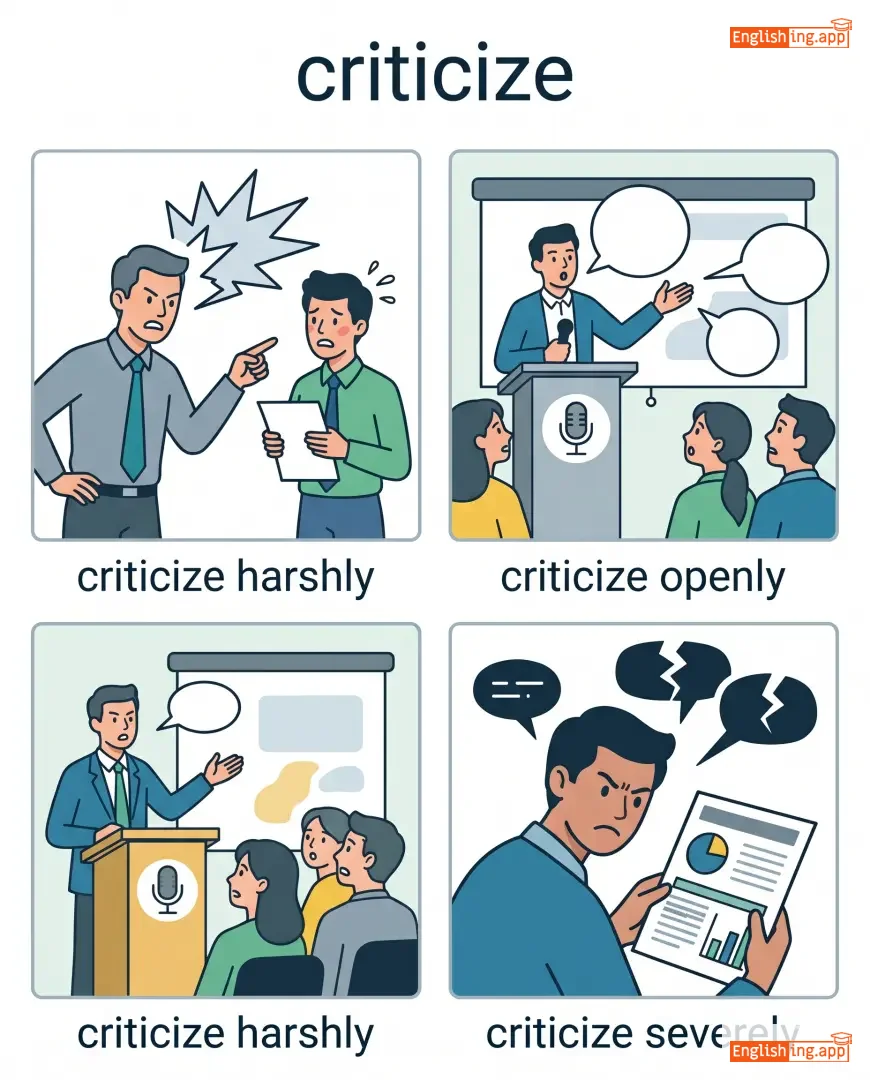
criticize harshly, criticize openly, criticize severely, criticize constantly
••••••
|
Criticize означает указывать на ошибки для улучшения.
••••••
|
|
#10757
💬
|
/ˈkrɪtɪˌsɪzəm/
noun
(критицизм)
••••••
|
- •••••• |
критика
kritika
••••••
|
- •••••• | - •••••• | - •••••• | - •••••• |
The expression of disapproval or judgment of the merits of something
••••••
|
The new policy has faced a lot of criticism from the public. |
Новая политика столкнулась с критикой со стороны общественности.
Novaya politika stolknulas s kritikoy so storony obshchestvennosti.
••••••
|
constructive criticism |
helpful and useful feedback intended to improve something
••••••
|
конструктивная критика
konstruktivnaya kritika
••••••
|
disapproval, judgment, assessment, evaluation, remark
••••••
|
praise, compliment
••••••
|
constructive criticism, harsh criticism, literary criticism, public criticism
••••••
|
Критика = Criticism
••••••
|
|
#10758
❗
|
/ˈkrɪtɪkəl/
adjective
(kritikal)
••••••
|
|
критический / критический
kriticheskiy / kriticheskiy
••••••
|
- •••••• | - •••••• | - •••••• | - •••••• |
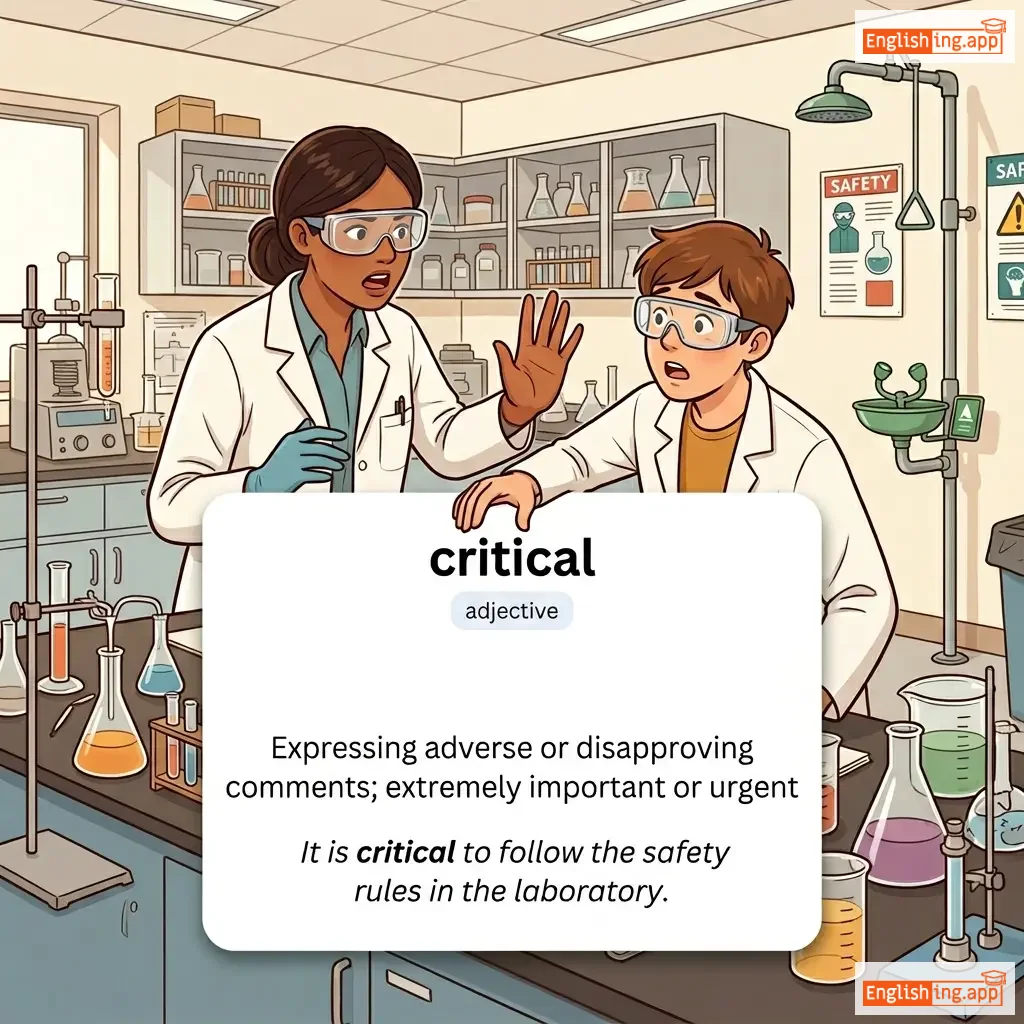
Expressing adverse or disapproving comments; extremely important or urgent
••••••
|
It is critical to follow the safety rules in the laboratory. |
Крайне важно соблюдать правила безопасности в лаборатории.
Krayne vazhno soblyudat' pravila bezopasnosti v laboratorii.
••••••
|
critical condition |
a serious medical state where life is at risk
••••••
|
критическое состояние
kriticheskoe sostoyanie
••••••
|
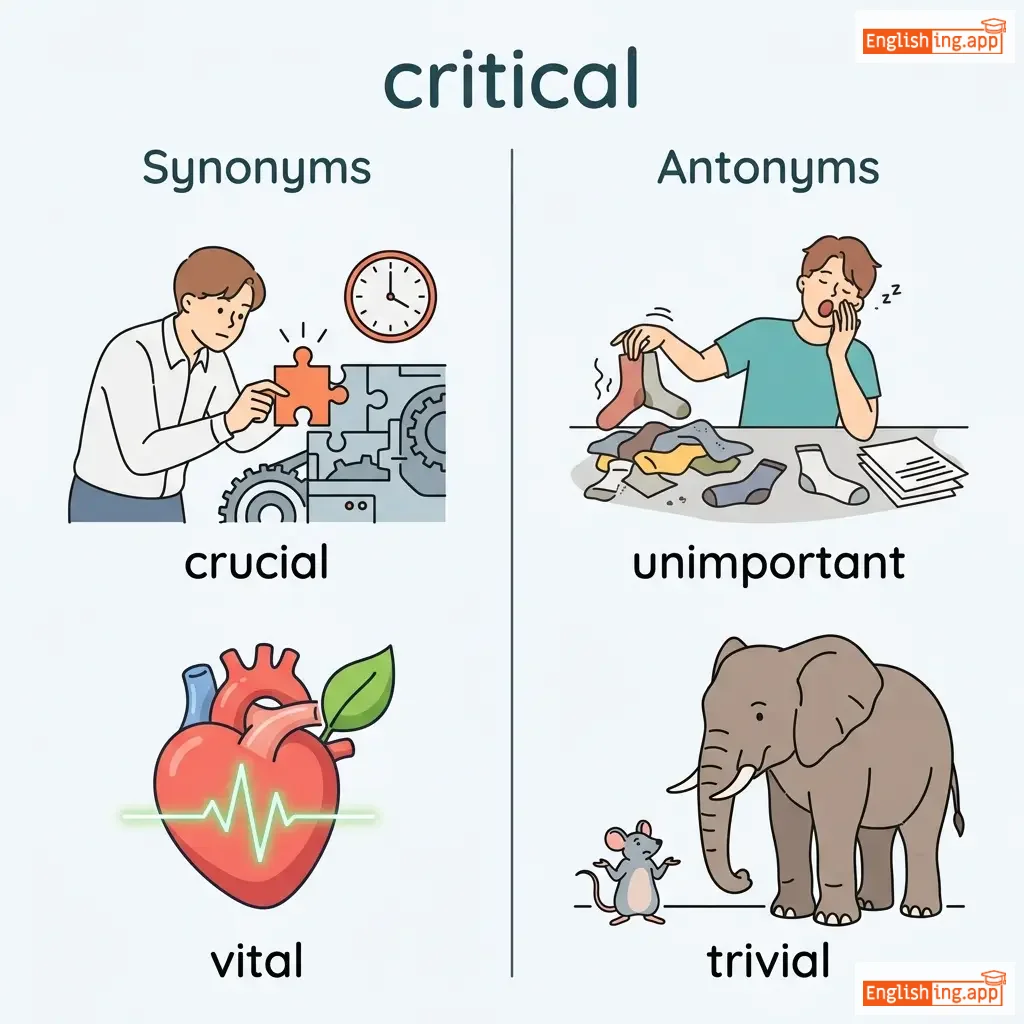
crucial, vital, essential, urgent, disapproving
••••••
|
unimportant, trivial, supportive
••••••
|
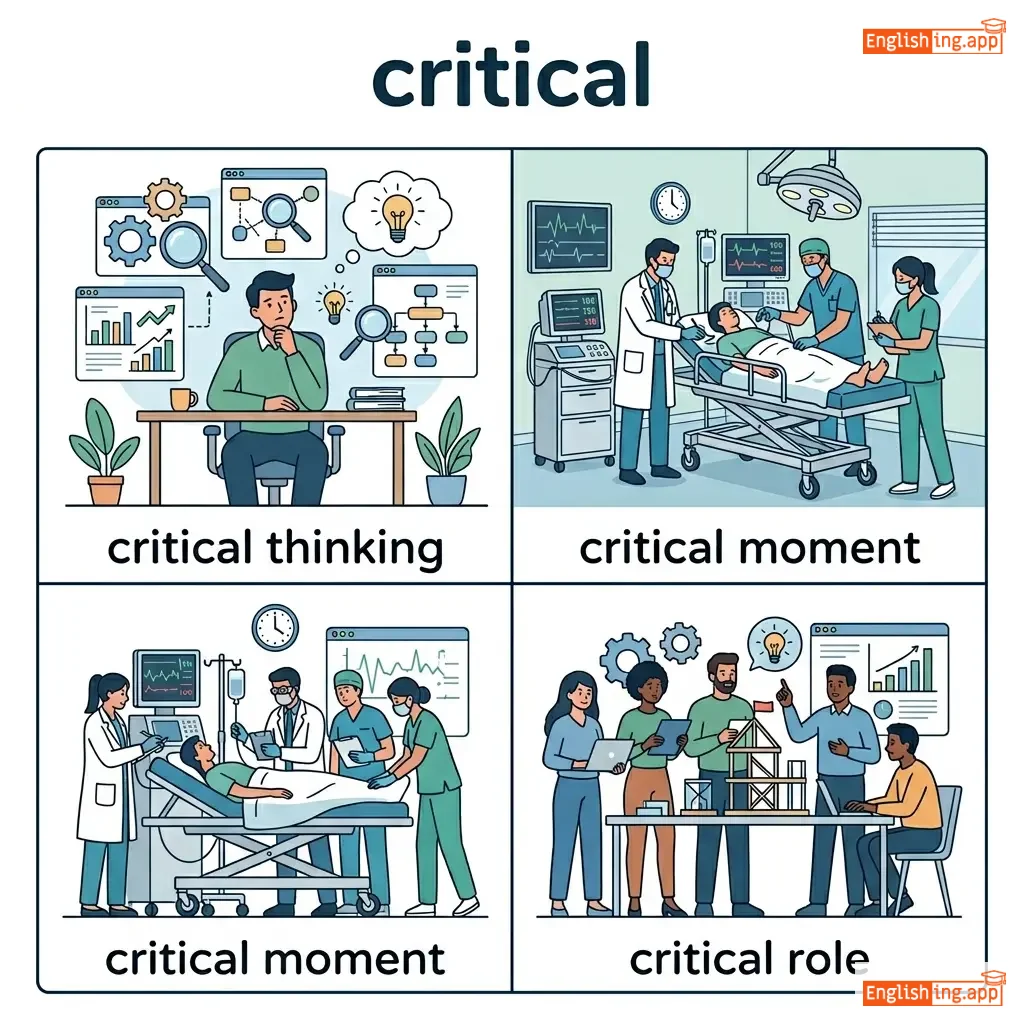
critical thinking, critical moment, critical role, critical analysis
••••••
|
Critical означает критический, как в кризисной ситуации – Critical = критический
••••••
|
|
#10759
📝
|
/ˈkrɪtɪk/
noun
(критик)
••••••
|
- •••••• |
критик
kritik
••••••
|
- •••••• | - •••••• | - •••••• | - •••••• |
A person who judges the merits of something, especially art or literature
••••••
|
The film critic praised the director's latest movie. |
Кинокритик похвалил последний фильм режиссера.
Kinokritik pokhvalil posledniy film rezhissera.
••••••
|
armchair critic |
someone who criticizes without real knowledge or involvement
••••••
|
критик с кресла
kritik s kresla
••••••
|
reviewer, evaluator, commentator, judge
••••••
|
supporter, admirer
••••••
|
film critic, art critic, music critic, theater critic
••••••
|
Critic = критик, всегда оценивает
••••••
|
|
#10760
⚠️
|
/ˈkraɪsɪs/
noun
(крисис)
••••••
|
|
кризис
krizis
••••••
|
- •••••• | - •••••• | - •••••• | - •••••• |
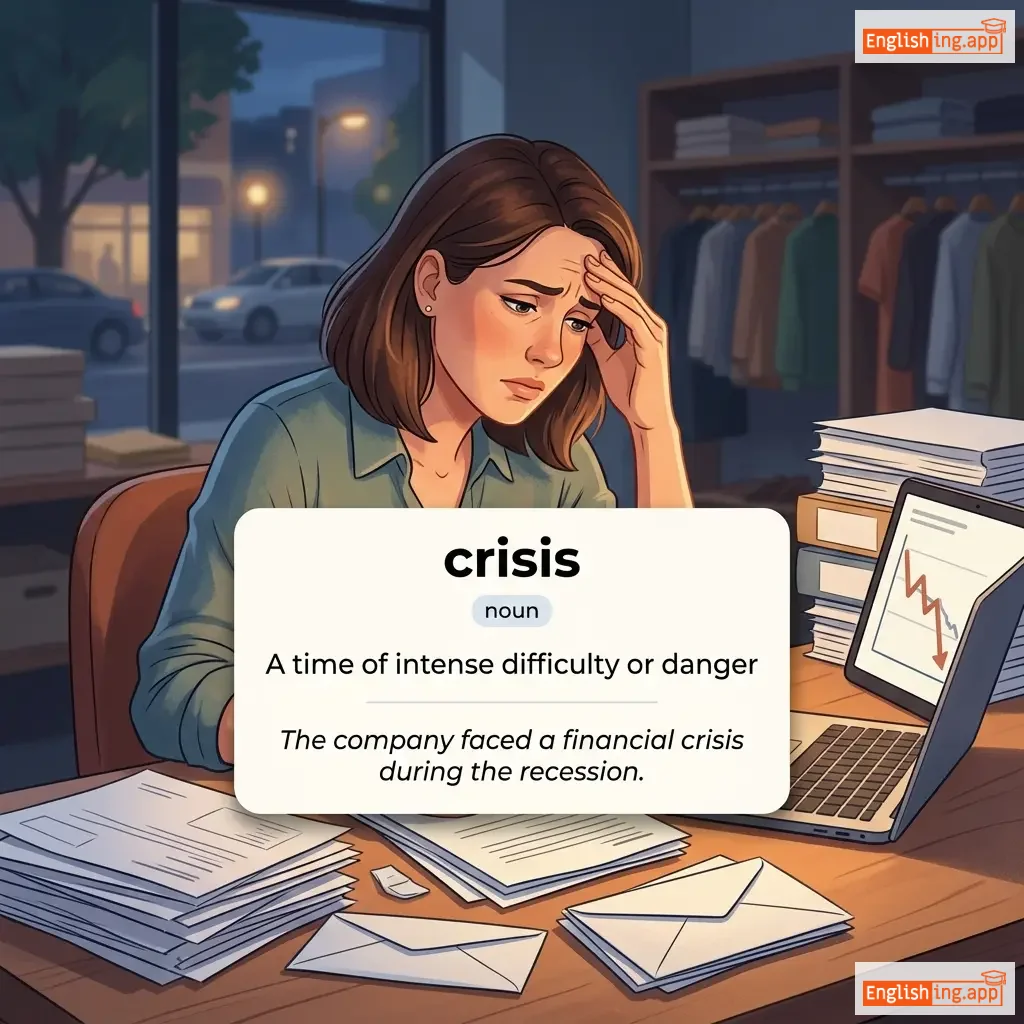
A time of intense difficulty or danger
••••••
|
The company faced a financial crisis during the recession. |
Компания столкнулась с финансовым кризисом во время рецессии.
Kompaniya stolknulas s finansovym krizisom vo vremya retsetsii.
••••••
|
midlife crisis |
a period of doubt and anxiety in middle age about one's life
••••••
|
кризис среднего возраста
krizis srednego vozrasta
••••••
|
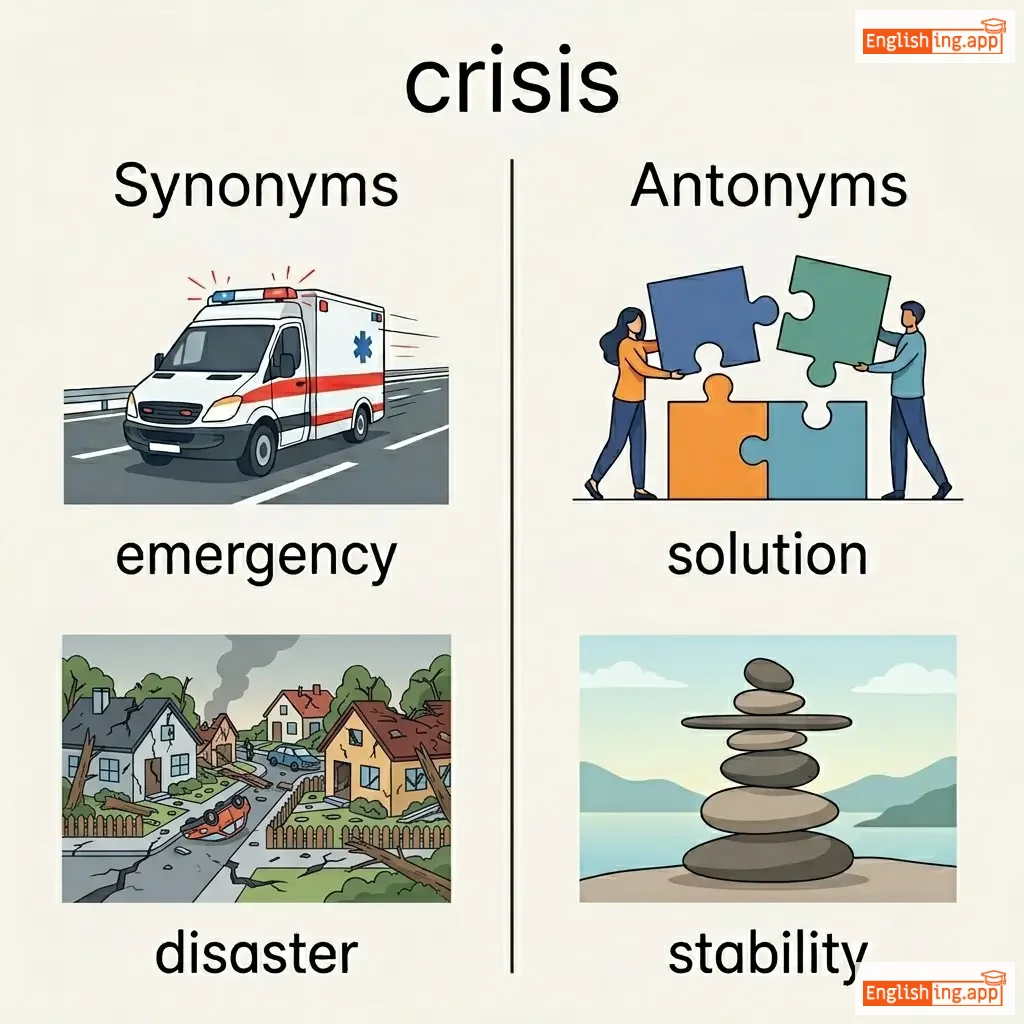
emergency, disaster, dilemma, catastrophe, trouble
••••••
|
solution, stability, peace
••••••
|
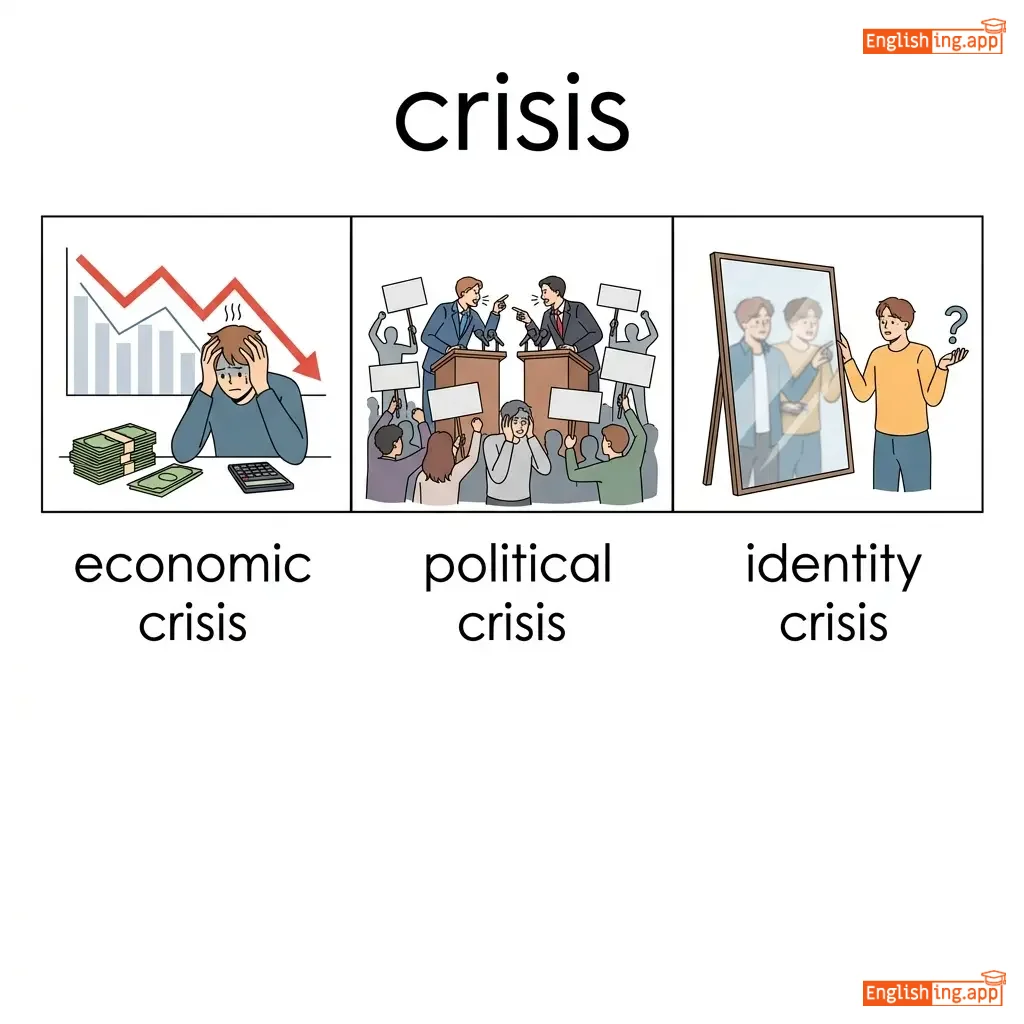
economic crisis, political crisis, identity crisis, health crisis
••••••
|
Crisis означает, что все идет не так, как надо!
••••••
|
|
#10761
🚔
|
/ˈkrɪmɪnəl/
noun, adjective
(kriminal)
••••••
|
- •••••• |
преступник
prestupnik
••••••
|
- •••••• | - •••••• | - •••••• | - •••••• |
A person who has committed a crime; relating to crime
••••••
|
The police arrested a dangerous criminal last night. |
Полиция арестовала опасного преступника прошлой ночью.
Politsiya arestovala opasnogo prestupnika proshloy noch'yu.
••••••
|
criminal record |
an official history of crimes committed by a person
••••••
|
уголовный судимост
ugolovnyj sudimost
••••••
|
offender, lawbreaker, felon, culprit, wrongdoer
••••••
|
innocent, lawful, honest
••••••
|
criminal law, criminal record, criminal activity, criminal justice, criminal behavior
••••••
|
Преступник = тот, кто совершил преступление
••••••
|
|
#10762
🚔
|
/kraɪm/
noun
(kraim)
••••••
|
- •••••• |
преступление
prestupleynie
••••••
|
- •••••• | - •••••• | - •••••• | - •••••• |
An illegal act punishable by law.
••••••
|
The police are investigating the crime.
Полиция расследует преступление.
••••••
|
Полиция расследует преступление.
Politsiya rassledyet prestupleniye.
••••••
|
crime does not pay
Преступление не приносит выгоды.
••••••
|
crime ultimately brings punishment, not profit
••••••
|
Преступление не приносит выгоды.
Prestuplenie ne prinosit vygody.
••••••
|
offense, felony, wrongdoing, violation
••••••
|
lawfulness, obedience
••••••
|
commit a crime, crime rate, crime scene, organized crime
••••••
|
Преступление всегда карается, как платить за ошибки.
••••••
|
|
#10763
🐾
|
/ˈkriːtʃər/
noun
(kree-uh-tur)
••••••
|
- •••••• |
существо
sushchestvo
••••••
|
- •••••• | - •••••• | - •••••• | - •••••• |
A living being, especially an animal.
••••••
|
The forest is full of strange creatures. |
Лес полон странных существ.
Les polon strannykh sushchestv.
••••••
|
creature comforts |
basic material comforts that make life pleasant
••••••
|
основные удобства жизни
osnovnyye udoobstva zhizni
••••••
|
being, animal, organism, entity
••••••
|
object, inanimate
••••••
|
sea creature, mythical creature, living creature, wild creature
••••••
|
Creature значит существо—в лесу много существ, играющих в крикет.
••••••
|
|
#10764
💡
|
/kriˈeɪtɪv/
adjective
(kriˈɛtɪv)
••••••
|
- •••••• |
креативный
kreativnyy
••••••
|
- •••••• | - •••••• | - •••••• | - •••••• |
Having the ability to produce new and original ideas or things.
••••••
|
She is very creative in her writing. |
Она очень креативна в своем письме.
Ona ochen' kreativna v svoem pis'me.
••••••
|
- •••••• | - •••••• | - •••••• |
imaginative, inventive, innovative, artistic
••••••
|
unimaginative, dull, conventional
••••••
|
creative thinking, creative writing, creative design, creative process
••••••
|
Creative означает создавать новые идеи креативным способом.
••••••
|
Vocabulary Quiz
Test your vocabulary by matching words with their translations or meanings.
Login to take the quiz
Comments (0)
Share your thoughts and join the discussion.
Join the discussion by logging in
Login to CommentNo comments yet
Be the first to share your thoughts!