

Обновитесь для доступа ко всему словарю
Получите неограниченный доступ ко всем словам с подпиской Pro
Обновить до ProПеревод
Прошедшее
Причастие прошедшего времени
Третье лицо единственного числа
Герундий
Значение
Пример предложения
Перевод примера предложения
Синонимы
Антонимы
Коллокации
Мнемоника
Swipe left or right, or use the buttons. Tap image to zoom.
Обновитесь для доступа ко всем предложениям
Получите неограниченный доступ ко всем предложениям с подпиской Pro
Обновить до ProПеревод примера предложения
Слово
Lesson 316Lesson 316 - Переключатель маски
|
Эмодзи
|
Слово | Images | Перевод | Прошедшее | Причастие прошедшего времени | Третье лицо единственного числа | Герундий | Значение | Пример предложения | Перевод примера предложения | Пример выражения | Значение примера выражения | Перевод примера выражения | Синонимы | Антонимы | Коллокации | Мнемоника |
|---|---|---|---|---|---|---|---|---|---|---|---|---|---|---|---|---|---|
|
#9450
😉
|
/ˈwiːdəl/
verb
(виидэл)
••••••
|
- •••••• |
уговорить лестью
ugovorit' lestyu
••••••
|
wheedled
вииделд
••••••
|
wheedled
вииделд
••••••
|
wheedles
вииделс
••••••
|
wheedling
вииделинг
••••••
|
to persuade or coax someone by using flattery or smooth talk
••••••
|
She managed to wheedle extra pocket money from her father.
Она смогла уговорить своего отца дать ей дополнительные карманные деньги.
••••••
|
Она смогла уговорить своего отца дать ей дополнительные карманные деньги.
Ona smogla ugovorit' svoego ottsa dat' yey dopolnitel'nye karmannye dengi.
••••••
|
- •••••• | - •••••• | - •••••• |
coax, flatter, cajole, charm, sweet-talk
••••••
|
demand, force, insult
••••••
|
wheedle money, wheedle permission, wheedle his way
••••••
|
Wheedle значит уговорить с помощью лести
••••••
|
|
#9451
🔹
|
/wɪt/
noun
(вит)
••••••
|
- •••••• |
очень маленькое количество
ochen' malen'koye kolichestvo
••••••
|
- •••••• | - •••••• | - •••••• | - •••••• |
a very small part or amount
••••••
|
He doesn't care a whit about the outcome. |
Ему не важен результат ни в малейшей степени.
Emu ne vazhen rezul'tat ni v maleyshey stepeni.
••••••
|
not a whit |
not at all; not in the slightest degree
••••••
|
ни в малейшей степени
ni v maleyshey stepeni
••••••
|
bit, iota, shred, ounce, speck
••••••
|
lot, abundance, plenty
••••••
|
not a whit, without a whit, a whit of difference
••••••
|
whit (в малейшей степени) обозначает очень маленькую величину, как пылинка.
••••••
|
|
#9452
🐴
|
/ˈwɪni/
verb
(вини)
••••••
|
- •••••• |
ржание
rzhaniye
••••••
|
whinnied
винид
••••••
|
whinnied
винид
••••••
|
whinnies
виниз
••••••
|
whinnying
вининг
••••••
|
to make the high-pitched sound a horse makes
••••••
|
The horse whinnied when it saw its rider.
Лошадь виннила, когда увидела своего всадника.
••••••
|
Лошадь ржала, когда увидела своего всадника.
Loshad' rzhala, kogda uvidela svoego vsadnika.
••••••
|
- •••••• | - •••••• | - •••••• |
neigh, snort, nicker, cry, call
••••••
|
silence, quiet
••••••
|
horse whinny, whinny softly, whinny loudly, whinny sound
••••••
|
Whinny означает ржание - лошадь делает звук, когда выигрывает.
••••••
|
|
#9453
😩
|
/waɪn/
verb
(wajn)
••••••
|
|
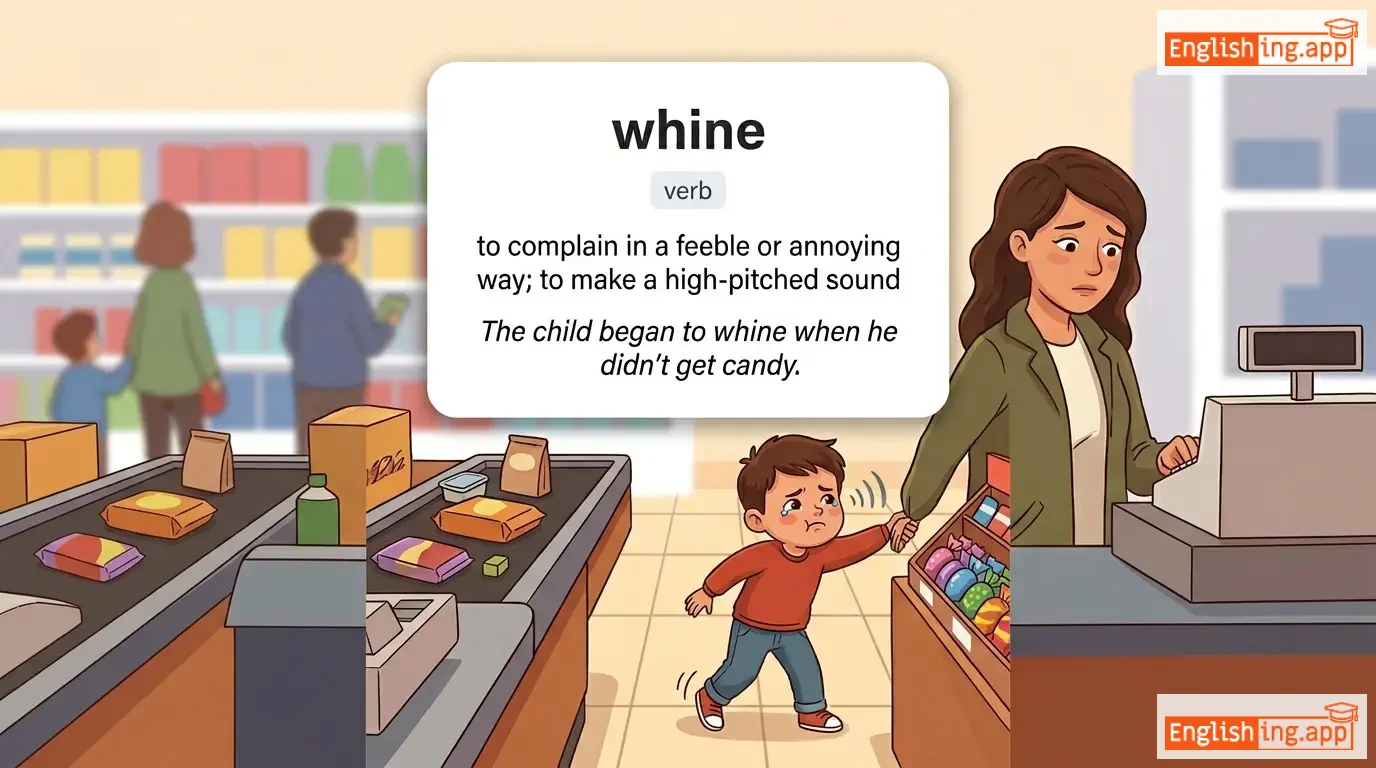
ныть
nyt
••••••
|
whined
wajnd
••••••
|
whined
wajnd
••••••
|
whines
wajnz
••••••
|
whining
wajning
••••••
|
to complain in a feeble or annoying way; to make a high-pitched sound
••••••
|
The child began to whine when he didn’t get candy.
Der chajld bigan tu wajn wen hi did'nt get kændi.
••••••
|
Ребенок начал ныть, когда не получил конфет.
Rebyonok nachal nyt', kogda ne poluchil konfet.
••••••
|
whine and complain
wajn and komplejn
••••••
|
to continuously express dissatisfaction
••••••
|
ныть и жаловаться
nyt' i zhalovatsya
••••••
|
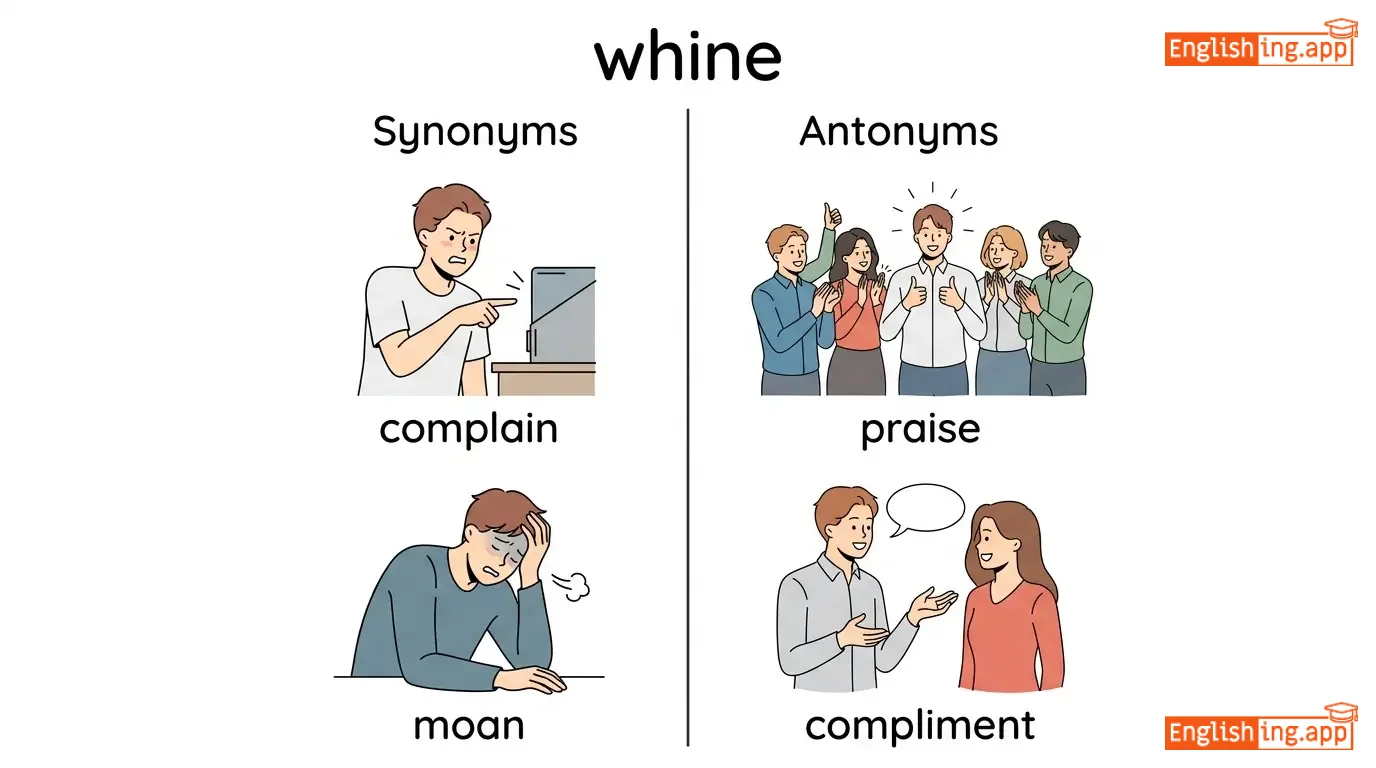
complain, moan, groan, grumble, wail
••••••
|
praise, compliment, rejoice
••••••
|
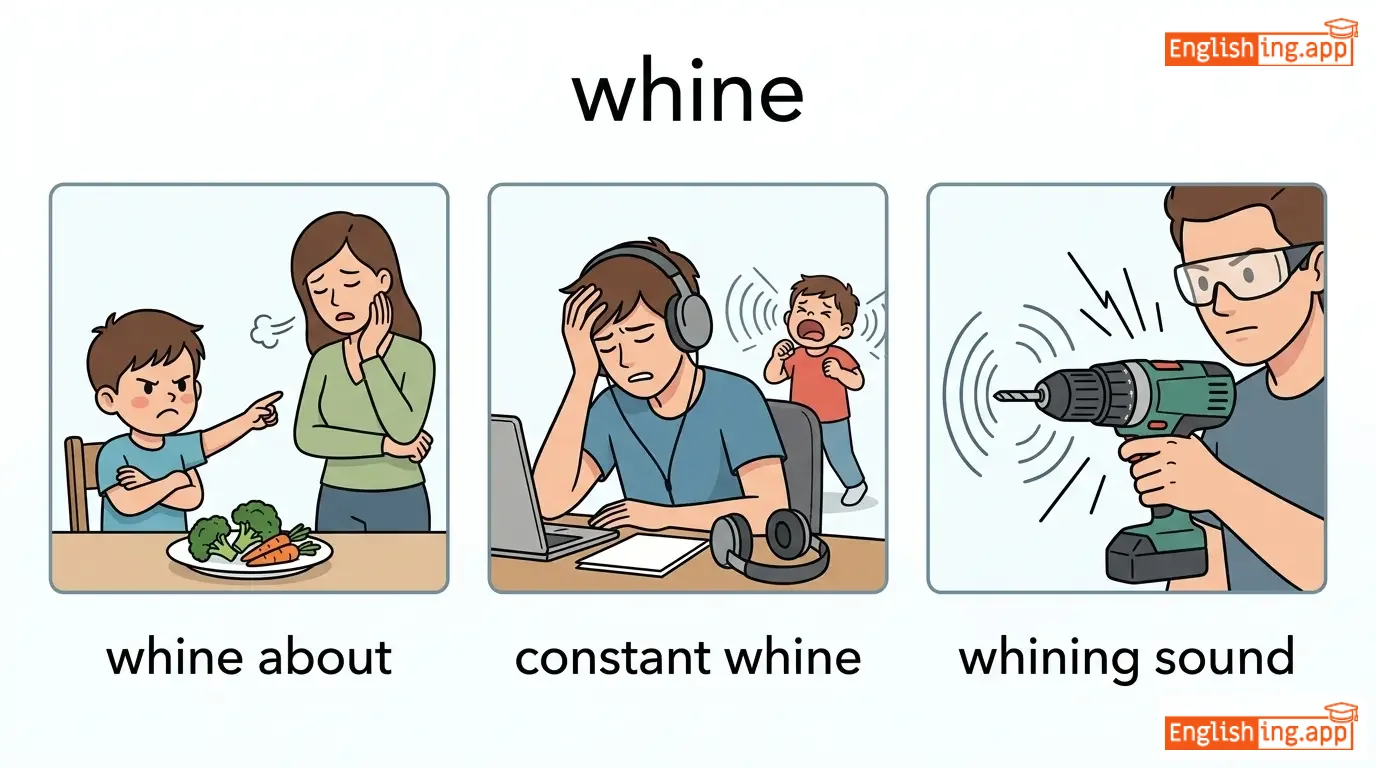
whine about, constant whine, whining sound, whine and cry
••••••
|
Whine означает ныть, как если бы не получить вино, ты начинаешь ныть.
••••••
|
|
#9454
✨
|
/ˈwɪmzi/
noun
(вимзи)
••••••
|
- •••••• |
каприз
kapriz
••••••
|
- •••••• | - •••••• | - •••••• | - •••••• |
playful or fanciful behavior or humor
••••••
|
Her stories were full of whimsy and imagination. |
Её истории были полны каприза и воображения.
Yeyo istorii byli polny kapriza i voobrazheniya.
••••••
|
- •••••• | - •••••• | - •••••• |
fancy, caprice, playfulness, imagination, eccentricity
••••••
|
seriousness, practicality, realism
••••••
|
touch of whimsy, sense of whimsy, element of whimsy, whimsy in art
••••••
|
Whimsy означает каприз - как игривое или фантазийное поведение.
••••••
|
|
#9455
🎨
|
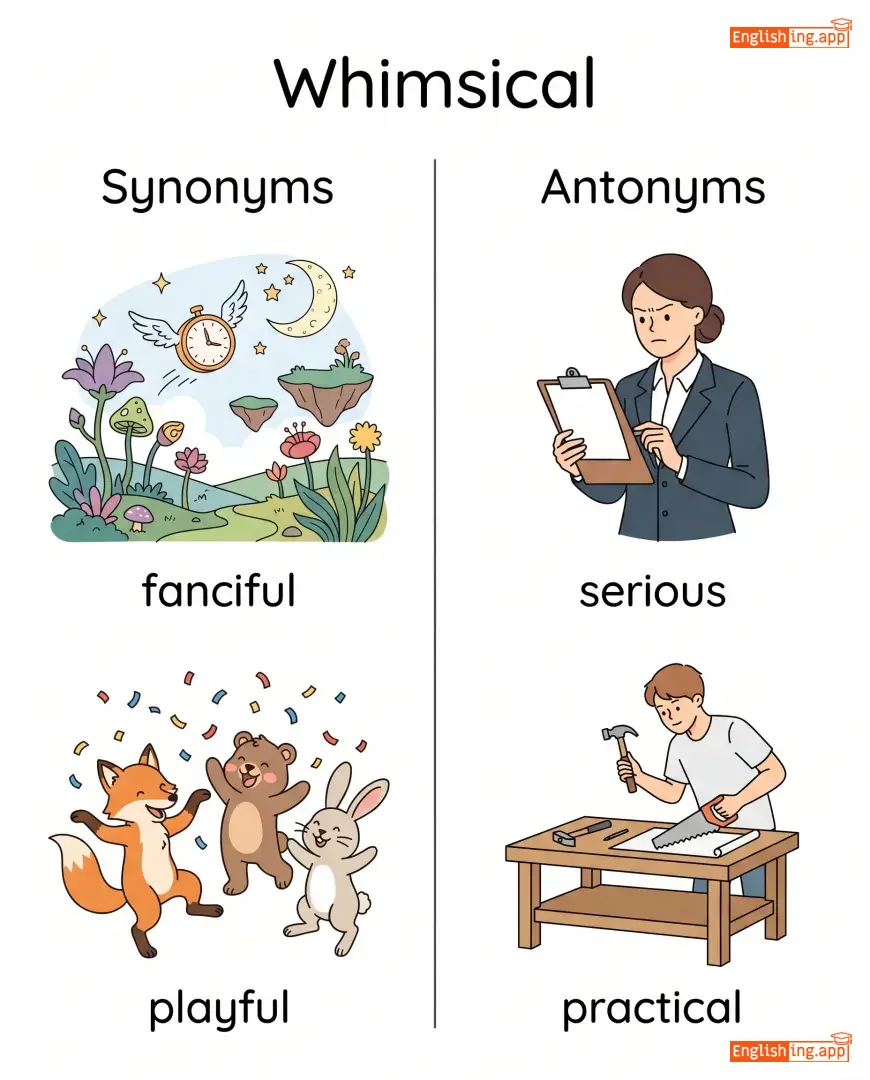
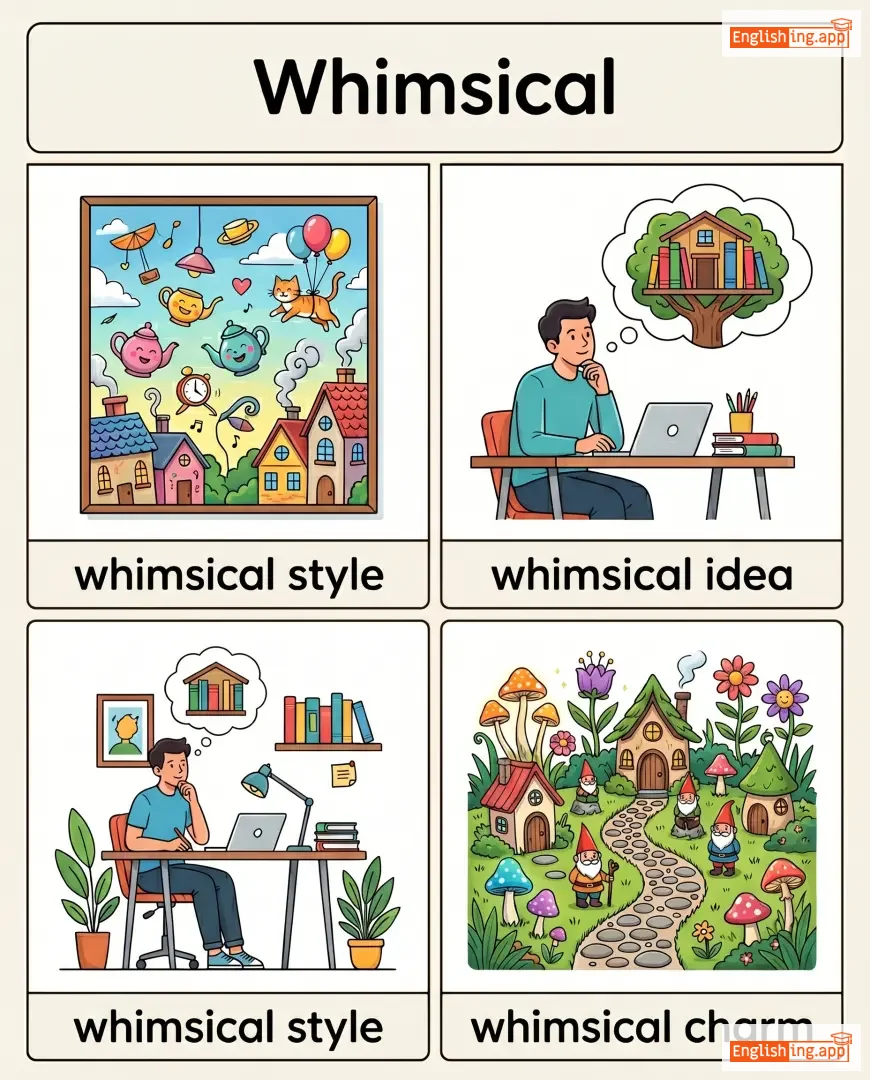
/ˈwɪmzɪkəl/
adjective
(вимзикал)
••••••
|
|
прихотливый
prikhotlivyy
••••••
|
- •••••• | - •••••• | - •••••• | - •••••• |
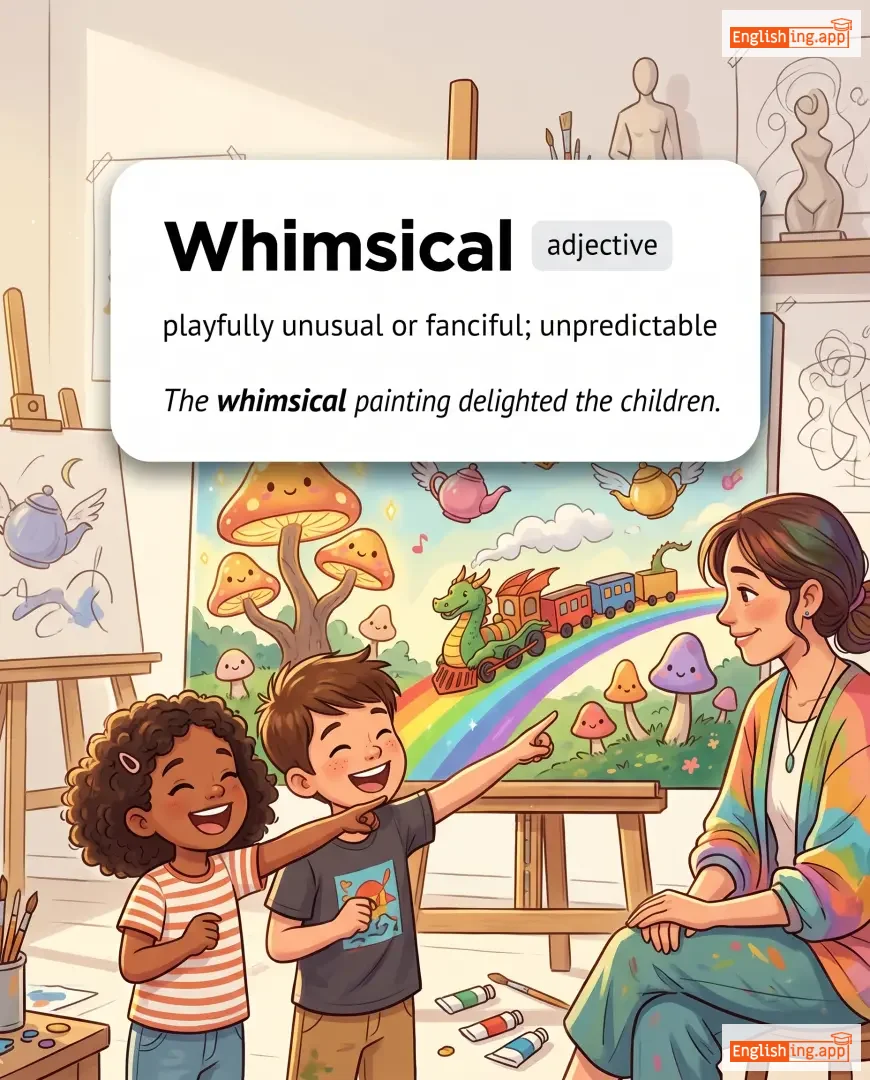
playfully unusual or fanciful; unpredictable
••••••
|
The whimsical painting delighted the children. |
Прихотливая картина порадовала детей.
Prikhotlivaya kartina poradovala detey.
••••••
|
- •••••• | - •••••• | - •••••• |
fanciful, playful, quirky, imaginative, capricious
••••••
|
serious, practical, realistic
••••••
|
whimsical style, whimsical idea, whimsical charm, whimsical imagination
••••••
|
Whimsical означает прихотливый - как человек, который постоянно меняет решения.
••••••
|
|
#9456
💡
|
/wɪm/
noun
(вим)
••••••
|
- •••••• |
прихоть
prikhot
••••••
|
- •••••• | - •••••• | - •••••• | - •••••• |
a sudden or unpredictable idea, desire, or decision
••••••
|
She bought the dress on a whim. |
Она купила платье по прихоти.
Ona kupila plat'ye po prikhoti.
••••••
|
on a whim |
suddenly, without planning
••••••
|
по прихоти
po prikhoti
••••••
|
impulse, fancy, urge, notion, caprice
••••••
|
plan, intention, purpose
••••••
|
sudden whim, foolish whim, act on a whim, whim of the moment
••••••
|
Whim означает прихоть, как когда вы внезапно решаете съесть пирог.
••••••
|
|
#9457
👃
|
/wɪf/
noun, verb
(wif)
••••••
|
- •••••• |
легкий запах
legkiy zapakh
••••••
|
whiffed
wift
••••••
|
whiffed
wift
••••••
|
whiffs
wifs
••••••
|
whiffing
wifing
••••••
|
A brief, faint smell or puff of air; to get a quick smell of something.
••••••
|
I caught a whiff of perfume as she passed by.
Я уловил запах духов, когда она прошла мимо.
••••••
|
Я почувствовал легкий запах духов, когда она прошла мимо.
Ya pochuvstvoval legkiy zapakh dukhov, kogda ona proshla mimo.
••••••
|
catch a whiff
поймать запах
••••••
|
To smell something briefly or faintly
••••••
|
поймать запах
poymat' zapakh
••••••
|
scent, smell, odor, trace, hint
••••••
|
stench, reek
••••••
|
whiff of, catch a whiff, faint whiff, slight whiff
••••••
|
Whiff, как легкий запах духов (legkiy zapakh).
••••••
|
|
#9458
🍴
|
/wɛt/
verb
••••••
|
- •••••• | - •••••• |
whetted
••••••
|
whetted
••••••
|
whets
••••••
|
whetting
••••••
|
To sharpen the blade of a tool or to stimulate interest or appetite.
••••••
|
The smell of food whetted my appetite. |
- •••••• |
whet the appetite |
To increase someone's desire for something
••••••
|
- •••••• |
sharpen, hone, stimulate, arouse, excite
••••••
|
dull, blunt, diminish
••••••
|
whet the appetite, whet curiosity, whet desire, whet interest
••••••
|
No •••••• |
|
#9459
💰
|
/ˈwɛə.wɪð/
adverb, noun
(wɛə wɪð)
••••••
|
- •••••• |
средства
sredstva
••••••
|
- •••••• | - •••••• | - •••••• | - •••••• |
With which; the means or resources needed for something.
••••••
|
He lacked the money wherewith to buy a new house. |
У него не было денег, с которыми он мог бы купить новый дом.
U nego ne bylo deneg, s kotorymi on mog by kupit' novyj dom.
••••••
|
- •••••• | - •••••• | - •••••• |
means, resources, funds, capital, ability
••••••
|
lack, poverty
••••••
|
wherewith to, wherewith he, wherewith she, money wherewith
••••••
|
WHEREWITH что? С деньгами (средства) - означает средства или ресурсы.
••••••
|
|
#9460
🌍
|
/wɛrˈɛv.ər/
adverb
(вэрэвер)
••••••
|
- •••••• |
где угодно
gde ugodno
••••••
|
- •••••• | - •••••• | - •••••• | - •••••• |
In or to any place.
••••••
|
You can find good people wherever you go. |
Ты можешь найти хороших людей где угодно.
Ty mozhesh' nayti khoroshikh lyudey gde ugodno.
••••••
|
wherever you are |
No matter what place you are in
••••••
|
где бы ты ни был
gde by ty ni byl
••••••
|
anywhere, everywhere, wheresoever, all places
••••••
|
nowhere, somewhere specific
••••••
|
wherever possible, wherever you go, wherever needed, wherever necessary
••••••
|
WhereEVER означает где угодно — ты найдешь хороших людей в любом месте!
••••••
|
|
#9461
➡️
|
/ˌwɛr.əˈpɒn/
adverb
(вэрəˈпɒн)
••••••
|
- •••••• |
немедленно после этого
nemedlenno posle etogo
••••••
|
- •••••• | - •••••• | - •••••• | - •••••• |
Immediately after which; as a result of which.
••••••
|
He confessed his mistake, whereupon she forgave him. |
Он признал свою ошибку, немедленно после этого она его простила.
On priznal svoyu oshibku, nemedlenno posle etogo ona ego prostila.
••••••
|
- •••••• | - •••••• | - •••••• |
thereupon, consequently, accordingly, thus, hence
••••••
|
before, prior
••••••
|
whereupon she, whereupon he, confessed whereupon, agreed whereupon
••••••
|
Where UPON что-то произошло, немедленно после этого (nemedlenno posle etogo) произошли последствия.
••••••
|
|
#9462
⚖️
|
/wɛərˈæz/
conjunction
(вэрэз)
••••••
|
- •••••• |
тогда как
togda kak
••••••
|
- •••••• | - •••••• | - •••••• | - •••••• |
used to introduce a contrast or comparison between two facts
••••••
|
She prefers tea, whereas he likes coffee. |
Она предпочитает чай, тогда как он любит кофе.
Ona predpochitayet chay, togda kak on lyubit kofe.
••••••
|
- •••••• | - •••••• | - •••••• |
while, although, but, though
••••••
|
similarly, likewise
••••••
|
whereas clause, whereas statement, tea whereas coffee
••••••
|
Tea vs coffee сравнение - русский тогда как
••••••
|
|
#9463
📍
|
/ˈwɛrəˌbaʊts/
noun
(вɛрэбаутс)
••••••
|
- •••••• |
местоположение
mesto-polojeniye
••••••
|
- •••••• | - •••••• | - •••••• | - •••••• |
the place where someone or something is
••••••
|
The police are trying to find out the suspect's whereabouts. |
Полиция пытается найти местоположение подозреваемого.
Politsiya pytayetsya nayti mestopolozheniye podozrevaemogo.
••••••
|
- •••••• | - •••••• | - •••••• |
location, position, place, spot, site
••••••
|
absence, nowhere
••••••
|
unknown whereabouts, disclose whereabouts, track whereabouts
••••••
|
Whereabouts означает 'местоположение' на русском
••••••
|
|
#9464
🐶
|
/wɛlp/
noun
(хвэлп)
••••••
|
- •••••• |
щенок
shchenok
••••••
|
- •••••• | - •••••• | - •••••• | - •••••• |
a young offspring of a dog or other carnivorous mammal; sometimes used to mean an impudent young person
••••••
|
The farmer found a wolf whelp hiding near the barn. |
Фермер нашел волчонка, скрывающегося рядом с амбаром.
Fermyer nashel volshtonka, skryvayushchegosya ryadom s ambaryom.
••••••
|
- •••••• | - •••••• | - •••••• |
puppy, cub, pup, offspring
••••••
|
adult, grown-up
••••••
|
wolf whelp, dog whelp, young whelp
••••••
|
Whelp означает щенок, как если бы ты помогал маленькому щенку
••••••
|
|
#9465
😨
|
/ˈwiːk niːd/
adjective
(вик-нид)
••••••
|
- •••••• |
трус
trus
••••••
|
- •••••• | - •••••• | - •••••• | - •••••• |
Lacking determination or courage; easily frightened or yielding.
••••••
|
The leader was criticized for being weak-kneed in the face of opposition. |
Лидер был раскритикован за свою слабость перед оппозицией.
Lider byl raskritikovany za svoyu slabost pered oppozitsiey.
••••••
|
- •••••• | - •••••• | - •••••• |
cowardly, timid, spineless, fearful
••••••
|
brave, strong, courageous
••••••
|
weak-kneed leader, weak-kneed response, weak-kneed attitude
••••••
|
Слабые колени не могут стоять – трус означает weak-kneed.
••••••
|
|
#9466
🌊
|
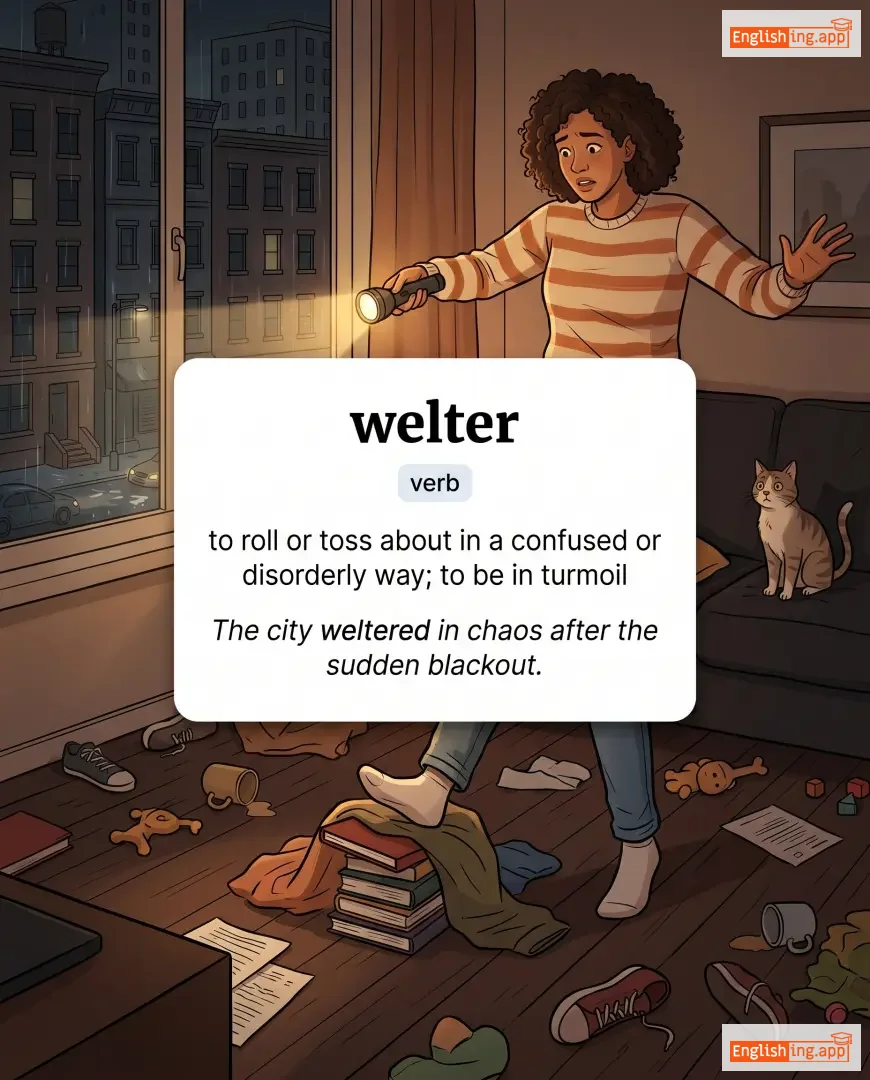
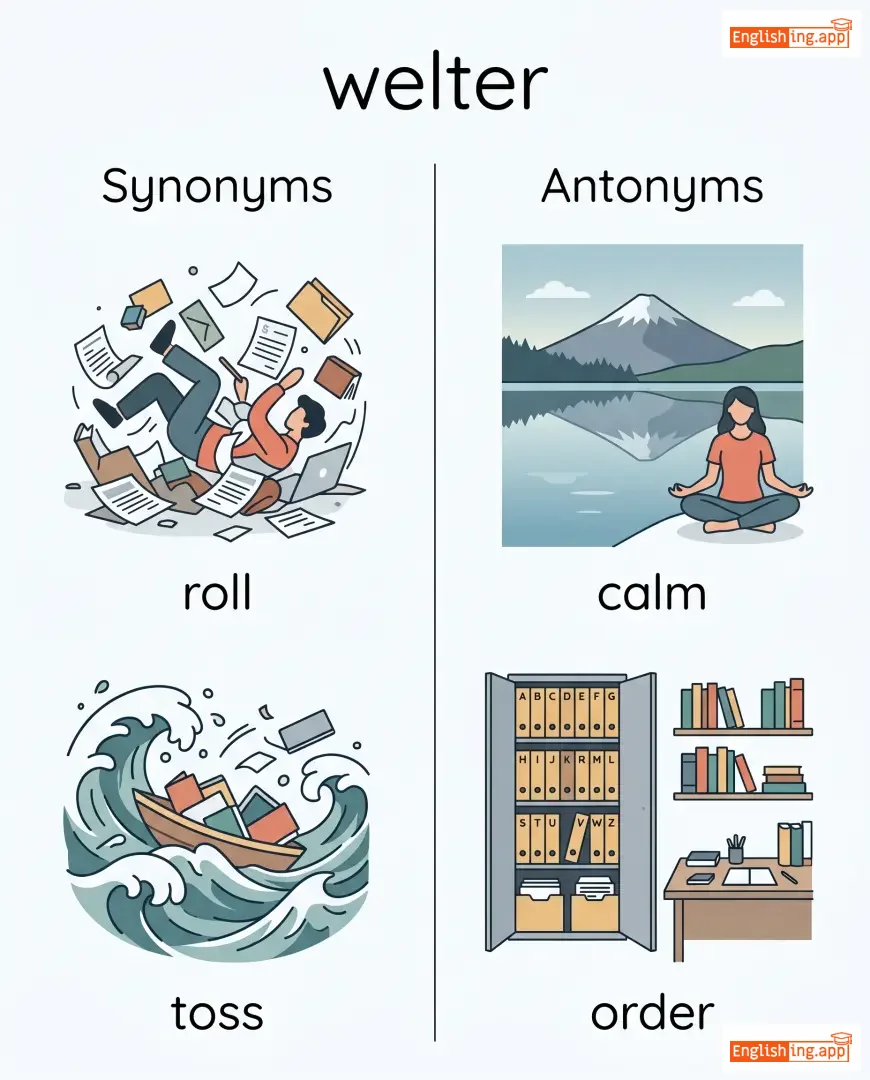
/ˈwɛltər/
verb
(вэлтер)
••••••
|
|
крутиться в хаосе
krutit'sya v khaose
••••••
|
weltered
вэлтерд
••••••
|
weltered
вэлтерд
••••••
|
welters
вэлтерс
••••••
|
weltering
вэлтеринг
••••••
|
to roll or toss about in a confused or disorderly way; to be in turmoil
••••••
|
The city weltered in chaos after the sudden blackout.
Город погрузился в хаос после внезапного отключения электроэнергии.
••••••
|
Город погрузился в хаос после внезапного отключения электроэнергии.
Gorod pogruzilsya v khaos posle vnezapnogo otklyucheniya elektrichestva.
••••••
|
- •••••• | - •••••• | - •••••• |
roll, toss, wallow, flounder, writhe
••••••
|
calm, order, stability
••••••
|
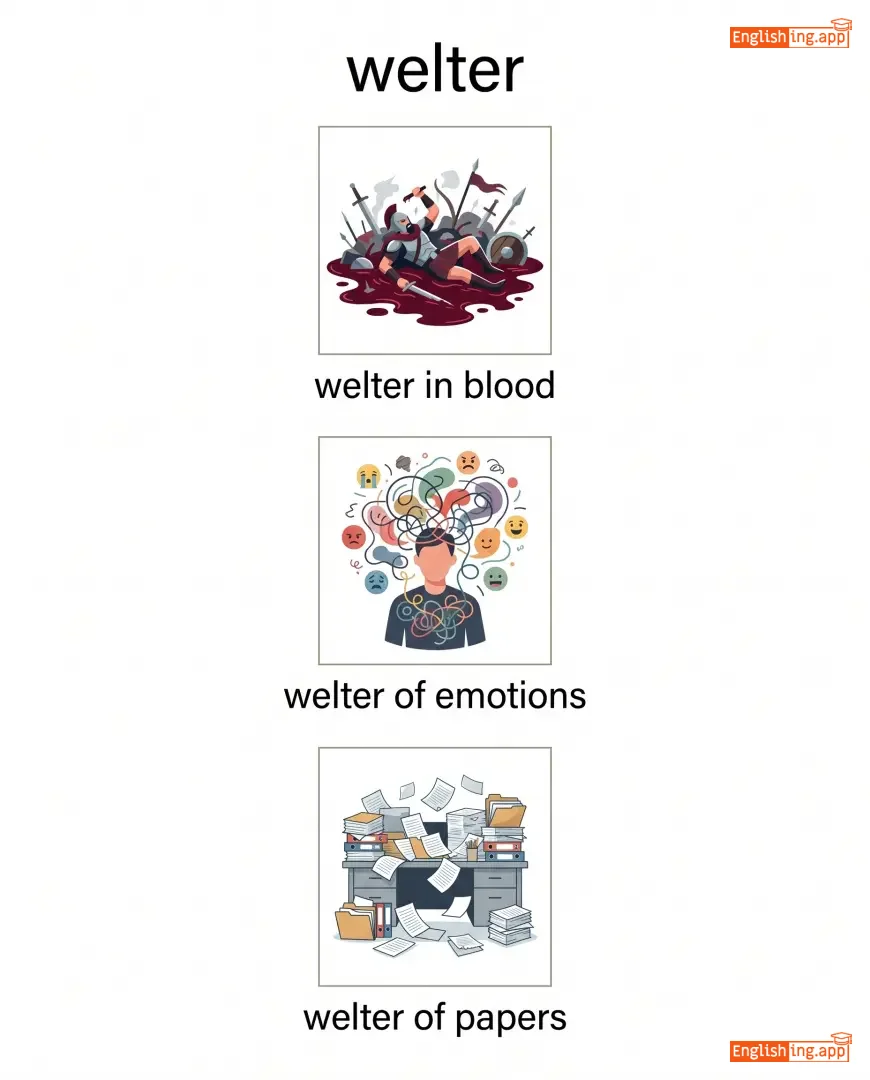
welter in blood, welter of emotions, welter of papers
••••••
|
Well ter (welter) вводит все в хаос.
••••••
|
|
#9467
🤕
|
/wɛlt/
noun
(вельт)
••••••
|
- •••••• |
пухлость
puhlost
••••••
|
- •••••• | - •••••• | - •••••• | - •••••• |
A raised mark on the skin, usually from a blow or allergic reaction.
••••••
|
He had a red welt on his arm after the bee sting. |
У него был красный след на руке после укуса пчелы.
U nego byl krasnyy sled na ruke posle ukusa pchely.
••••••
|
- •••••• | - •••••• | - •••••• |
bruise, lump, bump, mark, swelling
••••••
|
smoothness, flatness
••••••
|
red welt, painful welt, swelling welt
••••••
|
Welt означает пухлость - Bee belt (пчелиный пояс) вызывает пухлость
••••••
|
|
#9468
💰
|
/ˌwɛl tə ˈduː/
adjective
(вɛл ту ду)
••••••
|
- •••••• |
обеспеченный
obespechennyi
••••••
|
- •••••• | - •••••• | - •••••• | - •••••• |
Prosperous, wealthy, or financially comfortable.
••••••
|
They belong to a well-to-do family in the city. |
Они принадлежат к обеспеченной семье в городе.
Oni prinadlezhat k obespechennoy sem'ye v gorode.
••••••
|
- •••••• | - •••••• | - •••••• |
wealthy, affluent, prosperous, rich, well-off
••••••
|
poor, needy, impoverished
••••••
|
well-to-do family, well-to-do businessman, well-to-do society
••••••
|
Well-to-do значит обеспеченный - Well (хорошо) делать и Do (действовать), чтобы стать богатым.
••••••
|
|
#9469
👐
|
/ˈwɛlˌduːər/
noun
(wɛlˌduːər)
••••••
|
- •••••• |
добродетель
dobrodetel
••••••
|
- •••••• | - •••••• | - •••••• | - •••••• |
A person who does good deeds; a benefactor.
••••••
|
The community praised the well-doer for his charity. |
Сообщество похвалило добродетеля за его благотворительность.
Soobshchestvo pokhvalilo dobrodetelya za yego blagotvoritel'nost'.
••••••
|
- •••••• | - •••••• | - •••••• |
benefactor, philanthropist, helper, donor, humanitarian
••••••
|
wrongdoer, criminal, offender
••••••
|
kind well-doer, charitable well-doer
••••••
|
Добродетель - это человек, который делает добрые дела, 'добро' (хорошо) + 'детель' (делающий).
••••••
|
|
#9470
🤵
|
/ˌwɛlˈbrɛd/
adjective
(вел-бред)
••••••
|
- •••••• |
хорошо воспитанный
khorosho vospitannyy
••••••
|
- •••••• | - •••••• | - •••••• | - •••••• |
Having or showing good manners; properly raised.
••••••
|
She is a well-bred young lady with excellent manners. |
Она хорошо воспитанная молодая леди с отличными манерами.
Ona khorosho vospitannaya molodaya ledi s otlichnymi manerami.
••••••
|
- •••••• | - •••••• | - •••••• |
polite, refined, cultured, courteous, mannerly
••••••
|
rude, impolite, uncouth
••••••
|
well-bred lady, well-bred child, well-bred manners
••••••
|
Well-bred = хорошо воспитанный - воспитанный с хорошими манерами.
••••••
|
|
#9471
🌌
|
/ˈwɛlkɪn/
noun
(вэлкин)
••••••
|
- •••••• |
небо
nebo
••••••
|
- •••••• | - •••••• | - •••••• | - •••••• |
The sky, the heavens, or the upper air.
••••••
|
The eagle soared high into the welkin.
Орёл высоко взлетел в вэлкин.
••••••
|
Орёл высоко взлетел в небо.
Oryol vysoko vzlyetel v nebo.
••••••
|
make the welkin ring
заставить вэлкин звучать
••••••
|
To create a loud noise that seems to reach the heavens.
••••••
|
заставить небо звенеть
zastavit' nebo zvenet'
••••••
|
sky, heavens, firmament, atmosphere, ether
••••••
|
earth, ground, land
••••••
|
blue welkin, bright welkin, vast welkin
••••••
|
Welkin означает небо - запомни 'Well kin sky' как хорошее небо.
••••••
|
|
#9472
🌀
|
/wɪrd/
adjective
(уирд)
••••••
|
- •••••• |
странный
strannyy
••••••
|
- •••••• | - •••••• | - •••••• | - •••••• |
suggesting something supernatural or very strange; unusual
••••••
|
The movie had a weird ending that nobody expected. |
Фильм имел странный конец, которого никто не ожидал.
Film imel stranny konets, kotorogo nikto ne ozhidal.
••••••
|
weird out |
to make someone feel uncomfortable or strange
••••••
|
вывести из равновесия
vyvesti iz ravnovesiya
••••••
|
strange, odd, bizarre, unusual, peculiar
••••••
|
normal, ordinary, usual
••••••
|
weird feeling, weird dream, weird noise, weird behavior
••••••
|
Weird означает странный, как странный поворот сюжета в фильме.
••••••
|
|
#9473
⚖️
|
/weɪ/
verb
(вэй)
••••••
|
|
вешать
veshat
••••••
|
weighed
вэйд
••••••
|
weighed
вэйд
••••••
|
weighs
вэйз
••••••
|
weighing
вэйинг
••••••
|
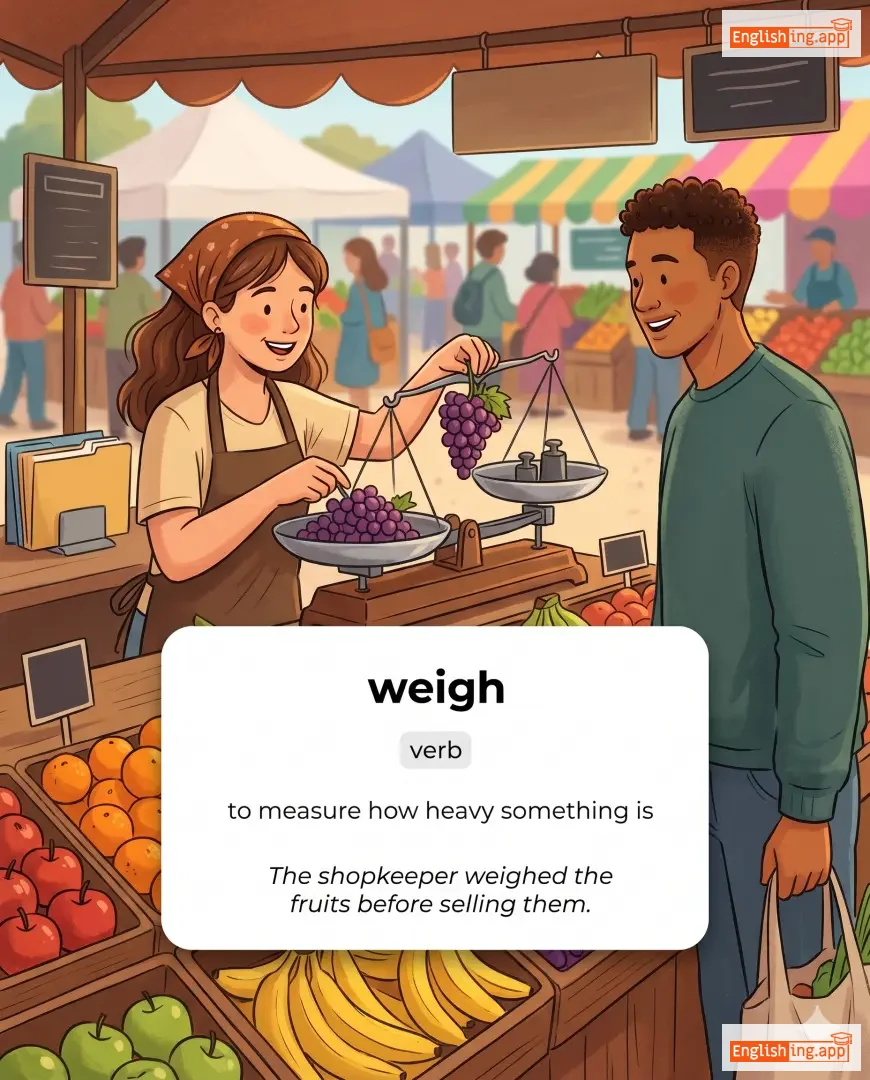
to measure how heavy something is
••••••
|
The shopkeeper weighed the fruits before selling them.
продавец взвесил фрукты перед тем, как их продать.
••••••
|
Продавец взвесил фрукты перед тем, как их продать.
Prodavets vzvesil frukty pered tem, kak ikh prodat.
••••••
|
weigh on someone's mind
весить на чьем-то разуме
••••••
|
to make someone worried or anxious
••••••
|
весить на чьем-то разуме
vesit' na ch'yem-to razume
••••••
|
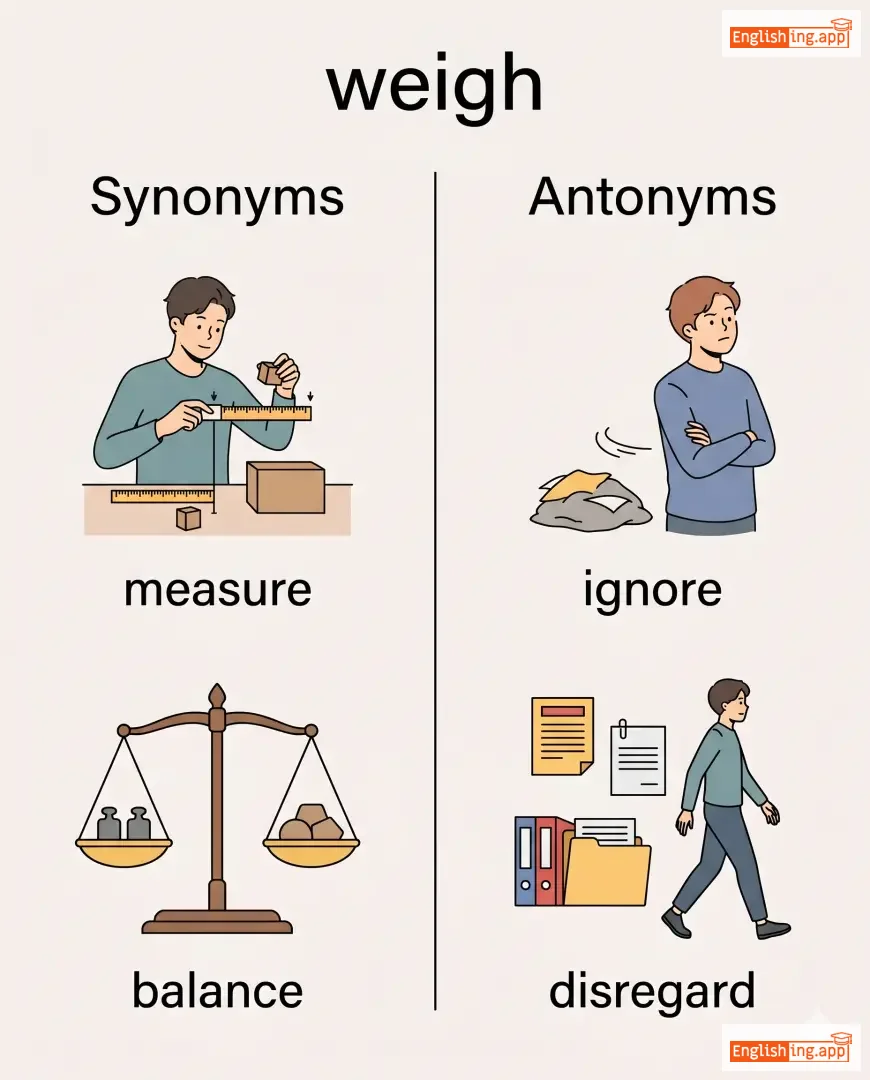
measure, balance, evaluate, calculate
••••••
|
ignore, disregard
••••••
|
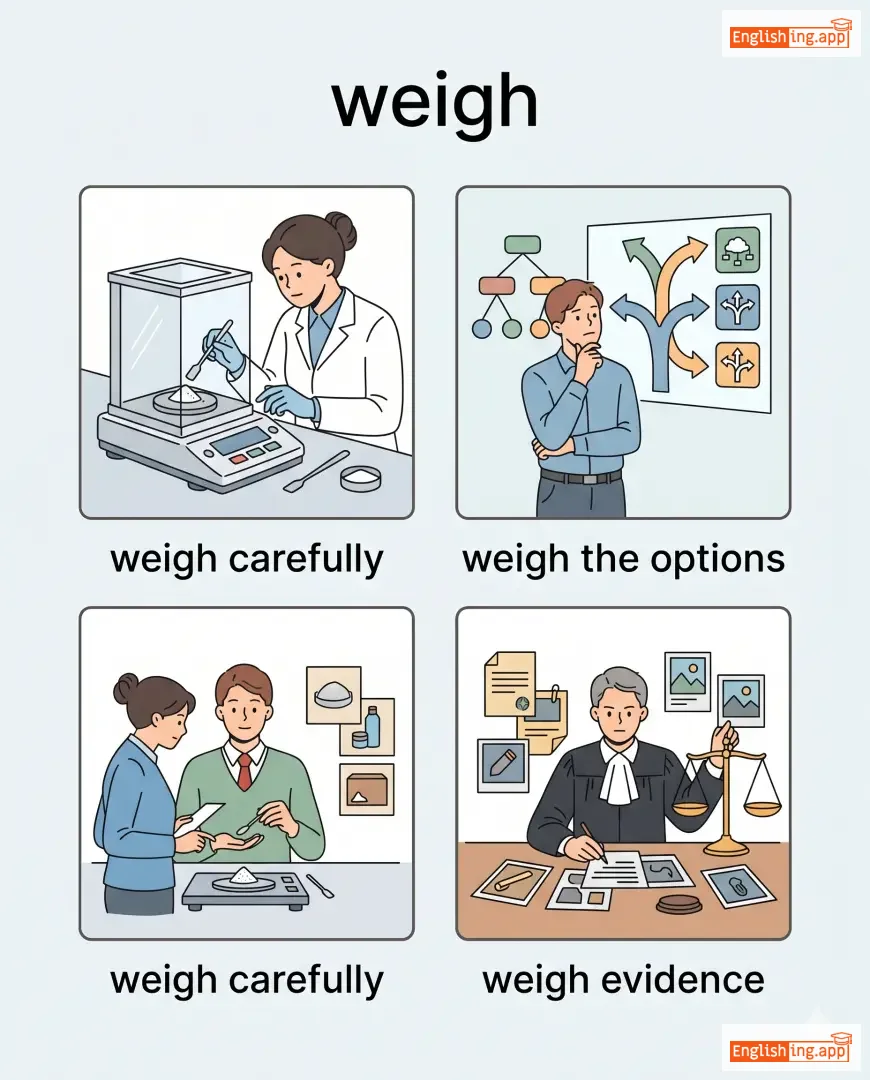
weigh carefully, weigh the options, weigh evidence, weigh anchor
••••••
|
Weigh означает вешать, как когда вы взвешиваете что-то на весах.
••••••
|
|
#9474
👶
|
/wiː/
adjective
(ви)
••••••
|
- •••••• |
очень маленький
ochen malenkiy
••••••
|
- •••••• | - •••••• | - •••••• | - •••••• |
very small in size; tiny
••••••
|
She gave me a wee smile before leaving. |
Она дала мне маленькую улыбку перед уходом.
Ona dala mne malen'kuyu ulybku pered ukhodym.
••••••
|
in the wee hours |
in the very early hours of the morning
••••••
|
в самые ранние утренние часы
v samye ranniye utrekhnye chasy
••••••
|
tiny, small, minute, little, petite
••••••
|
large, huge, big
••••••
|
wee baby, wee smile, wee bit, wee hours
••••••
|
Wee означает очень маленький, как маленькая улыбка.
••••••
|
|
#9475
⛅
|
/ˈwɛðər/
noun
(wɛðər)
••••••
|
|
погода
pogoda
••••••
|
- •••••• | - •••••• | - •••••• | - •••••• |
the state of the atmosphere at a particular place and time in terms of heat, cloudiness, dryness, sunshine, wind, rain, etc.
••••••
|
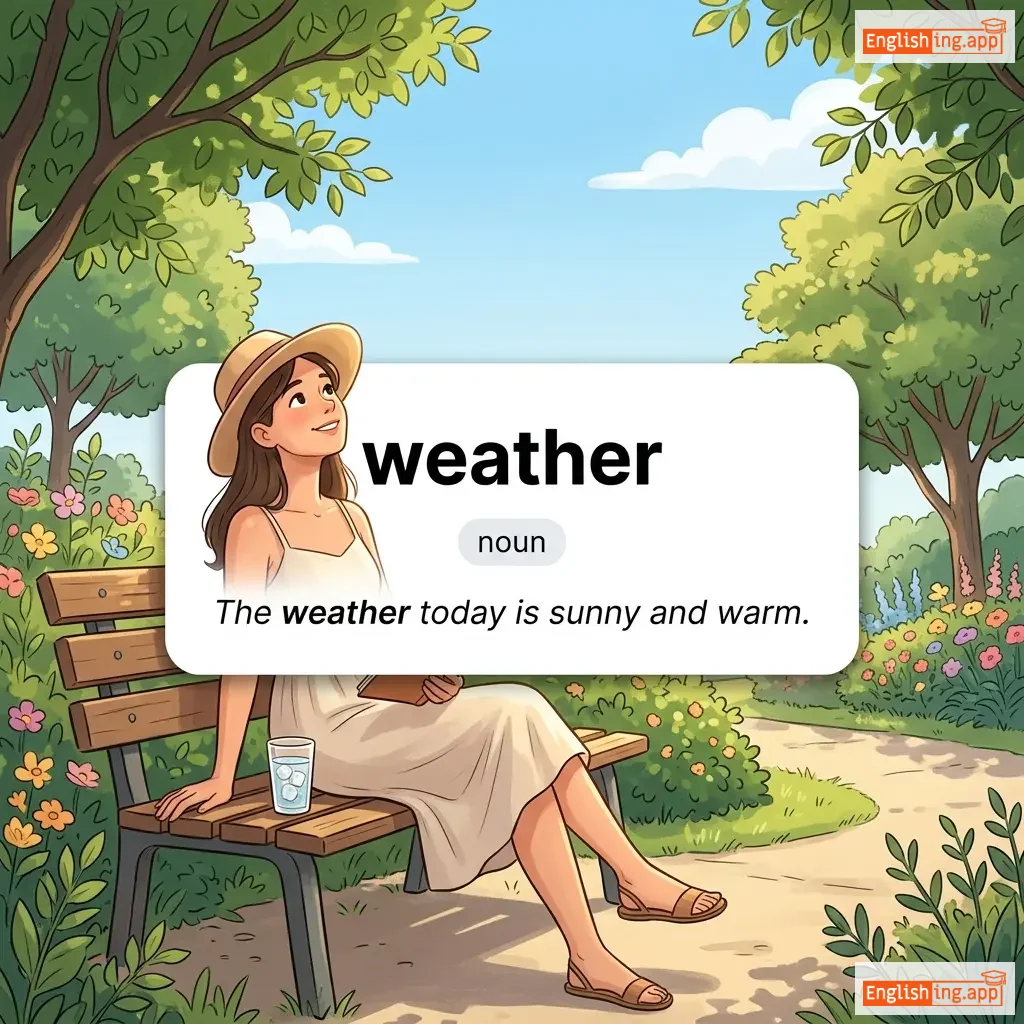
The weather today is sunny and warm. |
Погода сегодня солнечная и тёплая.
Pogoda segodnya solnechnaya i tyoplaya.
••••••
|
under the weather |
feeling unwell or sick
••••••
|
чувствовать себя плохо
chuvstvovat' sebya plokho
••••••
|
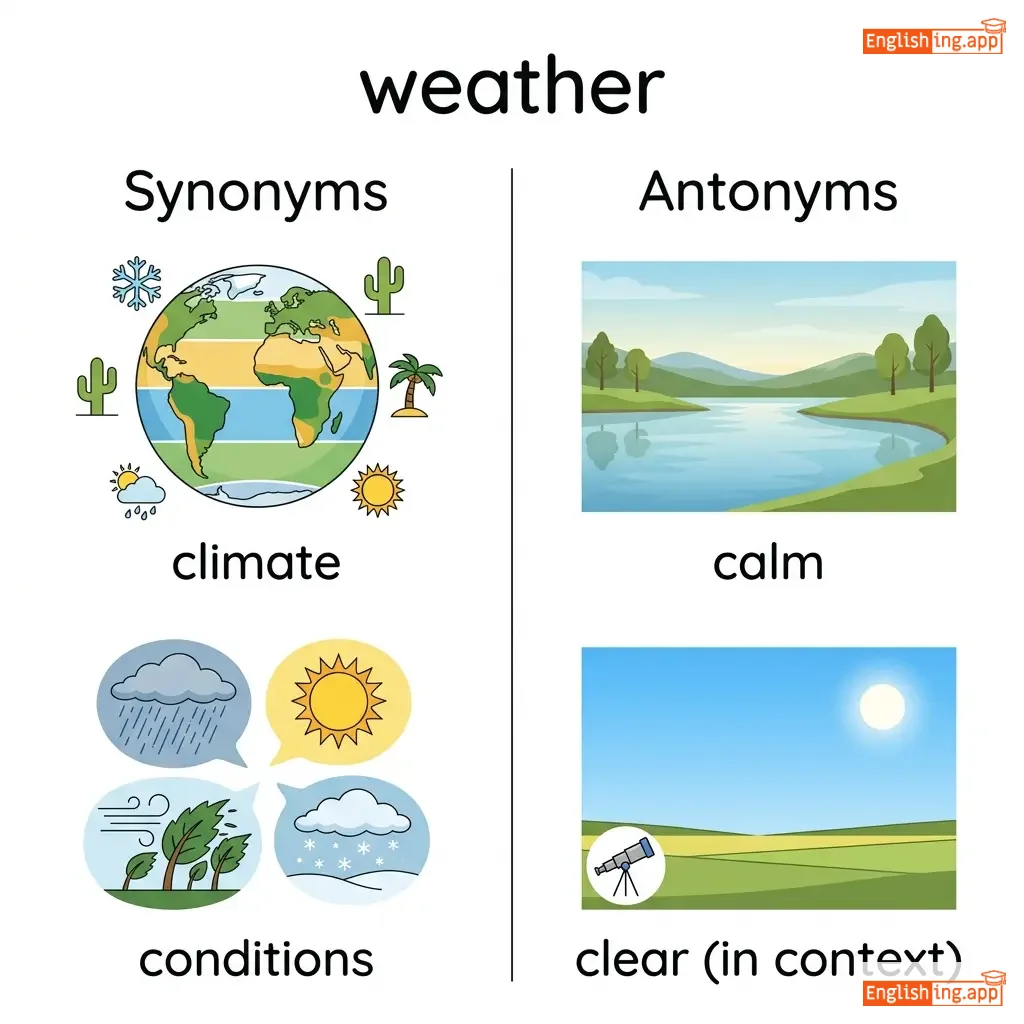
climate, conditions, atmosphere, forecast
••••••
|
calm, clear (in context)
••••••
|
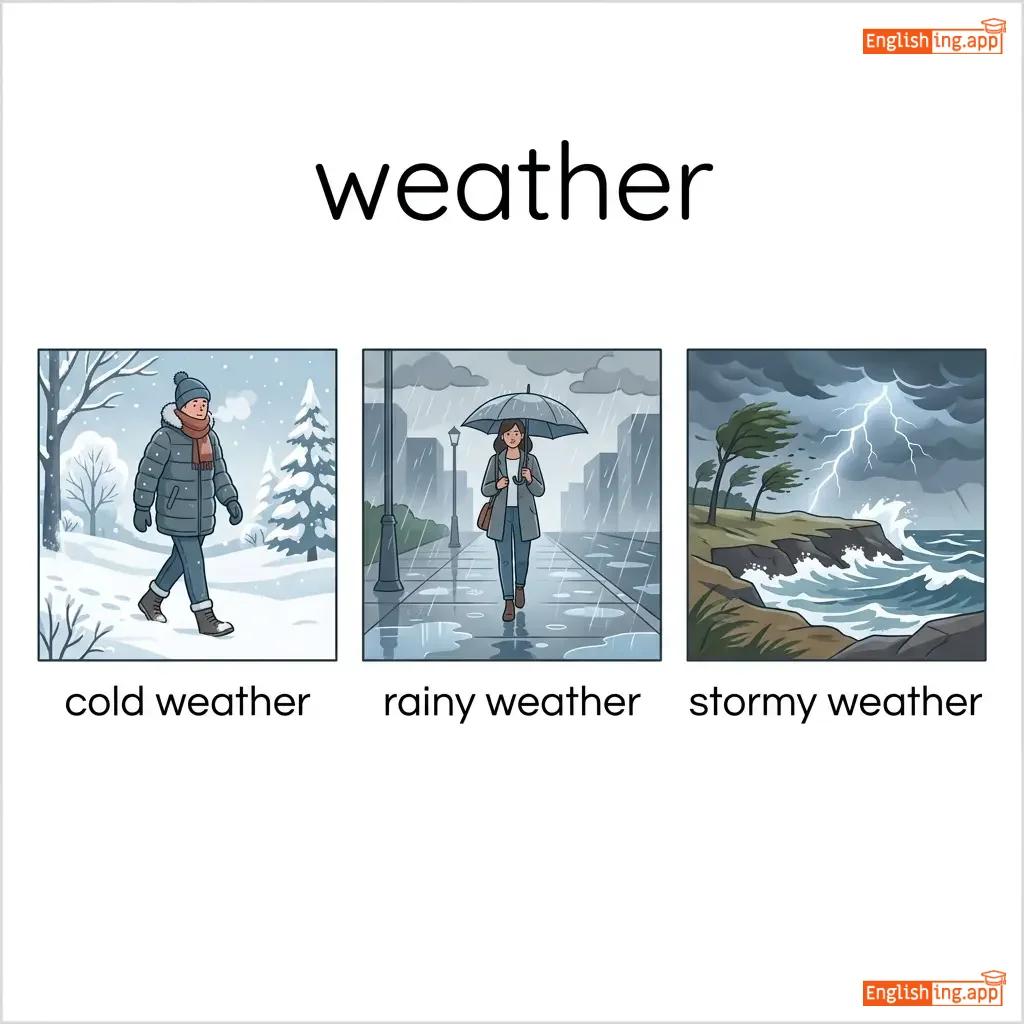
cold weather, rainy weather, stormy weather, fine weather
••••••
|
Погода, как weather, всегда влияет на наш настрой и самочувствие.
••••••
|
|
#9476
😩
|
/ˈwɪəri/
adjective
(wi-ri)
••••••
|
- •••••• |
усталый
ustaly
••••••
|
- •••••• | - •••••• | - •••••• | - •••••• |
feeling or showing extreme tiredness, especially as a result of exertion or lack of sleep
••••••
|
After the long journey, she felt weary and wanted to rest.
После долгого путешествия она почувствовала усталость и захотела отдохнуть.
••••••
|
После долгого путешествия она почувствовала усталость и захотела отдохнуть.
Posle dolgogo puteshestviya ona pochuvstvovala ustalost' i zakhotela otdokhnut'.
••••••
|
weary of
устала от
••••••
|
tired or bored with something because it has been happening for too long
••••••
|
устала от
ustala ot
••••••
|
tired, exhausted, fatigued, drained, worn-out
••••••
|
energetic, lively, refreshed
••••••
|
feel weary, grow weary, weary traveler, weary eyes
••••••
|
Weary переводится как усталый, и усталость означает tired.
••••••
|
|
#9477
🥱
|
/ˈwɪərɪsəm/
adjective
(вɪэ́рɪсэм)
••••••
|
- •••••• |
утомительный
utomitel'nyy
••••••
|
- •••••• | - •••••• | - •••••• | - •••••• |
Causing one to feel tired or bored.
••••••
|
The long and wearisome lecture put the students to sleep. |
Долгая и утомительная лекция заставила студентов уснуть.
Dolgaya i utomitel'naya lektsiya zastavila studentov usnut'.
••••••
|
- •••••• | - •••••• | - •••••• |
tedious, tiring, boring, dull, exhausting
••••••
|
exciting, engaging, refreshing
••••••
|
wearisome task, wearisome journey, wearisome lecture
••••••
|
Wear вызывает усталость, wearisome означает утомительный.
••••••
|
|
#9478
👶
|
/wiːn/
verb
••••••
|
- •••••• | - •••••• |
weaned
••••••
|
weaned
••••••
|
weans
••••••
|
weaning
••••••
|
To gradually stop a child or animal from breastfeeding; to detach from a habit.
••••••
|
Parents often wean their babies around six months old. |
- •••••• |
wean off |
To gradually stop someone from depending on something.
••••••
|
- •••••• |
detach, accustom, disengage, train
••••••
|
nurture, indulge
••••••
|
wean a baby, wean off drugs, wean from habit
••••••
|
No •••••• |
|
#9479
🌍
|
/wiːl/
noun
(хэппинесс)
••••••
|
- •••••• |
счастье
schast'ye
••••••
|
- •••••• | - •••••• | - •••••• | - •••••• |
A raised mark on the skin left after a blow; or general well-being and prosperity.
••••••
|
The charity worked for the common weal of the community. |
Она не могла скрыть своего счастья, когда получила награду.
Ona ne mogla skryt' svoego schast'ya, kogda poluchila nagradu.
••••••
|
common weal |
The general welfare or good of the public.
••••••
|
поиск счастья
poisk schast'ya
••••••
|
welfare, prosperity, good, wellbeing
••••••
|
harm, misery, suffering
••••••
|
common weal, for the weal, promote weal
••••••
|
Счастье – это 'Happy'.
••••••
|
Vocabulary Quiz
Test your vocabulary by matching words with their translations or meanings.
Login to take the quiz
Comments (0)
Share your thoughts and join the discussion.
Join the discussion by logging in
Login to CommentNo comments yet
Be the first to share your thoughts!