

Обновитесь для доступа ко всему словарю
Получите неограниченный доступ ко всем словам с подпиской Pro
Обновить до ProПеревод
Прошедшее
Причастие прошедшего времени
Третье лицо единственного числа
Герундий
Значение
Пример предложения
Перевод примера предложения
Синонимы
Антонимы
Коллокации
Мнемоника
Swipe left or right, or use the buttons. Tap image to zoom.
Обновитесь для доступа ко всем предложениям
Получите неограниченный доступ ко всем предложениям с подпиской Pro
Обновить до ProПеревод примера предложения
Слово
Lesson 87Lesson 87 - Переключатель маски
|
Эмодзи
|
Слово | Images | Перевод | Прошедшее | Причастие прошедшего времени | Третье лицо единственного числа | Герундий | Значение | Пример предложения | Перевод примера предложения | Пример выражения | Значение примера выражения | Перевод примера выражения | Синонимы | Антонимы | Коллокации | Мнемоника |
|---|---|---|---|---|---|---|---|---|---|---|---|---|---|---|---|---|---|
|
#2581
😒
|
/dɪsˈrɛpjətəbl̩/
adjective
(дисрэпьютэбл)
••••••
|
- •••••• |
позорный
pozornyj
••••••
|
- •••••• | - •••••• | - •••••• | - •••••• |
having a bad reputation; not considered respectable or trustworthy
••••••
|
The journalist avoided staying in the disreputable part of town. |
Журналист избегал оставаться в позорной части города.
Zhurnalist izbegal ostavat'sya v pozornoy chasti goroda.
••••••
|
- •••••• | - •••••• | - •••••• |
notorious, infamous, dishonorable, shady, untrustworthy
••••••
|
respectable, reputable, honorable
••••••
|
disreputable inn, disreputable character, disreputable conduct
••••••
|
Dis + reputable = позорный, как если бы 'dis' означало что-то плохое.
••••••
|
|
#2582
📚
|
/ˌdɪsərˈteɪʃən/
noun
(dɪsɪˈteɪʃən)
••••••
|
- •••••• |
диссертация
dissertatsiya
••••••
|
- •••••• | - •••••• | - •••••• | - •••••• |
A long piece of writing on a particular subject, usually written for a university degree.
••••••
|
She spent two years writing her doctoral dissertation.
Она потратила два года на написание своей докторской диссертации.
••••••
|
Она потратила два года на написание своей докторской диссертации.
Ona potratila dva goda na napisanie svoey doktorskoj dissertatsii.
••••••
|
- •••••• | - •••••• | - •••••• |
thesis, paper, essay, treatise, study
••••••
|
summary, note
••••••
|
doctoral dissertation, master's dissertation, dissertation topic, dissertation defense
••••••
|
Диссертация – как большое академическое исследование.
••••••
|
|
#2583
🔥
|
/dɪˈsɛnʃəs/
adjective
(disentshiyus)
••••••
|
- •••••• |
разделяющий
razdelyayushchiy
••••••
|
- •••••• | - •••••• | - •••••• | - •••••• |
Causing or likely to cause disagreement and conflict.
••••••
|
His dissentious remarks divided the group further. |
Его разделяющие замечания еще больше разделили группу.
Ego razdelyayushchie zamechaniya yeshchyo bol'she razdeli gruppu.
••••••
|
- •••••• | - •••••• | - •••••• |
argumentative, quarrelsome, discordant, divisive
••••••
|
peaceful, cooperative, agreeable
••••••
|
dissentious remarks, dissentious nature, dissentious debate
••••••
|
DISSENTIOUS – от слова диссензия, то есть что-то, что вызывает разногласия.
••••••
|
|
#2584
🗣️
|
/dɪˈsɛnʃənt/
adjective
(дисентент)
••••••
|
- •••••• |
диссидент
dissident
••••••
|
- •••••• | - •••••• | - •••••• | - •••••• |
Expressing or holding opinions that are opposed to the majority or official view.
••••••
|
Only a few dissentient voices were heard during the debate. |
Только несколько диссидентских голосов были слышны во время дебатов.
Tol'ko neskol'ko dissidentskikh golosov byli slyshny vo vremya debatov.
••••••
|
- •••••• | - •••••• | - •••••• |
opposing, contrary, conflicting, resistant
••••••
|
supportive, compliant, agreeing
••••••
|
dissentient voices, dissentient opinion, dissentient view
••••••
|
DISSENTIENT означает dissent + агент → человек, противящийся большинству
••••••
|
|
#2585
🙅
|
/dɪˈsɛnt/
verb
(диссент)
••••••
|
- •••••• |
возражать
dissent
••••••
|
dissented
диссентед
••••••
|
dissented
диссентед
••••••
|
dissents
диссентс
••••••
|
dissenting
диссентинг
••••••
|
To hold or express opinions that are different from those officially accepted.
••••••
|
Several members dissented from the majority decision.
Несколько членов не согласились с решением большинства.
••••••
|
Несколько членов не согласились с решением большинства.
Neskolko chlenov ne soglasilis s resheniem bolshinstva.
••••••
|
voice dissent
выразить несогласие
••••••
|
to openly express disagreement
••••••
|
выразить несогласие
vyrazit nesoglasie
••••••
|
disagree, oppose, protest, object, differ
••••••
|
agree, consent, approve
••••••
|
dissent strongly, political dissent, voice dissent, dissenting opinion
••••••
|
ДИССЕНТ = DISAGREE + SENTENCE: представь что ты говоришь нет и поднимаешь руку
••••••
|
|
#2586
⚡
|
/dɪˈsɛnʃən/
noun
(диссеншн)
••••••
|
- •••••• |
разногласие
raznoglasiya
••••••
|
- •••••• | - •••••• | - •••••• | - •••••• |
Strong disagreement or difference of opinion, especially leading to discord within a group.
••••••
|
The meeting ended in dissension among the committee members. |
Встреча закончилась разногласием среди членов комитета.
Vstrecha zakonchilas' raznoglasiyaem sredi chlenov komiteta.
••••••
|
- •••••• | - •••••• | - •••••• |
discord, conflict, dispute, strife, disagreement
••••••
|
harmony, agreement, unity
••••••
|
internal dissension, political dissension, cause dissension, growing dissension
••••••
|
DISSENSION = dis + tension, когда есть напряжение, возникает разногласие (разногласие означает dissension)
••••••
|
|
#2587
📢
|
/dɪˈsɛmɪˌneɪt/
verb
(диссеминировать)
••••••
|
|
распространять
rasprostranyat'
••••••
|
disseminated
диссеминировал
••••••
|
disseminated
диссеминированный
••••••
|
disseminates
диссеминирует
••••••
|
disseminating
диссеминирующий
••••••
|
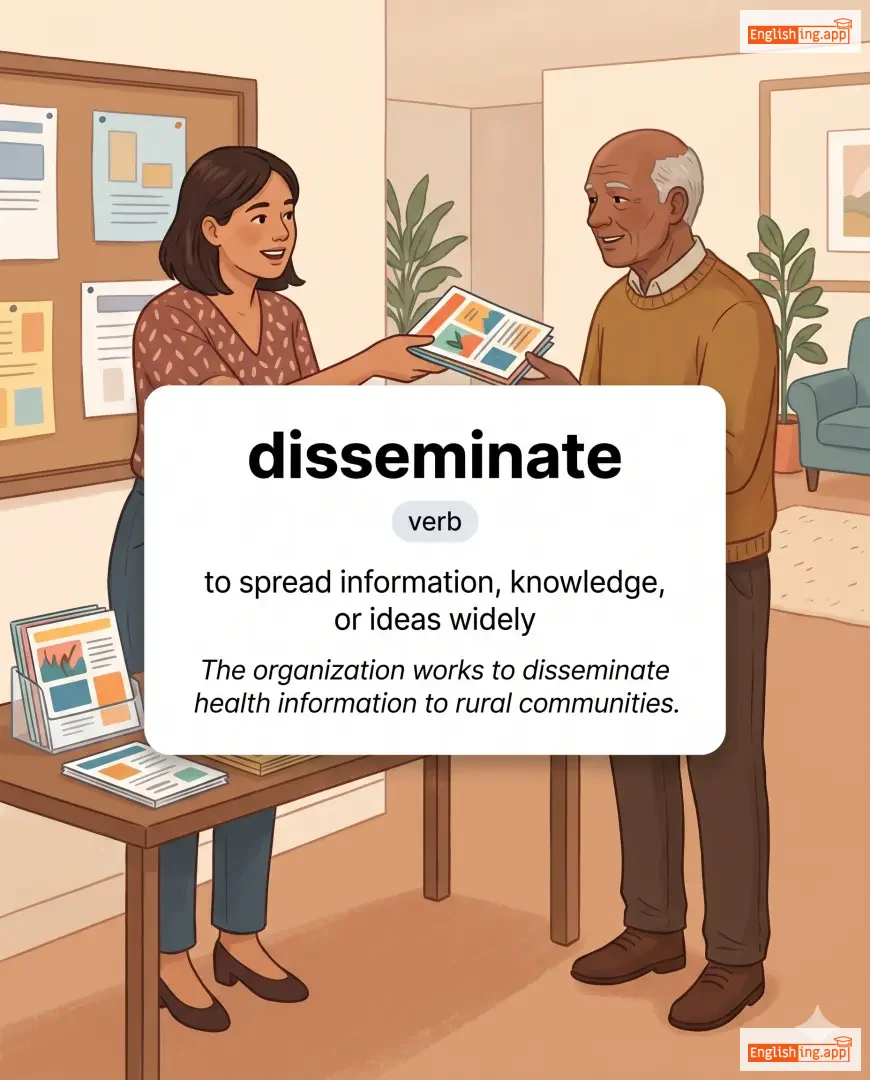
to spread information, knowledge, or ideas widely
••••••
|
The organization works to disseminate health information to rural communities.
Организация работает над распространением информации о здоровье в сельских районах.
••••••
|
Организация работает над распространением информации о здоровье в сельских районах.
Organizatsiya rabotayet nad rasprostraneniem informatsii o zdorov'ye v selskih rayonah.
••••••
|
disseminate knowledge
распространять знания
••••••
|
to distribute knowledge to many people
••••••
|
распространять знания
rasprostranyat' znaniya
••••••
|
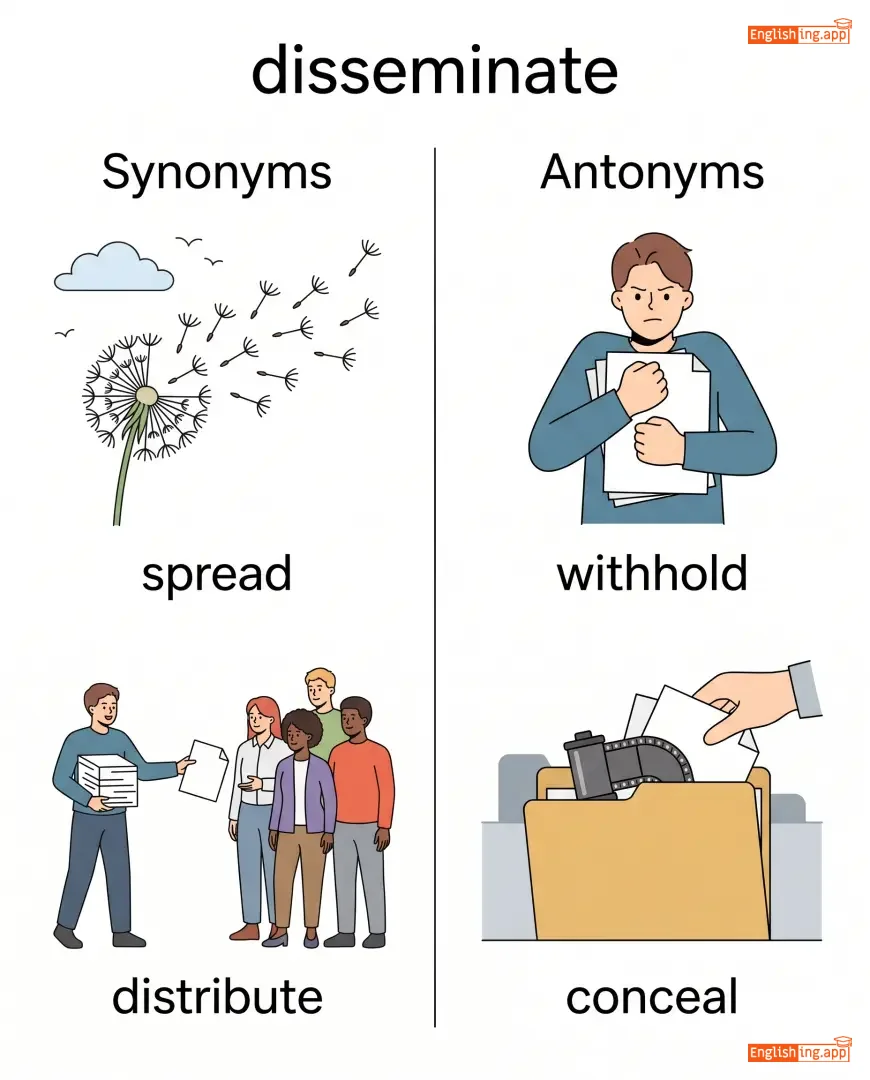
spread, distribute, circulate, broadcast, propagate
••••••
|
withhold, conceal, hide
••••••
|
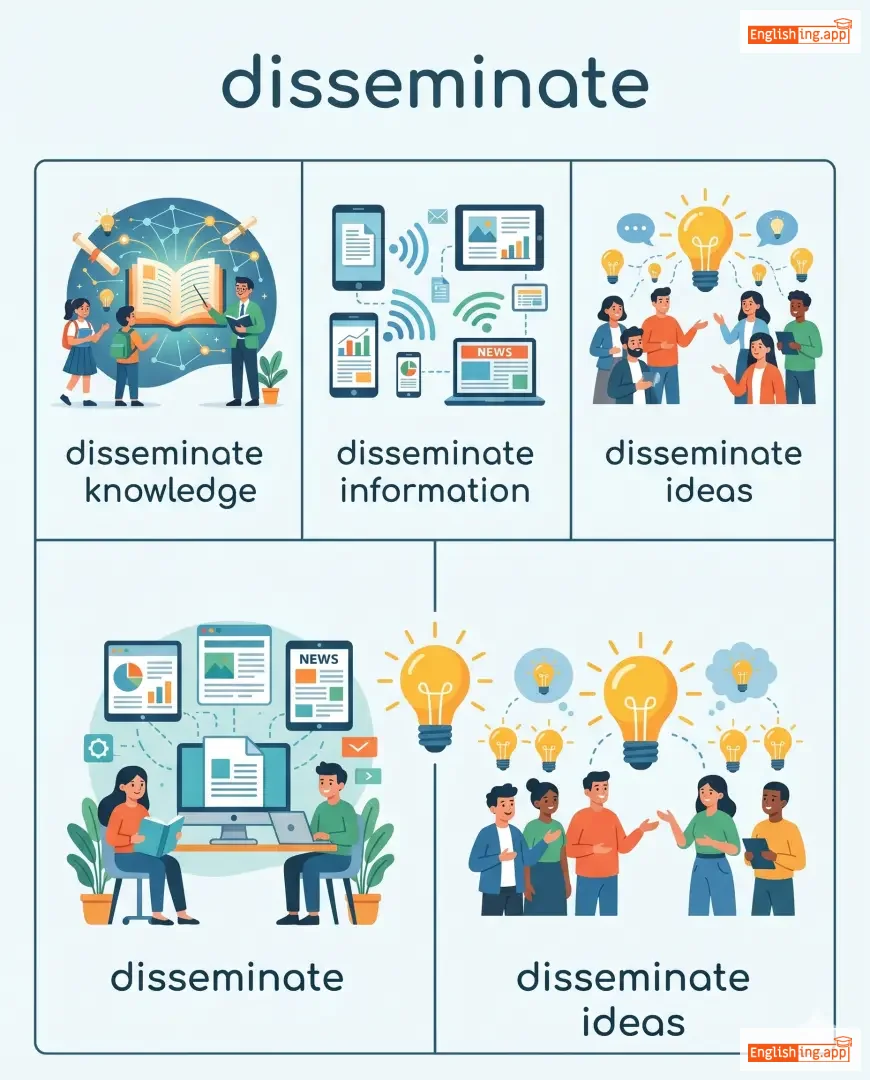
disseminate knowledge, disseminate information, disseminate ideas, widely disseminate
••••••
|
Disseminate похоже на распространять, но с большим количеством информации.
••••••
|
|
#2588
🤥
|
/dɪˈsɛmbələr/
noun
(дисемблер)
••••••
|
- •••••• |
лицемер
litsemer
••••••
|
- •••••• | - •••••• | - •••••• | - •••••• |
a person who conceals their real feelings or intentions; a hypocrite or pretender
••••••
|
The politician was accused of being a dissembler who never revealed his true plans.
Политик был обвинен в том, что он был лицемером, который никогда не раскрывал свои настоящие планы.
••••••
|
Политик был обвинен в том, что он был лицемером, который никогда не раскрывал свои настоящие планы.
Politik byl obvinen v tom, chto on byl litsemerom, kotoryi nikogda ne raskryval svoi nastoyashchie plany.
••••••
|
- •••••• | - •••••• | - •••••• |
pretender, hypocrite, faker, deceiver
••••••
|
truthful person, honest person
••••••
|
political dissembler, clever dissembler, dissembler of feelings
••••••
|
Dissembler = Лицемер актер, всегда притворяется другим.
••••••
|
|
#2589
🎭
|
/dɪˈsɛmbəl/
verb
(дисембл)
••••••
|
|
притворяться
pritvoryatsya
••••••
|
dissembled
дисемболд
••••••
|
dissembled
дисемболд
••••••
|
dissembles
дисемблс
••••••
|
dissembling
дисемблинг
••••••
|
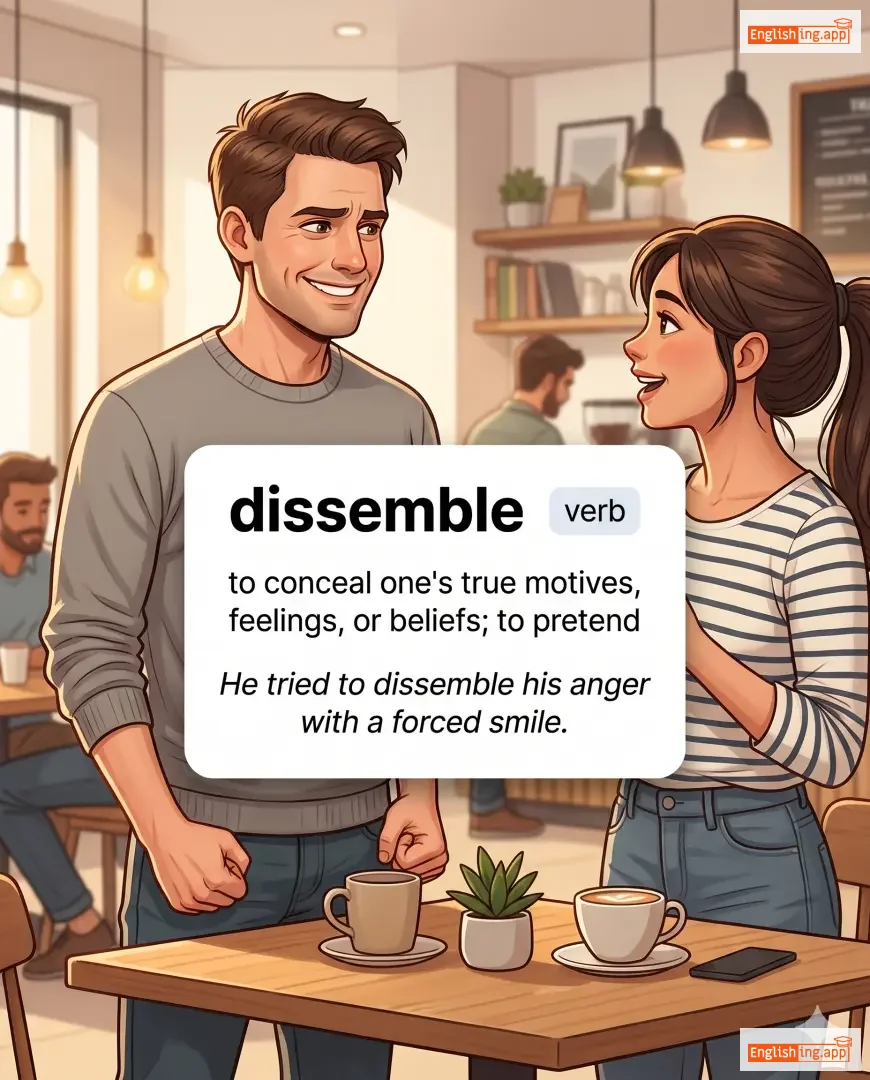
to conceal one's true motives, feelings, or beliefs; to pretend
••••••
|
He tried to dissemble his anger with a forced smile.
Он пытался скрыть свой гнев с помощью натянутой улыбки.
••••••
|
Он пытался скрыть свой гнев с помощью натянутой улыбки.
On pytalsya skryt' svoi gnev s pomoshch'yu natyanutoy ulybki.
••••••
|
- •••••• | - •••••• | - •••••• |
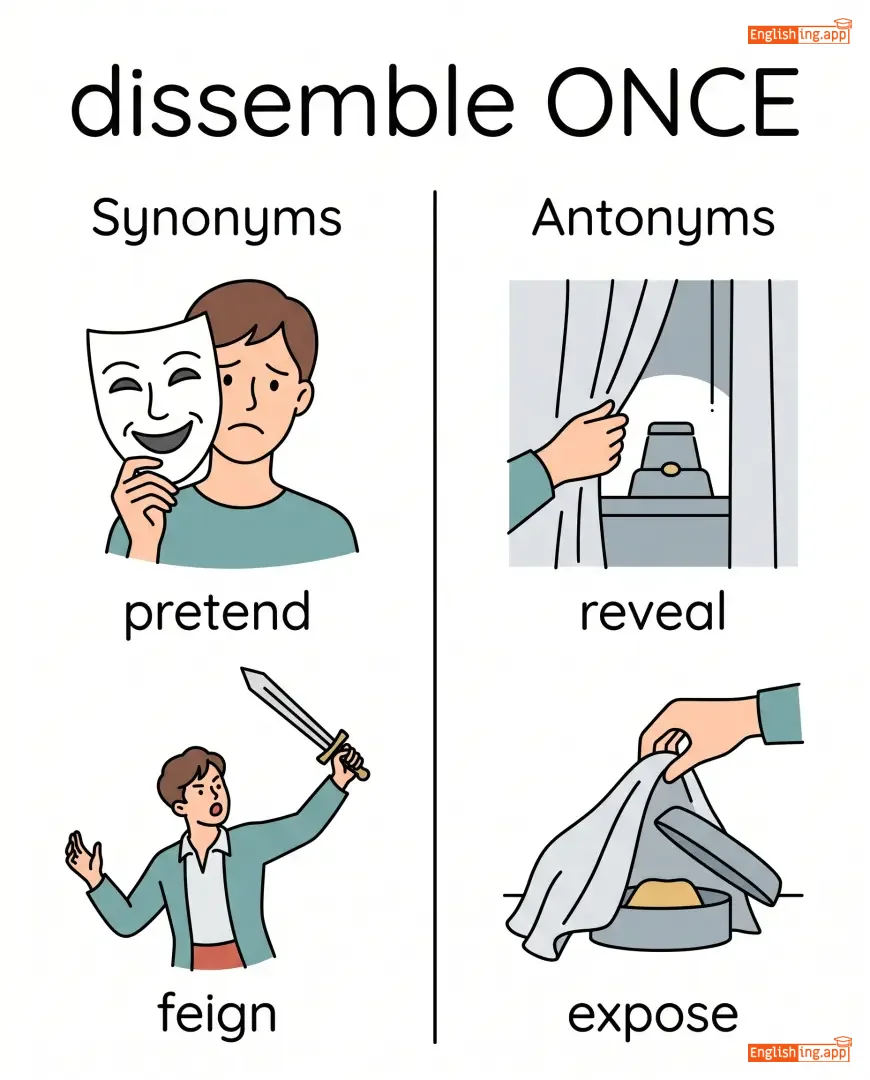
pretend, feign, fake, conceal, disguise
••••••
|
reveal, expose, disclose
••••••
|
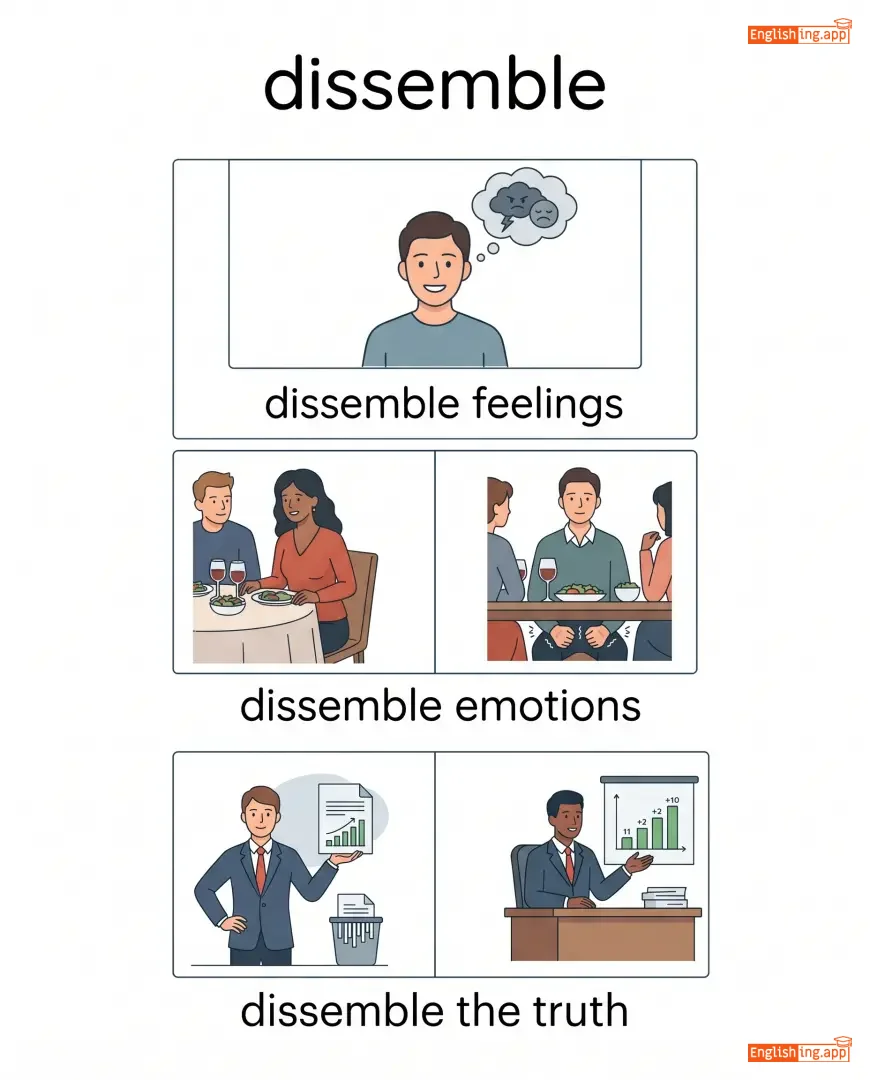
dissemble feelings, dissemble emotions, dissemble the truth
••••••
|
Dissemble = dis+assemble; не собирать правду, а притворяться.
••••••
|
|
#2590
🩻
|
/daɪˈsɛkʃən/
noun
(disɛkʃən)
••••••
|
- •••••• |
диссекция
dissektsiya
••••••
|
- •••••• | - •••••• | - •••••• | - •••••• |
the act of cutting apart or analyzing something in detail, especially a body or structure
••••••
|
The dissection of the specimen revealed important details about its structure. |
Диссекция образца выявила важные детали о его структуре.
Dissektsiya obraktsa vyyavila vazhnyye detali o yego strukture.
••••••
|
political dissection |
a thorough analysis of political events or situations
••••••
|
политическая диссекция
politicheskaya dissektsiya
••••••
|
analysis, examination, cutting, study, scrutiny
••••••
|
assembly, construction, synthesis
••••••
|
scientific dissection, detailed dissection, dissection of a text, dissection in class
••••••
|
Диссекция = 'dissect' (разрезать) + 'ция', как в биологии, разрезание лягушки.
••••••
|
|
#2591
🔪
|
/dɪˈsɛkt/
verb
••••••
|
- •••••• | - •••••• |
dissected
••••••
|
dissected
••••••
|
dissects
••••••
|
dissecting
••••••
|
to cut apart an animal, plant, or other organism to study its internal parts; to analyze something in detail
••••••
|
In biology class, students had to dissect a frog to learn about its anatomy. |
- •••••• |
dissect an argument |
to analyze an argument thoroughly, examining its components
••••••
|
- •••••• |
analyze, examine, cut, study, scrutinize
••••••
|
assemble, combine, integrate
••••••
|
dissect a frog, dissect the problem, dissect an argument, dissect a text
••••••
|
No •••••• |
|
#2592
😠
|
/dɪsˈsætɪsfaɪ/
verb
(диссатисфай)
••••••
|
- •••••• |
разочаровывать
razocharovyvat
••••••
|
dissatisfied
диссатисфайд
••••••
|
dissatisfied
диссатисфайд
••••••
|
dissatisfies
диссатисфаиз
••••••
|
dissatisfying
диссатисфайинг
••••••
|
to fail to please or meet expectations; to make someone unhappy
••••••
|
The poor service dissatisfies many customers.
Плохое обслуживание не устраивает многих клиентов.
••••••
|
Плохое обслуживание не устраивает многих клиентов.
Plokhoe obsluzhivanie ne ustraivaet mnogikh klientov.
••••••
|
- •••••• | - •••••• | - •••••• |
displease, disappoint, annoy, upset
••••••
|
satisfy, please, content
••••••
|
dissatisfy customers, dissatisfy workers, dissatisfy needs
••••••
|
Dis + satisfy — это не выполнить ожидания, а разочаровать.
••••••
|
|
#2593
💥
|
/dɪsˈrʌpt/
verb
(дисрупт)
••••••
|
|
нарушать
narushat
••••••
|
disrupted
дисруптед
••••••
|
disrupted
дисруптед
••••••
|
disrupts
дисруптс
••••••
|
disrupting
дисруптинг
••••••
|
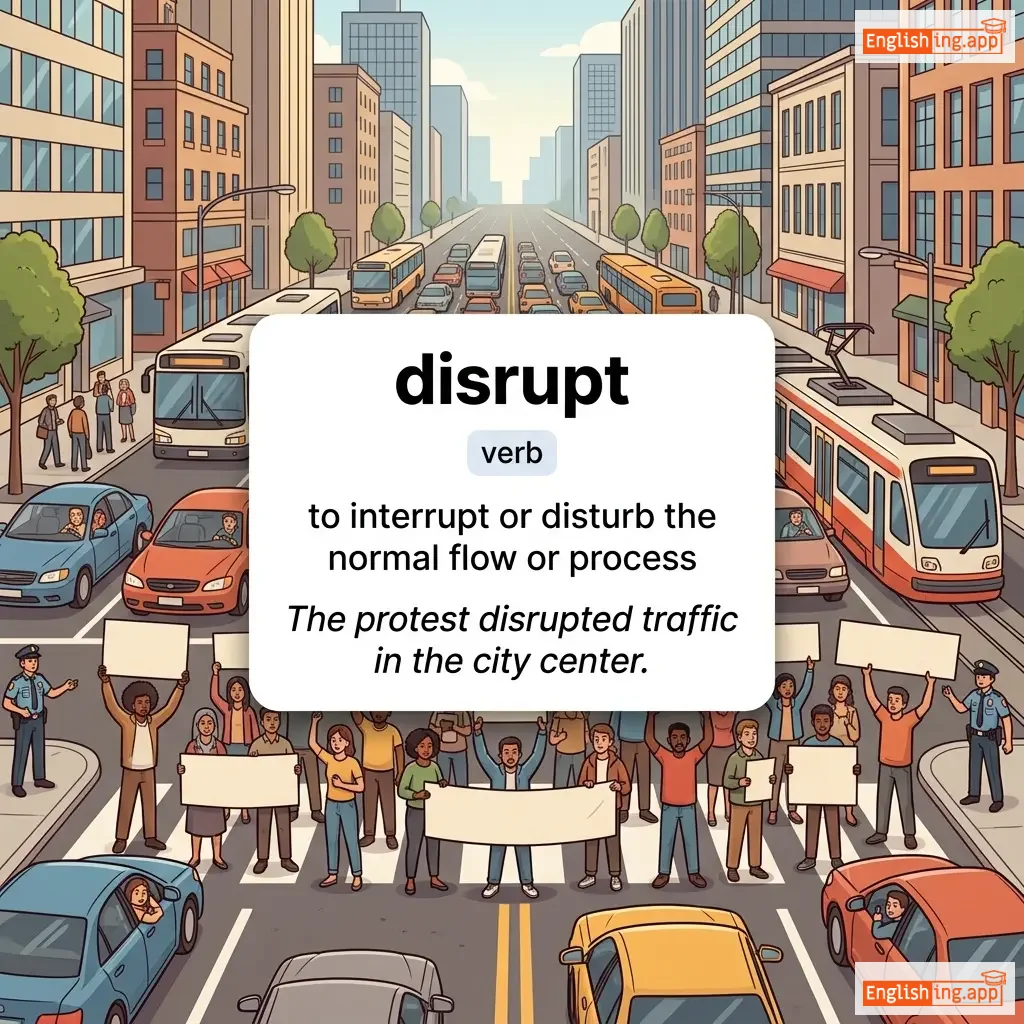
to interrupt or disturb the normal flow or process
••••••
|
The protest disrupted traffic in the city center.
Протест нарушил движение на центральной улице города.
••••••
|
Протест нарушил движение на центральной улице города.
Protest narushil dvizhienie na tsentral'noy ulitse goroda.
••••••
|
disrupt the status quo
нарушить статус-кво
••••••
|
to change the established way of doing things
••••••
|
нарушить статус-кво
narushit' status-kvo
••••••
|
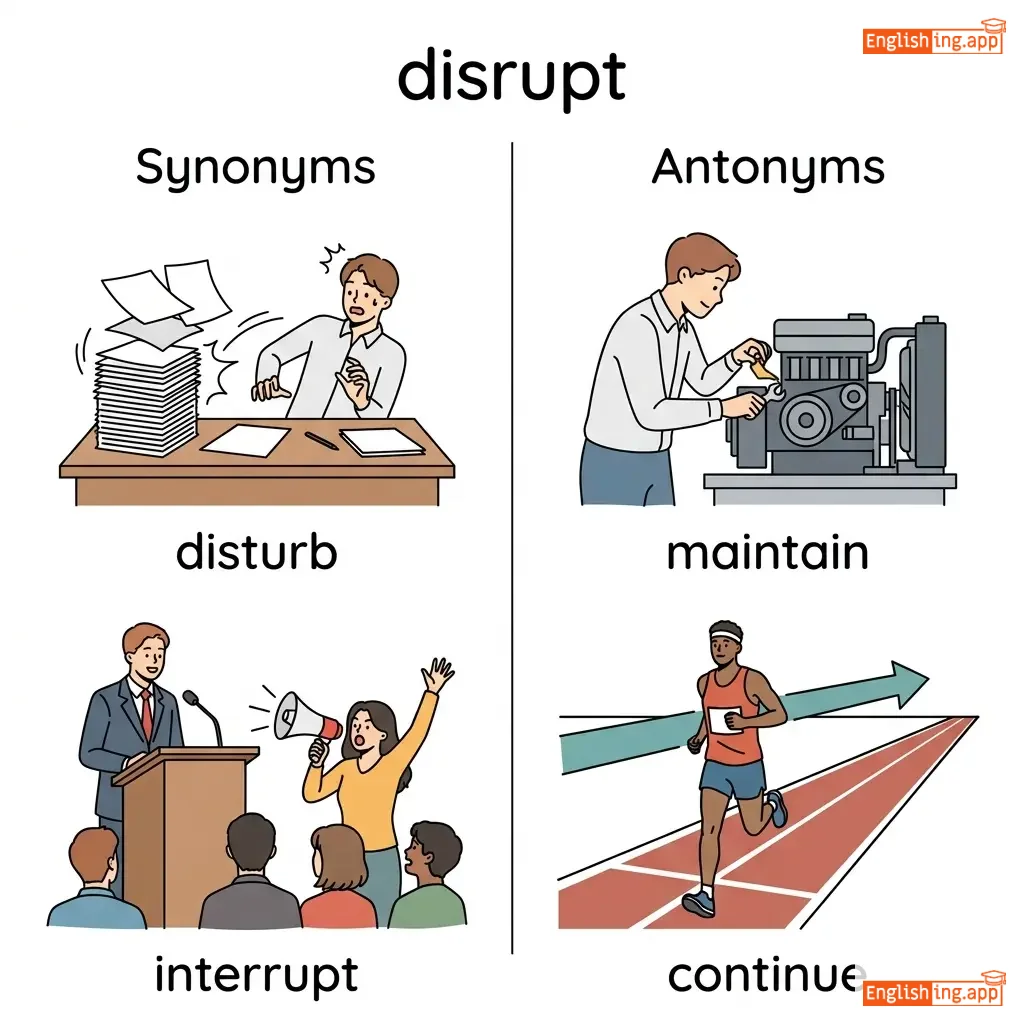
disturb, interrupt, interfere, derail, unsettle
••••••
|
maintain, continue, sustain
••••••
|
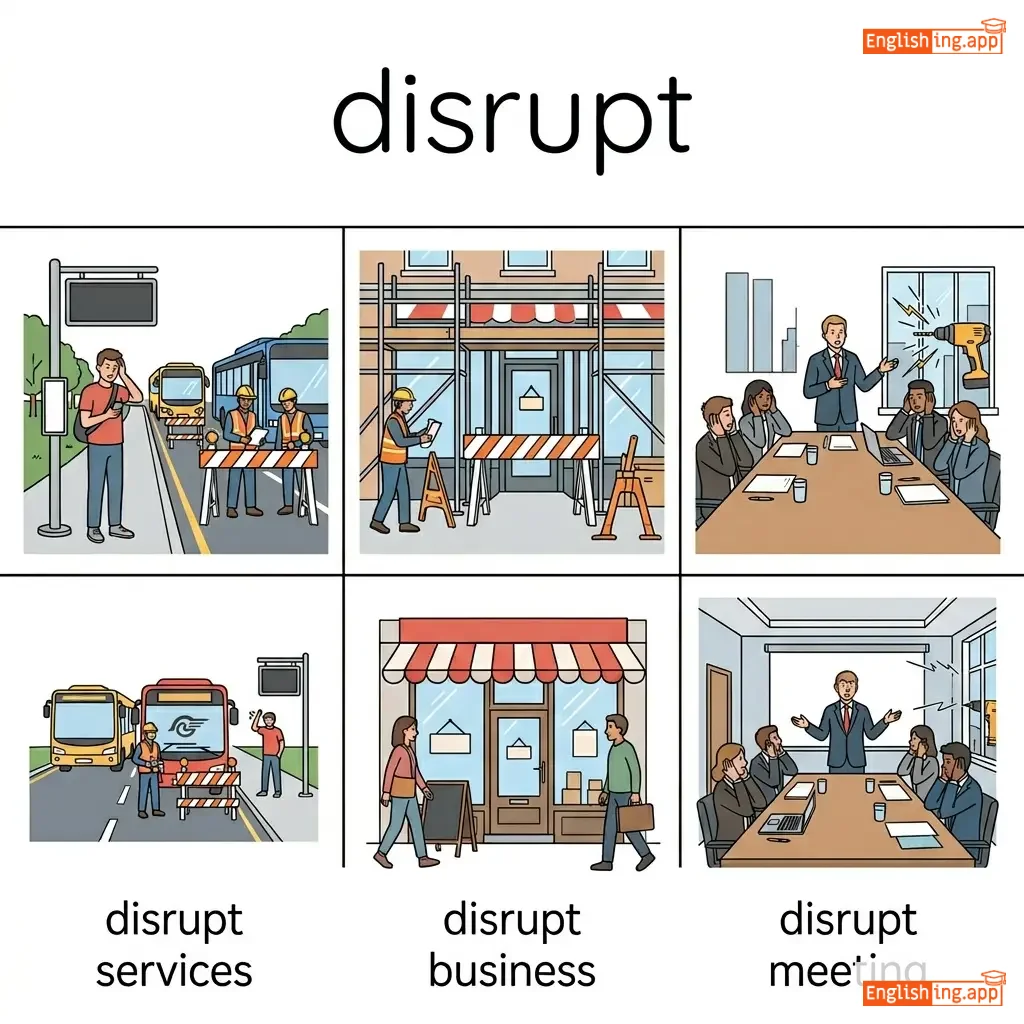
disrupt services, disrupt business, disrupt meeting
••••••
|
Disrupt = нарушать, как протест, нарушающий движение.
••••••
|
|
#2594
👘
|
/dɪsˈroʊb/
verb
(disrohb)
••••••
|
- •••••• |
раздеваться
razdevat'sya
••••••
|
disrobed
disrohbd
••••••
|
disrobed
disrohbd
••••••
|
disrobes
disrohbs
••••••
|
disrobing
disrobing
••••••
|
to remove one's clothes
••••••
|
The monk disrobed before entering the river.
Монах раздевается перед тем, как войти в реку.
••••••
|
Монах раздевается перед тем, как войти в реку.
Monakh razdevayetsya pered tem, kak voiti v reku.
••••••
|
- •••••• | - •••••• | - •••••• |
undress, strip, unclothe, bare
••••••
|
dress, clothe, attire
••••••
|
disrobe completely, disrobe quickly, monk disrobe
••••••
|
Disrobe означает ‘раздеваться’ — снимать одежду.
••••••
|
|
#2595
👎
|
/ˌdɪsrɪˈpjuːt/
noun
(disrepyut)
••••••
|
- •••••• |
дурная слава
durnaya slava
••••••
|
- •••••• | - •••••• | - •••••• | - •••••• |
the state of being held in low esteem or having a bad reputation
••••••
|
The scandal brought the politician into disrepute. |
Скандал привел политика к дурной славе.
Skandal privel politika k durnoy slave.
••••••
|
fall into disrepute |
to lose respect or honor and gain a bad reputation
••••••
|
пасть в дурную славу
past' v durnuyu slavu
••••••
|
dishonor, disgrace, notoriety, shame
••••••
|
honor, respect, prestige
••••••
|
into disrepute, fall into disrepute, bring disrepute
••••••
|
Dis + repute = дурная слава
••••••
|
|
#2596
😞
|
/dɪˈspɪrɪtɪd/
adjective
(диспиритед)
••••••
|
- •••••• |
удручённый
udryuchyonny
••••••
|
- •••••• | - •••••• | - •••••• | - •••••• |
Having lost enthusiasm, hope, or confidence; dejected.
••••••
|
After losing the match, the team looked dispirited. |
После поражения команда выглядела удручённой.
Posle porazheniya komanda vyglyadela udryuchennoy.
••••••
|
- •••••• | - •••••• | - •••••• |
dejected, downcast, discouraged, gloomy, depressed
••••••
|
cheerful, hopeful, encouraged
••••••
|
look dispirited, feel dispirited, become dispirited, seem dispirited
••••••
|
Удручённый — это как без духа, как dispirited, быть подавленным.
••••••
|
|
#2597
🙈
|
/ˌdɪsrɪˈɡɑːrd/
verb/noun
(дисрегард)
••••••
|
- •••••• |
презрение
prezrenie
••••••
|
disregarded
дисрегардед
••••••
|
disregarded
дисрегардед
••••••
|
disregards
дисрегардс
••••••
|
disregarding
дисрегардинг
••••••
|
To ignore something; lack of consideration or respect for something.
••••••
|
He disregarded the warning signs and kept driving.
Он проигнорировал предупреждающие знаки и продолжал ехать.
••••••
|
Он проигнорировал предупреждающие знаки и продолжал ехать.
On proignoriroval preduprezhdayushchie znaki i prodolzhal yehat'.
••••••
|
show disregard
показать презрение
••••••
|
to behave without respect or concern
••••••
|
показать презрение
pokazat' prezrenie
••••••
|
ignore, neglect, overlook, dismiss
••••••
|
respect, heed, regard
••••••
|
show disregard, total disregard, blatant disregard, disregard for rules
••••••
|
Презрение - это игнорирование чего-то или кого-то!
••••••
|
|
#2598
📜
|
/ˌdɪskwɪˈzɪʃən/
noun
(dɪskwɪˈzɪʃən)
••••••
|
- •••••• |
дискуссия
diskussiya
••••••
|
- •••••• | - •••••• | - •••••• | - •••••• |
A long or elaborate discussion or written essay on a particular subject.
••••••
|
The professor gave a lengthy disquisition on ancient philosophy. |
Профессор прочитал долгую дискуссию по древней философии.
Professor prochital dolguyu diskussiyu po drevney filosofii.
••••••
|
- •••••• | - •••••• | - •••••• |
treatise, essay, dissertation, discourse
••••••
|
summary, outline
••••••
|
long disquisition, detailed disquisition
••••••
|
Disquisition напоминает длинную дискуссию.
••••••
|
|
#2599
😓
|
/dɪsˈkwaɪɪtjuːd/
noun
(дисквайтюд)
••••••
|
- •••••• |
беспокойство
diskvaytyud
••••••
|
- •••••• | - •••••• | - •••••• | - •••••• |
A state of uneasiness, anxiety, or restlessness.
••••••
|
His constant pacing showed his inner disquietude.
Его постоянное шагание показывало его внутреннее беспокойство.
••••••
|
Его постоянное шагание показывало его внутреннее беспокойство.
Ego postoyannoe shaganie pokazyvalo ego vnutrennee bespokoystvo.
••••••
|
- •••••• | - •••••• | - •••••• |
anxiety, agitation, unease, restlessness
••••••
|
serenity, tranquility, calmness
••••••
|
state of disquietude, inner disquietude
••••••
|
Дисквайтюд: представь диск (диск) который шепчет quiet (квайт) и таит внутри yu d, то есть беспокойство
••••••
|
|
#2600
😰
|
/dɪsˈkwaɪətɪŋ/
adjective
(diskwaiting)
••••••
|
- •••••• |
тревожный
trevozhny
••••••
|
- •••••• | - •••••• | - •••••• | - •••••• |
Causing worry, unease, or anxiety.
••••••
|
The news report was deeply disquieting to the public. |
Новостной репортаж был глубоко тревожным для общественности.
Novostnoy reportazh byl gluboko trevozhnym dlya obshchestvennosti.
••••••
|
- •••••• | - •••••• | - •••••• |
alarming, disturbing, unsettling, troubling
••••••
|
comforting, reassuring, calming
••••••
|
disquieting news, disquieting thought, disquieting trend
••••••
|
Тревожный напоминает 'тревогу', что значит беспокойство.
••••••
|
|
#2601
😟
|
/dɪsˈkwaɪət/
noun/verb
••••••
|
- •••••• | - •••••• |
disquieted
••••••
|
disquieted
••••••
|
disquiets
••••••
|
disquieting
••••••
|
A feeling of worry or unease; to make someone feel anxious or uneasy.
••••••
|
The strange silence filled the room with disquiet. |
- •••••• |
cause disquiet |
to create worry or unease in people
••••••
|
- •••••• |
unease, anxiety, restlessness, concern, apprehension
••••••
|
calm, peace, tranquility
••••••
|
cause disquiet, deep disquiet, growing disquiet, public disquiet
••••••
|
No •••••• |
|
#2602
🚫
|
/dɪsˈkwɑːlɪfaɪ/
verb
(дисквалифай)
••••••
|
- •••••• |
дисквалифицировать
diskvalifitsirovat
••••••
|
disqualified
дисквалифайд
••••••
|
disqualified
дисквалифайд
••••••
|
disqualifies
дисквалифайз
••••••
|
disqualifying
дисквалифайинг
••••••
|
to officially prevent someone from participating or being eligible
••••••
|
The referee decided to disqualify the player for cheating.
Арбитр решил дисквалифицировать игрока за мошенничество.
••••••
|
Арбитр решил дисквалифицировать игрока за мошенничество.
Arbitr reshil diskvalifitsirovat igroka za moshennichestvo.
••••••
|
- •••••• | - •••••• | - •••••• |
ban, exclude, prohibit, suspend, invalidate
••••••
|
qualify, permit, allow
••••••
|
disqualify a player, disqualify from competition, disqualify for cheating
••••••
|
Disqualify означает не qualify - поэтому дисквалифицировать.
••••••
|
|
#2603
🤺
|
/ˌdɪspjuːˈteɪʃəs/
adjective
(диспютейшес)
••••••
|
- •••••• |
спорщик
sporschik
••••••
|
- •••••• | - •••••• | - •••••• | - •••••• |
fond of or given to argument and debate
••••••
|
His disputatious nature often led to heated conversations. |
Его спорный характер часто приводил к горячим дискуссиям.
Yego spornyy kharakter chasto privodil k goryachim diskussiyam.
••••••
|
- •••••• | - •••••• | - •••••• |
argumentative, contentious, quarrelsome, combative
••••••
|
peaceful, agreeable, harmonious
••••••
|
disputatious character, disputatious style, disputatious debate
••••••
|
Disputatious - это спорщик, тот, кто всегда хочет поспорить.
••••••
|
|
#2604
🗣️
|
/ˌdɪspjuːˈteɪʃən/
noun
(dispyutéishon)
••••••
|
- •••••• |
дискуссия
diskussiya
••••••
|
- •••••• | - •••••• | - •••••• | - •••••• |
a formal debate or argument
••••••
|
The disputation between the two scholars lasted for hours.
Дискуссия между двумя учеными продолжалась несколько часов.
••••••
|
Дискуссия между двумя учеными продолжалась несколько часов.
Diskussiya mezhdu dvumya uchenymi prodolzhalas' neskol'ko chasov.
••••••
|
- •••••• | - •••••• | - •••••• |
debate, argument, controversy, discussion
••••••
|
agreement, harmony, accord
••••••
|
philosophical disputation, theological disputation, legal disputation
••••••
|
Disputation означает dispute - формальная дискуссия
••••••
|
|
#2605
⚖️
|
/ˌdɪsprəˈpɔːrʃən/
noun
(диспропорция)
••••••
|
- •••••• |
диспропорция
disproportsiya
••••••
|
- •••••• | - •••••• | - •••••• | - •••••• |
a lack of balance or symmetry; an inequality
••••••
|
There is a clear disproportion between rich and poor in many societies.
Существует явная диспропорция между богатыми и бедными в различных обществах.
••••••
|
Существует явная диспропорция между богатыми и бедными в различных обществах.
Sushchestvuyet yavnyaya disproportsiya mezhdu bogatymi i bednymi v razlichnykh obshchestvakh.
••••••
|
- •••••• | - •••••• | - •••••• |
imbalance, inequality, disparity, asymmetry
••••••
|
balance, proportion, equality
••••••
|
clear disproportion, economic disproportion, social disproportion
••••••
|
Disproportion означает отсутствие пропорции, недостаток баланса
••••••
|
|
#2606
🏚️
|
/ˌdɪspəˈzɛs/
verb
(диспоузэс)
••••••
|
- •••••• |
лишать
lishat
••••••
|
dispossessed
диспоссед
••••••
|
dispossessed
диспоссед
••••••
|
dispossesses
диспоссес
••••••
|
dispossessing
диспоссесинг
••••••
|
to deprive someone of land, property, or other possessions
••••••
|
The new law threatened to dispossess many farmers of their land.
Новый закон угрожал лишить многих фермеров их земли.
••••••
|
Новый закон угрожал лишить многих фермеров их земли.
Novyy zakon ugruzhal lishit mnogikh fermerov ikh zemli.
••••••
|
- •••••• | - •••••• | - •••••• |
deprive, divest, strip, oust, evict
••••••
|
endow, enrich, grant
••••••
|
dispossess someone, dispossess farmers, dispossess of property, dispossess of rights
••••••
|
Лишить = лишить (что-то забрать) и оставить человека без собственности.
••••••
|
|
#2607
🙂
|
/ˌdɪspəˈzɪʃən/
noun
(диспозиция)
••••••
|
- •••••• |
характер
kharakter
••••••
|
- •••••• | - •••••• | - •••••• | - •••••• |
A person's usual attitude or temperament; arrangement or tendency.
••••••
|
She has a cheerful disposition despite the difficulties.
У неё веселый характер, несмотря на трудности.
••••••
|
У неё веселый характер, несмотря на трудности.
U neyo veselyy kharakter, nesmotrya na trudnosti.
••••••
|
at someone's disposition
к чьему-то распоряжению
••••••
|
available for someone's use or service
••••••
|
доступно для использования или обслуживания кого-то
dostupno dlya ispol'zovaniya ili obsluzhivaniya kogo-to
••••••
|
temperament, character, nature, tendency, inclination
••••••
|
disinclination, unwillingness, resistance
••••••
|
cheerful disposition, friendly disposition, natural disposition, disposition to help
••••••
|
Disposition звучит как позиция, что означает характер или личность.
••••••
|
|
#2608
🗑️
|
/dɪˈspoʊz/
verb
(диспоз)
••••••
|
- •••••• |
избавляться
izbavlyatsya
••••••
|
disposed
диспозед
••••••
|
disposed
диспозед
••••••
|
disposes
диспозес
••••••
|
disposing
диспозинг
••••••
|
To get rid of something, or to arrange or incline towards something.
••••••
|
He disposed of the old furniture responsibly.
Он ответственно избавился от старой мебели.
••••••
|
Он ответственно избавился от старой мебели.
On otvetstvenno izbavilsya ot staroy mebeli.
••••••
|
dispose of
избавляться от
••••••
|
to throw away or get rid of something
••••••
|
избавляться от
izbavlyatsya ot
••••••
|
discard, throw away, eliminate, arrange, incline
••••••
|
keep, retain, preserve
••••••
|
dispose of waste, properly dispose, dispose quickly, dispose carefully
••••••
|
Dispose = избавиться, как избавиться от ненужного.
••••••
|
|
#2609
🎉
|
/dɪsˈpɔːrt/
verb
(диспорти́ровать)
••••••
|
- •••••• |
развлекаться
razvlekat'sya
••••••
|
disported
диспорти́ровал
••••••
|
disported
диспорти́рованный
••••••
|
disports
диспорти́рует
••••••
|
disporting
диспорти́руя
••••••
|
To amuse oneself in a lively or playful way.
••••••
|
The children disported themselves in the garden.
Дети развлекались в саду.
••••••
|
Дети развлекались в саду.
Deti razvlekalis' v sadu.
••••••
|
- •••••• | - •••••• | - •••••• |
frolic, play, amuse, entertain, romp
••••••
|
work, labor, drudge
••••••
|
disport oneself, disport in the sun, disport happily
••••••
|
Disport = развлекаться = то, что дети делают, когда играют.
••••••
|
|
#2610
🏚️
|
/dɪsˈpleɪs/
verb
(дɪсˈплэйс)
••••••
|
- •••••• |
перемещать
peremeshchat
••••••
|
displaced
дɪсˈплэйст
••••••
|
displaced
дɪсˈплэйст
••••••
|
displaces
дɪсˈплэйсез
••••••
|
displacing
дɪсˈплэйсɪнɡ
••••••
|
To force someone or something out of its usual place or position.
••••••
|
The flood displaced hundreds of families from their homes.
наводнение переместило сотни семей из их домов.
••••••
|
Наводнение переместило сотни семей из их домов.
Navodnenie peremestilo sotni semej iz ikh domov.
••••••
|
displaced person
перемещённый человек
••••••
|
someone forced to leave their home, especially because of war or disaster
••••••
|
перемещённый человек
peremeshchyonnyy chelovek
••••••
|
remove, replace, shift, expel, oust
••••••
|
retain, keep, maintain
••••••
|
displace workers, displace people, displace water, displace families
••••••
|
Displace означает перемещать, как переместить кого-то или что-то из привычного места.
••••••
|
Vocabulary Quiz
Test your vocabulary by matching words with their translations or meanings.
Login to take the quiz
Comments (0)
Share your thoughts and join the discussion.
Join the discussion by logging in
Login to CommentNo comments yet
Be the first to share your thoughts!