

Обновитесь для доступа ко всему словарю
Получите неограниченный доступ ко всем словам с подпиской Pro
Обновить до ProПеревод
Прошедшее
Причастие прошедшего времени
Третье лицо единственного числа
Герундий
Значение
Пример предложения
Перевод примера предложения
Синонимы
Антонимы
Коллокации
Мнемоника







Swipe left or right, or use the buttons. Tap image to zoom.
Обновитесь для доступа ко всем предложениям
Получите неограниченный доступ ко всем предложениям с подпиской Pro
Обновить до ProПеревод примера предложения
Слово
Lesson 52Lesson 52 - Переключатель маски
|
Эмодзи
|
Слово | Images | Перевод | Прошедшее | Причастие прошедшего времени | Третье лицо единственного числа | Герундий | Значение | Пример предложения | Перевод примера предложения | Пример выражения | Значение примера выражения | Перевод примера выражения | Синонимы | Антонимы | Коллокации | Мнемоника |
|---|---|---|---|---|---|---|---|---|---|---|---|---|---|---|---|---|---|
|
#1531
🎲
|
/koʊˈɪnsɪdəns/
noun
(koynsidens)
••••••
|
- •••••• |
совпадение
sovpadeniye
••••••
|
- •••••• | - •••••• | - •••••• | - •••••• |
A remarkable or surprising occurrence of events at the same time by chance.
••••••
|
It was pure coincidence that we met at the airport.
Это было чистое совпадение, что мы встретились в аэропорту.
••••••
|
Это было чистое совпадение, что мы встретились в аэропорту.
Eto bylo chistoye sovpadeniye, chto my vstretilis' v aeroportu.
••••••
|
by coincidence
по совпадению
••••••
|
happening by chance, not by planning
••••••
|
по совпадению
po sovpadeniyu
••••••
|
chance, accident, serendipity, fluke, happenstance
••••••
|
intention, design, plan
••••••
|
strange coincidence, mere coincidence, pure coincidence, by coincidence
••••••
|
Coin указывает на совпадение в случайности
••••••
|
|
#1532
🎓
|
/kəˈliːdʒən/
noun
(коледжиан)
••••••
|
- •••••• |
студент колледжа
student kolledzha
••••••
|
- •••••• | - •••••• | - •••••• | - •••••• |
a student of a college
••••••
|
The collegians were preparing for the cultural festival.
Колледжиане готовились к культурному фестивалю.
••••••
|
Колледжиане готовились к культурному фестивалю.
Kolledzhiane gotovilis' k kul'turnomu festivalyu.
••••••
|
- •••••• | - •••••• | - •••••• |
student, undergraduate, pupil, learner
••••••
|
teacher, professor
••••••
|
young collegian, brilliant collegian, collegian life, collegian activities
••••••
|
Collegian означает студент колледжа.
••••••
|
|
#1533
📮
|
/kəˈlɛktər/
noun
(кəˈлɛктər)
••••••
|
- •••••• |
коллекционер
kollektsioner
••••••
|
- •••••• | - •••••• | - •••••• | - •••••• |
a person who collects things as a hobby or job
••••••
|
He is a stamp collector with thousands of rare items.
Он коллекционер марок с тысячами редких предметов.
••••••
|
Он коллекционер марок с тысячами редких предметов.
On kollektsioner marok s tysyachami redkikh predmetov.
••••••
|
tax collector
сборщик налогов
••••••
|
a government official who collects taxes
••••••
|
сборщик налогов
sborщik nalogov
••••••
|
accumulator, gatherer, curator, hoarder
••••••
|
spender, giver
••••••
|
stamp collector, coin collector, tax collector, art collector
••••••
|
Collector значит Collect — Коллекционер марок значит коллекционер марок.
••••••
|
|
#1534
👥
|
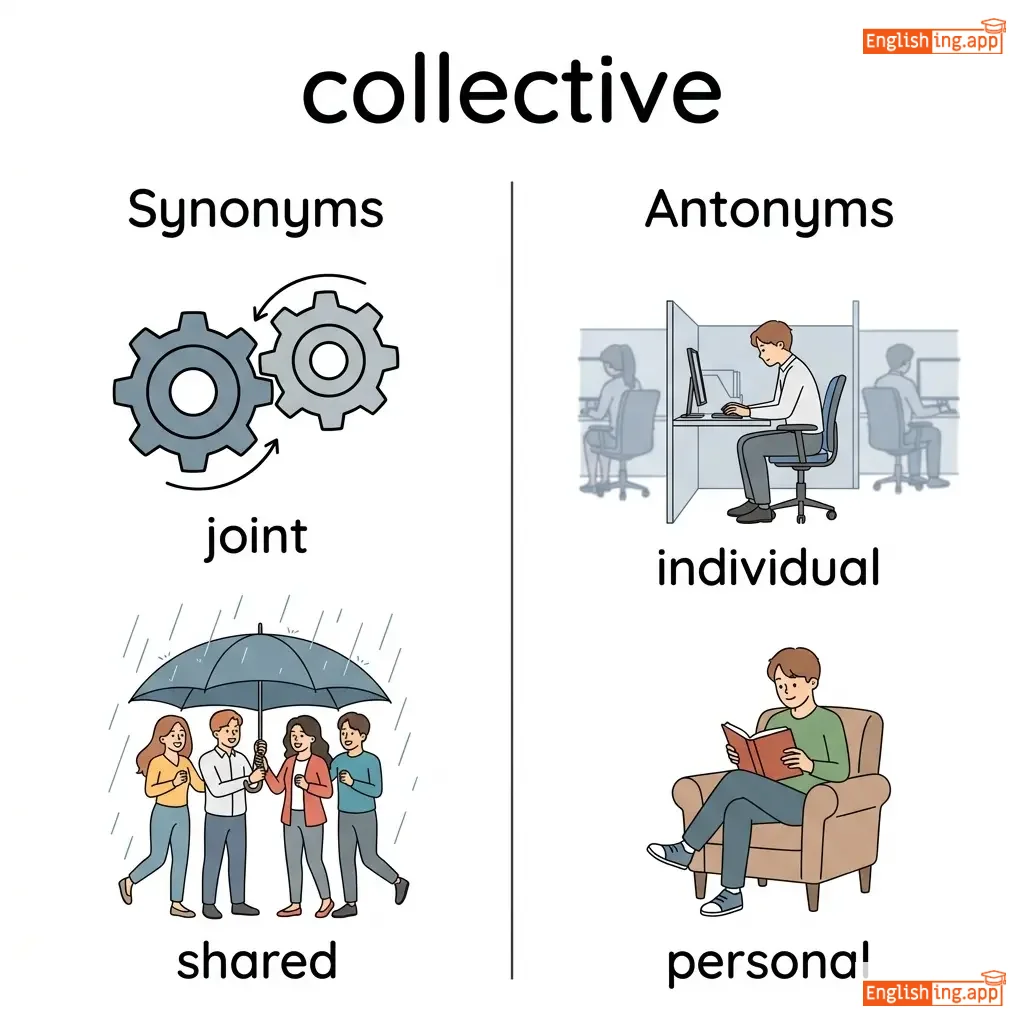
/kəˈlɛktɪv/
adjective
(кəˈлɛктɪв)
••••••
|
|
коллективный
kollektivnyy
••••••
|
- •••••• | - •••••• | - •••••• | - •••••• |
done by people acting as a group
••••••
|
The decision was made by collective agreement. |
Решение было принято по коллективному соглашению.
Resheniye bylo prinyato po kollektivnomu soglasheniyu.
••••••
|
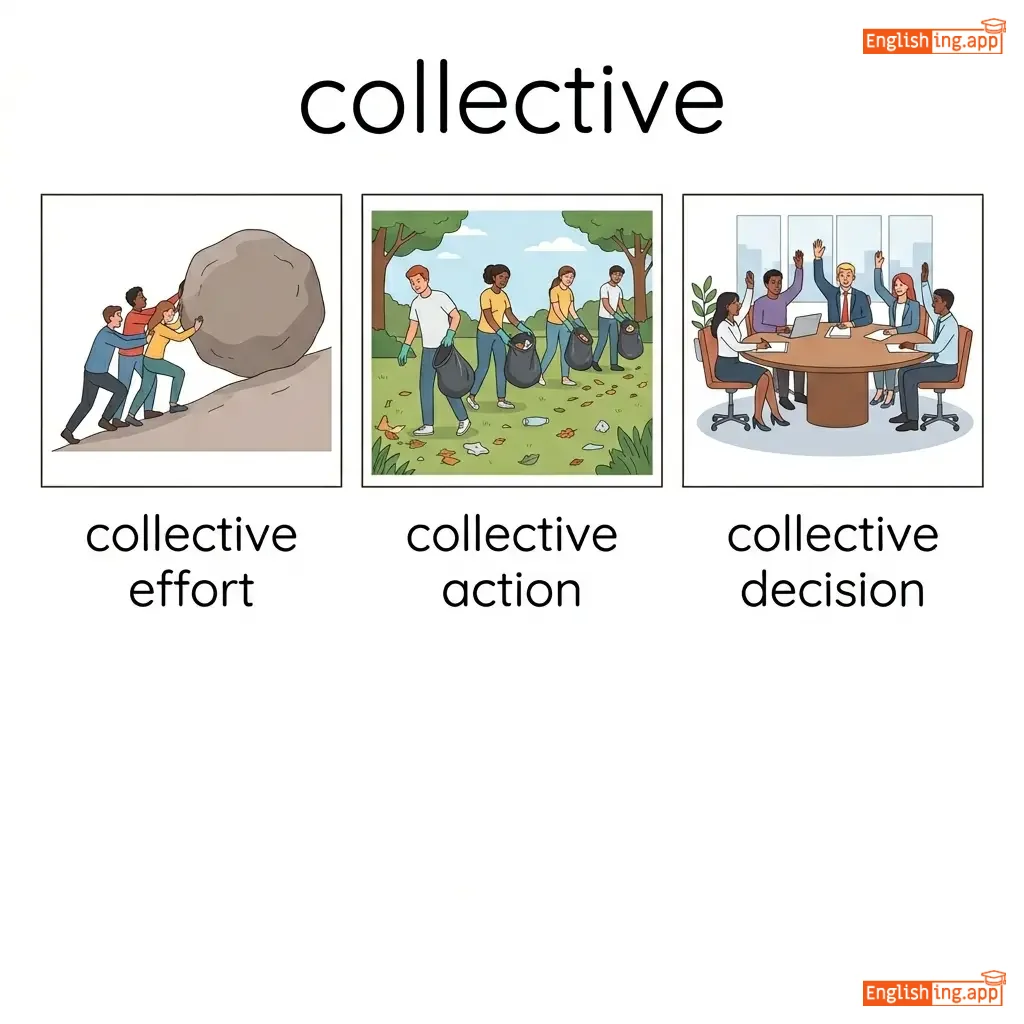
collective effort |
a combined effort by many people working together
••••••
|
коллективные усилия
kollektivnye usiliya
••••••
|
joint, shared, communal, mutual, cooperative
••••••
|
individual, personal
••••••
|
collective effort, collective action, collective decision, collective responsibility
••••••
|
Коллективное усилие означает работать вместе для достижения цели.
••••••
|
|
#1535
😌
|
/kəˈlɛktɪd/
adjective
(колэктэд)
••••••
|
- •••••• |
спокойный
spokoinyi
••••••
|
- •••••• | - •••••• | - •••••• | - •••••• |
calm and in control of oneself
••••••
|
She remained calm and collected during the crisis. |
Она оставалась спокойной и собранной во время кризиса.
Ona ostavalas' spokoinoy i sobranoy vo vremya krizisa.
••••••
|
calm and collected |
remaining composed and self-controlled in a difficult situation
••••••
|
спокойный и собранный
spokoinyi i sobrannyi
••••••
|
composed, serene, controlled, cool-headed
••••••
|
agitated, nervous, upset
••••••
|
cool and collected, calm and collected, stay collected, appear collected
••••••
|
Collected — это как оставаться спокойным и собранным, даже когда всё вокруг рушится.
••••••
|
|
#1536
👔
|
/ˈkɒliːɡ/
noun
(коллег)
••••••
|
- •••••• |
коллега
kollega
••••••
|
- •••••• | - •••••• | - •••••• | - •••••• |
a person with whom one works, especially in a profession or business
••••••
|
She invited her colleagues to the office party. |
Она пригласила своих коллег на офисную вечеринку.
Ona priglasila svoikh kolleg na ofisnuyu vecherinku.
••••••
|
colleague at work |
a fellow worker in the same organization
••••••
|
коллега по работе
kollega po rabote
••••••
|
coworker, associate, partner, teammate, companion
••••••
|
opponent, rival
••••••
|
close colleague, trusted colleague, senior colleague, colleague at work
••••••
|
Colleague по-русски это коллега, все твои коллеги на работе.
••••••
|
|
#1537
📚
|
/kəˈleɪʃən/
noun
(kəˈleɪʃən)
••••••
|
- •••••• |
колляция
kollyatsiya
••••••
|
- •••••• | - •••••• | - •••••• | - •••••• |
the act of collecting, comparing, and arranging in proper order
••••••
|
The librarian spent hours on the collation of old manuscripts. |
Библиотекарь провел часы, собирая старые манускрипты.
Bibliotekar' provel chasy, sobiraya starye manuskrypty.
••••••
|
- •••••• | - •••••• | - •••••• |
organization, compilation, arrangement, classification
••••••
|
disorder, confusion
••••••
|
collation process, collation of data, collation of evidence, collation of manuscripts
••••••
|
Collation = Collect + Nation = Собирать все правильно
••••••
|
|
#1538
🏦
|
/kəˈlætərəl/
noun
(коллатерал)
••••••
|
|
обеспечение
obespechenie
••••••
|
- •••••• | - •••••• | - •••••• | - •••••• |
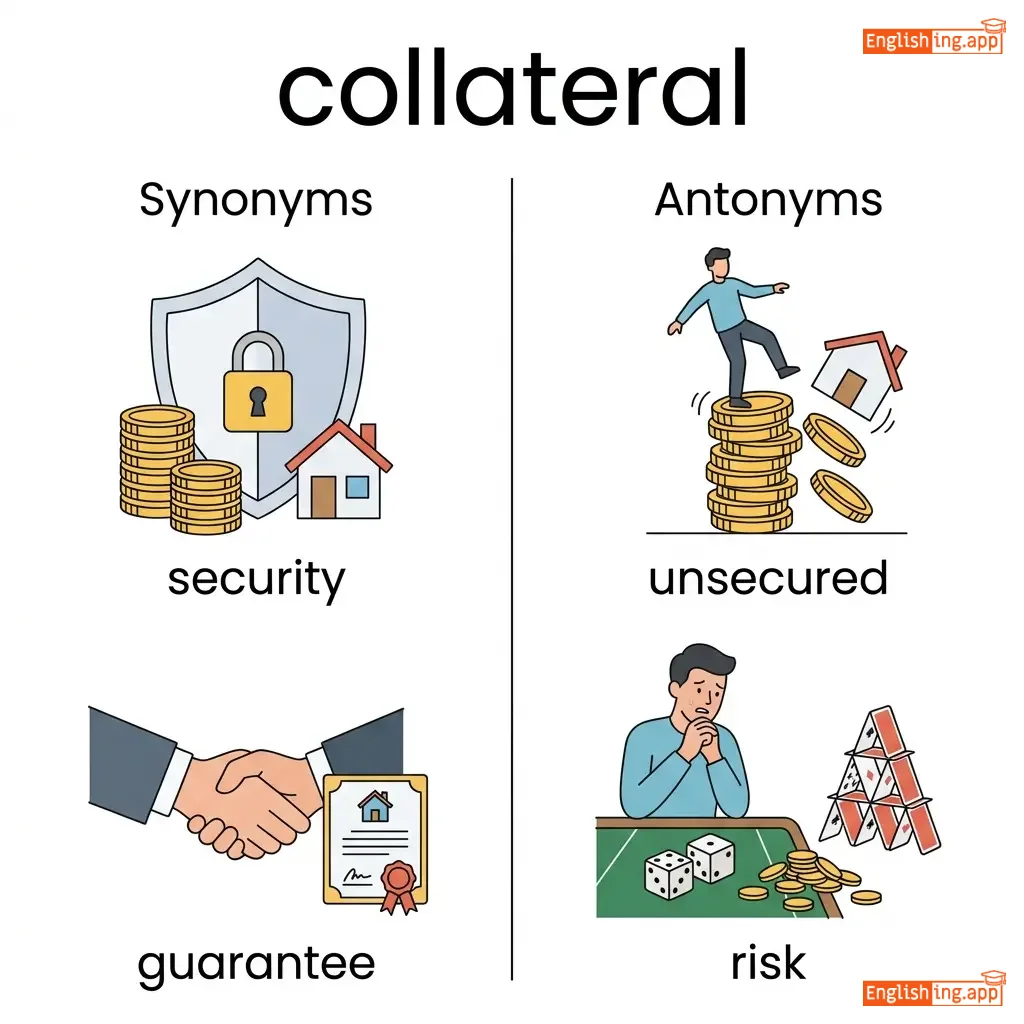
something pledged as security for repayment of a loan
••••••
|
He used his house as collateral for the bank loan. |
Он использовал свой дом как обеспечение для банковского кредита.
On ispol'zoval svoi dom kak obespechenie dlya bankovskogo kredita.
••••••
|
collateral damage |
unintended damage or casualties in a conflict
••••••
|
коллатеральный ущерб
kollateral'nyy ushcherb
••••••
|
security, guarantee, pledge, assurance
••••••
|
unsecured, risk
••••••
|
post collateral, offer collateral, collateral loan, collateral damage
••••••
|
Коллатерал - это залог для кредита, без него кредит не получить.
••••••
|
|
#1539
📑
|
/kəˈleɪt/
verb
(колиэйт)
••••••
|
- •••••• |
собрать
sobrat
••••••
|
collated
колиэйтед
••••••
|
collated
колиэйтед
••••••
|
collates
колиэйтс
••••••
|
collating
колиэйтинг
••••••
|
to collect, arrange, and combine in order
••••••
|
The secretary collated the reports before the meeting.
секретарь собрал отчеты перед встречей.
••••••
|
Секретарь собрал отчеты перед встречей.
Sekretar' sobral otchety pered vstrechey.
••••••
|
- •••••• | - •••••• | - •••••• |
gather, assemble, organize, compile, arrange
••••••
|
separate, scatter
••••••
|
collate documents, collate data, collate reports, collate information
••••••
|
Собрать означает собрать и упорядочить в порядке
••••••
|
|
#1540
🪑
|
/kəˈlæpsəbl̩/
adjective
(кəˈlæпсəбл̩)
••••••
|
- •••••• |
складной
skladnoy
••••••
|
- •••••• | - •••••• | - •••••• | - •••••• |
able to be folded down or reduced in size
••••••
|
She bought a collapsible chair for camping. |
Она купила складной стул для кемпинга.
Ona kupila skladnoy stul dlya kempinga.
••••••
|
- •••••• | - •••••• | - •••••• |
foldable, compact, portable, adjustable
••••••
|
fixed, rigid
••••••
|
collapsible chair, collapsible table, collapsible container, collapsible stroller
••••••
|
Collapsible означает складной, как стул, который можно сложить.
••••••
|
|
#1541
🏚️
|
/kəˈlæps/
verb
(колапс)
••••••
|
- •••••• |
коллапсировать
kollapsirovat
••••••
|
collapsed
коллапсировался
••••••
|
collapsed
коллапсировался
••••••
|
collapses
коллапсирует
••••••
|
collapsing
коллапсируя
••••••
|
to fall down or inward suddenly; to break down completely
••••••
|
The old building collapsed after the earthquake.
Старое здание рухнуло после землетрясения.
••••••
|
Старое здание рухнуло после землетрясения.
Staroe zдание rukhnulo posle zemletryaseniya.
••••••
|
collapse under pressure
рухнуть под давлением
••••••
|
to fail or give way when faced with stress or difficulties
••••••
|
рухнуть под давлением
rukhnyut' pod davleniem
••••••
|
fall, crumble, cave in, break down, disintegrate
••••••
|
stand, rise, succeed
••••••
|
building collapse, collapse suddenly, collapse completely, collapse under pressure
••••••
|
Коллапсировать - это как что-то, что ломается под давлением
••••••
|
|
#1542
🖼️
|
/kəˈlɑːʒ/
noun
(коллаж)
••••••
|
|
коллаж
kolazh
••••••
|
- •••••• | - •••••• | - •••••• | - •••••• |
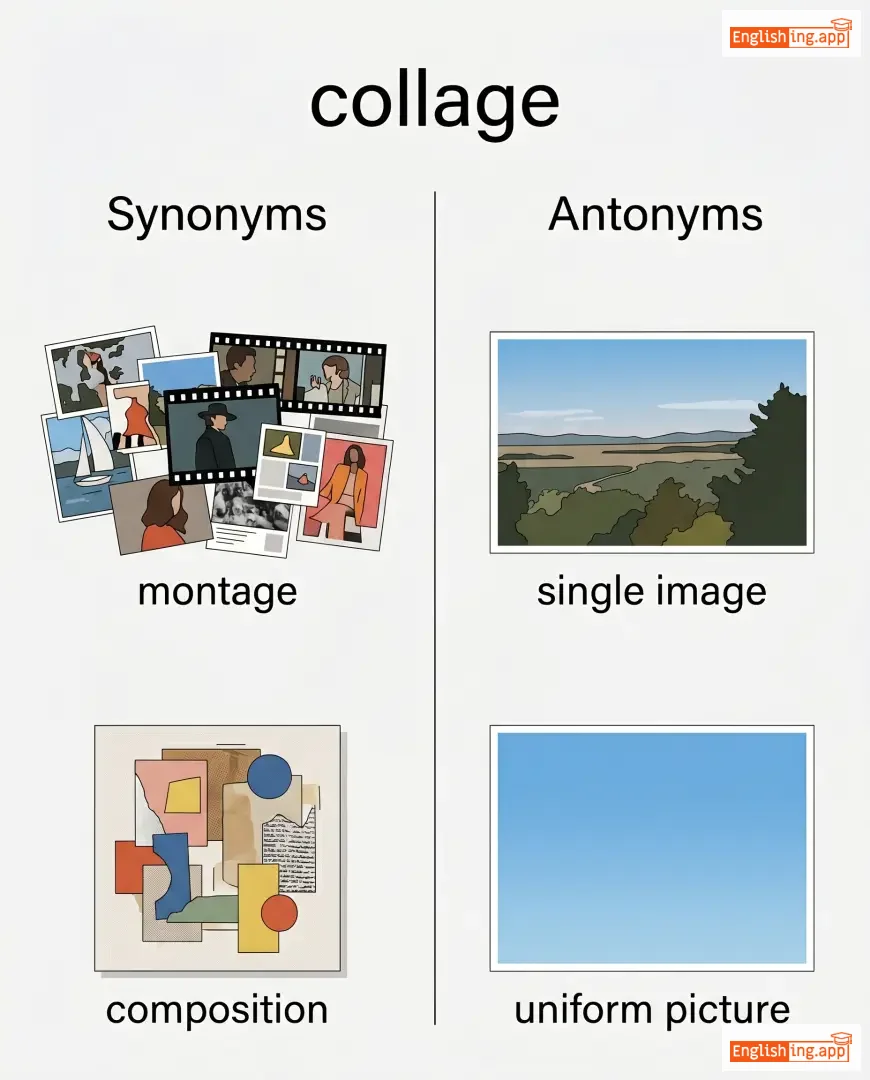
A piece of art made by sticking various materials such as photographs or paper onto a surface.
••••••
|
She created a collage using old magazine pictures.
Она создала коллаж, используя старые фотографии из журналов.
••••••
|
Она создала коллаж, используя старые фотографии из журналов.
Ona sozdala kollazh, ispol'zuyushchiy staryye fotografii iz zhurnale.
••••••
|
- •••••• | - •••••• | - •••••• |
montage, composition, assemblage, artwork
••••••
|
single image, uniform picture
••••••
|
art collage, photo collage, digital collage, create a collage
••••••
|
Коллаж - это сочетание различных изображений, как из частей мозаики.
••••••
|
|
#1543
🤝
|
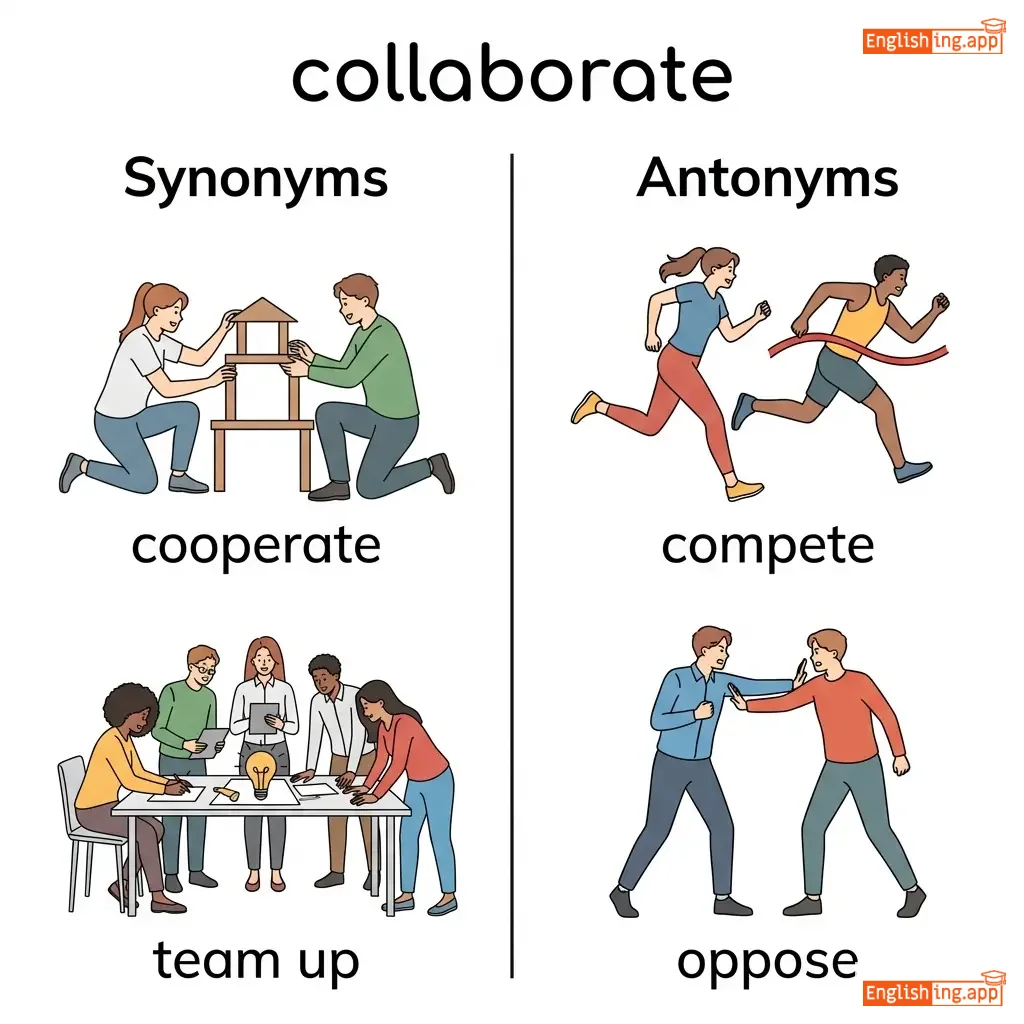
/kəˈlæbəreɪt/
verb
(коллаборировать)
••••••
|
|
сотрудничать
sotrudnichat
••••••
|
collaborated
коллаборировал
••••••
|
collaborated
коллаборировал
••••••
|
collaborates
коллаборирует
••••••
|
collaborating
коллаборируя
••••••
|
To work jointly with others, especially on an intellectual or creative project.
••••••
|
The two companies decided to collaborate on a new project.
Две компании решили сотрудничать над новым проектом.
••••••
|
Две компании решили сотрудничать над новым проектом.
Dve kompanii reshili sotrudnichat' nad novym proyektom.
••••••
|
collaborate with
сотрудничать с
••••••
|
to work together with someone
••••••
|
работать с
rabotat' s
••••••
|
cooperate, team up, work together, join forces, partner
••••••
|
compete, oppose, resist
••••••
|
collaborate closely, collaborate effectively, collaborate on, collaborate with
••••••
|
Сотрудничать — это как работать вместе над проектом.
••••••
|
|
#1544
🥣
|
/ˈkɒləndər/
noun
(коландер)
••••••
|
- •••••• |
друшлаг
drushlag
••••••
|
- •••••• | - •••••• | - •••••• | - •••••• |
A bowl with holes used for draining liquid from food such as pasta or vegetables.
••••••
|
She poured the pasta into a colander to drain the water. |
Она вылила пасту в друшлаг, чтобы слить воду.
Ona vylila pastu v drushlag, chtoby slity vodu.
••••••
|
- •••••• | - •••••• | - •••••• |
strainer, sieve, drainer, filter
••••••
|
container, bowl
••••••
|
metal colander, plastic colander, kitchen colander
••••••
|
Друшлаг - вода уходит через дырочки, как в коландере
••••••
|
|
#1545
⏰
|
/koʊˈɪnsɪdənt/
adjective
(koin-tsid-yent)
••••••
|
- •••••• |
совпадающий
sovpadayushchiy
••••••
|
- •••••• | - •••••• | - •••••• | - •••••• |
Occurring at the same time; occupying the same position in space or time.
••••••
|
The festival was coincident with the national holiday.
Фестиваль был совпадающим с национальным праздником.
••••••
|
Фестиваль был совпадающим с национальным праздником.
Festival byl sovpadayushchim s natsional'nym prazdnikom.
••••••
|
- •••••• | - •••••• | - •••••• |
simultaneous, concurrent, synchronous, contemporaneous
••••••
|
separate, different, distinct
••••••
|
coincident events, coincident dates, coincident interests
••••••
|
Coincident означает два события, происходящих одновременно, как если бы они совпали.
••••••
|
|
#1546
🤔
|
/ˈkɒdʒɪteɪt/
verb
(коги́тэт)
••••••
|
- •••••• |
размышлять
razmyshlyat'
••••••
|
cogitated
коги́тэд
••••••
|
cogitated
коги́тэд
••••••
|
cogitates
коги́тэтс
••••••
|
cogitating
коги́тэ́тинг
••••••
|
to think deeply about something; to meditate or reflect
••••••
|
He sat by the river to cogitate on his future plans.
Он сидел у реки, чтобы обдумать свои будущие планы.
••••••
|
Он сидел у реки, чтобы обдумать свои будущие планы.
On sidel u reki, chtoby obdumaty svoi budushchie plany.
••••••
|
- •••••• | - •••••• | - •••••• |
ponder, reflect, contemplate, meditate, deliberate
••••••
|
ignore, neglect, disregard
••••••
|
cogitate on, cogitate deeply, sit and cogitate
••••••
|
Cogitate напоминает 'кодировать' в раздумьях, когда ты глубоко размышляешь.
••••••
|
|
#1547
⏰
|
/ˌkoʊ.ɪnˈsaɪd/
verb
(koynsaid)
••••••
|
- •••••• |
совпадать
sovpadat
••••••
|
coincided
koynsaidid
••••••
|
coincided
koynsaidid
••••••
|
coincides
koynsaidz
••••••
|
coinciding
koynsaiding
••••••
|
To occur at the same time or to be in agreement.
••••••
|
The meeting coincided with her birthday.
Встреча совпала с её днём рождения.
••••••
|
Встреча совпала с её днём рождения.
Vstrecha sovpala s yey dnyom rozhdeniya.
••••••
|
- •••••• | - •••••• | - •••••• |
concur, agree, match, correspond
••••••
|
differ, clash, disagree
••••••
|
coincide with, events coincide, dates coincide
••••••
|
Совпадать означает происходить одновременно, как два события, которые совпадают.
••••••
|
|
#1548
🪙
|
/kɔɪn/
noun, verb
(kɔin)
••••••
|
- •••••• |
монета
moneta
••••••
|
coined
kɔined
••••••
|
coined
kɔined
••••••
|
coins
kɔins
••••••
|
coining
kɔining
••••••
|
A flat piece of metal used as money; as a verb, to invent a new word or phrase.
••••••
|
The government decided to coin a new term for the program.
Правительство решило ввести новый термин для программы.
••••••
|
Правительство решило ввести новый термин для программы.
Pravitel'stvo reshilo vvesti novyy termin dlya programmy.
••••••
|
coin a phrase
ввести выражение
••••••
|
To invent or create a new expression
••••••
|
ввести выражение
vvesti vyrazhenie
••••••
|
currency, money, cash, token
••••••
|
bill, note
••••••
|
coin money, coin a phrase, coin collection, coin toss
••••••
|
Coin это монета, и ввести выражение — это придумать новый способ говорить.
••••••
|
|
#1549
💇♀️
|
/kwɑːˈfjʊr/
noun
(kwo-feer)
••••••
|
- •••••• |
прическа
pricheska
••••••
|
- •••••• | - •••••• | - •••••• | - •••••• |
A person's hairstyle, typically an elaborate one.
••••••
|
Her elegant coiffure impressed everyone at the party.
Её элегантная прическа произвела впечатление на всех на вечеринке.
••••••
|
Её элегантная прическа произвела впечатление на всех на вечеринке.
Eyo elegatnaya prichoska proizvela vpechatlenie na vsekh na vecherinke.
••••••
|
- •••••• | - •••••• | - •••••• |
hairstyle, hairdo, haircut, tresses
••••••
|
baldness, plainness
••••••
|
elegant coiffure, stylish coiffure, elaborate coiffure
••••••
|
Coiffure означает прическа - представьте 'Ко' как 'кудри' для кудрявой прически.
••••••
|
|
#1550
👨👩👧👦
|
/ˈkoʊhɔːrts/
noun
(кохорты)
••••••
|
- •••••• |
когорты
kogorty
••••••
|
- •••••• | - •••••• | - •••••• | - •••••• |
Groups of people who share a common feature or experience.
••••••
|
Researchers compared the health outcomes of different cohorts. |
Исследователи сравнили результаты здоровья разных когорт.
Issledovateli sravnili rezul'taty zdorov'ya raznykh kogort.
••••••
|
- •••••• | - •••••• | - •••••• |
groups, bands, teams, companions, communities
••••••
|
individuals, loners
••••••
|
multiple cohorts, birth cohorts, research cohorts, cohorts of students
••••••
|
Cohorts — это группы людей, имеющих что-то общее.
••••••
|
|
#1551
👥
|
/ˈkoʊhɔːrt/
noun
(когорта)
••••••
|
- •••••• |
когорта
kogorta
••••••
|
- •••••• | - •••••• | - •••••• | - •••••• |
A group of people with a shared characteristic, usually of the same age or with a common experience.
••••••
|
The study tracked a cohort of students over ten years. |
Исследование отслеживало когорту студентов на протяжении десяти лет.
Issledovaniye otslezhivalo kogortu studentov na protyazhenii desyati let.
••••••
|
- •••••• | - •••••• | - •••••• |
group, band, team, troop, company
••••••
|
individual, loner
••••••
|
cohort study, peer cohort, age cohort, cohort analysis
••••••
|
Когорта — это группа людей, как студенты одного курса в университете.
••••••
|
|
#1552
🔗
|
/koʊˈhiːsɪv/
adjective
(kohesiv)
••••••
|
|
сплочённый
splochyonnij
••••••
|
- •••••• | - •••••• | - •••••• | - •••••• |
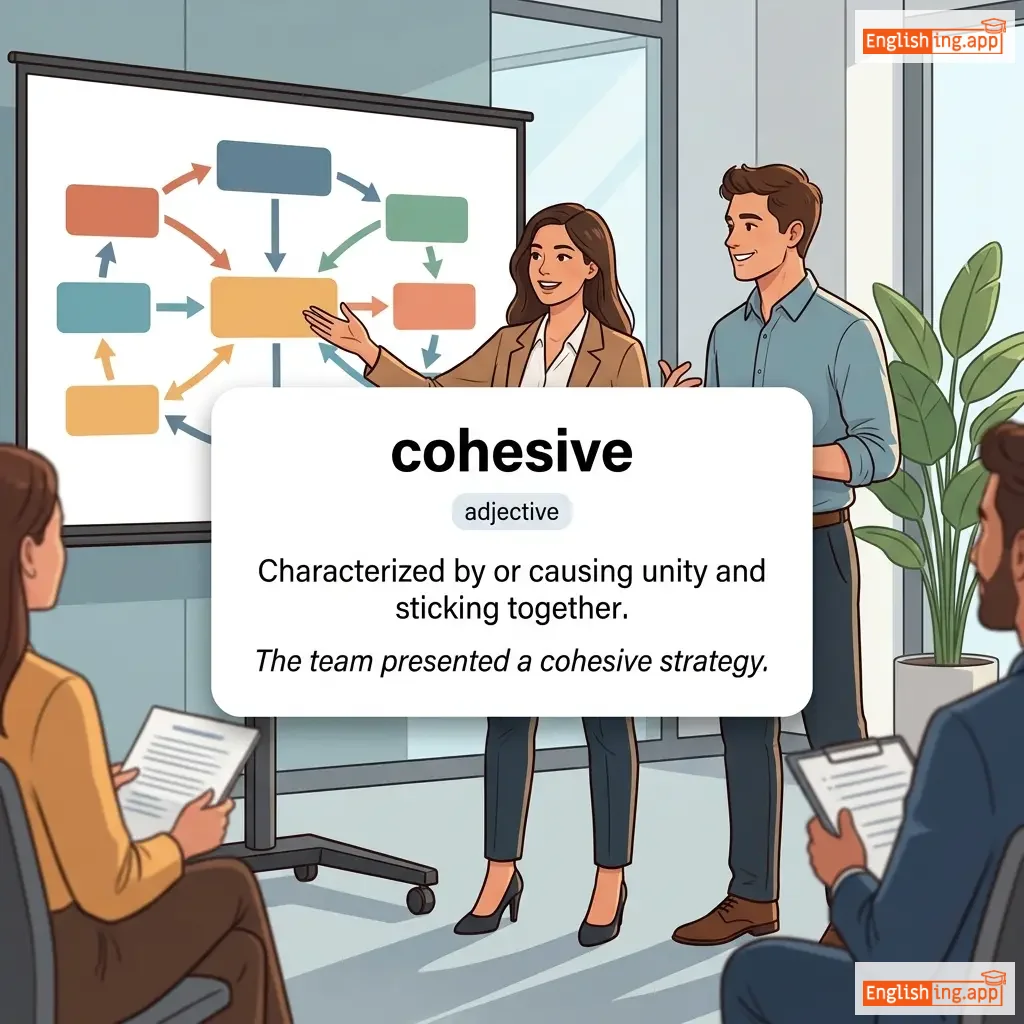
Characterized by or causing unity and sticking together.
••••••
|
The team presented a cohesive strategy.
Команда представила сплочённую стратегию.
••••••
|
Команда представила сплочённую стратегию.
Komanda predstavyla splochyonnuyu strategiyu.
••••••
|
- •••••• | - •••••• | - •••••• |
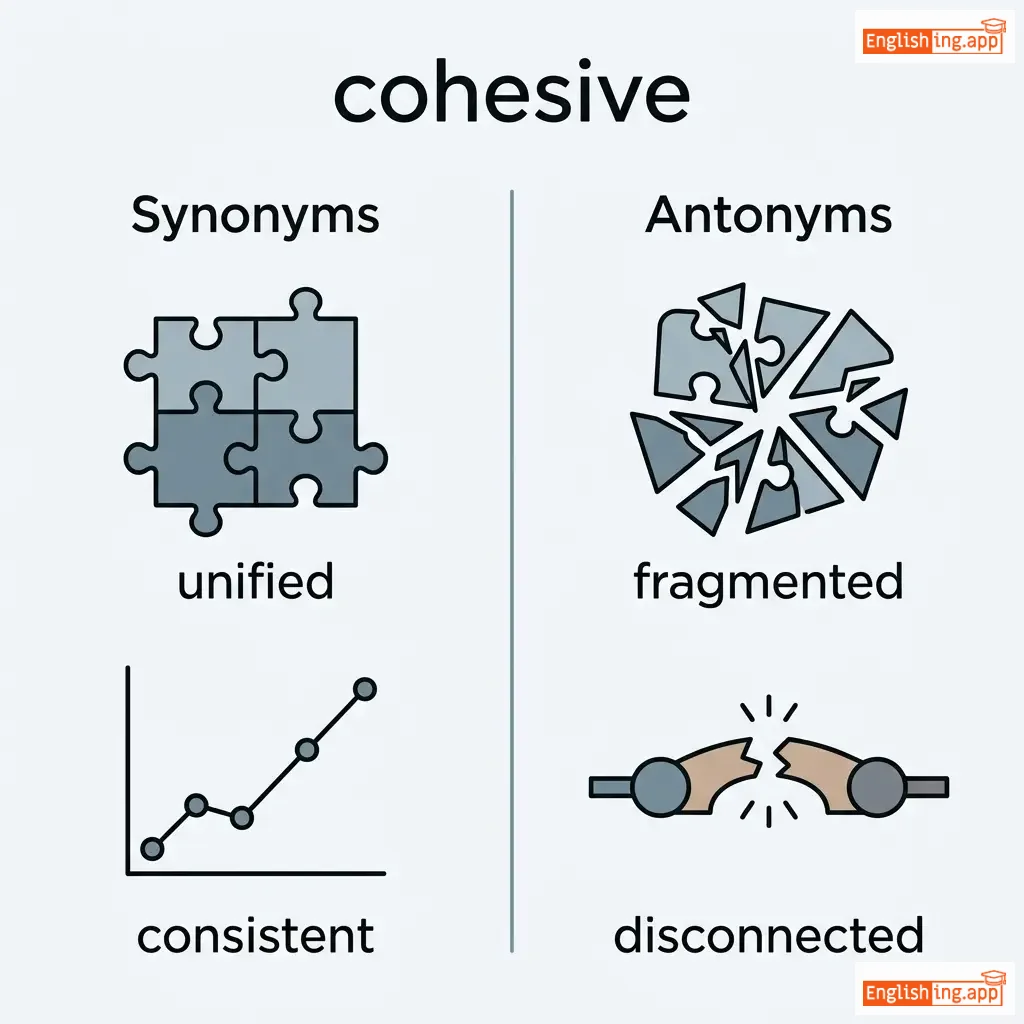
unified, consistent, integrated, connected, solid
••••••
|
fragmented, disconnected
••••••
|
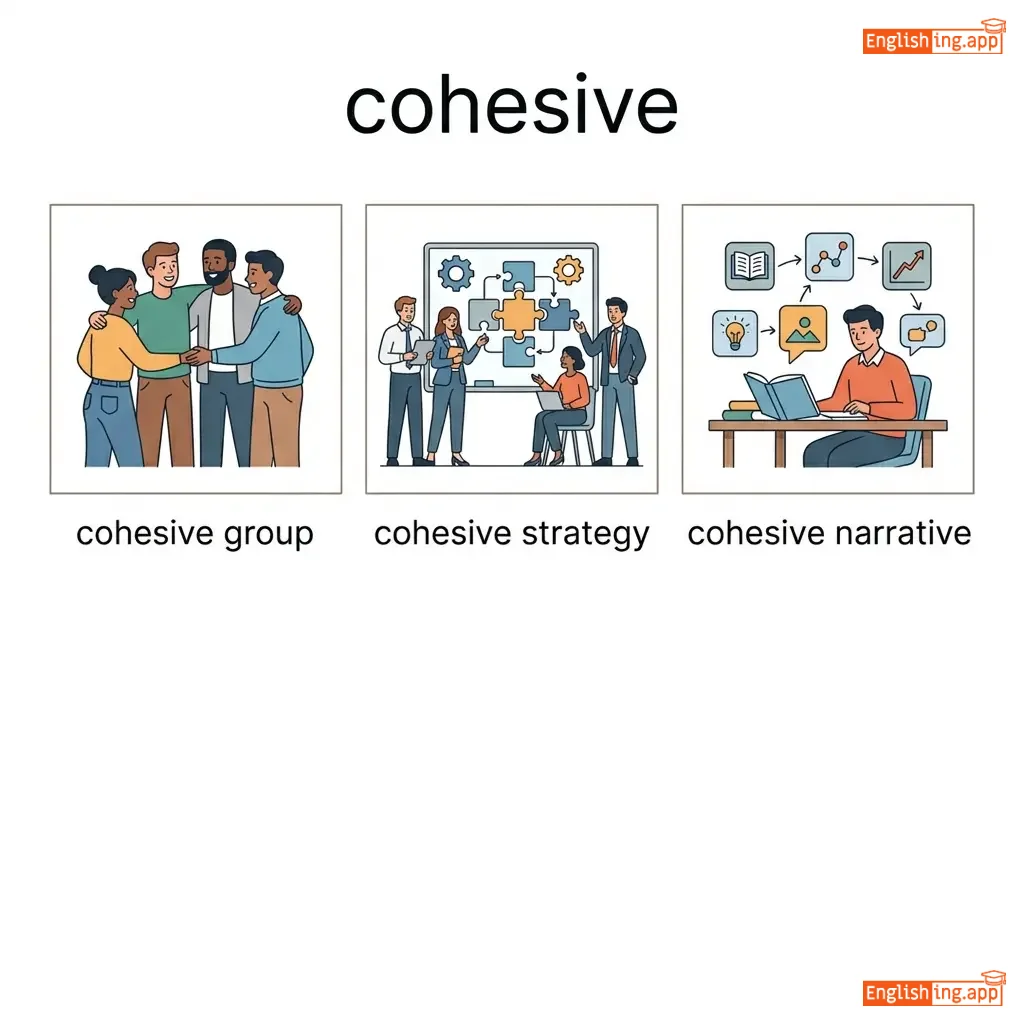
cohesive group, cohesive strategy, cohesive narrative
••••••
|
Cohesive - как когда все держится вместе, не разделяется.
••••••
|
|
#1553
🤝
|
/koʊˈhiːʒən/
noun
(kəʊˈhiːʒən)
••••••
|
|
согласие
soglasie
••••••
|
- •••••• | - •••••• | - •••••• | - •••••• |
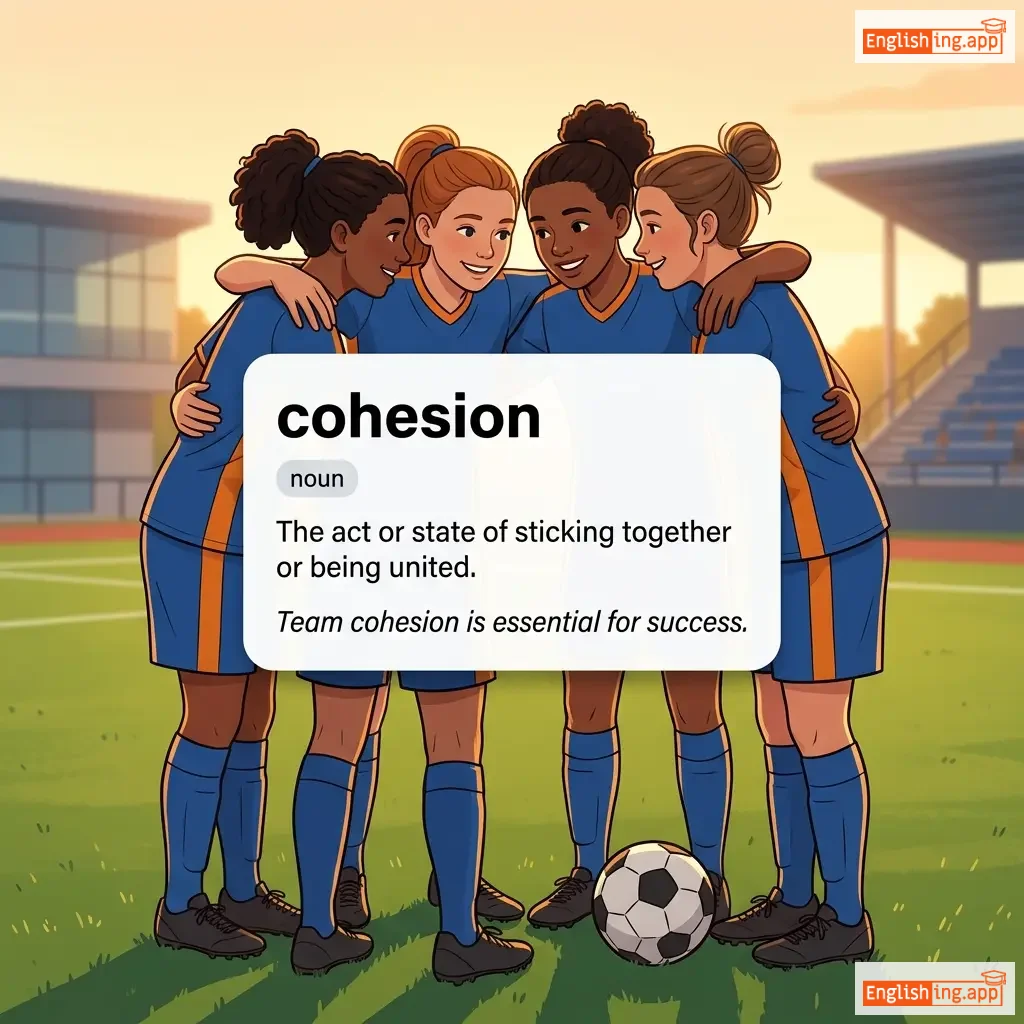
The act or state of sticking together or being united.
••••••
|
Team cohesion is essential for success. |
Согласие в команде необходимо для успеха.
Soglasie v komande neobkhodimo dlya uspekha.
••••••
|
social cohesion |
The bonds that bring people together in a society.
••••••
|
социальное согласие
sotsial'noe soglasie
••••••
|
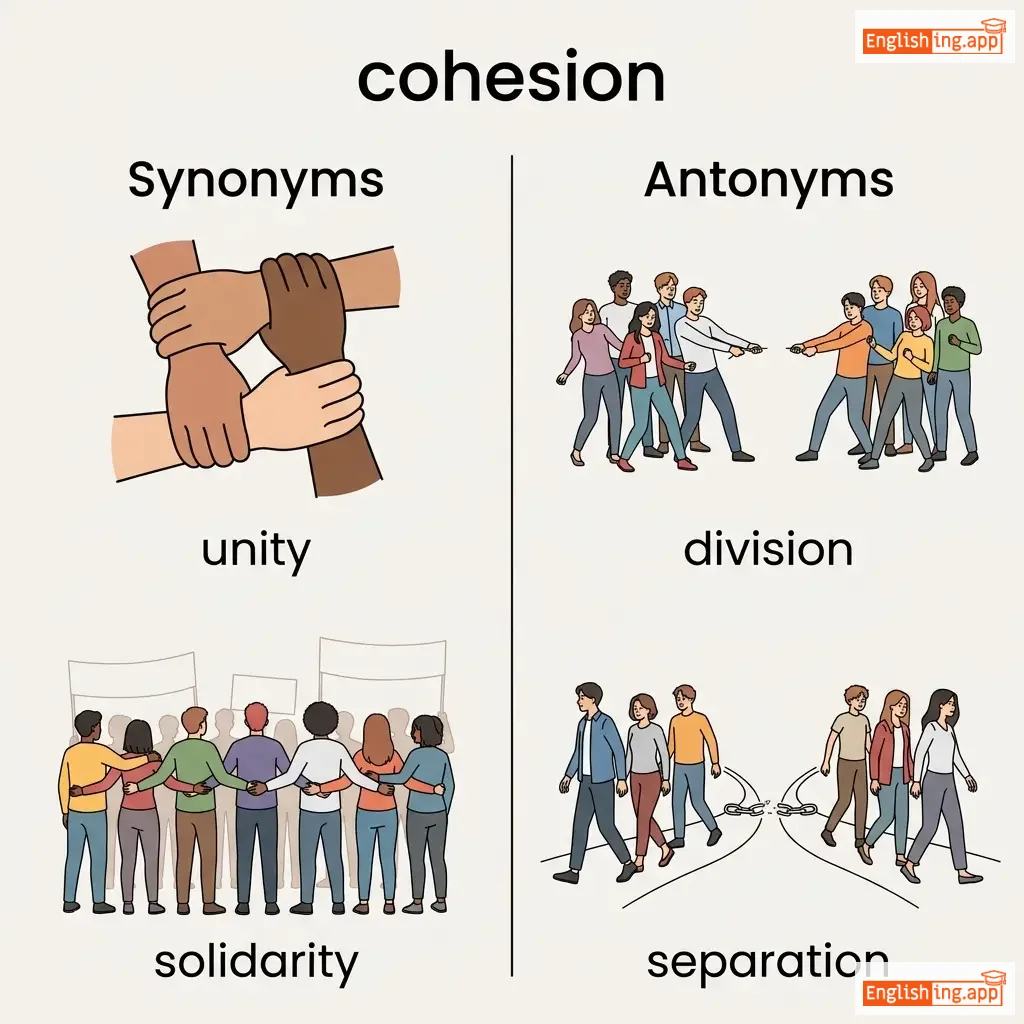
unity, solidarity, bond, connection, integration
••••••
|
division, separation
••••••
|
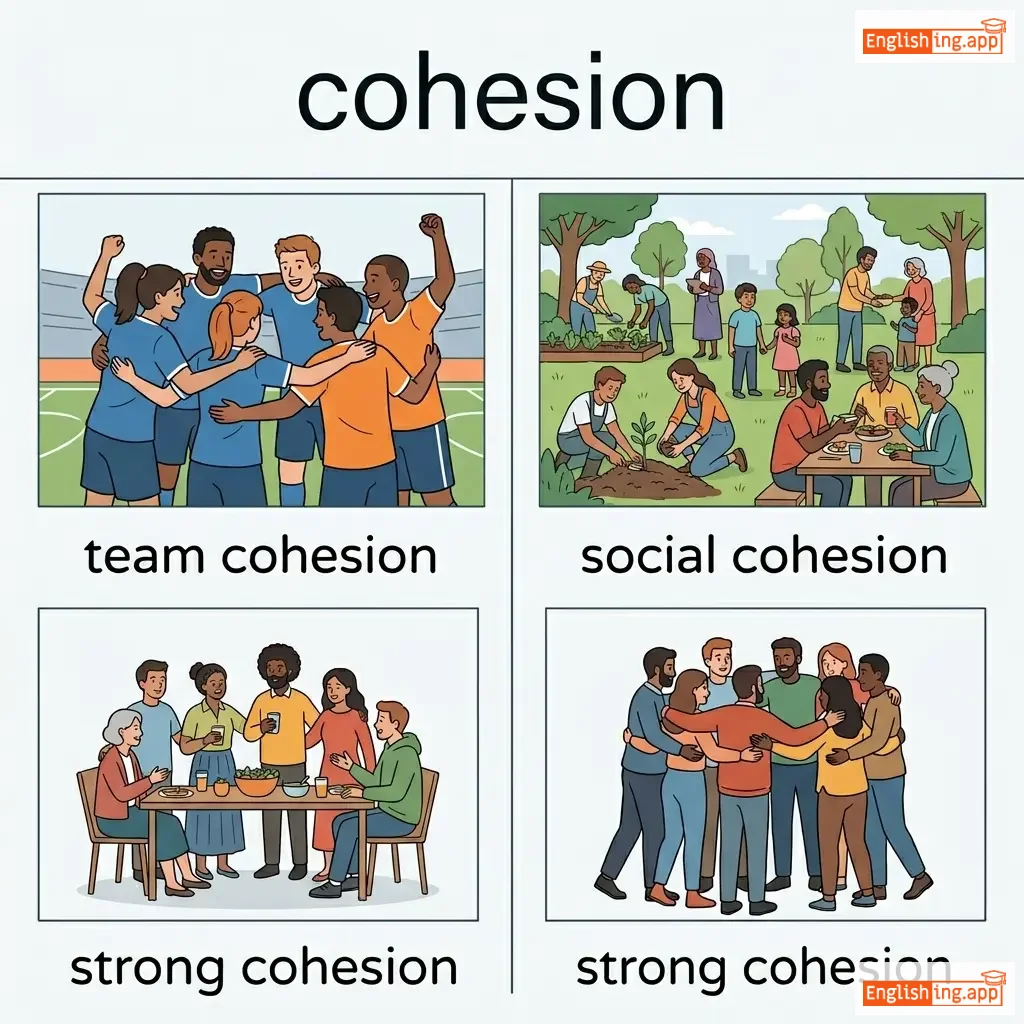
team cohesion, social cohesion, strong cohesion
••••••
|
Cohesion = co+hesion → будь вместе (согласие)
••••••
|
|
#1554
🧩
|
/koʊˈhɪr/
verb
(kohir)
••••••
|
- •••••• |
согласовываться
soglasovyvat'sya
••••••
|
cohered
kohird
••••••
|
cohered
kohird
••••••
|
coheres
kohirs
••••••
|
cohering
kohiring
••••••
|
To stick together; to be united logically or physically.
••••••
|
The ideas in his essay cohere well.
Идеи в его эссе хорошо соединяются.
••••••
|
Идеи в его эссе хорошо соединяются.
Idei v ego esse khorosho soedinayutsya.
••••••
|
- •••••• | - •••••• | - •••••• |
stick, adhere, connect, unite, bond
••••••
|
separate, detach
••••••
|
cohere with, logically cohere, ideas cohere
••••••
|
Co+here → согласованно вместе = объединение
••••••
|
|
#1555
🏠
|
/koʊˈhæbɪt/
verb
(kohabit)
••••••
|
- •••••• |
сожительствовать
sozhitel'stvovat'
••••••
|
cohabited
kohabitiraval
••••••
|
cohabited
kohabitiraval
••••••
|
cohabits
kohabitiruyet
••••••
|
cohabiting
kohabitiruyushchij
••••••
|
To live together, often as partners without being married.
••••••
|
They decided to cohabit before getting married.
Они решили жить вместе до свадьбы.
••••••
|
Они решили жить вместе до свадьбы.
Oni reshili zhit' vmeste do svad'by.
••••••
|
- •••••• | - •••••• | - •••••• |
live together, reside, dwell, share a home
••••••
|
separate, divorce
••••••
|
cohabit with, cohabiting couple, unmarried cohabit
••••••
|
Co+жить → Сожительство без брака
••••••
|
|
#1556
📛
|
/kɒɡˈnoʊmən/
noun
(когномен)
••••••
|
- •••••• |
фамилия / прозвище
familiya / prozvische
••••••
|
- •••••• | - •••••• | - •••••• | - •••••• |
A family name or surname; an additional name or nickname.
••••••
|
His cognomen became widely known in literary circles.
Его когномен стал широко известен в литературных кругах.
••••••
|
Его фамилия стала широко известна в литературных кругах.
Ego familiya stala shiroko izvestna v literaturnykh krugakh.
••••••
|
- •••••• | - •••••• | - •••••• |
surname, family name, epithet, alias, nickname
••••••
|
given name, first name
••••••
|
Roman cognomen, adopt cognomen, family cognomen
••••••
|
Cognomen означает co+name → имя, которое делится с семьей (фамилия)
••••••
|
|
#1557
📘
|
/ˈkɒɡnɪzənt/
adjective
(когниза́нт)
••••••
|
|
осведомлённый
osvedomlennyj
••••••
|
- •••••• | - •••••• | - •••••• | - •••••• |
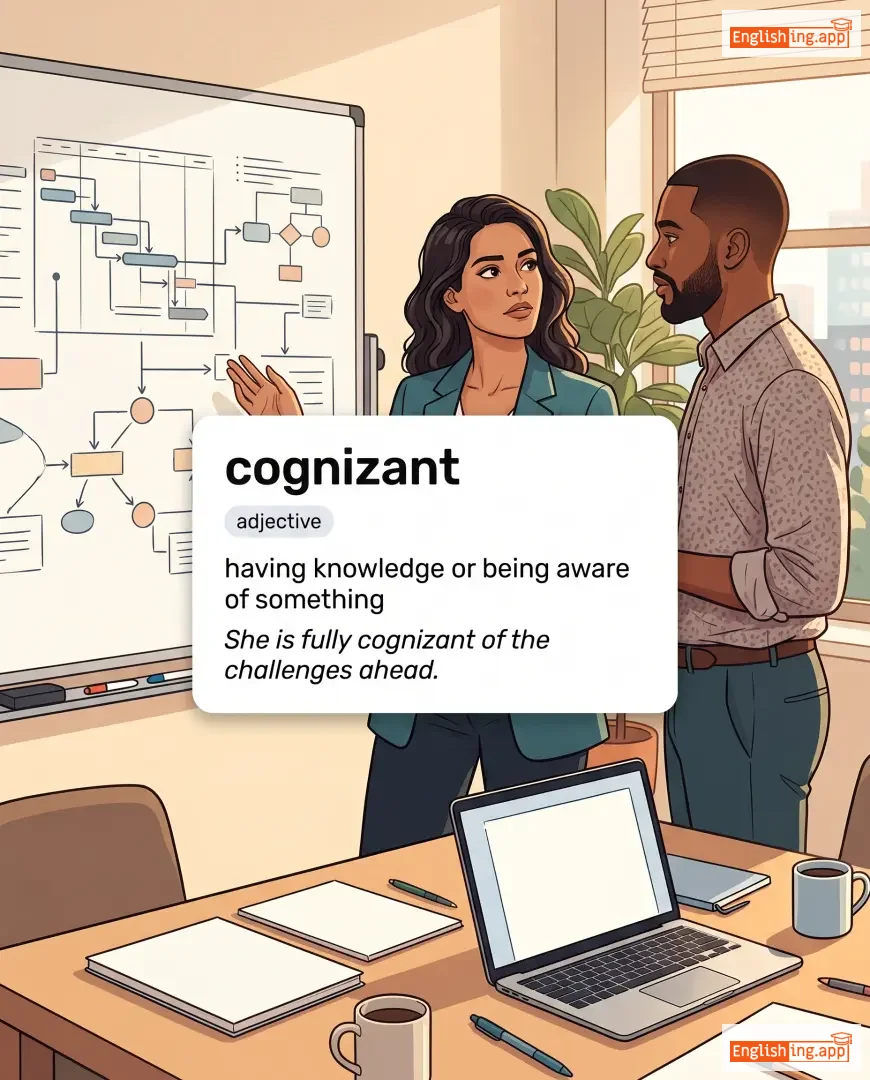
having knowledge or being aware of something
••••••
|
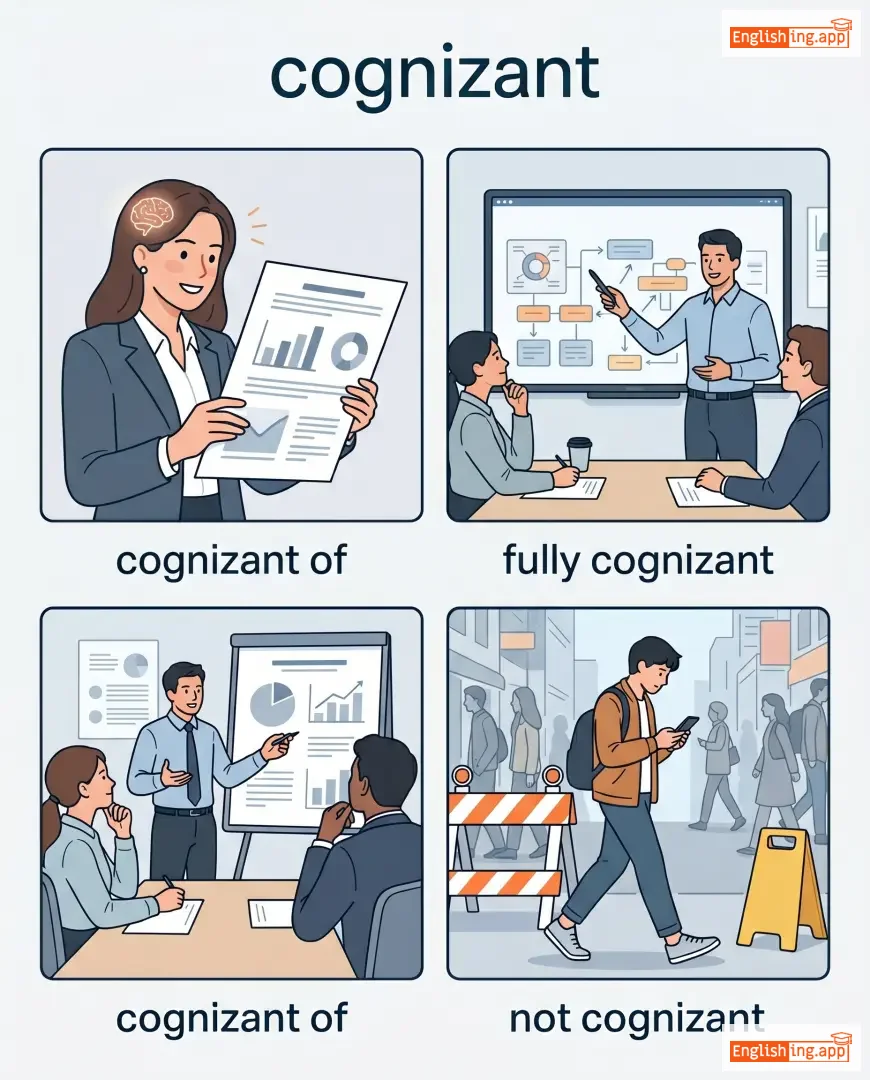
She is fully cognizant of the challenges ahead.
Она полностью осведомлена о предстоящих вызовах.
••••••
|
Она полностью осведомлена о предстоящих вызовах.
Ona polnost'yu osvedomlena o predstoyashchikh vyzovakh.
••••••
|
- •••••• | - •••••• | - •••••• |
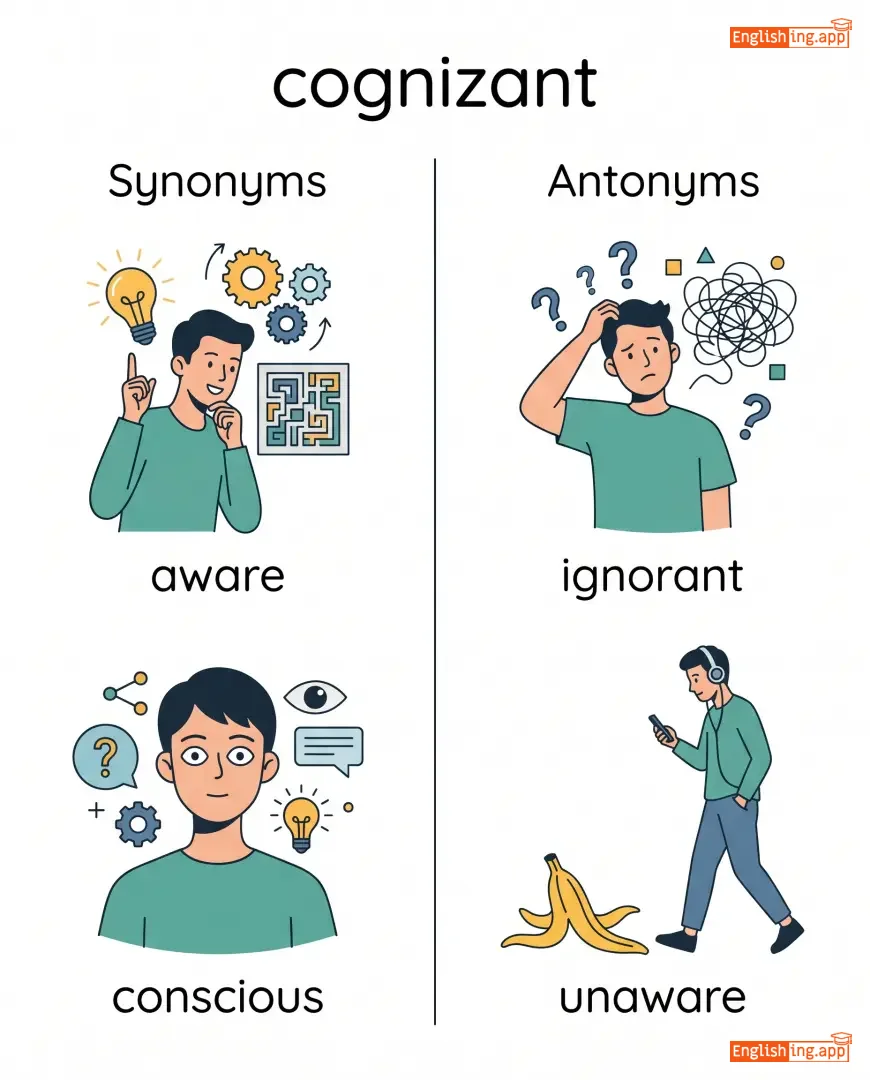
aware, conscious, informed, mindful
••••••
|
ignorant, unaware, oblivious
••••••
|
cognizant of, fully cognizant, not cognizant
••••••
|
Cognizant означает осведомлённость, как быть осведомлённым о предстоящих вызовах.
••••••
|
|
#1558
👀
|
/ˈkɒɡnɪzəns/
noun
(когнизенс)
••••••
|
|
знание, осведомленность или уведомление
znanie, osvedomlennost' ili uvedomlenie
••••••
|
- •••••• | - •••••• | - •••••• | - •••••• |
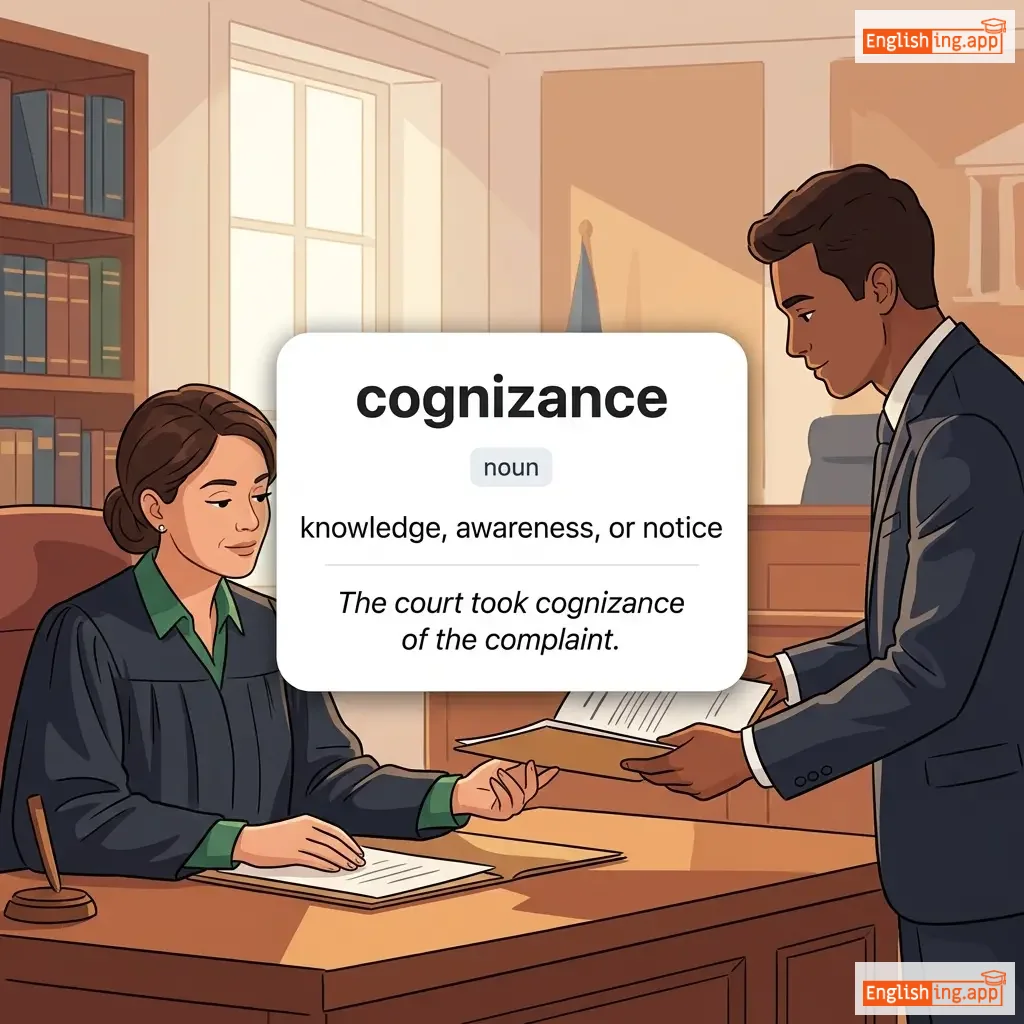
knowledge, awareness, or notice
••••••
|
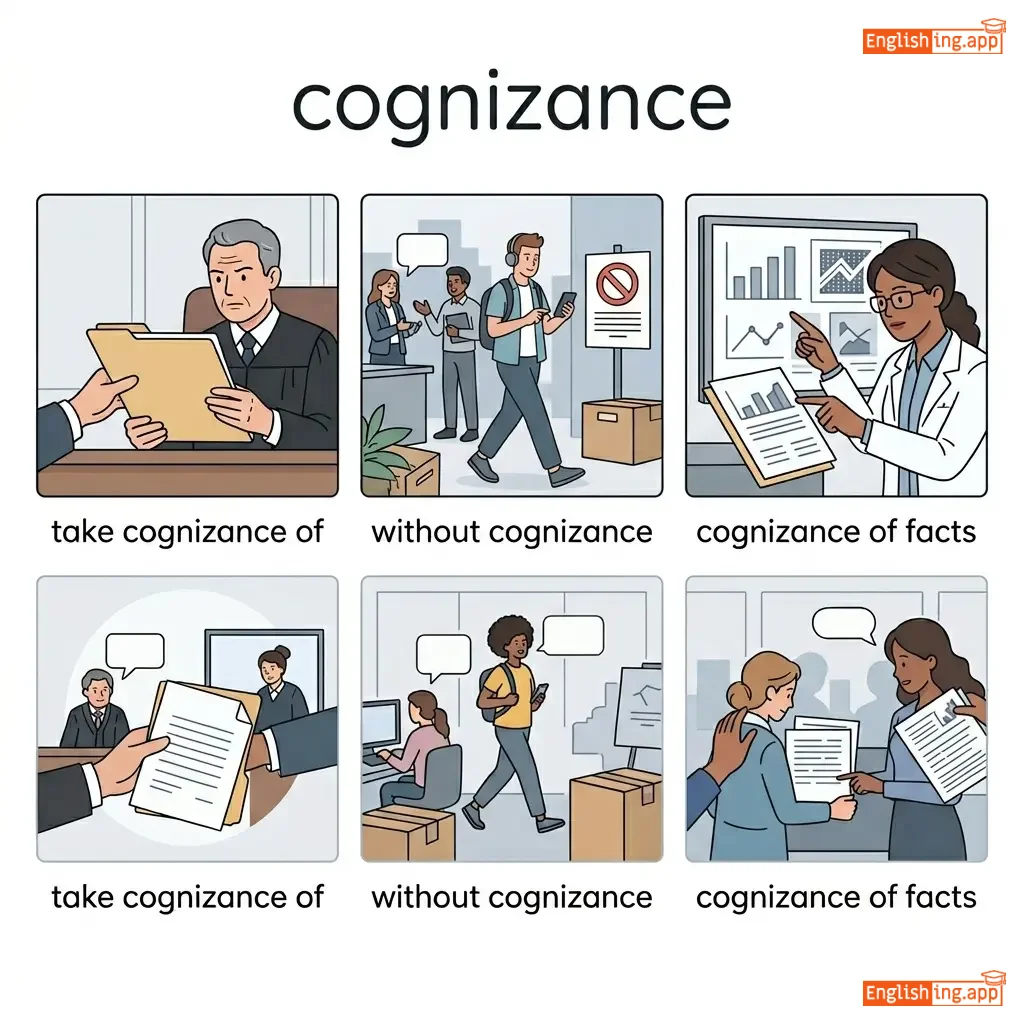
The court took cognizance of the complaint. |
Суд принял к сведению жалобу.
Sud prinjal k svedeniyu zhalobu.
••••••
|
take cognizance of |
to notice or pay attention to something officially
••••••
|
принять к сведению
prinyat' k svedeniyu
••••••
|
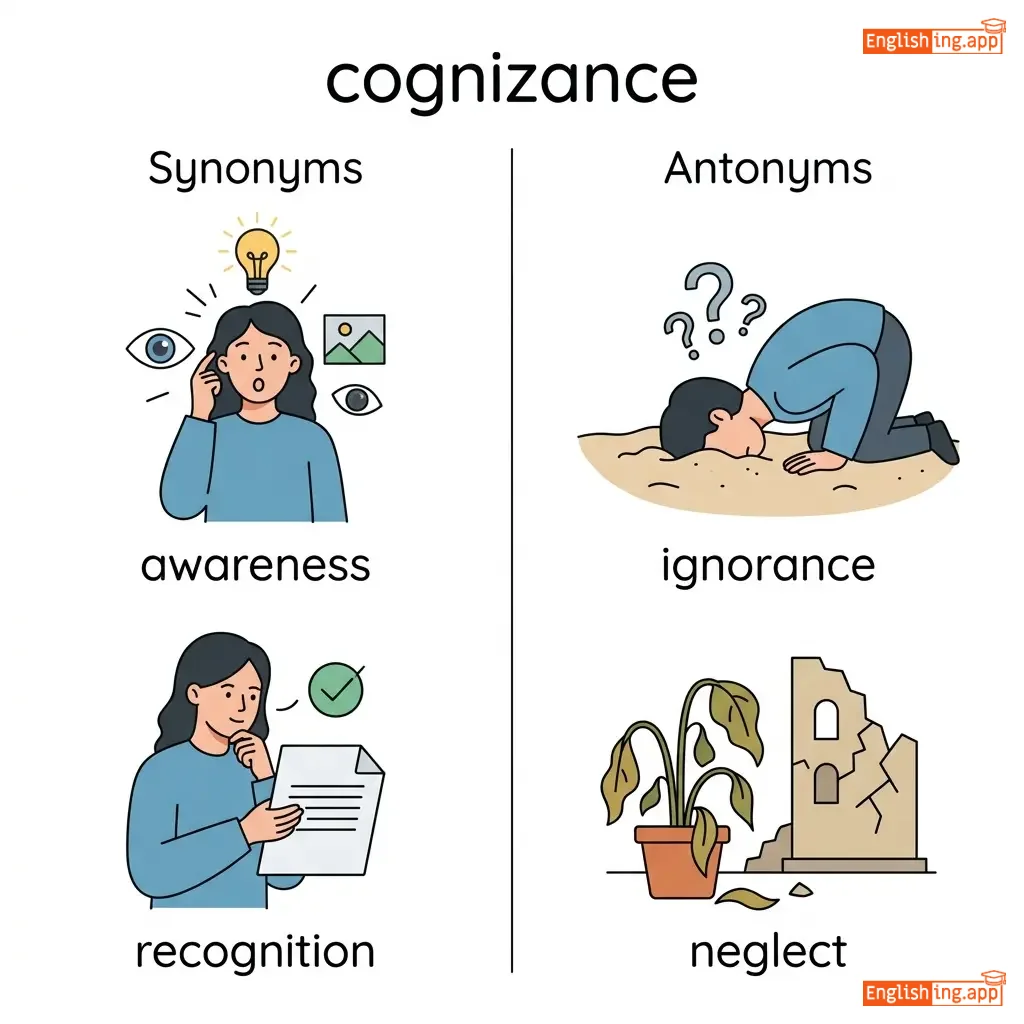
awareness, recognition, understanding, perception
••••••
|
ignorance, neglect, disregard
••••••
|
take cognizance of, without cognizance, cognizance of facts
••••••
|
Cognizance = Cognition + Notice → Суд принимает Notice о жалобе.
••••••
|
|
#1559
🧠
|
/ˈkɒɡnətɪv/
adjective
(когнитивный)
••••••
|
|
когнитивный
kognitivny
••••••
|
- •••••• | - •••••• | - •••••• | - •••••• |
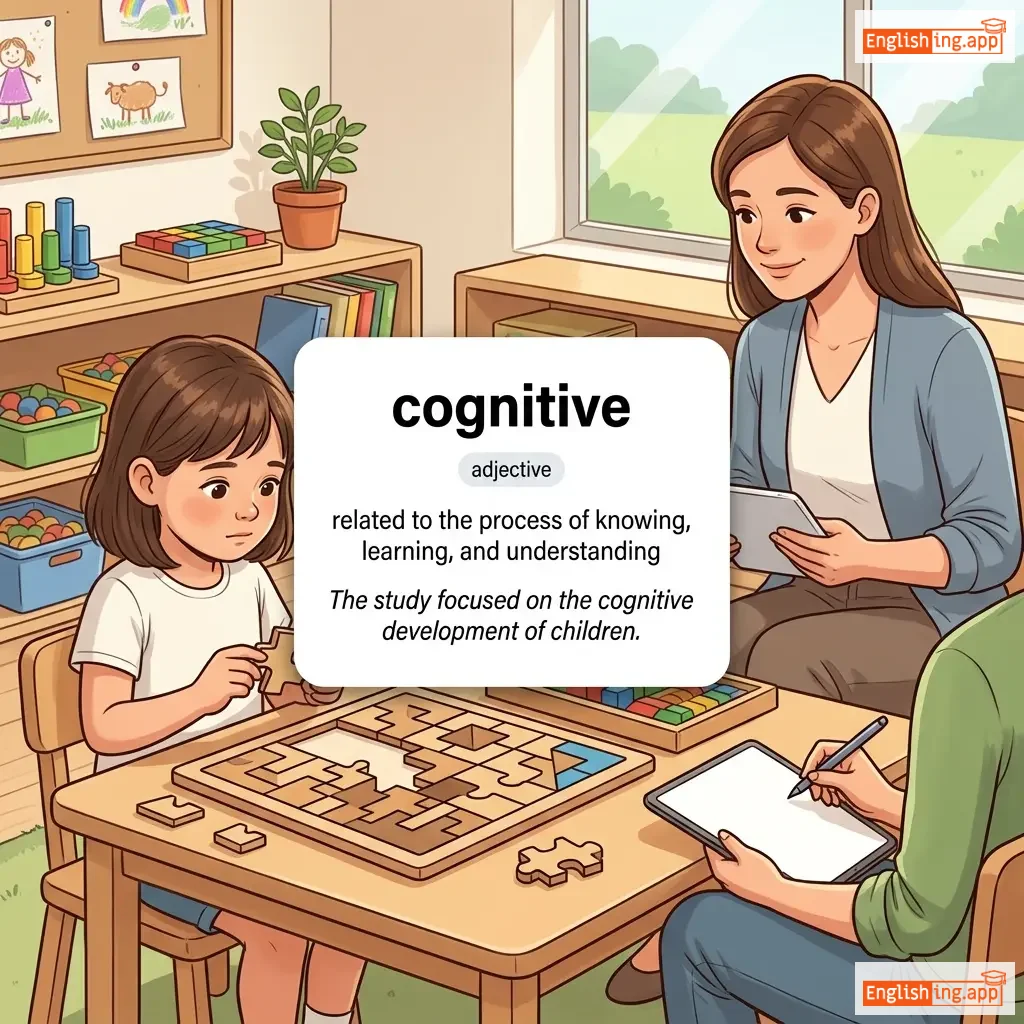
related to the process of knowing, learning, and understanding
••••••
|
The study focused on the cognitive development of children. |
Исследование было сосредоточено на когнитивном развитии детей.
Issledovaniye bylo sosredotocheno na kognitivnom razvitii detey.
••••••
|
- •••••• | - •••••• | - •••••• |
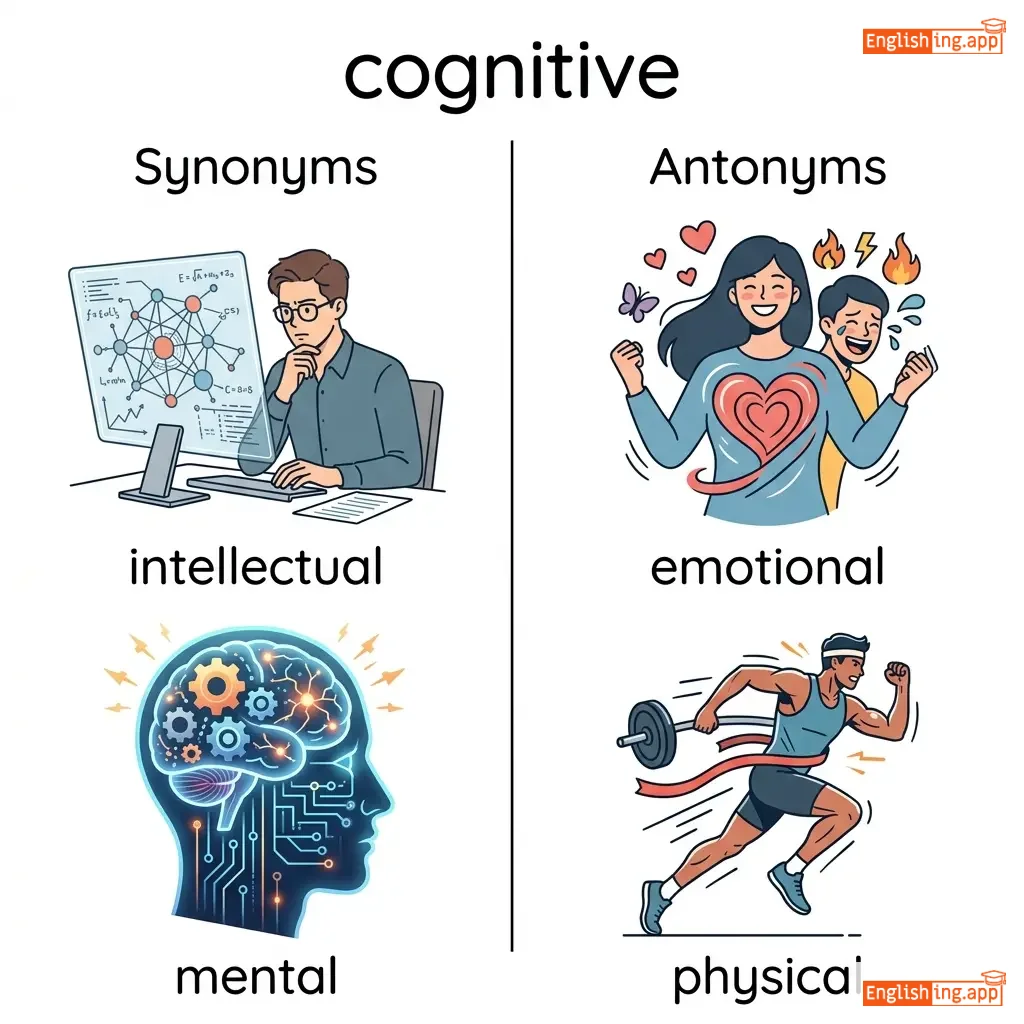
intellectual, mental, psychological, rational
••••••
|
emotional, physical, unconscious
••••••
|
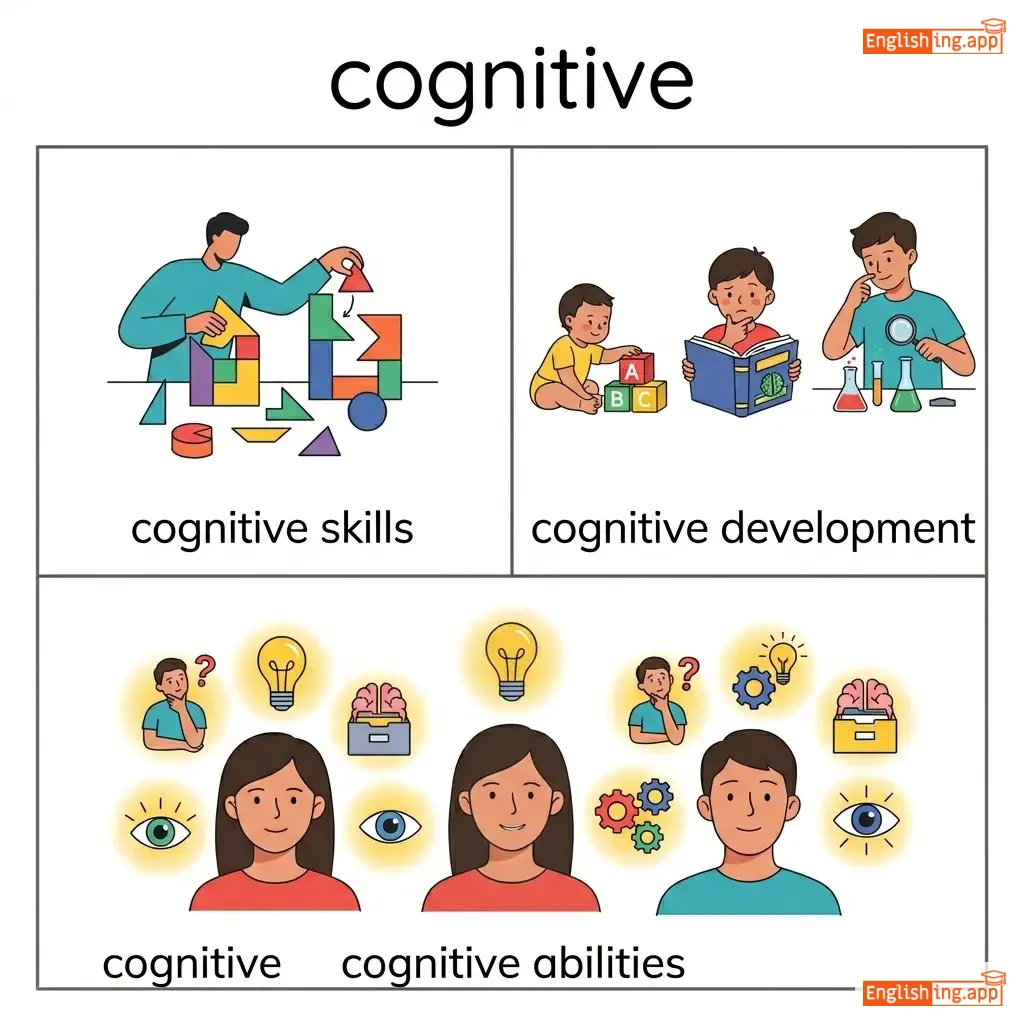
cognitive skills, cognitive development, cognitive abilities
••••••
|
Cognitive = Brain related, Когнитивный = Связан с познанием и обучением 🧠
••••••
|
|
#1560
🔤
|
/ˈkɒɡneɪt/
noun
(когнэйт)
••••••
|
- •••••• |
когнат
kognat
••••••
|
- •••••• | - •••••• | - •••••• | - •••••• |
a word related to another word in origin; having the same linguistic root
••••••
|
The Spanish word 'madre' and the English word 'mother' are cognates. |
Испанское слово 'madre' и английское слово 'mother' — когнаты.
Ispanskoe slovo 'madre' i angliyskoe slovo 'mother' — kognaty.
••••••
|
- •••••• | - •••••• | - •••••• |
related, akin, allied, comparable
••••••
|
unrelated, distinct, different
••••••
|
cognate words, cognate languages, cognate roots
••••••
|
Когнат означает слова, происходящие от одного корня. 'mother' и 'madre' — это когнаты.
••••••
|
Vocabulary Quiz
Test your vocabulary by matching words with their translations or meanings.
Login to take the quiz
Comments (0)
Share your thoughts and join the discussion.
Join the discussion by logging in
Login to CommentNo comments yet
Be the first to share your thoughts!