

Обновитесь для доступа ко всему словарю
Получите неограниченный доступ ко всем словам с подпиской Pro
Обновить до ProПеревод
Прошедшее
Причастие прошедшего времени
Третье лицо единственного числа
Герундий
Значение
Пример предложения
Перевод примера предложения
Синонимы
Антонимы
Коллокации
Мнемоника
Swipe left or right, or use the buttons. Tap image to zoom.
Обновитесь для доступа ко всем предложениям
Получите неограниченный доступ ко всем предложениям с подпиской Pro
Обновить до ProПеревод примера предложения
Слово
Lesson 277Lesson 277 - Переключатель маски
|
Эмодзи
|
Слово | Images | Перевод | Прошедшее | Причастие прошедшего времени | Третье лицо единственного числа | Герундий | Значение | Пример предложения | Перевод примера предложения | Пример выражения | Значение примера выражения | Перевод примера выражения | Синонимы | Антонимы | Коллокации | Мнемоника |
|---|---|---|---|---|---|---|---|---|---|---|---|---|---|---|---|---|---|
|
#8280
🏇
|
/spɜːr/
verb
(espar)
••••••
|
- •••••• |
побуждать / мотивировать
pobuzhdat / motivirovat
••••••
|
spurred
esparrd
••••••
|
spurred
esparrd
••••••
|
spurs
espars
••••••
|
spurring
esparring
••••••
|
To encourage or motivate someone to take action.
••••••
|
The teacher's praise spurred him to study harder.
Похвала учителя побудила его учиться усерднее.
••••••
|
Похвала учителя побудила его учиться усерднее.
Pokhvala uchitelya pobudila ego uchit'sya usyerdneye.
••••••
|
spur of the moment
spur of the moment
••••••
|
An impulsive or unplanned decision.
••••••
|
импульсивное решение
impulsivnoye resheniye
••••••
|
encourage, motivate, inspire, prompt, stimulate
••••••
|
deter, discourage
••••••
|
spur action, spur growth, spur development
••••••
|
Spur для лошади как мотивация, и также мотивирует людей к действиям.
••••••
|
|
#8281
⚖️
|
/ˈsteɪ.bə.laɪz/
verb
(стабилизировать)
••••••
|
- •••••• |
стабилизировать
stabilizirovat'
••••••
|
stabilized
стабилизировал
••••••
|
stabilized
стабилизировано
••••••
|
stabilizes
стабилизирует
••••••
|
stabilizing
стабилизируя
••••••
|
to make something steady, secure, or unlikely to change suddenly
••••••
|
The government took measures to stabilize the economy.
Правительство приняло меры для стабилизации экономики.
••••••
|
Правительство приняло меры для стабилизации экономики.
Pravitel'stvo prinyalo mery dlya stabilizatsii ekonomiki.
••••••
|
stabilize the situation
стабилизировать ситуацию
••••••
|
to bring a situation under control or make it steady
••••••
|
стабилизировать ситуацию
stabilizirovat' situatsiyu
••••••
|
steady, secure, balance, fix, support
••••••
|
destabilize, weaken, disrupt
••••••
|
stabilize economy, stabilize situation, stabilize prices, stabilize market
••••••
|
Stable + eyes → глаза (eyes) делают все стабильным
••••••
|
|
#8282
😑
|
/skwɪnt/
verb
(skvint)
••••••
|
- •••••• |
прищуриться
prishchurit'sya
••••••
|
squinted
skvintiroval
••••••
|
squinted
skvintiroval
••••••
|
squints
skvintiruet
••••••
|
squinting
skvintiruya
••••••
|
to look with partly closed eyes
••••••
|
She squinted at the bright sunlight.
Она прищурилась от яркого солнечного света.
••••••
|
Она прищурилась от яркого солнечного света.
Ona prishchurilas' ot yarkogo solnechnogo sveta.
••••••
|
squint at
прищуриться
••••••
|
to look at something with eyes partly closed
••••••
|
прищуриться
prishchurit'sya
••••••
|
peer, glance, blink, peer closely
••••••
|
stare, gaze, look openly
••••••
|
squint eyes, squint hard, squint slightly
••••••
|
Под солнцем все щурятся
••••••
|
|
#8283
🌧️
|
/skwɛltʃ/
verb
(сквелч)
••••••
|
- •••••• |
подавлять; заглушать; хлюпать
squelch
••••••
|
squelched
сквелчд
••••••
|
squelched
сквелчд
••••••
|
squelches
сквелчез
••••••
|
squelching
сквелчинг
••••••
|
to make a soft sucking sound, such as when walking on mud; to suppress or silence
••••••
|
His boots squelched in the wet ground.
Хиз бутс сквелчд ин зе уэт граунд.
••••••
|
Его сапоги хлюпали по мокрой почве.
Ego sapogi khlyupali po mokroy pochve.
••••••
|
squelch a rumor
сквелч а румор
••••••
|
to stop or silence a rumor quickly
••••••
|
подавить слух
podavit sluh
••••••
|
suppress, silence, smother, extinguish
••••••
|
encourage, spread, amplify
••••••
|
squelch noise, squelch rumor, squelch dissent
••••••
|
Смешай английский звук skwellch с русским словом подавлять: представь сапоги, которые сквелч в грязи, и ты подавляешь слух — squelch и подавлять — запомни!
••••••
|
|
#8284
🤢
|
/ˈskwiːmɪʃ/
adjective
(сквимиш)
••••••
|
- •••••• |
легко вызывающий тошноту, головокружение или отвращение
legko vyzyvayushchiy toshnotu, golovokruzhenie ili otvrashchenie
••••••
|
- •••••• | - •••••• | - •••••• | - •••••• |
easily made to feel sick, faint, or disgusted
••••••
|
She felt squeamish at the sight of blood. |
Ей стало плохо при виде крови.
Eyi stalo plokho pri vide krovi.
••••••
|
- •••••• | - •••••• | - •••••• |
sensitive, nauseated, delicate, faint
••••••
|
hardy, tough, unbothered
••••••
|
squeamish about, squeamish reaction, squeamish feeling
••••••
|
Skvīmīsh похоже на 'scream-ish' - если видишь кровь, сразу кричишь и чувствуешь отвращение
••••••
|
|
#8285
🚷
|
/ˈskwɒtər/
noun
(skvotter)
••••••
|
- •••••• |
незаконный поселенец
nezakonnyy poselenets
••••••
|
- •••••• | - •••••• | - •••••• | - •••••• |
a person who unlawfully occupies an uninhabited building or unused land
••••••
|
The police removed the squatters from the abandoned house. |
Полиция вывела незаконных поселенцев из заброшенного дома.
Politsiya vyyvela nezakonnykh poselentsev iz zabroshennogo doma.
••••••
|
- •••••• | - •••••• | - •••••• |
occupant, settler, trespasser, intruder
••••••
|
owner, landlord, tenant
••••••
|
illegal squatter, squatter rights, squatter settlement
••••••
|
Незаконный поселенец - тот, кто занимает чужое без разрешения.
••••••
|
|
#8286
🏋️
|
/skwɒt/
(skwɒt)
••••••
|
- •••••• |
приседать
prisedat
••••••
|
squatted
skwɒt-ed
••••••
|
squatted
skwɒt-ed
••••••
|
squats
skwɒts
••••••
|
squatting
skwɒting
••••••
|
to crouch or sit with knees bent and body close to the ground
••••••
|
He squatted down to tie his shoes.
Он присел, чтобы завязать шнурки.
••••••
|
Он присел, чтобы завязать шнурки.
On prisel, chtoby zavyazat' shnurchiki.
••••••
|
squat down
приседать
••••••
|
to lower oneself into a squatting position
••••••
|
приседать
prisedat
••••••
|
crouch, hunker, duck, bend, stoop
••••••
|
stand, rise, straighten
••••••
|
squat position, squat exercise, squat building, squat rack
••••••
|
В тренажерном зале все делают приседания, садясь на корточки.
••••••
|
|
#8287
🦟
|
/skwɒʃ/
verb
(сквош)
••••••
|
- •••••• |
раздавить
razdavít
••••••
|
squashed
сквошд
••••••
|
squashed
сквошд
••••••
|
squashes
сквошес
••••••
|
squashing
сквошинг
••••••
|
to crush or squeeze something with force so that it becomes flat or broken
••••••
|
She accidentally squashed the bug with her shoe.
Она случайно раздавила насекомое своим ботинком.
••••••
|
Она случайно раздавила насекомое своим ботинком.
Ona sluchayno razdavila nasekomoye svoim botinkom.
••••••
|
squash the rumor
подавить слух
••••••
|
to stop a rumor from spreading
••••••
|
подавить слух
podavit' slukh
••••••
|
crush, flatten, compress, squeeze
••••••
|
inflate, expand
••••••
|
squash a bug, squash the rumor, squash competition, squash against
••••••
|
Squash означает раздавить что-то ботинком.
••••••
|
|
#8288
💸
|
/ˈskwɒndər/
verb
(skwɒndər)
••••••
|
|
расточать
rastochat'
••••••
|
squandered
skwɒndərd
••••••
|
squandered
skwɒndərd
••••••
|
squanders
skwɒndərz
••••••
|
squandering
skwɒndərɪŋ
••••••
|
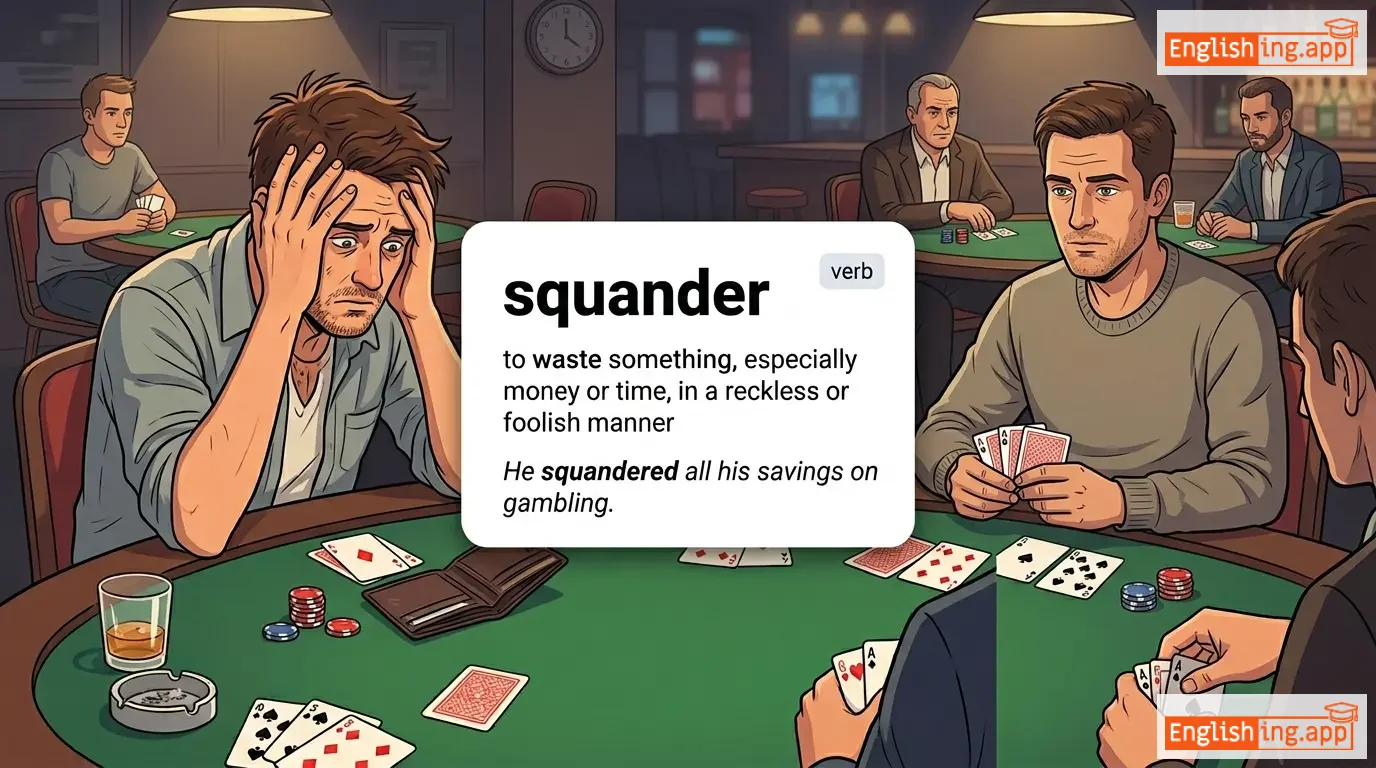
to waste something, especially money or time, in a reckless or foolish manner
••••••
|
He squandered all his savings on gambling.
Он растратил все свои сбережения на азартные игры.
••••••
|
Он растратил все свои сбережения на азартные игры.
On rastatil vse svoi sberegeniya na azartnye igry.
••••••
|
- •••••• | - •••••• | - •••••• |
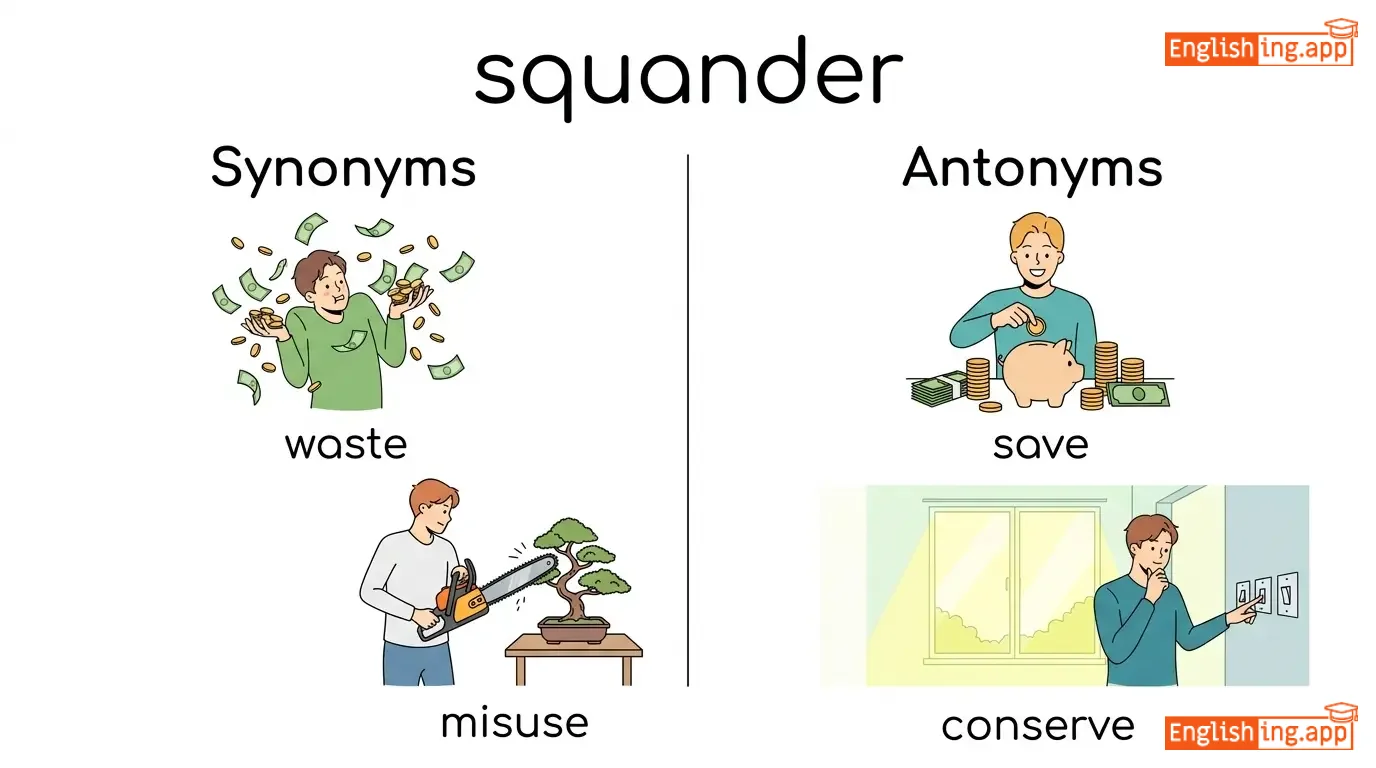
waste, misuse, dissipate, fritter
••••••
|
save, conserve, invest
••••••
|
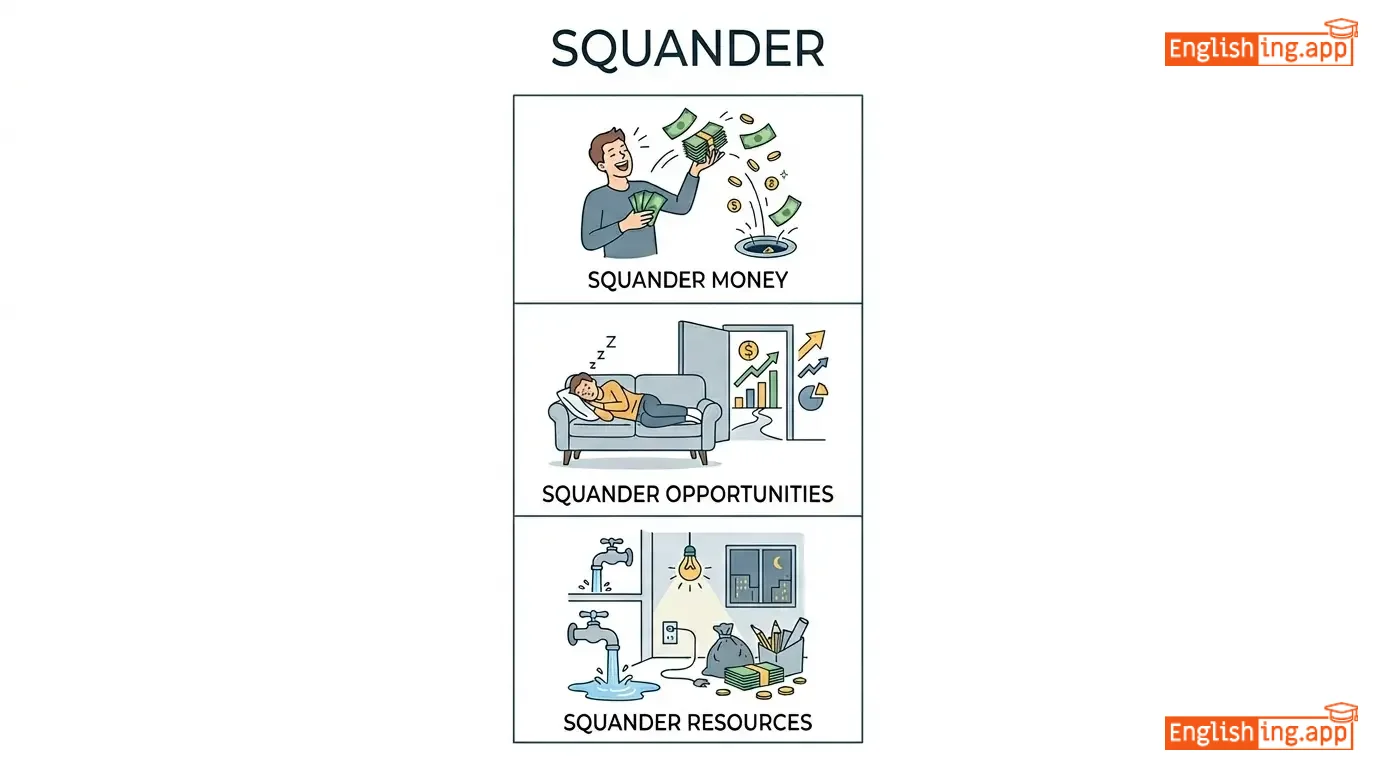
squander money, squander opportunities, squander resources, squander wealth
••••••
|
Squander означает растратить деньги на ненужные вещи.
••••••
|
|
#8289
🗑️
|
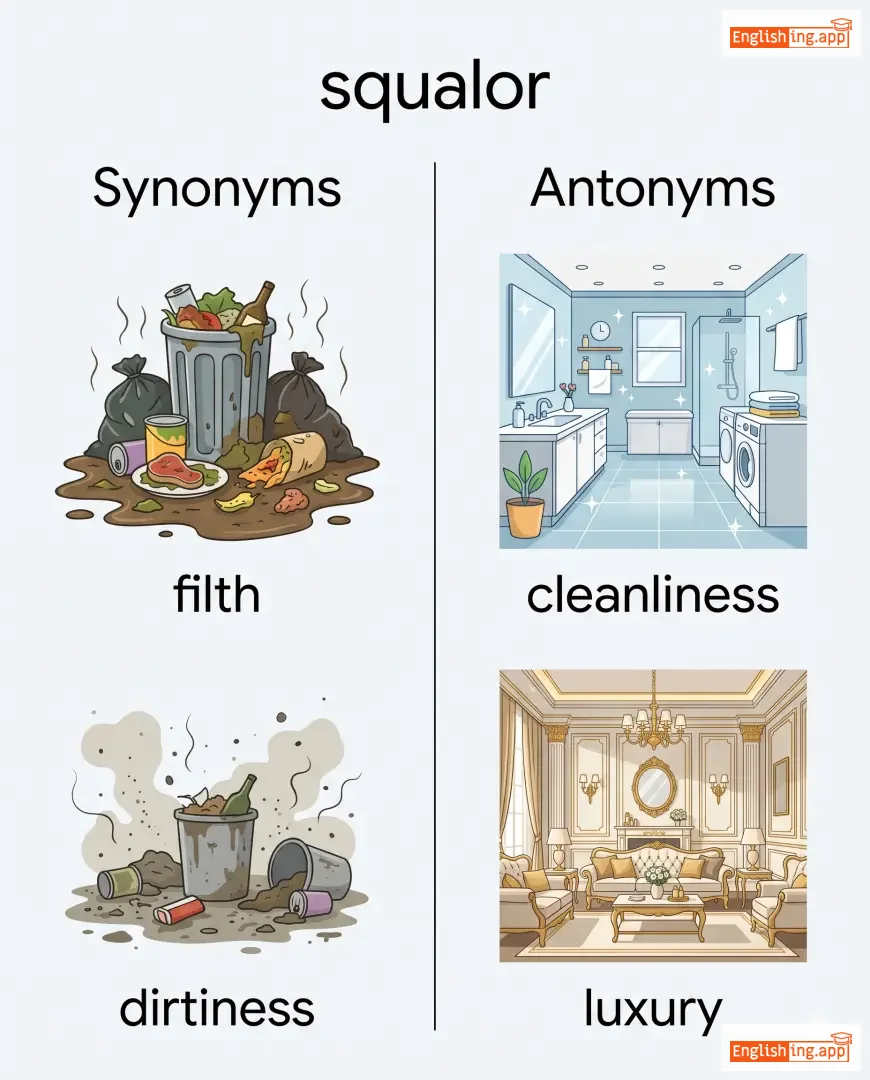
/ˈskwɒlər/
noun
(skwɔlər)
••••••
|
|
нищета
nishcheta
••••••
|
- •••••• | - •••••• | - •••••• | - •••••• |
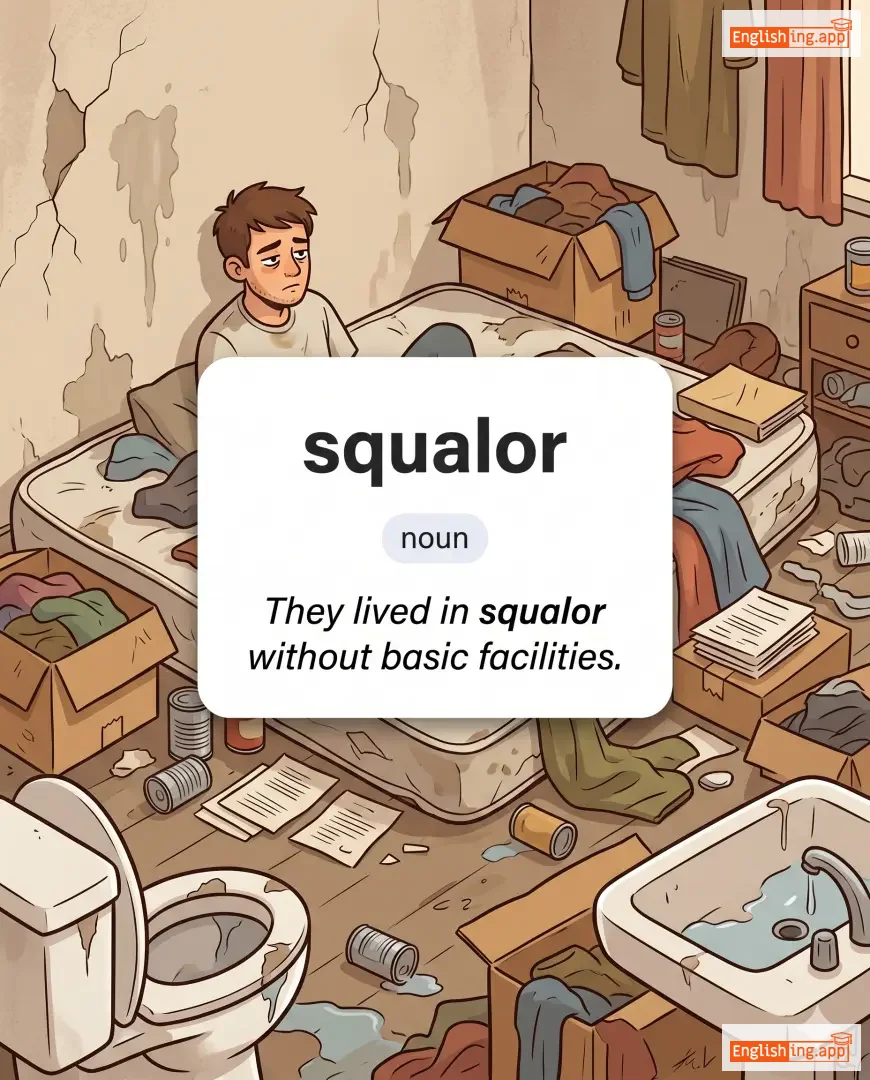
the state of being extremely dirty and unpleasant, especially due to poverty or neglect
••••••
|
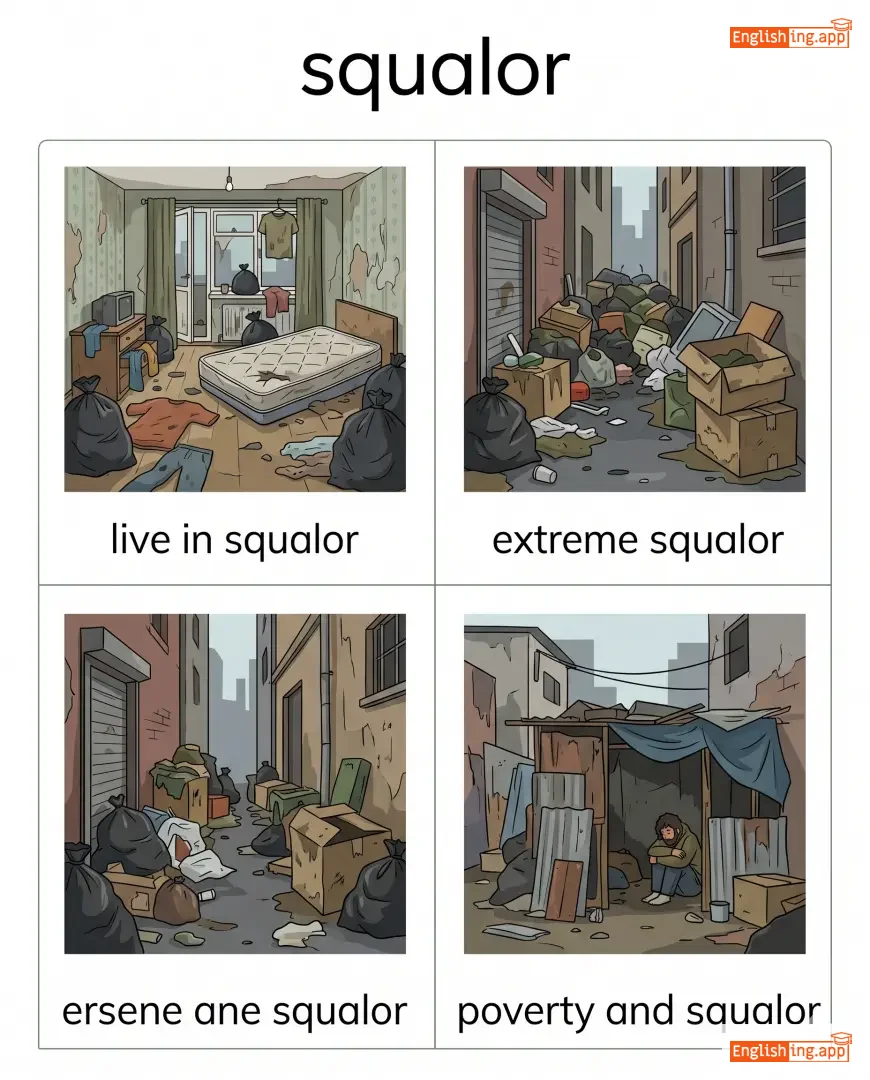
They lived in squalor without basic facilities.
Они жили в нищете без базовых удобств.
••••••
|
Они жили в нищете без базовых удобств.
Oni zhili v nishchete bez bazovykh udobstv.
••••••
|
- •••••• | - •••••• | - •••••• |
filth, dirtiness, poverty, misery
••••••
|
cleanliness, luxury
••••••
|
live in squalor, extreme squalor, poverty and squalor
••••••
|
Squalor = нищета, жить в бедности
••••••
|
|
#8290
🌬️
|
/skwɔːl/
noun
(сквол)
••••••
|
- •••••• |
штормовой порыв
shtormovoy poryv
••••••
|
- •••••• | - •••••• | - •••••• | - •••••• |
a sudden violent gust of wind, often accompanied by rain, snow, or sleet
••••••
|
A sudden squall caught the sailors off guard. |
Внезапный штормовой порыв застал моряков врасплох.
Vnezapnyy shtormovoy poryv zastal moryakov vrasploh.
••••••
|
- •••••• | - •••••• | - •••••• |
gust, storm, outburst, gale
••••••
|
calm, stillness
••••••
|
sudden squall, snow squall, rain squall, violent squall
••••••
|
Представьте себе порыв ветра, как squall, когда вы вдруг сталкиваетесь с ним.
••••••
|
|
#8291
🏚️
|
/ˈskwɒlɪd/
adjective
(скволид)
••••••
|
- •••••• |
крайне грязный
kraine gryaznyy
••••••
|
- •••••• | - •••••• | - •••••• | - •••••• |
extremely dirty and unpleasant, often due to poverty or neglect
••••••
|
He lived in a squalid room with broken furniture. |
Он жил в грязной комнате с поломанной мебелью.
On zhil v gryaznoy komnate s polomannoy mebel'yu.
••••••
|
- •••••• | - •••••• | - •••••• |
filthy, dirty, shabby, grimy, foul
••••••
|
clean, neat, tidy
••••••
|
squalid conditions, squalid room, squalid life, squalid environment
••••••
|
Когда ты видишь грязную школу, это можно назвать squalid.
••••••
|
|
#8292
👶🍰
|
/ˈskwɒbəl/
verb
(skwobəl)
••••••
|
- •••••• |
ссориться по пустякам
ssoritsya po pustyakam
••••••
|
squabbled
skwobəld
••••••
|
squabbled
skwobəld
••••••
|
squabbles
skwobəls
••••••
|
squabbling
skwobəlɪŋ
••••••
|
To argue noisily over something small or unimportant.
••••••
|
The children squabbled over the last piece of cake.
Дети спорили из-за последнего кусочка торта.
••••••
|
Дети спорили из-за последнего кусочка торта.
Deti sporyli iz-za poslednego kusochka torta.
••••••
|
- •••••• | - •••••• | - •••••• |
argue, quarrel, bicker, dispute, wrangle
••••••
|
agree, cooperate
••••••
|
squabble over, family squabble, childish squabble
••••••
|
Squabble означает ссориться по пустякам, как маленькая ссора.
••••••
|
|
#8293
🚫
|
/spɜːrn/
verb
(спёрн)
••••••
|
- •••••• |
отвергать с презрением
otvergat' s prezreniem
••••••
|
spurned
спёрнд
••••••
|
spurned
спёрнд
••••••
|
spurns
спёрнс
••••••
|
spurning
спёрнинг
••••••
|
To reject something or someone with disdain or contempt.
••••••
|
She spurned his offer of help.
Она отвергла его предложение о помощи.
••••••
|
Она отвергла его предложение о помощи с презрением.
Ona otvergla ego predlozhenie o pomoshchi s prezreniem.
••••••
|
- •••••• | - •••••• | - •••••• |
reject, refuse, decline, dismiss, scorn
••••••
|
accept, embrace, approve
••••••
|
spurn an offer, spurn a suggestion, spurn advances
••••••
|
SPURN означает 'Super NO' - отвергать с презрением.
••••••
|
|
#8294
⚠️
|
/ˈspjʊəriəs/
adjective
(spjurijəs)
••••••
|
- •••••• |
ложный / фальшивый
lozhny / fal'shivy
••••••
|
- •••••• | - •••••• | - •••••• | - •••••• |
Not genuine, authentic, or true; false or fake.
••••••
|
The report was based on spurious claims. |
Отчет был основан на ложных утверждениях.
Otchet byl osnovan na lozhnykh utverzhdeniyakh.
••••••
|
- •••••• | - •••••• | - •••••• |
false, fake, counterfeit, bogus, fraudulent
••••••
|
genuine, authentic, true
••••••
|
spurious claim, spurious argument, spurious reasoning
••••••
|
SPURious звучит как Spur, но это не настоящая Spur - значит ложный.
••••••
|
|
#8295
🙅
|
/ˈspɔɪlˌspɔːrt/
noun
(спойлспорть)
••••••
|
- •••••• |
зануда
zanuda
••••••
|
- •••••• | - •••••• | - •••••• | - •••••• |
A person who ruins other people's enjoyment or fun.
••••••
|
Don't be a spoilsport and let us enjoy the party.
Не будь портом удовольствия и позволь нам наслаждаться вечеринкой.
••••••
|
Не будь занудой и позволь нам наслаждаться вечеринкой.
Ne bud' zanudoy i pozvol' nam naslazhdat'sya vecherinkoy.
••••••
|
- •••••• | - •••••• | - •••••• |
killjoy, party pooper, wet blanket, grouch
••••••
|
cheerleader, encourager
••••••
|
act like a spoilsport, don't be a spoilsport, real spoilsport
••••••
|
Spoil + sport = Спорт, который портит - зануда.
••••••
|
|
#8296
🌊
|
/spjuːm/
noun
(spyum)
••••••
|
- •••••• |
пена
pena
••••••
|
- •••••• | - •••••• | - •••••• | - •••••• |
Froth or foam, especially found on waves or liquids.
••••••
|
The waves crashed against the rocks, leaving spume in the air. |
Волны разбивались о скалы, оставляя пену в воздухе.
Volny razbivalis' o skaly, ostavlyaya penu v vozdukhe.
••••••
|
- •••••• | - •••••• | - •••••• |
foam, froth, bubbles, spray, suds
••••••
|
calm, stillness
••••••
|
sea spume, spume of the waves, ocean spume
••••••
|
SPUME в море означает пену - помни, SPUME = пена.
••••••
|
|
#8297
🏃
|
/spraɪ/
adjective
(sprai)
••••••
|
- •••••• |
проворный
provorniy
••••••
|
- •••••• | - •••••• | - •••••• | - •••••• |
active and lively, especially in old age
••••••
|
The spry grandmother surprised everyone with her quick dance steps. |
Проворная бабушка удивила всех своими быстрыми танцевальными шагами.
Provornaia babushka udivila vsekh svoimi bystrymi tantseval'nymi shagami.
••••••
|
- •••••• | - •••••• | - •••••• |
lively, agile, energetic, nimble
••••••
|
weak, sluggish, inactive
••••••
|
spry old man, spry movements, spry personality
••••••
|
Spry значит проворный, как бабушка, танцующая быстро.
••••••
|
|
#8298
🌲
|
/spruːs/
verb, adjective, noun
(sprus)
••••••
|
- •••••• |
привести в порядок / тип дерева
privedi v poryadok / tip dereva
••••••
|
spruced
sprust
••••••
|
spruced
sprust
••••••
|
spruces
sprusts
••••••
|
sprucing
sprusing
••••••
|
to make neat or tidy in appearance; also refers to an evergreen tree
••••••
|
He spruced up his room before the guests arrived.
Он привел свою комнату в порядок до того, как пришли гости.
••••••
|
Он привел свою комнату в порядок до того, как пришли гости.
On privedi svoju komnatu v poryadok do togo, kak prishli gosti.
••••••
|
spruce up
привести в порядок
••••••
|
to make something look cleaner or neater
••••••
|
привести в порядок
privedi v poryadok
••••••
|
tidy, groom, neaten, smarten
••••••
|
mess, dirty
••••••
|
spruce tree, spruce up, spruce forest
••••••
|
Елка 🌲 означает красивое дерево, порядок вокруг.
••••••
|
|
#8299
🌱
|
/spraʊt/
verb, noun
(спраут)
••••••
|
- •••••• |
прорастать
prorastat'
••••••
|
sprouted
спраутед
••••••
|
sprouted
спраутед
••••••
|
sprouts
спраутс
••••••
|
sprouting
спраутинг
••••••
|
to begin to grow; to produce new leaves or shoots
••••••
|
The seeds began to sprout after a few days of rain.
Семена начали прорастать после нескольких дней дождя.
••••••
|
Семена начали прорастать после нескольких дней дождя.
Semena nachali prorastat' posle neskol'kikh dney dozhdya.
••••••
|
sprout up
быстро прорастать
••••••
|
to appear or grow quickly
••••••
|
быстро расти
bystro rasti
••••••
|
grow, germinate, bud, shoot
••••••
|
wither, die
••••••
|
sprout leaves, sprout roots, bean sprout
••••••
|
Прорастать — это как семена, которые быстро растут, подобно маленьким побегам.
••••••
|
|
#8300
💃
|
/ˈspraɪtli/
adjective
(спрайтли)
••••••
|
- •••••• |
живой
zhivoy
••••••
|
- •••••• | - •••••• | - •••••• | - •••••• |
full of energy and life; lively
••••••
|
The sprightly old man danced with joy at the wedding. |
Живой старик танцевал с радостью на свадьбе.
Zhivoy starik tantseval s radost'yu na svad'be.
••••••
|
- •••••• | - •••••• | - •••••• |
lively, energetic, spirited, vivacious, cheerful
••••••
|
dull, sluggish, lifeless
••••••
|
sprightly dance, sprightly mood, sprightly conversation
••••••
|
Как спрайт, который оживляет, 'sprightly' означает живой и полный энергии.
••••••
|
|
#8301
🤕
|
/spreɪn/
noun, verb
(esprein)
••••••
|
- •••••• |
растяжение
rastyazhenie
••••••
|
sprained
espreind
••••••
|
sprained
espreind
••••••
|
sprains
espreins
••••••
|
spraining
espreining
••••••
|
an injury to a joint in which the ligaments are stretched or torn
••••••
|
She sprained her ankle while running in the park.
Она вывихнула лодыжку, когда бегала в парке.
••••••
|
Она вывихнула лодыжку, когда бегала в парке.
Ona vyvihnula lodyzhku, kogda begala v parke.
••••••
|
sprain an ankle
вывихнуть лодыжку
••••••
|
to injure the ligaments of the ankle by twisting it
••••••
|
вывихнуть лодыжку
vyvihnut' lodyzhku
••••••
|
twist, wrench, strain, injury
••••••
|
heal, recovery
••••••
|
ankle sprain, wrist sprain, severe sprain, minor sprain
••••••
|
Растяжение — это как растягивать резинку, и она может порваться.
••••••
|
|
#8302
😄
|
/ˈspɔːrtɪv/
adjective
(спортивный)
••••••
|
- •••••• |
спортивный
sportivnyy
••••••
|
- •••••• | - •••••• | - •••••• | - •••••• |
Playful, lively, or full of fun.
••••••
|
The children were in a sportive mood during the picnic.
Дети были в спортивном настроении во время пикника.
••••••
|
Дети были в спортивном настроении во время пикника.
Deti byli v sportivnom nastroenii vo vremya piknika.
••••••
|
- •••••• | - •••••• | - •••••• |
playful, lively, cheerful, frolicsome, jocular
••••••
|
serious, solemn, grave
••••••
|
sportive behavior, sportive spirit, sportive mood, sportive attitude
••••••
|
Спортивный означает играть и веселиться.
••••••
|
|
#8303
🌧️
|
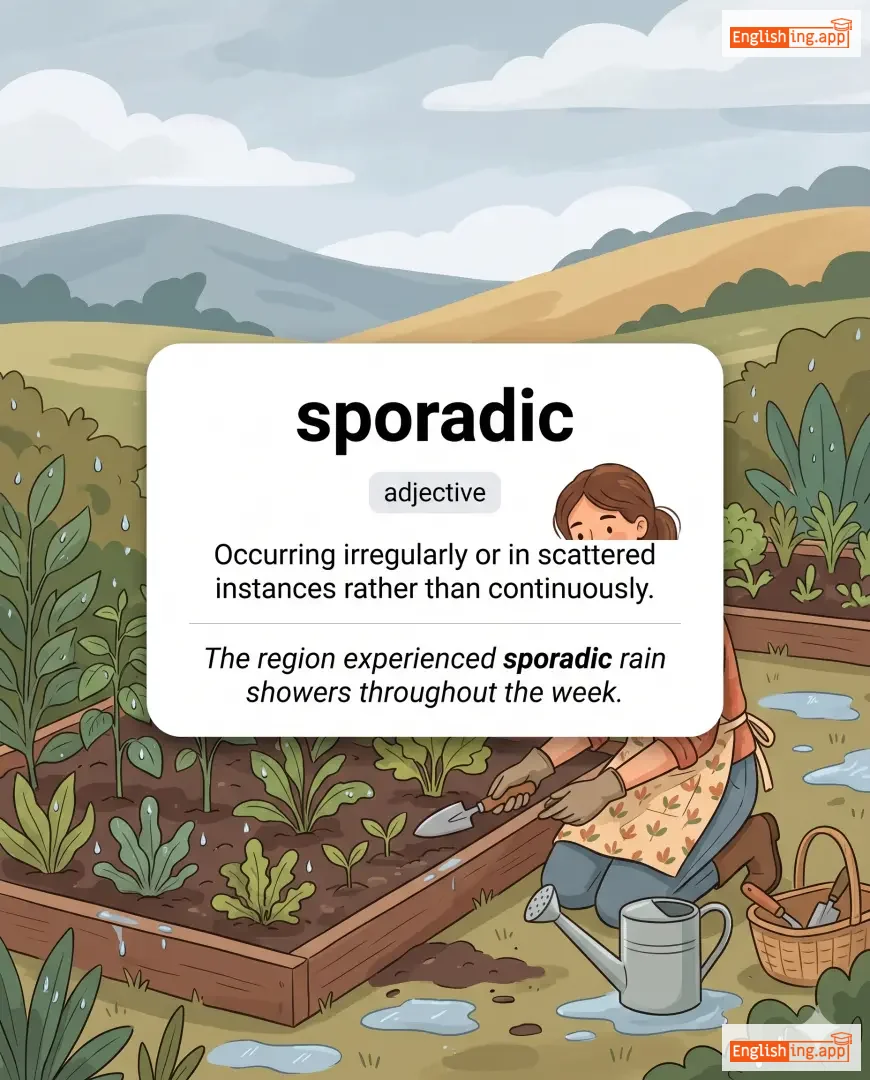
/spəˈrædɪk/
adjective
(спорадик)
••••••
|
|
спорадический
sporadicheskiy
••••••
|
- •••••• | - •••••• | - •••••• | - •••••• |
Occurring irregularly or in scattered instances rather than continuously.
••••••
|
The region experienced sporadic rain showers throughout the week.
Регион испытал спорадические дожди в течение недели.
••••••
|
Регион испытал спорадические дожди в течение недели.
Region ispyltal sporadicheskie dozhdi v techeniye nedeli.
••••••
|
- •••••• | - •••••• | - •••••• |
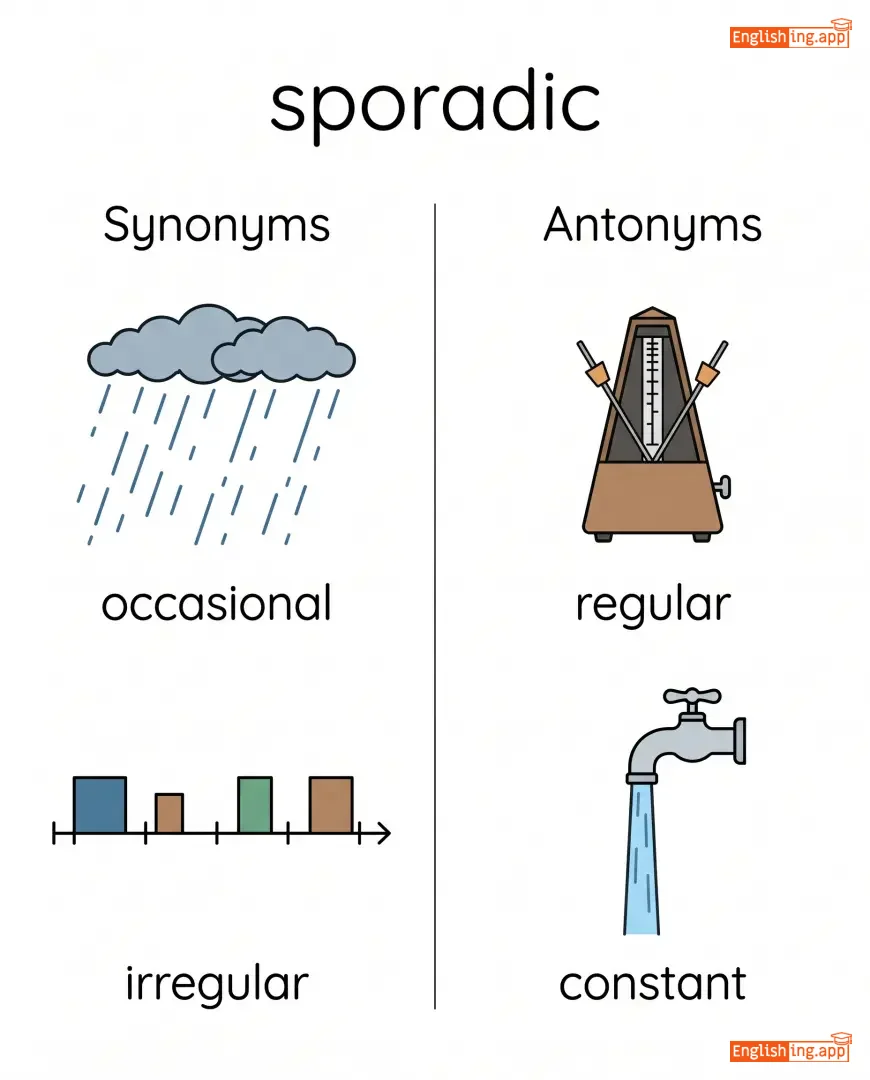
occasional, irregular, infrequent, scattered, random
••••••
|
regular, constant, continuous
••••••
|
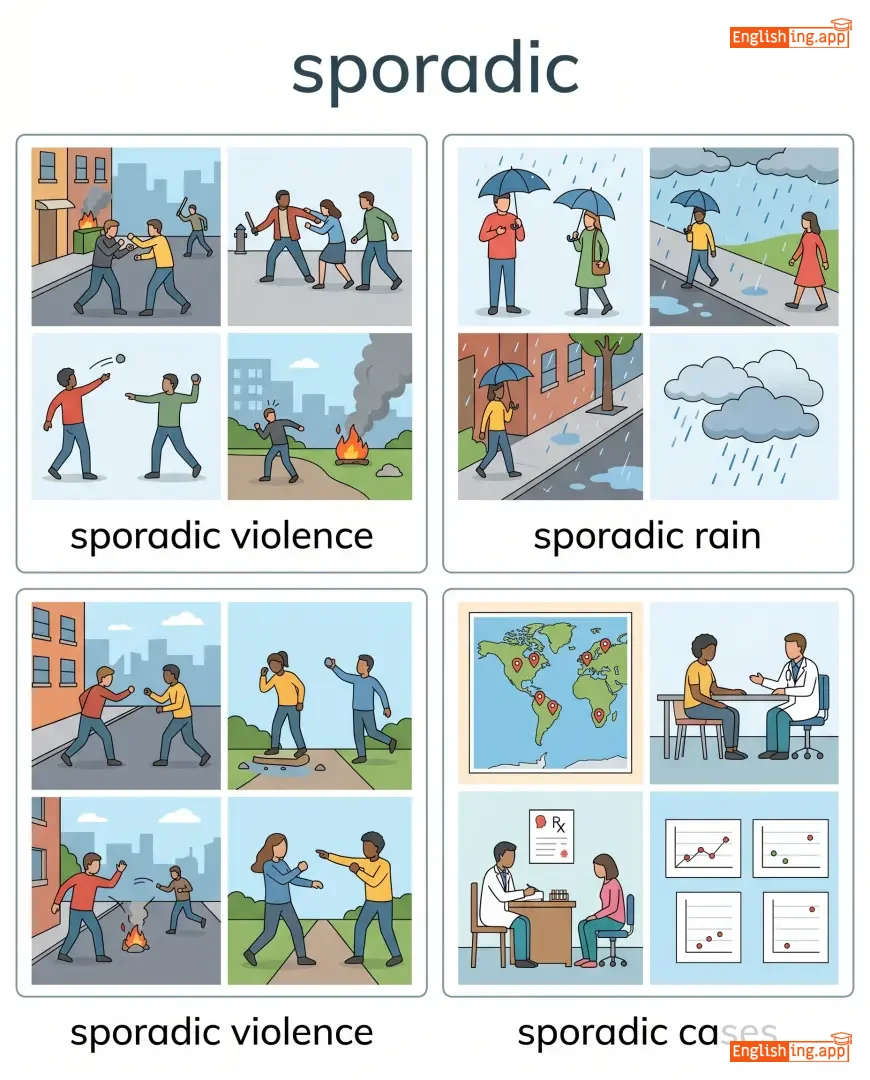
sporadic violence, sporadic rain, sporadic cases, sporadic attacks
••••••
|
Слово sporadic похоже на «спорадический» и означает случайность или нерегулярность.
••••••
|
|
#8304
😅
|
/ˈspuːnərɪzəm/
noun
(спунеризм)
••••••
|
- •••••• |
спунеризм
spunerizm
••••••
|
- •••••• | - •••••• | - •••••• | - •••••• |
A verbal error in which the initial sounds of words are swapped to create a humorous effect.
••••••
|
He made a spoonerism by saying 'queer old dean' instead of 'dear old queen'. |
Он сделал спунеризм, сказав 'странный старый декан' вместо 'дорогая старая королева'.
On sdelal spunerizm, skazav 'strannyy staryy dekan' vmesto 'dorogaya staraya koroleva'.
••••••
|
- •••••• | - •••••• | - •••••• |
slip of the tongue, wordplay, malapropism, error
••••••
|
clarity, accuracy, correctness
••••••
|
classic spoonerism, humorous spoonerism, accidental spoonerism
••••••
|
Спунеризм похож на ложку (spoon), которая меняет слова для комического эффекта.
••••••
|
|
#8305
🎭
|
/spuːf/
noun/verb
(spuf)
••••••
|
- •••••• |
юмористическое подражание
yumoristicheskoe podradanie
••••••
|
spoofed
spufed
••••••
|
spoofed
spufed
••••••
|
spoofs
spufs
••••••
|
spoofing
spufing
••••••
|
A humorous imitation of something, or to trick or parody someone or something.
••••••
|
The comedian spoofed the politician’s speech to entertain the audience.
Комик пародировал речь политика, чтобы развеселить публику.
••••••
|
Комик пародировал речь политика, чтобы развеселить публику.
Komik parodiroval rech' politika, chtoby razveselet' publiku.
••••••
|
email spoofing
спуфинг электронной почты
••••••
|
The creation of email messages with forged sender addresses.
••••••
|
спуфинг электронной почты
spufing elektronnoi pocty
••••••
|
parody, satire, mockery, hoax, prank
••••••
|
seriousness, authenticity, truth
••••••
|
spoof movie, spoof comedy, spoof email, spoof character
••••••
|
Spoof = Пародия или подделка для обмана или смеха.
••••••
|
|
#8306
🌟
|
/spɒnˈteɪniəs/
adjective
(спонˈтэиниас)
••••••
|
- •••••• |
спонтанный
spontanny
••••••
|
- •••••• | - •••••• | - •••••• | - •••••• |
Happening naturally without planning or external cause; impulsive or unplanned.
••••••
|
Their spontaneous trip to the mountains turned out to be the highlight of the summer. |
Их спонтанное путешествие в горы стало кульминацией лета.
Ih spontannoe puteshestvie v gory stalo kul'minatsiey leta.
••••••
|
spontaneous combustion |
The sudden ignition of a substance without an external flame or spark.
••••••
|
спонтанное возгорание
spontannoe vozgoranie
••••••
|
impulsive, instinctive, unplanned, voluntary, automatic
••••••
|
planned, deliberate, calculated
••••••
|
spontaneous decision, spontaneous laughter, spontaneous action, spontaneous reaction
••••••
|
Спонтанный – как улыбка, которая появляется без причины.
••••••
|
|
#8307
✨
|
/ˌspɑːntəˈneɪəti/
noun
(спонтенейти)
••••••
|
|
спонтанность
spontannost
••••••
|
- •••••• | - •••••• | - •••••• | - •••••• |
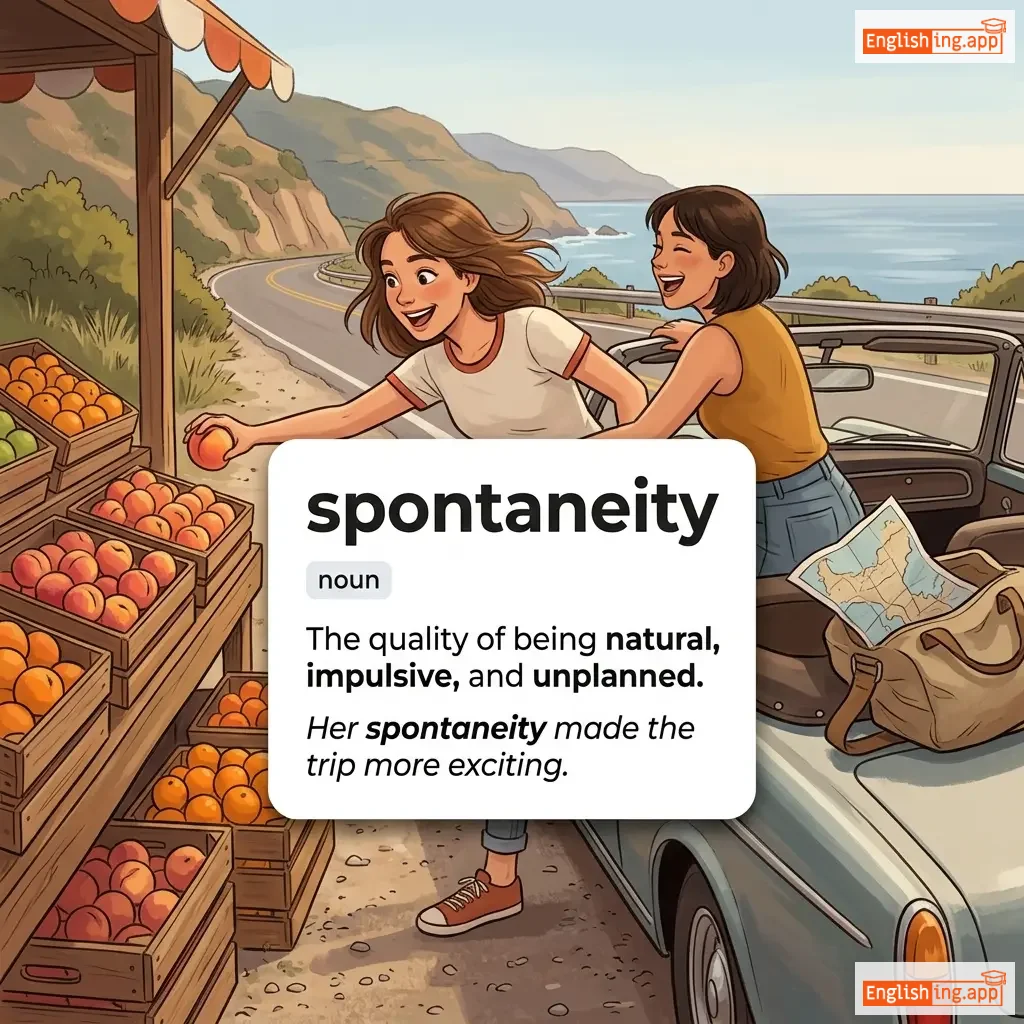
The quality of being natural, impulsive, and unplanned.
••••••
|
Her spontaneity made the trip more exciting.
хер спонтенейти мейд зэ трип моэ эксайтинг.
••••••
|
Ее спонтанность сделала поездку более захватывающей.
ee spontannost sdelala poezdku bolee zakhvatyvayuschey.
••••••
|
- •••••• | - •••••• | - •••••• |
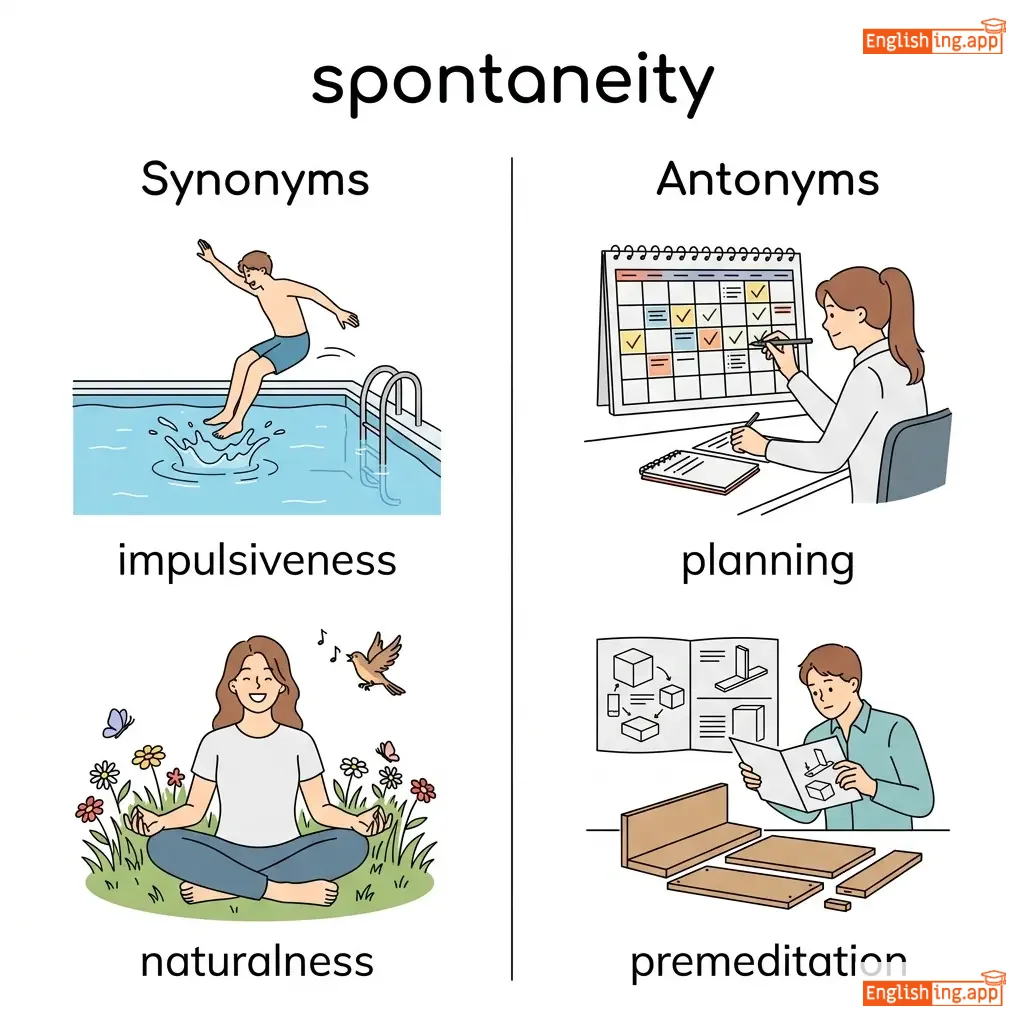
impulsiveness, naturalness, improvisation, freedom
••••••
|
planning, premeditation
••••••
|
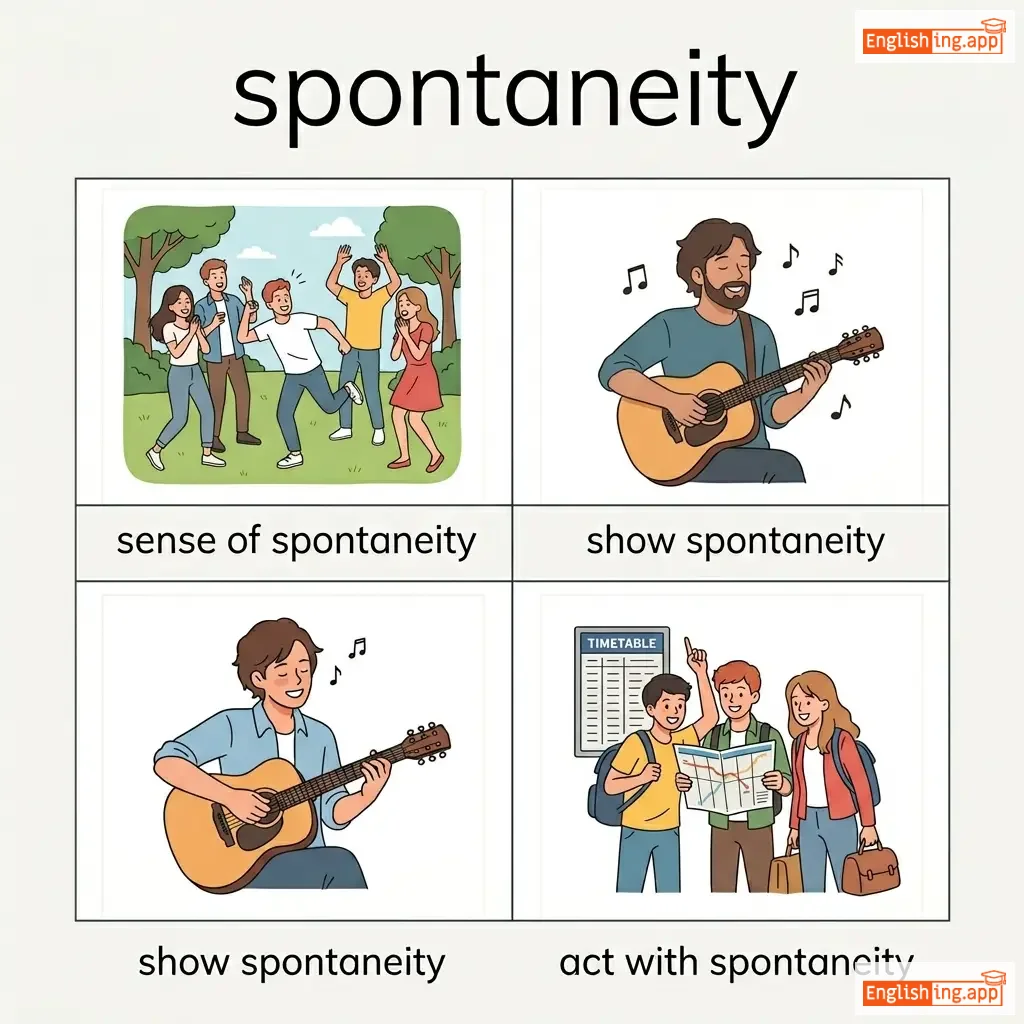
sense of spontaneity, show spontaneity, act with spontaneity
••••••
|
Спонтанность = spontaneity; sounds similar and means the same.
••••••
|
|
#8308
🔥
|
/ˌspoʊliˈeɪʃən/
noun
(сполиация)
••••••
|
- •••••• |
уничтожение
unichtozhenie
••••••
|
- •••••• | - •••••• | - •••••• | - •••••• |
The act of destroying or ruining something, often evidence or property.
••••••
|
The court punished the company for the spoliation of evidence. |
Суд наказал компанию за уничтожение доказательств.
Sud nakazal kompaniyu za unichtozhenie dokazatel'stv.
••••••
|
- •••••• | - •••••• | - •••••• |
destruction, ruin, devastation, obliteration
••••••
|
preservation, protection
••••••
|
spoliation of evidence, historical spoliation, spoliation claim
••••••
|
Spoil + nation = Spoliation означает разрушить нацию.
••••••
|
|
#8309
🚲
|
/spoʊk/
noun, verb
(spok)
••••••
|
- •••••• |
спицы / сказал
spitsy / skazal
••••••
|
spoke
spok
••••••
|
spoken
spokən
••••••
|
speaks
spīks
••••••
|
speaking
spīking
••••••
|
As a noun, a bar connecting the center of a wheel to its rim; as the past tense of 'speak'.
••••••
|
The bicycle's spoke was bent after the accident.
Спица велосипеда была согнута после аварии.
••••••
|
Спица велосипеда была согнута после аварии.
Spitsa velosipeda byla sognutá posle avarii.
••••••
|
spoke out
высказался
••••••
|
To express one's opinion openly and forcefully.
••••••
|
выразить мнение
vyrazit' mnenie
••••••
|
rod, bar, strut, connector
••••••
|
hub, rim
••••••
|
wheel spoke, broken spoke, steel spoke, spoke out
••••••
|
Spoke означает 'сказал' (прошедшее от speak) и также спица колеса.
••••••
|
Vocabulary Quiz
Test your vocabulary by matching words with their translations or meanings.
Login to take the quiz
Comments (0)
Share your thoughts and join the discussion.
Join the discussion by logging in
Login to CommentNo comments yet
Be the first to share your thoughts!