

Обновитесь для доступа ко всему словарю
Получите неограниченный доступ ко всем словам с подпиской Pro
Обновить до ProПеревод
Прошедшее
Причастие прошедшего времени
Третье лицо единственного числа
Герундий
Значение
Пример предложения
Перевод примера предложения
Синонимы
Антонимы
Коллокации
Мнемоника



Swipe left or right, or use the buttons. Tap image to zoom.
Обновитесь для доступа ко всем предложениям
Получите неограниченный доступ ко всем предложениям с подпиской Pro
Обновить до ProПеревод примера предложения
Слово
Lesson 265Lesson 265 - Переключатель маски
|
Эмодзи
|
Слово | Images | Перевод | Прошедшее | Причастие прошедшего времени | Третье лицо единственного числа | Герундий | Значение | Пример предложения | Перевод примера предложения | Пример выражения | Значение примера выражения | Перевод примера выражения | Синонимы | Антонимы | Коллокации | Мнемоника |
|---|---|---|---|---|---|---|---|---|---|---|---|---|---|---|---|---|---|
|
#7920
🌍
|
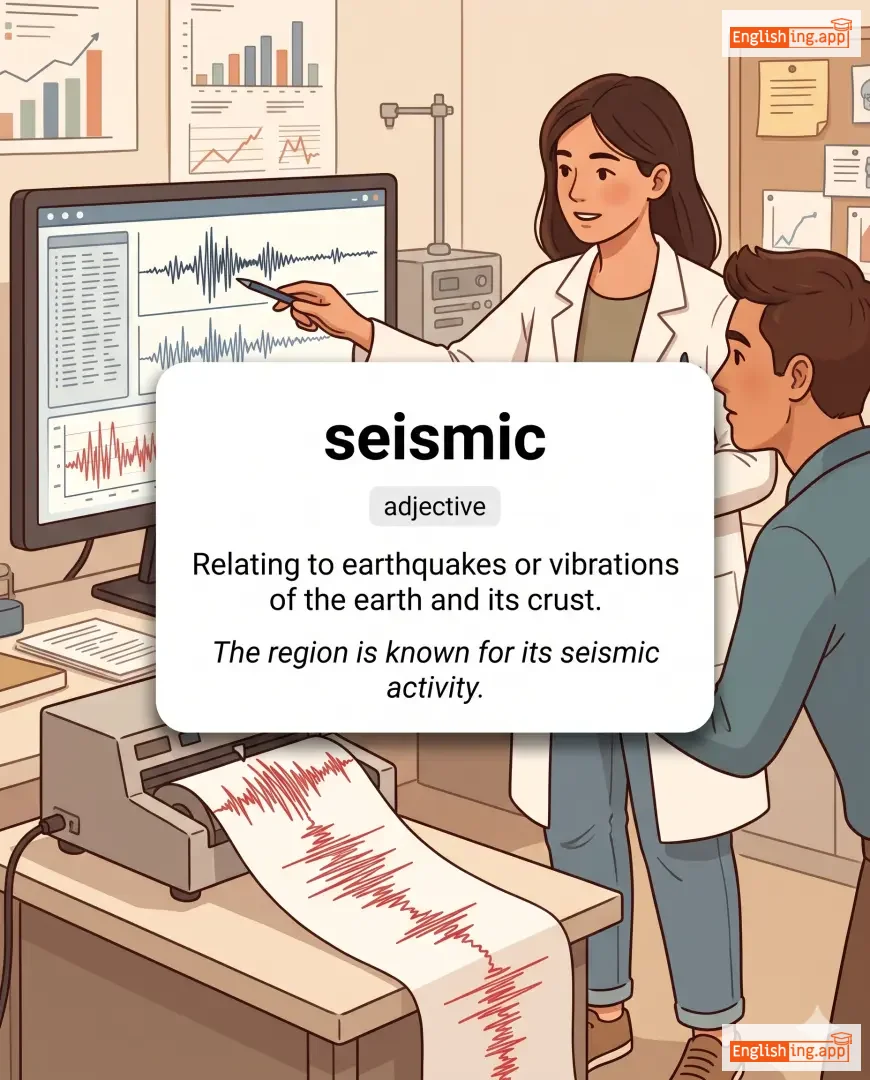
/ˈsaɪz.mɪk/
adjective
(сейсмический)
••••••
|
|
сейсмический
seysmicheskiy
••••••
|
- •••••• | - •••••• | - •••••• | - •••••• |
Relating to earthquakes or vibrations of the earth and its crust.
••••••
|
The region is known for its seismic activity.
Регион известен своей сейсмической активностью.
••••••
|
Регион известен своей сейсмической активностью.
Region izvesten svoey seysmicheskoy aktivnost'yu.
••••••
|
seismic shift
сейсмическое изменение
••••••
|
A major and significant change.
••••••
|
сейсмическое изменение
seysmicheskoe izmenenie
••••••
|
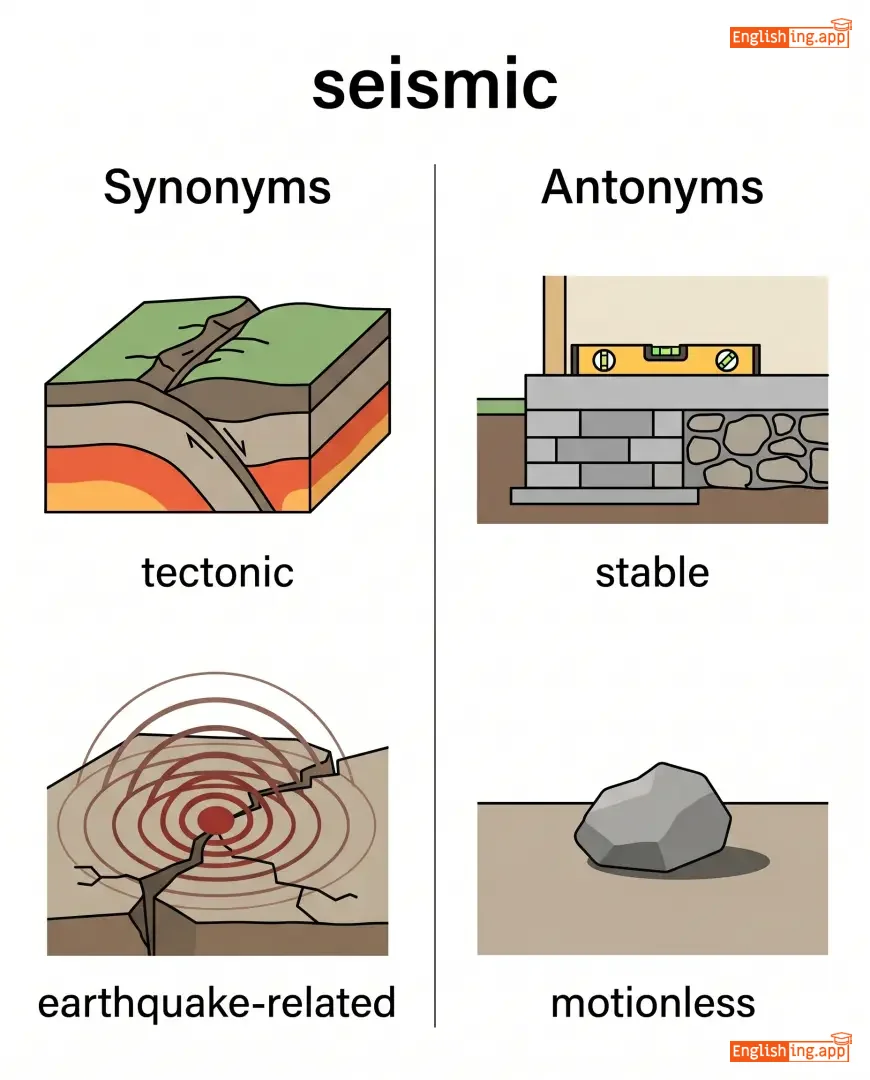
tectonic, earthquake-related, vibrational, geological, ground-shaking
••••••
|
stable, motionless, calm
••••••
|
seismic activity, seismic waves, seismic hazard, seismic risk, seismic shift
••••••
|
Сейсмический — это то, что связано с землетрясениями.
••••••
|
|
#7921
😵
|
/ˌsɛm.iˈkɒn.ʃəs/
adjective
(sɛmɪˈkɔnsʲəs)
••••••
|
- •••••• |
полусознательный
polusoznatel'nyj
••••••
|
- •••••• | - •••••• | - •••••• | - •••••• |
Only partly conscious; not fully aware of surroundings.
••••••
|
He was semiconscious after the accident and could barely respond.
Он был полусознателен после аварии и едва мог ответить.
••••••
|
Он был полусознателен после аварии и едва мог ответить.
On byl polusoznatel'nym posle avarii i yedva mog otvetit'.
••••••
|
- •••••• | - •••••• | - •••••• |
half-conscious, dazed, groggy, faint
••••••
|
conscious, alert, aware
••••••
|
semiconscious state, semiconscious condition, remain semiconscious
••••••
|
Semi значит частично, conscious значит осознанный — после аварии semi-conscious значит частично осознанный.
••••••
|
|
#7922
🌍
|
/ˌsɛm.iˈsɪv.ə.laɪzd/
adjective
(семи-цивилизованный)
••••••
|
- •••••• |
полуцивилизованный
polutsivilizovannyy
••••••
|
- •••••• | - •••••• | - •••••• | - •••••• |
Partially civilized; having some aspects of civilization but not fully developed.
••••••
|
The tribe was described as semicivilized by early explorers. |
Племя было описано как полуцивилизованное первыми исследователями.
Plemya bylo opisano kak polutsivilizovannoe pervymi issledovatelyami.
••••••
|
- •••••• | - •••••• | - •••••• |
partly civilized, half-civilized, primitive
••••••
|
civilized, cultured
••••••
|
semicivilized tribe, semicivilized society
••••••
|
Semi означает половина, цивилизованный означает развитый—поэтому полуцивилизованный = наполовину развитый.
••••••
|
|
#7923
◔
|
/ˈsɛm.iˌsɜːr.kəl/
noun
(полукруг)
••••••
|
- •••••• |
полукруг
polukrug
••••••
|
- •••••• | - •••••• | - •••••• | - •••••• |
Half of a circle or something shaped like half of a circle.
••••••
|
The students sat in a semicircle around the teacher. |
Студенты сели полукругом вокруг учителя.
Studenty seli polukrugom vokrug uchitelya.
••••••
|
- •••••• | - •••••• | - •••••• |
half-circle, arc, curve
••••••
|
circle, square
••••••
|
sit in a semicircle, form a semicircle, semicircle arrangement
••••••
|
Semi = половина, Круг = круг, поэтому полукруг = полукруг.
••••••
|
|
#7924
📆
|
/ˌsɛm.iˈæn.ju.əl/
adjective
(семианнуал)
••••••
|
- •••••• |
полугодовой
polugodovoy
••••••
|
- •••••• | - •••••• | - •••••• | - •••••• |
Occurring twice a year; every six months.
••••••
|
The company holds a semiannual meeting with all employees. |
Компания проводит полугодовую встречу со всеми сотрудниками.
Kompaniya proyhodit polugodovuyu vstrechu so vsemi sotrudnikami.
••••••
|
- •••••• | - •••••• | - •••••• |
biannual, twice-yearly, half-yearly
••••••
|
annual, quarterly
••••••
|
semiannual meeting, semiannual report, semiannual payment
••••••
|
Semi означает половина, значит полугодовой = дважды в год (каждые шесть месяцев).
••••••
|
|
#7925
🎭
|
/ˈsɛm.bləns/
noun
(zemblyens)
••••••
|
- •••••• |
видимость, внешнее проявление
vidimost, vneshnee proyavlenie
••••••
|
- •••••• | - •••••• | - •••••• | - •••••• |
The outward appearance or form of something, especially when the reality is different.
••••••
|
Despite his calm tone, there was only a semblance of control in the room.
despite his calm tone, there was only a semblance of control in the room.
••••••
|
Несмотря на его спокойный тон, в комнате была только видимость контроля.
Nesmotrya na ego spokoynyy ton, v komnate byla tol'ko vidimost' kontrolya.
••••••
|
semblance of order
semblance of order
••••••
|
An appearance of order, even if true order does not exist.
••••••
|
видимость порядка
vidimost' poryadka
••••••
|
appearance, guise, pretense, show, facade
••••••
|
reality, truth, substance
••••••
|
semblance of order, faint semblance, mere semblance, semblance of normalcy
••••••
|
SEMBLANCE означает внешний вид, как истина, но не реальность.
••••••
|
|
#7926
🔤
|
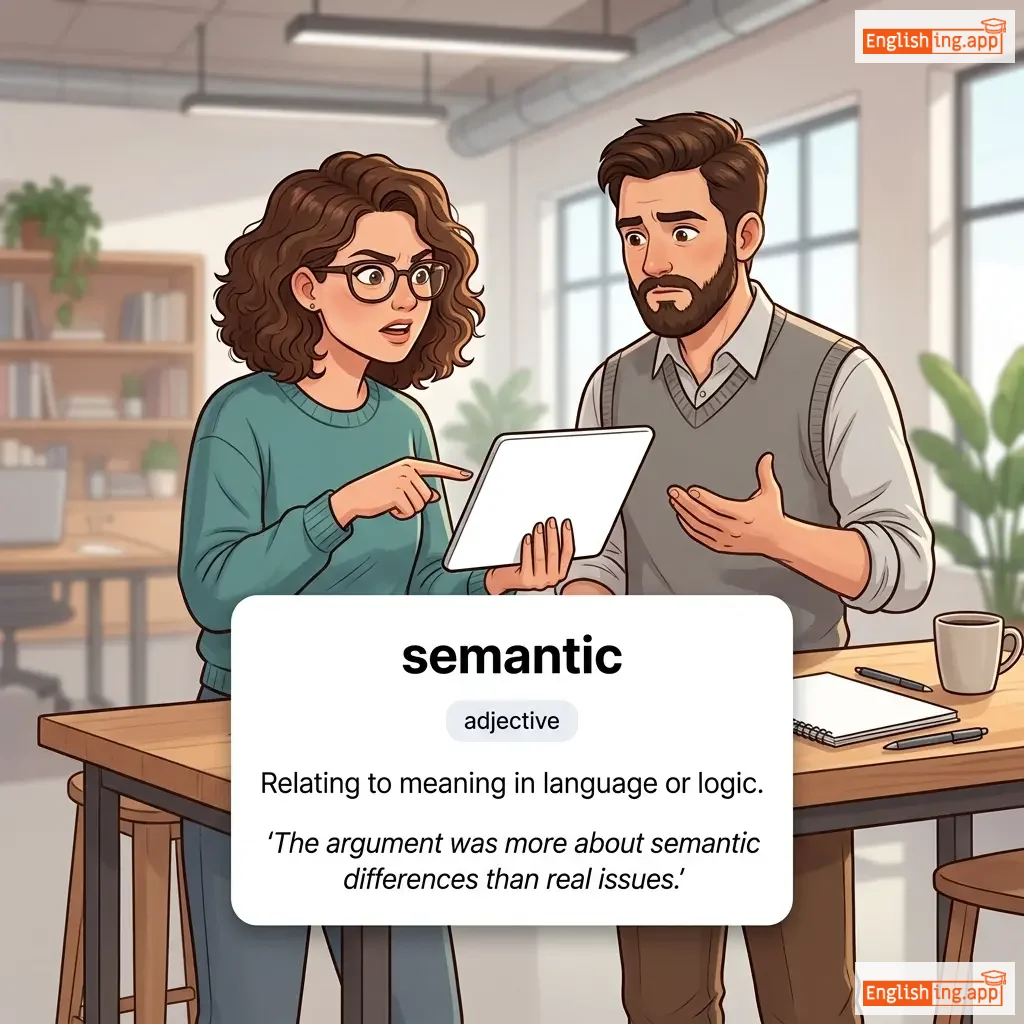
/sɪˈmæntɪk/
adjective
(семантический)
••••••
|
|
семантический
semanticheskiy
••••••
|
- •••••• | - •••••• | - •••••• | - •••••• |
Relating to meaning in language or logic.
••••••
|
The argument was more about semantic differences than real issues. |
Аргумент больше касался семантических различий, чем реальных проблем.
Argument bol'she kasalsya semanticheskikh razlichiy, chem real'nykh problem.
••••••
|
semantic debate |
A debate that focuses on word meanings rather than substantial issues
••••••
|
семантическая дискуссия
semanticheskaya diskussiya
••••••
|
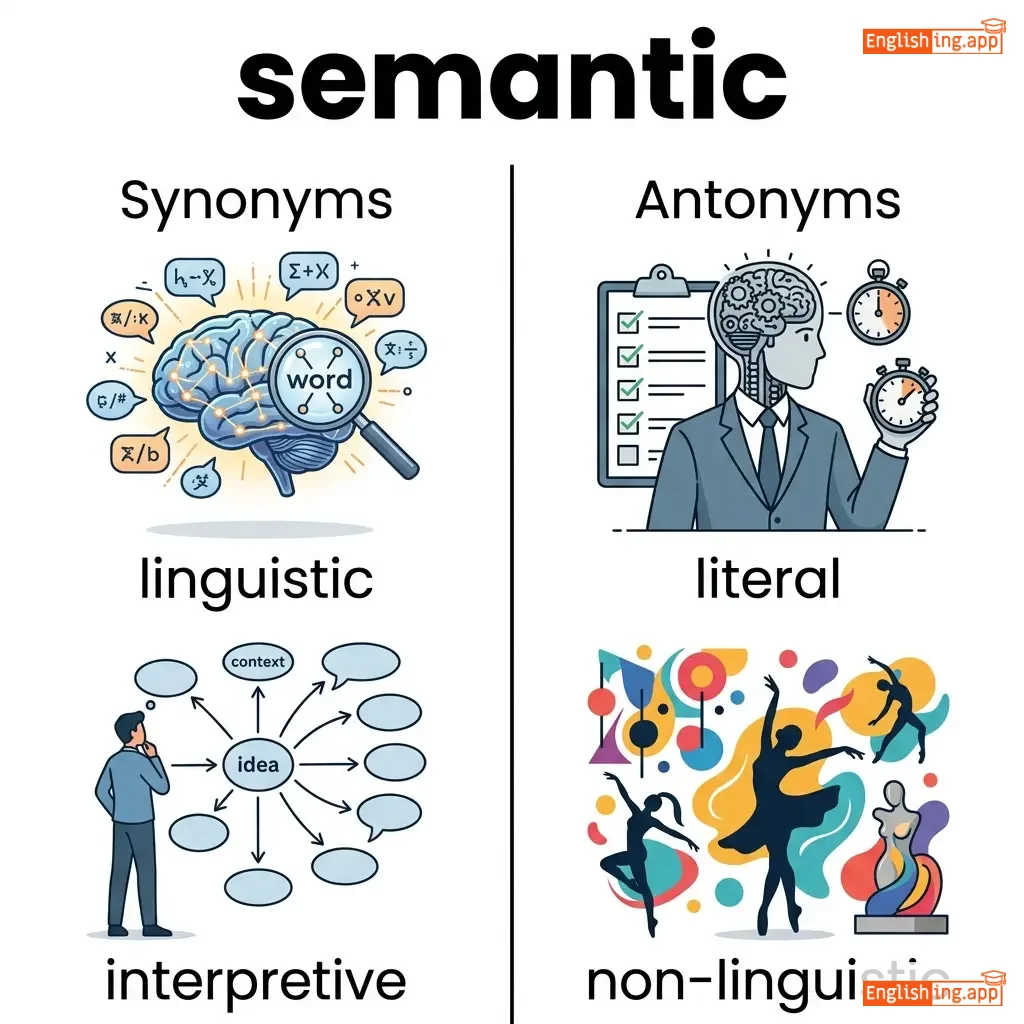
linguistic, interpretive, lexical, conceptual
••••••
|
literal, non-linguistic
••••••
|
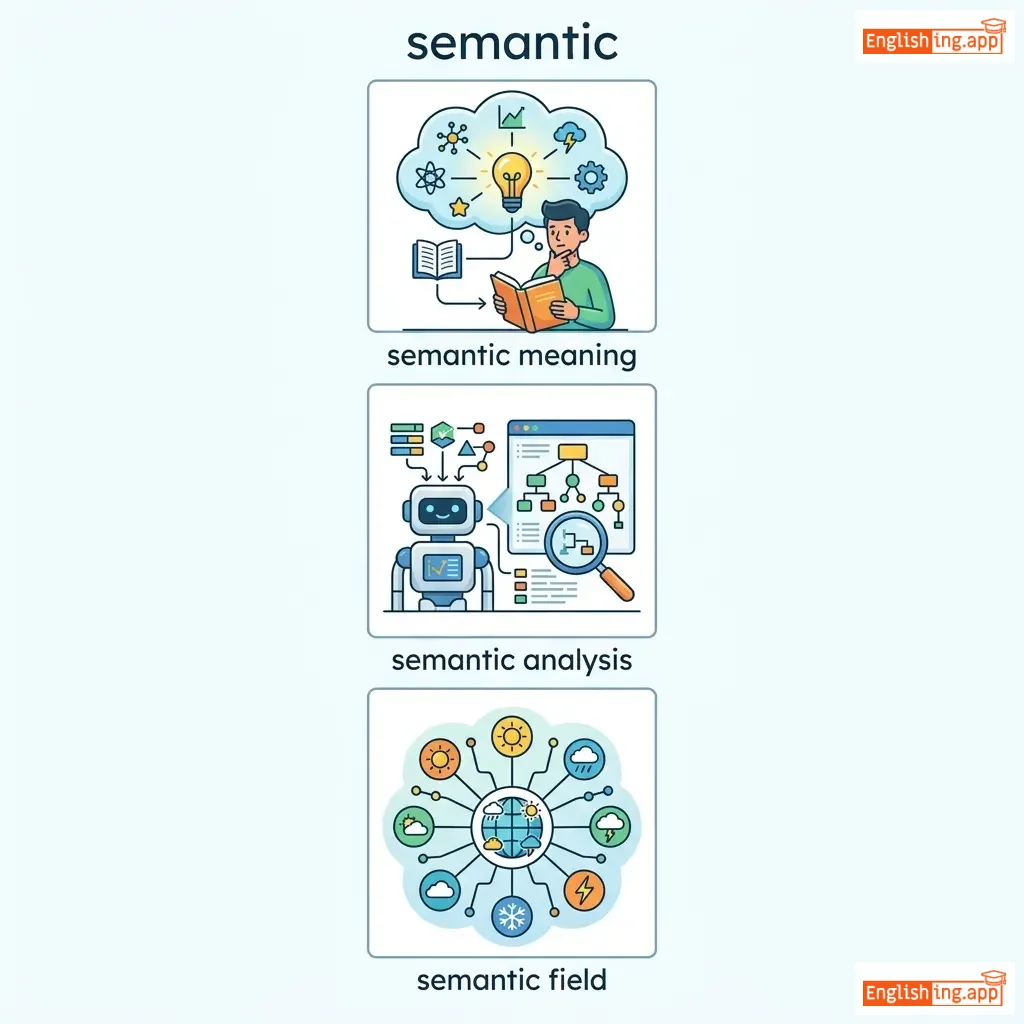
semantic meaning, semantic analysis, semantic field
••••••
|
Семантический = смысл, поэтому слово семантика связано с смыслом.
••••••
|
|
#7927
😇
|
/ˌsɛlf ˈraɪtʃəs/
adjective
(self-raitchus)
••••••
|
- •••••• |
самодовольный
samodovol'nyy
••••••
|
- •••••• | - •••••• | - •••••• | - •••••• |
Having or showing an attitude of moral superiority; believing one’s own beliefs are the only right ones.
••••••
|
His self-righteous comments made everyone uncomfortable. |
Его самодовольные комментарии заставили всех почувствовать себя неуютно.
E-go sa-mo-do-vol'nye ko-men-ta-rii zas-ta-vi-li vsekh po-chuv-stvo-vat' se-bya ne-uyut-no.
••••••
|
- •••••• | - •••••• | - •••••• |
sanctimonious, smug, holier-than-thou, pious
••••••
|
humble, modest
••••••
|
self-righteous attitude, self-righteous tone, sound self-righteous
••••••
|
Self-righteous = Считать себя всегда правым, поэтому самодовольный.
••••••
|
|
#7928
🙇
|
/ˌsɛlf rɪˈspɛkt/
noun
(self-respect)
••••••
|
- •••••• |
самоуважение
samouvajenie
••••••
|
- •••••• | - •••••• | - •••••• | - •••••• |
A feeling of pride and confidence in oneself; self-worth.
••••••
|
She refused to compromise her self-respect by accepting unfair treatment. |
Она отказалась компрометировать свое самоуважение, принимая несправедливое отношение.
Ona otkazalas' kompromentirovat' svoe samouvajenie, prinimaya nespravedlivoe otnoshenie.
••••••
|
loss of self-respect |
Losing confidence and pride in oneself
••••••
|
потеря самоуважения
poterya samouvajeniya
••••••
|
dignity, pride, honor, self-esteem
••••••
|
shame, humiliation, dishonor
••••••
|
maintain self-respect, loss of self-respect, sense of self-respect
••••••
|
Self + respect = самоуважение, 'я сохраню свое самоуважение'.
••••••
|
|
#7929
🍫
|
/ˌsɛlf ɪnˈdʌldʒəns/
noun
(self-indulgence)
••••••
|
- •••••• |
самоудовлетворение
samoudovletvorenie
••••••
|
- •••••• | - •••••• | - •••••• | - •••••• |
The act of allowing oneself to enjoy pleasures or desires excessively.
••••••
|
His weekend of self-indulgence included eating sweets and watching movies nonstop. |
Его уикенд самоудовлетворения включал поедание сладкого и просмотр фильмов без остановки.
Ego uikend samoudovletvoreniya vklyuchal poedanie sladkogo i prosmotr' filmov bez ostanovki.
••••••
|
- •••••• | - •••••• | - •••••• |
hedonism, excess, gratification, pleasure-seeking
••••••
|
self-control, restraint, discipline
••••••
|
pure self-indulgence, moment of self-indulgence, guilty self-indulgence
••••••
|
Самоудовлетворение — это делать все, что хочется, как 'есть шоколад и не останавливаться'.
••••••
|
|
#7930
🪞
|
/ˌsɛlf əbˈzɔːrbd/
adjective
(self-absorbed)
••••••
|
- •••••• |
эгоцентричный
egotsentrichnyy
••••••
|
- •••••• | - •••••• | - •••••• | - •••••• |
Excessively preoccupied with oneself and one’s own thoughts, feelings, or interests.
••••••
|
He was too self-absorbed to notice his friend's distress. |
Он был слишком эгоцентричным, чтобы заметить тревогу своего друга.
On byl slishkom egotsentrichnym, chtoby zamechit' trevogu svoego druga.
••••••
|
- •••••• | - •••••• | - •••••• |
egotistical, narcissistic, selfish, self-centered, inward-looking
••••••
|
selfless, considerate, altruistic
••••••
|
deeply self-absorbed, too self-absorbed, emotionally self-absorbed
••••••
|
Self + absorbed — это означает сосредоточенность только на себе, что делает его эгоцентричным.
••••••
|
|
#7931
🙏
|
/ˌself əˈbeɪs.mənt/
noun
(селф-абейсмент)
••••••
|
- •••••• |
самоуничижение
samounichizhenie
••••••
|
- •••••• | - •••••• | - •••••• | - •••••• |
The act of belittling or humiliating oneself.
••••••
|
His constant self-abasement made others uncomfortable. |
Его постоянное самоуничижение заставляло других чувствовать себя неудобно.
Ego postoyannoe samo-unichizhenie zastavlyalo drugikh chuvstvovat' sebya neudobno.
••••••
|
- •••••• | - •••••• | - •••••• |
humility, self-humiliation, self-deprecation, modesty
••••••
|
pride, arrogance, self-confidence
••••••
|
act of self-abasement, constant self-abasement, self-abasement behavior
••••••
|
Self-abasement означает самоумаление.
••••••
|
|
#7932
🎯
|
/sɪˈlek.tɪv/
adjective
(селектив)
••••••
|
- •••••• |
селективный
selekstivnyy
••••••
|
- •••••• | - •••••• | - •••••• | - •••••• |
Characterized by careful choice; choosing only the best or most suitable.
••••••
|
She is very selective about the clothes she buys. |
Она очень избирательна в выборе одежды, которую она покупает.
Ona ochen' izbiratel'na v vibore odezhdy, kotoruyu ona pokupayet.
••••••
|
- •••••• | - •••••• | - •••••• |
choosy, particular, exclusive, discriminating, careful
••••••
|
indiscriminate, careless, random
••••••
|
selective process, selective approach, selective breeding, selective choice
••••••
|
Селективный как 'выбор' – только самое лучшее выбирается.
••••••
|
|
#7933
✋
|
/siːz/
verb
(сиз)
••••••
|
- •••••• |
захватить
zakhvatit'
••••••
|
seized
сизд
••••••
|
seized
сизд
••••••
|
seizes
сизез
••••••
|
seizing
сизнинг
••••••
|
To take hold of suddenly and forcibly.
••••••
|
The police managed to seize the stolen goods.
Полиция сумела изъять украденные товары.
••••••
|
Полиция сумела изъять украденные товары.
Politsiya sumela iz'yat' ukradennyye tovarý.
••••••
|
seize the day
поймать день
••••••
|
To make the most of the present moment.
••••••
|
поймать день
poymat' den'
••••••
|
grab, capture, snatch, take, confiscate
••••••
|
release, let go, free
••••••
|
seize control, seize opportunity, seize power, seize assets
••••••
|
Seize означает захватить – как полиция захватывает украденные товары.
••••••
|
|
#7934
📈
|
/ˈsaɪz.mə.ɡræf/
noun
(ˈsaɪz.mə.ɡræf)
••••••
|
- •••••• |
сейсмограф
seysmograf
••••••
|
- •••••• | - •••••• | - •••••• | - •••••• |
An instrument that measures and records details of earthquakes, such as force and duration.
••••••
|
The seismograph detected a strong tremor in the area. |
Сейсмограф зафиксировал сильное толчок в этом районе.
Seysmograf zafiksiroval sil'noye tolchok v etom rayone.
••••••
|
- •••••• | - •••••• | - •••••• |
earthquake detector, tremor recorder, seismometer, quake recorder
••••••
|
none, null
••••••
|
digital seismograph, seismograph reading, seismograph station
••••••
|
Сейсмограф - как изображение землетрясения на графике.
••••••
|
|
#7935
💊
|
/ˈsɛdətɪv/
noun
(седатив)
••••••
|
- •••••• |
успокаивающее средство
uspokaivayushchee sredstva
••••••
|
- •••••• | - •••••• | - •••••• | - •••••• |
A substance that calms the nerves or induces sleep.
••••••
|
The doctor prescribed a sedative to help the patient sleep.
Врач прописал седативное средство, чтобы помочь пациенту уснуть.
••••••
|
Врач прописал седативное средство, чтобы помочь пациенту уснуть.
Vrach propisal sedativnoe sredstva, chtoby pomoch' patsiyentu usnut'.
••••••
|
- •••••• | - •••••• | - •••••• |
tranquilizer, calmative, depressant, relaxant, sleeping pill
••••••
|
stimulant, energizer
••••••
|
take a sedative, mild sedative, powerful sedative, sedative effect
••••••
|
Успокаивающее средство – это лекарство для сна. Прими его, и ты уснешь спокойно.
••••••
|
|
#7936
🎣
|
/seɪn/
noun
(сайн)
••••••
|
- •••••• |
большая сеть
bol'shaya set'
••••••
|
- •••••• | - •••••• | - •••••• | - •••••• |
A large fishing net that hangs vertically in the water.
••••••
|
The fishermen cast their seine into the river. |
Рыбаки бросили свою большую сеть в реку.
Rybaki brosili svoyu bol'shuyu set' v reku.
••••••
|
- •••••• | - •••••• | - •••••• |
net, fishing net, dragnet, mesh
••••••
|
hook, line
••••••
|
cast a seine, haul a seine, seine fishing
••••••
|
Seine означает большую рыболовную сеть, как большая сеть, брошенная в реку.
••••••
|
|
#7937
🏰
|
/ˈseɪnjər/
noun
(сеньор)
••••••
|
- •••••• |
феодал
feodal
••••••
|
- •••••• | - •••••• | - •••••• | - •••••• |
A feudal lord; a man of authority in medieval Europe.
••••••
|
The seignior demanded taxes from the peasants. |
Сеньор потребовал налоги с крестьян.
Sen'yor potreboval nalogi s krest'yan.
••••••
|
- •••••• | - •••••• | - •••••• |
lord, noble, master, overlord
••••••
|
peasant, commoner
••••••
|
powerful seignior, feudal seignior, seignior rights
••••••
|
Seignior похоже на сеньора, феодал требует налоги.
••••••
|
|
#7938
🧩
|
/ˈsɛɡmənt/
noun
(сегмент)
••••••
|
- •••••• |
сегмент
segment
••••••
|
- •••••• | - •••••• | - •••••• | - •••••• |
A part or section of something that is divided.
••••••
|
Each segment of the market has different needs. |
Каждый сегмент рынка имеет разные потребности.
Kazhdyy segment rynka imeyet raznye potrebnosti.
••••••
|
market segment |
A specific group of consumers within a market
••••••
|
сегмент рынка
segment rynka
••••••
|
section, part, division, piece, portion
••••••
|
whole, entirety, unity
••••••
|
market segment, orange segment, segment of society
••••••
|
Сегмент напоминает 'часть', как сегмент рынка – это часть рынка.
••••••
|
|
#7939
😡
|
/siːð/
verb
(сит)
••••••
|
- •••••• |
кипеть от ярости
kipet' ot yarosti
••••••
|
seethed
ситд
••••••
|
seethed
ситд
••••••
|
seethes
ситес
••••••
|
seething
ситинг
••••••
|
To be filled with intense but unexpressed anger or agitation.
••••••
|
She was seething with anger after the unfair decision.
Она кипела от ярости после несправедливого решения.
••••••
|
Она кипела от ярости после несправедливого решения.
Ona kipela ot yarosti posle nespravedlivogo resheniya.
••••••
|
seethe with rage
кипеть от ярости
••••••
|
To be extremely angry but not show it openly
••••••
|
кипеть от ярости
kipet' ot yarosti
••••••
|
boil, fume, simmer, rage, smolder
••••••
|
calm, relax, soothe
••••••
|
seethe with anger, seethe inside, seething resentment
••••••
|
Seethe = 'сит' = кипеть от ярости
••••••
|
|
#7940
🔮
|
/sɪr/
noun
(сир)
••••••
|
- •••••• |
ясновидящий
yasnovidyashchiy
••••••
|
- •••••• | - •••••• | - •••••• | - •••••• |
A person who is supposed to be able to see what will happen in the future; a prophet.
••••••
|
The seer predicted a great change in the kingdom. |
Ясновидящий предсказал большое изменение в королевстве.
Yasnovidyashchiy predskazal bol'shoye izmeneniye v korolevstve.
••••••
|
- •••••• | - •••••• | - •••••• |
prophet, oracle, visionary, diviner, fortune-teller
••••••
|
skeptic, doubter
••••••
|
ancient seer, wise seer, seer of visions, mystical seer
••••••
|
Seer означает ясновидящий, тот, кто видит будущее.
••••••
|
|
#7941
💧
|
/siːp/
verb
(сип)
••••••
|
- •••••• |
просачиваться медленно
prosachivat'sya medlenno
••••••
|
seeped
сипед
••••••
|
seeped
сипед
••••••
|
seeps
сипс
••••••
|
seeping
сипинг
••••••
|
to flow or leak slowly through small openings or pores
••••••
|
Water began to seep through the cracks in the wall.
Вода начала просачиваться через трещины в стене.
••••••
|
Вода начала просачиваться через трещины в стене.
Voda nachala prosachivatsya cherez treshchiny v stene.
••••••
|
seep into
просачиваться в
••••••
|
to slowly penetrate or spread into something
••••••
|
просачиваться медленно в
prosachivat'sya medlenno v
••••••
|
leak, ooze, trickle, dribble
••••••
|
gush, pour, spurt
••••••
|
seep into, seep through, slowly seep
••••••
|
Seep означает просачиваться медленно – помни, как 'sip' медленно просачивается через трещины.
••••••
|
|
#7942
🤵
|
/ˈsiːmli/
adjective
(simli)
••••••
|
- •••••• |
подобающий
podobayushchiy
••••••
|
- •••••• | - •••••• | - •••••• | - •••••• |
proper or appropriate in behavior or appearance
••••••
|
It was not seemly to argue loudly during the ceremony. |
Не было подобающим спорить громко во время церемонии.
Ne bylo podobayushchim sporit' gromko vo vremya tseremonii.
••••••
|
- •••••• | - •••••• | - •••••• |
appropriate, proper, decent, suitable
••••••
|
improper, indecent, inappropriate
••••••
|
seemly conduct, seemly behavior, seemly manner
••••••
|
Seemly означает подобающий – помни, что 'seems' подходит, это и будет подобающее.
••••••
|
|
#7943
🏚️
|
/ˈsiːdi/
adjective
(sidi)
••••••
|
- •••••• |
грязный / обветшалый
gryaznyy / obvetshalyy
••••••
|
- •••••• | - •••••• | - •••••• | - •••••• |
dirty, shabby, or in bad condition; also feeling slightly unwell
••••••
|
He stayed in a seedy motel near the bus station.
Он остановился в захудалом мотеле возле автовокзала.
••••••
|
Он остановился в захудалом мотеле возле автовокзала.
On ostanovilsya v zakhudalom motele vozle avtovokzala.
••••••
|
- •••••• | - •••••• | - •••••• |
shabby, rundown, dilapidated, grimy
••••••
|
clean, elegant, neat
••••••
|
seedy motel, seedy neighborhood, seedy appearance
••••••
|
Seedy означает грязный и обветшалый. Представь себе, как старая CD трескается и царапается.
••••••
|
|
#7944
💼
|
/ˈsɛdʒʊləs/
adjective
(седулус)
••••••
|
|
прилежный
prilezhny
••••••
|
- •••••• | - •••••• | - •••••• | - •••••• |
showing great care, attention, and diligence in work or tasks
••••••
|
She was admired for her sedulous efforts in completing the project on time. |
Её восхищали за прилежные усилия по завершению проекта вовремя.
Eyo voskhishchali za prilezhnyye usiliya po zaversheniyu proyektov vovremya.
••••••
|
- •••••• | - •••••• | - •••••• |
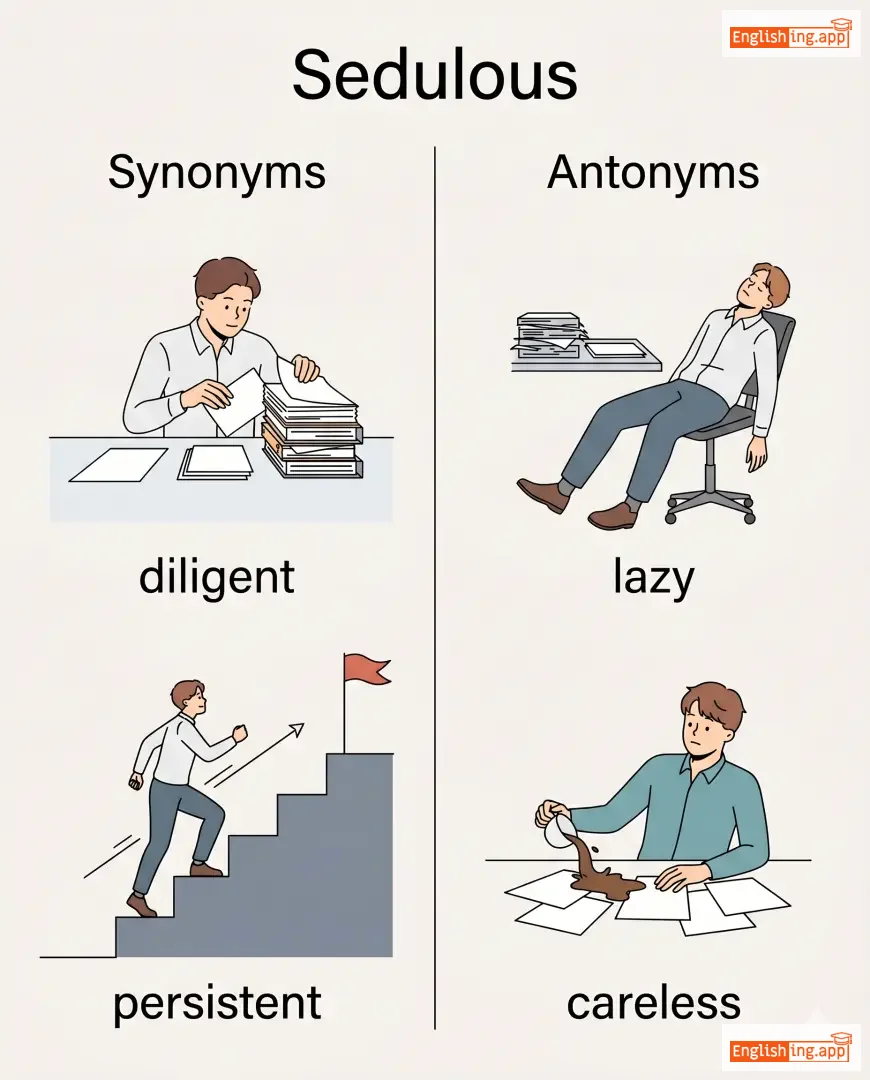
diligent, persistent, industrious, attentive, dedicated
••••••
|
lazy, careless, negligent
••••••
|
sedulous work, sedulous efforts, sedulous attention
••••••
|
Sedulous означает прилежный – представь себе, как 'седельник' работает прилежно.
••••••
|
|
#7945
😏
|
/sɪˈdjuːs/
verb
(сэдьюс)
••••••
|
- •••••• |
соблазнять
soblaznyat
••••••
|
seduced
сэдьюсд
••••••
|
seduced
сэдьюсд
••••••
|
seduces
сэдьюсес
••••••
|
seducing
сэдьюсинг
••••••
|
to attract someone into doing something, especially something they might not normally do
••••••
|
The advertisement was designed to seduce customers into buying luxury products.
Реклама была разработана, чтобы соблазнить покупателей купить роскошные товары.
••••••
|
Реклама была разработана, чтобы соблазнить покупателей купить роскошные товары.
Reklama byla razrabotana, chtoby soblaznit' pokupateley kupit' roskoshnyye tovaru.
••••••
|
seduce the senses
соблазнять чувства
••••••
|
to strongly appeal to or captivate someone’s senses
••••••
|
соблазнять чувства
soblaznyat' chuvstva
••••••
|
tempt, entice, allure, attract, charm
••••••
|
repel, discourage, dissuade
••••••
|
seduce someone, seduce into, seduce the senses, easily seduced
••••••
|
Seduce означает соблазнять – помни, если ты соблазняешь кого-то, ты заставляешь их делать что-то необычное.
••••••
|
|
#7946
🔥
|
/sɪˈdɪʃəs/
adjective
(сɪˈдɪшəs)
••••••
|
- •••••• |
мятежный
myatezhny
••••••
|
- •••••• | - •••••• | - •••••• | - •••••• |
Encouraging rebellion against authority.
••••••
|
The activist spread seditious pamphlets among the crowd. |
Активист распространял мятежные листовки среди толпы.
Aktivist rasprostranyal myatezhnye listovki sredi tolpy.
••••••
|
- •••••• | - •••••• | - •••••• |
rebellious, insurgent, subversive, mutinous
••••••
|
loyal, obedient
••••••
|
seditious speech, seditious pamphlets, seditious behavior, seditious activity
••••••
|
Мятежный напоминает слово 'мятеж' – восстание против власти.
••••••
|
|
#7947
⚖️
|
/sɪˈdɪʃən/
noun
(сɪˈdɪʃэн)
••••••
|
|
мятеж
myatezh
••••••
|
- •••••• | - •••••• | - •••••• | - •••••• |
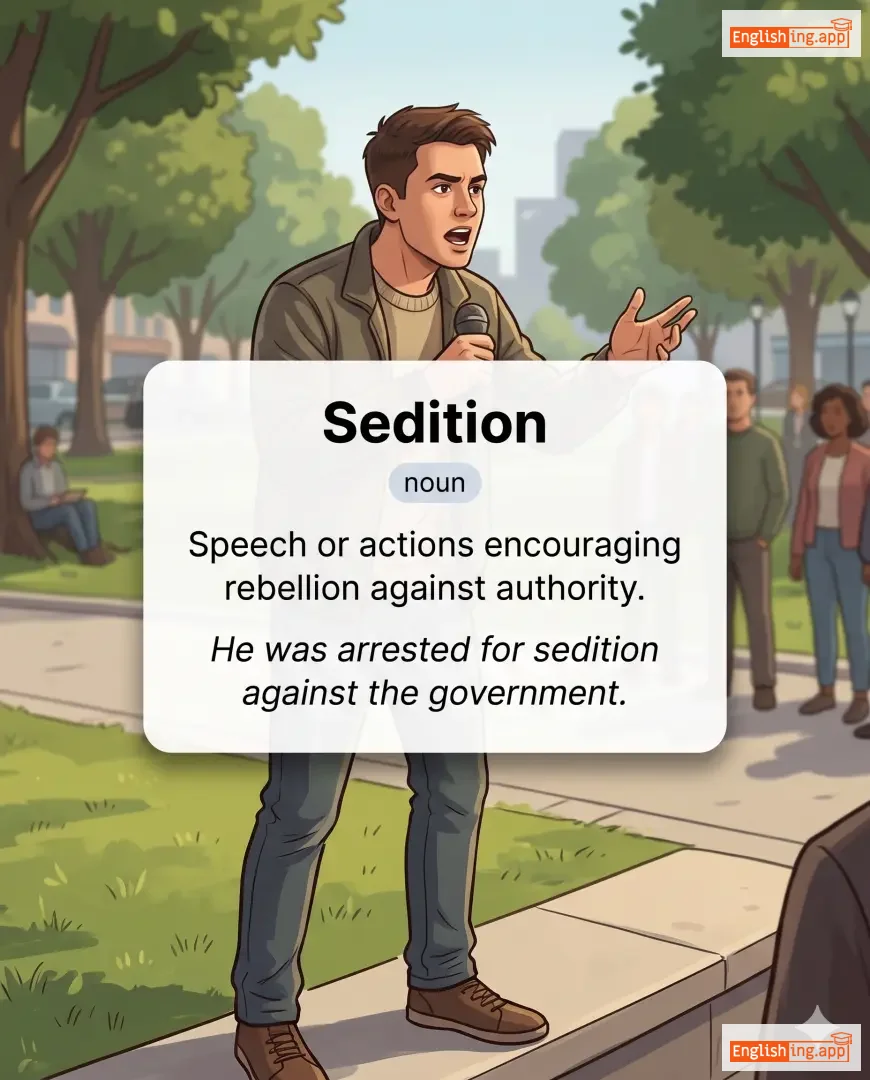
Speech or actions encouraging rebellion against authority.
••••••
|
He was arrested for sedition against the government. |
Его арестовали за мятеж против правительства.
Ego arestovali za myatezh protiv pravitel'stva.
••••••
|
- •••••• | - •••••• | - •••••• |
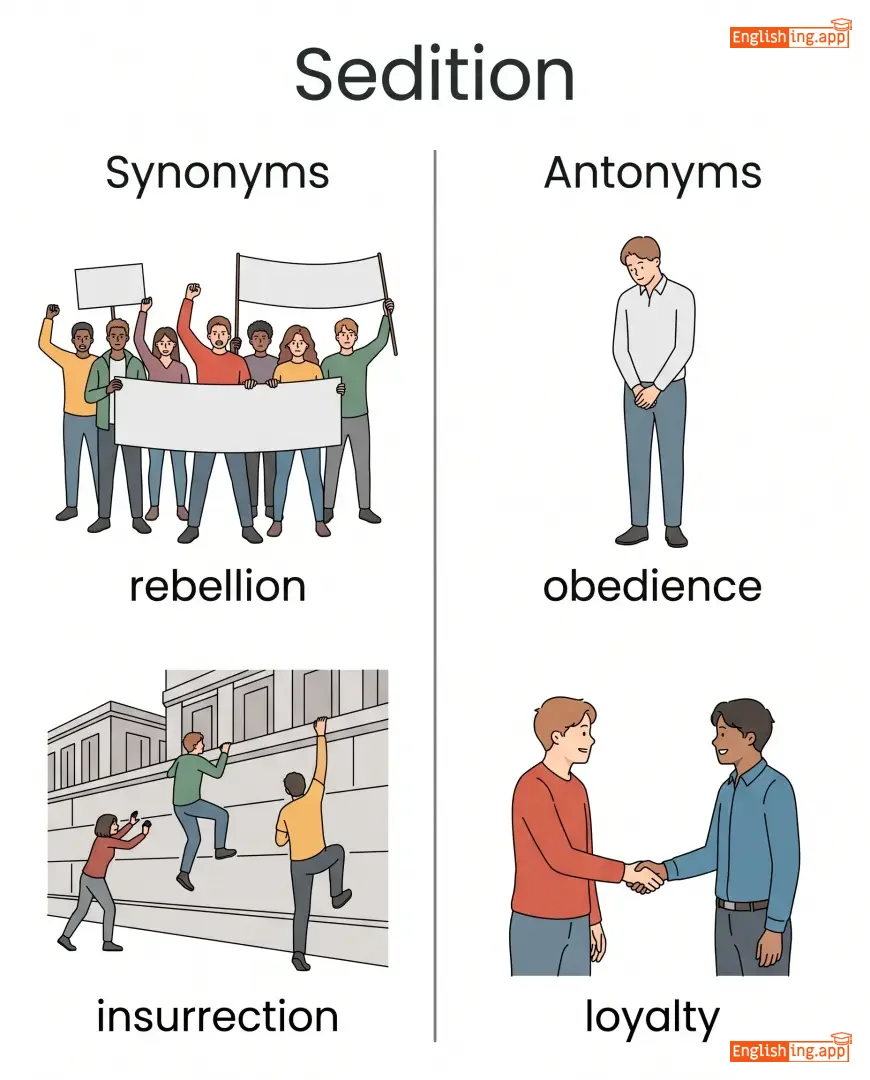
rebellion, insurrection, revolt, treason
••••••
|
obedience, loyalty
••••••
|
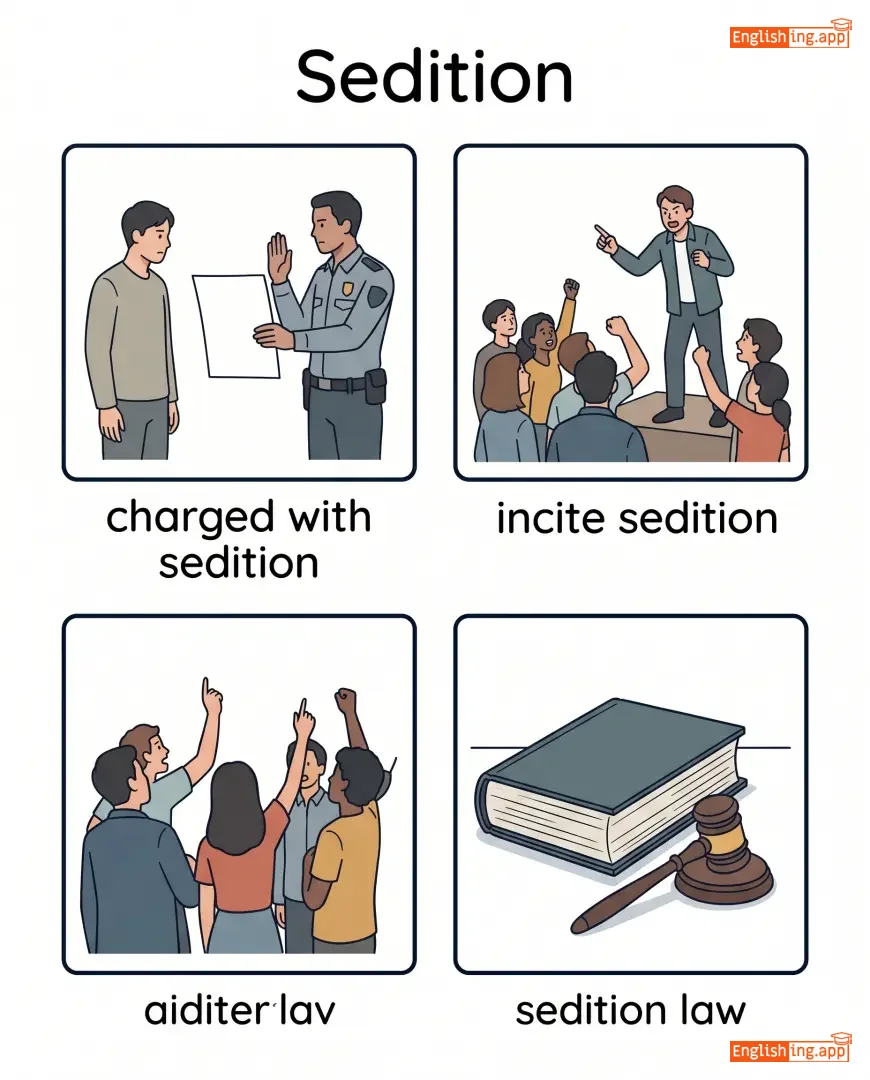
charged with sedition, incite sedition, sedition law, sedition act
••••••
|
Sedition - это 'мятеж' на русском. Говорить против власти — это мятеж.
••••••
|
|
#7948
🏞️
|
/ˈsɛdəmənt/
noun
(седимент)
••••••
|
- •••••• |
осадок
osadok
••••••
|
- •••••• | - •••••• | - •••••• | - •••••• |
Solid particles that settle at the bottom of a liquid.
••••••
|
The river carries a lot of sediment downstream.
Река переносит большое количество осадка вниз по течению.
••••••
|
Река несет много осадка вниз по течению.
Reka neset mnogo osadka vniz po techyonyu.
••••••
|
- •••••• | - •••••• | - •••••• |
deposit, residue, silt, dregs
••••••
|
solution, purity
••••••
|
sediment layer, sediment buildup, river sediment, sediment deposit
••••••
|
Осадок = оседает на дне.
••••••
|
|
#7949
🛋️
|
/ˈsɛdntɛri/
adjective
(седента́ри)
••••••
|
|
малоподвижный
malopodvizhnyy
••••••
|
- •••••• | - •••••• | - •••••• | - •••••• |
Characterized by much sitting and little physical activity.
••••••
|
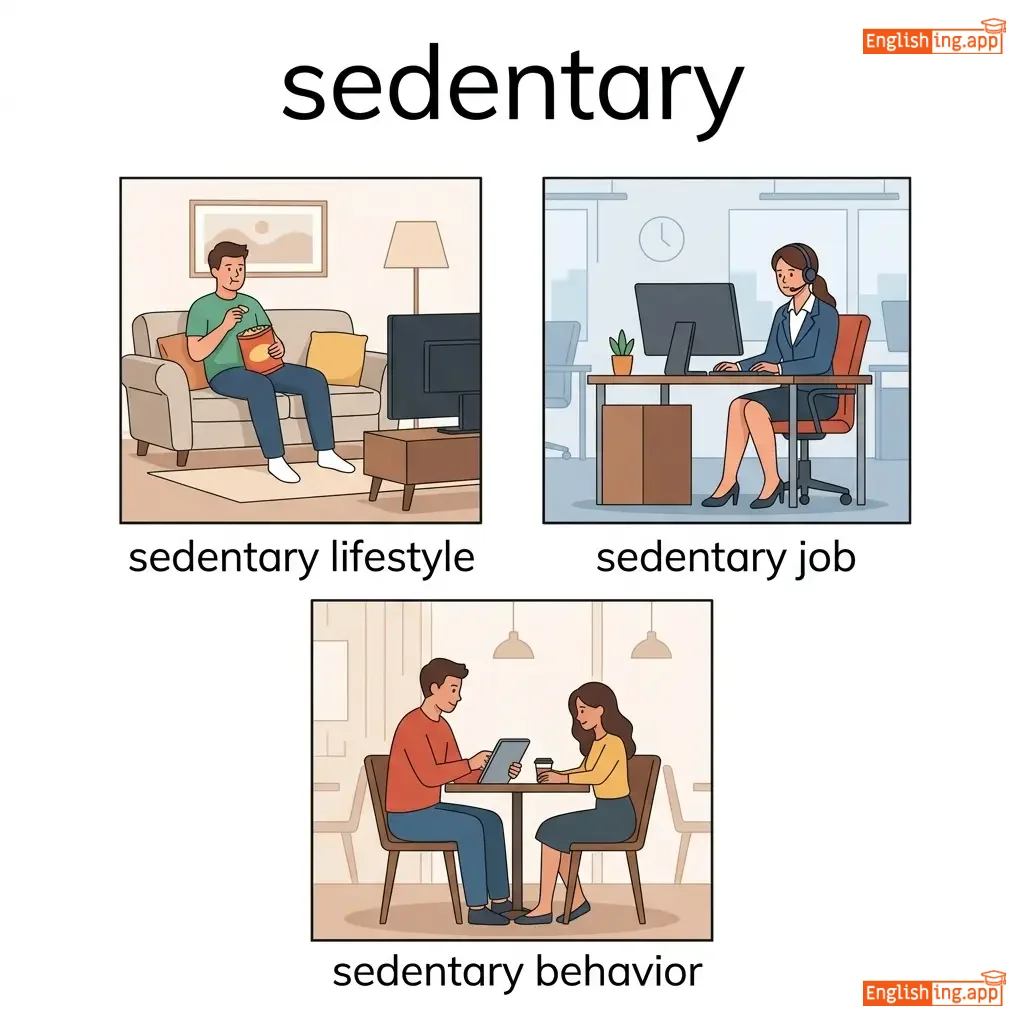
A sedentary lifestyle can lead to health problems.
а седентари лайфстайл кэн лид ту хелс проблэмс
••••••
|
Малоподвижный образ жизни может привести к проблемам со здоровьем.
malopodvizhnyy obraz zhizni mozhet privesti k problemam so zdorovyem
••••••
|
- •••••• | - •••••• | - •••••• |
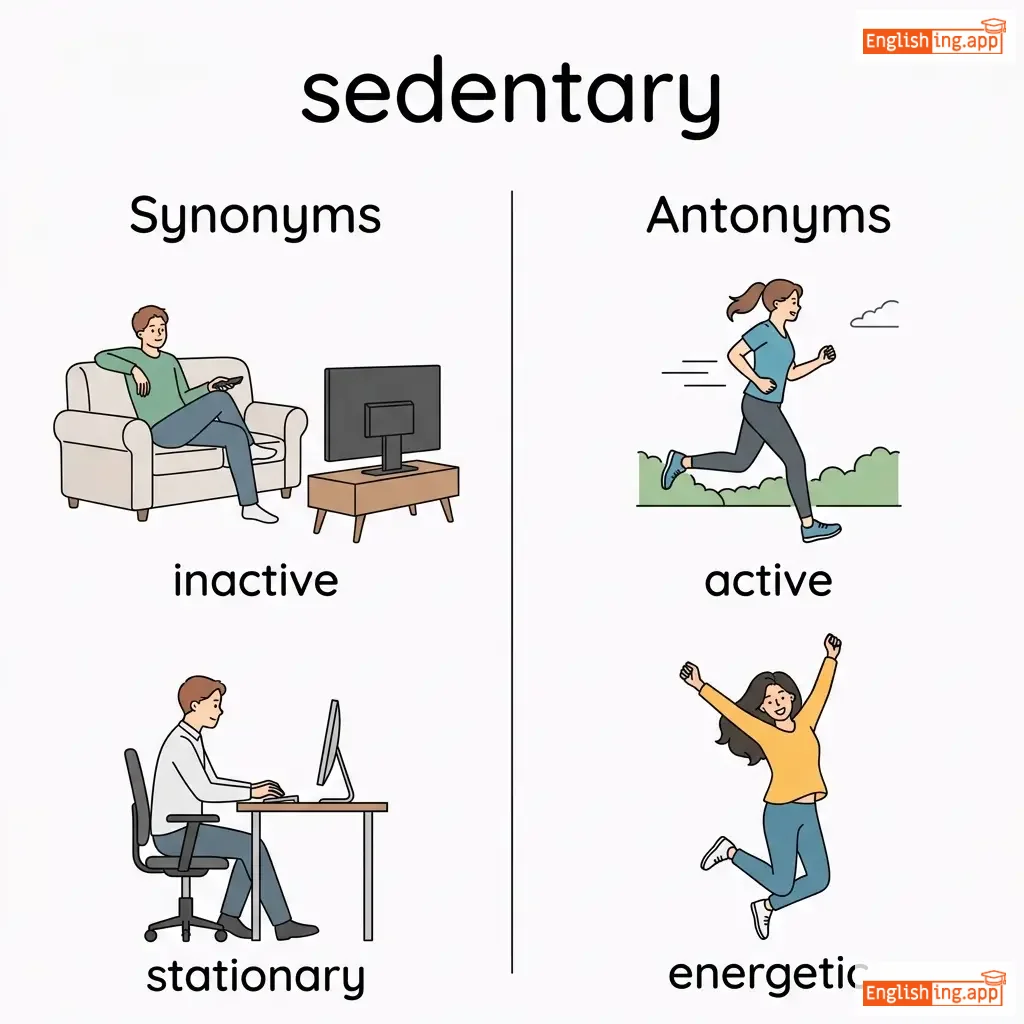
inactive, stationary, desk-bound, idle
••••••
|
active, energetic
••••••
|
sedentary lifestyle, sedentary job, sedentary behavior, sedentary position
••••••
|
Sedentary – in Russian, malopodvizhnyy: malo (little) + podvizhnyy (active).
••••••
|
Vocabulary Quiz
Test your vocabulary by matching words with their translations or meanings.
Login to take the quiz
Comments (0)
Share your thoughts and join the discussion.
Join the discussion by logging in
Login to CommentNo comments yet
Be the first to share your thoughts!